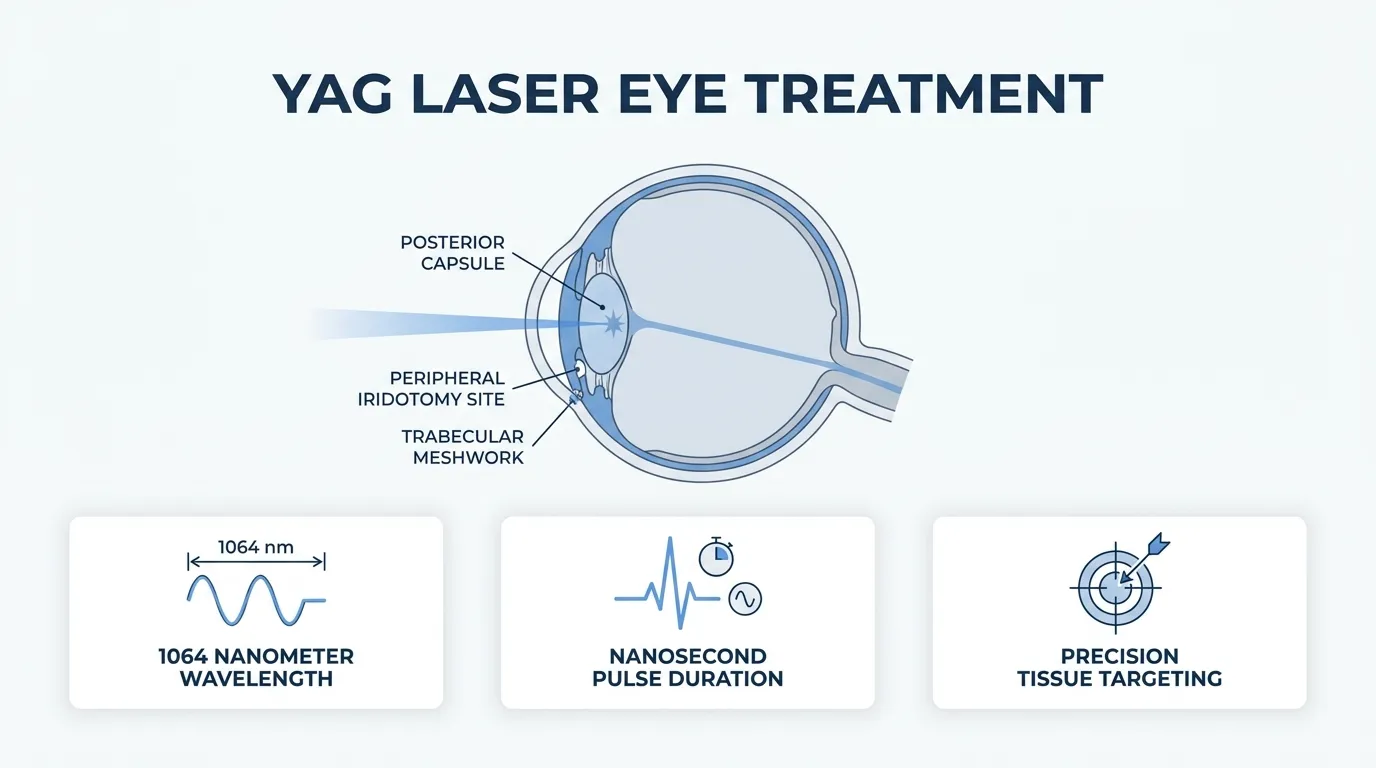
A YAG laser is a solid-state ophthalmic laser that uses a neodymium-doped yttrium aluminum garnet crystal to produce ultra-short pulses of infrared light at 1064 nm. Rather than burning tissue, it works through photodisruption, generating mechanical shockwaves that precisely cut delicate structures inside the eye without thermal damage.
This guide covers the laser’s core mechanism and procedural steps, the condition it treats and who may benefit, its safety profile and recovery process, and how it compares to other ophthalmic lasers.
The Nd:YAG laser delivers nanosecond pulses that create optical breakdown at a precise focal point, producing a plasma shockwave strong enough to tear opacified tissue while leaving surrounding structures intact. During capsulotomy, the surgeon applies controlled pulses in a targeted pattern to open the clouded posterior capsule in a session that typically lasts only minutes.
YAG laser capsulotomy is designed to treat posterior capsule opacification (PCO), sometimes called “secondary cataract,” where residual lens epithelial cells migrate across the capsular membrane after cataract surgery and gradually obscure vision. PCO may affect a significant portion of cataract surgery patients within the first several years, making this one of the most commonly performed laser procedures in ophthalmology. Candidacy depends on symptom severity and individual eye health.
While the procedure is associated with high patient satisfaction and rapid visual improvement, potential risks include transient intraocular pressure elevation, floaters, and a small but measurable increase in retinal detachment risk. Preparation and recovery are straightforward, with most patients returning to daily activities within one to two days.
The Nd:YAG laser differs fundamentally from excimer lasers used in LASIK and PRK, as well as frequency-doubled YAG lasers used in glaucoma treatment; each operates at a different wavelength and targets different ocular tissue for an entirely separate clinical purpose.
What Is a YAG Laser?
A YAG laser is a solid-state laser that uses a neodymium-doped yttrium aluminum garnet crystal as its active lasing medium. The name “YAG” comes from the crystal’s composition: yttrium, aluminum, and garnet. In ophthalmology, the Nd:YAG laser operates at a fundamental wavelength of 1064 nm in the infrared spectrum. This wavelength is invisible to the human eye, yet it carries enough focused energy to cut through delicate intraocular tissues with remarkable precision.
What makes this laser distinct from other medical lasers is its mechanism of action. Rather than burning or reshaping tissue through heat, the Nd:YAG laser works through a process called photodisruption. Concentrated pulses of light, each lasting only a few nanoseconds, generate an optical breakdown at the target site. This creates a tiny plasma that expands into a mechanical shockwave, cleanly tearing the tissue without thermal damage to surrounding structures.
Ophthalmologists most commonly use the Nd:YAG laser to treat posterior capsule opacification, a cloudy membrane that can develop after cataract surgery. The procedure, known as YAG laser capsulotomy, is one of the most frequently performed laser treatments in eye care. Because the laser cuts tissue mechanically rather than thermally, it can work inside the eye with a high degree of safety, making it well suited for delicate post-surgical corrections.
How Does YAG Laser Capsulotomy Work Step by Step?
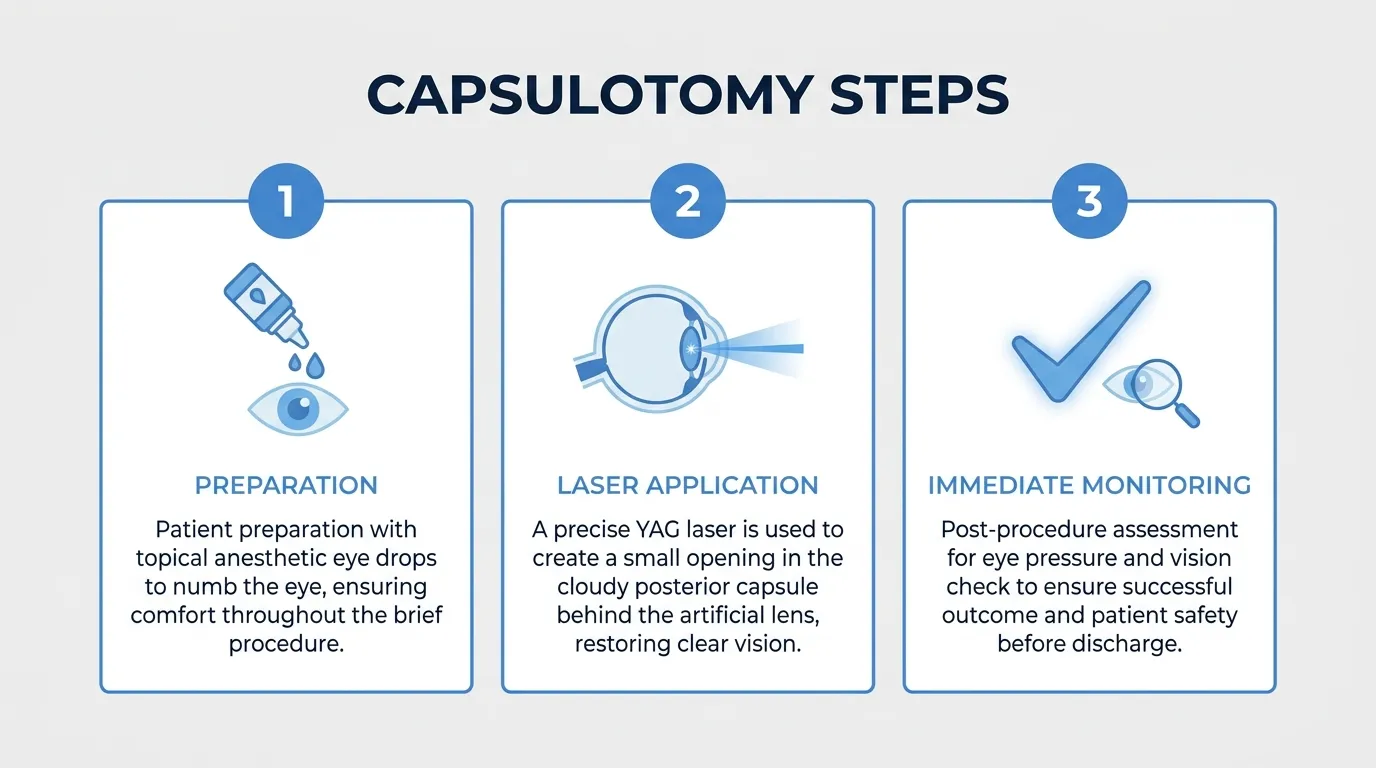
YAG laser capsulotomy works step by step through a brief sequence of preparation, laser application, and immediate post-treatment monitoring. The following sections cover pre-procedure preparation, how the laser creates an opening, and what happens right after.
What Happens During the Pre-Procedure Preparation?
The pre-procedure preparation for YAG laser capsulotomy involves several quick steps to ensure safe, accurate laser delivery. Your ophthalmologist begins by placing dilating eye drops to widen the pupil, providing a clear view of the posterior capsule behind the intraocular lens. Anesthetic drops are then applied to numb the eye surface, so no injections are needed.
Once the pupil is fully dilated, the patient is seated at a slit-lamp microscope, similar to a standard eye exam setup. A small contact lens may be placed on the eye to stabilize it, focus the laser beam, and improve the surgeon’s view of the clouded capsule. The entire preparation typically takes only a few minutes. For most patients, this setup feels no different from a routine ophthalmology visit, which is one reason the procedure carries so little anxiety compared to surgical alternatives.
How Does the Laser Create an Opening in the Capsule?
The laser creates an opening in the capsule through a process called photodisruption. The Nd:YAG laser delivers ultra-short, high-intensity pulses (typically 2 to 3 nanoseconds each) that generate optical breakdown at the focal point. This creates a rapidly expanding plasma, which produces a mechanical shockwave strong enough to tear the opacified tissue without thermal damage to surrounding structures.
According to the Journal of Cataract and Refractive Surgery, the standard procedure involves applying 1 to 3 mJ of energy per pulse, with a typical total of 20 to 50 pulses delivered in a circular or cruciate pattern to create a 3 to 4 mm opening centered on the visual axis. The surgeon adjusts pulse count and energy based on capsule thickness. Because the laser targets tissue at a precise depth, the intraocular lens and retina remain protected. The entire laser application phase generally lasts under five minutes.
What Happens Immediately After the Laser Pulses?
Immediately after the laser pulses, the ophthalmologist examines the eye to confirm a clear, well-centered opening in the posterior capsule. Small capsular fragments may float briefly in the visual axis; these typically settle or absorb on their own. Intraocular pressure is monitored because transient pressure spikes can occur within the first few hours.
Many patients notice improved clarity within minutes. According to a study published in the American Journal of Ophthalmology, mean best-corrected visual acuity improved significantly from 0.61 ± 0.36 logMAR to 0.19 ± 0.25 logMAR after successful treatment. Anti-inflammatory or pressure-lowering drops may be prescribed as a precaution. A short follow-up visit, usually within one to two weeks, confirms stable results and screens for any rare complications. In clinical practice, the speed of visual recovery after YAG capsulotomy is one of its most reassuring features for patients who have been struggling with progressive cloudiness.
With the procedural steps covered, understanding the specific condition this treatment addresses helps clarify why it is needed.
What Condition Does YAG Laser Capsulotomy Treat?
YAG laser capsulotomy treats posterior capsule opacification, a common condition that can develop after cataract surgery. The sections below cover what PCO is, why it forms, and how frequently it occurs.
What Is Posterior Capsule Opacification?
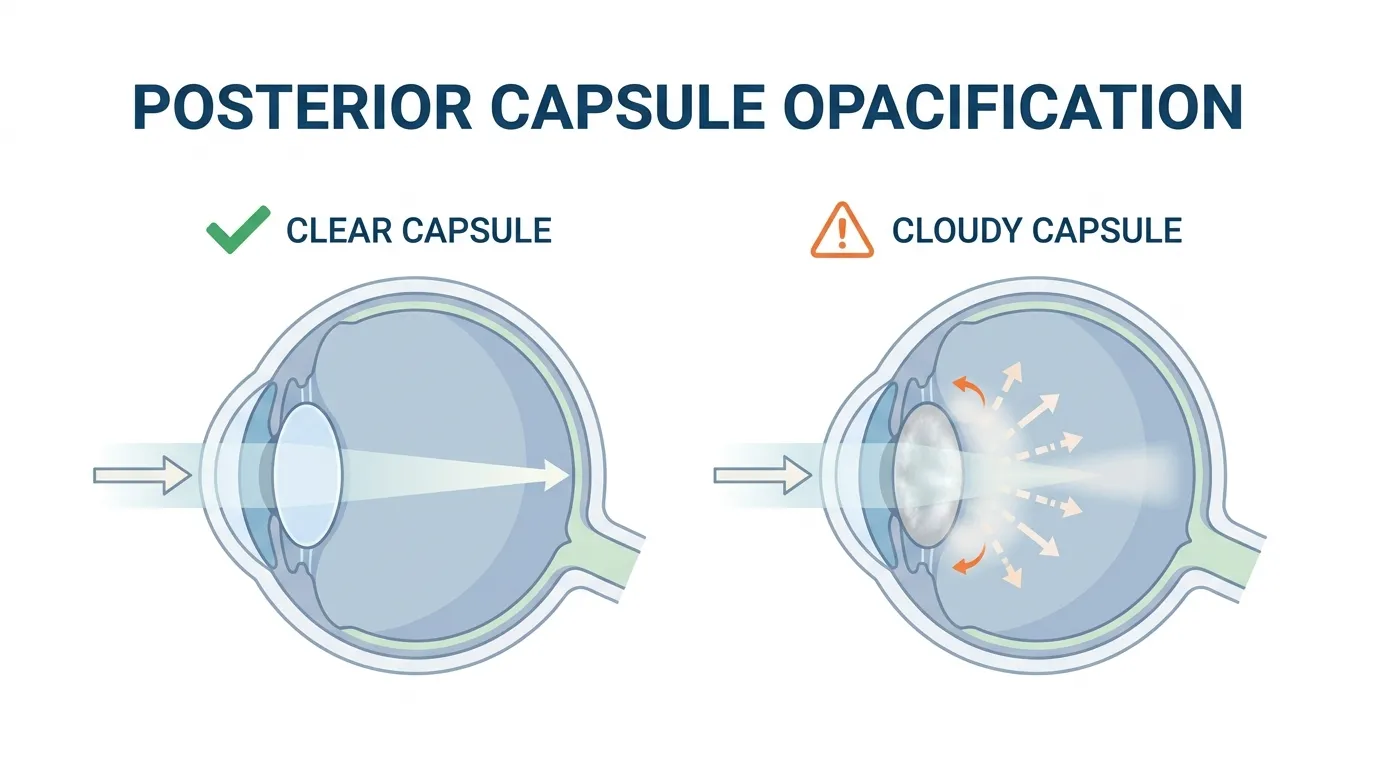
Posterior capsule opacification (PCO) is a condition where the thin membrane left behind during cataract surgery becomes cloudy over time. According to EyeWiki, PCO occurs when residual lens epithelial cells migrate and proliferate on the posterior lens capsule, gradually obscuring the visual axis. Sometimes called “secondary cataract” or “after-cataract,” PCO is not a new cataract forming. Instead, the natural capsule that holds the artificial intraocular lens in place develops a hazy film. One specific form, known as pearl-type PCO, involves clusters of swollen, opacified cells called Elschnig pearls that scatter incoming light. Patients often notice a gradual return of blurry vision, glare, or reduced contrast sensitivity, symptoms that closely mirror their original cataract experience.
Why Does the Posterior Capsule Become Cloudy After Cataract Surgery?
The posterior capsule becomes cloudy after cataract surgery because residual lens epithelial cells remain on the capsular bag. During cataract extraction, surgeons remove the clouded natural lens but intentionally preserve the capsule to support the new intraocular lens implant. Microscopic epithelial cells left along the capsule’s equator can regenerate, migrate toward the center, and form an opaque layer. This biological response is essentially the body’s attempt to heal a structure that no longer needs to regenerate. Children and younger patients face particularly high risk because their lens epithelial cells are more metabolically active. In clinical practice, PCO is one of the most predictable long-term consequences of cataract surgery, which is precisely why YAG laser capsulotomy exists as a well-established solution.
How Common Is PCO Among Cataract Surgery Patients?
PCO is one of the most frequent complications following cataract surgery. A systematic overview of 500,872 eyes published in Ophthalmology found the pooled incidence of PCO to be 11.8% at one year, 20.7% at three years, and 28.4% at five years post-surgery. These rates vary depending on several factors:
- Intraocular lens material and edge design
- Patient age at the time of surgery
- Surgical technique used during cataract removal
Pediatric patients face the highest risk, with reported rates approaching nearly 100% in infants and young children. Modern lens designs with sharp posterior optic edges have helped reduce PCO rates, yet a significant percentage of adults will still develop clinically meaningful opacification within five years. Understanding this prevalence helps set realistic expectations for anyone undergoing cataract surgery, since YAG laser capsulotomy remains the standard corrective procedure when PCO affects daily vision.
What Are the Potential Benefits of YAG Laser Treatment?
The potential benefits of YAG laser treatment include restored visual clarity, a quick and painless experience, and rapid improvement in sight. The following sections cover each benefit in detail.
How May YAG Laser Help Restore Clarity of Vision?
YAG laser may help restore clarity of vision by removing the cloudy posterior capsule membrane that develops after cataract surgery. Posterior capsule opacification causes blurred vision, glare, and reduced contrast sensitivity, all of which can interfere with daily activities. The laser creates a precise opening in this opacified membrane, allowing light to pass freely through to the retina once again.
Because the procedure targets only the thin capsular tissue without affecting the intraocular lens itself, the visual improvement closely mirrors the clarity patients experienced shortly after their original cataract surgery. For many patients, this restoration of clear sight is one of the most meaningful outcomes of the treatment. Beyond internal treatments, external procedures such as eyelid surgery (blepharoplasty) can also enhance vision by removing obstructions or address cosmetic concerns.
Why Is the Procedure Considered Quick and Painless?
The procedure is considered quick and painless because Nd:YAG laser capsulotomy typically takes only a few minutes to complete in an outpatient setting. No incisions, needles, or general anesthesia are required. The ophthalmologist applies topical numbing drops to the eye, then uses a contact lens to focus the laser pulses on the posterior capsule.
Each pulse lasts only nanoseconds, and most patients feel little more than a faint clicking sensation or brief flashes of light. There is no post-operative stitching or extended recovery period, which makes this one of the most straightforward laser procedures in ophthalmology. Patients can generally return to normal activities the same day.
How Soon Can Patients Notice Improved Vision?
Patients can notice improved vision within hours to a few days after YAG laser capsulotomy. Some individuals experience clearer sight almost immediately once the capsular opening allows unobstructed light transmission. Others may notice mild floaters or slight haziness initially, which typically resolves within the first week.
According to a study published in Optometry and Vision Science (2023), 99% of patients reported subjective improvement in vision and 95% demonstrated objective visual acuity improvement following Nd:YAG capsulotomy. These outcomes highlight how reliably and quickly the procedure can deliver measurable results. In clinical practice, this combination of speed and efficacy makes YAG capsulotomy one of the most predictable interventions for restoring post-cataract visual quality.
With the benefits of YAG laser treatment established, understanding what the procedure feels like can help patients prepare with confidence.
What Does the YAG Laser Procedure Feel Like?
The YAG laser procedure feels painless for most patients, though mild sensations may occur. Understanding what to expect can help ease any pre-treatment anxiety.
YAG laser capsulotomy uses photodisruption rather than photoablation, which means the laser works by creating tiny mechanical shockwaves inside the eye instead of burning or reshaping tissue. Because the posterior capsule has no nerve endings, patients typically feel no pain during the procedure. Anesthetic eye drops are applied beforehand to numb the eye’s surface, so even the contact lens placed on the eye for focusing causes minimal discomfort.
During the laser pulses, some patients notice brief flashes of light or hear faint clicking sounds. A mild sensation of pressure from the focusing lens resting against the eye is common but generally well tolerated. The entire session typically lasts only a few minutes, which limits any opportunity for significant discomfort to develop.
Unlike LASIK and PRK, which use an excimer laser at 193 nm to reshape the cornea through photoablation, the Nd:YAG laser operates at 1064 nm and works through photodisruption. This distinction matters for patient experience: photoablation involves tissue removal from a nerve-rich cornea, while YAG capsulotomy targets a thin, non-innervated membrane behind the artificial lens. As a result, the sensation profiles differ considerably between these procedures.
After the procedure, mild eye irritation or a slightly gritty feeling may persist for a few hours. Some patients experience temporary floaters as small capsule fragments settle. These sensations are generally short-lived and resolve without intervention. For patients accustomed to the discomfort of the original cataract surgery, YAG capsulotomy often feels remarkably uneventful by comparison.
Knowing what the procedure feels like is one part of preparation; understanding whether you are a suitable candidate is equally important.
Who Is a Good Candidate for YAG Laser Capsulotomy?
A good candidate for YAG laser capsulotomy is someone who develops posterior capsule opacification after cataract surgery. Candidacy depends on symptom severity and overall eye health, as outlined below.
Who May Need YAG Laser After Cataract Surgery?
Patients who may need YAG laser after cataract surgery are those who develop posterior capsule opacification (PCO), also known as “secondary cataract” or “after-cataract.” PCO occurs when residual lens epithelial cells migrate and proliferate on the posterior lens capsule, gradually clouding the vision that cataract surgery initially restored.
This condition is not rare. According to a systematic overview published in Ophthalmology analyzing 500,872 eyes, the pooled incidence of PCO was 11.8% at one year, 20.7% at three years, and 28.4% at five years post-cataract surgery. Common signs that may indicate a need for treatment include:
- Blurred or hazy vision that progressively worsens after an initially successful cataract procedure.
- Increased glare or halos, particularly when driving at night.
- Decreased contrast sensitivity that interferes with daily activities like reading.
- Difficulty seeing clearly despite an up-to-date glasses prescription.
Because PCO develops gradually, many patients do not realize their vision has declined until symptoms become pronounced. Anyone experiencing these changes after cataract surgery should discuss YAG laser capsulotomy with their ophthalmologist to determine whether the procedure is appropriate.
Who Should Wait or Avoid YAG Laser Treatment?
Patients who should wait or avoid YAG laser treatment include those with certain ocular conditions that may increase procedural risk. Not every case of posterior capsule opacification requires immediate intervention; timing and individual eye health matter significantly.
Situations where caution is warranted include:
- Active eye inflammation, which should be controlled before laser treatment.
- High risk of retinal detachment, particularly in patients with a history of retinal tears, high myopia, or lattice degeneration.
- Very early or mild PCO that does not yet affect functional vision or daily activities.
- Recent cataract surgery, since most ophthalmologists recommend waiting at least three months for the capsule to stabilize.
As Cataract & Refractive Surgery Today Europe emphasized, “Avoiding PCO is important in order to reduce complications associated with Nd:YAG laser capsulotomy.” This underscores why prevention strategies during the initial cataract procedure, such as thorough cortical cleanup and modern IOL design, remain clinically valuable. For patients where the procedure carries elevated risk, close monitoring may be a safer approach than early intervention.
With candidacy established, understanding the possible risks helps patients weigh their options fully.
What Are the Possible Risks and Side Effects of YAG Laser?
The possible risks and side effects of YAG laser include retinal detachment, increased eye pressure, inflammation, and floaters. Each complication varies in likelihood and severity. For example, while YAG laser offers a precise approach to secondary cataracts, primary irrigation-aspiration cataract surgery also carries its own set of potential risks that patients should understand.
What Is the Risk of Retinal Detachment After YAG Laser?
The risk of retinal detachment after YAG laser is low in absolute terms, but it is meaningfully elevated compared to eyes that have not undergone the procedure. According to a systematic review and meta-analysis published by Sightsavers Research, Nd:YAG laser capsulotomy significantly increases the risk of pseudophakic retinal detachment, with a reported relative risk ratio of approximately 3.9 compared to eyes without capsulotomy.
While a nearly fourfold relative increase sounds alarming, the baseline rate of retinal detachment after cataract surgery remains small. Patients with high myopia or a history of retinal issues may face greater susceptibility. For this reason, ophthalmologists typically evaluate each patient’s retinal health before recommending the procedure. Symptoms such as sudden flashes of light, a shower of new floaters, or a curtain-like shadow across the visual field warrant immediate evaluation.
Can YAG Laser Cause Increased Eye Pressure?
Yes, YAG laser can cause increased eye pressure. Intraocular pressure spikes occur in approximately 9% to 10% of cases, typically peaking within one to four hours after treatment. These elevations are usually transient, and ophthalmologists often administer prophylactic topical drops, such as brimonidine or apraclonidine, to help manage the response.
Patients with pre-existing glaucoma may face a higher risk of clinically significant pressure changes. Post-procedure monitoring allows the care team to identify and address any sustained elevation before it can affect the optic nerve. In most cases, intraocular pressure returns to baseline levels within 24 hours without long-term consequences.
What Are the Chances of Inflammation or Floaters?
The chances of inflammation or floaters after YAG laser are relatively common but generally mild and self-limiting. Mild iritis, a form of anterior chamber inflammation, can develop in the days following treatment. Ophthalmologists may prescribe a short course of anti-inflammatory eye drops to manage this response.
Floaters are among the most frequently reported side effects. Small fragments of the disrupted posterior capsule can drift into the vitreous, casting shadows on the retina. Most patients find these floaters diminish gradually over several weeks as the fragments settle or are absorbed. Other documented complications, such as IOL pitting and cystoid macular edema, occur less frequently but underscore why careful post-operative follow-up remains important.
Understanding these risks helps patients weigh the benefits of restored visual clarity against potential side effects with their ophthalmologist.
How Should You Prepare for and Recover from YAG Laser?
You should prepare for YAG laser by following pre-appointment instructions from your ophthalmologist and recover by adhering to post-procedure guidelines for eye drops and activity restrictions.
What Should You Do Before a YAG Laser Appointment?
You should do the following before a YAG laser appointment:
- Arrange transportation. Your ophthalmologist will dilate your pupils with eye drops before the procedure, which can blur your vision for several hours afterward.
- Share your full medication list. Mention all current prescriptions, especially blood thinners or alpha-blockers, so your doctor can adjust the treatment plan if needed.
- Continue routine eye drops. Unless your surgeon specifically instructs otherwise, keep using any prescribed post-cataract surgery drops leading up to the appointment.
- Avoid eye makeup. Cosmetics around the eyes can introduce contaminants and should be skipped on the day of treatment.
- Ask questions ahead of time. Discuss any concerns about floaters, pressure changes, or expected outcomes so you feel confident walking in.
Because YAG laser capsulotomy typically takes only a few minutes, most patients find that thorough preparation makes the experience straightforward and stress-free.
What Recovery Guidelines Should You Follow Afterward?
The post-operative instructions you should follow afterward focus on managing inflammation and monitoring for complications. Your ophthalmologist may prescribe anti-inflammatory eye drops, typically a short course of topical steroids or NSAIDs, to reduce post-procedure irritation.
Key recovery steps include:
- Use prescribed drops on schedule. Anti-inflammatory and, in some cases, pressure-lowering drops help prevent intraocular pressure spikes and inflammation.
- Attend your follow-up appointment. According to the Journal of Surgery and Medicine, intraocular pressure spikes occur in approximately 9.1% to 10% of cases, typically peaking within one to four hours post-procedure.
- Expect mild floaters or hazy vision. These symptoms are common in the first few days and generally resolve on their own.
- Avoid rubbing your eyes. Gentle care protects the treated area while healing progresses.
- Resume normal activities gradually. Most patients return to daily routines within 24 to 48 hours, though strenuous exercise may need a brief pause.
For patients who notice sudden flashes of light, a significant increase in floaters, or a shadow across their vision, contacting an eye care provider immediately is essential. Understanding how YAG laser compares to other procedures can further clarify what makes this recovery uniquely manageable.
How Does YAG Laser Compare to Other Eye Laser Procedures?
YAG laser compares to other eye laser procedures through fundamental differences in wavelength, mechanism, and clinical purpose. The key distinctions involve how each laser interacts with ocular tissue.
The Nd:YAG laser operates at a fundamental wavelength of 1064 nm in the infrared spectrum, utilizing a neodymium-doped yttrium aluminum garnet crystal as the active lasing medium. This positions it in a completely different category from the lasers used in refractive or glaucoma procedures.
Three primary laser types dominate modern ophthalmology, each serving a distinct role:
- Nd:YAG laser (1064 nm) uses photodisruption to cut internal eye structures, primarily the clouded posterior capsule after cataract surgery.
- Excimer laser (193 nm) uses photoablation to reshape the cornea during LASIK and PRK for vision correction.
- Frequency-doubled Nd:YAG laser (532 nm) uses selective photothermolysis during SLT to target pigmented trabecular meshwork cells for glaucoma management.
This diverse landscape also includes advanced techniques like femtolaser cataract surgery, which employs a precision laser for initial lens removal, distinguishing it from YAG’s post-operative role in PCO treatment.
According to the Review of Optometry, the Q-switched Nd:YAG laser used in ophthalmology produces peak power densities exceeding 10^10 W/cm², enabling precise cutting of intraocular structures without thermal damage to surrounding tissues. This photodisruptive mechanism is what makes YAG capsulotomy fundamentally different from refractive procedures, which remove tissue, or glaucoma lasers, which stimulate biological drainage pathways.
While patients sometimes confuse these procedures because all involve “eye lasers,” each one addresses a completely separate condition. YAG capsulotomy treats posterior capsule opacification after cataract surgery. LASIK and PRK correct refractive errors like myopia and astigmatism. SLT lowers intraocular pressure in open-angle glaucoma. None of these procedures can substitute for another, because each laser wavelength and mechanism targets different tissue at different depths within the eye.
Understanding these distinctions can help patients feel more confident when discussing post-cataract treatment options with their ophthalmologist. With laser comparisons clarified, education resources can further support informed decision-making.
How Can Patient Education Help You Understand YAG Laser?
Patient education can help you understand YAG laser by translating complex clinical details into clear, actionable guidance before and after the procedure. Eye Surgery Today’s expert resources cover preparation steps, realistic outcome expectations, and key procedural facts.
Can Eye Surgery Today’s Expert Guides Help You Prepare for YAG Laser Capsulotomy?
Yes, Eye Surgery Today’s expert guides can help you prepare for YAG laser capsulotomy by providing content that explains what to expect at every stage. Because posterior capsule opacification affects a meaningful percentage of cataract surgery patients, understanding the procedure in advance reduces uncertainty and supports informed decision-making.
According to real-world evidence from a study of 20,763 eyes published in Nature Eye, Nd:YAG capsulotomy rates range from 2.4% to 12.6% at three years and 5.8% to 19.3% at five years post-surgery. These figures highlight why accessible education matters; knowing the likelihood of needing YAG capsulotomy helps patients recognize symptoms early and seek timely care.
Eye Surgery Today breaks down clinical information that would otherwise require a medical background to interpret. For patients navigating post-cataract vision changes, this kind of preparation can make the difference between anxiety and confidence heading into treatment.
What Are the Key Takeaways About How YAG Laser Works?
The key takeaways about how YAG laser works center on a few core principles:
- YAG laser capsulotomy treats posterior capsule opacification, the most common complication following cataract surgery.
- The Nd:YAG laser uses photodisruption to create a precise opening in the clouded posterior capsule without thermal damage to surrounding tissue.
- The procedure is typically completed in minutes, requires no incisions, and involves minimal discomfort.
- Most patients may notice improved visual clarity within hours to days after treatment.
- While YAG capsulotomy carries a strong efficacy profile, potential risks such as intraocular pressure spikes and retinal detachment should be discussed with your ophthalmologist beforehand.
For anyone considering or scheduled for this procedure, understanding these fundamentals removes guesswork and supports a more productive conversation with your eye care provider. Eye Surgery Today builds every guide around this goal: making the highest level of surgical insight accessible to patients regardless of medical background.