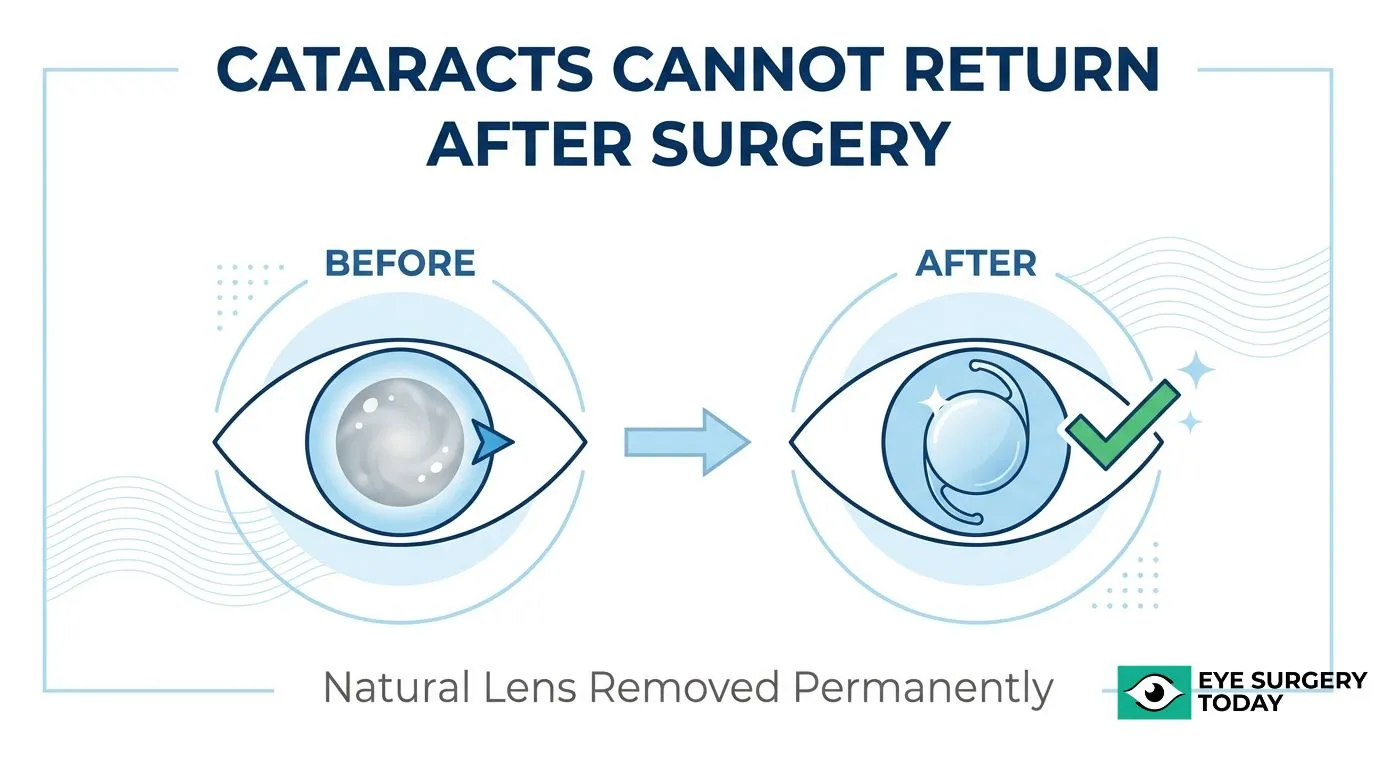
Cataracts cannot come back after surgery because the natural crystalline lens, where cataracts form, is permanently removed and replaced with a synthetic intraocular lens that does not support protein clumping or biological clouding.
This guide covers the surgical process that makes true cataract regrowth impossible, the secondary membrane condition often mistaken for cataract return, risk factors and symptoms to monitor, the laser treatment used to restore clarity, and when to follow up with your eye doctor.
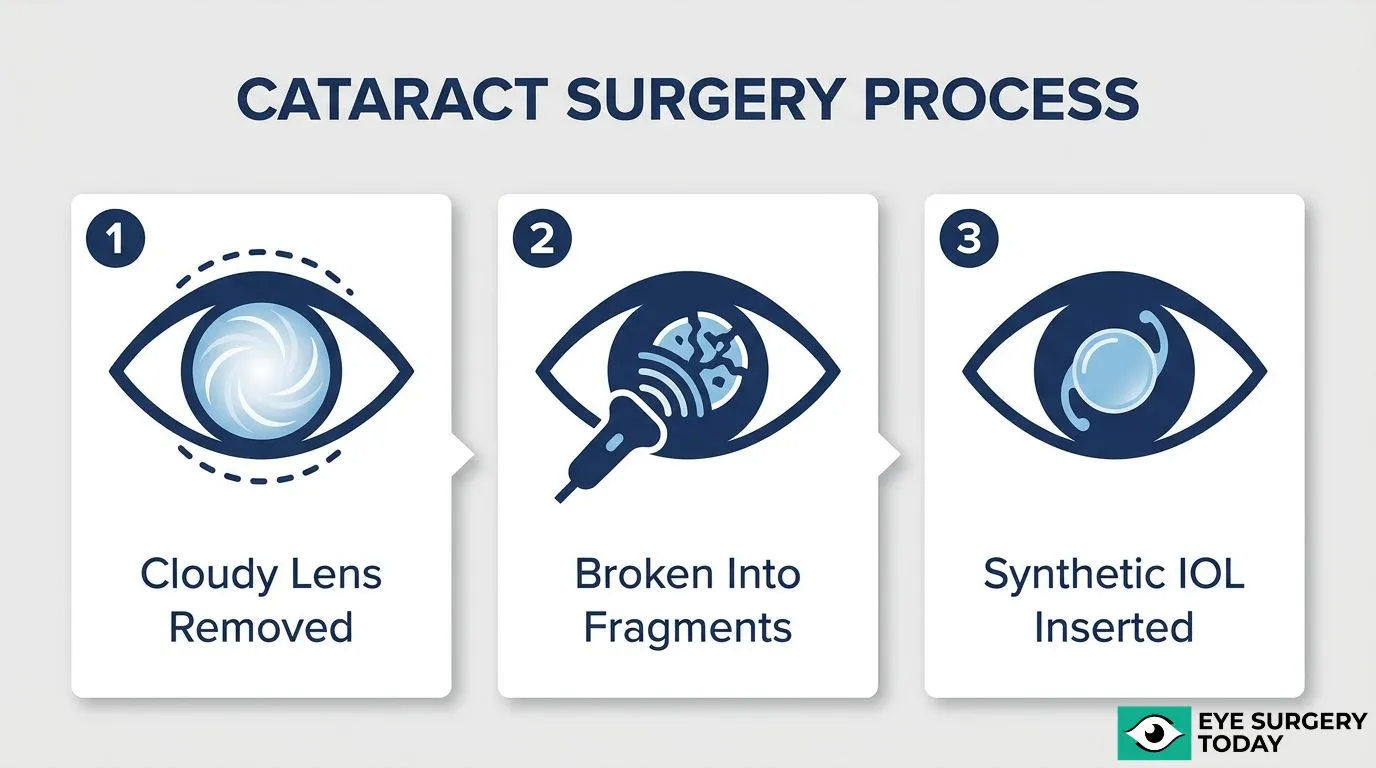
During cataract surgery, phacoemulsification breaks the clouded lens into fragments that are suctioned out, and a foldable IOL is placed inside the remaining capsular bag. Because the artificial lens is inorganic, it cannot develop cataracts.
The condition most often confused with cataract regrowth is posterior capsule opacification (PCO), sometimes called “secondary cataract.” PCO occurs when residual lens epithelial cells migrate and proliferate across the thin membrane left behind to support the IOL, gradually scattering light and reducing visual clarity.
Several factors may influence PCO risk. Younger patients experience higher rates due to more aggressive cell proliferation, while conditions like diabetes and uveitis are associated with increased likelihood. IOL edge design and material also play a measurable role in how readily epithelial cells spread.
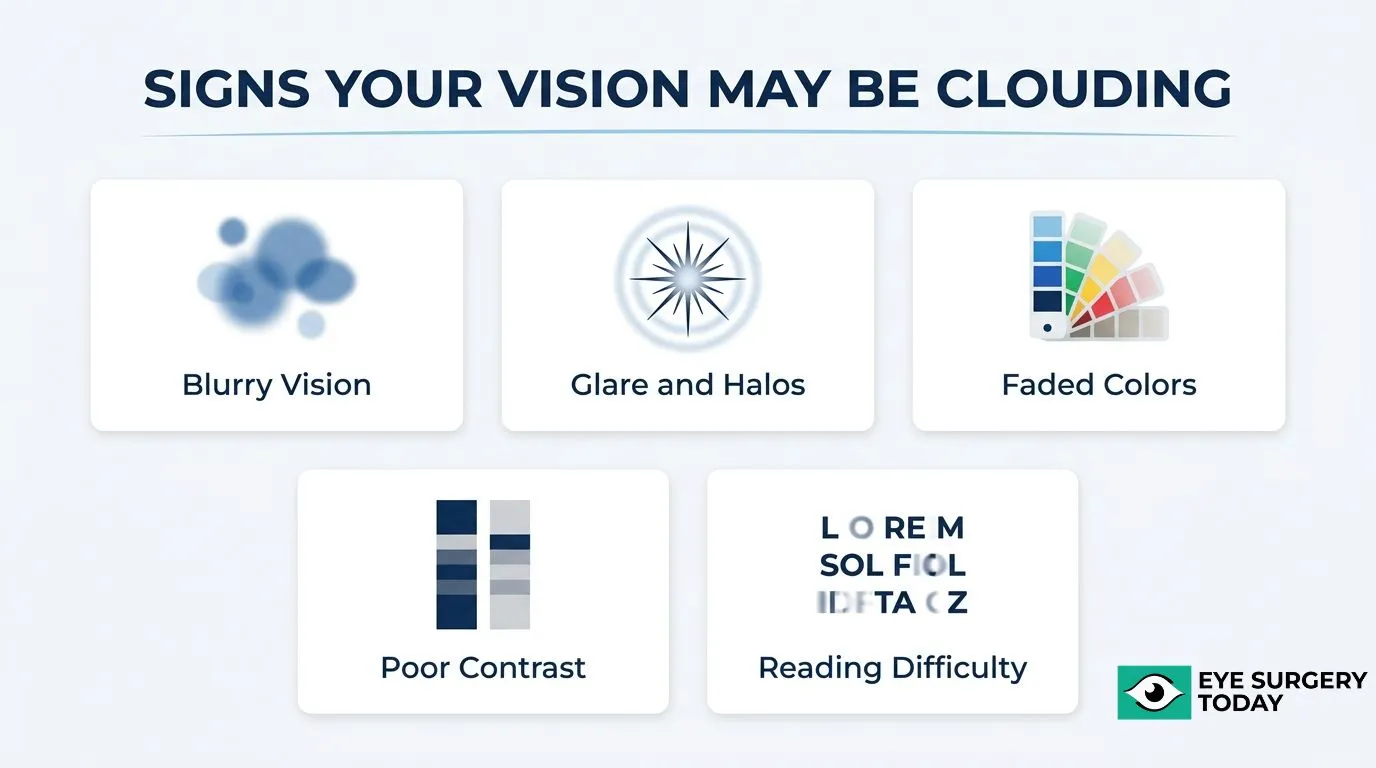
Symptoms of PCO closely mimic the original cataract experience: gradual blurring, increased glare, faded colors, and reduced contrast sensitivity. When these changes develop, a quick in-office YAG laser capsulotomy can restore clear vision, with recurrence after treatment remaining rare.
Scheduled follow-up assessments and prompt reporting of new visual changes help ensure timely evaluation, whether symptoms reflect normal healing or a condition that may benefit from treatment.
What Happens to Your Natural Lens During Cataract Surgery?
During cataract surgery, the natural lens is permanently removed and replaced with a synthetic intraocular lens (IOL). This complete removal is why true cataracts cannot return.
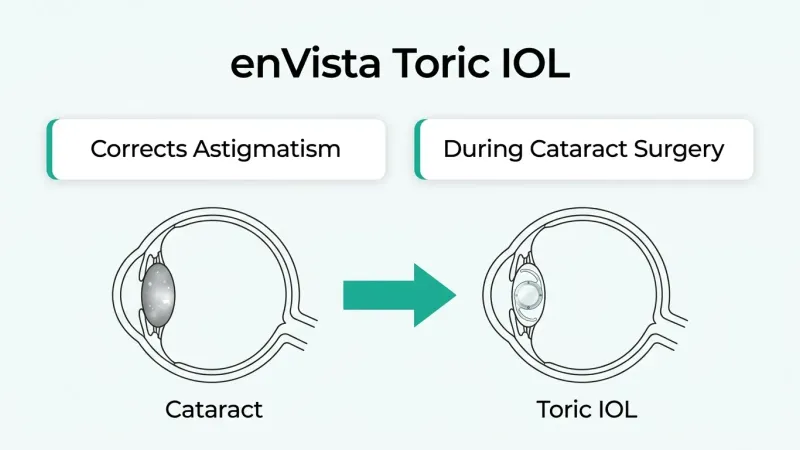
Modern cataract surgery involves removing the natural lens material through a small incision using a technique called phacoemulsification. During this process, ultrasonic energy breaks the clouded crystalline lens into tiny fragments, which are then gently suctioned out of the eye. A synthetic foldable intraocular lens is inserted through the same small incision, where it unfolds inside the remaining lens capsule to restore clear focus.
The natural crystalline lens, where cataracts originally formed, no longer exists after this procedure. Because the IOL is made from inorganic synthetic material, it cannot develop the protein clumping that causes cataracts in biological tissue. This distinction is critical for understanding post-surgical vision changes: while cloudiness can sometimes return for other reasons, the cataract itself is gone permanently. The thin capsular bag left behind to hold the new IOL, however, can play a role in future vision changes.
Can a Cataract Regrow on an Artificial Lens?
No, a cataract cannot regrow on an artificial lens. The intraocular lens (IOL) implanted during cataract surgery is made from synthetic, inorganic material that does not support cataract formation. Because the natural crystalline lens, where cataracts originally develop, is completely removed during the procedure, there is no biological tissue remaining on the IOL for a cataract to reform. Some patients notice cloudy vision months or years later, but this results from a separate condition called posterior capsule opacification, not true cataract regrowth. Understanding this distinction can help ease concerns about long-term surgical outcomes.
What Is Posterior Capsule Opacification?
Posterior capsule opacification (PCO) is a common condition in which the thin membrane left behind after cataract surgery gradually becomes cloudy. The sections below cover what causes PCO, how quickly it can develop, and what vision changes to expect.
What Causes the Posterior Capsule to Become Cloudy?
The posterior capsule becomes cloudy when residual lens epithelial cells (LECs) migrate across and proliferate on its surface after cataract surgery. During the original procedure, the surgeon removes the clouded natural lens but intentionally preserves the posterior capsule to support the new intraocular lens (IOL). Some lens epithelial cells inevitably remain along the capsule’s edges. Over the following weeks or months, these cells can multiply, spread across the previously clear membrane, and undergo structural changes. According to EyeWiki (American Academy of Ophthalmology), PCO is caused by the migration, proliferation, and differentiation of these residual LECs onto the posterior capsule. The resulting cell layer scatters incoming light before it reaches the retina, progressively reducing visual clarity. Because this process involves leftover biological cells rather than a new cataract forming, PCO is sometimes called a “secondary cataract,” although no actual cataract regrows.
How Soon After Cataract Surgery Can PCO Develop?
PCO can develop within months of cataract surgery, though many patients notice it years later. The timeline varies considerably based on individual biology and overall health. Patients with certain systemic conditions face a faster or more frequent onset. According to a report published by PMC (National Institutes of Health), systemic conditions such as diabetes and uveitis are associated with an increased risk of developing PCO following cataract extraction. Younger patients also tend to develop PCO sooner because their lens epithelial cells proliferate more aggressively. For most adults without additional risk factors, noticeable PCO typically emerges between one and five years after surgery. Because the onset is gradual, many patients initially attribute the slow decline in clarity to normal aging rather than capsular changes.
What Does Vision Look Like When PCO Occurs?
Vision when PCO occurs looks similar to the blurry, hazy quality experienced before the original cataract surgery. The clouded posterior capsule scatters light entering the eye, producing several recognizable symptoms:
- Gradual blurring of previously sharp post-surgical vision
- Increased glare and halos around lights, especially while driving at night
- Reduced contrast sensitivity, making it harder to distinguish objects in dim lighting
- Colors appearing slightly washed out or less vivid
- Difficulty reading fine print that was clear shortly after surgery
These changes typically worsen slowly over weeks or months rather than appearing suddenly. Many patients describe the experience as looking through a foggy or frosted window. Because PCO symptoms closely mimic original cataract symptoms, recognizing the pattern early can help guide a timely conversation with your eye doctor about treatment options.
How Is Posterior Capsule Opacification Different From a Cataract?
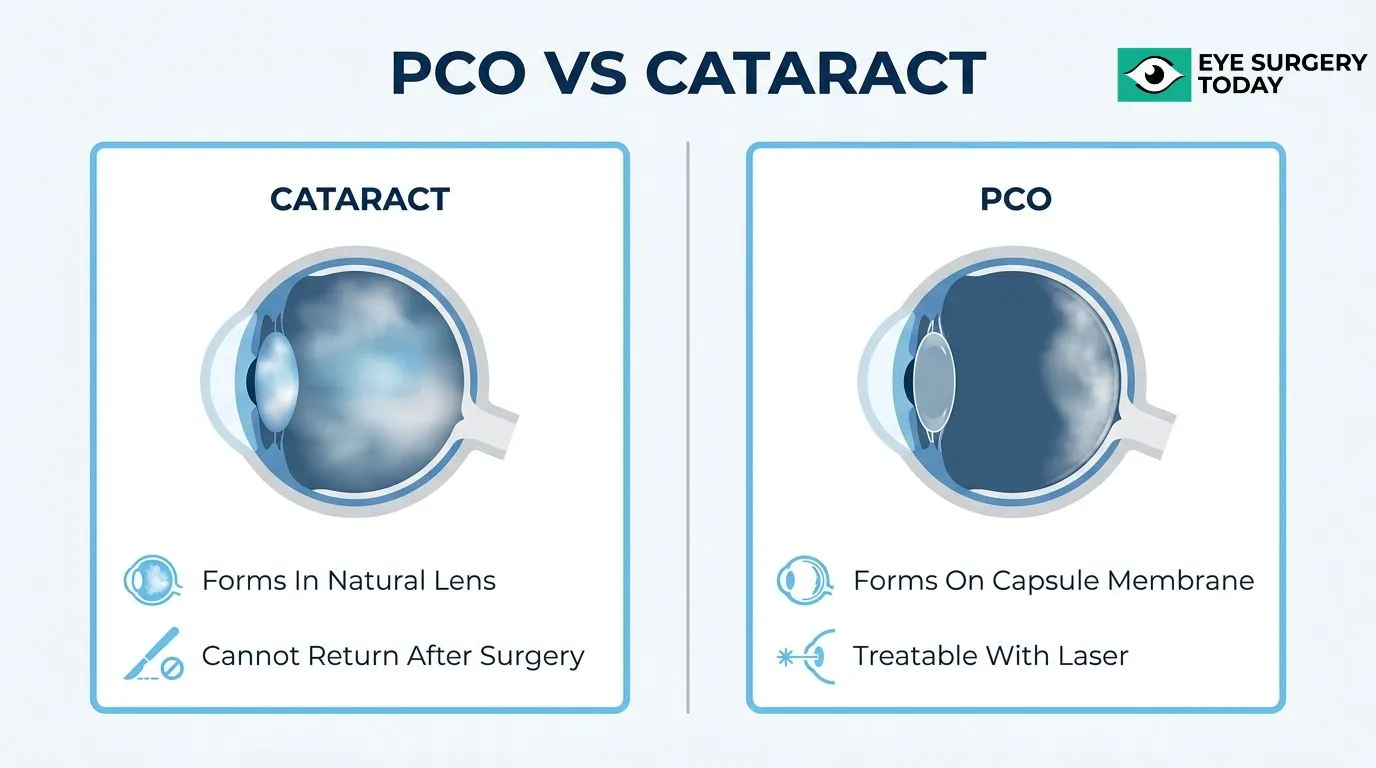
Posterior capsule opacification is different from a cataract in its location, underlying cause, and how it develops. The distinction matters because PCO occurs on a membrane behind the artificial lens, not within the lens itself.
A cataract forms when proteins in the natural crystalline lens break down and clump together, creating progressive cloudiness. Because cataract surgery removes that entire natural lens and replaces it with a synthetic intraocular lens, the original condition cannot recur. PCO, by contrast, involves a different structure altogether.
According to EyeWiki (American Academy of Ophthalmology), posterior capsule opacification is caused by the migration, proliferation, and differentiation of residual lens epithelial cells onto the posterior capsule. These leftover cells were not part of the cataract itself; they lined the thin membrane that was intentionally left in place during surgery to support the new IOL.
The key differences between PCO and a cataract include:
- Structure affected: A cataract clouds the natural crystalline lens, while PCO clouds the posterior capsule membrane behind the artificial lens.
- Cause: Cataracts result from protein degeneration over time. PCO results from residual lens epithelial cell growth on the capsule surface.
- Treatment: Cataracts require surgical lens removal. PCO is treated with a quick, noninvasive YAG laser capsulotomy.
- Recurrence potential: Once the natural lens is removed, cataracts cannot return. PCO can develop months or years after the original surgery.
Common synonyms found in clinical literature, such as “secondary cataract,” “after-cataract,” and “capsular opacification,” often create confusion by suggesting the original cataract has returned. These terms are misleading because PCO is a completely separate condition that only resembles a cataract in how it affects vision. Recognizing this distinction can help patients understand what is actually happening when cloudiness returns, and why the treatment approach differs significantly from the original procedure.
What Are the Symptoms That Vision Is Clouding Again After Surgery?
The symptoms that vision is clouding again after cataract surgery typically mirror the gradual visual changes experienced before the original procedure. These symptoms usually point to posterior capsule opacification rather than cataract regrowth.
Common signs include:
- Blurry or hazy vision that develops gradually, often months or years after surgery.
- Increased glare and halos around lights, particularly noticeable when driving at night.
- Difficulty reading fine print or seeing details that were previously clear after surgery.
- Faded or washed-out colors that lack the vibrancy restored immediately after cataract removal.
- Reduced contrast sensitivity, making it harder to distinguish objects in dim lighting or against similar backgrounds.
Because these symptoms overlap significantly with the original cataract experience, many patients understandably assume their cataract has returned. The gradual onset can also make the change easy to dismiss at first. However, recognizing these signs early allows for prompt evaluation and, if needed, a straightforward corrective procedure. Knowing who faces a higher likelihood of developing PCO can help patients stay vigilant for these changes. It’s also important to differentiate PCO symptoms from other potential sources of blurry vision, such as dry eye or residual refractive error, which require different diagnostic approaches.
Who Is More Likely to Develop Posterior Capsule Opacification?
Posterior capsule opacification risk varies by patient age, intraocular lens design, and underlying health conditions. The following subsections cover each factor.
Are Younger Patients at Higher Risk for PCO?
Yes, younger patients are at higher risk for PCO. Age is one of the strongest predictors of posterior capsule opacification because younger eyes contain lens epithelial cells that proliferate more aggressively after surgery. According to a review in Clinical Optometry, younger age is a significant risk factor for PCO, with children and infants experiencing incidence rates reaching nearly 100%.
This elevated risk stems from the biological activity of residual cells left on the capsular bag. In pediatric eyes, these cells divide and migrate across the posterior capsule far more rapidly than in older adults, often clouding the visual axis within weeks or months. For this reason, pediatric cataract surgeons frequently perform a primary posterior capsulotomy at the time of lens removal to preempt opacification. Adults under 40 may also face a comparatively higher risk than elderly patients, making close postoperative monitoring especially important for younger age groups.
Does the Type of Intraocular Lens Affect PCO Risk?
Yes, the type of intraocular lens affects PCO risk. IOL material and optic edge geometry both influence how readily residual lens epithelial cells migrate behind the implant. According to a review published through the Cochrane Library, intraocular lenses with a square-edge or sharp-edge optic design provide a physical barrier that significantly reduces the migration of lens epithelial cells, thereby lowering PCO rates.
The sharp posterior edge creates a mechanical discontinuity against the capsular bag, inhibiting cell movement at the optic-capsule junction. Rounded-edge designs, by contrast, allow cells to slide more easily onto the posterior capsule. Lens material also plays a role; hydrophobic acrylic IOLs tend to adhere more closely to the capsule than hydrophilic models, further discouraging epithelial cell proliferation. When selecting an IOL, discussing edge design and material properties with a surgeon can be a practical step toward reducing long-term PCO risk.
Can Certain Health Conditions Increase the Chance of PCO?
Yes, certain health conditions can increase the chance of PCO. Systemic and ocular inflammatory disorders alter the postoperative healing environment inside the eye, promoting the cellular activity that leads to capsular clouding.
Key conditions associated with elevated PCO risk include:
- Diabetes mellitus may accelerate lens epithelial cell changes due to altered metabolic activity within the eye.
- Uveitis involves chronic intraocular inflammation that can stimulate residual cell proliferation on the posterior capsule.
- Myotonic dystrophy has been linked to higher rates of capsular opacification following cataract extraction.
Patients with these conditions often benefit from closer follow-up schedules after cataract surgery so that early signs of opacification can be identified promptly. Understanding individual risk factors helps guide both surgical planning and postoperative expectations for YAG laser capsulotomy timing.
How Is Posterior Capsule Opacification Treated?
Posterior capsule opacification is treated with a quick, noninvasive laser procedure called YAG laser capsulotomy. The following sections explain what happens during the procedure, how long recovery takes, and whether PCO can return.
What Happens During a YAG Laser Capsulotomy?
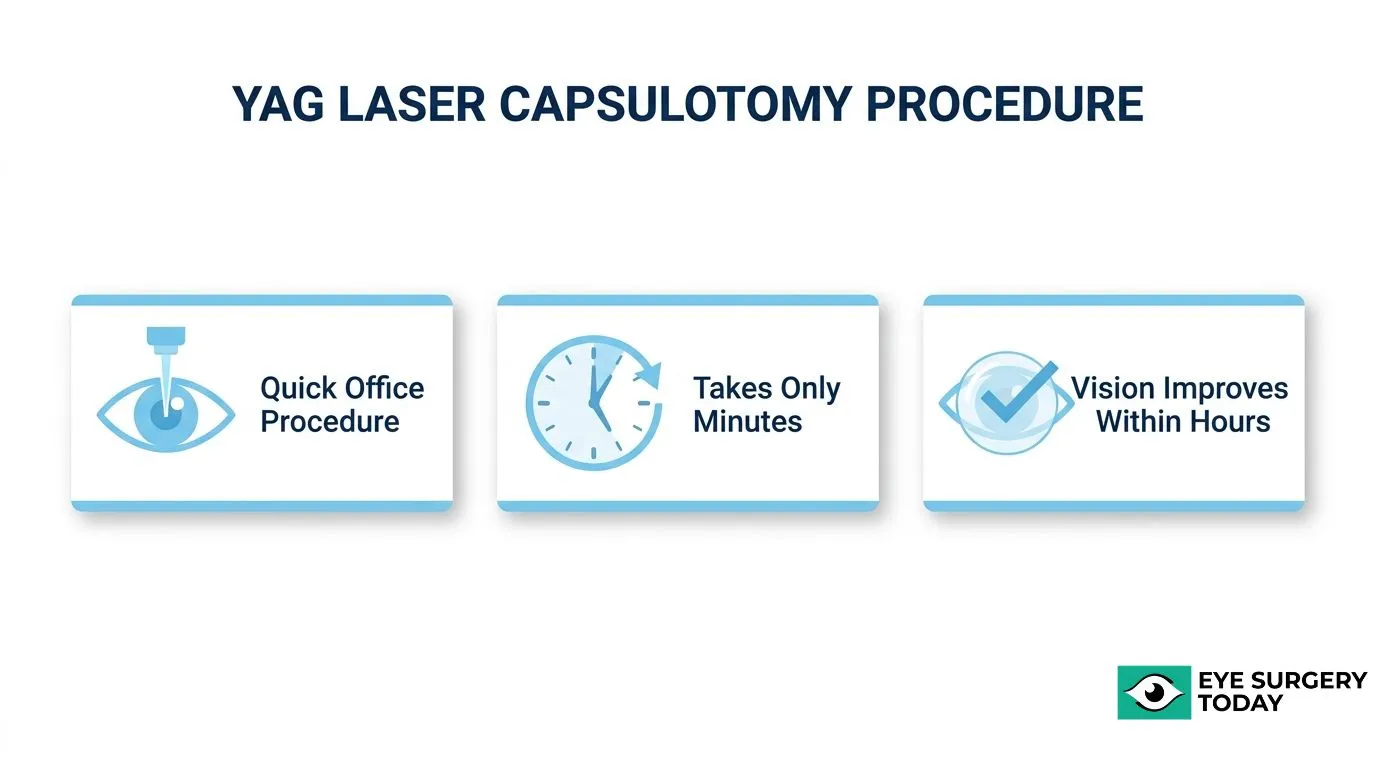
During a YAG laser capsulotomy, an ophthalmologist uses a focused Nd:YAG laser to create a small opening in the clouded posterior capsule behind the intraocular lens. The procedure is performed in-office, typically takes only a few minutes, and requires no incisions or stitches.
Dilating eye drops are applied beforehand to widen the pupil and provide a clear view of the capsule. A special contact lens is then placed on the eye to help aim the laser precisely. Short pulses of laser energy disrupt the opacified membrane, allowing light to pass through to the retina again. Understanding the precise mechanics of how YAG laser works can further clarify its effectiveness in restoring visual clarity.
Most patients notice improved clarity within hours. Because the capsule tissue is physically removed from the visual axis rather than simply treated, the results tend to be immediate and lasting. For patients who have been experiencing gradually worsening haze after cataract surgery, this straightforward procedure can feel like a significant turning point in visual recovery.
How Long Does Recovery Take After YAG Capsulotomy?
Recovery after YAG capsulotomy is typically rapid. Most patients resume normal activities within 24 hours, and vision improvement can begin within a few hours of the procedure.
Mild symptoms such as floaters or slight light sensitivity may occur in the first few days, though these generally resolve on their own. Anti-inflammatory eye drops are often prescribed for a short period to manage any minor irritation. A follow-up visit is usually scheduled within one to two weeks so the eye doctor can confirm that the capsule opening is clear and the eye is healing properly.
Because no surgical incision is involved, the recovery period is considerably shorter than the original cataract surgery. Most people find that the visual gains from the procedure stabilize quickly, making it one of the more predictable recoveries in ophthalmic care.
Can PCO Return After YAG Laser Treatment?
PCO can return after YAG laser treatment, but recurrence is rare in adults. According to a large-scale review published in the Kerala Journal of Ophthalmology, the recurrence rate following an initial YAG capsulotomy is only 0.7%.
Once the laser creates an opening in the posterior capsule, that portion of the capsule is permanently removed from the visual pathway. Residual lens epithelial cells would need to proliferate across the newly created opening for opacification to recur, which happens infrequently in adult patients.
In the uncommon event that re-opacification does develop, a repeat YAG capsulotomy can be considered. The very low recurrence rate makes this one of the most durable solutions in routine ophthalmic practice. Understanding the risks and long-term expectations of YAG capsulotomy can help guide conversations with your eye doctor about next steps.
What Are the Possible Risks of YAG Laser Capsulotomy?
The possible risks of YAG laser capsulotomy include retinal detachment and cystoid macular edema. Although the procedure is considered the standard noninvasive treatment for posterior capsule opacification, it is not entirely without complications.
According to a study published in Investigative Ophthalmology & Visual Science, Nd:YAG laser capsulotomy carries a retinal detachment incidence of 0.16% and a cystoid macular edema incidence ranging from 1.23% to 3%. While these rates are low, they underscore why a thorough pre-procedure evaluation matters. Patients with pre-existing retinal conditions or high myopia may face elevated risk, making a detailed discussion with an ophthalmologist especially important before proceeding.
Other potential complications that your eye doctor may discuss include:
- Temporary elevation in intraocular pressure shortly after the procedure.
- Mild inflammation inside the eye that typically resolves with prescribed drops.
- Displacement or pitting of the intraocular lens, though this remains uncommon.
For most patients, the benefits of restoring clear vision far outweigh these low-probability risks. Still, informed awareness of every possible outcome helps set realistic expectations. Understanding these risks prepares you for a more productive conversation when exploring prevention strategies.
Can You Prevent Posterior Capsule Opacification?
No, you cannot fully prevent posterior capsule opacification, but specific surgical choices can significantly reduce the risk. IOL design and careful surgical technique are the primary factors within a surgeon’s control.
Posterior capsule opacification develops when residual lens epithelial cells migrate across the posterior capsule after cataract surgery. While no method eliminates this possibility entirely, the choice of intraocular lens plays a measurable role in lowering incidence rates. According to a Cochrane Library review, intraocular lenses with a square-edge or sharp-edge optic design provide a physical barrier that significantly reduces the migration of lens epithelial cells, thereby lowering PCO rates.
Beyond IOL selection, thorough cortical clean-up during the initial procedure may help limit the number of residual epithelial cells available to proliferate. Hydrophobic acrylic lens materials have also been associated with lower PCO rates compared to some other materials. Adhering to strict sterile protocols during the initial cataract surgery procedure is also critical for minimizing risks like infection. For patients with known risk factors, such as younger age or diabetes, discussing these lens options with an ophthalmologist before surgery can be especially valuable. While complete prevention remains out of reach, these strategies represent the most effective tools currently available to minimize the likelihood of needing a follow-up YAG capsulotomy.
When should concerns about vision changes prompt a return visit? The next section covers follow-up timing.
When Should You See Your Eye Doctor After Cataract Surgery?
You should see your eye doctor within four to six weeks after uncomplicated cataract surgery for an initial follow-up assessment. Additional visits may be necessary if you notice new vision changes.
According to the National Institute for Health and Care Excellence (NICE), clinical guidelines recommend that people who have undergone uncomplicated cataract surgery should not be offered an in-person first-day review, but should have a follow-up assessment within four to six weeks. Beyond that scheduled visit, contact your eye doctor promptly if you experience any of the following:
- Gradual blurring or haziness that returns weeks or months after initially clear results
- Increased glare or halos around lights, especially at night
- Difficulty reading or performing tasks that had improved after surgery
- Sudden flashes of light, new floaters, or a shadow across your vision
These symptoms can indicate posterior capsule opacification or other postoperative concerns that benefit from early evaluation. Because PCO can develop months to years after the original procedure, staying attentive to subtle vision shifts remains important even when recovery initially goes smoothly. Timely follow-up allows your eye doctor to distinguish between normal healing and conditions that may require treatment, such as YAG laser capsulotomy.
Knowing when to seek care is one step; understanding what reliable resources can guide your recovery expectations is equally valuable.
How Can Surgeon-Reviewed Resources Help You Understand Vision Changes After Cataract Surgery?
Surgeon-reviewed resources can help you understand vision changes after cataract surgery by providing clinically accurate, accessible explanations of what is normal healing and what may signal a treatable condition like PCO.
Can Eye Surgery Today Help You Learn What to Expect After Cataract Surgery?
Yes, Eye Surgery Today can help you learn what to expect after cataract surgery through surgeon-reviewed guides that address the most common patient concerns. Frequent questions identified in search trends include “Can cataracts grow back?”, “How many times can you have cataract surgery?”, and “What is a secondary cataract?”
Eye Surgery Today breaks down these topics without medical jargon, covering:
- Why true cataracts cannot return once the natural lens is removed
- What posterior capsule opacification is and how it differs from a cataract
- Which follow-up timelines apply, since clinical guidelines recommend a post-operative assessment within four to six weeks for uncomplicated cases
- How treatments like YAG laser capsulotomy restore clarity when PCO develops
According to StatPearls (NCBI), cataract surgery maintains a success rate of approximately 95% in restoring vision. Understanding that high baseline success rate, along with the small possibility of PCO, helps patients set realistic expectations and recognize symptoms early. Eye Surgery Today provides that context in a clear, patient-focused format designed to support informed conversations with your eye doctor. In addition to cataracts, our guides cover various other topics, including reconstructive and cosmetic procedures like eyelid surgery.
What Are the Key Takeaways About Cataract Regrowth After Surgery?
The key takeaways about cataract regrowth after surgery center on one essential fact: true cataracts cannot come back once the natural lens has been surgically removed and replaced with an artificial intraocular lens.
The most important points to remember are:
- The clouded natural lens is permanently removed during cataract surgery, so the original cataract cannot regrow.
- Posterior capsule opacification may cause symptoms that resemble cataract return, but it is a separate, treatable condition.
- PCO develops in a small percentage of patients; a 2022 study of over 500,872 eyes published in Experimental Eye Research found an incidence of 2.3% at six months post-surgery.
- YAG laser capsulotomy offers a quick, noninvasive solution when PCO does occur.
- Scheduling recommended follow-up visits and reporting any new blurriness promptly helps ensure timely treatment.
Knowing the difference between true cataract regrowth and secondary membrane clouding is perhaps the single most empowering piece of information a cataract surgery patient can have. Eye Surgery Today provides surgeon-reviewed resources to help you navigate these distinctions with confidence.