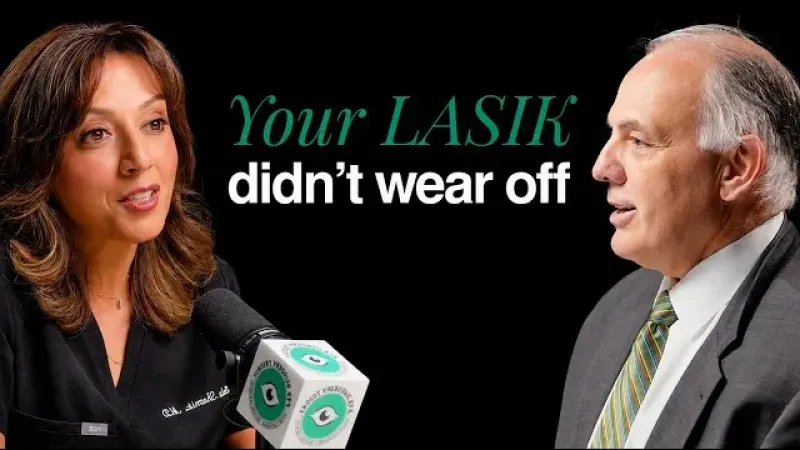
Patients tell Dr. John Doane their LASIK “wore off” all the time. He’s been having that conversation for 30 years — because he had LASIK 30 years ago himself, and his distance vision is still perfect.
One of the most common things cataract surgeons hear is: “My second surgery felt completely different.”
Most patients think of cataract surgery as a vision procedure. Dr. Eric Donnenfeld — NYU professor and co-founder of one of the country’s largest eye practices seeing nearly a million patients a year — has spent 37 years watching it change people’s lives in ways most patients never anticipated.
Most cataract consultations start with options. Dr. Steven Dell — who has spent 30 years pioneering goal-first cataract planning — argues that’s the wrong starting point. The right place to start is a single question: what does this patient actually want?
Patients are told to expect two to three hours. They still show up surprised. This episode of Eye Surgery Today exists to change that.
Most patients assume their optometrist and surgeon are operating in separate worlds. Dr. Joey Allen — known online as Dr. Eye Health with over 100 million views — explains why that assumption leads to worse outcomes.
It’s easy to compare your cataract surgery experience with someone else’s.
Most cataract surgeries are permanent from day one. But in rare situations — when a patient never adapts to their lens implant — surgeons have a real option: replacing it.
For patients with Fuchs’ endothelial dystrophy, cataract surgery involves a layer of planning that doesn’t apply to most patients — and the instinct to wait can sometimes make things harder, not easier.
Many cataract patients expect sharper vision after surgery.
Get our surgeon-reviewed insights ebook delivered directly to your inbox.
Accessibility Tools