

What Types of Cosmetic Eye Procedures Are Available?
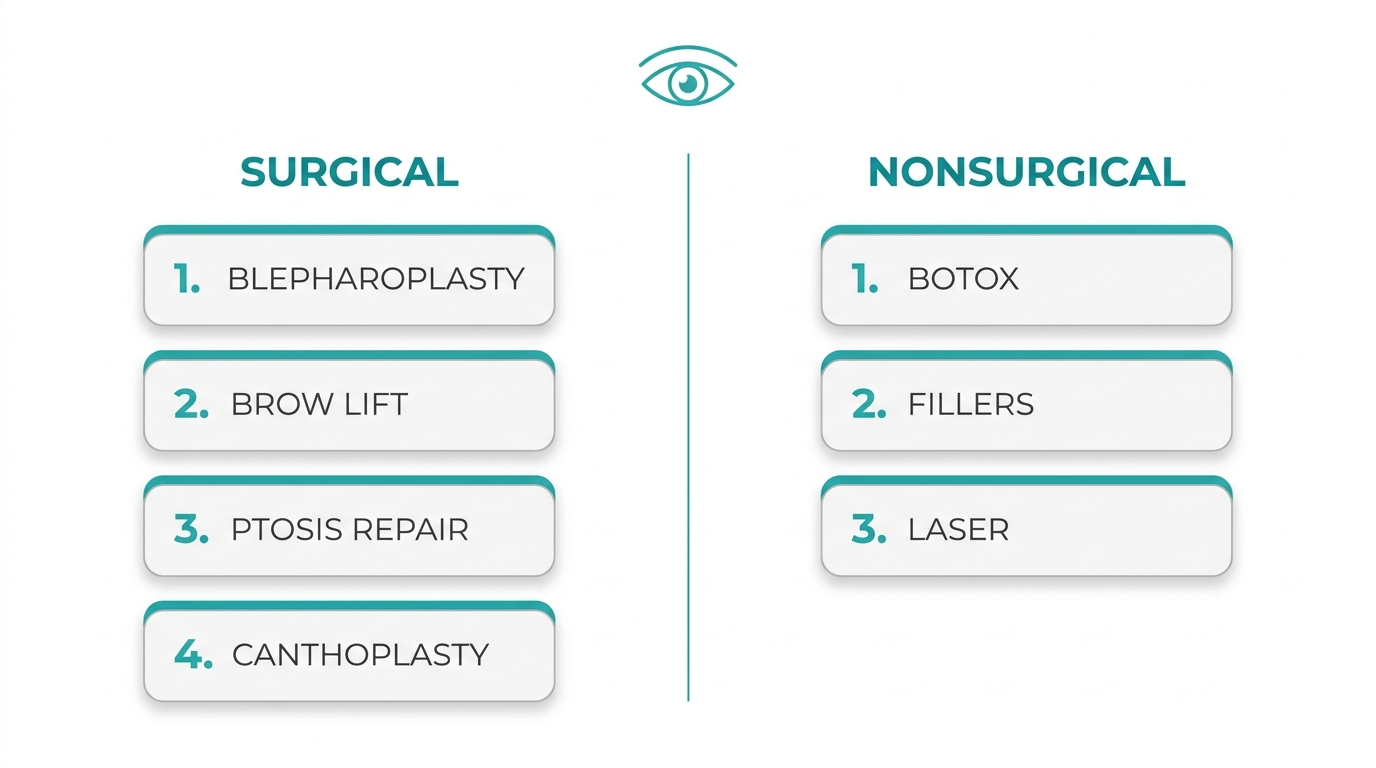
The types of cosmetic eye procedures available range from surgical interventions, such as upper and lower blepharoplasty, brow lift, ptosis repair, and canthoplasty, to nonsurgical options like neuromodulators, dermal fillers, and energy-based treatments.
Upper Blepharoplasty
Upper blepharoplasty is a surgical procedure performed on the upper eyelids in which redundant skin, muscle, or fat is excised to restore a more youthful appearance.According to the American Academy of Ophthalmology, a standard “20-mm rule” suggests that at least 20 mm of skin should remain between the lower margin of the central eyebrow and the central eyelash margin to help ensure adequate eyelid closure after surgery. Relative contraindications include dry eyes, compromised blink, and anticoagulant use, such as aspirin, warfarin, or fish oil, which may increase postoperative bleeding risk. This precision-dependent planning is what separates a safe, natural-looking result from a functionally compromised one.
Lower Blepharoplasty
Lower blepharoplasty is a surgical procedure targeting the lower eyelids to address under-eye bags, excess skin, and herniated fat that contribute to a tired or aged appearance. The procedure may use a transcutaneous incision along the lower lash line or a transconjunctival approach, which hides the incision inside the eyelid entirely. The transconjunctival route is often preferred when excess skin removal is not needed, as it reduces visible scarring and lowers the risk of lower eyelid malposition following surgery.
Brow Lift
A brow lift, also called a forehead lift, repositions the eyebrows to a more youthful level and reduces forehead creasing. According to a review published in Plastic Surgery International, it can be performed using several techniques, including internal trans-blepharoplasty, direct, coronal, or endoscopic approaches. The endoscopic technique has become widely favored because it uses smaller incisions, reduces recovery time, and minimizes scalp numbness compared to the traditional coronal approach.
Ptosis Repair
Ptosis repair is a surgical procedure that corrects upper eyelid drooping caused by levator muscle weakness or detachment. The condition may be congenital, stemming from underdevelopment of the levator muscle, or acquired through aging, injury, or prior surgery. The most common surgical technique involves reattaching or tightening the levator aponeurosis to restore the eyelid to its proper height. When ptosis significantly obstructs the visual field, repair may qualify for insurance coverage rather than being classified as purely cosmetic.
Canthoplasty
Canthoplasty is a surgical procedure that reshapes, tightens, and lifts the outer corner of the eye, known as the lateral canthus, to treat sagging lower eyelids. It is frequently performed alongside lower blepharoplasty to provide structural support to the lower eyelid and prevent postoperative complications such as ectropion. Beyond its reconstructive applications, canthoplasty can also subtly alter eye shape for aesthetic purposes, making it one of the more versatile periorbital procedures available.
Nonsurgical Eye Rejuvenation Treatments
Nonsurgical eye rejuvenation treatments address periorbital aging without incisions or general anesthesia. According to a 2025 review published in Advances in Cosmetic Surgery, the primary nonsurgical options include:
- Neuromodulators such as botulinum toxin (Botox), which reduce dynamic wrinkles like crow’s feet by temporarily relaxing the underlying muscles.
- Dermal fillers containing hyaluronic acid, used to restore volume loss in the tear trough and under-eye hollows.
- Energy-based treatments including laser resurfacing and radiofrequency devices, which stimulate collagen production and smooth fine lines around the eyes.
For patients who are not yet ready for surgery or who have mild-to-moderate concerns, nonsurgical options can provide meaningful improvement with minimal downtime, making them a practical starting point before considering a surgical approach.
Who Is a Good Candidate for Cosmetic Eye Procedures?
Good candidates for cosmetic eye procedures vary by treatment type, overall health, and personal goals. The following sub-sections cover surgical candidates, nonsurgical beneficiaries, and situations where procedures should be avoided.
Who Is a Good Candidate for Surgical Eyelid Procedures?
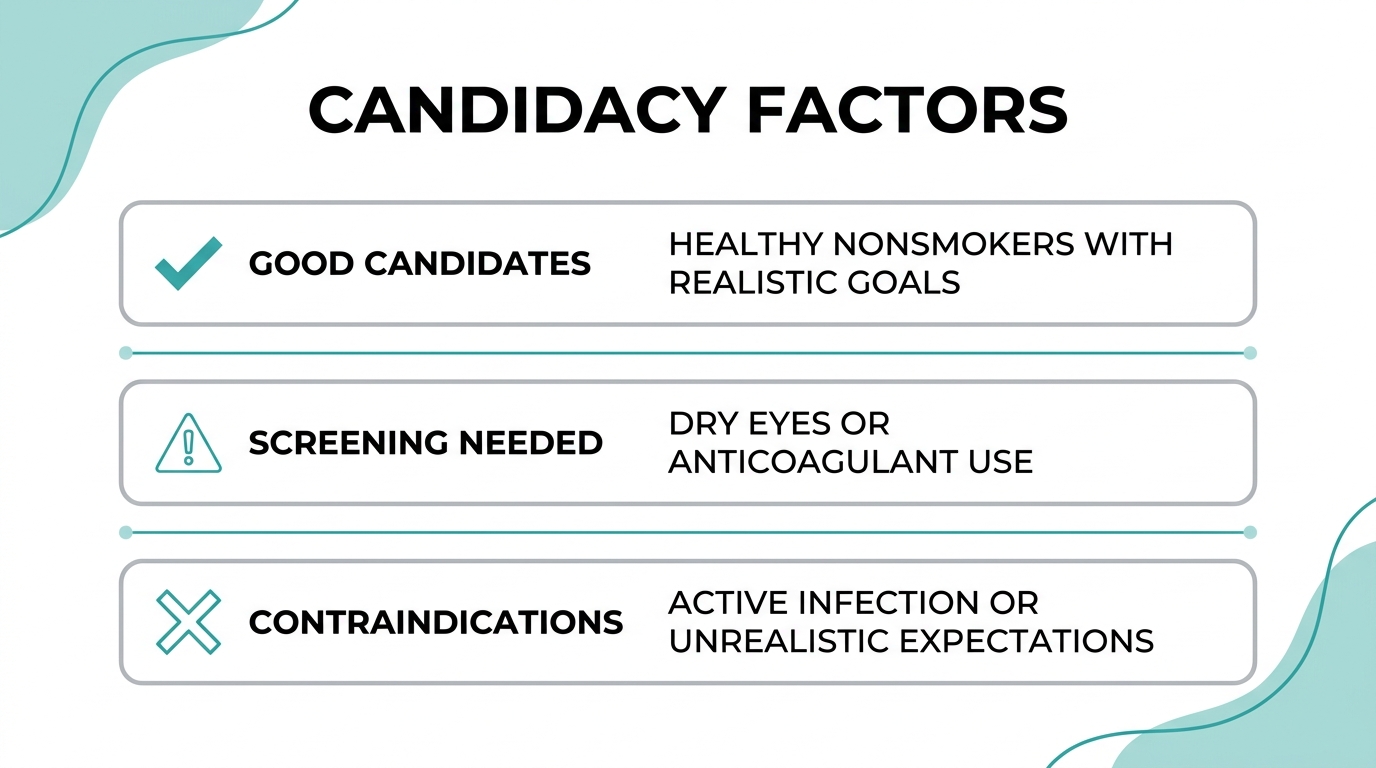
Good candidates for surgical eyelid procedures are healthy individuals without conditions that impair healing, nonsmokers, and people with realistic improvement goals. Ideal candidates typically present with:
- Excess upper eyelid skin that causes visual obstruction or aesthetic concern
- Lower eyelid laxity or sagging at the outer corner (lateral canthus) that may be addressed with canthoplasty
- Drooping brows contributing to a tired or heavy appearance
- Stable overall health with no active infections or uncontrolled systemic disease
According to the American Society of Plastic Surgeons, 120,755 blepharoplasty procedures were performed in the U.S. in 2024, reflecting consistently strong demand for surgical eyelid correction. Surgical candidacy genuinely depends on anatomy and health history, not age alone.
Who May Benefit From Nonsurgical Eye Treatments?
Nonsurgical eye treatments benefit patients who have mild to moderate periorbital aging, prefer minimal downtime, or are not yet ready for surgery. Strong candidates include:
- Adults with dynamic wrinkles around the eyes responsive to neuromodulators like botulinum toxin
- Patients with early volume loss under the eyes suited to hyaluronic acid dermal fillers
- Individuals seeking skin texture improvement through laser resurfacing or radiofrequency
- Those maintaining surgical results between procedures
Who Should Avoid Cosmetic Eye Procedures?
Patients who should avoid cosmetic eye procedures include those with active infections, uncontrolled systemic conditions, unrealistic expectations, or psychological contraindications. Relative contraindications for upper blepharoplasty specifically include dry eyes, compromised blink, and anticoagulant use. According to a review published in Seminars in Plastic Surgery, patients with a history of multiple cosmetic procedures and minimally evident complaints should be screened for body dysmorphic syndrome, as surgery is contraindicated in these cases. A thorough preoperative consultation remains the most reliable way to identify these concerns before proceeding.
What Are the Potential Benefits of Cosmetic Eye Procedures?
The potential benefits of cosmetic eye procedures span three connected areas: functional vision improvement, visible appearance enhancement, and psychological confidence. The H3 sections below cover each benefit category in detail.
How May Cosmetic Eye Surgery Improve Vision?
Cosmetic eye surgery may improve vision when structural issues physically obstruct the visual field. Severely drooping upper eyelids, a condition known as ptosis, can reduce the superior visual field enough to interfere with daily tasks such as reading or driving. Upper blepharoplasty removes redundant skin and tissue from the eyelid, which may restore an unobstructed line of sight. According to the American Academy of Ophthalmology, insurance coverage for functional blepharoplasty typically requires documented superior visual field loss of at least 12 to 15 degrees corrected when the eyelids are taped up, confirming that the vision impairment is real and measurable. Not every cosmetic eyelid procedure carries a functional benefit, but when drooping tissue genuinely compromises sight, surgery addresses both the aesthetic and clinical concern simultaneously.
How May Cosmetic Eye Procedures Improve Appearance?
Cosmetic eye procedures may improve appearance by reducing visible signs of aging around the periorbital area, including excess skin, under-eye bags, sagging lower lids, and descended brow position. Blepharoplasty excises redundant eyelid tissue to restore a more open, rested look. Nonsurgical options, including botulinum toxin and hyaluronic acid dermal fillers, may reduce dynamic wrinkles and restore lost volume without surgery. Brow lift surgery repositions descended eyebrows to a more youthful level, further opening the upper face. Each procedure targets a specific anatomical change associated with aging, and combining approaches often yields more balanced results than addressing a single area in isolation.
How May Cosmetic Eye Surgery Affect Confidence?
Cosmetic eye surgery may affect confidence by resolving appearance concerns that patients associate with looking tired, older, or less alert than they feel. When the external appearance of the eyes aligns more closely with how a person feels internally, many patients report an improved sense of self-image. The American Society of Plastic Surgeons notes that ideal candidates hold a positive outlook and realistic improvement goals, suggesting that psychological readiness and realistic expectations are closely tied to post-procedure satisfaction. In practice, patients who understand what surgery can and cannot change tend to experience the strongest confidence outcomes, making the preoperative consultation as important as the procedure itself.
What Are the Possible Risks and Complications?
Cosmetic eye surgery carries real risks alongside its benefits. The sections below cover common side effects, serious complications, and how risks may be minimized.
What Are the Common Side Effects After Cosmetic Eye Surgery?
The common side effects after cosmetic eye surgery include swelling, bruising, dryness, and temporary blurred vision. These typically resolve within the first one to two weeks as tissues heal. One specific side effect worth understanding is ectropion: an outwardly turned lower eyelid that can occur after surgery due to tissue relaxation, scarring, or excessive skin removal, according to the American Society of Ophthalmic Plastic and Reconstructive Surgery. Ectropion may lead to eye exposure and excessive tearing, so it warrants prompt evaluation if it develops.
What Are the Serious Complications to Watch For?
The serious complications to watch for after cosmetic eye surgery include orbital hemorrhage, lagophthalmos, and vision loss. According to Plastic Surgery Key, the most serious complication of blepharoplasty is blindness, which is usually related to a sudden postoperative orbital (retrobulbar) hemorrhage. Lagophthalmos, the inability to close the eyelids completely, can result from over-resection of skin or muscle and may lead to corneal exposure and scarring. These are serious and potentially irreversible outcomes, which makes surgeon selection critically important.
How Can Risks Be Minimized Before and After Surgery?
Risks can be minimized before and after cosmetic eye surgery through careful candidate screening, precise surgical planning, and adherence to postoperative protocols. Before surgery, your surgeon may review medications such as anticoagulants (aspirin, warfarin, fish oil) that can increase bleeding risk. Surgically, following the standard “20-mm rule” helps ensure sufficient skin remains for complete eyelid closure. These precautions, combined with choosing a board-certified, fellowship-trained surgeon, represent the most reliable approach to reducing avoidable complications.
What Should You Expect During a Cosmetic Eye Procedure?
A cosmetic eye procedure involves three distinct phases: the preoperative consultation, the day of surgery, and anesthesia administration. Each phase requires specific preparation and decision-making that directly affects your outcome.
What Happens During the Preoperative Consultation?
The preoperative consultation is a comprehensive medical evaluation where your surgeon reviews your health history, examines your eyelid anatomy, discusses your goals, and determines your candidacy for the procedure. According to the American Society of Plastic Surgeons, ideal candidates are healthy individuals without conditions that impair healing, nonsmokers, and people with realistic improvement goals.
During this visit, your surgeon will typically:
- Review current medications, including anticoagulants such as aspirin, warfarin, or fish oil that may increase bleeding risk
- Assess eyelid function, skin laxity, and fat distribution
- Document baseline vision and, where applicable, perform visual field testing
- Photograph the periorbital area for surgical planning and insurance documentation
- Discuss realistic outcomes and address concerns about recovery
This consultation is where contraindications are identified and a personalized surgical plan is established.
What Happens on the Day of Surgery?
On the day of surgery, cosmetic eyelid procedures are typically performed as outpatient procedures in a surgical center or hospital setting. You will arrive prepared according to your surgeon’s instructions, which generally include fasting beforehand and arranging transportation home.
The surgical sequence generally includes:
- Check-in, pre-surgical paperwork, and IV placement
- Pre-operative marking of incision lines while you are upright
- Transfer to the operating room and administration of anesthesia
- The procedure itself, which may last one to three hours depending on the complexity
- Closure of incisions with sutures or skin glue, with sutures typically removed within one week, per the American Society of Plastic Surgeons
- Transfer to a recovery area for monitoring before discharge
Most patients return home the same day. Having realistic expectations about the immediate post-operative appearance, including swelling and bruising, helps reduce unnecessary concern.
What Type of Anesthesia Is Used?
The type of anesthesia used in cosmetic eye procedures depends on the complexity of the surgery and patient preference. Most blepharoplasty and eyelid procedures are performed under local anesthesia with intravenous sedation (monitored anesthesia care), while more extensive procedures such as a combined brow lift may require general anesthesia.
Common anesthesia options include:
- Local anesthesia only: Used for minor procedures; the patient remains awake with the surgical area numbed
- Local anesthesia with IV sedation: The most common approach for blepharoplasty; the patient is relaxed but not fully unconscious
- General anesthesia: Reserved for longer or more complex surgical combinations
The choice of anesthesia affects both the cost and recovery profile of the procedure, so discussing it thoroughly during the preoperative consultation is essential for informed decision-making.
What Does Recovery Look Like After Cosmetic Eye Surgery?
Recovery after cosmetic eye surgery follows a predictable progression, moving from initial swelling and bruising through gradual healing to final results. The sections below cover what to expect in the first week, when normal activities resume, and how long full results take to appear.
What Should You Expect in the First Week of Recovery?
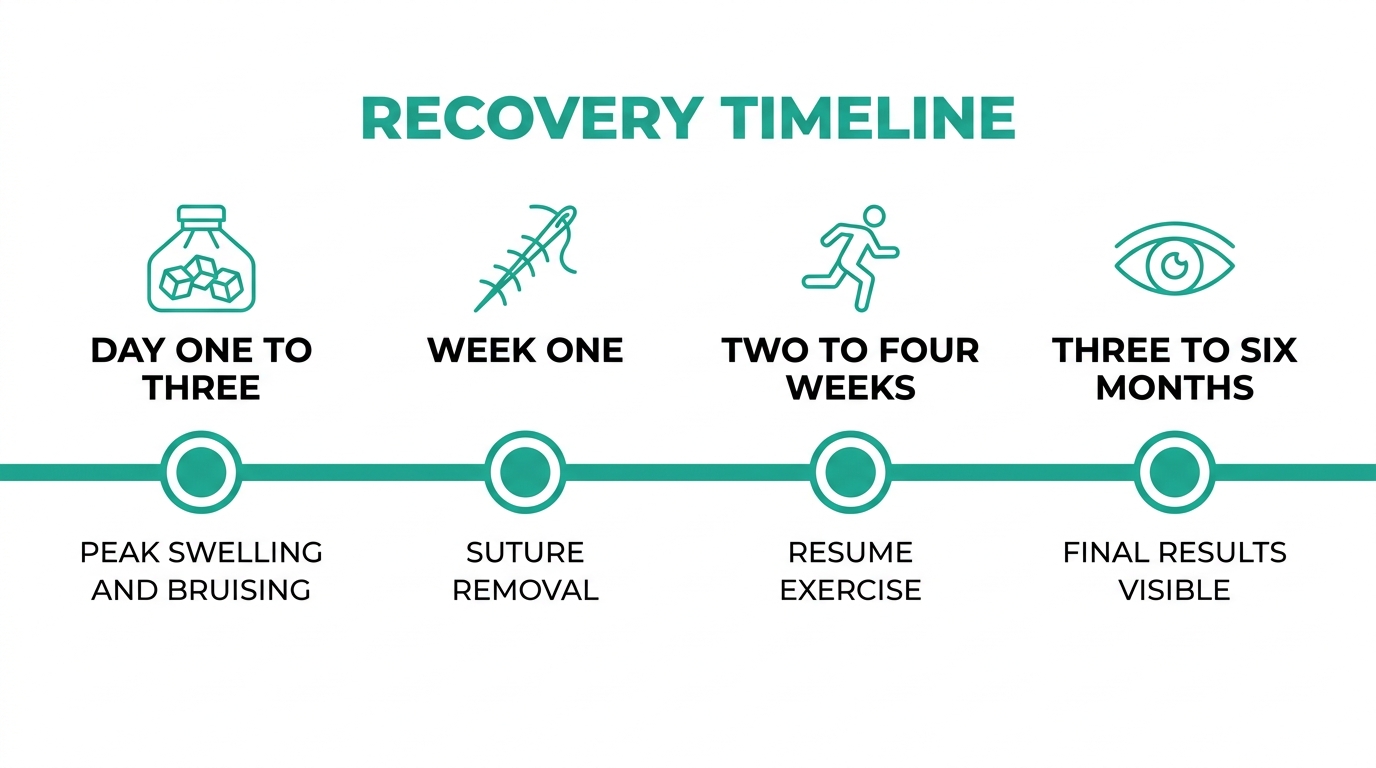
The first week of recovery involves manageable but noticeable swelling, bruising, and incision care. According to the American Society of Plastic Surgeons, eyelid incisions are closed with sutures or skin glue, with sutures removed within one week, while swelling and bruising peak in the first 72 hours and mostly fade over 7 to 10 days.
Key first-week care guidelines include:
- Applying ice water compresses continuously for the first 3 days to reduce swelling.
- Keeping your head elevated at 45 to 60 degrees, including during sleep.
- Avoiding rubbing or touching the incision sites.
- Attending your suture removal appointment, typically scheduled within 7 days.
Most patients find the first 72 hours the most uncomfortable, with noticeable improvement by the end of week one.
When Can You Return to Normal Activities?
Return to normal activities after cosmetic eye surgery is gradual, with most patients resuming light tasks within one to two weeks. Strenuous exercise, heavy lifting, and activities that raise blood pressure are generally restricted for two to four weeks to reduce rebleeding and swelling risk. Screen use and reading may be limited in the first several days due to eye fatigue. Your surgeon will provide a personalized timeline based on the specific procedure performed and how healing progresses.
How Long Does It Take to See Final Results?
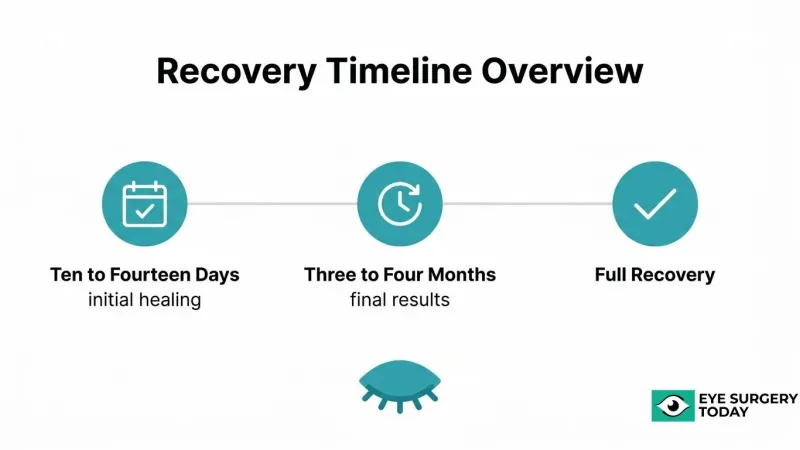
Final results after cosmetic eye surgery typically become visible between three and six months post-procedure, once residual swelling fully resolves and tissues settle. Incision scars continue to fade and soften for up to 12 months. While significant improvement is visible within the first few weeks, subtle refinements in contour and skin texture occur gradually. Patience through the healing process is important, as early results do not always reflect the final outcome.
How Much Do Cosmetic Eye Procedures Typically Cost?
Cosmetic eye procedure costs vary by procedure type, surgeon fees, anesthesia, and facility charges. The sections below cover typical price ranges and what insurance may or may not cover.
What Does Blepharoplasty Cost on Average?
Blepharoplasty costs depend on whether upper or lower eyelids are treated. According to the American Society of Plastic Surgeons, the average surgeon fee is approximately $3,359 for upper blepharoplasty and $3,876 for lower blepharoplasty, with total costs including anesthesia and facility fees often ranging from $3,000 to $7,000.
These figures cover surgeon fees only and exclude operating room costs, anesthesia, pre-operative testing, and post-operative care. For patients considering both upper and lower eyelid surgery simultaneously, the combined total can approach the higher end of that range. Consulting with a board-certified surgeon for an itemized quote is the most reliable way to estimate your personal cost.
Does Insurance Cover Cosmetic Eye Surgery?
Insurance coverage for cosmetic eye surgery depends on whether the procedure is medically necessary. Purely cosmetic blepharoplasty is not covered by insurance. However, when upper eyelid drooping causes measurable visual field impairment, such as a superior visual field loss of at least 12 to 15 degrees corrected when eyelids are taped, Medicare and private insurers may provide coverage. Documentation requirements typically include clinical notes, visual field testing, and photographs showing skin resting on the eyelashes.
How Do You Choose the Right Surgeon for Eye Procedures?
Choosing the right surgeon for eye procedures requires evaluating board certification, subspecialty training, and procedural experience. The H3s below cover the key credentials to verify, questions to ask during consultation, and why specialized training matters for periorbital anatomy.
What Credentials Should a Cosmetic Eye Surgeon Have?
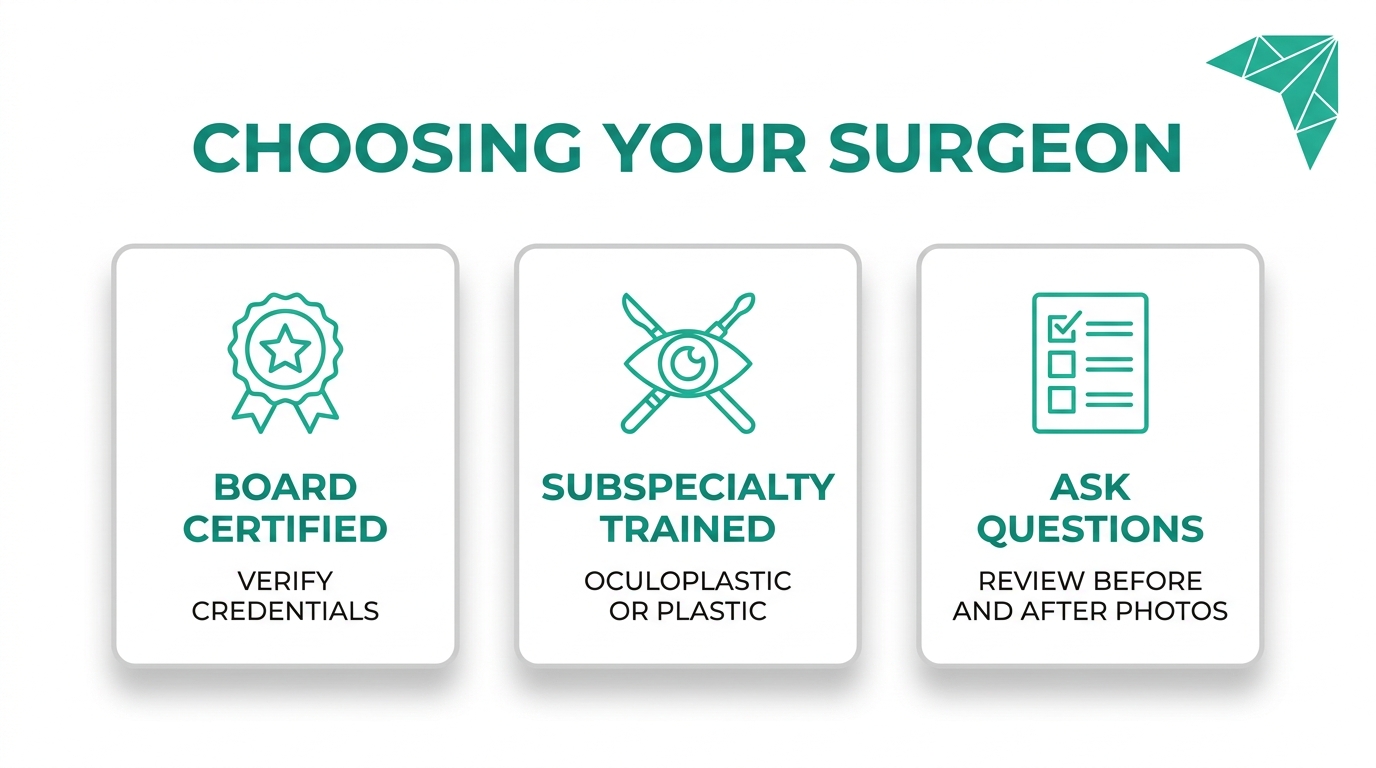
The credentials a cosmetic eye surgeon should have include relevant board certification and documented training in plastic surgery or oculofacial plastic surgery. According to the American Society of Plastic Surgeons, ASPS member surgeons must complete at least six years of surgical training after medical school, with a minimum of three years in a plastic surgery residency, and hold board certification from the American Board of Plastic Surgery. Surgeons specializing in eyelid procedures may alternatively hold ASOPRS membership, which requires ophthalmology board certification, fellowship training, and passing rigorous written and oral examinations in oculofacial plastic surgery.
Verifying these credentials before any consultation is, in practice, one of the most protective steps a patient can take. Eyelid anatomy is unforgiving, and a surgeon without subspecialty training may lack the depth needed to handle intraoperative decisions confidently.
Why Does Subspecialty Training Matter for Eye Surgery?
Subspecialty training matters for eye surgery because the eyelids interact directly with ocular surface health, tear drainage, and visual function, making anatomical precision critical. Dr. Brian Biesman, an ASOPRS member, notes that “the eyelids are highly complex, and it’s important to find a surgeon who really understands the relationship between the eyelids, the bony eye socket, and the rest of the face.” Dr. Anaïs Carniciu, an ASOPRS-certified oculofacial specialist, further highlights that “even slight surgical errors can impact function, comfort, and appearance.”
General cosmetic training does not always include this depth of periorbital focus. Choosing a surgeon with focused eyelid or oculofacial experience may help reduce the risk of complications such as ectropion, lagophthalmos, or asymmetry.
What Questions Should You Ask During a Surgeon Consultation?
The questions you should ask during a surgeon consultation include inquiries about board certification, procedure volume, complication management, and before-and-after photo review. Dr. Alon Kahana, a board-certified ophthalmologist and member of the Oculofacial Society, emphasizes the mantra that “you never have a second chance to do it right the first time,” noting that a significant portion of his practice addresses revision surgery from procedures performed elsewhere.
Key questions to raise include:
- Is the surgeon board-certified in plastic surgery or ophthalmology with subspecialty oculoplastic training?
- How many eyelid procedures does the surgeon perform annually?
- How does the surgeon manage complications such as excessive skin removal or poor closure?
- Can the surgeon provide before-and-after photographs of comparable cases?
- Is the surgical facility accredited?
Asking these questions during consultation, rather than after committing to a procedure, gives patients the clearest picture of surgical competence and risk management philosophy.
How Does Cosmetic Eye Surgery Differ From Medical Eye Surgery?
Cosmetic eye surgery targets appearance, while medical eye surgery addresses conditions that impair vision or eye function. The sections below cover how blepharoplasty compares to procedures like cataract surgery, when a cosmetic concern may also qualify as a medical condition, and how Eye Surgery Today supports patients navigating these distinctions.
How Does Blepharoplasty Differ From Cataract Surgery?
Blepharoplasty differs from cataract surgery in both purpose and specialty. Blepharoplasty removes excess skin, muscle, or fat from the eyelids to restore a more youthful appearance or correct functional drooping. Cataract surgery replaces a clouded natural lens with an artificial intraocular lens to restore clarity of vision. The two procedures address entirely different anatomical structures and are typically performed by different specialists. Blepharoplasty falls under oculoplastic or plastic surgery, while cataract surgery is a core ophthalmic procedure. Patients often ask whether blepharoplasty is the same as an eye lift, whether it is covered by insurance, and how long results last — questions that reflect how frequently the two categories are conflated.
Can a Cosmetic Concern Also Be a Medical Condition?
Yes, a cosmetic concern can also be a medical condition, and eyelid surgery is one of the clearest examples. Excess upper eyelid skin that appears cosmetic may obstruct the superior visual field enough to qualify as a functional impairment. According to the American Society of Plastic Surgeons, ideal candidates for blepharoplasty are healthy nonsmokers with realistic goals — but the same procedure may be medically necessary when drooping impairs daily vision. In these cases, insurance documentation requirements, including visual field testing and clinical photography, determine whether the surgery is covered. The line between cosmetic and medical is not always visible to patients, which makes informed evaluation essential.
Can Eye Surgery Today Help You Understand Your Options?
Eye Surgery Today is an educational resource built to help patients understand the difference between cosmetic and medical eye procedures. The platform translates complex clinical distinctions, such as when blepharoplasty is elective versus functional, into clear and accessible language. Patients considering eyelid surgery, eye bag removal, droopy eyelid repair, or other periorbital rejuvenation options can use Eye Surgery Today to build the foundational knowledge needed before consulting a specialist.
What Are the Key Takeaways About Cosmetic Eye Procedures?
Cosmetic eye procedures range from surgical options like blepharoplasty, brow lift, ptosis repair, and canthoplasty to nonsurgical treatments such as botulinum toxin and dermal fillers. Candidacy depends on overall health, realistic expectations, and the absence of conditions that impair healing. Costs vary based on procedure type and provider, and insurance coverage applies only when functional impairment is documented. Surgeon selection matters: ASPS member plastic surgeons and ASOPRS-member oculoplastic surgeons have different training pathways relevant to periorbital work. Understanding whether a concern is cosmetic, functional, or both is an important early step for patients considering cosmetic eye procedures.