A functional eye procedure is a surgery performed to restore, preserve, or improve a measurable aspect of visual function, while a cosmetic eye procedure improves appearance without correcting a clinical deficit. The distinction between these two categories determines insurance eligibility, out-of-pocket costs, and the clinical criteria a patient must meet before surgery.
This guide covers how medical necessity separates functional from cosmetic classifications, the specific procedure types within each category, dual-purpose surgeries that may serve both goals, insurance and cost considerations, and candidacy and risk factors for both approaches.
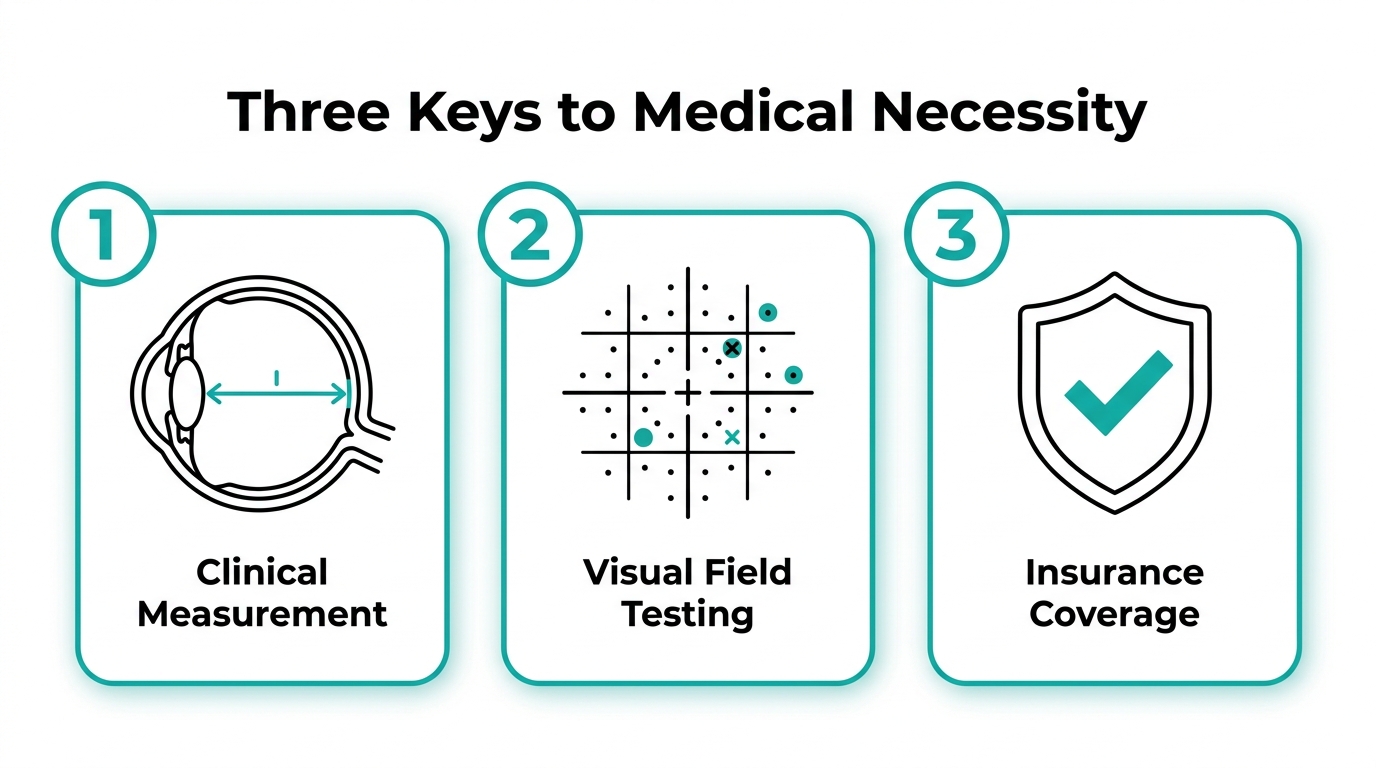
Medical necessity is established through objective clinical measurements. Functional procedures like blepharoplasty for vision obstruction require documented thresholds, including margin reflex distance readings and visual field testing results, before insurers will approve coverage. Cosmetic procedures carry no such requirement and are explicitly excluded from Medicare benefits.
Common functional procedures include cataract surgery, strabismus correction, pterygium removal, and tear duct repair; each targets a specific physiological impairment. Cosmetic options such as elective blepharoplasty, brow lifts, under-eye fillers, and laser skin resurfacing address aesthetic concerns in the periorbital area without treating an underlying condition.
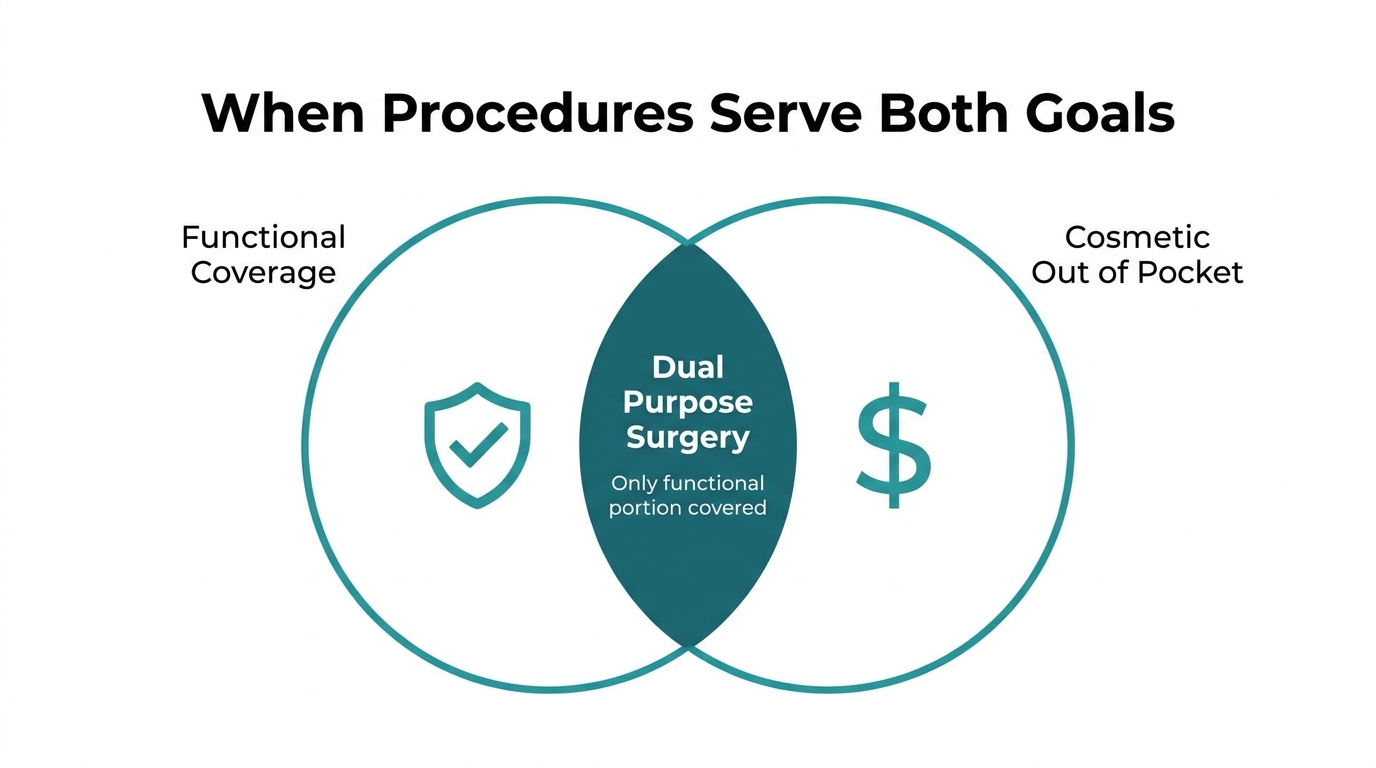
Certain procedures can qualify as both functional and cosmetic simultaneously. Upper blepharoplasty, for example, may correct a documented visual field deficit while also rejuvenating the eyelid’s appearance, though only the functional component receives insurance coverage.
Out-of-pocket costs for cosmetic eye procedures can range from several thousand dollars for a single area to over $10,000 for combined treatments. Both functional and cosmetic procedures carry distinct complication profiles, from dry eye and tear film disruption to vascular compromise with injectable fillers, making surgeon selection and preoperative screening essential steps regardless of which category applies.
What Is a Functional Eye Procedure?
A functional eye procedure is a surgery or treatment performed to restore, preserve, or improve a measurable aspect of visual function, such as sight, eye alignment, or tear drainage. These procedures address medical conditions rather than appearance. The sections below cover how functional procedures are defined clinically, common examples, and how oculofacial surgeons determine medical necessity.
How Is a Functional Eye Procedure Defined?
A functional eye procedure is any ocular surgery performed to correct a physiological deficit that impairs how the eye sees, moves, or drains. The defining criterion is medical necessity: the condition must cause a documentable loss of visual or ocular function, not merely an aesthetic concern.
According to the American Academy of Ophthalmology, reconstructive eyelid surgery qualifies as functional when it repairs defects caused by trauma, tumor-ablative surgery, thyroid disease, or nerve palsy. This clinical definition separates intent from appearance. Even procedures that incidentally improve a patient’s look, such as removing excess eyelid skin, remain functional if their primary purpose is correcting measurable impairment. For patients uncertain about their classification, documenting symptoms and obtaining a formal visual field evaluation are helpful first steps first steps.
What Are the Main Goals of Functional Eye Surgery?
The main goals of functional eye surgery are to restore usable vision, correct structural defects that impair eye function, and prevent further damage to ocular tissues. Unlike cosmetic procedures, success is measured through clinical outcomes rather than aesthetic satisfaction.
Functional eye surgery targets outcomes such as:
- Restoring a clear visual axis blocked by cataracts or a drooping eyelid
- Correcting eye misalignment to expand binocular visual fields
- Repairing blocked or damaged tear ducts to prevent chronic infection
- Removing growths like pterygia that distort the corneal surface and reduce clarity
Who Typically Performs Functional Eye Procedures?
Functional eye procedures are typically performed by ophthalmologists, with complex periorbital and reconstructive cases handled by oculofacial plastic surgeons. According to the American Society of Ophthalmic Plastic and Reconstructive Surgery, oculofacial plastic and reconstructive surgery is a highly specialized division of ophthalmology, and these surgeons complete additional training in plastic surgery specifically for the face and delicate tissue surrounding the eyes.
This subspecialty training matters because periorbital structures are anatomically complex. A surgeon who combines ophthalmic expertise with reconstructive skills is better positioned to preserve both function and the integrity of surrounding tissue during procedures like ptosis repair or eyelid reconstruction.
What Is a Cosmetic Eye Procedure?
A cosmetic eye procedure is a surgical or non-surgical intervention performed to improve the appearance of the eyes and surrounding structures without correcting a functional deficit. Unlike functional procedures, cosmetic treatments are not medically necessary and are therefore excluded from insurance coverage.
The following sections cover the most common types of cosmetic eye procedures, including blepharoplasty, brow lifts, under-eye fillers, and laser skin resurfacing.
Cosmetic Blepharoplasty
Cosmetic blepharoplasty is a surgical procedure that removes excess skin, fat, or muscle from the upper or lower eyelids to improve appearance rather than restore vision. According to the U.S. Government Publishing Office, cosmetic blepharoplasty is defined as surgery performed to improve appearances without a functional benefit and is excluded from Medicare coverage under §1862(a)(10) of the Social Security Act. Because no visual field impairment is present, the procedure addresses aesthetic concerns such as drooping or puffy lids, not clinical necessity. This distinction is critical for patients weighing insurance eligibility before scheduling surgery.
Brow Lift
A brow lift is a cosmetic procedure that repositions descended brow tissue to create a more youthful, open appearance around the upper face and eyes. It targets forehead laxity and brow ptosis that falls short of the clinical thresholds required to qualify as functionally impairing. While some patients experience mild visual improvement from brow elevation, the primary goal remains aesthetic. Surgeons typically recommend a brow lift alongside cosmetic blepharoplasty when brow descent contributes significantly to upper lid heaviness.
Under-Eye Filler or Fat Transfer
Under-eye filler is a non-surgical cosmetic treatment that uses injectable substances, such as hyaluronic acid, to reduce the appearance of hollowing or dark shadows beneath the lower eyelids. According to the Rhode Island Eye Institute, common injection site reactions include redness, swelling, bruising, and tenderness, while severe warning signs include sudden pain or skin blanching, which may indicate vascular compromise. Given the proximity to orbital structures, this procedure carries risks that warrant careful provider selection. Patients should ensure treatment is performed by a clinician experienced in periorbital anatomy.
Laser Skin Resurfacing Around the Eyes
Laser skin resurfacing around the eyes is a cosmetic treatment that uses controlled energy, typically CO2, to reduce fine lines, pigmentation, and skin texture irregularities in the periorbital area. According to the USC Roski Eye Institute, potential risks of CO2 laser resurfacing near the eyes include lagophthalmos, exposure keratitis, corneal injury, ectropion, and lower eyelid retraction. When combined with upper blepharoplasty, the American Academy of Ophthalmology notes the approach is generally considered safe and cost-effective, with synchronized healing times of approximately two weeks. Appropriate eye shielding and candidacy screening are essential safety steps before any periorbital laser treatment.
How Do Functional and Cosmetic Eye Procedures Differ in Purpose?
Functional and cosmetic eye procedures differ in purpose based on whether the goal is to restore or preserve vision function versus improve appearance. The sections below cover how medical necessity defines this distinction and how expected outcomes vary between the two categories.
How Does Medical Necessity Distinguish Functional From Cosmetic?
Medical necessity distinguishes functional from cosmetic procedures by determining whether a condition causes measurable physiological impairment, not just an aesthetic concern. Cosmetic blepharoplasty, for example, is defined as surgery performed to improve appearance without a functional benefit and is explicitly excluded from Medicare coverage under §1862(a)(10) of the Social Security Act.
To qualify as functional, documentation must meet precise clinical thresholds. According to CGS Medicare’s blepharoplasty checklist, Medicare requires a margin reflex distance (MRD) of 2.0 mm or less, measured from the corneal light reflex to the upper eyelid margin with brows relaxed. Visual field testing must also show at least a 12-degree or 30 percent difference between the resting field and the field with manual eyelid elevation.
Conditions like pseudoptosis further complicate classification: the eyelid margin sits in a normal anatomic position, yet excess skin from dermatochalasis overhangs it, potentially producing genuine visual impairment that may meet functional criteria.
How Do Expected Outcomes Differ Between Functional and Cosmetic?
Expected outcomes differ between functional and cosmetic eye procedures in both the metrics used to measure success and the patient’s primary goals. Functional procedures target objective improvements, such as expanded visual field, restored binocular vision, or reduced brow fatigue, and outcomes are measured clinically against preoperative baselines. Cosmetic procedures target subjective improvements in appearance, with success defined by patient satisfaction with how the eye area looks.
This distinction matters practically. A patient who undergoes functional blepharoplasty expects documented visual field recovery; a patient choosing cosmetic blepharoplasty expects a refreshed, more youthful appearance. Despite different goals, both patient groups continue to drive demand, as the International Society of Aesthetic Plastic Surgery reported over 2.1 million eyelid procedures performed globally in 2024, a 13.4% increase from prior years.
Understanding what each procedure is designed to achieve helps patients set realistic expectations and guides surgeons in communicating what a successful result looks like for that individual.
What Are the Common Types of Functional Eye Procedures?
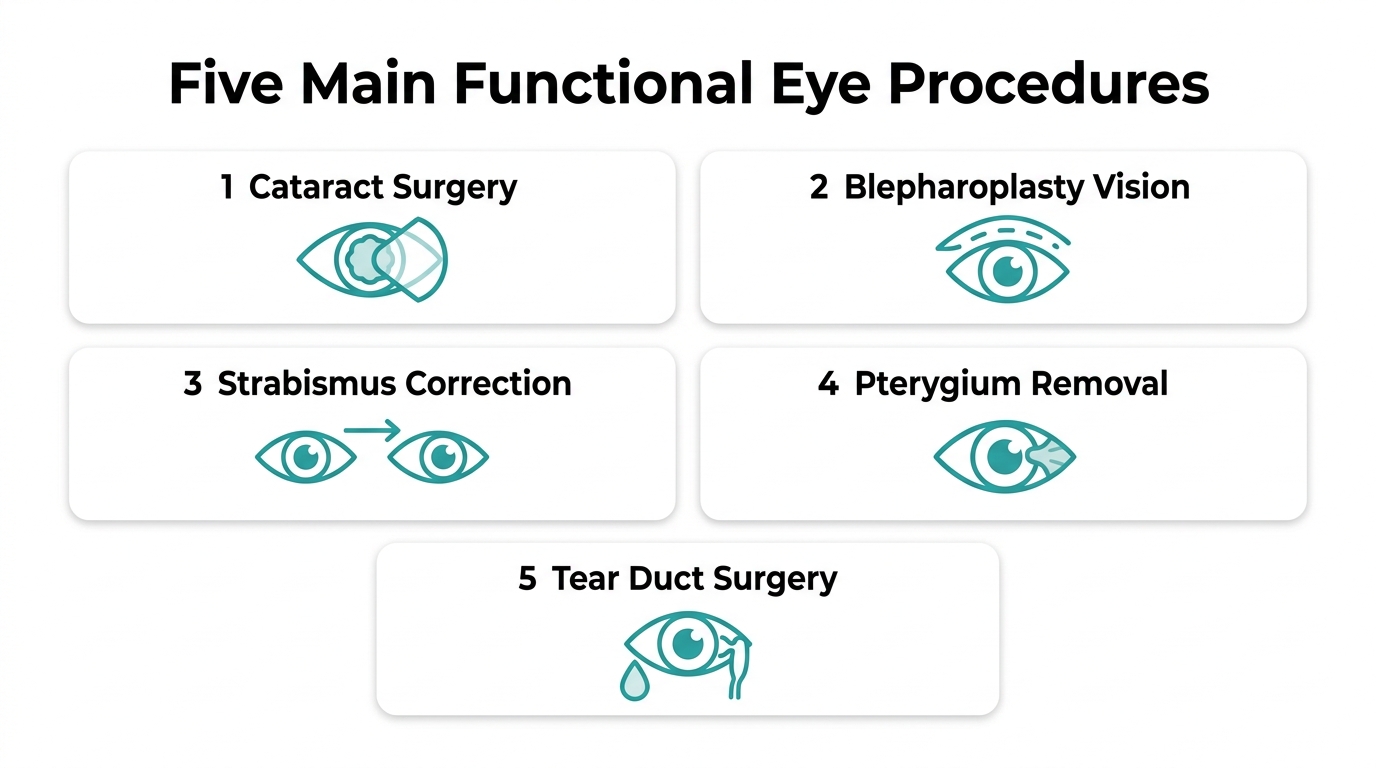
The common types of functional eye procedures include cataract surgery, blepharoplasty for vision obstruction, strabismus surgery, pterygium removal, and tear duct surgery. Each addresses a specific medical condition that impairs vision or ocular function.
Cataract Surgery
Cataract surgery is a functional procedure that removes the eye’s clouded natural lens and replaces it with an artificial intraocular lens to restore vision. Because it corrects a medically confirmed visual impairment, Medicare Part B covers cataract surgery, including the pre-surgery exam, the procedure itself, and one pair of eyeglasses or contact lenses afterward, according to Medicare.gov. Among functional eye procedures, cataract surgery is one of the clearest examples of how restoring vision directly improves daily function and independence.
Blepharoplasty for Vision Obstruction
Blepharoplasty for vision obstruction is a surgical procedure that removes excess upper eyelid skin when it droops low enough to block the visual field. Unlike cosmetic eyelid surgery, functional blepharoplasty qualifies for insurance coverage only when objective testing confirms a measurable reduction in the superior visual field. The distinction matters greatly when navigating coverage approvals.
Strabismus Surgery
Strabismus surgery is a functional procedure that repositions the eye muscles to correct misalignment and restore binocular vision. According to a study published in Optometry and Vision Science, strabismus surgery in adults achieves satisfactory alignment in approximately 80% of patients and typically expands binocular visual fields, making it inappropriate to classify as merely cosmetic. For many adults, the functional gains extend beyond vision to meaningful quality-of-life improvements.
Pterygium Removal
Pterygium removal is a functional ocular surface procedure that excises an abnormal tissue growth extending from the conjunctiva onto the cornea. When left untreated, a pterygium may distort vision by altering corneal curvature or obstructing the visual axis. Recurrence remains the most frequent complication, often driven by UV radiation-induced limbal stem cell damage, according to StatPearls Publishing.
Tear Duct Surgery
Tear duct surgery is a functional procedure performed to restore normal tear drainage when blockages cause chronic tearing, infection, or discomfort. Maintaining proper tear drainage is essential for ocular surface health. By contrast, the Journal of Cosmetic Medicine notes that cosmetic eyelid surgery may contribute to impaired blink function and altered tear film dynamics, potentially increasing ocular surface exposure and dry eye symptoms, underscoring why preserving natural tear mechanics is a core goal of functional tear duct repair.
What Are the Common Types of Cosmetic Eye Procedures?
The common types of cosmetic eye procedures include blepharoplasty, brow lifts, under-eye fillers or fat transfer, and laser skin resurfacing around the eyes. Each targets a specific aesthetic concern around the periorbital area.
Cosmetic Blepharoplasty
Cosmetic blepharoplasty is a surgical procedure that removes or repositions excess skin, muscle, and fat from the upper or lower eyelids to improve appearance. Unlike its functional counterpart, it is performed when no visual field impairment exists, making it an elective, out-of-pocket procedure. According to the International Society of Aesthetic Plastic Surgery, eyelid surgery ranked among the top cosmetic procedures globally in 2024, with over 2.1 million performed. For patients bothered by a tired or aged appearance around the eyes, cosmetic blepharoplasty often delivers meaningful aesthetic results when realistic expectations are established in advance.
Brow Lift
A brow lift is a cosmetic procedure that elevates descended or heavy brows to restore a more youthful, open appearance to the upper face. It addresses forehead creasing, brow asymmetry, and the visual heaviness that drooping brows can cast over the upper eyelids. Brow position directly influences the perceived result of upper eyelid surgery, which is why surgeons often evaluate both areas together before recommending either procedure.
Under-Eye Filler or Fat Transfer
Under-eye filler and fat transfer are non-surgical and surgical options used to correct hollowness or dark shadows in the tear trough area. According to the Rhode Island Eye Institute, common injection site reactions include redness, swelling, bruising, and tenderness, while severe warning signs such as sudden pain or skin blanching may indicate vascular compromise. Patients should seek treatment from qualified injectors experienced in periorbital anatomy.
Laser Skin Resurfacing Around the Eyes
Laser skin resurfacing around the eyes reduces fine lines, pigmentation, and skin laxity in the periorbital area using ablative or non-ablative laser energy. According to the American Academy of Ophthalmology, combining under-eye resurfacing with upper blepharoplasty is considered safe and cost-effective, with synchronized healing typically completing within two weeks. However, CO2 laser resurfacing near the eyes carries risks including lagophthalmos, exposure keratitis, corneal injury, ectropion, and lower eyelid retraction. Proper ocular protection and careful patient selection are essential before proceeding with any periorbital laser treatment.
Can an Eye Procedure Be Both Functional and Cosmetic?
Yes, an eye procedure can be both functional and cosmetic. The sections below explain how blepharoplasty and cataract surgery can serve both purposes simultaneously.
When Does Blepharoplasty Qualify as Both Functional and Cosmetic?
Blepharoplasty qualifies as both functional and cosmetic when the same surgical correction addresses a documented visual impairment while also improving the patient’s appearance. According to the Centers for Medicare & Medicaid Services, upper blepharoplasty is considered functional when the upper lid position or overhanging skin is sufficiently low to produce a functional deficit related to visual field impairment or brow fatigue. The same tissue removal that restores the visual field also rejuvenates the periorbital area aesthetically.
However, insurance does not treat the two purposes equally. Per Centers for Medicare and Medicaid Services guidelines, when a noncovered cosmetic procedure is performed in the same operative session as a covered functional procedure, Medicare benefits apply to the covered portion only. Patients should understand that any cosmetic component of a dual-purpose surgery remains their financial responsibility, regardless of the medical necessity of the functional element.
How Does Cataract Surgery Sometimes Offer Cosmetic Benefits?
Cataract surgery sometimes offers cosmetic benefits by restoring lens clarity and, in some cases, correcting refractive error through premium intraocular lens selection, which can reduce dependence on glasses and improve the overall appearance of the eyes. Unlike procedures performed purely for aesthetics, these cosmetic gains are incidental to the primary functional goal of restoring vision. Patients considering any additional cosmetic work alongside their procedure should be aware that elective components carry separate out-of-pocket costs, with the average surgeon’s fee for cosmetic eyelid surgery alone reaching approximately $3,339, excluding anesthesia and facility fees, according to WebMD.
Understanding how dual-purpose procedures are classified helps patients plan both medically and financially before committing to surgery.
How Does Insurance Coverage Differ for Functional vs Cosmetic?
Insurance coverage for eye procedures depends primarily on whether a procedure meets medical necessity criteria. Functional procedures may qualify for coverage under Medicare or private insurance, while cosmetic procedures are typically excluded and paid entirely out of pocket.
What Criteria Must a Procedure Meet for Insurance Approval?
The criteria a procedure must meet for insurance approval center on demonstrating a documentable functional deficit. According to the Centers for Medicare and Medicaid Services, upper blepharoplasty qualifies as functional when the upper lid position or overhanging skin is sufficiently low to produce a visual field impairment or brow fatigue.
Medicare documentation requirements are specific and measurable:
- A margin reflex distance (MRD) of 2.0 mm or less, measured from the corneal light reflex to the upper eyelid margin with brows relaxed.
- A visual field difference of at least 12 degrees or 30 percent between the resting field and the field measured with manual eyelid elevation.
- A detailed preoperative evaluation including medical and ocular histories, physical examination, and screening for contraindications.
When a cosmetic procedure is performed in the same operative session as a covered functional procedure, Medicare covers only the functional component.
What Out-of-Pocket Costs Should You Expect for Cosmetic Procedures?
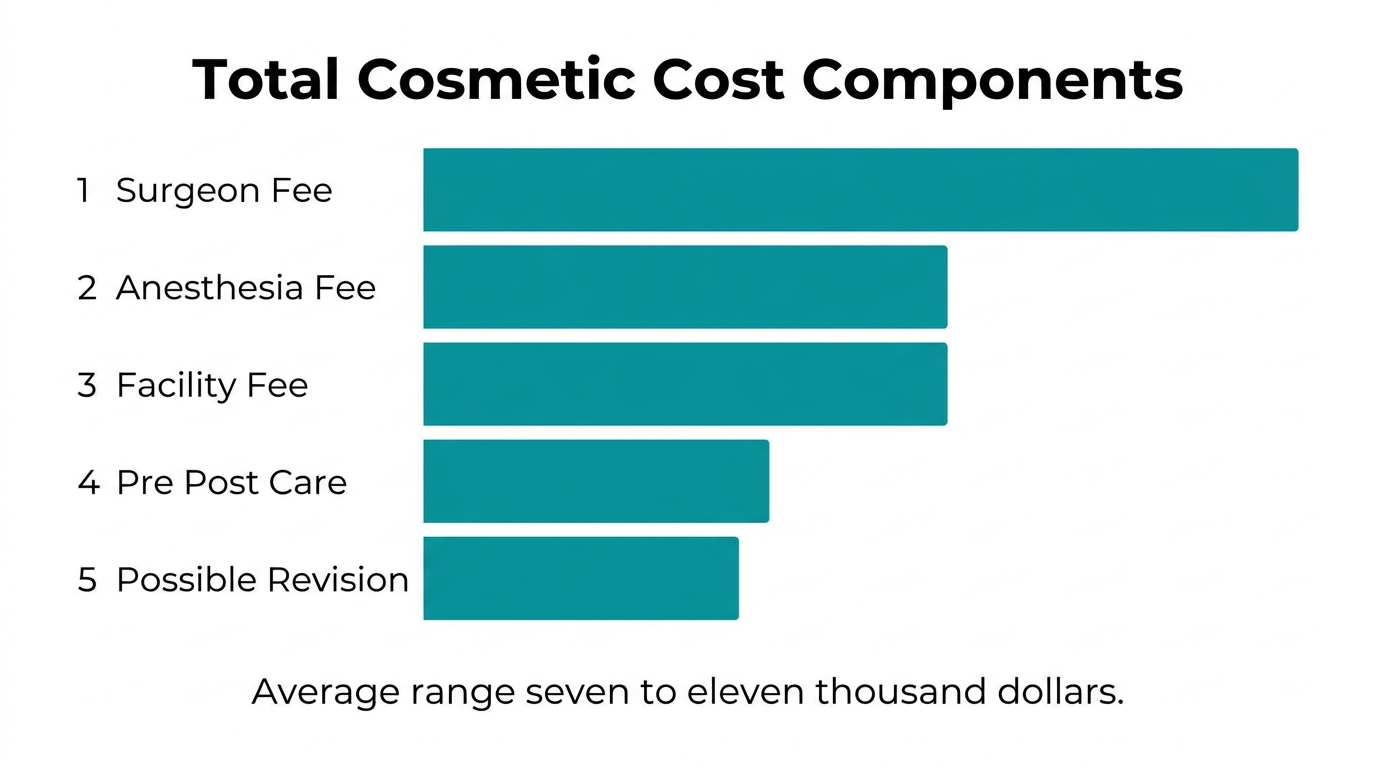
Out-of-pocket costs for cosmetic eye procedures can vary considerably depending on the procedure type, surgeon experience, and geographic location. According to WebMD, the average surgeon’s fee for cosmetic eyelid surgery is approximately $3,339, excluding anesthesia and operating room facility fees. Combined upper and lower blepharoplasty typically ranges from $7,000 to $11,000 in total when all associated costs are included.
Common out-of-pocket cost categories include:
- Surgeon’s fee
- Anesthesia fees
- Operating room or facility fees
- Pre- and post-operative consultations
- Any revision procedures, which are rarely covered
Budgeting beyond the quoted surgeon fee is essential, as facility and anesthesia costs can represent a substantial portion of the total expense.
Who Is a Good Candidate for a Functional Eye Procedure?
A good candidate for a functional eye procedure is someone whose eye condition produces a measurable, documented impairment to vision, daily function, or ocular health. The following H3 sections cover the key clinical criteria, medical history factors, and evaluation requirements that determine candidacy.
What Clinical Signs Indicate You May Need a Functional Procedure?
The clinical signs that may indicate a need for a functional eye procedure include visual field obstruction, drooping eyelids, lens clouding, and eye misalignment that interferes with daily tasks.
According to documentation requirements from CGS Medicare, a margin reflex distance (MRD) of 2.0 mm or less, measured from the corneal light reflex to the upper eyelid margin with brows relaxed, is one objective threshold used to assess whether upper eyelid surgery qualifies as functional. Similarly, Novitas Solutions specifies that a difference of at least 12 degrees or 30 percent between the resting visual field and the field with manual eyelid elevation is required to support medical necessity. These measurable thresholds matter because they determine both surgical eligibility and insurance coverage.
Key clinical signs that may warrant evaluation include:
- Upper eyelid skin overhanging the visual axis, limiting the superior visual field
- Eyelid margin positioned at or below 2.0 mm from the corneal light reflex
- Lens clouding that reduces visual acuity or contrast sensitivity
- Eye misalignment (strabismus) causing diplopia or restricted binocular vision
- Obstructive growths such as pterygium encroaching on the cornea
What Medical History Factors Affect Candidacy?
Medical history factors that affect candidacy for functional eye procedures include prior ocular conditions, systemic health issues, and contraindications identified during preoperative screening.
A preoperative evaluation for eyelid surgery must include detailed medical and ocular histories, physical examinations, and screenings for contraindications such as corneal disease or eyelid laxity, according to a review published in the Journal of Cosmetic Dermatology. Patients with a history of herpes simplex virus (HSV-1) outbreaks require additional consideration, as laser-based procedures may trigger viral reactivation.
Relevant history factors to discuss with a surgeon include:
- Dry eye disease or tear film instability, which may worsen after eyelid surgery
- Thyroid eye disease or nerve palsy contributing to periorbital changes
- History of trauma or prior eyelid surgery affecting tissue integrity
- Systemic conditions such as bleeding disorders that influence surgical risk
Candidacy assessment is always individualized; a condition that disqualifies one patient may be manageable in another with appropriate precautions.
How Do Surgeons Evaluate Whether a Procedure Is Medically Necessary?
Surgeons evaluate medical necessity for a functional eye procedure by combining objective clinical measurements, standardized visual field testing, and documented evidence of functional impairment in daily life.
For upper eyelid surgery, clinical guidelines recommend that corrective procedures be performed by surgeons trained and experienced in upper blepharoplasty and eyelid ptosis surgery, as noted by the American Society of Plastic Surgeons. The evaluation process typically involves a series of structured assessments before any surgical recommendation is made.
A standard medical necessity evaluation may include:
- Visual field testing with brows relaxed to establish baseline impairment
- Repeat visual field testing with manual eyelid elevation to quantify improvement
- Measurement of the MRD to document eyelid margin position
- Review of photographs taken under standardized lighting conditions
- Documentation of how the condition affects reading, driving, or other daily activities
Thorough documentation is what ultimately bridges the clinical finding and the insurance determination, making this step as important as the examination itself.
Who Is a Good Candidate for a Cosmetic Eye Procedure?
A good candidate for a cosmetic eye procedure is generally a healthy adult with realistic expectations, no active ocular disease, and aesthetic concerns that do not meet the threshold for medical necessity. The following H3 sections cover the key candidacy criteria, including physical health requirements, psychological readiness, and contraindications to avoid.
What Health Conditions Make Someone a Good Candidate?
A good candidate for a cosmetic eye procedure typically has stable overall health, no active eye infections, and well-controlled systemic conditions such as hypertension or diabetes. According to a 2024 review published in the Journal of Cosmetic Dermatology, preoperative evaluation must include detailed medical and ocular histories, physical examinations, and screenings for contraindications such as corneal disease or eyelid laxity.
Key physical eligibility factors include:
- Absence of active corneal disease or dry eye syndrome
- No significant eyelid laxity that could complicate healing
- Stable refraction and intraocular pressure
- No history of keloid scarring or poor wound healing
Patients with uncontrolled systemic conditions or active ocular surface disease are generally advised to address those issues before pursuing elective cosmetic procedures.
What Psychological Factors Indicate Readiness for Cosmetic Eye Surgery?
Psychological readiness for cosmetic eye surgery involves having realistic, well-defined goals rather than expecting perfection or pursuing surgery in response to external pressure. Surgeons typically assess whether a patient’s motivation is self-driven and whether their expectations align with what the procedure can realistically achieve.
Indicators of good psychological candidacy include:
- A specific, personal aesthetic concern the patient can clearly describe
- Understanding that results improve appearance, not transform it entirely
- Emotional stability and absence of body dysmorphic tendencies
- Willingness to comply with pre- and post-operative care instructions
In clinical practice, psychological readiness can also influence whether a patient has realistic expectations before cosmetic procedures.
Who Should Avoid Cosmetic Eye Procedures?
Certain individuals should avoid cosmetic eye procedures due to elevated risk profiles. Contraindications fall into medical, ocular, and situational categories, and a thorough consultation with a qualified surgeon is essential before proceeding.
Common contraindications include:
- Active dry eye disease or insufficient tear production
- A history of herpes simplex virus (HSV-1) outbreaks, as laser procedures can trigger reactivation
- Bleeding disorders or use of anticoagulant medications
- Unrealistic expectations or signs of body dysmorphic disorder
- Recent significant weight fluctuation, which can affect periorbital tissue stability
Individuals in any of these groups may still be candidates after appropriate management of underlying conditions, but proceeding without addressing these factors meaningfully increases complication risk.
What Are the Potential Risks of Functional Eye Procedures?
The potential risks of functional eye procedures vary by procedure type but generally include infection, incomplete correction, and vision-related complications. Understanding these risks helps patients weigh the benefits of restored function against possible adverse outcomes.
Complication Rates for Functional Eyelid Surgery
Upper eyelid surgery for visual field loss carries a reported complication rate ranging from 2 to 10 percent, with revision rates highly dependent on the specific surgical approach, according to the American Society of Plastic Surgeons. Common complications include asymmetry, scarring, and over- or under-correction of lid position. Preoperative evaluation must include detailed medical and ocular histories, physical examinations, and screenings for contraindications such as corneal disease or eyelid laxity. Thorough candidate screening may help reduce avoidable risk before any surgical plan is finalized.
Dry Eye and Tear Film Disruption
Functional eyelid procedures may contribute to impaired blink function and altered tear film dynamics, potentially leading to increased ocular surface exposure and dry eye symptoms, as noted in the Journal of Cosmetic Medicine. Disrupted blinking mechanics reduce tear distribution across the cornea, which can cause persistent irritation, light sensitivity, and blurred vision during recovery. Patients with pre-existing dry eye should discuss this risk explicitly with their surgeon before proceeding.
Herpes Simplex Reactivation Risk
Laser-based functional procedures can trigger the reactivation of herpes simplex virus (HSV-1), making preventive antiviral medication necessary for patients with a history of outbreaks. This risk applies regardless of whether the laser procedure is functional or cosmetic in classification. Identifying HSV-1 history during preoperative screening is essential, as an unmanaged reactivation can lead to corneal scarring and serious vision impairment.
What Are the Potential Risks of Cosmetic Eye Procedures?
The potential risks of cosmetic eye procedures range from mild, temporary reactions to serious complications affecting vision and eyelid function. The sections below cover the key risk profiles for cosmetic blepharoplasty, under-eye fillers, and laser skin resurfacing.
Risks of Cosmetic Blepharoplasty
The risks of cosmetic blepharoplasty include impaired blink function, altered tear film dynamics, and increased ocular surface exposure. According to a study published in the Journal of Cosmetic Medicine, cosmetic eyelid surgery may contribute to dry eye symptoms by disrupting the natural blink mechanism. Upper eyelid surgery also carries a reported complication rate of 2 to 10 percent, per the American Society of Plastic Surgeons, with revision rates varying by surgical approach. Preoperative screening for corneal disease and eyelid laxity is essential to minimize these risks.
Risks of Under-Eye Fillers
The risks of under-eye fillers include both common injection site reactions and potentially serious vascular complications. Common reactions include redness, swelling, bruising, and tenderness at the injection site. More concerning warning signs, according to the Rhode Island Eye Institute, are sudden pain or skin blanching, which may indicate vascular compromise requiring immediate intervention. Because the periorbital region contains dense vascular anatomy, filler placement near the eyes demands a high level of injector expertise.
Risks of Laser Skin Resurfacing Near the Eyes
The risks of laser skin resurfacing near the eyes include lagophthalmos, exposure keratitis, corneal injury, ectropion, and lower eyelid retraction, as identified by the USC Roski Eye Institute. Laser procedures can also trigger reactivation of herpes simplex virus (HSV-1) in patients with a prior history of outbreaks, making preventive antiviral therapy a standard precaution. Protective stainless steel eye shields, properly lubricated, are required during orbital laser procedures to guard against all laser wavelengths.
Understanding these risks helps patients weigh the aesthetic benefits against potential functional consequences before proceeding.
How Should You Evaluate Your Options Before Any Eye Procedure?
Evaluating your options before any eye procedure means reviewing reliable educational information, understanding the functional versus cosmetic distinction, and confirming candidacy criteria with a qualified specialist. The subsections below cover preparation resources and key decision-making takeaways.
How May Eye Surgery Resources Help You Prepare for Eye Surgery?
Eye surgery resources may help you prepare for eye surgery by translating clinical criteria, procedural risks, and recovery expectations into clear, accessible language before you consult a specialist. Understanding what documentation insurers require, what complication rates look like, and how procedures are classified can meaningfully reduce uncertainty.
Eye Surgery Today provides educational content covering cataract surgery, eyelid procedures, and refractive options. Preoperative evaluation guidelines recommend that any candidate for eyelid surgery undergo detailed medical and ocular history reviews, physical examinations, and screenings for contraindications such as corneal disease or eyelid laxity, according to a study published in the Journal of Cosmetic Dermatology. Arriving at a consultation already familiar with these criteria allows for a more focused, productive conversation with your surgeon.
What Are the Key Takeaways About Functional vs Cosmetic Eye Procedures?
The key takeaways about functional vs cosmetic eye procedures center on purpose, coverage, and candidacy. Functional procedures address medically documented impairments and may qualify for insurance coverage, while cosmetic procedures improve appearance without a clinical necessity and are typically paid out of pocket.
The most practical lessons from this topic include:
- Purpose determines classification: A procedure is functional when it corrects a documented deficit such as vision obstruction, misalignment, or structural damage.
- Documentation drives coverage: Medicare and most insurers require objective clinical evidence, such as visual field testing, to approve functional procedures.
- Some procedures serve both goals: Upper blepharoplasty can qualify as both functional and cosmetic, but only the functional portion receives insurance benefits.
- Risks vary by procedure type: Both categories carry real complication profiles that warrant careful review before proceeding.
- Specialist selection matters: Procedures involving the periorbital area should be performed by surgeons with specific training in that anatomy.
Understanding these distinctions puts you in a stronger position to evaluate your own situation clearly and ask the right questions at your consultation.