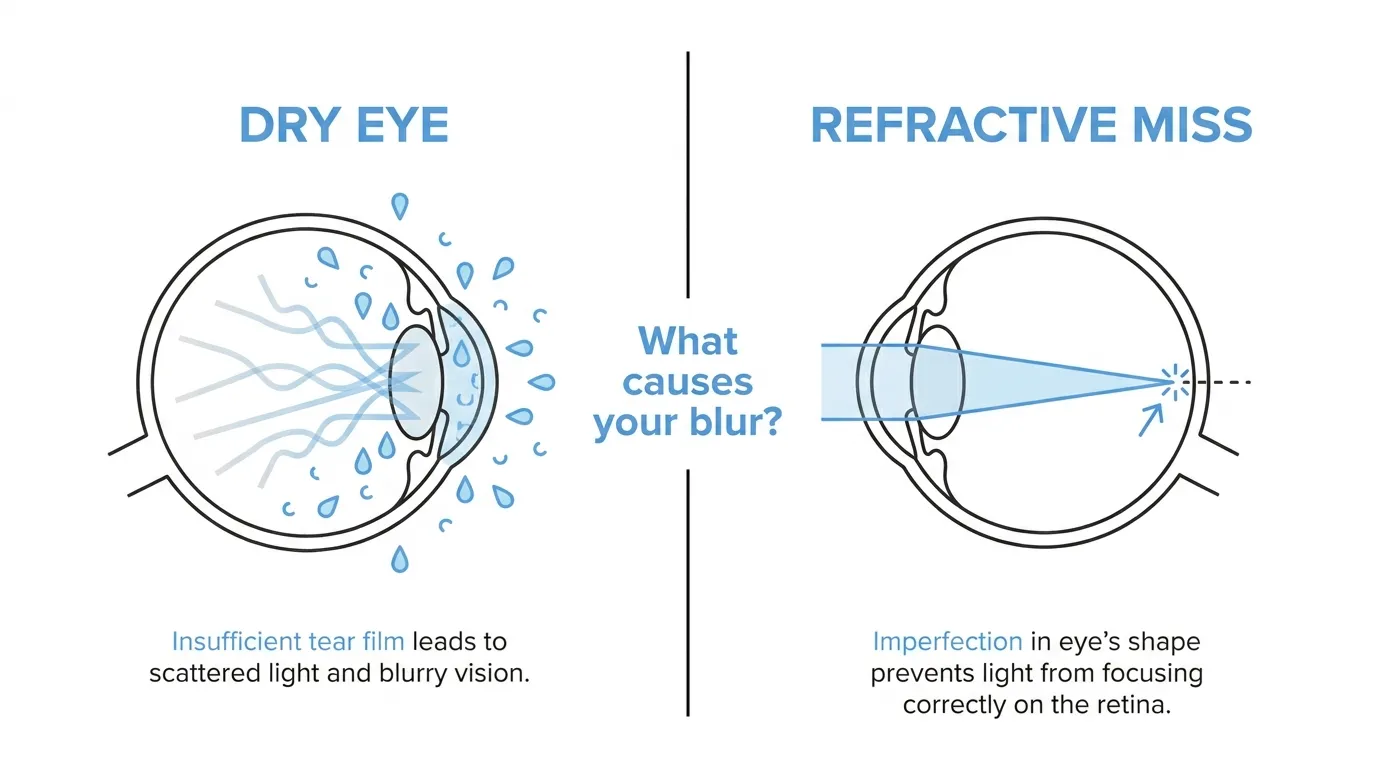
Blurry vision after eye surgery is a common post-operative concern that stems from either tear film instability on the ocular surface or a residual mismatch between the eye’s achieved optical power and the intended correction. Identifying the correct cause is essential because each condition requires a fundamentally different treatment approach.
This guide covers why post-surgical blur occurs during healing, how dry eye and refractive miss each produce blurry vision through distinct mechanisms, the behavioral and clinical clues that help distinguish one from the other, the diagnostic tests ophthalmologists use to confirm the source, and the targeted treatment and correction options available for each condition.
Blurry vision during the healing process often results from corneal swelling, inflammatory responses, and temporary disruption of the corneal surface; most cases improve within weeks as tissue stabilizes, though persistent or worsening blur may signal a treatable complication.
Dry eye can develop in over a third of cataract surgery patients who had no prior tear film disease, largely because the corneal incision disrupts sensory nerves that regulate tear production. The resulting tear film instability scatters light across the cornea, producing blur that fluctuates between blinks and worsens with screen use or dry environments.
A refractive miss leaves a measurable gap between the eye’s post-surgical focusing power and the target correction, creating constant blur that does not respond to blinking or lubricating drops. Residual myopia, hyperopia, or astigmatism each affect different focal ranges, and even small diopter deviations can noticeably affect daily tasks.
Distinguishing between these two causes relies on specific patterns: whether the blur fluctuates or stays fixed, whether artificial tears provide temporary relief, and whether symptoms shift throughout the day. Formal diagnostic tools such as corneal topography, manifest refraction, and tear breakup time measurement confirm the clinical picture, guiding treatment toward the appropriate intervention.
Why Does Blurry Vision Occur After Eye Surgery?
Blurry vision occurs after eye surgery because the eye undergoes structural disruption that requires time to heal. The following sections cover what happens during healing, how long temporary blur may last, and when blurriness may signal a complication.
What Happens to the Eye During the Healing Process?
The eye undergoes a complex tissue repair process during healing after surgery. Corneal incisions made during procedures such as cataract surgery disrupt the corneal surface and surrounding structures, triggering an inflammatory response. Swelling of the corneal tissue, shifts in fluid balance, and temporary changes in the eye’s refractive surface can all contribute to reduced visual clarity in the early postoperative period.
According to research published by the National Center for Biotechnology Information, cataract surgery can damage corneal endothelial cells, leading to complications such as corneal edema, which results in postoperative blurry vision. Because endothelial cells regulate fluid transport across the cornea, even mild damage may cause the cornea to retain excess water and become less transparent. As these cells recover and inflammation subsides, clarity typically improves. Patience during this phase is essential, though consistent follow-up with a surgeon helps confirm that healing is progressing normally.
How Long Does Temporary Blurriness Typically Last?
Temporary blurriness typically lasts from a few days to several weeks after most eye surgeries, depending on the procedure and individual healing response. In many cases, patients notice meaningful improvement within the first week, with continued refinement over the following month.
Wound healing research offers useful context. A study published by the American Academy of Ophthalmology found that Descemet membrane detachment was present in 37.1% of eyes one day after clear corneal incision but dropped to just 4.5% at one month. This progression illustrates how rapidly corneal architecture can stabilize. Most surgeons schedule refractions several weeks postoperatively to allow the eye to settle before determining a final prescription. If vision remains consistently hazy beyond four to six weeks, further evaluation may be warranted.
When Should Post-Surgical Blurriness Raise Concern?
Post-surgical blurriness should raise concern when it persists without improvement beyond the expected healing window, worsens over time, or is accompanied by additional symptoms. Warning signs that may warrant prompt evaluation include:
- Sudden increase in blurriness after an initial period of improvement
- Eye pain that intensifies rather than diminishes
- Significant redness or swelling that does not resolve
- Flashes of light, new floaters, or a shadow in the peripheral visual field
- Sensitivity to light that progressively worsens
Stable, unchanging blur several weeks after surgery may point to a residual refractive error, while blur that fluctuates with blinking could suggest tear film instability. Either pattern deserves clinical assessment rather than watchful waiting. Patients who report their concerns early tend to achieve better outcomes, because early identification of the underlying cause allows targeted treatment before secondary complications develop.
Understanding why blurriness occurs sets the stage for distinguishing between its two most common post-surgical causes: dry eye and refractive miss.
What Is Dry Eye and How Can It Cause Blurry Vision?
Dry eye is a multifactorial disease of the ocular surface that can cause blurry vision by destabilizing the tear film, which serves as the eye’s primary refracting surface. The sections below explain how tear film disruption affects clarity, the symptoms to watch for, and why cataract surgery makes dry eye so common.
How Does Dry Eye Disrupt the Tear Film and Clarity?
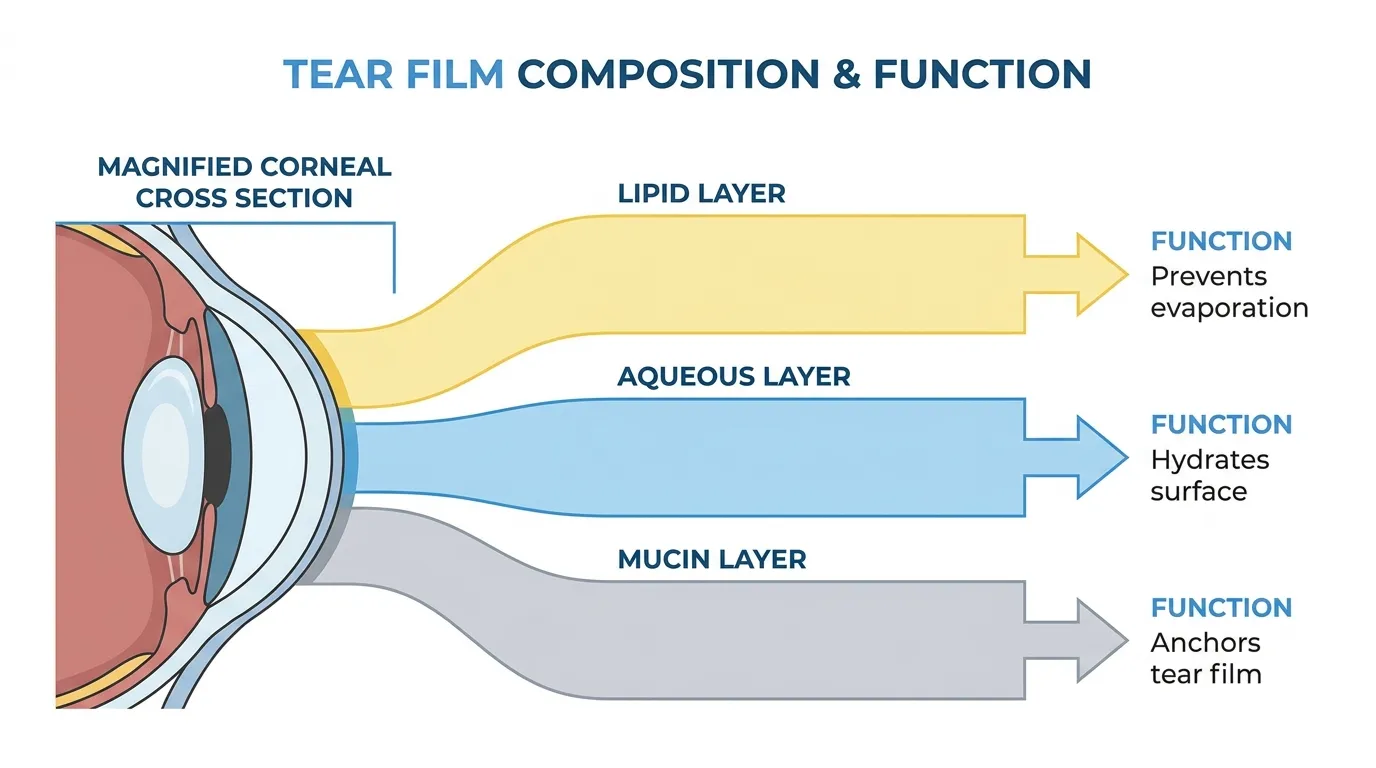
Dry eye disrupts the tear film and clarity by breaking down the smooth optical surface that light passes through before reaching the cornea. The tear film consists of three interdependent layers: a lipid layer that prevents evaporation, an aqueous layer that nourishes and hydrates, and a mucin layer that anchors the film to the corneal surface. When any layer becomes deficient, the film thins unevenly and breaks apart between blinks.
According to the Tear Film & Ocular Surface Society (TFOS) DEWS II report, tear film instability, hyperosmolarity, ocular surface inflammation, and neurosensory abnormalities all play etiological roles in dry eye disease. These disruptions scatter incoming light rather than focusing it cleanly, producing intermittent blur that temporarily clears with each blink before returning seconds later. This fluctuating quality is what distinguishes dry-eye blur from a fixed optical error, making tear film health essential for accurate vision after any eye procedure.
What Are the Common Symptoms of Dry-Eye-Related Blur?
The common symptoms of dry-eye-related blur include visual fluctuation that worsens between blinks and temporarily improves immediately after blinking or using lubricating drops. Patients often describe the sensation as looking through a foggy or smeared window.
Additional symptoms that frequently accompany dry-eye blur include:
- Stinging, burning, or a gritty foreign-body sensation in one or both eyes
- Increased tearing as a reflexive response to ocular surface irritation
- Light sensitivity that intensifies under bright or fluorescent lighting
- Worsening blur during prolonged screen use, reading, or driving
- Eye fatigue or heaviness that builds throughout the day
Because these symptoms overlap with other post-surgical causes of blurry vision, their fluctuating nature is the most reliable clinical clue. Blur that changes with blinking, environmental conditions, or time of day strongly suggests a tear film origin rather than a fixed refractive problem.
Why Is Dry Eye So Common After Cataract Surgery?
Dry eye is so common after cataract surgery because the procedure directly disrupts corneal nerves and the ocular surface. The clear corneal incision severs corneal sensory nerve fibers, which impairs the feedback loop between the cornea and lacrimal gland, a connection known as the lacrimal functional unit. Without that signal, tear production and distribution become temporarily compromised.
According to a meta-analysis, 37.4% (95% CI 22.6–52.3) of patients without preexisting dry eye disease developed new-onset dry eye following cataract surgery. Several factors compound this risk:
- Surgical microscope light exposure dries the ocular surface during the procedure
- Topical antiseptics and preservatives in perioperative drops irritate goblet cells
- Postoperative anti-inflammatory drop regimens can further stress the tear film
- Pre-existing meibomian gland dysfunction, often undiagnosed, worsens after surgery
Many patients attribute their post-surgical blur entirely to the lens or healing process, overlooking dry eye as a treatable contributor. Identifying tear film disruption early helps distinguish it from a refractive miss, which requires a different correction strategy entirely.
What Is a Refractive Miss and How Does It Cause Blurry Vision?
A refractive miss is a residual refractive error that remains after eye surgery when the procedure does not achieve the intended optical correction. The following sections explain what this error means, its symptoms, and how it is diagnosed.
What Does a Residual Refractive Error Mean?
A residual refractive error means the eye’s post-surgical focusing power differs from the target correction, leaving a measurable gap in visual clarity. This gap, measured in diopters, can manifest as lingering nearsightedness, farsightedness, or astigmatism that the original procedure was designed to eliminate.
According to benchmark data from U.S. Food and Drug Administration trials of LASIK for myopia reported by Massachusetts Eye and Ear, 71.6% of eyes achieved a refractive error within 0.5 diopters of the intended target. While that represents a strong success rate, the remaining eyes fall outside that window, sometimes enough to cause noticeable blur. Subjective refraction using a phoropter, trial frame, and Snellen visual acuity chart remains the standard method for confirming whether a residual error exists. Even small deviations from the target can affect daily tasks, particularly for patients who received premium intraocular lenses with the expectation of spectacle independence.
What Are the Common Symptoms of a Refractive Miss?
The common symptoms of a refractive miss include:
- Constant blurry vision that does not improve with blinking or lubricating drops.
- Difficulty focusing at a specific distance, such as trouble reading up close or seeing road signs clearly, depending on whether the residual error is hyperopic, myopic, or astigmatic.
- Eye strain and headaches, particularly after prolonged visual tasks like reading or screen use.
- Halos or glare around lights at night, especially if the residual error involves astigmatism.
- Squinting to sharpen images, a compensatory habit that often signals uncorrected refractive power.
One complicating factor is that untreated ocular surface disease can mimic or mask these symptoms. The ASCRS preoperative OSD algorithm notes that dry-eye disease can reduce visual quality and cause inaccurate IOL calculations, which may itself contribute to a refractive miss. Precise biometry is essential in determining the correct intraocular lens power to avoid such inaccuracies. This overlap makes professional evaluation essential rather than self-diagnosis.
How Is a Refractive Miss Diagnosed After Surgery?
A refractive miss is diagnosed after surgery through a comprehensive post-operative eye examination that measures the difference between the achieved and intended refractive correction. The process typically begins with a manifest refraction, where the surgeon systematically tests lens combinations to identify any residual myopia, hyperopia, or astigmatism.
Distinguishing a true refractive miss from dry-eye-related blur is a critical part of the diagnostic process. According to a study published by the Italian P.I.C.A.S.S.O. Board, dry eye symptoms peak at 7 days after cataract surgery and may persist for months, whereas refractive miss typically results in constant blur that does not fluctuate with blinking. If artificial tears temporarily sharpen vision, dry eye is the more likely culprit; if the blur remains unchanged, a residual refractive error is suspected. Surgeons often wait until the eye has stabilized before confirming the diagnosis, since early post-operative measurements can be skewed by healing-related changes.
Understanding how a refractive miss presents and is confirmed helps clarify the next critical step: distinguishing it from dry-eye-related blur.
How Can You Tell Whether Blurry Vision Is From Dry Eye or a Refractive Miss?
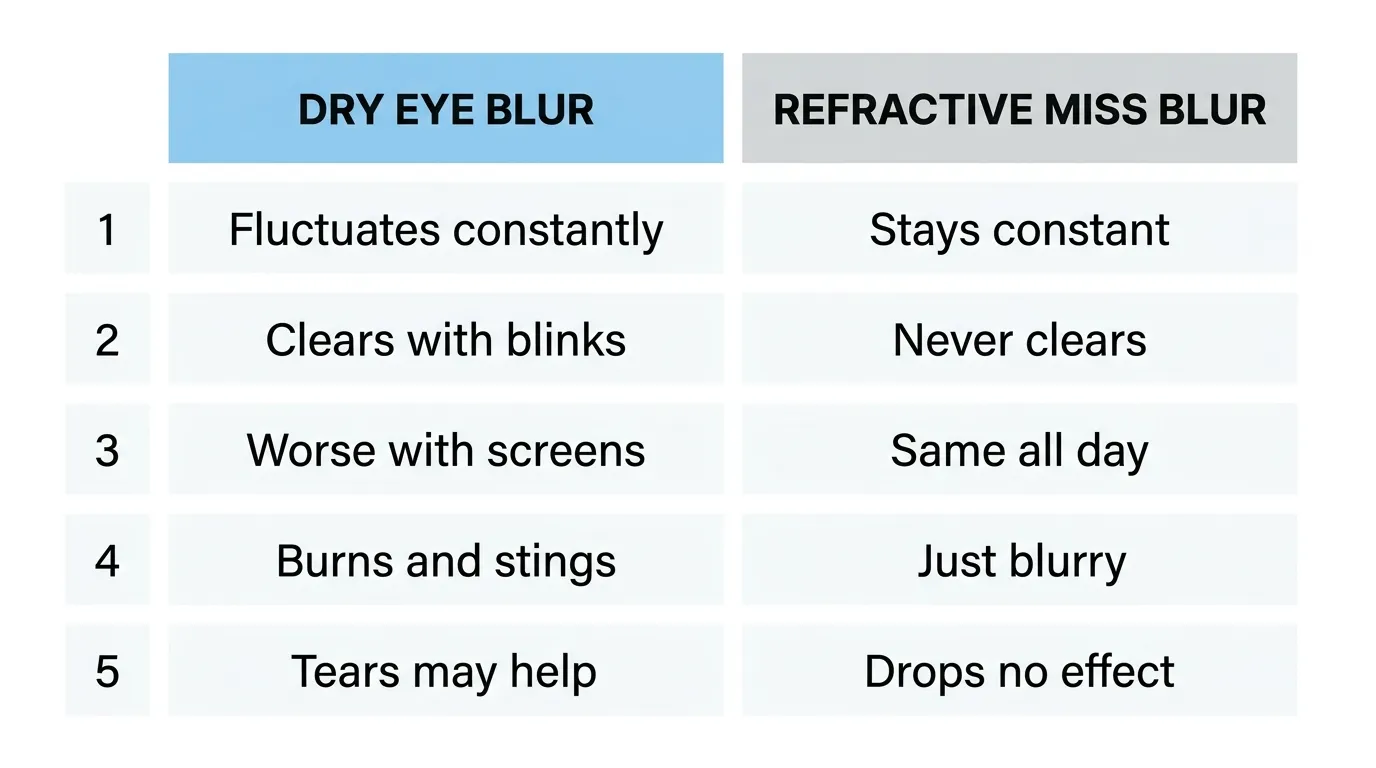
You can tell whether blurry vision is from dry eye or a refractive miss by observing specific patterns in how the blur behaves. The following subsections cover fluctuation, blink response, affected distance, and daily symptom timing.
Does the Blur Fluctuate or Stay Constant?
The blur fluctuates with dry eye and stays constant with a refractive miss. Dry-eye-related blur shifts from moment to moment because the tear film breaks up unevenly across the cornea, creating temporary optical irregularities. A fresh blink redistributes tears and briefly restores clarity, so patients often notice the blur worsening, clearing, then worsening again in cycles.
A refractive miss, by contrast, produces a fixed level of blur that does not change between blinks. Because the underlying cause is a structural mismatch between the eye’s optical power and its focal point, the image remains consistently out of focus regardless of tear film status. This distinction is one of the most reliable self-screening clues a patient can use before seeing their ophthalmologist. If the blur never sharpens on its own, even momentarily, a residual refractive error is more likely than a tear film problem.
Does Blinking or Using Artificial Tears Temporarily Clear the Blur?
Blinking or using artificial tears temporarily clears the blur when dry eye is the cause, but provides little improvement when a refractive miss is responsible. A blink spreads a fresh layer of tears over the cornea, smoothing micro-irregularities in the optical surface. When the tear film is unstable, that momentary smoothing can restore sharp focus for several seconds before the film breaks up again.
Artificial tears amplify this effect by supplementing tear volume directly. According to a Cochrane review, 0.2% polyacrylic acid-based artificial tears were consistently more effective at treating dry eye symptoms than 1.4% polyvinyl alcohol-based formulations, suggesting that tear composition matters when testing this response. If instilling drops produces even brief visual improvement, the blur likely has a tear film component. If clarity does not change at all after lubrication, the optical error is more probably refractive in nature, warranting a formal manifest refraction.
Does the Blur Affect Distance, Near, or Both?
The blur affects distance, near, or both depending on the type of refractive error or the severity of tear film disruption. A refractive miss typically produces blur at a predictable focal range. Residual myopia blurs distance targets while leaving near vision relatively intact; residual hyperopia or an under-corrected IOL power may blur near tasks more noticeably. When astigmatism is the residual error, both distance and near vision can appear distorted or smeared.
Dry-eye-related blur, on the other hand, tends to affect all distances somewhat equally because the irregular tear film degrades the entire optical surface rather than shifting the focal point. Patients who report blur that is sharply worse at one specific distance, yet consistently clear at another, are more likely dealing with a refractive component. Those who describe a general haze across all viewing distances that comes and goes should consider tear film instability as a primary contributor.
Do Symptoms Change Throughout the Day or With Screen Use?
Symptoms change throughout the day and worsen with screen use when dry eye is the primary cause. Tear production and evaporation follow predictable daily patterns; many patients notice relatively clear vision in the morning that degrades by afternoon or evening as the ocular surface dries. Prolonged screen use accelerates this decline because blink rate drops significantly during focused digital tasks, allowing the tear film to thin faster.
A refractive miss does not follow this pattern. The blur remains essentially the same whether the patient just woke up or has been reading for hours, because the optical mismatch is structural rather than surface-dependent. Tracking symptoms in a simple journal, noting the time of day and activity at onset, can reveal whether the blur correlates with environmental exposure or stays fixed. This self-monitoring approach gives the treating ophthalmologist valuable diagnostic context at the follow-up visit.
With these behavioral clues in hand, formal diagnostic testing can confirm the underlying cause.
What Tests May Your Eye Doctor Use to Identify the Cause?
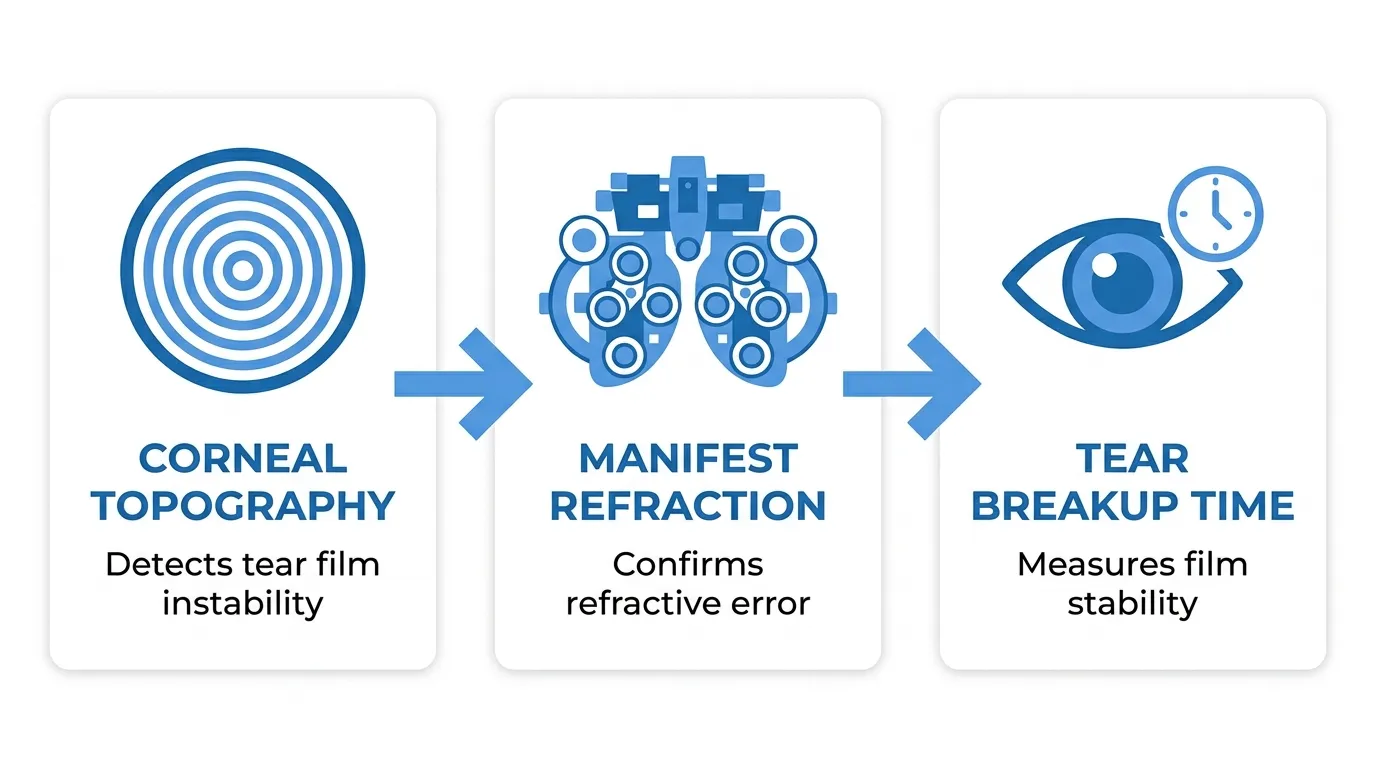
Your eye doctor may use tests such as corneal topography, manifest refraction, and tear breakup time to identify the cause of persistent blur. Each test targets a different source of the problem. These diagnostic steps are part of a broader series of eye exams for cataracts that evaluate overall ocular health and surgical readiness.
How Does Topography Help Detect Tear Film Irregularity?
Topography helps detect tear film irregularity by mapping the corneal surface and revealing uneven areas where the tear film breaks down. A topographer captures multiple images of light rings reflected off the cornea, and any distortion in those rings signals surface irregularity caused by poor tear coverage.
When dry eye disrupts the tear film, topography scans often show inconsistent readings between consecutive maps. This variability distinguishes tear film instability from a fixed refractive error, which produces consistent, repeatable maps. Clinicians frequently compare sequential topography scans taken seconds apart; if the pattern shifts between captures, an unstable tear film is the likely culprit rather than a structural corneal issue.
For patients with post-surgical blur, topography is often one of the first diagnostic steps because it can identify whether the corneal surface needs treatment before any refractive measurements are considered reliable.
How Does a Manifest Refraction Confirm a Refractive Miss?
A manifest refraction confirms a refractive miss by measuring the eye’s total optical error under natural viewing conditions. The examiner uses a phoropter or trial frame, presenting sequential lens choices while the patient reads a Snellen visual acuity chart. According to StatPearls, subjective refraction using a manual refraction unit with a phoropter, trial frame, and Snellen chart remains the standard for confirming residual refractive error.
If the manifest refraction reveals a consistent prescription that meaningfully improves visual acuity, the blur is likely caused by residual refractive error rather than tear film disruption. The key distinction is repeatability: a true refractive miss produces the same measurement across multiple sessions. In clinical practice, performing manifest refraction only after the ocular surface has been optimized yields the most reliable results, since untreated dry eye can distort the readings and mimic a refractive miss.
What Role Does Tear Breakup Time Play in Diagnosis?
Tear breakup time plays a central role in diagnosis by quantifying how quickly the tear film destabilizes after a blink. The clinician applies fluorescein dye to the eye and observes the cornea under a slit lamp, counting the seconds until dry spots appear. According to the TFOS DEWS II diagnostic methodology, a tear film breakup time below 10 seconds, combined with an Ocular Surface Disease Index score above 12, meets the threshold criteria for dry eye disease.
This measurement matters because an unstable tear film directly degrades optical quality, producing the fluctuating blur characteristic of dry eye. When breakup time falls within normal range, clinicians can more confidently attribute persistent blur to a refractive cause instead. Tear breakup time is quick, noninvasive, and reproducible, making it one of the most practical screening tools available.
With diagnostic results in hand, the next step is exploring targeted treatment options for either condition.
How May Dry-Eye-Related Blurry Vision Be Treated?
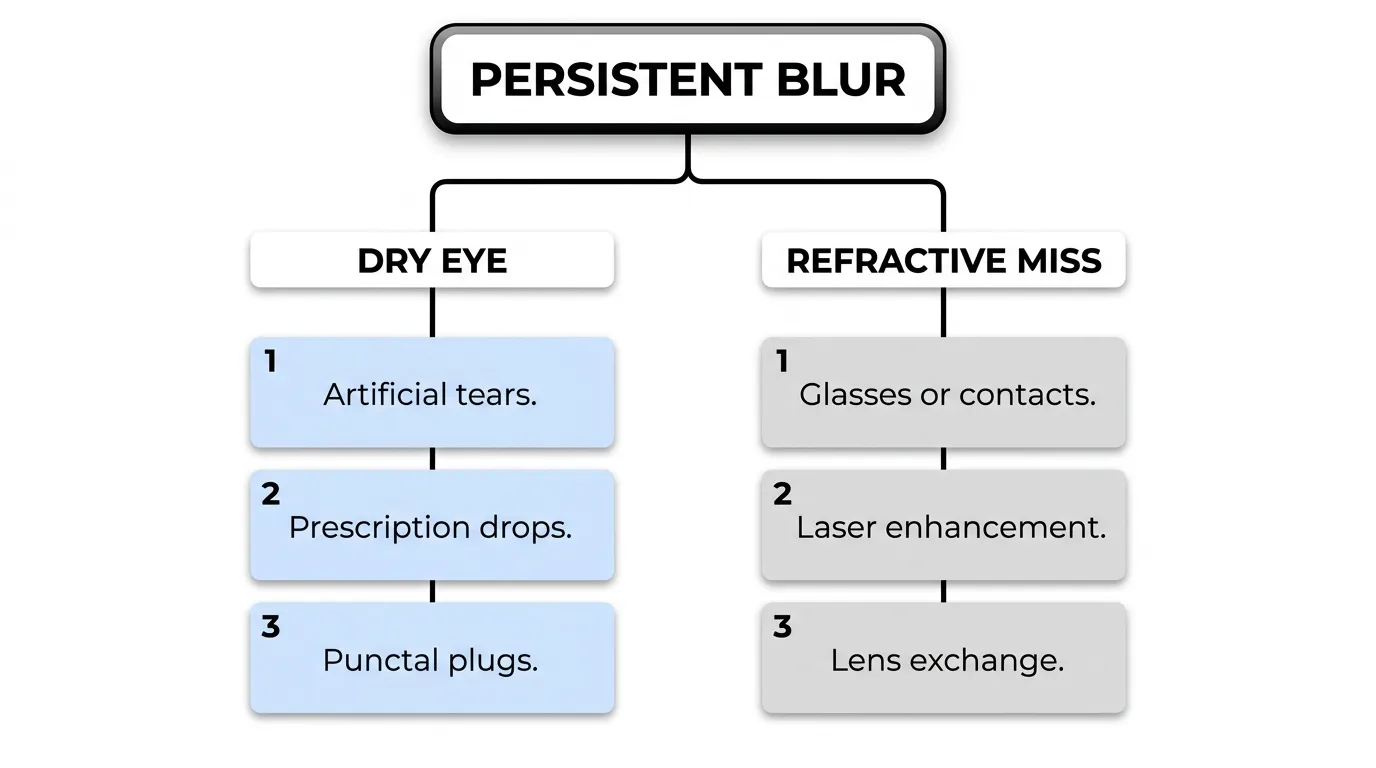
Dry-eye-related blurry vision may be treated with artificial tears, prescription anti-inflammatory drops, punctal plugs, and targeted lifestyle adjustments. The following sections cover when each approach is appropriate.
Can Artificial Tears and Lubricants Help Restore Clarity?
Yes, artificial tears and lubricants can help restore clarity by replenishing the tear film and smoothing the optical surface of the eye. When dry eye disrupts the tear layer, light scatters unevenly across the cornea, producing intermittent blur. Lubricating drops temporarily stabilize this surface, which is why many patients notice sharper vision immediately after instilling them.
Not all formulations perform equally, however. A Cochrane review found that 0.2% polyacrylic acid-based artificial tears were consistently more effective at treating dry eye symptoms than 1.4% polyvinyl alcohol-based tears. Preservative-free options are generally preferred for frequent use because preserved drops can worsen ocular surface irritation over time. For mild post-surgical dryness, a consistent lubricant regimen often provides meaningful relief on its own, though patients whose blur persists despite regular use may need stronger interventions.
When Might Prescription Drops or Punctal Plugs Be Needed?
Prescription drops or punctal plugs may be needed when artificial tears alone fail to control inflammation or maintain adequate tear volume. Moderate-to-severe dry eye disease involves chronic ocular surface inflammation that over-the-counter lubricants cannot resolve.
Anti-inflammatory prescription options include:
- Cyclosporine ophthalmic emulsion, which suppresses T-cell-mediated inflammation on the ocular surface.
- Lifitegrast ophthalmic solution, which blocks integrin-mediated inflammatory pathways.
- Short-course topical corticosteroids, which your ophthalmologist may prescribe to reduce acute flare-ups.
Punctal plugs work differently. These small biocompatible devices are inserted into the tear drainage ducts to slow tear outflow, keeping the eye’s natural moisture on the surface longer. Your eye doctor may recommend punctal plugs when tear production is insufficient despite anti-inflammatory therapy. Because untreated chronic dry eye disease can lead to increased ocular surface inflammation, damage, and neurosensory abnormalities that may cause permanent vision impairment, timely escalation beyond basic lubricants is essential.
How Do Lifestyle Changes Help Manage Post-Surgical Dry Eye?
Lifestyle changes help manage post-surgical dry eye by reducing environmental triggers and supporting the eye’s natural tear production. While drops address symptoms directly, daily habits influence how quickly the ocular surface recovers after surgery.
Practical adjustments include:
- Taking regular screen breaks using the 20-20-20 rule (every 20 minutes, look 20 feet away for 20 seconds) to restore a normal blink rate.
- Using a humidifier in dry indoor environments to reduce tear evaporation.
- Wearing wraparound sunglasses outdoors to shield against wind and low humidity.
- Increasing dietary omega-3 fatty acid intake through fish, flaxseed, or supplements, which may help support healthy tear lipid composition.
- Staying well hydrated throughout the day to maintain baseline tear production.
These modifications complement medical treatments rather than replace them. For patients recovering from cataract or refractive surgery, combining consistent drop therapy with environmental awareness often produces the most stable visual clarity over time. Understanding how dry eye is treated sets the stage for exploring whether a refractive miss, rather than dryness, may require a different corrective approach.
How May a Refractive Miss Be Corrected After Surgery?
A refractive miss may be corrected after surgery through glasses, contact lenses, laser enhancement procedures, or lens exchange. The best approach depends on the type and degree of residual error.
Can Glasses or Contact Lenses Address a Residual Error?
Yes, glasses or contact lenses can address a residual error and are often the first correction method considered. For small refractive misses, a new prescription may restore clear vision without any additional surgical intervention. Glasses work well for residual myopia, hyperopia, or astigmatism that remains stable after the eye has fully healed.
Contact lenses, including toric lenses for astigmatism, offer another nonsurgical option. They can be particularly useful when the residual error creates an imbalance between the two eyes that glasses correct less comfortably. Many ophthalmologists recommend waiting until the refraction stabilizes, typically several weeks post-surgery, before finalizing any new prescription. For patients who underwent surgery specifically to reduce dependence on corrective eyewear, however, glasses or contacts may feel like a disappointing outcome, making surgical correction worth discussing.
When Might a Laser Enhancement Procedure Be Appropriate?
A laser enhancement procedure may be appropriate when a stable residual refractive error persists and the patient desires spectacle independence. Both PRK and LASIK have been demonstrated to be safe and effective for correcting residual refractive error after cataract surgery, according to a 2016 review in Cataract & Refractive Surgery Today. Candidacy depends on several factors:
- Sufficient corneal thickness must remain to safely reshape the cornea.
- The residual error should be stable for at least one to three months post-surgery.
- The ocular surface must be healthy, with dry eye adequately managed beforehand.
- The degree of correction typically falls within the treatable range of laser platforms.
Surgeons generally prefer laser enhancement for lower degrees of residual error. In clinical practice, addressing any underlying dry eye before proceeding with a laser touch-up can significantly improve both the accuracy of measurements and the final visual outcome.
What Is a Lens Exchange and When Is It Considered?
A lens exchange is a surgical procedure that replaces the implanted intraocular lens (IOL) with a new one to correct a significant refractive miss. It is typically considered when the residual error is too large for laser correction or when the original IOL type does not match the patient’s visual needs.
Lens exchange may also be recommended if a patient experiences problems such as unwanted visual symptoms from a multifocal or toric IOL that has rotated. The procedure carries higher complexity than a laser enhancement because it involves reopening the eye and working within the capsular bag. Earlier intervention, usually within the first few months, tends to be safer since the lens has not yet firmly adhered to surrounding tissue. For most patients with large refractive misses, lens exchange remains the most definitive correction available.
With correction strategies established, understanding the risks of leaving either dry eye or a refractive miss untreated helps clarify why timely action matters.
What Are the Possible Risks of Leaving Either Condition Untreated?
The possible risks of leaving either dry eye or a refractive miss untreated include progressive ocular surface damage, worsening visual quality, and complications that may become harder to correct over time. Each condition carries distinct consequences when neglected.
Untreated chronic dry eye disease can lead to increased ocular surface inflammation, damage, and neurosensory abnormalities, potentially causing permanent vision impairment, according to the American Academy of Ophthalmology. What begins as mild discomfort and fluctuating blur may gradually escalate into a self-reinforcing cycle: inflammation damages the tear-producing glands, which worsens tear film instability, which triggers more inflammation. Over time, corneal scarring or epithelial breakdown can develop, making future surgical corrections less predictable.
An uncorrected refractive miss, while not inherently progressive in the same way, can still cause significant problems when left unaddressed. Persistent defocus forces constant visual strain, contributing to headaches, difficulty driving, and reduced quality of life. Perhaps more critically, a refractive error left too long after surgery may narrow the window for certain enhancement procedures, as corneal healing and lens positioning stabilize over time.
In clinical practice, the greater hidden risk is the overlap between these two conditions. Untreated dry eye can mask a refractive miss by distorting measurements, while an uncorrected refractive error can make dry eye symptoms feel worse than they are. Addressing both conditions promptly gives your eye doctor the clearest diagnostic picture and preserves the widest range of treatment options.
Who Should You See If Blurry Vision Persists After Eye Surgery?
You should see an ophthalmologist specializing in corneal or refractive care if blurry vision persists after eye surgery. The following sections explain how Eye Surgery Today can help and what key distinctions every patient should remember.
Can Eye Surgery Today Help You Understand Your Options?
Yes, Eye Surgery Today can help you understand your options by providing surgeon-led education on post-surgical vision concerns, including dry eye and refractive miss. The platform was built by nationally recognized ophthalmology KOLs to bridge the gap between complex clinical information and patient understanding.
Eye Surgery Today translates conditions like tear film instability and residual refractive error into clear, actionable knowledge. Rather than replacing your doctor’s evaluation, the platform empowers you to arrive at appointments informed, ask the right questions, and participate confidently in treatment decisions. For patients uncertain whether their blur stems from dry eye or a refractive miss, this foundation of understanding can make the difference between passive waiting and ongoing eye wellness.
What Are the Key Differences Between Dry Eye and Refractive Miss Blur That Every Patient Should Remember?
The key differences between dry eye and refractive miss blur are rooted in pattern, cause, and response to simple interventions.
- Dry-eye blur fluctuates throughout the day and may temporarily clear with blinking or artificial tears.
- Refractive miss blur remains constant regardless of blinking, tear supplements, or time of day.
- Dry eye involves tear film instability on the ocular surface, while a refractive miss reflects a mismatch between the eye’s optical power and the intended correction.
- Dry eye often worsens with screen use, wind, or low humidity; refractive miss does not change with environmental conditions.
- Diagnostic paths differ: tear breakup time and the OSDI assess dry eye, whereas manifest refraction confirms a refractive miss.
One challenge with dry eye management is treatment adherence. According to real-world data published by Dove Medical Press, 70.8% of patients using cyclosporine and 64.4% using lifitegrast discontinued treatment, with median days to discontinuation being 89 and 29, respectively. Recognizing which condition drives your symptoms helps you and your ophthalmologist choose the right diagnostic and treatment path from the start.