iDose and sustained release implants for glaucoma are small intracameral devices designed to deliver IOP-lowering medication directly inside the eye over extended periods, potentially reducing or eliminating the need for daily eye drops.
This guide covers the iDose TR system and its mechanism of action, the types of sustained release implants available, patient candidacy and adherence considerations, clinical evidence and safety data, and the cost and decision-making factors involved.
The iDose TR is a titanium reservoir implant that releases preservative-free travoprost through a nanoporous membrane for up to three years. It is anchored into the trabecular meshwork, targeting the primary site of aqueous outflow resistance in open-angle glaucoma.
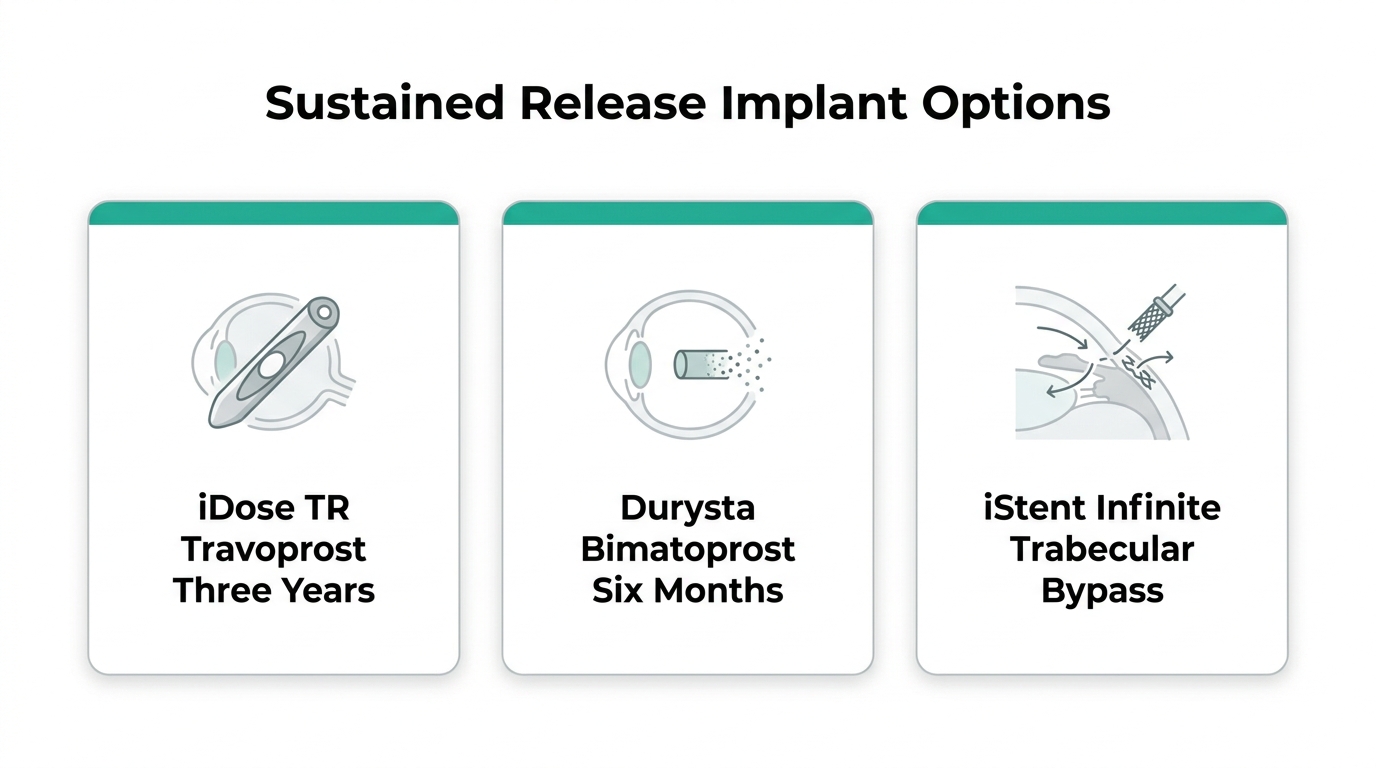
Several implant-based glaucoma options now exist,sustained-release drug implants such as Durysta and iDose TR, earlier travoprost platforms like ENV515, and outflow-based devices such as iStent Infinite. Each uses a distinct mechanism and regulatory pathway to address elevated intraocular pressure.
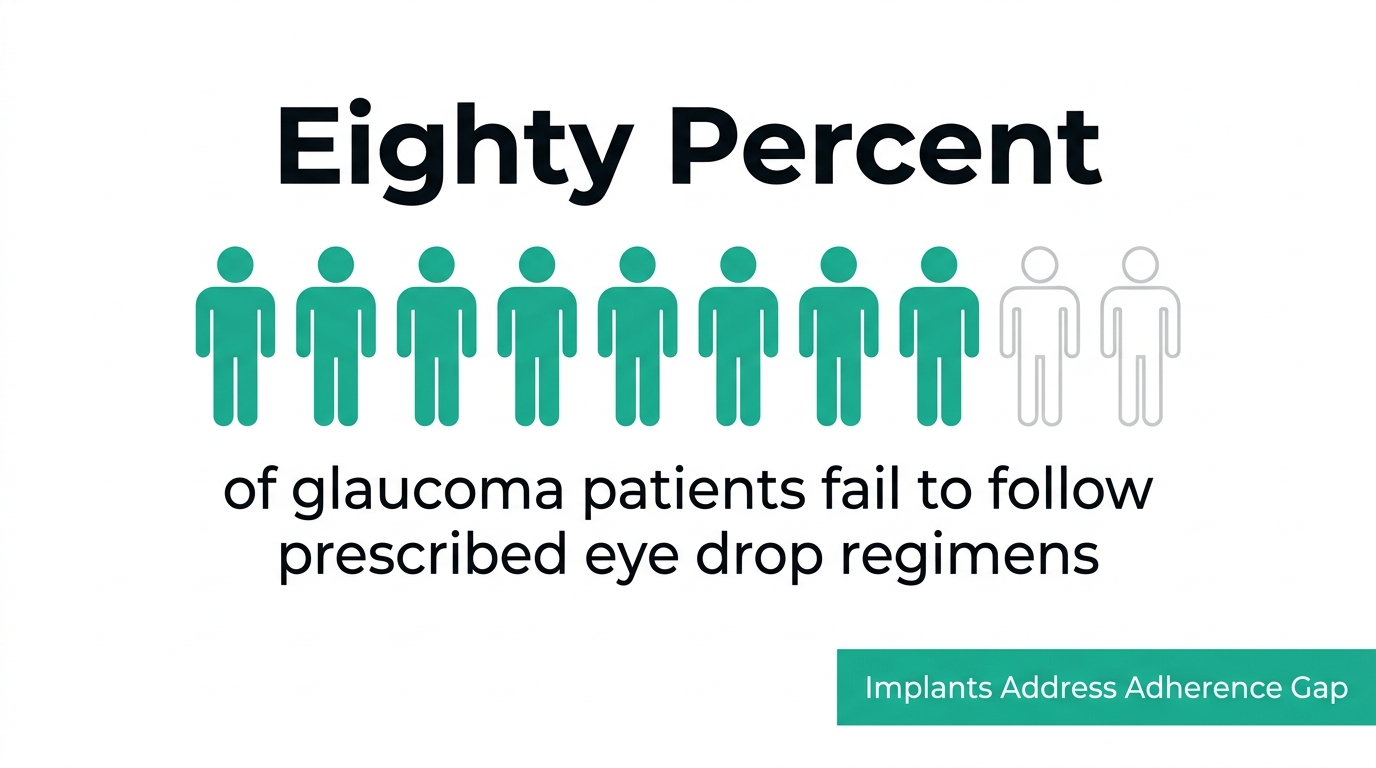
Candidacy depends on diagnosis, ocular health, and adherence history. Research indicates that up to 80% of glaucoma patients may fail to follow prescribed topical regimens, making implant-based delivery a clinically relevant alternative for many individuals.
Phase 3 trials demonstrated that iDose TR may achieve medication freedom in a majority of patients at 12 months, with long-term data showing sustained IOP control through three years. The safety profile includes low-frequency adverse reactions such as iritis and dry eye.
Medicare reimbursement became available in mid-2024, and manufacturer savings programs may help reduce out-of-pocket expenses for eligible commercially insured patients.
What Is the iDose TR Intracameral Implant?
The iDose tTR intracameral implant is a sustained-release device designed to deliver travoprost directly inside the eye and may reduce the need for daily eye drops. The H3 sections below cover how it delivers medication, how long the drug release lasts, and where it is placed within the eye.
How Does the iDose Implant Deliver Medication?
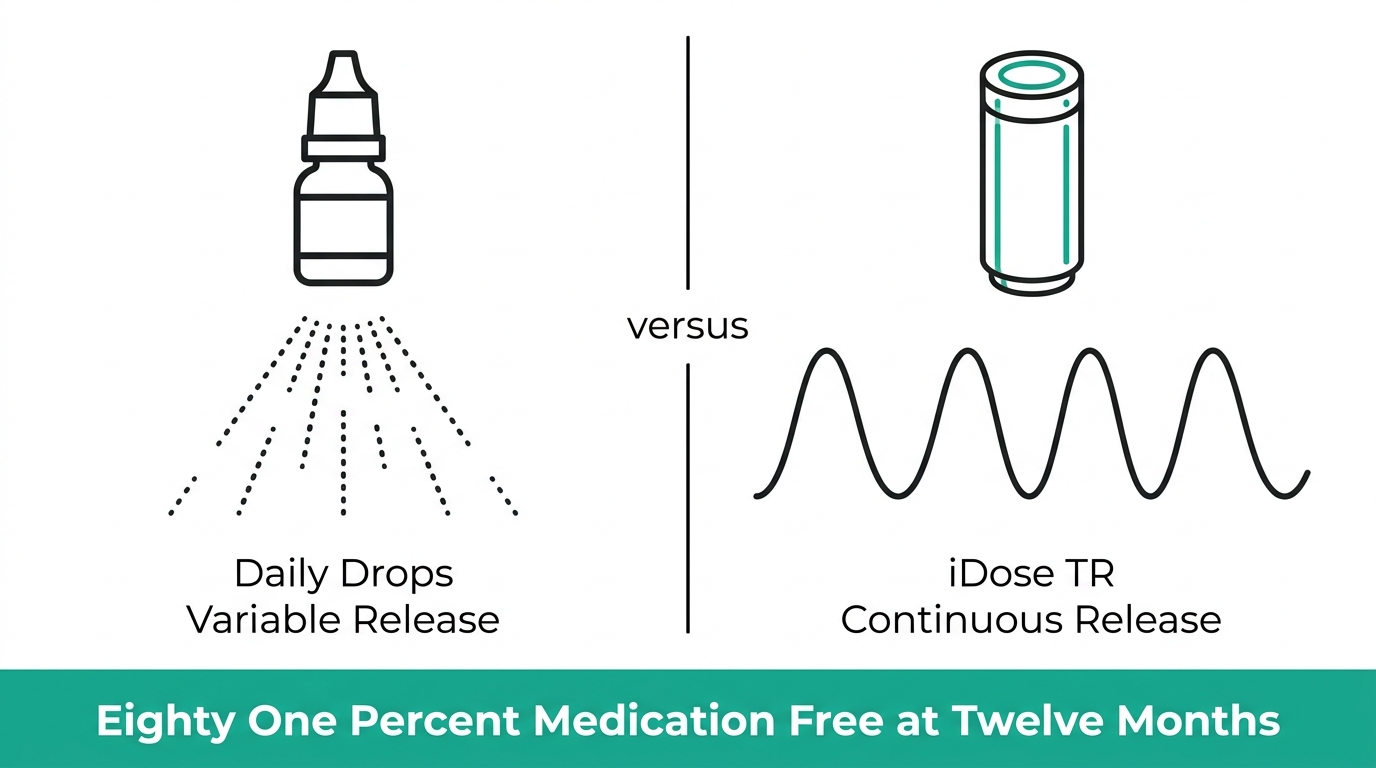
The iDose implant delivers medication by continuously releasing preservative-free travoprost from a titanium reservoir anchored into the trabecular meshwork. This mechanism may help reduce adherence challenges associated with topical drops. According to iDose TR HCP efficacy data, 81% of patients were completely free of IOP-lowering topical medications at 12 months in Phase 3 trials. Steven R. Sarkisian, Jr., MD, noted that “80% of people were medication-free, and there was a significant drop in pressure that was sustainable out to three years” with iDose TR.
How Long Does the iDose Implant Release Medication?
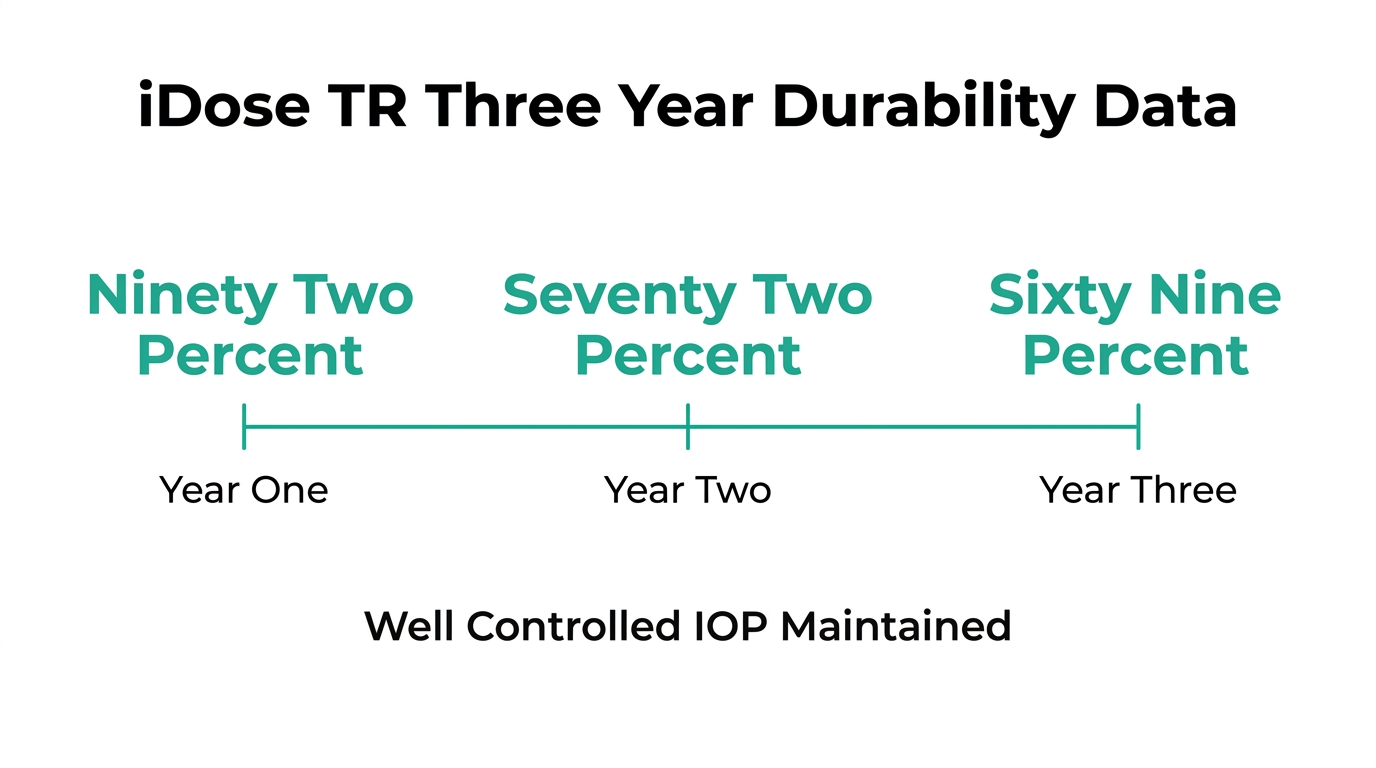
The iDose implant releases medication for up to 3 years through a nanoporous Ethylene Vinyl Acetate (EVA) membrane that controls the elution of 75 mcg of travoprost. According to Glaucoma Today’s analysis of Phase 2b trial data, 92% of patients maintained well-controlled IOP at 1 year, with 72% and 69% remaining stable at 2 and 3 years, respectively. Inder Paul Singh, MD, stated: “I cannot overemphasize the impact of getting patients off topical IOP medications.” For patients who struggle with long-term adherence, a 3-year sustained release window represents a clinically meaningful advantage.
Where Is the iDose Implant Placed Inside the Eye?
The iDose implant is placed directly into the trabecular meshwork, anchored into the sclera via an intracameral injection through a small clear corneal incision. This positioning allows travoprost to act at the primary site of aqueous humor outflow resistance, targeting the underlying mechanism of elevated intraocular pressure in open-angle glaucoma patients.
What Are Sustained Release Implants for Glaucoma?
Sustained release implants for glaucoma are small devices placed inside the eye to deliver IOP-lowering medication continuously over weeks to years. The following sections explain how these implants differ from eye drops and how drug elution drives their sustained action.
How Do Sustained Release Implants Differ From Eye Drops?
Sustained release implants differ from eye drops by delivering medication directly inside the eye at a controlled, consistent rate, eliminating the need for daily self-administration. Eye drops depend entirely on patient application, and according to a PMC-NIH review, up to 80% of glaucoma patients fail to adhere to prescribed topical regimens, with approximately 17% relying on others to administer drops. Implants bypass this adherence gap by releasing active drug continuously from an intracameral position.
What Role Does Drug Elution Play in Sustained Release?
Drug elution plays the central role in sustained release by governing how a medication gradually diffuses out of an implant over time at a predictable rate. In implants like iDose TR, elution occurs through a nanoporous Ethylene Vinyl Acetate (EVA) membrane, which controls the diffusion of preservative-free travoprost from a titanium reservoir. This membrane-controlled release maintains therapeutic intraocular drug levels continuously, avoiding the concentration spikes and drop-offs associated with topical dosing. The precision of elution design directly determines both the duration and stability of IOP control, making membrane engineering a critical factor in implant efficacy.
What Types of Sustained Release Glaucoma Implants Exist?
The types of sustained release glaucoma implants include travoprost-based intracameral devices, bimatoprost biodegradable implants, while trabecular micro-bypass systems are related implant-based glaucoma procedures with a different mechanism. Each targets intraocular pressure (IOP) reduction through a distinct mechanism and regulatory pathway.
iDose TR (Travoprost Intracameral Implant)
The iDose TR is a sustained release travoprost intracameral implant that received FDA approval on December 13, 2023 (NDA 218010), indicated for IOP reduction in patients with open-angle glaucoma (OAG) or ocular hypertension (OHT). The HCPCS J-code J7355 became effective on July 1, 2024, facilitating Medicare reimbursement for the procedure. Among travoprost-based devices, iDose TR represents the most clinically advanced option currently available, with multi-year Phase 3 data supporting its use.
Bimatoprost Sustained Release Intracameral Implant
Durysta is a biodegradable bimatoprost sustained release intracameral implant. According to clinical data published by Durysta HCP, it received FDA approval on March 5, 2020, for IOP reduction in OAG or OHT, demonstrating a reduction of approximately 5 to 8 mmHg (around 30%) with a duration of effect ranging from 15 weeks to 6 months.
iStent Infinite Trabecular Micro-Bypass
The iStent Infinite trabecular micro-bypass system is a standalone surgical device designed to reduce elevated IOP. It received FDA 510(k) clearance in August 2022 for patients with primary open-angle glaucoma uncontrolled by prior therapy, according to Glaukos. Unlike drug-eluting implants, it lowers IOP by improving aqueous outflow through the trabecular meshwork rather than delivering a pharmacologic agent.
Travoprost Intracameral Implant (ENV515)
ENV515 is an earlier-generation travoprost intracameral implant that served as a precursor to iDose TR. A Phase 2 clinical trial published in Investigative Ophthalmology and Visual Science found that ENV515 demonstrated a robust and sustained IOP-lowering effect for 8 months following a single dose, establishing the clinical foundation for the travoprost intracameral delivery approach now refined in iDose TR.
Who May Be a Good Candidate for iDose or Sustained Release Implants?
Good candidates for iDose and sustained release implants may include patients with open-angle glaucoma or ocular hypertension who need IOP reduction and may benefit from reduced daily eye drop use. Certain conditions, however, may disqualify a patient from candidacy.
Who With Open-Angle Glaucoma May Benefit Most?
Patients with open-angle glaucoma may benefit most from iDose or sustained release implants, particularly those with diagnosed OAG or ocular hypertension who need reliable, long-term IOP reduction. Glaucoma affects approximately 80 million people worldwide, with at least 10% experiencing legal blindness, according to Glaucoma Australia, underscoring how critical consistent treatment adherence is across this population.
Those who benefit most tend to share these characteristics:
- Diagnosed open-angle glaucoma or ocular hypertension requiring IOP reduction.
- Inadequate IOP control despite current topical therapy.
- Desire to reduce or eliminate daily eye drop regimens.
- Patients willing to undergo an intracameral implant procedure, with recovery varying based on the procedure and overall eye health.
From a clinical standpoint, patients who are already medically managed but still experiencing pressure fluctuations are often the strongest implant candidates, as the sustained-release mechanism directly addresses the consistency gap that topical drops cannot reliably fill.
Who Struggling With Eye Drop Adherence May Be Eligible?
Patients struggling with eye drop adherence may be eligible for sustained release glaucoma implants as an alternative to topical therapy. According to a review published on PMC (NIH), up to 80% of glaucoma patients fail to adhere to prescribed topical regimens, and approximately 17% rely on others to administer their drops, making implant-based delivery a clinically meaningful option for this group.
Patients who may be particularly eligible include:
- Individuals with physical limitations such as arthritis or tremors that make self-administration difficult.
- Patients who depend on caregivers or family members for daily drop instillation.
- Those with complex multi-drop regimens who frequently miss doses.
- Patients reporting drop-related side effects, such as dry eye or ocular surface irritation, that reduce compliance.
Non-adherence is often underestimated as a driver of glaucoma progression. For these patients, a sustained-release device may help reduce the daily compliance burden associated with topical drops.
Who Undergoing Cataract Surgery May Qualify for Combined Procedures?
Patients undergoing cataract surgery may qualify for a combined procedure in which a sustained release glaucoma implant is placed at the same surgical visit. This approach is particularly well-suited for patients who have both visually significant cataracts and medically managed glaucoma, allowing both conditions to be addressed in a single operating session.
Patients who may qualify for a combined procedure generally include:
- Those with open-angle glaucoma currently on one or more topical IOP-lowering medications.
- Patients who are good surgical candidates for phacoemulsification cataract extraction.
- Individuals whose ophthalmologist determines that glaucoma is not adequately controlled by drops alone.
- Patients seeking to reduce long-term medication burden following cataract recovery.
Who May Not Be a Suitable Candidate?
Patients who may not be suitable candidates for iDose or sustained release implants are those with specific ocular conditions that contraindicate intracameral implantation. According to the iDose TR prescribing information, contraindications include active ocular infections, corneal endothelial cell dystrophy such as Fuchs’ Dystrophy, and prior corneal transplantation.
Additional factors that may affect candidacy include:
- Narrow or closed angles that prevent safe trabecular meshwork placement.
- Advanced glaucoma requiring more aggressive surgical intervention, such as trabeculectomy.
- Prior anterior segment surgeries that have altered ocular anatomy.
- Patients with conditions affecting corneal endothelial health, given the intracameral placement route.
An ophthalmologist review is essential before determining suitability, as candidacy depends on the full clinical picture rather than a single factor.
What Are the Potential Benefits of Sustained Release Implants?
The potential benefits of sustained release implants include reduced dependence on daily eye drops, more consistent intraocular pressure control, and improved outcomes for patients with adherence difficulties. The following sections examine each of these advantages in detail.
How May They Help Reduce Dependence on Daily Eye Drops?
Sustained release implants may help reduce dependence on daily eye drops by delivering medication continuously without requiring patient action. According to Phase 3 trial data published by iDose TR HCP, 81% of iDose TR patients were completely free of IOP-lowering topical medications at 12 months. Glaucoma specialist Inder Paul Singh, MD, noted: “I cannot overemphasize the impact of getting patients off topical IOP medications.” For patients managing multiple chronic conditions, eliminating a daily eye drop regimen can meaningfully simplify long-term glaucoma care.
How May They Help Maintain More Consistent Eye Pressure?
Sustained release implants may help maintain more consistent eye pressure by providing a steady, uninterrupted supply of medication directly at the treatment site. Topical drops depend on correct application timing, which creates natural fluctuations in drug concentration. Continuous drug elution may help reduce variability, supporting more stable IOP levels throughout the day.
How May They Help Patients Who Forget or Misapply Drops?
Sustained release implants may help patients who forget or misapply drops by removing the need for self-administration entirely. A review published by PMC (NIH) found that up to 80% of glaucoma patients fail to adhere to prescribed topical regimens, and approximately 17% rely on others to administer their drops. By bypassing daily self-dosing, implants may offer a practical solution for patients whose adherence challenges place their vision at risk.
What Are the Possible Risks and Side Effects?
The possible risks and side effects of iDose TR include both procedure-related and implant-specific concerns. The H3 sections below cover reported ocular adverse reactions, risks of implant displacement or obstruction, and how iDose TR’s risk profile compares to traditional eye drop therapy.
What Ocular Side Effects Have Been Reported With iDose?
The ocular side effects reported with iDose TR include increases in intraocular pressure, iritis, dry eye, and visual field defects, each occurring in 2% to 6% of patients according to the iDose TR Prescribing Information. iDose TR is contraindicated in patients with active ocular infections, corneal endothelial cell dystrophy such as Fuch’s Dystrophy, or a history of corneal transplantation.
These side effects are worth weighing carefully before proceeding, though the overall safety profile is considered generally favorable. For most eligible patients, should discuss the known adverse reactions and potential IOP-lowering benefit the implant may provide.
What Risks Relate to Implant Displacement or Obstruction?
The risks relating to implant displacement or obstruction in iDose TR are tied to its placement in the trabecular meshwork. The implant is anchored into the sclera through a small approximately 2.4 mm corneal incision, which carries a procedural risk of malpositioning if not placed precisely. Displacement could potentially obstruct aqueous outflow or affect surrounding ocular structures. Patients with anatomical variations in the trabecular meshwork may face higher repositioning risk, making careful pre-procedural evaluation important.
How Does the Risk Profile Compare to Traditional Drop Therapy?
The risk profile of iDose TR differs from traditional drop therapy because it involves an intracameral implant rather than daily topical medication. Eye drops carry chronic risks such as preservative-related ocular surface toxicity, systemic absorption side effects, and the compounding harm of poor adherence, whereas iDose TR shifts the risk to a single procedural event with a defined set of implant-specific reactions. From a clinical standpoint, eliminating daily drop exposure may reduce long-term ocular surface damage for patients already experiencing intolerance to preserved formulations, making iDose TR a meaningful alternative for that subgroup.
What Should You Expect During the iDose Procedure?
The iDose procedure involves three distinct phases: preparation before the implant, the surgical placement itself, and post-procedure recovery. Each phase is straightforward, and understanding what happens at each step can help set realistic expectations.
How Should You Prepare Before the Implant Procedure?
Preparation before the iDose implant procedure typically follows standard pre-operative protocols your ophthalmologist will outline at your pre-surgical consultation. Your care team may review your current glaucoma medications, assess your eye health, and confirm you have no active ocular infections or conditions that would contraindicate the implant, such as corneal endothelial cell dystrophy. Arranging transportation home after the procedure is also strongly advisable, as your vision may be temporarily affected.
What Happens During the Implant Placement Surgery?
The iDose implant placement surgery involves an intracameral injection delivered through a small, approximately 2.4 mm, clear corneal incision. The procedure is typically performed from the temporal side, with the implant placed nasally into the trabecular meshwork. Anesthesia options include topical, retrobulbar, or peribulbar, depending on your surgeon’s preference and your individual needs, according to the iDose TR Prescribing Information. The incision size is minimal, which supports a relatively rapid procedural experience compared to more invasive glaucoma surgeries.
What Does Recovery Look Like After the Procedure?
Recovery after the iDose procedure generally follows a similar course to other glaucoma implant surgeries. According to Hopkins Medicine, vision recovery typically occurs within days to weeks, with recommendations to avoid heavy lifting or strenuous activity immediately after the operation. Your surgeon will schedule follow-up visits to monitor intraocular pressure and confirm the implant is seated correctly. Most patients can expect to resume light daily activities relatively quickly, though individual recovery timelines may vary based on overall eye health and any concurrent procedures performed.
How Does iDose Compare to Other Glaucoma Treatments?
iDose TR differs from MIGS procedures, selective laser trabeculoplasty, and traditional eye drops across three key dimensions: mechanism, duration, and patient convenience.
How Does iDose Compare to MIGS Procedures Like iStent?
iDose TR compares to MIGS procedures like iStent by targeting drug delivery rather than aqueous outflow. The iStent Infinite, which received FDA 510(k) clearance in August 2022, reduces IOP by creating micro-channels through the trabecular meshwork to improve fluid drainage. iDose TR, by contrast, releases travoprost directly into the anterior chamber over an extended period. Both are minimally invasive intracameral options, but they address glaucoma through fundamentally different mechanisms: structural drainage versus sustained pharmacotherapy.
How Does iDose Compare to Selective Laser Trabeculoplasty?
iDose TR and selective laser trabeculoplasty (SLT) in that both are office- or clinic-based glaucoma interventions are different approaches that may reduce reliance on daily drops for some patients. SLT uses targeted laser energy to stimulate trabecular meshwork cells and improve outflow, while iDose TR continuously delivers a controlled dose of travoprost pharmacologically. SLT effects may diminish over time and require retreatment, whereas iDose TR is designed to maintain consistent drug elution for up to three years.
How Does iDose Compare to Traditional Glaucoma Eye Drops?
iDose TR compares to traditional glaucoma eye drops by eliminating the daily administration burden that undermines long-term pressure control. Studies indicate that up to 80% of patients fail to adhere to prescribed topical regimens, making consistent IOP management difficult. According to Glaucoma Today, Dr. Inder Paul Singh, MD, emphasized that iDose TR “is designed to steadily release a concentrated medication for up to 3 years,” directly addressing the adherence gap that topical therapy cannot reliably close. For patients who struggle with drop instillation, iDose TR may be an option to discuss with an ophthalmologist.
What Does Current Clinical Evidence Say About iDose Outcomes?
Current clinical evidence on iDose outcomes shows that the implant delivers sustained, clinically meaningful IOP reduction over multiple years, supported by Phase 2b and Phase 3 trial data. The subsections below cover efficacy results, long-term durability findings, and the reported safety profile.
What Do Phase 3 Trial Results Show?
Phase 3 trial results show that iDose TR met its primary endpoint of noninferiority to topical timolol 0.5% twice daily. In the pivotal GC-010 and GC-012 trials, iDose TR produced mean IOP reductions ranging from 5.5 to 8.5 mmHg across a 12-month follow-up period, according to data reported by Ophthalmology Times. Notably, 81% of patients were completely free of IOP-lowering topical medications at 12 months. For a condition where daily drop adherence is a persistent clinical barrier, achieving medication freedom in four out of five patients represents a meaningful outcome that goes well beyond IOP numbers alone.
What Does Long-Term Data Reveal About IOP Control?
Long-term data on iDose TR IOP control comes from the Phase 2b trial, which tracked patients over three years. According to a report in Glaucoma Today, 92% of patients maintained well-controlled IOP (18 mmHg or below) with the same or fewer medications at one year. Stability rates were 72% at two years and 69% at three years. Glaucoma specialist Inder Paul Singh, MD, noted that iDose TR “is designed to steadily release a concentrated medication for up to 3 years,” adding that he could not overemphasize the value of eliminating topical IOP medications for patients.
What Is the Safety Profile of iDose TR?
The safety profile of iDose TR is generally favorable based on prescribing information data. Common ocular adverse reactions, occurring in 2% to 6% of patients, may include increases in intraocular pressure, iritis, dry eye, and visual field defects. The implant is contraindicated in patients with active ocular infections, corneal endothelial cell dystrophy such as Fuchs’ Dystrophy, or prior corneal transplantation. Proper candidate screening before implantation is, in practice, one of the most important steps a glaucoma specialist can take to minimize these risks and support durable outcomes.
How Much May iDose or Sustained Release Implants Cost?
The cost of iDose TR and other sustained release implants varies depending on insurance coverage, Medicare status, and manufacturer assistance programs. The following sections cover the implant’s list price, Medicare reimbursement, and options for reducing out-of-pocket expenses.
What Is the List Price of iDose TR?
The list price of iDose TR is $13,950 per implant, based on the Wholesale Acquisition Cost (WAC) established by Glaukos. This figure reflects the drug cost alone and does not include facility fees, anesthesia, or surgeon charges. For patients paying entirely out of pocket, total procedure costs would likely exceed this amount when all service components are factored in.
How Does Medicare Cover iDose TR?
Medicare coverage for iDose TR became accessible after the HCPCS J-code J7355 took effect on July 1, 2024, according to the Corcoran Consulting Group. Medicare Part B typically covers 80% of the approved cost, leaving a 20% coinsurance for the patient. Notably, approximately 87% of Fee-for-Service Medicare patients carry supplemental coverage, which may reduce that remaining balance further or eliminate it entirely.
Are There Savings Programs to Reduce Out-of-Pocket Costs?
Glaukos offers a Patient Savings Program for eligible commercially insured patients, potentially reducing out-of-pocket costs to as low as $0. This program targets patients whose private insurance may cover the procedure but still leaves a significant cost-sharing gap. Patients should verify eligibility directly with Glaukos or their surgical team before the procedure, as program terms and qualifications can change.
Understanding cost and coverage is a practical first step toward deciding whether iDose TR fits your treatment plan.
How Can You Make an Informed Decision About Glaucoma Surgery?
Making an informed decision about glaucoma surgery starts with access to clear, clinically accurate resources. The following sections cover what Eye Surgery Today offers and the key takeaways from this article.
Can Eye Surgery Today Resources Help?
Yes, resources from Eye Surgery Today can help patients better understand complex glaucoma treatment decisions with greater confidence. Eye Surgery Today is an educational resource platform founded by nationally recognized key opinion leaders in ophthalmology. Its content is written to translate complex surgical information into clear, accessible language. For patients weighing options like iDose TR or other sustained-release implants, reviewing educational material can help support a more informed conversation with their ophthalmologist.
What Are the Key Takeaways About iDose and Sustained Release Implants?
The key takeaways about iDose and sustained release implants are that these devices represent a meaningful shift in how open-angle glaucoma may be managed long-term. The core lessons from this article include:
- iDose TR received FDA approval in December 2023 and may reduce IOP while freeing eligible patients from daily eye drop regimens.
- Sustained release implants, such as iDose TR and Durysta, along with related implant-based procedures such as iStent Infinite, offer options suited to different patient profiles and treatment histories.
- Adherence challenges with topical drops make implant-based therapy a clinically relevant option for many patients.
- Candidacy matters: active ocular infections, corneal endothelial dystrophy, and prior corneal transplantation are contraindications to iDose TR.
- Cost and coverage vary; Medicare Part B and supplemental plans may offset significant out-of-pocket expenses.
- A qualified ophthalmologist can help determine which treatment best fits an individual’s diagnosis, lifestyle, and goals.
Discussing these options with a glaucoma specialist can help you make a decision aligned with your specific needs.