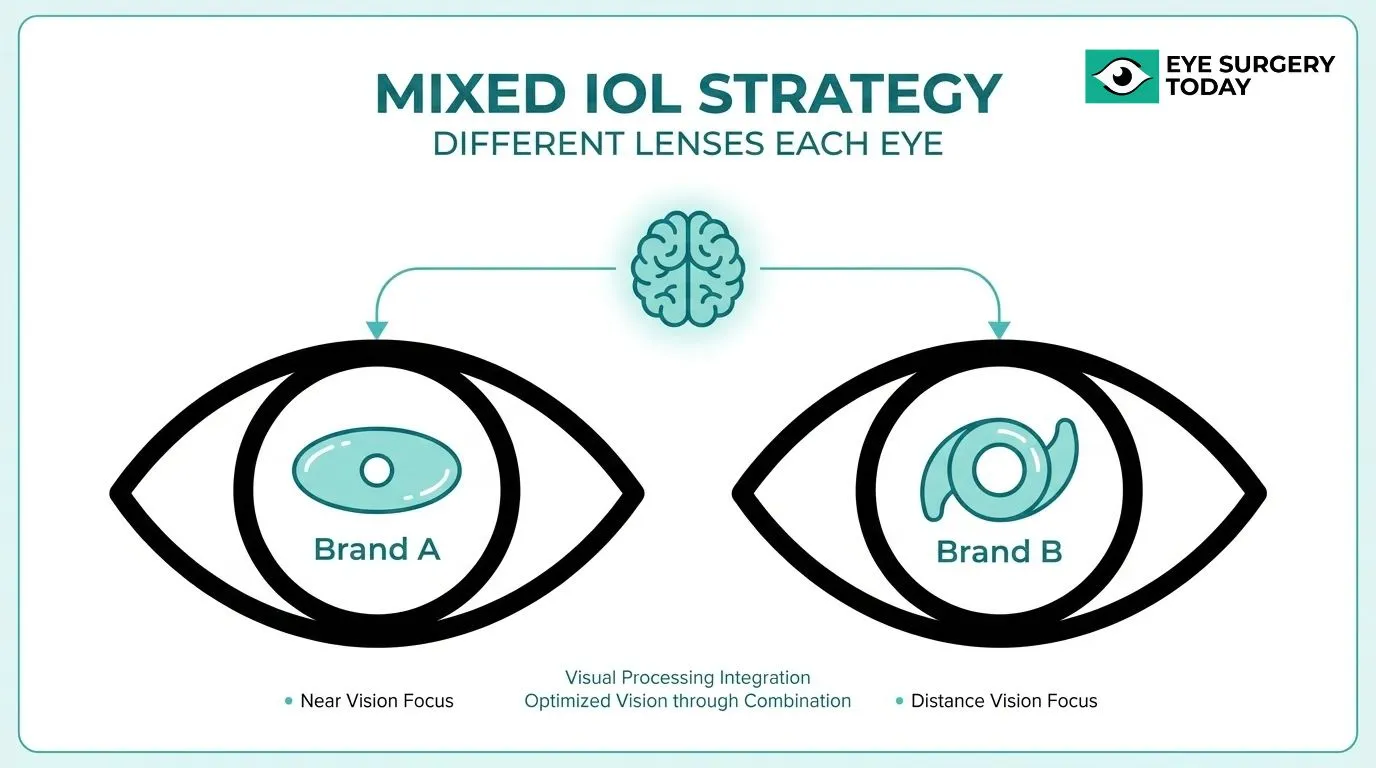
Mixing IOL (intraocular lens) brands between your two eyes is a surgeon-planned strategy where each eye receives a different lens to optimize overall binocular vision. The practice is generally considered safe when lenses are selected based on complementary optical properties and individual eye anatomy.
This guide covers the medical safety of mixed-brand implantation, why surgeons choose different lenses for each eye, how the brain adapts to differing optical inputs, considerations when mixing monofocal and premium lens types, and what to ask your surgeon before agreeing to this approach.
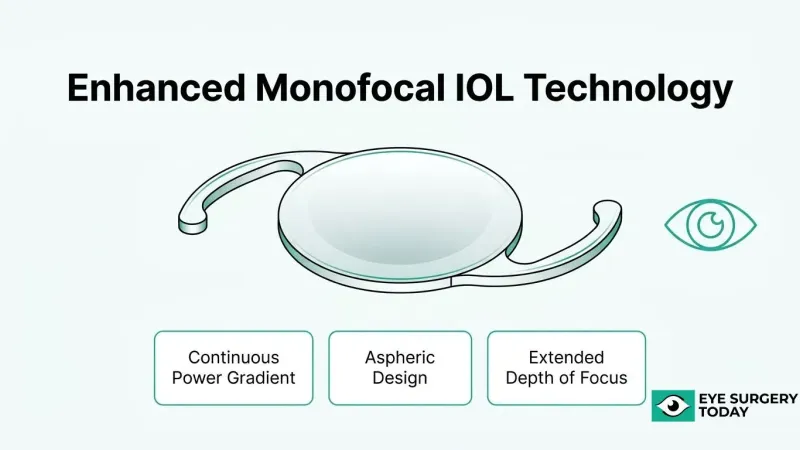
Mixed-brand IOL implantation does not inherently reduce visual clarity; outcomes depend on how well each lens pairs with the other’s focal strengths and each eye’s biometry. Combining complementary designs may provide an extended depth of binocular focus while reducing optical disturbances like glare and halos.
Surgeons may select different brands to address asymmetric anatomy, target distinct refractive goals for each eye, or work within lens availability constraints. Some cross-brand pairings are planned from the outset, with one lens optimized for distance in the dominant eye and another targeting intermediate or near range in the non-dominant eye.
Neural adaptation after mixed implantation varies by individual. Visual cortex activity may shift in the early postoperative weeks before stabilizing over several months, and the degree of adjustment depends on how different the two lenses’ optical signatures are.
Mixing monofocal with premium lenses or combining multifocal brands from different manufacturers can introduce asymmetric light distribution patterns. Surgeon experience, patient selection, and lens compatibility are critical factors that influence both dysphotopsia risk and long-term outcomes like posterior capsule opacification rates.
Is It Medically Safe to Use Different IOL Brands in Each Eye?
Using different IOL brands in each eye is generally considered medically safe when planned by an experienced surgeon. The following sections cover how mixed brands affect visual clarity, whether binocular vision problems can arise, and how commonly surgeons take this approach.
Does Mixing IOL Brands Affect Visual Clarity or Sharpness?
Mixing IOL brands does not inherently reduce visual clarity or sharpness when lenses are selected with complementary optical properties. Clinical outcomes depend more on the lens type pairing and how well each lens is matched to the individual eye’s biometry than on brand alone. A well-planned mix-and-match strategy can actually optimize binocular depth of focus while preserving contrast sensitivity, particularly when one lens targets distance and the other is optimized for intermediate or near vision.
Can Different IOL Brands Cause Binocular Vision Problems?
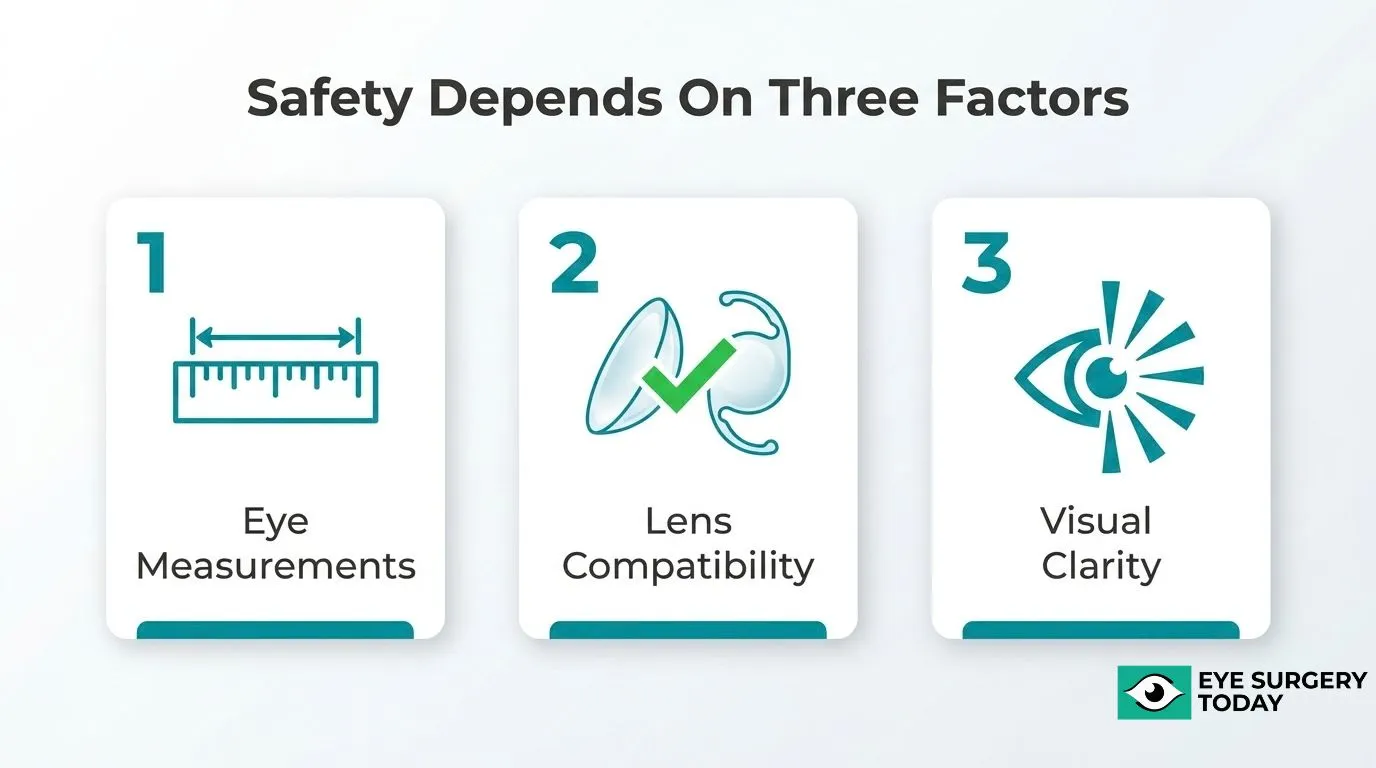
Different IOL brands can cause binocular vision problems if their optical designs produce conflicting or incompatible visual outputs. However, research published in the Journal of Ophthalmology found that combining two bifocal IOLs with complementary design patterns may provide excellent depth of binocular focus while reducing glare and halo compared to using a single high-addition lens in both eyes. The risk of problems rises when differing diffractive patterns create asymmetric dysphotopsia, so surgeon selection of optically compatible designs is the critical safeguard.
Do Surgeons Commonly Mix IOL Brands Across Both Eyes?
Surgeons do commonly mix IOL brands across both eyes, and the practice is supported by a broader shift toward individualized bilateral planning. According to a PLOS ONE study, immediately sequential bilateral cataract surgery (ISBCS) is gaining popularity worldwide because it offers patients fewer hospital visits, rapid rehabilitation, and reduced risk of anisometropia between eyes. Within that bilateral framework, surgeons may select different brands for each eye to address asymmetric anatomy, differing refractive targets, or complementary focal needs. Mixing brands is therefore a deliberate, clinician-guided decision rather than an exception.
Why Would a Surgeon Choose Different Lens Brands for Each Eye?
A surgeon may choose different lens brands for each eye to optimize visual performance across distance ranges, address each eye’s individual anatomy, or work within practical constraints like lens availability. The sections below cover how availability, surgical timing, and anatomy each drive brand selection.
Does Lens Availability Influence the Decision to Mix Brands?
Yes, lens availability can influence the decision to mix brands. Not every IOL model is stocked at every surgical facility, and supply constraints can mean the exact lens used in the first eye is unavailable when the second eye is scheduled. Surgeons may also switch brands deliberately when clinical evidence supports a complementary pairing, selecting one brand’s optical design for the dominant eye and another’s for the non-dominant eye to extend the overall range of focus.
Can a Second Surgery Require a Different Brand Than the First?
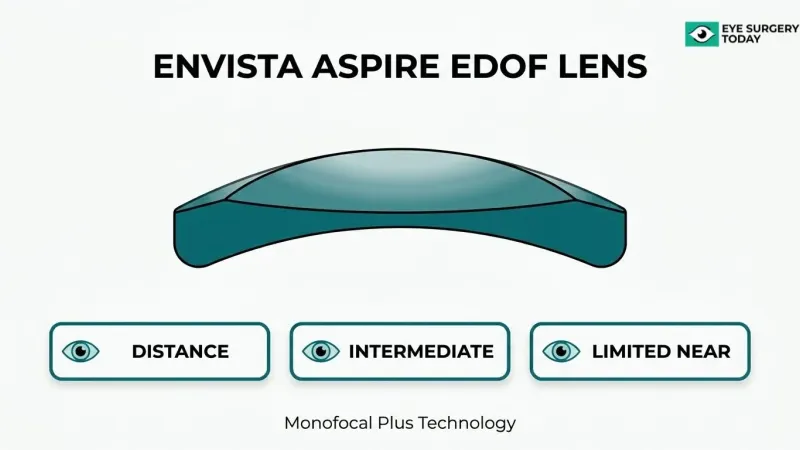
Yes, a second surgery can require a different brand than the first. Surgeons sometimes plan cross-brand pairings from the outset based on visual targets for each eye. In one study published in Klinische Monatsblätter für Augenheilkunde, patients received a Hoya Vivinex monofocal IOL in the dominant eye targeting emmetropia and a Lentis Comfort EDOF IOL in the non-dominant eye targeting -1.25 D; mean postoperative binocular distance, intermediate, and near acuity all measured within clinically functional ranges. This approach illustrates that brand differences between surgeries can be a deliberate, outcome-driven strategy rather than a logistical compromise.
Does Each Eye’s Unique Anatomy Affect IOL Brand Selection?
Yes, each eye’s unique anatomy affects IOL brand selection. Ocular biometry measurements, including corneal curvature, axial length, and anterior chamber depth, determine which IOL power and design will achieve the intended refractive target in a given eye. Because these measurements differ between a patient’s two eyes, one eye’s anatomy may suit a specific brand’s optical profile better than another. A surgeon matching IOL brand to individual biometry, rather than defaulting to identical implants bilaterally, can yield more precise refractive outcomes for each eye independently.
Does Mixing IOL Brands Affect How Your Brain Adapts to Vision?
Mixing IOL brands between eyes does affect neural adaptation, though the brain generally manages this adjustment over weeks to months. The sections below cover whether the brain can adapt when each eye receives a different lens brand and whether mixed brands slow that adaptation process.
Can Your Brain Adjust When Each Eye Has a Different Lens Brand?
Yes, your brain can adjust when each eye has a different lens brand, though the process requires time and varies by individual. The visual cortex processes signals from both eyes simultaneously, and when each eye delivers a slightly different optical signature, the brain works to fuse those inputs into a single, coherent image. According to the American Academy of Ophthalmology, most patients who adapt to different visual inputs in each eye, such as monovision, do well over time, though some individuals cannot fully adjust. Surgeons typically assess monovision tolerance before proceeding with designs that deliver notably different images to each eye.
Does Neural Adaptation Take Longer With Mixed Lens Brands?
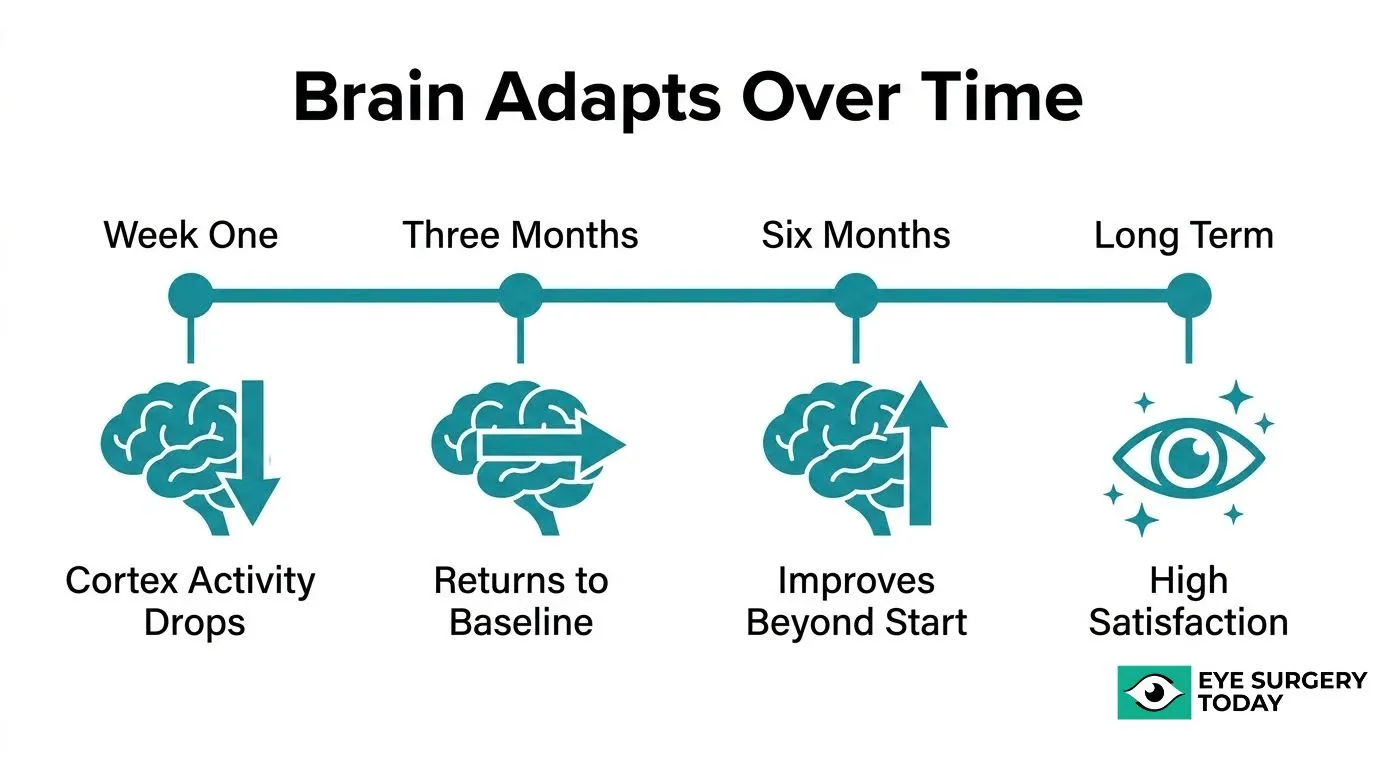
Neural adaptation may take longer with mixed lens brands when the two lenses produce meaningfully different optical characteristics, such as pairing a diffractive multifocal with a nondiffractive extended depth-of-focus design. A study published as “Comparison of Visual Neuroadaptations After Multifocal and Monofocal Intraocular Lens Implantation” found that visual cortex activity, measured by fALFF values, decreased at one week postoperatively after multifocal IOL implantation, recovered to baseline by three months, and improved beyond baseline at six months. Dysphotopsia symptoms, including glare and halos, can compound this adjustment period. Research assessing dysphotopsia in pseudophakic patients confirmed that multifocal IOLs induce dysphotopsia symptoms, and brand-specific optical designs, such as the nondiffractive X-Wave Technology in the AcrySof IQ Vivity or the aberration-neutral focus center in the Bausch & Lomb LuxSmart, produce distinct retinal image qualities that the brain must reconcile. Patient-reported outcomes data suggests satisfaction remains high when lens combinations are well-matched, with 74.1% of blended multifocal patients reporting being “very satisfied,” according to research published in Clinical Ophthalmology.
Does It Matter If You Mix Monofocal vs. Premium IOL Brands?
Mixing monofocal and premium IOL types adds a layer of complexity beyond simply mixing brands. The three H3 sections below cover surgeon consensus on monofocal-premium pairings, dysphotopsia risk when two multifocal brands are combined, and toric IOL mixing for astigmatism correction.
Can You Use a Monofocal IOL in One Eye and a Premium IOL in the Other?
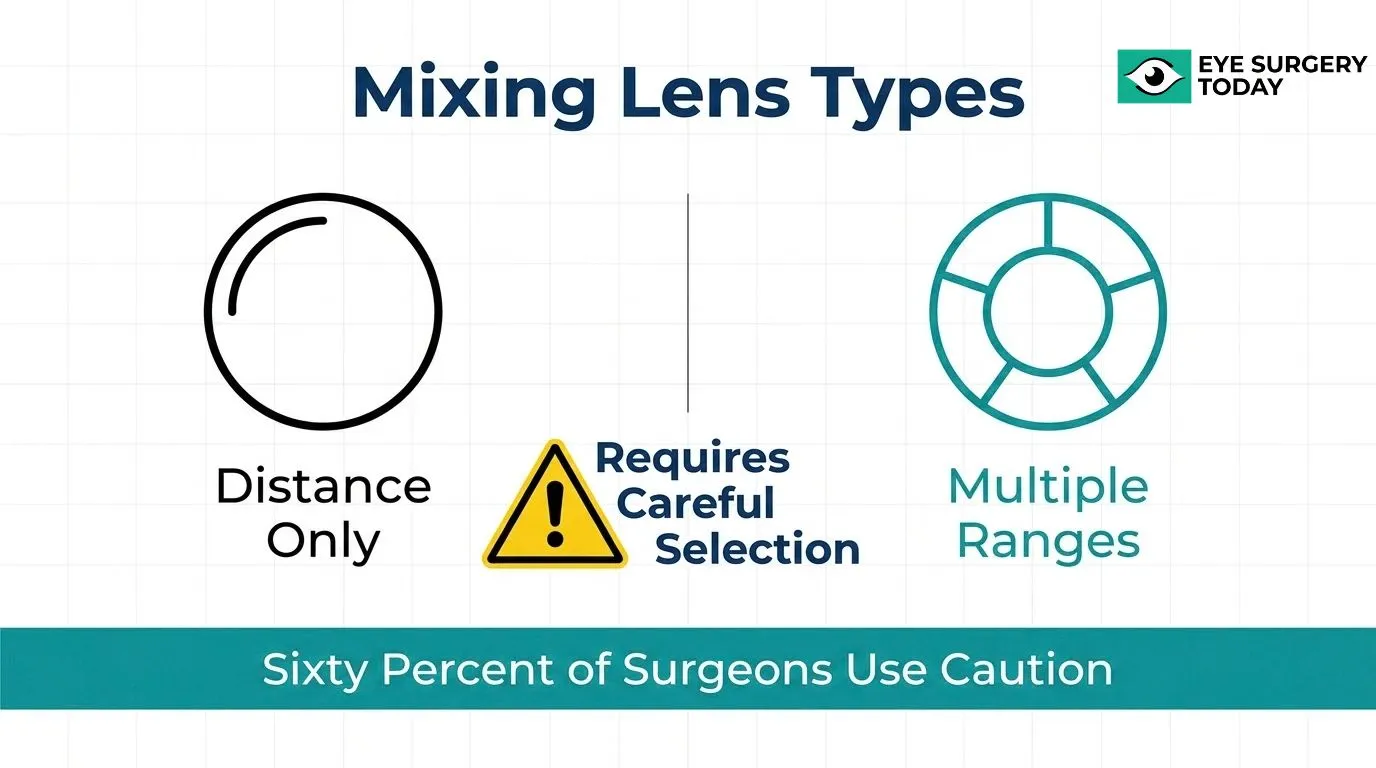
Yes, you can use a monofocal IOL in one eye and a premium IOL in the other, but most surgeons approach this combination cautiously. In a UK survey of 30 refractive surgeons (81.6% response rate), 60% said they do not recommend mixing a trifocal or multifocal IOL with a monofocal, while only 26.7% would consider it for select patients and 6.7% for most patients. The asymmetry in optical design means each eye processes light differently, which can complicate how the brain integrates the two images. This pairing tends to work best when one eye needs only distance correction and the other benefits from extended range, but patient selection and surgeon experience are critical factors in that decision.
What Happens When Multifocal IOLs From Different Brands Are Mixed?
Mixing multifocal IOLs from different brands may increase the risk of dysphotopsia, such as glare and halos, because each brand’s diffractive or refractive design produces a distinct light-distribution pattern. A study assessing dysphotopsia in pseudophakic patients found that subjective dysphotopsia ratings differentiated the Tecnis ZM900 from the Lentis Mplus MF30 (p < 0.001), confirming that optical profiles vary meaningfully between brands. Additionally, long-term complication rates can diverge: at 3 years post-surgery, the Nd:YAG capsulotomy incidence for Alcon AcrySof was 5%, compared to 21.2% to 31.1% for other IOLs (p < 0.0001), published in Eye (Nature). Combining brands with very different dysphotopsia profiles is an underappreciated risk that patients rarely hear about during pre-surgical consultations.
Is Mixing a Toric IOL Brand With Another Brand Safe for Astigmatism?
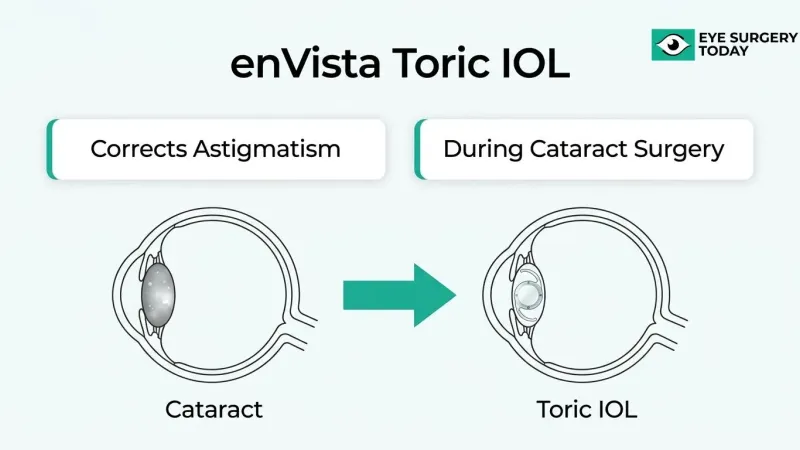
Mixing a toric IOL brand with another brand is generally safe for astigmatism correction, provided each lens is matched to each eye’s individual corneal measurements. According to ESCRS clinical guidelines, toric IOLs should be considered when corneal astigmatism reaches 1.0D or more, with strong evidence supporting their use above 2.0D. For patients requiring a toric lens in only one eye, the FDA’s approval of the IC-8 Apthera IOL offers a regulatory example of intentional cross-brand pairing: the device is specifically indicated for the non-dominant eye after the fellow eye has already received a monofocal or monofocal toric IOL targeted for emmetropia, with that eye achieving uncorrected distance visual acuity of 20/32 or better. This FDA-labeled design confirms that mixing toric and non-toric IOLs across eyes is a clinically recognized strategy when astigmatism is present in only one eye.
Does Mixing IOL Brands Change Your Surgical or Follow-Up Risks?
Mixing IOL brands does not introduce unique surgical risks during the procedure itself, but each eye’s lens material and design can influence long-term complications such as posterior capsule opacification (PCO) and YAG laser capsulotomy rates independently.
Do Mixed Brand IOLs Complicate YAG Laser Capsulotomy Later?
Mixed brand IOLs do not directly complicate YAG laser capsulotomy, but the procedure is evaluated per eye based on each lens’s individual PCO behavior. The decision to perform capsulotomy in one eye is independent of what lens was implanted in the fellow eye. Clinically, mixed implantation has demonstrated strong functional outcomes: according to a 2025 study published in Frontiers in Medicine, the mixed-implantation group achieved a spectacle-independence rate of 93.3% and significantly better near stereoscopic acuity (p < 0.001) compared to bilateral monofocal patients. These results suggest the visual benefits of mixing lenses are not offset by added procedural complexity at follow-up.
Can Different IOL Brands Affect How PCO Develops in Each Eye?
Different IOL brands can affect how PCO develops in each eye, because PCO rates are determined by each lens’s material and edge design rather than by the combination itself. Hydrophobic acrylic lenses with sharp posterior edges generally produce lower PCO rates than other materials. According to a study published in Eye (Nature), the Nd:YAG capsulotomy incidence at 3 years was 5% for the Alcon AcrySof, compared to 21.2%–31.1% for other IOLs (p < 0.0001). When two different brands are implanted, each eye may therefore require capsulotomy at a different point in time, which is a practical scheduling consideration rather than a safety concern.
What Should You Ask Your Surgeon Before Agreeing to Mixed IOL Brands?
The questions you should ask your surgeon before agreeing to mixed IOL brands cover your eye anatomy, the surgeon’s experience with specific lens combinations, expected adaptation timelines, and what happens if results fall short of your goals.
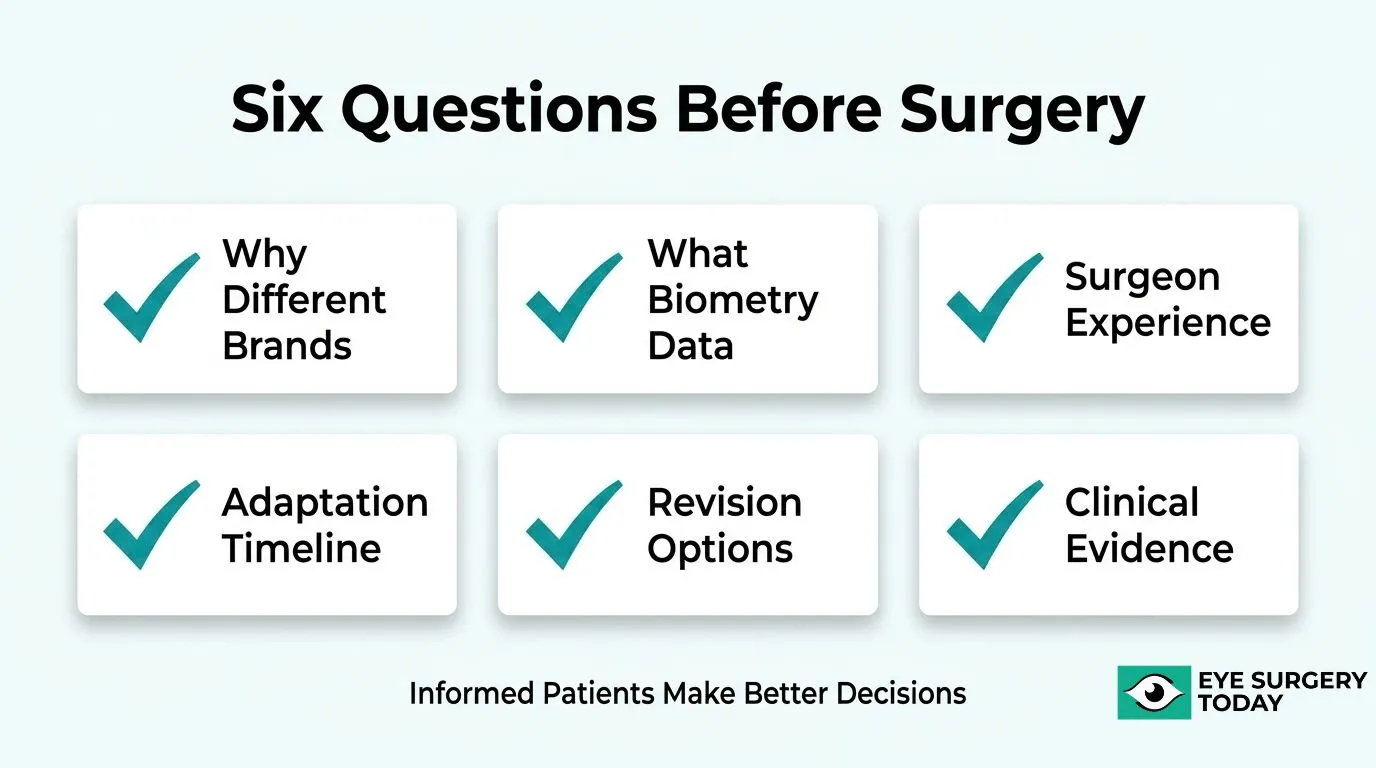
Before consenting to a mixed-brand IOL plan, ask your surgeon the following:
- Why do my two eyes need different brands? Ask whether the recommendation is driven by your anatomy, a specific optical goal, or lens availability.
- What biometry measurements support this plan? According to StatPearls (National Library of Medicine), ocular biometry measures corneal curvature, axial length, and anterior chamber depth to calculate the correct IOL power. Confirm these measurements guided the brand selection for each eye.
- How many mixed-brand IOL cases have you performed? Experience with specific combinations matters, particularly for premium or EDOF lenses.
- What visual disturbances should I expect, and for how long? Halos, glare, and contrast differences are possible with mixed premium lenses.
- What are my options if I struggle to adapt? Understanding the revision pathway before surgery reduces anxiety and sets realistic expectations.
- Will both lenses require the same follow-up schedule for posterior capsule opacification? Different IOL materials carry different long-term complication profiles.
- Is this combination supported by published clinical evidence?
Patients who enter this conversation with specific, informed questions are far better positioned to evaluate whether a mixed-brand recommendation genuinely fits their visual goals.
How Do IOL Options at Eye Surgery Today Help You Decide on Lens Choices?
Eye Surgery Today provides surgeon-reviewed educational resources to help patients understand IOL options, including mixed lens strategies. The H3s below cover how Eye Surgery Today supports mixed lens evaluations and summarize the key takeaways from this article.
Can Eye Surgery Today’s IOL Guidance Help You Evaluate Mixed Lens Decisions?
Yes, Eye Surgery Today’s IOL guidance can help you evaluate mixed lens decisions by presenting surgeon-reviewed information on how ocular biometry, lens design, and individual anatomy interact in the selection process.
Ocular biometry measures corneal curvature, axial length, and anterior chamber depth to calculate the appropriate IOL power for each eye, according to StatPearls (NCBI Bookshelf). Because each eye may yield different measurements, a mixed lens approach is sometimes the most anatomically appropriate path rather than a compromise.
Surgeon opinion on mixing varies considerably. A UK survey of refractive surgeons found that 60% do not recommend mixing a trifocal or multifocal IOL with another IOL type, while 26.7% would consider it for select patients. Understanding where your case falls on that spectrum requires the kind of evidence-based context that surgeon-reviewed education can provide before your consultation.
What Are the Key Takeaways About Mixing IOL Brands Between Your Two Eyes That We Covered?
The key takeaways about mixing IOL brands are that safety depends on lens compatibility, anatomical fit, and realistic neuroadaptation expectations.
The most important points covered in this article include:
- Mixed IOL implantation can deliver strong binocular outcomes when lens types are chosen to complement each other’s focal strengths.
- Brain adaptation after multifocal IOL implantation takes time: visual cortex activity may decrease in the first week before recovering and improving by six months, according to research published in PMC on visual neuroadaptations.
- Binocular rivalry, a phenomenon where dissimilar stimuli in each eye compete for perceptual dominance, is a real consideration when lens optical profiles differ significantly.
- Surgeon preference, ocular anatomy, and lifestyle goals all shape whether mixing brands is appropriate for a specific patient.
Eye Surgery Today can help you arrive at your surgeon consultation better prepared to ask the right questions.