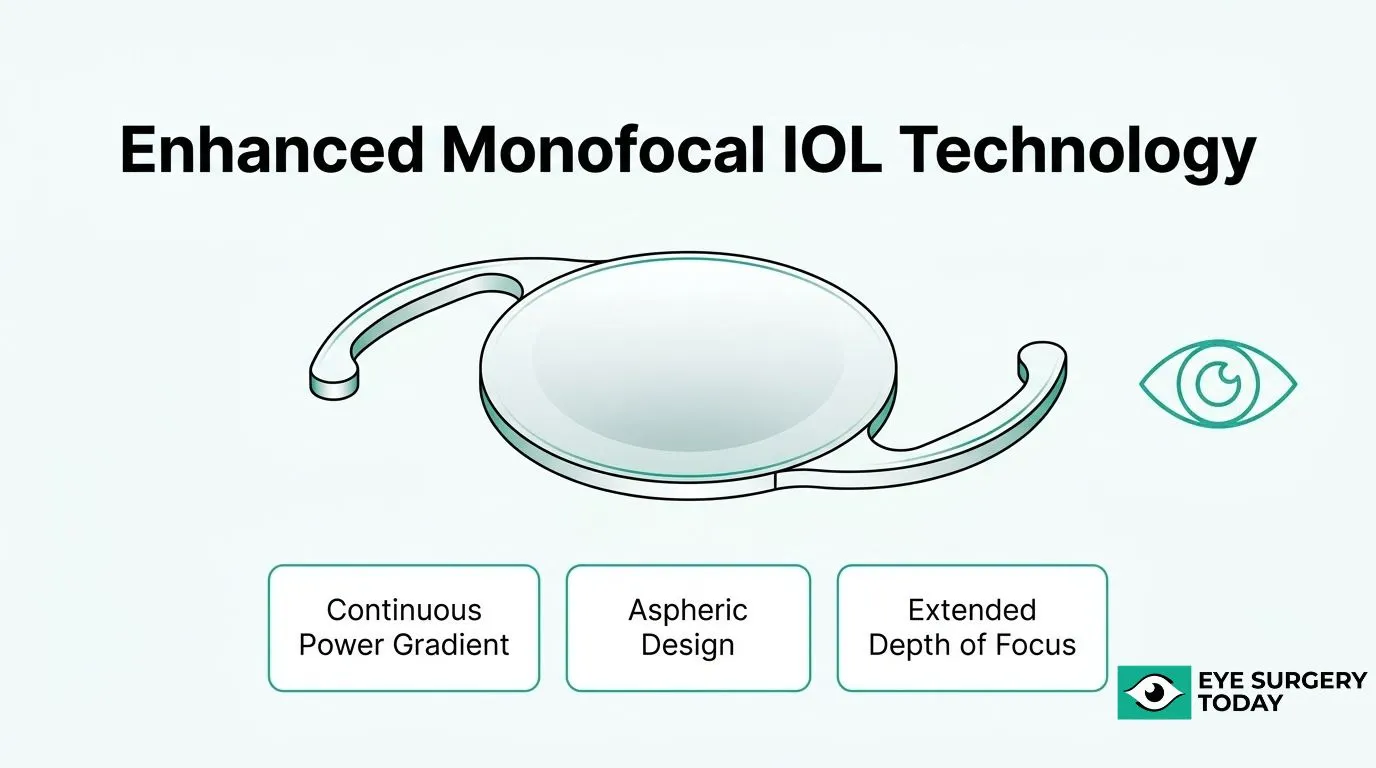
The TECNIS Eyhance is an enhanced monofocal intraocular lens (IOL) manufactured by Johnson & Johnson Vision that uses a continuous refractive power gradient to extend depth of focus beyond what a standard monofocal provides. This guide covers lens design and optical technology, patient candidacy, expected vision outcomes, comparisons with multifocal and EDOF alternatives, potential limitations, and the surgery and recovery process.
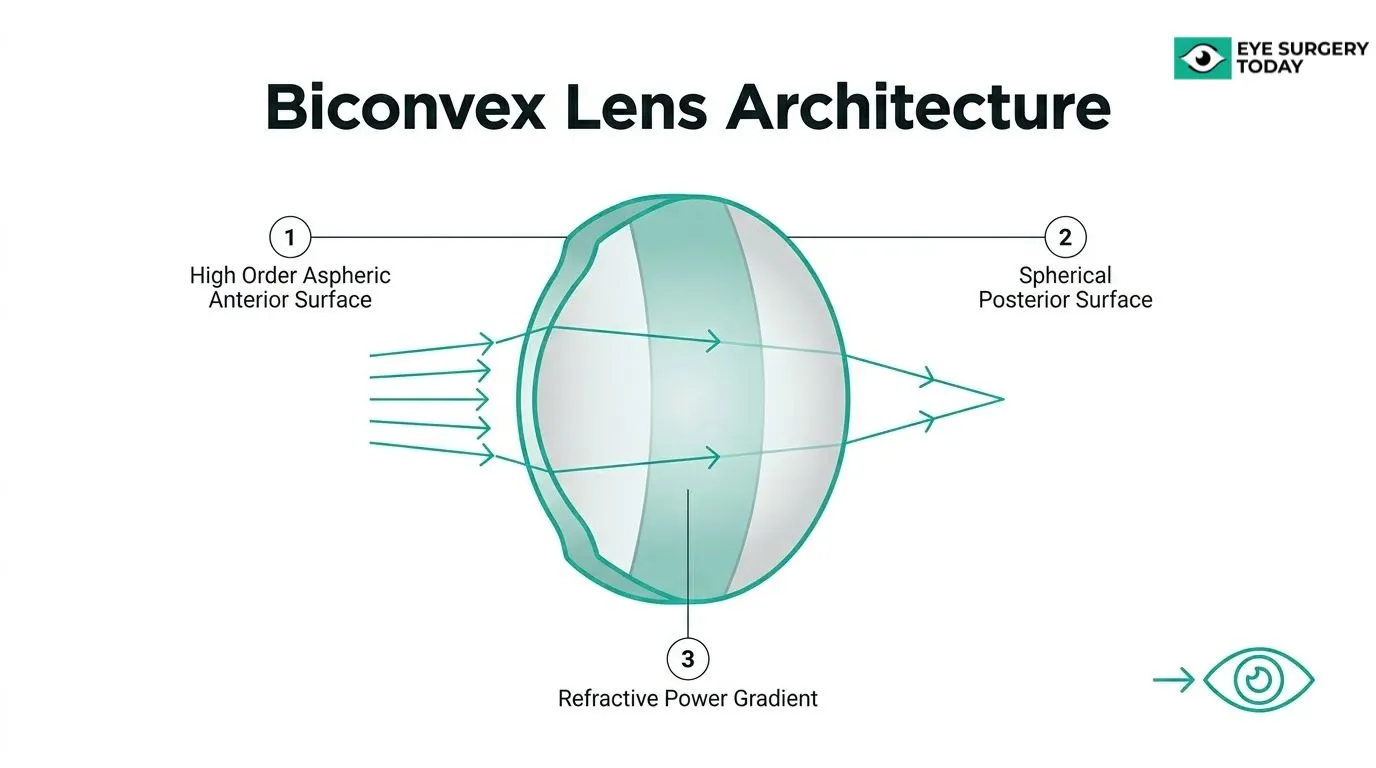
The Eyhance’s biconvex structure pairs a spherical posterior surface with a high-order aspheric anterior surface, correcting corneal spherical aberration and producing a cleaner retinal image without diffractive rings.
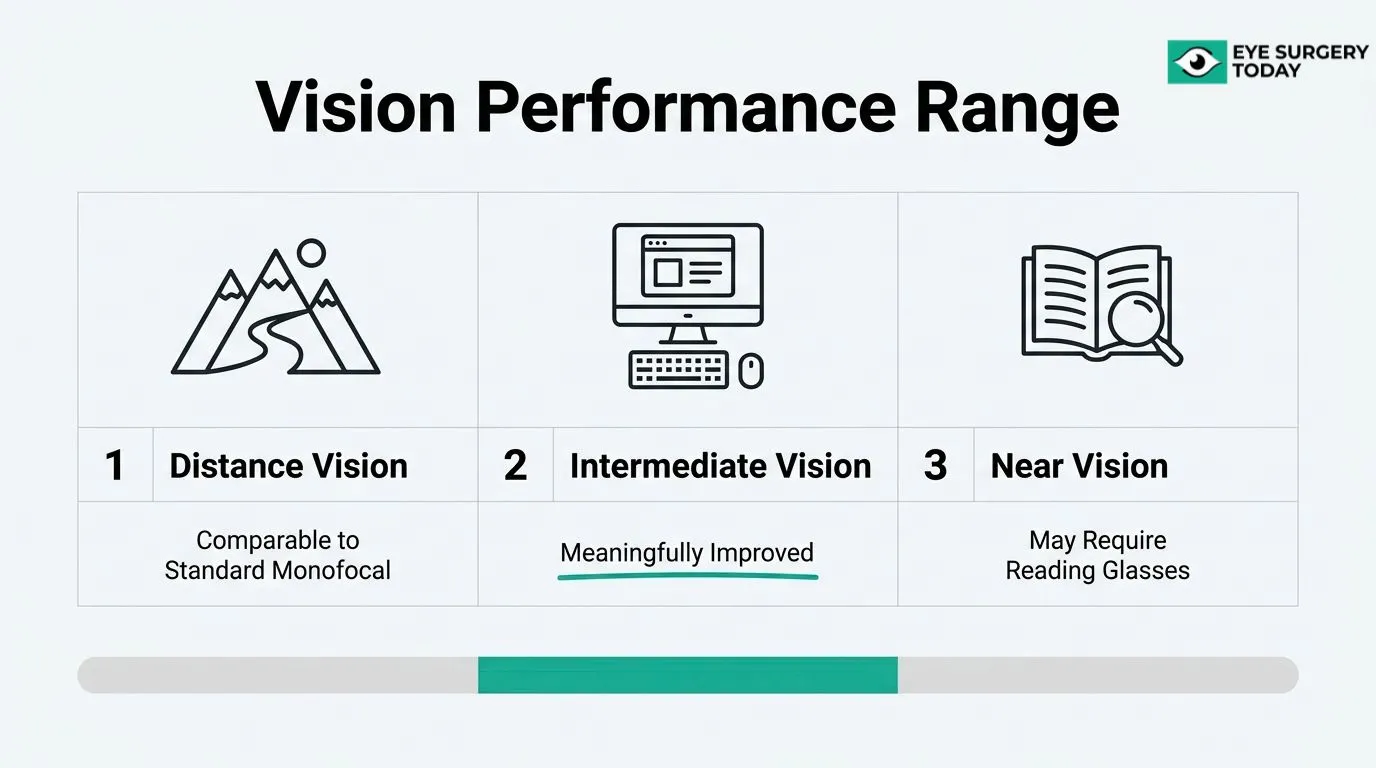
Clinical evidence suggests the lens may improve intermediate visual acuity by at least one line over a standard monofocal, which can benefit tasks like computer use and dashboard reading. Distance vision remains comparable to conventional monofocal performance.
Candidates include adults undergoing cataract surgery who want reduced spectacle dependence at intermediate distances; toric variants are available for patients with corneal astigmatism, and research supports its use in eyes with prior LASIK history.
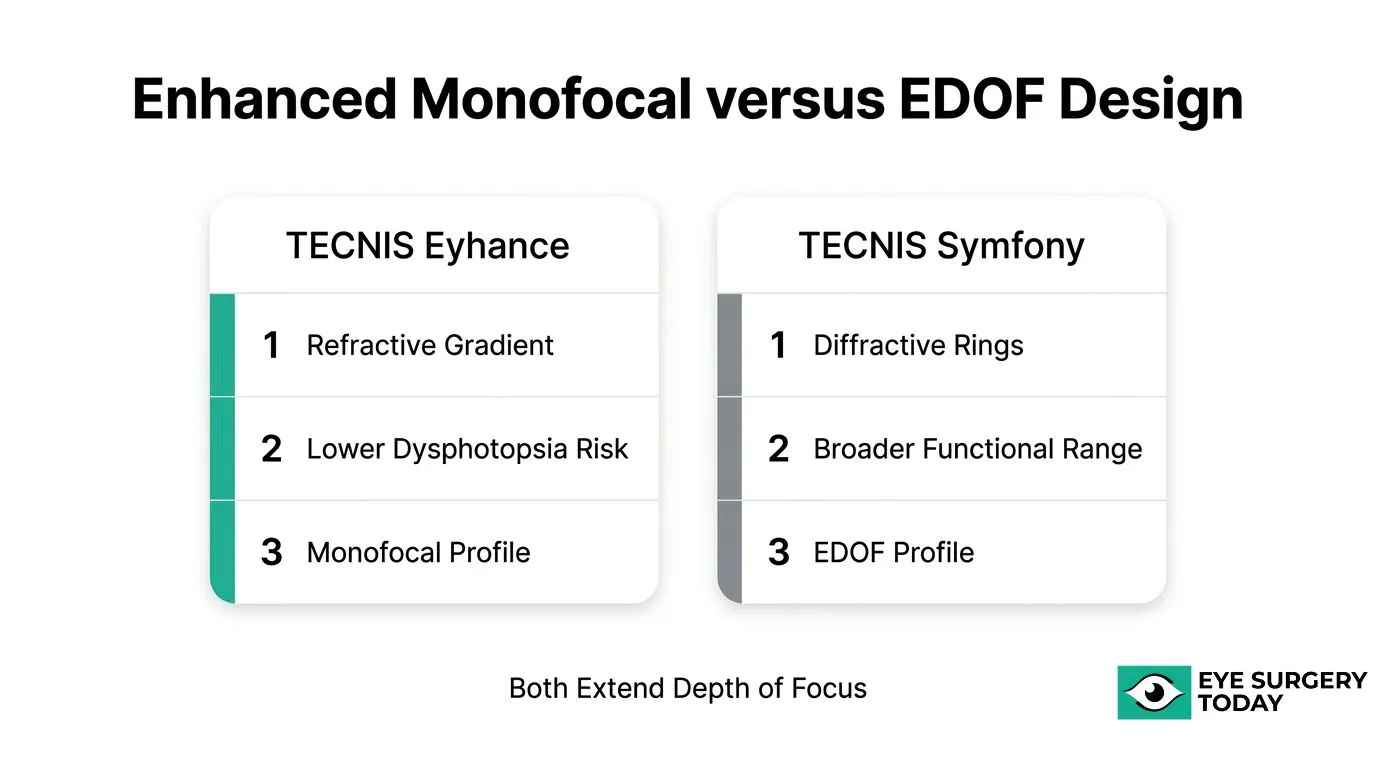
When compared to diffractive multifocal or EDOF lenses such as the TECNIS Symfony, the Eyhance is associated with lower rates of halos, glare, and starburst phenomena, with more than 90% of patients in studies reporting no such disturbances.
The lens does not eliminate the need for reading glasses in all patients, and fine near tasks may still require corrective lenses. Recovery follows the standard cataract surgery pathway, with most patients fully healed within approximately eight weeks and neural adaptation potentially continuing for several months.
What Makes the TECNIS Eyhance Different From a Standard Monofocal IOL?
The TECNIS Eyhance differs from a standard monofocal IOL through a smooth continuous power change from the centre towards the lens periphery, which increases depth of focus and delivers sharper vision across a wider range of distances. The sections below cover its focal point design, power gradient mechanism, and the “enhanced” classification.
Does the TECNIS Eyhance Have More Than One Focal Point?
The TECNIS Eyhance does not have more than one discrete focal point; instead, it uses a graduated power profile to extend the depth of focus rather than creating the distinct second or third focal point found in multifocal lenses. This distinction matters clinically: the lens behaves more like a refined monofocal than a true multifocal.
A 2022 study published in BMC Ophthalmology found that more than 90% of Eyhance patients reported no glare, halo, or starburst phenomena, and spectacle independence at intermediate distance reached 91% compared to 72% in the standard monofocal group. As one surgeon quoted in EyeWorld (ASCRS) put it: “I use the Eyhance more like a monofocal and would be comfortable offering it to anyone capable of good quality vision.”
How Does Its Continuous Power Gradient Improve Intermediate Vision?
The continuous power gradient improves intermediate vision by gradually shifting optical power from the lens periphery toward the centre, extending the focal range without diffractive rings or zones. A BMC Ophthalmology defocus curve study confirmed that the ICB00 (Eyhance) achieved significantly better mean visual acuity than the standard ZCB00 monofocal at defocus levels between -1.00 D and -3.00 D, with higher MTF RMS values between -0.50 D and -2.00 D. This range corresponds directly to the intermediate distances, such as computer screens and dashboard gauges, where standard monofocals typically fall short.
Why Is It Called an “Enhanced” Monofocal Lens?
The TECNIS Eyhance is called an “enhanced” monofocal lens because it builds on the standard monofocal platform with a high-order aspheric anterior surface that extends depth of focus, while preserving the contrast sensitivity and low dysphotopsia profile patients expect from a conventional monofocal. According to a Nature-published analysis comparing monofocal, EDOF, and trifocal IOL profiles, the Eyhance presented a profile similar to a conventional monofocal with only minimal differences in central design, distinguishing it clearly from diffractive EDOF lenses such as the TECNIS Symfony.
The “enhanced” label is accurate but requires calibrated expectations: this lens improves intermediate function meaningfully, yet near vision tasks may still require reading glasses for some patients.
How Is the TECNIS Eyhance Lens Designed?
The TECNIS Eyhance lens is designed as a one-piece aspheric IOL with a continuous power gradient and a modified anterior surface. The following sub-sections cover the optical technology built into the lens, how its aspheric design affects image quality, and the role its central optic zone plays in near-range tasks.
What Optical Technology Is Built Into the TECNIS Eyhance?
The optical technology built into the TECNIS Eyhance is an optical modification applied to the established TECNIS one-piece IOL platform, as confirmed by the U.S. Food and Drug Administration approval order covering models ICB00, GIB00, DIB00, and the Toric II variants. The lens uses a biconvex structure with a spherical posterior surface and a high-order aspheric anterior surface. Rather than relying on diffractive rings, it achieves its extended performance through a smooth, continuous power change from the lens periphery toward the center. This refractive-only architecture is what separates it from diffractive premium lenses on the same platform.
How Does the Aspheric Design Affect Image Quality?
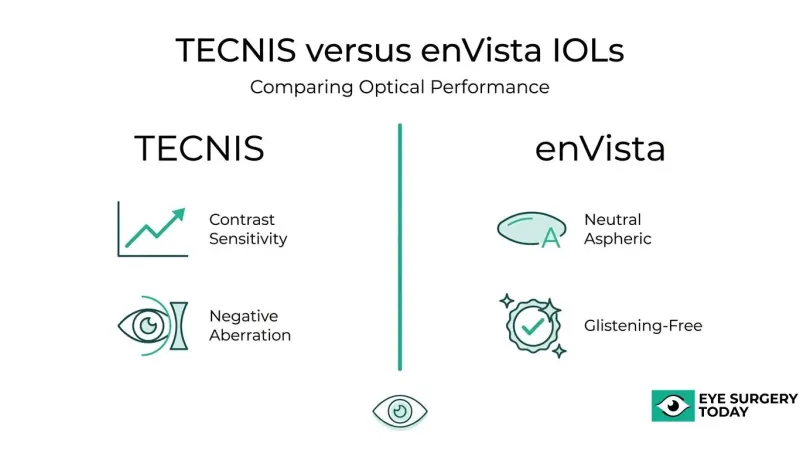
The aspheric design affects image quality by correcting the spherical aberration of the cornea to essentially zero. According to the Johnson & Johnson Vision EMEA product catalogue, the wavefront of the aspheric anterior surface is optimized specifically to neutralize corneal spherical aberration, producing a cleaner, higher-contrast retinal image than a standard spherical lens. This correction helps preserve contrast sensitivity, which is particularly important in low-light conditions such as driving at night.
What Role Does the Central Optic Zone Play in Near-Range Tasks?
The central optic zone plays a key role in near-range tasks by concentrating the continuous power increase at the lens center, generating a modest additional dioptric power that extends the effective depth of focus. A prospective study published in BMC Ophthalmology found that the ICB00 produced significantly better mean visual acuity than the standard ZCB00 at defocus levels between -1.00 D and -3.00 D, with higher MTF RMS values across the -0.50 D to -2.00 D range. This optical behavior primarily benefits intermediate tasks such as computer use, though dedicated near work may still require corrective lenses.
Who Is a Good Candidate for the TECNIS Eyhance IOL?
Good candidates for the TECNIS Eyhance IOL include adults undergoing cataract surgery who want improved intermediate vision without the dysphotopsia risks of multifocal lenses. The following sections cover suitability for patients with astigmatism, prior LASIK history, and active lifestyles.
Is the TECNIS Eyhance Suitable for Patients With Astigmatism?
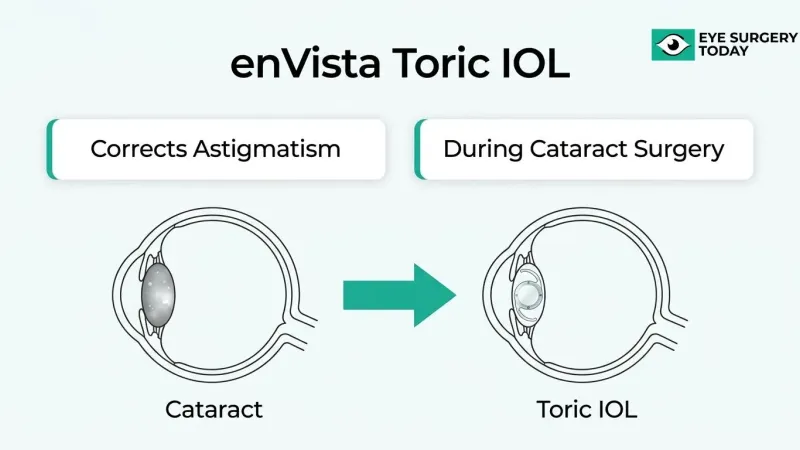
The TECNIS Eyhance is suitable for patients with astigmatism when the toric variant is selected. The TECNIS Eyhance Toric II IOL, manufactured by Johnson & Johnson Surgical Vision and registered as a Class III medical device (Therapeutic Goods Administration, ARTG Date 7 July 2023), corrects corneal astigmatism alongside cataract removal. The standard ICB00 model corrects spherical aberration to essentially zero through its wavefront-optimized aspheric anterior surface, but does not address corneal cylinder. For patients with significant astigmatism, the toric version is the appropriate choice. According to a clinical evaluation published in Clinical Evaluation of a New Monofocal IOL With Enhanced Intermediate Function in Patients With Cataract, the enhanced monofocal IOL improved monocular and binocular corrected and uncorrected intermediate visual acuity by at least one line over a standard monofocal (n=139, P ≤ .0001). Patients with mild residual astigmatism who do not require the toric model may still benefit meaningfully from the standard ICB00’s optical performance.

Can Patients With Prior LASIK Surgery Receive the TECNIS Eyhance?
Patients with prior LASIK surgery can receive the TECNIS Eyhance IOL. A retrospective observational study of 200 eyes implanted between January 2022 and July 2024 with the Tecnis Eyhance specifically included only eyes with a history of myopic LASIK or radial keratotomy (RK), confirming its use in this population (American Society of Cataract and Refractive Surgery Annual Meeting abstract). The lens’s negative spherical aberration profile may be particularly relevant for post-LASIK corneas, which often carry altered aberration profiles after myopic correction. IOL power calculation in post-LASIK eyes requires adjusted formulas, so thorough preoperative biometry remains essential. The Eyhance’s extended depth of focus relative to a standard monofocal can offer post-LASIK patients a practical functional improvement at intermediate distances.
Is the TECNIS Eyhance Recommended for Active or Younger Cataract Patients?
The TECNIS Eyhance is well-suited for active or younger cataract patients who prioritize functional intermediate vision and optical quality over maximum near reading performance. According to Dr. Aziz, writing in EuroTimes (European Society of Cataract and Refractive Surgeons), the Tecnis Eyhance allows a wider range of vision without increasing photic phenomena or reducing contrast sensitivity, qualities that matter most to active individuals using computers, driving, and navigating varied lighting environments. Because the lens behaves similarly to a standard monofocal in terms of halos and glare, younger patients with higher visual demands and long remaining years of use are particularly well-served. Reading glasses may still be needed for fine near tasks, which patients should discuss with their surgeon before choosing this lens.
What Vision Outcomes Can Patients Expect From the TECNIS Eyhance?
Patients can expect strong distance vision, meaningfully improved intermediate vision, and near vision that remains limited compared to multifocal lenses. The H3s below cover distance, intermediate, near, and night vision outcomes specifically.
How Well Does It Perform for Distance Vision?
The TECNIS Eyhance performs for distance vision comparably to a standard monofocal IOL. Its continuous power gradient is concentrated toward the lens periphery, preserving the crisp distance acuity that monofocal lenses are known for, while the modified central optic zone extends depth of focus at closer ranges. According to a BMC Ophthalmology study, the ICB00 group achieved mean visual acuity significantly better than the standard ZCB00 group at defocus levels between -1.00 D and -3.00 D, confirming that distance performance is not sacrificed by the enhanced design.
Does the TECNIS Eyhance Improve Computer Screen or Arm’s-Length Vision?
The TECNIS Eyhance does improve computer screen and arm’s-length vision beyond what a standard monofocal provides. Johnson & Johnson Vision reports that the lens is designed specifically to enhance intermediate visual performance, with the continuous power profile creating a wider functional range at the distances most relevant to tasks like computer use and reading a dashboard. For patients whose daily routines center on screen-based work, this intermediate gain represents a meaningful quality-of-life improvement over a conventional fixed-focus lens.
How Does Near Vision Compare to a Standard Monofocal After Surgery?
Near vision with the TECNIS Eyhance is better than a standard monofocal but falls short of dedicated near-vision or multifocal lenses. A standard monofocal, as described by Mayo Clinic, focuses light to see clearly at only one distance, making unaided reading difficult when distance correction is chosen. According to a ESCRS EuroTimes report, Dr. Aziz noted that the Eyhance’s continuous power profile allows a wider range of vision without a decrease in contrast sensitivity, though reading glasses may still be needed for fine print. Patients should enter surgery with realistic expectations: the Eyhance reduces near-vision dependence on glasses but does not eliminate it.
How Does Night Vision and Contrast Sensitivity Hold Up?
Night vision and contrast sensitivity hold up well with the TECNIS Eyhance, performing comparably to a standard monofocal. A study published in the European Journal of Ophthalmology found no statistically significant difference in photopic or scotopic contrast sensitivity between the Eyhance and Vivity groups, and both lenses produced similar rates of halo and glare perception. Additionally, a BMC Ophthalmology study reported that more than 90% of Eyhance patients experienced no glare, halo, or starburst phenomena. This is a meaningful advantage over diffractive multifocal lenses, which carry a higher dysphotopsia burden, making the Eyhance a strong choice for patients who drive at night or work in variable lighting.
How Does the TECNIS Eyhance Compare to Multifocal and EDOF Lenses?
The TECNIS Eyhance sits between a standard monofocal and premium multifocal or EDOF lenses. The following sections compare it to the TECNIS Multifocal, TECNIS Symfony, and the patient profiles each lens serves best.
How Does TECNIS Eyhance Compare to the TECNIS Multifocal IOL?
The TECNIS Eyhance differs from the TECNIS Multifocal IOL primarily in its optical design and dysphotopsia profile. Multifocal IOLs use diffractive ring zones to split light into distinct focal points, delivering simultaneous distance and near vision at the cost of increased halo and glare risk. The Eyhance, by contrast, uses a continuous refractive power gradient without diffractive rings, prioritizing distance and intermediate vision with a lower risk of visual disturbances. According to Johnson and Johnson Vision, the TECNIS Eyhance has received European CE Mark approval and is commercially available across the UK, Italy, France, Spain, and Germany. For patients who prioritize optical quality and minimal night-vision disturbance over full reading independence, the Eyhance is often the more suitable choice.
How Does TECNIS Eyhance Compare to EDOF Lenses Like TECNIS Symfony?
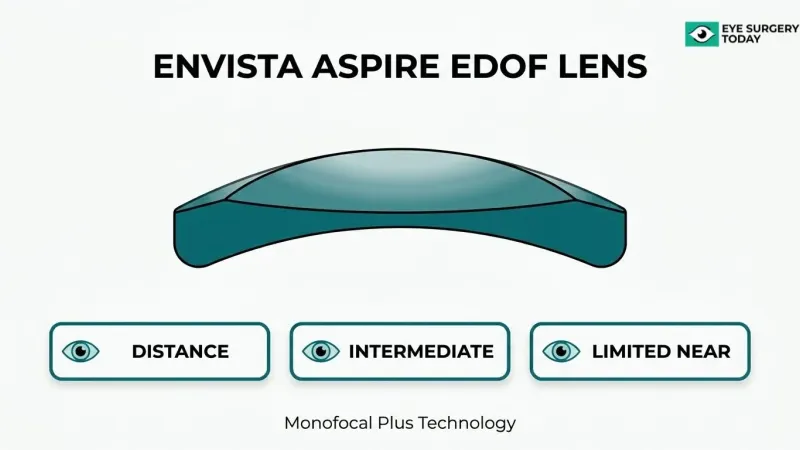
The TECNIS Eyhance compares to EDOF lenses like the TECNIS Symfony by presenting a refractive rather than diffractive optical profile. According to the TECNIS Eyhance Clinical Compendium (2024), the Eyhance IOL showed an optical profile similar to a conventional monofocal with minimal central design differences, while the TECNIS Symfony uses a diffractive design to extend the range of vision. The Symfony typically delivers a broader functional range, including stronger intermediate performance, but its diffractive optics introduce a greater theoretical risk of halos. The Eyhance offers a gentler visual transition with fewer optical side effects, making it better suited to patients sensitive to dysphotopsia.
Which Patients Are Better Served by Multifocal or EDOF Over Eyhance?
Patients better served by multifocal or EDOF lenses over the Eyhance include those with strong reading demands, active lifestyles requiring frequent near-distance task switching, and high motivation to minimize spectacle dependence across all ranges. The Eyhance is a refractive enhanced monofocal and does not replicate the near-vision gains of a multifocal or the extended range of a purpose-built EDOF. Patients with significant pre-existing ocular conditions such as macular degeneration or irregular corneas may also be poor candidates for diffractive premium lenses, making Eyhance more appropriate. Ultimately, the right IOL choice depends on individual visual priorities and ocular health, and a surgeon consultation is essential for any decision.
What Are the Potential Drawbacks or Limitations of the TECNIS Eyhance?
The potential drawbacks of the TECNIS Eyhance center on its near vision limitations and its classification as an enhanced monofocal rather than a true multifocal lens. The sections below address reading glass dependence, dysphotopsia risk, and tasks that may still require corrective lenses.
Does the TECNIS Eyhance Eliminate the Need for Reading Glasses?
The TECNIS Eyhance does not eliminate the need for reading glasses for all patients. As an enhanced monofocal IOL, it is primarily optimized for distance and intermediate vision. Near tasks such as reading fine print, labels, or books at close range may still require readers for many patients. Preoperative ocular parameters, including corneal curvature and residual refractive error, can influence how much spectacle independence a patient achieves at near distances. Patients with strong near vision demands should discuss realistic expectations with their surgeon before selecting this lens.
Are Halos or Glare Common Side Effects With This Lens?
Halos or glare are not common side effects with the TECNIS Eyhance. According to a study published in BMC Ophthalmology, more than 90% of patients reported experiencing no glare, halo, or starburst phenomena, with no statistically significant difference compared to a standard monofocal group. Because the Eyhance uses a refractive rather than diffractive design, it avoids the light-splitting mechanism that typically drives dysphotopsia in multifocal lenses. For patients concerned about night vision disturbances, this lens profile is generally well-tolerated.
What Visual Tasks May Still Require Glasses After Eyhance Surgery?
The visual tasks that may still require glasses after Eyhance surgery include reading small text, prolonged fine print work, and some near-range detail tasks. According to Johnson & Johnson Vision’s indications and safety information, patients implanted with the TECNIS Eyhance IOL may require glasses for some tasks, consistent with other monofocal IOLs. Additionally, preoperative factors such as corneal health and prior refractive surgery history can influence how much residual correction is needed. Managing patient expectations around near vision remains one of the most important conversations before choosing this lens.
What Does the TECNIS Eyhance Surgery and Recovery Process Look Like?
The TECNIS Eyhance surgery and recovery process follows the same standard cataract surgery pathway, with the IOL implanted during extracapsular extraction and full healing typically expected within weeks. The sections below cover the implantation procedure, recovery timeline, and when patients may notice vision changes.
How Is the TECNIS Eyhance Implanted During Cataract Surgery?
The TECNIS Eyhance is implanted during cataract surgery by removing the eye’s cloudy natural lens and replacing it with the IOL. According to the National Eye Institute, the surgeon removes the cataractous lens and places the artificial intraocular lens within the same capsular bag. The TECNIS Eyhance DIB00 uses the TECNIS Simplicity Delivery System, a preloaded injector that allows controlled, small-incision insertion. Because no diffractive rings or structural modifications require special handling, the implantation technique is consistent with standard monofocal cataract surgery, making it broadly compatible with existing surgical workflows.
How Long Does Recovery Take After TECNIS Eyhance Implantation?
Recovery after TECNIS Eyhance implantation typically takes up to eight weeks for complete healing. The National Eye Institute states that most people are completely healed eight weeks after cataract surgery. During this period, patients may use prescribed eye drops, avoid strenuous activity, and protect the eye from irritants. Initial discomfort, mild blurring, and light sensitivity are common in the first days. Most patients can resume routine daily activities within a short time, though individual healing rates vary depending on overall ocular health and any coexisting conditions.
When Do Patients Typically Notice Improved Vision After Surgery?
Patients typically notice improved vision within days of TECNIS Eyhance surgery, though full visual stabilization can take longer. According to the American Academy of Ophthalmology, neural adaptation after cataract surgery may take three to six months to reach its maximum effect, and this timeline differs between individuals. Clarity at distance often improves early, while the brain’s adjustment to the lens’s continuous power gradient, which supports intermediate vision, may develop gradually. Patients should be counseled to expect a period of adaptation rather than immediate optimal vision, as neural adjustment is an important component of the final outcome.
How Can Patients Find Reliable IOL Guidance Through Eye Surgery Today?
Patients can find reliable IOL guidance through Eye Surgery Today, a surgeon-reviewed education platform providing evidence-based content on lens options including the TECNIS Eyhance. The H3s below cover what Eye Surgery Today offers and the key takeaways from this guide.
Does Eye Surgery Today Offer Surgeon-Reviewed Guides on IOL Options Like TECNIS Eyhance?
Eye Surgery Today offers surgeon-reviewed guides on IOL options like the TECNIS Eyhance, written to help patients understand complex lens technology in plain language. The platform covers IOL comparisons, candidacy criteria, surgical outcomes, and recovery expectations, giving patients the clarity needed to have informed conversations with their ophthalmologist. Every guide reflects current clinical evidence, translated from peer-reviewed research into accessible, patient-focused content.
What Are the Key Takeaways About the TECNIS Eyhance Enhanced Monofocal Lens Covered Here?
The key takeaways about the TECNIS Eyhance enhanced monofocal lens are:
- Design: The TECNIS Eyhance ICB00 is a biconvex IOL manufactured by Johnson & Johnson Vision with a high-order aspheric anterior surface and a continuous power profile from periphery to center.
- Vision range: It delivers distance vision comparable to a standard monofocal IOL while extending depth of focus to improve intermediate vision.
- Photic safety: According to Dr. Aziz, as reported by the European Society of Cataract and Refractive Surgeons in EuroTimes, the lens allows a wider range of vision without increasing photic phenomena or reducing contrast sensitivity.
- Cost context: A 2025 analysis published in Clinical Therapeutics found the enhanced monofocal IOL costs approximately 940 € (USD 994.99) versus 900 € (USD 952.65) for a standard IOL from the NHS perspective, a modest difference for meaningful visual gain.
- Reading glasses: Patients may still require glasses for some near tasks, consistent with other monofocal-platform lenses.
Understanding these fundamentals equips patients to discuss TECNIS Eyhance candidacy confidently with their surgeon.