Combined glaucoma and cataract care is a surgical approach that addresses both conditions in a single operative session, most often by pairing phacoemulsification with a minimally invasive glaucoma surgery (MIGS) device to restore lens clarity and improve aqueous outflow simultaneously.
This guide covers the clinical rationale for treating both conditions together, how leading MIGS devices work during cataract removal, the potential benefits and risks of combined surgery, patient candidacy and selection criteria, emerging technologies reshaping the field, and practical expectations for preparation and recovery.
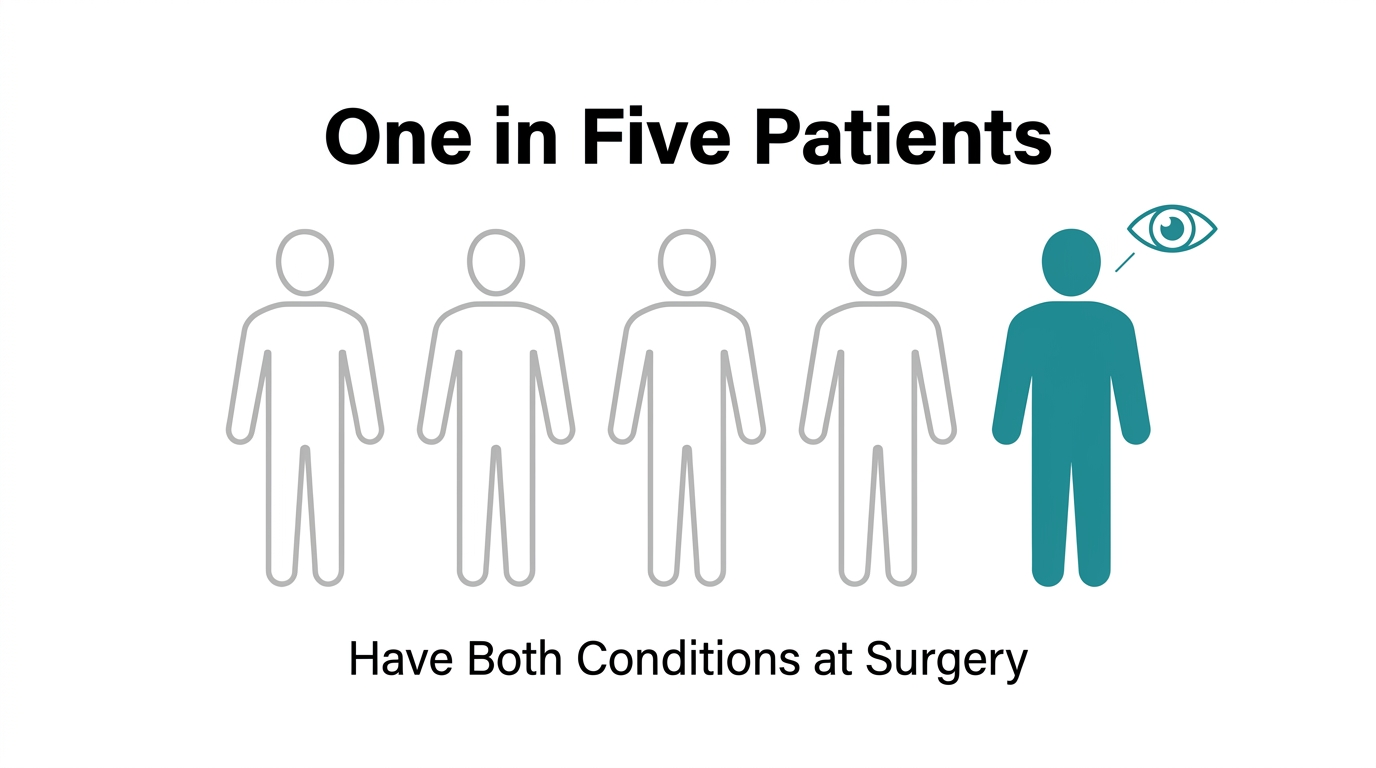
Glaucoma and cataracts share age as a primary risk factor, and approximately one in five patients presenting for cataract surgery has concurrent glaucoma. Because cataract removal itself produces a measurable reduction in intraocular pressure, surgeons can amplify that effect by adding a MIGS procedure through the same corneal incision.
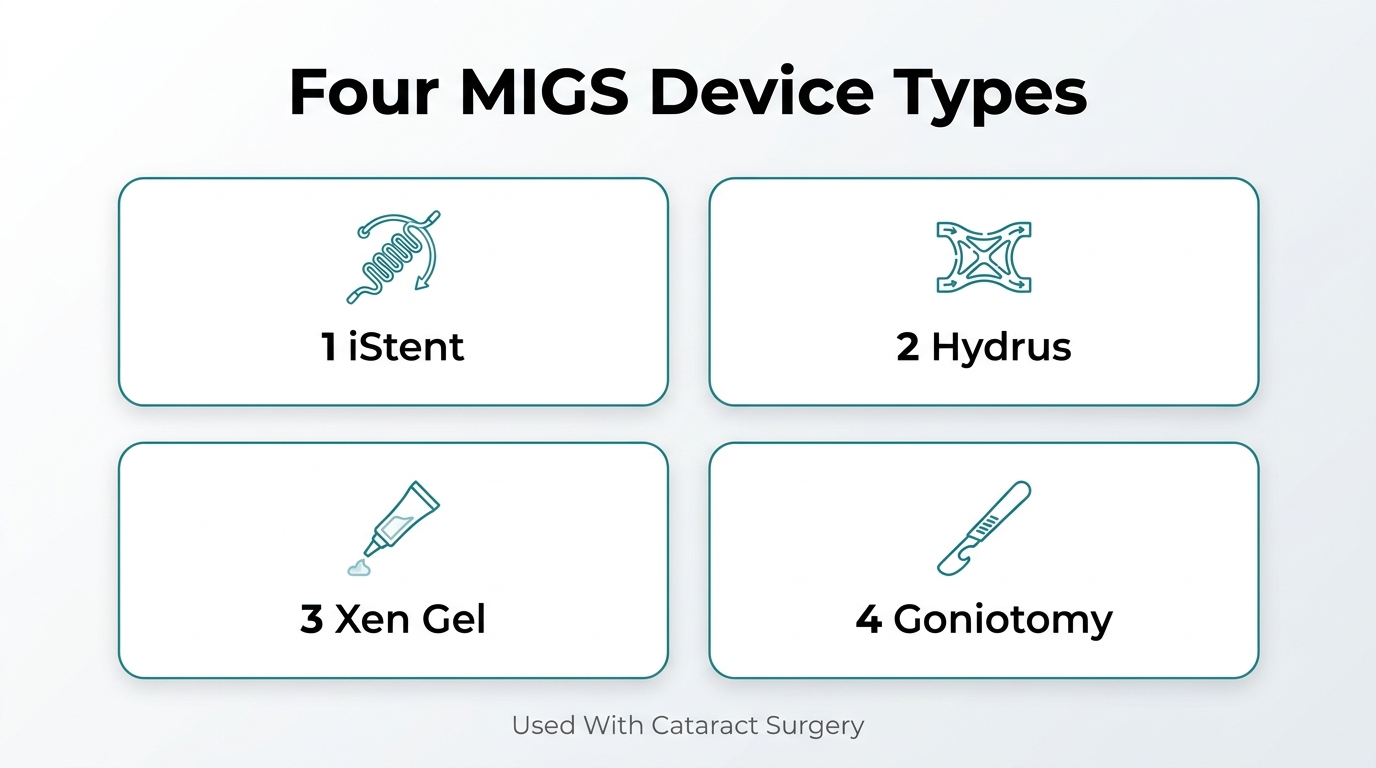
Several MIGS device categories, including trabecular micro-bypass stents, canal-scaffolding microstents, subconjunctival gel stents, and goniotomy-based instruments, may be paired with phacoemulsification to lower IOP and reduce dependence on daily eye drops. Combined approaches have been associated with IOP reductions up to 40% cataract surgery alone in published analyses.
Not every patient is equally suited for a combined procedure. Mild to moderate open-angle glaucoma with an IOP target in the mid-teens or higher represents the strongest candidacy profile, while advanced disease or narrow angles may require staged or more aggressive interventions.
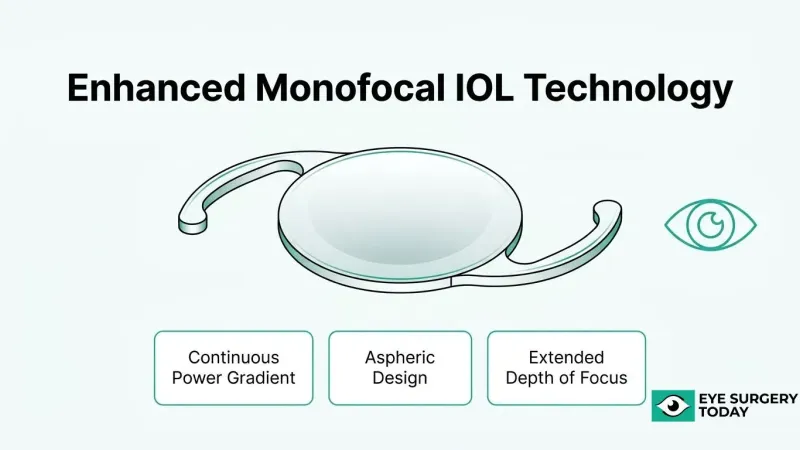
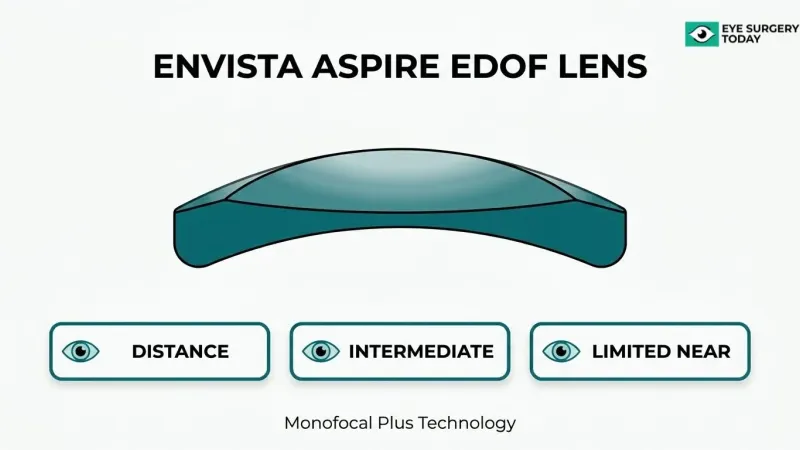
Sustained drug delivery implants and AI-guided surgical planning tools are beginning to change how surgeons select devices and predict refractive outcomes, though long-term data beyond three to five years for newer MIGS platforms remains limited. IOL selection also carries distinct trade-offs in glaucomatous eyes, where contrast sensitivity and visual field status influence whether monofocal or extended depth of focus lenses are appropriate.
Why Are Glaucoma and Cataracts Often Treated Together?
Glaucoma and cataracts are often treated together because both conditions frequently occur simultaneously, particularly in older adults, and combining procedures reduces the total number of surgeries a patient must undergo. The sections below explore the shared patient population, the clinical rationale for combining surgery, and why timing matters.
How Common Is It to Have Both Glaucoma and Cataracts?
Having both glaucoma and cataracts is more common than many patients realize. According to Cataract & Refractive Surgery Today, approximately one in five patients presenting for cataract surgery has concurrent glaucoma. Age is the primary shared risk factor, as both conditions progress as the eye ages, making co-diagnosis a routine clinical finding rather than an exception.
Why Do Surgeons Recommend Addressing Both Conditions at Once?
Surgeons recommend addressing both conditions at once because cataract removal itself produces a measurable reduction in intraocular pressure, creating a natural opportunity to amplify that benefit with a simultaneous glaucoma procedure. Dr. Arsham Sheybani notes that surgeons can now “capitalize on the pressure-lowering benefit of cataract surgery by performing combined procedures,” a strategy made practical by the lower risk profiles of modern minimally invasive glaucoma surgery compared to older filtration surgeries. Treating both in one session may reduce the anesthesia exposure, recovery periods, and total surgical cost for the patient.
What Is the Clinical Rationale for Combining These Procedures?
The clinical rationale for combining these procedures centers on surgical efficiency and IOP management. Phacoemulsification, the standard technique for cataract removal, opens access to the drainage structures of the eye, allowing a glaucoma intervention to be performed through the same incision without significant additional operative time. This shared access makes combination surgery technically straightforward for experienced surgeons, and the single recovery period is a meaningful quality-of-life advantage that patients consistently value when weighing their options.
What Is Minimally Invasive Glaucoma Surgery Combined with Cataract Removal?
Minimally invasive glaucoma surgery (MIGS) combined with cataract removal is a same-session procedure that addresses both conditions through a single operation. According to Cataract & Refractive Surgery Today, approximately one in five patients presenting for cataract surgery has concurrent glaucoma, making combined treatment a clinically practical option. The sections below cover how the four leading MIGS device categories work when paired with phacoemulsification.
How Does the iStent Work During Cataract Surgery?
The iStent works during cataract surgery by implanting a tiny titanium micro-bypass stent into the trabecular meshwork to restore natural aqueous outflow. A surgeon places the device through the same corneal incision used for phacoemulsification, adding minimal operating time. By reopening the eye’s natural drainage pathway, the iStent reduces reliance on pressure-lowering eye drops following the procedure. Postoperative recovery from MIGS typically takes 2 to 4 weeks, considerably shorter than traditional glaucoma filtration surgery, according to clinical guidance from Guy’s and St Thomas’ NHS Foundation Trust.
How Does the Hydrus Microstent Work During Cataract Surgery?
The Hydrus Microstent works during cataract surgery by scaffolding open Schlemm’s canal with a 8 mm nitinol device, dilating the canal to enhance aqueous drainage across multiple collector channels simultaneously. This broader canal engagement distinguishes it from single-bypass stents. According to data published by the American Academy of Ophthalmology, at 24 months, 77.3% of Hydrus-treated patients achieved a 20% or greater reduction in unmedicated mean diurnal IOP, compared with 57.8% in the phacoemulsification-only group, a meaningful clinical difference that supports its use in patients seeking medication reduction.
How Does the Xen Gel Stent Work During Cataract Surgery?
The Xen Gel Stent works during cataract surgery by creating a subconjunctival drainage channel that routes aqueous fluid from the anterior chamber into a bleb beneath the conjunctiva, bypassing the trabecular meshwork entirely. This mechanism targets more advanced or refractory cases where trabecular-based devices may be insufficient. However, patients and surgeons should be aware that Medicare Local Coverage Determination (LCD) L37244, issued by the Centers for Medicare and Medicaid Services, states that combining phacoemulsification with more than one MIGS procedure in the same eye at the same time of service is non-covered.
How Do Goniotomy-Based MIGS Devices Work During Cataract Surgery?
Goniotomy-based MIGS devices work during cataract surgery by excising or ablating a segment of the trabecular meshwork to directly open the eye’s primary drainage structure. Devices such as the Kahook Dual Blade and the OMNI Surgical System represent two distinct approaches within this category. The OMNI performs both canaloplasty and trabeculotomy ab interno; according to a study published in the Journal of Cataract and Refractive Surgery, 94% of patients treated with OMNI combined with cataract surgery achieved an IOP of 18 mm Hg or less at 12 months. Goniotomy-based options may be considered to patients seeking durable pressure reduction through tissue modification rather than implanted hardware.
What Are the Potential Benefits of Combined Glaucoma and Cataract Surgery?
The potential benefits of combined glaucoma and cataract surgery include reduced eye drop dependence, lower intraocular pressure, and a single consolidated recovery period. The sections below cover how each of these benefits may apply clinically.
How May Combined Surgery Help Reduce Eye Drop Dependence?
Combined surgery may help reduce eye drop dependence by lowering the number of glaucoma medications patients need after the procedure. A PLOS ONE comparative study found that iStent inject W combined with phacoemulsification reduced mean medication burden from 2.9 to 1.7, a 46.8% reduction. Excisional Kahook Dual Blade goniotomy combined with phacoemulsification has also shown the ability to reduce IOP and medication need for up to 36 months.
According to Christine Larsen, MD, writing in Cataract & Refractive Surgery Today, ideal candidates for combined phaco-MIGS have “open angles, mild to moderate VF loss, an IOP target in the midteens or higher, and a desire to reduce or eliminate topical medications.” For patients who struggle with daily drop regimens due to cost, side effects, or adherence challenges, this reduction in medication burden may be an important practical outcome of choosing a combined approach.
How May Combined Surgery Help Lower Intraocular Pressure?
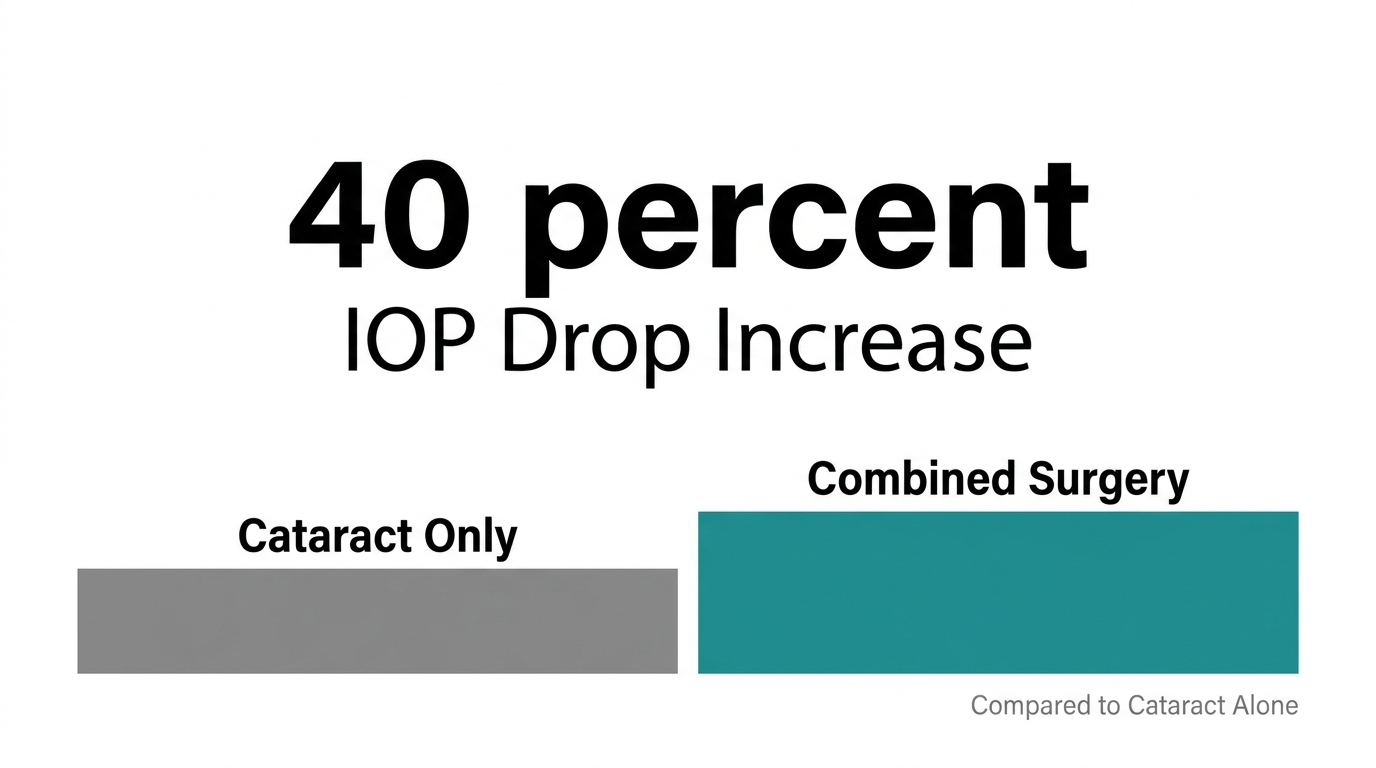
Combined surgery may help lower intraocular pressure by adding a MIGS procedure to phacoemulsification, achieving pressure reductions beyond what cataract surgery alone provides. A study published in International Ophthalmology found that combined MIGS with cataract surgery increased the IOP drop by 40% compared to cataract surgery alone, while also improving long-term quality of life. The Xen Gel Stent has reduced IOP by 35% to a final average near 15 mmHg across various glaucoma types, according to a Frontiers in Medicine review.
Interim analysis of the GEMINI study showed that ab interno trabeculotomy with the TRAB360 device lowered IOP by approximately 30% through 12 months. Emerging options such as the iDose TR travoprost intracameral implant lowered eye pressure by 6.6 to 8.5 mmHg over 12 weeks in clinical trial assessments, according to the Glaucoma Research Foundation.
As Dr. Arsham Sheybani noted in Ophthalmology Management, surgeons can now “capitalize on the pressure-lowering benefit of cataract surgery by performing combined procedures,” a shift made possible by the improved safety profile of newer MIGS devices compared to traditional filtration surgery.
How May a Single Procedure Reduce Overall Recovery Time?
A single combined procedure may reduce overall recovery time by eliminating the need for two separate surgical episodes, each with its own healing period. Postoperative recovery from MIGS typically takes 2 to 4 weeks, significantly shorter than recovery from traditional glaucoma filtration surgeries. Patients who would otherwise face sequential procedures benefit from a single anesthesia event, a single healing window, and earlier return to daily activities.
From a practical standpoint, consolidating both surgeries also reduces the cumulative burden of preoperative preparation, postoperative visits, and activity restrictions, making the combined approach particularly valuable for older patients managing multiple health conditions.
What Are the Possible Risks and Complications of Combined Surgery?
The possible risks and complications of combined surgery span both the procedure itself and the recovery period that follows. The sections below cover intraoperative complications, postoperative warning signs, and how complication rates compare to standalone procedures.
What Intraoperative Complications Can Occur During Combined Surgery?
Intraoperative complications that can occur during combined surgery include posterior capsule rupture, zonular damage, iris trauma, hyphema, and device malposition. These risks are broadly shared with standard cataract surgery, though adding a MIGS step introduces additional considerations such as bleeding from canal manipulation or difficulty placing a micro-stent in the intended anatomical position.
Goniotomy-based approaches carry a specific risk of intraoperative hyphema due to reflux of blood from Schlemm’s canal. While these events are typically manageable, they may extend operating time or require additional steps to achieve a clear anterior chamber before closure.
What Postoperative Complications Should Patients Watch For?
Postoperative complications patients should watch for include elevated intraocular pressure spikes, persistent inflammation, hyphema, device obstruction, and corneal edema. In MIGS-combined cases, stent occlusion by iris tissue or fibrin is an additional concern that may reduce long-term pressure control if not identified early.
Patients should also monitor for signs of infection such as increased redness, pain, or sudden vision changes and report them to their surgeon promptly. In most cases, these complications are manageable when caught early, making scheduled postoperative visits especially important following any combined procedure.
How Do Complication Rates Compare to Standalone Procedures?
Complication rates for combined surgery are generally comparable to those of standalone cataract surgery, though the overall MIGS complication landscape is worth understanding. According to a systematic review published by Dove Medical Press, the complication rate of MIGS performed with or without phacoemulsification was 33.4%, though this rate dropped significantly in more recent eligible studies as techniques and devices have improved.
This downward trend may reflect the rapid maturation of MIGS technology and surgical training. For most appropriately selected patients, the risk-benefit profile of combining procedures is favorable, particularly when the alternative is returning for a second operation under separate anesthesia.
Who Is a Good Candidate for Combined Glaucoma and Cataract Surgery?
Good candidates for combined glaucoma and cataract surgery share specific clinical features, including glaucoma stage, angle anatomy, and pressure targets. The following sub-sections cover which stages benefit most and which eye conditions may reduce suitability.
What Glaucoma Stages May Benefit Most from Combined Surgery?
The glaucoma stages that may benefit most from combined surgery are mild to moderate open-angle glaucoma, particularly when intraocular pressure targets remain in the mid-teens or higher. According to Christine Larsen, MD, writing in Cataract & Refractive Surgery Today, ideal candidates have open angles, mild to moderate visual field loss, an IOP target in the mid-teens or higher, and a desire to reduce or eliminate topical medications.
Patients who are already managing glaucoma with multiple eye drops are strong candidates, as combined surgery may meaningfully reduce medication burden while addressing the cataract in a single procedure. Early-stage disease with an intact visual field is particularly well suited, since MIGS devices work most effectively when aqueous drainage pathways remain relatively uncompromised.
What Eye Conditions Might Make Combined Surgery Less Suitable?
The eye conditions that might make combined surgery less suitable include advanced glaucoma with severe visual field loss, closed or narrow angles incompatible with trabecular MIGS, and significant optic nerve damage requiring more aggressive IOP reduction than MIGS can reliably provide.
Patients with advanced disease or central visual field defects may also face additional challenges with premium IOL selection, as multifocal and extended depth of focus lenses are generally avoided in these cases due to additive contrast sensitivity reduction. Secondary glaucomas, such as neovascular or uveitic glaucoma, may require filtering surgery rather than MIGS, making combined phaco-MIGS a less appropriate choice. A thorough preoperative evaluation by a qualified eye care team is essential to determine the right surgical path.
What Are the Latest Advances in Combined Glaucoma and Cataract Care?
The latest advances in combined glaucoma and cataract care span three converging areas: emerging MIGS devices with longer-term data, sustained drug delivery implants, and AI-guided surgical planning tools.
What Newer MIGS Devices Are Emerging for Combined Procedures?
Newer MIGS devices are emerging with expanded indications, refined delivery systems, and a growing focus on early-stage glaucoma patients. Devices such as the OMNI Surgical System, TRAB360, and next-generation stent platforms are being evaluated alongside premium IOLs in combined procedures. However, a meaningful clinical gap remains: long-term safety data extending beyond three to five years for these newer MIGS devices, particularly when paired with premium IOLs in early-stage glaucoma patients, is still limited according to a Bioengineering (MDPI) analysis. This gap matters clinically, as early-stage patients have the most to gain from durable, low-risk interventions and the most to lose from incomplete evidence guiding device selection.
How Is Sustained Drug Delivery Changing Combined Treatment?
Sustained drug delivery is changing combined treatment by reducing reliance on daily topical medications through intracameral implants that release medication continuously inside the eye. The iDose TR (travoprost intracameral implant) is one emerging sustained drug delivery option in this space. According to the Glaucoma Research Foundation, the iDose TR lowered intraocular pressure by 6.6 to 8.5 mmHg over 12 weeks in clinical trial assessments. A complementary PMC analysis found it achieved a 33.2% reduction in IOP alongside significant reductions in topical medications. For combined procedure patients already managing post-surgical recovery, eliminating daily drops represents a meaningful quality-of-life improvement.
What Role Does AI-Guided Surgical Planning Now Play?
AI-guided surgical planning now plays an active role in optimizing preoperative decision-making for combined glaucoma and cataract procedures. According to Cataract and Refractive Surgery Today Europe (2026), AI-powered platforms can predict refractive outcomes and recommend the most appropriate IOL based on preoperative biometric data. In glaucoma patients, where IOL selection must account for compromised contrast sensitivity and visual field status, this predictive capability reduces guesswork and may improve functional outcomes. As these tools mature, AI-guided planning is likely to become a standard component of the combined procedure workflow rather than an optional add-on.
How Does Combined Surgery Compare to Staged Separate Procedures?
Combined surgery compares to staged separate procedures across several key dimensions, including IOP control, recovery burden, cost, and patient convenience. The sections below examine procedural timing, outcomes, and coverage considerations that influence this choice.
What Are the Clinical Advantages of Doing Both Procedures at Once?
The potential advantages of doing both procedures at once include one surgical session and the possibility of additional IOP-lowering synergy of cataract removal combined with MIGS. According to a study published in International Ophthalmology, combining MIGS with cataract surgery increased the intraocular pressure drop by 40% compared to cataract surgery alone while also improving long-term quality of life. Avoiding a second operative episode may reduce the patient’s exposure to postoperative inflammation and infection risk. For patients managing glaucoma with multiple daily eye drops, consolidating procedures may accelerate medication reduction sooner than a staged approach would allow.
What Are the Potential Drawbacks of Combining Both Surgeries?
The potential drawbacks of combining both surgeries include longer operative time, a more complex intraoperative environment, and Medicare coverage restrictions on certain procedure combinations. Medicare Local Coverage Determination LCD L37244 specifies that phacoemulsification combined with more than one MIGS procedure in the same eye at the same time of service is non-covered. This billing limitation can make staged procedures more practical when more aggressive glaucoma control is needed. Surgeons must also weigh whether intraoperative variables, such as poor pupil dilation or zonular instability, could complicate adding a MIGS step.
When Do Surgeons Typically Recommend Staged Procedures Instead?
Surgeons typically recommend staged procedures when glaucoma severity demands more aggressive intervention than MIGS can provide, such as trabeculectomy or tube shunt surgery, which carry higher surgical complexity and are better planned independently. Staged surgery is also preferred when the glaucoma diagnosis is uncertain preoperatively and the IOP response to cataract extraction alone warrants observation before committing to an additional procedure. For patients with advanced visual field loss or uncontrolled IOP on maximum medication, the staged approach allows each intervention to be optimized without the constraints of a combined operative setting.
What Should Patients Expect Before, During, and After Combined Surgery?
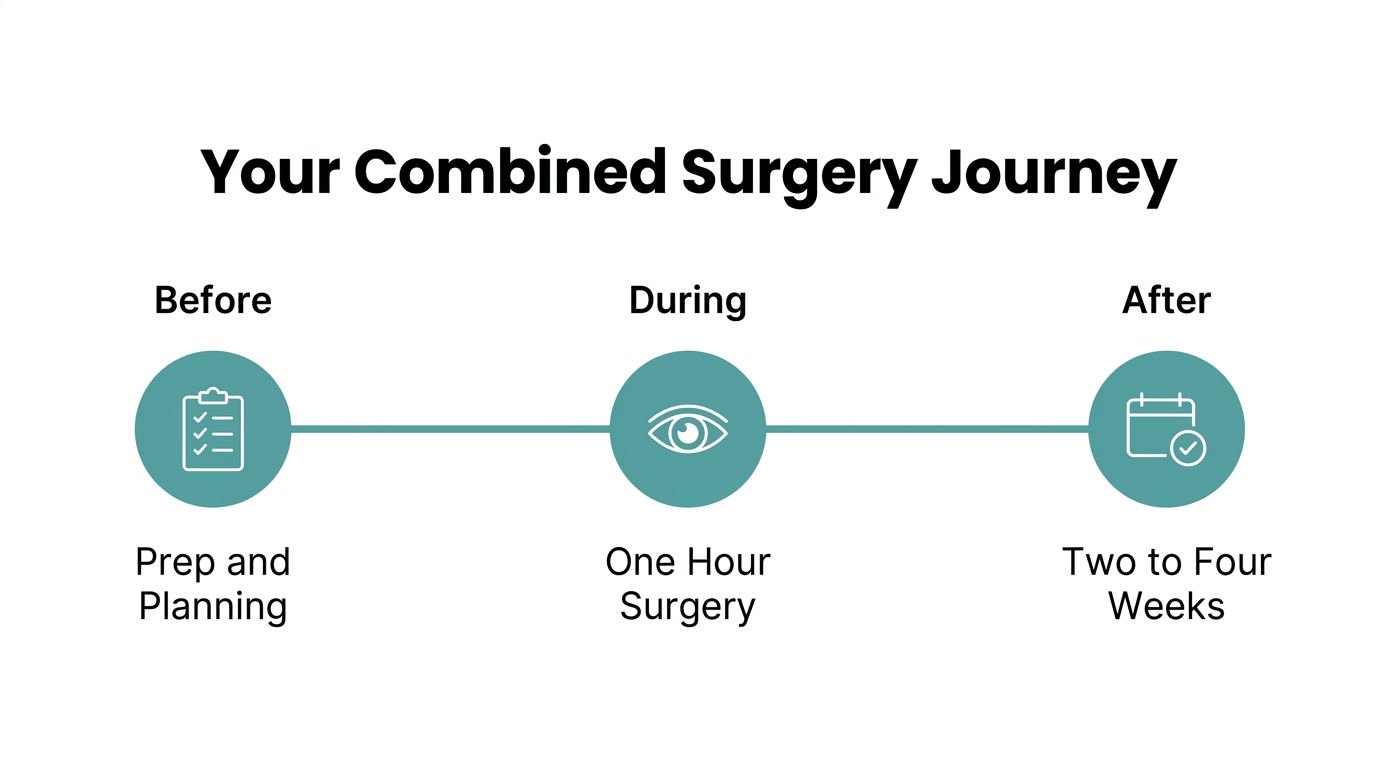
Patients should expect a structured process covering preoperative preparation, a same-day outpatient procedure, and a recovery period of several weeks. The H3s below address each phase in detail.
How Should Patients Prepare for Combined Surgery?
Patients should prepare for combined surgery by completing a preoperative evaluation, organizing their medications, and following specific lifestyle instructions before the procedure. According to Guy’s and St Thomas’ NHS Foundation Trust, preparation includes bringing a full list of current medications and avoiding alcohol for at least 24 hours beforehand.
Key preparation steps include:
- Attending a preoperative eye exam to confirm IOP, visual field status, and lens density.
- Disclosing all current medications, including glaucoma eye drops, blood thinners, and supplements.
- Arranging transportation, as driving is not permitted on the day of surgery.
- Fasting as directed if sedation or general anesthesia is planned.
- Discussing IOL preferences and MIGS device options with the surgical team in advance.
Thorough preparation directly supports safer surgical outcomes and reduces the risk of avoidable complications.
What Happens During the Combined Procedure?
The combined procedure is typically performed as a same-day outpatient surgery under local anesthesia with sedation. Phacoemulsification removes the clouded lens, an intraocular lens (IOL) is implanted, and the MIGS device, such as an iStent, Hydrus Microstent, or Kahook Dual Blade, is placed during the same operative session through a small corneal incision.
The complete sequence includes:
- Administration of local anesthetic eye drops or a peribulbar block.
- Phacoemulsification to break up and remove the cataract.
- IOL implantation into the lens capsule.
- Gonioscopically guided MIGS device placement at the trabecular meshwork or subconjunctival space.
- Wound closure and application of a protective eye shield.
Operative time varies depending on cataract complexity, the MIGS procedure used, and patient-specific factors.
What Does Recovery Look Like After Combined Surgery?
Recovery from combined surgery typically takes 2 to 4 weeks, which is significantly shorter than recovery from traditional glaucoma filtration surgeries such as trabeculectomy or tube shunt procedures, according to Ticho Eye Associates. Patients should expect some blurring, mild redness, and light sensitivity in the first few days.
Postoperative instructions include:
- Using prescribed antibiotic and anti-inflammatory eye drops as directed.
- Avoiding heavy lifting, strenuous exercise, and swimming for approximately four to six weeks, per Refocus Eye Doctors’ clinical guidance.
- Attending all follow-up appointments so the surgeon can monitor IOP, wound healing, and visual acuity.
- Not rubbing or pressing on the treated eye.
- Reporting sudden pain, vision loss, or increased redness to the surgical team promptly.
Most patients notice meaningful vision improvement within the first one to two weeks, though IOP stabilization may take longer to assess fully.
How Can Advanced IOL Options Factor into Combined Glaucoma and Cataract Care?
Advanced IOL options factor into combined glaucoma and cataract care by introducing critical trade-offs between optical performance and visual field safety. The sections below cover IOL selection considerations for glaucomatous eyes and key takeaways for patients evaluating combined surgery.
Can Eye Surgery Resources Help You Evaluate Combined Surgery?
Educational resources can help you evaluate combined surgery by presenting clinical evidence on IOL selection, MIGS outcomes, and patient candidacy in plain language. For glaucoma patients, IOL choice is especially consequential. According to a 2023 analysis published in Glaucoma Today, extended depth of focus (EDOF) IOLs carry an increased risk of contrast sensitivity loss and halos compared with monofocal lenses, though they provide better near and intermediate vision. Multifocal and trifocal lenses carry higher risks of halos and glare, while many non-diffractive EDOF designs report fewer photic effects in glaucomatous eyes. For patients with advanced disease or central visual field defects, multifocal and EDOF IOLs are generally avoided due to additive reductions in contrast sensitivity. Eye Surgery Today provides educational content to help patients better understand these distinctions before consulting their surgeon.
What Are the Key Takeaways About Combined Glaucoma and Cataract Care?
The key takeaways about combined glaucoma and cataract care are that surgical approaches have expanded significantly, offering patients more treatment options than were previously available. The most actionable conclusions from this topic are:
- IOL selection matters in glaucoma: Monofocal lenses are often the safer choice for eyes with significant field loss; EDOF options may suit earlier-stage disease when photic symptoms are manageable.
- MIGS has redefined combined surgery: Devices such as the iStent, Hydrus Microstent, Xen Gel Stent, and goniotomy-based tools can lower IOP and reduce medication burden within a single operative setting.
- Patient selection drives outcomes: Open-angle glaucoma with mild to moderate visual field loss represents the strongest combined-surgery candidacy profile.
- Coverage rules affect planning: Medicare LCD L37244 restricts coverage when multiple MIGS procedures are performed on the same eye at the same time, making pre-authorization review essential.
- Emerging technologies are expanding options: Sustained drug delivery implants and AI-guided surgical planning are beginning to refine how surgeons approach these combined cases.
Understanding these factors can help patients to have more productive conversations with their care team about what combined surgery can realistically achieve for their specific condition.