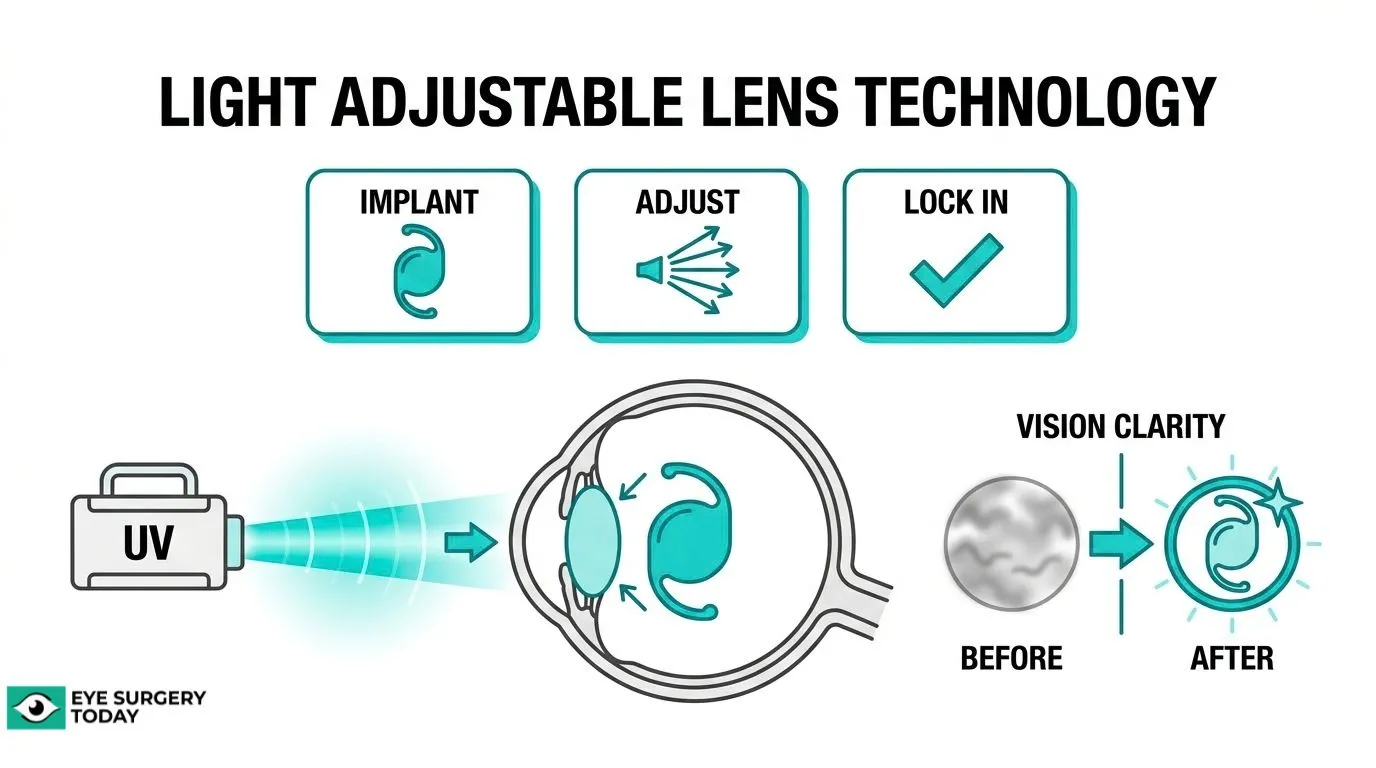
A light-adjustable lens (LAL) is a photoreactive intraocular lens whose power can be fine-tuned with UV light after cataract surgery, allowing surgeons to customize the refractive outcome once the eye has healed rather than committing to a fixed prescription at the time of implantation.
This guide covers how the LAL works and what sets it apart from other IOLs, who may be a strong candidate and who should consider alternatives, the potential benefits and risks of choosing this lens, what the full treatment process involves from evaluation through recovery, and how LAL compares with monofocal, multifocal, toric, and monovision options.
The LAL uses photosensitive silicone macromers that reshape in response to targeted UV light, enabling postoperative correction of residual astigmatism, spherical error, and even blended-vision targets. Adjustments begin roughly two to three weeks after surgery and span several brief in-office sessions before a final lock-in treatment permanently stabilizes the prescription.
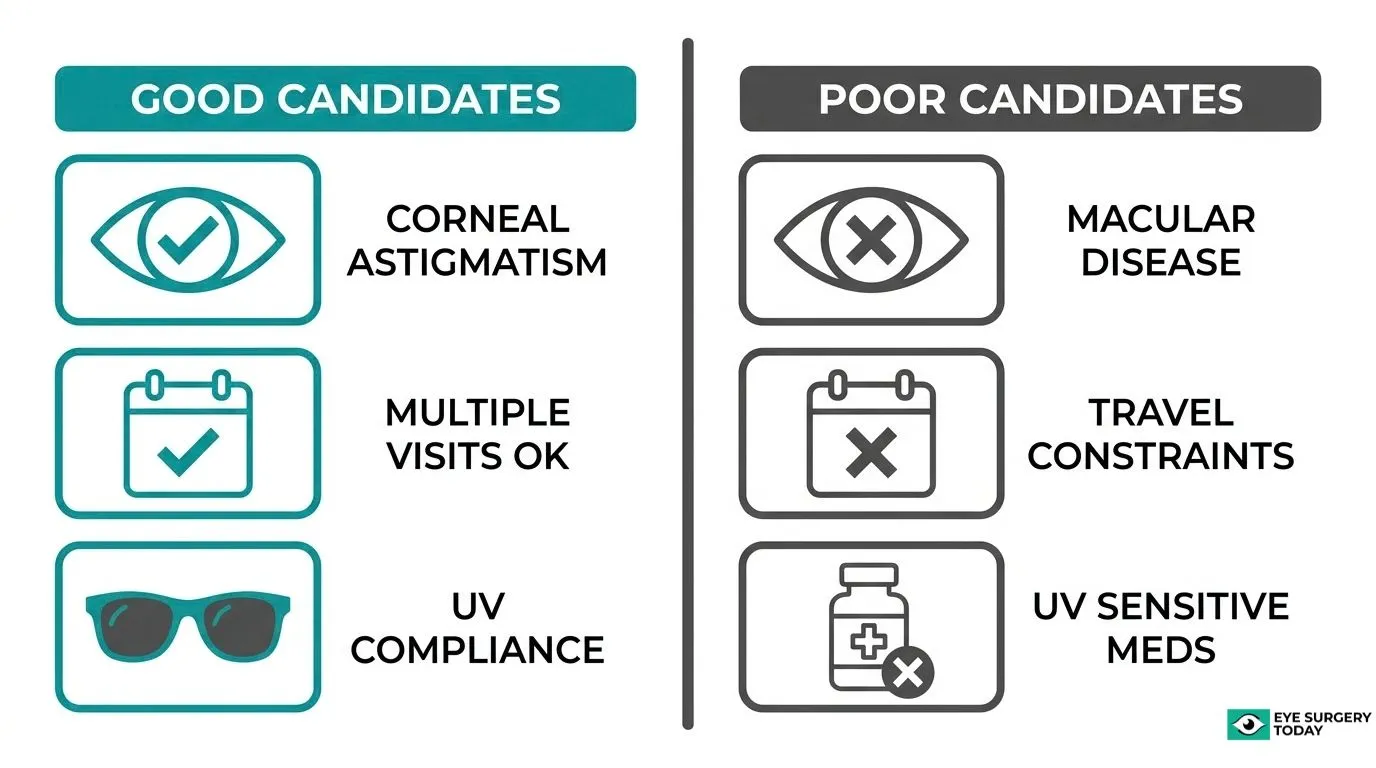
Candidacy depends on ocular health, refractive history, and practical readiness. Adults with corneal astigmatism, no macular disease, and the ability to attend multiple follow-up visits while wearing UV-protective glasses consistently may benefit most. Prior LASIK or PRK eyes, where standard IOL power calculations are less reliable, can be especially well suited to the LAL’s post-implant refinement. Patients with active retinal or corneal pathology, UV-sensitizing medications, or lifestyle constraints that prevent protocol compliance may achieve more predictable results with a non-adjustable lens.
The adjustment process carries LAL-specific considerations, including temporary erythropsia, mandatory UV eyewear for several weeks, and premium out-of-pocket cost beyond standard cataract surgery coverage. Weighing these factors against the precision advantage is a shared decision best made with your ophthalmologist.
What Is a Light-Adjustable Lens for Cataract Surgery and How Does It Work?
A light-adjustable lens (LAL) is a photoreactive intraocular lens that can be fine-tuned after cataract surgery using UV light, making it unique among IOL options. The sections below explain how it differs from other lenses, what the adjustment process involves, and which vision problems it may help address.
How Does a Light-Adjustable Lens Differ From a Standard Monofocal or Multifocal IOL?
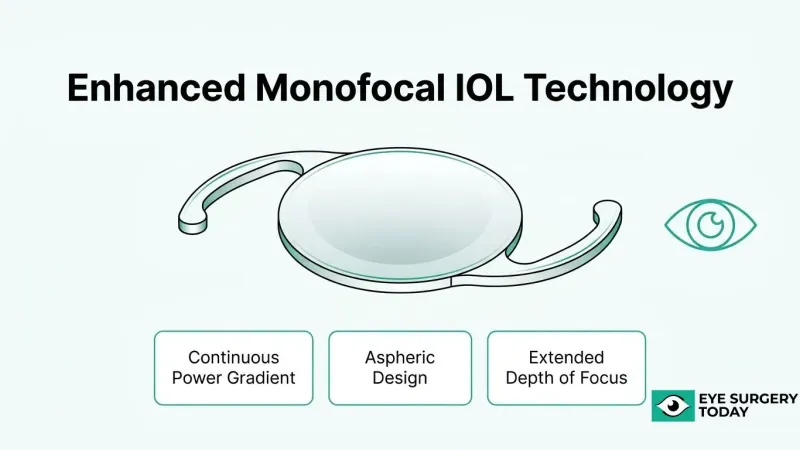
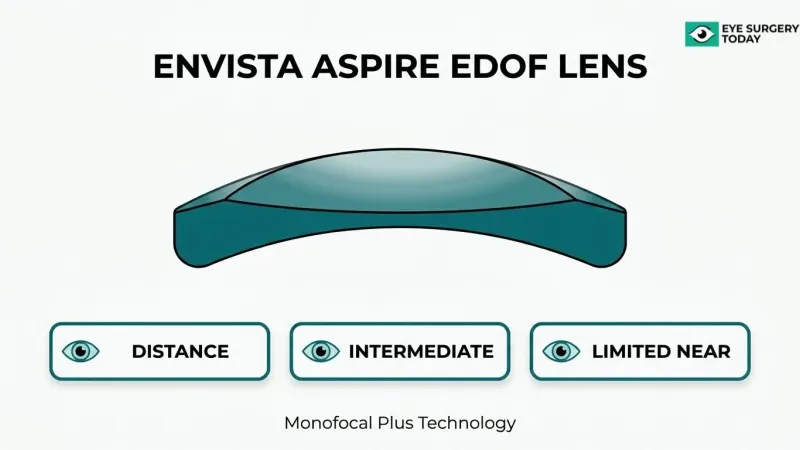
A light-adjustable lens differs from standard IOLs in one defining way: its refractive power can be modified after implantation, whereas monofocal, toric, multifocal, and EDOF lenses are fixed at the time of surgery.
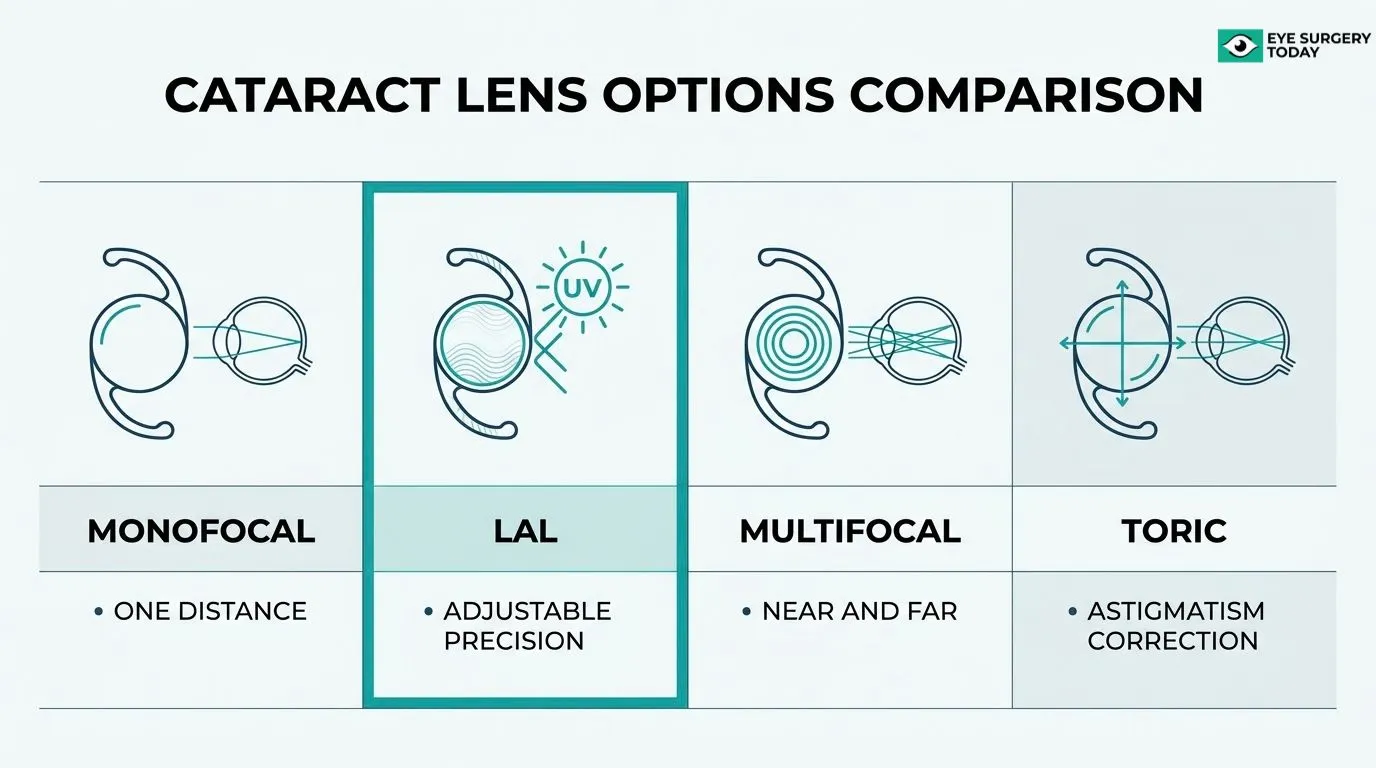
According to the American Academy of Ophthalmology, monofocal IOLs provide one focusing distance, toric IOLs correct astigmatism, multifocal IOLs offer distance and near focus simultaneously, EDOF IOLs extend focus across a range of distances, and the LAL uses light-sensitive material adjusted post-operatively with UV light. That post-surgical adjustability is the LAL’s core advantage: rather than committing to a fixed power before healing is complete, patients and surgeons can refine the result once the eye has stabilized.
A 2023 Markov-model cost-effectiveness analysis published in the Journal of Refractive Surgery found that bilateral LAL surgery produced incremental cost-effectiveness ratios of $9,792 per QALY (healthcare perspective) and $10,072 per QALY (societal perspective), both well below the $50,000/QALY willingness-to-pay threshold, with 94% of simulations showing cost-effectiveness at age 65.
How Does the Light Adjustment Process Change Your Vision After Surgery?
The light adjustment process changes vision by delivering targeted UV light to the implanted lens, causing photoreactive macromers within the silicone optic to polymerize and reshape, altering the lens’s spherical and cylindrical power.
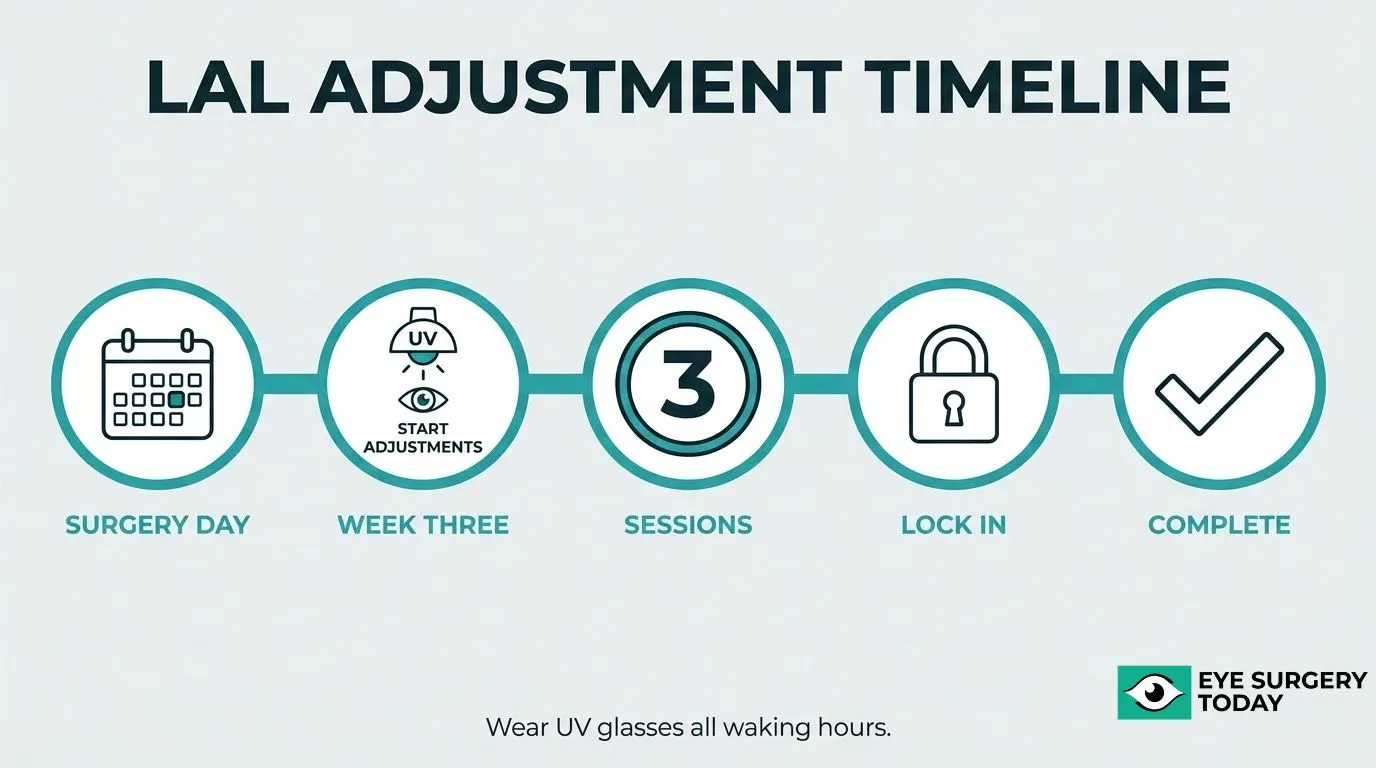
The FDA approved the RxSight Light Adjustable Lens and Light Delivery Device on 22 November 2017, describing it as the first medical-device system capable of adjusting artificial-lens power after cataract surgery. According to the FDA, adjustments begin 17 to 21 days post-surgery; patients typically receive three or four light treatments over one to two weeks, each lasting approximately 40 to 150 seconds.
A 2023 case series published in Clinical Ophthalmology reported that patients with prior LASIK or PRK received an average of 1.5 refractive adjustments, with treatments separated by at least 72 hours and final lock-in occurring an average of 41.1 days after surgery. During the adjustment period, patients must wear RxSight UV-protective glasses during all waking hours to prevent uncontrolled refractive changes from ambient UV light.
The FDA’s pivotal study data show that 58.3% of LAL eyes reported any-grade erythropsia (a temporary reddish tint) after light treatment, though only 0.5% persisted at six months. Long-term stability is well-supported: a 2020 noninterventional observation at Ruhr University Eye Hospital examined 103 eyes a mean of 7.2 years after final light treatment and found that distance visual acuity remained good with stable refraction.
What Vision Problems Can a Light-Adjustable Lens Potentially Help With?
The vision problems a light-adjustable lens may potentially help with include residual astigmatism, spherical refractive error, defocus, and monovision correction after cataract surgery.
A 2024 review in Current Opinion in Ophthalmology describes the LAL as “a promising concept in cataract surgery” and specifically discusses its application for postoperative adjustment of defocus and astigmatism, monovision by adjustable blended vision, and use in eyes with prior corneal refractive surgery. The review notes, however, that “further research results regarding its effectiveness” are needed for post-refractive cases and that “a new postoperative workflow needs to be designed to enable a systematic follow-up process.”
In practice, the LAL is best suited to patients whose residual refractive error after cataract surgery may be difficult to predict precisely before healing is complete, making post-surgical customization genuinely valuable.
Who Is Generally a Good Candidate for a Light-Adjustable Lens?
Good LAL candidates are adults with corneal astigmatism, realistic vision goals, and the ability to complete multiple post-operative visits. The H3s below cover lifestyle fit, prior refractive surgery, astigmatism thresholds, age and eye health, and appointment commitment.
How Do Your Vision Goals and Lifestyle Affect Whether LAL Is a Good Fit?
Your vision goals and lifestyle affect whether LAL is a good fit because the lens is designed for patients who want a customized refractive outcome and are willing to engage actively in the post-surgical process. Candidates who prioritize reduced dependence on glasses and can reliably attend several in-office adjustment sessions tend to benefit most. Patients with occupational or daily-life demands requiring precise distance, intermediate, or near vision are strong candidates, since the LAL’s adjustment capability allows the surgeon to fine-tune the result based on actual post-implant performance rather than pre-surgical estimates alone. Those whose work or hobbies involve high ambient UV exposure need to factor in consistent UV-protective eyewear compliance throughout the adjustment period; according to CDC/NIOSH guidance, effective eye protection must be comfortable and fit securely, which matters practically for daily wearers.
How Does Previous LASIK, PRK, or RK Surgery Impact LAL Candidacy?
Previous LASIK or PRK surgery may actually support LAL candidacy, since the lens’s adjustability helps compensate for the biometry inaccuracies that complicate IOL power calculations in post-refractive eyes. However, prior RK is a different matter. According to the NCT05202808 RxSight post-approval study eligibility criteria, previous intraocular surgery and corneal ectasia are explicit exclusion criteria, and prior RK raises ectasia-related concerns. Patients with prior LASIK or PRK who have no macular pathology, adequate pupil dilation, and no UV-sensitizing systemic medications may proceed through evaluation; prior RK patients require a more cautious case-by-case assessment.
How Do Astigmatism or Other Refractive Errors Influence Suitability for LAL?
Astigmatism is a primary driver of LAL suitability. According to the FDA Summary of Safety and Effectiveness Data, the Light Adjustable Lens is indicated for adults with pre-existing corneal astigmatism of at least 0.75 D and without pre-existing macular disease, specifically to reduce residual astigmatism and clinically significant residual spherical refractive errors after cataract surgery. For clinical context, the European Society of Cataract and Refractive Surgeons recommends considering astigmatism-correcting IOLs at 1.0 D or more, with strong evidence supporting correction above 2.0 D. Patients with higher degrees of irregular or unpredictable astigmatism may especially benefit from the LAL’s post-implant fine-tuning capability.
How Do Age and General Eye Health Affect Eligibility for a Light-Adjustable Lens?
Age and general eye health affect LAL eligibility through both physiological and anatomical factors. Clinical study criteria have enrolled patients aged 40 to 80, reflecting the typical cataract surgery population. Eye health conditions that may disqualify a patient include:
- Pre-existing macular disease
- Uveitis
- Corneal ectasia
- Ocular herpes simplex virus
- Dense cataracts that prevent macular examination
ESCRS guidance further notes that ocular comorbidities such as diabetic retinopathy, glaucoma, and maculopathies can compromise postoperative visual acuity and should be identified during preoperative evaluation. Patients with small pupils may face additional risk, as adequate dilation is required for the Light Delivery Device to function properly.
Why Is Willingness to Attend Multiple Post-Op Visits Important for LAL Candidates?
Willingness to attend multiple post-operative visits is important for LAL candidates because the adjustment and lock-in process is inherently multi-session and cannot be compressed into a single appointment. The FDA classifies unwillingness to comply with the postoperative regimen for adjustment, lock-in treatments, and UV-protective eyewear wear as a formal contraindication. Patients who cannot commit to this schedule should consider a non-adjustable IOL instead. From a practical standpoint, LAL’s core value proposition, which is the ability to refine vision after implantation, only materializes if the patient completes all required treatment sessions.
Who Should Probably Avoid or Be Cautious About Choosing a Light-Adjustable Lens?
Not every cataract patient is a strong LAL candidate. Certain eye diseases, surface conditions, UV sensitivities, and lifestyle factors can limit the lens’s effectiveness or make the adjustment process impractical.
Why Might People With Certain Retinal or Corneal Diseases Not Be Ideal LAL Candidates?
People with certain retinal or corneal diseases may not be ideal LAL candidates because these conditions can limit how accurately the adjustment process works and cap the final visual result. The FDA indication specifically excludes adults with pre-existing macular disease. Conditions such as diabetic retinopathy, maculopathies, uveitis, and ectasia are flagged by ESCRS as ocular comorbidities that can affect postoperative visual acuity and function, making premium IOL selection more complex.
Even in complex corneal cases where LAL has been used, the outcomes data carry nuance. A 2024 retrospective consecutive case series published in the Journal of Cataract and Refractive Surgery found that among 76 eyes with prior corneal refractive surgery, only 66% landed within ±0.25 D of target, meaning roughly one-third fell outside tight precision thresholds. The WHO’s 2026 recommendations reinforce that all cataract decisions should follow a comprehensive preoperative eye examination, with choices discussed according to each patient’s visual needs. For eyes with active retinal or corneal pathology, a non-adjustable lens may carry a more predictable risk profile.
How Can Severe Dry Eye or Ocular Surface Problems Affect LAL Outcomes?
Severe dry eye and ocular surface disease can affect LAL outcomes because inaccurate refraction measurements taken on an unstable tear film may lead the surgeon to set an incorrect adjustment target. Biometry and wavefront readings depend on a smooth, consistent corneal surface; significant dryness, irregular tear distribution, or surface inflammation introduces measurement variability that the adjustment sessions cannot fully correct downstream.
The research sources available for this article report no universal numerical dry-eye exclusion threshold for LAL candidacy. That evidence gap itself is clinically informative: it means no single severity score automatically disqualifies a patient, but it also means surgeons must exercise careful judgment. In practice, many ophthalmologists treat ocular surface disease aggressively before committing to a premium IOL such as the LAL, since the cost of a misaligned adjustment target is compounded by the multiple in-office treatment sessions the lens requires.
Why May Patients Who Struggle With Bright Light or UV Exposure Not Suit LAL?
Patients who struggle with bright light or UV exposure may not suit the LAL because the entire adjustment mechanism depends on controlled UV exposure, and uncontrolled ambient UV can alter the lens unpredictably before lock-in. According to the FDA Summary of Safety and Effectiveness Data, the LAL silicone material is designed to respond to a narrowband UV light of a specific spatial intensity profile, with a photoreactive additive that is selectively photo-polymerized upon UV exposure to modify the lens’s spherical and spherocylindrical power.
This sensitivity works in the surgeon’s favor during planned treatments, but it becomes a liability outside the clinic if a patient cannot reliably avoid ambient UV. Individuals with photophobia, photosensitivity disorders, or conditions requiring systemic UV-sensitizing medications face a higher risk of unintended lens changes between sessions. The adjustment window creates a period of genuine optical vulnerability, and patients who cannot comfortably tolerate the protection requirements or who have occupational or medical reasons for heightened UV sensitivity are poor fits for this technology.
How Can Occupational or Lifestyle Constraints Make LAL a Poor Choice?
Occupational or lifestyle constraints can make LAL a poor choice when a patient cannot reliably attend multiple post-surgery clinic visits or cannot comply with continuous UV-protective eyewear use between sessions. The FDA lists unwillingness to comply with the postoperative adjustment, lock-in, and UV-eyewear regimen as a formal contraindication.
Patients whose jobs involve significant outdoor UV exposure, who travel frequently, or who work in environments where specialty eyewear is impractical face real compliance barriers during the adjustment window. Beyond UV compliance, the adjustment schedule itself requires multiple dedicated appointments over several weeks. For patients with demanding work schedules, limited transportation, or caregiving responsibilities, meeting this commitment consistently may be genuinely difficult. When lifestyle logistics cannot support the full protocol, a standard monofocal or toric IOL often delivers more reliable outcomes with a simpler recovery path.
What Are the Potential Benefits of Choosing a Light-Adjustable Lens?
The potential benefits of choosing a Light-Adjustable Lens include reduced spectacle dependence, improved precision for complex refractive histories, post-implantation flexibility, and multiple opportunities to fine-tune outcomes. The H3s below cover each of these advantages in detail.
How Can LAL Help Reduce Dependence on Glasses After Cataract Surgery?
LAL can help reduce dependence on glasses after cataract surgery by allowing surgeons to fine-tune lens power after the eye has healed, targeting a more accurate final refraction than a fixed IOL allows. The adjustment works because UV light triggers spatially modulated polymerization of photosensitive macromers within the 6 mm silicone optic, physically reshaping the lens to the desired power, according to the American Society of Cataract and Refractive Surgery.
In a 2020 noninterventional observation of 61 patients and 103 eyes at University Eye Hospital, Bochum, corrected and uncorrected distance visual acuity remained good and refraction stayed stable at a mean follow-up of 7.2 years after final light treatment. That kind of long-term stability is genuinely reassuring for patients whose primary goal is freedom from distance glasses.
In What Ways Can LAL Improve Precision for Post-LASIK or Complex Eyes?
LAL can improve precision for post-LASIK or complex eyes by offering postoperative refractive refinement that compensates for the well-known biometry inaccuracies introduced by prior corneal surgery. Standard IOL power calculations are less reliable in eyes with previous LASIK, PRK, or similar procedures, making a fixed lens a higher-risk choice.
In a 2024 retrospective, consecutive case series at Vance Thompson Vision in Sioux Falls, South Dakota, 76 eyes from 70 patients with prior corneal refractive surgery received second-generation LALs; 74% achieved uncorrected distance visual acuity of 20/20 or better and 88% achieved 20/25 or better. For surgeons managing post-refractive eyes, the ability to correct residual error after healing may be one of the most clinically valuable aspects of this technology.
How Flexible Is LAL if You Change Your Mind About Your Vision Target?
LAL is flexible in that your vision target can be modified during the adjustment window, before the final lock-in treatment permanently stabilizes lens power. If your initial refraction after surgery does not feel optimal, your surgeon can deliver additional UV treatments to shift the power toward a different target, such as monovision or a different spherical equivalent.
The FDA-approved Light Delivery Device can treat postoperative manifest cylinder from -0.75 D to -2.00 D and manifest sphere from -2.00 D to +2.00 D. This range covers clinically meaningful corrections and gives both patient and surgeon a genuine opportunity to assess real-world vision before committing to a permanent outcome.
How Many Adjustments Can You Typically Have and What Can Each Change?
The number of adjustments you can typically have is up to three refractive treatments, followed by two final lock-in sessions that permanently stabilize the lens. According to the FDA, patients receive three or four light treatments over one to two weeks, each lasting approximately 40 to 150 seconds, with the process beginning 17 to 21 days after surgery.
Each refractive adjustment can modify the lens’s spherical power, cylindrical power, or both, moving the eye incrementally closer to the target refraction. In the 2023 second-generation post-LASIK/PRK case series published in Clinical Ophthalmology, the average number of refractive adjustments was 1.5, with the final lock-in occurring a mean of 41.1 days post-surgery.
This structured window of iterative refinement is what most meaningfully distinguishes LAL from every other currently available IOL option.
What Are the Possible Risks, Downsides, and Limitations of Light-Adjustable Lenses?
The possible risks, downsides, and limitations of light-adjustable lenses fall into four areas: shared surgical risks, LAL-specific complications, cost and insurance barriers, and UV protection requirements. Each heading below covers one of these areas in detail.
What Surgical and Post-Operative Risks Are Similar to Other Cataract Lenses?
The surgical and post-operative risks similar to other cataract lenses include infection, inflammation, posterior capsule opacification, and elevated intraocular pressure. Because LAL implantation uses standard phacoemulsification, patients face the same baseline complication profile as any other IOL procedure. Conditions such as diabetic retinopathy, glaucoma, maculopathies, and uveitis can affect postoperative visual acuity regardless of which lens is implanted. Small pupil size and extreme axial length also increase complication risk across all IOL types. For patients with pre-existing ocular comorbidities, the shared risk baseline is an important consideration before choosing any premium lens, including the LAL.
What LAL-Specific Risks or Complications Should Patients Know About?
The LAL-specific risks and complications patients should know about include erythropsia, color-vision changes, and the possibility of unintended refractive shifts from unprotected UV exposure. According to the FDA Summary of Safety and Effectiveness Data, 58.3% of LAL eyes reported any-grade erythropsia after light treatment, though only 0.5% persisted at six months; 0.5% had persistent induced tritan color-vision anomaly at 12 months, and 1.3% experienced a persistent unanticipated increase in manifest-refraction error. The FDA also notes that 0.7% of LAL eyes required explantation.
The American Medical Association’s Code of Medical Ethics states that physicians must inform patients of the burdens, risks, and expected benefits of all treatment options and document the conversation. Patients considering LAL should ensure these specific risks are discussed before surgery.
How Do Cost and Insurance Coverage Limit Access to Light-Adjustable Lenses?
Cost and insurance coverage limit access to light-adjustable lenses because Medicare and most private insurers classify them as premium upgrades, meaning patients bear significant out-of-pocket expenses beyond standard cataract surgery coverage. The Centers for Medicare and Medicaid Services lists the RxSight LAL under the recognized astigmatism-correcting IOL category, but the premium upgrade cost typically falls to the patient. The World Health Organization identifies high surgery costs and long wait times as key challenges to expanding cataract-surgery access globally, and those access barriers apply directly to premium IOLs like the LAL.
A 2023 Markov-model analysis in the Journal of Refractive Surgery found ICERs of $9,792 per QALY from the healthcare perspective, below the $50,000 willingness-to-pay threshold, suggesting long-term value. Even so, upfront cost remains a practical barrier for many patients without supplemental coverage.
How Can UV Protection Requirements After Surgery Feel Restrictive?
The UV protection requirements after LAL surgery can feel restrictive because patients must wear FDA-supplied UV-protective eyewear during all waking hours until 24 hours after the final lock-in treatment. This period can span several weeks, covering multiple adjustment sessions. Everyday activities such as driving, outdoor work, and exercise all require consistent use of the protective glasses. The FDA lists unwillingness to comply with this regimen as a formal contraindication, meaning patients who cannot maintain this requirement are not suitable candidates. For individuals with physically active jobs or outdoor lifestyles, the compliance burden is a meaningful practical limitation worth weighing before choosing LAL.
What Does the Light-Adjustable Lens Process Involve From Evaluation to Recovery?
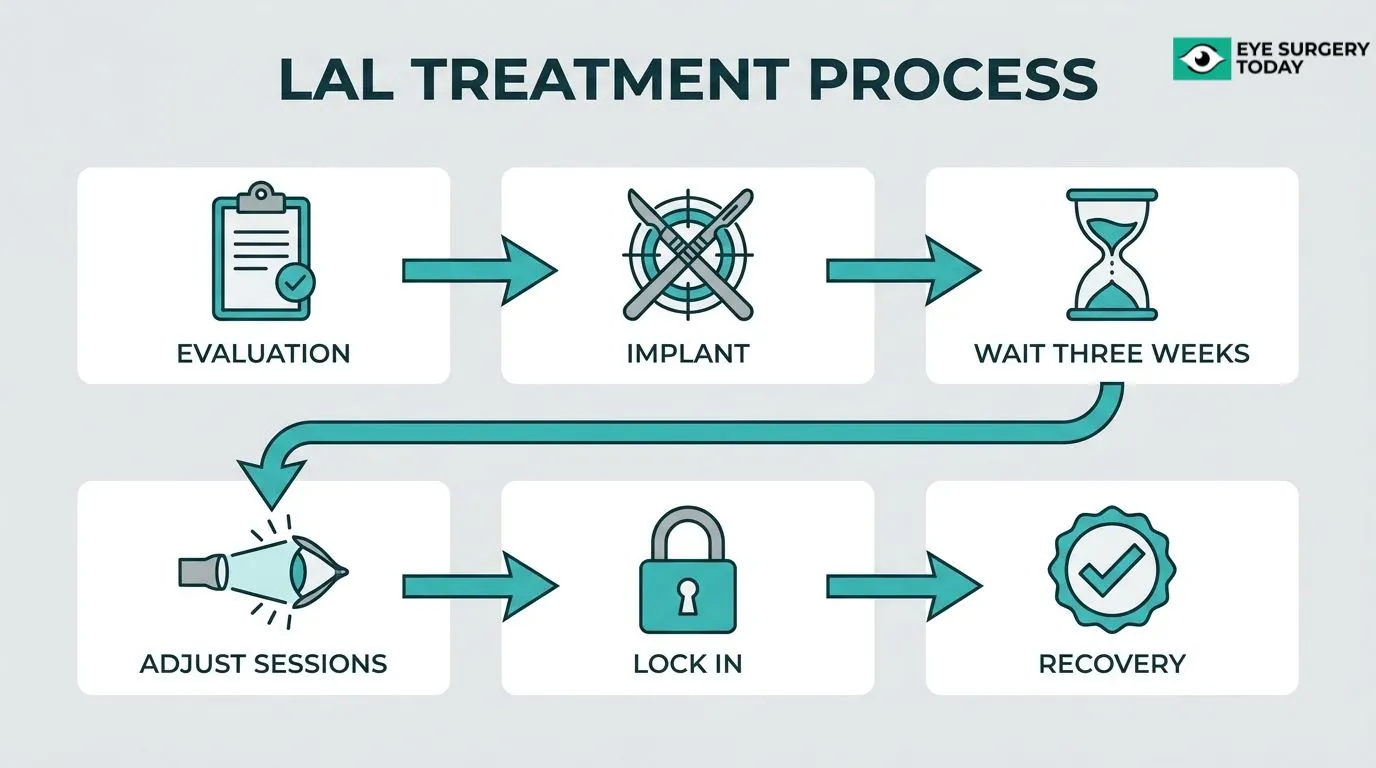
The light-adjustable lens process involves several structured stages: a candidacy evaluation, cataract surgery with LAL implantation, a waiting period, light adjustment sessions, lock-in treatments, and UV eyewear compliance until recovery is complete.
What Should You Expect at a Candidacy Evaluation for a Light-Adjustable Lens?
A candidacy evaluation for a light-adjustable lens assesses ocular health, refractive history, and personal vision goals to confirm suitability. According to the American Academy of Ophthalmology, patient selection should be based on ocular comorbidities, desire for spectacle independence, and realistic patient expectations. Your surgeon will review conditions such as macular disease, glaucoma, and prior refractive surgeries, any of which may affect LAL eligibility. Pupil dilation measurements and corneal assessments are also typically performed. Patients who approach this consultation with clear lifestyle priorities tend to have more productive shared decision-making conversations.
What Happens During Cataract Surgery When a LAL Is Implanted?
Cataract surgery with LAL implantation follows standard phacoemulsification technique, with the photoreactive silicone lens placed in the capsular bag in place of the removed natural lens. The ESCRS advises identifying significant ocular comorbidities such as diabetic retinopathy, glaucoma, and uveitis during preoperative evaluation, as these can affect postoperative visual acuity. According to a 2025 prospective multicenter registry published in the Journal of Cataract and Refractive Surgery, 91.1% of LAL eyes achieved MRSE within 0.50 D of target, and 92.0% of LAL patients achieved binocular uncorrected distance visual acuity of 20/20 or better.
How Soon After Surgery Do Light Adjustment Sessions Typically Begin?
Light adjustment sessions typically begin 17 to 21 days after implantation. According to the FDA Summary of Safety and Effectiveness Data, a minimum of two Light Delivery Device treatments is required, comprising at least one adjustment procedure and one lock-in treatment. Sessions are brief, each lasting approximately 40 to 150 seconds depending on the correction needed. This waiting period allows the eye to stabilize before the surgeon customizes the lens power based on your actual healed refraction.
What Are “Lock-In” Treatments and Why Are They Needed With LAL?
Lock-in treatments are final UV light exposures that permanently polymerize the remaining photoreactive macromers in the lens, preventing any further power change. Without lock-in, ambient UV light could cause uncontrolled refractive shifts over time. The FDA identifies unwillingness to comply with the adjustment and lock-in treatment regimen as a formal contraindication to the LAL system. Completing every scheduled lock-in session is not optional; it is what makes the adjusted prescription permanent and stable.
How Long Do You Need to Wear UV-Blocking Glasses After LAL Surgery?
You need to wear UV-blocking glasses during all waking hours from the time of implantation until 24 hours after the final lock-in treatment. FDA professional use information states this requirement applies continuously throughout the adjustment period to prevent uncontrolled refractive changes from environmental UV exposure. Skipping the glasses, even briefly outdoors, risks permanently altering the lens in an unintended direction before lock-in is complete. This commitment, spanning several weeks, is one of the most important compliance factors in achieving the intended refractive outcome.
How Does a Light-Adjustable Lens Compare With Other Cataract Lens Options?
The Light Adjustable Lens compares with other cataract lens options by offering postoperative power customization that standard IOLs cannot provide. The sections below compare LAL with monofocal, multifocal, toric, and monovision approaches.
How Does LAL Compare With Monofocal Lenses for Clarity and Predictability?
LAL compares with monofocal lenses by sharing single-distance optics while adding the ability to fine-tune power after surgery. According to the American Academy of Ophthalmology, monofocal IOLs provide one fixed focusing distance, with no adjustment possible once implanted. The LAL begins as a functionally similar single-focus lens, but its photoreactive silicone material allows the surgeon to refine sphere and cylinder after the eye has healed. In the FDA pivotal study, 92.1% of LAL eyes achieved a final refraction within 0.50 D of the intended target, compared with 36.3% of control eyes reaching 20/20 uncorrected acuity. For patients who prioritize predictable distance clarity over simplicity, this adjustability is a meaningful clinical advantage over a standard monofocal.
How Does LAL Compare With Multifocal or Trifocal Lenses for Reducing Glasses Use?
LAL compares with multifocal or trifocal lenses by offering high distance precision but not the built-in near or intermediate range that multifocal designs provide. The American Academy of Ophthalmology describes multifocal IOLs as providing distance and near focus simultaneously, while the LAL is adjusted postoperatively for a single target refraction. A 2022 systematic review and Bayesian network meta-analysis published in JAMA Ophthalmology, comprising 2,605 patients across 27 randomized trials, found that trifocal IOLs produced better uncorrected near visual acuity than monofocal IOLs, though all multifocal designs were comparable to monofocals for distance. A Cochrane review also found multifocal IOLs generated more glare and halos than monofocals. Patients choosing LAL generally accept some reliance on reading glasses in exchange for finely tuned distance vision with fewer optical side effects.
When Might a Toric Lens Be Better Than LAL for Astigmatism?
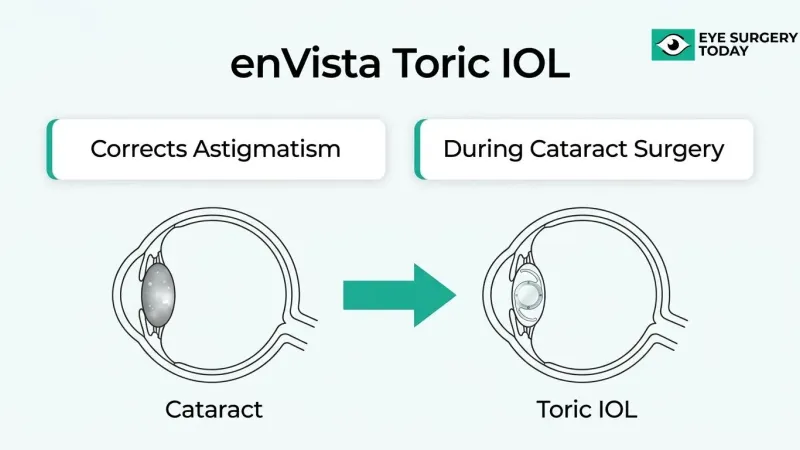
A toric lens might be better than LAL for astigmatism when a patient meets criteria for astigmatism correction but cannot commit to the multiple postoperative adjustment visits the LAL requires. Both lens types address corneal astigmatism: CMS recognizes the RxSight Light Adjustable Lens under the astigmatism-correcting IOL category, alongside conventional toric designs. The ESCRS recommends toric IOLs for corneal astigmatism of 1.0 D or more, with strong evidence supporting their use above 2.0 D. A toric IOL delivers correction in a single surgery with no follow-up light treatments, making it a more practical choice for patients with scheduling limitations, occupational constraints, or who are unable to maintain consistent UV-protective eyewear compliance. Where adherence to the LAL protocol is feasible, the adjustability of the LAL may offer a refinement advantage; where it is not, a toric lens delivers reliable astigmatism correction more efficiently.
How Does LAL Compare With Monovision (One Eye for Distance, One for Near)?
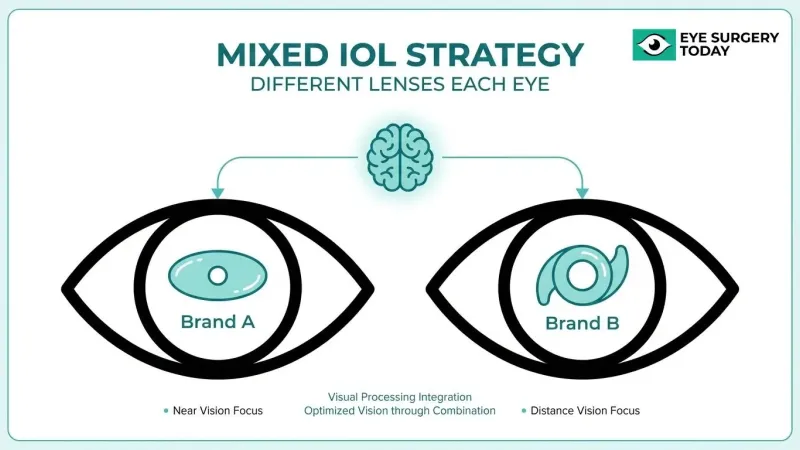
LAL compares with monovision by offering a customizable alternative to intentionally targeting different refractive endpoints in each eye. Monovision sets one eye for distance and the other for near, reducing spectacle dependence without a multifocal optic. The LAL can replicate this strategy postoperatively through adjustable blended vision, with one lens tuned for distance and the other for intermediate or near, though this approach requires precise bilateral coordination across multiple adjustment sessions. Monovision with conventional IOLs is simpler to execute and does not require UV-protective glasses or repeat clinic visits. For patients who have previously tolerated monovision correction in contact lenses, a toric or standard monofocal monovision strategy may be the lower-burden path. The LAL’s adjustability makes it uniquely suited to patients who want to trial and fine-tune a monovision target rather than commit to a fixed offset before surgery.
A 2023 article in the Journal of Refractive Surgery concluded that more studies are needed to compare the LAL with other premium lenses that also provide excellent visual outcomes, underscoring that IOL selection remains a shared decision between patient and surgeon.
How Should You Decide Whether a Light-Adjustable Lens Is Right for You?
Deciding whether LAL is right for you requires weighing your vision goals, medical eligibility, lifestyle constraints, and willingness to commit to the post-surgical adjustment process. The H3s below walk through the key questions to ask your surgeon, how to evaluate trade-offs, how to prioritize vision targets, and when a simpler lens may serve you better.
What Questions Should You Ask Your Cataract Surgeon About LAL?
The questions you should ask your cataract surgeon about LAL cover candidacy, vision targets, adjustment logistics, and cost. According to the European Society of Cataract and Refractive Surgeons, target refraction depends on the selected IOL, patient expectations, and patient preferences, and the patient and ophthalmologist should make a shared decision for IOL target selection.
Useful questions to bring to your consultation include:
- Am I medically eligible, given my eye health history and any prior refractive surgery?
- What vision target will we aim for, and how many adjustment sessions are typically needed?
- What happens if I miss an adjustment appointment or cannot comply with UV-eyewear requirements?
- Is LAL covered by my insurance, and what out-of-pocket costs should I expect?
- What are the alternatives if LAL is not the best fit for my eyes?
Arriving with specific questions transforms a standard surgical consultation into a genuine shared decision-making conversation, which is exactly what clinical guidelines recommend.
How Can You Weigh LAL’s Extra Appointments and Cost Against Its Benefits?
You can weigh LAL’s extra appointments and cost against its benefits by comparing the precision advantage and potential spectacle independence it offers against the time commitment and premium pricing it requires. A 2023 Markov-model cost-effectiveness analysis published in the Journal of Refractive Surgery found ICERs of $9,792 per QALY from the healthcare perspective and $10,072 per QALY from the societal perspective for bilateral LAL versus bilateral monofocal IOL surgery, both well below a $50,000/QALY willingness-to-pay threshold, with simulations being cost-effective in 94% of runs at age 65.
That said, cost-effectiveness models reflect population averages, not individual budgets. For patients with fixed incomes or limited access to a LAL-equipped practice, the real-world financial and logistical burden can outweigh the clinical benefit, particularly when a well-fitted toric or monofocal lens could meet their goals at lower cost and fewer visits.
How Should You Prioritize Distance, Intermediate, and Near Vision in Your Choice?
You should prioritize distance, intermediate, and near vision in your choice by first identifying the visual tasks most central to your daily life, then selecting the IOL whose optical design best matches that hierarchy. LAL allows postoperative fine-tuning of spherical and astigmatic targets but does not inherently provide multifocal range; patients who want sharp near or intermediate vision alongside distance clarity may need to discuss a monovision strategy or consider whether a multifocal or EDOF lens better suits their needs.
Key questions to clarify your priorities before surgery include:
- Do you drive frequently at night, where distance clarity and contrast matter most?
- Do you rely on a computer or smartphone throughout the day, making intermediate focus critical?
- Are you willing to use reading glasses for near tasks in exchange for sharper distance and intermediate vision?
Answering these honestly before your consultation helps your surgeon model the right refractive target and choose the lens category most likely to deliver it.
When Is It Safer or Simpler to Choose a Non-Adjustable Cataract Lens Instead?
It is safer or simpler to choose a non-adjustable cataract lens when a patient has contraindications to the LAL protocol, straightforward refractive needs, or limited access to the required follow-up. The FDA lists unwillingness or inability to comply with the postoperative adjustment and lock-in regimen, including consistent UV-eyewear wear, as a formal contraindication to LAL. Patients who have pre-existing macular disease, uveitis, prior intraocular surgery, or who take systemic UV-sensitizing medications are also excluded from standard LAL protocols.
Beyond medical contraindications, non-adjustable lenses may simply be more practical for patients who live far from a practice with a Light Delivery Device, have demanding work schedules that make multiple post-op visits difficult, or have straightforward astigmatism that a toric IOL can address reliably in a single procedure. In those situations, a proven, cost-effective option often delivers better real-world outcomes than a more sophisticated technology that cannot be used as intended.
How Can Eye Surgery Today Help You Understand Cataract Lens Choices Like the Light-Adjustable Lens?
Eye Surgery Today provides surgeon-reviewed educational guides to help patients compare IOL options, including the Light-Adjustable Lens, with clarity and confidence. The H3s below cover how these guides support safe decision-making and what key takeaways to carry forward.
How Can Eye Surgery Today’s Surgeon-Reviewed Guides Help You Compare IOL Options Safely?
Eye Surgery Today’s surgeon-reviewed guides help patients compare IOL options safely by translating clinical evidence into clear, jargon-free content built on peer-reviewed sources. Choosing between a Light-Adjustable Lens, a toric IOL, a multifocal lens, or a standard monofocal involves tradeoffs across precision, lifestyle fit, cost, and post-operative commitment. Eye Surgery Today presents those tradeoffs objectively, drawing on FDA approval data, ESCRS guidelines, and published clinical trials rather than promotional materials. Every guide is reviewed for clinical accuracy, so patients arrive at their surgeon consultation already familiar with the key questions worth asking.
What Are the Key Takeaways About Who Should and Should Not Choose a Light-Adjustable Lens for Cataracts?
The key takeaways about who should and should not choose a Light-Adjustable Lens for cataracts center on candidacy, compliance, and realistic expectations. Strong candidates generally have pre-existing corneal astigmatism, no macular disease, and the flexibility to attend multiple post-operative adjustment visits while wearing UV-protective glasses consistently. Patients who may not be well suited include those with certain retinal or corneal conditions, UV-sensitizing medications, or significant lifestyle barriers to the adjustment protocol. Notably, a research synthesis record confirmed that no universal numerical dry-eye exclusion threshold, no specific occupational UV-exposure limit, and no direct head-to-head comparison against a named trifocal or EDOF lens currently exists in the published literature, meaning some candidacy boundaries remain clinical judgment calls. Eye Surgery Today’s guides are designed to flag these evidence gaps honestly, so patients can have more productive, well-informed conversations with their ophthalmologist before committing to any lens choice.