Eyelid surgery, or blepharoplasty, is a surgical procedure that removes or repositions excess skin, fat, and muscle from the upper eyelids, lower eyelids, or both to improve vision, relieve discomfort, or restore a more youthful appearance.
This guide covers the types of blepharoplasty and who qualifies, functional and cosmetic benefits, risks and complications, the surgical procedure and recovery timeline, costs and insurance considerations, and how eyelid surgery compares to non-surgical alternatives.
Four distinct techniques (upper, lower, double eyelid, and transconjunctival blepharoplasty) each target different anatomical concerns, and candidacy depends on factors like overall health, dry eye status, age, and whether the goal is functional or cosmetic.
Functional blepharoplasty may help improve peripheral vision by removing obstructing eyelid tissue, and clinical evidence suggests it can reduce forehead headaches and chronic eyelid fatigue that persist when the frontalis muscle compensates for heavy, drooping lids.
Possible complications include dry eye, incomplete eyelid closure from excessive skin removal, scarring, and asymmetry; the likelihood of each varies by surgical approach and patient anatomy.
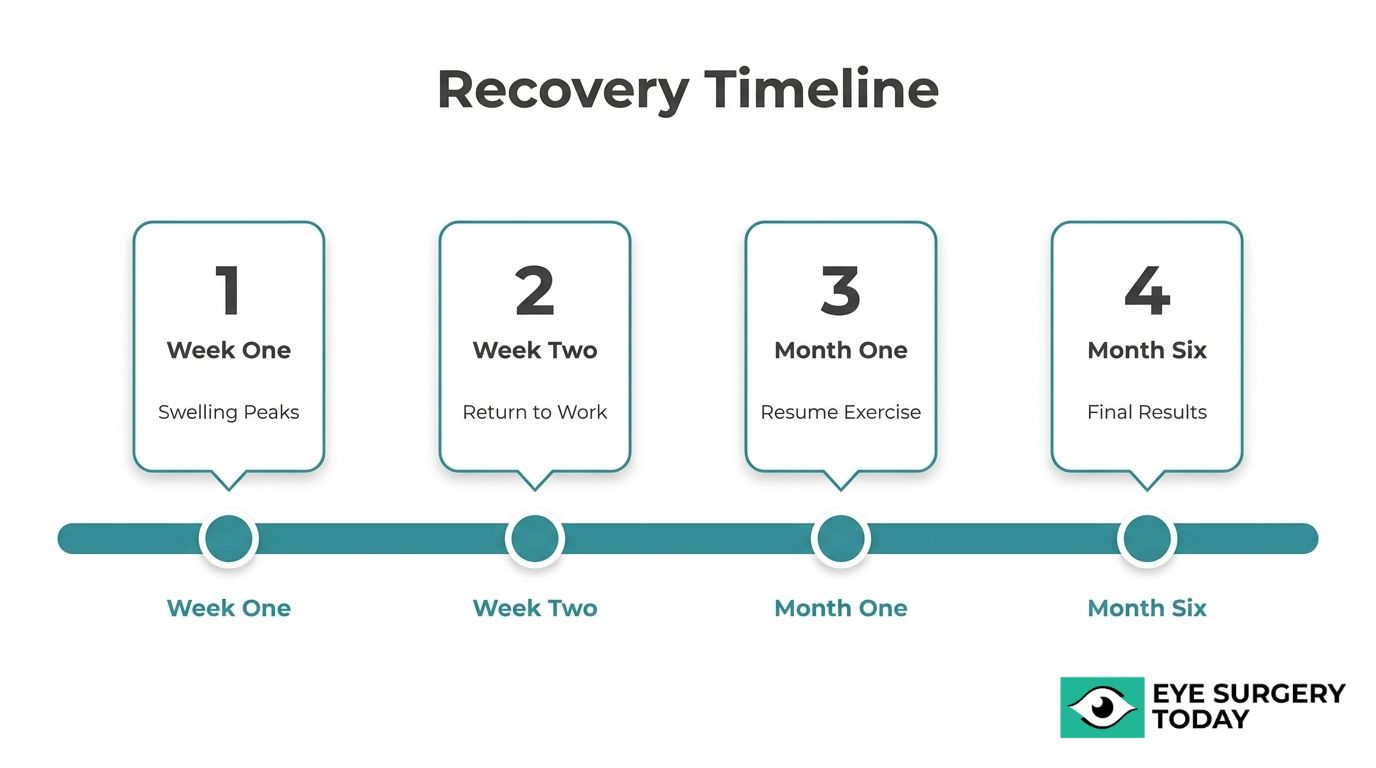
Recovery typically spans 10 to 14 days for visible swelling and bruising to resolve, with most patients returning to work within that window and final results becoming apparent over three to six months.
Surgeon fees in 2024 ranged from approximately $3,000 to $6,500 depending on the procedure type, and insurance may cover functional cases when visual field testing confirms measurable obstruction. Non-surgical options like laser resurfacing, fillers, and Botox can address mild aging changes but offer temporary results and cannot correct structural problems.
What Are the Different Types of Blepharoplasty?
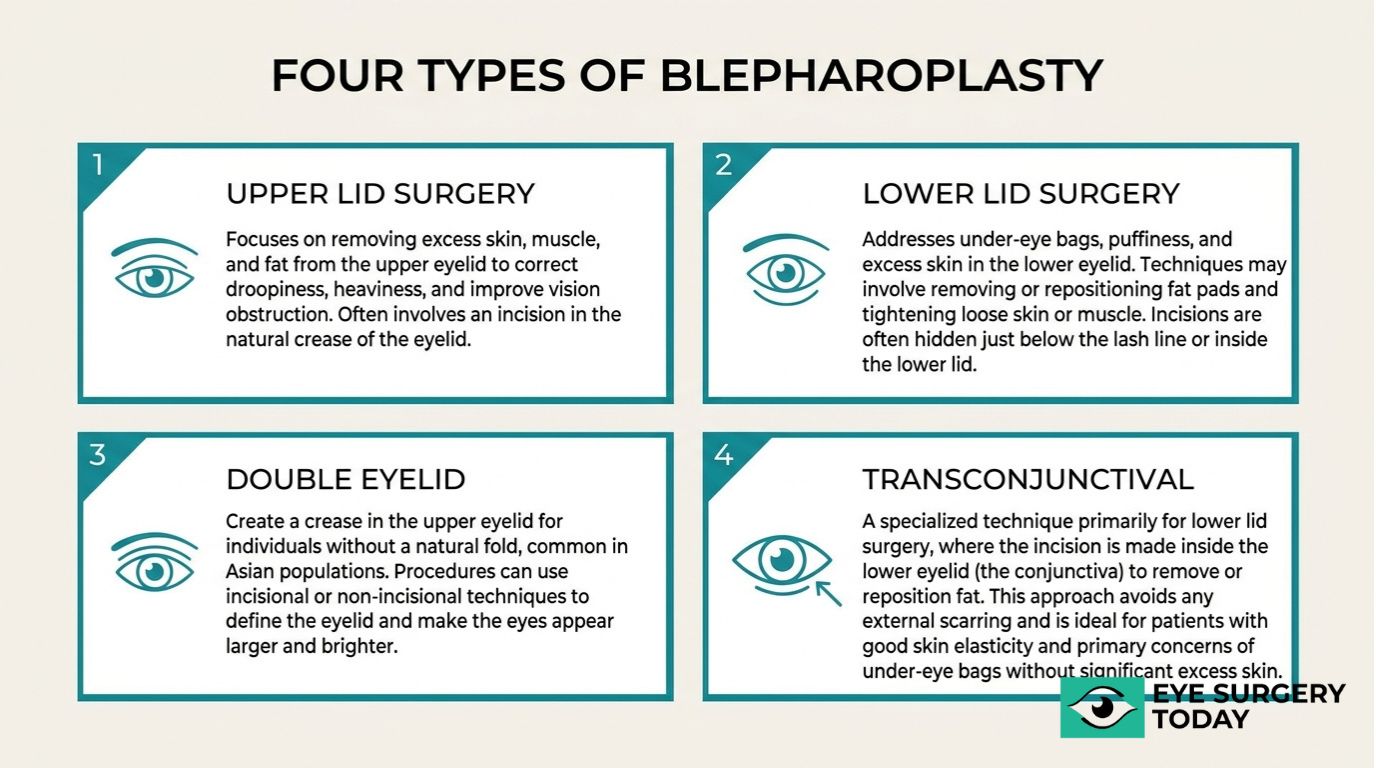
The different types of blepharoplasty are upper blepharoplasty, lower blepharoplasty, double eyelid surgery, and transconjunctival blepharoplasty. Each targets a distinct anatomical area and uses a specific surgical approach.
Upper Blepharoplasty
Upper blepharoplasty is the surgical repair or reconstruction of the upper eyelid. This procedure addresses excess upper eyelid skin, the orbital septum, any underlying ptosis, and preaponeurotic or medial orbital fat that may be excessive or deficient.
Key procedural steps include:
- Marking the desired skin crease, leaving at least 10 mm between the upper incision and the inferior border of the brow
- Administering local anesthesia
- Making the incision along the marked crease
- Performing volume augmentation through fat grafting or transposition when needed
- Closing with 6-0 sutures
Precision during skin removal is critical. Excessive removal can shorten the anterior lamella, leading to lagophthalmos (incomplete eyelid closure) and subsequent corneal exposure. According to data published by the American Society of Plastic Surgeons, the average surgeon fee for upper blepharoplasty ranged from $3,000 to $5,500 in 2024. For patients with functional impairment, CPT code 15823 may support medical necessity when excessive skin is weighting down the lid.
Lower Blepharoplasty
Lower blepharoplasty targets puffiness, fat herniation, and skin laxity beneath the eyes. During the procedure, the surgeon may use a transcutaneous or transconjunctival approach to remove or reposition orbital fat, often combined with orbicularis muscle tightening or skin resurfacing.
The transcutaneous approach involves an external incision just below the lash line, which provides direct access to both skin and deeper structures. The transconjunctival approach, by contrast, hides the incision along the inner conjunctival surface, avoiding any visible external scar. According to a retrospective review published in PMC, dry eye symptoms lasting longer than two weeks and two months were reported in 10.9% and 2% of lower blepharoplasty patients, respectively. Selecting the right approach for each patient’s anatomy is one of the most important decisions in lower lid surgery, as it directly influences both scarring outcomes and complication risk.
Double Eyelid Surgery
Double eyelid surgery is the surgical creation of a supratarsal crease, also called the superior palpebral fold, in patients who lack a naturally defined upper eyelid fold. Approximately 50% of Asians do not have an upper eyelid crease, making this the most common cosmetic surgical procedure in Asia.
According to the American Academy of Ophthalmology’s EyeWiki, Asian blepharoplasty is also the most frequently requested cosmetic procedure among Asian Americans, who comprise 6% of the cosmetic surgical patient population. The procedure can be performed using suture (non-incisional) or incisional techniques, depending on eyelid anatomy and the patient’s goals. For patients seeking this procedure, finding a surgeon experienced in ethnic eyelid anatomy is essential to achieving natural, proportionate results.
Transconjunctival Blepharoplasty
Transconjunctival blepharoplasty is a lower eyelid technique where no external skin incision is made. The incision is placed along the inner conjunctival surface, allowing the surgeon to address deeper structures, including ligaments, orbital fat, and the orbital septum, without visible scarring.
This approach is particularly well suited for younger patients with isolated fat pad prominence who do not have significant skin redundancy or lower eyelid laxity. Because it avoids disrupting the external skin and orbicularis muscle, transconjunctival blepharoplasty typically carries a lower risk of eyelid malposition compared to transcutaneous methods. For patients whose primary concern is under-eye fullness rather than loose skin, this technique often represents the most conservative and effective option.
With the key blepharoplasty types outlined, candidacy factors help determine which approach may be most appropriate.
Who Is a Good Candidate for Eyelid Surgery?
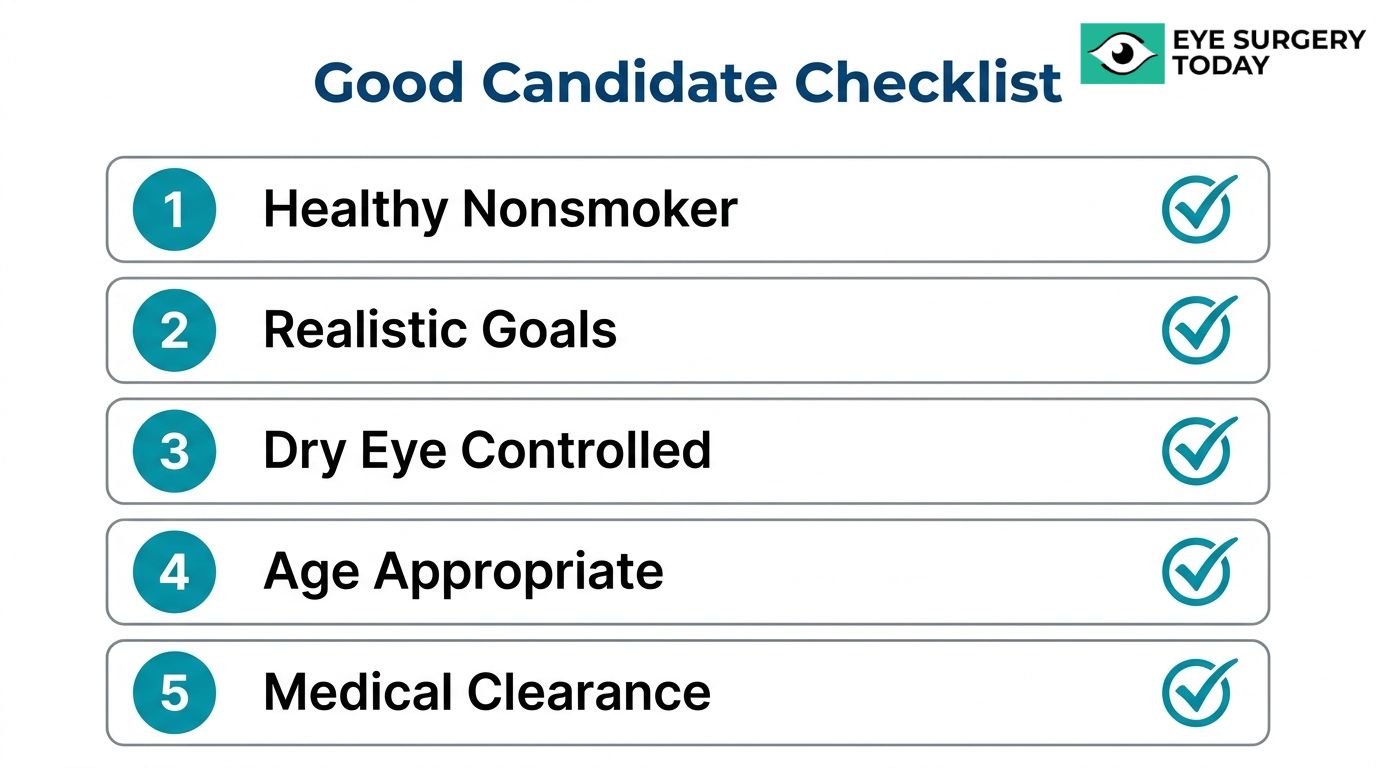
A good candidate for eyelid surgery is generally a healthy nonsmoker with realistic expectations. Candidacy also depends on specific eye conditions, age, and whether the procedure is cosmetic or functional.
Can You Get Blepharoplasty If You Have Dry Eye?
You can get blepharoplasty if you have dry eye, but the condition requires careful evaluation before surgery. Severe dry eye syndrome is considered a contraindication for blepharoplasty because the procedure may worsen symptoms and increase the risk of postoperative complications. Mild or well-controlled dry eye, however, does not automatically disqualify a patient. An ophthalmologist can assess tear film quality, eyelid closure mechanics, and overall ocular surface health to determine whether surgery is safe. Patients with borderline dry eye may need preoperative treatment to stabilize their symptoms first. This is one of the most underappreciated screening steps in blepharoplasty planning, and skipping it can turn an otherwise successful procedure into a frustrating recovery.
Is Blepharoplasty Suitable for Younger Patients?
Blepharoplasty is suitable for younger patients in specific clinical scenarios. According to StatPearls, transconjunctival lower blepharoplasty is primarily indicated in younger patients with isolated prominence of fat pads without significant lower eyelid laxity, skin redundancy, or festoons. Because younger skin retains elasticity, these patients often benefit from less invasive approaches that address fat pads alone. Double eyelid surgery also represents a common indication among younger adults; this procedure is the most common cosmetic operation in Korea and China, with 86% of patients viewing it as culturally normalized. For younger candidates, the focus typically shifts from skin removal to fat repositioning or crease creation, making careful technique selection essential.
When Might a Doctor Recommend Functional Blepharoplasty?
A doctor might recommend functional blepharoplasty when excess upper eyelid skin obstructs vision or causes physical symptoms. Functional indications include temporal hooding that interferes with superior and superotemporal vision, constant frontalis muscle engagement causing frontal headaches, and eye irritation from eyelash ptosis or dermatitis. Unlike cosmetic blepharoplasty, the functional procedure addresses measurable impairment rather than appearance alone. Insurance coverage typically requires documented visual field loss to confirm medical necessity. For patients who have adapted to gradually worsening obstruction, the degree of improvement after surgery can be surprisingly significant.
With candidacy established, understanding the full range of potential benefits helps set realistic expectations for the procedure.
What Are the Potential Benefits of Blepharoplasty?
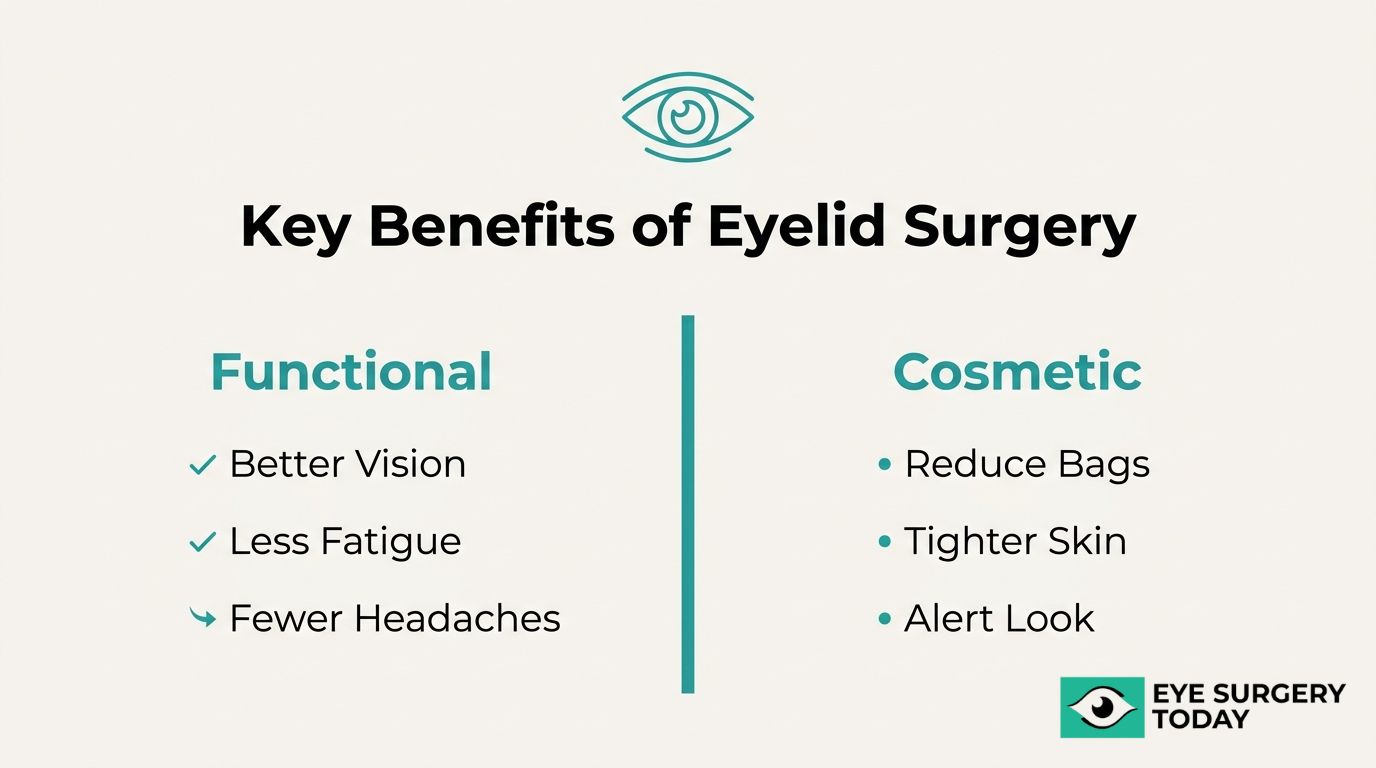
The potential benefits of blepharoplasty include improved peripheral vision, reduced under-eye bags, and relief from chronic eyelid fatigue. Each benefit depends on the specific technique and whether the procedure addresses functional or cosmetic concerns.
How May Upper Blepharoplasty Improve Peripheral Vision?
Upper blepharoplasty may improve peripheral vision by removing excess eyelid skin that droops over the lash line and obstructs the superior and supero-temporal visual field. Functional indications for this procedure include temporal hooding that blocks upper-field sight, constant frontalis muscle engagement causing frontal headaches, and eye irritation from eyelash ptosis or dermatitis.
According to an Ophthalmology report reviewing Health-Related Quality-of-Life studies, upper blepharoplasty demonstrated improved HRQL outcomes that persist for several years, with no significant worsening of subjective dry eye metrics. Patients often describe a brightening of vision after obstructing skin is removed, along with measurable reductions in headaches and improved day-to-day comfort.
For patients seeking insurance coverage, Medicare requires visual field testing that demonstrates a minimum 12-degree or 30% loss of upper field of vision, with documented improvement when the lid is taped up. This threshold is worth discussing with an eye care provider early in the evaluation process, since pre-surgical documentation can determine whether the procedure qualifies as medically necessary.
How Can Eyelid Surgery Help Reduce Under-Eye Bags?
Eyelid surgery can help reduce under-eye bags by removing or repositioning the herniated orbital fat pads that create puffiness beneath the lower lid. As the orbital septum weakens with age, fat that normally cushions the eye pushes forward, producing visible bulging that rest and topical treatments cannot resolve.
Lower blepharoplasty addresses this directly. The surgeon accesses the fat compartments through either a transcutaneous or transconjunctival incision, then sculpts or redistributes the tissue to restore a smoother contour. Because the underlying structural cause is corrected rather than masked, the results tend to be long-lasting. For many patients, eliminating persistent under-eye bags is one of the most immediately noticeable cosmetic improvements blepharoplasty can offer.
How May Blepharoplasty Help With Chronic Eyelid Fatigue?
Blepharoplasty may help with chronic eyelid fatigue by reducing the weight of excess skin and tissue that forces the eyelid muscles to work harder throughout the day. When heavy upper lids droop, the frontalis muscle compensates by constantly lifting the brow, which can lead to forehead tension and end-of-day exhaustion around the eyes.
Removing redundant eyelid skin decreases this muscular demand. Clinical studies confirm measurable reductions in headaches and overall enhancement in day-to-day comfort after functional blepharoplasty. Patients who previously relied on brow elevation to keep their visual field clear often notice that their eyes feel lighter and less strained, particularly during prolonged reading or screen use.
Understanding these functional and cosmetic benefits can help guide the next consideration: weighing them against the possible risks and complications of the procedure.
What Are the Possible Risks and Complications?
The possible risks and complications of blepharoplasty include dry eye, difficulty closing the eyes, scarring, and asymmetry. Each complication varies in likelihood depending on the surgical approach.
What Is the Risk of Dry Eye After Blepharoplasty?
The risk of dry eye after blepharoplasty depends on the type and extent of surgery performed. According to a study published in PMC (National Institutes of Health), simultaneous upper and lower blepharoplasty causes dry eye disease at a rate of 31.3%, compared to 12.9% for simple upper blepharoplasty alone. Patients with pre-existing dry eye conditions may face a higher likelihood of prolonged symptoms. Because dry eye is one of the most frequently searched concerns about this procedure, discussing your tear film health with your surgeon before scheduling surgery can help set realistic expectations and guide preventive strategies.
Can Blepharoplasty Cause Difficulty Closing the Eyes?
Yes, blepharoplasty can cause difficulty closing the eyes, a condition known as lagophthalmos. Excessive skin removal during upper blepharoplasty can shorten the anterior lamella, preventing the eyelid from fully closing. This incomplete closure may expose the cornea, leading to dryness, irritation, and potential damage to the ocular surface. Conservative tissue removal is one of the most reliable ways to prevent this complication, which is why choosing a surgeon experienced in precise eyelid measurements matters significantly.
What Are the Risks of Scarring After Eyelid Surgery?
The risks of scarring after eyelid surgery are generally low compared to many other surgical procedures. According to a report in the MDPI Journal of Clinical Medicine, postoperative scarring after upper eyelid blepharoplasty is less common than after many other surgeries, though minimizing scars remains a key clinical focus. Incisions placed within the natural eyelid crease tend to heal discreetly, and factors such as sun protection, proper wound care, and individual healing response all influence the final scar appearance.
How Common Is Asymmetry After Blepharoplasty?
Asymmetry after blepharoplasty is a recognized complication that can result from uneven tissue removal, differences in healing between the two eyelids, or pre-existing facial asymmetry that becomes more noticeable after surgery. Minor asymmetry often improves as swelling resolves over several weeks. Persistent asymmetry, however, may require a revision procedure. Careful preoperative assessment of both eyelids helps surgeons plan for natural anatomical differences and reduce asymmetry risk.
With potential complications understood, preparing properly for surgery helps minimize these risks.
How Should You Prepare for Eyelid Surgery?
You should prepare for eyelid surgery by completing a medical evaluation, adjusting medications, and arranging your recovery environment in advance. Preparation typically involves a consultation with your surgeon, pre-operative testing, and lifestyle changes in the weeks before the procedure.
A thorough pre-surgical plan can reduce the risk of complications and support smoother healing. Your surgeon may recommend discontinuing blood-thinning medications, such as aspirin and ibuprofen, at least two weeks before the procedure, since these can increase bleeding during and after surgery. Smoking should also be stopped well ahead of the scheduled date; according to the American Society of Plastic Surgeons, good candidates for cosmetic eyelid surgery are generally healthy individuals with no medical conditions that can impair healing, nonsmokers, and individuals with a positive outlook and realistic goals.
Patients with pre-existing conditions, including severe dry eye syndrome or uncontrolled hypertension, should disclose these during their consultation, as they may affect surgical eligibility. A baseline eye exam and visual field testing are often recommended, particularly when the procedure is being pursued for functional reasons. Arranging transportation home, preparing cold compresses, and stocking prescribed eye drops before surgery day are practical steps that many patients overlook but that meaningfully ease early recovery.
What Happens During the Blepharoplasty Procedure?
The blepharoplasty procedure involves precise surgical techniques tailored to the upper eyelids, lower eyelids, or both. The following sections cover how each approach is performed and what type of anesthesia patients can expect.
How Is Upper Eyelid Surgery Performed?
Upper eyelid surgery is performed through a series of carefully planned steps. The surgeon begins by marking the desired skin crease, leaving at least 10 mm between the upper incision line and the inferior border of the brow. After administering local anesthesia, an incision is made along this marked line to access the underlying tissue.
Through this incision, the surgeon removes or repositions excess skin, orbital septum tissue, and preaponeurotic fat as needed. Volume augmentation through fat grafting or transposition may be incorporated when volume loss contributes to a hollow appearance. Closure is completed with fine 6-0 sutures placed within the natural crease, helping the eventual scar remain well concealed.
According to a report in the Plastic and Reconstructive Surgery Journal, eyelid surgery is the most commonly performed surgical procedure among adults aged 55 and older, and the second most commonly performed facial operation regardless of age. Because outcomes and revision rates can vary significantly depending on technique, selecting a surgeon with specific blepharoplasty experience is one of the most impactful decisions a patient can make.
How Is Lower Eyelid Surgery Performed?
Lower eyelid surgery is performed using either a transcutaneous or transconjunctival approach, depending on the patient’s anatomy and goals. The transcutaneous method involves an incision just below the lash line, providing access to remove or reposition excess fat while also allowing skin and orbicularis muscle tightening.
The transconjunctival approach, by contrast, places the incision along the inner conjunctival surface. Because no external skin incision is involved, this technique addresses deeper structures like orbital fat, ligaments, and the orbital septum while leaving no visible scar. Surgeons may combine either approach with skin resurfacing to improve texture and tighten the lower eyelid area.
For patients with isolated fat pad prominence and minimal skin laxity, the transconjunctival technique often produces excellent results with a faster healing trajectory. When significant skin redundancy is present, the transcutaneous route typically provides the access needed for a more comprehensive correction.
What Type of Anesthesia Is Used for Blepharoplasty?
The type of anesthesia used for blepharoplasty is typically local anesthesia with sedation. Local anesthetic is injected directly into the eyelid tissues to numb the surgical area, while oral or intravenous sedation helps patients remain relaxed and comfortable throughout the procedure.
General anesthesia may be recommended when upper and lower blepharoplasty are performed simultaneously, or when eyelid surgery is combined with other facial procedures. The choice depends on the extent of surgery, the patient’s medical history, and the surgeon’s preference.
Most standalone blepharoplasty procedures are completed within one to two hours on an outpatient basis. Patients can typically return home the same day once the sedation wears off. With anesthesia options clearly understood, patients can move forward to learning what recovery involves in the days and weeks after surgery.
What Does Recovery After Blepharoplasty Look Like?
Recovery after blepharoplasty involves a predictable timeline of healing, from initial swelling through final results. The following sections cover the first week, bruising duration, return to work, exercise safety, and when final outcomes become visible.
What Can You Expect During the First Week of Recovery?
During the first week of recovery, you can expect noticeable swelling, bruising, and mild discomfort around the eyelids. Bruising and swelling peak in the first 72 hours post-surgery and typically fade by the second week, according to Dr. Kopelman. Cold compresses, prescribed ointments, and keeping the head elevated may help manage these early symptoms.
Light sensitivity and blurred vision from lubricating eye drops are also common during this period. Most surgeons remove sutures within five to seven days. Patients are generally advised to avoid bending, lifting, and screen time during this initial phase, as these activities can increase blood flow to the eyelids and prolong swelling.
How Long Does Swelling and Bruising Typically Last?
Swelling and bruising typically last 10 to 14 days for most blepharoplasty patients. The majority of visible discoloration resolves within the first two weeks, allowing patients to feel more comfortable in social settings. Residual, subtle swelling may persist for several weeks longer, particularly in the lower eyelids, though it is usually only noticeable to the patient. Applying cold compresses during the first 48 hours and switching to warm compresses afterward can help the body reabsorb fluid more efficiently. For most patients, makeup may be used to conceal any lingering discoloration once sutures have been removed and the incision sites have closed.
When Can You Return to Work After Eyelid Surgery?
You can return to work after eyelid surgery within 7 to 14 days, depending on the nature of your job and individual healing. Desk-based roles with minimal physical demands may allow a return closer to the one-week mark, while positions requiring heavy lifting or strenuous activity typically require a longer recovery window. Residual bruising can often be concealed with makeup by the second week. Your surgeon may provide specific clearance based on the extent of the procedure and your healing progress. Planning time off in advance helps reduce stress during the recovery period.
When Is It Safe to Exercise After Blepharoplasty?
It is generally safe to exercise after blepharoplasty starting around two weeks post-surgery, beginning with light activity such as walking. Strenuous exercise, heavy lifting, and high-impact activities should be avoided for at least three to four weeks, as increased blood pressure and heart rate can worsen swelling or increase the risk of bleeding at the surgical site. Swimming and contact sports typically require an even longer waiting period. Your surgeon’s specific guidelines should always take priority, since individual healing rates vary. Gradually increasing intensity over several weeks, rather than returning to a full routine immediately, may help protect the delicate healing tissue around the eyelids.
How Long Does It Take to See Final Results?
Final results from blepharoplasty typically become visible within three to six months after surgery. While most swelling resolves in the first few weeks, subtle tissue changes and scar maturation continue for several months. Incision lines, initially pink or slightly raised, gradually fade and flatten during this period. The pace of healing can vary based on factors such as skin type, surgical technique, and overall health. In many cases, patients notice significant improvement well before the six-month mark, though the refined, settled appearance of the eyelids takes time to fully emerge.
With a clear picture of what recovery involves, understanding the costs and insurance considerations for blepharoplasty helps with practical planning.
How Much Does Blepharoplasty Cost?
Blepharoplasty cost depends on whether the procedure is functional or cosmetic. Insurance coverage, surgeon fees, and facility charges all influence the final price.
Does Insurance Cover Functional Blepharoplasty?
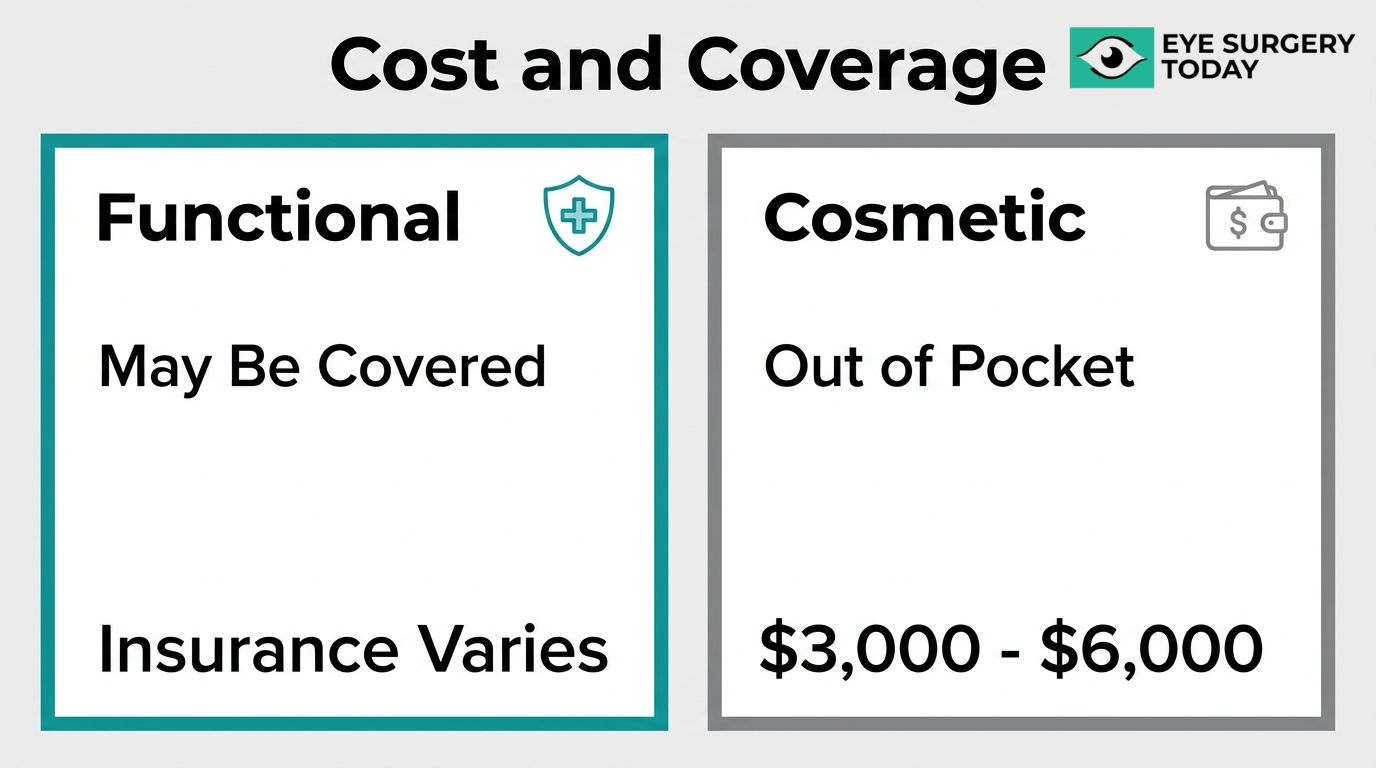
Insurance may cover functional blepharoplasty when the procedure is deemed medically necessary. Coverage typically requires documented evidence that excess upper eyelid skin obstructs vision to a measurable degree. According to CGS Medicare guidelines, functional blepharoplasty coverage requires visual field testing demonstrating a minimum 12-degree or 30% loss of upper field of vision that improves with taping.
Surgeons often use specific CPT codes to support medical necessity claims:
- CPT code 15822 applies to standard upper eyelid blepharoplasty.
- CPT code 15823 applies when excessive skin weighs down the lid, which may strengthen the case for coverage.
Patients should confirm pre-authorization requirements with their insurance provider before scheduling surgery. Each plan applies different criteria, and not all functional cases qualify automatically. Working closely with both the surgeon’s office and the insurer can help avoid unexpected out-of-pocket expenses.
What Is the Typical Cost of Cosmetic Blepharoplasty?
The typical cost of cosmetic blepharoplasty varies by procedure type and geographic region. According to 2024 data from the American Society of Plastic Surgeons, the average surgeon fee for upper blepharoplasty ranged from $3,000 to $5,500, while lower blepharoplasty ranged from $3,709 to $6,500.
These figures reflect surgeon fees alone. Total costs often include:
- Anesthesia fees
- Operating facility or surgical center charges
- Pre-operative testing and medical clearance
- Post-operative medications and follow-up visits
Combined upper and lower blepharoplasty typically costs more than either procedure performed individually, though bundling may reduce total fees compared to staging each surgery separately. For most patients, cosmetic blepharoplasty represents a worthwhile long-term investment, particularly given that results can last a decade or longer. Discussing all cost components during the consultation helps set realistic financial expectations before committing to surgery.
How Does Blepharoplasty Compare to Non-Surgical Alternatives?
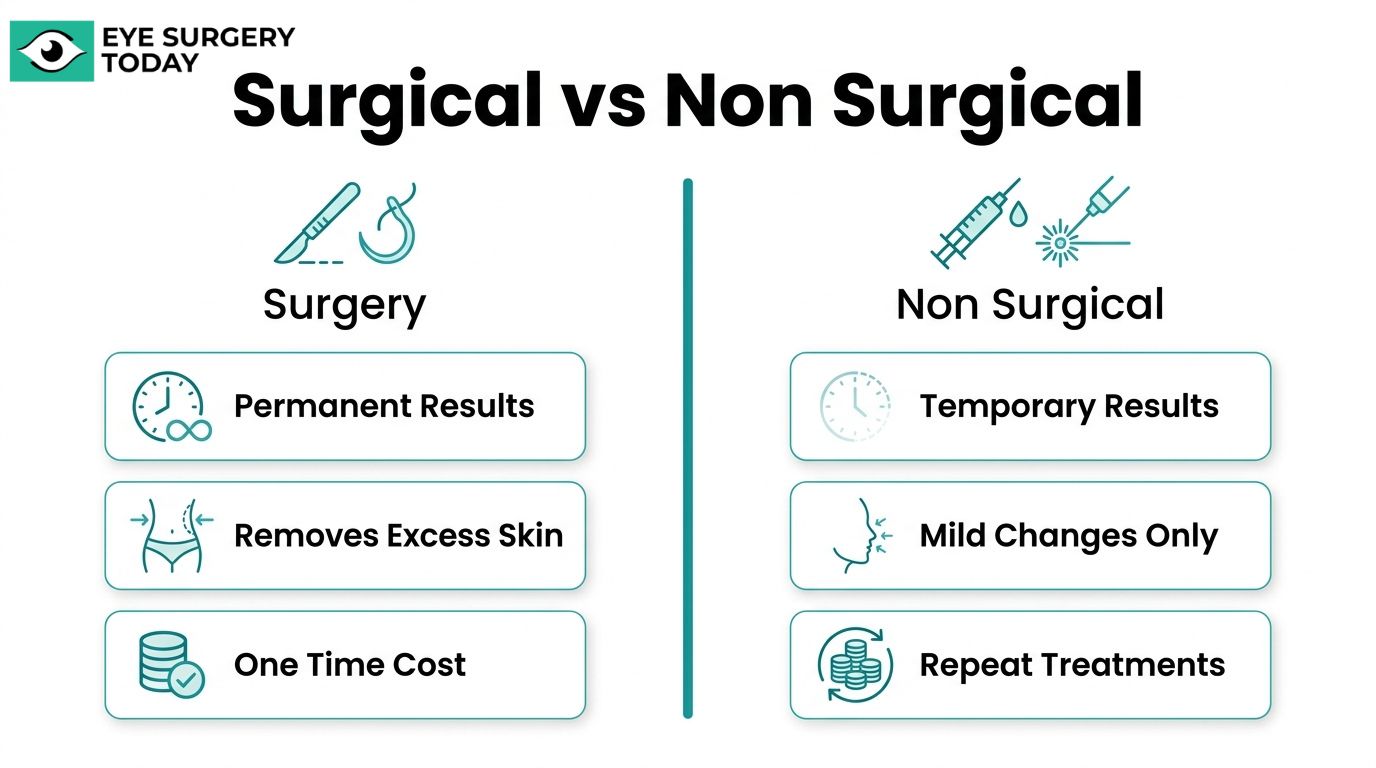
Blepharoplasty compares to non-surgical alternatives by offering permanent structural correction, while non-surgical options provide temporary rejuvenation with less downtime.
Non-surgical blepharoplasty alternatives include laser skin resurfacing, dermal fillers, Botox, and radiofrequency treatments. These approaches can reduce mild signs of eyelid aging, such as fine lines, minor volume loss, and skin laxity, without requiring incisions or general anesthesia. Recovery periods tend to be shorter, often measured in days rather than weeks.
However, none of these alternatives can remove excess skin, reposition orbital fat, or address functional concerns like obstructed peripheral vision. According to Facial Plastic Surgery Miami, non-surgical options offer rejuvenation with less downtime but are not permanent. Botox, for example, typically lasts only three to four months before requiring repeat treatment. Over time, the cumulative cost of maintenance sessions can approach or exceed the one-time cost of surgical blepharoplasty.
For patients with significant skin redundancy, prominent fat pads, or visual field obstruction, blepharoplasty remains the more definitive solution. Non-surgical treatments may work well as a first step for younger patients with early aging changes or as complementary maintenance after surgery. The right choice depends on the severity of the concern, desired longevity of results, and whether the issue is cosmetic, functional, or both. A consultation with a qualified specialist can help determine which approach best fits a patient’s individual anatomy and goals.
How Does Blepharoplasty Relate to Overall Eye Health?
Blepharoplasty relates to overall eye health by addressing both functional vision problems and cosmetic concerns tied to eyelid structure. The following sections cover how surgeon-reviewed resources can guide your decision and the key takeaways about this procedure.
Can Surgeon-Reviewed Resources Help You Decide on Eyelid Surgery?
Yes, surgeon-reviewed resources can help you decide on eyelid surgery by providing clinically accurate, unbiased information about candidacy, risks, and expected outcomes. Making a confident decision requires understanding how blepharoplasty affects eyelid function, visual field, and long-term eye comfort.
Reliable educational content should cover several key areas:
- Whether your symptoms qualify as functional or cosmetic concerns.
- How conditions like dry eye or eyelid laxity may influence surgical candidacy.
- What realistic recovery timelines and potential complications look like.
- How insurance criteria differ for medically necessary versus elective procedures.
Eye Surgery Today offers surgeon-reviewed educational guides designed to help patients navigate these questions with clarity. Every resource on the platform is reviewed by practicing ophthalmologists, ensuring the information reflects current clinical standards without commercial bias. For patients weighing the benefits and risks of blepharoplasty, access to trustworthy, expert-vetted content can make the difference between uncertainty and informed confidence. Similarly, accessing reliable information on laser vision correction procedures like LASIK is crucial for making informed decisions about overall eye health.
What Are the Key Takeaways About Blepharoplasty?
The key takeaways about blepharoplasty are that it is a versatile procedure addressing both vision obstruction and aesthetic aging of the eyelids, with outcomes that depend heavily on proper candidate selection and surgical technique.
- Functional blepharoplasty may improve peripheral vision, reduce forehead strain, and relieve eyelid-related discomfort.
- Cosmetic blepharoplasty can reduce under-eye bags, tighten sagging skin, and restore a more alert appearance.
- Candidacy requires evaluation of overall health, dry eye status, and realistic expectations.
- Recovery typically spans 10 to 14 days for visible swelling and bruising to resolve.
- Risks, including temporary dry eye and rare complications like lagophthalmos, should be discussed thoroughly with your surgeon.
- Insurance may cover functional cases when visual field testing demonstrates measurable obstruction.
Blepharoplasty remains one of the most commonly performed facial procedures for good reason: when performed on well-selected candidates, it consistently delivers lasting improvements in both comfort and quality of life. Consulting surgeon-reviewed resources, like those available through Eye Surgery Today, can help you approach this decision with the clarity it deserves.