The Light Adjustable Lens (LAL) is an FDA-approved intraocular lens that can be customized after cataract surgery using targeted UV light treatments. Unlike traditional IOLs that lock in a fixed prescription at implantation, the LAL allows surgeons to fine-tune vision once the eye has healed, making it the only IOL that can correct residual refractive errors without additional procedures.
This guide covers how the LAL works through its three-stage process, who may be a good candidate, what to expect before, during, and after surgery, how the lens compares to other IOL types, and the costs involved.
The LAL uses a photosensitive material that physically changes shape when exposed to controlled UV light from a specialized delivery device. Adjustments typically begin 17 to 21 days after implantation, and a final lock-in treatment permanently stabilizes the prescription. Patients must wear UV-protective glasses throughout this process to prevent uncontrolled lens changes.
Candidacy depends on several factors, including medication use, willingness to attend multiple postoperative visits, and realistic expectations about outcomes. Patients taking certain UV-sensitizing medications or those with pre-existing macular disease may not be well suited for this lens.
The surgical procedure itself follows standard cataract surgery protocols, with recovery similar to conventional IOL implantation. The full light adjustment process spans approximately three to six weeks from surgery to final lock-in.
When compared to standard monofocal, multifocal, and toric lenses, the LAL may offer more precise refractive results through its post-surgical customization. The monofocal optical design also tends to produce fewer night vision disturbances than multifocal alternatives.
Out-of-pocket costs typically range from $4,000 to $6,000 per eye, as the LAL is classified as a premium upgrade not covered by Medicare or most private insurance plans.
What Is the Light Adjustable Lens (LAL)?
The Light Adjustable Lens (LAL) is an FDA-approved intraocular lens (IOL) that can be customized after cataract surgery using targeted UV light treatments. Unlike traditional IOLs, which lock in a fixed prescription at the time of implantation, the LAL allows your surgeon to fine-tune your vision once the eye has healed. This post-surgical adjustability makes it the only IOL that can correct residual refractive errors without additional procedures.
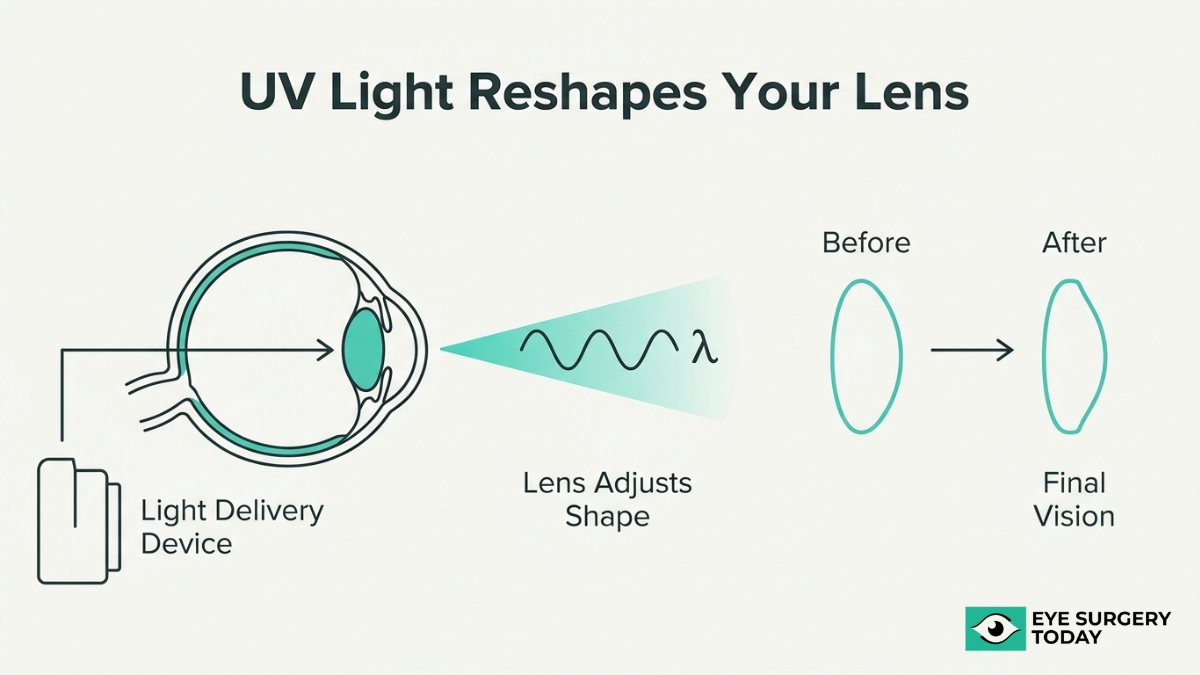
The LAL is manufactured by RxSight and is composed of a specialized photosensitive material. When exposed to a specific wavelength of UV light from the Light Delivery Device, the lens physically changes shape, altering its refractive power. Once the desired vision is achieved, a final lock-in treatment permanently stabilizes the prescription.
According to a multicenter clinical study published in the Journal of Cataract & Refractive Surgery, the Light Adjustable Lens yields higher rates of spherical equivalent and residual astigmatism within ±0.50 D than toric IOLs, providing more precise refractive results. This level of precision is difficult to match with conventional lenses, where even small calculation errors become permanent.
For patients who want greater control over their visual outcome after cataract surgery, the LAL represents a meaningful shift in how refractive results can be optimized.
How Does the Light Adjustable Lens Work?
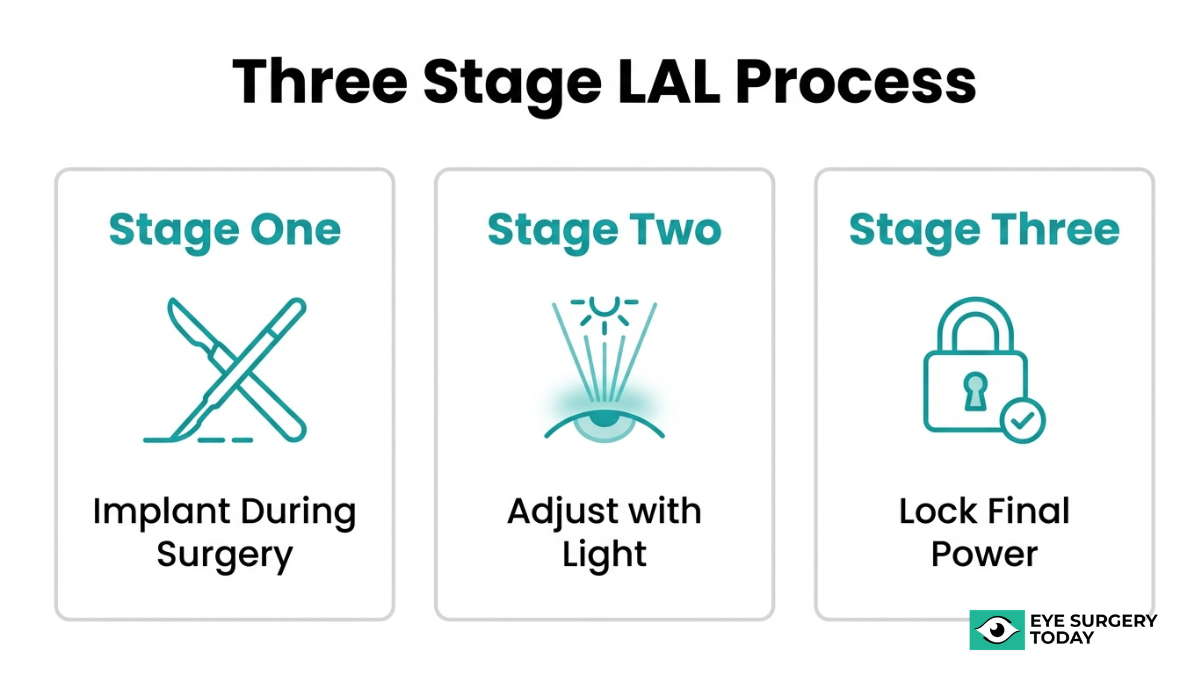
The Light Adjustable Lens works through a three-stage process: surgical implantation, UV light adjustments, and a final lock-in treatment.
How Is the LAL Implanted During Cataract Surgery?
The LAL is implanted during cataract surgery using the same phacoemulsification technique used for standard intraocular lenses. The surgeon creates a small corneal incision, breaks up and removes the clouded natural lens with ultrasonic energy, then inserts the Light Adjustable Lens into the empty capsular bag. Because the surgical procedure itself follows established cataract surgery protocols, the implantation step carries a familiar risk profile. According to a multicenter clinical study published in the Journal of Cataract & Refractive Surgery, the LAL can yield more precise refractive results than standard IOLs. What distinguishes this lens is not the surgery but what happens afterward, when UV light treatments fine-tune the prescription to each patient’s unique visual needs.
How Do UV Light Treatments Adjust the Lens After Surgery?
UV light treatments adjust the lens after surgery by targeting photosensitive macromers embedded within the LAL’s specialized material. The Light Adjustable Lens contains macromers that react to 365 nm ultraviolet light delivered by the Light Delivery Device, causing them to polymerize and reshape the lens’s refractive power. This process typically begins at least 17 to 21 days after implantation, once the eye has healed enough for accurate measurements.
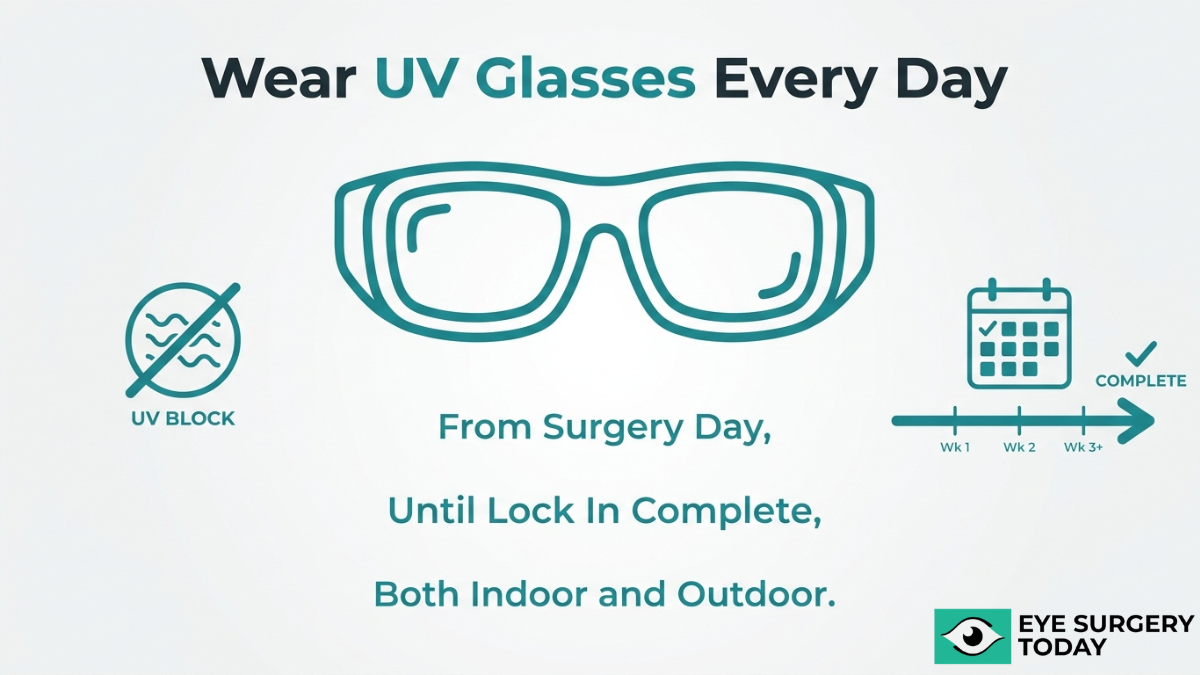
Patients require a minimum of two light treatments: one adjustment procedure and one lock-in session. During this period, patients must wear RxSight UV protective glasses continuously, from implantation until 24 hours after the final lock-in, to prevent environmental UV from causing uncontrolled power changes.
According to Dr. Neda Shamie, as reported in EyeWorld in 2024, more than 98% of patients reach their refractive target using the Light Delivery System to compensate for any residual refractive error. This ability to “test drive” vision and make corrections based on real-world experience is what makes the LAL uniquely customizable among IOL options.
How Is the Prescription Locked In After Adjustments?
The prescription is locked in after adjustments through a final UV light treatment that permanently polymerizes all remaining macromers in the lens. Once the patient and surgeon are satisfied with the achieved visual outcome, the Light Delivery Device delivers a higher-intensity UV exposure that crosslinks the lens material throughout its entire structure. This stops any further shape changes, effectively freezing the optimized prescription in place. After lock-in, the lens behaves like a conventional monofocal IOL; no additional adjustments can be made. Patients continue wearing UV protective glasses until 24 hours after this final treatment. The lock-in step is what transforms a temporarily adjustable lens into a permanent, stable implant tailored precisely to the patient’s vision.
With the full three-stage process complete, the next consideration is whether the Light Adjustable Lens may be a good fit for your specific situation.
Who May Be a Good Candidate for the Light Adjustable Lens?
Good candidates for the Light Adjustable Lens include adults undergoing cataract surgery who want customizable vision correction after implantation. The sections below cover who may benefit most and who may not be well suited for this lens.
Who May Benefit Most from a Light Adjustable Lens?
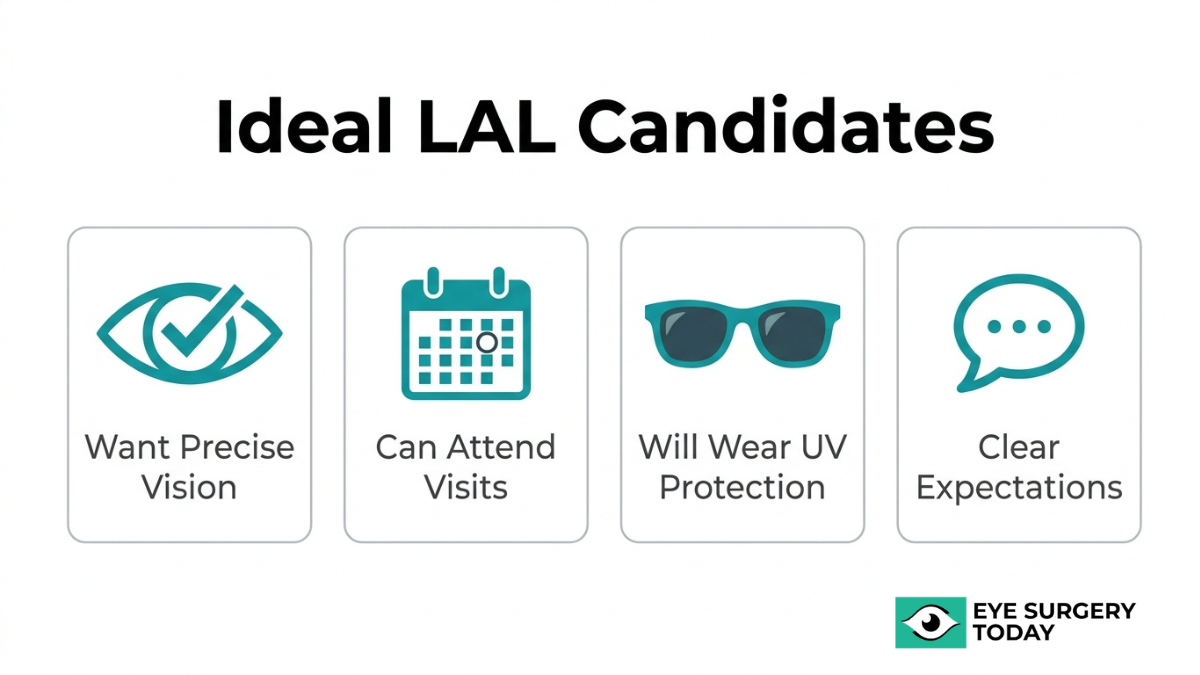
Patients who may benefit most from a Light Adjustable Lens are those who value precision and the ability to fine-tune their vision after cataract surgery. Several patient profiles tend to be particularly well suited:
- Adults with pre-existing corneal astigmatism who need post-surgical refractive correction.
- Patients with strong visual preferences who want to “test drive” their vision before locking in a final prescription.
- Individuals with realistic expectations who understand the adjustment process and required follow-up visits.
- People comfortable wearing UV-protective glasses throughout the treatment period.
According to Sumitra Khandelwal, MD, patients who struggle with decision-making should be guided away from the LAL, as they need to understand they may not achieve trifocality or their desired near vision in both eyes. This makes clear communication between the surgeon and patient essential before choosing this lens.
Who May Not Be a Good Candidate for the LAL?
Patients who may not be good candidates for the LAL include those with specific medical contraindications or lifestyle factors that conflict with the post-operative requirements. Key disqualifying factors include:
- Taking systemic medications that increase UV light sensitivity, such as tetracycline, doxycycline, amiodarone, hydrochlorothiazide, or psoralens.
- Having pre-existing macular disease, which was excluded from the FDA approval indication.
- Being unable or unwilling to wear mandatory UV-protective glasses consistently from implantation through final lock-in.
- Difficulty attending multiple post-operative light treatment appointments.
Patients who cannot commit to the full adjustment timeline or who have unrealistic expectations about achieving multifocal-like results from a monofocal platform may experience dissatisfaction. For those individuals, a different IOL type may be more appropriate, and a thorough pre-operative consultation can help clarify the best option.
Understanding candidacy is an important first step before reviewing what to expect in the days leading up to surgery.
What Should You Expect Before Light Adjustable Lens Surgery?
Before Light Adjustable Lens surgery, you should expect a comprehensive preoperative evaluation, a medication review, and detailed lifestyle counseling from your eye care provider. Your surgeon’s team will assess your eye health, confirm candidacy, and prepare you for the unique postoperative UV protection requirements that distinguish the LAL from other intraocular lenses.
The preoperative process typically involves several key steps:
- Detailed eye measurements. Advanced biometry and corneal topography map the eye’s dimensions and curvature. These measurements help your surgeon select the initial LAL power, which can then be fine-tuned after implantation.
- Medication and health history review. Certain systemic medications that increase UV light sensitivity are contraindicated with the LAL. According to the FDA’s Summary of Safety and Effectiveness Data, these include tetracycline, doxycycline, psoralens, amiodarone, phenothiazines, chloroquine, hydrochlorothiazide, hypericin, ketoprofen, piroxicam, lomefloxacin, and methoxsalen. Your provider may need to adjust or evaluate these medications well before surgery.
- UV protection planning. Because the photosensitive lens material can be altered by environmental ultraviolet light before lock-in, patients receive RxSight UV protective glasses to wear immediately after implantation. Understanding this commitment before surgery helps set realistic expectations.
- Lifestyle and vision goal discussion. Your surgeon will discuss your daily visual demands, such as reading, driving, or computer work, to plan the optimal adjustment strategy after the lens is implanted.
Patients who benefit most from the LAL are typically those comfortable with an active role in refining their postoperative vision. This collaborative approach is what makes the preoperative conversation especially important; it ensures both patient and surgeon share a clear plan before entering the operating room.
What Should You Expect During Light Adjustable Lens Surgery?
During Light Adjustable Lens surgery, you should expect a procedure very similar to standard cataract surgery, typically completed in under 30 minutes per eye. The key steps involve anesthesia, lens removal, and LAL implantation.
The surgical experience begins with numbing the eye using topical anesthetic drops, which means most patients feel little to no pain. Once the eye is fully anesthetized, the surgeon creates a small incision, usually around 2 to 3 millimeters, at the edge of the cornea. Through this micro-incision, a technique called phacoemulsification breaks apart the clouded natural lens using ultrasonic energy. The fragmented lens material is then gently suctioned out, leaving the thin capsular bag intact.
With the capsular bag clear, the surgeon folds the Light Adjustable Lens and inserts it through the same small incision. Once inside the eye, the LAL unfolds and is positioned within the capsular bag, where it remains permanently. Because the incision is so small, stitches are rarely needed; the wound typically self-seals.
The entire implantation process is an outpatient procedure, so patients go home the same day. Vision may be slightly blurry immediately afterward as the eye begins healing. What makes this moment distinct from other IOL surgeries is that the prescription is not yet finalized. The Light Adjustable Lens contains photosensitive macromers designed to be fine-tuned with UV light treatments in the weeks following implantation, giving the surgeon a level of postoperative precision that conventional lenses cannot offer.
Your surgical team will place a protective shield over the eye and provide RxSight UV protective glasses before you leave. These glasses must be worn consistently from the moment of implantation to shield the photosensitive lens from uncontrolled UV exposure. Specific post-surgical instructions, including eye drop schedules and activity restrictions, will be reviewed before discharge.
Understanding what happens during the procedure can help set realistic expectations for the recovery and light adjustment phase that follows.
What Should You Expect After Light Adjustable Lens Surgery?
After Light Adjustable Lens surgery, you should expect a brief initial recovery, a series of postoperative light treatments, and strict UV-protective eyewear requirements. The following sections cover early recovery, the adjustment timeline, and protective glasses.
What Is Recovery Like in the First Few Days After LAL Surgery?
Recovery in the first few days after LAL surgery is similar to standard cataract surgery recovery. Most patients notice improved vision within 24 to 48 hours, though mild blurriness, light sensitivity, and minor discomfort are common as the eye heals. Your ophthalmologist may prescribe antibiotic and anti-inflammatory eye drops to support healing and reduce infection risk.
During this early phase, the Light Adjustable Lens has not yet been fine-tuned. The lens requires time for the eye to stabilize before any UV light adjustments can begin. Patients should avoid rubbing the eye, heavy lifting, and exposure to dusty environments. Wearing the required UV-protective glasses immediately after implantation is essential, even indoors, to prevent uncontrolled UV exposure from altering the photosensitive lens material before scheduled treatments. This early compliance period is one of the most overlooked aspects of LAL recovery, yet it directly influences final visual outcomes.
How Long Does the Full Light Adjustment Process Take?
The full light adjustment process takes approximately three to six weeks from implantation to final lock-in. According to RxSight, the Light Adjustable Lens requires a minimum of two light treatments, consisting of one adjustment procedure and one lock-in treatment, which typically begin at least 17 to 21 days after the initial lens implantation.
During adjustment visits, the Light Delivery Device directs controlled UV light onto the lens to reshape it based on the patient’s real-world visual feedback. Some patients may need additional adjustment sessions before the final lock-in if further refinement is desired. This iterative process helps ensure the patient achieves the best possible vision after cataract surgery, tailored to their individual needs. Each treatment is brief and performed in the office. Once the prescription is locked in, the lens becomes permanent and no longer responds to UV light. Patients who plan ahead for this multi-visit timeline tend to experience a smoother overall process.
What UV-Protective Eyewear Is Required After LAL Surgery?
The UV-protective eyewear required after LAL surgery is a pair of specially designed RxSight UV-protective glasses. According to a 2022 review published by the National Institutes of Health, patients must wear these glasses from the time of lens implantation until 24 hours after the final lock-in procedure to prevent uncontrolled changes to lens power from environmental UV light.
These glasses must be worn during all waking hours, both indoors and outdoors. Standard sunglasses do not provide adequate UV filtration for the photosensitive lens material. The protective glasses block the specific 365 nm wavelength that triggers macromer polymerization in the lens. Forgetting or skipping them, even briefly in bright conditions, can cause unintended refractive shifts that may compromise final visual results.
With recovery milestones understood, the next step is exploring the specific visual benefits the Light Adjustable Lens can offer.
What Are the Potential Benefits of the Light Adjustable Lens?
The potential benefits of the Light Adjustable Lens include post-surgical precision, customizable vision correction, and reduced dependence on glasses. This lens allows refractive adjustments after implantation, offering advantages that standard IOLs cannot match.
The Light Adjustable Lens can deliver highly precise refractive outcomes because it is the only FDA-approved IOL that allows vision correction after cataract surgery. Rather than relying solely on pre-operative measurements, the LAL permits fine-tuning once the eye has fully healed and stabilized. This approach may reduce the likelihood of a refractive “miss,” which is a common limitation of traditional intraocular lenses that lock patients into a fixed prescription chosen before surgery.
Patients often describe the adjustment process as a “test drive” for their vision. Because corrections happen based on real-world visual experience rather than predictive calculations alone, the final outcome can be tailored to individual lifestyle needs, whether the priority is distance clarity for driving, intermediate focus for computer work, or a balanced approach.
According to Dr. Neda Shamie, as reported in EyeWorld, more than 98% of patients reach their refractive target with the Light Adjustable Lens by using the Light Delivery System to compensate for any refractive error after healing. For patients who value predictability in their surgical outcomes, this level of precision is difficult to achieve with any other currently available lens technology.
The Light Adjustable Lens also maintains a monofocal optical design, which can help preserve contrast sensitivity and may result in fewer visual disturbances at night compared to multifocal IOL alternatives. For patients concerned about halos or glare interfering with nighttime driving, this characteristic makes the LAL a particularly practical choice. However, for those seeking a broader range of vision without the trade-offs of multifocal lenses, Extended Depth of Focus (EDOF) lenses present another compelling premium IOL option.
Understanding the benefits of the LAL is essential, but weighing them against possible risks completes the picture.
What Are the Possible Risks and Side Effects of the LAL?
The possible risks and side effects of the LAL include common postoperative symptoms, rare surgical complications, and UV exposure-related issues. The following subsections cover each category.
What Are the Common Side Effects After LAL Implantation?
The common side effects after LAL implantation are similar to those experienced with most intraocular lens procedures. Mild discomfort, light sensitivity, and temporary blurry vision may occur in the first few days following surgery. Some patients also report dry eye symptoms during the initial healing period.
One notable advantage of the Light Adjustable Lens is its monofocal optical design. Unlike multifocal intraocular lenses, which are associated with more frequent reports of glare and halos, the LAL typically results in fewer night vision disturbances and maintains excellent contrast sensitivity, according to Clear Vision Center. Most common side effects resolve on their own as the eye heals, and they rarely interfere with the light adjustment process that follows surgery.
What Are the Rare but Serious Complications of the LAL?
The rare but serious complications of the LAL are consistent with the general risks of cataract surgery itself. These may include:
- Infection (endophthalmitis), which can threaten vision if not treated promptly.
- Persistent inflammation inside the eye.
- Increased intraocular pressure.
- Retinal detachment, though this remains uncommon.
- Lens dislocation or malposition requiring additional intervention.
Because the LAL involves postoperative UV light treatments, there is also a small risk of an unintended refractive change if the treatment protocol is not followed precisely. Patients taking photosensitizing medications are contraindicated from receiving the LAL, as these drugs may increase UV sensitivity and complicate the adjustment process. Your ophthalmologist can assess individual risk factors before recommending this lens.
What Happens if You Do Not Wear UV-Protective Glasses?
Uncontrolled changes to the lens power from environmental UV light can occur if you do not wear UV-protective glasses. The Light Adjustable Lens contains photosensitive macromers that respond to ultraviolet exposure, so any unfiltered sunlight or UV source may cause unplanned shifts in the lens shape before it is locked in.
According to a study published by the National Institutes of Health, patients are required to wear RxSight UV protective glasses from the time of lens implantation until 24 hours after the final lock-in procedure to prevent these uncontrolled refractive changes. Skipping or inconsistently wearing the glasses could compromise the precision that makes the LAL uniquely valuable. This is one commitment that patients should take seriously, as the entire benefit of postoperative customization depends on protecting the lens from premature UV exposure.
Understanding these risks helps set realistic expectations before choosing a lens type.
How Does the Light Adjustable Lens Compare to Other IOLs?
The Light Adjustable Lens compares favorably to other IOLs by offering post-surgical customization that standard lenses cannot match. The sections below cover how the LAL performs against monofocal, multifocal, and toric IOLs.
How Does the LAL Compare to Standard Monofocal Lenses?
The LAL compares to standard monofocal lenses by delivering significantly higher rates of uncorrected distance visual acuity. Standard monofocal IOLs provide clear vision at one fixed focal point, typically distance, but their power is determined entirely before surgery. Because the prescription cannot be modified after implantation, even small calculation errors may require glasses for correction.
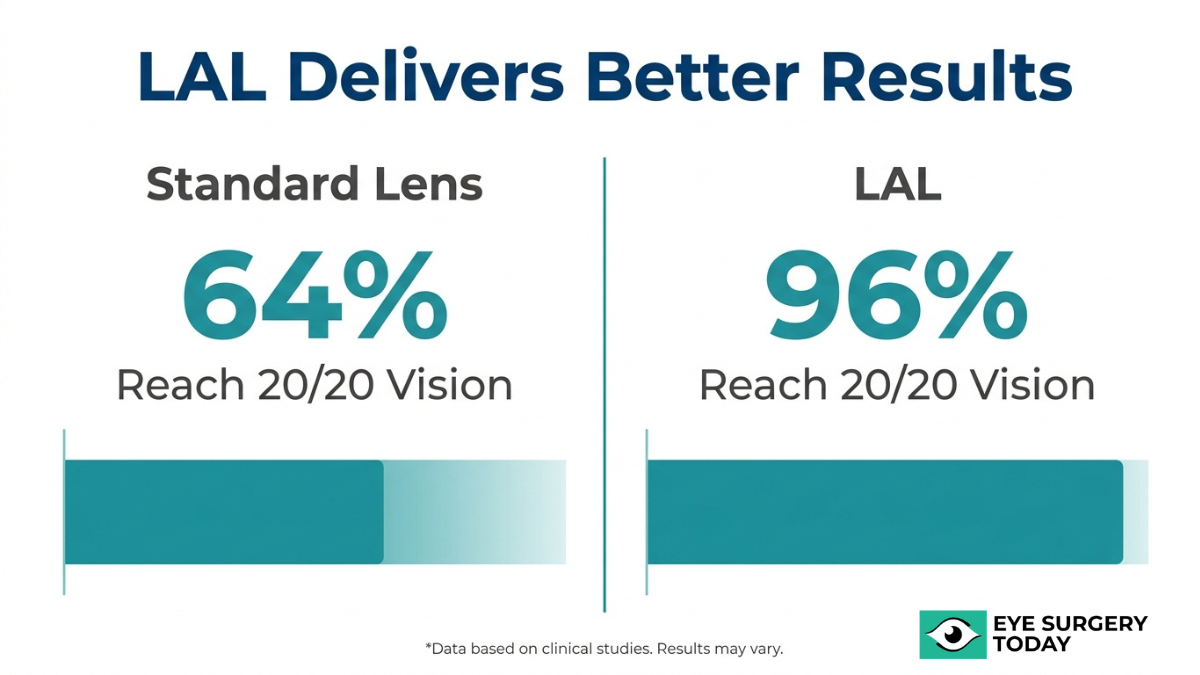
The LAL’s post-surgical adjustment capability addresses this limitation directly. According to a 2025 retrospective comparison of 150 eyes, 64% of LAL eyes achieved 20/20 uncorrected distance visual acuity, compared to just 32% with standard monofocal lenses. That performance gap highlights the clinical value of being able to fine-tune lens power after the eye has fully healed. The LAL+ model extends this advantage further with a modified aspheric anterior surface designed to slightly broaden the depth of focus beyond what a standard monofocal provides.
How Does the LAL Compare to Multifocal IOLs?
The LAL compares to multifocal IOLs by prioritizing visual quality and customization over built-in reading vision. Multifocal lenses split incoming light into multiple focal zones, allowing distance, intermediate, and near vision simultaneously. However, this light-splitting design can introduce visual disturbances, such as glare and halos, particularly at night.
The Light Adjustable Lens uses a monofocal optic, which typically results in fewer night vision disturbances and maintains excellent contrast sensitivity. While multifocal IOLs may reduce dependence on reading glasses, the trade-off in optical quality is not acceptable for every patient. For individuals who prioritize crisp distance vision with minimal visual side effects, the LAL often represents a more predictable choice. In an FDA clinical study of 600 patients, LAL recipients were twice as likely to achieve 20/20 vision without glasses compared to standard monofocal IOL recipients, demonstrating the power of post-operative refinement.
How Does the LAL Compare to Toric IOLs?
The LAL compares to toric IOLs by offering a more precise method of correcting astigmatism after cataract surgery. Toric IOLs are designed with built-in cylindrical correction to neutralize pre-existing corneal astigmatism. Their effectiveness depends on accurate pre-operative measurements and stable rotational alignment inside the eye; even slight rotation can reduce the astigmatism correction.
The Light Adjustable Lens bypasses these variables by allowing the surgeon to fine-tune both sphere and cylinder correction after implantation, once the eye has stabilized. This post-surgical precision is clinically meaningful. The same 2025 retrospective study that evaluated 150 eyes found that 64% of LAL eyes reached 20/20 uncorrected distance acuity, compared to 46% with toric monofocal lenses. For patients with moderate to high astigmatism who want the most accurate refractive outcome, the LAL’s adjustability provides a measurable advantage over conventional toric designs.
Understanding how the LAL stacks up against alternatives can help clarify the next consideration: cost.
How Much Does the Light Adjustable Lens Cost?
The Light Adjustable Lens typically costs $4,000 to $6,000 per eye as an out-of-pocket expense. Below, we cover insurance and Medicare coverage details, along with what to expect when budgeting for this premium IOL.
Does Insurance or Medicare Cover the Light Adjustable Lens?
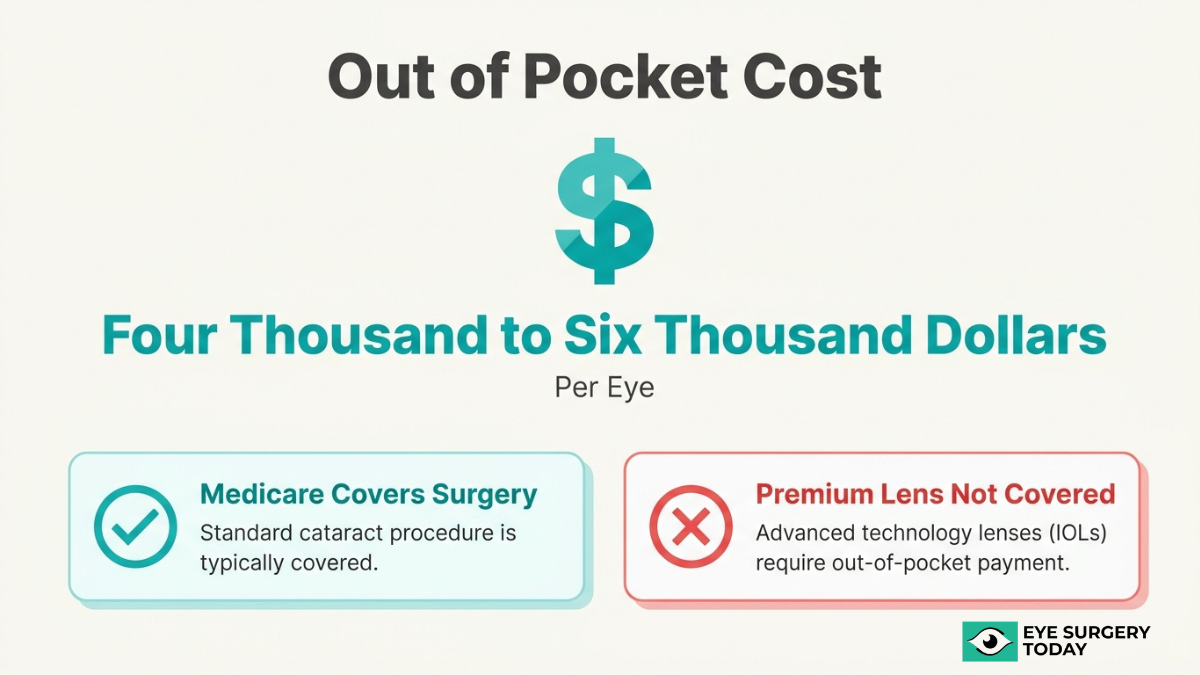
Insurance and Medicare do not cover the full cost of the Light Adjustable Lens. Medicare and most private insurance plans cover the basic cataract surgery procedure itself, including the standard monofocal IOL. However, because the Light Adjustable Lens is classified as a premium upgrade, the additional fees fall outside standard coverage. According to CareCredit, the out-of-pocket cost for the Light Adjustable Lens typically ranges from $4,000 to $6,000 per eye, reflecting the added technology and post-operative light adjustment treatments.
Some practices offer financing plans or health savings account (HSA) and flexible spending account (FSA) options to help patients manage this premium cost. Checking with your surgeon’s billing team before scheduling can clarify exactly which portions your plan covers and what remains your responsibility.
What Out-of-Pocket Costs Should You Expect for the LAL?
The out-of-pocket costs you should expect for the LAL generally fall between $4,000 and $6,000 per eye. This fee typically covers the premium lens itself, the post-operative light adjustment sessions using the Light Delivery Device, and any additional follow-up visits related to the customization process.
Factors that can influence total cost include:
- Geographic location and regional pricing differences between surgical centers.
- The number of light adjustment treatments needed to reach the target prescription.
- Whether one or both eyes receive the LAL during the same surgical period.
- The specific practice’s pricing structure for bundled versus itemized services.
For patients treating both eyes, total expenses may range from $8,000 to $12,000 above what insurance covers. Given the ability to fine-tune vision after healing, many patients find this investment worthwhile when weighed against long-term dependence on corrective eyewear. Discussing payment options early with your surgical team helps avoid unexpected costs later.
How Can Surgeon-Reviewed Resources Help You Decide on a Lens?
Surgeon-reviewed resources can help you decide on a lens by providing clinically accurate, unbiased information that clarifies complex IOL choices. The sections below cover how Eye Surgery Today supports your research and the essential takeaways about the Light Adjustable Lens.
Can Eye Surgery Today Help You Understand Your IOL Options?
Yes, Eye Surgery Today can help you understand your IOL options. The platform provides surgeon-reviewed educational content that translates complex lens technology into clear, accessible language. Rather than relying on fragmented information from multiple sources, patients can explore comprehensive guides covering IOL types, candidacy factors, cost considerations, and recovery expectations in one place.
Eye Surgery Today was founded by nationally recognized key opinion leaders in ophthalmology to bridge the cataract knowledge gap. Every resource undergoes surgeon review for clinical accuracy, giving patients a trustworthy foundation for conversations with their own eye care providers. For anyone weighing choices like the Light Adjustable Lens against standard monofocal, toric, or multifocal IOLs, having access to balanced, evidence-based content can make the decision-making process feel less overwhelming. Informed patients tend to set more realistic expectations and engage more productively during preoperative consultations.
What Are the Key Takeaways About the Light Adjustable Lens?
The key takeaways about the Light Adjustable Lens center on its unique ability to be customized after cataract surgery rather than before. Unlike traditional IOLs that lock in a fixed prescription at the time of implantation, the LAL uses UV light treatments to fine-tune refractive power once the eye has healed.
The most important points to remember include:
- The LAL allows patients to “test drive” their vision and request adjustments based on real-world experience before the prescription is permanently locked in.
- Candidates must commit to wearing UV-protective glasses from implantation until after the final lock-in procedure and attending multiple postoperative light treatment visits.
- The lens may not be appropriate for patients taking photosensitizing medications or those who have difficulty with multi-step decision-making.
- Out-of-pocket costs typically range from $4,000 to $6,000 per eye, since Medicare and private insurance do not cover the premium upgrade.
The ability to adjust vision after surgery represents a meaningful shift in how refractive outcomes are achieved, making the Light Adjustable Lens one of the most precise options currently available. Eye Surgery Today offers surgeon-reviewed guides to help you evaluate whether this lens aligns with your visual goals and lifestyle needs.