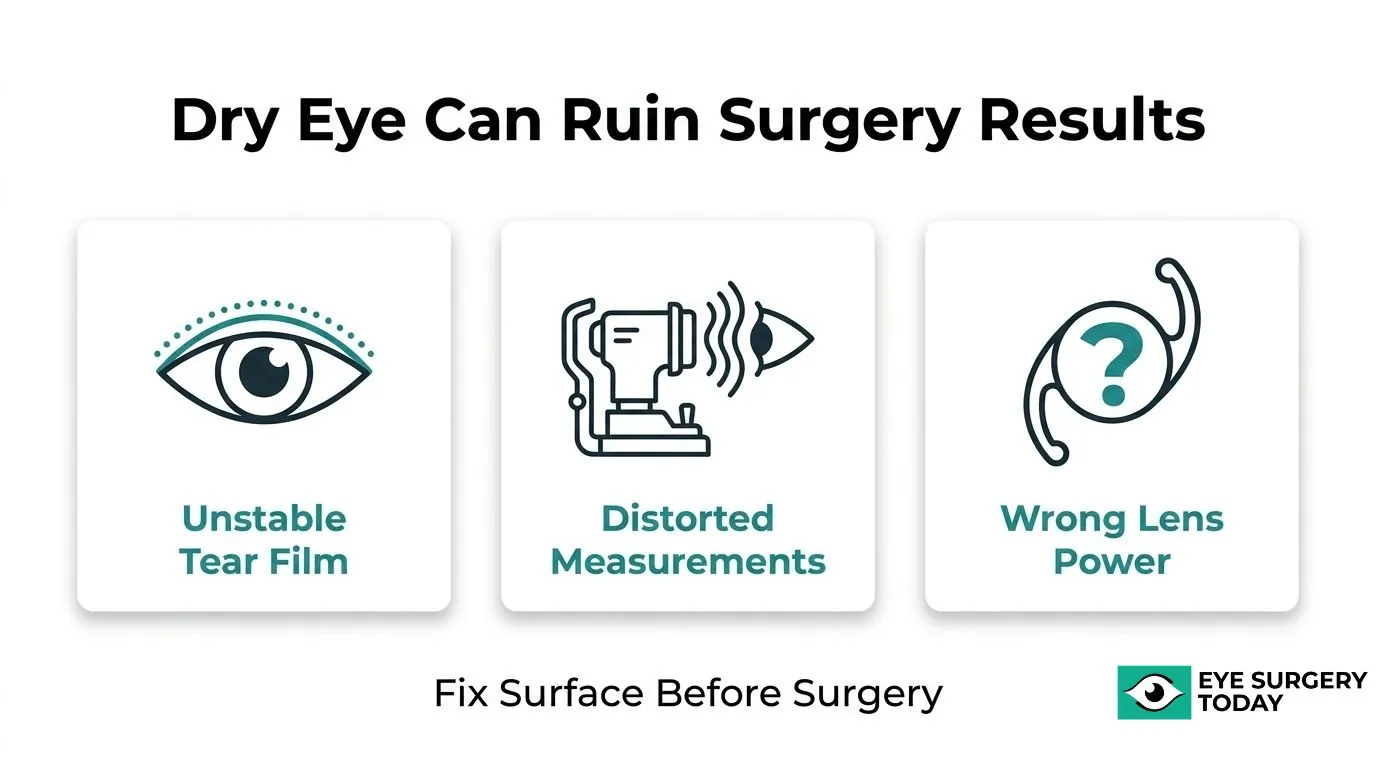
Dry eye disease is a multifactorial condition of the ocular surface marked by tear film instability, inflammation, and damage that can directly compromise cataract surgery accuracy and outcomes.
This guide covers the nature of dry eye and its relevance to cataract candidates, how ocular surface instability distorts surgical measurements and lens selection, the prevalence and risk factors in cataract-age patients, diagnosis and preoperative treatment protocols, and protecting your results through informed surgeon communication.
Dry eye disrupts the smooth corneal surface that biometry instruments depend on, introducing variability into keratometry readings and IOL power calculations. When the tear film is unstable, surgeons may unknowingly select a lens calibrated to inaccurate data, increasing the likelihood of residual refractive error or a misaligned toric implant.
The condition is far more common in surgical candidates than many patients realize. Studies in cataract clinic populations consistently find that over half of patients meet dry eye criteria, yet a majority have never reported symptoms. Age-related tear production decline, meibomian gland deterioration, hormonal changes, and common systemic medications all compound the risk.
Preoperative treatment, ranging from preservative-free lubricants and lid hygiene to prescription anti-inflammatory drops and in-office procedures, can stabilize the ocular surface before measurements are finalized. Evidence indicates that rebiometry after surface optimization may improve IOL power accuracy and reduce postoperative refractive errors.
Recognizing dry eye before surgery also shapes realistic expectations about premium lens candidacy, visual recovery timelines, and the possibility that surgery itself can temporarily worsen surface disease. Patients who understand these connections are better equipped to collaborate with their surgical team on a plan that protects long-term visual quality.
What Is Dry Eye And Why Does It Matter Before Cataract Surgery?
Dry eye disease is a condition that affects the ocular surface and can directly compromise cataract surgery outcomes. The sections below cover what dry eye is, how it damages the eye surface, and why it causes blurry vision that is often mistaken for cataract symptoms.
What exactly is dry eye disease?
Dry eye disease is a multifactorial condition of the ocular surface characterized by a loss of tear film homeostasis, accompanied by symptoms in which tear film instability, hyperosmolarity, ocular surface inflammation and damage, and neurosensory abnormalities play etiological roles. This definition comes from the 2017 TFOS DEWS II Definition and Classification Subcommittee consensus review.
In practical terms, the condition is not simply about having too few tears. Tear quality, stability, and surface health all contribute, making dry eye a spectrum rather than a single, uniform problem.
How does dry eye change the surface of your eye before surgery?
Dry eye changes the ocular surface by triggering evaporative water loss that leads to hyperosmolar tissue damage. According to the TFOS DEWS II Pathophysiology Report, this central mechanism causes loss of epithelial and goblet cells, reduced surface wettability, and early tear-film breakup, creating an amplifying cycle of progressive surface damage.
These structural changes matter before surgery because a compromised corneal surface distorts the optical measurements surgeons rely on to select the correct intraocular lens. A damaged surface is not simply uncomfortable; it actively undermines measurement accuracy.
Why can dry eye make your vision blurry even before cataract surgery?
Dry eye can make vision blurry before cataract surgery because an unstable tear film creates irregular light refraction across the corneal surface, producing intermittent or fluctuating blur. According to Christopher Starr, MD, an Associate Professor of Ophthalmology at Weill Cornell Medical Center and member of the ASCRS Cornea Clinical Committee, cataract patients who experience intermittent blurriness throughout the day often assume their cataract is the cause, when the actual culprit is frequently untreated ocular surface disease.
This overlap in symptoms is clinically significant. A patient and surgeon who attribute all blurry vision to the cataract may proceed to surgery without addressing underlying dry eye, setting the stage for disappointment after an otherwise well-executed procedure.
How Can Dry Eye Interfere With Cataract Surgery Measurements And IOL Selection?
Dry eye can interfere with cataract surgery measurements and IOL selection by destabilizing the tear film, which distorts the corneal surface that biometry instruments rely on for accurate readings. The sections below explain how this affects keratometry, IOL power calculations, and astigmatism planning.
How Does an Unstable Tear Film Affect Cataract Biometry Measurements?
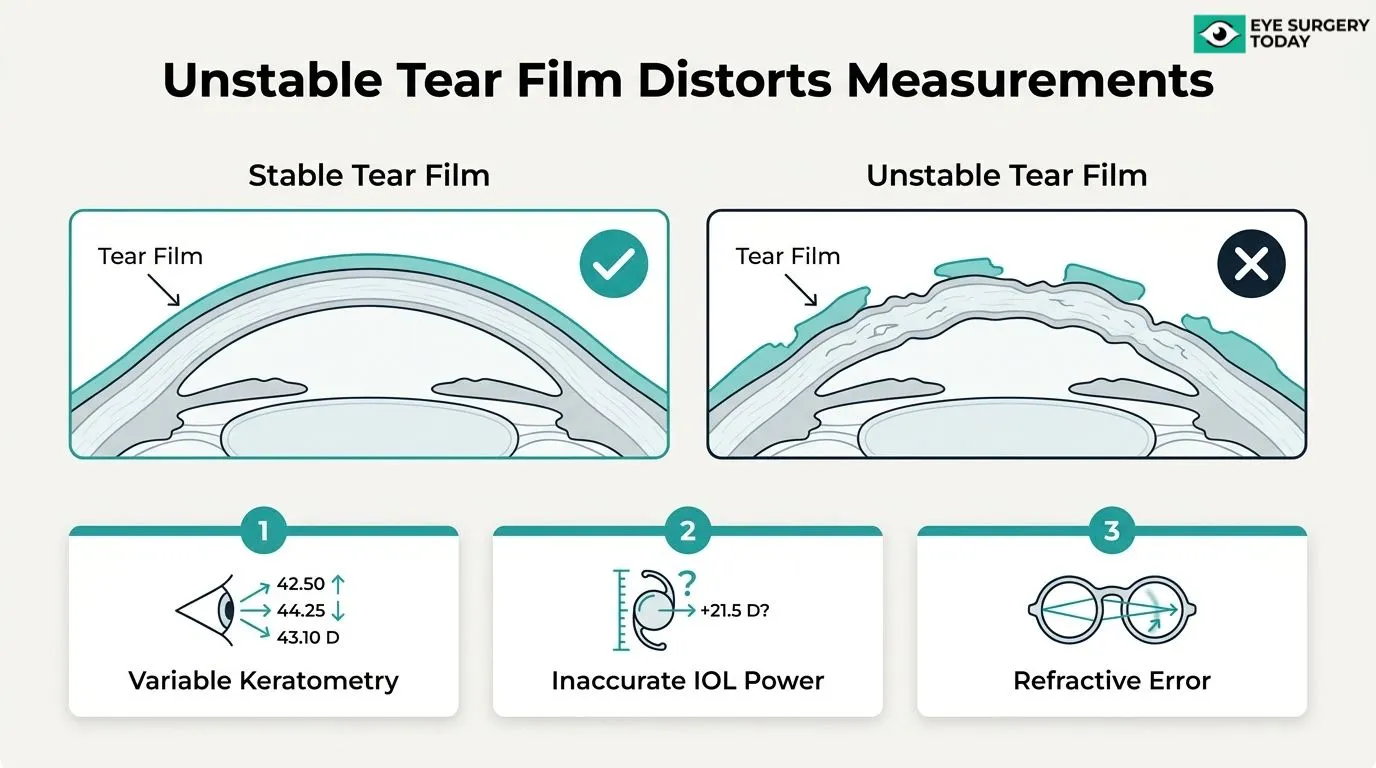
An unstable tear film affects cataract biometry measurements by introducing variability into keratometry readings, the cornerstone of IOL power calculation. According to the TFOS DEWS II Pathophysiology Report, the central mechanism of dry eye is evaporative water loss leading to hyperosmolar tissue damage, which causes loss of goblet cells, reduced surface wettability, and early tear-film breakup. When the tear film breaks up between blinks, the corneal surface measured by topographers and optical biometers is no longer smooth or consistent.
A 2015 prospective observational study published in the Journal of Cataract and Refractive Surgery found that hyperosmolar eyes showed significantly higher variability in average keratometry, a higher percentage of eyes with 1.0-diopter or greater differences in measured corneal astigmatism, and a higher percentage with IOL-power differences exceeding 0.5 diopter compared to normal-osmolarity eyes. A 2024 systematic review in Bioengineering confirmed that shortened tear break-up time negatively affects IOL-power calculations.
From a clinical standpoint, unreliable biometry is among the most underappreciated risks of proceeding to cataract surgery without first addressing ocular surface disease.
Why Can Dry Eye Lead to the Wrong Intraocular Lens Power Choice?
Dry eye can lead to the wrong intraocular lens power choice because irregular corneal surface data feeds directly into IOL power formulas, producing miscalculated targets. When tear film instability causes fluctuating keratometry values, the surgeon may select an IOL power based on readings that do not reflect the eye’s true optical state. The result is a refractive surprise: a patient who expected spectacle independence after surgery may find they still need significant correction for distance or near vision.
A 2023 systematic review in Clinical Ophthalmology that included four clinical studies found that refractive error was significantly lower after dry eye treatment in all four studies, indicating that treating the ocular surface before surgery can reduce the risk of a miscalculated IOL power.
How Can Dry Eye Cause Inaccurate Astigmatism and Toric IOL Planning?
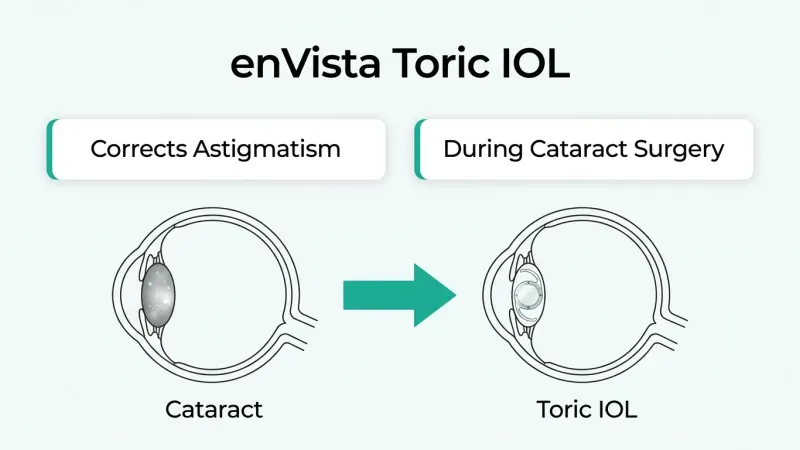
Dry eye can cause inaccurate astigmatism and toric IOL planning because an unstable tear film alters both the magnitude and axis of measured corneal astigmatism. Toric IOL implantation depends on precise cylinder power and placement axis; even a small deviation in either value can leave a patient with residual astigmatism and blurred vision.
The prospective TORIDE study, published in the Journal of Refractive Surgery, assessed 73 eyes during preoperative toric IOL evaluation and found that artificial-tear instillation changed IOL-cylinder calculation in 43.8% of cases and shifted the implantation axis by more than 10 degrees in 17.7%. In the subgroup with tear break-up time below 5 seconds, those figures rose to 57.5% and 27.8%, respectively. These numbers underscore why astigmatism measurements taken through a compromised tear film cannot be trusted for toric IOL planning.
Optimizing the ocular surface before any astigmatism measurement is, in practice, one of the highest-yield steps a surgeon can take to protect toric IOL outcomes.
In What Ways Can Untreated Dry Eye Ruin Otherwise “Perfect” Cataract Surgery Results?
Untreated dry eye can undermine cataract surgery results through persistent blurry vision, a subjective sense that the procedure failed, and symptoms that are easily confused with genuine surgical complications. The following sections cover each of these mechanisms.
How Can Dry Eye Cause Persistent Blurry or Fluctuating Vision After Surgery?
Dry eye can cause persistent blurry or fluctuating vision after surgery because an unstable tear film scatters incoming light before it even reaches the implanted lens. In a retrospective review of 74 eyes from 49 patients seen at Bascom Palmer Eye Institute, blurry or foggy vision was reported in 68% of eyes, with dry eye attributed as the cause in 35% of those complaints. Notably, only 44.6% of patients were ultimately recorded as happy or resolved after interventions, while 32.4% remained dissatisfied.
Fluctuating vision is a particularly revealing sign. When symptoms vary throughout the day or improve temporarily with blinking, the tear film is the more likely culprit rather than the IOL itself. Clinicians who recognize this pattern early can redirect treatment before a patient concludes the surgery was unsuccessful.
Why Might Patients with Untreated Dry Eye Feel Their Cataract Surgery “Failed”?
Patients with untreated dry eye may feel their cataract surgery “failed” because undiagnosed ocular surface disease produces symptoms that are indistinguishable from a poor surgical outcome. A prospective PHACO study of 136 cataract candidates found that almost 60% had never reported a foreign-body sensation, despite 62.9% having tear break-up time of 5 seconds or less and 77% showing positive corneal staining. If these patients are not screened and treated preoperatively, their persistent symptoms postoperatively are naturally blamed on the surgery.
The problem is compounded when dry eye distorts preoperative measurements. According to the prospective TORIDE study published in the Journal of Refractive Surgery, artificial-tear instillation changed IOL-cylinder calculations in 43.8% of cases, and among patients with break-up time below 5 seconds, the axis shifted more than 10 degrees in 27.8% of cases. An IOL implanted based on measurements taken through a compromised tear film is genuinely more likely to underperform, giving patients a legitimate basis for dissatisfaction even when the surgical technique was flawless. A 2022 systematic review and meta-analysis further found that 37.4% of patients without preexisting dry eye developed the condition after cataract surgery, meaning the postoperative period can introduce new symptoms even in previously unaffected patients.
This pattern is, in clinical terms, one of the most preventable sources of post-cataract dissatisfaction. Screening and treating the ocular surface before finalizing biometry and lens selection addresses the root cause rather than leaving patients to pursue explanations after the fact.
How Can Dry Eye Symptoms Be Mistaken for Surgical Complications?
Dry eye symptoms can be mistaken for surgical complications because the two conditions share nearly identical presenting complaints, including blurred vision, light sensitivity, foreign-body sensation, and tearing. A 2025 systematic review and meta-analysis of 20 studies with 1,694 eyes found that tear break-up time decreased in both the short-term and medium-term periods following cataract surgery, with dry eye potentially persisting up to three months postoperatively. A patient experiencing these symptoms at week two or six has no reliable way to distinguish postoperative dry eye from a wound-related issue, an IOL position problem, or residual refractive error without clinical testing.
The symptom overlap creates a practical risk: patients may request additional procedures or investigations for a problem that is fundamentally a surface disease, not a structural surgical complication. Early postoperative dry eye screening prevents unnecessary workup and directs patients toward the preservative-free lubricants and tear-retention strategies that guidelines recommend for postoperative relief.
How Common Is Dry Eye In People Having Cataract Surgery?
Dry eye is remarkably common in cataract-age patients, with multiple studies finding it in more than half of surgical candidates. The sections below cover why age increases risk, how often dry eye goes undetected before surgery, and which patient groups face the greatest burden.
Why Are Cataract-Age Patients More Likely To Have Dry Eye?
Cataract-age patients are more likely to have dry eye because age-related changes progressively compromise tear production, meibomian gland function, and corneal nerve sensitivity. Hormonal shifts after menopause reduce aqueous and lipid tear components in women, while advancing age reduces goblet cell density in both sexes. Systemic medications commonly taken by older adults, including antihistamines, antidepressants, diuretics, and beta-blockers, may further reduce tear production or alter reflex secretion. By the time a patient reaches typical cataract surgery age, multiple compounding factors are often present simultaneously, making subclinical dry eye easy to overlook without targeted screening.
How Often Do Surgeons Find Undiagnosed Dry Eye In Pre-Op Cataract Evaluations?
Undiagnosed dry eye is found in a substantial majority of patients presenting for cataract surgery. In a prospective multicenter study of 136 patients aged 55 or older scheduled for cataract surgery (mean age 70.7 years), 62.9% had a tear breakup time of 5 seconds or less, 77% of eyes had positive corneal staining, and nearly 60% had never reported a foreign-body sensation, according to the PHACO Study published in Clinical Ophthalmology. A Norwegian cataract clinic study of 218 patients (median age 75 years) found that 55.5% met TFOS DEWS II dry-eye criteria, with 66.5% showing abnormal osmolarity and 81.1% with a meiboscore of 1 or higher. These figures consistently indicate that the majority of patients arrive at pre-op evaluation with clinically relevant dry eye they have not reported or been diagnosed with.
Which Groups Of Cataract Patients Are At Highest Risk For Significant Dry Eye?
The groups of cataract patients at highest risk for significant dry eye include older women, particularly those postmenopausal; patients on chronic systemic medications such as antihistamines, antidepressants, or diuretics; individuals with a history of meibomian gland dysfunction; and those with prior ocular surface disease. A 2013 U.S. National Health and Wellness Survey analysis of 75,000 participants found diagnosed dry-eye prevalence reached 18.6% among adults aged 75 or older and was nearly twice as high in women (8.8%) as in men (4.5%), published in the American Journal of Ophthalmology. Patients with high meiboscores represent a particularly undertreated subgroup, as meibomian gland atrophy is largely asymptomatic until signs are advanced.
What Symptoms And Signs Suggest You May Have Dry Eye Before Cataract Surgery?
The symptoms and signs that suggest you may have dry eye before cataract surgery range from sensations you notice throughout the day to findings your eye doctor measures during a clinical exam. The sections below cover day-to-day symptoms to report, screen-related warning signs, and objective exam findings that confirm dry eye disease.
What Day-To-Day Symptoms Point To Dry Eye You Should Mention To Your Surgeon?
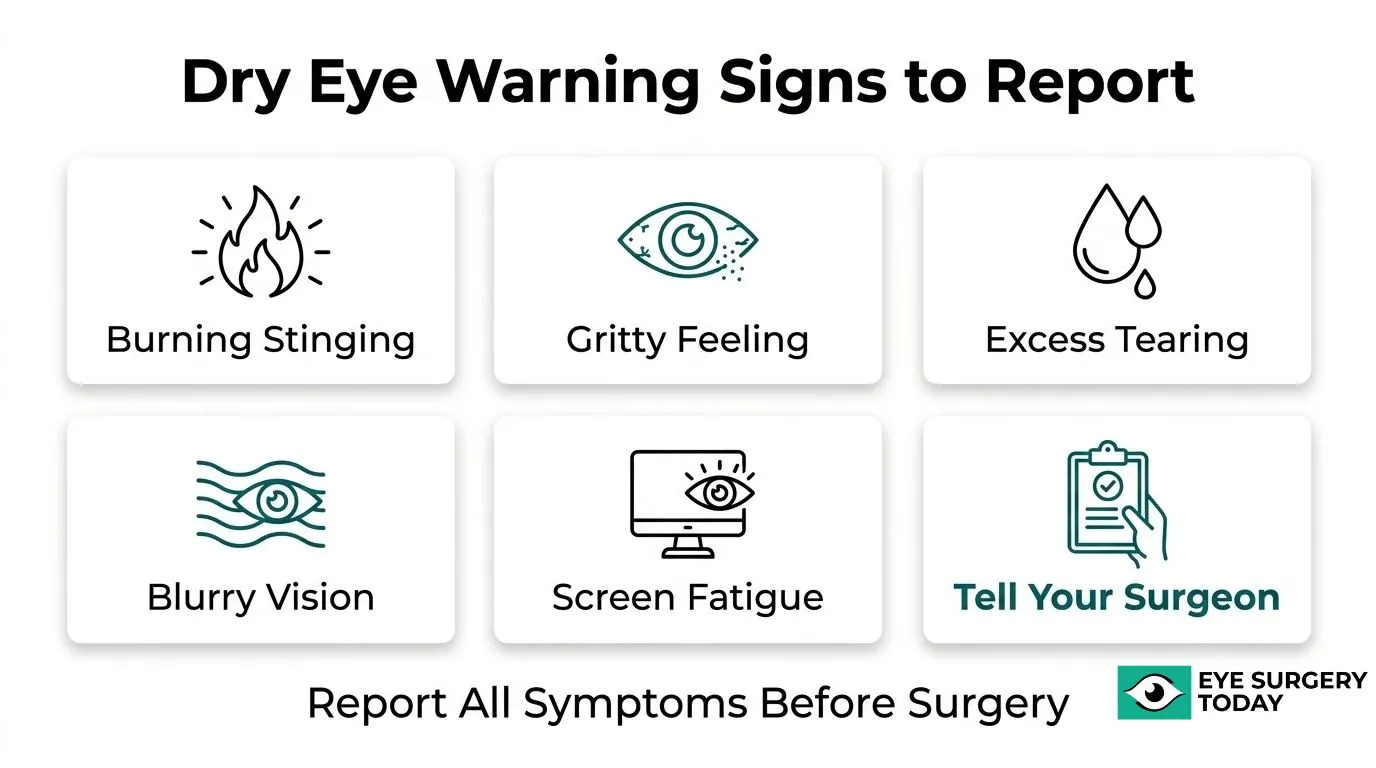
The day-to-day symptoms that point to dry eye include persistent burning or stinging, a gritty or foreign-body sensation, redness, and intermittent blurry vision that clears with blinking. Excess tearing can also signal dry eye, since reflex tearing is a compensatory response to an unstable tear film. Many patients attribute these sensations to aging or allergies and never volunteer them to their surgeon.
Reporting these symptoms matters more than many patients realize. According to a 2024 systematic review and meta-analysis in Acta Ophthalmologica, intensive pulsed light therapy for meibomian-gland dysfunction reduced dry-eye symptom scores by a mean of 16 OSDI points compared with placebo, suggesting that measurable symptom burden exists well before patients seek surgical care. Telling your surgeon about any of these sensations before your cataract consultation gives the care team the opportunity to screen and treat early.
What Things You Notice While Reading Or Using Screens Can Signal Dry Eye?
The things you notice while reading or using screens that can signal dry eye include visual fatigue after short periods, blurring that worsens the longer you read, and the need to blink repeatedly to clear your vision. Eye strain, difficulty maintaining focus, and light sensitivity during screen use are also common indicators. These symptoms occur because sustained visual tasks reduce spontaneous blink rate, accelerating tear-film evaporation and surface exposure.
If you find yourself frequently pausing to rub your eyes, squinting, or needing to use artificial tears during screen time, these are practical warning signs worth discussing at your pre-operative appointment. In clinical practice, screen-related dry-eye symptoms are often underreported because patients assume they are caused by the cataract itself rather than an unstable tear film.
What Findings Can Your Eye Doctor See During An Exam That Confirm Dry Eye?
The findings your eye doctor can see during an exam that confirm dry eye include reduced tear-break-up time, corneal and conjunctival staining with fluorescein or lissamine green, a low tear-meniscus height, and meibomian-gland dropout visible on slit-lamp examination. Schirmer’s test measures aqueous tear secretion directly. Tear osmolarity above 308 mOsm/L and elevated MMP-9 levels are objective point-of-care markers used in structured preoperative screening protocols.
Higher-order aberrations detected on corneal topography also serve as an indirect sign of surface disease. According to a 2020 prospective multicenter study in Clinical Ophthalmology, many surgeons consider corneal higher-order aberrations of 0.5 µm or less an acceptable upper limit when evaluating multifocal lens candidacy, underscoring how surface irregularity from dry eye translates into measurable optical compromise. These exam findings, taken together, give your surgeon a far more complete picture than symptoms alone.
How Is Dry Eye Diagnosed Before Cataract Surgery?
Dry eye diagnosis before cataract surgery combines structured patient questioning with a layered set of in-office tests. The sections below cover screening questions, tear measurement tests, and imaging or staining tools that reveal ocular surface damage.
What Questions Should Your Surgeon Ask to Screen for Dry Eye?
The questions your surgeon should ask to screen for dry eye cover symptoms, frequency, and history that point to tear film instability. Key areas include burning, stinging, or foreign-body sensation; fluctuating vision throughout the day; sensitivity to wind, smoke, or screens; and use of systemic medications such as antihistamines, antidepressants, diuretics, or beta-blockers. Surgeons should also ask about prior refractive surgery, contact lens history, and any diagnosed autoimmune conditions. Validated symptom questionnaires such as the OSDI are commonly used to quantify symptom burden before proceeding to clinical tests.
What In-Office Tests Can Measure Tear Quality and Quantity?
The in-office tests that measure tear quality and quantity include both basic and advanced assessments. According to a 2023 preferred-practice-pattern review published in the Indian Journal of Ophthalmology, Schirmer’s test, tear breakup time (TBUT), and corneal fluorescein staining are basic necessary investigations, while tear osmolarity, non-invasive TBUT, tear-meniscus height, and lipid-layer thickness are additional tests recommended where available.
The ASCRS preoperative algorithm adds tear osmolarity and MMP-9 as essential point-of-care tests, flagging tear osmolarity above 308 mOsm/L or an inter-eye difference above 8 mOsm/L as abnormal, and MMP-9 at 40 ng/mL or higher as abnormal. Taken together, this multi-test approach is more reliable than any single measurement alone.
How Do Imaging and Staining Tests Show Damage From Dry Eye?
Imaging and staining tests show damage from dry eye by revealing structural and surface changes invisible to routine examination. Corneal and conjunctival fluorescein staining highlights epithelial breakdown caused by tear film instability. Meibomian-gland imaging, such as meibography, documents gland dropout or truncation that impairs the lipid layer of the tear film. Anterior-segment topography and corneal tomography can detect surface irregularities that distort the reflective quality of the cornea, directly affecting the accuracy of biometry used for IOL power calculation. These imaging findings help surgeons decide whether the ocular surface needs treatment before proceeding with measurements. Without this step, biometric data collected on a compromised surface may produce IOL calculations that lead to refractive error after surgery.
What Factors Make Dry Eye Worse Around The Time Of Cataract Surgery?
Several biological, pharmacological, and procedural factors can worsen dry eye around the time of cataract surgery. The sections below cover how age and systemic health conditions contribute, which medications aggravate the ocular surface, and how the surgical procedure itself temporarily worsens dry eye.
How do age, hormones, and systemic health conditions worsen dry eye risk?
Age, hormones, and systemic health conditions worsen dry eye risk through several overlapping mechanisms. Tear production naturally declines with age, and meibomian gland function deteriorates over time, reducing the lipid layer that prevents tear evaporation. Hormonal shifts, particularly the decline in androgen and estrogen levels after menopause, are associated with reduced lacrimal and meibomian gland secretion. Systemic conditions such as diabetes, thyroid disease, and Sjogren’s syndrome may further compromise tear volume and ocular surface integrity.
According to a 2013 analysis of the U.S. National Health and Wellness Survey (75,000 participants), diagnosed dry-eye prevalence reached 18.6% among adults aged 75 years or older, compared with 6.8% across all U.S. adults, and was 8.8% in women versus 4.5% in men. Most cataract candidates fall squarely into this high-prevalence age group, making preoperative screening especially important.
Which medications and eye drops can aggravate dry eye before surgery?
Several classes of medications can aggravate dry eye before surgery by reducing tear production, disrupting nerve-driven secretion, or promoting ocular surface inflammation. The Tear Film & Ocular Surface Society’s medication review identifies antihistamines, antidepressants, diuretics, and beta-blockers among the systemic agents linked to dry eye. These drugs may act through decreased aqueous tear production, altered reflex secretion, inflammatory effects on secretory glands, or direct surface irritation.
Topical eye drops, including preserved glaucoma medications, are an additional concern. Benzalkonium chloride, the most common preservative in ophthalmic solutions, can damage epithelial and goblet cells with repeated exposure, destabilizing the tear film ahead of surgery. Patients taking multiple preserved drops are at particularly elevated risk and should discuss preservative-free alternatives with their surgeon well before their procedure.
How can surgery itself temporarily worsen dry eye symptoms?
Cataract surgery itself can temporarily worsen dry eye symptoms through corneal nerve disruption, preservative-containing perioperative drops, and the surgical incision. The phacoemulsification incision interrupts corneal sensory nerves, reducing the afferent signal that normally drives reflex tearing. This nerve disruption can suppress blink reflex and lacrimal output for weeks to months after the procedure.
A 2022 systematic review and meta-analysis of 36 studies found that 37.4% of patients without preexisting dry eye developed dry eye after cataract surgery. A 2025 systematic review of 20 studies with 1,694 eyes confirmed decreased tear break-up time in the short- and medium-term periods following surgery, concluding that dry eye may persist up to three months postoperatively. Patients with preexisting dry eye should expect the postoperative period to compound their baseline condition, reinforcing why ocular surface optimization before surgery matters.
Who Is Most At Risk For Problematic Dry Eye Before Cataract Surgery?
Several patient groups face a meaningfully higher burden of ocular surface disease before cataract surgery. The sub-sections below cover autoimmune and inflammatory conditions, contact lens and prior LASIK history, and lifestyle and environmental exposures.
How Do Autoimmune and Inflammatory Diseases Affect Dry Eye Risk?
Autoimmune and inflammatory diseases affect dry eye risk by disrupting the lacrimal gland, meibomian glands, and conjunctival goblet cells that maintain a stable tear film. Conditions such as rheumatoid arthritis, Sjögren’s syndrome, lupus, and rosacea are recognized contributors to aqueous-deficient or evaporative dry eye. Patients with these diagnoses arriving for cataract consultation should expect a thorough ocular surface evaluation before any measurements are taken or lens options discussed. From a surgical planning standpoint, uncontrolled systemic inflammation is one of the most compelling reasons to delay biometry until the surface is stable.
Why Are Contact Lens Wearers and LASIK Patients More Prone to Issues?
Contact lens wearers and prior LASIK patients are more prone to dry eye issues because both exposures can reduce corneal nerve density and impair the reflex tear secretion arc. Long-term contact lens wear is also associated with meibomian gland dropout and conjunctival goblet cell loss. Importantly, the research audit for this article confirmed that no single age-stratified study has quantified the independent contribution of contact lens wear or prior LASIK specifically within the cataract-candidate population aged 60 to 80, so individual risk assessments remain essential rather than relying on population-level estimates.
How Do Lifestyle Factors Like Screens, Air Travel, and Environment Add Risk?
Lifestyle factors such as prolonged screen use, air travel, low indoor humidity, and air pollution add dry eye risk by accelerating evaporative tear loss and reducing spontaneous blink rate. Screen use is associated with incomplete blinking, which limits meibomian gland expression and shortens tear film break-up time. Dry cabin air during flights and low-humidity environments compound this by increasing ocular surface evaporation. The Tear Film and Ocular Surface Society notes that systemic medications including antihistamines, antidepressants, diuretics, and beta-blockers may further reduce tear production, meaning patients who combine several of these lifestyle exposures with common older-adult medications carry a compounded risk profile worth discussing before surgery.
How Should Dry Eye Be Treated Before Cataract Surgery To Protect Your Results?
Dry eye treatment before cataract surgery should begin well ahead of your procedure date, with the goal of stabilizing the ocular surface before measurements are taken. The following sections cover when to start treatment, which therapies are used, and when more advanced options may be needed.
How Early Before Cataract Surgery Should Dry Eye Treatment Start?
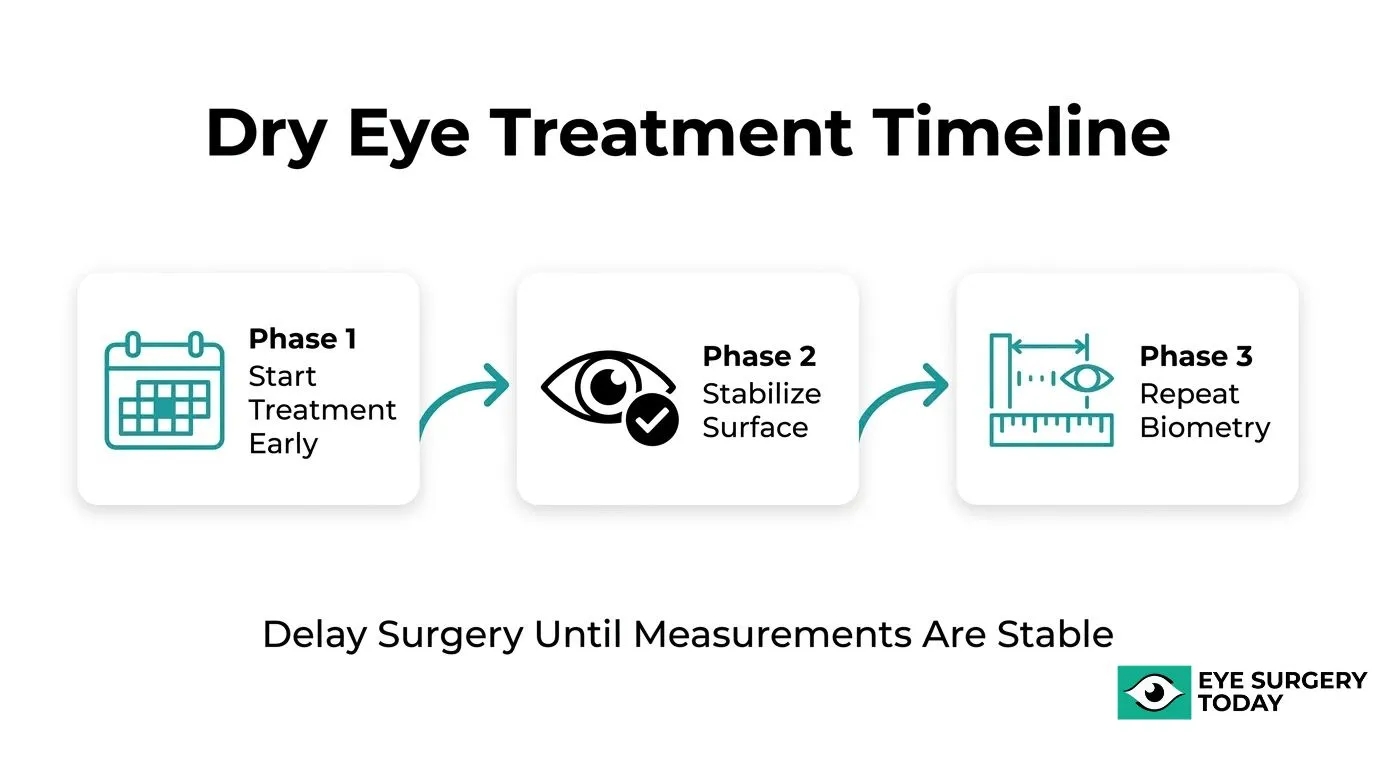
Dry eye treatment should start early enough to allow the ocular surface to stabilize before biometry measurements are repeated. The timing varies by patient and severity; no single universal interval applies to everyone. Evidence does support beginning treatment before pre-surgical measurements are finalized. According to a 2023 systematic review in Clinical Ophthalmology that included four clinical studies, refractive error was significantly lower after preoperative dry eye treatment in all four studies, indicating that treating dry eye before surgery can meaningfully reduce refractive errors. Guideline-level reviews recommend delaying surgery until the ocular surface is stable and measurements are reproducible, rather than following a fixed number of days.
How Do Artificial Tears and Lubricating Gels Help Stabilize Your Tear Film?
Artificial tears and lubricating gels help stabilize the tear film by supplementing the aqueous and mucin layers that dry eye disrupts. Frequent application can temporarily smooth the ocular surface, reduce tear film breakup, and improve the quality of pre-surgical corneal measurements. Preservative-free formulations are preferred, particularly in the perioperative period. For mild dry eye, consistent use of preservative-free lubricants may be sufficient to bring the tear film to a measurable, reproducible state before biometry is performed.
When Are Prescription Dry Eye Medications Recommended Before Surgery?
Prescription dry eye medications are recommended before surgery when lubricants alone fail to stabilize the tear film or when inflammation is a contributing factor. Cyclosporine and lifitegrast target ocular surface inflammation rather than simply supplementing tears. A 2020 prospective study found that after a 28-day course of lifitegrast 5% twice daily, biometry accuracy within 0.75 diopter of achieved spherical equivalent improved from 81% to 91% (p less than 0.04), supporting the use of anti-inflammatory therapy before measurements are finalized. Prescription medications are most valuable when baseline measurements are inconsistent or when signs of surface inflammation are present.
How Can Warm Compresses and Lid Hygiene Improve the Eye Surface?
Warm compresses and lid hygiene improve the eye surface by softening meibomian gland secretions and clearing the eyelid margin of debris that contributes to evaporative dry eye. Meibomian gland dysfunction is a common driver of tear film instability in cataract-age patients. A randomized controlled pilot trial published in Scientific Reports found that twice-daily eyelid hygiene performed for 10 days around cataract surgery, from 3 days before to 1 week after, improved postoperative subjective symptoms and prevented worsening of anterior blepharitis and meibomian gland dysfunction. This makes perioperative lid hygiene a practical, low-risk step for most patients with evaporative dry eye.
When Might Punctal Plugs or In-Office Procedures Be Considered?
Punctal plugs and in-office procedures may be considered when first-line treatments, such as lubricants, lid hygiene, and prescription drops, do not achieve adequate tear film stability. Punctal plugs conserve natural tears by reducing drainage, and the 2023 Indian Journal of Ophthalmology preferred-practice-pattern review lists punctal plugs or punctal cautery as recognized methods to enhance tear-film retention in patients undergoing cataract surgery. For meibomian gland dysfunction that does not respond to warm compresses, in-office options such as thermal pulsation (LipiFlow) or intense pulsed light (IPL) may be appropriate. A 2025 network meta-analysis of 12 randomized controlled trials found that both LipiFlow and IPL significantly improved tear break-up time and symptom scores, though no direct head-to-head comparison between the two modalities was available.
In-office procedures are most relevant when ocular surface measurements remain unstable despite consistent adherence to at-home therapy.
What Can You Expect From The Preoperative Dry Eye Optimization Process?
The preoperative dry eye optimization process involves treating ocular surface disease before surgery, confirming surface stability, and repeating measurements once the tear film is reliable. The sections below cover expected timelines, stability thresholds, and when repeat biometry is indicated.
What Timeline Should You Expect For Dry Eye To Improve Before Surgery?
The timeline you should expect for dry eye to improve before surgery varies by treatment type and disease severity. No single interval applies to every patient. Clinical evidence includes a 10-day perioperative eyelid hygiene protocol and a 28-day course of lifitegrast 5% twice daily, while guideline-level reviews consistently recommend delaying surgery until the ocular surface is stable and measurements are reproducible. Milder disease may stabilize sooner; more advanced meibomian-gland dysfunction or inflammation often requires longer management before reliable biometry is possible.
How Does Your Surgeon Know When The Eye Surface Is Stable Enough To Measure?
Your surgeon knows the eye surface is stable enough to measure when preoperative ocular surface findings are controlled and biometry results are reproducible across repeated assessments. There is no single universal stability threshold defined in the current evidence. In practice, surgeons look for consistent keratometry readings, improved tear-film break-up time, and resolved corneal staining before proceeding with final IOL power calculations.
When Are Repeat Measurements Needed After Starting Dry Eye Treatment?
Repeat measurements are needed after starting dry eye treatment when initial biometry was taken while the ocular surface was still compromised. According to a 2020 prospective multicenter study published by Dove Medical Press, biometry repeated after a 28-day course of lifitegrast 5% twice daily showed that accuracy within 0.75 diopter of achieved spherical equivalent improved from 81% before treatment to 91% after treatment (p<0.04). Rebiometry should be considered whenever an initial measurement was obtained under unstable tear-film conditions, particularly for patients receiving premium IOLs where precision matters most.
What Are The Possible Risks And Complications If Dry Eye Is Not Managed Before Cataract Surgery?
The possible risks and complications of unmanaged dry eye before cataract surgery include refractive surprise requiring glasses, worsened glare and halos, and increased vulnerability to infection or delayed healing. Each of these outcomes is preventable with proper preoperative ocular surface management.
How Can Unmanaged Dry Eye Increase The Chance Of Needing Glasses After Surgery?
Unmanaged dry eye can increase the chance of needing glasses after surgery by corrupting the preoperative measurements used to calculate IOL power. An unstable tear film distorts keratometry readings and biometry data, leading surgeons to implant a lens calculated from inaccurate numbers.
A 2023 systematic review published in Clinical Ophthalmology evaluated four clinical studies and found that refractive error was significantly lower after dry eye treatment in all four studies, confirming that treating the ocular surface before cataract surgery can reduce refractive errors. When those corrections are skipped, patients may achieve the technically correct surgical result for the wrong eye, leaving them dependent on glasses or contact lenses to see clearly at distances their lens was never properly calibrated for.
How Does Dry Eye Raise The Risk Of Glare, Halos, And Night-Vision Problems?
Dry eye raises the risk of glare, halos, and night-vision problems by introducing optical aberrations across an already compromised corneal surface. When the tear film breaks up unevenly, light entering the eye scatters irregularly, generating visual disturbances that persist even after technically successful cataract surgery.
This effect is especially damaging for patients who receive premium multifocal or extended-depth-of-focus lenses, which are inherently more sensitive to surface irregularity. A 2020 prospective multicenter study reported that corneal higher-order aberrations are linked to satisfaction with multifocal lenses, with many surgeons using 0.5 µm as an acceptable upper limit. Dry eye can push aberrations beyond that threshold, turning a premium lens upgrade into a source of persistent visual complaints. Managing the ocular surface before IOL selection is, in practice, as important as the lens choice itself.
Can Severe Dry Eye Contribute To Infection Or Delayed Healing After Surgery?
Severe dry eye can contribute to infection or delayed healing after surgery by weakening the ocular surface barrier that normally protects against pathogens and supports tissue repair. The TFOS DEWS II Pathophysiology Report describes how evaporative water loss triggers loss of epithelial and goblet cells and reduces surface wettability, leaving the cornea more vulnerable to microbial entry and impairing the cellular environment needed for wound healing.
A compromised epithelium at the time of surgery prolongs recovery, increases postoperative discomfort, and may delay the point at which final visual acuity can be reliably assessed. Addressing dry eye before surgery restores epithelial integrity and gives the ocular surface the best foundation for safe, uncomplicated healing.
How Might Dry Eye Be Managed After Cataract Surgery To Protect Your Long-Term Results?
Dry eye management after cataract surgery focuses on controlling temporary worsening, maintaining proven treatments, and recognizing when symptoms signal a problem. The H3s below cover how often dry eye flares post-surgery, which treatments to continue, and when to contact your surgeon.
How Often Does Dry Eye Temporarily Worsen in the Weeks After Surgery?
Dry eye temporarily worsens in the weeks after cataract surgery in a significant proportion of patients. A 2025 systematic review and meta-analysis of 20 studies with 1,694 eyes, published in BMC Ophthalmology, found decreased tear break-up time in both the short-term and medium-term periods following cataract surgery, concluding that dry eye may persist up to three months postoperatively. Corneal nerve disruption from the surgical incision, perioperative antiseptic drops, and the inflammatory response are among the contributing factors. Patients who already had dry eye before surgery tend to experience more pronounced flares than those without preexisting disease.
What Treatments Are Usually Continued or Added After Surgery for Dry Eye?
Treatments usually continued or added after cataract surgery for dry eye include preservative-free lubricants, prescription anti-inflammatory medications, eyelid hygiene, and in some cases punctal plugs. A 2023 preferred-practice-pattern review in the Indian Journal of Ophthalmology states that preservative-free lubricants are superior to preserved lubricants for postoperative dry eye symptom relief and that punctal plugs or punctal cautery can enhance tear-film retention during recovery. From a clinical standpoint, maintaining the same regimen used before surgery is often the most practical starting point, with additional therapies layered in based on how the ocular surface responds.
When Should You Call Your Surgeon About Worsening Dry Eye Symptoms?
You should call your surgeon about worsening dry eye symptoms when they are severe, rapidly progressing, or accompanied by signs that may indicate a complication. Specific situations that warrant prompt contact include:
- Sudden significant decrease in vision that does not improve with blinking or lubricating drops.
- Increasing pain, redness, or light sensitivity beyond expected post-surgical discomfort.
- Symptoms that worsen substantially after an initial period of improvement.
- Discharge or crusting that suggests possible infection alongside surface dryness.
- Dry eye symptoms severe enough to interfere with daily function beyond three months postoperatively.
Timely communication allows your surgeon to distinguish between expected surface recovery and a complication that needs earlier intervention.
How Should You Talk With Your Cataract Surgeon About Dry Eye And Your Visual Goals?
Talking openly with your cataract surgeon about dry eye and your visual goals directly shapes the quality of your surgical outcome. The following H3s cover which questions to raise at your consultation, how to align expectations with your surgeon, and what a personalized dry eye management plan should include.
What Key Questions Should You Ask About Dry Eye At Your Cataract Consultation?
The key questions to ask about dry eye at your cataract consultation cover your current ocular surface health, how it may affect measurements, and whether it needs treatment before surgery. Consider asking:
- Has my tear film been tested? Ask whether tear osmolarity, TBUT, or corneal staining has been performed or is planned.
- Could dry eye be skewing my biometry? Unstable tear films can distort keratometry readings and IOL-power calculations.
- Does my dry eye affect my lens options? Ask specifically whether a toric, multifocal, or EDOF lens is appropriate given your ocular surface.
- Do I need treatment before surgery is scheduled? Ask whether the surgeon plans to delay surgery until surface measurements are reproducible.
- What symptoms should I report between now and surgery? Clarify the communication pathway if your condition changes.
Raising these questions signals that you are an informed patient, which tends to prompt more thorough pre-surgical ocular surface evaluation.
How Can You And Your Surgeon Set Realistic Expectations If You Have Dry Eye?
You and your surgeon can set realistic expectations about dry eye by discussing how ocular surface instability may affect both measurement accuracy and your visual recovery timeline. According to a retrospective review at Bascom Palmer Eye Institute, dry eye was attributed as a cause of blurry or foggy vision in 35% of dissatisfied premium-IOL patients, and 32.4% remained dissatisfied even after intervention. This underscores that unmanaged dry eye carries genuine outcome risk.
Realistic expectation-setting should address:
- Glasses independence: Dry eye may reduce the precision needed for premium IOL outcomes, so spectacle independence cannot always be guaranteed.
- Recovery timeline: Dry eye may persist up to three months postoperatively, meaning visual clarity can fluctuate during healing.
- The possibility of delayed surgery: Your surgeon may need to defer the procedure until the ocular surface stabilizes and measurements are reproducible.
Understanding these variables ahead of time prevents the “surgery failed” perception that arises when postoperative expectations exceed what the ocular surface could support.
What Should Go Into Your Personalized Plan For Managing Dry Eye Around Surgery?
Your personalized plan for managing dry eye around cataract surgery should address the type and severity of your dry eye, your treatment timeline, and the criteria your surgeon will use to confirm readiness for the procedure. No single protocol applies universally; the right plan depends on your specific ocular surface findings.
A well-structured plan typically includes:
- Baseline diagnostic workup: Tear osmolarity, TBUT, corneal staining, and meibomian gland assessment to classify severity.
- Treatment matched to findings: Artificial tears and lid hygiene for mild disease; prescription drops such as cyclosporine or lifitegrast for moderate-to-severe inflammation; in-office procedures such as LipiFlow or IPL for meibomian gland dysfunction.
- A defined optimization window: Evidence supports perioperative eyelid hygiene starting days before surgery and prescription therapies running for several weeks preoperatively before repeat biometry is taken.
- Repeat measurement criteria: Your surgeon should confirm when measurements are stable enough to proceed, rather than using a fixed calendar date.
- A postoperative continuation plan: Dry eye management often needs to continue after surgery to protect long-term visual quality.
Framing the plan as a collaboration, rather than something done to you, gives you the best chance of walking into surgery with a stable, accurately measured eye.
How Does Dry Eye Affect The Choice Of Premium IOLs Such As Toric Or Multifocal Lenses?
Dry eye affects the choice of premium IOLs by compromising the measurement accuracy and optical performance that these lenses depend on. The following sections cover why a stable tear film is essential for lens selection, how dry eye may disqualify some patients from multifocal or EDOF lenses, and whether treating dry eye can reopen premium options.
Why Is a Stable Tear Film Essential Before Choosing Premium IOLs?
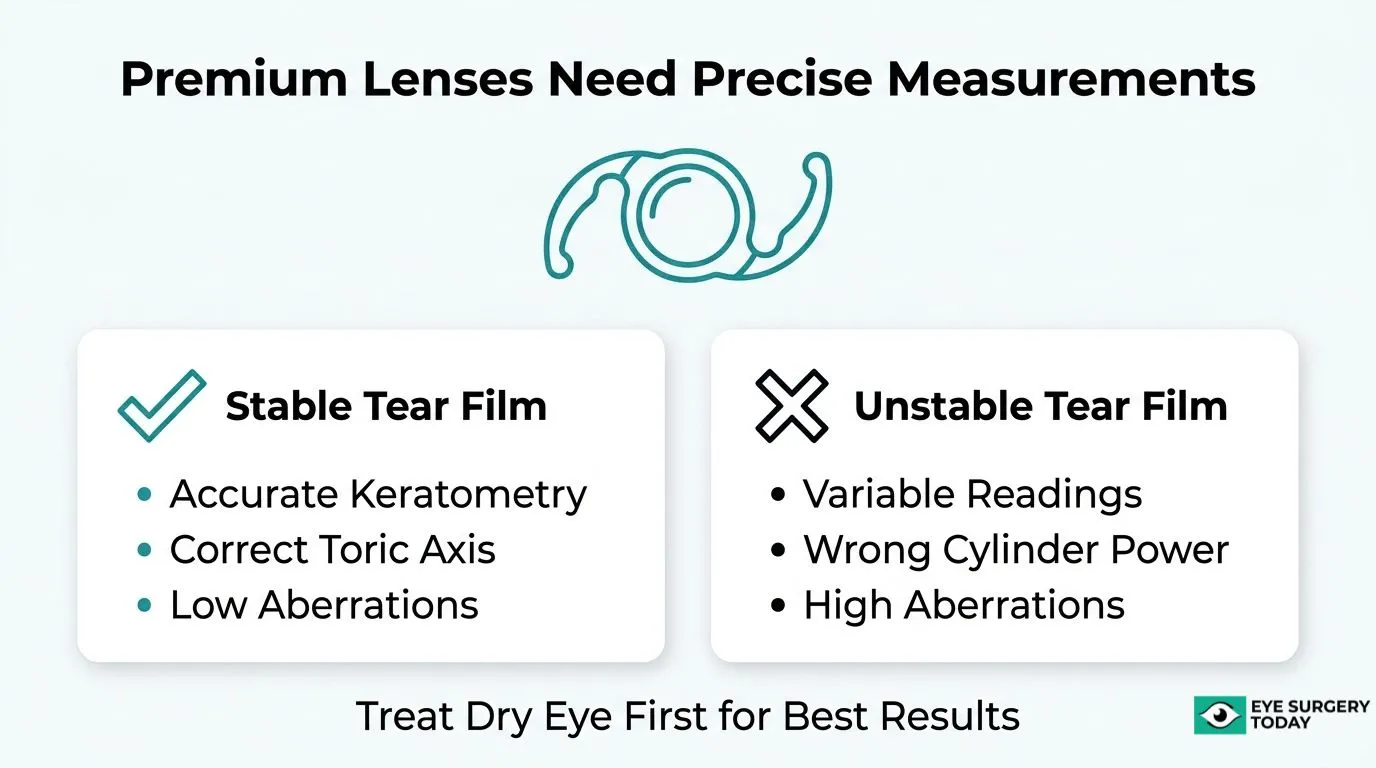
A stable tear film is essential before choosing premium IOLs because toric, multifocal, and EDOF lenses require highly precise preoperative measurements to deliver their intended benefits. Unlike standard monofocal lenses, premium optics have little tolerance for errors in corneal power or astigmatism axis. The prospective TORIDE study assessed 73 eyes of 51 patients during toric IOL planning and found that artificial-tear instillation changed the IOL-cylinder calculation in 43.8% of cases; among eyes with tear break-up time below 5 seconds, that figure rose to 57.5%. An unstable tear film produces variable keratometry readings, which directly translates to miscalculated cylinder power or a misaligned implantation axis before surgery even begins.
How Can Dry Eye Make You a Poor Candidate for Some Multifocal or EDOF Lenses?
Dry eye can make you a poor candidate for multifocal or EDOF lenses because these designs split incoming light across focal points, making them more sensitive to optical distortions caused by an irregular ocular surface. A 2020 prospective multicenter study of 100 eyes with confirmed dry eye reported that corneal higher-order aberrations are linked to patient satisfaction with multifocal lenses, and that many surgeons consider a corneal higher-order aberration value of 0.5 µm or less an acceptable upper limit for multifocal candidacy. Dry eye elevates higher-order aberrations by disrupting the smooth refractive surface needed for clean focal separation. No universal dry-eye threshold automatically excludes every patient, but active, uncontrolled ocular surface disease is widely recognized as a reason to defer or avoid these premium optics until the surface is stabilized.
Can Treating Dry Eye Expand Your Options for Premium Lens Upgrades?
Yes, treating dry eye can expand your options for premium lens upgrades by stabilizing the ocular surface enough to meet the measurement and optical standards these lenses require. When tear film quality improves, keratometry readings become more reproducible, astigmatism calculations grow more reliable, and higher-order aberration values may fall within acceptable ranges for multifocal or EDOF consideration. Current evidence supports treating and reassessing the ocular surface before finalizing premium optic selection, though it does not guarantee eligibility for every patient. The most practical takeaway is that dry eye should be identified and managed before any premium IOL decision is made, not after.
How Does Dry Eye Before Cataract Surgery Compare With Dry Eye After LASIK Or Other Eye Procedures?
Dry eye before cataract surgery and dry eye after LASIK share overlapping symptoms but differ in their underlying mechanisms, patient populations, and clinical implications. The sub-sections below compare procedural differences, draw lessons from LASIK dry eye research, and address how prior refractive surgery changes preoperative measurement strategy.
In What Ways Is Dry Eye Different Before Cataract Surgery Versus After LASIK?
Dry eye before cataract surgery differs from dry eye after LASIK in several important ways, including patient age, disease origin, and the direction of ocular surface disruption relative to the procedure.
Before cataract surgery, dry eye is typically a pre-existing, age-related condition that must be identified and managed before the operation. After LASIK, dry eye is primarily procedure-induced, driven by corneal nerve disruption from the flap and ablation. The nerve damage mechanisms, incision profiles, postoperative medication regimens, and patient selection criteria are distinct between these two procedures.
Importantly, no single head-to-head study establishes that LASIK consistently causes more severe or longer-lasting dry eye than cataract surgery. Any ranking of procedural severity should be interpreted cautiously and discussed with a surgeon based on individual circumstances.
What Can LASIK-Related Dry Eye Teach Us About Managing Dry Eye Before Cataract Surgery?
LASIK-related dry eye can teach us that preoperative ocular surface status is a strong predictor of postoperative dry eye burden, making screening essential before any elective eye procedure.
According to a 2021 review published in the Journal of Cataract and Refractive Surgery, 45% of patients in PROWL-1 and 56% in PROWL-2 had mild, moderate, or severe OSDI symptoms before LASIK, with approximately 27% reporting dry-eye symptoms at postoperative month 3. This pattern reinforces a principle that applies directly to cataract surgery: patients who enter the operating room with unmanaged ocular surface disease are more likely to experience persistent postoperative symptoms.
The LASIK experience also highlights the value of perioperative eyelid hygiene. A randomized controlled pilot trial published in Scientific Reports found that twice-daily eyelid hygiene performed from three days before through one week after cataract surgery improved postoperative subjective symptoms and prevented worsening of meibomian-gland dysfunction in 69 patients with obstructive MGD.
How Might Prior Refractive Surgery Change Your Dry Eye And Measurement Strategy?
Prior refractive surgery may change your dry eye and measurement strategy significantly, because corneal shape alterations and residual nerve disruption from earlier procedures complicate both surface disease assessment and IOL power calculations.
Patients with a history of LASIK often have irregular corneal topography, reduced corneal sensitivity, and baseline tear dysfunction that can persist for years. These factors may mask the true severity of dry eye during screening and introduce additional variability into keratometry readings used for IOL selection. Surgeons evaluating these patients typically require more comprehensive ocular surface testing, repeated biometry after surface stabilization, and modified IOL calculation formulas that account for prior corneal reshaping. Overlooking this history is one of the more avoidable causes of refractive surprise after cataract surgery.
How Should You Use Trusted Education Resources Like Eye Surgery Today To Prepare For Cataract Surgery If You Have Dry Eye?
Trusted education resources help you enter your pre-op consultations informed, confident, and ready to ask the right questions. Eye Surgery Today’s surgeon-reviewed guides and IOL education content cover both the dry eye screening process and lens selection trade-offs.
How can Eye Surgery Today’s surgeon-reviewed cataract guides help you understand dry eye risks?
Eye Surgery Today’s surgeon-reviewed cataract guides can help you understand dry eye risks by explaining the clinical benchmarks surgeons use to screen and optimize the ocular surface before surgery. The ASCRS preoperative algorithm, for example, flags tear osmolarity above 308 mOsm/L and MMP-9 at 40 ng/mL or higher as abnormal values that indicate active ocular surface disease. Knowing these thresholds helps you understand why your surgeon may order specific tests or delay biometry. Contributors to Eye Surgery Today include specialists such as Christopher E. Starr, MD, FACS, an Associate Professor at Weill Cornell/NewYork-Presbyterian Hospital and ASCRS Cornea Clinical Committee member, and John A. Hovanesian, MD, a board-certified ophthalmologist and UCLA Jules Stein Eye Institute faculty member. Content reviewed by surgeons with this depth of cataract and corneal expertise translates clinical evidence into terms patients can use before, during, and after their consultations.
How can patient-friendly IOL and refractive surgery education support your pre-op decisions?
Patient-friendly IOL and refractive surgery education can support your pre-op decisions by clarifying how untreated dry eye affects lens selection and what questions to raise with your surgeon. Understanding that an unstable tear film can shift toric IOL axis planning or make multifocal lenses a riskier choice gives you a concrete reason to pursue ocular surface treatment before committing to a premium lens. Eye Surgery Today presents this information without requiring a clinical background, which is particularly valuable when weighing options under time pressure before surgery. Informed patients who arrive at consultations already familiar with ASCRS screening criteria and IOL trade-offs can have more focused, productive conversations with their surgical team.
What Are The Key Takeaways About Dry Eye Before Cataract Surgery And How It Can Ruin Your Results?
The key takeaways about dry eye before cataract surgery are that undiagnosed or untreated dry eye can distort preoperative measurements, compromise IOL selection, and leave patients with blurry or fluctuating vision despite technically successful surgery. The sections below synthesize the most actionable conclusions from this article.
How Can Understanding Dry Eye Help You Avoid Dissatisfaction After Cataract Surgery?
Understanding dry eye helps you avoid dissatisfaction after cataract surgery by recognizing that the condition is frequently silent, measurably common in cataract-age patients, and directly tied to the accuracy of every surgical calculation that determines your visual outcome.
Several lessons from the evidence in this article are worth holding onto:
- Dry eye is often unrecognized before surgery. Studies in cataract clinic populations found that more than half of patients met dry-eye criteria, yet many had never reported symptoms to a surgeon.
- An unstable tear film corrupts biometry. Keratometry variability and IOL-power errors are measurably higher when the ocular surface is compromised, even before any incision is made.
- Premium IOL satisfaction depends on surface stability. Toric cylinder calculations and multifocal lens outcomes can be undermined by tear-film irregularity that goes unaddressed before surgery.
- Surgery itself can worsen dry eye. Even patients without preexisting disease may develop dry eye postoperatively, making preoperative optimization a protective step rather than an optional one.
- Symptoms overlap with cataract. Intermittent blur attributed to the cataract may actually reflect unstreated ocular surface disease, which surgery alone will not resolve.
Understanding these connections shifts your role from passive patient to informed participant, giving you the questions and context needed to have a more productive conversation with your surgeon.
What Are The Most Important Steps You Can Take Now To Protect Your Cataract Surgery Outcome?
The most important steps you can take now to protect your cataract surgery outcome are to disclose all symptoms to your surgeon, request a dedicated ocular surface evaluation before biometry, complete any prescribed treatment, and confirm that measurements are reproducible before the surgical date is set.
A practical action checklist:
- Tell your surgeon everything. Report burning, intermittent blur, light sensitivity, fluctuating vision, and any medications such as antihistamines, antidepressants, or diuretics that may contribute to dry eye.
- Ask for ocular surface screening. Request tear osmolarity, MMP-9, TBUT, and corneal staining as part of your preoperative workup, as the ASCRS screening framework identifies these as essential before surgery.
- Follow the prescribed treatment plan. Whether that involves preservative-free lubricants, lid hygiene, prescription drops, or an in-office procedure such as LipiFlow or IPL, completing the course before biometry is repeated matters for accuracy.
- Do not skip the repeat measurement. Evidence shows that rebiometry after ocular surface treatment yields more accurate IOL-power results, directly reducing the risk of residual refractive error.
- Set realistic expectations with your surgeon. If dry eye cannot be fully stabilized before surgery, discuss how that affects your lens options and what postoperative management will look like.
Taking these steps before your surgical date is the single most controllable factor in protecting your outcome.