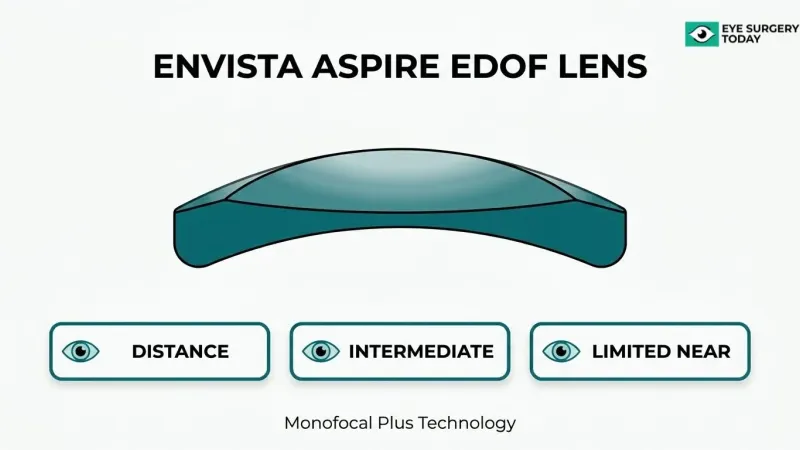
LASIK, PRK, and IOL implantation are the three common surgical approaches to vision correction, each targeting a different anatomical structure and suiting different patient profiles.
This guide covers how these procedures work, the vision problems each one may address, candidacy criteria and preoperative screening, how prior corneal surgery affects IOL planning, potential risks and recovery timelines, and long-term visual stability.
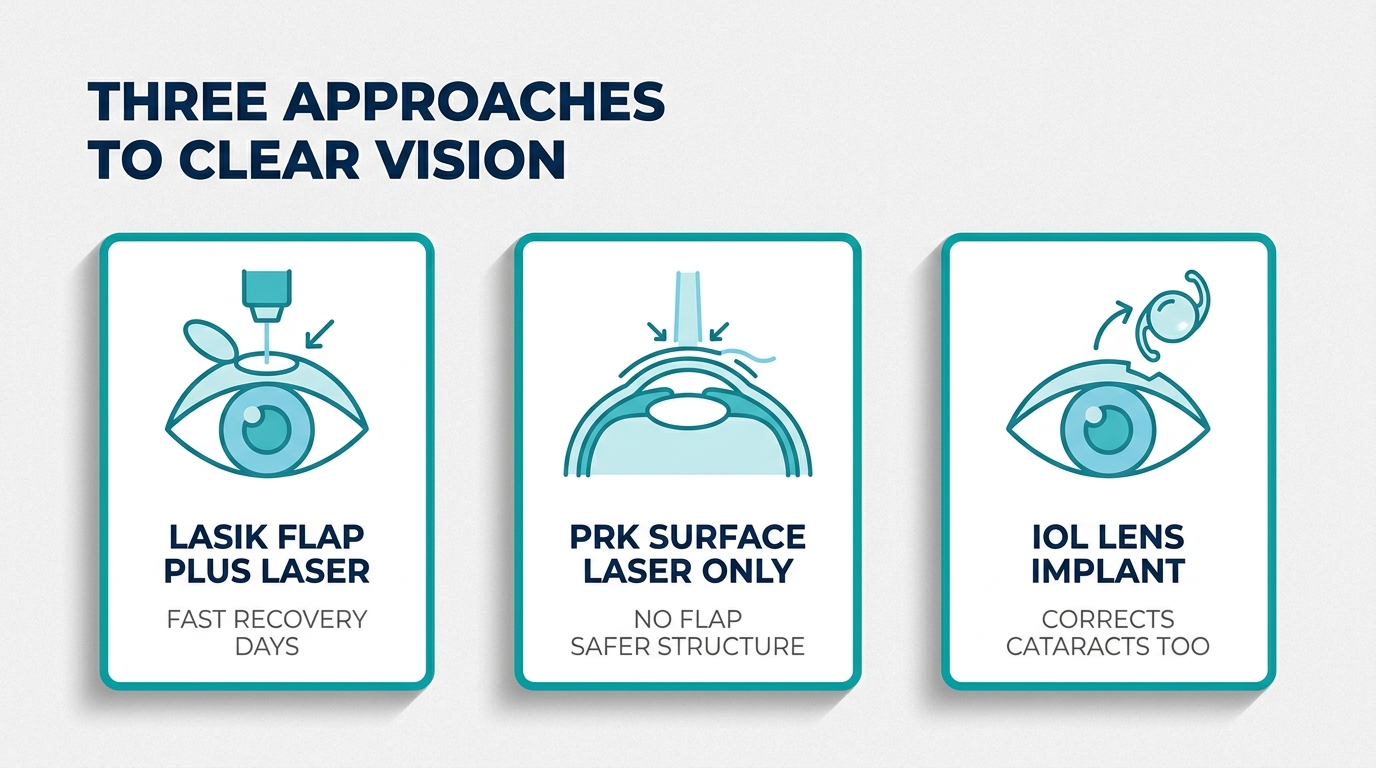
LASIK creates a corneal flap before excimer laser reshaping of the stroma, while PRK removes the surface epithelium first, avoiding flap-related complications associated with LASIK. IOL implantation replaces or supplements the eye’s natural lens with a synthetic design such as monofocal, multifocal, EDOF, or toric lenses.
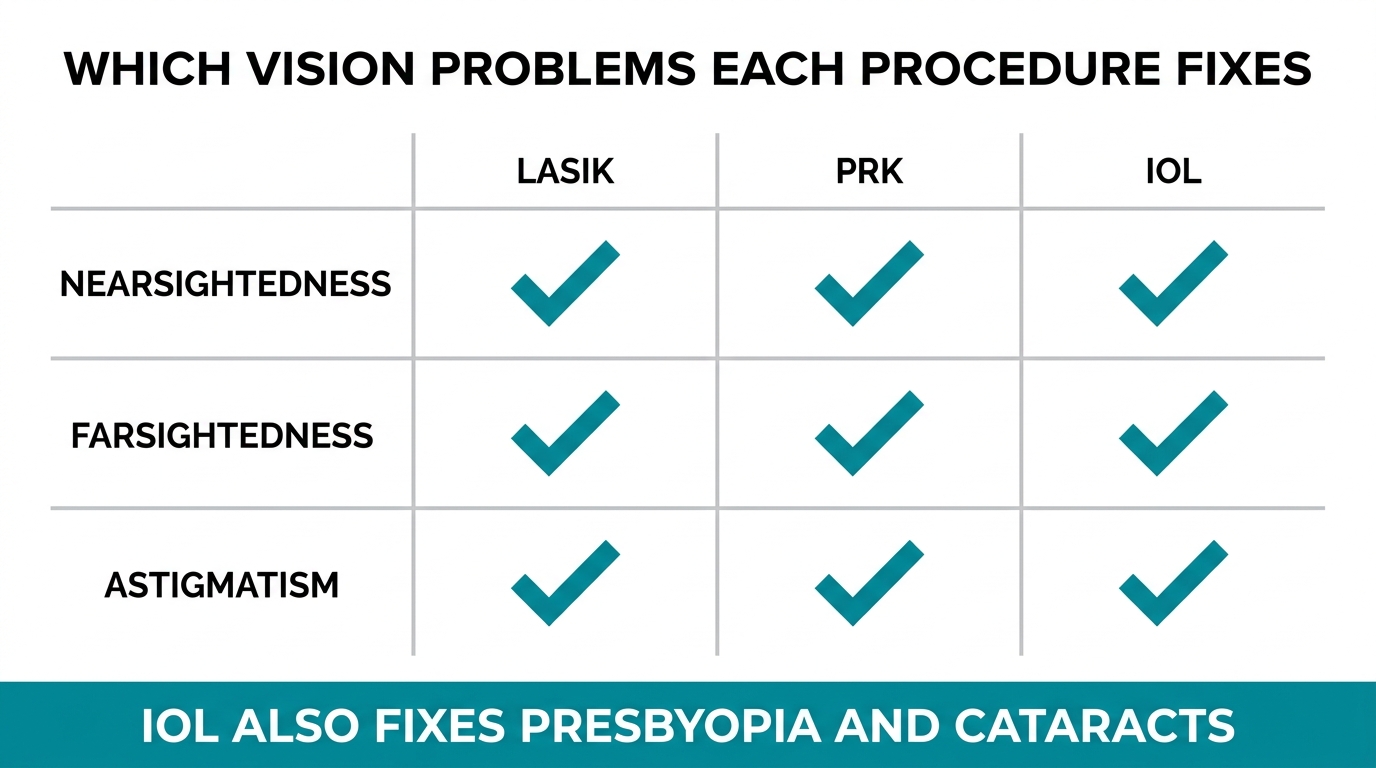
Each procedure may help correct nearsightedness, farsightedness, and astigmatism through different mechanisms, and IOLs can also address presbyopia and cataracts that laser surgery cannot treat.
Candidacy depends on factors like corneal thickness, refractive stability, and ocular surface health; failing to meet specific thresholds can disqualify patients from laser procedures entirely.
For patients who previously had LASIK or PRK, standard IOL power formulas become unreliable because corneal reshaping invalidates the keratometric assumptions those calculations depend on. Specialized formulas like Barrett True-K can improve accuracy in these cases.
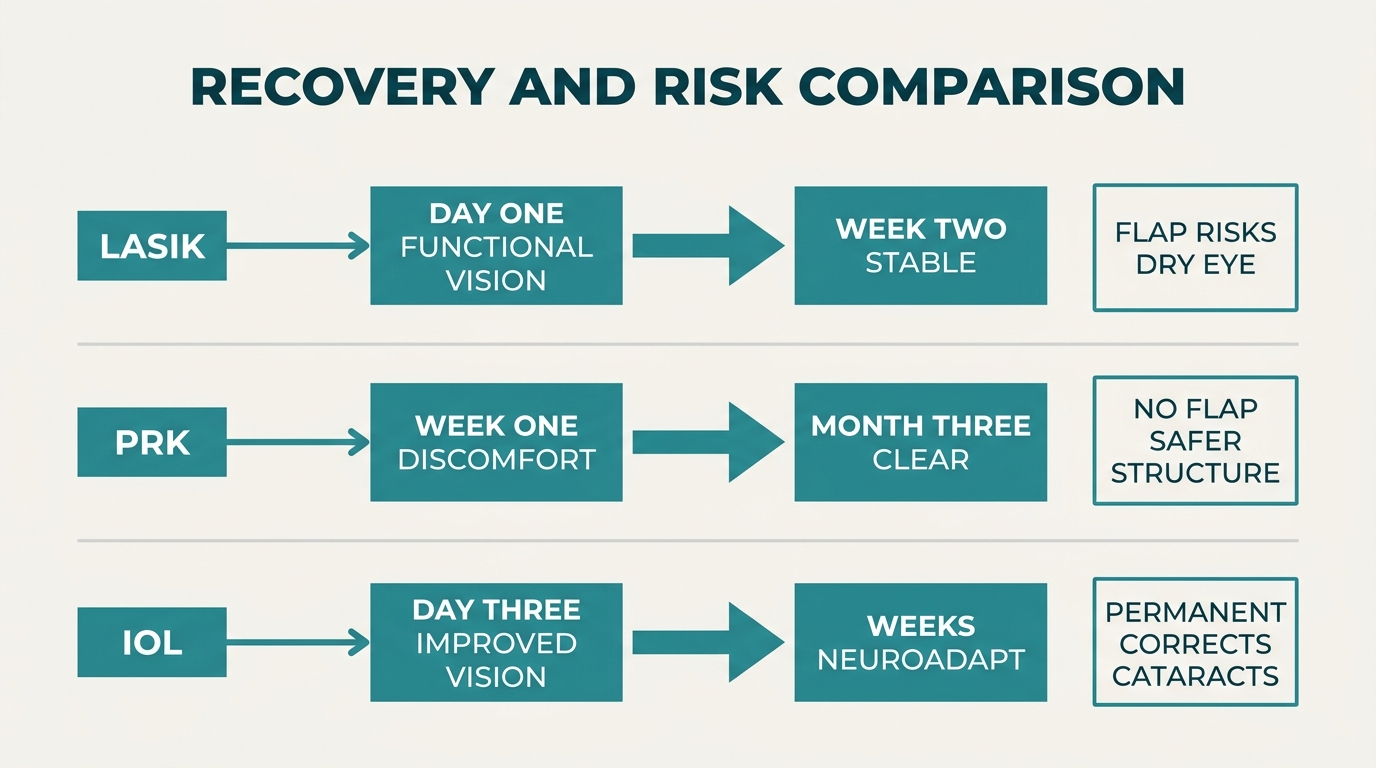
Risk profiles differ across procedures, from flap-specific complications in LASIK to surface healing challenges in PRK and optical phenomena like dysphotopsia with certain IOL designs. Recovery ranges from days for LASIK to weeks or months for PRK and IOL neuroadaptation, while long-term stability data supports durable outcomes across all three approaches when patients are appropriately selected.
What Are LASIK, PRK, and IOL Procedures?
LASIK, PRK, and IOL implantation are the three primary surgical approaches to vision correction. Each procedure targets a different anatomical structure and suits different patient profiles, as the following sections explain.
What Is LASIK and How Does It Reshape the Cornea?
LASIK reshapes the cornea by first creating a thin lamellar flap using either a mechanical microkeratome (oscillating blade) or a femtosecond laser, then applying an excimer laser to ablate the underlying stromal bed and correct the refractive error. According to the American Academy of Ophthalmology, the femtosecond laser approach uses an infrared YAG laser to produce the flap, offering greater precision than the mechanical blade alternative. The flap is then repositioned, acting as a natural bandage during healing. Because the epithelium remains largely intact, visual recovery after LASIK is often faster than surface-based procedures such as PRK.
What Is PRK and How Does It Differ From LASIK?
PRK is a surface ablation procedure where the epithelium is removed before excimer laser reshaping, rather than after flap creation. According to the National Institutes of Health, the epithelium may be removed mechanically, chemically with alcohol, or via laser, and the excimer laser then reshapes the anterior stroma directly. This eliminates all flap-related risks entirely. The trade-off is a longer recovery period, since the epithelium must regenerate across the treated surface. For patients with thinner corneas or situations where flap creation is less desirable, PRK may be considered.
What Is an Intraocular Lens and When Is It Implanted?
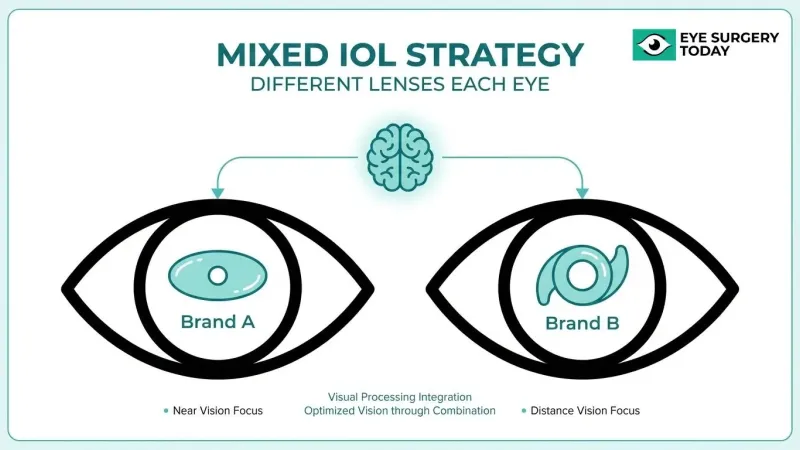
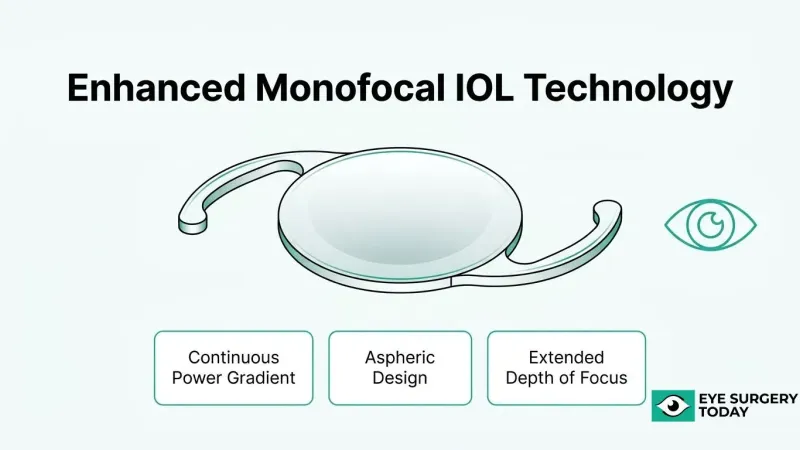
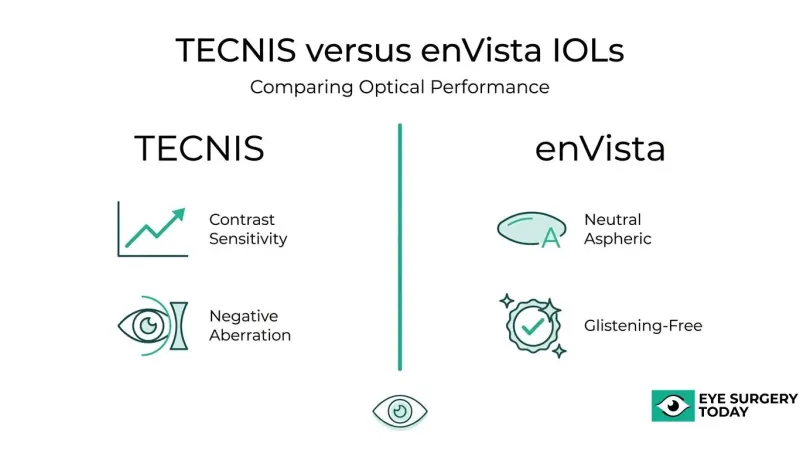
An intraocular lens (IOL) is an artificial lens surgically implanted inside the eye to replace or supplement the eye’s natural crystalline lens. IOL implantation is performed during cataract surgery, when the clouded natural lens is removed, or during refractive lens exchange for patients seeking spectacle independence. IOL designs include monofocal, multifocal, extended depth-of-focus (EDOF), and toric lenses, each targeting different visual needs across near, intermediate, and distance ranges. Understanding which IOL type suits a patient’s lifestyle is a critical step in preoperative planning.
How Does Each Procedure Correct Different Vision Problems?
Each procedure targets vision problems through a different mechanism: LASIK and PRK reshape the cornea using laser ablation, while IOL implantation replaces or supplements the eye’s natural lens. The sections below cover how each approach addresses nearsightedness, farsightedness, astigmatism, presbyopia, and cataracts.
How May LASIK Help Correct Nearsightedness?
LASIK may help correct nearsightedness by flattening the cornea with an excimer laser, reducing its focusing power so light lands precisely on the retina rather than in front of it. According to a study published via NIH PMC, approximately 99.5% of LASIK patients achieve at least 20/40 uncorrected distance visual acuity, the legal standard for driving without corrective lenses. For most patients with myopia, this represents a clinically meaningful restoration of functional distance vision.
How May LASIK Help Correct Farsightedness?
LASIK may help correct farsightedness by steepening the central cornea, increasing its curvature so that light converges correctly on the retina rather than behind it. Hyperopia correction is generally considered more technically demanding than myopia correction, as the ablation pattern must precisely add curvature without inducing irregular astigmatism. Patients with low to moderate hyperopia tend to achieve the most predictable outcomes.
How May LASIK Help Correct Astigmatism?
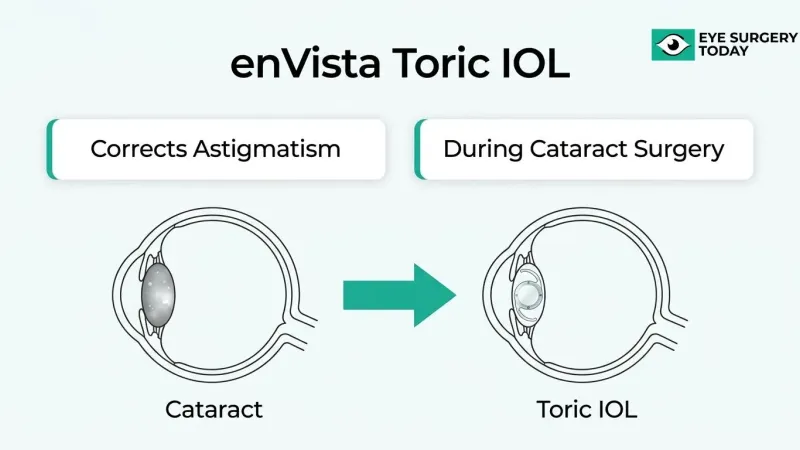
LASIK may help correct astigmatism by applying an asymmetric excimer laser ablation pattern that smooths the uneven corneal curvature responsible for distorted vision. According to the Medical Journal of the Armed Forces India, FDA-approved LASIK parameters permit astigmatism correction up to 6.0 DC, alongside myopia up to -14.0 DS and hyperopia up to +6.0 DS. For patients with coexisting astigmatism and cataracts, toric IOLs in EDOF and multifocal designs are also available to address pre-existing astigmatism during lens surgery.
How May PRK Help Correct Nearsightedness?
PRK may help correct nearsightedness through the same excimer laser corneal reshaping principle as LASIK, but without creating a stromal flap. Instead, the epithelium is removed first, and the laser directly ablates the anterior stroma to flatten corneal curvature. This approach is particularly well-suited for patients with thinner corneas or higher ectasia risk, where preserving stromal tissue is a priority.
How May PRK Help Correct Farsightedness?
PRK may help correct farsightedness by steepening the central corneal surface using excimer laser ablation, much like LASIK but through a surface-based approach. Because no flap is created, the full corneal thickness remains structurally intact, which can be advantageous for patients with low corneal volume. Visual recovery takes longer with PRK than LASIK, but final refractive outcomes are clinically comparable for hyperopia correction.
How May PRK Help Correct Astigmatism?
PRK may help correct astigmatism by delivering a toric excimer laser ablation pattern across the epithelium-free corneal surface to normalize curvature irregularities. Surface ablation achieves the same optical goal as LASIK-based astigmatism correction while eliminating flap interface complications. PRK may be considered for patients in high-contact occupations or those with thin corneas who still require astigmatism correction.
How May IOL Implantation Help Correct Presbyopia?
IOL implantation may help correct presbyopia by replacing or supplementing the natural lens with a presbyopia-correcting design that restores focusing across multiple distances. According to research published by NCBI, monofocal IOLs deliver high satisfaction for distance vision but still require reading glasses for near tasks, whereas multifocal and EDOF IOLs aim for spectacle independence across near, intermediate, and far distances. For patients prioritizing functional independence from glasses, presbyopia-correcting IOLs represent the most comprehensive lens-based solution currently available.
How May IOL Implantation Help With Cataracts?
IOL implantation may help with cataracts by surgically removing the clouded natural lens and replacing it with a clear artificial intraocular lens that restores light transmission to the retina. Because the cataractous lens is extracted regardless of IOL type, the procedure simultaneously eliminates the opacity and corrects the patient’s refractive error. Selecting the right IOL design during cataract planning, whether monofocal, toric, EDOF, or multifocal, determines how much residual refractive correction the patient may still need postoperatively.
Who Is a Good Candidate for LASIK, PRK, or IOL Surgery?
Good candidacy for LASIK, PRK, and IOL surgery depends on distinct clinical criteria for each procedure. The sections below outline the key eligibility factors for each option.
Who Is a Good Candidate for LASIK?
A good candidate for LASIK is an adult with stable refraction, adequate corneal thickness, and no signs of keratoconus or uncontrolled dry eye syndrome. The American Academy of Ophthalmology identifies contraindications such as refractive change greater than 0.5 D within one year, visually significant cataracts, and insufficient stromal tissue. According to Cataract & Refractive Surgery Today, a percentage of tissue altered (PTA) at or above 40% significantly raises post-LASIK ectasia risk, making preoperative topography screening essential. Soft contact lens wearers should discontinue use at least two weeks before evaluation; rigid gas permeable lens wearers need a minimum of four weeks.
- Stable refraction for at least one year
- Sufficient corneal thickness to maintain a safe residual stromal bed
- Absence of keratoconus or irregular corneal topography
- Controlled or absent dry eye syndrome
- Myopia, hyperopia, or astigmatism within FDA-approved treatment ranges
Who Is a Good Candidate for PRK?
A good candidate for PRK is someone who meets refractive correction criteria but has thin corneas, irregular surface features, or a high-contact or high-impact lifestyle that makes flap creation inadvisable. Because PRK removes the epithelium rather than creating a flap, it eliminates flap-related complications entirely, making it preferable for patients with borderline corneal thickness. Candidacy criteria otherwise closely mirror LASIK, including stable refraction, absence of keratoconus, and controlled dry eye. Patients with prior corneal scarring or those whose occupation poses a risk of eye trauma are also frequently directed toward PRK over LASIK.
- Thin corneas insufficient for safe LASIK flap creation
- High-contact occupations or sports where flap integrity is a concern
- Stable prescription within FDA-approved myopia and hyperopia ranges
- No active corneal disease or uncontrolled ocular surface conditions
Who Is a Good Candidate for IOL Implantation?
A good candidate for IOL implantation is a patient with a visually significant cataract, age-related lens dysfunction, or high refractive error not amenable to corneal laser procedures. Phakic IOLs may suit younger patients with extreme myopia who are outside LASIK correction ranges, while refractive lens exchange with a presbyopia-correcting IOL benefits patients seeking spectacle independence across multiple distances. Cataracts are the primary indication, but pre-existing astigmatism can be addressed simultaneously using toric IOL designs available in monofocal, EDOF, and multifocal platforms. Patients considering IOL surgery should have a comprehensive preoperative workup, including biometry and corneal topography, to guide accurate lens selection.
- Visually significant cataract reducing functional vision
- Extreme refractive error beyond corneal laser correction limits
- Presbyopia with desire for reduced spectacle dependence
- Pre-existing astigmatism addressable with toric IOL designs
- Willingness to accept trade-offs such as dysphotopsia with multifocal IOLs
Understanding which procedure fits your individual eye profile is the foundation of safe, effective vision correction planning.
How Does Prior LASIK or PRK Affect IOL Planning?
Prior LASIK or PRK changes the corneal shape in ways that complicate standard IOL power calculations. The following sections cover why this occurs, how surgeons measure the altered cornea, and which formulas improve accuracy.
Why Does Corneal Reshaping Change IOL Power Calculations?
Corneal reshaping changes IOL power calculations because refractive surgery invalidates the assumptions built into standard keratometry. Most IOL formulas rely on the corneal refractive index (1.3375) and the relationship between anterior and posterior corneal curvature, both of which are disrupted after LASIK or PRK. Three primary errors result: keratometric index error, radius measurement error, and effective lens position (ELP) error. Together, these can shift the predicted IOL power enough to produce a clinically significant refractive surprise after cataract surgery.
How Do Surgeons Measure the Cornea After LASIK or PRK?
Surgeons measure the cornea after LASIK or PRK using tomography-based platforms (such as Scheimpflug or optical coherence tomography devices) rather than standard keratometers, which underestimate true corneal power in post-refractive eyes. According to the American Academy of Ophthalmology, a minimum residual stromal bed thickness of 250 µm is the suggested safe threshold after LASIK, though many surgeons prefer 300 µm to reduce ectasia risk. Accurate corneal mapping at this stage can help guide formula selection and expected ELP, making the choice of measurement device as consequential as the formula itself.
What Formulas Help Improve IOL Accuracy After LASIK?
The formulas that help improve IOL accuracy after LASIK include the Barrett True-K, Haigis-L, and Shammas no-history methods. Among these, the Barrett True-K demonstrates the lowest mean absolute error at 0.31 D, compared to Haigis-L at 0.44 D, according to data presented by the American Society of Cataract and Refractive Surgery. The ASCRS online calculator consolidates several of these formulas, allowing surgeons to compare predicted outcomes before finalizing IOL selection.
What Formulas Help Improve IOL Accuracy After PRK?
The formulas that help improve IOL accuracy after PRK are largely the same family as those used post-LASIK, including Barrett True-K, Shammas, and the ASCRS average method. PRK removes the flap variable, but anterior corneal flattening still invalidates standard keratometric assumptions in the same way. Because PRK ablation is confined to the epithelium and anterior stroma without a lamellar interface, some surgeons find that Scheimpflug-derived true net power measurements integrate more cleanly into these formulas, potentially reducing residual prediction error compared to microkeratome LASIK cases.
What Are the Potential Risks and Complications?
The potential risks and complications vary by procedure, covering flap-related issues in LASIK, surface healing challenges in PRK, and optical side effects in IOL surgery. The sections below address each procedure’s specific risk profile and explain the refractive surprise phenomenon unique to IOL planning.
What Are the Possible Risks of LASIK?
The possible risks of LASIK include post-surgical ectasia, diffuse lamellar keratitis (DLK), dry eye, and undercorrection or overcorrection. Ectasia, a progressive corneal steepening, is a rare but serious complication often linked to pre-existing subclinical keratoconus or excessive stromal ablation, particularly when the percentage of tissue altered (PTA) reaches 40% or higher. DLK is a sterile inflammatory response at the flap interface that may require corticosteroid treatment or interface irrigation, according to the American Academy of Ophthalmology. Because LASIK involves flap creation, these two complications are exclusive to this procedure and are not seen with surface ablation techniques.
What Are the Possible Risks of PRK?
The possible risks of PRK include delayed epithelial healing, corneal haze, temporary discomfort, and regression of correction over time. Because PRK removes the epithelium entirely rather than creating a flap, flap-related risks like DLK and ectasia from flap complications are avoided. However, the exposed stroma requires several days to resurface, during which pain and blurred vision are common. Subepithelial haze can develop as the stroma heals, particularly at higher correction levels, though this typically responds to topical steroids and resolves without permanent vision loss.
What Are the Possible Risks of IOL Implantation?
The possible risks of IOL implantation include posterior capsule opacification (PCO), refractive surprise, and dysphotopsia such as glare and halos, which are the most common complications following this procedure. PCO occurs when residual lens epithelial cells migrate across the posterior capsule, causing a secondary blurring of vision months to years after surgery. Dysphotopsia is particularly associated with diffractive multifocal IOLs, where light-splitting optics can create visual disturbances under low-light conditions. Patients considering premium lens options should weigh these optical trade-offs carefully against the benefit of reduced spectacle dependence.
What Is a Refractive Surprise After IOL Surgery?
A refractive surprise after IOL surgery is an unexpected postoperative refraction that significantly differs from the target, leaving the patient with residual myopia, hyperopia, or astigmatism requiring further correction. This outcome is most common in eyes with prior LASIK or PRK, where corneal reshaping invalidates standard keratometric measurements and disrupts effective lens position (ELP) predictions. According to a 2021 analysis published by the American Society of Cataract and Refractive Surgery (ASCRS), the Barrett True-K formula achieves a mean absolute error of 0.31 D in post-refractive eyes, outperforming older formulas that carry substantially higher miscalculation rates. Selecting the appropriate modern formula is one of the important steps a surgeon can take to prevent this complication.
What Can You Expect During Recovery From Each Procedure?
Recovery timelines vary significantly across LASIK, PRK, and IOL surgery. The sections below cover what patients may typically experience after each procedure in terms of visual stability, discomfort, and return to normal activity.
What Is Recovery Like After LASIK?
Recovery after LASIK is generally faster than PRK, though the exact visual recovery timeline varies by patient and procedure details. Mild dryness, light sensitivity, and fluctuating clarity are common in the first few days, though these typically resolve within one to two weeks. According to a study published in Clinical Ophthalmology, femtosecond laser-assisted LASIK flaps demonstrate superior thickness predictability and faster visual recovery compared to mechanical microkeratome-assisted flaps. Patients are usually advised to avoid rubbing the eyes and to use prescribed lubricating drops consistently during the healing period. Most return to routine activities within a few days, though contact sports and swimming should be avoided for several weeks.
What Is Recovery Like After PRK?
Recovery after PRK takes longer than LASIK because the corneal epithelium must regenerate over the treated surface. Initial discomfort, including foreign-body sensation and light sensitivity, is common during the first three to five days while a bandage contact lens is in place. Functional vision typically stabilizes within one to three weeks, though full visual clarity can take one to three months as the epithelium and stroma remodel. Patients may notice temporary haze or fluctuating vision during this period.
What Is Recovery Like After IOL Surgery?
Recovery after IOL surgery is generally straightforward, with most patients experiencing improved vision within one to a few days following the procedure. Mild redness, tearing, and light sensitivity may occur initially, usually resolving within one to two weeks. Patients typically use antibiotic and anti-inflammatory eye drops for several weeks postoperatively. Full visual stabilization, particularly with multifocal or EDOF lenses, may take several weeks as the brain adapts to the new optical system, a process sometimes called neuroadaptation.
How Do Long-Term Visual Outcomes Compare?
Long-term visual outcomes vary by procedure. The sections below cover stability data for LASIK, PRK, and IOL implantation over time.
How Stable Are Vision Results After LASIK Over Time?
Vision results after LASIK are highly stable for most patients over the long term. According to the NIH, approximately 99.5% of LASIK patients achieve at least 20/40 uncorrected distance visual acuity, which meets the standard for driving without corrective lenses. Minor regression can occur in patients with higher initial prescriptions, particularly high myopia, but significant vision loss is uncommon in appropriately selected candidates. From a clinical standpoint, long-term stability depends heavily on preoperative screening quality, making thorough candidacy evaluation one of the most predictive factors for durable outcomes.
How Stable Are Vision Results After PRK Over Time?
Vision results after PRK are highly stable over extended follow-up periods. According to a report published by Cataract and Refractive Surgery Today Europe, refractive stability is maintained for up to 10 years in 93.2% of eyes treated with PRK for myopia. Because PRK removes no stromal tissue to create a flap, it eliminates flap-related instability risks entirely. This makes PRK a particularly reliable choice for patients with thinner corneas or occupations that carry a risk of eye trauma.
How Stable Are Vision Results After IOL Implantation?
Vision results after IOL implantation are generally permanent, as the natural lens is replaced with a synthetic implant that does not change refractive power over time. According to a review published in JAMA Ophthalmology, trifocal IOLs and bifocal diffractive IOLs achieve the greatest improvement in uncorrected near visual acuity, while trifocal and EDOF IOLs provide superior uncorrected intermediate visual acuity compared to monofocal lenses. Posterior capsule opacification can develop in some patients and reduce clarity, but this is easily corrected with a brief laser procedure. Choosing the right IOL type based on lifestyle and visual demands remains the single most important part of surgical planning.
How Should You Plan Your Vision Correction Journey?
Planning your vision correction journey involves preparation steps, understanding your options, and knowing where to find reliable education. The sections below cover what to do before surgery and the key takeaways from LASIK, PRK, and IOL planning.
Can Eye Surgery Today Help You Understand Your IOL Options?
Eye Surgery Today is an education platform designed to help patients understand IOL options, LASIK candidacy, and refractive surgery decisions. For patients preparing for a preoperative consultation, one foundational step is contact lens cessation: soft lenses should be discontinued at least 2 weeks before evaluation, and rigid gas permeable lenses at least 4 weeks, to ensure stable corneal topography according to the Medical Journal, Armed Forces India.
Eye Surgery Today translates that clinical complexity into accessible, jargon-free guidance so patients can arrive at consultations informed and prepared to ask the right questions.
What Are the Key Takeaways About How LASIK, PRK, and IOL Planning Affect Your Vision?
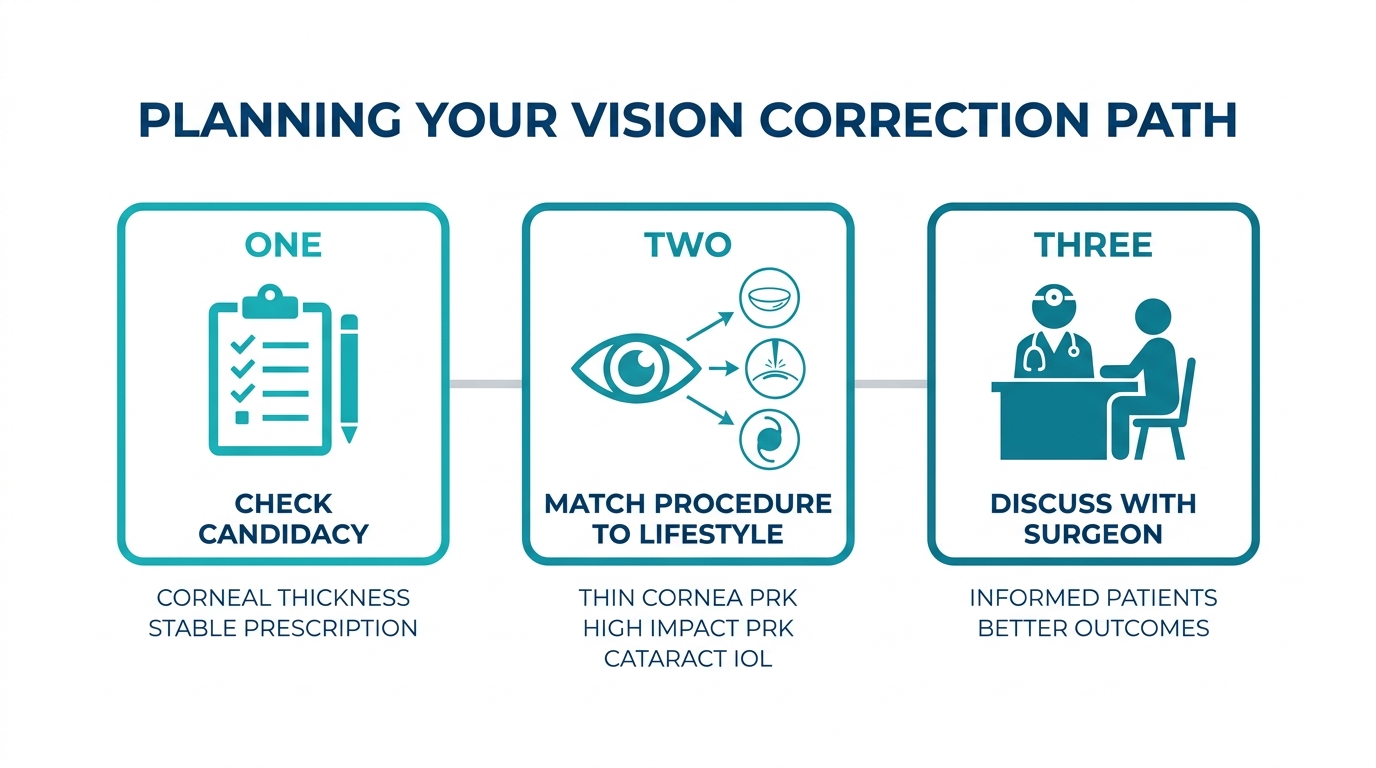
The key takeaways about how LASIK, PRK, and IOL planning affect your vision center on three principles: procedure fit, candidacy thresholds, and surgical sequencing.
- Procedure fit matters: LASIK suits patients with sufficient corneal thickness and stable refraction; PRK is preferred when flap creation is inadvisable; IOLs address presbyopia and cataracts that laser surgery cannot correct.
- Candidacy thresholds are non-negotiable: Unstable refraction, thin corneas, and active dry eye may affect whether laser procedures are appropriate.
- Prior refractive surgery complicates IOL planning: Previous LASIK or PRK alters corneal curvature in ways that standard IOL formulas do not account for, requiring specialized calculation methods.
- Informed patients achieve better outcomes: Understanding each procedure’s scope, limits, and recovery timeline allows patients to align expectations with realistic results.
Choosing the right procedure starts with the right information, and Eye Surgery Today provides educational resources to support that step.