Refractive surgery is a category of eye procedures that correct or minimize refractive errors such as myopia, hyperopia, and astigmatism by reshaping the cornea or replacing the eye’s natural lens so that light focuses precisely on the retina.
This guide covers how refractive surgery changes the eye’s optics, the major procedure types and how they compare, candidacy requirements and contraindications, potential benefits and measurable risks, what to expect before and after surgery, and how outcomes are realistically evaluated.
Laser and lens-based procedures each alter the eye’s focusing system through different mechanisms. LASIK reshapes corneal tissue beneath a protective flap, PRK and LASEK treat the surface directly, SMILE removes a small lenticule through a minimal incision, and refractive lens exchange or phakic intraocular lenses work at the lens plane instead of the cornea.
Eligibility depends on several intersecting factors. Age, prescription stability, corneal thickness, corneal shape, and systemic health conditions such as autoimmune disease or diabetes all influence whether a patient qualifies for laser correction, a lens-based alternative, or neither.
Published analyses suggest that more than 90% of eyes may achieve 20/20 vision or better after LASIK, and patient satisfaction rates are consistently high across studies. However, side effects including dry eye, halos, and glare affect a meaningful proportion of patients in the months following surgery, and rare complications such as corneal ectasia can occur.
A structured preoperative evaluation, including corneal topography, wavefront mapping, and ocular health screening, is essential for identifying the right procedure and setting realistic expectations for each individual patient.
How Does Refractive Surgery Work To Change The Way Your Eye Focuses Light?
Refractive surgery works by physically reshaping the eye’s optical structures so that incoming light focuses precisely on the retina rather than in front of or behind it. The sections below cover which eye structures are reshaped, how corneal changes correct specific errors, and how long results typically last.
What Parts Of The Eye Are Typically Reshaped During Refractive Surgery?
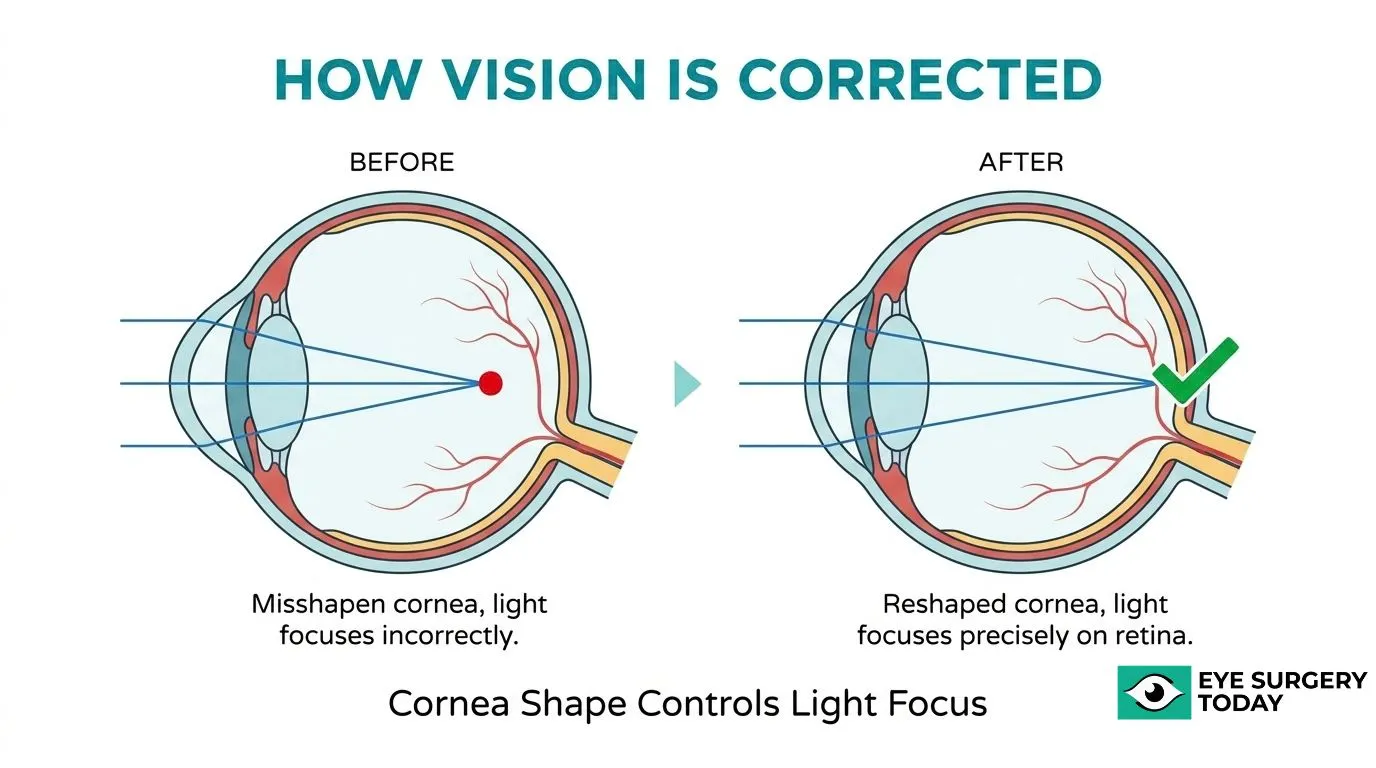
The parts of the eye typically reshaped during refractive surgery are the cornea and, in lens-based procedures, the natural crystalline lens. According to the National Eye Institute, some types of surgery change the shape of the cornea, the clear front layer of the eye, to fix refractive errors. In laser procedures such as LASIK and PRK, a programmed excimer laser removes microscopic amounts of corneal tissue to alter its curvature. In refractive lens exchange or phakic intraocular lens implantation, surgeons work on the internal lens rather than the corneal surface. Because the cornea contributes roughly two-thirds of the eye’s total focusing power, even small changes to its curvature produce meaningful shifts in where light converges.
How Does Altering Corneal Curvature Affect Nearsightedness, Farsightedness, And Astigmatism?
Altering corneal curvature corrects nearsightedness, farsightedness, and astigmatism by redirecting where light rays converge inside the eye. According to the University of Iowa Carver College of Medicine, myopia occurs when parallel light rays focus in front of the retina; flattening the corneal center shifts that focal point backward onto the retina. Farsightedness results from light focusing behind the retina, so steepening the central cornea moves focus forward. Astigmatism arises from an irregularly curved cornea that creates multiple focal points; the laser smooths those uneven curves into a more spherical surface. Each ablation pattern is unique to the patient’s measured refractive error, making precision mapping essential before surgery.
How Long Do The Vision-Correcting Effects Of Refractive Surgery Usually Last?
The vision-correcting effects of refractive surgery usually last for many years, though long-term durability varies by procedure and individual factors. The National Eye Institute notes that the eye takes 2 to 3 months to finish healing after LASIK, and the Canadian Agency for Drugs and Technologies in Health confirms that formal evidence on how many years patients remain independent of corrective eyewear after laser refractive surgery has not been established in the literature. Most patients maintain stable correction for a decade or more, but natural age-related changes such as presbyopia can affect near vision regardless of prior surgery. Regression, where some of the original refractive error gradually returns, is possible and may warrant an enhancement procedure in a subset of patients.
What Are The Main Types Of Refractive Surgery Available Today?
The main types of refractive surgery available today are LASIK, PRK, LASEK, SMILE, refractive lens exchange, and phakic intraocular lenses. Each approach targets refractive errors differently, with selection depending on corneal anatomy, prescription range, and individual candidacy.
LASIK
LASIK is a laser refractive surgery that corrects nearsightedness, farsightedness, and astigmatism by reshaping the cornea beneath a thin protective flap. According to the National Eye Institute, the procedure involves cutting and folding back a small corneal flap, applying a programmed laser to reshape the cornea, then replacing the flap. The eye typically takes two to three months to finish healing. Among laser procedures, LASIK offers one of the fastest visual recoveries, making it the most widely performed refractive surgery worldwide.
PRK And LASEK
PRK and LASEK are surface ablation procedures that reshape the cornea without creating a corneal flap. In PRK, the outer epithelial layer is removed entirely before laser treatment. LASEK uses a different approach: according to the American Academy of Ophthalmology, a microsurgical trephine and alcohol solution create an epithelial flap that is repositioned afterward and secured with a bandage soft contact lens, with epithelial healing taking approximately four days. Both procedures suit patients with thin corneas who may not qualify for LASIK.
SMILE
SMILE is a minimally invasive laser procedure that removes a small disc of corneal tissue, called a lenticule, through a tiny incision without creating a flap. A 2021 meta-analysis published in PLOS One, involving 766 patients and 1,400 eyes, found no significant difference in uncorrected distance visual acuity between SMILE and femtosecond LASIK at one month, three months, or long-term follow-up. The flapless design may reduce certain risks associated with flap creation, making SMILE a compelling option for suitable high-myopia candidates.
Refractive Lens Exchange
Refractive lens exchange (RLE) is a procedure that replaces the eye’s natural crystalline lens with an artificial intraocular lens to correct refractive error. As noted by the American Academy of Ophthalmology, RLE follows the same surgical approach as cataract surgery. It is typically considered for patients with high prescriptions beyond the safe range of laser correction, or those with early lens changes who wish to address presbyopia simultaneously.
Phakic Intraocular Lenses
Phakic intraocular lenses are implantable lenses placed in front of or behind the iris while the natural lens remains in place. This lens-based approach corrects high degrees of myopia or hyperopia that exceed safe laser treatment thresholds. Unlike RLE, the natural lens is preserved, maintaining the eye’s ability to accommodate in younger patients. Phakic IOLs represent an important option for patients who want surgical correction but are not suitable candidates for corneal laser procedures.
How Do The Different Types Of Refractive Surgery Compare In Terms Of Technique And Recovery?
The different types of refractive surgery compare across three key dimensions: how the cornea or lens is accessed, how much discomfort occurs during healing, and how quickly useful vision returns. The H3s below cover LASIK vs. PRK, SMILE vs. LASIK, refractive lens exchange, and phakic IOLs.
How Does LASIK Differ From PRK In Procedure And Healing Time?
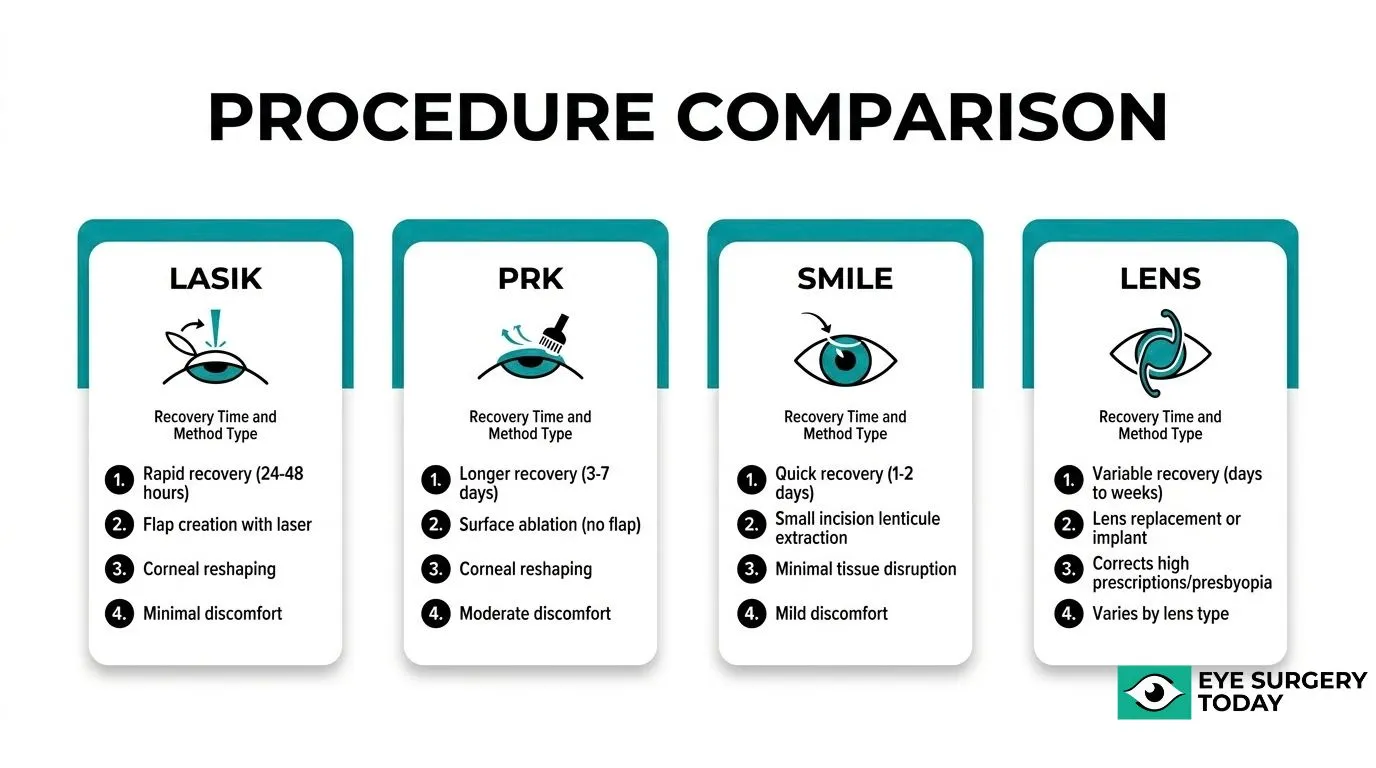
LASIK differs from PRK primarily in how the corneal surface is accessed before laser reshaping. LASIK involves creating a hinged corneal flap, applying the excimer laser beneath it, and repositioning the flap. PRK removes the epithelium entirely, exposing the stroma directly before laser treatment, which means the surface must regenerate afterward.
A 2013 Cochrane systematic review of 13 randomized trials (1,135 participants, 1,923 eyes) found that LASIK provides faster visual recovery and causes less pain than PRK, though one-year outcomes were comparable and differences were not statistically significant. In practice, most patients recover functional vision within 24 to 48 hours after LASIK, while PRK recovery typically takes several days to a week. For patients with adequate corneal thickness, LASIK’s faster recovery often makes it the more practical day-to-day choice.
How Does SMILE Compare With LASIK For Comfort And Dry Eye Risk?
SMILE compares favorably with LASIK for dry eye risk because it avoids creating a corneal flap, preserving more anterior corneal nerve fibers. The procedure uses a femtosecond laser to cut a small lenticule inside the intact cornea, which is then removed through a 2 to 4 mm arc incision, leaving the corneal surface largely undisturbed.
A 2021 PLOS One meta-analysis of 12 studies (766 patients, 1,400 eyes) found no significant difference in uncorrected distance visual acuity between SMILE and FS-LASIK at any follow-up point, while SMILE produced lower long-term higher-order aberration and spherical aberration measures. Separately, a 2021 systematic review published in Ophthalmology and Therapy reported ectasia incidence of 11 per 100,000 eyes after SMILE, compared with 90 per 100,000 after LASIK. SMILE’s flapless design makes it a strong option for patients with borderline corneal thickness or active lifestyles where flap dislodgment is a concern.
When Is Refractive Lens Exchange Considered Instead Of Laser Corneal Surgery?
Refractive lens exchange (RLE) is considered instead of laser corneal surgery when a patient’s refractive error exceeds the safe treatment range of laser platforms, when corneal tissue is insufficient for ablation, or when the natural lens has begun to lose accommodative function. RLE replaces the crystalline lens with an intraocular lens (IOL), correcting refractive error at the lens plane rather than the corneal surface.
According to the University of Iowa Carver College of Medicine, minus lenses correct myopia, plus lenses correct hyperopia, and cylindrical lenses correct astigmatism; RLE can address all three simultaneously through IOL selection. A 2022 meta-analysis in Frontiers in Medicine (13 studies, 128 patients, 445 eyes) reported that in eyes with prior corneal laser surgery, presbyopia-correcting IOLs achieved spectacle independence rates of 0.98 at near and 0.99 at intermediate, though halos were reported in approximately 40% of cases. RLE also eliminates any future risk of visually significant cataract.
In What Situations Are Phakic Intraocular Lenses Preferred Over LASIK Or PRK?
Phakic intraocular lenses (pIOLs) are preferred over LASIK or PRK when a patient has high myopia or hyperopia that exceeds corneal laser correction limits, or when corneal thickness is insufficient to safely support ablation. Unlike RLE, pIOLs are implanted in front of or behind the iris while the natural crystalline lens remains in place, preserving accommodation in younger patients.
Suitable candidates are typically younger adults whose lenses retain accommodative capacity and who are not yet cataract candidates. Phakic IOLs avoid corneal tissue removal entirely, making them a viable route for patients who fail corneal refractive candidacy screening. For high myopes in particular, this additive approach can deliver sharp unaided vision without the ectasia risk associated with deep corneal ablation.
Who May Be A Good Candidate For Refractive Surgery?
Good candidates for refractive surgery are generally adults with stable prescriptions, adequate corneal thickness, and no disqualifying eye or systemic health conditions. The following H3s cover age and prescription stability, treatable prescription ranges, corneal requirements, general eye health, and absolute contraindications.
How Do Age And Stable Prescription Requirements Affect Eligibility For Refractive Surgery?
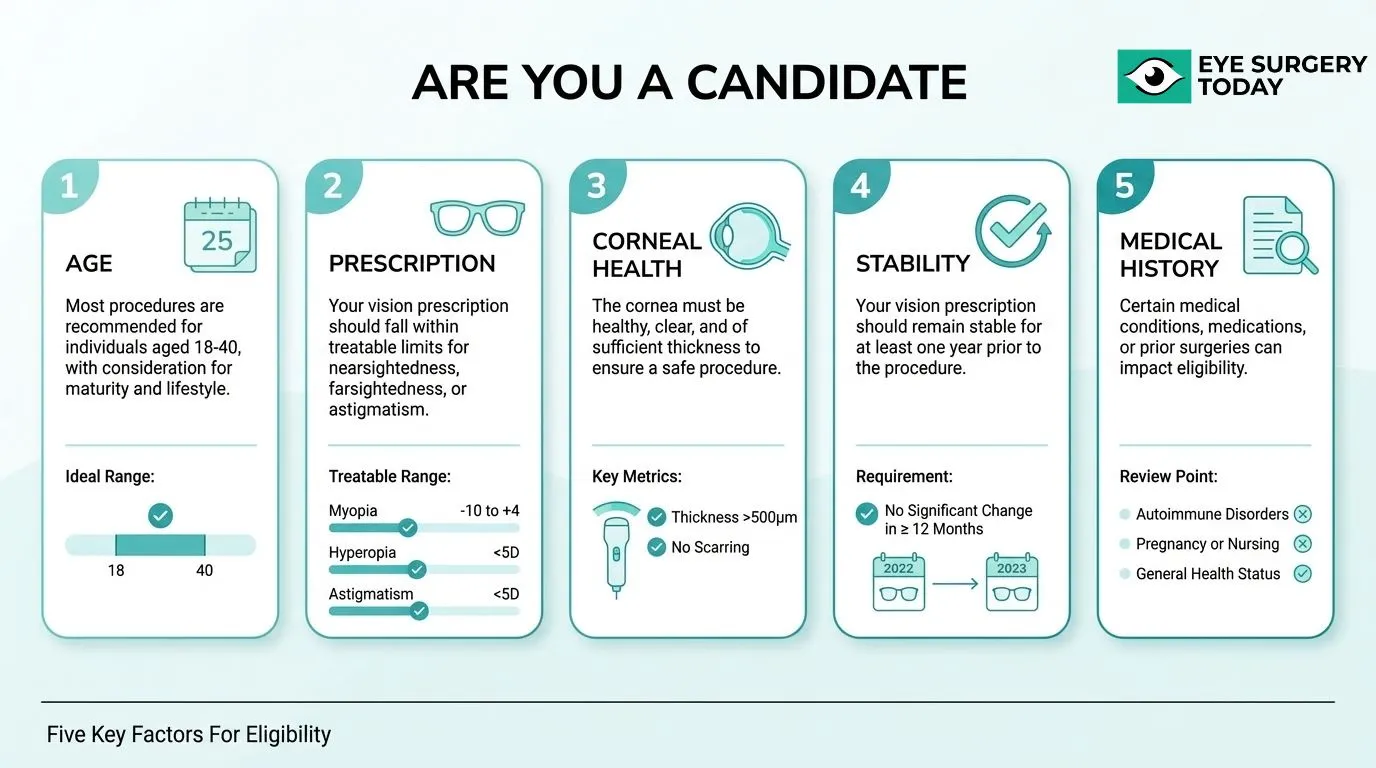
Age and stable prescription requirements affect eligibility for refractive surgery in two important ways: the cornea must belong to a sufficiently mature eye, and the refractive error must have stopped changing. According to a 2023 patient-information page from Washington University in St. Louis, candidates are generally over the age of 18, and prescription stability is identified as a core eligibility factor alongside corneal thickness, corneal shape, and the absence of autoimmune or systemic conditions.
A prescription that is still shifting means any correction performed today may be undone by continued eye growth, making stability essential before proceeding.
What Degree Of Nearsightedness, Farsightedness, Or Astigmatism Is Typically Treatable?
The degree of nearsightedness, farsightedness, or astigmatism that is typically treatable depends on the specific laser platform used and the individual’s corneal anatomy. Laser platforms are generally approved for myopia, hyperopia, and astigmatism within defined diopter ranges, and candidates presenting with prescriptions outside those ranges may require alternative procedures such as phakic intraocular lenses or refractive lens exchange instead.
Baylor College of Medicine notes that its physicians turn down up to one-third of patients who inquire about laser refractive surgery, which highlights how meaningfully prescription range and other anatomical limits narrow the eligible pool.
How Do Corneal Thickness And Shape Influence Whether LASIK Or PRK Is Suitable?
Corneal thickness and shape influence whether LASIK or PRK is suitable because laser ablation permanently removes stromal tissue, and the remaining corneal bed must be thick enough to maintain structural integrity after surgery. The 2023 American Academy of Ophthalmology Refractive Errors Preferred Practice Pattern identifies insufficient corneal thickness for the proposed ablation depth, along with keratoconus, other corneal ectasias, thinning, edema, and extensive vascularization, as formal contraindications to refractive surgery.
When corneal thickness is borderline, PRK is often preferred over LASIK because it avoids the additional tissue loss involved in creating a stromal flap.
How Do General Eye Health Conditions Affect Candidacy For Refractive Surgery?
General eye health conditions affect candidacy for refractive surgery by either increasing surgical risk or reducing the likelihood of a stable long-term outcome. Conditions that may disqualify a candidate include:
- Severe dry eye disease, which can worsen significantly after laser ablation.
- Keratoconus or suspected corneal ectasia, which contraindicate corneal laser procedures.
- Uncontrolled glaucoma, which affects intraocular pressure and healing.
- Active ocular surface infections or significant corneal irregularities.
A thorough preoperative evaluation is designed specifically to detect these conditions before any decision is made.
When Might Refractive Surgery Not Be Recommended At All?
Refractive surgery may not be recommended when a patient presents with one or more absolute contraindications identified by clinical guidelines. The American Academy of Ophthalmology’s 2023 Refractive Errors Preferred Practice Pattern lists the following as contraindications:
- Unstable refraction.
- Corneal abnormalities such as keratoconus, ectasia, thinning, edema, or extensive vascularization.
- Insufficient corneal thickness for the planned ablation depth.
- Uncontrolled autoimmune or immune-mediated disease.
Pregnancy, nursing, and poorly controlled diabetes are additional factors that may prompt a surgeon to defer or decline surgery. Understanding both candidacy requirements and absolute contraindications helps patients approach a refractive surgery consultation with realistic expectations.
What Are The Potential Benefits Of Refractive Surgery For Vision And Lifestyle?
The potential benefits of refractive surgery span improved visual acuity, reduced reliance on corrective eyewear, and measurable quality-of-life gains. The sections below cover spectacle independence, effects on daily activities, patient-reported outcomes, and cost considerations.
How Much Can Refractive Surgery Potentially Reduce Dependence On Glasses Or Contact Lenses?
Refractive surgery can potentially reduce dependence on glasses or contact lenses significantly for eligible patients. According to a Duke University Eye Center analysis of studies published between 2008 and 2015, more than 90% of eyes achieved 20/20 vision or better after LASIK, and 99.5% reached at least 20/40. For many patients, this means routine tasks such as driving, reading a clock, or recognizing faces no longer require corrective eyewear. Some residual dependence may remain for tasks like fine print reading, particularly as presbyopia develops with age.
How Might Refractive Surgery Affect Daily Activities Such As Work And Sports?
Refractive surgery may positively affect daily activities such as work and sports by removing the practical limitations associated with glasses and contact lenses. Professions requiring wide peripheral vision, occupations in dusty or humid environments, and contact sports all present challenges for lens wearers that surgery can potentially address. Swimming, skiing, and team sports become more straightforward without the need for prescription eyewear or the discomfort of contacts. This functional freedom is one of the most commonly cited motivations among surgical candidates.
What Quality-Of-Life Improvements Do Many Patients Report After Refractive Surgery?
The quality-of-life improvements many patients report after refractive surgery include better visual function, reduced dependence on corrective eyewear, and greater confidence in daily life. A 2025 systematic review and meta-analysis published in the Journal of Ophthalmology, covering 11 peer-reviewed articles and 1,753 patients, found that laser vision correction improved quality of life at one, three, and six months post-surgery. However, patients should be aware that some procedures carry trade-offs: a 2023 prospective study in the Journal of Clinical Medicine found that at six months, LASIK patients scored higher on the Dry Eye Workshop scale than those who had PRK or LASEK, suggesting a meaningful difference in post-operative comfort depending on the procedure chosen.
Can Refractive Surgery Offer Cost Benefits Compared With Long-Term Use Of Glasses And Contacts?
Refractive surgery can offer potential cost benefits compared with long-term glasses and contact lens use, though robust evidence is limited. A review by the Canadian Agency for Drugs and Technologies in Health found no relevant published literature on the cost-effectiveness of laser refractive surgery, and no evidence quantifying how many years patients typically remain free of corrective eyewear. While the upfront cost of surgery is substantial, cumulative expenditure on prescription glasses, contact lenses, and associated products over decades can be considerable. Without formal cost-effectiveness data, the financial case for surgery depends heavily on individual usage patterns and how long vision correction is maintained.
What Are The Possible Risks, Side Effects, And Long-Term Complications Of Refractive Surgery?
The possible risks, side effects, and long-term complications of refractive surgery range from mild short-term symptoms to rare but serious permanent changes in corneal structure. The sections below cover short-term effects, infection risks, correction accuracy, long-term complications, and enhancement rates.
What Short-Term Side Effects Like Dry Eye, Glare, And Halos Can Occur After Refractive Surgery?
The short-term side effects of refractive surgery include dry eye, glare, halos, and other visual disturbances, particularly in the weeks following the procedure. According to the FDA’s LASIK Quality of Life Collaboration Project, up to 40% of participants who had no preoperative halos reported halos at three months, and up to 28% of those with no prior dry-eye symptoms developed them at the same follow-up. These symptoms are common but typically transient for most patients, resolving as the cornea heals. Less than 1% of participants experienced significant difficulty with daily activities due to any single visual symptom, which suggests that severity is generally manageable.
What Are The Risks Of Infection, Inflammation, Or Flap-Related Problems With LASIK?
The risks of infection, inflammation, and flap-related complications with LASIK are real but considered rare when candidacy screening and sterile technique are properly applied. Because LASIK creates a corneal flap, that flap can be subject to displacement, incomplete healing, or epithelial ingrowth beneath it. Surface ablation procedures like PRK and LASEK avoid flap creation entirely, which eliminates this specific risk category. Infection, while uncommon, requires prompt antibiotic treatment to prevent permanent visual damage. Surgeons who follow evidence-based protocols and rigorous perioperative hygiene substantially reduce these risks.
How Common Is Under-Correction, Over-Correction, Or Regression After Refractive Surgery?
Under-correction, over-correction, and regression are recognized outcomes of refractive surgery, particularly in patients with higher prescriptions or thinner corneas. These outcomes occur when the laser ablation does not achieve the intended refractive target, or when the cornea gradually reverts toward its original curvature over time. Regression is more likely in patients with moderate to high myopia. When residual refractive error remains, an enhancement procedure may be performed to achieve the intended result, provided sufficient corneal tissue remains.
What Long-Term Complications Such As Ectasia Or Chronic Dry Eye May Develop?
Long-term complications of refractive surgery may include corneal ectasia and chronic dry eye, both of which can meaningfully affect vision and comfort years after the procedure. Ectasia is a progressive thinning and forward bulging of the cornea that can occur even in eyes without identified preoperative risk factors. According to a 2021 systematic review published in Ophthalmology and Therapy, ectasia incidence in eyes without preoperative risk factors was 90 per 100,000 eyes for LASIK, 20 per 100,000 for PRK, and 11 per 100,000 for SMILE, with LASIK carrying a rate 4.5 times higher than PRK. Chronic dry eye may persist in susceptible patients, particularly after LASIK, due to corneal nerve disruption during flap creation.
How Often Do Patients Need Enhancement Or Touch-Up Procedures?
Enhancement or touch-up procedures are needed by a meaningful minority of refractive surgery patients over the long term. An older 2008 study cited by Duke University Eye Center found that approximately 20% of LASIK patients underwent an enhancement procedure within 10 years of their original surgery. Enhancement is most commonly performed to address residual refractive error, regression, or undercorrection, and is only possible when adequate corneal thickness remains for safe retreatment. This possibility is worth factoring into the original decision to proceed with surgery.
What Should You Expect Before, During, And After A Refractive Surgery Procedure?
Refractive surgery involves distinct phases: preoperative testing, day-of preparation, the procedure itself, and a structured recovery period. The sections below cover each phase in sequence.
What Preoperative Eye Tests And Measurements Are Usually Done Before Refractive Surgery?
The preoperative eye tests done before refractive surgery include corneal topography, pachymetry, intraocular pressure measurement, wavefront refraction, and dilated posterior segment examination. According to UCLA Health’s preoperative evaluation guidelines, the consultation also includes a confirmation measurement of the refractive state of the eyes and biomicroscopic examination of the anterior segments. Together, these tests confirm whether your cornea is thick enough, shaped correctly, and free of conditions that could increase surgical risk.
What Instructions Are Typically Given To Prepare For Refractive Surgery Day?
The instructions typically given to prepare for refractive surgery day include stopping contact lens wear in advance, arranging transportation home, and avoiding eye makeup or lotions on the day of surgery. Contact lens wear alters corneal shape temporarily, so surgeons generally require soft lens wearers to stop several days before evaluation and hard lens wearers to stop for a longer period. Arriving without makeup reduces infection risk. Because mild sedation or numbing drops may affect coordination, driving yourself home is not permitted.
What Happens Step By Step During A Typical LASIK Or PRK Procedure?
A typical LASIK or PRK procedure follows a clear sequence of surgical steps. The National Eye Institute describes LASIK as cutting and folding back a small corneal flap, applying a programmed excimer laser to reshape the cornea, then replacing the flap. PRK skips flap creation and removes the surface epithelium directly before laser application. The core steps for both procedures are:
- Numbing drops are applied to the eye.
- An eyelid speculum holds the eye open.
- The cornea is prepared (flap creation for LASIK; epithelial removal for PRK).
- An excimer laser reshapes the corneal stroma.
- The flap is repositioned (LASIK) or a bandage contact lens is placed (PRK).
The active laser treatment typically lasts under a minute per eye.
What Does Recovery Look Like In The First 24 To 72 Hours After Surgery?
Recovery in the first 24 to 72 hours after surgery typically involves blurred vision, light sensitivity, tearing, and mild discomfort or a gritty sensation. LASIK patients generally experience faster initial clearing, while PRK patients may have more pronounced discomfort as the epithelium heals over several days. Surgeons commonly advise rest, prescribed antibiotic and anti-inflammatory drops, avoiding rubbing the eyes, and attending a follow-up examination within the first day or two. Most LASIK patients notice functional vision by the morning after surgery, though fluctuations are normal.
How Long Does It Usually Take For Vision To Stabilize After Refractive Surgery?
Vision stabilization after refractive surgery typically takes 2 to 3 months, according to the National Eye Institute. LASIK patients often experience rapid functional improvement within days, while PRK patients may see gradual improvement over several weeks as epithelial remodeling completes. Minor fluctuations in clarity are common throughout the first month and are not necessarily a sign of a problem. Full optical stability, confirmed by consistent refraction measurements at follow-up visits, generally occurs by the three-month mark for most patients.
How Should You Prepare For A Refractive Surgery Consultation And Evaluation?
Preparing for a refractive surgery consultation means gathering your vision history, forming focused questions, and understanding the diagnostic tools your surgeon will use. The H3s below cover what records to bring, what to ask, how advanced measurements guide treatment planning, and how to assess surgeon credentials.
What Medical And Vision History Information Should You Bring To A Refractive Surgery Consult?
The medical and vision history information you should bring to a refractive surgery consult includes your current glasses and contact lens prescriptions, a record of prescription changes over the past two or more years, any prior eye surgeries or injuries, and a full list of systemic medications and diagnoses. Conditions such as autoimmune disease, diabetes, or a history of dry eye are directly relevant, since the American Academy of Ophthalmology’s 2023 Refractive Errors Preferred Practice Pattern identifies uncontrolled autoimmune disease, unstable refraction, and insufficient corneal thickness as formal contraindications to refractive surgery. Contact lens wearers should stop wearing lenses before the consult as instructed, because lenses temporarily alter corneal shape and can skew measurements. Bringing complete records saves time and allows the surgeon to assess candidacy accurately at the first visit.
What Questions Should You Ask Your Surgeon About Outcomes, Risks, And Alternatives?
The questions you should ask your surgeon about outcomes, risks, and alternatives include those covering realistic visual targets, the likelihood of needing an enhancement, specific risks for your prescription range, and which procedure best suits your corneal profile. The UCSF Laser Vision Center’s FAQ framework specifically recommends asking about procedure success rates, complications, limitations on candidacy, and cost. It is also worth asking whether LASIK, PRK, SMILE, or a lens-based option is recommended for you and why. Surgeons who welcome detailed questions and provide clear, comparative answers generally demonstrate the transparency that supports well-informed consent.
How Are Wavefront Or Topography-Guided Measurements Used To Plan Refractive Surgery?
Wavefront and topography-guided measurements are used to plan refractive surgery by mapping the unique optical imperfections and surface curvature of each eye so the laser can be precisely programmed. According to UCLA Health’s Preoperative Evaluation guidelines, the standard preoperative consultation includes corneal topography, corneal thickness measurements, intraocular pressure, anterior segment biomicroscopy, and dilated posterior segment examination. Topography identifies irregular corneal shapes, such as early keratoconus, that may disqualify a patient from laser surgery. Wavefront analysis captures higher-order aberrations beyond standard sphere and cylinder corrections, enabling customized treatment patterns. Together, these tools reduce the risk of under-correction, over-correction, and postoperative optical disturbances.
How Can You Evaluate A Surgeon’s Experience And Clinic Safety Standards?
You can evaluate a surgeon’s experience and clinic safety standards by reviewing board certification, fellowship training in cornea or refractive surgery, volume of procedures performed annually, and the clinic’s adherence to published clinical guidelines. Ask specifically whether the clinic uses topography-guided or wavefront-guided planning systems and whether all contraindications listed in national guidelines are screened during evaluation. Transparency about turn-down rates is a meaningful signal: Baylor College of Medicine notes that its physicians decline up to one-third of patients who inquire about laser refractive surgery, reflecting rigorous candidate selection rather than commercial pressure. A well-run clinic will also provide written informed consent documentation that covers realistic outcomes and known risks before any procedure is scheduled.
How Does Refractive Surgery Compare With Other Vision Correction Options Like Glasses, Contacts, And Cataract Surgery?
Refractive surgery differs from glasses and contacts by permanently altering the eye’s optics rather than providing a removable correction. The following H3 sections compare refractive surgery against glasses, contact lens costs, cataract surgery, and lens-based alternatives to help you evaluate each option.
In What Ways Does Refractive Surgery Differ From Wearing Glasses Or Contact Lenses?
Refractive surgery differs from wearing glasses or contact lenses in one fundamental way: it modifies the eye itself rather than compensating for its refractive error with an external or removable device. According to the World Health Organization, refractive errors such as myopia, hyperopia, astigmatism, and presbyopia cause blurred vision because light does not focus correctly on the retina, and all three approaches aim to resolve this, but through different mechanisms.
Glasses and contact lenses redirect incoming light before it reaches the cornea or by sitting directly on it. Refractive surgery reshapes the cornea or replaces the lens to change how the eye focuses light at the source. The practical result is freedom from daily lens maintenance, though surgery carries inherent procedural risks that glasses and contacts do not.
How Do Costs Over Time Compare Between Refractive Surgery And Long-Term Contact Lens Use?
Costs over time between refractive surgery and long-term contact lens use are difficult to compare with precision using current evidence. A review by the Canadian Agency for Drugs and Technologies in Health found no relevant literature on the cost-effectiveness of laser refractive eye surgery, and no evidence was identified on how many years a patient typically remains independent of corrective eyewear after surgery.
In practice, refractive surgery carries a significant upfront cost, while contact lenses accumulate ongoing expenses for replacement lenses, solutions, and eye exams. Without robust long-term data, the financial case for surgery over contacts depends heavily on individual prescription stability, lens type used, and how long spectacle independence is maintained after the procedure.
How Does Refractive Surgery Relate To Cataract Surgery And Intraocular Lens Options Later In Life?
Refractive surgery relates to cataract surgery through their shared goal of reducing refractive error, though they target different structures. A 2021 review published in Eye (Nature Portfolio) describes LASIK, SMILE, surface ablation, phakic intraocular implants, and refractive lens exchange as distinct modern approaches, all classified under refractive surgery because they correct or minimize refractive errors.
According to the American Academy of Ophthalmology, refractive lens exchange replaces the natural lens much like cataract surgery does. When cataracts develop later in life, prior corneal laser surgery can complicate intraocular lens power calculations, making accurate IOL planning more challenging. The ESCRS Guideline for Cataract Surgery 2024 includes dedicated sections on preoperative assessment and IOL power calculation, reflecting the clinical importance of this planning step.
When Might It Be Better To Delay Refractive Surgery In Favor Of Future Lens-Based Procedures?
Delaying refractive surgery in favor of future lens-based procedures may be appropriate in several specific situations:
- Early lens changes or presbyopia: Patients already developing presbyopia or early lens opacity may benefit more from refractive lens exchange, which addresses both refractive error and lens aging in one procedure.
- High myopia with thin corneas: When corneal tissue is insufficient for safe laser ablation, a phakic IOL or RLE may offer a better risk-to-benefit profile.
- Older candidates nearing cataract age: Patients in their mid-to-late 40s or 50s may be better served by waiting, since cataract surgery with a premium IOL can achieve similar refractive outcomes without consuming corneal tissue.
- Prior laser surgery complicating future IOL planning: Undergoing corneal laser surgery can reduce the accuracy of IOL power calculations later, so some patients may prefer to preserve corneal integrity for cleaner cataract surgery planning.
Timing the right procedure to the right life stage is, in practice, one of the most clinically important decisions in refractive care.
How Might Existing Eye Conditions Or General Health Issues Affect Refractive Surgery Decisions?
Existing eye conditions and general health issues can disqualify candidates, delay surgery, or require alternative procedures. The H3 sections below cover dry eye, blepharitis, keratoconus, corneal ectasia, autoimmune disease, diabetes, pregnancy, and medications.
How Do Dry Eye And Blepharitis Influence The Safety And Comfort Of Refractive Surgery?
Dry eye and blepharitis influence refractive surgery safety by increasing the risk of post-operative discomfort, delayed epithelial healing, and worsened tear film instability. Surgeons typically require both conditions to be treated and stabilized before proceeding, since laser ablation further disrupts corneal nerve fibers responsible for tear production. Blepharitis, characterized by chronic eyelid margin inflammation, can introduce bacteria and compromise the ocular surface environment needed for safe healing. For patients with moderate to severe dry eye, surface-based procedures such as PRK may carry lower additional dry eye burden than LASIK, though all laser procedures carry some risk of worsening tear film. Identifying and managing these conditions before surgery is, in practice, one of the most important steps a surgeon can take to protect long-term outcomes.
Why Are Keratoconus Or Suspected Corneal Ectasia Often Contraindications To Refractive Surgery?
Keratoconus and suspected corneal ectasia are often contraindications to refractive surgery because removing corneal tissue through ablation can further weaken an already structurally compromised cornea, increasing the risk of progressive ectasia and vision loss. According to the American Academy of Ophthalmology’s 2023 Refractive Errors Preferred Practice Pattern, contraindications include abnormalities of the cornea such as keratoconus or other corneal ectasias, thinning, edema, and insufficient corneal thickness for the proposed ablation depth. Even subclinical or suspected forme fruste keratoconus, detectable only on corneal topography, warrants disqualification from LASIK. These patients may be candidates for rigid gas-permeable lenses, corneal cross-linking, or phakic intraocular lens implantation instead.
How Can Autoimmune Diseases Or Diabetes Impact Healing After Refractive Surgery?
Autoimmune diseases and diabetes can impair corneal healing after refractive surgery, raising the risk of infection, delayed epithelial recovery, and unpredictable refractive outcomes. Uncontrolled autoimmune or immune-mediated disease appears on the AAO’s 2023 contraindications list alongside corneal abnormalities and unstable refraction. Diabetes, particularly when poorly controlled, is associated with slower epithelial healing and greater susceptibility to post-operative infection. The National Eye Institute notes that the eye typically requires two to three months to finish healing after LASIK, a window that may be significantly extended in patients with systemic disease. Washington University in St. Louis also identifies diabetes and autoimmune disorders as key candidacy factors requiring thorough evaluation before surgery is considered.
Is Refractive Surgery Appropriate If You Are Pregnant, Breastfeeding, Or On Certain Medications?
Refractive surgery is generally not appropriate during pregnancy or breastfeeding, and certain medications may also postpone eligibility. Hormonal fluctuations during pregnancy and lactation can temporarily alter corneal curvature and shift refraction, meaning any correction performed during this period may not remain accurate after hormone levels normalize. Isotretinoin (used for acne) and amiodarone are among medications associated with ocular surface changes or corneal deposits that may affect surgical planning or healing. Corticosteroid use can elevate intraocular pressure post-operatively, complicating recovery. Washington University in St. Louis identifies pregnancy, nursing, and certain systemic medications as factors that affect LASIK candidacy. Surgeons typically advise waiting until vision has been stable for at least one year after pregnancy before scheduling a definitive consultation.
How Are Outcomes Of Refractive Surgery Measured And What Results Are Realistic To Expect?
Refractive surgery outcomes are measured using standardized visual acuity benchmarks, spectacle independence rates, and validated quality-of-life instruments. The following sections cover what 20/20 vision means, how outcomes vary by refractive error, residual glasses dependence, and how satisfaction is assessed.
What Does 20/20 Vision Mean And How Often Is It Achieved After Refractive Surgery?
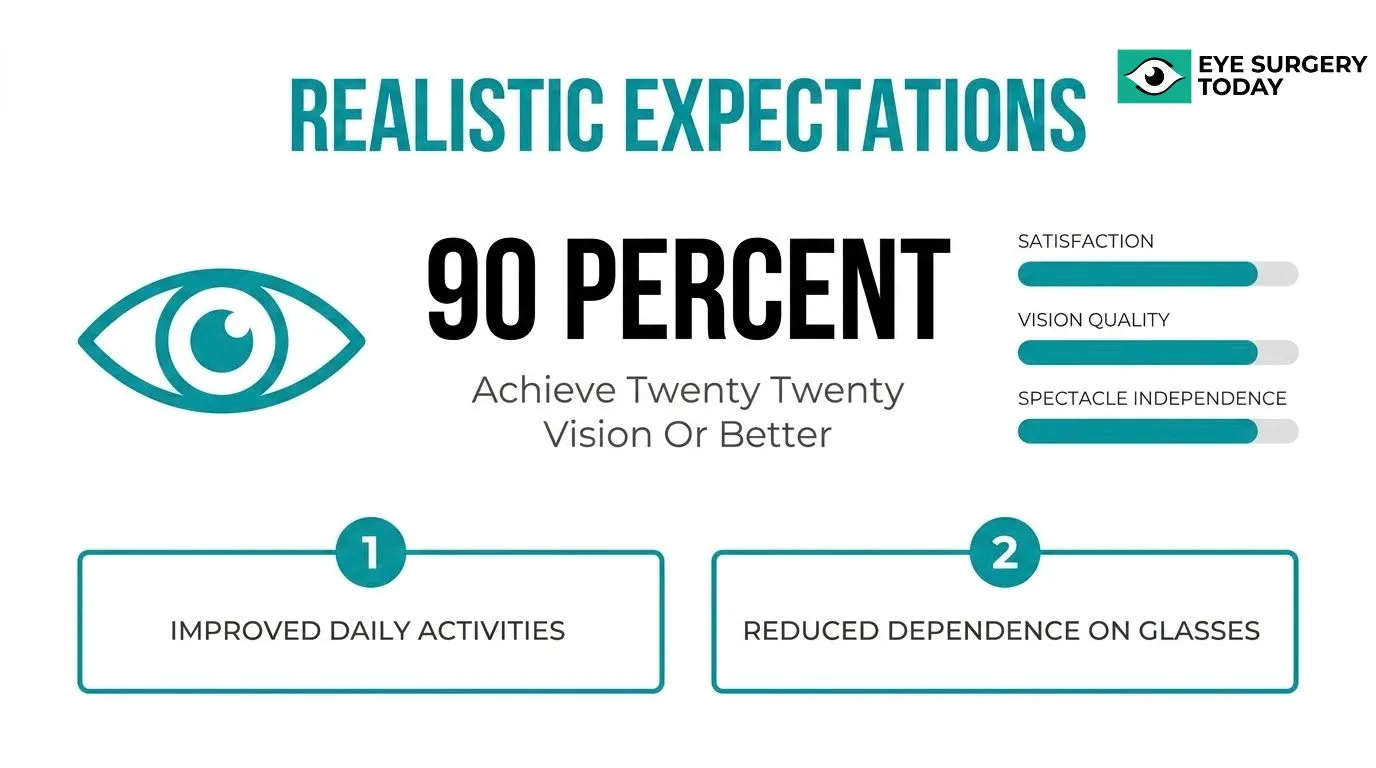
20/20 vision means the ability to see clearly at 20 feet what a person with normal vision sees at 20 feet. It serves as the standard benchmark for evaluating refractive surgery outcomes. According to an analysis of articles published between 2008 and 2015, reported by Duke University Eye Center, more than 90 percent of eyes achieve 20/20 vision or better after LASIK, and 99.5 percent achieve at least 20/40. These figures represent strong population-level outcomes, though individual results depend on preoperative prescription, corneal anatomy, and healing response. 20/40 is the threshold required for an unrestricted driver’s license in most jurisdictions, meaning the vast majority of patients can expect functional, legally adequate vision without correction.
What Range Of Visual Outcomes Is Typical For Different Refractive Errors?
The range of visual outcomes after refractive surgery varies depending on the type and severity of refractive error being corrected. Lower prescriptions for myopia generally produce the most predictable results, with higher rates of 20/20 achievement. Higher degrees of nearsightedness, farsightedness, or astigmatism carry greater risk of undercorrection, overcorrection, or regression, which can reduce the likelihood of achieving full spectacle independence. Patients with moderate prescriptions typically fall between these two ends of the spectrum. Your surgeon can provide outcome probability estimates specific to your prescription during preoperative evaluation.
How Likely Is It That You Will Still Need Glasses For Some Tasks After Surgery?
It is possible that you will still need glasses for some tasks after surgery, even after a successful procedure. Most patients achieve significant reduction in spectacle dependence, but complete freedom from glasses is not guaranteed for every visual demand. Reading glasses are commonly needed after surgery in patients over 40, as refractive surgery does not correct presbyopia, the age-related loss of near-focusing ability. Some patients may need glasses for activities such as night driving, extended near work, or high-demand visual tasks. Discussing realistic expectations for your specific age and prescription with your surgeon before the procedure is a practical step many patients overlook.
How Are Patient Satisfaction And Quality-Of-Life Changes Evaluated After Refractive Surgery?
Patient satisfaction and quality-of-life changes are evaluated using validated questionnaires, standardized visual symptom surveys, and patient-reported outcome instruments administered before and after surgery. The FDA’s LASIK Quality of Life Collaboration Project found that more than 95 percent of participants were satisfied with their vision following LASIK surgery. A 2025 systematic review and meta-analysis in the Journal of Ophthalmology, covering 11 peer-reviewed articles and 1,753 patients, found that laser vision correction improved quality of life at one, three, and six months post-surgery. These tools capture not only visual acuity but also symptom burden, such as halos, glare, and dry eye, giving a more complete picture of real-world outcomes than acuity measurements alone.
How Is Refractive Surgery Regulated And What Safety Guidelines Do Surgeons Follow?
Refractive surgery regulation combines national device oversight, professional society guidelines, and surgeon-level patient screening protocols. The sections below cover how ophthalmology societies set standards, how clinical guidelines shape patient selection, and what informed consent patients should expect.
What Role Do National And International Ophthalmology Societies Play In Setting Standards?
National and international ophthalmology societies play a central role in setting evidence-based standards for refractive surgery practice. Organizations such as the American Academy of Ophthalmology (AAO) and the European Society of Cataract and Refractive Surgeons (ESCRS) publish formal guidelines that define acceptable techniques, candidacy criteria, and perioperative protocols. The ESCRS Guideline for Cataract Surgery 2024, for example, includes dedicated sections on preoperative patient information, preoperative assessment, IOL power calculation, and perioperative procedure. These society-issued guidelines carry significant weight because they represent the consensus of large panels of practicing surgeons and researchers, making them the most authoritative benchmark against which individual clinic standards can be measured.
How Do Clinical Guidelines Inform Patient Selection And Risk Management For Refractive Surgery?
Clinical guidelines inform patient selection and risk management for refractive surgery by codifying which conditions disqualify a patient from safe treatment. The AAO Refractive Errors Preferred Practice Pattern (2023) explicitly lists contraindications including unstable refraction, keratoconus or other corneal ectasias, insufficient corneal thickness for the planned ablation depth, and uncontrolled autoimmune or immune-mediated disease. By embedding these criteria directly into preoperative screening workflows, surgeons use guidelines as a practical decision framework rather than a theoretical reference. This structured approach reduces adverse outcomes by ensuring high-risk candidates are identified and redirected before any procedure is scheduled.
What Type Of Informed Consent Should Patients Expect Before Undergoing Refractive Surgery?
Informed consent for refractive surgery is a structured process in which the surgeon discloses expected benefits, realistic risks, alternatives, and the limits of predictable outcomes before the patient agrees to proceed. Patients should expect a discussion covering procedure-specific risks such as dry eye, halos, glare, and the small possibility of ectasia, as well as the likelihood that full visual stabilization may take several months. Surgeons are expected to confirm that the patient has realistic expectations and understands that spectacle independence, while common, is not guaranteed. A signed consent document formalizes this exchange, and reputable clinics ensure this conversation is unhurried and includes an opportunity for the patient to ask questions.
How Can Eye Surgery Today Help You Learn About Refractive Surgery And Related Vision Correction Options?
Eye Surgery Today is a surgeon-reviewed education platform designed to make complex refractive surgery information clear and accessible. The sections below explain how the platform delivers guidance and summarize the key takeaways from this article.
How Does Eye Surgery Today Provide Surgeon-Reviewed Guidance On Refractive And Cataract Surgery Choices?
Eye Surgery Today provides surgeon-reviewed guidance by translating clinically accurate, evidence-based information into plain language that patients can act on. Every article is reviewed against current ophthalmology standards, covering topics such as LASIK, PRK, SMILE, phakic IOLs, refractive lens exchange, and cataract surgery with IOL planning.
The platform is built around four commitments:
- Clarity: Complex procedures are explained without unnecessary jargon.
- Transparency: Content remains unbiased and free from promotional influence.
- Expert review: All materials are surgeon-reviewed for clinical accuracy.
- Patient empowerment: Readers gain the knowledge needed to ask better questions and make informed decisions.
For anyone weighing refractive surgery options, having access to trustworthy, surgeon-reviewed education is often the most underestimated step toward a confident outcome.
What Are The Key Takeaways About What Is Refractive Surgery, Its Types, Benefits, And Risks We Have Covered?
The key takeaways about refractive surgery, its types, benefits, and risks covered in this article are:
- Definition: Refractive surgery corrects errors such as myopia, hyperopia, and astigmatism by reshaping the cornea or replacing the eye’s natural lens.
- Main types: LASIK, PRK, LASEK, SMILE, phakic IOLs, and refractive lens exchange each suit different candidacy profiles.
- Benefits: More than 90% of eyes may achieve 20/20 vision or better following laser vision correction, based on published analyses, and patient satisfaction rates are consistently high across studies.
- Risks: Side effects such as dry eye, halos, glare, and the rare risk of corneal ectasia are real considerations that require thorough preoperative evaluation.
- Candidacy: Age, prescription stability, corneal thickness, and overall eye health all influence whether laser or lens-based surgery is appropriate.
- Consultation: A structured preoperative assessment, including wavefront mapping and corneal topography, is essential before any procedure.
Understanding both the potential and the limitations of refractive surgery puts you in the strongest position to discuss options with your eye care provider.