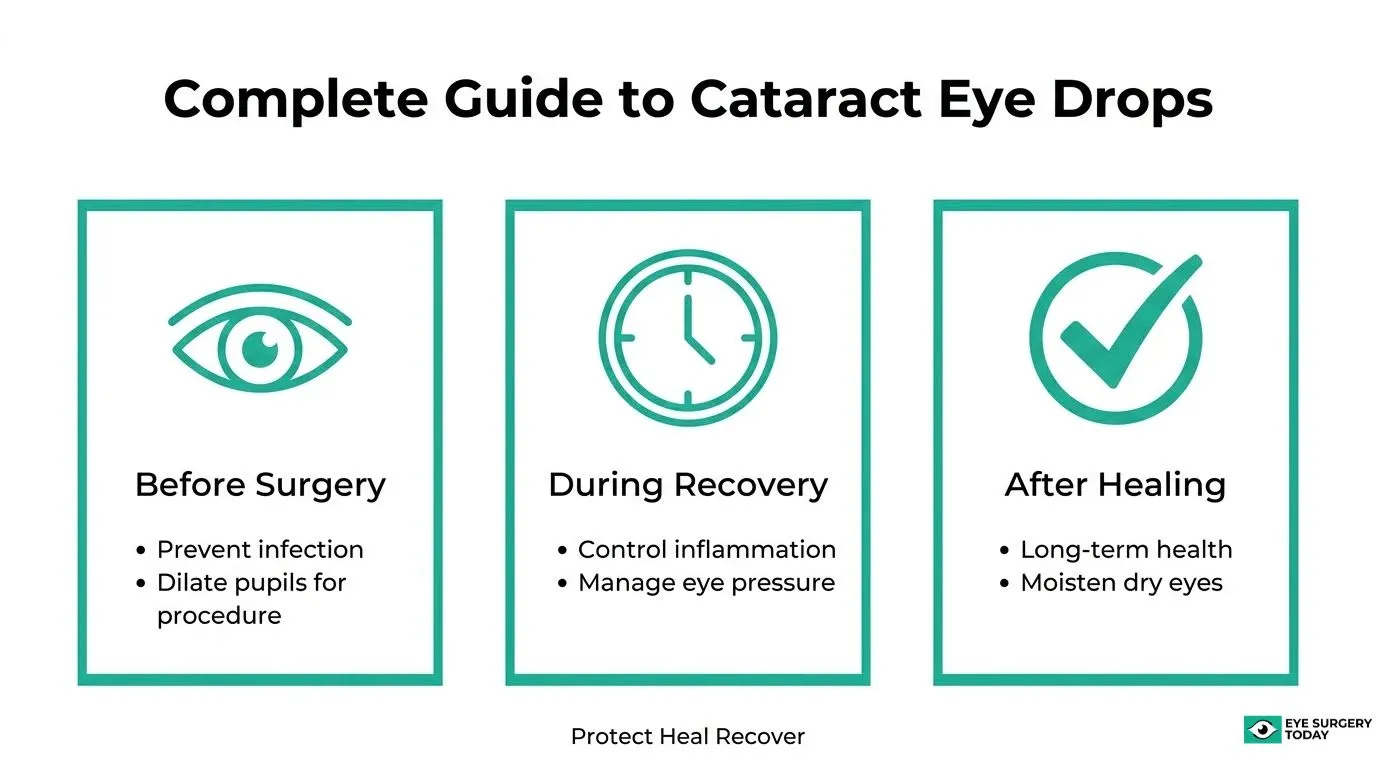
Cataract surgery eye drops are prescribed medications that protect the eye from infection, control inflammation, and support healing before and after lens replacement. Each drop category serves a specific clinical purpose at a distinct stage of the surgical process.
This guide covers preoperative drop types and their roles, proper administration technique and timing, postoperative medications and scheduling, potential side effects and risks of early discontinuation, and options for patients who may need modified or alternative regimens.
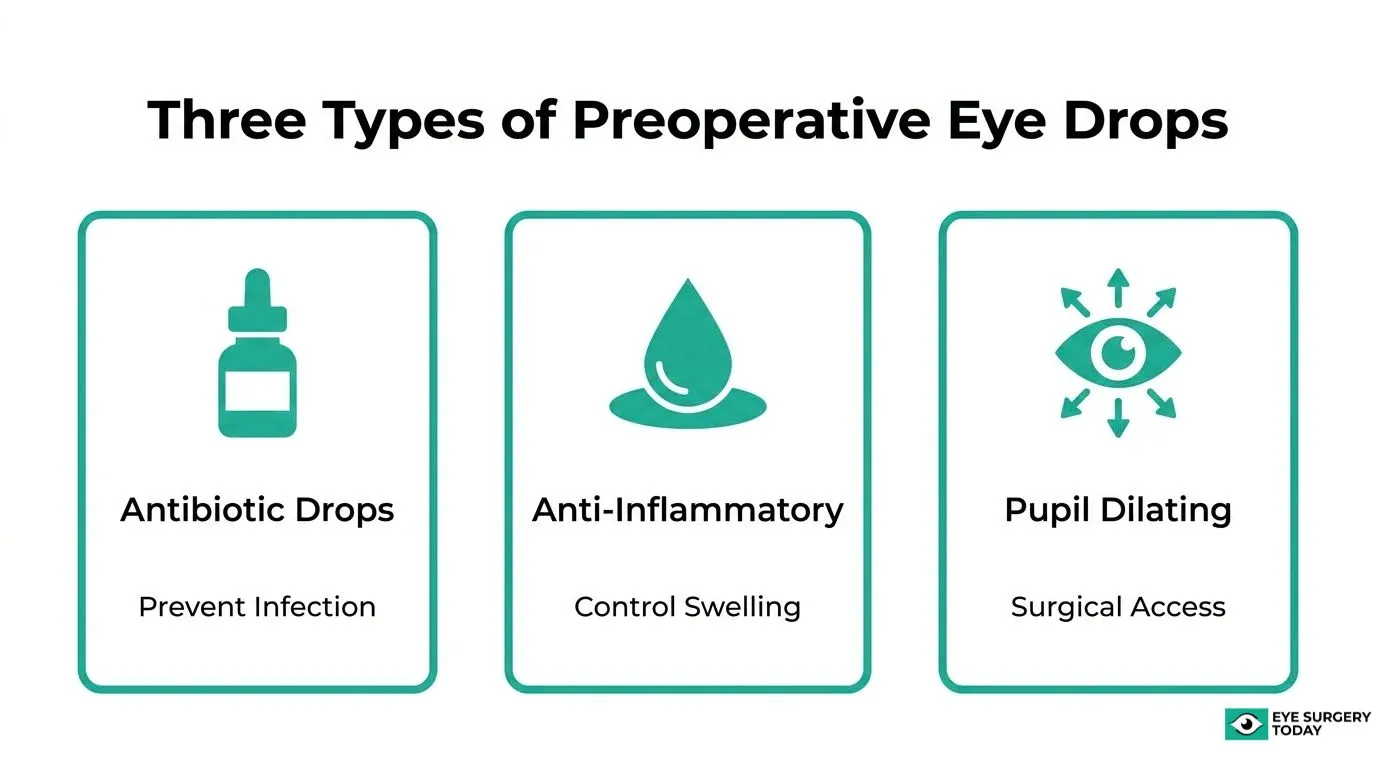
Preoperative drops include antibiotics that reduce bacterial load on the ocular surface, anti-inflammatory medications that prime the eye to manage swelling, and mydriatic drops that dilate the pupil for surgical access. Starting these medications at the correct time can influence how effectively they reach therapeutic concentrations inside the eye.
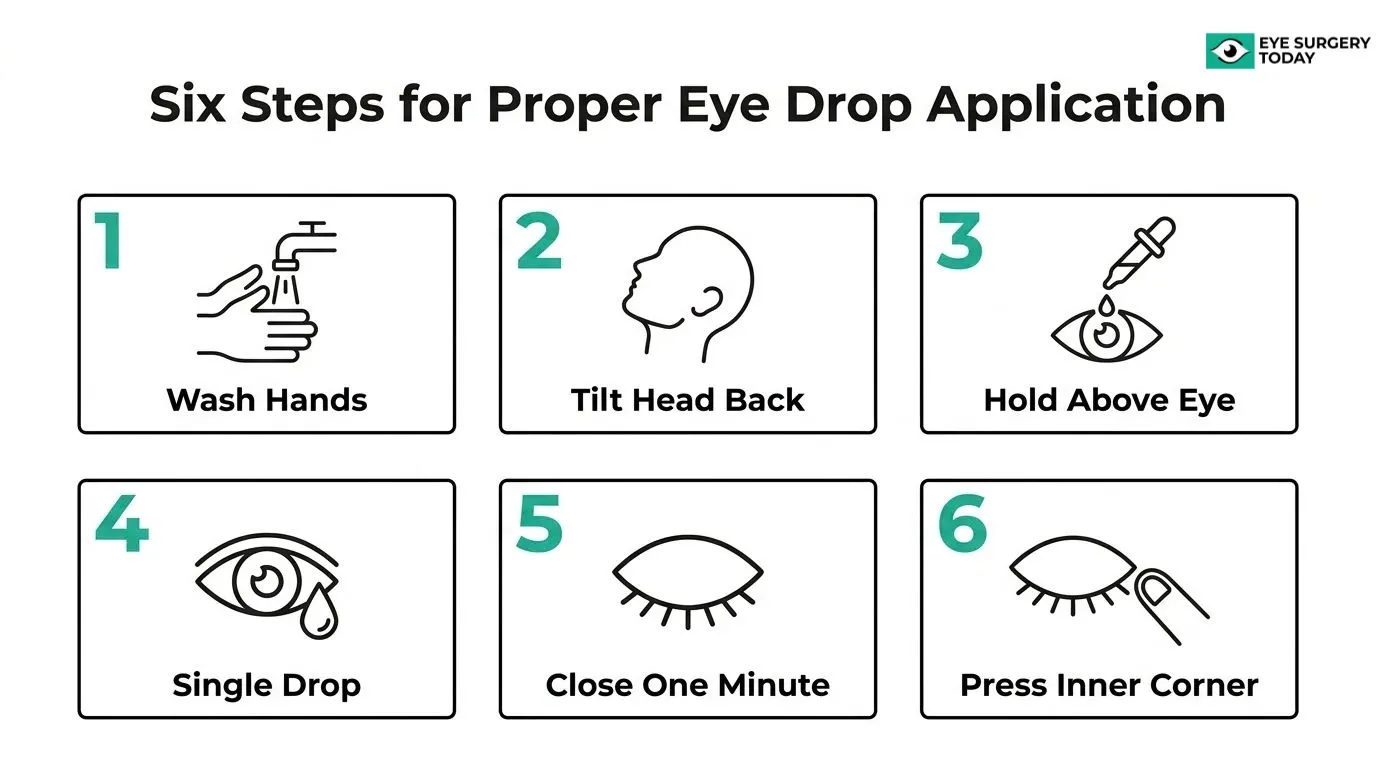
Proper technique matters as much as the drops themselves. A consistent six-step process, from hand washing through nasolacrimal occlusion, may help maximize absorption and reduce contamination risk. When multiple drops are prescribed, spacing them at least five minutes apart helps prevent one medication from washing out another.
After surgery, antibiotics, corticosteroids, NSAIDs, and lubricating drops each address a different aspect of recovery. Prescription medications typically follow a tapering schedule over four to six weeks, while preservative-free artificial tears may be needed for several months to manage post-surgical dryness.
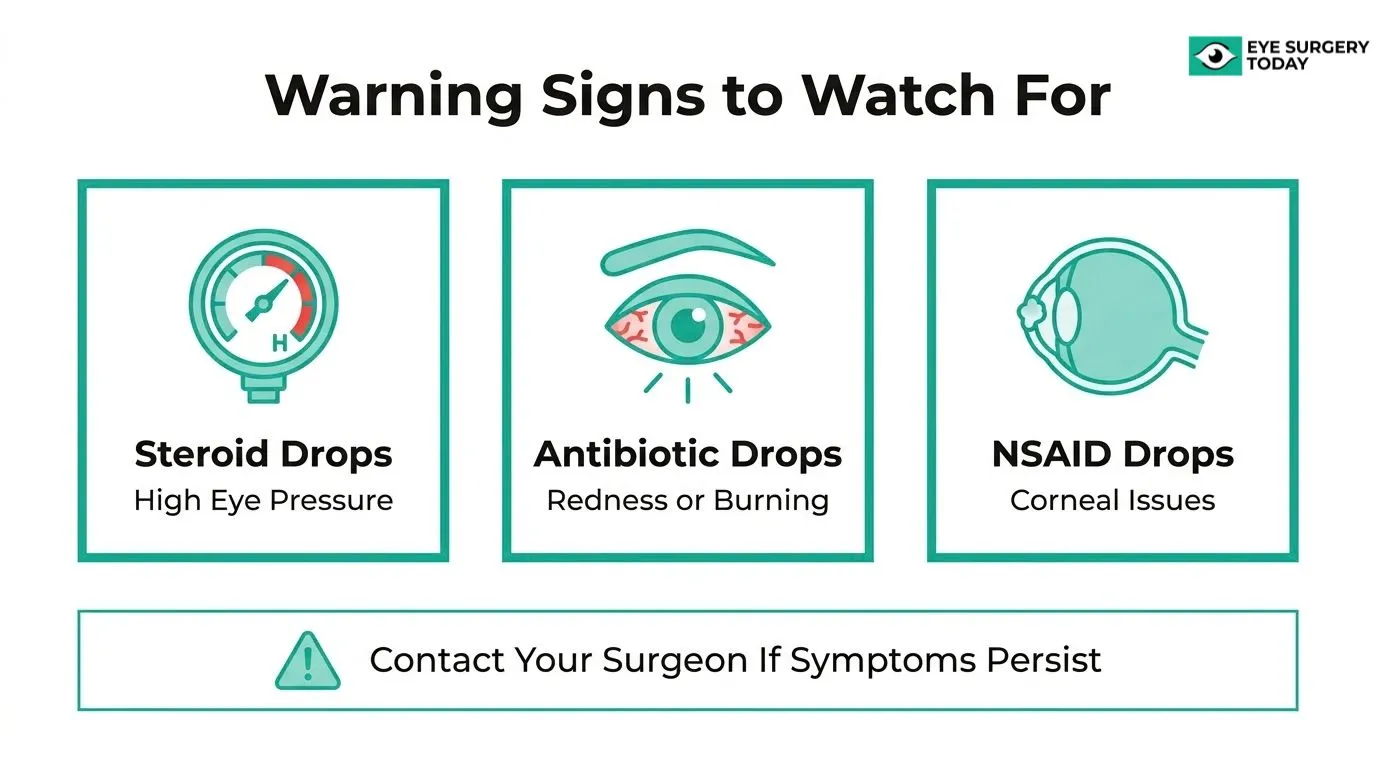
Side effects vary by drop type; steroids may contribute to elevated eye pressure, while NSAIDs carry a small risk of corneal complications. Stopping any medication early can trigger rebound inflammation or increase infection risk.
For patients with glaucoma, dry eye disease, or preservative sensitivities, modified regimens or dropless surgical approaches that deliver medication directly into the eye during the procedure may offer effective alternatives.
Why Are Eye Drops Important for Cataract Surgery?
Eye drops are important for cataract surgery because they protect the eye from infection, control inflammation, and support proper healing before and after the procedure. Each category of prescribed drops serves a distinct role in preventing complications and promoting a smooth recovery.
Cataract surgery involves creating a small incision in the eye to remove the clouded natural lens and replace it with an artificial intraocular lens. Although modern techniques have made the procedure remarkably safe, the eye remains vulnerable to bacterial contamination, postoperative swelling, and delayed tissue repair during the healing window. Prescribed eye drops address these risks at each surgical stage, from preoperative preparation through several weeks of recovery.
The three primary functions of cataract surgery eye drops are:
- Infection prevention: Antibiotic drops reduce bacterial load on the ocular surface before surgery and guard against endophthalmitis afterward.
- Inflammation control: Steroid and NSAID drops manage the immune response triggered by surgical trauma, helping prevent complications such as cystoid macular edema.
- Comfort and lubrication: Artificial tears restore moisture to the ocular surface, which can become temporarily disrupted during and after surgery.
Without consistent use of these medications, patients may face preventable setbacks. Skipping doses or stopping drops prematurely can allow inflammation to rebound or bacteria to colonize the surgical site, both of which may compromise visual outcomes. For many patients, the eye drop regimen is the most active role they play in their own surgical success, making proper technique and adherence essential.
Understanding each drop’s purpose, timing, and correct application helps patients follow their regimen with confidence, rather than viewing it as an inconvenient afterthought.
What Eye Drops Are Prescribed Before Cataract Surgery?
The eye drops prescribed before cataract surgery typically fall into three categories: antibiotics, anti-inflammatory drops, and pupil-dilating drops. Each serves a distinct role in preparing the eye for a safe procedure.
What Do Antibiotic Eye Drops Do Before Cataract Surgery?
Antibiotic eye drops before cataract surgery reduce the bacterial load on the eye’s surface to help prevent postoperative infection, most critically endophthalmitis. Surgeons commonly prescribe fluoroquinolone antibiotics, such as moxifloxacin or gatifloxacin, in the days leading up to the procedure.
According to a systematic review and meta-analysis published on PubMed, the relative risk of endophthalmitis dropped to 0.12 (95% CI: 0.08–0.18) when prophylactic antibiotics were used, a statistically significant reduction (p < 0.00001). Although that finding specifically evaluated intracameral delivery, preoperative topical antibiotics remain a standard part of most surgical protocols because they lower conjunctival bacterial counts before the incision is made. Even a small reduction in surface bacteria can meaningfully lower the chance of organisms entering the eye during surgery, making this step one of the most consequential in the entire preoperative regimen.
What Do Anti-Inflammatory Eye Drops Do Before Surgery?
Anti-inflammatory eye drops before surgery help control the inflammatory response that cataract surgery triggers inside the eye. Surgeons may prescribe a nonsteroidal anti-inflammatory drug (NSAID), such as ketorolac or nepafenac, or a corticosteroid, depending on the patient’s medical history.
Starting these drops before the procedure primes the eye to manage prostaglandin release, which can cause pain, swelling, and miosis (pupil constriction) during the operation. By suppressing this cascade early, anti-inflammatory drops may reduce the risk of complications, such as cystoid macular edema, that can develop when postoperative inflammation is poorly controlled. For patients with diabetes or other conditions that predispose them to heightened inflammation, preoperative anti-inflammatory therapy is particularly valuable. Your ophthalmologist will determine which type and dosing schedule best fits your individual risk profile.
What Do Pupil-Dilating Eye Drops Do Before Surgery?
Pupil-dilating eye drops before surgery widen the pupil so the surgeon can access and remove the clouded lens. These drops, known as mydriatics, typically include phenylephrine and tropicamide, which work through different mechanisms to achieve full dilation.
Phenylephrine stimulates the dilator muscle of the iris, while tropicamide temporarily relaxes the sphincter muscle. Together, they produce a wide, stable pupil that gives the surgeon a clear view of the lens and surrounding structures throughout the procedure. Inadequate dilation can complicate lens removal and increase the risk of intraoperative issues, including iris trauma. Because some patients, particularly those taking tamsulosin or other alpha-blockers, may experience poor dilation, identifying these factors beforehand allows the surgical team to adjust its approach.
With the preoperative drop regimen in place, proper timing and technique determine how effectively these medications work.
How Should You Use Eye Drops Before Cataract Surgery?
You should use eye drops before cataract surgery by following your surgeon’s prescribed timing, applying drops with proper technique, and contacting your eye care team if you miss a dose.
When Should You Start Eye Drops Before Surgery?
You should start eye drops before surgery according to the specific schedule your ophthalmologist provides, which typically ranges from one to three days before the procedure. Some surgeons prescribe antibiotic drops several days in advance, while others favor a concentrated dosing approach on the day of surgery.
A prospective randomized triple-masked clinical trial of 156 patients, published on PubMed, found that topical moxifloxacin 0.5% administered every 15 minutes for one hour starting two hours before surgery achieved a significantly higher mean aqueous humor concentration (2.05 µg/mL) compared to a once-daily regimen given the day before (1.58 µg/mL). This finding underscores why precise timing matters more than simply remembering to use the drops at some point beforehand.
Because protocols vary between surgeons, always confirm your exact start date and dosing frequency at your preoperative appointment.
How Do You Apply Eye Drops Correctly?
You apply eye drops correctly by following a consistent six-step technique that minimizes contamination and maximizes absorption:
- Wash your hands thoroughly with soap and water.
- Tilt your head back and gently pull down your lower eyelid to form a small pocket.
- Hold the dropper above the eye without touching the tip to your eyelid or lashes.
- Instill a single drop into the conjunctival sac (the pocket formed by the lower lid).
- Close your eyelid gently for approximately one minute.
- Apply light pressure to the inner corner of the eye (nasolacrimal occlusion) to reduce systemic absorption.
If your surgeon prescribes multiple eye drops, wait at least five minutes between each medication so the first drop is not washed away by the second.
What Should You Do If You Miss a Dose Before Surgery?
You should contact your surgeon’s office as soon as you realize you missed a dose before surgery. A single missed dose does not automatically cancel the procedure, but your eye care team needs to know so they can adjust the plan if necessary.
Helpful steps when a dose is missed include:
- Administering the missed drop immediately if it is close to the scheduled time.
- Skipping the missed dose and resuming the regular schedule if the next dose is due soon.
- Never doubling up on drops to compensate, as this can increase the risk of irritation.
Your surgeon may modify the preoperative protocol on the day of surgery to ensure adequate medication levels in the eye. Consistent communication with your care team is the simplest way to keep your preparation on track.
What Eye Drops Are Prescribed After Cataract Surgery?
Eye drops prescribed after cataract surgery typically include antibiotics, steroids, NSAIDs, and lubricating drops. Each type serves a distinct role in preventing complications and supporting recovery.
What Do Antibiotic Eye Drops Do After Cataract Surgery?
Antibiotic eye drops after cataract surgery prevent bacterial infection at the surgical site during the critical healing window. Commonly prescribed antibiotics, such as moxifloxacin or gatifloxacin, target a broad spectrum of bacteria that could enter through the corneal incision.
Consistent use matters significantly. According to EyeWiki (American Academy of Ophthalmology), premature discontinuation or skipping of postoperative eye drops can lead to rebound iritis, a form of acute traumatic anterior uveitis that may manifest as excessive inflammation, increased infection risk, and delayed healing. For patients with dry eye disease, preservative-free formulations may be preferable, as they can reduce ocular surface irritation during the postoperative period. Following the full prescribed course, rather than stopping when the eye feels comfortable, helps ensure the incision site remains protected throughout recovery.
What Do Steroid Eye Drops Do After Cataract Surgery?
Steroid eye drops after cataract surgery reduce inflammation inside the eye. Corticosteroids such as prednisolone acetate and difluprednate suppress the immune response triggered by surgical trauma, controlling swelling, redness, and discomfort during healing.
However, these medications carry notable risks. According to EyeWiki (American Academy of Ophthalmology), adverse effects of topical corticosteroids used after cataract surgery include steroid-induced ocular hypertension, delayed wound healing, and increased susceptibility to ocular infections. Because of these potential complications, ophthalmologists typically prescribe steroids on a tapering schedule, gradually reducing the dose over several weeks rather than stopping abruptly. This careful approach is one reason why patients should never adjust their steroid regimen without consulting their eye care provider first.
What Do NSAID Eye Drops Do After Cataract Surgery?
NSAID eye drops after cataract surgery reduce pain and help prevent cystoid macular edema, a condition where fluid accumulates in the macula and can temporarily blur vision. Common postoperative NSAIDs include ketorolac, bromfenac, and nepafenac.
These drops work through a different anti-inflammatory pathway than steroids, which is why surgeons often prescribe both together. NSAIDs block prostaglandin production, addressing swelling that steroids alone may not fully control. In clinical practice, combining both drop types provides more comprehensive protection than relying on either one individually.
What Do Lubricating Eye Drops Do After Cataract Surgery?
Lubricating eye drops after cataract surgery soothe dryness, irritation, and the gritty sensation many patients experience during recovery. The surgical process can temporarily disrupt the tear film, making artificial tears an important comfort measure.
Preservative-free formulations are generally preferred because they minimize additional irritation to the healing ocular surface. Most ophthalmologists recommend using lubricating drops as needed throughout the day, spaced at least five minutes apart from prescription medications. While lubricating drops do not treat infection or inflammation directly, maintaining tear film stability supports overall corneal healing and may improve visual clarity during recovery.
With each drop type serving a specific purpose, following a structured schedule helps ensure these medications work together effectively.
How Should You Follow Your Post-Surgery Eye Drop Schedule?
You should follow your post-surgery eye drop schedule by using each prescribed drop at the correct times, spacing multiple medications apart, and continuing the full course as directed by your surgeon.
What Does a Typical Post-Surgery Eye Drop Schedule Look Like?
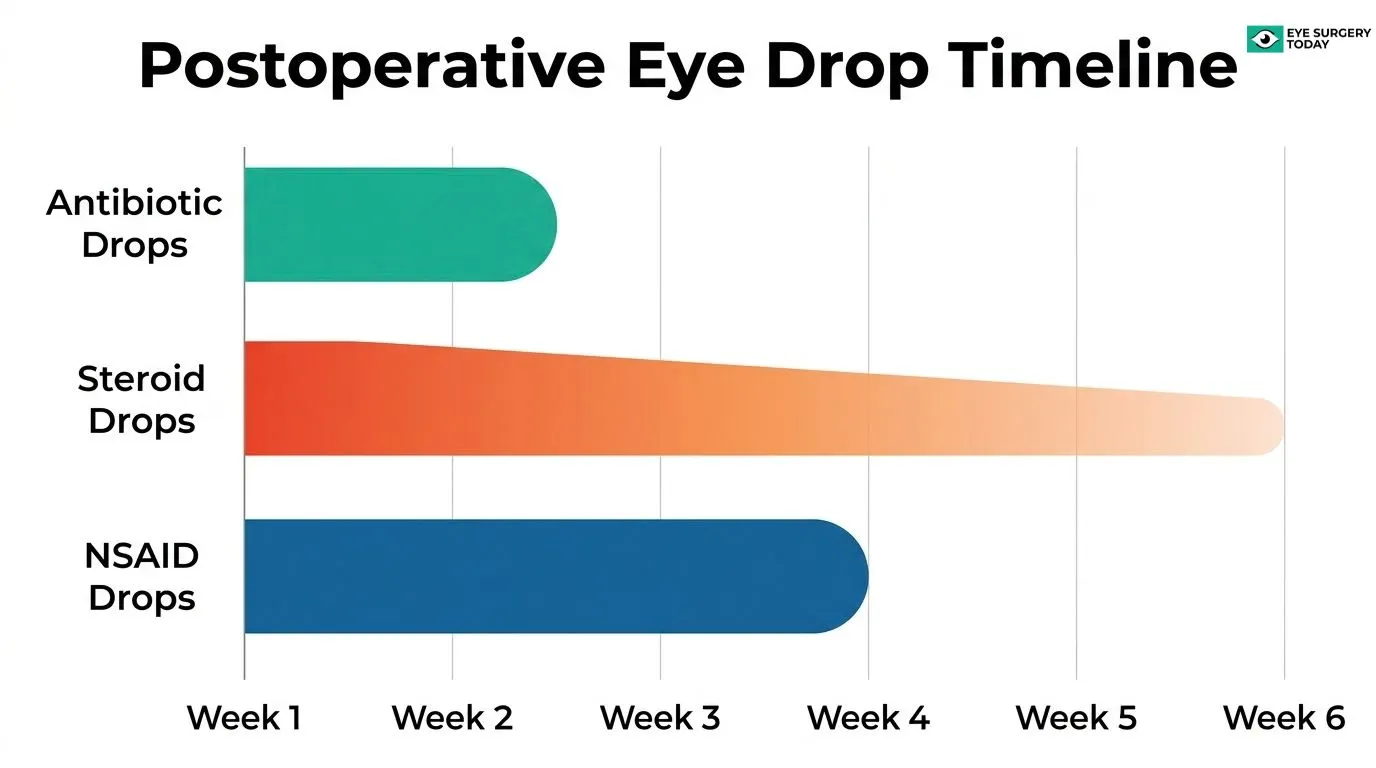
A typical post-surgery eye drop schedule involves three categories of drops used at staggered frequencies over several weeks. Most surgeons prescribe antibiotic drops, steroid drops, and NSAID drops, each on its own tapering timeline.
A common schedule follows this general pattern:
- Week 1: Antibiotic drops four times daily, steroid drops four times daily, NSAID drops two to four times daily.
- Weeks 2 to 3: Antibiotic drops are often discontinued; steroid drops taper to two to three times daily, and NSAIDs continue at a reduced frequency.
- Weeks 4 to 6: Steroid drops taper to once daily before stopping; NSAIDs may continue through week four or longer depending on the surgeon’s protocol.
Your ophthalmologist may adjust this timeline based on your healing progress. Writing each drop’s schedule on a chart or setting phone reminders can help you stay consistent throughout recovery.
How Do You Space Multiple Eye Drops Apart?
You should space multiple eye drops apart by waiting at least five minutes between each different medication. This interval allows the first drop to absorb into the eye tissue before the next one is applied.
Applying drops too close together can wash the previous medication out of the conjunctival sac, reducing its effectiveness. If you use three different drops at the same scheduled time, the full sequence may take ten to fifteen minutes.
A practical approach for managing spacing includes:
- Applying the drops in the same order each time so the routine becomes automatic.
- Using a timer or phone alarm to track the five-minute gap.
- Keeping all prescribed bottles together in one location to avoid missing a medication.
Preservative-free artificial tears, if also prescribed, should be applied last and spaced at least five minutes after the final medicated drop.
How Long Do You Need Eye Drops After Cataract Surgery?
You need eye drops after cataract surgery for approximately four to six weeks for prescription medications, though lubricating drops may be needed longer. Antibiotic drops are typically the shortest course at one to two weeks, while steroid and NSAID drops taper gradually over four to six weeks.
Beyond the prescription regimen, dry eye symptoms commonly persist for several months. According to recent research highlighted by Northwest Eye Clinic, preservative-free artificial tears containing hyaluronic acid can significantly reduce dry eye symptoms and improve tear film stability when used as needed for several months after cataract surgery.
Individual timelines vary based on healing response, pre-existing conditions such as glaucoma or dry eye disease, and the specific surgical technique used. Never discontinue any prescribed drop early without your surgeon’s approval, as stopping prematurely can lead to complications. For many patients, keeping lubricating drops on hand well past the initial recovery period is one of the simplest ways to maintain long-term comfort after surgery.
Understanding the full duration of your eye drop regimen helps set realistic expectations for the weeks and months following your procedure.
What Are the Possible Side Effects of Cataract Surgery Eye Drops?
The possible side effects of cataract surgery eye drops vary by medication type. Steroid drops, antibiotic drops, and NSAID drops each carry distinct risks that patients should recognize early.
What Side Effects May Steroid Eye Drops Cause?
The side effects steroid eye drops may cause include elevated eye pressure, slower wound healing, and a higher chance of developing ocular infections. According to EyeWiki (American Academy of Ophthalmology), adverse effects of topical corticosteroids used after cataract surgery include steroid-induced ocular hypertension, delayed wound healing, and increased susceptibility to ocular infections.
Steroid-induced pressure spikes can be particularly concerning for patients already at risk for glaucoma. Because these effects often develop gradually over the course of treatment, they may go unnoticed without regular follow-up appointments. Your ophthalmologist may monitor intraocular pressure during the tapering schedule to catch any changes before they become problematic.
What Side Effects May Antibiotic Eye Drops Cause?
The side effects antibiotic eye drops may cause include:
- Mild stinging or burning upon instillation
- Localized redness or irritation at the application site
- Allergic reactions, such as itching, swelling, or contact dermatitis around the eyelids
- Temporary blurred vision immediately after application
These reactions are typically mild and resolve once the medication course ends. Severe allergic responses are uncommon but warrant immediate contact with your eye care provider. Patients with known sensitivities to fluoroquinolone antibiotics should inform their surgeon before surgery so an alternative antibiotic can be selected.
What Side Effects May NSAID Eye Drops Cause?
The side effects NSAID eye drops may cause include corneal toxicity and, in rare cases, corneal melting when epithelial breakdown is present. Stinging upon application and mild eye irritation are also commonly reported.
Prolonged NSAID use without proper monitoring can increase the risk of corneal complications, especially in patients with pre-existing dry eye or compromised corneal surfaces. For this reason, NSAID drops are typically prescribed for a limited duration after cataract surgery. Reporting persistent pain, worsening redness, or vision changes to your surgeon promptly can help prevent serious complications.
Understanding these potential side effects helps patients recognize warning signs that call for timely medical attention.
What Happens If You Stop Eye Drops Too Early After Surgery?
Stopping eye drops too early after cataract surgery can trigger rebound inflammation, increase infection risk, and delay healing. According to EyeWiki (American Academy of Ophthalmology), premature discontinuation or skipping of postoperative eye drops after cataract surgery can lead to “rebound” iritis, a rare form of acute traumatic anterior uveitis that manifests as excessive inflammation, increased risk of infection, and delayed healing.
The consequences of early discontinuation may include:
- Rebound iritis: Inflammation inside the eye can flare suddenly when anti-inflammatory drops are stopped before the healing process is complete.
- Elevated infection risk: Without the full course of antibiotic drops, bacteria may colonize the surgical site during the vulnerable postoperative window.
- Delayed visual recovery: Uncontrolled inflammation can slow tissue repair and postpone clarity of vision.
- Cystoid macular edema: Persistent inflammation left unchecked by premature NSAID discontinuation may contribute to fluid accumulation in the macula.
Even when the eye feels comfortable, residual inflammation can persist beneath the surface for weeks. This is why ophthalmologists prescribe a tapering schedule rather than an abrupt stop. Your eye doctor should always guide any changes to your postoperative drop regimen, including when it is safe to discontinue each medication.
Understanding these risks highlights why consistent use of over-the-counter lubricating drops also matters during recovery.
Can You Use Over-the-Counter Eye Drops After Cataract Surgery?
Yes, you can use certain over-the-counter eye drops after cataract surgery, but only specific types and only with your surgeon’s approval. Preservative-free artificial tears are generally the safest OTC option, while medicated OTC drops such as redness relievers or allergy drops should be avoided unless explicitly recommended.
Preservative-free artificial tears may help manage the dryness and irritation that commonly follow cataract surgery. Recent research from Northwest Eye Clinic highlights that OTC preservative-free artificial tears containing hyaluronic acid can significantly reduce the incidence of dry eye symptoms and improve tear film stability when used as needed for several months after surgery. Products with preservatives, by contrast, can irritate healing tissue and may interfere with prescribed postoperative medications.
OTC drops that should typically be avoided without surgeon guidance include:
- Redness-relieving drops containing vasoconstrictors, which may mask signs of complications.
- Antihistamine or allergy drops that could interact with prescribed anti-inflammatory medications.
- Medicated drops for itching or irritation that contain active ingredients not cleared for post-surgical use.
The timing matters as well. Most surgeons recommend waiting until prescribed antibiotic and steroid drops are completed before introducing any OTC product independently. Even preservative-free artificial tears are best started only after the surgeon confirms that initial healing is progressing normally.
For patients already managing conditions like dry eye disease, the choice between preserved and preservative-free formulations becomes especially important. Preserved drops used long-term can contribute to ocular surface toxicity, making recovery slower and less comfortable. This distinction is one reason why discussing your full eye drop regimen with your surgeon before and after surgery leads to better outcomes overall.
Understanding which OTC drops are safe sets the stage for recognizing when a modified eye drop regimen may be necessary.
Who May Need a Modified Eye Drop Regimen for Cataract Surgery?
Patients with pre-existing eye conditions, medication sensitivities, or adherence challenges may need a modified eye drop regimen for cataract surgery. The sections below cover adjustments for glaucoma, dry eye disease, and preservative allergies.
What If You Have Glaucoma and Need Cataract Surgery Eye Drops?
If you have glaucoma and need cataract surgery eye drops, your ophthalmologist may adjust both your existing glaucoma medications and your surgical drop schedule to avoid harmful drug interactions or excessive intraocular pressure changes. Some glaucoma drops contain preservatives or active ingredients that can interfere with postoperative healing. Your surgeon may temporarily discontinue certain glaucoma medications before and after surgery, substitute preservative-free alternatives, or modify dosing intervals. Because poor compliance with postoperative eye drop regimens has been reported to be as high as 30%, adding glaucoma drops to an already complex schedule can increase the risk of missed doses. For patients managing both conditions, dropless cataract surgery, which uses intracameral injections of medications like Tri-Moxi during the procedure, may simplify the postoperative routine without compromising outcomes.
What If You Have Dry Eye Disease Before Cataract Surgery?
If you have dry eye disease before cataract surgery, your eye care provider may modify your drop regimen to minimize ocular surface irritation. Standard postoperative drops often contain preservatives such as benzalkonium chloride, which can worsen dry eye symptoms and destabilize the tear film. According to a randomized study published by the American Academy of Ophthalmology, signs and symptoms of dry eye were significantly reduced after cataract surgery when preservative-free eye drops were used compared to preserved formulations. Your surgeon may recommend:
- Switching all postoperative medications to preservative-free versions.
- Adding lubricating drops with hyaluronic acid for tear film support.
- Starting dry eye treatment several weeks before surgery to optimize the ocular surface.
Addressing dry eye proactively can improve both comfort and visual outcomes after the procedure.
What If You Are Allergic to Preservatives in Eye Drops?
If you are allergic to preservatives in eye drops, your cataract surgeon may prescribe preservative-free formulations of antibiotics, steroids, and NSAIDs to prevent allergic reactions during recovery. Preservative allergies can cause redness, itching, lid swelling, and chronic inflammation that mimics or masks postoperative complications. For patients with confirmed sensitivities, dropless cataract surgery offers another option. According to a clinical study published in PubMed Central, dropless surgery using intracameral Tri-Moxi showed no significant difference in postoperative outcomes compared to traditional topical regimens, effectively eliminating preservative exposure entirely. Identifying preservative allergies before surgery allows for safer, more comfortable recovery planning.
With individual risk factors addressed, understanding the broader alternatives to traditional eye drop regimens can further simplify the process.
Are There Alternatives to Traditional Eye Drop Regimens?
Yes, there are alternatives to traditional eye drop regimens for cataract surgery. Dropless cataract surgery delivers medications directly into the eye during the procedure, eliminating or reducing the need for postoperative topical drops.
This approach involves intracameral or intravitreal injection of combined medications, such as Tri-Moxi (triamcinolone and moxifloxacin), at the time of surgery. Triamcinolone controls inflammation while moxifloxacin prevents infection, addressing both concerns in a single step.
According to a clinical study published in PubMed Central, dropless cataract surgery showed no significant difference in postoperative outcomes compared to traditional topical eye drop regimens. These findings suggest that injected medications can be just as effective as weeks of self-administered drops.
Dropless approaches may particularly benefit patients who struggle with drop compliance. With nonadherence rates reported as high as 30% among cataract surgery patients, removing the burden of a complex daily regimen can help ensure consistent medication delivery. Patients with arthritis, tremors, or difficulty with proper instillation technique are often strong candidates.
Not every patient qualifies for a dropless protocol, however. Your ophthalmologist evaluates factors such as surgical complexity, ocular history, and individual risk profile before recommending this option. Proper eye drop use and emerging alternatives both play a role in achieving the best surgical results.
How Does Proper Eye Drop Use Support Your Cataract Surgery Outcome?
Proper eye drop use supports your cataract surgery outcome by reducing infection risk, controlling inflammation, and promoting faster healing. The sections below cover how Eye Surgery Today can help you prepare and the key takeaways to remember.
Can Eye Surgery Today Help You Prepare for Cataract Surgery?
Yes, Eye Surgery Today can help you prepare for cataract surgery by providing surgeon-reviewed educational resources that explain each stage of the eye drop process. Understanding preoperative protocols, including antisepsis steps like povidone-iodine disinfection, gives patients the confidence to follow their prescribed regimen accurately.
Eye Surgery Today breaks down complex medication schedules into clear, actionable guidance. According to current literature reviewed by the American Academy of Ophthalmology, preoperative disinfection with 5% povidone-iodine is as effective as 10% PVI for cataract surgery antisepsis while being less toxic to the corneal epithelium. Knowing details like these helps patients understand why each step in their preparation matters.
From preoperative antibiotics to postoperative steroid tapers, Eye Surgery Today covers the full eye drop timeline so patients can approach surgery feeling informed and prepared.
What Are the Key Takeaways About Eye Drops for Cataract Surgery?
The key takeaways about eye drops for cataract surgery are:
- Preoperative eye drops, including antibiotics, anti-inflammatories, and pupil-dilating drops, help prepare the eye and reduce the risk of surgical complications.
- Postoperative eye drops control inflammation, prevent infection, and may help reduce the incidence of cystoid macular edema.
- Correct administration technique, such as washing hands, instilling drops into the conjunctival sac, and closing the eyelid for one minute, improves medication absorption and reduces contamination risk.
- Stopping eye drops too early may lead to rebound inflammation and delayed healing.
- Patients with conditions like glaucoma, dry eye disease, or preservative allergies may need a modified regimen tailored by their ophthalmologist.
- Alternatives to traditional drop regimens, including dropless cataract surgery, may be appropriate for patients who have difficulty with adherence.
Following the prescribed eye drop schedule closely remains one of the most practical steps patients can take to support a smooth recovery after cataract surgery.