Astigmatism sounds scarier than it is — and cataract surgery is the best opportunity most patients will ever have to correct it.
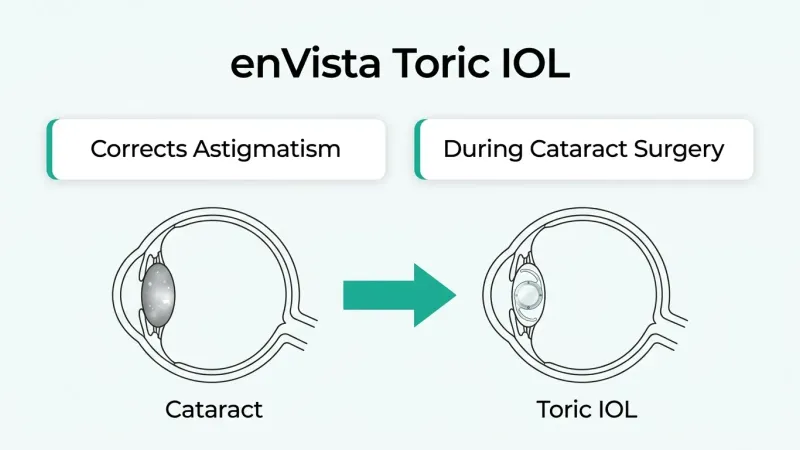
In this episode of Eye Surgery Today, surgeons explain what astigmatism actually does to your vision (that smeared, un-crisp “big E” on the eye chart), why every patient with healthy eyes should strongly consider correcting it, and the full range of tools available to do it — from femtosecond laser arcuate incisions for lower levels to toric IOLs for moderate-to-high astigmatism.
They also address why “I’ll just wear glasses anyway” isn’t a complete reason to skip correction, and the one legitimate clinical exception where it may not be appropriate.
What you’ll learn:
• What astigmatism is and why it causes blurry, smeared vision
• Why the cornea is shaped like a football instead of a marble in astigmatic eyes
• How femtosecond laser arcuate incisions reduce lower levels of astigmatism
• What the Wortz-Gupta formula shows about sub-1 diopter correction outcomes
• When toric IOLs are the right choice over arcuate incisions
• How a toric lens counterbalances corneal astigmatism rather than reshaping it
• How laser-guided alignment ensures the toric lens lands on the right axis
• How the light-adjustable lens corrects astigmatism post-operatively
• Why surgeons recommend correction even for patients who plan to wear glasses
• The one exception: irregular astigmatism from corneal disease
Related topics: toric IOL, arcuate incisions, femtosecond laser cataract surgery, corneal astigmatism, keratometry, IOL alignment, EDOF toric, trifocal toric, light-adjustable lens
Learn more: https://eyesurgerytoday.com/