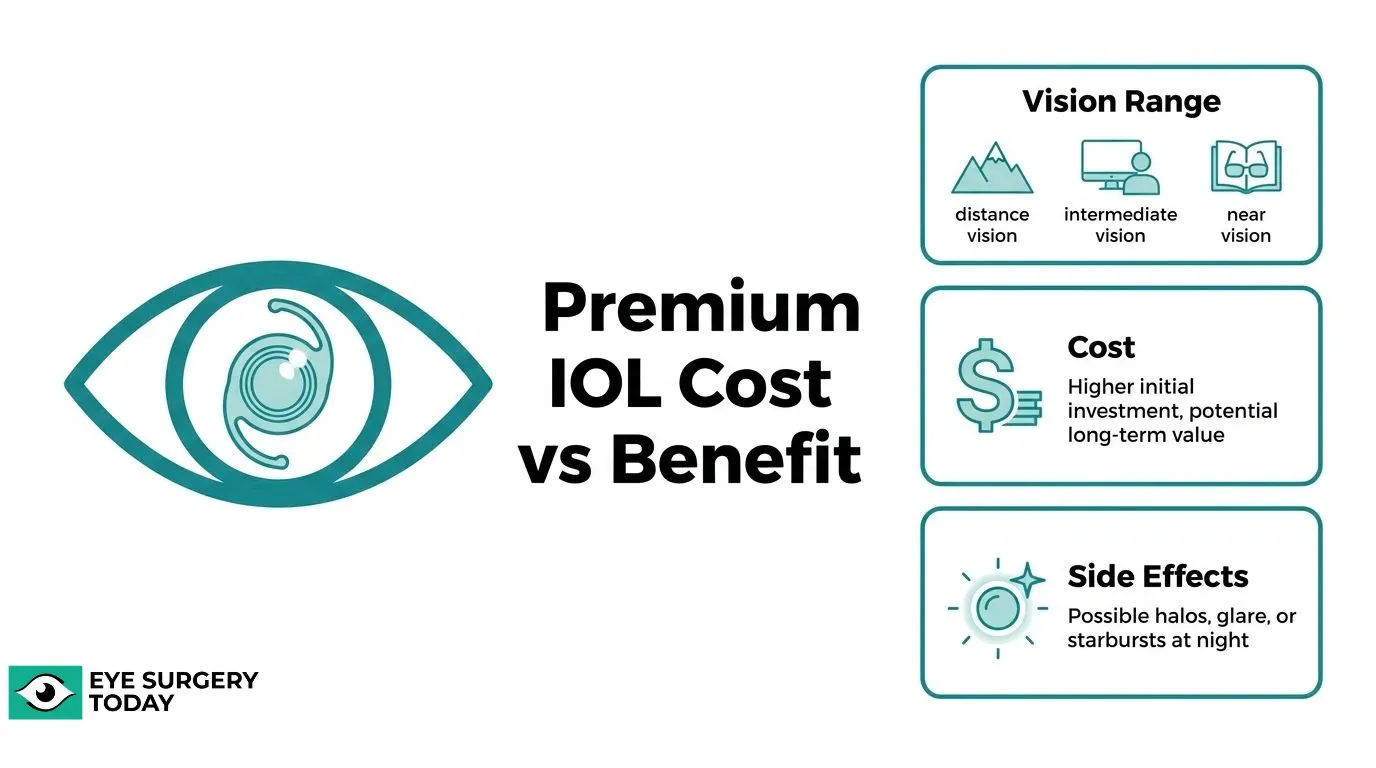
A premium cataract lens implant is an intraocular lens (IOL) that provides broader visual range, astigmatism correction, or post-implantation adjustability beyond what a standard monofocal IOL offers. Because insurance programs like Medicare cover only a conventional single-focus lens, any upgrade requires additional out-of-pocket payment.
This guide covers the differences between premium IOL types, their costs and financing, clinical benefits and visual quality trade-offs, candidacy and risk factors, lens-to-lens comparisons, realistic outcome expectations, the surgical pathway, and how to make a confident decision.
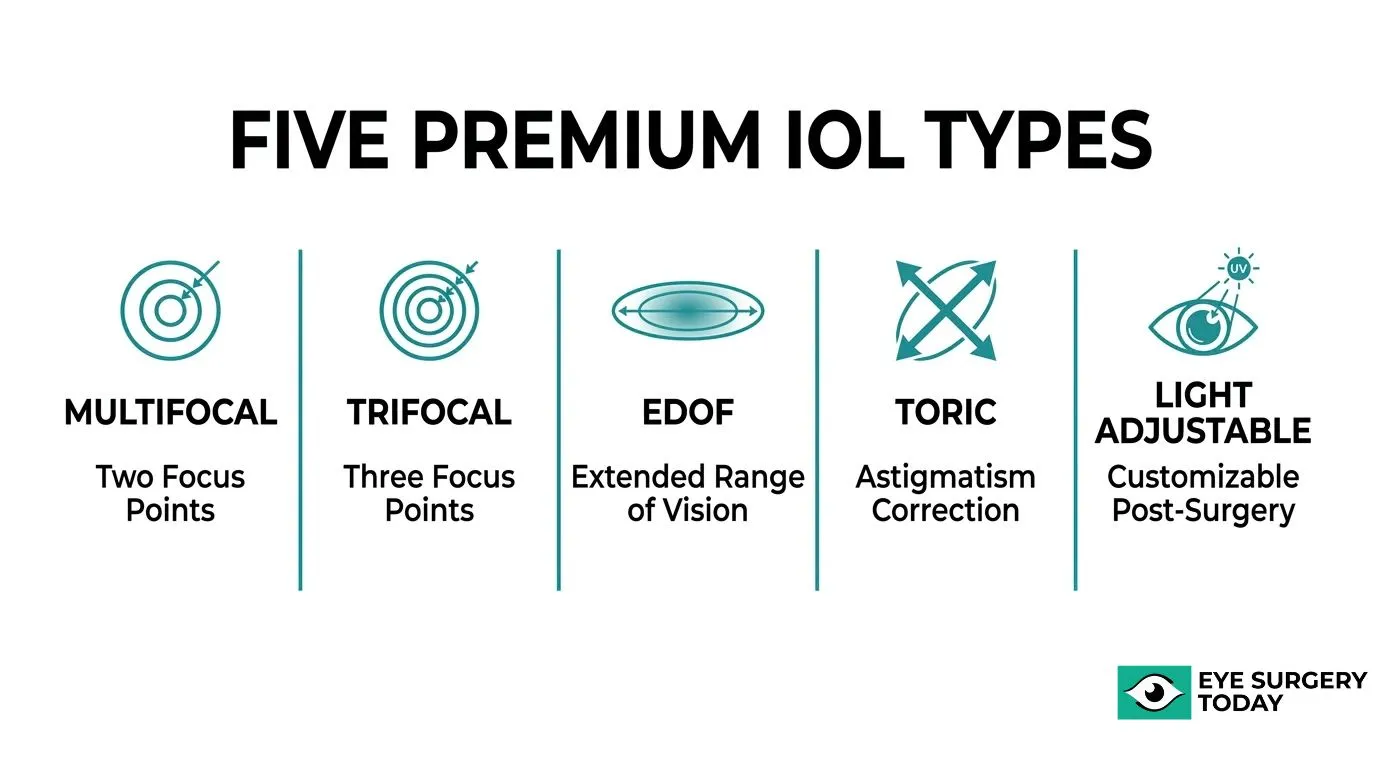
Multifocal, trifocal, EDOF, toric, and light-adjustable lenses each serve different visual priorities. Trifocal IOLs may offer the strongest spectacle independence across distances, while EDOF designs may preserve contrast sensitivity with fewer halos. Toric lenses address corneal astigmatism, and light-adjustable lenses allow postoperative power refinement.
Premium IOL costs range from roughly $900 to $2,500 per lens above the standard benefit, depending on lens type and practice. Financing plans can spread this expense into installments, though deferred-interest terms carry risks that patients should evaluate carefully.
Clinical evidence from systematic reviews and network meta-analyses suggests premium IOLs may reduce glasses dependence compared with monofocal lenses, yet trade-offs including halos, glare, and decreased contrast sensitivity are consistently reported. Candidacy depends on corneal health, tear-film stability, coexisting conditions, and accurate preoperative biometry.
Selecting the right lens requires matching optical design to daily visual demands, honest self-assessment of side-effect tolerance, and a structured conversation with your surgeon about measurements, costs, and contingency plans.
What Are Premium Cataract Lens Implants and How Do They Differ From Standard Lenses?
Premium cataract lens implants are intraocular lenses (IOLs) that go beyond the single fixed focus of a standard monofocal IOL, offering broader visual range, astigmatism correction, or post-implantation adjustability. The sections below cover the main premium IOL categories: multifocal, trifocal, toric, EDOF, and light-adjustable lenses.
What Exactly Counts as a “Premium” Cataract Lens Implant?
A premium cataract lens implant is any IOL that exceeds what standard insurance or government programs cover as a conventional lens. According to the Centers for Medicare & Medicaid Services, Medicare benefits include a conventional IOL, facility supplies, physician services to implant it, and one pair of post-operative glasses — nothing more. Any lens designed to reduce dependence on glasses, correct astigmatism, or allow post-surgical power adjustment falls outside that baseline and requires additional out-of-pocket payment. From a practical standpoint, “premium” is as much a billing category as a clinical one.
How Do Premium Multifocal IOLs Differ From Standard Monofocal IOLs?
Multifocal IOLs differ from monofocal IOLs by providing two or more focal points rather than one fixed focus. According to a National Institute for Health and Care Excellence guideline, standard monofocal IOLs can only optimize vision for either near or distance, not both. Multifocal lenses address this by splitting incoming light across multiple zones. According to the Asia-Pacific Journal of Ophthalmology, multifocal IOLs are classified as bifocal (2 foci) or trifocal (3 foci).
The clinical evidence on spectacle independence is meaningful but carries important caveats:
- A Cochrane systematic review found multifocal lenses produced a pooled risk ratio for spectacle dependence of 0.63 (95% CI 0.55 to 0.73) compared with monofocal lenses across 1,000 eyes in 10 studies, though the evidence was judged low certainty.
- A BMC Ophthalmology network meta-analysis of 28 RCTs (2,465 subjects) found trifocal IOLs ranked highest for spectacle independence, with both trifocal and EDOF IOLs outperforming monofocal lenses for uncorrected intermediate visual acuity.
- A Translational Vision Science & Technology analysis reported multifocal IOLs demonstrated superior cost-effectiveness versus monofocal IOLs, with an incremental cost-effectiveness ratio of $4,805 per quality-adjusted life year in the United States against a $50,000/QALY threshold.
The American Academy of Ophthalmology has noted a lack of a standard, validated method for assessing patient-reported outcomes and a scarcity of published data comparing visual symptoms between multifocal and EDOF IOLs — a gap worth acknowledging when counseling patients.
How Do Toric IOLs Compare With Non-Toric Lenses for Astigmatism?
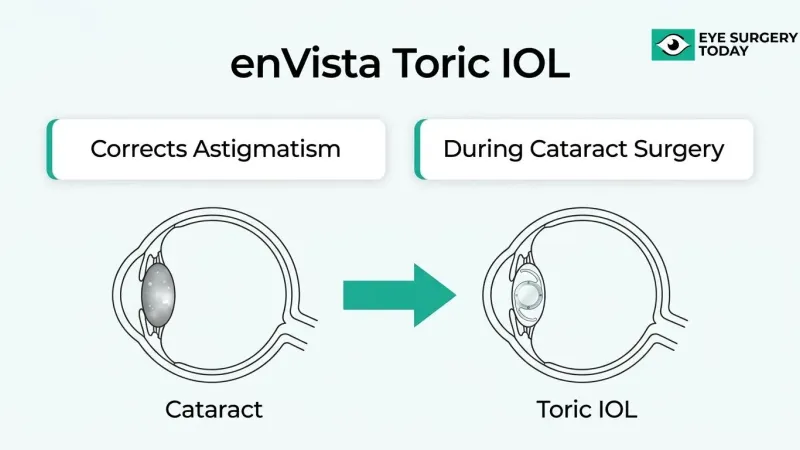
Toric IOLs correct corneal astigmatism at the time of cataract surgery; non-toric lenses do not. The European Society of Cataract and Refractive Surgeons (ESCRS) recommends considering toric IOLs in eyes with 1.0 diopter (D) or more of corneal astigmatism, with strong evidence supporting their use above 2.0D and moderate evidence above 1.5D. Patients who receive a standard spherical IOL with significant untreated astigmatism will typically still require corrective glasses or contact lenses post-operatively. According to a Translational Vision Science & Technology systematic economic review, toric IOL surgery carries additional costs of approximately $900 to $1,500 compared with standard cataract surgery, making the astigmatism-correction benefit the key value consideration for eligible patients.
How Do Extended Depth of Focus (EDOF) IOLs Differ From Multifocal IOLs?
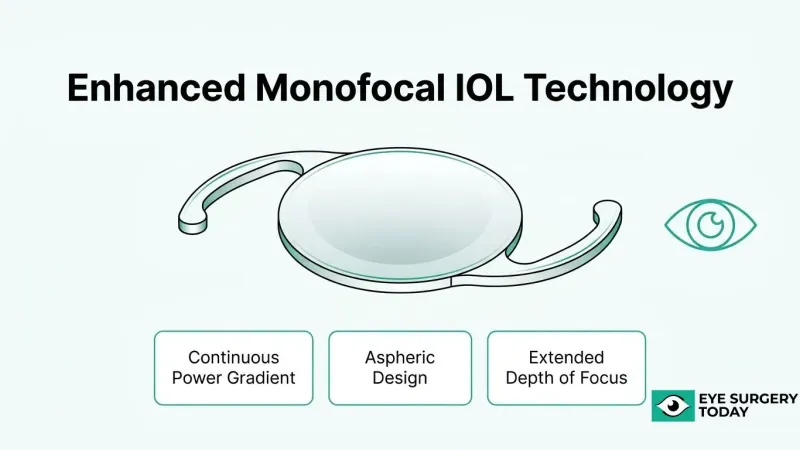
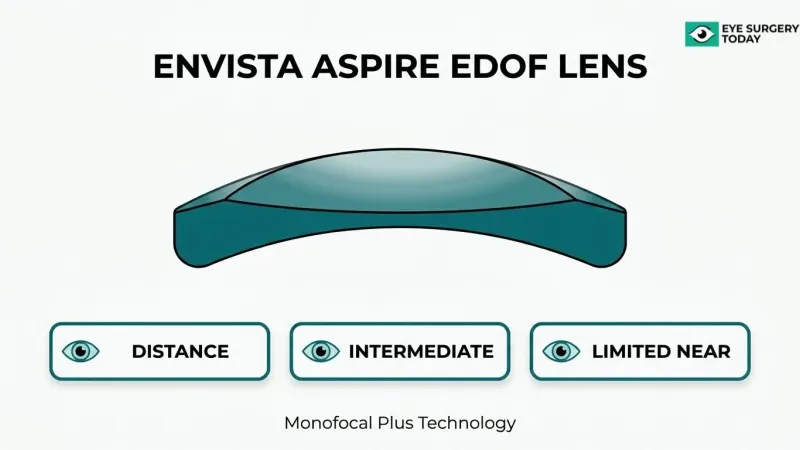
EDOF IOLs differ from multifocal IOLs by using a single elongated corrective zone rather than multiple discrete focal points. The American Academy of Ophthalmology describes this as a zone that is “stretched to allow distance and intermediate vision.” Multifocal lenses split light to create distinct near, intermediate, and distance foci; EDOF lenses create a continuous range without those hard transitions.
The tradeoff is clinically relevant: EDOF lenses may produce fewer halos and dysphotopsia but typically offer less near-vision independence than trifocal lenses. A Bioengineering systematic review found that EDOF IOLs may maintain contrast sensitivity comparable to monofocal IOLs, which is a meaningful advantage for patients sensitive to visual quality degradation. Clinical Ophthalmology research on the AcrySof IQ Vivity EDOF IOL found it offered expanded visual range and better spectacle independence than traditional monofocal lenses, with the ideal candidates being those seeking greater visual range who are highly averse to nighttime dysphotopsia.
How Do Light-Adjustable Lenses Differ From Fixed-Power Implants?
Light-adjustable lenses (LALs) differ from fixed-power implants by allowing the surgeon to modify the lens’s refractive power after implantation using ultraviolet light treatments, before the prescription is permanently locked in. Fixed-power IOLs, including most monofocal and premium multifocal lenses, have a set power determined by preoperative biometry that cannot be changed once implanted. LALs are particularly useful when preoperative measurements carry uncertainty or when post-healing refraction reveals a residual correction need. According to a Current Opinion in Ophthalmology review, preoperative corneal topography and aberration analysis are essential for understanding appropriate LAL indications.
Understanding these categories sets the stage for evaluating their costs, clinical outcomes, and suitability for individual patients.
How Much Do Premium Cataract Lens Implants Typically Cost?
The cost of premium cataract lens implants varies by lens type, surgeon, and location. The sections below cover how premium IOL pricing compares with standard insurance-covered lenses, how financing works, and how to evaluate the one-time expense against ongoing glasses costs.
How Does the Cost of Premium Lenses Compare With Standard Insurance-Covered IOLs?
The cost of premium lenses exceeds what standard insurance-covered IOLs require because insurers, including Medicare, cover only conventional monofocal lenses. According to the Centers for Medicare & Medicaid Services, Medicare benefits include a conventional IOL following cataract surgery, along with facility supplies and one pair of post-operative glasses. Patients who choose a premium lens pay the difference between the standard benefit and the premium lens fee entirely out of pocket.
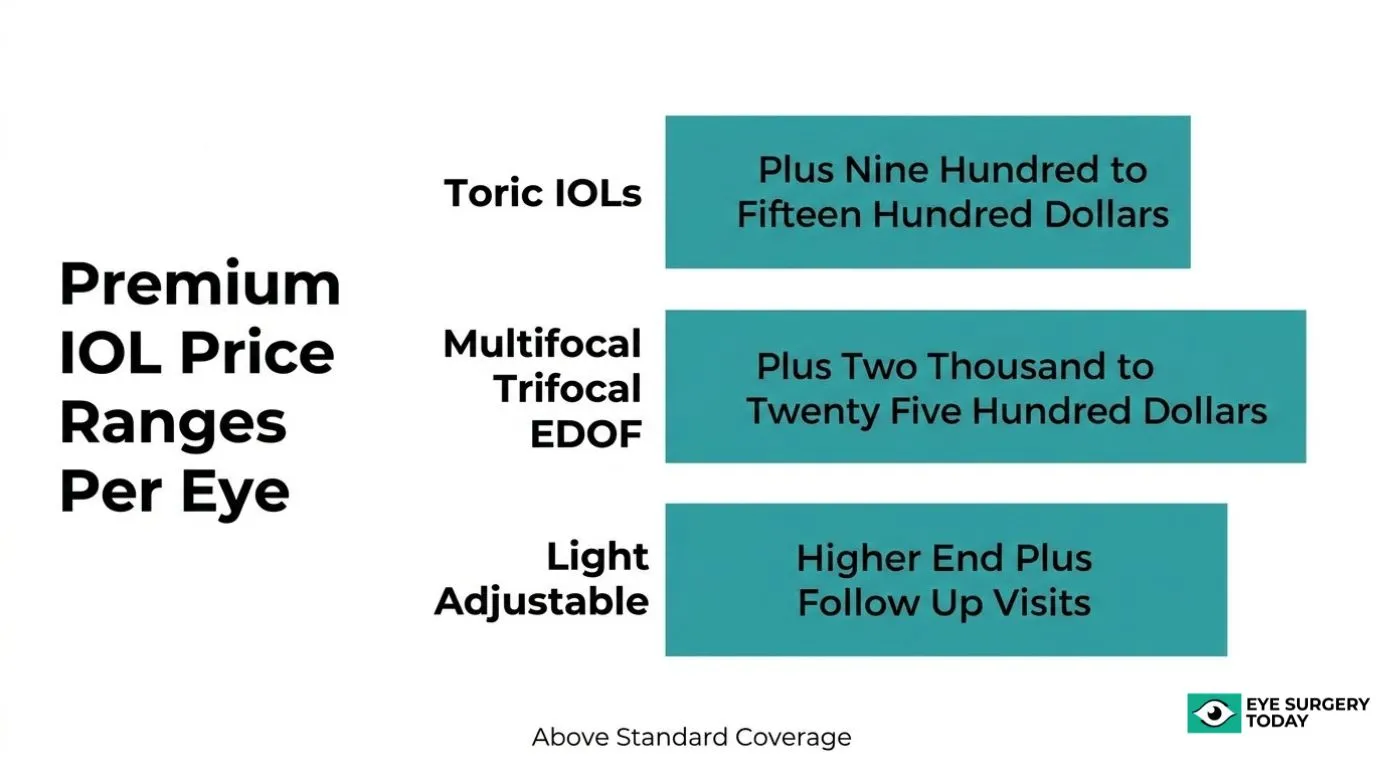
Published estimates from a systematic economic review in Translational Vision Science & Technology report average out-of-pocket costs of approximately $4,131 per eye for cataract surgery overall, with additional costs of $900 to $1,500 for toric IOL surgery and $1,995 to $2,500 per lens for refractive IOLs. These figures represent secondary reporting within an economic review, not an official national fee schedule, so actual costs vary by practice.
How Do Different Types of Premium IOLs Vary in Price?
The types of premium IOLs vary in price based on their optical complexity and the additional chair time required for fitting and planning. The published cost estimates from Translational Vision Science & Technology provide a useful reference:
- Standard cataract surgery (monofocal IOL, covered): approximately $4,131 per eye in total out-of-pocket costs under standard insurance scenarios
- Toric IOLs (astigmatism-correcting): approximately $900 to $1,500 in additional costs above the standard benefit
- Refractive IOLs (multifocal, trifocal, EDOF): approximately $1,995 to $2,500 per lens in additional out-of-pocket costs
Light-adjustable lenses, which require a post-operative UV adjustment protocol, typically fall at the higher end of premium pricing due to the added technology and follow-up visits involved.
How Do Surgeon, Clinic, and Region Affect the Cost of Premium IOLs?
Surgeon experience, clinic type, and geographic region all affect premium IOL pricing. High-volume academic centers in major metropolitan areas generally charge more than community surgical centers in smaller markets, reflecting differences in overhead, equipment, and surgeon demand. Practices that invest in advanced biometry technology, such as optical coherence tomography-based measuring systems, may also incorporate those costs into their premium lens fees.
From a patient perspective, the 2026 Delphi consensus study published in Scientific Reports identified out-of-pocket costs and limited familiarity with payment models as key barriers to broader premium IOL adoption among patients worldwide. This suggests that pricing transparency at the clinic level remains an important factor in patient decision-making.
How Do Financing Plans and Payment Options Change the Out-of-Pocket Cost?
Financing plans change the out-of-pocket cost of premium IOLs by spreading the lump-sum expense into monthly installments, making the upfront barrier lower. According to the Consumer Financial Protection Bureau, some healthcare providers offer medical credit cards or installment payment plans for this purpose. However, the CFPB also warns that deferred-interest promotions on medical credit products can generate additional interest and fees if the balance is not paid in full before the promotional period ends.
Patients considering financing should ask their surgical practice about interest rates, repayment terms, and whether any interest-free options are available before signing an agreement.
How Should You Weigh the One-Time Cost Against Ongoing Glasses and Contact Lens Expenses?
The one-time cost of a premium IOL should be weighed against the accumulated, ongoing expense of glasses and contact lenses over years of use. No single validated economic study currently quantifies this comparison for trifocal and EDOF lenses specifically: a Cochrane Database of Systematic Reviews analysis explicitly noted that no economic evaluation studies were identified for inclusion when comparing those lens types, meaning a direct lifetime cost comparison remains unconfirmed by high-quality evidence.
From a tax perspective, IRS Publication 502 classifies eye surgery, eyeglasses, and contact lenses as qualifying medical expenses, with Schedule A deductions applying only to costs exceeding 7.5% of adjusted gross income. For patients with high enough total medical expenses, a portion of premium IOL costs may be deductible, which is a factor worth discussing with a tax advisor before surgery. Understanding the full financial picture, including potential deductions and long-term lens expenses, is the most responsible way to evaluate whether the premium investment makes sense for your situation.
What Are the Potential Benefits of Choosing Premium Cataract Lens Implants?
The potential benefits of choosing premium cataract lens implants may include reduced glasses dependence, improved intermediate and near vision, and greater freedom across daily activities. The following sections cover each benefit area, along with what the clinical evidence actually shows about visual quality trade-offs.
How May Premium IOLs Reduce Your Dependence on Glasses for Distance Vision?
Premium IOLs may reduce dependence on glasses for distance vision, though the degree varies significantly by lens type. According to a study published in Clinical Ophthalmology, complete spectacle independence for all visual activities was 83% with PanOptix compared to 33% with the Vivity EDOF lens. For patients using Vivity in a mild open-angle glaucoma population, a Bioengineering systematic review reported distance spectacle independence of 92%, though independence dropped to 50% for intermediate tasks and 38% for near tasks.
These figures matter because “glasses-free” can mean different things: distance freedom alone versus freedom across all distances. Patients should discuss their specific visual priorities with their surgeon before selecting a lens.
How May Premium IOLs Improve Intermediate Vision for Tasks Like Computer Use?
Premium IOLs may improve intermediate vision, particularly trifocal and EDOF designs, which are engineered to extend functional range to arm’s-length distances. A BMC Ophthalmology systematic review and network meta-analysis of 28 randomized controlled trials found that both trifocal and EDOF IOLs provided better uncorrected intermediate visual acuity than monofocal IOLs. EDOF lenses, with their stretched single corrective zone, are specifically designed to prioritize the distance-to-intermediate range.
For patients whose primary concern is screen-based work, an EDOF lens may align well with that goal, though reading glasses may still be needed for fine print.
How May Premium IOLs Help With Near Vision for Reading and Close Work?
Premium IOLs may help with near vision, but the benefit is strongest with trifocal designs rather than EDOF lenses. The World Health Organization states that surgical decisions should be based on each patient’s visual needs for daily activities, such as working, reading, and driving. Trifocal IOLs add a dedicated near focal point, making them better suited for patients who prioritize reading without glasses.
Patients who need reliable near vision for hobbies, reading, or detailed close work should make this a central part of their preoperative conversation.
How Can Premium IOLs Affect Visual Quality Issues Like Halos, Glare, and Contrast?
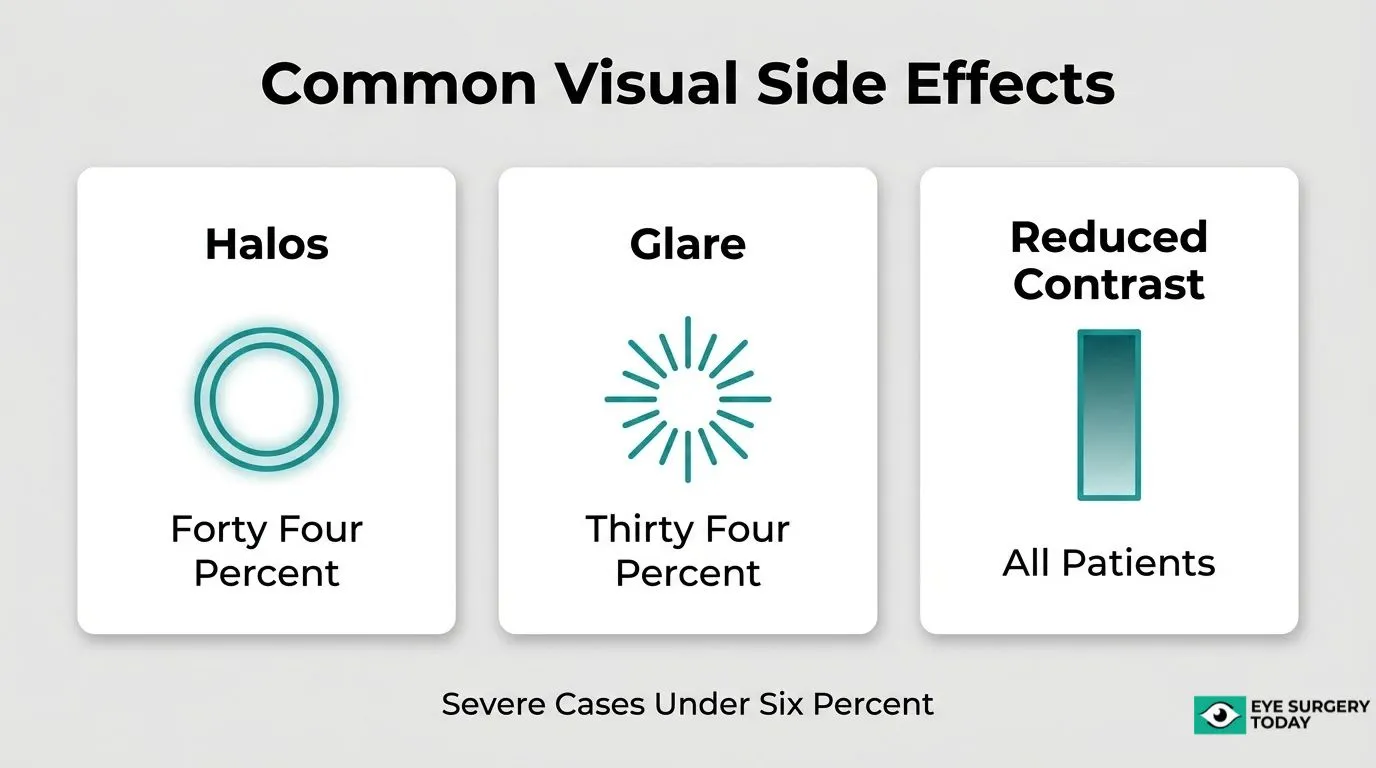
Premium IOLs can affect visual quality by introducing dysphotopsia symptoms such as halos, glare, and starbursts, though incidence and severity vary by lens type. A 2024 meta-analysis published in Ophthalmology and Therapy, covering 11 studies and 580 bilateral PanOptix patients from 10 countries, reported pooled incidence rates of 33.6% for glare, 43.9% for halos, and 30.4% for starbursts; severe cases were notably lower, at 2.9%, 5.4%, and 3.4%, respectively.
An American Journal of Ophthalmology meta-analysis of 22 studies enrolling 2,200 eyes found that halos and glare rates were not statistically different between trifocal and EDOF lenses. Separately, 85% of Vivity patients reported none or minimal glare or halos in dim light, compared to 69% with PanOptix, suggesting EDOF designs may carry a lower dysphotopsia burden for light-sensitive patients.
How Might Premium IOLs Impact Your Daily Activities and Lifestyle Satisfaction?
Premium IOLs may positively impact daily activities and lifestyle satisfaction by expanding functional vision across multiple distances, reducing reliance on corrective eyewear for tasks like driving, cooking, and recreational activities. The benefit is greatest when the lens chosen matches the patient’s specific visual priorities. Patients who value nighttime driving or work in low-light environments should weigh dysphotopsia risk carefully against the convenience of reduced glasses use.
Matching the IOL to the patient’s lifestyle, rather than selecting the most technologically advanced option, consistently produces better satisfaction outcomes in clinical practice.
What Are the Possible Risks, Downsides, and Complications of Premium Cataract Lenses?
The possible risks of premium cataract lenses include visual side effects, residual refractive error, secondary procedures, and reduced performance in eyes with coexisting conditions. The following sections examine each of these downsides in detail.
What Visual Side Effects Are More Common With Premium Multifocal or EDOF IOLs?
The visual side effects more common with premium multifocal or EDOF IOLs are decreased contrast sensitivity and increased visual phenomena such as halos, glare, and starbursts. According to a 2021 American Academy of Ophthalmology report reviewing 34 studies, all patients implanted with multifocal and EDOF lenses showed decreased contrast sensitivity and reported more visual phenomena compared with monofocal controls. Near vision performance may also vary by lens type: in one 60-person study summarized by the Cochrane Database of Systematic Reviews, uncorrected near visual acuity worse than J2 occurred in 3% of the trifocal group versus 30% of the EDOF group. Additionally, a 2023 Journal of Ophthalmology observational study found that YAG capsulotomy was required in 20% of eyes during follow-up. These trade-offs are real and should be weighed carefully against the benefits of reduced spectacle dependence.
How Can Residual Refractive Error or Astigmatism Affect Premium Lens Outcomes?
Residual refractive error or astigmatism can significantly reduce the functional benefit of a premium IOL, particularly for multifocal lenses that rely on precise optical alignment. Even small amounts of uncorrected astigmatism can degrade image quality at multiple focal points, causing blurred or overlapping images. Patients should be aware that the Australian Medicare Benefits Schedule excludes reimbursement for surgery performed primarily to correct a refractive error, meaning out-of-pocket costs for any correction of residual astigmatism after IOL implantation may not be covered. Thorough preoperative biometry and corneal measurement are essential to minimise this risk.
What Are the Risks of Needing Additional Procedures After Premium IOL Implantation?
The risks of needing additional procedures after premium IOL implantation include laser enhancements, YAG capsulotomies, and, in rare cases, lens exchange. Residual refractive error is one of the most common reasons patients seek enhancements. In one Cochrane-summarised study, nine participants in the trifocal group and two in the EDOF group were considering laser enhancement at the end of the study period. These additional procedures carry their own costs, recovery periods, and surgical risks that patients should factor into the overall decision.
How Might Premium IOLs Interact With Other Eye Conditions Like Macular Degeneration or Glaucoma?
Premium IOLs may interact poorly with conditions such as macular degeneration, glaucoma, and diabetic retinopathy, potentially limiting the achievable visual outcome. The European Society of Cataract and Refractive Surgeons recommends posterior-segment OCT when any of these conditions are present or when visual acuity is worse than expected, as well as corneal topography before toric-IOL implantation. Multifocal lenses in particular may amplify the effects of underlying retinal disease by splitting available light across focal zones. Patients with these conditions are often better served by monofocal or EDOF options, assessed case by case with their surgeon.
In What Situations Might a Premium Lens Not Perform as Well as Expected?
A premium lens may not perform as well as expected in situations involving irregular corneas, significant dry eye disease, prior refractive surgery such as LASIK or PRK, or uncontrolled ocular surface disease. These factors compromise the biometric measurements needed for accurate IOL power selection. Patients with highly demanding near-vision requirements who receive an EDOF lens rather than a trifocal may also be disappointed by functional near vision. Setting clear expectations before surgery, supported by complete preoperative workup, remains the most effective way to reduce the risk of an unsatisfactory outcome.
Who May Be a Good Candidate for Premium Cataract Lens Implants?
Good candidacy for premium IOLs depends on several overlapping factors. The H3s below cover age and eye health, existing conditions, visual goals, lifestyle demands, and prior refractive surgery history.
How Do Age and General Eye Health Influence Candidacy for Premium IOLs?
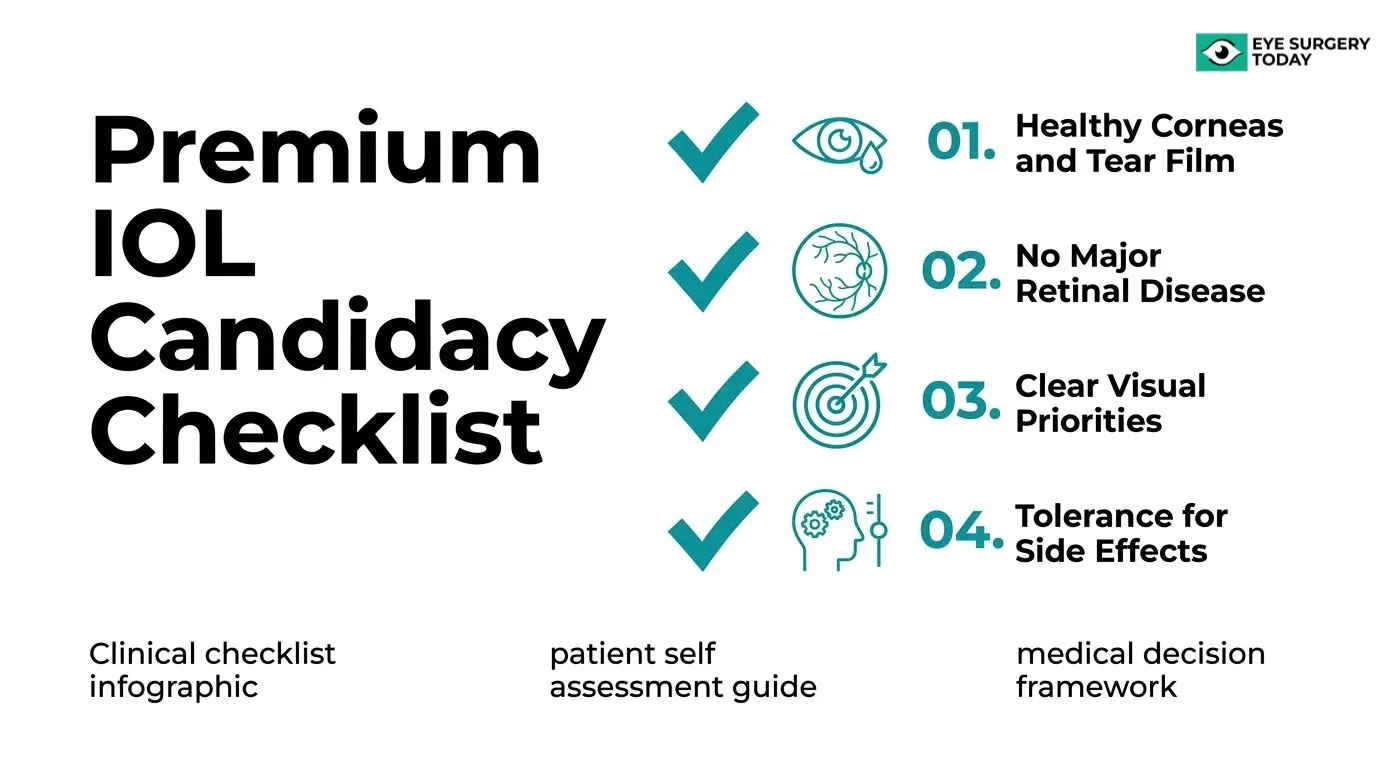
Age and general eye health influence candidacy for premium IOLs by determining whether the eye can reliably support precise lens power calculations and deliver the visual outcomes these lenses require. Premium IOLs perform best in eyes with healthy corneas, a stable refractive prescription, and no significant comorbidities that could limit visual potential. Younger cataract patients, who may still have decades of active vision ahead, often benefit most from the spectacle independence premium lenses can provide. Conversely, patients with extensive age-related changes in macular or corneal tissue may not achieve the same functional gains, making thorough preoperative evaluation essential before any premium lens is selected.
How Do Existing Eye Conditions Like Dry Eye, Corneal Disease, or Retinal Problems Affect Eligibility?
Existing eye conditions like dry eye, corneal disease, and retinal problems affect eligibility by undermining the measurement accuracy and optical clarity that premium IOLs depend on. A 2024 systematic review indexed by PubMed found that dry-eye disease can have a deleterious effect on preoperative keratometry and IOL power calculations, and that a stable tear film is important for accuracy and reproducibility. Irregular corneal topography from conditions such as keratoconus introduces unpredictable astigmatism that toric and multifocal designs cannot fully correct. Retinal pathology, including macular degeneration or diabetic maculopathy, may cap achievable visual acuity regardless of lens quality. Treating dry eye before biometry and ruling out significant corneal or retinal disease are therefore critical screening steps, not optional ones.
How Do Your Visual Goals and Tolerance for Glasses Influence Whether Premium Lenses Make Sense?
Visual goals and tolerance for glasses are among the strongest predictors of whether premium lenses make sense for a given patient. Patients who strongly prioritize spectacle independence across multiple distances, such as distance driving, computer work, and reading, are the clearest candidates for multifocal or trifocal IOLs. Patients who need only distance or intermediate freedom and are sensitive to halos or glare may be better matched to EDOF designs. According to the WHO, decisions about surgery should be based on a patient’s visual needs and preferences for daily life activities such as working, reading, and driving. Patients willing to occasionally use glasses for specific tasks, or those who have never minded wearing them, may find that a standard lens meets their needs at substantially lower cost.
How Do Occupation, Hobbies, and Night-Driving Needs Affect Premium IOL Suitability?
Occupation, hobbies, and night-driving needs affect premium IOL suitability by shaping which optical trade-offs a patient can realistically accept. A professional who drives frequently at night should carefully weigh the dysphotopsia risk associated with multifocal designs. Musicians, surgeons, and detail-oriented craftspeople who require sharp intermediate vision may favor EDOF or trifocal options over bifocal multifocals. Avid readers or those whose work centers on near tasks should confirm that their chosen lens provides adequate near acuity, since not all premium designs perform equally at close range. Lifestyle matching is a core part of responsible IOL selection, and patients with demanding or specialized visual needs benefit most from a thorough discussion of daily visual priorities before a lens type is chosen.
How Should Previous Eye Surgeries, Including LASIK or PRK, Factor Into Candidacy?
Previous eye surgeries, including LASIK and PRK, factor into candidacy by altering corneal curvature in ways that reduce the accuracy of standard IOL power calculations. Post-refractive corneas require modified biometry formulas and additional topographic data to minimize residual refractive error after cataract surgery. When power calculations are less predictable, the functional payoff from premium lenses can be reduced, because even a small residual prescription significantly degrades the performance of multifocal and trifocal designs. Light-adjustable lenses may offer an advantage in this population, as postoperative UV-based adjustments allow power refinement after the eye has stabilized. Patients with prior corneal refractive surgery should disclose this history at their initial consultation so the surgical team can select both the most appropriate IOL type and the most accurate calculation method.
How Should You Compare the Different Types of Premium Cataract Lens Implants?
Comparing premium cataract lens implants means weighing each lens type against your visual priorities, astigmatism level, lifestyle, and tolerance for trade-offs. The H3s below cover vision range, astigmatism correction, light-adjustable lenses, monovision strategies, and how to work with your surgeon.
How Do Multifocal, Trifocal, and EDOF IOLs Compare in Everyday Vision Range?
Multifocal, trifocal, and EDOF IOLs compare primarily in how broadly and continuously they correct vision across near, intermediate, and distance tasks. Trifocal IOLs provide three discrete focal points, supporting strong near and intermediate performance alongside distance clarity. EDOF IOLs use a single elongated corrective zone, delivering a broader continuous range rather than distinct focal points.
A 2026 Delphi consensus study in Scientific Reports, drawing on 22 cataract surgeons across 33 agreed statements, found that trifocal IOLs were preferred for strong intermediate vision and greater spectacle independence, while EDOF IOLs were viewed as providing a broader continuous range and better contrast sensitivity. In practical terms, trifocals tend to suit patients who prioritize reading independence, whereas EDOF designs may suit those who value consistent visual quality with fewer halos.
How Do Toric Options Compare for People With Mild, Moderate, or High Astigmatism?
Toric IOL options compare differently depending on astigmatism severity. The European Society of Cataract and Refractive Surgeons recommends:
- 1.0D or above: Toric IOLs may be beneficial.
- 1.5D or above: Moderate evidence supports toric correction.
- 2.0D or above: Strong evidence supports toric IOL implantation.
For mild astigmatism below 1.0D, standard premium IOLs combined with limbal relaxing incisions may suffice. For moderate-to-high astigmatism, leaving corneal astigmatism uncorrected significantly undermines the performance of any premium lens, making toric versions the more clinically appropriate choice.
When Might a Light-Adjustable Lens Be Preferred Over Other Premium IOLs?
A light-adjustable lens (LAL) may be preferred when postoperative fine-tuning of refractive power is a priority. Unlike fixed-power IOLs, LALs allow the surgeon to adjust lens power after implantation using UV light treatments, making them particularly suitable for patients with prior refractive surgery or complex corneal anatomy where preoperative calculations carry higher uncertainty. Preoperative corneal topography and aberration mapping are essential for understanding LAL candidacy, according to a review indexed in PubMed (Current Opinion in Ophthalmology). Patients who value the ability to refine their outcome before the lens is locked in may find LALs a compelling alternative to fixed premium designs.
How Do Monovision and “Blended Vision” Strategies Compare With Multifocal IOLs?
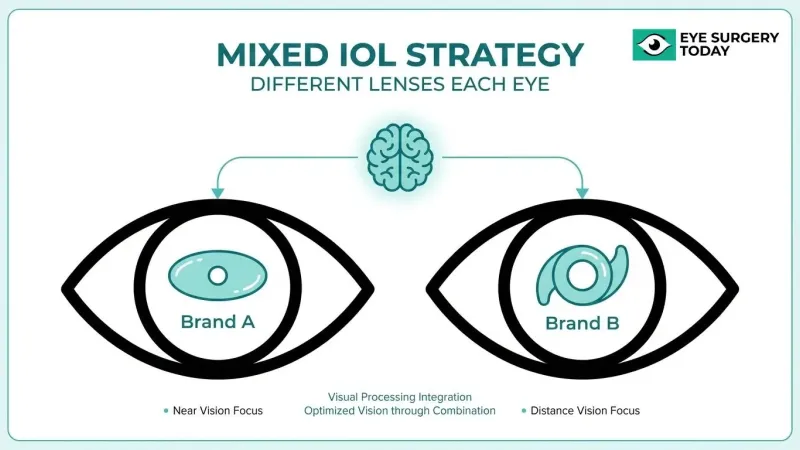
Monovision and blended vision strategies compare to multifocal IOLs by using two separate monofocal or EDOF lenses targeted at different focal distances rather than a single lens covering multiple foci. One eye is optimized for distance and the other for near or intermediate vision. This approach avoids the halo and glare phenomena more commonly associated with diffractive multifocal designs, but it requires neuroadaptation and may reduce stereo acuity. Patients who previously tolerated monovision with contact lenses tend to adapt well. Multifocal IOLs, by contrast, deliver more balanced binocular vision across distances but carry a higher likelihood of dysphotopsia. Neither strategy universally outperforms the other; the right choice depends on how a patient’s brain adapts and what visual tasks matter most.
How Can You Work With Your Surgeon to Choose Between Competing Premium Lens Options?
Working with your surgeon to choose between premium lens options requires a structured conversation combining clinical measurements, lifestyle priorities, and honest expectation-setting. Key steps include:
- Share your daily visual demands: Discuss frequency of reading, computer use, driving, and night activities.
- Understand your biometry results: Axial length, keratometry, and topography data directly narrow the appropriate lens types.
- Disclose prior eye surgeries: LASIK, PRK, or corneal procedures alter power calculations and lens eligibility.
- Ask about dysphotopsia tolerance: Clarify how much halo or glare you can accept, since premium lenses vary considerably on this dimension.
- Request a side-by-side comparison: Ask your surgeon to explain how the shortlisted lenses perform specifically for your prescription and ocular anatomy.
The 2026 Delphi study in Scientific Reports concluded that personalized IOL selection, supported by patient education and clear cost discussions, helps surgeons align treatment with patient goals and improve satisfaction. Surgeons who take time to explain each trade-off, rather than defaulting to a single lens for all patients, tend to produce higher patient satisfaction outcomes.
What Results Can You Reasonably Expect From Premium Cataract Lens Implants?
The results you can reasonably expect from premium cataract lens implants vary by lens type, eye health, and individual visual goals. The following sections cover glasses independence rates, durability, satisfaction comparisons, coexisting condition impacts, and how expectation-setting affects outcomes.
How Often Do Patients Achieve Significant Reduction in Glasses Use With Premium IOLs?
Patients achieve significant reduction in glasses use with premium IOLs at rates that depend heavily on which lens type is implanted. Trifocal IOLs consistently rank highest for spectacle independence across near, intermediate, and distance tasks, according to a BMC Ophthalmology network meta-analysis of 28 randomized controlled trials comprising 2,465 subjects. EDOF lenses offer strong intermediate and distance freedom but typically require reading glasses more often than trifocals. Complete spectacle independence for all visual activities varies considerably between lens platforms, so patients should discuss realistic lens-specific rates with their surgeon before surgery.
How Long Do Premium Cataract Lens Results Usually Last?
Premium cataract lens results usually last for the patient’s lifetime, as IOLs are designed to be permanent implants that do not degrade under normal conditions. However, a secondary condition called posterior capsule opacification can develop months to years after surgery in some patients, temporarily clouding vision until treated with a quick outpatient YAG laser procedure. A NICE guideline notes there is currently a lack of evidence for longer-term outcomes and that long-term randomized controlled trials are still needed to fully characterize adverse events and durability over decades.
How Do Satisfaction Rates With Premium IOLs Compare With Standard Lenses?
Satisfaction rates with premium IOLs compare favorably to standard lenses when patients are well-selected and properly counseled before surgery. According to a Scientific Reports Delphi study of 22 cataract surgeons, personalized IOL selection supported by patient education and clear discussions about costs can help surgeons align treatment with patient goals, improve satisfaction, and overcome barriers to presbyopia-correcting IOL adoption. Patients who receive thorough preoperative education about realistic outcomes and potential side effects, such as halos or reduced contrast in dim light, tend to report higher postoperative satisfaction regardless of which premium lens platform they receive.
How Might Your Outcomes Differ if You Have Mild Coexisting Eye Conditions?
Outcomes with premium IOLs may be reduced if you have mild coexisting eye conditions such as mild dry eye, early macular changes, or controlled glaucoma. Dry eye disease can affect the accuracy of the preoperative biometry measurements used to select the correct lens power, potentially resulting in residual refractive error. Conditions affecting the retina or optic nerve may limit the functional visual gain a premium lens can provide, even when the implant itself performs as intended. Your surgeon may recommend a more conservative lens option, such as an EDOF or enhanced monofocal, rather than a trifocal, if any coexisting conditions are present.
How Can Setting Realistic Expectations Improve Your Satisfaction With Premium Lenses?
Setting realistic expectations can improve your satisfaction with premium lenses by aligning what you anticipate postoperatively with what the clinical evidence supports for your chosen lens type. Patients who enter surgery expecting complete spectacle freedom in all lighting conditions with zero visual phenomena are more likely to be disappointed, particularly with multifocal platforms where halos and glare are common trade-offs. In clinical practice, surgeons who invest time in preoperative expectation discussions consistently achieve better patient-reported outcomes, because patients interpret the visual adjustment period as normal rather than as a surgical failure. Understanding the difference between “reduced dependence on glasses” and “complete freedom from glasses” is one of the most practical distinctions any premium IOL candidate can make before committing to a lens.
What Should You Expect Before, During, and After Surgery With Premium Lens Implants?
Surgery with premium lens implants follows a more detailed pathway than standard cataract surgery. The sections below cover preoperative testing, the procedure itself, recovery, enhancements, and long-term follow-up care.
What Extra Preoperative Measurements and Tests Are Needed for Premium IOL Planning?
The extra preoperative measurements needed for premium IOL planning include axial length biometry, keratometry, corneal topography, and tear-film assessment. According to a 2024 systematic review indexed by PubMed in Bioengineering, accurate preoperative keratometry is required for IOL power calculation, a stable tear film is important for accuracy and reproducibility, and dry-eye disease can have a deleterious effect on these measurements. The World Health Organization also states that reliable axial length and keratometry measurements should be obtained for all cataract surgery patients.
Treating dry-eye disease before surgery is a practical step that directly protects measurement accuracy. Patients planning premium IOL implantation should expect a longer preoperative appointment than a standard cataract workup.
How Does the Surgical Procedure Itself Compare Between Standard and Premium Lenses?
The surgical procedure for premium lenses uses the same fundamental phacoemulsification technique as standard cataract surgery. The main differences involve precision requirements: toric IOLs require intraoperative axis marking or digital guidance to align the lens correctly, and light-adjustable lenses require postoperative UV light treatments unavailable with standard implants. The incision size, anesthesia approach, and operating time are generally similar, though surgeons may use additional intraoperative imaging tools to optimize premium lens placement.
What Is the Usual Recovery Timeline After Premium Cataract Lens Implantation?
The usual recovery timeline after premium cataract lens implantation spans four to six weeks for full refractive stabilization. According to World Health Organization guidelines, all patients are normally examined at 24 to 48 hours following surgery; a one-week visit is commonly recommended; and a four-to-six-week visit is recommended to evaluate visual acuity and refractive correction. Premium IOL patients may notice visual fluctuations and neuroadaptation to their new focal range during the first several weeks, which is a normal part of the adjustment process.
How Are Enhancements or Touch-Up Procedures Handled if Vision Is Not as Expected?
Enhancements or touch-up procedures are handled through laser refractive surgery, most commonly LASIK or PRK, to correct residual refractive error after IOL implantation. A Cochrane review of trifocal versus EDOF IOLs found that in one included study, nine participants in the trifocal group and two in the EDOF group were considering laser enhancement at the end of the study. YAG laser capsulotomy may also be needed if posterior capsule opacification develops. Patients should confirm with their surgeon whether an enhancement policy is included in their original procedure fee.
What Follow-Up Visits and Long-Term Care Are Typically Needed After Premium IOL Surgery?
Follow-up visits after premium IOL surgery typically occur at 24 to 48 hours, one week, and four to six weeks postoperatively, with annual eye exams recommended thereafter. A National Institute for Health and Care Excellence guideline notes there is a lack of evidence for longer-term outcomes and that long-term randomized controlled trials are needed to report patient-important outcomes, adverse events, and lens explantation rates. This evidence gap underscores the importance of maintaining consistent follow-up care so that any emerging issues are detected early.
How Can You Decide Whether Premium Cataract Lens Implants Are Worth the Extra Cost for You?
Deciding whether premium cataract lens implants are worth the extra cost requires weighing your personal finances, lifestyle priorities, tolerance for visual side effects, and surgeon guidance. The following H3s cover each factor: upfront cost versus long-term savings, lifestyle and work demands, side-effect trade-offs, questions to ask your surgeon, and the value of a second opinion.
How Should You Balance Upfront Cost Against Long-Term Savings on Glasses and Contacts?
Balancing upfront cost against long-term savings on glasses and contacts means comparing the higher out-of-pocket premium now against the reduced dependence on corrective eyewear over time. A 2025 economic review published in Translational Vision Science & Technology reported multifocal IOLs demonstrated superior cost-effectiveness compared to monofocal IOLs, with ICERs well below the U.S. threshold of $50,000 per quality-adjusted life year. The premium upgrade cost ranges from roughly $900 to $2,500 per lens above the standard IOL, depending on lens type.
For patients who currently spend significantly on glasses and contacts annually, the math can favor a premium lens over a decade or more. It is worth noting that IRS Publication 502 identifies eye surgery and corrective eyewear as deductible medical expenses, though only costs exceeding 7.5% of adjusted gross income qualify under Schedule A.
How Can You Factor Lifestyle, Hobbies, and Work Demands Into Your Decision?
You can factor lifestyle, hobbies, and work demands into your decision by identifying which visual distances your daily activities require most. According to the World Health Organization, decisions about cataract surgery should be based on patients’ visual needs and preferences for daily life activities, such as working, reading, and driving.
Consider how your priorities map to lens capabilities:
- Distance-dominant activities (driving, sport, outdoor recreation): monofocal or EDOF lenses may be sufficient.
- Intermediate-dominant activities (computer use, cooking, desk work): EDOF and trifocal IOLs may provide meaningful benefit.
- Near-dominant activities (reading, fine crafts, detailed close work): trifocal lenses are generally better matched.
- Mixed-distance demands (professionals requiring full visual range): a trifocal or premium EDOF option warrants serious consideration.
Patients who spend long hours driving at night should discuss dysphotopsia risk carefully before choosing a multifocal design.
How Should You Weigh the Possibility of Visual Side Effects Against the Benefits of Greater Freedom From Glasses?
Weighing the possibility of visual side effects against the benefits of greater freedom from glasses means honestly assessing how much nighttime halos, glare, or reduced contrast sensitivity would affect your quality of life. A 2021 report by the American Academy of Ophthalmology, covering 34 studies, found that all patients who received multifocal and EDOF lenses showed decreased contrast sensitivity and reported more visual phenomena compared with monofocal controls.
For most patients, these effects are mild and adapt over time. However, patients who frequently drive at night, operate in low-light environments, or have high sensitivity to visual disturbances may find the trade-off less acceptable. Choosing an EDOF lens instead of a multifocal design may reduce dysphotopsia risk while still offering meaningful spectacle independence, though near vision gain is more limited. This trade-off is not one-size-fits-all; frank self-assessment matters as much as clinical data here.
What Questions Should You Ask Your Cataract Surgeon When Considering Premium IOLs?
The questions you should ask your cataract surgeon when considering premium IOLs are those that clarify candidacy, realistic outcomes, costs, and contingency plans. A Delphi consensus study published in Scientific Reports found that personalized IOL selection, supported by patient education and clear discussions about costs, can help align treatment with patient goals and improve satisfaction.
Ask your surgeon these questions:
- Am I a good candidate for a premium IOL given my corneal health, astigmatism level, and any coexisting eye conditions?
- Which lens type best matches my visual priorities and daily activities?
- What is the realistic likelihood I will still need glasses for some tasks?
- What is the out-of-pocket cost, and what does it include?
- What happens if my vision is not satisfactory after surgery? Is an enhancement or touch-up available?
- How many premium IOL procedures have you personally performed?
How Can Getting a Second Opinion Help You Decide if a Premium Lens Is Right for You?
Getting a second opinion can help you decide if a premium lens is right for you by confirming whether the recommended lens type matches your ocular anatomy, visual goals, and risk profile. Not every surgeon weights candidacy factors equally, and a second set of measurements and clinical judgment can surface concerns or alternatives the first consultation may not have fully explored.
A second opinion is especially valuable if you have dry eye disease, irregular astigmatism, a history of prior refractive surgery, or any retinal condition, as these factors meaningfully affect which premium IOL designs are appropriate. If both surgeons agree, you can proceed with greater confidence. If opinions differ, the contrast itself gives you better questions to resolve before committing to an irreversible implant.
With a clear picture of costs, lifestyle fit, side-effect trade-offs, and surgeon input in hand, you are well positioned to make a decision that reflects both the clinical evidence and your own priorities.
How Should You Approach the Choice of Premium Cataract Lenses With Help From Eye Surgery Today?
Approaching the choice of premium cataract lenses requires matching clinical evidence, biometry accuracy, and personal visual goals before committing to any implant. The sections below explain how Eye Surgery Today’s surgeon-reviewed guides support safer comparisons and what key takeaways you should carry into your decision.
How Can Eye Surgery Today’s Surgeon-Reviewed Guides Help You Compare Premium IOL Options Safely?
Eye Surgery Today’s surgeon-reviewed guides can help you compare premium IOL options safely by translating complex clinical evidence into clear, patient-focused decision frameworks. The World Health Organization states that reliable axial length measurements and reliable keratometry measurements should be mandatory for all patients planning cataract surgery, with optical biometry considered first-line where feasible. Understanding why these measurements matter helps you ask the right questions before surgery, not after.
The breadth of available evidence is substantial. A Cochrane Database of Systematic Reviews analysis drew on 20 eligible trials enrolling 2,230 people, with data available on 2,061 people across 3,194 eyes, yet even that volume of research leaves important gaps in long-term outcomes. Surgeon-reviewed guides help you weigh what the evidence actually confirms versus what remains uncertain, so your expectations stay grounded in clinical reality rather than marketing.
What Are the Key Takeaways About Whether Premium Cataract Lens Implants Are Worth the Extra Cost?
The key takeaways about whether premium cataract lens implants are worth the extra cost center on candidate fit, measurement precision, and honest cost-benefit analysis. Consider these core conclusions:
- Coverage baseline: Medicare generally covers cataract surgery, including the cost of a conventional IOL, meaning the premium upgrade cost comes entirely out of pocket.
- No universal “best” lens: The right IOL depends on corneal astigmatism level, tolerance for dysphotopsia, near versus distance visual priorities, and ocular comorbidities.
- Measurement quality drives outcomes: Inaccurate biometry or keratometry undermines even the most advanced premium IOL.
- Evidence gaps remain real: Long-term durability data and standardized patient-reported outcomes are still limited across all premium lens categories.
- Product claims require scrutiny: Some widely marketed lens names lack robust independent clinical evidence; verify specific product claims against peer-reviewed sources before deciding.
Personalized IOL selection, supported by clear cost discussions and realistic outcome expectations, remains the most reliable path to satisfaction with any premium lens choice.