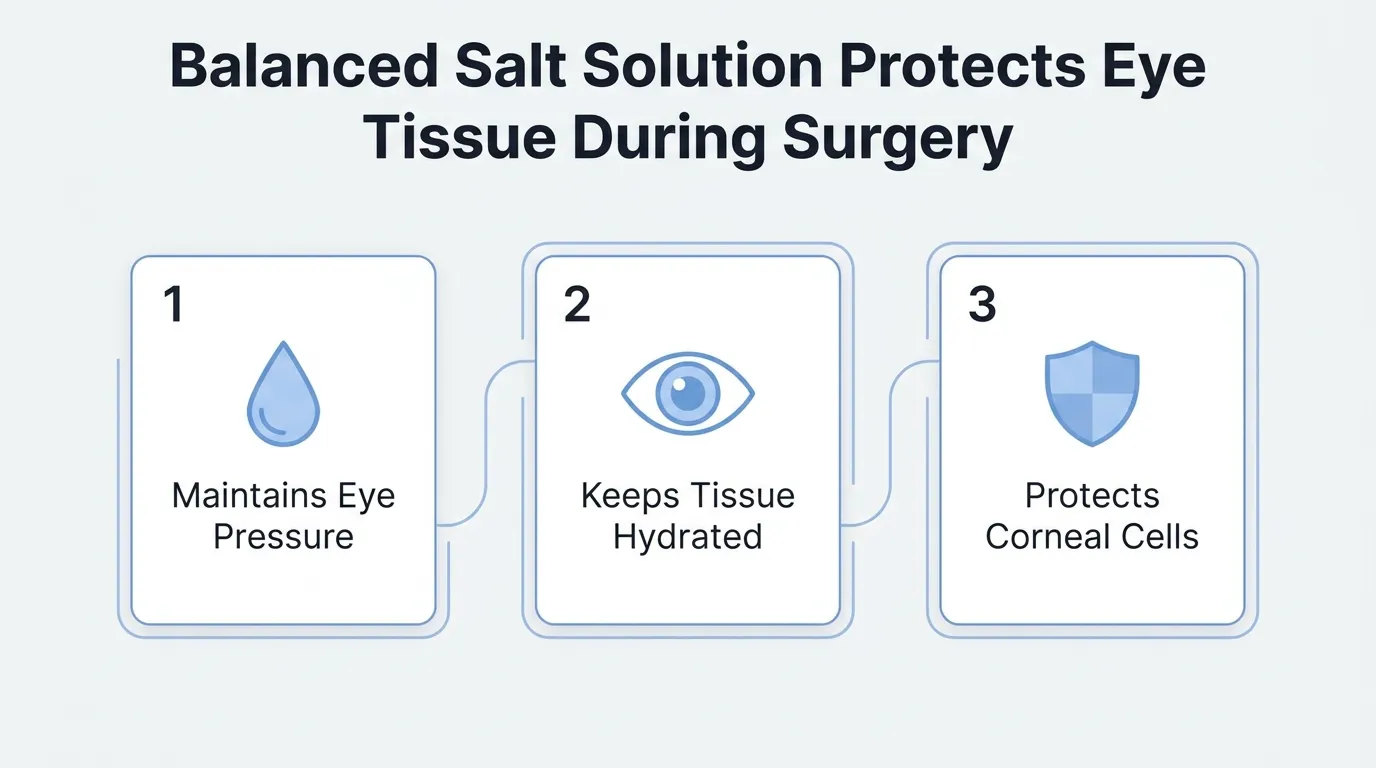
Balanced salt solution (BSS) is a sterile, isotonic irrigating fluid formulated with electrolytes and buffering agents that mimic the eye’s natural aqueous humor, used inside the eye during ophthalmic surgery to protect delicate intraocular tissues.
This guide covers BSS composition and formulation variants, its critical functions during surgery, potential clinical benefits, common procedures that rely on it, possible risks, solution comparisons, and proper storage and preparation.
BSS contains a precise combination of sodium chloride, potassium chloride, calcium chloride, magnesium chloride, and pH buffering agents. An enriched two-part formulation called BSS Plus adds bicarbonate, dextrose, and glutathione for procedures requiring extended irrigation time. Both differ significantly from normal saline, which lacks the ionic complexity needed for safe intraocular use.
During eye surgery, BSS serves several essential functions: replacing aqueous humor to maintain anterior chamber stability, keeping corneal tissue hydrated under surgical lights, supplying calcium and magnesium ions that support corneal endothelial pump mechanisms, and buffering pH to preserve cellular metabolism throughout the procedure.
Clinical evidence suggests BSS may help reduce postoperative corneal edema and preserve endothelial cell viability compared to simpler irrigation alternatives. The electrolyte balance in BSS supports the enzymatic pathways responsible for maintaining corneal transparency after surgical stress.
Cataract extraction, pars plana vitrectomy, corneal transplant, and glaucoma surgery all rely on BSS irrigation. Surgeons select standard BSS or BSS Plus based on anticipated procedure length and tissue vulnerability.
Risks associated with BSS include contamination-related complications, adverse reactions in patients with compromised endothelial reserves, and tissue damage from incorrect solution selection. Proper storage protocols, particularly the six-hour discard window for reconstituted BSS Plus, are essential for maintaining solution integrity.
What Is Balanced Salt Solution?
Balanced salt solution (BSS) is a sterile, isotonic irrigating fluid used inside the eye during ophthalmic surgery. Its composition, key differences from normal saline, and the distinction between standard BSS and BSS Plus are covered below.
What Ingredients Make Up Balanced Salt Solution?
The ingredients that make up balanced salt solution include a precise combination of electrolytes and buffering agents designed to mimic the eye’s natural aqueous humor. According to the U.S. National Library of Medicine (DailyMed), BSS Sterile Irrigating Solution contains sodium chloride (0.64%), potassium chloride (0.075%), calcium chloride dihydrate (0.048%), magnesium chloride hexahydrate (0.03%), sodium acetate trihydrate (0.39%), and sodium citrate dihydrate (0.17%), with a pH of approximately 7.5 and an osmolality of 300 mOsm/Kg.
Each component serves a specific role:
- Sodium chloride and potassium chloride maintain isotonicity and cellular ion balance.
- Calcium chloride supports endothelial junctional complexes.
- Magnesium chloride helps sustain enzymatic activity in corneal tissue.
- Sodium acetate and sodium citrate act as pH buffering agents.
This carefully calibrated formulation is what separates BSS from simpler saline solutions, making it suitable for direct contact with delicate intraocular tissues.
How Does Balanced Salt Solution Differ From Normal Saline?
Balanced salt solution differs from normal saline in electrolyte composition, pH buffering capacity, and tissue compatibility. Normal saline (0.9% sodium chloride) contains only sodium and chloride ions, with a slightly acidic pH near 5.5. BSS, by contrast, includes calcium, potassium, magnesium, and buffering agents that maintain a physiologic pH of approximately 7.5.
This compositional gap matters clinically. Normal saline lacks the ions needed to support corneal endothelial cell function and can cause greater tissue irritation during prolonged intraocular use. According to a study published in Academic Emergency Medicine, clinical preferences for irrigation fluids include normal saline, Ringer’s lactate, and BSS Plus, with patient comfort and cost being primary factors in solution selection.
For routine eye surface irrigation or brief emergency flushing, normal saline may suffice. However, for any procedure requiring sustained intraocular contact, BSS provides a more protective environment. The added electrolytes and stable pH make BSS the preferred choice when tissue preservation is a priority.
What Is BSS Plus and How Does It Differ From Standard BSS?
BSS Plus is an enriched, two-part intraocular irrigating solution that contains additional metabolic substrates beyond what standard BSS provides. According to FDA-approved labeling, reconstituted BSS Plus includes sodium bicarbonate, dextrose, and glutathione disulfide alongside the core electrolytes found in standard BSS, with a pH of 7.4 and osmolality of 305 mOsm.
The key differences between BSS Plus and standard BSS include:
- Bicarbonate buffer: BSS Plus uses sodium bicarbonate for pH regulation, more closely replicating the natural aqueous humor buffering system.
- Dextrose: Provides a metabolic energy source for corneal endothelial cells during surgery.
- Glutathione disulfide: An antioxidant precursor that may help protect intraocular tissues from oxidative stress.
Despite these formulation advantages, clinical outcomes are not always dramatically different. A 2003 study published in the Indian Journal of Ophthalmology involving 40 patients undergoing pars plana vitrectomy found no significant difference in postoperative corneal endothelial cell density (P=0.98) between fortified standard BSS and BSS Plus. BSS Plus is generally reserved for longer, more complex procedures where extended tissue exposure warrants the enriched composition, while standard BSS remains a cost-effective option for routine surgeries.
Understanding BSS formulation and its variants helps clarify why surgeons select specific solutions for different procedures.
Why Is Balanced Salt Solution Used During Eye Surgery?
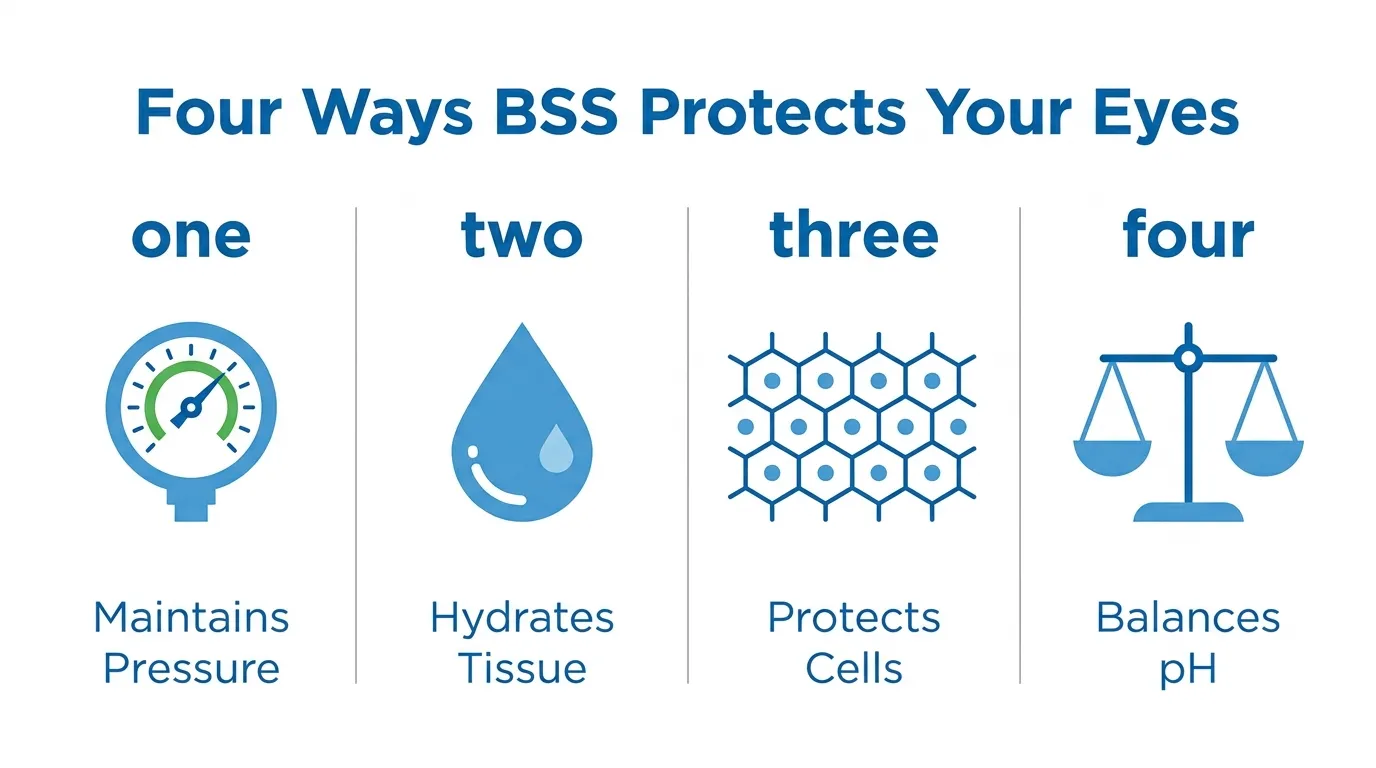
Balanced salt solution is used during eye surgery to maintain intraocular pressure, keep tissues hydrated, protect delicate corneal cells, and preserve a stable pH inside the eye. The following subsections explain each of these critical functions.
How Does BSS Maintain Intraocular Pressure During Surgery?
BSS maintains intraocular pressure during surgery by replacing the aqueous humor that is naturally lost when the surgeon opens the eye. This continuous irrigation keeps the anterior chamber inflated and structurally stable, giving the surgeon a clear working space throughout the procedure.
Without steady fluid replacement, the anterior chamber can collapse, increasing the risk of tissue damage and making precise instrument manipulation difficult. According to the American Academy of Ophthalmology’s Preferred Practice Pattern for cataract in the adult eye, using appropriate intraocular irrigating solutions is essential for protecting the corneal endothelium and maintaining anterior chamber stability during surgery.
If the solution’s chemical composition or pH falls outside the proper range, complications such as corneal edema, endothelial cell loss, and intraoperative crystallization on the intraocular lens surface may occur. Consistent pressure management through properly formulated BSS helps reduce these risks, making it a foundational safety measure in procedures like cataract extraction and lens implantation.
How Does BSS Keep Corneal Tissue Hydrated During a Procedure?
BSS keeps corneal tissue hydrated during a procedure by delivering a continuous flow of isotonic fluid that prevents the cornea from drying out while the eye remains open under surgical lights. Because the cornea lacks blood vessels and depends on surrounding fluids for moisture, even brief exposure to air can compromise its clarity and structural integrity.
This hydration role is especially important in longer surgeries where tissue exposure time increases. BSS use spans multiple procedure types, including cataract extraction, pars plana vitrectomy, and corneal transplant, all of which require sustained anterior chamber maintenance and tissue hydration throughout the operation. Maintaining a moist corneal surface also supports more accurate intraoperative visualization, which directly benefits surgical precision.
How Does BSS Help Protect the Corneal Endothelium?
BSS helps protect the corneal endothelium by supplying essential ions, such as calcium, that support the junctional complexes holding endothelial cells together. The endothelium is a single-cell layer on the inner corneal surface that cannot regenerate in meaningful numbers once damaged, so preserving these cells during surgery is a primary concern.
Endothelial cells rely on active pump mechanisms to move fluid out of the corneal stroma, maintaining transparency. BSS provides the electrolyte environment needed to support these Na-K-ATPase and Mg-ATPase enzymatic activities. A solution that lacks the correct ionic balance may allow fluid to accumulate in the stroma, leading to corneal swelling and clouded vision after surgery. For this reason, choosing a properly balanced irrigating solution is one of the simplest yet most consequential decisions a surgeon makes before any intraocular procedure.
How Does BSS Maintain the Proper pH Inside the Eye?
BSS maintains the proper pH inside the eye through buffering agents, such as sodium acetate and sodium citrate, that keep the solution near a physiologic pH of approximately 7.4 to 7.5. Intraocular tissues are highly sensitive to pH fluctuations; even small deviations can impair cellular metabolism and trigger inflammatory responses.
During surgery, metabolic byproducts and the introduction of other fluids can shift the local pH. The buffering system in BSS counteracts these changes, creating a stable chemical environment throughout the procedure. This stability is critical because the endothelial pump function and overall cell viability depend on a narrow pH range. Solutions lacking adequate buffering capacity may cause tissue irritation, delayed healing, or increased postoperative inflammation.
Proper pH control, combined with the pressure maintenance and hydration functions described above, makes BSS an indispensable component of safe intraocular surgery.
What Are the Potential Benefits of Balanced Salt Solution?
The potential benefits of balanced salt solution include preserving intraocular cell viability, reducing postoperative corneal edema, and supporting tissue recovery through electrolyte balance.
How May BSS Help Preserve Intraocular Cell Viability?
BSS may help preserve intraocular cell viability by supplying essential ions and maintaining a physiological environment that supports cellular function during surgery. Corneal endothelial cells, in particular, depend on calcium to maintain junctional complexes and on glucose for metabolic energy. When these nutrients are absent from an irrigating solution, cells can swell, lose integrity, or die during prolonged intraocular exposure.
Because BSS mimics the composition of natural aqueous humor, it provides a stable medium that may reduce the metabolic stress placed on delicate tissues. This protective quality becomes especially relevant during procedures where extended irrigation time increases the risk of iatrogenic cell damage. For patients undergoing routine cataract extraction or more complex vitreoretinal work, the choice of irrigating solution can directly influence how well endothelial and retinal cells tolerate surgical manipulation.
How Does BSS Help Reduce Postoperative Corneal Edema?
BSS helps reduce postoperative corneal edema by maintaining corneal hydration closer to physiological levels during surgery, which may limit excessive fluid absorption by the stroma. According to a randomized clinical trial of 90 patients published by the National Institutes of Health, BSS demonstrated a significant advantage over Ringer’s lactate with a mean increase in central corneal thickness of 58 µm for BSS versus 97 µm for Ringer’s lactate (P=0.01) on the first postoperative day after phacoemulsification.
Less corneal swelling in the immediate postoperative period typically translates to faster visual recovery and greater patient comfort. This difference, while it may seem small in absolute terms, can meaningfully affect early outcomes for patients who rely on rapid return of functional vision.
How Does the Electrolyte Balance in BSS Support Tissue Recovery?
The electrolyte balance in BSS supports tissue recovery by providing the specific ions that ocular cells require to resume normal function after surgical stress. Magnesium and sodium activate the Mg-ATPase and Na-K-ATPase enzymatic pathways responsible for the corneal endothelial pump mechanism, which actively moves fluid out of the stroma to restore transparency.
Bicarbonate serves as a pH buffer, helping maintain the slightly alkaline environment that intraocular tissues need for optimal metabolic activity. Without this buffering capacity, postoperative pH shifts can slow cellular repair. Calcium, meanwhile, reinforces intercellular adhesion, which is critical as endothelial cells work to re-establish a continuous barrier after intraoperative disruption. This coordinated electrolyte support is one reason balanced salt solution remains a standard irrigating fluid across multiple ophthalmic procedures.
Which Eye Procedures Commonly Require Balanced Salt Solution?
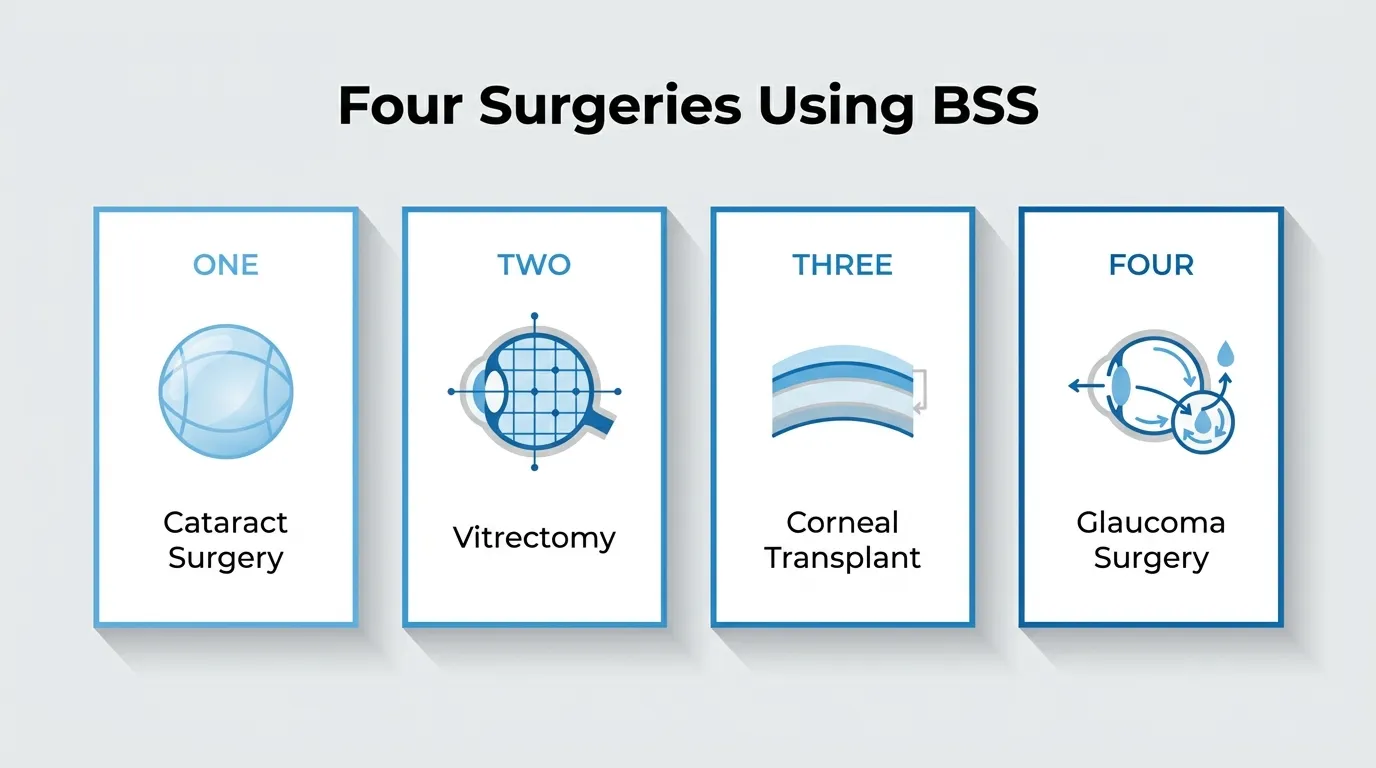
Balanced salt solution is commonly required during cataract surgery, vitrectomy, corneal transplant surgery, and glaucoma surgery. Each procedure relies on BSS to maintain anterior chamber stability, tissue hydration, and the electrolyte environment that supports corneal endothelial cell function.
How Is BSS Used During Cataract Surgery?
BSS is used during cataract surgery as the primary intraocular irrigating solution that fills and stabilizes the anterior chamber after the natural lens is removed. Continuous BSS infusion replaces aqueous humor displaced during phacoemulsification, keeping the eye inflated at a safe pressure while the surgeon fragments and aspirates the clouded lens. The solution’s electrolyte composition supports the corneal endothelial pump mechanism, which relies on Mg-ATPase and Na-K-ATPase enzymatic activities to maintain corneal transparency. BSS also rinses debris and viscoelastic material from the eye before intraocular lens implantation. For most routine cataract cases, standard BSS provides sufficient tissue protection at a practical cost point, making it the default irrigation choice in high-volume surgical settings.
How Is BSS Used During Vitrectomy?
BSS is used during vitrectomy as a continuous irrigation fluid that replaces vitreous gel as it is removed from the posterior segment. Pars plana vitrectomy involves cutting and aspirating the vitreous body, and BSS fills the resulting space to maintain globe volume and intraocular pressure throughout the procedure. Because vitrectomy cases often run longer than routine cataract surgery, many surgeons opt for BSS Plus, which contains bicarbonate, dextrose, and glutathione to better sustain delicate retinal and endothelial cells during extended fluid exposure. The stable pH and osmolality of balanced salt solution help protect photoreceptors and retinal pigment epithelium from osmotic stress. Selecting the appropriate BSS formulation based on anticipated surgical duration is one of the quieter but more consequential decisions in vitreoretinal planning.
How Is BSS Used During Corneal Transplant Surgery?
BSS is used during corneal transplant surgery to irrigate the anterior chamber and keep donor and recipient corneal tissue hydrated throughout the grafting process. Maintaining a physiologic electrolyte environment is especially critical here because endothelial cell survival on the donor graft directly determines transplant success. According to a report in JAMA Ophthalmology, exposure of corneal endothelial cells to enzymatic sterilization detergents during surgery, if not properly rinsed with BSS, can lead to cell damage similar to that observed in toxic anterior segment syndrome. Thorough BSS irrigation helps flush residual contaminants from instruments and the surgical field, reducing this risk. For penetrating and endothelial keratoplasty procedures alike, consistent BSS flow preserves the delicate cellular layer that patients depend on for long-term graft clarity.
How Is BSS Used During Glaucoma Surgery?
BSS is used during glaucoma surgery to maintain anterior chamber depth and stabilize intraocular pressure while the surgeon creates or modifies aqueous outflow pathways. Procedures such as trabeculectomy, goniotomy, and minimally invasive glaucoma surgery (MIGS) all require a formed anterior chamber to provide adequate visualization and protect the corneal endothelium and iris from mechanical contact. BSS infusion counteracts fluid loss through the newly created drainage site, preventing chamber collapse. The solution’s balanced ion composition also helps preserve the trabecular meshwork and surrounding tissues that are manipulated during filtering procedures. Because most glaucoma surgeries are relatively brief, standard BSS typically provides sufficient protection without the added cost of enriched formulations.
Understanding which procedures rely on BSS highlights why irrigation solution selection is a routine yet essential part of every ophthalmic surgical plan.
What Are the Possible Risks or Side Effects of BSS?
The possible risks or side effects of BSS include contamination-related complications, adverse reactions to solution components, and tissue damage from using an incorrect irrigation fluid. The following subsections cover each risk category. These considerations are part of a wider discussion of potential complications, including risks of irrigation-aspiration cataract surgery itself.
What Complications May Occur if BSS Is Contaminated?
Complications that may occur if BSS is contaminated include toxic anterior segment syndrome (TASS), severe corneal edema, and widespread endothelial cell destruction. Contamination can stem from improper sterilization of surgical instruments, introduction of bacterial endotoxins, or residual cleaning agents on tubing and cannulas.
According to a study published in JAMA Ophthalmology, exposure of corneal endothelial cells to enzymatic sterilization detergents during surgery, if not properly rinsed with BSS, can lead to cell damage similar to that observed in TASS. This type of contamination may trigger intense postoperative inflammation, elevated intraocular pressure, and prolonged corneal clouding.
Strict aseptic technique and thorough rinsing protocols are essential safeguards. Even trace amounts of foreign substances in the irrigating fluid can compromise surgical outcomes, making contamination one of the most preventable yet serious risks associated with BSS use.
Can Patients Have an Adverse Reaction to BSS Components?
Yes, patients can have an adverse reaction to BSS components, though such reactions are uncommon. BSS contains electrolytes, buffering agents, and stabilizers that closely mimic the eye’s natural aqueous humor, which generally makes it well tolerated. However, individual sensitivities to specific ions or preservatives may occasionally provoke localized inflammation or transient corneal swelling.
Complications associated with intraocular irrigating solutions can include corneal edema, endothelial cell loss, and intraoperative crystallization on the intraocular lens surface if the solution’s chemical composition or pH is not properly maintained, according to research published in the American Journal of Ophthalmology. Patients with pre-existing corneal endothelial dysfunction may be at higher risk for these reactions, since their cells have less functional reserve to tolerate even minor osmotic or pH shifts. Surgeons typically review a patient’s ocular health history before selecting the appropriate BSS formulation to minimize this risk.
What Happens if the Wrong Irrigation Solution Is Used?
Using the wrong irrigation solution during eye surgery can cause significant corneal endothelial damage, persistent edema, and compromised surgical outcomes. Solutions that lack the correct electrolyte balance, pH buffering, or osmolality may disrupt the delicate ionic environment that intraocular tissues require.
For context, BSS is identified in clinical literature by several interchangeable names, including “intraocular irrigating fluid,” “ophthalmic irrigation solution,” and “physiologic salt solution,” as noted by Drugs.com. This varied terminology underscores why precise labeling and surgical team communication are critical; selecting a non-balanced solution, such as sterile water or an improperly constituted saline, can strip essential ions from endothelial cells and trigger irreversible swelling.
The margin for error is remarkably thin in intraocular surgery. Verifying both the solution type and its expiration before use remains one of the simplest yet most consequential safety checks in ophthalmic operating rooms.
With these risks understood, knowing who qualifies for BSS-dependent procedures helps patients prepare with confidence.
Who Is a Candidate for Procedures That Use BSS?
Candidates for procedures that use BSS include most patients scheduled for intraocular surgery where the eye’s internal structures require irrigation and protection. Because balanced salt solution serves as a universal irrigating fluid during ophthalmic procedures, candidacy depends on the underlying surgical indication rather than the solution itself.
Patients commonly evaluated for BSS-irrigated procedures include those with:
- Visually significant cataracts requiring phacoemulsification or extracapsular extraction.
- Vitreoretinal conditions, such as retinal detachments, macular holes, or epiretinal membranes, that necessitate retina surgery like pars plana vitrectomy.
- Corneal disease advanced enough to warrant penetrating or endothelial keratoplasty.
- Uncontrolled glaucoma that has not responded to medications or laser therapy, making filtration surgery necessary.
Your ophthalmologist determines surgical candidacy based on comprehensive eye exams, disease severity, overall ocular health, medical history, and visual goals. Certain pre-existing conditions, including compromised corneal endothelial cell counts or active intraocular inflammation, may influence which BSS formulation the surgeon selects. For longer, more complex cases, an enriched formulation like BSS Plus may be preferred to provide additional metabolic support to delicate tissues. Discussing your specific situation with a qualified eye care provider is the most reliable way to understand whether a BSS-irrigated procedure is appropriate for your needs.
How Is Balanced Salt Solution Stored and Prepared?
Balanced salt solution requires specific storage conditions and preparation steps to remain safe for intraocular use. Standard BSS and BSS Plus each follow distinct handling protocols.
Standard BSS is a single-part, ready-to-use sterile irrigating solution. It requires no reconstitution before surgery. Surgical teams inspect each container for particulate matter, cloudiness, or seal damage before opening. Once opened, the solution is used during a single procedure and any remaining volume is discarded.
BSS Plus follows a more involved preparation process because it is a two-part solution. Part I and Part II must be combined, or reconstituted, before use. According to FDA-approved labeling, both parts must be stored between 2° and 25°C (36° to 77°F) and must not be frozen. After reconstitution, the solution must be discarded within six hours.
Proper storage and preparation directly affect the solution’s chemical stability. If the pH, osmolality, or electrolyte composition shifts due to improper handling, the solution may lose its ability to protect delicate intraocular tissues during surgery. Temperature excursions or prolonged storage after reconstitution can compromise the buffering capacity and glutathione content that make BSS Plus suitable for longer procedures.
For surgical teams, strict adherence to these protocols is non-negotiable. Even small deviations in storage temperature or preparation timing can introduce risks that undermine the very tissue protection these solutions are designed to provide.
How Does BSS Compare to Other Ophthalmic Irrigation Solutions?
BSS compares to other ophthalmic irrigation solutions through differences in composition, cost, and suitability for specific procedure lengths. The following subsections examine BSS against Lactated Ringer’s solution and BSS Plus. It’s worth noting that while BSS is critical for intraocular procedures, refractive vision correction surgeries like LASIK typically do not require it as they involve surface corneal reshaping rather than internal eye irrigation.
How Does BSS Compare to Lactated Ringer’s Solution?
BSS compares to Lactated Ringer’s solution favorably in most routine cataract procedures, though the clinical gap narrows under certain conditions. According to research published in the British Journal of Ophthalmology, BSS Plus is similar to Lactated Ringer’s solution in clinical parameters for corneal preservation during atraumatic phacoemulsification surgeries, despite BSS Plus being significantly more expensive.
This finding suggests that for straightforward, uncomplicated cases, the premium cost of BSS Plus may not translate into measurably better corneal outcomes compared to Lactated Ringer’s. Surgeons weighing cost-effectiveness against tissue protection should consider procedure complexity as the deciding factor. Notably, cooling BSS Plus before use does not appear to improve results; clinical evaluation found no detectable benefit from moderately cooled BSS Plus compared to room temperature solution during phacoemulsification.
For complex or prolonged surgeries, however, BSS formulations with enriched electrolyte profiles may still offer advantages that Lactated Ringer’s cannot match.
How Does BSS Plus Compare to Standard BSS for Longer Surgeries?
BSS Plus compares to standard BSS most meaningfully during longer surgical procedures where extended tissue exposure increases the risk of endothelial cell stress. BSS Plus contains additional components, such as bicarbonate, dextrose, and glutathione disulfide, that support cellular metabolism and antioxidant defense over prolonged irrigation times.
Standard BSS remains a widely used and cost-effective alternative for routine ophthalmic surgeries, while BSS Plus is recognized as a superior solution for long-term procedures due to its enriched composition. In practice, this means surgeons may reserve BSS Plus for cases like complex vitrectomies or combined procedures where irrigation time exceeds typical durations. For shorter, uncomplicated cataract extractions, standard BSS often provides sufficient tissue protection at a lower cost. The choice between the two ultimately depends on anticipated surgical duration, tissue vulnerability, and institutional budgeting priorities.
With these comparisons in mind, surgeon-reviewed resources can help clarify which solutions best fit specific clinical scenarios.
How Can Surgeon-Reviewed Resources Help You Understand Eye Surgery Solutions?
Surgeon-reviewed resources can help you understand eye surgery solutions by translating complex clinical details into clear, patient-friendly language verified by practicing specialists. The following sections cover how Eye Surgery Today supports cataract surgery education and the key takeaways about BSS uses and benefits.
Can Eye Surgery Today Help You Learn About Cataract Surgery?
Yes, Eye Surgery Today can help you learn about cataract surgery through its surgeon-reviewed educational platform designed to make complex ophthalmic topics accessible. The platform covers essential surgical details, including how solutions like balanced salt solution support procedures such as cataract extraction and intraocular lens implantation.
Eye Surgery Today was founded by nationally recognized key opinion leaders in ophthalmology to bridge the gap between clinical knowledge and patient understanding. Every resource undergoes surgeon review to ensure clinical accuracy without relying on confusing medical jargon. Topics range from cataract surgery fundamentals and advanced IOL options to recovery expectations and the role of surgical consumables like BSS.
For patients considering cataract surgery, understanding the tools and solutions involved can reduce uncertainty and support more confident decision-making alongside their eye care provider. Beyond cataracts, the platform also offers detailed information on various other ophthalmic procedures, including eyelid surgery.
What Are the Key Takeaways About BSS Uses and Benefits?
The key takeaways about BSS uses and benefits center on its role as a protective, stabilizing irrigation solution during eye surgery. Balanced salt solution maintains intraocular pressure, preserves corneal hydration, supports endothelial cell health, and buffers pH levels to mimic natural aqueous humor.
Core takeaways include:
- BSS provides essential ions, including calcium, magnesium, and potassium, that support corneal endothelial pump function.
- Proper irrigation with BSS may help reduce postoperative corneal edema compared to simpler alternatives.
- BSS Plus offers an enriched formulation with added glucose and glutathione for longer or more complex procedures.
- Correct storage, preparation, and handling of BSS are critical to avoiding complications such as contamination or toxic anterior segment syndrome.
- BSS remains a cost-effective standard for routine ophthalmic surgeries, while BSS Plus may be preferred when extended tissue exposure is anticipated.
Patients preparing for any intraocular procedure benefit from understanding why their surgeon selects a specific irrigation solution. Exploring surgeon-reviewed resources on Eye Surgery Today can help clarify these choices and support informed conversations with your eye care team.