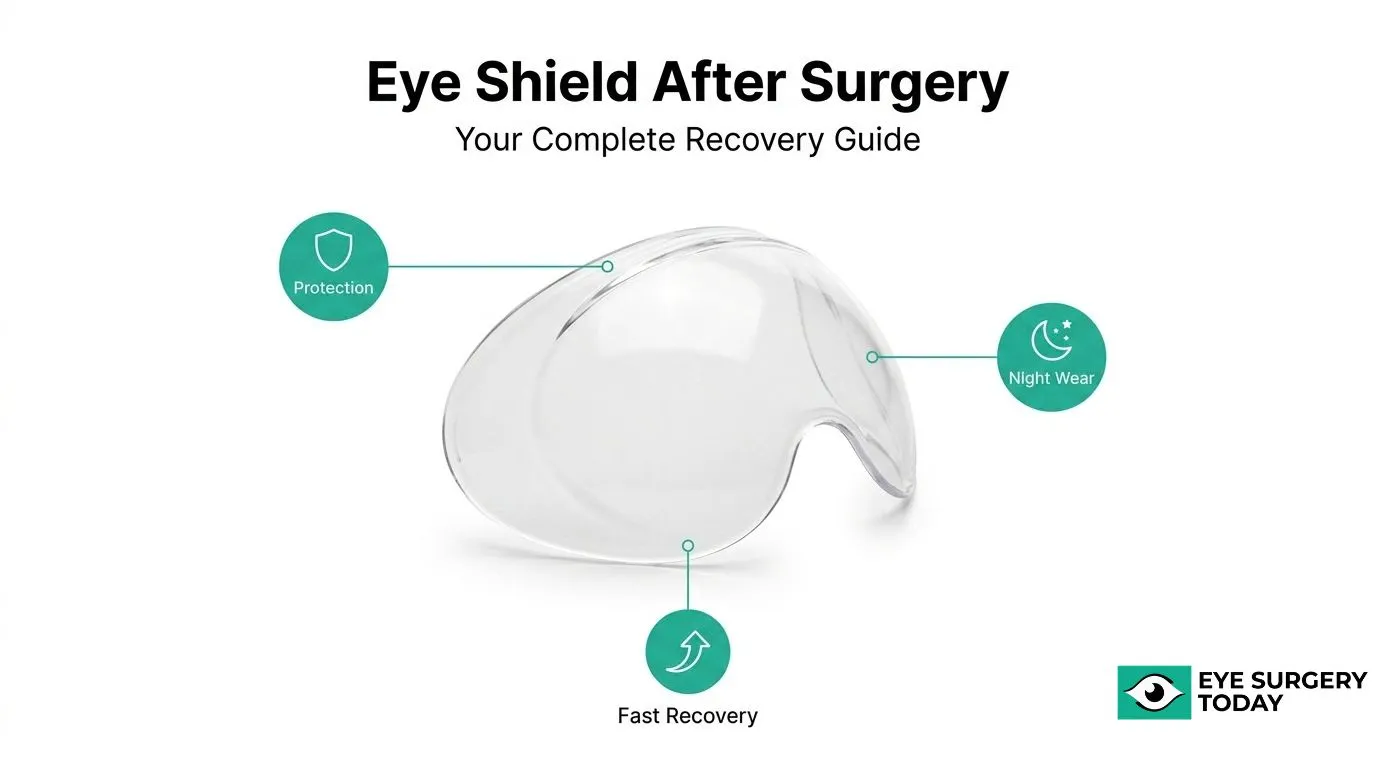
An eye shield after cataract surgery is a protective cover placed over the operated eye to guard the healing incision and newly implanted lens from accidental contact, pressure, and rubbing during early recovery.
This guide covers the shield’s purpose and recommended wear duration, what to expect in the first 48 hours, safe handling and sleep positioning, daily activity guidelines, potential risks and warning signs, special considerations for higher-risk patients, and how the shield fits into the broader recovery timeline.
The eye shield is typically worn overnight immediately after surgery, then at night for approximately one week, though surgeon protocols vary considerably. Some clinicians may prescribe a shield for several weeks while others limit its use based on individual healing.
During the first day or two, mild discomfort, blurred vision, and light sensitivity are common under the shield. These sensations tend to ease quickly as the eye adjusts to its new intraocular lens, and most early discomfort may resolve within a few days.
Proper handling requires clean hands, gentle tape removal, and correct re-taping technique to keep the shield secure without pressing on the eye. Sleeping on your back or unoperated side, with your head slightly elevated, may help maintain stable intraocular pressure overnight.
Everyday tasks like reading and screen use are generally safe during shield use, while heavy lifting, swimming, bending below the waist, and contact sports should be avoided until your surgeon clears them.
Patients with glaucoma, a history of eye rubbing, pediatric cases, or those on immunosuppressive therapy may need extended or modified shield schedules. Any sudden vision loss, persistent pain, increasing redness, or new floaters warrants prompt contact with your surgical team.
What Is the Eye Shield Used After Cataract Surgery and Why Is It Important?
The eye shield used after cataract surgery is a protective cover placed over the operated eye to guard it from accidental contact, pressure, and rubbing during the early healing period. It is important because the surgical incision and newly implanted lens need time to stabilize without interference.
According to the American Academy of Ophthalmology, a protective shield may be used for several nights following cataract surgery, and patients should avoid bending their head below their waist during the first 48 hours. Ophthalmologist John Hovanesian, MD, a specialist in cataract and corneal surgery and an Academy member, notes that expectations after cataract surgery are high, and patients often wonder why they do not have 20/20 vision in the days or even weeks after their procedure.
The shield serves two practical functions:
- Physical protection: It prevents the patient from inadvertently touching or rubbing the eye during sleep or rest, when unconscious contact is most likely.
- Pressure reduction: It creates a barrier that discourages positions or contact that could disturb the healing incision.
While its use is common practice, the duration and necessity of wearing an eye shield can vary depending on the surgeon’s assessment and the individual patient’s risk profile.
How Long Do You Need to Wear an Eye Shield After Cataract Surgery?
Most patients need to wear the eye shield at night for approximately one week after cataract surgery, though the exact duration depends on individual healing and surgeon instructions. The subsections below cover daytime wear, nightly sleep use, and extended timelines for higher-risk cases.
How Many Hours a Day Do Most Patients Need to Wear the Eye Shield?
Most patients need to wear the eye shield primarily during sleep rather than throughout the entire day. For most uncomplicated cases, daytime wear is typically limited to the first day or two after surgery, after which the shield is reserved for nighttime protection only. Your surgical team will advise whether additional daytime use is appropriate based on your specific recovery.
How Many Nights Should You Sleep With the Eye Shield On?
Most patients should sleep with the eye shield on for one week following cataract surgery. According to Guy’s and St Thomas’ NHS Foundation Trust, patients are advised to keep the shield on overnight immediately after surgery and to continue wearing it at night for one week, securing it with tape each evening. This nightly protection guards the healing eye against accidental rubbing or pressure during sleep.
How Long Do People With Higher-Risk Eyes Usually Need the Shield?
People with higher-risk eyes may need the shield for longer than the standard one week, at the direction of their surgeon. NICE guideline NG77 recommends that eye protection be offered to any patient whose eye shows residual effects of anaesthesia at discharge, recognizing that recovery needs vary. Patients with conditions such as glaucoma, a history of eye rubbing, or surgical complexity may receive extended shield-wearing schedules tailored to their individual risk profile. Consulting your surgeon before discontinuing use is the safest course in any higher-risk situation.
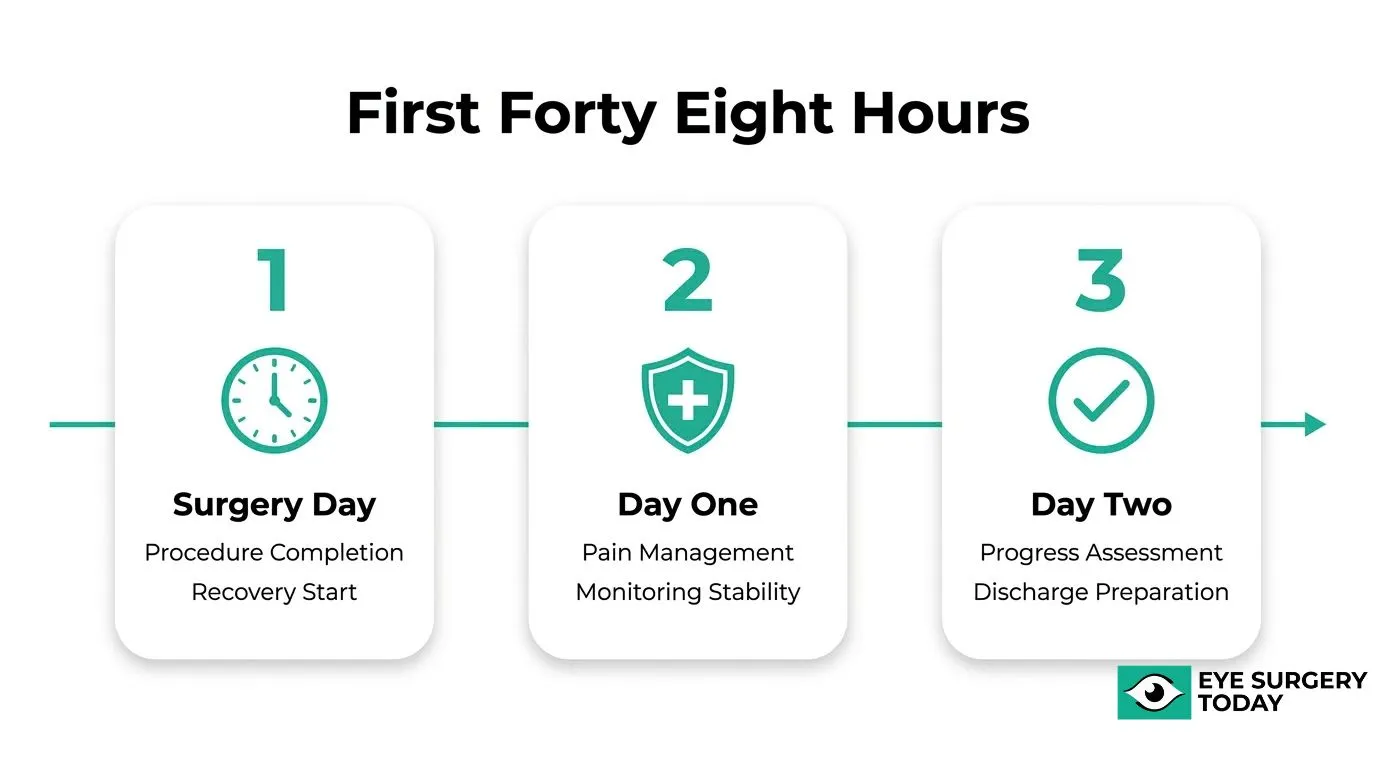
What Should You Expect During the First 24–48 Hours of Wearing an Eye Shield?
The first 24–48 hours with an eye shield involve mild physical sensations, temporary vision changes, and a clear set of warning signs worth knowing before you leave the clinic. The H3s below cover what the shield feels like, which visual symptoms are normal, and when to call your surgeon.
What Does the Eye Shield Typically Feel Like Right After Surgery?
The eye shield typically feels slightly unfamiliar and mildly uncomfortable, but it should not be painful. Most patients notice light pressure from the taped edges and some warmth under the shield, particularly if a pad is also in place. The awareness of something covering your eye tends to diminish within a few hours as the anaesthesia wears off. Mild grittiness or a watery sensation underneath the shield is common as the eye begins its initial healing response. If the discomfort feels sharp, intensifies, or is accompanied by significant pain that persists, that crosses beyond what is expected and warrants a call to your surgical team.
What Vision Changes Are Normal While You Are Wearing the Eye Shield?
Normal vision changes while wearing the eye shield include blurriness, mild haziness, and fluctuating clarity as the operated eye adjusts to its new intraocular lens. Colors may appear brighter or slightly different than before surgery, which reflects the removal of the cloudy cataract lens. According to the NHS, vision may take several days to settle, and patients should not drive until their vision has returned to normal. Glare, haloes around lights, and occasional watering are also typical during this window. These changes are part of the expected healing process rather than signs of a problem.
When Should You Call Your Surgeon About Eye Shield Discomfort in the First Two Days?
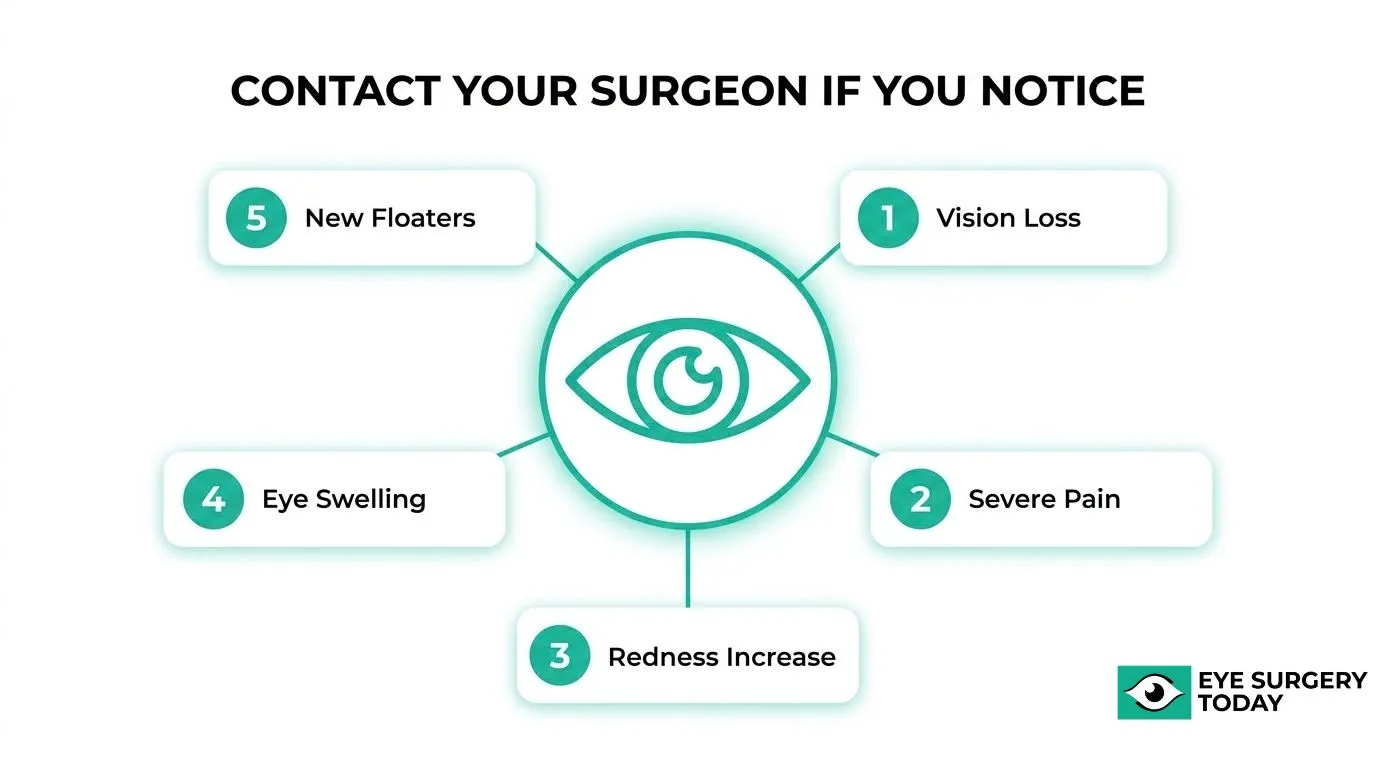
You should call your surgeon if you experience pain that does not ease, significant vision loss, increasing redness, eyelid swelling, new flashes of light, or a sudden increase in floaters during the first two days. According to MedlinePlus (U.S. National Library of Medicine), recovery takes approximately two weeks, and patients should consult their doctor before resuming driving or strenuous activity. It is worth noting that, as reported in Eye (Nature Portfolio), surgeon protocols vary considerably: some clinicians prescribe a shield for up to six weeks while others use no ocular protection at all, with current practice driven largely by historical and anecdotal evidence rather than uniform clinical guidelines. This variability means your surgeon’s specific instructions take priority over any general rule. When in doubt, contact your surgical team rather than waiting.
How Do You Safely Put On, Take Off, and Re-Tape an Eye Shield at Home?
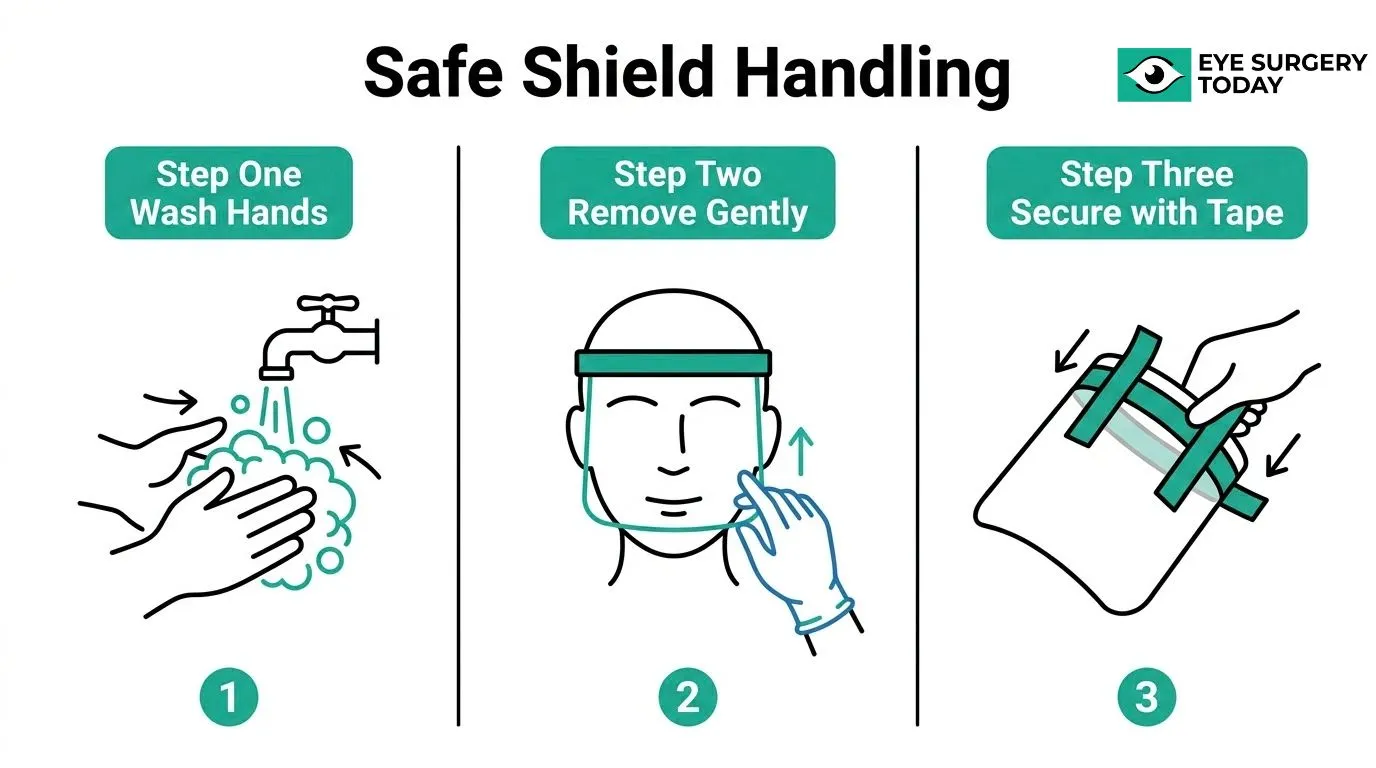
Handling your eye shield correctly at home protects the healing incision and reduces infection risk. The three steps below cover hand preparation, safe removal, and secure re-taping.
How Should You Wash Your Hands and Prepare Before Touching the Shield?
You should wash your hands thoroughly with soap and water for at least 20 seconds before touching the eye shield. Dry them with a clean towel. Avoid touching your face, hair, or any non-sterile surface after washing. Having your tape and replacement shield within reach before you begin prevents unnecessary contact with the eye area mid-process. Clean hands are the single most important preparation step, as introducing bacteria near a fresh surgical incision can increase infection risk.
How Do You Remove the Eye Shield Without Pressing on the Eye?
To remove the eye shield without pressing on the eye, gently peel the medical tape from the outer edges of the shield, working from the skin outward. Lift the shield straight away from the face rather than sliding it sideways, which could drag the edge across the lid. Never pull quickly or apply pressure inward toward the eye. Guy’s and St Thomas’ NHS Foundation Trust advises keeping the shield on overnight without touching or removing it unless instructed, so always follow your surgeon’s specific timing guidance before attempting removal at home.
How Do You Re-Tape the Eye Shield So It Stays Secure but Comfortable?
Re-taping the eye shield securely requires placing two or three strips of medical-grade tape diagonally across the shield’s edges so they anchor to the surrounding cheek and brow skin without pressing the shield itself onto the eyelid. Use only hypoallergenic, breathable medical tape. Position the shield so it forms a dome over the closed eye with no direct contact with the lashes or lid. Tape that is too tight can cause skin irritation; tape that is too loose allows the shield to shift during sleep and may leave the eye unprotected.
With the re-taping technique mastered, proper sleep positioning becomes the next key step in protecting your recovery.
How Should You Sleep and Position Yourself While Using an Eye Shield?
Sleeping safely after cataract surgery means protecting the operated eye from accidental pressure and avoiding positions that raise eye pressure. The H3s below cover the safest sleeping positions, keeping the shield secured overnight, and what to do if it comes off.
Which Sleeping Positions Are Safest After Cataract Surgery?
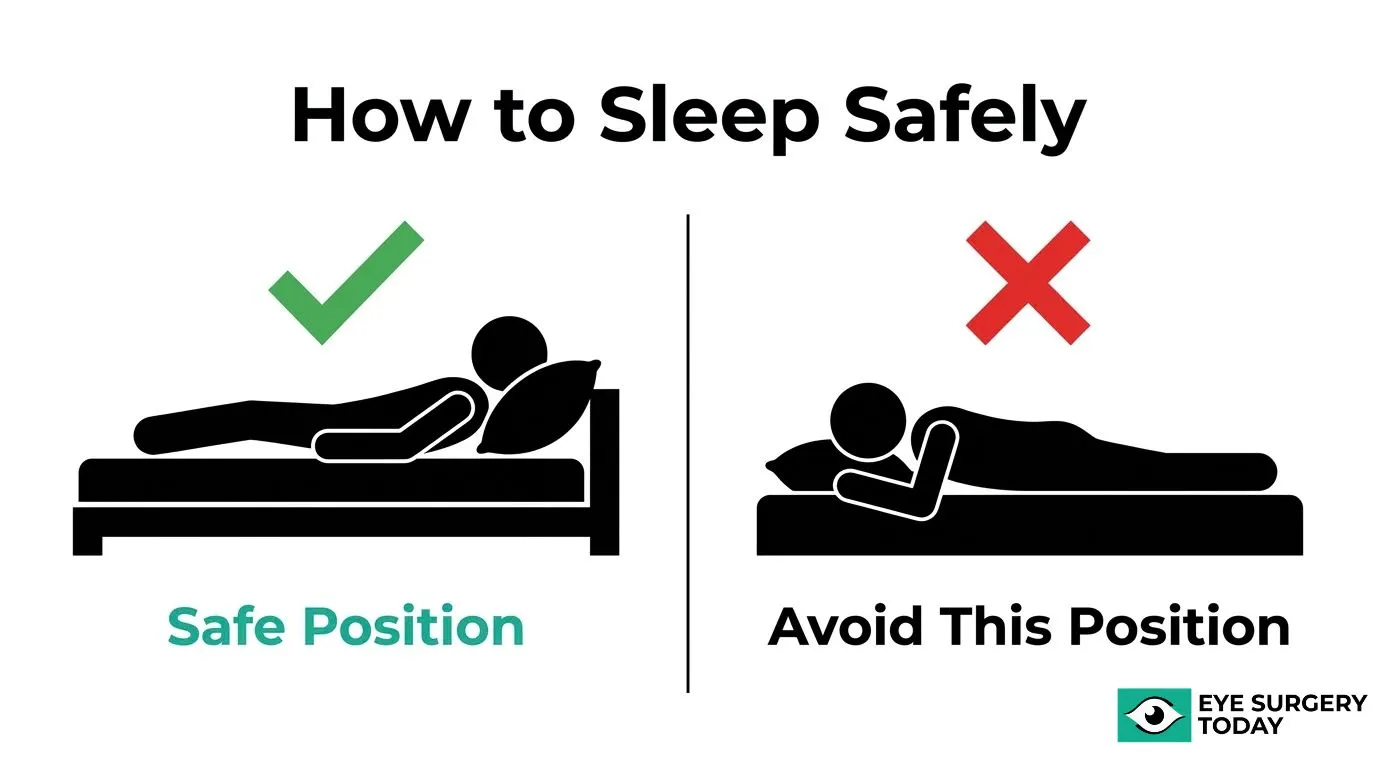
The safest sleeping positions after cataract surgery are lying on your back or on the unoperated side. Sleeping face-down or directly on the operated eye can apply pressure to the healing incision, increasing the risk of complications.
Keeping your head above your waist also matters beyond bedtime. According to Johns Hopkins Medicine, Allen Eghrari, MD, of the Wilmer Eye Institute, states: “High eye pressure can interfere with the incision before it fully heals. Positions that put your head below your waist, such as bending over, can also increase eye pressure and should be avoided initially after surgery.”
Using an extra pillow to slightly elevate your head may help keep intraocular pressure stable overnight. For most patients, these positional precautions are most critical during the first 48 hours, when the incision is at its earliest and most vulnerable stage of healing.
How Can You Keep the Eye Shield From Coming Off While You Sleep?
The key steps for keeping the eye shield secure overnight are using sufficient medical tape and applying it across the shield’s edges at multiple anchor points on the surrounding skin.
Practical steps include:
- Use hypoallergenic medical tape rated for skin contact, replacing it each night with a fresh strip.
- Apply tape along all four edges of the shield, not just the top and bottom, so the shield cannot pivot or slide.
- Avoid applying moisturizer or facial creams near the eye before bed, as these reduce tape adhesion.
- Position the shield before lying down rather than adjusting it once reclined, which limits accidental dislodging.
Some patients find that wearing a soft sleep mask over the shield adds an extra layer of physical protection against movement during the night.
What Should You Do if You Wake Up and the Eye Shield Has Fallen Off?
If you wake up and the eye shield has fallen off, inspect the eye gently in a mirror without touching or rubbing it. Look for obvious redness, pain, or vision changes that were not present when you went to sleep.
If the eye appears normal with no new symptoms, wash your hands thoroughly, reposition the shield, and secure it with fresh tape for the remainder of the night. Contact your surgical team at the next available opportunity to let them know the shield came off, so they can confirm whether any additional review is needed.
Do not press on the eye or attempt to flush it unless instructed by your surgeon. If you notice sudden pain, increased redness, or any change in vision after the shield fell off, contact your surgical team promptly rather than waiting for a scheduled appointment.
What Daily Activities Are Safe or Should Be Avoided While You Are Using an Eye Shield?
Daily activity guidance during eye shield use covers three main areas: water exposure during hygiene routines, screen and reading use, and physical activity restrictions.
Can You Shower, Wash Your Face, or Wash Your Hair With the Eye Shield On?
Yes, you can shower and wash your hair while using the eye shield, but you should take precautions to keep water away from the operated eye. The NHS advises patients not to get water in the eye during recovery, which means tilting your head back when rinsing hair and using a damp cloth to clean your face around the shield rather than splashing water directly. Avoid rubbing the eye area when drying. Washing your face normally is generally safe as long as water and soap do not enter the eye itself.
Can You Read, Use a Phone or Computer, or Watch TV While Using the Eye Shield?
Yes, you can read, use a phone or computer, and watch TV while using the eye shield, as these activities do not place physical stress on the healing eye. Screen use and reading do not raise eye pressure or strain the surgical incision. However, vision may be blurred or fluctuating in the early days after surgery, which can make extended screen time uncomfortable. Taking regular breaks and adjusting screen brightness may help reduce discomfort until clarity improves.
Which Physical Activities and Exercises Should You Avoid Until the Shield Is No Longer Needed?
The physical activities to avoid until the shield is no longer needed include heavy lifting, swimming, gardening, contact sports, and any movement that places your head below your waist. According to Guy’s and St Thomas’ NHS Foundation Trust, patients should avoid energetic exercise, heavy lifting, swimming, gardening, and contact sports during the stated recovery periods. The American Academy of Ophthalmology confirms that light walking may begin the day after surgery, while swimming should be avoided for at least two weeks. Bending over can raise eye pressure and risk disrupting the healing incision, so any activity that inverts the head should be postponed until your surgeon clears it.
What Are the Possible Problems or Risks Related to Eye Shield Use After Cataract Surgery?
The possible problems related to eye shield use after cataract surgery include skin irritation from the shield or tape, hygiene issues that require timely replacement, and serious postoperative warning signs that demand prompt medical attention. The sections below cover each risk category in turn.
What Symptoms Suggest the Eye Shield Is Too Tight or Irritating the Skin?
Symptoms that suggest the eye shield is too tight or irritating the skin include redness, soreness, or indentation marks around the orbit where the shield’s rim rests. Skin chafing may also develop if the securing tape is applied too tightly or repositioned repeatedly on the same area. Mild pressure discomfort is common and usually resolves by adjusting the tape tension. However, if pain persists, worsens overnight, or is accompanied by swelling of the surrounding tissue, your surgeon should be notified. Switching to a hypoallergenic tape or trimming the tape edges can reduce friction without compromising the shield’s protective fit.
When Could an Eye Shield Be Damaged or Become Unhygienic and Need Replacement?
An eye shield may need replacement when it develops visible cracks or bends, when the surface becomes clouded with discharge, or when it cannot be adequately cleaned. A shield in poor structural condition may press unevenly against the periorbital area, and a contaminated shield may introduce bacteria near the healing incision. Cleaning the shield daily with soap and water, as advised by Guy’s and St Thomas’ NHS Foundation Trust, helps maintain hygiene throughout the recovery period. If cleaning no longer restores a clear, intact surface, the shield should be replaced before the next use.
What Warning Signs Around the Shield Might Point to a Postoperative Complication?
The warning signs around the shield that may point to a postoperative complication include vision loss, persistent pain that does not respond to pain medication, increased eye redness, eyelid swelling, flashes of light, and multiple new floaters. According to Mayo Clinic, these symptoms require prompt contact with a doctor. Retinal detachment, for instance, may present with unilateral photopsias, an increase in floaters, or an expanding peripheral visual field defect, as noted in a review published in American Family Physician. Separately, the Glaucoma Research Foundation reports that cataract surgery can cause short-term or permanent changes in intraocular pressure, with unpredictable pressure spikes that may require medical treatment. These warning signs are distinct from the normal mild discomfort expected in early recovery, so any sudden or worsening symptom visible or felt near the shielded eye warrants immediate surgical follow-up rather than a watch-and-wait approach.
Who May Need to Wear an Eye Shield for Longer or Take Extra Precautions?
Some patients may need to wear an eye shield beyond the standard schedule due to age, behavior, health conditions, or surgical findings. The sections below cover children and habitual eye-rubbers, medical conditions and medications that affect healing, and the circumstances under which a surgeon may modify the standard plan.
Why Might Children or People Who Rub Their Eyes Need the Shield Longer?
Children and people who habitually rub their eyes may need the shield longer because accidental contact with the healing eye can displace the wound or increase infection risk before the incision seals. According to the American Association for Pediatric Ophthalmology and Strabismus, pediatric cataract surgery is usually performed under general anesthesia, and untreated pediatric cataracts can lead to amblyopia, making postoperative protection especially critical. Young children cannot reliably follow “do not touch” instructions, so extended or daytime shield use is often necessary. Adults who unconsciously rub their eyes during sleep face a similar risk, and their surgeon may recommend continuing the shield for additional nights beyond the standard one-week period.
How Can Certain Medical Conditions or Medications Affect Eye Shield Use?
Certain medical conditions and medications can affect eye shield use by altering healing speed, infection susceptibility, or intraocular pressure after surgery. Patients with glaucoma face particular complexity: according to the Glaucoma Research Foundation, cataract surgery can cause a change in eye pressure that may be short-term or permanent, and it is not possible to predict whether intraocular pressure will rise, fall, or stay the same. Patients with a history of uveitis or those on immunosuppressive therapy also carry elevated surgical risk. Regarding anticoagulants, a CHEST Clinical Practice Guideline notes that phacoemulsification is a minimal-bleed-risk procedure where anticoagulants may often be continued perioperatively, but any medication affecting tissue healing warrants a tailored shield-use plan discussed with the surgeon.
When Might Your Surgeon Change Your Shield-Wearing Schedule From the Standard Plan?
Your surgeon may change your shield-wearing schedule from the standard plan when intraoperative or postoperative findings indicate that healing is slower or more vulnerable than typical. Factors that may prompt a modified schedule include a complicated surgical course, residual anaesthetic effects at discharge, elevated postoperative intraocular pressure, or a wound that requires closer monitoring. According to NICE guideline NG77, eye protection should be offered specifically to patients whose eye shows residual effects of anaesthesia at discharge, rather than applied uniformly to all. A surgeon’s decision to extend, shorten, or redistribute shield-wearing hours is ultimately based on individual examination findings, not a fixed timetable.
How Does the Eye Shield Fit Into the Overall Cataract Surgery Recovery Timeline?
The eye shield fits into the overall cataract surgery recovery timeline as an early-phase protective measure, used primarily during the first week while the surgical incision stabilizes. The sections below cover follow-up visit scheduling, post-shield vision changes, and return-to-normal-activity milestones.
When Are Follow-Up Visits Typically Scheduled While You Are Still Using the Shield?
Follow-up visits are typically scheduled within the first 24 to 48 hours after surgery, then again at one week and one month. The day-one appointment is particularly important for monitoring intraocular pressure (IOP). A randomized controlled trial published in the British Journal of Ophthalmology found that 8.0% of next-day-review patients required treatment for raised IOP on day one, and one patient had a significant wound leak. Because complications like pressure spikes and wound issues are most likely in this early window, attending follow-up appointments while still wearing the shield is essential, not optional.
How Does Your Vision Usually Change in the Days After You Stop Wearing the Shield?
Vision usually changes gradually in the days after you stop wearing the shield, often improving as the eye heals and adapts to the new intraocular lens. According to Mayo Clinic, most discomfort disappears within a couple of days, and complete healing may take up to eight weeks. Some blurriness, fluctuation, or light sensitivity in the first few weeks is considered normal. However, symptoms such as vision loss, persistent pain, increased redness, eyelid swelling, light flashes, or multiple new floaters require prompt contact with your surgeon.
When Can Most Patients Return to Work, Driving, and Exercise After Shield Use Ends?
Most patients can return to work, driving, and light exercise within one to two weeks after cataract surgery, depending on the activity and their individual healing progress. According to MedlinePlus (U.S. National Library of Medicine), recovery takes approximately two weeks, and patients should not drive until their vision has returned to normal. The American Academy of Ophthalmology notes that light walking may begin the day after surgery, while swimming should be avoided for at least two weeks. Strenuous activity, heavy lifting, and contact sports typically require a longer restriction period. Your surgeon’s specific guidance should always take precedence over general timelines.
Understanding the shield’s role within each phase of recovery helps patients set realistic expectations and recognize when healing is progressing normally versus when a concern warrants medical attention.
How Can Cataract Patients Get Clear, Surgeon-Reviewed Guidance on Eye Shields From Eye Surgery Today?
Cataract patients can get clear, surgeon-reviewed guidance on eye shields from Eye Surgery Today through its educational articles, guides, and videos covering postoperative care. The sections below explain how Eye Surgery Today’s resources help patients prepare and what key takeaways to carry forward.
How Can Eye Surgery Today’s Cataract Surgery Guides and Videos Help You Prepare for Eye Shield Use?
Eye Surgery Today’s cataract surgery guides and videos can help you prepare for eye shield use by translating surgeon-reviewed protocols into plain language, covering when to wear the shield, how to tape it, and which activities to avoid. This matters because eye shield practice varies widely across clinical settings. According to the European Society of Cataract and Refractive Surgeons, eye shields have no beneficial effect on postoperative recovery after uncomplicated cataract surgery, and not using a shield has become common practice in many facilities throughout Scandinavia and the Netherlands. Knowing this helps patients ask better questions before surgery rather than following instructions blindly. Eye Surgery Today’s content bridges exactly that gap, giving patients the context behind clinical decisions, not just the instructions themselves.
What Are the Key Takeaways About Eye Shield After Cataract Surgery: What to Expect We Covered?
The key takeaways about eye shield use after cataract surgery are practical and evidence-grounded:
- Wear duration varies by surgeon and patient risk. Most protocols call for overnight use immediately after surgery, with nighttime-only wear continuing for approximately one week, though higher-risk patients may wear the shield longer.
- The shield prevents accidental rubbing, not infection. Its primary role is mechanical protection during sleep and early recovery, not a barrier to postoperative complications like endophthalmitis.
- Practice varies and is often anecdotal. Evidence supporting routine shield use in uncomplicated cases is limited, so following your specific surgeon’s instructions matters more than general advice.
- Warning signs require prompt contact. Vision loss, increasing redness, pain unresolved by medication, or new floaters are signals to contact your surgical team immediately.
- Recovery benchmarks are realistic. Most discomfort resolves within days, and full healing typically occurs within eight weeks.
Eye Surgery Today’s surgeon-reviewed resources help patients approach these decisions with clarity and confidence.