Laser cataract surgery is a procedure that uses a femtosecond laser to automate key surgical steps, including corneal incisions, capsulotomy, and lens fragmentation, before a surgeon completes cataract removal with standard phacoemulsification. Whether the laser upgrade is worth the additional cost depends on your clinical profile, vision goals, and specific circumstances.
This guide covers how FLACS differs from manual surgery and what the procedure involves step by step, the potential benefits and possible risks of choosing the laser option, who may be a good candidate and how costs compare, what real-world outcomes and recovery look like, and how to make a confident decision about whether the upgrade fits your situation.
The femtosecond laser automates the capsulotomy, lens fragmentation, and corneal incision steps with computer-guided precision. Meta-analyses suggest this may reduce ultrasound energy use and preserve more corneal endothelial cells, though the procedure still requires conventional phacoemulsification to complete lens removal.
Clinical evidence from systematic reviews and multicenter trials consistently shows comparable visual acuity, complication rates, and patient satisfaction between FLACS and manual phacoemulsification. Large reviews have found probably no clinically important differences for routine cases, and FLACS remains the more expensive option.
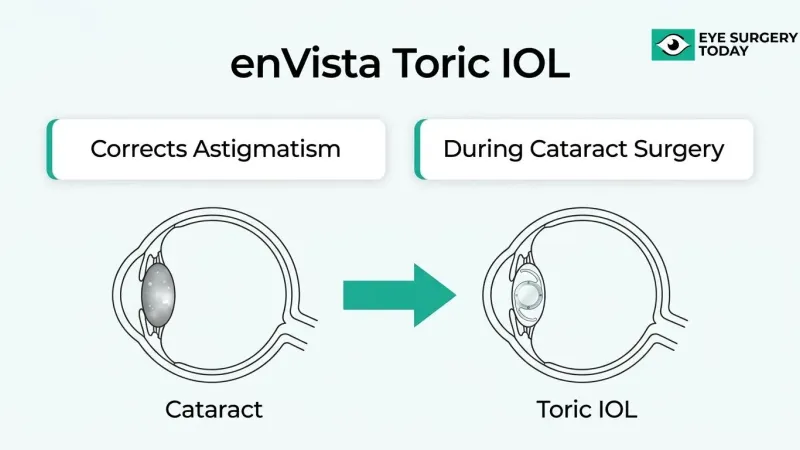
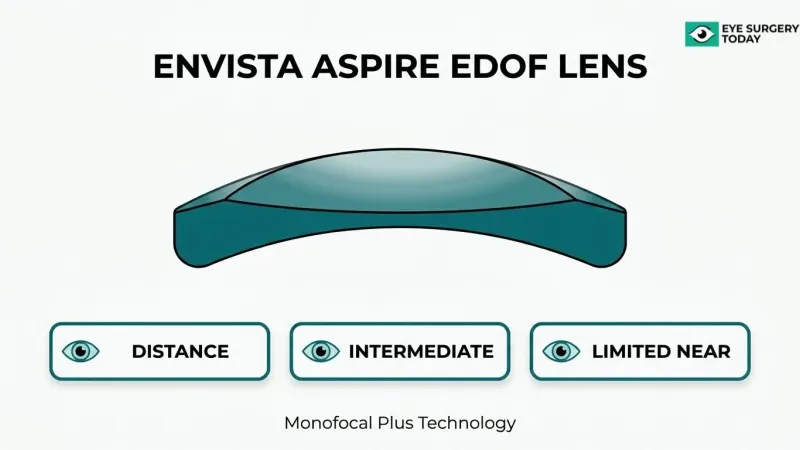
Where FLACS may offer a measurable advantage is in specific clinical scenarios: patients with significant corneal astigmatism receiving toric IOLs, those selecting premium multifocal or extended-depth-of-focus lenses where capsulotomy precision supports alignment, and procedures performed by less experienced surgeons. For patients with straightforward cataracts choosing a standard monofocal lens, the evidence does not support a consistent benefit over skilled manual surgery.
Recovery follows the same general timeline regardless of method, with most patients resuming daily activities within a few days and using prescribed eye drops for approximately four weeks. Insurance typically covers standard phacoemulsification and a conventional IOL; the laser surcharge and any premium lens upgrade are usually out-of-pocket costs that patients should confirm with their surgical center before proceeding.
What Is Laser Cataract Surgery and How Does It Differ From Standard Cataract Surgery?
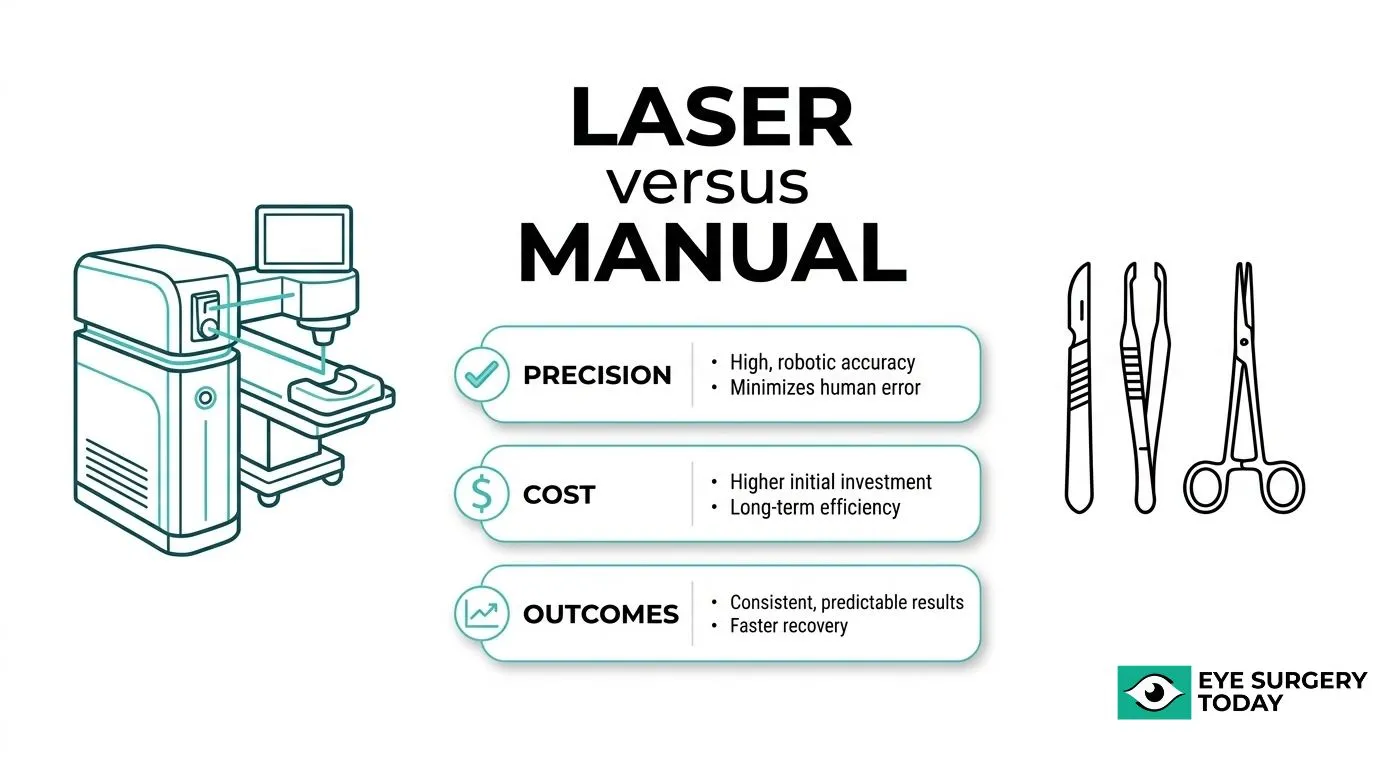
Laser cataract surgery is a procedure that uses a femtosecond laser to perform key steps traditionally done by hand, including corneal incisions, capsulotomy, and lens fragmentation. It differs from standard cataract surgery in that the laser automates these steps before a surgeon completes the procedure using phacoemulsification. The following sections explain what sets the two approaches apart, what the evidence says about the laser’s limitations, and what patients commonly ask when weighing their options.
What Are the Disadvantages of Femtosecond Laser Cataract Surgery?
The disadvantages of femtosecond laser cataract surgery include higher cost, procedural complexity, and no clearly demonstrated safety advantage over standard phacoemulsification. Thomas A. Oetting, MD, associate professor of clinical ophthalmology at the University of Iowa, noted in AAO EyeNet Magazine: “There’s pressure to purchase a femto laser — even though the business model doesn’t make sense because the laser is expensive, slow, and not clearly more safe.” Beyond cost, the laser step requires additional docking time, introduces a suction interface that can temporarily raise intraocular pressure, and still requires conventional phacoemulsification to complete lens removal. For patients with straightforward cataracts, experienced manual surgeons routinely achieve equivalent outcomes without the added complexity.
How Much Does the Laser Portion of Cataract Surgery Cost Out of Pocket?
The laser portion of cataract surgery typically carries an out-of-pocket surcharge because standard insurance and public health programs generally cover only conventional phacoemulsification. No current authoritative national average for the U.S. FLACS laser surcharge has been established in publicly available sources, so patients should request itemized quotes directly from their surgical center. The core surgical fee and a conventional intraocular lens are typically the only cataract-related costs covered by standard insurance; any laser upgrade is usually billed separately as an elective enhancement.
How Long Does It Take to Recover From Femto Laser Cataract Surgery?
Recovery from femto laser cataract surgery follows the same general timeline as standard cataract surgery. According to guidance from Moorfields Eye Hospital NHS Foundation Trust, initial recovery takes approximately 3 to 4 days, with most patients able to return to work within a few days depending on their occupation. Driving typically resumes within 3 to 4 days once the required visual standard is met. The laser step does not meaningfully shorten or extend this timeline compared with conventional phacoemulsification.
How Does Laser Cataract Surgery Work Step By Step?
Laser cataract surgery works in two distinct phases: a computer-guided femtosecond laser performs the precision cutting steps, followed by the surgeon completing removal and lens implantation using standard phacoemulsification. The H3s below cover pre-laser preparation, the laser’s specific tasks, manual removal of the cataract, and what to expect immediately afterward.
What Happens Before Laser Cataract Surgery on the Day of the Procedure?
Before laser cataract surgery on the day of the procedure, the care team dilates the pupil with eye drops and applies topical anesthetic to numb the eye surface. According to a 2011 peer-reviewed review in the Middle East African Journal of Ophthalmology (Moshirfar, Churgin, and Hsu), all femtosecond laser platforms require pupillary dilatation and topical anesthesia, followed by applanation of the cornea using a docking system that uses a contact lens with a circumferential suction skirt to distribute pressure evenly. Once docked, anterior-segment imaging maps the iris and posterior lens surface to guide the laser’s treatment plan.
What Steps Does the Femtosecond Laser Perform During Cataract Surgery?
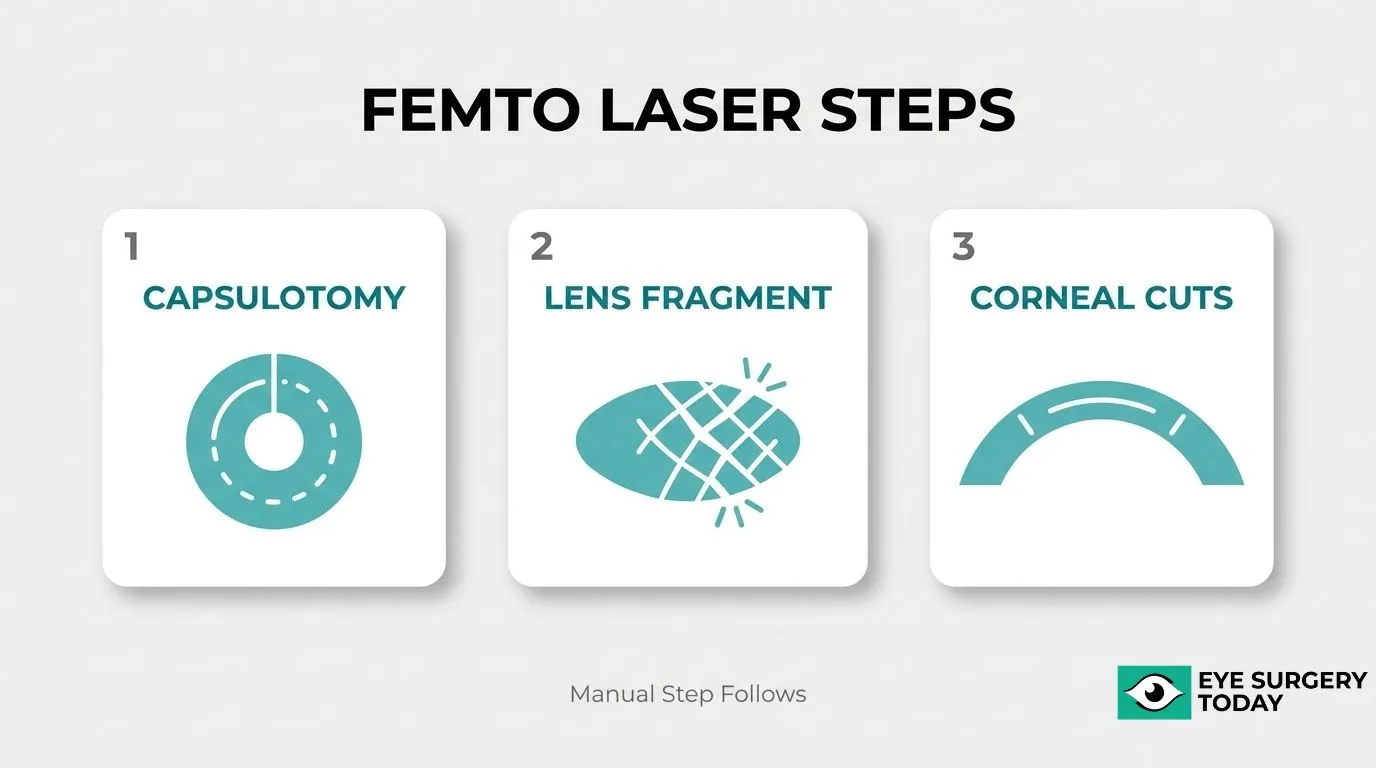
The femtosecond laser performs three core steps during cataract surgery:
- Capsulotomy: The laser makes a precise circular opening in the anterior lens capsule.
- Lens fragmentation: The laser softens and divides the cataract into smaller pieces, reducing the ultrasound energy needed later.
- Corneal incisions: The laser creates self-sealing entry wounds and, when indicated, arcuate incisions to address astigmatism.
A 2019 retrospective study presented at the American Society of Cataract and Refractive Surgery used iris registration-guided femtosecond laser capsular marks to align toric IOLs, demonstrating how the laser step can simultaneously support premium lens placement.
How Does the Surgeon Remove the Cataract After the Laser Portion?
The surgeon removes the cataract after the laser portion using phacoemulsification. An ultrasonic probe breaks the laser-softened lens fragments further and aspirates them from the eye. A 2018 non-randomised comparative case series at Moorfields Eye Hospital (BMJ Open, Day et al.) confirmed that with the OptiMedica and LenSx platforms, laser-assisted capsulotomy and lens fragmentation are performed first, after which patients undergo standard phacoemulsification to complete removal. Once the natural lens is cleared, the surgeon inserts an artificial intraocular lens (IOL) into the capsule.
What Can You Typically Expect Immediately After Laser Cataract Surgery?
Immediately after laser cataract surgery, patients typically experience mild blurred vision, light sensitivity, and a gritty sensation in the treated eye. These effects are common to cataract surgery generally and usually settle within hours to days. The procedure is performed as a day case, meaning patients go home the same day. A protective eye shield is normally worn overnight, and prescription eye drops are started on the day of surgery to support healing and prevent infection. Most patients notice a meaningful improvement in vision within the first 24 hours, though full clarity may take a few days to stabilize.
What Are the Potential Benefits of Choosing Laser Cataract Surgery?
The potential benefits of choosing laser cataract surgery include improved precision in key surgical steps, possible advantages for astigmatism correction, and reduced ultrasound energy used during the procedure. The following sections cover how these advantages may translate to clinical outcomes across precision, glasses independence, astigmatism management, and recovery.
How may laser cataract surgery improve precision and consistency compared with manual surgery?
Laser cataract surgery may improve precision and consistency compared with manual surgery by automating the capsulotomy and lens fragmentation steps using computer-guided femtosecond laser energy. One measurable advantage is reduced endothelial cell loss (ECL), a marker of corneal health after surgery. According to a 2023 meta-analysis published in PLOS ONE by Wang H, Chen X, Xu J, and Yao K at Zhejiang University School of Medicine, ECL was significantly lower in the FLACS group at every measured time point from 1–3 days through 6 months post-surgery across 3,916 FLACS eyes and 3,736 conventional phacoemulsification eyes. This endothelial cell preservation advantage may be particularly meaningful for surgeons earlier in their learning curve, where laser assistance can reduce reliance on manual technique.
How can laser cataract surgery affect your need for glasses after surgery?
Laser cataract surgery can affect your need for glasses after surgery primarily through its compatibility with premium intraocular lens (IOL) implantation, such as multifocal, extended depth-of-focus, or toric IOLs, which aim to reduce spectacle dependence. Standard cataract surgery covered by Medicare includes a conventional IOL and one pair of glasses or contact lenses post-operatively, as confirmed by the Centers for Medicare and Medicaid Services (Article A59805, effective 2026). Whether laser-assisted delivery of a premium IOL meaningfully reduces glasses dependence beyond standard surgery depends on lens selection, preoperative measurements, and individual healing. Patients should discuss realistic expectations with their surgeon before committing to a premium upgrade.
In what ways may laser cataract surgery help with astigmatism correction?
Laser cataract surgery may help with astigmatism correction through two approaches: femtosecond laser arcuate keratotomy, which creates precise corneal incisions to reduce astigmatism, and laser-guided alignment marks to improve toric IOL positioning. A 2025 randomized clinical trial published in JAMA Ophthalmology (Zhong Y et al., 196 patients, Zhejiang University School of Medicine) found no overall difference in residual refractive astigmatism between laser arcuate keratotomy and toric IOL implantation at 3 months. However, subgroup analysis found lower residual astigmatism with toric IOL implantation when preoperative astigmatism exceeded 1.5 D or was against-the-rule. This suggests laser astigmatism correction may be most clinically relevant for patients with moderate-to-high or directionally specific astigmatism.
How might laser cataract surgery influence recovery experience and visual outcomes?
Laser cataract surgery may influence recovery experience and visual outcomes similarly to standard surgery for most patients, as the postoperative care pathway is largely the same for both approaches. Recovery typically involves prescribed eye drops for healing and infection prevention, activity restrictions such as avoiding heavy lifting and swimming, and a gradual return to normal vision. Where laser surgery may offer a subtle advantage is in corneal health preservation, given the endothelial cell loss data noted above, which could support a smoother early recovery in some patients. Overall, the clinical evidence does not consistently demonstrate faster visual recovery with FLACS over manual phacoemulsification for the general patient population.
What Are the Possible Risks and Complications of Laser Cataract Surgery?
The possible risks and complications of laser cataract surgery include both short-term side effects shared with standard surgery and a small set of complications specific to the femtosecond laser step. The H3s below cover short-term side effects, laser-specific serious complications, long-term risk comparisons, and how complications are typically managed.
What Short-Term Side Effects Can Occur After Laser Cataract Surgery?
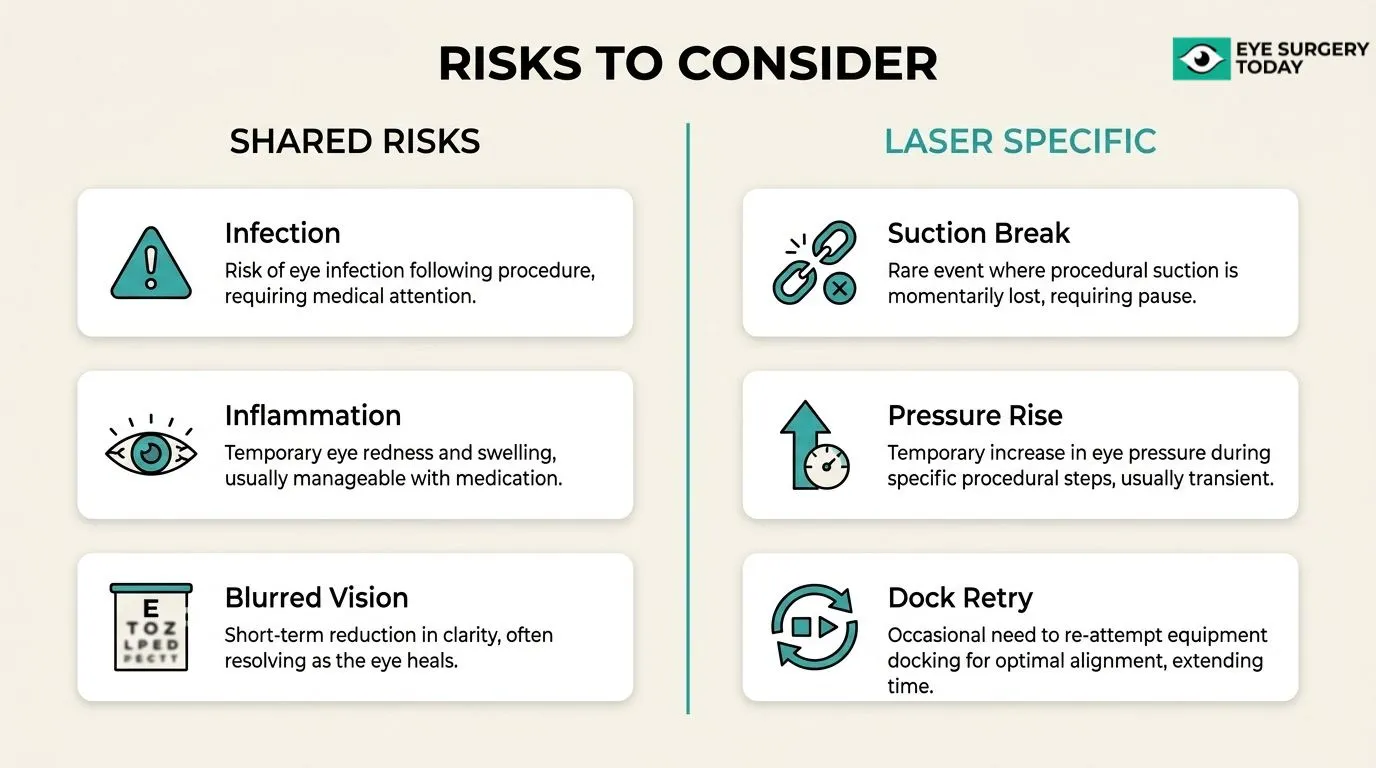
The short-term side effects that can occur after laser cataract surgery include blurred vision, mild discomfort, light sensitivity, and temporary redness or watering of the eye. These effects are common to cataract surgery in general and typically resolve within a few days. According to Moorfields Eye Hospital NHS Foundation Trust, recovery is “approximately 3–4 days,” with most patients able to return to work and driving once the standard vision threshold is met.
What Are the Possible Serious Complications Unique or Related to the Laser Step?
The possible serious complications unique or related to the laser step include suction breaks, the need for a second docking attempt, and procedure abandonment before the laser phase is complete. The femtosecond laser (FSL) application may also cause a temporary rise in intraocular pressure (IOP). According to a U.S. Department of Veterans Affairs systematic review, FSL application is associated with an increase in IOP, and the unique adverse events of FLACS are primarily related to the laser-patient interface or IOP fluctuation. Infectious endophthalmitis is a rare but serious risk of all cataract surgery; a 2022 national database study in Ophthalmology Retina (Baudin et al., 14,438,854 intraocular procedures, French National Health Information Database) found an incidence of 1 in 1,522 for cataract surgery generally. No FLACS-specific randomized estimate for endophthalmitis incidence is currently available.
How Do Long-Term Risks of Laser Cataract Surgery Compare With Standard Cataract Surgery?
The long-term risks of laser cataract surgery compare closely with those of standard phacoemulsification, with most evidence showing no clinically meaningful difference. The 2023 Cochrane systematic review (Narayan et al., 42 studies, 7,298 eyes) found “probably no clinically important differences between the two methods in terms of complications, visual acuity, and quality of life.” For cystoid macular oedema specifically, Cochrane reported low-certainty evidence of little or no difference (Peto OR 0.84, 95% CI 0.56 to 1.28; 4,441 eyes, 18 studies), amounting to roughly three fewer cases per 1,000 operations with FLACS. One nuanced exception may exist with less experienced surgeons: a 2023 prospective RCT published in the Journal of Cataract & Refractive Surgery (Vasavada et al., 315 eyes, Iladevi Cataract & IOL Research Centre) found endothelial cell density loss of 9.3% with FLACS versus 12.7% with conventional phacoemulsification (P<.0001) when junior surgeons performed the procedures. Notably, NICE’s current guidance (NG77, 2025 version) recommends FLACS only within the context of a randomised controlled trial, reflecting the body’s view that the long-term risk-benefit case remains insufficiently established for routine adoption.
How Are Complications From Laser Cataract Surgery Usually Managed?
Complications from laser cataract surgery are usually managed using the same clinical pathways as those for standard cataract surgery. If a suction break or docking failure occurs during the laser phase, the surgeon may attempt re-docking or convert to manual phacoemulsification without completing the laser step. Postoperative inflammation, elevated IOP, or infection are managed with topical corticosteroids, IOP-lowering drops, or antibiotics as appropriate. The overlap in management strategies between FLACS and conventional surgery is, in practice, one of the more reassuring aspects of the procedure for patients weighing the two options.
Who May Be a Good Candidate for Laser Cataract Surgery?
Good candidacy for laser cataract surgery depends on several overlapping factors, including age, general health, cataract characteristics, corneal anatomy, and personal priorities. The H3 sections below cover each factor in detail.
How do age and general health influence candidacy for laser cataract surgery?
Age and general health influence candidacy for laser cataract surgery primarily by affecting a patient’s ability to cooperate during the docking step and tolerate the procedure safely. The femtosecond laser requires the patient to remain still while a suction device applanates the cornea, so conditions that impair cooperation, such as severe tremor, cognitive decline, or inability to lie flat, may complicate the process.
Systemic conditions like uncontrolled diabetes can affect healing and optical clarity, which your ophthalmologist will weigh during evaluation. Most healthy older adults who are surgical candidates for standard cataract surgery can also be considered for FLACS, provided their pupil dilates adequately and their ocular anatomy is accessible to imaging.
How do cataract type and severity affect whether laser is appropriate?
Cataract type and severity affect whether laser is appropriate because the femtosecond laser performs best when imaging systems can clearly map the lens. Dense, white, or posterior subcapsular cataracts may limit the laser’s ability to complete reliable capsulotomy and fragmentation if the lens blocks anterior-segment imaging.
Conversely, moderately dense cataracts in patients who want precision capsulotomy or reduced phacoemulsification energy are often considered reasonable candidates. For very hard nuclei, the laser’s pre-fragmentation step may reduce ultrasound energy required, which is a potential benefit worth discussing with your surgeon.
When can corneal conditions or previous eye surgery rule out laser cataract surgery?
Corneal conditions or previous eye surgery can rule out laser cataract surgery when they interfere with the suction docking system, corneal imaging, or laser delivery. Specific situations that may affect suitability include:
- Corneal scarring or opacification that blocks femtosecond laser transmission
- Extremely shallow orbits or small palpebral apertures that prevent adequate docking
- Prior radial keratotomy incisions that may weaken the cornea under suction
- Very thin corneas that may not tolerate the intraocular pressure rise associated with docking
Importantly, a prior history of LASIK or PRK does not automatically disqualify a patient. A 2022 retrospective comparative study at Severance Hospital, Yonsei University College of Medicine, found no significant difference in visual acuity, refractive outcomes, or complication rates between FLACS and conventional phacoemulsification in 102 eyes with previous corneal refractive surgery. Your surgeon will assess corneal integrity case by case.
How do personal vision goals and tolerance for cost influence candidacy?
Personal vision goals and tolerance for cost influence candidacy because laser cataract surgery typically carries an out-of-pocket surcharge that standard insurance coverage does not absorb. Patients who prioritize reduced glasses dependence, particularly those selecting premium toric or multifocal IOLs, may find the added precision of laser capsulotomy and arcuate incisions more relevant to their goals than patients content with a standard monofocal outcome.
Those choosing a standard monofocal lens and satisfied with wearing glasses afterward gain fewer incremental benefits from the laser step, given that large clinical trials have found no significant difference in visual acuity between FLACS and manual surgery at comparable follow-up points. In practice, candidacy is most compelling when the patient’s optical goals genuinely benefit from the precision features the laser provides.
How Do the Costs of Laser Cataract Surgery Compare With Standard Cataract Surgery?
The costs of laser cataract surgery compare with standard cataract surgery primarily in that the laser option carries an additional out-of-pocket surcharge that public and most private insurance programs do not cover. The following H3 sections address insurance coverage, out-of-pocket triggers, premium IOL add-ons, and how to assess whether the upgrade is worth it for your situation.
What parts of laser cataract surgery are typically covered by insurance?
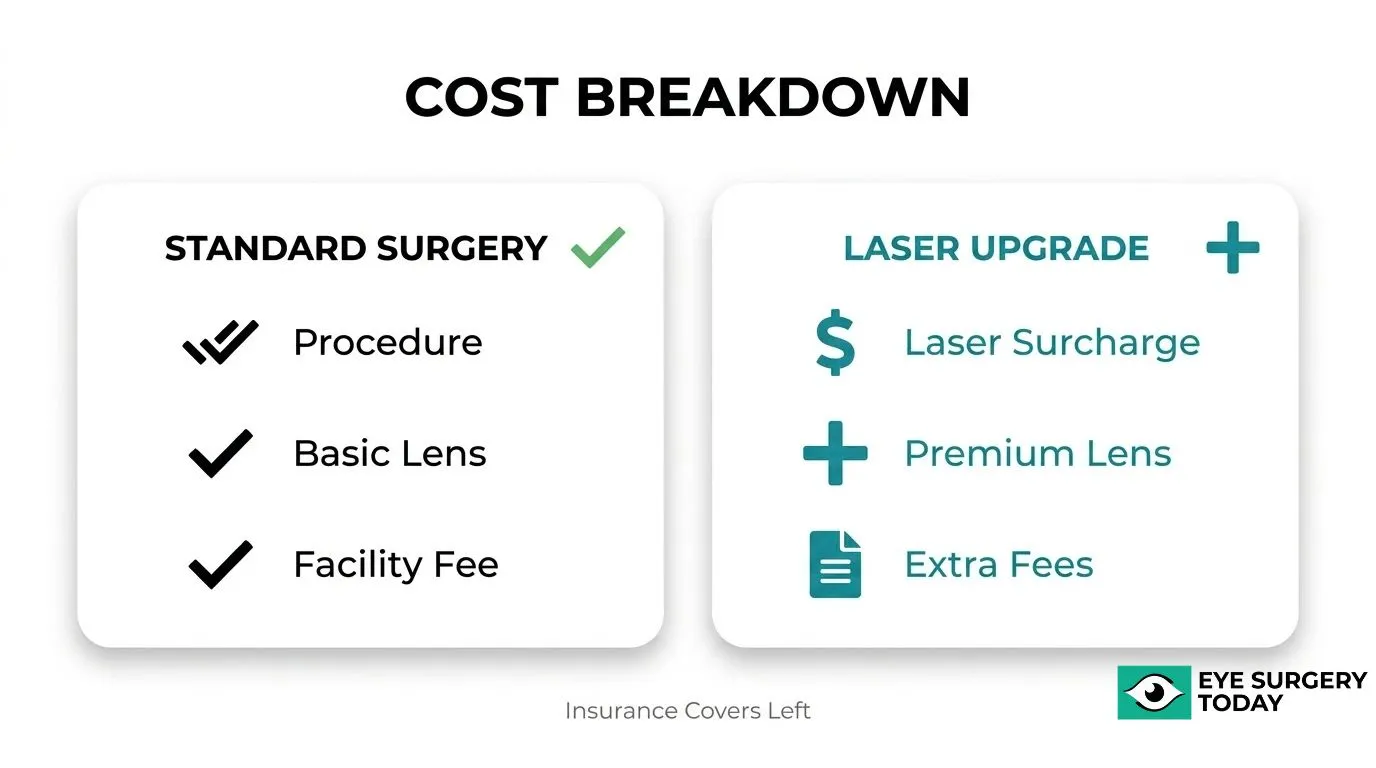
The parts of laser cataract surgery typically covered by insurance are the same components covered for standard cataract surgery: the procedure itself, a conventional monofocal intraocular lens (IOL), and basic facility and physician fees. According to the Centers for Medicare & Medicaid Services (Article A59805, revised July 2026), Medicare covers cataract surgery, a conventional IOL, and one pair of glasses or contact lenses post-operatively. The femtosecond laser step, however, is not classified as medically necessary under standard Medicare rules, so the laser surcharge falls outside that coverage. Private plans typically mirror this structure, though benefits vary by policy.
When do patients usually pay extra out of pocket for the laser option?
Patients usually pay extra out of pocket for the laser option when they choose femtosecond laser-assisted cataract surgery (FLACS) over standard phacoemulsification. The laser surcharge is treated as an elective upgrade because no uniform insurance rule covers it across U.S. plans. Additional out-of-pocket triggers include:
- Choosing FLACS over manual phacoemulsification at a private or ambulatory surgical center
- Selecting laser arcuate incisions for astigmatism correction
- Upgrading facility fees at centers with proprietary laser platforms
- Combining FLACS with any premium IOL
Because no authoritative national average for the U.S. FLACS surcharge was available in verified sources, patients should request an itemized quote from their surgical center before proceeding.
How do premium IOL choices change the total cost of laser cataract surgery?
Premium IOL choices increase the total cost of laser cataract surgery because insurers, including Medicare, cover only a conventional monofocal lens as standard. Toric IOLs (for astigmatism), multifocal IOLs, and extended depth-of-focus (EDOF) IOLs each carry an additional patient-pay charge on top of the FLACS laser surcharge. The two upgrades are independent and cumulative: a patient can choose FLACS without a premium IOL, or a premium IOL with manual surgery, but combining both maximizes the out-of-pocket total. The value case for pairing FLACS with a toric or EDOF lens is strongest when precise capsulotomy centration directly supports lens alignment, though current evidence does not show a universal refractive advantage over manual techniques with premium lenses.
How can you evaluate whether the extra cost of laser cataract surgery is worth it for you?
Evaluating whether the extra cost of laser cataract surgery is worth it depends on your clinical profile, vision goals, and financial circumstances together. A 2021 economic evaluation of the FACT trial (Moorfields Eye Hospital / University College London, 785 patients) found that FLACS cost a mean of £167.62 more per patient than standard phacoemulsification, with an incremental cost-effectiveness ratio of £167,620 per quality-adjusted life year — well above conventional health-economic thresholds. That finding underpins the current NICE recommendation to use FLACS only within clinical trials.
For individual decision-making, consider:
- Whether you have significant corneal astigmatism or a dense cataract that may benefit from laser pre-fragmentation
- Whether you are choosing a premium IOL where capsulotomy precision matters clinically
- Whether your surgeon’s experience level makes laser pre-treatment a meaningful precision gain
- Whether the quoted surcharge fits within your budget without creating financial hardship
The honest conclusion from available evidence is that FLACS does not reliably deliver better visual outcomes than manual surgery for most patients, so the financial justification rests on specific clinical circumstances rather than a universal upgrade benefit.
How Do Outcomes of Laser and Manual Cataract Surgery Compare in Real Life?
Clinical evidence consistently shows that laser and manual cataract surgery produce comparable results across visual acuity, complications, and patient satisfaction. The H3 sections below cover what studies show on each of these outcome dimensions.
What do clinical studies show about visual acuity after laser versus manual surgery?
Clinical studies show that visual acuity outcomes after laser cataract surgery are not meaningfully better than those after manual phacoemulsification. According to a 2023 Cochrane systematic review of 42 studies involving 5,831 people, “there are probably no clinically important differences between the two methods of cataract surgery in terms of complications, visual acuity, and quality of life.” Supporting that finding, the 2020 FACT multicenter randomized controlled trial at Moorfields Eye Hospital (785 patients) reported no significant difference in unaided distance visual acuity between groups (adjusted mean difference, 0.01 logMAR; P = 0.38). The evidence is consistent across trial designs and settings, which makes the equivalence finding robust rather than a data artifact.
How do rates of complications compare between laser and standard cataract surgery?
Complication rates between FLACS and standard phacoemulsification are broadly similar, though FLACS carries some unique procedure-specific risks. A 2022 American Academy of Ophthalmology technology assessment, drawing on 12 level-I studies, reported that intraoperative and postoperative complication rates were similar between the two groups, with most studies showing no significant difference in endothelial cell loss from 1 to 6 months. However, a VA Evidence-based Synthesis Program systematic review noted that a small proportion of FLACS patients experienced suction breaks, second docking attempts, aborted procedures, and transient intraocular pressure elevation related to the laser-docking interface. These FLACS-specific events have no equivalent in manual surgery and are worth weighing during candidacy assessment.
Does laser cataract surgery reliably reduce dependence on glasses?
Laser cataract surgery does not reliably reduce glasses dependence more than manual surgery when a standard monofocal IOL is implanted. A 2025 randomized clinical trial published in JAMA Ophthalmology (196 patients, Zhejiang University) found no significant difference in refractive astigmatism between FLACS and conventional surgery groups at 3 months (mean difference, 0.11 D; P = 0.21). Subgroup analysis did suggest lower residual astigmatism with toric IOL implantation when preoperative astigmatism exceeded 1.5 D or was against-the-rule, indicating that glasses independence is more a function of IOL selection and patient-specific astigmatism profile than of the laser step itself.
How satisfied are patients with laser cataract surgery compared with standard surgery?
Patient satisfaction with laser cataract surgery is comparable to satisfaction with standard surgery. A 2021 randomized controlled paired-eye trial at the Singapore Eye Research Institute (85 patients, 170 eyes) found that “patients’ subjective surgical experiences, including the surgical duration and perceived inconvenience, were comparable between the 2 groups.” Similarly, a 2021 prospective randomized trial published in the British Journal of Ophthalmology (234 patients with 12-month follow-up at Guy’s and St Thomas’ NHS Foundation Trust) reported no differences in vision, refraction, adverse postoperative events, or patient-reported outcome measures between FLACS and conventional phacoemulsification at 12 months. Satisfaction equivalence, combined with consistent efficacy data, suggests that the premium FLACS experience rarely translates into a meaningfully different patient outcome.
What Can You Expect During Recovery After Laser Cataract Surgery?
Recovery after laser cataract surgery follows a predictable pattern for most patients, with vision stabilizing within days. The H3 sections below cover the typical timeline, prescribed eye drops, normal versus concerning symptoms, and activity milestones such as driving, working, and exercising.
What is the typical recovery timeline after laser cataract surgery?
The typical recovery timeline after laser cataract surgery is approximately 3 to 4 days before most patients feel functional, with full visual stabilization taking several weeks. According to Moorfields Eye Hospital NHS Foundation Trust, most patients achieve the vision needed for daily activities within 3 to 4 days. However, complete healing of the eye continues beyond this initial window, and patients should follow their surgeon’s specific instructions throughout.
What eye drops and medications are commonly used after laser cataract surgery?
The eye drops commonly used after laser cataract surgery are prescribed antibiotic and anti-inflammatory drops to prevent infection and support healing. According to Guy’s and St Thomas’ NHS Foundation Trust’s 2026 patient guidance, prescribed drops are typically used for up to 4 weeks following surgery. Following the prescribed drop schedule precisely is one of the most controllable factors in a smooth recovery.
What symptoms during recovery are normal and which require urgent care?
Normal symptoms during recovery include mild blurring, light sensitivity, a scratchy sensation, and occasional floaters as the eye heals. These typically improve within days. Symptoms that require urgent care include sudden vision loss, increasing pain, significant redness, or discharge, as these may signal serious complications such as infection or elevated intraocular pressure. Any worsening rather than improving symptoms warrants prompt contact with your surgical team.
How soon can you drive, work, and resume exercise after laser cataract surgery?
The timeline for resuming driving, work, and exercise after laser cataract surgery depends on your occupation, vision recovery, and activity type. Moorfields Eye Hospital NHS Foundation Trust advises that driving is typically possible within 3 to 4 days once the required visual standard is met, and that return to work depends on the demands of the role. Guy’s and St Thomas’ NHS Foundation Trust specifically advises avoiding swimming and gardening for at least 1 month, and avoiding energetic exercise or heavy lifting during the recovery period. Desk-based workers often return sooner than those in physically demanding roles.
How Should You Decide Whether Laser Cataract Surgery Is Worth It For You?
Deciding whether laser cataract surgery is worth it depends on your vision goals, risk tolerance, and budget. The following sections cover the personal factors, trade-offs, key questions for your surgeon, and common scenarios that shape this decision.
Which personal vision and lifestyle goals matter most when weighing laser cataract surgery?
The personal vision and lifestyle goals that matter most when weighing laser cataract surgery are your tolerance for residual glasses dependence, the presence of significant astigmatism, and how highly you value maximally precise IOL positioning.
Patients who want the best possible chance of reducing spectacle reliance after surgery, particularly those combining FLACS with a premium multifocal or EDOF IOL, may find the laser option more appealing. Conversely, if functional vision with reading glasses is an acceptable outcome, the additional cost and procedural steps of FLACS may add little personal value. Your occupation, hobbies, and daily visual demands all shape how much the marginal differences in precision translate into real-world benefit for you.
How should you balance benefits, risks, and cost when considering the laser option?
Balancing benefits, risks, and cost when considering the laser option requires weighing the current clinical evidence honestly against what you are being asked to pay. A 2023 Cochrane systematic review of 42 studies involving 5,831 adults found there are probably no clinically important differences between FLACS and standard phacoemulsification in complications, visual acuity, or quality of life, with FLACS being the more expensive option.
The economic data reinforces this picture. For most patients with routine cataracts and no significant astigmatism, the extra cost of FLACS is difficult to justify on efficacy grounds alone. The clearest potential benefit applies to specific cases, such as patients with higher astigmatism or those pursuing premium IOLs where laser-assisted capsulotomy precision may support better refractive outcomes. Weigh the surcharge against the probability that it changes your personal result.
What questions should you ask your surgeon before choosing laser cataract surgery?
The questions you should ask your surgeon before choosing laser cataract surgery are ones that clarify candidacy, expected outcomes, cost transparency, and surgeon experience with the technology. Consider asking:
- Am I a stronger candidate for FLACS than for manual phacoemulsification given my specific cataract type and corneal anatomy?
- Will you be pairing FLACS with a premium IOL, and does the laser step meaningfully improve placement accuracy for my chosen lens?
- What is the out-of-pocket surcharge for FLACS at this facility, and what does it include?
- How many FLACS procedures have you personally performed, and what is your conversion-to-manual rate?
- Based on the clinical evidence, is there a measurable benefit for a patient with my profile, or is manual surgery equally appropriate?
Honest answers to these questions will reveal whether the laser option adds genuine clinical value for your situation.
In which common scenarios is laser cataract surgery more likely or less likely to be worth it?
The common scenarios where laser cataract surgery is more likely to be worth it include patients with significant corneal astigmatism who are also receiving a toric IOL, those combining FLACS with a premium multifocal or EDOF lens where capsulotomy precision is especially important, and cases where the operating surgeon has considerably less experience with manual phacoemulsification. A 2023 randomized controlled trial in the Journal of Cataract and Refractive Surgery found meaningfully lower ultrasound energy and less endothelial cell density change with FLACS when performed by junior surgeons, suggesting a real safety margin in lower-volume settings.
Scenarios where FLACS is less likely to be worth the extra cost include routine cataracts with minimal astigmatism, patients choosing a standard monofocal IOL, and individuals for whom the added out-of-pocket expense creates financial strain without a proportionate benefit to vision outcomes. Understanding which group you fall into is the most practical starting point for this decision.
How Does Laser Cataract Surgery Fit Within the Range Of Modern Cataract and Vision Correction Options?
Laser cataract surgery fits within a broader spectrum of options that includes manual phacoemulsification with premium IOLs, corneal refractive procedures, and surgeon-driven technique selection. The H3s below address how these options compare, relate, and differ.
How does laser cataract surgery compare with manual surgery plus premium IOLs?
Laser cataract surgery and manual surgery with premium IOLs are often complementary rather than competing choices. Both approaches can accommodate premium intraocular lenses, including toric, multifocal, and extended-depth-of-focus designs. The femtosecond laser may offer added precision during capsulotomy and lens fragmentation, but no uniform private-insurance rule applies across U.S. plans to FLACS, premium IOLs, laser arcuate incisions, or facility fees; patients must consult their individual plan documents. In practice, the choice of lens often drives the functional outcome more than the surgical delivery method alone.
How does laser cataract surgery relate to other refractive procedures like LASIK or PRK?
Laser cataract surgery relates to LASIK and PRK as a distinct procedure with a different anatomical target and clinical indication. According to the FDA, LASIK permanently changes the shape of the cornea using an excimer laser, addressing refractive error in an otherwise healthy eye. Laser cataract surgery, by contrast, uses a femtosecond laser to assist with lens removal and replacement inside the eye. No direct randomized head-to-head trial comparing FLACS with LASIK or PRK has been published; these procedures are not interchangeable alternatives.
When might an experienced surgeon recommend manual surgery instead of laser?
An experienced surgeon might recommend manual phacoemulsification when the added cost, equipment availability, or patient anatomy does not support the laser approach. Thomas A. Oetting, MD, associate professor of clinical ophthalmology at the University of Iowa, noted: “There’s pressure to purchase a femto laser — even though the business model doesn’t make sense because the laser is expensive, slow, and not clearly more safe.” Dense cataracts, small pupils, or poor docking conditions can also make manual surgery the more practical option. For straightforward cases performed by a skilled surgeon, manual phacoemulsification consistently delivers outcomes equivalent to FLACS.
How Should You Approach Laser Cataract Surgery Decisions With Eye Surgery Today’s Educational Resources?
Eye Surgery Today’s surgeon-reviewed guides help you cut through conflicting information and compare laser and standard cataract surgery using evidence-based content. The H3s below explain how those resources support your decision and summarize the key findings from this article.
How can Eye Surgery Today’s surgeon-reviewed guides help you compare laser and standard cataract surgery options?
Eye Surgery Today’s surgeon-reviewed guides help you compare laser and standard cataract surgery options by presenting clinical evidence alongside plain-language explanations, so you can weigh trade-offs without needing a medical background. The guides cover procedure mechanics, cost structures, candidacy criteria, recovery expectations, and IOL choices in one place. Rather than navigating fragmented sources, you can use Eye Surgery Today’s resources to build a structured list of questions before your surgical consultation. For a decision this consequential, arriving prepared with specific, evidence-grounded questions tends to produce more productive conversations with your surgeon than arriving with general concerns.
What Are the Key Takeaways About Laser Cataract Surgery Explained: Is It Worth It? We Covered?
The key takeaways about laser cataract surgery are that the evidence consistently shows comparable visual outcomes between FLACS and manual phacoemulsification for most patients, but FLACS carries a higher cost with no proven superiority in routine cases. A 2023 Cochrane systematic review of 42 studies and 5,831 adults found probably no clinically important differences in complications, visual acuity, or quality of life between the two methods. Potential benefits such as lower endothelial cell loss and improved toric IOL alignment may matter in specific scenarios, including high astigmatism or surgery performed by less experienced surgeons. Cost, insurance coverage, surgeon expertise, and your personal vision goals are the most practical factors to weigh. Eye Surgery Today’s resources give you the framework to evaluate those factors clearly before your consultation.