Cataract surgery is a procedure that removes the eye’s clouded natural lens and replaces it with an artificial intraocular lens (IOL), and its visual outcomes depend on a combination of patient-specific, technical, and systemic variables rather than any single factor.
This guide covers IOL selection and visual expectations, pre-existing eye and systemic health conditions, surgical technique and biometry precision, potential complications, and patient preparation strategies.
IOL type determines the range of vision achieved after surgery. Monofocal lenses correct at one focal distance, while trifocal and extended depth-of-focus designs may improve near and intermediate acuity with greater spectacle independence. Toric lenses can reduce pre-existing corneal astigmatism when it exceeds certain thresholds, making lens selection one of the most consequential presurgical decisions.
Pre-existing conditions such as glaucoma, macular degeneration, diabetic retinopathy, dry eye disease, and prior LASIK each place limits on how much visual improvement surgery can deliver. Diabetic patients face elevated risk of retinopathy progression in the months following the procedure, while prior refractive surgery complicates the measurements used for IOL power calculation.
Surgical technique and measurement accuracy shape outcome predictability. Femtosecond laser-assisted approaches may offer faster early recovery compared to conventional phacoemulsification, and surgeon experience is directly associated with lower complication rates. Biometry errors, even small ones, can produce residual refractive error that leaves patients needing glasses despite expecting independence.
Complications including posterior capsule opacification, cystoid macular edema, and rare infections can alter results after an otherwise successful procedure. Active patient participation through dry eye treatment, honest medical disclosure, and consistent follow-up attendance supports better outcomes and helps set achievable expectations.
What Factors Can Influence Cataract Surgery Outcomes?
Cataract surgery outcomes are influenced by several interconnected factors, including lens type selection, pre-existing eye health, cataract severity, patient age, and systemic conditions such as diabetes. Each of the following sub-sections examines one of these variables and how it shapes what a patient can realistically expect.
How Does the Type of Intraocular Lens Affect Results?
The type of intraocular lens affects results by determining the range of vision a patient achieves after surgery. Monofocal lenses correct vision at one focal distance, while multifocal, trifocal, and extended depth-of-focus lenses target multiple distances. According to a study published in BMC Ophthalmology, trifocal IOLs demonstrated better visual acuity and spectacle independence at near distances for patients treating presbyopia. Lens selection should match each patient’s lifestyle needs and ocular anatomy, making it one of the most consequential pre-surgical decisions.
How Does Pre-Existing Eye Health Influence Outcomes?
Pre-existing eye health influences outcomes by limiting how much visual improvement surgery can deliver, even when the procedure itself goes perfectly. Conditions such as macular degeneration, corneal irregularities, and prior refractive surgery can all reduce predictability. A history of LASIK, for instance, alters corneal curvature measurements that surgeons rely on for accurate IOL power calculation. When the eye’s structural baseline is compromised before surgery, visual gains are often more modest and harder to predict.
How Does the Severity of the Cataract Impact Recovery?
The severity of the cataract impacts recovery by affecting both surgical complexity and the duration of postoperative healing. More advanced, denser cataracts require greater ultrasonic energy during phacoemulsification, which can increase stress on surrounding eye tissue. This additional intraoperative energy may slow corneal recovery and extend the period before stable vision is achieved. Patients with early-stage cataracts generally experience smoother procedures and faster visual rehabilitation than those with hypermature or dense nuclear cataracts.
How Does a Patient’s Age Affect Surgical Results?
A patient’s age affects surgical results primarily through its relationship with ocular comorbidities and the overall health of retinal and corneal tissue. Older patients are more likely to have concurrent conditions such as age-related macular degeneration or reduced corneal endothelial cell density, both of which can limit the ceiling of visual improvement. Younger patients who develop cataracts, often due to metabolic or systemic causes, tend to have healthier ocular tissue, which generally supports better and faster recovery.
How Do Systemic Health Conditions Like Diabetes Alter Outcomes?
Systemic health conditions like diabetes alter outcomes by increasing the risk of surgical complications and slowing postoperative healing. According to a study published in Endocrine, diabetic patients are at a higher risk of developing cataracts earlier and experiencing poorer surgical outcomes. Research spanning 15 studies and 7,391 patients found that diabetic retinopathy progresses more severely after cataract surgery, with a relative risk of 1.46, particularly in the four months following the procedure. Careful preoperative assessment of systemic health is essential for setting realistic expectations in this patient population.
How Does Intraocular Lens Selection Change Visual Results?
Intraocular lens selection directly influences the range of vision a patient achieves after cataract surgery. The following sections cover what patients can realistically expect from monofocal, multifocal, toric, and extended depth of focus lenses.
What Results Can Patients Expect With Monofocal Lenses?
Patients with monofocal lenses can expect clear vision at a single fixed focal distance, typically set for distance, with glasses usually needed for reading or intermediate tasks. These lenses are the most widely used IOL type and tend to deliver highly predictable refractive outcomes. According to a BMC Journal study, 76% of patients with non-proliferative diabetic retinopathy without maculopathy achieved postoperative best-corrected visual acuity better than 6/12, illustrating that even higher-risk eyes can achieve functional results with monofocal correction. For patients whose primary goal is reliable distance vision rather than spectacle independence, monofocal lenses remain a sound, evidence-supported choice.
What Results Can Patients Expect With Multifocal Lenses?
Patients with multifocal lenses can expect improved vision across multiple distances, reducing dependence on glasses for both near and distance tasks. Trifocal multifocal IOLs, in particular, have shown better near visual acuity and spectacle independence compared to bifocal designs, according to research published in BMC Ophthalmology. However, some patients may experience dysphotopsia symptoms such as halos, glare, or starbursts, especially in low-light conditions. Patient selection and lifestyle expectations should guide the decision toward multifocal lenses.
What Results Can Patients Expect With Toric Lenses?
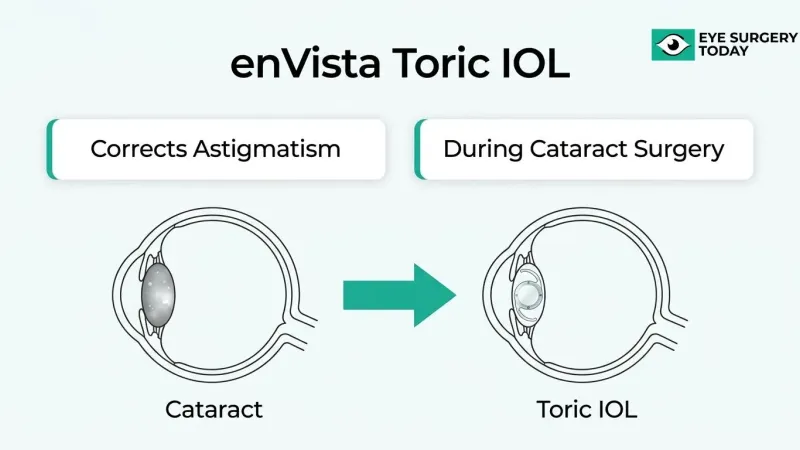
Patients with toric lenses can expect significant reduction in pre-existing corneal astigmatism alongside cataract correction, producing sharper overall vision quality. According to European Society of Cataract and Refractive Surgeons (ESCRS) guidelines, toric IOLs should be considered when corneal astigmatism is 1.0D or more, with strong evidence supporting their use above 2.0D and moderate evidence above 1.5D. For patients with meaningful astigmatism, selecting a toric IOL is one of the most impactful decisions that can be made to optimize postoperative unaided visual acuity.
What Results Can Patients Expect With Extended Depth of Focus Lenses?
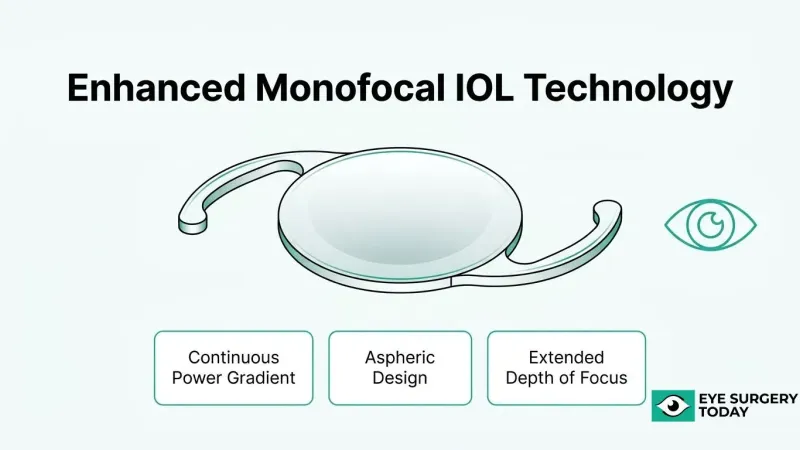
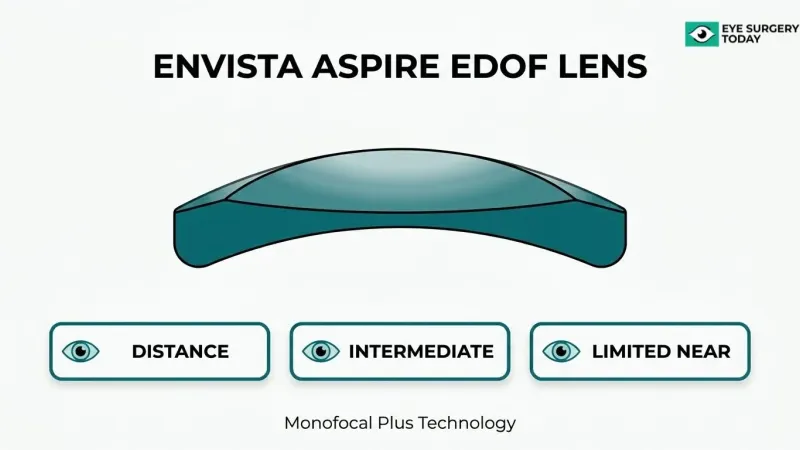
Patients with extended depth of focus (EDOF) lenses can expect a continuous range of clear vision spanning distance and intermediate focal points, with reduced but not eliminated near vision limitations. Research published in Eye indicates that enhanced IOLs, including EDOF designs, provide improved intermediate and near visual acuities compared to conventional monofocal IOLs, though further studies are needed to fully characterize long-term outcomes. EDOF lenses tend to produce fewer dysphotopsia complaints than multifocal designs, making them a practical middle-ground option for patients who prioritize visual quality in varied lighting conditions alongside reduced spectacle dependence.
How Do Pre-Existing Eye Conditions Affect Cataract Surgery Success?
Pre-existing eye conditions can significantly limit how much vision improves after cataract surgery. The following sections cover how glaucoma, macular degeneration, diabetic retinopathy, dry eye disease, and prior refractive surgery each shape surgical outcomes.
How Does Glaucoma Influence Cataract Surgery Results?
Glaucoma influences cataract surgery results by increasing the risk of complications and limiting the range of suitable lens options. Optic nerve damage from glaucoma sets a ceiling on how much functional vision can be recovered, regardless of how well the cataract removal goes. Posterior capsular opacification (PCO) remains the most common postoperative complication in these patients, according to Taylor and Francis, and its management requires additional laser treatment. The European Society of Cataract and Refractive Surgeons (ESCRS) recommends an intracameral injection of cefuroxime 1 mg in 0.1 ml at the end of surgery to reduce the risk of postoperative endophthalmitis. In clinical practice, patients with glaucoma benefit most from detailed preoperative counseling that sets realistic expectations for vision gain.
How Does Macular Degeneration Limit Visual Improvement?
Macular degeneration limits visual improvement after cataract surgery because damage to the central retina restricts how clearly the eye can process detail, regardless of how accurately the new lens is placed. Removing the cataract improves optical clarity, but it cannot repair underlying photoreceptor loss. As a result, patients with advanced macular degeneration may experience only modest gains in functional vision, particularly for reading and fine tasks. Premium multifocal lenses are generally not recommended in this population, as the retinal limitations reduce the benefit those designs are intended to deliver.
How Does Diabetic Retinopathy Affect Post-Surgery Vision?
Diabetic retinopathy affects post-surgery vision by increasing the risk of disease progression and reducing the likelihood of strong visual recovery. According to a meta-analysis of 15 studies involving 7,391 patients published by Renal and Urology News, diabetic retinopathy progresses more severely after cataract surgery, with a relative risk of 1.46, particularly in the four months following the procedure. Patients with non-proliferative diabetic retinopathy without maculopathy tend to fare better, but outcomes remain less predictable than in eyes without retinal disease. Careful postoperative monitoring is essential in this group to detect and manage retinopathy progression early.
How Does Dry Eye Disease Impact Recovery and Outcomes?
Dry eye disease impacts recovery and outcomes by destabilizing the tear film, which interferes with accurate preoperative measurements and slows postoperative healing. An unstable tear film introduces errors in biometry readings, which can lead to IOL power miscalculation and residual refractive error after surgery. Treating dry eye disease before surgery improves measurement accuracy and supports better postoperative vision quality. Dry eye is often underestimated as a surgical variable, but its influence on both the precision of planning and the comfort of recovery is substantial.
How Does a History of LASIK or Refractive Surgery Affect Results?
A history of LASIK or refractive surgery affects cataract surgery results primarily by complicating IOL power calculation, since prior corneal reshaping alters the measurements used in standard biometry formulas. Standard formulas tend to underestimate the required IOL power in post-LASIK eyes, increasing the risk of residual refractive error. Despite this challenge, outcomes can still be strong when adjusted calculation methods are used. According to data cited by Twin Cities Eye Consultants, 82.4% of patients with prior LASIK achieved 20/20 uncorrected vision or better after cataract surgery. Corneal nerve density may also take 6 to 12 months to recover after LASIK, per a 2025 study in AAMJ, meaning dry eye symptoms can persist into the cataract surgery recovery period and affect comfort and visual clarity.
What Role Does Surgical Technique Play in Outcome Variation?
Surgical technique is a significant driver of outcome variation in cataract surgery. The following sections cover how procedure type and surgeon experience each shape what patients can expect after surgery.
How Do Results Differ Between Phacoemulsification and Femtosecond Laser Surgery?
Results differ between phacoemulsification and femtosecond laser surgery in both timing and precision of visual recovery. According to a meta-analysis published on PubMed, both FLACS and conventional phacoemulsification cataract surgery are effective and safe, with FLACS achieving better visual outcomes in the early postoperative period and during long-term follow-up. The same research highlights that low-energy femtosecond lasers may reduce corneal endothelial damage and improve intraoperative safety compared to conventional approaches. For patients prioritizing faster early recovery or who have corneal health concerns, FLACS may offer a meaningful clinical advantage worth discussing with a surgeon.
How Does Surgeon Experience and Skill Affect Outcomes?
Surgeon experience affects cataract surgery outcomes through its direct influence on complication rates and procedural consistency. A study published in PMC found that elevated complication rates among novice surgeons signal meaningful safety gaps in cataract surgery training. Greater surgical volume builds the technical precision needed to manage intraoperative challenges, such as capsular tears or unstable lens positioning, that can compromise visual results. Patients benefit from asking about a surgeon’s case volume and complication history before proceeding.
How Do Biometry and Preoperative Measurements Influence Results?
Biometry and preoperative measurements directly influence cataract surgery results by determining IOL power accuracy and predicting how the eye will respond to implantation. The two key areas covered below are IOL power calculation errors and corneal shape irregularities.
What Happens When IOL Power Calculations Are Inaccurate?
IOL power calculation inaccuracies result in residual refractive error, meaning patients may still require glasses for distance or near vision after surgery despite expecting spectacle independence. According to AAO EyeNet, accurate biometry is one of the most important steps in calculating IOL power, and even small measurement errors in axial length or anterior chamber depth can shift the refractive outcome significantly. Modern formulas like Barrett Universal II have reduced these errors considerably; a study published in Ophthalmology found it produced the lowest prediction error for two commonly implanted IOL models (AcrySof SN60WF and SA60AT). Patients with extreme axial lengths, such as highly myopic or hyperopic eyes, carry the greatest risk of miscalculation because standard formulas are optimized for average anatomy. Selecting an appropriate formula matched to eye geometry is, in practice, one of the highest-leverage decisions in the preoperative workup.
How Does Corneal Shape Irregularity Affect Predictability?
Corneal shape irregularity affects predictability by introducing unreliable keratometry readings, which skew IOL power calculations and reduce the likelihood of achieving the intended refractive target. Conditions such as keratoconus, post-refractive surgery corneas, and irregular astigmatism distort the anterior corneal surface, making standard measurement assumptions invalid. In these eyes, topography-guided assessment and specialized calculation adjustments are typically needed to improve accuracy. Without them, even excellent surgical technique cannot fully compensate for flawed input data. Corneal irregularity also limits candidacy for premium IOLs, particularly multifocal lenses, since optical performance depends on a smooth, predictable refractive surface.
What Complications May Cause Unexpected Results After Surgery?
Complications after cataract surgery can cause unexpected results by interfering with healing, visual clarity, or refractive accuracy. The H3 sections below cover the four most clinically significant complications: posterior capsule opacification, cystoid macular edema, residual refractive error, and endophthalmitis.
How Does Posterior Capsule Opacification Affect Long-Term Vision?
Posterior capsule opacification (PCO) affects long-term vision by causing a gradual return of blurriness weeks to months after an initially successful cataract procedure. According to Taylor & Francis, PCO is the most common complication of cataract surgery. It develops when residual lens epithelial cells migrate across the posterior capsule, scattering light and reducing contrast sensitivity. Fortunately, PCO is treatable with a quick in-office YAG laser capsulotomy, which restores clarity without requiring a return to the operating room.
How Can Cystoid Macular Edema Reduce Visual Improvement?
Cystoid macular edema (CME) can reduce visual improvement by causing fluid accumulation in the central retina, dulling the sharp central vision that cataract surgery aims to restore. A study published in Endocrine reported that the incidence of macular edema among patients after cataract surgery was 49%. Risk is elevated in patients with diabetes, uveitis, or a history of retinal vascular disease. CME typically responds to anti-inflammatory eye drops, but delayed treatment can lead to persistent visual loss.
How Does Residual Refractive Error Impact Satisfaction?
Residual refractive error impacts satisfaction by leaving patients dependent on glasses despite expecting reduced spectacle reliance after surgery. Even small miscalculations in IOL power can result in mild myopia, hyperopia, or astigmatism that noticeably affects daily function. Research published in PMC found that after dry eye treatment, a reduction in refractive error was achieved in both patients with and without dry eye disease, highlighting how unmanaged ocular surface conditions can contribute to inaccurate preoperative measurements. Addressing dry eye before surgery is one of the most underappreciated steps for improving refractive predictability.
How Can Endophthalmitis or Infection Alter Outcomes?
Endophthalmitis, a severe intraocular infection, can alter outcomes by triggering rapid inflammation that permanently damages retinal and corneal tissue if not treated within hours of onset. Though rare, it represents the most vision-threatening complication following cataract surgery. The European Society of Cataract and Refractive Surgeons (ESCRS) recommends an intracameral injection of cefuroxime 1 mg in 0.1 ml at the end of surgery to lower postoperative endophthalmitis risk. Prompt recognition of symptoms such as sudden pain, redness, and vision loss is critical for preserving the surgical outcome.
What Can Patients Do to Improve Their Chances of a Good Outcome?
Patients can improve their chances of a good cataract surgery outcome by taking an active role before, during, and after the procedure. The steps below cover preparation strategies, honest communication with your surgical team, and evidence-based recovery practices.
How Should Patients Prepare Before Cataract Surgery?
Patients should prepare before cataract surgery by disclosing their full medical history, including any systemic conditions, current medications, and prior eye procedures such as LASIK. Dry eye disease, if present, should be treated before the operation date, as research published in PMC confirms that pre-surgical dry eye treatment can reduce refractive error after surgery. Attending all preoperative appointments allows the surgical team to complete accurate biometry and IOL power calculations, which directly affect the refractive outcome. Patients who are well-prepared give their surgeon the information needed to personalize every aspect of the procedure.
How Can Patients Support Their Recovery After Cataract Surgery?
Patients can support their recovery after cataract surgery by following all postoperative instructions precisely, including using prescribed eye drops on schedule and protecting the eye from trauma, dust, and contaminated water. A 2021 PMC study found that evidence-based nursing care after cataract surgery can significantly improve the recovery of patients’ postoperative visual acuity. Attending every follow-up appointment is equally important, as early detection of complications such as posterior capsule opacification or elevated intraocular pressure allows for prompt intervention before vision is affected. Skipping follow-up visits is one of the most preventable reasons outcomes fall short of expectations.
What Lifestyle Factors Can Patients Control to Protect Their Vision After Surgery?
The lifestyle factors patients can control to protect their vision after cataract surgery include blood glucose management, UV protection, and avoidance of smoking. Uncontrolled diabetes is associated with poorer surgical outcomes and a higher risk of postoperative macular edema, making glycemic stability a meaningful modifiable factor. Wearing UV-blocking sunglasses after surgery protects the implanted IOL and the macula from phototoxic exposure. Managing chronic health conditions in partnership with a primary care physician, not just an eye surgeon, gives patients the best long-term foundation for durable visual results.
Who May Not Be an Ideal Candidate for Standard Cataract Surgery?
Some patients face conditions that make standard cataract surgery less predictable or less effective. The sections below identify patient profiles that may require modified approaches, specialized IOL planning, or additional pre-surgical evaluation.
Which Pre-Existing Eye Conditions Reduce Standard Candidacy?
Pre-existing eye conditions that reduce standard cataract surgery candidacy include macular degeneration, advanced glaucoma, corneal irregularities, and diabetic retinopathy. Each of these limits how much visual improvement cataract removal alone can deliver, because the cataract is only one source of visual compromise. Removing it does not correct underlying retinal or optic nerve damage. Patients with these conditions may still benefit from surgery, but realistic expectations and specialized surgical planning are essential before proceeding.
Why Do Diabetic Patients Face Higher Surgical Risk?
Diabetic patients face higher surgical risk because diabetes is associated with earlier cataract development and poorer postoperative outcomes. According to a study published in Endocrine, diabetic retinopathy may progress more severely after cataract surgery, with a relative risk of 1.46, based on data from 15 studies involving 7,391 patients, particularly in the four months following the procedure. Careful retinal evaluation before surgery helps determine whether the risk-to-benefit ratio supports proceeding with a standard approach or whether additional interventions are needed first.
Why May Patients With Prior LASIK Need Special Consideration?
Patients with prior LASIK may need special consideration because previous corneal reshaping alters the measurements used to calculate IOL power. Standard biometry formulas were not designed for post-refractive corneas, which increases the risk of residual refractive error after cataract surgery. Despite this challenge, outcomes can still be strong with the right planning. Specialized formulas and adjusted measurement protocols have made a meaningful difference for this group, making surgeon experience with post-LASIK eyes a critical factor in candidate evaluation.
What Systemic or Lifestyle Factors Can Affect Candidacy?
Systemic and lifestyle factors that can affect candidacy for standard cataract surgery include uncontrolled diabetes, active ocular surface disease such as dry eye, and certain medications that affect pupil dilation or bleeding risk. Dry eye disease, in particular, can compromise biometry accuracy before surgery and slow surface healing during recovery. Patients with these factors are not necessarily excluded from surgery, but they often benefit from treatment and optimization before the procedure to improve both measurement accuracy and postoperative comfort.
Understanding which patient profiles carry elevated risk is the first step toward setting achievable goals and selecting the right surgical strategy.
How Can Surgeon-Reviewed Educational Resources Help You Prepare for Cataract Surgery?
Surgeon-reviewed educational resources can help you prepare for cataract surgery by providing clinically accurate, jargon-free information about IOL options, surgical techniques, pre-existing conditions, and realistic outcomes. The sections below cover how Eye Surgery Today’s expert guidance supports expectation-setting and what the key takeaways from this article mean for your preparation.
Can Eye Surgery Today’s Expert Guidance Help You Set Realistic Expectations?
Yes, Eye Surgery Today’s expert guidance can help you set realistic expectations by translating complex surgical variables into clear, actionable information. Understanding why results vary, whether due to IOL selection, pre-existing conditions, biometry accuracy, or surgical technique, gives patients a framework for meaningful conversations with their surgeon before the procedure. Eye Surgery Today’s surgeon-reviewed content is designed specifically to bridge this knowledge gap, offering unbiased education free from medical jargon. For patients who feel uncertain or anxious about cataract surgery, having access to credible, evidence-based guidance can meaningfully reduce that uncertainty and support more confident decision-making.
What Are the Key Takeaways About Why Cataract Surgery Results Vary?
The key takeaways about why cataract surgery results vary are that outcomes depend on a combination of patient-specific, technical, and systemic factors rather than any single variable. IOL choice, pre-existing ocular disease, biometry precision, surgeon experience, and systemic conditions like diabetes all interact to shape each patient’s result. According to the World Health Organization, global cataract surgery coverage is projected to rise by only 8.4% this decade, well short of the 30% increase targeted by the World Health Assembly by 2030, underscoring how much progress remains in making quality cataract care consistently accessible. Recognizing these variables before surgery is one of the most practical steps a patient can take toward a successful outcome.