Combined cataract and glaucoma surgery is a single-session approach that addresses both lens clouding and elevated intraocular pressure (IOP) through one operative procedure, potentially reducing recovery burden and long-term medication dependence.
This guide covers why these conditions co-occur, candidacy and procedure selection, the full range of surgical options from MIGS to traditional filtration, comparative outcomes and safety profiles, and practical guidance on preparation, recovery, and lens choice.
Cataracts and glaucoma share aging, diabetes, and oxidative stress as common risk factors, which explains why they frequently present together; however, they affect different structures and require distinct treatments. Candidacy for combined surgery depends on glaucoma severity, with mild-to-moderate disease often suited to MIGS devices and advanced cases requiring traditional filtering procedures such as trabeculectomy or drainage device implantation.
Available procedures span a wide spectrum. Trabecular micro-bypass stents, goniotomy, and endocyclophotocoagulation offer modest IOP reduction with favorable safety profiles, while XEN gel stents, trabeculectomy, and glaucoma drainage devices may achieve lower target pressures for more aggressive disease. MIGS recovery typically follows the standard cataract surgery timeline of one to three weeks, whereas traditional filtration may require four to eight weeks for stabilization.
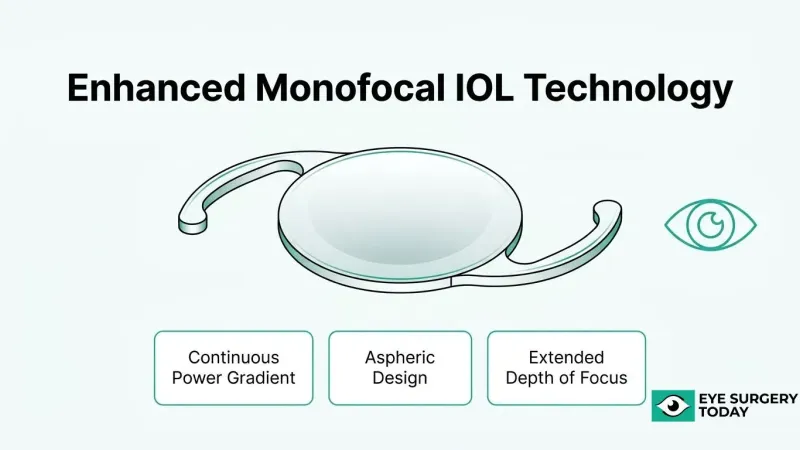
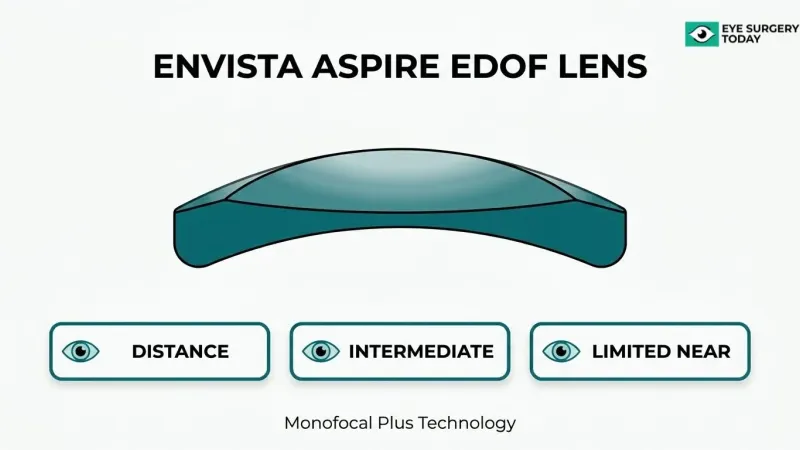
IOL selection is directly shaped by glaucoma stage. Monofocal aspheric lenses are often preferred for advanced disease to preserve contrast sensitivity, while extended depth-of-focus or toric designs may benefit patients with mild-to-moderate glaucoma and good visual field integrity.
Why Do Cataracts and Glaucoma Often Occur Together?
Cataracts and glaucoma often occur together because both conditions share aging as their primary risk factor, and several physiological and systemic mechanisms increase the likelihood of developing both simultaneously. The sections below examine the age-related changes, shared risk factors, and distinct pathologies that drive this co-occurrence.
How Does Aging Affect Both the Lens and the Optic Nerve?
Aging affects both the lens and the optic nerve through separate but parallel degenerative processes. The crystalline lens gradually loses transparency as proteins aggregate over time, forming a cataract. Separately, the trabecular meshwork stiffens with age, reducing aqueous humor outflow and elevating intraocular pressure (IOP), which can damage the optic nerve and lead to glaucoma. Because both processes accelerate in the same decades of life, older adults frequently present with both conditions at the same clinical visit.
What Role Do Shared Risk Factors Play?
Shared risk factors play a significant role in the co-occurrence of cataracts and glaucoma, particularly diabetes. According to a study published in Nature Scientific Reports, the likelihood of cataracts (AOR 1.495) and glaucoma (AOR 1.554) is significantly higher among older adults with diabetes than among those without the condition. Beyond diabetes, prolonged corticosteroid use, elevated IOP, and oxidative stress are associated with accelerating both lens clouding and optic nerve vulnerability, compounding the risk when these factors are present together.
Are Cataracts and Glaucoma the Same Condition?
Cataracts and glaucoma are not the same condition. A cataract is a clouding of the eye’s natural lens that can be surgically reversed to restore vision. Glaucoma is a progressive optic neuropathy caused by IOP-related or vascular damage to the optic nerve, and the vision loss it causes is permanent. The two conditions affect different anatomical structures, progress through different mechanisms, and require distinct treatment approaches, though they frequently coexist in the same patient, which is why combined surgical strategies have become an important area of ophthalmology.
Who Is a Good Candidate for Combined Cataract and Glaucoma Surgery?
Good candidates for combined cataract and glaucoma surgery are patients who have both a visually significant cataract and glaucoma requiring better IOP control. The following sections cover candidacy by glaucoma severity and when separate procedures may be preferable.
Who May Benefit from Combined Surgery with Mild to Moderate Glaucoma?
Patients who may benefit from combined surgery with mild to moderate glaucoma are those whose disease is typically controlled with one or two IOP-lowering medications and shows minimal visual field loss. At this severity level, MIGS devices such as the iStent inject W are specifically indicated for combined use with cataract surgery to reduce IOP in adult patients with mild-to-moderate open-angle glaucoma.
The potential gains are clinically meaningful. Real-world data published by PMC (National Institutes of Health) shows a mean medication burden decrease of up to 46.8% at 12 months following combined phaco-iStent surgery. Similarly, studies report a reduction in mean glaucoma medications from 1.6 to 0.8 at 12 months after combined KDB goniotomy.
However, the European Glaucoma Society (EGS) 5th Edition Guidelines caution that cataract surgery alone is of limited benefit in lowering IOP in open-angle glaucoma and is not recommended as a standalone glaucoma intervention. Preoperative evaluation should include gonioscopy, visual field testing, and OCT of the optic nerve to confirm severity and guide procedure selection.
For patients with mild to moderate disease and good contrast sensitivity, premium IOLs may also be an option, as they offer better unaided visual acuity and greater spectacle independence compared with traditional monofocal IOLs.
Who May Benefit from Combined Surgery with Advanced Glaucoma?
Patients who may benefit from combined surgery with advanced glaucoma are those who require substantial, sustained IOP reduction alongside cataract removal, typically needing target pressures below 12 to 15 mmHg. At this severity level, traditional filtering procedures such as phaco-trabeculectomy or combined glaucoma drainage device (GDD) implantation with cataract extraction are generally preferred over MIGS, as MIGS offers more modest IOP reductions.
GDD implantation is specifically indicated for refractory glaucoma, secondary glaucomas such as neovascular or uveitic types, and eyes with previously failed filtering surgery.
IOL selection also differs in advanced disease. Monofocal aspheric IOLs are often the preferred choice for patients with advanced glaucoma and significant visual field loss, according to the Glaucoma Research Foundation, as premium multifocal designs can further reduce contrast sensitivity that is already compromised by glaucomatous damage.
Who Should Consider Separate Procedures Instead?
Some patients should consider separate procedures instead of combined surgery when the risks of a longer combined operation outweigh the benefits, or when surgical timing conflicts between the two conditions. Patients with well-controlled glaucoma on minimal medication and a cataract that is the primary concern may be better served by cataract surgery alone, followed by reassessment of IOP. Conversely, patients with rapidly progressing glaucoma requiring urgent filtration surgery may need that procedure addressed first, before cataract extraction is planned.
As the EGS 5th Edition Guidelines note, the success rate of combined phacoemulsification and filtration surgery is lower than filtration surgery performed alone, making staged approaches a legitimate clinical choice for certain presentations. Discussing these trade-offs directly with a glaucoma specialist is the most reliable way to determine the optimal sequence.
What Are the Types of Combined Cataract and Glaucoma Procedures?
The types of combined cataract and glaucoma procedures range from minimally invasive micro-bypass devices to traditional filtration surgeries, each targeting a different level of glaucoma severity. The sections below cover MIGS options such as iStent, Hydrus, KDB, Trabectome, and ECP, followed by more aggressive approaches including XEN Gel Stent, trabeculectomy, and glaucoma drainage devices.
iStent and iStent Inject
The iStent inject W is a trabecular micro-bypass device indicated for use with cataract surgery to reduce IOP in adults with mild-to-moderate open-angle glaucoma. Two microscopic titanium stents are implanted through the trabecular meshwork during phacoemulsification, improving aqueous outflow without additional incisions. According to a pivotal trial (n=505) published by Glaukos Corporation, 75.8% of iStent inject eyes achieved a 20% or greater reduction in diurnal IOP at 24 months, compared to 61.9% in the cataract-surgery-alone group. For patients seeking a minimally invasive option with a low risk profile, phaco-iStent is among the most studied combined procedures available.
Hydrus Microstent
The Hydrus Microstent is an 8-mm intracanalicular scaffold implanted into Schlemm’s canal alongside cataract surgery to dilate the canal and improve trabecular outflow. In the HORIZON trial, 78.5% of Hydrus eyes achieved a 20% or greater IOP reduction at 24 months versus 54.5% in controls (P less than .001). Serious adverse events were reported in 3.5% of Hydrus subjects in that same trial, reflecting a favorable safety profile for this device class.
Kahook Dual Blade Goniotomy
Kahook Dual Blade (KDB) goniotomy is an excisional procedure that removes a strip of trabecular meshwork to restore aqueous outflow. The KDB Glide is FDA-indicated to surgically excise trabecular tissue and reduce IOP in adult patients. Clinical studies report a mean IOP reduction of approximately 20 to 30% when KDB is combined with cataract surgery, making it a practical option for patients with mild-to-moderate open-angle glaucoma who are poor candidates for device implantation.
Trabectome
Trabectome uses electrocautery-based ablation to remove a segment of trabecular meshwork and the inner wall of Schlemm’s canal, reducing outflow resistance. According to StatPearls (NCBI Bookshelf), Trabectome may reduce IOP by approximately 40% and has shown effectiveness in narrow-angle glaucoma and eyes with failed prior trabeculectomy. Average medication burden decreases by roughly 1.0 medication per eye following the procedure.
Endocyclophotocoagulation
Endocyclophotocoagulation (ECP) uses an endoscopic laser to ablate the ciliary processes, reducing aqueous production rather than improving outflow. According to the American Academy of Ophthalmology, ECP has been increasingly used as a primary glaucoma surgery due to its ability to directly target secretory tissue under direct visualization. It is commonly combined with cataract surgery when outflow-based approaches are not appropriate.
XEN Gel Stent with Phacoemulsification
The XEN Gel Stent is a 6-mm collagen-derived tube that creates a permanent subconjunctival drainage channel from the anterior chamber. When combined with phacoemulsification, it targets patients who require greater IOP reduction than MIGS devices typically provide. Meta-analysis published in Frontiers in Medicine shows an average IOP reduction of approximately 35% with XEN, lowering IOP to a final average near 15 mmHg, with many patients achieving a medication-free status at 12 months.
Trabeculectomy with Phacoemulsification
Trabeculectomy with phacoemulsification is the combined procedure that typically achieves the most substantial IOP reduction. According to a PMC (National Institutes of Health) review, this combination can reach target pressures below 12 to 15 mmHg, making it the preferred option for patients with advanced or progressive glaucoma requiring very low IOP targets. The addition of mitomycin C (MMC) during the procedure significantly improves long-term IOP control success rates, though recovery is more prolonged than with MIGS-based combinations.
Glaucoma Drainage Device with Cataract Extraction
Glaucoma drainage devices (GDDs) combined with cataract extraction are reserved for the most complex glaucoma cases, including refractory glaucoma, secondary glaucomas such as neovascular or uveitic, and eyes with failed prior filtering surgery. According to a PMC (National Institutes of Health) review, GDD implantation with cataract extraction leads to a substantial decrease in required glaucoma medications, though often not eliminating them entirely. This combination carries a higher procedural complexity than MIGS but offers meaningful pressure control where other options have failed.
How Does MIGS Differ from Traditional Glaucoma Surgery When Combined with Cataract Removal?
MIGS differs from traditional glaucoma surgery primarily in the degree of IOP reduction, safety profile, and recovery time. The sections below compare outcomes, safety, and healing timelines between phaco-MIGS and traditional combined procedures.
How Do IOP Outcomes Compare Between Phaco-MIGS and Traditional Surgery?
The IOP outcomes of phaco-MIGS are more modest than those of traditional combined surgery. A pooled analysis published in PMC found that MIGS combined with cataract surgery reduced IOP by a mean difference of 1.53 mmHg more than cataract surgery alone (95% CI: -2.18 to -0.88), with an average overall reduction of approximately 11.5%. By contrast, trabeculectomy with phacoemulsification remains the gold standard for advanced glaucoma, as noted in JAMA Ophthalmology, capable of reaching target pressures below 12-15 mmHg. For patients with mild-to-moderate disease, phaco-MIGS may deliver sufficient IOP control, though those requiring very low target pressures are better served by traditional filtration procedures.
What Are the Safety Differences Between MIGS and Traditional Combined Procedures?
MIGS procedures have a significantly better safety profile than traditional glaucoma surgeries. According to a review published in the Cureus Journal of Medical Science, phaco-MIGS carries a lower incidence of vision-threatening events such as hypotony, choroidal effusion, and bleb-related infections compared to procedures like trabeculectomy. Traditional filtering surgeries introduce the added complexity of bleb management and antimetabolite use, which increases the risk of serious postoperative complications. For patients who are poor candidates for prolonged recovery or high-risk interventions, the favorable safety profile of MIGS makes it a clinically compelling option.
How Does Recovery Time Differ Between the Two Approaches?
Recovery time differs substantially between phaco-MIGS and traditional combined surgery. When MIGS is combined with cataract surgery, recovery typically follows the cataract surgery timeline of roughly one to three weeks. Traditional filtering surgery, by comparison, requires considerably longer recuperation. Combining MIGS with cataract removal allows most patients to return to normal activities within weeks rather than months, making it the lower-burden path for appropriately selected cases.
What Are the Potential Benefits of Combined Cataract and Glaucoma Surgery?
The potential benefits of combined cataract and glaucoma surgery include reduced dependence on eye drops, shorter overall recovery compared to two separate procedures, and long-term cost savings. The sections below explore each of these advantages in detail.
How May Combined Surgery Reduce Dependence on Glaucoma Eye Drops?
Combined surgery may reduce dependence on glaucoma eye drops by lowering intraocular pressure (IOP) through surgical intervention rather than daily medication. Procedures such as Trabectome may reduce IOP by approximately 40%, according to StatPearls (NCBI Bookshelf), and has shown effectiveness in narrow-angle glaucoma and cases where prior trabeculectomy has failed. Endoscopic cyclophotocoagulation (ECP) may also reduce aqueous secretion directly, decreasing the need for topical medications to control IOP. For many patients, fewer daily eye drops means fewer side effects, lower adherence burdens, and a meaningfully improved quality of life.
How May a Single Procedure Lower Overall Recovery Time?
A single combined procedure may lower overall recovery time by eliminating the need for two separate surgical hospitalizations and two distinct healing periods. When both cataracts and glaucoma are treated in one session, patients recover once rather than sequentially, reducing total time away from normal activities. This approach is particularly practical for older patients who may find multiple surgical episodes physically and logistically demanding.
How May Combining Procedures Reduce Long-Term Costs?
Combining procedures may reduce long-term costs by consolidating anesthesia, facility fees, and surgical time into a single session. According to a review published in the MDPI Journal of Clinical Medicine, performing two surgeries in one session can improve procedural efficiency and generate cost savings for surgical centers, though device costs for MIGS procedures must be weighed against projected long-term medication savings. From a patient perspective, successfully reducing or eliminating glaucoma eye drop regimens can meaningfully offset the cumulative expense of prescription medications over time.
What Are the Possible Risks and Complications of Combined Surgery?
The possible risks and complications of combined surgery span both the operating room and the recovery period, and they vary meaningfully depending on whether a MIGS or traditional filtering procedure is added to cataract extraction. The sections below cover intraoperative events, postoperative warning signs, and how the overall risk profile compares to standalone surgery.
What Intraoperative Complications Can Occur During Combined Procedures?
Intraoperative complications during combined procedures include posterior capsule rupture, zonular dehiscence, bleeding into the anterior chamber (hyphema), and inadvertent cyclodialysis cleft formation. Traditional filtering procedures such as trabeculectomy and glaucoma drainage device (GDD) implantation carry additional intraoperative risks, including conjunctival buttonhole tears and suprachoroidal hemorrhage, which are rarely encountered with MIGS. Mitomycin C (MMC), commonly applied during trabeculectomy to improve filtration success, introduces its own handling risks and requires careful wound management to prevent toxicity to surrounding tissue. Careful surgical planning and surgeon experience are the most reliable factors in minimizing these events.
What Postoperative Complications Should Patients Watch For?
Postoperative complications that patients should watch for include elevated IOP (pressure spike), hypotony (abnormally low pressure), bleb-related infections, choroidal effusion, and cystoid macular edema. Hypotony is a particular concern after trabeculectomy and GDD surgery, as very low pressure can distort vision and increase the risk of choroidal detachment. Bleb-related infections (blebitis or endophthalmitis) may develop weeks to years after filtration surgery and require prompt treatment. Patients should contact their surgeon immediately if they notice sudden vision changes, increased pain, redness, or discharge following any combined procedure.
How Does the Risk Profile of Combined Surgery Compare to Standalone Procedures?
The risk profile of combined surgery is generally higher than cataract surgery alone but varies substantially by the glaucoma component selected. According to a review published in the Cureus Journal of Medical Science, MIGS procedures have a significantly better safety profile than traditional surgeries, with a lower incidence of vision-threatening events such as hypotony, choroidal effusion, and bleb-related infections. The HORIZON trial reported that serious adverse events occurred in only 3.5% of Hydrus Microstent patients, reflecting the comparatively favorable safety margin of MIGS. Traditional procedures, while capable of achieving deeper IOP reductions, carry a proportionally higher complication burden. Choosing the right procedure for each patient’s glaucoma stage is, in practice, the single most important risk-management decision a surgeon makes.
What Should Patients Expect Before, During, and After Combined Surgery?
Patients should expect three distinct phases: a preparation phase involving diagnostic testing and IOL planning, a surgical session combining both procedures, and a recovery period that varies by procedure type. The H3s below cover each phase in detail.
How Should Patients Prepare for Combined Cataract and Glaucoma Surgery?
Patients prepare for combined cataract and glaucoma surgery by completing a comprehensive preoperative workup, including gonioscopy, visual field testing, and OCT of the optic nerve to assess glaucoma severity and guide surgical planning.
IOL selection is a critical preparation decision. According to the American Academy of Ophthalmology, presbyopia-correcting (multifocal) IOLs should be used with caution in glaucoma patients, as these designs split light and may further reduce contrast sensitivity already compromised by glaucomatous damage. Toric IOLs remain an appropriate option for patients with concurrent astigmatism. Surgeons may also incorporate mitomycin C (MMC) during filtration surgery, as long-term data shows MMC significantly improves IOP control success rates in combined procedures.
For patients with significant cataract and progressive glaucoma, combined surgery is worth discussing with your ophthalmologist to determine the most appropriate approach.
What Happens During the Combined Procedure?
The combined procedure integrates phacoemulsification for cataract removal with a glaucoma intervention performed in the same operative session, under local or topical anesthesia.
Phacoemulsification removes the cloudy lens using ultrasound, after which an IOL is implanted. The glaucoma component depends on disease severity:
- MIGS procedures (such as trabecular micro-bypass stents or goniotomy) are performed through the same corneal incision with minimal additional operative time.
- Filtration surgery (trabeculectomy or XEN gel stent) requires creating a drainage pathway, often augmented with MMC, and adds procedural complexity.
- Glaucoma drainage devices are implanted to shunt aqueous humor to a subconjunctival reservoir in refractory cases.
The sequence typically follows cataract extraction first, with the glaucoma step performed before wound closure.
What Does Recovery Look Like in the First Weeks After Surgery?
Recovery after combined surgery depends primarily on which glaucoma procedure was included. According to Johns Hopkins Medicine, recovery from traditional filtering surgery such as trabeculectomy is more prolonged, often requiring 4 to 8 weeks for vision to stabilize and the drainage bleb to heal properly. When MIGS is combined with cataract surgery, recovery generally follows the shorter cataract surgery timeline of roughly one to three weeks.
Follow-up is frequent: patients are typically seen the day after surgery, then every one to three weeks for two to three months. Standard restrictions include avoiding direct sunlight and refraining from swimming for at least one week postoperatively.
What Are Realistic Long-Term Outcome Expectations?
Realistic long-term outcome expectations for combined surgery include meaningful IOP reduction, reduced reliance on glaucoma medications, and restored visual clarity from cataract removal, though the degree of IOP control depends on the procedure performed.
MIGS combined with cataract surgery offers modest IOP reduction suitable for mild to moderate glaucoma, with the primary benefit being medication reduction. Trabeculectomy with phacoemulsification may achieve lower target pressures for advanced cases, though with a longer and more demanding recovery. Glaucomatous visual field damage that existed before surgery is permanent and will not be reversed. A study published in PMC found that 86% of combined surgery patients reported satisfaction and 79% reported improved quality of life at 12 months, suggesting strong patient-centered outcomes when surgical planning is well matched to disease severity.
How Does Combined Surgery Affect Intraocular Lens Selection?
Combined surgery affects intraocular lens selection primarily by requiring surgeons to match IOL type to the patient’s existing level of glaucomatous damage and contrast sensitivity. The degree of visual field loss, optic nerve health, and expected postoperative visual quality all shape which IOL is appropriate. The following considerations cover monofocal IOLs for advanced glaucoma, premium IOLs for mild to moderate glaucoma, and toric IOLs for patients with co-existing astigmatism.
Monofocal IOLs for Advanced Glaucoma
Monofocal aspheric IOLs are often the preferred choice for patients with advanced glaucoma and significant visual field loss. Because advanced glaucoma can already compromise contrast sensitivity, adding a lens design that further reduces light transmission increases the risk of poor visual outcomes. Keeping optical performance simple and predictable is the most protective strategy for this patient group.
Premium IOLs for Mild to Moderate Glaucoma
Presbyopia-correcting multifocal IOLs should be used with caution in glaucoma patients, as these designs split incoming light and may further reduce contrast sensitivity that is already compromised by glaucomatous damage, according to the American Academy of Ophthalmology. Extended depth-of-focus lenses such as Vivity may offer a more suitable alternative, as they preserve contrast better than traditional multifocal designs, making them a reasonable option for patients with mild to moderate glaucoma and good contrast sensitivity.
Toric IOLs for Astigmatism Correction
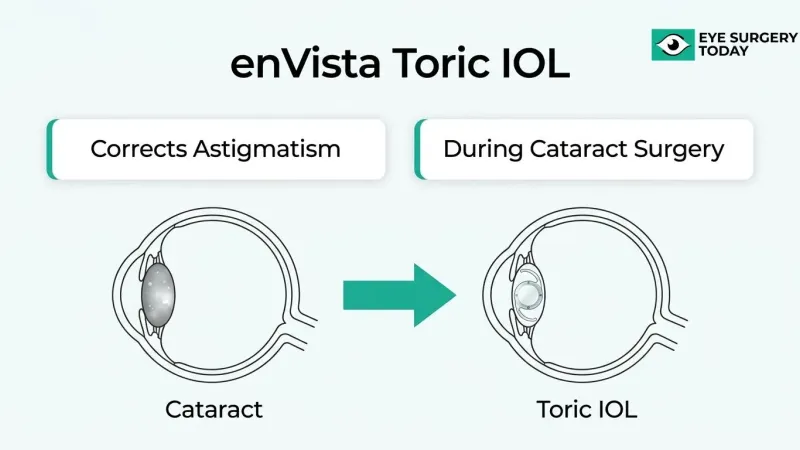
Toric IOLs are an excellent option for correcting astigmatism in patients undergoing combined cataract surgery, as noted in a 2024 review published in Current Opinion in Ophthalmology. When glaucoma severity is mild and corneal astigmatism is a meaningful contributor to reduced vision, a toric lens can address both conditions in a single procedure without the optical trade-offs associated with multifocal designs. This makes toric selection a practical, low-risk upgrade for the appropriate combined surgery candidate.
What Questions Should Patients Ask Their Surgeon About Combined Procedures?
The questions patients should ask their surgeon about combined procedures cover candidacy, procedure selection, IOL options, recovery expectations, and long-term outcomes. Asking the right questions helps patients make informed decisions and set realistic expectations before surgery.
- Am I a candidate for combined surgery, or should the procedures be staged separately? Understanding whether your glaucoma severity and cataract progression both warrant a single session is the most important starting point.
- Which glaucoma procedure do you recommend combining with my cataract surgery, and why? Options range from MIGS devices such as iStent, Hydrus, or Kahook Dual Blade to more invasive procedures like trabeculectomy or a glaucoma drainage device, each suited to different disease stages.
- What IOP reduction should I realistically expect after combined surgery? Outcomes vary considerably by procedure, so patients benefit from understanding the range their specific combination may achieve.
- What are the risks specific to combining these two procedures in a single session? Complication profiles differ between phaco-MIGS and traditional filtering surgery, and patients deserve a clear comparison.
- Which IOL is appropriate given my glaucoma severity? Multifocal lenses may reduce contrast sensitivity in patients with existing glaucomatous damage, making IOL selection a critical conversation.
- How will my glaucoma medications change after surgery? Some patients reduce or eliminate drops; others continue on a modified regimen.
- What does the recovery timeline look like for my specific combination? MIGS recovery typically mirrors standard cataract surgery, while trabeculectomy may require considerably longer healing.
- How frequently will I need follow-up visits, and what warning signs require urgent contact? Knowing the postoperative monitoring schedule helps patients stay engaged in their own recovery.
Bringing written questions to the preoperative consultation ensures no important detail is overlooked.
How Can Surgeon-Reviewed Guidance Help You Decide on Combined Eye Surgery?
Surgeon-reviewed guidance helps you decide on combined eye surgery by presenting the full range of clinical options alongside expert context, so your conversation with your ophthalmologist starts from an informed position. The following sections cover how Eye Surgery Today supports that process and what key takeaways to carry forward.
Can Eye Surgery Today Help You Understand Your Cataract and Glaucoma Treatment Options?
Eye Surgery Today can help you understand your cataract and glaucoma treatment options by presenting surgeon-reviewed, evidence-based content that reflects real clinical decision-making. The choices facing patients are genuinely complex. As Dr. David S. Friedman, MD, MPH, explains via the American Academy of Ophthalmology: “You can do a trabeculectomy first, cataract first, or both combined. Those are your three options on day one.”
That complexity increases when both conditions are actively progressing. Dr. Norm A. Zabriskie, MD, notes: “I think the choice is clear when a patient has an absolutely visually significant cataract and has progressive glaucoma despite the best-tolerated medical treatment.”
Eye Surgery Today translates this level of clinical insight into accessible language, helping patients arrive at surgical consultations with the right questions already formed.
What Are the Key Takeaways About Combined Cataract and Glaucoma Surgery Options?
The key takeaways about combined cataract and glaucoma surgery options center on three decisions patients most commonly face. Patients frequently ask whether both surgeries can happen simultaneously, how long recovery takes, and whether cataract surgery alone helps glaucoma. Each question points to a distinct clinical consideration worth discussing with your surgeon:
- Can you have cataract and glaucoma surgery at the same time? Yes, combined procedures such as phaco-MIGS or phaco-trabeculectomy address both conditions in one session.
- What is the recovery time for combined eye surgery? Recovery varies by procedure type, from roughly one to three weeks for MIGS combinations to four to eight weeks for traditional filtering surgery.
- Does cataract surgery help glaucoma? Cataract surgery alone offers limited IOP reduction and is not recommended as a standalone glaucoma intervention, according to the European Glaucoma Society Guidelines.
Eye Surgery Today’s surgeon-reviewed content helps you move from these common questions to confident, informed discussions with your care team.