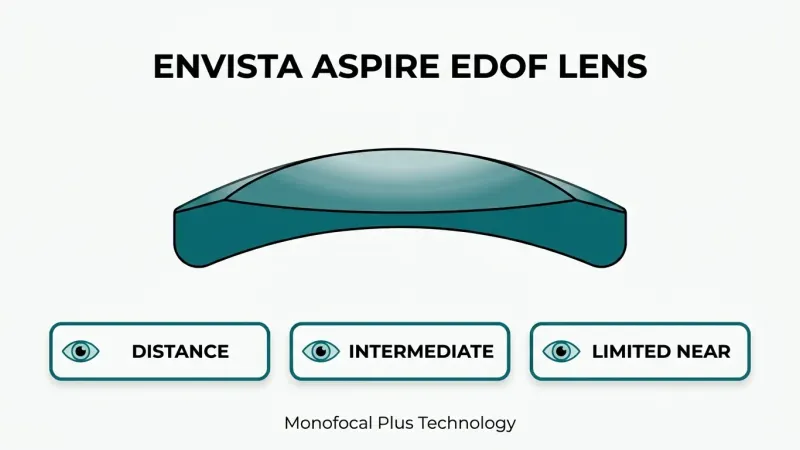
Glasses after cataract surgery are corrective lenses prescribed to address residual refractive needs that an intraocular lens (IOL) alone may not fully resolve. Most patients achieve significantly improved vision, yet factors like IOL type, pre-existing astigmatism, and individual healing patterns can leave certain distances slightly undercorrected.
This guide covers the reasons glasses may still be necessary, the specific lens types suited to post-surgical vision, how IOL selection shapes spectacle dependence, prescription timing and stabilization, preoperative preparation strategies, and long-term factors that influence whether corrective eyewear remains part of your routine.
Several conditions can contribute to ongoing glasses use, including residual refractive error from IOL power prediction limits, corneal astigmatism present in nearly 40% of surgical candidates, and the neuroadaptation period your brain requires to process vision through an artificial lens.
Post-surgical eyewear ranges from simple reading glasses for monofocal IOL recipients to progressive lenses, intermediate-distance computer glasses, and anti-glare coatings that address light sensitivity from the new lens.
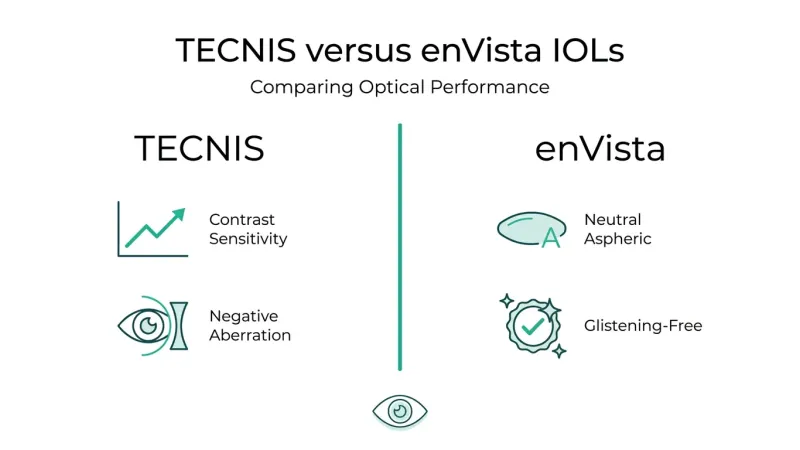
Your choice of IOL, whether monofocal, multifocal, toric, or extended depth of focus, is the single largest factor in determining which glasses you may need afterward. Each design involves specific trade-offs between spectacle independence and potential visual side effects like halos or reduced contrast.
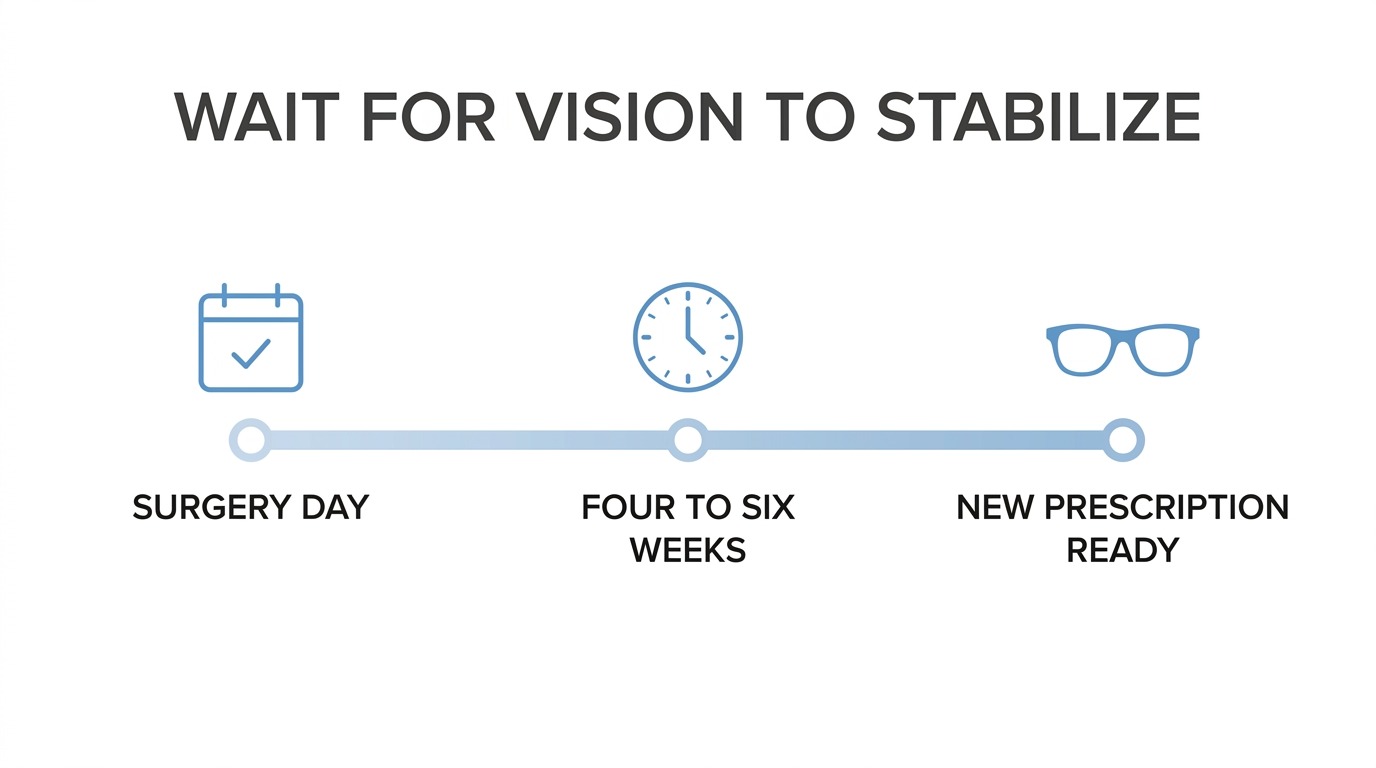
Refractive stabilization typically occurs around four to six weeks after surgery, and clinical guidelines recommend waiting until that point before finalizing a new prescription. Ordering glasses too early may result in an inaccurate correction that can affect safety and comfort.
Preparing before surgery through targeted questions, realistic expectations, and keeping old glasses accessible during recovery helps ensure a smoother transition to your final corrected vision.
Why Might You Still Need Glasses After Cataract Surgery?
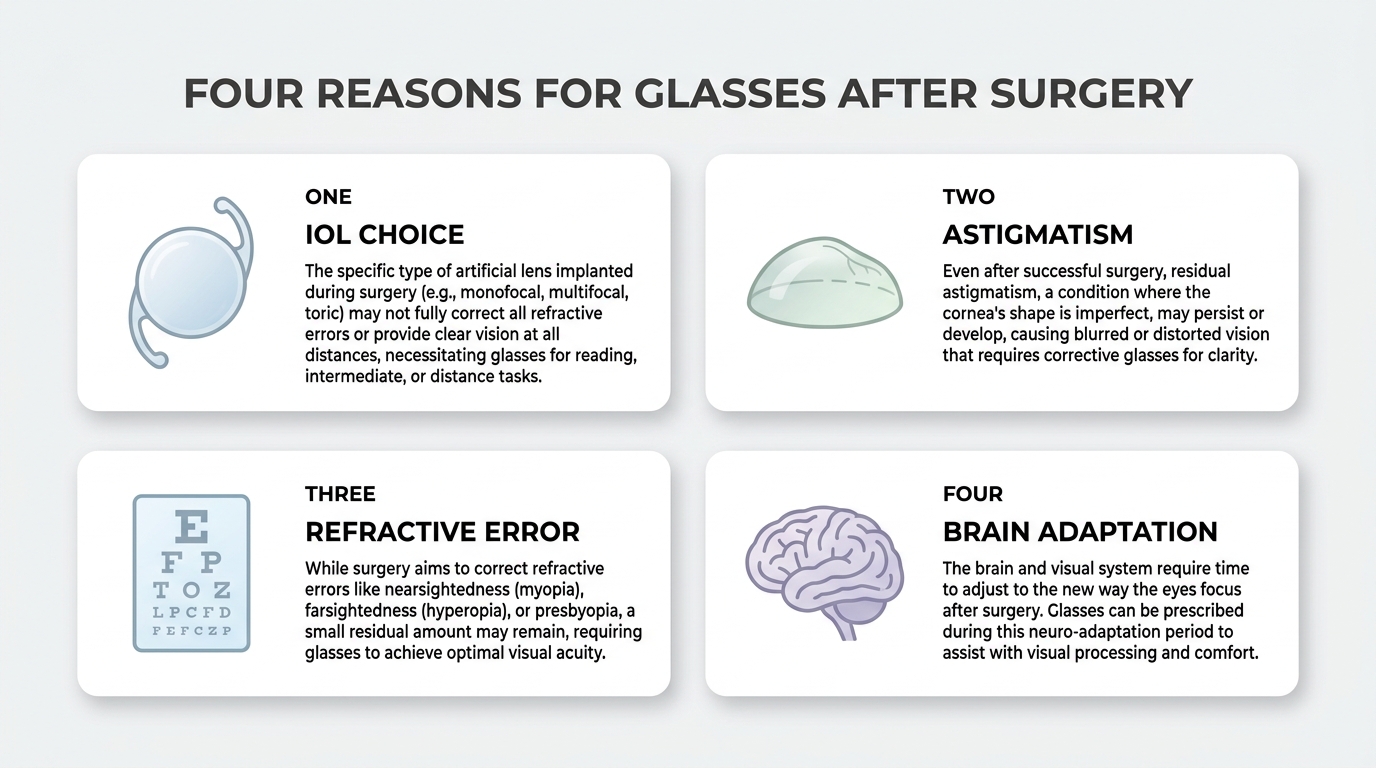
You might still need glasses after cataract surgery because of IOL selection, pre-existing astigmatism, residual refractive error, or the time your brain needs to adapt to new lenses. The following subsections explain each factor.
How Does IOL Type Affect Your Need for Glasses?
IOL type affects your need for glasses by determining which distances your artificial lens can focus on clearly. Monofocal IOLs, the most commonly implanted option, provide sharp vision at one focal point, typically distance. Reading and intermediate tasks usually require corrective lenses afterward.
Multifocal and trifocal IOLs split light to cover near, intermediate, and far distances, which may reduce spectacle dependence significantly. Extended depth of focus (EDOF) lenses stretch a single focal point into a range, though patients in one comparative study published in the Journal of the Formosan Medical Association were more spectacle dependent with EDOF lenses than with bifocal IOLs.
Each lens type involves trade-offs. Multifocal designs can introduce mild halos or glare at night, while monofocal lenses offer crisper contrast but narrower focus. Discussing your daily visual priorities with your surgeon before choosing an IOL is one of the most effective ways to minimize unexpected glasses use afterward.
How Does Pre-Existing Astigmatism Influence Post-Surgery Vision?
Pre-existing astigmatism influences post-surgery vision by causing light to focus unevenly on the retina, which can leave images blurred even after a successful cataract removal. If corneal astigmatism is not corrected during or after the procedure, glasses with a cylindrical correction may still be necessary.
According to a 2025 study published in Frontiers in Medicine, 39.8% of cataract surgery candidates had corneal astigmatism of 1.0 diopter or greater, and 9.3% had 2.0 diopters or more. Toric IOLs are specifically designed to compensate for this corneal irregularity, though precise alignment during implantation is critical.
For patients with lower levels of astigmatism, limbal relaxing incisions or post-operative laser correction may be considered. Because astigmatism is so prevalent among cataract patients, preoperative corneal measurements play a central role in determining whether corrective glasses will be needed long-term.
How Can Residual Refractive Error Lead to Glasses Use?
Residual refractive error can lead to glasses use when the implanted IOL power does not perfectly match the eye’s optical needs after surgery. Even small mismatches between the predicted and actual refractive outcome may leave patients mildly nearsighted, farsighted, or with uncorrected astigmatism.
Modern biometry has improved significantly, yet according to a study published in Diagnostics (Basel), a prediction error of plus or minus 0.25 diopters can be achieved in only 40 to 52 percent of patients, depending on the IOL formula used. The remaining patients fall outside that narrow window, and even a half-diopter deviation can noticeably affect reading comfort or distance clarity.
When residual refractive error is mild, lightweight prescription glasses or contact lenses typically resolve the issue. In cases where the error is more significant, a secondary procedure such as laser enhancement may be discussed with your ophthalmologist.
How Does Your Brain’s Adaptation to New Lenses Affect Vision?
Your brain’s adaptation to new lenses affects vision because the visual cortex must recalibrate to interpret images focused through an artificial IOL, a process known as neuroadaptation. This adjustment period can temporarily make vision feel inconsistent, even when the surgical outcome is technically precise.
Neuroadaptation is especially relevant for multifocal and trifocal IOL recipients, whose brains must learn to select the correct focal zone depending on the task. During the first weeks, patients may notice mild halos, reduced contrast, or difficulty shifting focus between distances. These symptoms typically diminish over one to three months as neural pathways strengthen.
Patience during this period is important. Rushing to obtain a new glasses prescription before the brain has fully adapted, and before refraction stabilizes, can result in lenses that feel outdated within weeks. Most ophthalmologists recommend waiting at least four to six weeks before finalizing any corrective prescription.
With these factors in mind, understanding the specific lens types available helps clarify what kind of glasses you may ultimately need.
What Types of Glasses Might You Need After Cataract Surgery?
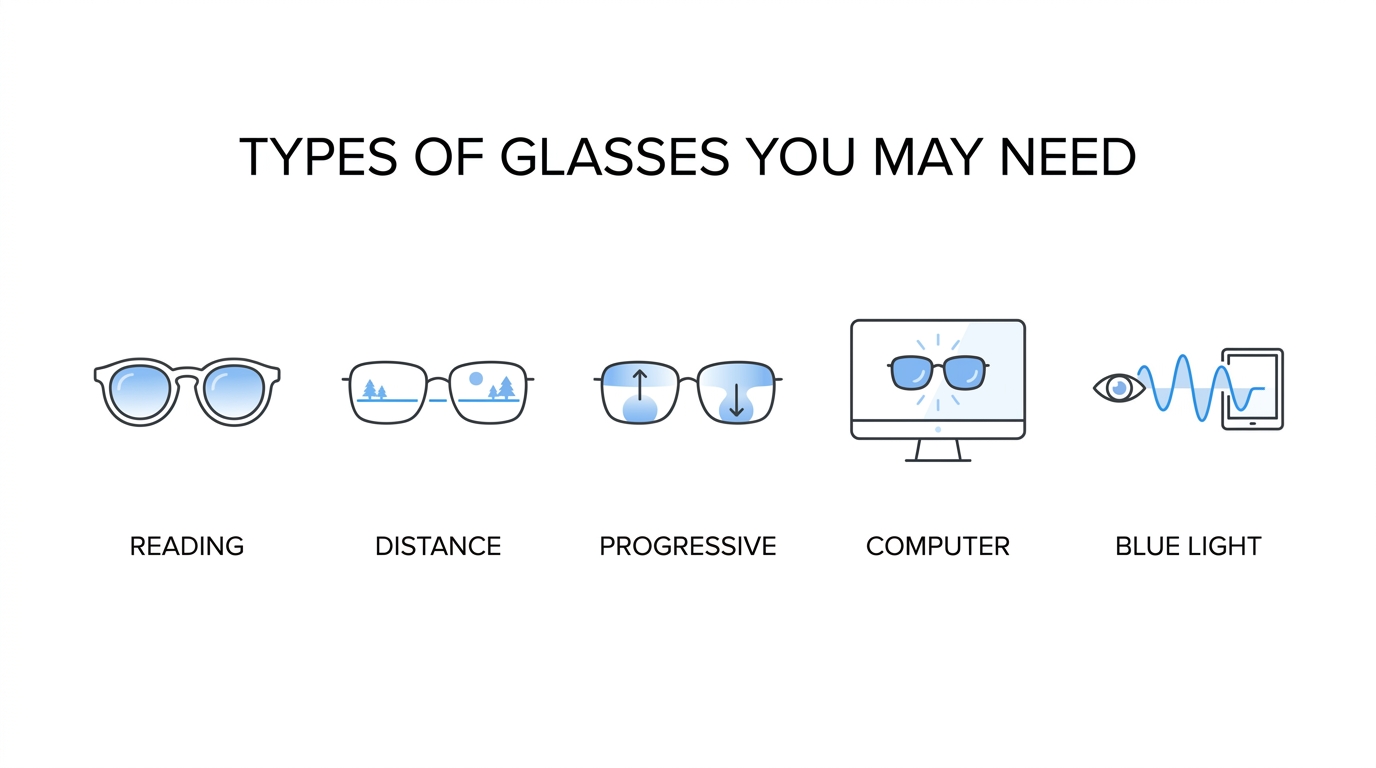
The types of glasses you might need after cataract surgery include reading glasses, distance glasses, progressive lenses, computer glasses, and blue-light or anti-glare options. Your specific needs depend on the IOL implanted and any residual refractive error.
Reading Glasses
Reading glasses are the most commonly needed eyewear after cataract surgery, especially for patients who receive a monofocal IOL set for distance vision. Because monofocal lenses focus light at a single focal point, near tasks like reading books, viewing menus, or threading a needle often require additional optical correction.
Even patients with multifocal or extended depth of focus IOLs may find that fine print remains slightly blurred in low-light conditions. Over-the-counter readers in low powers can often address this gap, though a custom prescription from your optometrist will provide the most precise correction. Patients who plan ahead for a pair of lightweight readers adapt to their post-surgical vision more comfortably and with less frustration during the first few weeks of recovery.
Distance Glasses
Distance glasses may be needed after cataract surgery when a small residual refractive error remains following IOL implantation. According to a 2022 analysis published in Diagnostics, a prediction error of ±0.25 D can be achieved in only 40 to 52% of patients depending on the IOL formula used, meaning roughly half of all patients may have a measurable gap between their target and actual refraction.
Patients who chose a monofocal IOL set for near vision are the most likely candidates for distance correction. Activities such as driving, watching television, or reading road signs may appear slightly soft without thin, single-vision distance lenses. Even a minor residual error of 0.50 D can noticeably affect sharpness at far range, making a dedicated pair of distance glasses a practical investment for daily clarity.
Progressive or Multifocal Glasses
Progressive or multifocal glasses correct vision at near, intermediate, and far distances within a single lens. These glasses are particularly useful for patients with a monofocal IOL who want seamless transitions between reading, computer use, and distance viewing without switching between multiple pairs.
Progressive lenses eliminate the visible line found in traditional bifocals, offering a more natural visual experience. Patients who had progressive lenses before cataract surgery often prefer returning to this familiar format. However, the post-surgical prescription typically differs from the pre-surgical one, so waiting until refraction stabilizes is essential before investing in a new pair. For many patients, progressives represent the most versatile single-pair solution after cataract surgery, reducing the need to carry separate readers and distance glasses throughout the day.
Computer or Intermediate-Distance Glasses
Computer or intermediate-distance glasses correct vision at roughly arm’s length, typically between 20 and 26 inches from the eyes. This focal range covers tasks such as working at a desktop monitor, viewing a tablet, reading sheet music, or cooking from a recipe.
Monofocal IOLs set for distance leave this intermediate zone uncorrected, and even some multifocal IOL designs may produce slightly reduced contrast at mid-range. Occupational lenses, sometimes called “office lenses,” are specifically designed for this working distance and can reduce eye strain during prolonged screen time. For patients who spend several hours daily at a computer, a dedicated intermediate pair often proves more comfortable than relying on the upper portion of a progressive lens. Discussing your typical screen habits with your optometrist helps ensure the prescription targets the exact working distance you use most.
Blue-Light or Anti-Glare Glasses
Blue-light or anti-glare glasses reduce visual discomfort caused by screen emissions and reflective light sources. After cataract surgery, some patients experience increased light sensitivity because the new artificial IOL transmits more blue-spectrum light than the natural crystalline lens it replaced.
Anti-reflective coatings minimize distracting glare from headlights, overhead fluorescents, and digital screens. Blue-light filtering lenses, available as prescription or non-prescription options, may help ease eye fatigue during extended screen sessions. These coatings can be added to any lens type, including readers, distance glasses, or progressives. For patients who notice haloes or starburst patterns around lights at night, an anti-glare treatment on distance or driving glasses can meaningfully improve visual comfort.
Understanding which lens types match your daily activities makes it easier to discuss IOL selection and post-surgical correction with your surgeon before the procedure.
How Does Your Choice of IOL Affect Post-Surgery Glasses Needs?
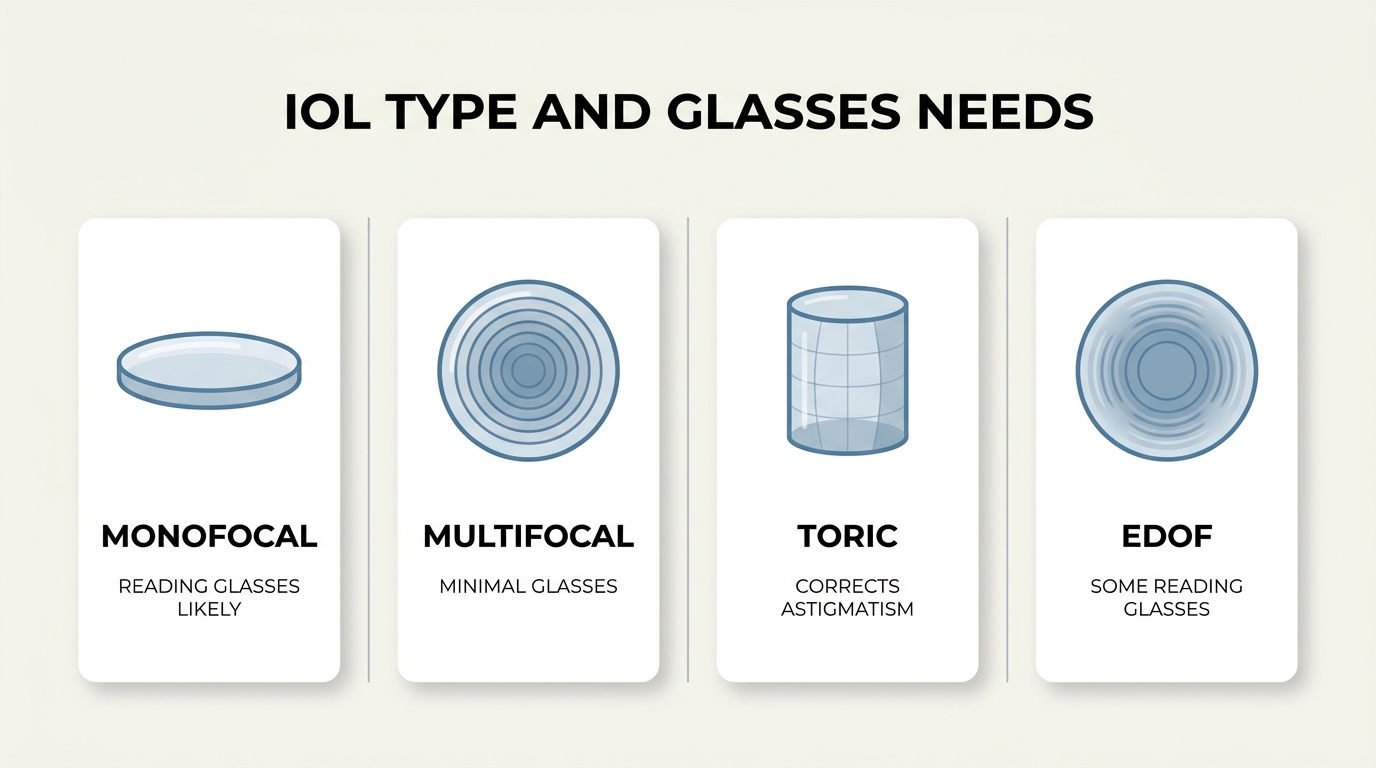
Your choice of IOL affects post-surgery glasses needs by determining which distances receive clear focus and which may still require corrective lenses. The following subsections cover monofocal, multifocal, toric, and extended depth of focus IOLs.
What Glasses Might You Need With a Monofocal IOL?
The glasses you might need with a monofocal IOL typically include reading glasses for near tasks, since this lens corrects vision at a single focal point. Most surgeons set monofocal IOLs for clear distance vision, which means close-up activities like reading, sewing, or using a smartphone usually require separate glasses. Some patients also benefit from intermediate-distance glasses for computer work.
According to a study published in the Annals of Medicine and Surgery, patients with multifocal IOLs reported higher overall satisfaction (4.3 ± 0.6 on a 5-point scale) than those with monofocal IOLs (3.5 ± 0.7, P < 0.05). This gap highlights the trade-off: monofocal lenses offer excellent clarity at the chosen distance with fewer visual side effects, but they come with greater spectacle dependence for other ranges. For patients who prioritize sharp, high-contrast distance vision and don’t mind wearing readers, the monofocal IOL remains a reliable choice.
What Glasses Might You Need With a Multifocal IOL?
The glasses you might need with a multifocal IOL are minimal for most daily activities, since this lens design provides focus at multiple distances simultaneously. Multifocal IOLs split incoming light to create distinct near, intermediate, and far focal points, which can significantly reduce dependence on reading glasses and distance glasses alike.
However, some patients may still need light-prescription glasses for prolonged fine print reading or low-light tasks. Mild visual phenomena, such as halos or glare around lights at night, can occur during a short neuroadaptation period as the brain adjusts to processing multiple focal points. These symptoms typically diminish within weeks to months. For individuals whose daily routine spans varied distances, multifocal IOLs often represent the strongest option for spectacle independence, though discussing potential trade-offs with your ophthalmologist before surgery remains essential.
What Glasses Might You Need With a Toric IOL?
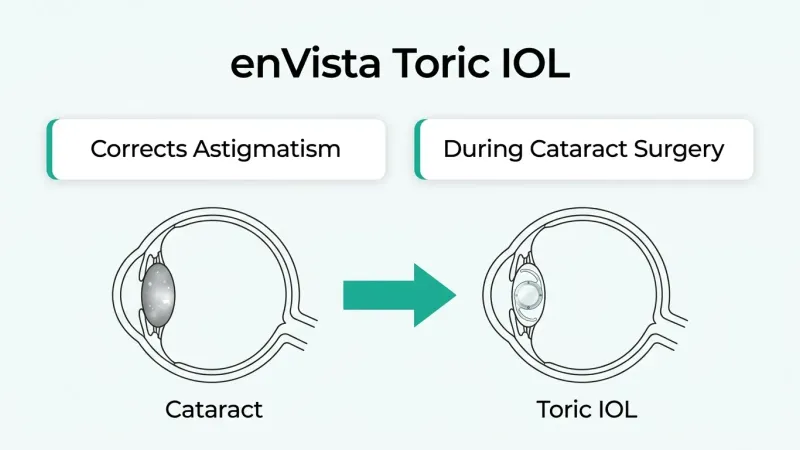
The glasses you might need with a toric IOL depend on how much astigmatism the lens corrects and whether it is paired with a monofocal or multifocal design. A toric IOL corrects corneal astigmatism by incorporating a specific cylindrical power aligned to the eye’s steep meridian during implantation.
When set for distance, a standard toric monofocal IOL typically eliminates the need for distance glasses but still requires reading glasses for near tasks. If residual astigmatism remains, mild prescription glasses may be needed at any distance. Precise surgical alignment is critical; even slight rotation of the lens can reduce its astigmatism-correcting effect. For patients with moderate to high corneal astigmatism, a toric IOL can deliver noticeably sharper uncorrected vision compared to a standard spherical lens. Discussing your specific astigmatism measurements with your surgeon helps clarify which glasses, if any, you can expect to wear afterward.
What Glasses Might You Need With an Extended Depth of Focus IOL?
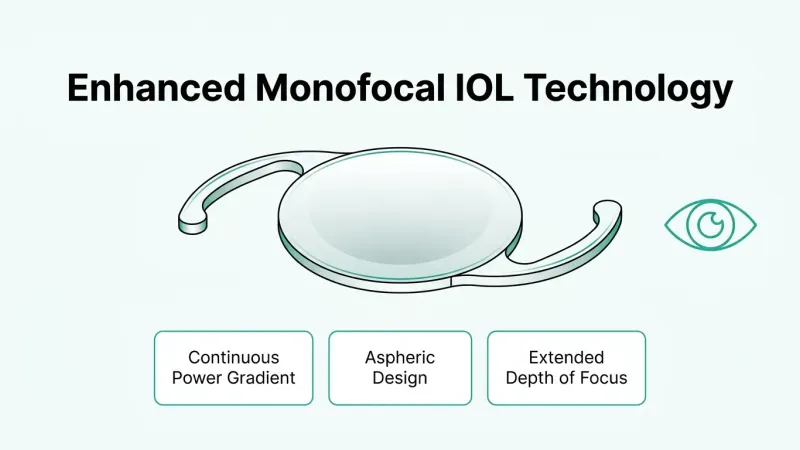
The glasses you might need with an extended depth of focus (EDOF) IOL are most likely reading glasses for fine near tasks. EDOF lenses elongate a single focal point rather than splitting light into distinct zones, providing a continuous range of clear vision from distance through intermediate distances.
This design works well for activities like computer use, cooking, and driving. Because the near focal range is not as strong as with a multifocal IOL, small print and close-up detail work may still require readers. A study published in the Journal of the Formosan Medical Association found that patients in the EDOF group were more spectacle dependent than those with bifocal IOLs, particularly at near distances. Despite this trade-off, EDOF lenses tend to produce fewer halos and glare symptoms than multifocal designs, making them a practical middle ground for patients who want reduced glasses use without the optical side effects associated with multifocal optics.
With IOL selection clarified, the next step is understanding when your post-surgery prescription becomes final.
When Can You Get a New Glasses Prescription After Surgery?
You can get a new glasses prescription after cataract surgery once your vision stabilizes, typically 4 to 8 weeks post-operation. The subsections below explain how long stabilization takes and why waiting matters. For some individuals, addressing functional or cosmetic concerns through procedures such as eyelid surgery can further complement their overall vision improvement.
How Long Does It Take for Your Vision to Stabilize?
Your vision typically takes 4 to 6 weeks to stabilize after cataract surgery. During this period, the corneal incision heals and the intraocular lens settles into its final position, causing day-to-day fluctuations in clarity. According to a study published in the Journal of Clinical Medicine, refractive stabilization of the cornea after cataract surgery is usually achieved around one month following the procedure. In some cases, if the initial IOL causes persistent issues or does not meet visual goals, a secondary IOL exchange procedure may be considered to optimize vision.
Most patients will have their post-operative check with their local optometrist 4 to 8 weeks after surgery to determine the final prescription. Some cases stabilize faster; in myopic patients, for instance, subjective refraction may settle within the first week. However, the standard recommendation accounts for the full range of healing timelines, and your ophthalmologist will confirm when your refraction is stable enough for an accurate prescription.
Why Should You Wait Before Ordering New Glasses?
You should wait before ordering new glasses because a prescription filled too early may be inaccurate. The eye’s refractive power shifts as surgical swelling resolves and the lens capsule heals, so glasses made during this window can end up too strong or too weak within days.
Beyond wasted cost, wearing an incorrect prescription carries real safety concerns. According to a study published in the Journal of Cataract and Refractive Surgery, poor visual acuity in the dominant eye combined with a large change in the spectacle prescription for the operated eye after surgery can increase the risk of falls. Waiting the recommended 4 to 6 weeks protects both your wallet and your physical safety. In clinical practice, this patience consistently pays off: one accurate prescription is far more valuable than two premature ones that leave you squinting.
With your stabilized prescription in hand, preparing for possible glasses use before surgery helps set the right expectations from the start.
How Should You Prepare for Possible Glasses Use Before Surgery?
You should prepare for possible glasses use before surgery by asking your surgeon targeted questions, setting realistic vision expectations, and keeping your current eyewear accessible during recovery.
What Questions Should You Ask Your Surgeon About Glasses?
The questions you should ask your surgeon about glasses include which IOL type best fits your visual priorities, whether your pre-existing astigmatism may require corrective lenses afterward, and what the likelihood of spectacle dependence is for your specific case. Your ophthalmologist may also explain trade-offs between lens options, such as mild night symptoms with multifocal IOLs or the need for reading glasses with monofocal lenses.
According to a global survey of 9,000 patients published in Cataract & Refractive Surgery Today, 61% expressed interest in reducing spectacle dependence after cataract surgery. This statistic highlights why discussing glasses expectations before the procedure is essential. Asking about mini-monovision configurations, toric correction for astigmatism, and expected recovery timelines gives you a clearer picture of what daily vision will look like post-operatively. Bringing a written list of questions to your preoperative consultation helps ensure nothing is overlooked.
How Can Setting Realistic Vision Expectations Help You Prepare?
Setting realistic vision expectations can help you prepare by reducing post-surgical frustration and aligning your daily visual goals with what your chosen IOL can deliver. Many patients assume cataract surgery eliminates all need for glasses, yet the outcome depends on lens selection, corneal health, and individual healing patterns.
Preoperative counseling that covers potential trade-offs, including residual refractive error and neuroadaptation periods, builds a more accurate mental framework for recovery. When you understand that some tasks, such as reading fine print or extended computer work, may still benefit from corrective lenses, the adjustment feels less disappointing. This proactive mindset also helps you plan for temporary visual fluctuations during the stabilization period, which typically lasts four to six weeks. Patients who enter surgery with well-calibrated expectations tend to report higher satisfaction with their visual outcomes. To further aid in this preparation, some patients may even simulate their vision plan using specialized contact lenses to experience potential outcomes before surgery.
Should You Keep Your Old Glasses During Recovery?
Yes, you should keep your old glasses during recovery. Your previous prescription may not be perfectly accurate after surgery, but old glasses can provide functional vision during the stabilization period before your new prescription is finalized. Since refractive stabilization typically takes around one month, wearing outdated lenses for close tasks or screen use can ease the transition.
Discarding your glasses prematurely may leave you without a practical visual aid when you need one most. A large change in spectacle prescription for the operated eye can also temporarily affect depth perception and balance, so having familiar frames available offers a safety buffer. Your ophthalmologist may recommend a final prescription at four to eight weeks post-surgery; until then, old glasses serve as a reliable interim solution.
With preparation strategies in place, understanding long-term factors helps guide your overall glasses plan.
What Factors Determine Whether You Will Need Glasses Long-Term?
Whether you will need glasses long-term after cataract surgery depends on your daily visual demands, whether one or both eyes are treated, and age-related changes. The following subsections break down each factor. Comprehensive eye exams for cataracts before surgery are crucial, as they provide the diagnostic information needed to estimate IOL power and manage astigmatism, directly impacting long-term spectacle dependence.
How Does Your Lifestyle Affect Post-Surgery Glasses Decisions?
Your lifestyle affects post-surgery glasses decisions by determining which visual distances matter most in your daily routine. Someone who spends hours reading or doing detailed handwork places greater demands on near vision than someone whose activities are primarily outdoors. Similarly, frequent night driving may reveal mild glare or halo effects that benefit from corrective lenses, even when daytime vision feels sharp.
Occupational requirements also play a role. Professionals working at computer screens for extended periods often need intermediate-distance correction, while those in physically active jobs may prioritize clear distance vision above all else. Discussing these daily patterns with your ophthalmologist before surgery helps guide IOL selection and sets realistic expectations for whether glasses will remain part of your routine afterward.
How Does Having Surgery on One Eye vs Both Eyes Matter?
Having surgery on one eye vs both eyes matters because operating on a single eye can create an imbalance between the treated and untreated side. The operated eye may achieve sharper focus at certain distances while the other retains its original refractive error, producing a mismatch that often requires glasses to bridge.
Pre-existing astigmatism compounds this challenge. According to a 2025 study published in Frontiers in Medicine, 39.8% of cataract surgery candidates had corneal astigmatism of 1.0 diopter or greater, and 9.3% had 2.0 diopters or more. When only one eye is corrected, residual astigmatism in the unoperated eye can widen the visual gap between the two sides. Patients who undergo bilateral surgery typically experience more balanced vision, which may reduce long-term spectacle dependence. For those having sequential procedures, temporary glasses are often necessary between surgeries to manage the interim imbalance.
How Does Your Age Influence Long-Term Glasses Use?
Your age influences long-term glasses use because the eye continues to change over time, even after cataract removal. Younger patients undergoing surgery may experience gradual shifts in refraction over subsequent decades, potentially requiring prescription updates. Older patients, while less likely to see large refractive shifts, often contend with co-existing conditions such as mild macular degeneration or dry eye that can affect functional vision independently of the implanted lens.
Neuroadaptation also varies by age. Younger individuals tend to adapt more quickly to multifocal or extended depth of focus IOLs, whereas older patients sometimes need a longer adjustment period before the brain fully processes the new visual input. Regardless of age, regular eye exams remain essential for detecting changes that may warrant updated glasses.
Understanding these individual factors helps set accurate expectations for post-surgical vision and supports more informed conversations with your surgeon.
What Are the Potential Risks of Not Wearing Prescribed Glasses?
The potential risks of not wearing prescribed glasses after cataract surgery include eye strain, increased fall risk, and reduced quality of life. These consequences can affect daily safety and long-term visual comfort.
Not wearing your prescribed correction may cause persistent headaches and eye fatigue as your visual system strains to compensate for uncorrected refractive error. According to a study published in the Journal of Cataract & Refractive Surgery, poor visual acuity in the dominant eye and a large change in spectacle prescription for the operated eye after surgery can increase the risk of falls. This is particularly concerning for older adults recovering from cataract procedures.
Driving safety is another significant consideration. Uncorrected vision after surgery may prevent you from meeting legal visual acuity requirements for a driver’s license. Skipping prescribed glasses can also diminish the quality-of-life improvements that cataract surgery provides, since clear corrected vision is associated with better general physical health and daily functioning.
For most patients, wearing the right prescription is a straightforward step that protects the visual gains achieved through surgery. Your ophthalmologist may recommend specific lenses based on your residual refractive needs, so following that guidance helps ensure the best possible outcome.
Who Is Most Likely to Need Glasses After Cataract Surgery?
Patients most likely to need glasses after cataract surgery include those with pre-existing astigmatism, those who choose monofocal IOLs, and those with specific lifestyle visual demands.
Several patient profiles carry a higher likelihood of post-surgical spectacle dependence. According to a study published in Frontiers in Medicine, 39.8% of cataract surgery candidates had corneal astigmatism of 1.0 D or greater, and 9.3% had 2.0 D or greater. Uncorrected astigmatism at these levels typically requires glasses for clear vision after surgery, even with a well-placed intraocular lens.
Patients who receive standard monofocal IOLs set for distance correction will almost always need reading glasses for close tasks. Those with high myopia or hyperopia before surgery may also experience residual refractive error that glasses can correct. Similarly, patients who undergo surgery on only one eye often face an imbalance between their eyes, making balanced spectacle correction necessary for comfortable binocular vision.
Other profiles that commonly require post-operative glasses include:
- Patients with irregular corneas from prior refractive surgery or corneal scarring.
- Individuals whose occupations demand precision at intermediate distances, such as computer work or instrument reading.
- Patients who opted against premium IOLs due to cost or candidacy limitations.
- Those experiencing posterior capsule opacification before a YAG laser capsulotomy restores clarity.
In clinical practice, the patients who achieve the greatest spectacle independence tend to be those with minimal astigmatism, healthy corneas, and a premium IOL matched to their visual priorities. For everyone else, glasses remain a practical and effective tool for optimizing vision after surgery. Understanding your own risk profile before the procedure helps set realistic expectations and guides productive conversations with your surgeon about lens selection.
How Can You Reduce Your Dependence on Glasses After Surgery?
You can reduce your dependence on glasses after cataract surgery by selecting the right IOL, discussing monovision strategies with your surgeon, and addressing pre-existing refractive errors during the procedure.
Several approaches may help minimize how often you rely on corrective lenses after surgery:
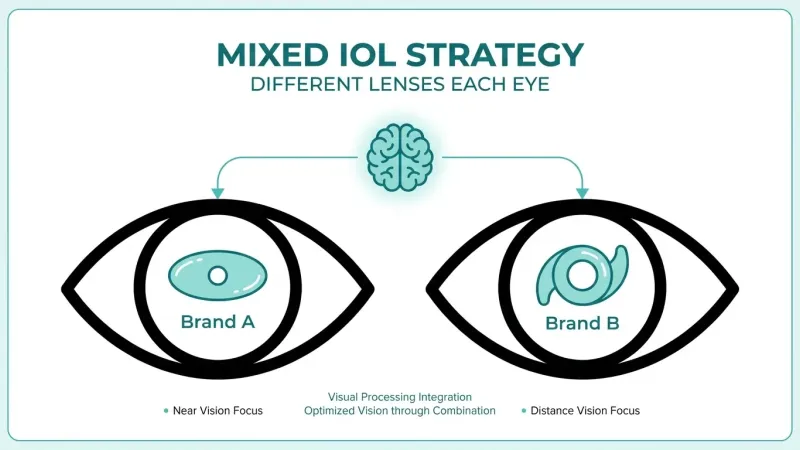
- Choose a premium IOL matched to your visual priorities. Trifocal and multifocal IOLs can provide functional vision at multiple distances, which may reduce the need for separate reading or distance glasses.
- Consider mini-monovision. This technique uses aspheric monofocal IOLs to set one eye for distance and the other slightly for near. According to the American Academy of Ophthalmology, mini-monovision can achieve 20/25 or better uncorrected distance visual acuity in 87% of patients at one month post-operation.
- Address astigmatism at the time of surgery. Toric IOLs or limbal relaxing incisions can correct corneal astigmatism during the procedure, reducing the likelihood of needing glasses for residual refractive error afterward.
- Discuss realistic expectations with your ophthalmologist beforehand. Even with advanced lens options, some patients may still need glasses for fine print or night driving. Preoperative counseling helps align your goals with achievable outcomes.
Spectacle independence is now measurable through validated tools like the Patient-Reported Spectacle Independence Questionnaire (PRSIQ), which assesses how often patients wear glasses at various distances after surgery. This kind of structured assessment helps surgeons tailor their approach to each patient’s lifestyle needs.
For most patients, the combination of personalized IOL selection, astigmatism management, and honest preoperative discussion offers the best path toward reduced glasses dependence. For those seeking further refractive vision correction, options like LASIK are also available to enhance spectacle independence. However, “reduced” does not always mean “eliminated.” Setting that expectation early is one of the most valuable steps in the entire surgical journey.
With a clear understanding of how to minimize glasses use, expert guidance can further refine your post-surgery vision plan.
How Does Expert Guidance Help You Navigate Vision After Surgery?
Expert guidance helps you navigate vision after surgery by setting clear expectations before the procedure and providing structured follow-up care afterward. The subsections below cover how education prepares you for glasses needs and the key takeaways to remember.
Can Education Help You Prepare for Glasses Needs?
Yes, education can help you prepare for glasses needs by clarifying which visual outcomes are realistic based on your IOL selection, eye health, and lifestyle priorities. Preoperative counseling gives patients a framework for understanding why some degree of spectacle use may still be necessary, even with advanced lens technology.
When surgeons explain trade-offs between lens options, potential night vision symptoms, and the neuroadaptation period required for multifocal lenses, patients enter surgery with calibrated expectations. This reduces post-operative frustration and helps patients make confident decisions about their corrective eyewear timeline. For those prioritizing reduced spectacle dependence, early conversations about mini-monovision or trifocal IOLs allow the surgical plan to align with daily visual demands. The patients who feel most satisfied after cataract surgery are those whose surgeons invested time in preoperative discussion, not just preoperative measurements.
What Are the Key Takeaways About Glasses After Cataract Surgery?
The key takeaways about glasses after cataract surgery center on timing, expectations, and individualized care:
- Refractive stabilization typically occurs around one month after surgery, so new spectacle prescriptions should wait until the eye settles.
- Clinical guidelines recommend visiting an optometrist four to six weeks post-surgery for a final glasses prescription.
- Most patients can expect good visual outcomes; according to a study published in BMC Ophthalmology, the prevalence of poor visual outcomes is approximately 4% in the United States and 5.7% in Europe.
- IOL type directly influences the degree of spectacle dependence, making preoperative lens counseling essential.
- Improved visual function after cataract surgery is associated with better health-related quality of life and general physical health.
Preparing for possible glasses use is not a sign of surgical failure. It reflects the reality that every eye heals differently, and corrective lenses fine-tune what modern lens implants achieve. Eye Surgery Today provides resources to help patients understand these nuances and approach their post-surgical vision with confidence.