Photorefractive keratectomy (PRK) is a refractive surgery that removes the corneal epithelium and uses an excimer laser to reshape the underlying stromal tissue, correcting how the eye focuses light onto the retina. PRK treats myopia, hyperopia, and astigmatism without creating a corneal flap.
This guide covers how PRK works at the corneal level, who may qualify as a candidate, how it compares to other refractive procedures, what the surgical experience and recovery involve, and the procedure’s benefits, risks, and costs.
PRK reshapes the cornea through photoablative decomposition, where UV light breaks molecular bonds to remove microscopic tissue layers with high precision. The epithelium is fully removed before laser treatment, then regenerates naturally over several days; this flapless approach may preserves greater corneal tissue and structural integrity than flap-based alternatives.
Candidacy depends on prescription stability, corneal thickness, age, and overall eye health. PRK may be particularly appropriate for patients with thinner corneas, since it preserves a higher residual stromal bed compared to LASIK. Certain systemic conditions, including uncontrolled diabetes and diseases affecting wound healing, may affect eligibility , may affect PRK eligibility.
Compared to LASIK, PRK involves a longer recovery period and more early postoperative discomfort, though long-term visual outcomes are comparable. SMILE and phakic ICL each serve different correction ranges and patient profiles, giving surgeons multiple options based on individual anatomy.
Recovery progresses gradually, with epithelial healing taking three to four days and full visual stabilization typically occurring between one and three months. Prescribed antibiotic, steroid, and NSAID drops support healing at each phase. Costs generally range from $1,500 to $5,500 per eye, and most insurance plans consider PRK elective.
What Does PRK Stand For in Eye Surgery?
PRK stands for photorefractive keratectomy, a type of refractive surgery that uses a laser to treat vision problems caused by refractive errors, where the eye does not refract light properly. The sections below cover the full definition, the anatomy involved, and the core mechanism behind how PRK corrects vision.
What Is the Full Meaning of Photorefractive Keratectomy?
Photorefractive keratectomy breaks down into three descriptive terms: “photo” refers to light, “refractive” describes how the eye bends light, and “keratectomy” means surgical removal of corneal tissue. Together, the name describes a procedure that corrects how the eye focuses light by precisely removing tissue from the cornea. According to the American Academy of Ophthalmology, PRK treats refractive errors including myopia, hyperopia, and astigmatism, all conditions where the eye’s shape prevents light from focusing correctly on the retina.
What Part of the Eye Does PRK Target?
PRK targets the cornea, the clear front surface of the eye responsible for most of its focusing power. The procedure works directly on the corneal surface rather than beneath it, distinguishing it from flap-based procedures. Because no flap is created, the cornea’s structural layers remain largely intact, which is a meaningful advantage for patients with thinner corneas or physically active lifestyles.
Why Is PRK Classified as a Refractive Surgery?
PRK is classified as a refractive surgery because it permanently alters the cornea’s curvature to change how the eye refracts, or bends, incoming light. Refractive surgery is the broader category of procedures designed to reduce dependence on glasses or contact lenses. PRK earned this classification as the first surface-based laser vision correction procedure approved for clinical use, establishing the foundation on which later techniques were developed.
How Does PRK Work to Correct Refractive Errors?
PRK corrects refractive errors by removing the corneal epithelium and using an excimer laser to reshape the underlying stromal tissue, changing how the cornea focuses light onto the retina. The following sections explain the laser mechanism, what happens to the epithelium, and how reshaping improves visual focus.
How Does the Excimer Laser Reshape the Cornea During PRK?
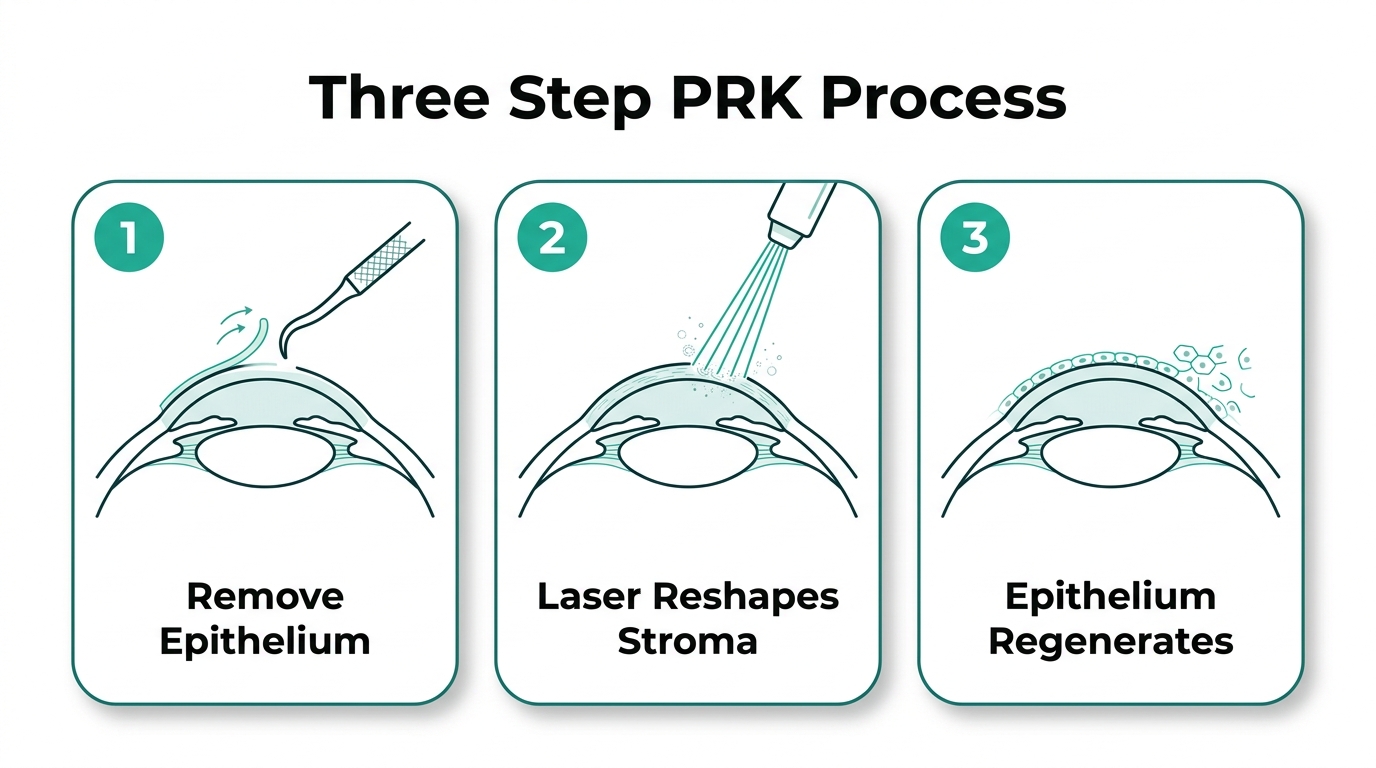
The excimer laser reshapes the cornea during PRK by ablating the stromal bed after the epithelium is removed, correcting refractive errors such as myopia, hyperopia, and astigmatism. According to StatPearls Publishing, the excimer laser emits UV light at a wavelength of 193 nm, breaking molecular bonds through photoablative decomposition to remove microscopic layers of corneal tissue with high precision.
Before the procedure, an ophthalmologist maps and measures corneal thickness to program the laser. The patient then stares at a target light while the laser reshapes the stroma, accompanied by a clicking sound. Unlike LASIK, no corneal flap is created, eliminating flap-related complications. Mitomycin-C may be applied afterward to reduce corneal haze risk.
What Happens to the Corneal Epithelium During PRK?
The corneal epithelium during PRK is fully removed to expose the stromal bed before laser treatment begins. A surgeon may use a brush, blade, laser, or alcohol solution to accomplish this, depending on clinical preference and the patient’s anatomy.
Because the epithelium is removed rather than lifted as a flap, the surface must regenerate completely after surgery. This is the primary reason PRK requires a longer recovery period than LASIK. A bandage contact lens is placed after the procedure to protect the healing surface and reduce discomfort during the three to four days of initial regrowth.
How Does Corneal Reshaping Improve Focus on the Retina?
Corneal reshaping improves focus on the retina by altering the cornea’s curvature, which changes how incoming light rays converge. In myopia, the cornea is too steep; in hyperopia, too flat; and in astigmatism, irregularly curved. The excimer laser corrects each by removing precise amounts of stromal tissue, changing the refractive power of the eye.
Once the cornea is reshaped to the correct curvature, light entering the eye bends at the proper angle and lands directly on the retina rather than in front of or behind it, producing a sharper image without corrective lenses. This structural correction is permanent, as the ablated tissue does not regenerate.
What Vision Problems Can PRK Potentially Correct?
PRK can potentially correct three primary refractive errors: myopia (nearsightedness), hyperopia (farsightedness), and astigmatism. The sections below explain how PRK addresses each condition.
Can PRK Correct Myopia?
Yes, PRK can correct myopia. Myopia occurs when the cornea is too steep, causing distant objects to appear blurry. According to a 2011 prospective randomized study published in the Transactions of the American Ophthalmological Society, wavefront-guided PRK was effective for treating myopia with or without astigmatism, demonstrating stable and predictable long-term results and significant improvement in uncorrected visual acuity at one year.
Can PRK Correct Hyperopia?
Yes, PRK can correct hyperopia. Hyperopia occurs when the cornea is too flat, making close objects difficult to see clearly. The excimer laser flattens the peripheral cornea, steepening the central zone to redirect light more accurately onto the retina. US FDA-approved treatment ranges extend up to +6.0 Diopter Sphere, covering mild to moderate farsightedness.
Can PRK Correct Astigmatism?
Yes, PRK can correct astigmatism. Astigmatism results from an irregularly curved cornea that scatters light in multiple focal points rather than one. The excimer laser reshapes the uneven curvature into a more symmetrical surface. FDA-approved PRK treatment covers astigmatism up to 4.0 Diopter Cylinder, accommodating a broad range of cylindrical correction needs.
Who Is a Good Candidate for PRK?
Good PRK candidates share several key characteristics: stable vision, adequate corneal health, and no disqualifying medical conditions. The following sub-sections cover suitable prescription ranges, corneal thickness considerations, age requirements, and health conditions that may affect eligibility.
What Prescription Range Is Typically Suitable for PRK?
The prescription ranges typically suitable for PRK are myopia from 0 to -13.0 Diopter Sphere, hyperopia from +0.5 to +6.0 Diopter Sphere, and astigmatism from 0 to 4.0 Diopter Cylinder, according to US FDA-approved treatment parameters published in the Med J Armed Forces India. These ranges make PRK applicable to a broad spectrum of refractive errors. Candidates should also have a prescription that has been stable for at least one year, as fluctuating vision may compromise surgical outcomes.
Why Might Someone with Thin Corneas Be a Better Candidate for PRK?
Someone with thin corneas may be a better candidate for PRK because the procedure ablates from the Bowman membrane and preserves a higher residual stromal bed thickness compared to LASIK, according to a 2024 review published in Med J Armed Forces India. PRK also eliminates the need for a corneal flap entirely, which preserves additional corneal tissue and removes the risk of flap-related complications. This structural advantage may make PRK the preferred option for patients whose corneal thickness would leave an insufficient stromal bed after LASIK flap creation. For thin-cornea patients specifically, PRK is often the more clinically appropriate choice rather than a fallback.

What Age Requirements Apply to PRK Candidates?
The age requirement for PRK candidacy is 18 years or older, though ophthalmologists generally prefer candidates to be 21 or older, when vision tends to be more stable. Prescription stability is equally important: the American Academy of Ophthalmology states candidates should have a prescription that has not changed in the last year. Younger patients whose refractive error is still shifting may not yet meet the stability threshold, even if they satisfy the minimum age requirement.
Which Health Conditions May Disqualify Someone from PRK?
The health conditions that may disqualify someone from PRK include unstable refractive error, skin or systemic diseases affecting healing, a history of significant scarring, corneal scars or disease, advanced glaucoma, cataracts affecting vision, uncontrolled diabetes, pregnancy or nursing, and a history of certain eye infections, according to the American Academy of Ophthalmology. These conditions can impair wound healing, corneal stability, or visual outcomes following surgery. Patients with any of these factors should discuss their individual risk profile with a qualified eye care provider before pursuing PRK.
How Does PRK Compare to LASIK?
PRK and LASIK both use an excimer laser to reshape the cornea, but they differ in surgical technique, recovery timeline, and ideal candidacy. The sections below cover technique differences, recovery expectations, visual outcomes, and when a surgeon may prefer PRK.
How Does the Surgical Technique Differ Between PRK and LASIK?
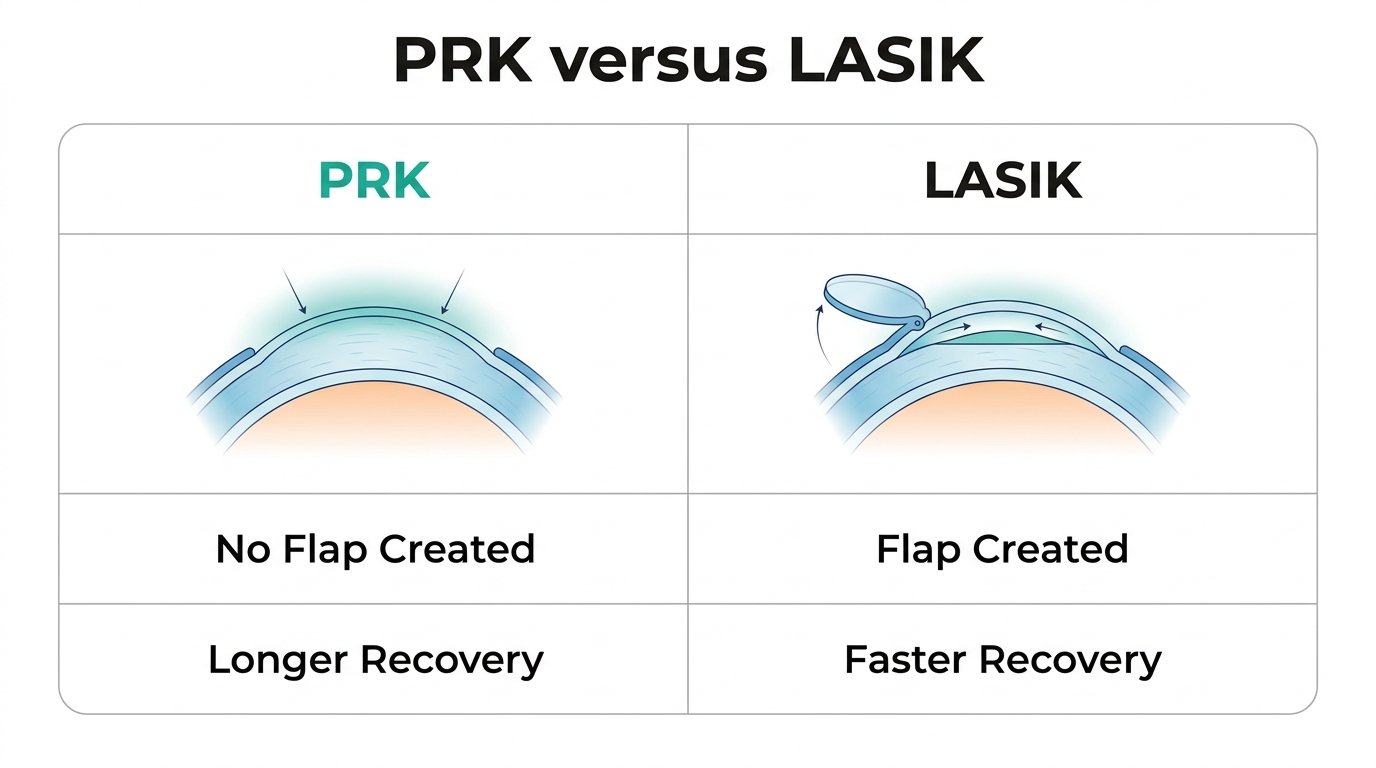
The surgical technique differs between PRK and LASIK in one fundamental way: LASIK creates a thin corneal flap before laser reshaping, while PRK removes the epithelium entirely and applies the laser directly to the stromal surface. After laser reshaping in PRK, the epithelium regenerates naturally over several days. In LASIK, the flap is repositioned immediately, which is why visual recovery is faster. PRK eliminates all flap-related complications, such as flap dislocation or striae.
How Does Recovery Time Compare Between PRK and LASIK?
Recovery time is longer with PRK than with LASIK. Because the epithelium must regenerate after PRK, initial healing takes approximately three to four days, with a bandage contact lens placed to support that process. Vision may take a month or longer to stabilize fully, compared to the rapid recovery LASIK patients typically experience within days. According to StatPearls, PRK may reduce the risk of postoperative dry eye compared to LASIK because no corneal flap is created, preserving more of the sub-basal nerve plexus.
How Do Visual Outcomes Compare Between PRK and LASIK?
Long-term visual outcomes are comparable between PRK and LASIK. According to StatPearls, while LASIK offers rapid visual recovery, PRK is associated with a more extended recovery period and greater early postoperative discomfort; however, long-term outcomes are equivalent. The meaningful difference between the two procedures lies in the early postoperative experience rather than the final visual result, making PRK a clinically sound choice when technique or anatomy favors it.
Why Might a Surgeon Recommend PRK Over LASIK?
A surgeon may recommend PRK over LASIK for several patient-specific reasons, including:
- Thin corneas: PRK preserves greater residual stromal bed thickness, reducing ectasia risk.
- Active lifestyle or contact sports: The absence of a corneal flap avoids flap dislocation risk from trauma.
- Occupational requirements: Certain professions, such as military or law enforcement, may require a flapless procedure.
- Dry eye predisposition: PRK may better preserve corneal nerve density, reducing postoperative dry eye severity.
For patients who meet the anatomical criteria for both procedures, PRK remains a reliable alternative, particularly where long-term corneal stability is the priority.
How Does PRK Compare to Other Refractive Procedures?
PRK compares favorably to LASIK for patients who cannot safely receive a corneal flap procedure, and it differs more substantially from SMILE and phakic ICL in terms of mechanism, approved correction range, and candidacy. The sub-sections below examine PRK versus LASIK, SMILE, and phakic ICL.
How Does PRK Compare to LASIK?
PRK and LASIK produce comparable long-term visual outcomes, but they differ significantly in surgical technique, recovery, and complication profile. LASIK creates a corneal flap before laser reshaping, while PRK removes the epithelium entirely without flap creation. According to a 2011 prospective randomized study published in Transactions of the American Ophthalmological Society, wavefront-guided PRK and LASIK both achieved stable, predictable long-term results with significant improvement in uncorrected visual acuity at one year. However, PRK is associated with a longer recovery period and greater early postoperative discomfort than LASIK. For patients with active lifestyles, contact sports involvement, or thinner corneas, PRK may be considered because there is no flap to displace or disrupt.
How Does PRK Compare to SMILE?
PRK and SMILE differ in their approved correction ranges and dry eye risk profiles. SMILE is approved for myopia from -1.0 to -10.0 DS and astigmatism from -0.75 to -3.0 DC, while PRK covers myopia up to -13.0 DS, a broader upper range. According to a 2024 review published in Med J Armed Forces India, SMILE is associated with a lower risk of postoperative dry eye disease compared to corneal flap procedures, though PRK also preserves more of the sub-basal nerve plexus than LASIK. SMILE does not require epithelial removal, making it a flapless option like PRK, but its narrower astigmatism correction range limits candidacy for some patients.
How Does PRK Compare to Phakic ICL?
PRK and phakic intraocular lens (ICL) implantation target different segments of the refractive error spectrum. Phakic ICL is suited for myopia from -3.0 to -20.0 D SE and astigmatism from +1 to +4 DC, according to a 2024 review in Med J Armed Forces India, making it an option when corneal-based procedures like PRK are unsuitable due to extreme prescription or insufficient corneal thickness. Unlike PRK, ICL implantation does not remove or reshape corneal tissue; instead, a lens is placed inside the eye. PRK remains appropriate for moderate corrections in patients with adequate corneal tissue, while phakic ICL addresses higher errors that exceed PRK’s safe ablation limits.
What Should You Expect Before PRK Surgery?
Before PRK surgery, you can expect two main steps: a comprehensive preoperative evaluation and a preparation period in the days leading up to the procedure. The following sections cover what each step involves.
What Happens During a PRK Preoperative Evaluation?
A PRK preoperative evaluation is a thorough workup that assesses whether your eyes are safe and suitable candidates for the procedure. According to a 2024 review published in the Med J Armed Forces India, this workup includes clinical history, a detailed ocular examination with a dry eye assessment, corneal topography, and corneal biomechanical strength testing. Your ophthalmologist will also measure and map corneal thickness, generating the precise data used to program the excimer laser for your specific correction. These measurements are foundational to surgical accuracy, making the evaluation one of the most clinically important steps in the entire process.
How Should You Prepare in the Days Before PRK?
Preparation in the days before PRK centers on ensuring accurate preoperative measurements. Patients must discontinue rigid gas-permeable contact lenses for at least 4 weeks and soft contact lenses for at least 2 weeks before refractive planning, as wearing them can cause corneal warpage that distorts topography readings. On the day of surgery, arrange transportation, since driving immediately afterward is not possible. Avoiding eye makeup and leaving contacts out as instructed will help your surgical team achieve the most reliable corneal measurements before the procedure begins.
What Happens During the PRK Procedure?
The PRK procedure involves numbing the eye, removing the corneal epithelium, and using an excimer laser to reshape the cornea. The two headings below cover how long the procedure takes and what patients experience during surgery.
How Long Does the PRK Procedure Take?
The PRK procedure typically takes about 15 minutes per eye. According to the American Academy of Ophthalmology, the eye is numbed with anesthetic drops and an eyelid holder is used to prevent blinking throughout. After the epithelium is removed, the patient stares at a target light while the programmed excimer laser reshapes the cornea, accompanied by a clicking sound.
Vision may improve over 3 to 5 days following surgery, though full stabilization can take 1 to 3 months. For most patients, the brevity of the procedure itself is reassuring, even though the recovery window is meaningfully longer than LASIK.
Is PRK Painful During the Surgery?
PRK is performed with anesthetic eye drops, so pain during the procedure is generally minimized. Anesthetic eye drops numb the eye completely before the procedure begins, so patients typically feel pressure or mild sensations rather than pain. Discomfort, including eye pain and light sensitivity, may occur for 2 to 3 days post-operatively as the epithelium regenerates, but the intraoperative experience is generally well-tolerated.
What Should You Expect During PRK Recovery?
PRK recovery follows a predictable progression, though it moves more gradually than LASIK. The sections below cover what happens in the first week, when vision stabilizes, which medications are prescribed, and how to care for your eyes throughout healing.
What Happens During the First Week After PRK?
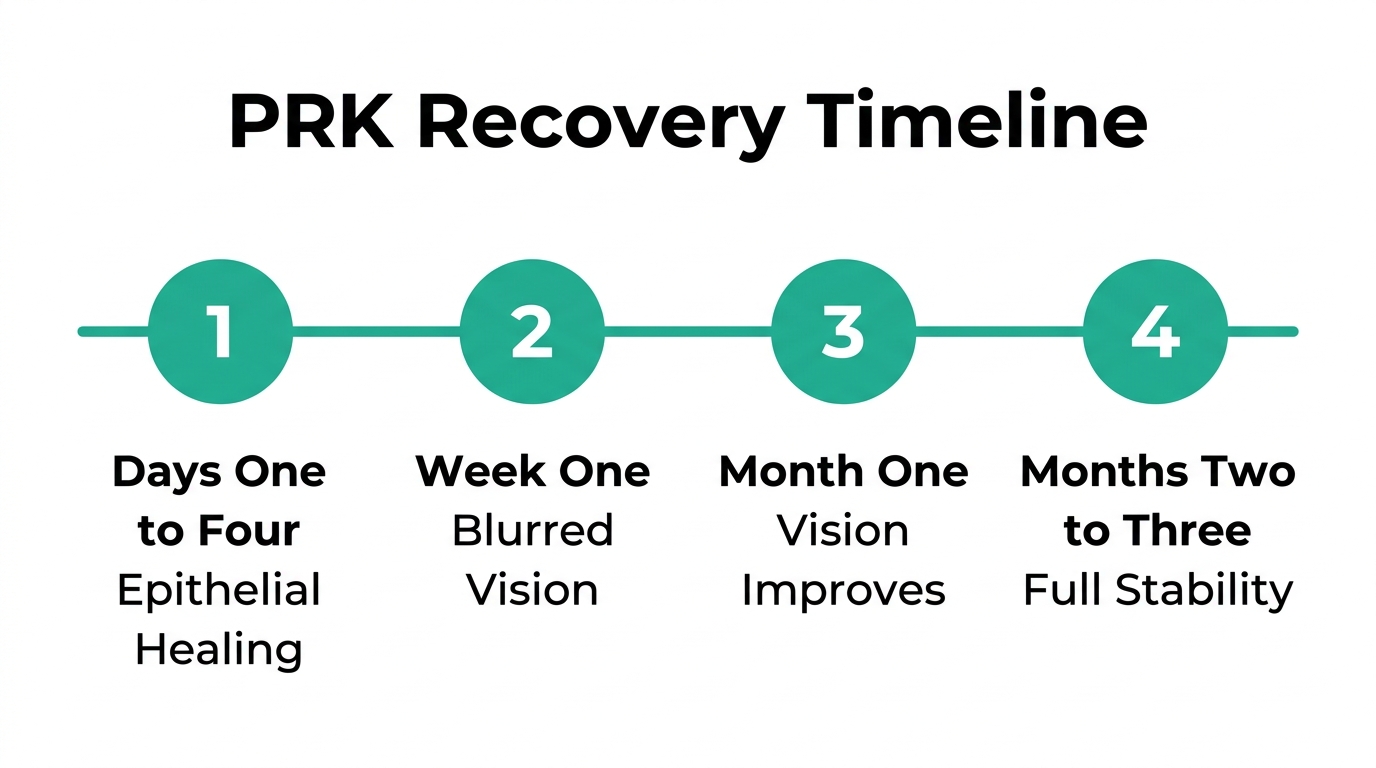
The first week after PRK centers on corneal epithelial healing, which typically takes three to four days. A bandage contact lens is placed over the eye immediately after surgery to protect the surface and support regrowth. During this period, vision remains blurry and fluctuating, and patients may experience light sensitivity, tearing, and eye discomfort. According to post-operative guidelines from Walter Reed National Military Medical Center, antibiotic drops and NSAID drops are used during this phase to prevent infection and manage pain.
When Does Vision Typically Stabilize After PRK?
Vision typically stabilizes after PRK between one and three months post-surgery. Noticeable improvement usually begins within three to five days, but achieving best-corrected vision may take a month or longer. The American Academy of Ophthalmology advises wearing sunglasses outdoors throughout recovery, as sun exposure may lead to corneal scarring and vision problems during this vulnerable period.
What Medications Are Prescribed After PRK?
The medications prescribed after PRK fall into three categories:
- Antibiotic drops (such as Gatifloxacin or Moxifloxacin): used for one to two weeks to prevent infection.
- Steroid drops (such as Fluorometholone or Prednisolone): used for one to four months to reduce inflammation and minimize corneal haze.
- NSAID drops (such as Diclofenac or Nepafenac): used for the first 48 to 72 hours specifically for pain relief.
How Should You Care for Your Eyes After PRK?
Eye care after PRK focuses on protecting the healing cornea and avoiding anything that could disrupt recovery. Key practices include:
- Wearing sunglasses outdoors consistently to shield the cornea from UV exposure.
- Using all prescribed eye drops on the exact schedule provided by your surgical team.
- Avoiding rubbing the eyes, swimming, and contact sports during the initial healing weeks.
- Attending all scheduled follow-up appointments so your surgeon can monitor epithelial healing and visual progress.
Diligent adherence to these practices gives the cornea the best conditions to heal cleanly and reach its optimal visual outcome.
What Are the Potential Benefits of PRK?
The potential benefits of PRK include the elimination of flap-related complications, reduced dry eye risk, and strong long-term visual outcomes. The following sections cover these advantages in detail.
No Corneal Flap and Preserved Tissue
A key benefit of PRK is the absence of a corneal flap, which avoids flap-related complications entirely. According to StatPearls, this flap-free approach also preserves more corneal tissue, making PRK particularly suitable for individuals with thinner corneas or those at higher risk of eye trauma.
Because no flap is created, PRK may also reduce the risk of postoperative dry eye. StatPearls notes that PRK preserves more of the sub-basal nerve plexus compared to LASIK, which is associated with lower rates of nerve disruption and subsequent dry eye symptoms.
Strong Visual Outcomes
The visual outcomes of PRK are clinically well-supported. A prospective study published in Investigative Ophthalmology and Visual Science found that 96.6% of treated eyes achieved 20/40 vision or better, and 92.1% achieved 20/30 vision or better post-operatively.
Long-term results are comparable to LASIK, making PRK a reliable option even for patients who are not LASIK candidates. For active individuals or those in contact sports, the absence of a corneal flap makes this an especially practical choice.
What Are the Possible Risks and Side Effects of PRK?
The possible risks and side effects of PRK range from common short-term discomforts to rare serious complications. The following sections cover short-term side effects, corneal haze, serious complications, and enhancement rates.
What Short-Term Side Effects May Occur After PRK?
The short-term side effects that may occur after PRK include eye pain, glare, halos around lights, and photophobia. According to the American Academy of Ophthalmology, eye pain typically lasts 2 to 3 days while the corneal epithelium heals. Visual disturbances such as glare and halos may occur during early recovery and can improve healing progresses. For most patients, these effects are temporary and manageable with prescribed pain relief drops.
What Is Corneal Haze and How Common Is It After PRK?
Corneal haze is a clouding of the corneal stroma that may develop as part of the healing response after PRK. Its frequency varies significantly by the degree of myopia being corrected. According to a study published in ScienceDirect, corneal haze incidence after PRK may be less than 2% in low myopia cases but can increase to 8.6% in higher myopia cases. Surgeons often apply Mitomycin-C (MMC) during the procedure to reduce this risk, making haze far less prevalent in modern PRK practice.
What Are the Rare but Serious Complications of PRK?
The rare but serious complications of PRK include corneal infection, corneal ectasia, and significant undercorrection or overcorrection. According to the American Academy of Ophthalmology, most PRK complications can be treated without permanent vision loss, which is reassuring for candidates weighing the procedure’s risk profile. Careful patient selection and thorough preoperative evaluation are the most effective tools surgeons have for minimizing these outcomes.
How Often Does PRK Require an Enhancement Procedure?
PRK may require an enhancement procedure when residual refractive error remains after the initial surgery. Enhancement rates vary depending on factors such as the severity of the original prescription, healing response, and corneal stability. Not all patients require enhancement; those with higher prescriptions or irregular healing are most likely candidates. Your ophthalmologist can discuss your individual likelihood of needing a secondary procedure during your preoperative evaluation.
How Much Does PRK Typically Cost?
PRK typically costs between $1,500 and $5,500 per eye, with pricing influenced by technology type, surgeon experience, geographic location, and the complexity of your prescription. Most patients pay slightly more for PRK than LASIK due to its unique recovery process and postoperative care requirements.
What Is the Average Cost of PRK Per Eye?
The average cost of PRK per eye ranges from $1,500 to $5,500 nationally. According to LasikPlus, PRK often costs slightly more than LASIK due to its distinct recovery process, though the two procedures fall within a comparable overall price range.
Several factors influence where a patient lands within that range:
- Surgeon experience and reputation
- Geographic market and clinic overhead
- Laser technology platform used
- Prescription complexity (higher corrections may cost more)
- Whether postoperative medications and follow-up visits are bundled
For most patients, the out-of-pocket cost reflects the full episode of care, not just the laser time itself.
Does Insurance Cover PRK Surgery?
PRK is generally considered an elective procedure by insurance companies, meaning standard health insurance does not cover it. However, some vision plans, such as EyeMed or UHC, may offer negotiated discounts on the procedure cost.
Patients have several options to manage the expense:
- Health Savings Accounts (HSAs): Pre-tax funds can be applied directly to PRK costs.
- Flexible Spending Accounts (FSAs): Similar pre-tax benefit, though FSA funds typically have use-it-or-lose-it deadlines.
- Financing plans: Many surgical centers offer monthly payment arrangements, sometimes interest-free for qualified applicants.
For patients weighing long-term value, PRK eliminates ongoing costs for glasses and contact lenses, which makes the upfront investment worth examining carefully against a multi-year cost-of-correction comparison.
How Can Eye Surgery Education Help You Decide About PRK?
Eye Surgery education helps you decide about PRK by giving you clinically accurate, unbiased information about what the procedure involves, who qualifies, and how it compares to alternatives. The H3s below explain how Eye Surgery Today supports that process and what the most important PRK takeaways are.
Can Eye Surgery Today Help You Understand Your Refractive Surgery Options?
Yes, Eye Surgery Today can help you understand your refractive surgery options by providing educational content that covers the full scope of vision correction procedures. Making a well-informed decision requires understanding more than PRK alone. According to a 2024 review published in the Med J Armed Forces India, a thorough preoperative workup for refractive surgery includes clinical history, a detailed ocular examination with dry eye assessment, corneal topography, and corneal biomechanical strength testing. Eye Surgery Today translates that clinical complexity into clear, educational guidance so you can arrive at consultations better prepared.
What Are the Key Takeaways About PRK as a Refractive Vision Correction Procedure?
The key takeaways about PRK as a refractive vision correction procedure are that it is a proven, flap-free laser option suited to a defined range of refractive errors and specific patient profiles. The most actionable conclusions from this article are:
- PRK corrects myopia, hyperopia, and astigmatism by reshaping the cornea with an excimer laser, without creating a flap.
- It may be suited for some patients with thinner corneas, active lifestyles, or higher trauma risk.
- Recovery takes longer than LASIK, but long-term visual outcomes are comparable.
- Alternatives such as Phakic Intraocular Lens implantation may be more appropriate for higher refractive errors outside PRK’s treatable range, specifically myopia from -3.0 to -20.0 D SE and astigmatism from +1 to +4 DC, according to a 2024 review in the Med J Armed Forces India.
- A preoperative evaluation with corneal topography and biomechanical testing determines individual suitability.
Eye Surgery Today’s educational resources exist to bridge the gap between complex clinical data and the confident, informed decision every patient deserves to make.