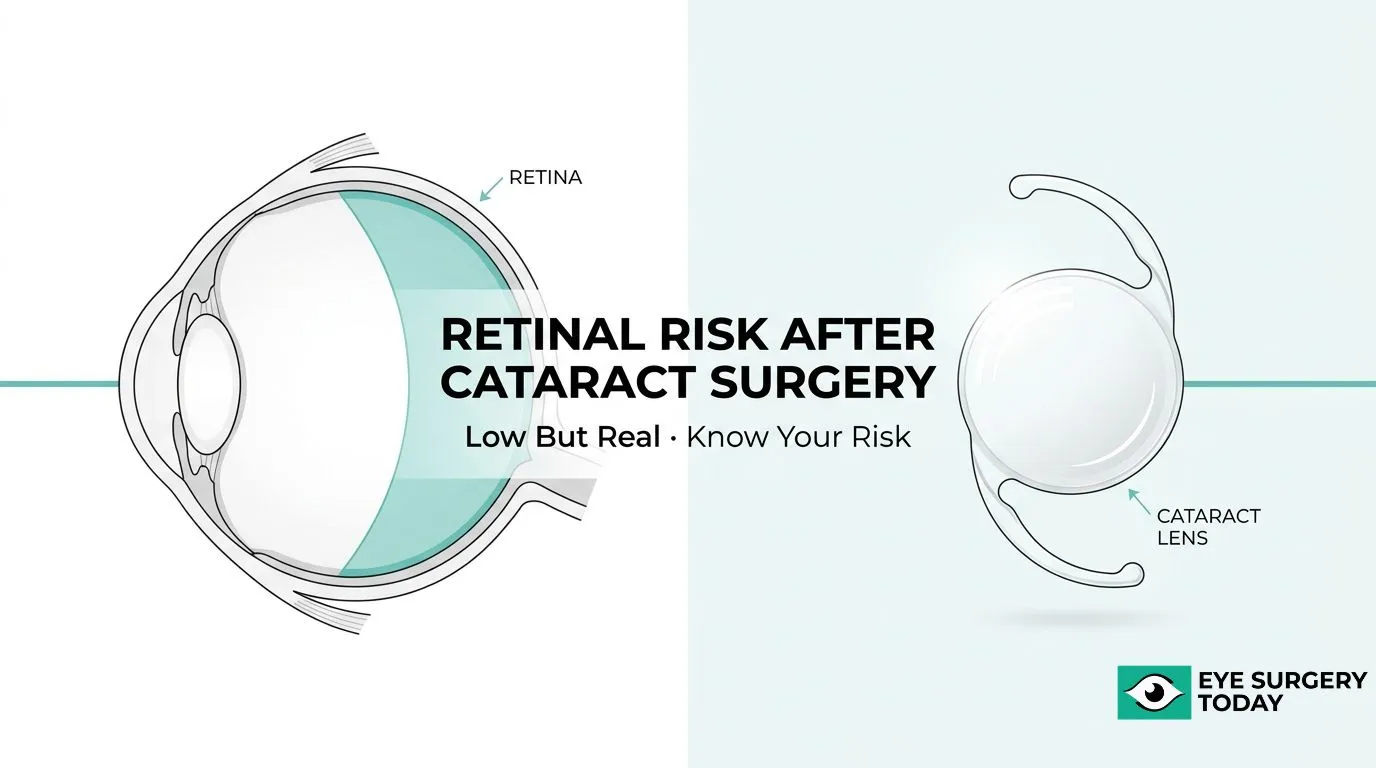
Retinal detachment after cataract surgery is an uncommon but clinically significant complication, with studies estimating the cumulative risk at approximately 0.39% to 1.19% over five to six years following phacoemulsification.
This guide covers incidence and timing of post-surgical detachment, the mechanisms that elevate risk after lens removal, high-risk patient profiles, warning signs that require urgent evaluation, prevention strategies, treatment options if detachment occurs, and how surgical technique may influence outcomes.
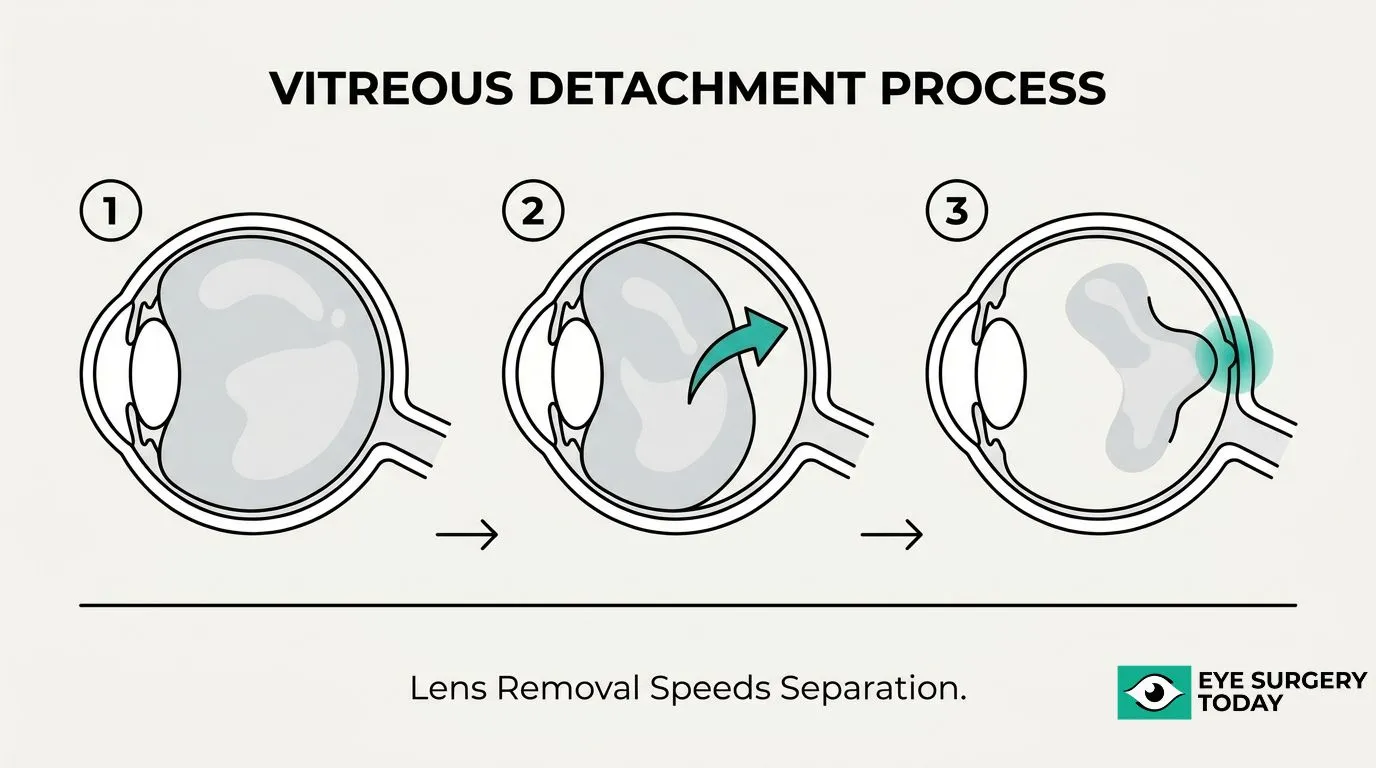
Research consistently shows that the majority of post-cataract retinal detachments concentrate within the first postoperative year, though cumulative risk continues to rise gradually for up to two decades. Accelerated posterior vitreous detachment after lens removal is a primary mechanism; the vitreous separates from the retina at a faster rate in operated eyes, potentially creating traction and retinal breaks.
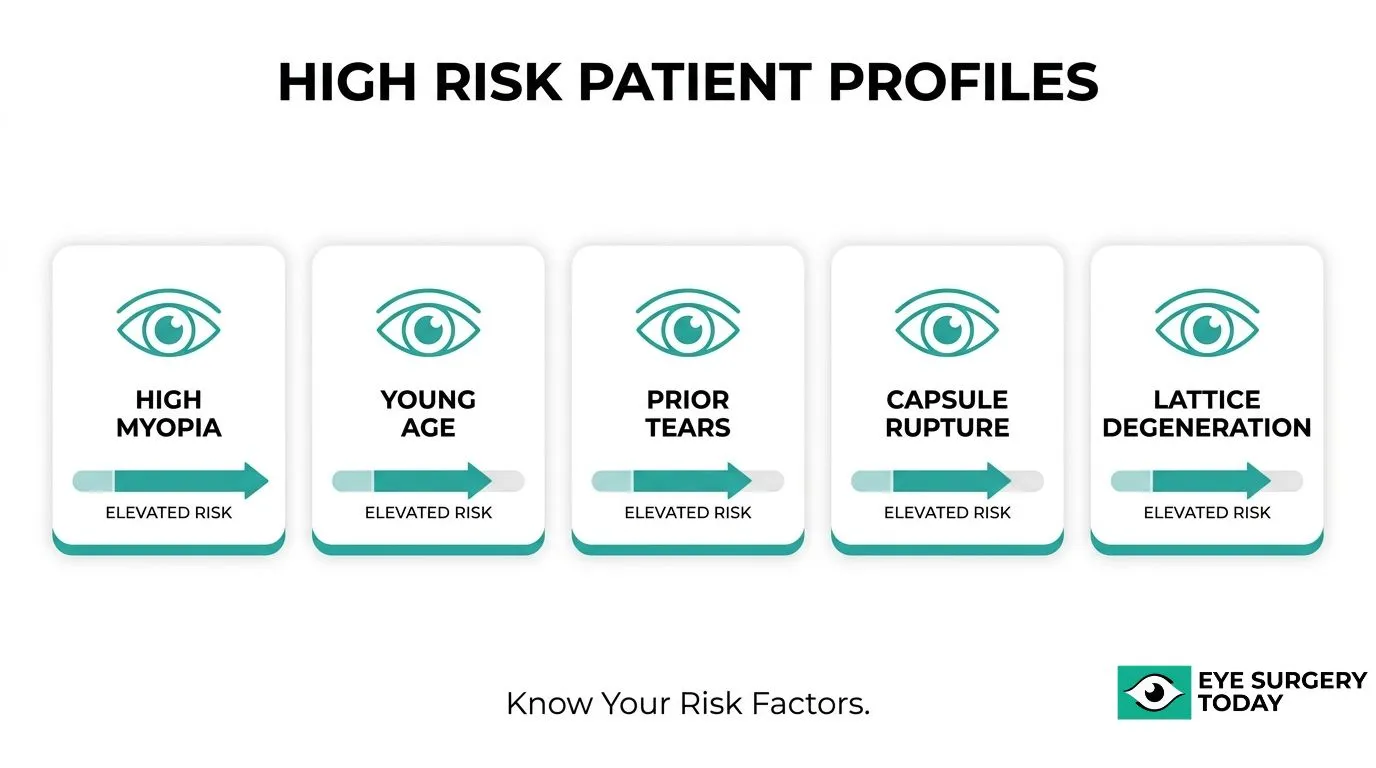
Certain patient groups face meaningfully elevated risk, including those with high myopia, lattice degeneration, prior retinal tears, or intraoperative posterior capsule rupture. Identifying these factors before surgery allows for individualized counseling and, in some cases, prophylactic intervention.
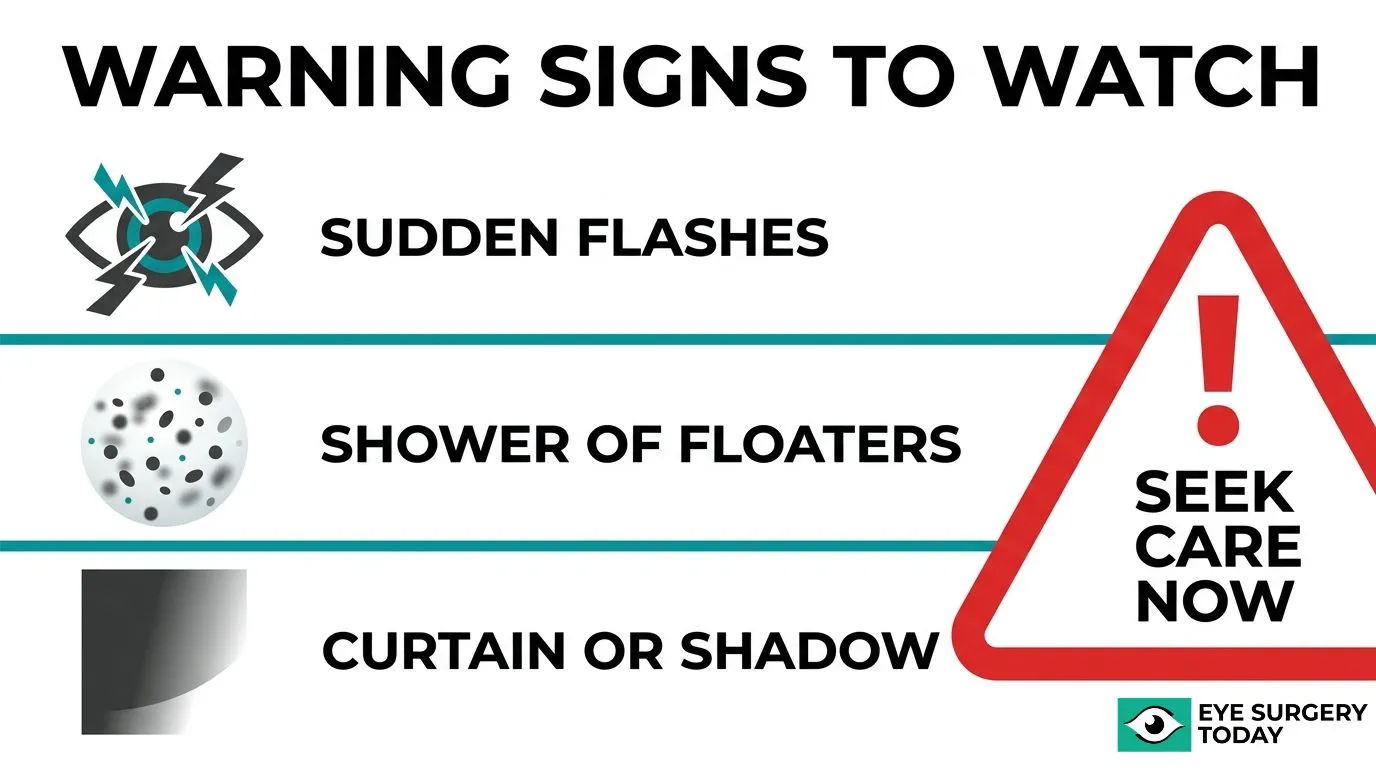
Recognizing warning signs (sudden flashes of light, a shower of new floaters, or a spreading shadow across vision) and seeking immediate evaluation can make the difference between a straightforward repair and permanent vision loss. Prevention relies on preoperative retinal screening, careful surgical technique with proper vitreous management, and structured postoperative monitoring protocols tailored to each patient’s risk profile.
How Common Is Retinal Detachment After Cataract Surgery?
Retinal detachment after cataract surgery is uncommon but measurably more likely than in the general population. The sections below cover what research says about the overall incidence rate and how that risk evolves over the years following surgery.
What Do Studies Say About the Incidence Rate?
The incidence rate of retinal detachment after cataract surgery is low in absolute terms but consistently elevated above the background population risk. A whole-population study published in JAMA Ophthalmology identified 237 retinal detachment cases across 65,055 phacoemulsification procedures, yielding a 10-year cumulative incidence of 0.68% (95% CI, 0.56%–0.83%). A separate analysis from Aarhus University Hospital in Denmark estimated the 6-year cumulative risk at 0.39%, representing a relative risk approximately 2.3 times the natural incidence. While these percentages appear small, they carry real clinical significance given the tens of millions of cataract surgeries performed globally each year.
How Does the Risk Change Over Time After Surgery?
The risk of retinal detachment after cataract surgery changes substantially over time, with the greatest concentration of cases occurring in the first year. A systematic review and meta-analysis found that 80.9% of post-cataract retinal detachments occurred within the first year after surgery, against a 5-year cumulative risk of 1.19%. Long-term data from Mayo Clinic College of Medicine shows a stepwise increase: 0.27% at 1 year, 0.71% at 5 years, 1.23% at 10 years, and 1.79% at 20 years post-surgery. This persistent, slow accumulation of risk beyond the first year underscores why ongoing retinal monitoring matters even after the immediate postoperative period has passed.
Why Does Cataract Surgery Increase Retinal Detachment Risk?
Cataract surgery increases retinal detachment risk through two main pathways: vitreous changes that occur after lens removal and complications that may arise during the procedure itself. Pre-existing conditions such as high myopia and lattice degeneration can also amplify this risk.
How Does Vitreous Change After Lens Removal Contribute?
Vitreous changes after lens removal contribute to retinal detachment risk by accelerating posterior vitreous detachment (PVD), a process where the gel-like vitreous separates from the retina. As the vitreous liquefies and pulls away, it can exert traction on the retina, potentially creating tears that progress to detachment. According to Mayo Clinic, eye floaters, which appear as black or gray specks, strings, or cobwebs drifting across vision, are a direct sign of this vitreous shift. When floaters appear suddenly after cataract surgery, they often signal accelerated PVD rather than normal aging. This distinction matters clinically: post-surgical PVD carries a higher risk of retinal traction than age-related PVD in an unoperated eye.
How Do Surgical Complications During the Procedure Raise Risk?
Surgical complications during the procedure raise risk primarily through posterior capsule rupture (PCR), which can allow vitreous to prolapse into the anterior segment. When vitreous enters the wound, it creates mechanical traction pathways directly to the retina. High myopia, with an axial length greater than 26.0 mm, is associated with increased retinal detachment risk following cataract extraction, according to the American Academy of Ophthalmology. Lattice degeneration, present in approximately 6% to 8% of the general population, further compounds this vulnerability by creating areas of retinal thinning susceptible to tearing under vitreous traction. Recognizing these compounding factors before surgery is essential for accurate individual risk counseling.
Who Is Most at Risk for Retinal Detachment After Cataract Surgery?
Several patient profiles carry meaningfully higher risk for retinal detachment after cataract surgery. The subgroups covered below include patients with high myopia, younger surgical candidates, prior retinal tears, posterior capsule rupture, and lattice degeneration.
What Is the Risk for Patients With High Myopia?
Patients with high myopia face an elevated risk of retinal detachment following cataract surgery. High myopia, defined by an axial length greater than 26.0 mm, is associated with a structurally stretched retina that is more susceptible to tearing after vitreous changes triggered by lens removal, according to the American Academy of Ophthalmology EyeWiki. The elongated globe also complicates surgical technique, which can amplify post-operative vitreous disturbance. Patients in this category should discuss individualized risk assessment with their surgeon before proceeding.
What Is the Risk for Younger Patients Undergoing Surgery?
Younger patients undergoing cataract surgery carry a higher relative risk of retinal detachment compared to older patients. Younger eyes tend to have a more formed, gel-like vitreous that is firmly adherent to the retina. When the vitreous detaches after surgery, the traction it exerts on the retinal periphery is stronger, increasing the likelihood of retinal breaks. Surgeons generally recommend more thorough preoperative retinal screening for younger surgical candidates precisely because of this mechanical consideration.
What Is the Risk for Patients With a History of Retinal Tears?
The risk for patients with a history of retinal tears is measurably higher after cataract surgery. A study published by The Retina Institute found that the risk of developing a new retinal break or detachment after cataract surgery in patients with a prior history of repaired retinal tears was 4.6%. The American Academy of Ophthalmology preferred practice pattern recommends treating all symptomatic horseshoe tears and symptomatic retinal dialyses before elective surgery. This preoperative intervention is important: scleral buckle surgery for retinal dialysis achieves a primary anatomical success rate of 88.0%, within the literature range of 87% to 95.8%. Prior retinal pathology is arguably the most actionable risk factor, since it can be identified and treated before cataract surgery takes place.
What Is the Risk for Patients Who Experience Posterior Capsule Rupture?
Posterior capsule rupture is an intraoperative complication that significantly increases the risk of retinal detachment. According to The Lancet, posterior capsule rupture is a direct risk factor for retinal detachment, endophthalmitis, and cystoid macular oedema, with proper vitreous management being critical to preventing these outcomes. In a cohort study from the University of Health Sciences in Istanbul, posterior capsule rupture occurred in 351 eyes, yielding an overall rate of 1.3% during phacoemulsification. NICE guidelines specify that when rupture occurs, surgeons must follow a defined protocol to remove vitreous from the wound and minimize traction on the retina. Surgical adherence to this protocol substantially reduces the downstream risk of detachment.
What Is the Risk for Patients With Lattice Degeneration?
Patients with lattice degeneration carry a significant baseline risk for retinal detachment that is compounded by cataract surgery. Lattice degeneration is present in approximately 6% to 8% of the general population and is recognized as a meaningful independent risk factor for detachment, according to a study published in Ophthalmology, the journal of the American Academy of Ophthalmology. The thinned, atrophic retinal patches characteristic of lattice degeneration are vulnerable to tearing when post-surgical vitreous changes exert traction. Identifying lattice degeneration at the preoperative examination gives surgeons the opportunity to discuss prophylactic treatment before the patient undergoes lens removal.
What Are the Warning Signs of Retinal Detachment After Cataract Surgery?
The warning signs of retinal detachment after cataract surgery include sudden flashes of light, a rapid increase in floaters, and a shadow or curtain spreading across the visual field. Recognizing these symptoms early is critical, as prompt treatment significantly improves outcomes.
What Do Sudden Flashes of Light Indicate?
Sudden flashes of light may indicate traction on the retina caused by vitreous pulling away from retinal tissue. According to the Cleveland Clinic, photopsia is a visual disturbance involving flashes of light that occur without an external light source, often described by patients as sparkles or lightning bolts. These flashes can signal early vitreous detachment or a developing retinal tear. Any new onset of photopsia after cataract surgery warrants same-day evaluation by an eye care provider.
What Does a Sudden Increase in Floaters Mean?
A sudden increase in floaters may mean that the vitreous has torn retinal tissue, releasing pigment cells or blood into the vitreous cavity. According to the Mayo Clinic, eye floaters appear as black or gray specks, strings, or cobwebs drifting when the eyes move, typically caused by age-related vitreous changes. A sudden shower of new floaters is more clinically significant than a few pre-existing ones and should never be dismissed as routine after cataract surgery.
What Does a Shadow or Curtain in Vision Suggest?
A shadow or curtain in vision suggests that retinal detachment may already be progressing. According to the Royal Australian College of General Practitioners, superior retinal detachment typically results in an inferior visual field defect, which patients describe as a “shadow” or “curtain coming down” over their vision. This symptom represents a late-stage warning and requires emergency ophthalmic assessment. Unlike floaters or flashes, a spreading visual field defect often means the retina has already separated and surgery may be urgently needed.
How Can Retinal Detachment Be Prevented After Cataract Surgery?
Retinal detachment prevention after cataract surgery relies on four interconnected strategies: thorough preoperative examination, targeted prophylactic laser treatment, precise surgical technique, and structured postoperative monitoring.
How Does Preoperative Retinal Examination Help Reduce Risk?
Preoperative retinal examination helps reduce risk by identifying vulnerable retinal areas before surgery disrupts the vitreous. A dilated fundus examination allows the surgeon to detect lattice degeneration, asymptomatic retinal tears, and areas of peripheral thinning that may progress after lens removal. Patients with high myopia or a prior history of retinal pathology benefit most from this evaluation, as these findings directly inform surgical planning and consent discussions. Addressing treatable lesions before phacoemulsification may lower the likelihood of detachment in the postoperative period.
How Does Prophylactic Laser Treatment Prevent Detachment?
Prophylactic laser treatment prevents detachment by creating chorioretinal adhesions around retinal breaks or degenerated areas, reducing the risk that fluid will track beneath the retina. The approach is typically applied to symptomatic horseshoe tears, retinal dialyses, and high-risk peripheral lesions identified preoperatively. However, the evidence for broad prophylactic laser use remains limited. A systematic review published in Acta Ophthalmologica found that prophylactic 360-degree laser retinopexy did not show a statistically significant difference in preventing retinal detachment compared to focal laser, underscoring the need for high-quality randomized controlled trials before routine use can be recommended.
How Does Modern Surgical Technique Lower the Risk?
Modern surgical technique lowers the risk of retinal detachment primarily by minimizing intraoperative trauma to the vitreous and posterior capsule. Phacoemulsification, performed through a small self-sealing incision, reduces vitreous disturbance compared to older extracapsular methods. When posterior capsule rupture occurs, NICE guidelines recommend that surgeons follow a structured protocol to remove vitreous from the wound and minimize traction on the retina. Meticulous vitreous management at the time of a complication is one of the most consequential intraoperative decisions a surgeon makes for long-term retinal safety.
How Do Postoperative Monitoring Protocols Aid Prevention?
Postoperative monitoring protocols aid prevention by enabling early detection of new retinal breaks before they progress to full detachment. Scheduled follow-up examinations, particularly in high-risk patients such as those with high myopia, lattice degeneration, or intraoperative complications, allow timely intervention with laser or cryotherapy while the retina remains attached. Patients should also be educated to report warning symptoms promptly, including sudden floaters, photopsia, or a shadow in their visual field. Early intervention at the stage of a retinal break, rather than after detachment has developed, significantly improves outcomes and simplifies repair.
What Should You Do If You Suspect Retinal Detachment After Surgery?
If you suspect retinal detachment after surgery, you should seek emergency eye care immediately. This section covers how to recognize a true emergency, what to expect when you contact your surgeon, and why acting within hours matters for preserving vision.
How Do You Know If Your Symptoms Require Emergency Care?
The symptoms that require emergency care are sudden flashes of light (photopsia), a rapid increase in floaters, or a shadow or curtain spreading across your visual field. According to the Cleveland Clinic, photopsia involves flashes of light occurring without an external source, often described as sparkles or lightning bolts. Any one of these symptoms appearing after cataract surgery should be treated as urgent, not something to monitor overnight. Unlike mild postoperative blurring or halos, these warning signs reflect potential traction or a tear in the retina. When multiple symptoms appear together, the probability of an active retinal event is significantly higher.
What Steps Should You Take Immediately?
The steps you should take immediately if you suspect retinal detachment are:
- Stop all physical activity and avoid bending, lifting, or straining, which may worsen retinal traction.
- Call your surgeon’s emergency line or go directly to the nearest emergency ophthalmology service.
- Note when symptoms started and whether they are progressing, as this information guides the urgency and type of repair your surgeon will consider.
- Do not drive yourself to the clinic or emergency room.
Retinal detachment is a time-sensitive surgical emergency. The sooner a detached retina is repaired before it involves the macula, the better the visual outcome is likely to be.
Should You Go to an Emergency Room or Call Your Eye Surgeon First?
You should call your eye surgeon first if they have an after-hours emergency line, as they can triage your symptoms and direct you to the appropriate facility. If your surgeon is unreachable, going directly to an emergency room with ophthalmology coverage is the appropriate next step. General emergency rooms typically cannot perform retinal repair, but they can arrange an urgent ophthalmology consultation. Time between symptom onset and treatment is a critical factor in visual recovery, making delayed evaluation a significant risk to long-term outcomes.
How Is Retinal Detachment Treated If It Occurs After Cataract Surgery?
Retinal detachment treatment after cataract surgery depends on the detachment type, location, and extent. The three primary surgical options are pneumatic retinopexy, scleral buckling, and pars plana vitrectomy.
What Is Pneumatic Retinopexy and When Is It Used?
Pneumatic retinopexy is a minimally invasive office-based procedure in which a surgeon injects a gas bubble into the vitreous cavity to tamponade a retinal break and allow reattachment. It is best suited for superior, single-break detachments without significant proliferative changes. According to the landmark PIVOT trial, pneumatic retinopexy achieved an 80.8% initial success rate for primary rhegmatogenous retinal detachment repair, with superior visual acuity outcomes compared to vitrectomy. However, reoperation is required in roughly 28.7% of cases, making patient selection critical to achieving durable results.
What Is Scleral Buckling and How Does It Repair the Retina?
Scleral buckling is a surgical technique in which a silicone band or sponge is sutured to the outer wall of the eye to indent the sclera, relieving vitreoretinal traction and closing retinal breaks. It remains a preferred approach for younger patients and for inferior or peripheral detachments. Primary anatomical success with scleral buckling for retinal dialysis repair has been reported at 88.0%, consistent with published literature ranges of 87% to 95.8%, according to a study from Cairo University. Its track record in post-cataract detachment cases makes it a reliable first-line option when vitrectomy is not indicated.
What Is Pars Plana Vitrectomy and When Is It Preferred?
Pars plana vitrectomy is a posterior segment surgery in which the vitreous gel is removed and replaced with a tamponade agent, such as gas or silicone oil, to flatten the detached retina. It is the preferred approach for complex detachments, including those with proliferative vitreoretinopathy, posterior breaks, or prior surgical failure. Reoperation rates for vitrectomy are approximately 17.9%, the lowest among the three primary repair methods, reflecting its versatility for complicated post-cataract cases. In pseudophakic eyes, where the natural lens has been replaced by an IOL, vitrectomy offers excellent visualization and is often the technique of choice for retinal surgeons managing post-cataract detachments.
How Does Retinal Detachment Risk Compare Across Cataract Surgery Techniques?
Retinal detachment risk varies depending on the cataract surgery technique used. The sections below compare phacoemulsification, extracapsular cataract extraction, and femtosecond laser-assisted surgery.
What Is the Risk With Phacoemulsification?
The risk of retinal detachment with phacoemulsification is low but measurable. A whole-population study published in JAMA Ophthalmology identified 237 retinal detachment cases following 65,055 phacoemulsification procedures, yielding a 10-year cumulative incidence of 0.68%. Phacoemulsification is currently the dominant surgical technique worldwide, and its small incision size is generally associated with lower rates of intraoperative complications compared to older methods. That said, risk is not eliminated, particularly in patients with high myopia or a history of retinal pathology.
What Is the Risk With Extracapsular Cataract Extraction?
The risk of retinal detachment with extracapsular cataract extraction (ECCE) is generally comparable to phacoemulsification over longer follow-up periods, though the two techniques share overlapping risk trajectories. As Dr. Joakim Thylefors notes, “Cataract surgeons should use this information to provide each patient with an individualised risk assessment,” reflecting that technique alone does not determine outcome. Because ECCE involves a larger incision and greater vitreous disturbance, some clinicians consider it to carry modestly higher intraoperative risk, making patient-specific counseling especially important.
What Is the Risk With Femtosecond Laser-Assisted Surgery?
The risk of retinal detachment with femtosecond laser-assisted cataract surgery (FLACS) is an area of ongoing study. Current evidence does not demonstrate that FLACS significantly reduces or increases retinal detachment risk compared to standard phacoemulsification. The laser’s precise capsulotomy and lens fragmentation may reduce certain mechanical stresses on the posterior segment, but large-scale, long-term comparative data remain limited. For now, patient-specific risk factors appear to influence outcome more than the choice between FLACS and conventional phacoemulsification.
How Can Surgeon-Reviewed Resources Help You Understand Retinal Detachment Risk?
Surgeon-reviewed resources can help you understand retinal detachment risk by translating complex clinical data into clear, actionable information. The following sections cover how Eye Surgery Today’s educational platform supports surgical preparation and the key takeaways from the evidence on retinal detachment risk and prevention.
Can Eye Surgery Today’s Educational Platform Help You Prepare for Cataract Surgery?
Eye Surgery Today’s educational platform can help you prepare for cataract surgery by providing surgeon-reviewed explanations of the mechanisms and risk factors that influence outcomes. Understanding factors like vitreous health matters: research published in Frontiers in Medicine identified preoperative degree of vitreous liquefaction as a significant predictive factor for the development of posterior vitreous detachment following cataract surgery. Eye Surgery Today translates findings like these into language patients can act on, supporting informed conversations with their surgical team before the procedure.
What Are the Key Takeaways About Retinal Detachment Risk and Prevention After Cataract Surgery?
The key takeaways about retinal detachment risk and prevention after cataract surgery are that the overall risk is low but real, it concentrates heavily in the first year, and individual risk factors meaningfully shift the baseline.
The most important points from the evidence are:
- The 5-year cumulative risk is approximately 1.19%, with 80.9% of cases occurring within the first year, according to a systematic review and meta-analysis published on ResearchGate.
- Mayo Clinic College of Medicine data shows cumulative risk rising from 0.27% at 1 year to 1.79% at 20 years, confirming that risk persists long term.
- Between 27% and 60% of eyes develop posterior vitreous detachment within one year post-surgery, a rate far faster than in unoperated eyes, per the European Society of Cataract and Refractive Surgeons.
- Retinal detachment following congenital cataract surgery carries a lower primary repair success rate due to difficulty locating retinal breaks and frequent proliferative vitreoretinopathy development.
- High myopia, lattice degeneration, prior retinal tears, and posterior capsule rupture each elevate personal risk above the population average.
- Prompt reporting of new flashes, floaters, or a shadow in vision remains the most critical patient-side prevention step.
Understanding your individual risk profile before surgery is, in practice, the most underutilized protective factor available to patients. Eye Surgery Today’s surgeon-reviewed content helps bridge that gap, equipping you to ask the right questions and recognize warning signs early.