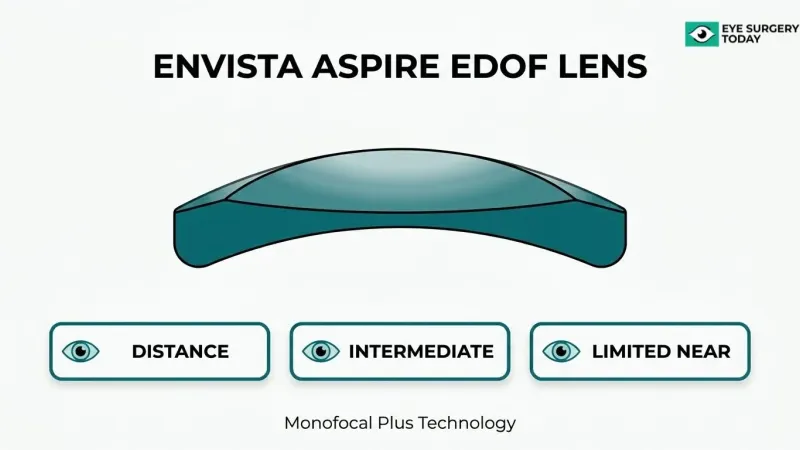
Premium intraocular lenses (IOLs) are advanced lens implants placed inside the eye during cataract surgery to restore and enhance vision across multiple focal distances, unlike standard monofocal lenses that correct at one distance only.
This guide covers lens types and how they work, potential benefits and risks, candidacy and lifestyle factors, cost and insurance considerations, and the recovery process.
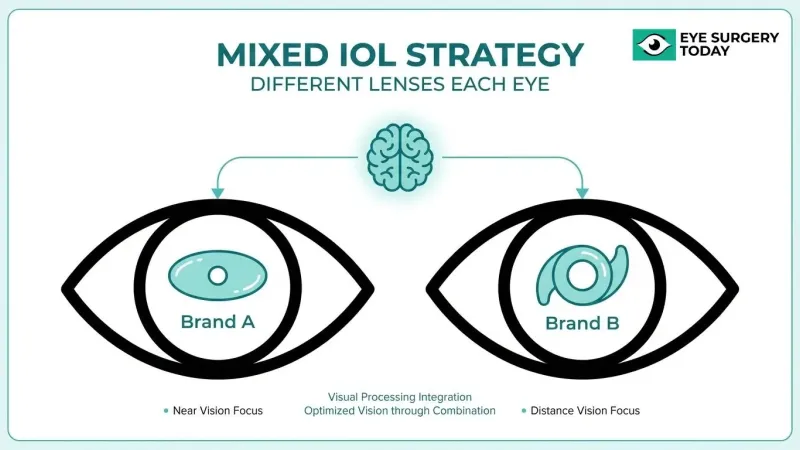
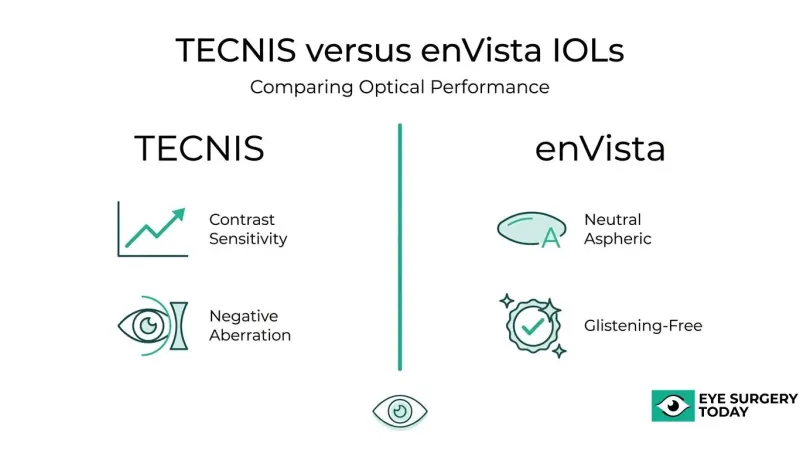
Several premium IOL designs exist, including multifocal, extended depth of focus (EDOF), toric, accommodating, and light adjustable lenses; each addresses different visual needs from near and intermediate clarity to astigmatism correction and post-surgical fine-tuning.
Multifocal lenses may help reduce glasses dependence by distributing light across multiple focal points, toric IOLs can correct pre-existing corneal astigmatism at the time of surgery, and EDOF lenses offer improved intermediate vision with fewer optical side effects than traditional multifocal designs.
Visual disturbances such as halos and glare, neuroadaptation challenges, and the rare possibility of lens exchange represent trade-offs that patients should weigh carefully alongside the benefits.
Ideal candidates are those with healthy eyes free of irregular astigmatism or macular disease, realistic expectations, and a strong desire for spectacle independence; preoperative diagnostics like corneal topography and microperimetry help confirm suitability.
Premium lenses typically cost $5,000 to $6,000 per eye out of pocket, and Medicare does not cover the presbyopia-correcting upgrade, though it does cover the standard surgical procedure and a basic monofocal IOL.
Recovery involves a neuroadaptation period of several weeks to months, structured follow-up appointments, and open communication with your surgeon about any persistent visual concerns.
What Are Premium Intraocular Lenses for Cataract Surgery?
Premium intraocular lenses are advanced lens implants placed inside the eye during cataract surgery to restore and enhance vision beyond what a standard lens provides. The sections below explain how these lenses differ from conventional options and what role they play once the clouded natural lens is removed.
How Do Premium Lenses Differ from Standard Monofocal Lenses?
Premium lenses differ from standard monofocal lenses by offering correction across multiple focal distances rather than a single fixed focus point. Standard monofocal lenses restore vision at one distance only, typically far, leaving most patients dependent on reading glasses afterward. Premium lenses, also referred to as advanced-technology IOLs (AT-IOLs), presbyopia-correcting IOLs, or refractive IOLs, are engineered to address a broader range of visual needs. Some designs, such as small aperture lenses, may also provide a viable option for patients with corneal irregularities who need to achieve target refractions, according to a 2024 report in Current Opinion in Ophthalmology. This expanded functionality is what places them in a separate clinical and cost category from their monofocal counterparts.
What Role Does an Intraocular Lens Play After Cataract Removal?
An intraocular lens plays the role of replacing the eye’s natural crystalline lens once it has been surgically removed during cataract surgery. Without a replacement lens, the eye cannot focus light onto the retina, making some form of IOL implantation essential for restoring usable vision. Premium IOLs go further by attempting to replicate the focusing range of a healthy young lens. Patients commonly ask questions such as “Which lens is better for cataract surgery?” and “What are the realistic visual outcomes I can expect?” — reflecting how personal and consequential this decision truly is. Understanding the IOL’s functional role is the essential first step before evaluating which type best suits an individual patient’s vision goals and lifestyle.
What Are the Types of Premium Lenses Available?
The types of premium lenses available for cataract surgery include multifocal IOLs, extended depth of focus (EDOF) lenses, toric lenses, accommodating IOLs, and light adjustable lenses. Each addresses a different visual need, from near and intermediate vision to astigmatism correction and customizable focus.
Multifocal Intraocular Lenses
Multifocal intraocular lenses use concentric optical zones to split incoming light across near, intermediate, and far focal distances simultaneously. This design allows patients to see across a range of distances without relying on glasses. According to CRST Europe, multifocal IOLs provide better outcomes for near and intermediate vision and a greater depth of focus, contributing to high levels of patient satisfaction. The trade-off, however, is a meaningful one: some patients experience halos or glare, particularly in low-light conditions. Multifocal IOLs tend to suit highly motivated patients who prioritize spectacle independence over optical perfection.
Extended Depth of Focus Lenses
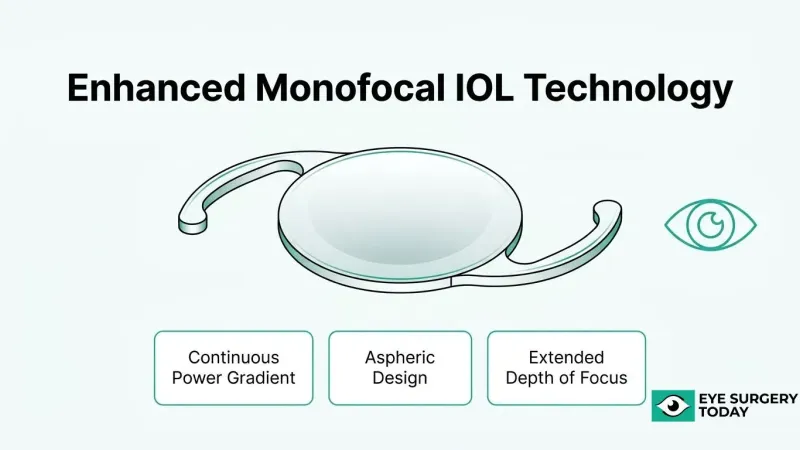
Extended depth of focus (EDOF) lenses create a single, elongated focal zone rather than distinct near and distance focal points. A review published in BMC Ophthalmology found that EDOF IOLs provide better uncorrected intermediate and near visual acuity compared to monofocal IOLs, though with reduced contrast sensitivity and more frequent halos. EDOF lenses represent a strong middle ground for patients who want improved functional vision across distances but have concerns about the visual disturbances associated with multifocal designs.
Toric Lenses for Astigmatism Correction
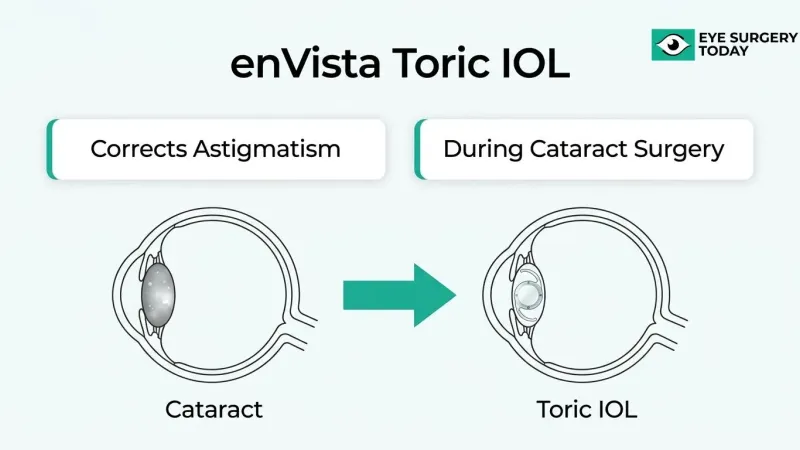
Toric lenses are intraocular lenses designed specifically to correct corneal astigmatism at the time of cataract surgery. Standard and premium monofocal lenses cannot address astigmatism, leaving patients dependent on glasses or contact lenses postoperatively. ESCRS recommendations state that toric IOLs should be considered for eyes with corneal astigmatism of 1.0D or more, with strong evidence supporting their use above 2.0D. For patients with meaningful pre-existing astigmatism, toric lenses can substantially improve unaided distance vision compared to non-toric alternatives.
Accommodating Intraocular Lenses
Accommodating intraocular lenses attempt to mimic the natural focusing action of the crystalline lens by shifting position inside the eye in response to ciliary muscle movement. This mechanism aims to provide a functional range of vision, particularly for intermediate distances, with fewer optical side effects than multifocal designs. Outcomes vary by individual, and near vision performance tends to be more modest compared to multifocal options. They may be a suitable choice for patients who want improved visual range with a lower risk of halos and glare.
Light Adjustable Lenses
Light adjustable lenses (LALs) are a uniquely customizable IOL option that allows the refractive power of the lens to be fine-tuned after implantation using ultraviolet light treatments. This capability enables the surgeon to optimize visual outcomes based on how each patient’s eye heals postoperatively. According to the Vision Institute, most patients receiving the LAL attain 20/20 vision or better without glasses. LALs are particularly valuable for patients with high expectations for precision and those with complex refractive histories, though they require UV-protective eyewear between adjustment appointments.
What Are the Potential Benefits of Premium Lenses?
The potential benefits of premium lenses include reduced dependence on glasses, correction of pre-existing astigmatism, and improved intermediate vision. The sections below examine how each lens type may deliver these outcomes.
How May Multifocal Lenses Reduce Dependence on Glasses?
Multifocal lenses may reduce dependence on glasses by distributing light across multiple focal points, allowing clearer vision at near, intermediate, and distant ranges simultaneously. According to CRST Europe, multifocal IOLs are known to provide better outcomes for near and intermediate vision and a greater depth of focus, leading to high levels of patient satisfaction in general. For patients whose primary goal is spectacle independence after cataract surgery, multifocal IOLs are often considered among the most compelling options available.
How Can Toric Lenses Help Correct Pre-Existing Astigmatism?
Toric lenses can help correct pre-existing astigmatism by incorporating a cylindrical power component into the IOL design, which compensates for the uneven corneal curvature responsible for blurred or distorted vision. Unlike standard monofocal lenses, toric IOLs are precisely aligned to the steepest meridian of the cornea during implantation, targeting the astigmatic error at its source. Patients with measurable corneal astigmatism who receive a toric IOL may achieve clearer distance vision with less reliance on corrective eyewear post-surgery.
How May Extended Depth of Focus Lenses Improve Intermediate Vision?
Extended depth of focus (EDOF) lenses may improve intermediate vision by elongating the eye’s focal range rather than splitting light into discrete near and distance zones. A study published in Nature (Eye) found that enhanced IOLs such as Eyhance provide improved intermediate and near visual acuities compared to conventional monofocal IOLs, with an odds ratio of 7.85 for intermediate-distance spectacle independence. This makes EDOF lenses particularly well suited for patients whose daily activities, such as computer use or driving, demand reliable mid-range clarity.
What Are the Possible Risks and Side Effects of Premium Lenses?
The possible risks and side effects of premium lenses include visual disturbances, adaptation challenges, and, in rare cases, the need for lens exchange. While adoption of premium IOLs has grown steadily, according to ScienceDirect, the adoption rate for premium IOLs rose from 35.2% in 2016 to 42.6% in 2020, understanding the trade-offs helps set realistic expectations.
What Visual Disturbances Can Occur with Multifocal Lenses?
The visual disturbances that can occur with multifocal lenses include halos, glare, and starbursts around light sources, particularly in low-light conditions such as night driving. These effects arise from the lens’s concentric ring design, which splits incoming light across multiple focal points. EDOF lenses may also produce halos, though typically less pronounced than those associated with diffractive multifocal designs. Reduced contrast sensitivity is another commonly reported finding, meaning images may appear slightly less sharp under dim lighting. For many patients, these disturbances are mild and manageable, but for individuals who frequently drive at night or work in low-light environments, the impact on daily function is worth weighing carefully before choosing a multifocal design.
What Adaptation Challenges May Patients Experience?
The adaptation challenges patients may experience include neuroadaptation, fluctuating vision in the early postoperative weeks, and difficulty adjusting to simultaneous focal points. The visual cortex requires time to learn which focal zone to prioritize for a given task, a process called neuroadaptation that can take several weeks to months. Some patients report temporary difficulty reading fine print or experiencing mild visual fatigue during this period. Patients with high expectations for immediate spectacle independence are particularly vulnerable to frustration during this window. Setting clear, evidence-based expectations before surgery is one of the most effective steps a surgeon can take to support a positive outcome.
When Might a Premium Lens Need to Be Exchanged or Adjusted?
A premium lens may need to be exchanged or adjusted when a patient experiences persistent, intolerable visual disturbances, a significant refractive surprise, or ongoing dissatisfaction despite adequate neuroadaptation time. Lens exchange is considered a secondary surgical procedure and carries its own risks, including posterior capsule complications. Less invasive options may include glasses or contact lenses to fine-tune residual refractive error, LASIK enhancement over the IOL, or, in the case of the Light Adjustable Lens, non-invasive ultraviolet light-based adjustments after implantation. Discussing lens exchange candidacy and enhancement options with your surgeon before the primary procedure ensures you understand the full decision-making pathway should the initial outcome fall short of your goals.
Who Is a Good Candidate for Premium Lenses?
Good candidates for premium lenses are patients who have realistic expectations, a strong desire for spectacle independence, and eyes free of conditions that could compromise outcomes. The following H3s cover which patients benefit most from multifocal lenses, who should consider toric lenses, which conditions may disqualify a patient, and how lifestyle shapes the final selection.
Which Patients May Benefit Most from Multifocal Lenses?
Patients who may benefit most from multifocal lenses are those who strongly desire reduced dependence on glasses for both near and distance tasks. According to a 2025 study published in PubMed PMC, the most influential factors in IOL selection are cost, followed by the desire for presbyopia correction. This finding suggests that ideal multifocal candidates are patients who have already weighed the financial commitment and prioritize freedom from reading glasses above other considerations. Patients with no significant corneal irregularities, macular disease, or dry eye typically achieve the best results with this lens category.
Who Should Consider Toric Lenses During Cataract Surgery?
Patients who should consider toric lenses during cataract surgery are those with measurable corneal astigmatism. According to ESCRS recommendations, toric IOLs should be considered in eyes with 1.0D or more of corneal astigmatism, with strong evidence supporting their use above 2.0D. Leaving significant astigmatism uncorrected with a standard monofocal lens typically results in blurred vision that still requires corrective eyewear. For patients with pre-existing astigmatism, toric IOL implantation is one of the most clinically justified upgrades available during cataract surgery.
Which Eye Conditions May Disqualify You from Premium Lenses?
The eye conditions that may disqualify a patient from premium lenses include irregular astigmatism, macular degeneration, glaucoma with advanced visual field loss, and significant dry eye disease. According to the Journal of Cataract and Refractive Surgery, preoperative evaluation for premium IOL candidacy should include corneal topography to rule out irregular astigmatism, which can severely distort the optical performance of multifocal and EDOF lenses. Patients with these conditions may achieve better outcomes with a monofocal or small aperture lens instead.
How Does Lifestyle Affect Premium Lens Selection?
Lifestyle affects premium lens selection by determining which visual distances matter most to the individual patient. Patients who drive frequently at night may be sensitive to halos associated with multifocal IOLs, making EDOF or toric options more appropriate. Those who read extensively or work on screens often prioritize strong near and intermediate vision, favoring multifocal designs. Industry surveys from 2026 indicate that approximately 25 to 30 percent of cataract surgery patients now choose a premium IOL upgrade, reflecting growing patient awareness of how lens choice can be tailored to support daily activities. Matching the lens design to a patient’s actual visual demands is often the most overlooked factor in achieving long-term satisfaction.
How Much Do Premium Lenses Cost Compared to Standard Lenses?
Premium lens costs vary significantly from standard options, with out-of-pocket expenses and insurance limitations being the two most important financial factors to understand before surgery. The sections below cover what patients typically pay and what Medicare and insurance will or will not cover.
What Out-of-Pocket Costs Should You Expect for Premium Lenses?
Out-of-pocket costs for premium lenses typically range from $5,000 to $6,000 per eye in private practices, compared to a lower patient contribution for standard monofocal lenses covered under insurance. The total cost of cataract surgery without insurance can reach $3,500 to $7,000 per eye, depending on lens technology and surgeon selection.
Patient selection for presbyopia-correcting IOLs should factor in ocular comorbidities, the desire for spectacle independence, and realistic expectations, according to ESCRS recommendations. Cost is consistently cited as the most influential factor in IOL selection, which makes understanding the full financial picture essential before committing to a premium upgrade.
Does Insurance or Medicare Cover Any Portion of Premium Lenses?
Insurance and Medicare cover the standard cataract surgery procedure and a basic monofocal IOL, but not the premium upgrade cost. According to CMS Ruling 05-01, the presbyopia-correcting functionality of a premium IOL does not fall into a covered benefit category under Medicare, meaning patients pay the additional cost out of pocket.
Medicare does cover one pair of eyeglasses or contact lenses following cataract surgery with IOL insertion under its prosthetic devices benefit. The premium lens upgrade fee, however, remains the patient’s responsibility entirely. Patients should confirm with their insurer what portion of the surgical facility and physician fees are covered, since only the lens upgrade itself is universally excluded.
How Do You Choose the Right Premium Lens for Your Eyes?
Choosing the right premium lens requires both objective diagnostic data and an informed conversation with your surgeon. The following sections cover the key measurements used to assess candidacy and the most important questions to raise before committing to a lens type.
What Measurements and Tests Help Determine the Best Lens Fit?
The measurements and tests that help determine the best lens fit include corneal topography, biometry, and macular function screening. Corneal topography maps the shape and curvature of the cornea, identifying irregular astigmatism or surface conditions that may affect premium IOL performance. Biometry calculates the eye’s axial length and corneal power to predict the correct lens power. Microperimetry measures spatial variation in macular function, screening for subtle retinal issues that could compromise outcomes with multifocal or EDOF lenses. Together, these diagnostics allow the surgeon to match lens technology to the individual eye’s optical profile rather than applying a one-size-fits-all approach. Skipping any of these assessments increases the risk of a poor refractive result, making thorough preoperative workup one of the most important steps in the entire selection process.
What Questions Should You Ask Your Surgeon About Lens Options?
The questions you should ask your surgeon about lens options include which lens type suits your specific eye measurements, what visual outcomes are realistic, and whether your lifestyle supports a presbyopia-correcting design. According to KE Eye Centers, key patient questions include “Which lens is better for cataract surgery?” and “What are the realistic visual outcomes I can expect?” You should also ask about the likelihood of needing glasses after surgery, what visual disturbances such as halos or glare you may experience, and what happens if you are not satisfied with the result. Asking about your surgeon’s experience with a specific lens model and the volume of cases performed adds important context for evaluating the recommendation you receive.
What Should You Expect During Recovery with Premium Lenses?
Recovery with premium lenses involves neuroadaptation and structured follow-up care. The sections below cover how long visual adjustment typically takes and what post-surgical appointments to expect.
How Long Does Neuroadaptation Take After Premium Lens Implantation?
Neuroadaptation after premium lens implantation is the brain’s process of learning to interpret new visual signals from a multifocal or EDOF IOL. Most patients experience some degree of visual fluctuation, halos, or blurred near vision in the first days to weeks following surgery. For the majority, the brain adapts within four to six weeks, though some individuals may require three to six months before vision stabilizes fully.
Managing expectations is central to a positive outcome. As Dr. Rosenfeld noted in AAO EyeNet, manufacturers report high patient satisfaction with premium IOLs, yet individual results vary considerably depending on lens type, eye health, and how actively a patient engages in the adaptation period. Patients who understand this adjustment process in advance tend to report higher satisfaction throughout recovery.
What Follow-Up Care Is Needed After Premium Lens Surgery?
Follow-up care after premium lens surgery typically includes appointments at one day, one week, and one month post-surgery, with additional visits if visual concerns arise. Your surgeon will assess IOL position, intraocular pressure, and visual acuity at each stage.
Regarding glasses and contacts, according to the Centers for Medicare and Medicaid Services, Medicare covers one pair of eyeglasses or contact lenses after each cataract surgery with an IOL insertion under the prosthetic devices benefit category. Patients should also discuss any persistent halos, glare, or reading difficulties at follow-up visits, as early intervention improves outcomes.
How Can Surgeon-Reviewed Guidance Help You Decide on Premium Lenses?
Surgeon-reviewed guidance helps you decide on premium lenses by translating complex clinical evidence into clear, patient-focused insight. The H3s below cover how Eye Surgery Today’s resources support lens evaluation and the key takeaways from this topic.
Can Eye Surgery Today’s Expert Resources Help You Evaluate Lens Options?
Yes, Eye Surgery Today’s expert resources can help you evaluate lens options by presenting surgeon-reviewed educational content designed specifically for patients navigating cataract surgery decisions. The platform covers IOL types, candidacy criteria, cost considerations, and recovery expectations in accessible, jargon-free language. For patients overwhelmed by competing claims from manufacturers and clinics, independent surgeon-reviewed guidance offers a practical framework for asking better questions and arriving at consultations better prepared.
What Are the Key Takeaways About Premium Lenses for Cataract Surgery?
The key takeaways about premium lenses for cataract surgery center on candidacy, cost, and informed expectations. Premium IOL adoption is growing: according to Navigate Patient, approximately 15 to 18 percent of U.S. cataract patients currently choose a premium IOL, while industry surveys suggest that figure may reach 25 to 30 percent as awareness increases. Microperimetry can screen candidates by measuring macular function before surgery, helping confirm suitability. The most important decision factors are cost, the desire for spectacle independence, and realistic expectations about outcomes, all of which surgeon-reviewed resources help patients clarify before committing to a lens.