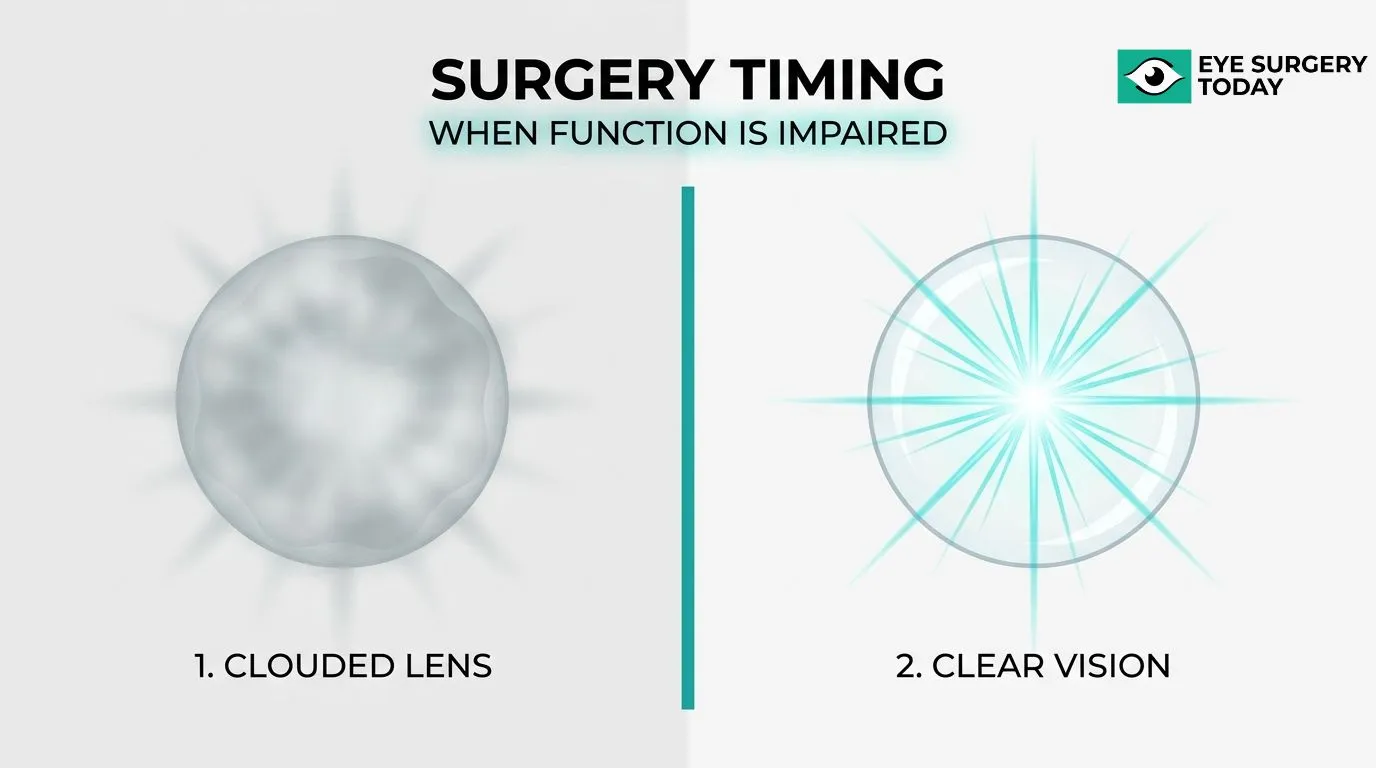
A cataract is a clouding of the eye’s natural lens that progressively obscures the passage of light to the retina, and surgery is typically recommended when that clouding impairs daily visual function rather than based on the cataract’s presence alone.
This guide covers early warning signs of cataract development, functional symptoms that signal surgical timing, how ophthalmologists evaluate and recommend surgery, candidacy and delay considerations, surgical risks, and what to expect from the procedure and recovery.
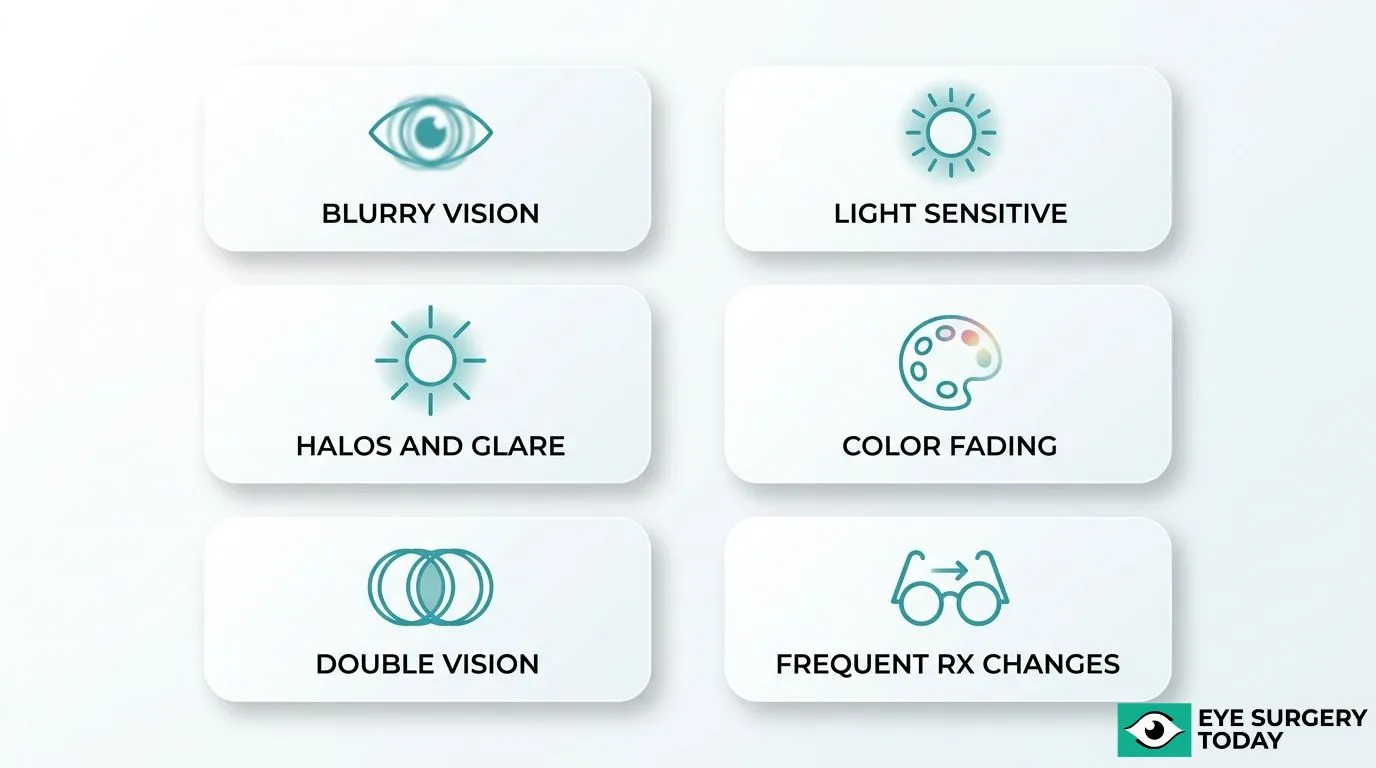
Early cataract signs include blurry or cloudy vision, increased light sensitivity, halos and glare around lights at night, color yellowing, double vision in one eye, and frequent eyeglass prescription changes. These symptoms reflect how a progressively opacified lens disrupts normal light transmission.
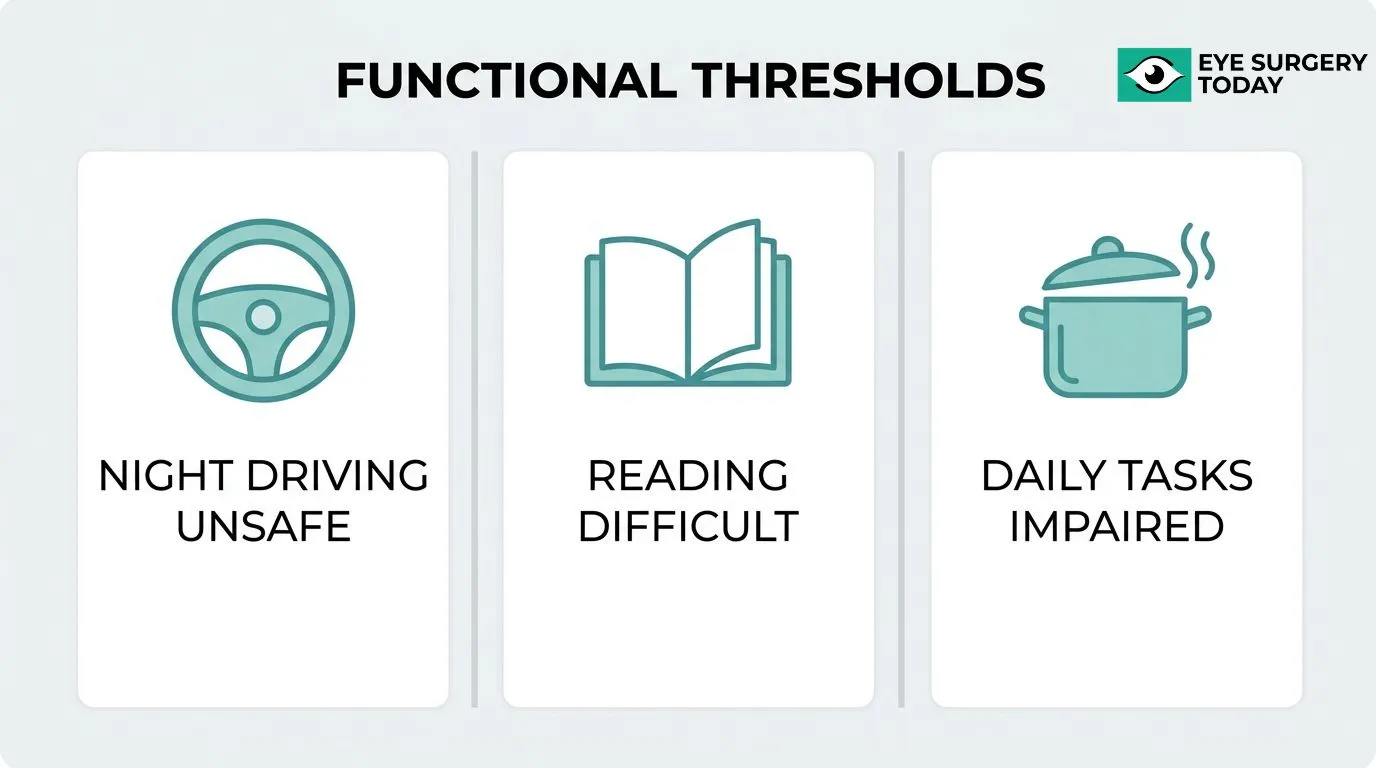
Surgery may be needed when vision loss begins interfering with specific daily activities such as night driving, reading, cooking, recognizing faces, or safe movement. The clinical threshold centers on whether visual symptoms are impairing function, not simply whether a cataract exists on examination.
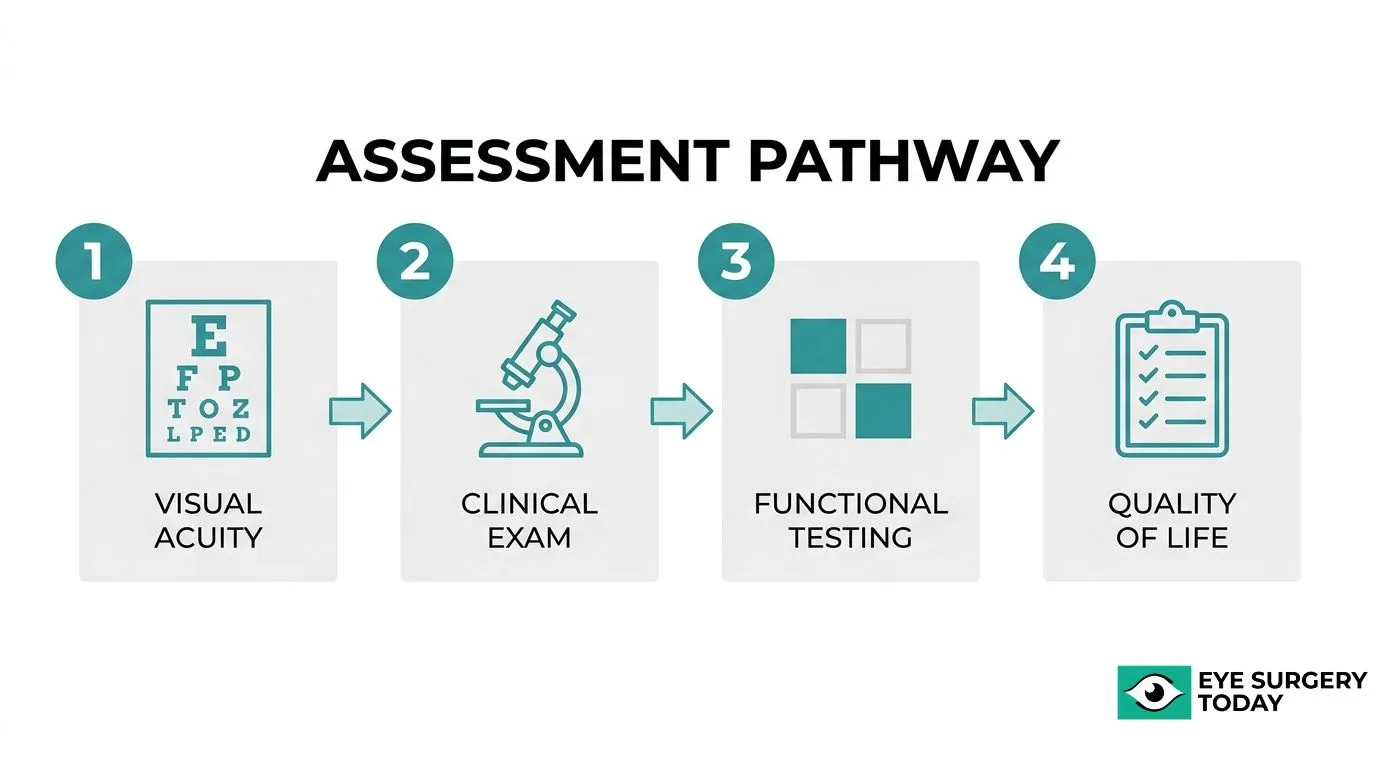
Ophthalmologists base their recommendations on visual acuity measurements, comprehensive slit-lamp examination, functional vision testing including contrast sensitivity and glare assessment, and structured quality-of-life questionnaires. A best corrected acuity of 6/12 or worse is a common referral benchmark, though individual functional demands often matter more than any single number.
Candidacy depends on general health status, pre-existing eye conditions such as diabetic retinopathy or glaucoma, and age-related factors. In some cases, mild cataracts that do not yet affect daily life, or unstable systemic conditions, may warrant delaying surgery in favor of monitoring and temporary measures like updated glasses or improved lighting.
Complications are uncommon but include infection, posterior capsule opacification, and retinal detachment. Most patients regain functional vision within a month, with full recovery typically completing within four to twelve weeks.
What Are the Early Signs That a Cataract May Be Developing?
The early signs that a cataract may be developing include blurry or cloudy vision, light sensitivity, halos around lights, color changes, double vision in one eye, and frequent prescription changes. Each of these symptoms reflects how a clouding lens progressively disrupts normal light transmission to the retina.
What Does Blurry or Cloudy Vision From a Cataract Look Like?
Blurry or cloudy vision from a cataract looks like viewing the world through a frosted or smeared window, where edges lose sharpness and fine details become difficult to resolve. The cloudiness typically begins in a small area of the lens and may go unnoticed at first. Over time, as the opacity spreads, reading text, recognizing faces, and distinguishing objects at a distance can all become progressively harder. This type of blur does not improve with blinking, which distinguishes it from surface-level dryness or debris on the eye.
How Does Increased Sensitivity to Light Indicate a Cataract?
Increased sensitivity to light indicates a cataract because the clouded lens scatters incoming light instead of focusing it cleanly onto the retina. According to the National Center for Biotechnology Information (NCBI), a cataract is defined as a clouding or opacification of the normally clear lens of the eye or its capsule that obscures the passage of light through the lens to the retina. This scattering effect causes bright environments, such as sunlit rooms or oncoming headlights, to feel overwhelming or painful. Patients often report squinting more frequently or avoiding bright settings they previously tolerated well.
What Are Halos and Glare Around Lights at Night?
Halos and glare around lights at night are visual disturbances caused by the irregular way a clouded lens bends and scatters light. According to JAMA, recognized cataract symptoms include glare, halos around lights, blurred vision, reduced contrast sensitivity, monocular diplopia, and photophobia. Halos appear as bright rings surrounding light sources such as streetlamps or oncoming headlights, while glare refers to a general dazzling or washed-out quality around those sources. Both symptoms tend to worsen in low-light conditions when the pupil dilates, allowing more light to pass through the affected areas of the lens.
How Does Yellowing or Fading of Colors Relate to Cataracts?
Yellowing or fading of colors relates to cataracts because the lens gradually takes on a yellow or brown tint as it ages and becomes opacified. This discoloration acts as a filter, muting the vibrancy of blues and purples in particular and making whites appear cream-colored or yellowed. The change is usually so gradual that many patients do not notice it until after surgery, when they experience the sudden return of full color contrast. This is one of the more underappreciated early signs, since adaptation happens slowly over months or years.
What Does Double Vision in One Eye Mean for Cataract Development?
Double vision in one eye, known clinically as monocular diplopia, means that the eye is producing two overlapping images even when the other eye is closed. In the context of cataract development, this occurs because different zones of the clouded lens refract light at slightly different angles, splitting the image before it reaches the retina. This symptom is distinct from binocular double vision, which disappears when one eye is covered. Monocular diplopia that persists with the fellow eye closed warrants prompt evaluation, as it is a recognized indicator of lens opacity progression.
How Often Do Eyeglass Prescriptions Change With a Growing Cataract?
Eyeglass prescriptions may change frequently, sometimes every few months, as a growing cataract progressively alters the refractive power of the lens. Nuclear cataracts, the most common type affecting the center of the lens, often cause a myopic shift that temporarily improves near vision before overall visual quality deteriorates. According to a study published in Eye (London) by Nature, the age-standardized pooled prevalence of any cataract is 17.20%, with nuclear cataracts accounting for 8.22% and cortical cataracts for 8.05% of cases. Rapidly shifting prescriptions that no longer stabilize with updated lenses can be a practical signal that the lens itself, rather than a refractive error alone, is the underlying problem.
What Symptoms Indicate That Cataract Surgery May Be Needed?
The symptoms that indicate cataract surgery may be needed are those that interfere with daily activities, not simply the presence of a cataract. According to NHS referral criteria, the decision is based on whether visual symptoms are impairing activities such as driving, reading, cooking, or recognizing faces. The H3 sections below cover each of these functional thresholds in detail.
When Does Difficulty Driving at Night Suggest Surgery Is Needed?
Difficulty driving at night may suggest surgery is needed when glare and halos from oncoming headlights make safe driving unreliable. Cataracts scatter incoming light, reducing contrast and creating visual disturbances that are most pronounced in low-light conditions. When a driver begins avoiding night travel, misjudging distances, or feeling unsafe behind the wheel, vision has declined to a point that meaningfully affects independence and public safety. At this stage, a surgical consultation is warranted.
When Does Trouble Reading or Doing Close-Up Work Warrant Surgery?
Trouble reading or doing close-up work warrants surgery when the visual difficulty persists even with current eyeglass correction. Cataracts reduce contrast sensitivity, making small print, screens, and fine detail progressively harder to resolve. When patients find themselves holding reading material farther away, increasing font size, or abandoning hobbies such as sewing or crafting, the functional impact is clear. Corrective lenses may temporarily compensate, but once they no longer restore adequate near vision, surgery becomes a reasonable next step.
When Do Problems With Daily Activities Like Cooking Signal Surgery?
Problems with daily activities like cooking signal surgery when visual function no longer meets the patient’s needs. According to the American Academy of Ophthalmology’s 2025 Preferred Practice Pattern, treatment is indicated when cataract surgery provides a reasonable likelihood of quality-of-life improvement. Cooking involves reading labels, managing heat settings, and handling sharp objects, all of which require reliable vision. When these tasks become difficult or unsafe due to cataract-related blur, the functional threshold for surgical referral has typically been crossed.
When Does Difficulty Recognizing Faces Mean Surgery Should Be Considered?
Difficulty recognizing faces means surgery should be considered when the visual impairment is contributing to social withdrawal or reduced quality of life. Cataracts degrade contrast sensitivity and spatial resolution, making it harder to distinguish facial features, particularly in variable lighting. When patients consistently fail to recognize friends or family members at conversational distance, the cataract has progressed beyond what updated glasses can compensate for. Social isolation resulting from this symptom is itself a clinically meaningful indicator that surgery deserves serious consideration.
When Do Falls or Safety Concerns From Poor Vision Require Surgery?
Falls or safety concerns from poor vision may require surgery when a patient’s reduced visual acuity creates a measurable risk of harm. Some NHS regions apply a threshold of best corrected visual acuity of 6/12 or worse as a criterion for referral, with exceptions made for patients whose occupations demand higher acuity. Reduced depth perception and contrast sensitivity, both caused by cataracts, increase fall risk significantly in older adults. At this point, the safety case for surgery often outweighs any reason to delay, and most patients regain functional vision within a month of the procedure.
How Do Ophthalmologists Decide When to Recommend Cataract Surgery?
Ophthalmologists decide when to recommend cataract surgery by evaluating visual acuity, clinical examination findings, functional vision testing, and the cataract’s impact on daily life. The sections below cover each of these assessment areas in detail.
What Visual Acuity Measurements May Prompt a Surgical Recommendation?
Visual acuity measurements may prompt a surgical recommendation when best corrected visual acuity falls below the threshold needed to meet a patient’s functional demands. A best corrected visual acuity of 6/12 or worse is often used as a referral threshold in some regions, though exceptions apply for patients whose occupations require sharper acuity, according to Shrewsbury and Telford Hospital NHS Trust guidance. That said, acuity alone rarely drives the decision. A patient with 6/18 vision who manages comfortably at home may not yet need surgery, while one with 6/9 vision who drives professionally may qualify immediately.
How Does a Comprehensive Eye Exam Assess Cataract Severity?
A comprehensive eye exam assesses cataract severity by examining lens opacity type, location, and density alongside the overall health of the eye. Ophthalmologists evaluate the anterior segment using slit-lamp biomicroscopy to classify cataracts as nuclear, cortical, or posterior subcapsular, each of which progresses differently and affects vision in distinct ways. Posterior segment evaluation rules out co-existing conditions such as macular degeneration or glaucoma that could limit surgical benefit. This full picture prevents recommending surgery when a separate underlying condition is the primary driver of visual loss.
What Role Does Functional Vision Testing Play in the Decision?
Functional vision testing plays a central role in the decision by measuring how the cataract affects real-world visual performance, not just the Snellen chart. Tests such as contrast sensitivity assessment and glare testing under simulated low-light conditions reveal deficits that standard acuity measurements can miss entirely. A patient may read 6/6 on a high-contrast chart yet struggle significantly with night driving due to reduced contrast sensitivity or disabling glare. These tests provide objective evidence that supports or challenges what the patient reports experiencing day to day.
How Does the Impact on Quality of Life Factor Into the Recommendation?
The impact on quality of life is a central factor in the surgical recommendation. According to the American Academy of Ophthalmology’s 2025 Preferred Practice Pattern, treatment is indicated when visual function no longer meets the patient’s needs and cataract surgery provides a reasonable likelihood of quality-of-life improvement. Ophthalmologists use structured patient-reported questionnaires, such as the Visual Function Index (VF-14), to quantify how vision loss affects activities including reading, driving, and recognizing faces. Relying on quality-of-life data alongside clinical measurements reflects best practice, since two patients with identical acuity scores can have vastly different functional needs.
Who May Be a Good Candidate for Cataract Surgery?
Candidacy for cataract surgery depends on several intersecting factors, including general health status, pre-existing eye conditions, and age-related considerations.
What General Health Conditions Affect Candidacy for Cataract Surgery?
General health conditions affect candidacy for cataract surgery by influencing both surgical safety and the likelihood of a successful outcome. Surgeons typically assess whether a patient can tolerate a short outpatient procedure and recover without significant complication.
Conditions that commonly factor into candidacy assessments include:
- Diabetes: May affect healing and post-operative stability, requiring careful pre-surgical management.
- Autoimmune disorders: Can increase inflammation risks around the time of surgery.
- Cardiovascular disease: Relevant to anesthesia tolerance and overall procedural safety.
- Uncontrolled systemic illness: May prompt postponement until the condition is stabilized.
Cataract surgery remains one of the most commonly performed elective procedures globally. According to Grand View Research, the global cataract surgery devices market was valued at approximately USD 7.13 billion in 2024, reflecting the scale at which this surgery is performed and the breadth of patients it serves. From a candidacy standpoint, most individuals with visually significant cataracts can proceed safely once their general health is optimized.
How Do Pre-Existing Eye Conditions Influence Surgical Eligibility?
Pre-existing eye conditions influence surgical eligibility by affecting both the complexity of the procedure and the realistic expectations for post-operative visual improvement. When other ocular disease is present alongside a cataract, surgeons must weigh whether removing the lens will meaningfully restore vision.
Key ocular conditions that may affect eligibility include:
- Diabetic retinopathy: Cataract surgery may lead to relatively rapid progression of diabetic retinopathy or precipitate vitreous hemorrhage, according to a systematic review published in the Indian Journal of Ophthalmology.
- Glaucoma: Advanced optic nerve damage may limit the visual benefit of surgery.
- Age-related macular degeneration: Central vision loss from macular disease may persist even after a successful cataract removal.
- Corneal disease: Poor corneal clarity or integrity can complicate surgical planning and recovery.
In practice, the presence of a co-existing eye condition does not automatically exclude a patient from surgery. Rather, it shifts the conversation toward realistic outcome expectations and, in some cases, may require treating the other condition first or simultaneously.
What Age-Related Factors Are Considered for Cataract Surgery Candidacy?
Age-related factors considered for cataract surgery candidacy include the natural lens changes associated with aging, the patient’s visual demands, and overall life expectancy in relation to long-term outcomes. Cataracts are predominantly an age-related condition, and most patients who undergo surgery are over 60.
Older patients may have additional considerations such as:
- Increased likelihood of co-existing ocular conditions (such as macular degeneration or glaucoma) that affect visual prognosis.
- Reduced healing capacity, which can slightly extend recovery timelines.
- Higher dependency on clear vision for safety, particularly for fall prevention and independent living.
Younger patients, while less commonly affected, may present with cataracts due to trauma, steroid use, or systemic disease. Their candidacy often involves greater urgency, as visual impairment at a younger age carries a more significant functional and occupational impact. Age alone does not determine eligibility; rather, the degree of visual impairment and its effect on daily function remain the primary determinants across all age groups.
Are There Situations Where Cataract Surgery Should Be Delayed?
Yes, there are situations where cataract surgery should be delayed. Not every cataract requires immediate removal, and certain clinical and lifestyle factors can make postponement the safer or more appropriate choice. The following sub-sections cover mild cataracts that have not yet affected daily function, medical conditions that may complicate surgery, and temporary symptom management strategies.
When Might Mild Cataracts Not Yet Require Surgical Intervention?
Mild cataracts may not yet require surgical intervention when vision loss is minimal and daily activities remain unaffected. According to the American Academy of Ophthalmology’s 2025 Preferred Practice Pattern, treatment is indicated only when visual function no longer meets the patient’s needs and surgery provides a reasonable likelihood of quality-of-life improvement. If a patient can still drive, read, and work comfortably, watchful waiting is a clinically appropriate path. In these cases, monitoring progression through regular eye exams is typically the recommended approach rather than immediate surgery.
What Medical Conditions Could Require Postponing Cataract Surgery?
The medical conditions that could require postponing cataract surgery include uncontrolled diabetes, active ocular infection, and significant corneal or retinal disease. A systematic review published in the Indian Journal of Ophthalmology found that cataract surgery in patients with diabetes may lead to relatively rapid progression of diabetic retinopathy or precipitate vitreous hemorrhage. Poorly controlled systemic conditions also increase anesthetic and surgical risk. Stabilizing these conditions before proceeding with surgery is generally the safer course, and the decision to delay should always involve a thorough discussion between the patient and their surgical team.
Can Updated Eyeglasses or Lighting Changes Manage Symptoms Temporarily?
Yes, updated eyeglasses or lighting changes can manage cataract symptoms temporarily for patients with mild to moderate lens clouding. Stronger prescription lenses may compensate for early refractive shifts caused by a growing cataract, while improved home lighting and anti-glare lenses can reduce visual strain. These strategies do not slow cataract progression but can meaningfully preserve functional independence while surgery is being considered or postponed. When these measures no longer maintain adequate visual function, surgical evaluation becomes the appropriate next step.
What Are the Possible Risks and Complications of Cataract Surgery?
The possible risks and complications of cataract surgery include infection, posterior capsule opacification, retinal detachment, and worsening of pre-existing eye conditions. The sections below cover each complication, its likelihood, and how underlying health conditions may influence overall risk.
What Is the Risk of Infection After Cataract Surgery?
The risk of infection after cataract surgery is low but clinically significant, with endophthalmitis being the most serious post-operative infection. It can cause rapid, severe vision loss if not treated promptly. According to the Cochrane Library, high-certainty evidence shows that intracameral cefuroxime administered at the end of surgery significantly reduces the likelihood of endophthalmitis, making antibiotic prophylaxis a standard part of surgical protocol.
How Common Is Posterior Capsule Opacification After Surgery?
Posterior capsule opacification (PCO) is the most common complication following cataract surgery. It occurs when residual lens epithelial cells migrate across the posterior capsule, causing progressive visual clouding that can mimic the original cataract. PCO can develop months to years after surgery and is treated with a straightforward outpatient laser procedure called YAG capsulotomy, which typically restores clear vision quickly.
What Are the Risks of Retinal Detachment Following Cataract Surgery?
The risk of retinal detachment following cataract surgery is relatively low but real. According to a systematic review and meta-analysis published on PubMed, the 5-year cumulative risk of retinal detachment after cataract surgery is 1.19%, with approximately 80.9% of these detachments occurring within the first year post-procedure. Patients with high myopia or a history of retinal problems may face elevated risk and should be monitored closely after surgery.
How Might Pre-Existing Conditions Increase Complication Risks?
Pre-existing conditions may increase complication risks by making both the surgery itself and the healing process more complex. In patients with diabetes, cataract surgery may lead to relatively rapid progression of diabetic retinopathy or precipitate vitreous hemorrhage, according to a systematic review published in the Indian Journal of Ophthalmology. Conditions such as glaucoma, age-related macular degeneration, and corneal disease can also limit the visual benefit achieved and may require additional management before or after surgery.
What Can You Expect During and After Cataract Surgery?
Cataract surgery involves a predictable sequence of preparation, a brief procedure, and a structured recovery period. The sections below cover how to prepare, what happens in the operating room, and how long recovery typically takes.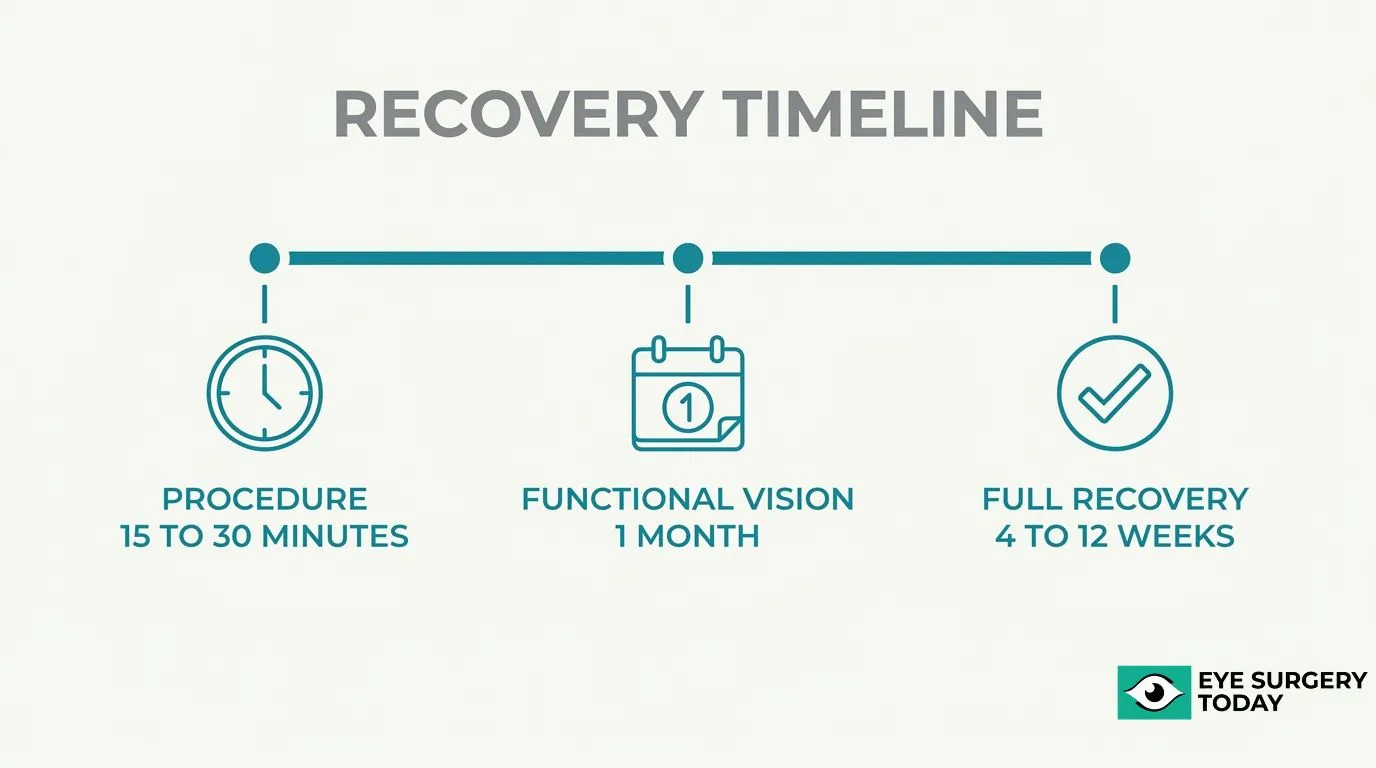
How Should You Prepare for Cataract Surgery?
Preparing for cataract surgery involves several steps your surgical team will guide you through in advance. You will typically undergo pre-operative measurements to determine the correct intraocular lens (IOL) power for your eye. Your surgeon may ask you to stop certain medications, arrange transportation home, and fast for a specified period beforehand. Eye drops, often antibiotic or anti-inflammatory, are commonly prescribed to begin before the procedure date. Informing your care team about all current medications and health conditions helps minimize avoidable risks on the day of surgery.
What Happens During the Cataract Surgery Procedure?
The cataract surgery procedure involves removing the clouded natural lens and replacing it with an artificial intraocular lens (IOL). The most common technique, phacoemulsification, uses ultrasound energy to break the lens into fragments before suctioning them out through a small incision. The entire process typically takes 15 to 30 minutes under local anesthesia, meaning you remain awake but feel no pain. According to high-certainty evidence reviewed by the Cochrane Library, antibiotic injection (cefuroxime) into the eye at the end of surgery significantly reduces the risk of endophthalmitis, a serious post-operative infection.
What Does the Recovery Timeline After Cataract Surgery Look Like?
The recovery timeline after cataract surgery typically spans 4 to 12 weeks, with most patients regaining functional vision within a month of the procedure. According to a study published on PMC examining predictors of recovery time, this range applies broadly across high-income country populations. Vision may appear blurry or fluctuate in the first few days as the eye adjusts to the new IOL. Most patients can resume light daily activities within 24 to 48 hours, though strenuous activity, swimming, and rubbing the eye should be avoided until cleared by your care team. Full healing of the ocular tissue generally completes within 4 to 6 weeks.
How Can Surgeon-Reviewed Resources Help You Decide About Cataract Surgery?
Surgeon-reviewed resources help you decide about cataract surgery by providing clinically accurate, unbiased information that translates complex medical evidence into clear guidance. The sections below cover how Eye Surgery Today’s expert content clarifies your options and the key takeaways from this article.
Can Eye Surgery Today’s Expert Content Help You Understand Your Options?
Yes, Eye Surgery Today’s expert content can help you understand your cataract surgery options by presenting surgeon-reviewed education that covers symptoms, surgical timing, candidacy, risks, and recovery in plain language. The platform was designed specifically to bridge the gap between complex clinical evidence and the information patients need to make confident decisions.
For patients uncertain about whether their symptoms warrant surgery, understanding how visual function, quality of life, and clinical thresholds interact is essential. Eye Surgery Today draws on sources such as the NICE guideline surveillance updates and AAO Preferred Practice Patterns to present evidence-based perspectives without requiring a medical background to follow them. This kind of transparent, structured education is often what patients need before their first specialist conversation.
What Are the Key Takeaways About When Cataract Surgery Is Recommended?
The key takeaways about when cataract surgery is recommended center on functional impact rather than diagnosis alone. Surgery is considered when a cataract impairs daily activities such as driving, reading, and recognizing faces, and when correction through updated glasses no longer restores adequate function.
Core decision-guiding points from this article include:
- Symptoms drive timing: Blurred vision, glare, halos, and light sensitivity signal that a cataract may be progressing toward surgical relevance.
- Functional threshold matters: Surgery is indicated when visual function no longer meets a patient’s needs and a reasonable quality-of-life improvement is expected.
- Candidacy is individual: General health, pre-existing eye conditions, and occupational requirements all shape whether and when surgery is appropriate.
- Risks are low but real: Complications such as retinal detachment and posterior capsule opacification exist and should be discussed with your surgeon.
- Recovery is typically short: Most patients regain functional vision within weeks, though full recovery varies.
Understanding these points before consulting a specialist helps patients ask better questions and engage more confidently in shared decision-making with their care team.