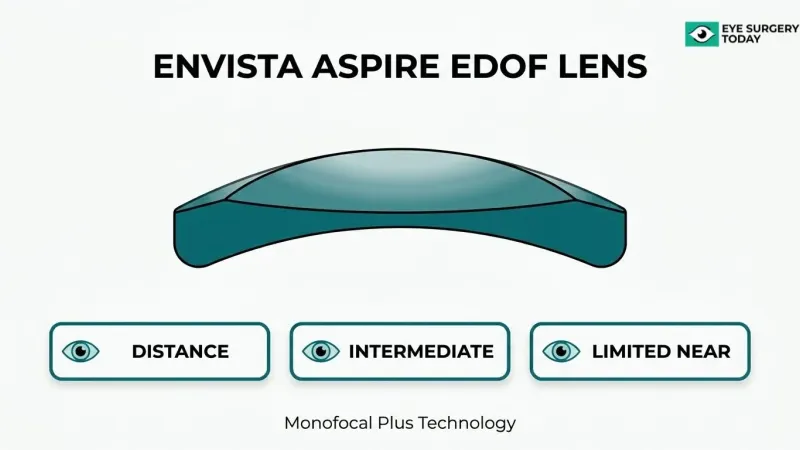
A lifestyle lens is an advanced technology intraocular lens (IOL) implanted during cataract surgery to correct vision at multiple distances and reduce dependence on glasses. Also called premium IOLs or AT-IOLs, these implants use specialized optical designs that go beyond the single focal point of a standard monofocal lens.
This guide covers the types of lifestyle lenses available, the vision goals each design may address, candidacy and eye health considerations, potential benefits and risks, cost and insurance factors, and how to choose the right implant with your surgeon.
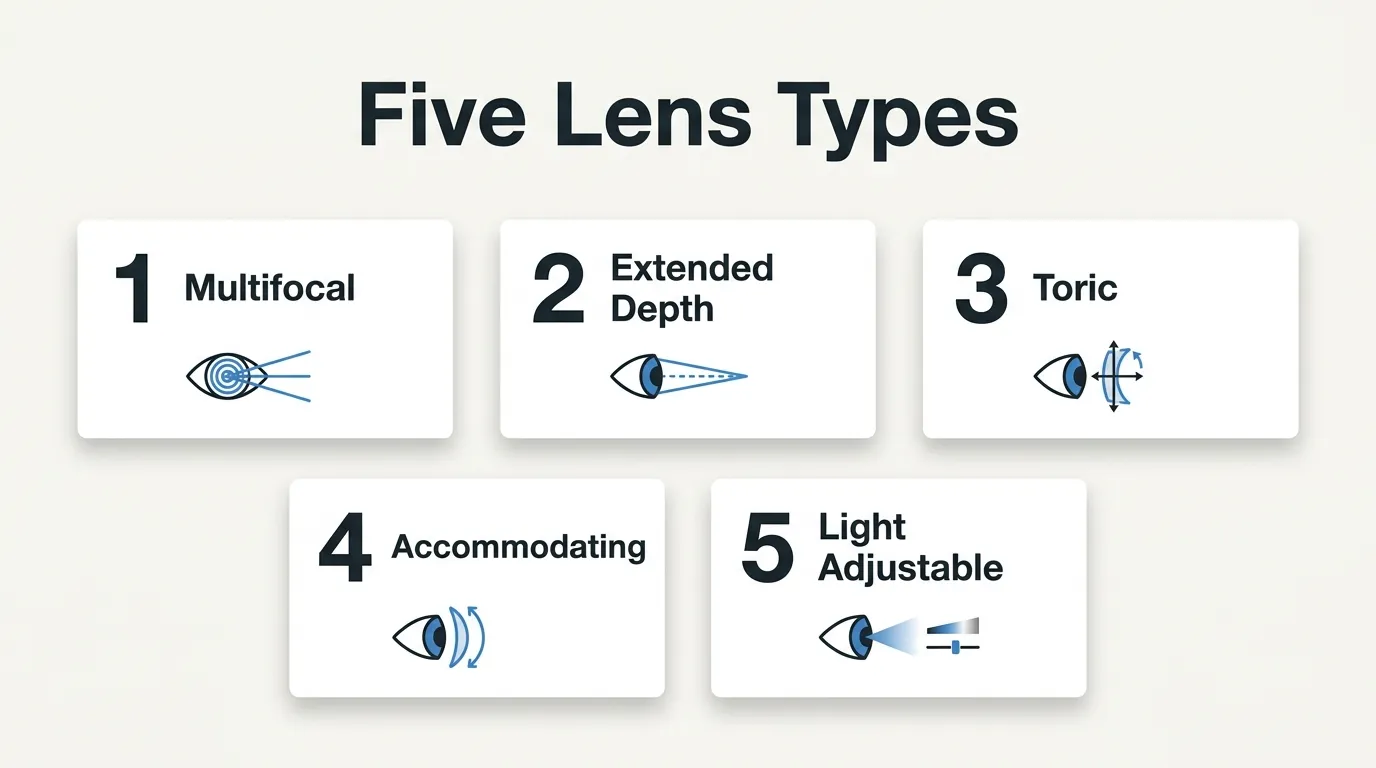
Lifestyle lens options include multifocal, extended depth of focus (EDOF), toric, accommodating, and light adjustable designs. Each uses a distinct optical approach; multifocal IOLs split light into multiple focal points, EDOF lenses elongate a single focus into a continuous range, and the Light Adjustable Lens allows post-operative prescription fine-tuning with UV light.
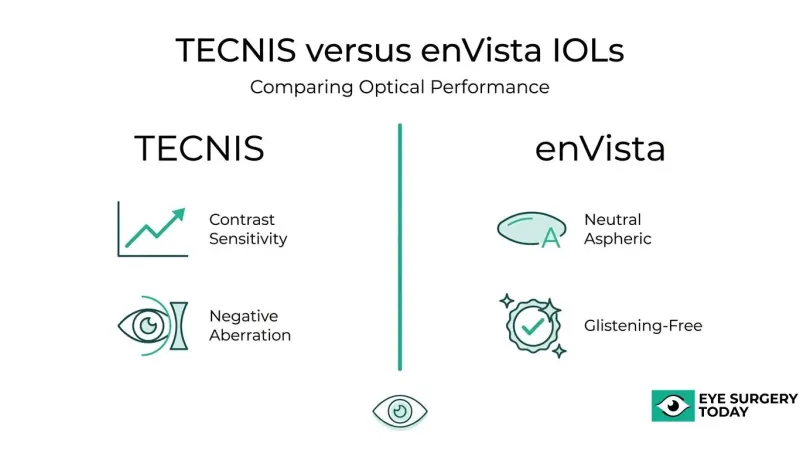
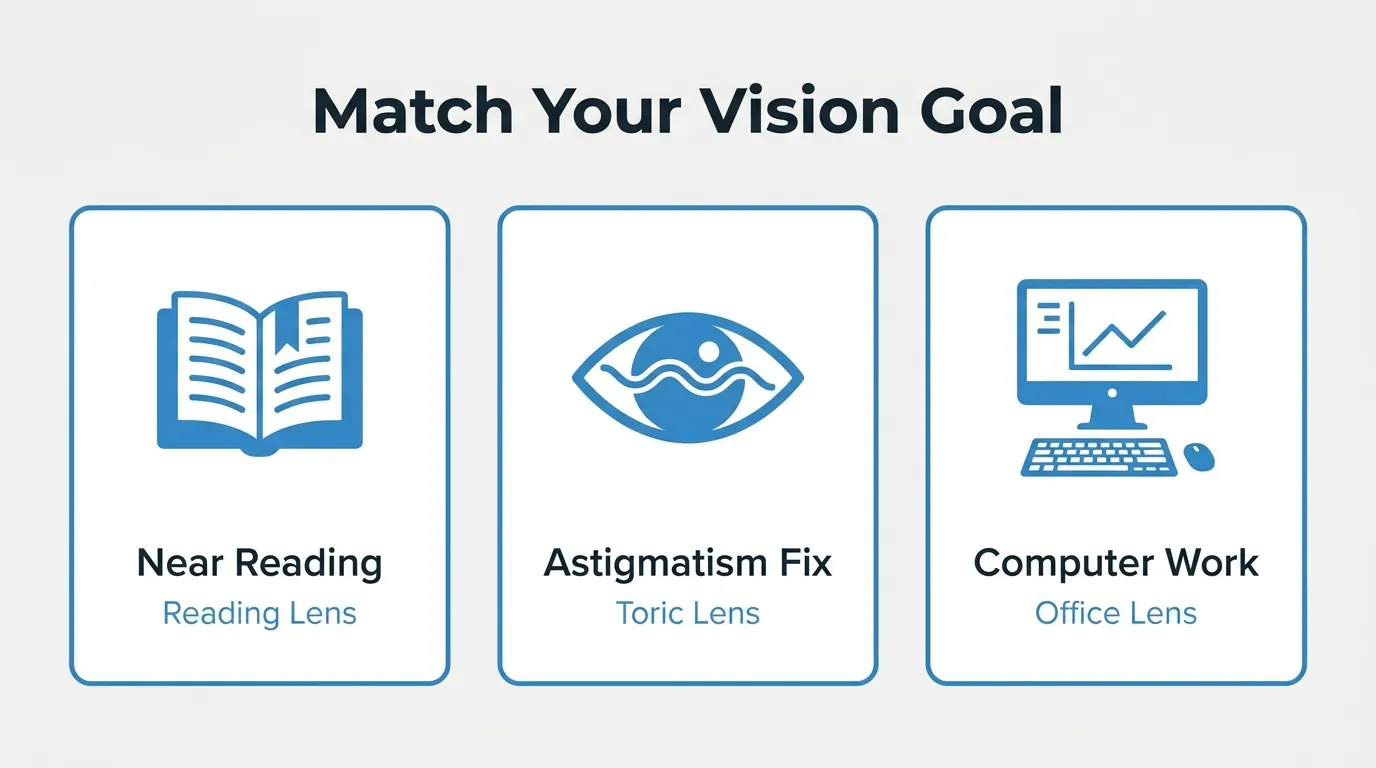
Different lenses align with different visual priorities. Multifocal IOLs may offer the strongest near and reading performance, toric IOLs can correct pre-existing corneal astigmatism, and EDOF or enhanced monofocal lenses may suit patients focused on intermediate and computer vision with fewer visual side effects.
Not every patient qualifies for every lens. Conditions such as macular degeneration, advanced glaucoma, or severe dry eye disease may limit eligibility for certain multifocal or EDOF designs, though alternatives like small aperture lenses can expand candidacy.
Premium lens upgrades typically range from $1,500 to over $4,000 per eye beyond what Medicare or private insurance covers. Shared decision-making with a qualified ophthalmologist, weighing visual goals against potential trade-offs like halos or glare, remains the most reliable path to a satisfying outcome.
What Is a Lifestyle Lens in Cataract Surgery?
A lifestyle lens in cataract surgery is an advanced technology intraocular lens (IOL) designed to reduce dependence on glasses by providing vision correction at multiple distances. Often called premium IOLs or AT-IOLs in clinical literature, these implants go beyond standard single-focus correction. Options include multifocal, extended depth of focus, toric, accommodating, and light adjustable lenses, each addressing specific visual needs. Small aperture designs, such as the IC-8 Apthera IOL, which received FDA approval in 2022 according to EyeWire News, expand candidacy to patients with corneal irregularities who may not suit traditional multifocal or EDOF lenses. Unlike standard monofocal IOLs that correct vision at one distance only, lifestyle lenses use specialized optical designs to broaden the range of clear vision. The right choice depends on a patient’s eye health, daily activities, and tolerance for potential visual trade-offs, making a thorough preoperative discussion with an ophthalmologist essential.
How Do Lifestyle Lenses Differ From Standard Monofocal Lenses?
Lifestyle lenses differ from standard monofocal lenses in optical design, range of vision, and out-of-pocket cost. The differences span focal capability, spectacle dependence, and insurance coverage.
Standard monofocal intraocular lenses (IOLs) are prosthetic implants with a single focal point designed to correct vision at one distance, typically far. Patients who receive a monofocal IOL generally still require glasses for near tasks such as reading or computer work. Because monofocal lenses have been the default in cataract surgery for decades, Medicare and most private insurance plans cover their cost as part of the surgical procedure.
Lifestyle lenses, frequently referred to in clinical literature as “premium IOLs” or “advanced technology IOLs” (AT-IOLs), use specialized optical designs to provide multiple focal points or an extended range of clear vision. These designs may include concentric rings, diffractive optics, or other engineering approaches that aim to reduce dependence on glasses after surgery. The trade-off for this broader visual range can include visual phenomena such as halos or glare, which are uncommon with standard monofocal lenses.
The cost structure also differs significantly. Under CMS policy, patients are responsible for the difference in cost between a standard monofocal lens and an advanced technology IOL, including the lens itself and any additional physician services the advanced lens requires. According to The Big 65 Medicare Coverage Guide, these out-of-pocket upgrade costs can range from $1,500 to over $4,000 per eye.
For most patients weighing these options, the decision comes down to how much daily glasses dependence affects quality of life versus willingness to accept potential visual side effects and additional cost. Understanding the specific types of lifestyle lenses available helps clarify which trade-offs apply to each design.
What Are the Types of Lifestyle Lenses for Cataract Surgery?
The types of lifestyle lenses for cataract surgery include multifocal IOLs, extended depth of focus lenses, toric IOLs, accommodating IOLs, and light adjustable lenses. Each design addresses different visual needs.
Multifocal Intraocular Lenses
Multifocal intraocular lenses use concentric rings built into the optic to split incoming light into multiple focal points, providing near, intermediate, and distance vision simultaneously. This design can significantly reduce dependence on glasses after cataract surgery.
Because the lens divides light, some patients may experience visual disturbances. According to a clinical review published on ResearchGate, approximately 15% of patients with multifocal IOLs reported halos and glare compared to 0% in monofocal control groups. These symptoms often diminish as the brain adapts over several weeks to months through a process called neuroadaptation.
For patients who prioritize freedom from reading glasses and accept the possibility of temporary visual phenomena, multifocal IOLs remain one of the most versatile lifestyle lens options available.
Extended Depth of Focus Lenses
Extended depth of focus lenses provide a continuous, elongated range of clear vision rather than splitting light into distinct focal points. This optical approach stretches the focus from distance through intermediate zones, covering activities like computer work and dashboard viewing.
According to the American Academy of Ophthalmology’s EyeWiki, EDOF lenses use refractive or diffractive optics to increase the range of vision while reducing spectacle dependence. Reading glasses may still be needed for fine print, but the smoother visual transition tends to produce fewer halos and glare compared to multifocal designs.
EDOF technology represents a practical middle ground for patients who want broader vision coverage than a monofocal lens without the full light-splitting trade-offs of a multifocal implant.
Toric Intraocular Lenses
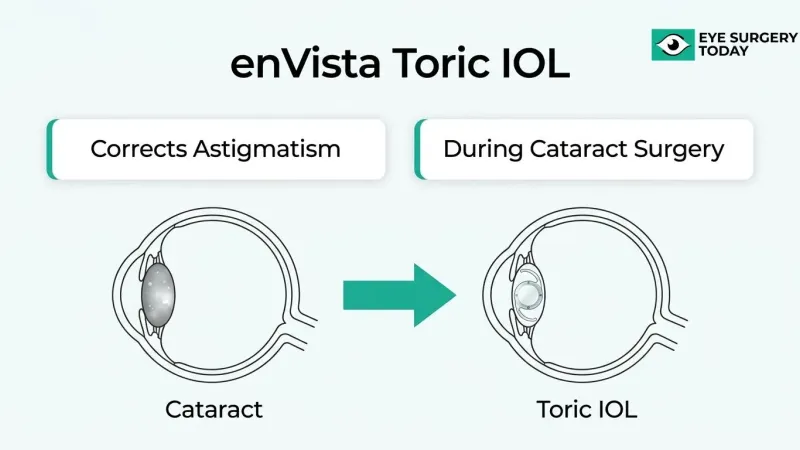
Toric intraocular lenses correct pre-existing corneal astigmatism during cataract surgery. Astigmatism causes light to focus unevenly on the retina, and toric IOLs counteract this with built-in cylindrical correction aligned to the cornea’s steepest meridian.
Newer toric designs feature enhanced rotational stability, which is critical because even small degrees of lens rotation can reduce the astigmatism correction. Patients with moderate to high corneal astigmatism who skip toric correction often remain dependent on glasses for distance vision after surgery.
Toric IOLs can also be combined with multifocal or EDOF optics, offering both astigmatism correction and an extended range of vision in a single implant.
Accommodating Intraocular Lenses
Accommodating intraocular lenses use the eye’s natural ciliary muscle movement to shift the lens optic forward or backward, theoretically mimicking the eye’s ability to change focus between distances. Unlike multifocal lenses, accommodating IOLs do not split light into multiple focal points.
In practice, the range of accommodation these lenses achieve tends to be modest. Most patients gain improved intermediate vision compared to a standard monofocal, though near vision results can be less predictable than with multifocal designs. This makes accommodating IOLs a reasonable option for patients who want some additional range without the halos and glare associated with diffractive optics.
Light Adjustable Lenses
Light adjustable lenses are the only IOLs that allow post-operative power adjustments after cataract surgery. The lens material contains photosensitive silicone macromers that change shape when exposed to specific UV light wavelengths, enabling the surgeon to fine-tune the prescription after the eye has healed.
The Light Adjustable Lens received FDA approval on November 22, 2017, for patients with at least 0.75 diopters of corneal astigmatism. Patients must wear UV-protective glasses during all waking hours for several weeks until the final lock-in treatment is completed.
This customizable approach is particularly valuable for patients with complex refractive needs or those who have undergone prior corneal surgery, where predicting post-operative outcomes can be more challenging. Understanding what each lens type offers sets the foundation for matching a specific implant to your vision goals.
What Vision Goals Can Each Lifestyle Lens Address?
Each lifestyle lens addresses specific vision goals, from near reading clarity to astigmatism correction and reduced glasses dependence. The sections below match each common vision priority to the lens types best suited for it.
Which Lifestyle Lens May Help With Near and Reading Vision?
The lifestyle lenses that may help with near and reading vision are multifocal IOLs and accommodating IOLs. Standard monofocal lenses correct vision at one distance, typically far, requiring spectacles for near tasks like reading. Multifocal IOLs are specifically engineered to provide a full range of vision, including near, intermediate, and distance, often achieving high rates of spectacle independence compared to monofocal lenses.
According to an Evidence-based Synthesis Program report, patients receiving multifocal IOLs demonstrated significantly better uncorrected near vision, with a greater proportion achieving total spectacle independence compared to those receiving standard monofocal IOLs. Accommodating IOLs take a different approach; they utilize the eye’s natural ciliary muscle movement to shift the lens optic, theoretically mimicking the eye’s ability to change focus between distances.
While both options can reduce reading glasses dependence, the trade-offs differ. Contrast sensitivity loss is a known risk with multifocal and EDOF IOLs, particularly in low-light conditions. For patients who prioritize near vision above all else, multifocal designs typically deliver the strongest reading performance.
Which Lifestyle Lens May Help With Astigmatism Correction?
The lifestyle lenses that may help with astigmatism correction are toric IOLs and the Light Adjustable Lens. Toric IOLs are indicated for the reduction of residual postoperative corneal astigmatism, with newer designs showing enhanced rotational stability and precise visual outcomes for patients with pre-existing astigmatism.
The Light Adjustable Lens offers a different pathway. According to the U.S. FDA, the LAL and Light Delivery Device system received approval on November 22, 2017, for patients with at least 0.75 diopters of corneal astigmatism, allowing post-operative non-invasive power adjustments using UV light. This post-surgical fine-tuning can be particularly valuable when precise astigmatism correction is difficult to predict before the eye fully heals.
For most patients with moderate to high corneal astigmatism, toric IOLs remain the most straightforward option, though the LAL provides a compelling alternative when customization after surgery is a priority.
Which Lifestyle Lens May Help With Reducing Glasses Dependence?
The lifestyle lenses that may help with reducing glasses dependence include multifocal IOLs, EDOF lenses, accommodating IOLs, and the Light Adjustable Lens. Each achieves spectacle reduction through a different optical strategy:
- Multifocal IOLs split light into multiple focal points, covering near, intermediate, and distance vision simultaneously.
- EDOF lenses elongate a single focal point into a continuous range, primarily from distance through intermediate.
- Accommodating IOLs shift position within the eye to change focus between distances.
- The Light Adjustable Lens allows post-operative power adjustments to fine-tune the refractive target.
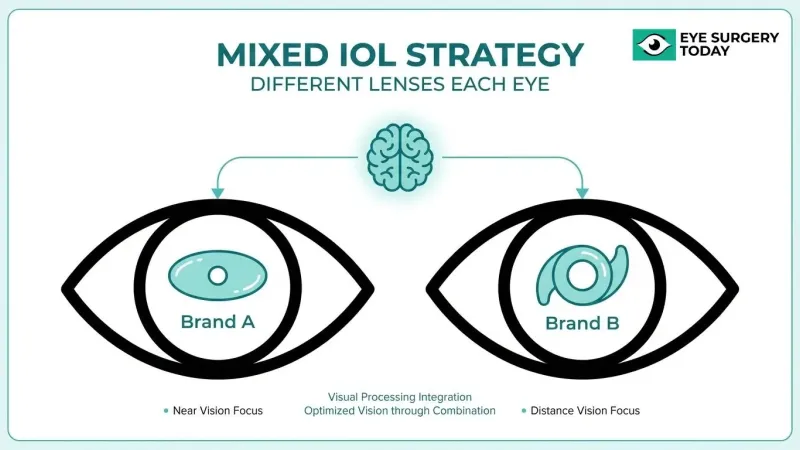
No single lens eliminates glasses in every situation. Patients who value broad spectacle freedom across all distances often benefit most from multifocal designs, while those sensitive to visual disturbances may prefer EDOF or enhanced monofocal options that balance independence with fewer side effects.
Which Lifestyle Lens May Help With Intermediate and Computer Vision?
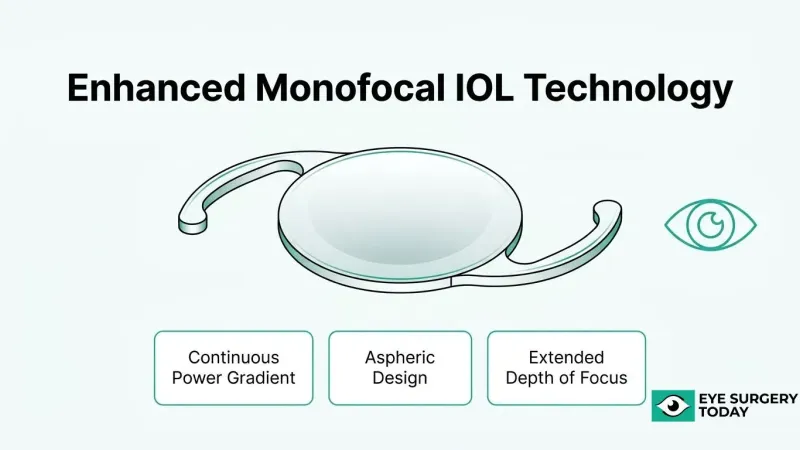
The lifestyle lenses that may help with intermediate and computer vision are EDOF lenses and enhanced monofocal IOLs. EDOF lenses provide a continuous range of vision from distance through intermediate (arm’s length), which is sufficient for most daily activities like computer work, though reading glasses may still be required for small print.
According to a study published in PubMed Central (NIH), enhanced monofocal IOLs, which offer a slightly broader range of vision than standard monofocals, resulted in significantly better satisfaction with intermediate vision and lower spectacle dependence without increasing unwanted visual symptoms. This makes enhanced monofocals a particularly practical choice for patients whose daily routine centers on screen-based tasks but who want to avoid the glare and halos sometimes associated with more complex optics.
With vision goals clarified, the next step is understanding whether your eye health qualifies you for these options.
Who May Be a Good Candidate for Lifestyle Lenses?
A good candidate for lifestyle lenses typically has healthy eyes, stable vision, and realistic expectations about visual outcomes. Eligibility depends on specific eye health conditions, astigmatism status, and the presence of ocular disease.
What Eye Health Conditions May Affect Lifestyle Lens Eligibility?
Eye health conditions that may affect lifestyle lens eligibility include macular degeneration, advanced glaucoma, severe dry eye disease, and corneal irregularities. Each of these conditions can compromise the optical performance of advanced technology IOLs by reducing contrast sensitivity or degrading visual quality.
Before recommending a lifestyle lens, an ophthalmologist typically evaluates several factors:
- Overall retinal health and macular function
- Corneal surface regularity and topography
- Tear film stability and ocular surface condition
- Optic nerve status and visual field integrity
Patients with otherwise healthy eyes and no significant ocular comorbidities tend to achieve the best outcomes with multifocal, EDOF, or toric IOL designs. A thorough preoperative workup is the single most important step in determining whether a patient can benefit from a lifestyle lens; skipping this evaluation is where most dissatisfaction originates.
How Does Pre-Existing Astigmatism Influence Lens Selection?
Pre-existing astigmatism influences lens selection by determining which IOL design can most effectively neutralize corneal irregularity during cataract surgery. Toric IOLs are specifically indicated for reducing residual postoperative corneal astigmatism. Newer toric designs offer enhanced rotational stability and precise visual outcomes for patients with measurable astigmatism.
For patients with lower astigmatism levels, EDOF or multifocal toric hybrid lenses may address both astigmatism and presbyopia simultaneously. When astigmatism exceeds certain thresholds, leaving it uncorrected can significantly undermine the performance of any premium lens, making toric correction one of the most impactful decisions in the entire lens selection process.
Can Patients With Dry Eye Disease Receive Lifestyle Lenses?
Patients with dry eye disease can sometimes receive lifestyle lenses, but the severity of the condition plays a critical role. Mild dry eye that responds well to treatment may not disqualify a patient. However, severe or unstable dry eye disease may compromise the visual quality delivered by multifocal and EDOF optics.
An irregular tear film scatters light unpredictably, which can worsen halos and glare. For this reason, your ophthalmologist may recommend optimizing the ocular surface with lubricants, anti-inflammatory drops, or punctal plugs before finalizing any lens decision. Stabilizing dry eye prior to surgery often improves both surgical measurements and postoperative satisfaction.
Are Lifestyle Lenses Suitable for Patients With Glaucoma or Macular Disease?
Lifestyle lenses are generally not suitable for patients with advanced glaucoma or macular disease. According to the American Academy of Ophthalmology, advanced technology IOLs, particularly multifocal and EDOF designs, are generally not recommended for patients with significant pre-existing ocular pathologies such as macular degeneration, advanced glaucoma, or severe dry eye disease due to potential compromises in contrast sensitivity and visual quality.
However, alternatives do exist. A standard monofocal or enhanced monofocal lens may also provide reliable outcomes without the optical trade-offs that advanced designs introduce.
Understanding candidacy requirements helps set realistic expectations before discussing specific benefits with your surgeon.
What Are the Potential Benefits of Choosing a Lifestyle Lens?
The potential benefits of choosing a lifestyle lens include reduced dependence on glasses, improved vision across multiple distances, and correction of pre-existing astigmatism. These advantages vary by lens type, and each design involves specific optical trade-offs that your ophthalmologist can help you evaluate.
Lifestyle lenses may offer several functional improvements over standard monofocal IOLs:
- Broader range of functional vision. Multifocal IOLs can provide clear sight at near, intermediate, and far distances from a single implant. EDOF lenses extend continuous focus from distance through arm’s length, which may cover most daily tasks like computer work.
- Reduced spectacle dependence. According to an Evidence-based Synthesis Program (ESP) Center systematic review, patients receiving multifocal IOLs demonstrated significantly better uncorrected near vision and a greater proportion achieved total spectacle independence compared to those receiving standard monofocal IOLs.
- Astigmatism correction at the time of surgery. Toric IOLs reduce residual postoperative corneal astigmatism, and newer designs offer enhanced rotational stability for more precise visual outcomes.
- Post-operative fine-tuning with select designs. The Light Adjustable Lens allows non-invasive power adjustments after implantation using UV light, giving surgeons the ability to refine the prescription based on real healing outcomes.
- Options for patients with corneal irregularities. Small aperture lenses, such as the IC-8 Apthera IOL, provide an alternative for individuals who may not be suitable candidates for traditional multifocal or EDOF designs.
These benefits, however, come with trade-offs worth discussing with your surgeon. Enhanced monofocal IOLs, for example, have been shown to deliver significantly better intermediate vision satisfaction and lower spectacle dependence without increasing unwanted visual symptoms like halos or glare. For patients who prioritize visual comfort over maximum range, this category may represent a practical middle ground. Every lens design involves a balance between functional range and optical side effects, so the “best” benefit depends entirely on individual visual priorities and eye health.
What Are the Possible Risks and Side Effects of Lifestyle Lenses?
The possible risks and side effects of lifestyle lenses include visual disturbances, contrast sensitivity changes, and, in rare cases, the need for additional surgery. The specific side effects vary by lens type.
What Visual Disturbances May Occur After Multifocal Lens Implantation?
Visual disturbances that may occur after multifocal lens implantation include halos, glare, and reduced contrast sensitivity, particularly in low-light environments. According to a comparative study published by the National Center for Biotechnology Information (NCBI), 65% to 79% of patients reported halos and 43% to 64% reported glare six months after receiving multifocal IOLs. These symptoms are the most commonly reported complications with this lens category.
Not all patients experience these phenomena at the same intensity. A process called neuroadaptation, where the brain gradually learns to interpret the multiple focal images produced by the lens optics, can take several weeks to months. For many patients, halos and glare diminish significantly during this adaptation period. Preoperative counseling about these potential trade-offs remains one of the most important steps in setting realistic expectations before choosing a multifocal implant.
What Visual Side Effects May Occur With Extended Depth of Focus Lenses?
Visual side effects that may occur with extended depth of focus lenses include mild halos and slight reductions in contrast sensitivity, though these tend to be less pronounced than those associated with multifocal IOLs. Because EDOF lenses elongate a single focal point rather than splitting light into distinct zones, the optical compromises are generally subtler.
Shared decision-making plays a critical role here. According to a 2024 cross-sectional study published in Patient Preference and Adherence, shared decision-making enables patients to actively participate in selecting an IOL based on their lifestyle needs, visual goals, and willingness to tolerate potential side effects. For patients who prioritize fewer visual disturbances but still want expanded range over a standard monofocal, EDOF lenses often represent one of the most balanced trade-offs available.
How Common Is the Need for Lens Exchange or Enhancement Surgery?
The need for lens exchange or enhancement surgery after lifestyle lens implantation is uncommon but not negligible. IOL exchange may be considered when persistent visual disturbances, residual refractive error, or lens misalignment significantly affect a patient’s quality of life and cannot be resolved through neuroadaptation or corrective procedures such as LASIK enhancement.
Most cases involving dissatisfaction can be addressed with conservative measures first, including allowing adequate time for neuroadaptation or performing a supplemental laser correction. Full lens exchange carries additional surgical risks and is typically reserved as a last resort. This reality underscores why thorough preoperative evaluation and honest discussions about tolerance for visual trade-offs are essential before committing to any premium implant.
With an understanding of potential risks in place, knowing the cost structure of each lens type helps patients weigh the full picture.
How Much Do Lifestyle Lenses Typically Cost?
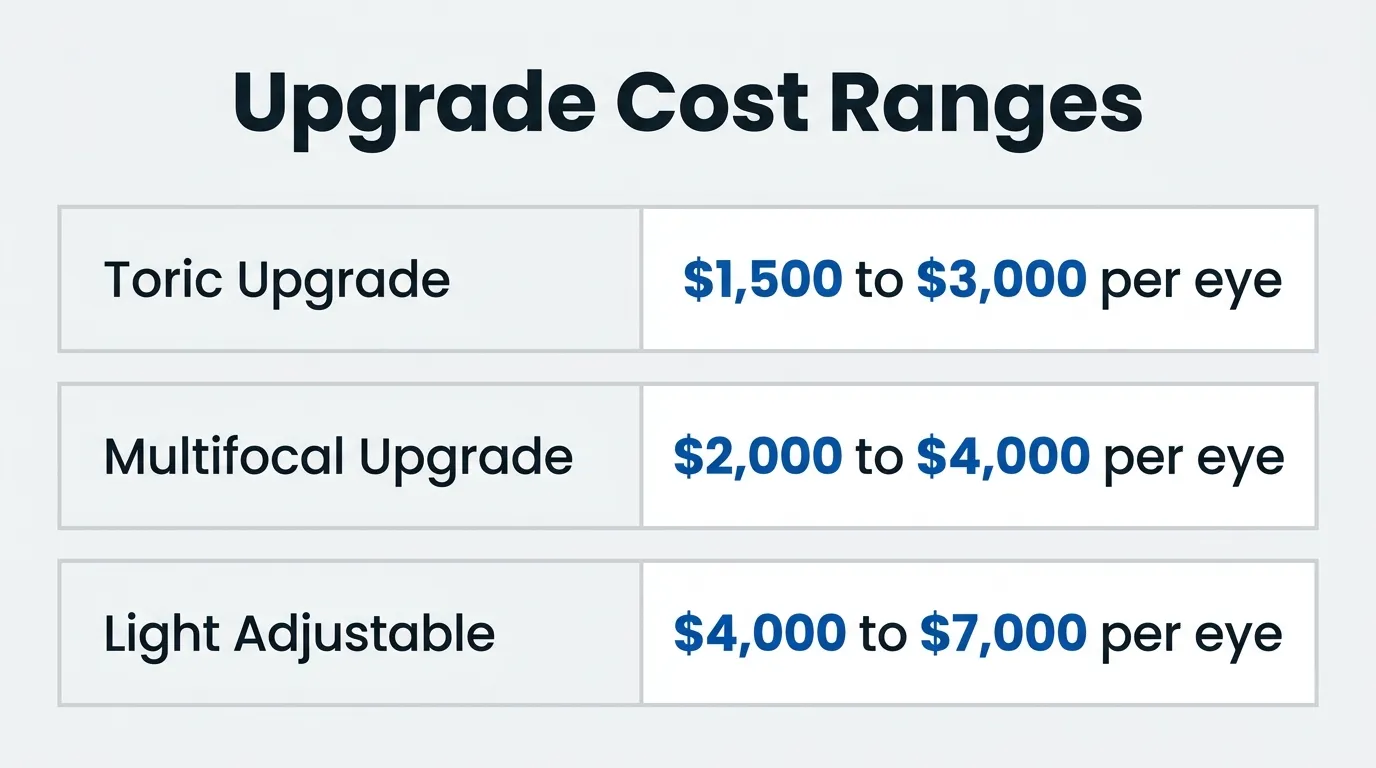
Lifestyle lenses typically cost between $1,500 and over $4,000 per eye as an out-of-pocket upgrade beyond what insurance covers. The sections below break down costs for multifocal, toric, and Light Adjustable Lens upgrades, plus what Medicare and private insurance will and will not pay.
What Does a Multifocal Lens Upgrade Typically Cost?
A multifocal lens upgrade typically costs at the higher end of the premium IOL range, often between $2,000 and $4,000 or more per eye. This cost reflects the advanced diffractive or refractive optics engineered to provide near, intermediate, and distance vision from a single implant. Under CMS policy, patients pay the difference between a standard monofocal lens and the advanced technology IOL, including the lens itself and any additional physician services the upgrade requires. Because multifocal lenses also involve more detailed preoperative measurements and postoperative management, the total out-of-pocket expense can be higher than simpler premium options. For patients whose primary goal is reducing glasses dependence across all distances, multifocal upgrades often represent the most cost-intensive but also the most comprehensive investment in spectacle freedom.
What Does a Toric Lens Upgrade Typically Cost?
A toric lens upgrade typically costs between $1,500 and $3,000 per eye, placing it at the lower to mid range of premium IOL pricing. Toric IOLs correct pre-existing corneal astigmatism, which a standard monofocal lens cannot address. The cost includes the specialized lens and precise alignment procedures required during implantation to ensure rotational stability. Because toric lenses correct astigmatism at a single focal distance rather than providing multifocal optics, the pricing tends to be more moderate than multifocal or combination toric-multifocal designs. For patients with significant astigmatism, this upgrade can meaningfully sharpen distance vision without glasses, making it one of the most straightforward and cost-effective premium lens investments available.
What Does a Light Adjustable Lens Typically Cost?
A Light Adjustable Lens (LAL) typically costs between $4,000 and $7,000 or more per eye. This premium reflects a unique capability: the LAL allows non-invasive, UV-based power adjustments after implantation, so the prescription can be fine-tuned once the eye has healed. That post-surgical customization requires multiple light treatment visits and mandatory UV-protective glasses worn during all waking hours for several weeks until the final lock-in treatment is completed. These additional office visits and the specialized Light Delivery Device contribute to the higher price point. As reported in the Journal of Cataract and Refractive Surgery (2024), the LAL’s post-operative adjustability offers a level of refractive precision that fixed-power IOLs cannot match. Patients should also be aware of specific contraindications, including pre-existing macular disease and use of UV-sensitizing medications, which may affect eligibility before cost becomes a consideration.
Does Insurance or Medicare Cover Lifestyle Lens Upgrades?
Insurance and Medicare do not cover the full cost of lifestyle lens upgrades. According to The Big 65 Medicare Coverage Guide (2026), Medicare and most private insurance plans cover the cost of standard monofocal IOLs, including the surgical procedure itself, but do not cover the additional upgrade costs for premium lenses such as multifocal, toric, or Light Adjustable Lenses. The out-of-pocket expense for these upgrades can range from $1,500 to over $4,000 per eye. Patients are responsible for paying the difference between the covered standard lens and the chosen premium option. Many surgical practices offer financing plans or payment options to help manage this expense. Discussing both lens selection and payment structure with your ophthalmologist’s office before surgery can help avoid unexpected costs and ensure the chosen implant aligns with both visual goals and budget.
What Should You Expect During Recovery With a Lifestyle Lens?
Recovery with a lifestyle lens follows a similar post-operative timeline to standard cataract surgery, though visual adaptation and lens-specific protocols may vary by implant type.
Visual adaptation to multifocal IOLs, often referred to as neuroadaptation, can take several weeks to months as the brain learns to process the multiple images provided by the lens optics, according to clinical trial results published in Clinical Ophthalmology. During this period, mild visual disturbances such as halos or glare around lights are common, particularly at night. These symptoms typically diminish as the visual cortex adjusts to interpreting the new focal points.
Patients who receive a Light Adjustable Lens face a unique recovery requirement. Post-operative protocols require wearing UV-protective glasses during all waking hours for several weeks until the final “lock-in” treatment is completed to prevent uncontrolled lens power changes. Missing UV protection appointments or exposing the eye to unfiltered sunlight before lock-in can alter the lens prescription in unintended ways.
General recovery expectations across lifestyle lens types include:
- Most patients notice improved distance vision within the first few days.
- Near and intermediate vision may take longer to stabilize, especially with multifocal or EDOF designs.
- Prescription eye drops for inflammation and infection prevention are typically used for several weeks.
- Driving clearance and return to normal activities depend on individual healing, usually within one to two weeks.
Setting realistic expectations before surgery is one of the most overlooked aspects of a successful outcome. Patients who understand that neuroadaptation is a gradual process tend to report higher satisfaction than those expecting instant results across all distances.
With a clear picture of what recovery involves, the next step is understanding how to collaborate with your surgeon on lens selection.
How Do You Choose the Right Lifestyle Lens With Your Surgeon?
You choose the right lifestyle lens with your surgeon through shared decision-making, which combines your visual goals, eye health, and tolerance for potential side effects into a personalized recommendation.
Choosing a lifestyle lens is not a one-size-fits-all decision. According to a 2024 cross-sectional study published in Patient Preference and Adherence, shared decision-making (SDM) is a collaborative approach that enables patients to actively participate in selecting an IOL based on their specific lifestyle needs, visual goals, and willingness to tolerate potential side effects. This process typically involves several key steps:
- Your surgeon performs a comprehensive preoperative eye examination to identify conditions that may affect lens eligibility, such as macular degeneration, glaucoma, or corneal irregularities.
- You discuss your daily visual demands, including how much time you spend reading, working on a computer, or driving at night.
- Your surgeon explains the trade-offs between spectacle independence and the risk of visual phenomena, such as halos and glare, that certain lens designs may produce.
- Together, you weigh the out-of-pocket costs of premium lens upgrades against the functional benefits each option provides.
- Your surgeon may recommend diagnostic testing, such as corneal topography and optical biometry, to determine which lens design best matches your anatomy.
Ophthalmology guidelines emphasize the importance of preoperative counseling to manage expectations regarding these trade-offs. In practice, the most successful outcomes tend to come from patients who clearly communicate their priorities and surgeons who transparently present both the benefits and limitations of each option. No premium IOL eliminates every visual compromise, so honest conversation before surgery matters more than the lens technology itself.
With your lens decision informed, understanding how evidence-based resources support that choice adds further confidence.
How Can Evidence-Based Cataract Surgery Guides Help You Choose a Lifestyle Lens?
Evidence-based cataract surgery guides can help you choose a lifestyle lens by translating clinical research into clear, actionable comparisons of implant options. The following sections cover how Eye Surgery Today’s resources support informed decision-making and the key takeaways from this guide.
Can Eye Surgery Today’s Resources Help You Understand Your Implant Options?
Yes, Eye Surgery Today’s resources can help you understand your implant options by presenting complex IOL data in accessible, patient-focused language. Founded by nationally recognized key opinion leaders in ophthalmology, the platform bridges the gap between clinical evidence and everyday decision-making. Each guide breaks down lens types, candidacy factors, cost considerations, and potential side effects so readers can approach their surgeon consultation with informed questions. For patients weighing trade-offs between spectacle independence and visual side effects, this level of unbiased, evidence-based guidance can be the difference between confidence and confusion at the pre-operative appointment.
What Are the Key Takeaways About Lifestyle Lenses and Implant Options for Cataract Surgery?
The key takeaways about lifestyle lenses and implant options for cataract surgery center on matching each patient’s visual goals, eye health, and tolerance for trade-offs to the right IOL design. Core points to remember include:
- Lifestyle lenses, such as multifocal, EDOF, toric, accommodating, and light adjustable lenses, each address different vision priorities.
- Spectacle independence is achievable for many patients, though multifocal designs may introduce visual disturbances such as halos and glare.
- Pre-existing conditions, including macular degeneration and advanced glaucoma, can limit candidacy for certain premium IOLs.
- Insurance typically covers standard monofocal lenses, while premium upgrades require out-of-pocket investment.
- Shared decision-making with your surgeon remains the most reliable path to a satisfying outcome.
According to a systematic review referenced by Ophthalmology Advisor, overall satisfaction scores with premium IOLs can sometimes be lower than with monofocal lenses due to increased visual disturbances, reinforcing why realistic expectations matter. The most important step any patient can take is an honest conversation with a qualified ophthalmologist about lifestyle needs, visual priorities, and willingness to accept potential side effects.