Visual quality after cataract surgery refers to the collective measure of contrast sensitivity, sharpness, and optical clarity that determines how well the eye perceives detail, depth, and color in real-world conditions. Replacing the clouded natural lens with a clear intraocular lens (IOL) may restore these visual dimensions, though outcomes depend on lens selection, healing timelines, and pre-existing eye health.
This guide covers how cataracts degrade vision before surgery, how contrast and sharpness may recover across specific postoperative milestones, how IOL type influences visual quality, what side effects and comorbidities can limit results, and how to measure and maximize outcomes over time.
Cataracts reduce contrast sensitivity across all spatial frequencies and impair color perception along the blue-yellow axis, often producing functional disability even when standard acuity appears adequate. Surgery may begin reversing these deficits within the first week, though contrast sensitivity values at three to six months are significantly higher than early postoperative measurements.
IOL selection is among the most influential variables in post-surgical visual quality. Monofocal lenses tend to preserve contrast at a single focal point, while multifocal and extended depth of focus designs expand the usable range of vision but may reduce contrast sensitivity or introduce halos and glare.
Complications such as posterior capsule opacification, dry eye disease, and residual refractive errors can each diminish sharpness and clarity during recovery, with dry eye affecting an estimated 37% of patients in the postoperative period.
Pre-existing conditions including glaucoma, macular degeneration, diabetic retinopathy, and corneal disease may place a ceiling on achievable improvement, making preoperative assessment and realistic expectation-setting essential components of the surgical process.
What Is Visual Quality and Why Does It Matter After Cataract Surgery?
Visual quality is the collective measure of how clearly, sharply, and accurately the eye perceives the world, encompassing visual acuity, contrast sensitivity, and optical clarity. After cataract surgery, restoring visual quality is the central goal, as the procedure replaces a clouded natural lens with an artificial intraocular lens. The following sub-sections define the key metrics clinicians use and explain why they matter for everyday function and patient outcomes.
What Is Visual Acuity and How Does It Relate to Cataract Surgery Outcomes?
Visual acuity is the eye’s ability to resolve fine spatial detail, most commonly measured using a letter chart at a standardized distance. It is the metric most patients recognize, yet it tells only part of the story after cataract surgery. According to research published in PubMed Central, visual acuity decreases significantly with increasing cataract severity, with contrast sensitivity also declining across all spatial frequencies as lens opacities progress. A patient may retain acceptable letter-chart acuity while still experiencing meaningful visual disability in low-contrast or dim-light conditions, which is why acuity alone is considered an incomplete measure of functional vision.
What Is Contrast Sensitivity and Why Is It Important After Surgery?
Contrast sensitivity is the eye’s ability to detect small differences in illumination between a target and its background, measured using sine-wave gratings across a range of spatial frequencies. It is clinically important after cataract surgery because it reflects real-world visual performance more fully than letter-chart acuity. Dr. Jay S. Pepose notes that patients with low contrast sensitivity function may have difficulty discerning facial expressions, seeing the edge of a curb, pouring liquids into a cup, and reading in dim light. These are precisely the functional tasks that patients most want to recover, making contrast sensitivity a critical post-surgical benchmark.
What Are the Key Visual Quality Metrics Clinicians Measure After Cataract Surgery?
The key visual quality metrics clinicians measure after cataract surgery include:
- Visual acuity (VA): Resolving ability at a standardized distance, typically measured with a letter chart.
- Contrast sensitivity (CS): Detection of luminance differences across spatial frequencies, measured with sine-wave grating charts such as the CSV-1000.
- Modulation transfer function (MTF): An optical performance metric quantifying how well the eye’s optical system transfers contrast across spatial frequencies, per the European Society of Cataract and Refractive Surgeons.
- Strehl ratio: A measure of optical aberration, defined as peak image intensity normalized against a diffraction-limited ideal.
- Vision-related quality of life (QOL): Patient-reported functional outcomes, assessed with validated instruments such as the NEI VFQ-25.
Understanding these metrics helps patients set realistic expectations and allows clinicians to detect subtle visual deficits that standard acuity testing would miss.
How Do Cataracts Affect Contrast Sensitivity and Sharpness Before Surgery?
Cataracts affect contrast sensitivity and sharpness by scattering and absorbing light as it passes through the progressively opacified crystalline lens, degrading the optical signal before it reaches the retina. The sections below cover how lens opacity reduces contrast at multiple spatial frequencies, impairs sharpness even when standard acuity appears adequate, and distorts color perception.
How Do Cataracts Reduce Contrast Sensitivity Before Surgery?
Cataracts reduce contrast sensitivity by causing significant loss across all measured spatial frequencies as lens opacities progress. According to a study published on PubMed Central, visual acuity decreases significantly with increasing cataract severity, and contrast sensitivity loss occurs at spatial frequencies of 3, 6, 12, and 18 cycles per degree (cpd).
Critically, this impairment is not limited to advanced cataracts. Even in cataractous eyes with good visual acuity of 20/25 or better, the contrast threshold at 6 cpd is significantly decreased compared to healthy controls, as reported by Ophthalmology Times. This means standard Snellen acuity tests may miss functionally significant visual impairment that contrast sensitivity testing would detect.
How Do Cataracts Impair Sharpness and Spatial Resolution?
Cataracts impair sharpness by reducing the modulation transfer function of the eye’s optical system, meaning contrast in fine detail degrades more rapidly across spatial frequencies than in a healthy lens. The yellowed, opacified lens scatters light rather than focusing it cleanly, producing a blurred, hazy retinal image even when pupil diameter and corneal clarity remain normal.
Dr. Jay S. Pepose notes that patients with low contrast sensitivity function may have difficulty discerning facial expressions, seeing the edge of a curb, pouring liquids into a cup, and reading in dim light, illustrating how sharpness loss translates directly into functional disability before surgery is considered.
How Do Cataracts Affect Color Perception Before Surgery?
Cataracts consistently impair color vision, most notably along the blue-yellow (tritan) axis, particularly in nuclear cataracts. This occurs because the yellowed crystalline lens selectively absorbs short-wavelength light, as documented in a clinical review published in Cureus. The result is a progressive warm shift in perceived color, with blues appearing muted or indistinguishable from greens, reducing the contrast and sharpness of color boundaries throughout the visual field.
How May Cataract Surgery Improve Contrast Sensitivity?
Cataract surgery may improve contrast sensitivity by removing the opacified natural lens and replacing it with a clear intraocular lens (IOL), restoring the eye’s ability to detect subtle differences in light and shadow. As Dr. Jay S. Pepose notes, patients with low contrast sensitivity may struggle to discern facial expressions, see the edge of a curb, or read in dim light. The sections below trace how that recovery unfolds at one week, three months, and six months.
How Does Contrast Sensitivity Change in the First Week After Surgery?
Contrast sensitivity in the first week after surgery is often still in an early recovery phase, with measurable but incomplete improvement over baseline. Contrast sensitivity is the ability of the eye to detect small changes in illumination at targets without clearly defined edges, typically measured using sine-wave gratings with tools such as the CSV-1000 system, which monitors and calibrates light levels for day or night testing. The Mars Letter Contrast Sensitivity Test offers comparable reliability, with test-retest performance equal to or better than the Pelli-Robson test. IOL type matters here: both the Symfony and Vivity EDOF IOLs carry a manufacturer warning that contrast sensitivity may be reduced compared with a monofocal IOL, particularly in the early postoperative period.
How Does Contrast Sensitivity Change in the First Three Months?
Contrast sensitivity in the first three months after surgery continues to improve progressively. According to research published in Arquivos Brasileiros de Oftalmologia, visual acuity and contrast sensitivity improve progressively between one and six postoperative months following bilateral implantation of multifocal diffractive intraocular lenses. This gradual trajectory reflects neural adaptation as well as IOL settling, and patients should expect incremental rather than immediate gains during this window.
What Level of Contrast Improvement Can Be Expected at Six Months?
The level of contrast improvement that can be expected at six months is meaningfully greater than at one week. A study published in The Lancet found that log contrast sensitivity values at three or six months postoperatively were significantly higher than values recorded at one week (P < 0.05). Most patients achieve near-peak functional contrast recovery by this milestone, though outcomes vary with IOL type, preoperative eye health, and any comorbid conditions.
How May Cataract Surgery Improve Visual Sharpness and Clarity?
Cataract surgery may improve visual sharpness and clarity by removing the clouded natural lens and replacing it with a clear intraocular lens (IOL). The following sub-sections cover how sharpness changes across distance, near, and intermediate vision after surgery.
According to a 2024 study published in Frontiers in Neuroscience, patients with age-related cataracts demonstrate significant improvements in both cognitive and visual functions, including simultaneous vision and stereopsis, at 1 week, 1 month, and 3 months postoperatively compared to preoperative assessments.
How Does Sharpness Change for Distance Vision After Surgery?
Distance vision sharpness may improve substantially after cataract surgery, as the new IOL is typically targeted to optimize far-focus clarity. Clinicians often use the NEI VFQ-25, a validated tool for measuring vision-related quality of life in patients undergoing ophthalmic surgery, to quantify these functional improvements. Patients commonly report clearer recognition of faces, road signs, and distant objects in the weeks following surgery. In practice, distance sharpness tends to be the most consistent and predictable gain, particularly with standard monofocal IOLs.
How Does Sharpness Change for Near Vision After Surgery?
Near vision sharpness after cataract surgery depends significantly on the type of IOL implanted. A study published in Eye (Nature) found that the extended depth of focus (EDF) IOL demonstrated statistically superior intermediate and near performance compared to the monofocal IOL while maintaining an extended range of vision. Patients receiving standard monofocal IOLs targeted for distance may still require reading glasses for near tasks, making IOL selection a critical factor in near-vision outcomes.
How Does Sharpness Change for Intermediate Vision After Surgery?
Intermediate vision sharpness, covering distances such as computer screens and dashboard displays, varies by IOL type. Monofocal lenses generally provide limited intermediate clarity unless targeted at that focal point, while EDF and multifocal IOLs are specifically designed to extend the usable range through the intermediate zone. Discussing daily visual demands with a surgeon before IOL selection helps align implant choice with real-world clarity expectations.
How Does IOL Type Affect Visual Quality After Cataract Surgery?
IOL type is one of the most influential variables in post-surgical visual quality. The sections below cover how monofocal, multifocal, EDOF, and toric lenses each affect contrast sensitivity and sharpness.
How Does a Monofocal IOL Affect Contrast and Sharpness?
A monofocal IOL affects contrast and sharpness by delivering a single fixed focal point, typically optimized for distance vision. Because all light is directed to one focal plane, these lenses produce excellent contrast sensitivity and high image sharpness at the targeted distance. For patients who prioritize crisp, high-contrast vision at distance, particularly in low-light conditions, monofocal lenses remain the reference standard. Spectacle correction is generally needed for near tasks, but the optical simplicity of a single focal point means less light scatter and fewer dysphotopsia complaints than premium multifocal designs.
How Does a Multifocal IOL Affect Contrast and Sharpness?
A multifocal IOL affects contrast and sharpness by splitting incoming light across two or more focal points to support both near and distance vision. This light division can reduce contrast sensitivity compared to a monofocal lens, as the optical energy is distributed across focal zones rather than concentrated at one. Glare and halos around light sources at night are more commonly reported with multifocal designs. That said, contrast and sharpness outcomes do continue to improve over time; visual acuity and contrast sensitivity progressively improve between one and six postoperative months following bilateral implantation of multifocal diffractive intraocular lenses, according to research published in Arquivos Brasileiros de Oftalmologia.
How Does an Extended Depth of Focus IOL Affect Contrast and Sharpness?
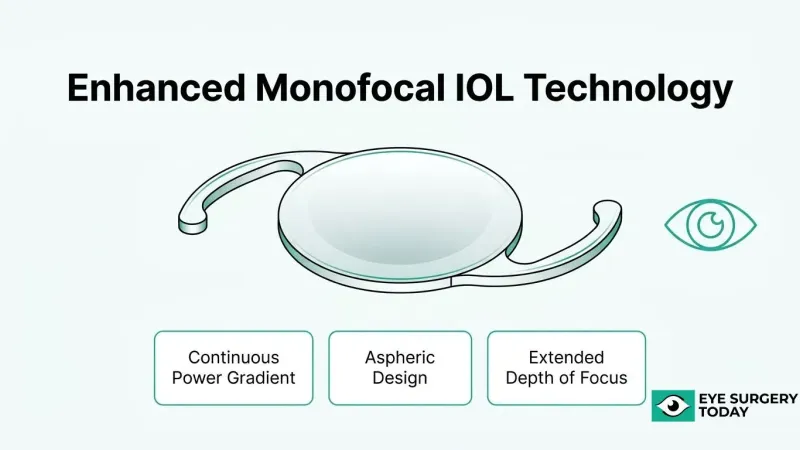
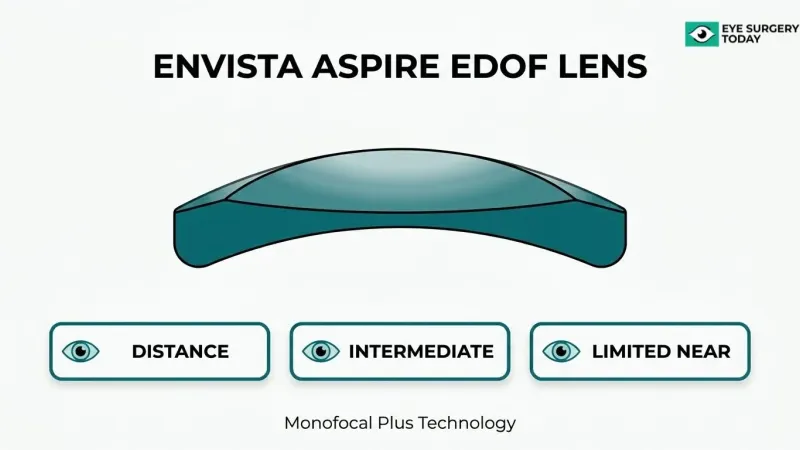
An extended depth of focus (EDOF) IOL affects contrast and sharpness by elongating the focal range rather than creating discrete near and distance focal points. This design may reduce dysphotopsia compared to multifocal lenses; patient satisfaction scores were high in both EDOF (89.5%) and multifocal (86.8%) groups, with fewer complaints of glare and halos reported in the EDOF group, according to a study published on ResearchGate. However, both the Symfony and Vivity EDOF IOLs include a warning in their directions for use that contrast sensitivity may be reduced compared with a monofocal IOL. For patients who need strong intermediate vision with acceptable near performance, EDOF lenses offer a clinically meaningful balance between visual range and contrast preservation.
How Does a Toric IOL Affect Contrast and Sharpness?
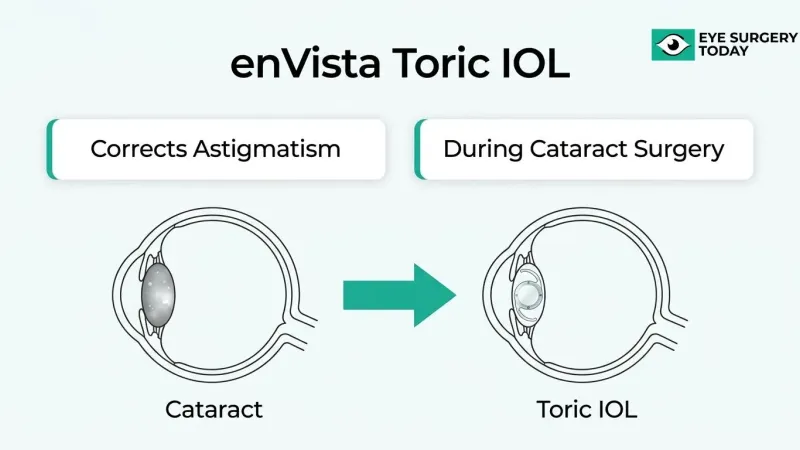
A toric IOL affects contrast and sharpness primarily by correcting pre-existing corneal astigmatism, which is a major source of image blur and reduced contrast when left untreated. By aligning the lens’s cylindrical correction axis with the corneal meridian, toric IOLs reduce the optical aberrations that astigmatism introduces, resulting in sharper, higher-contrast images. Unlike multifocal or EDOF designs, toric lenses do not split light across focal zones, so contrast sensitivity loss from the lens itself is minimal. The visual quality benefit depends heavily on accurate axis alignment; even slight rotational misalignment after implantation can partially negate the astigmatic correction and reduce sharpness gains.
What Visual Side Effects May Affect Quality After Cataract Surgery?
Visual side effects that may affect quality after cataract surgery include halos and glare, posterior capsule opacification, residual refractive errors, and dry eye disease. Each of these complications can reduce contrast sensitivity, sharpness, or overall clarity during recovery.
How Do Halos and Glare Affect Visual Quality After Surgery?
Halos and glare are optical phenomena that may reduce visual quality after cataract surgery, particularly in low-light conditions. They occur when light scatters around the implanted IOL, creating rings or streaks around light sources. IOL design plays a meaningful role in how often patients experience these symptoms. According to a study published on ResearchGate, patient satisfaction scores were high in both EDOF (89.5%) and multifocal (86.8%) groups, with fewer complaints of glare and halos reported in the EDOF group. For patients who are particularly sensitive to nighttime visual disturbances, EDOF lens selection may offer a practical advantage over multifocal designs.
How Does Posterior Capsule Opacification Affect Sharpness?
Posterior capsule opacification (PCO) is a condition where the lens capsule behind the IOL becomes cloudy after cataract surgery, reducing visual sharpness. It is one of the most common long-term complications following the procedure. According to a five-year study published in Dove Medical Press, Nd:YAG capsulotomy incidence varied considerably by IOL type, reaching 8.8% for the Alcon Acrysof IOL and 47.4% for the AJL LLASY60 IOL. This range highlights that IOL material choice meaningfully influences PCO risk. When sharpness declines months or years after surgery, PCO should be considered a likely cause before assuming the outcome is permanent.
How Do Residual Refractive Errors Affect Clarity After Surgery?
Residual refractive errors are focusing inaccuracies that remain after cataract surgery when the IOL power does not fully correct the eye’s refractive needs, resulting in blurred or reduced clarity. Even with precise biometry, small mismatches between the targeted and achieved refraction can occur. A study published in the Journal of Clinical Medicine found that EDOF IOLs may be a viable option for many patients because they are more tolerant of residual refractive errors without a definite compromise in visual range. This tolerance makes EDOF lenses worth discussing with a surgeon, especially for patients with complex eyes.
How Does Dry Eye Affect Visual Quality After Cataract Surgery?
Dry eye affects visual quality after cataract surgery by destabilizing the tear film, which in turn disrupts light transmission and reduces contrast sensitivity. The ocular surface incisions made during surgery can temporarily impair corneal nerve function, reducing tear production. According to a meta-analysis published in BMC Ophthalmology, the pooled prevalence of dry eye disease after cataract surgery is estimated at 37.4%, with symptoms potentially persisting up to three months postoperatively. Contrast sensitivity can continue improving beyond this window; a study in The Lancet found that log CS values at three to six months postoperatively were significantly higher than values recorded at one week (P < 0.05). Managing dry eye early in the recovery period is often underestimated but directly impacts how well the visual system can perform.
Who May Not Experience Full Visual Quality Improvement?
Not everyone achieves the same visual outcomes after cataract surgery. Pre-existing eye conditions, such as macular degeneration, glaucoma, diabetic retinopathy, and corneal disease, can limit how much contrast, sharpness, and clarity may improve following the procedure.
What if You Have Macular Degeneration Before Cataract Surgery?
Patients with macular degeneration before cataract surgery may experience limited visual quality improvement because the macula, responsible for central and fine-detail vision, remains damaged regardless of lens replacement. Cataract surgery can still improve overall light transmission and may help the ophthalmologist better monitor macular health postoperatively, but central vision loss caused by macular degeneration is not corrected by removing the clouded lens. For these patients, realistic expectations are essential before proceeding.
What if You Have Glaucoma Before Cataract Surgery?
Patients with glaucoma before cataract surgery face a higher risk of complications and more modest visual outcomes than those without the condition. According to a study published in the American Journal of Ophthalmology, eyes with glaucoma are at an increased risk for complications and have more modest visual outcomes after cataract surgery compared to eyes without glaucoma. Glaucoma-related optic nerve damage places a ceiling on how much functional vision can be recovered, even when the cataract is successfully removed.
What if You Have Diabetic Retinopathy Before Cataract Surgery?
Patients with diabetic retinopathy before cataract surgery are less likely to achieve optimal corrected distance visual acuity compared to patients without diabetes. According to a study published in the Journal of Cataract and Refractive Surgery, patients with diabetes and cataracts were less likely to achieve a corrected distance visual acuity (CDVA) of 20/20 compared with those without diabetes, though there is no evidence cataract surgery should be delayed in diabetic patients. Surgery remains appropriate, but retinopathy may cap the degree of visual quality restoration.
What if You Have Corneal Disease Before Cataract Surgery?
Patients with corneal disease before cataract surgery may achieve reduced visual outcomes depending on the severity and type of condition present. In patients with Fuchs’ endothelial corneal dystrophy, for example, 81% of eyes achieved within ±0.50D of the refractive target after cataract surgery, with 90% achieving 20/40 or better vision, according to data published by Eyes on Eyecare. While these outcomes can be meaningful, corneal irregularity and endothelial compromise may still limit contrast sensitivity and sharpness compared to patients with healthy corneas.
How Is Visual Quality Measured Before and After Cataract Surgery?
Visual quality before and after cataract surgery is measured using standardized clinical tests that assess contrast sensitivity, visual acuity, and patient-reported outcomes. The sections below cover the key tools used in clinical practice.
What Tests Measure Contrast Sensitivity Before and After Surgery?
The tests that measure contrast sensitivity before and after surgery include the CSV-1000, the Mars Letter Contrast Sensitivity Test, and the Pelli-Robson chart. The CSV-1000 test system provides a direct measure of contrast sensitivity thresholds, with built-in photocells that monitor and calibrate light levels for both day and night testing conditions. According to a study published in Investigative Ophthalmology and Visual Science, the Mars Letter Contrast Sensitivity Test has demonstrated test-retest reliability equal to or better than the Pelli-Robson test in clinical evaluations. Together, these tools allow clinicians to detect contrast losses that standard visual acuity charts may miss entirely, making them particularly valuable for patients who report blurred vision despite adequate letter chart scores.
What Tools Measure Vision-Related Quality of Life After Cataract Surgery?
The tool most widely used to measure vision-related quality of life after cataract surgery is the NEI VFQ-25. According to a study published in Eye (Nature Portfolio), the NEI VFQ-25 has been validated as a reliable instrument for assessing vision-related quality of life in patients undergoing ophthalmic surgery. It captures functional dimensions such as driving, reading, and social participation, offering a more complete picture of surgical outcomes than clinical measurements alone. For patients and surgeons evaluating whether visual improvements translate into daily life benefits, the NEI VFQ-25 is among the most informative instruments available.
What Optical Metrics Are Used to Evaluate IOL and Eye Performance?
The optical metrics used to evaluate IOL and eye performance include modulation transfer function (MTF), Strehl ratio, and contrast sensitivity function (CSF). MTF measures how well an optical system transfers contrast across different spatial frequencies, directly reflecting image quality delivered by an IOL. The Strehl ratio quantifies peak image intensity relative to a perfect diffraction-limited system, providing a single-value summary of overall optical performance. According to the European Society of Cataract and Refractive Surgeons, MTF is a core performance metric for evaluating how much image contrast is degraded compared to the original object. These metrics are essential for comparing IOL designs and predicting real-world visual performance after surgery.
How Long Does It Take for Vision to Fully Stabilize After Surgery?
Vision stabilization after cataract surgery follows a progressive timeline, with most patients experiencing meaningful improvements within the first week but full stabilization taking up to six months or longer.
How Long Does Vision Take to Stabilize After Cataract Surgery?
Vision typically takes between one and six months to fully stabilize after cataract surgery, depending on the IOL type, healing response, and any underlying ocular conditions. Initial clarity often improves within days as surgical inflammation subsides, but contrast sensitivity, color perception, and fine visual detail continue to refine over subsequent months.
Color vision recovery is one notable dimension of this process. Cataracts, particularly nuclear cataracts, impair color vision along the blue-yellow axis by selectively absorbing short-wavelength light through the yellowed crystalline lens, according to a clinical review published in Cureus. After lens removal, many patients notice a shift in color perception, especially a return of blue tones, as this wavelength filtering is eliminated. This perceptual recalibration can take several weeks as the visual cortex adapts.
Neurological adaptation, sometimes called neuroadaptation, plays an equally important role. The brain requires time to reprocess clearer, higher-contrast visual signals it has not received in months or years, and this adjustment period contributes meaningfully to the stabilization timeline. Patients who undergo bilateral sequential surgery may experience a longer adaptation window as each eye adjusts at its own pace.
Understanding this timeline helps set realistic expectations and reduces unnecessary concern during the recovery period.
How Can You Maximize Visual Quality After Cataract Surgery?
You can maximize visual quality after cataract surgery by following surgeon guidance on recovery, managing dry eye, attending follow-up appointments, and selecting the right IOL for your lifestyle. The sections below cover protective habits, nutrition, lighting, and long-term monitoring strategies.
What Protective Habits Support Recovery After Surgery?
Protective habits that support recovery after cataract surgery include avoiding eye rubbing, wearing UV-blocking sunglasses outdoors, and refraining from swimming or contact with dusty environments during the early healing period. These precautions reduce the risk of infection, inflammation, and mechanical disruption to the healing incision. Using prescribed anti-inflammatory and antibiotic eye drops as directed also supports optimal tissue healing.
Attending all scheduled follow-up appointments allows your surgeon to detect complications early, including dry eye disease, which a 2024 review in BMC Ophthalmology estimated affects approximately 37.4% of patients post-surgery, with symptoms potentially persisting up to three months.
Does Nutrition Affect Visual Recovery After Cataract Surgery?
Nutrition may affect visual recovery after cataract surgery, particularly through nutrients associated with retinal and corneal health, such as omega-3 fatty acids, lutein, zeaxanthin, and vitamins C and E. Adequate hydration and a balanced diet rich in antioxidants are generally recommended to support healing. While no single food guarantees faster visual recovery, nutrition that supports overall ocular surface health may help reduce dry eye symptoms, which can significantly disrupt contrast sensitivity during the recovery period.
How Does Lighting and Screen Use Affect Vision After Surgery?
Lighting and screen use may affect visual comfort significantly during the weeks following cataract surgery. The newly implanted IOL transmits more light than the opacified natural lens it replaced, which can make bright environments temporarily uncomfortable. Using anti-reflective lenses, adjusting screen brightness, and taking regular breaks from digital devices can help manage photosensitivity and visual fatigue during recovery.
Optimizing indoor lighting, particularly for reading and close tasks, supports the adaptation period while the brain and visual cortex recalibrate to the new optical system.
When Should You Follow Up to Protect Long-Term Visual Quality?
Follow-up to protect long-term visual quality should occur at prescribed intervals, typically at one day, one week, one month, and three to six months after surgery. Posterior capsule opacification (PCO) is a common delayed complication that can gradually reduce sharpness and contrast after an otherwise successful procedure, with one study reporting Nd:YAG capsulotomy rates rising from 0.5% at six months to 3.7% at twelve months postoperatively. When detected early, PCO is treatable with a quick, non-invasive laser procedure.
Consistent follow-up also ensures that any residual refractive error is identified and corrected promptly, safeguarding the full visual benefit of surgery.
How Can Surgeon-Reviewed Resources Help You Understand Vision Changes After Cataract Surgery?
Surgeon-reviewed resources help you understand vision changes after cataract surgery by translating clinical evidence into accessible, patient-focused guidance. The sections below cover how Eye Surgery Today supports pre-surgery research and summarizes the key visual quality takeaways from this article.
Can Eye Surgery Today Help You Research Visual Outcomes Before Cataract Surgery?
Yes, Eye Surgery Today can help you research visual outcomes before cataract surgery by providing surgeon-reviewed content grounded in peer-reviewed evidence from sources including the Journal of Cataract & Refractive Surgery and the American Academy of Ophthalmology.
The AAO states that determining when cataract surgery is indicated based on visual function and patient needs is the unique role of the operating ophthalmologist. Eye Surgery Today does not replace that clinical judgment. Instead, it equips you to enter those conversations informed, covering IOL-specific outcomes, comorbidity considerations, and emerging measurement tools such as contrast acuity and area under the log CSF (AULCSF).
Eyes with glaucoma, for example, may face more modest visual outcomes compared to eyes without the condition, according to the American Journal of Ophthalmology. Understanding nuances like this before surgery helps patients set realistic expectations and ask better questions.
What Are the Key Takeaways About Visual Quality, Contrast, and Sharpness Changes After Cataract Surgery?
The key takeaways about visual quality, contrast, and sharpness changes after cataract surgery are:
- Cataracts degrade contrast sensitivity even before visual acuity drops. According to PubMed Central, contrast sensitivity is significantly reduced at 6 cpd even in eyes with visual acuity of 20/25 or better, meaning standard eye charts can underestimate functional vision loss.
- Contrast sensitivity loss worsens with cataract severity. Visual acuity significantly decreases and contrast sensitivity declines across all spatial frequencies (3, 6, 12, and 18 cpd) as lens opacities progress.
- IOL type shapes post-surgical visual quality. EDOF and multifocal lenses expand the range of vision but may reduce contrast sensitivity compared to monofocal IOLs; the right choice depends on individual lifestyle and visual demands.
- Comorbidities limit outcomes. Conditions such as glaucoma, diabetes, and corneal disease can reduce the degree of visual improvement achievable after surgery.
- Improvement continues for months. Contrast sensitivity and sharpness continue to develop for up to six months postoperatively; early results do not reflect final visual quality.
Understanding these patterns before surgery is often underestimated as a factor in patient satisfaction, but it directly shapes how prepared you are to interpret your own recovery.