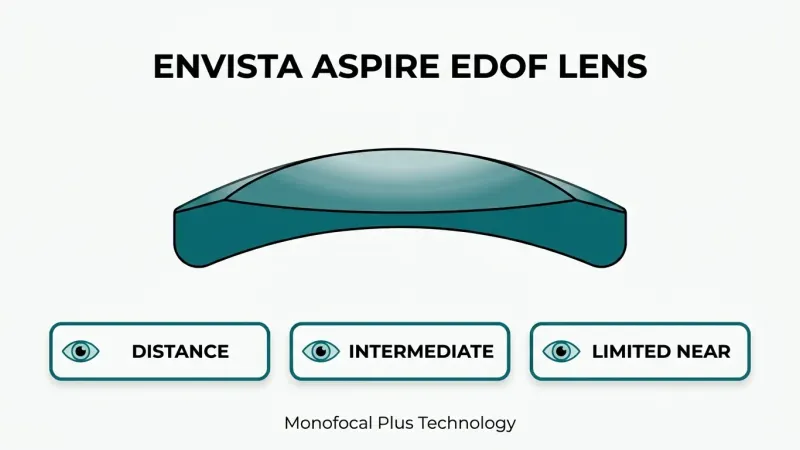
Light sensitivity, glare, and other visual disturbances after cataract surgery are common responses that occur as the eye adjusts to the removal of the natural lens and the placement of an artificial intraocular lens (IOL). These symptoms are usually temporary, though their severity and duration can vary based on several factors.
This guide covers the causes behind post-surgical visual changes, the types of disturbances patients may experience, expected recovery timelines, factors that can worsen symptoms, practical management strategies, potential risks when symptoms persist, and who may be more susceptible.
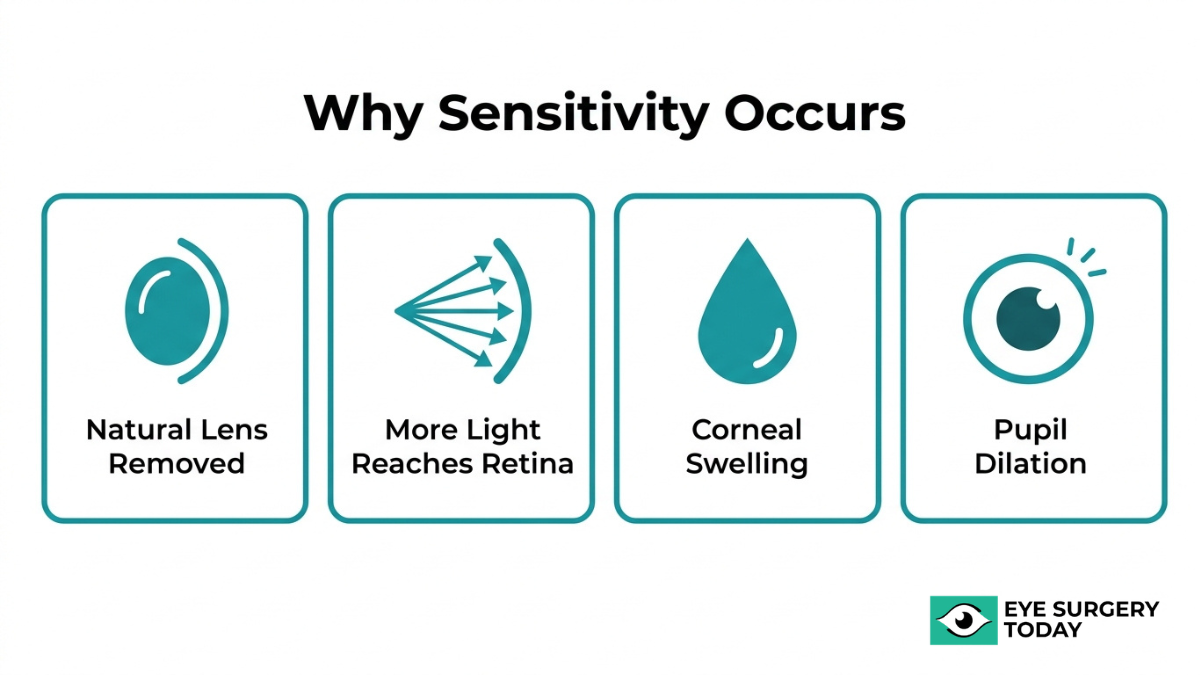
Cataract surgery removes the eye’s natural light-filtering lens, which can result in a sudden increase in short-wave light reaching the retina. Corneal swelling, lingering pupil dilation, and the optical properties of the new IOL each contribute to early sensitivity and glare.
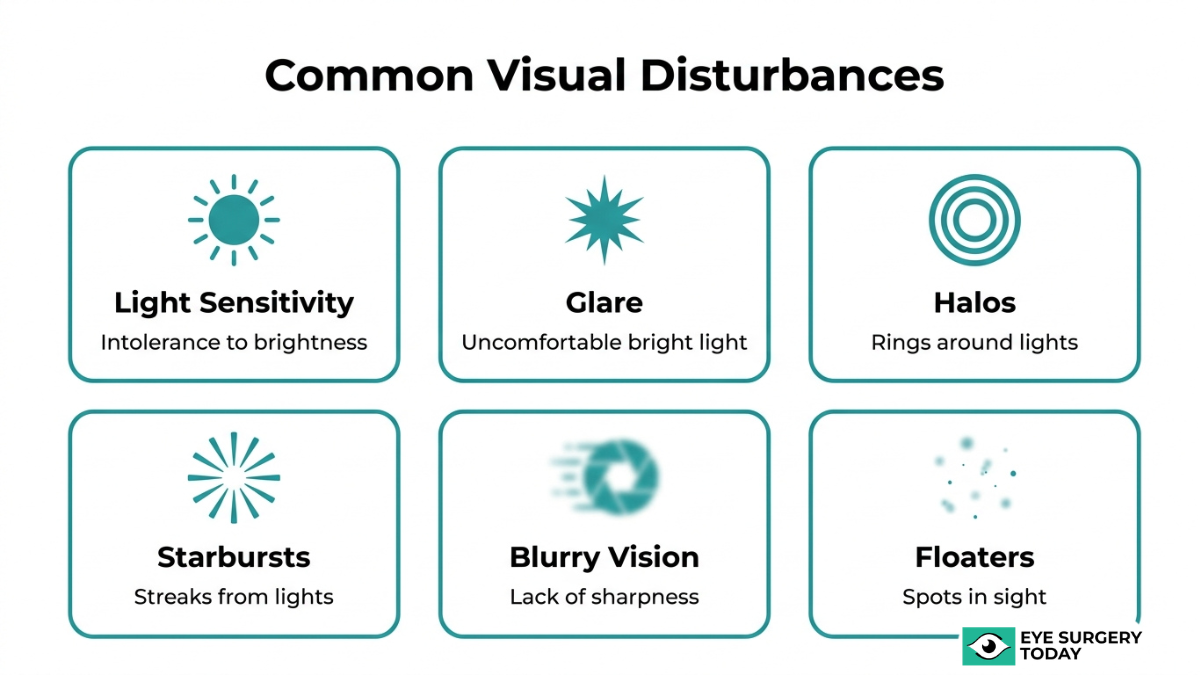
Common disturbances include photophobia, glare, halos, starbursts, blurry or hazy vision, and floaters. Each affects vision differently, and recognizing them can help patients distinguish normal recovery patterns from symptoms that may need attention.
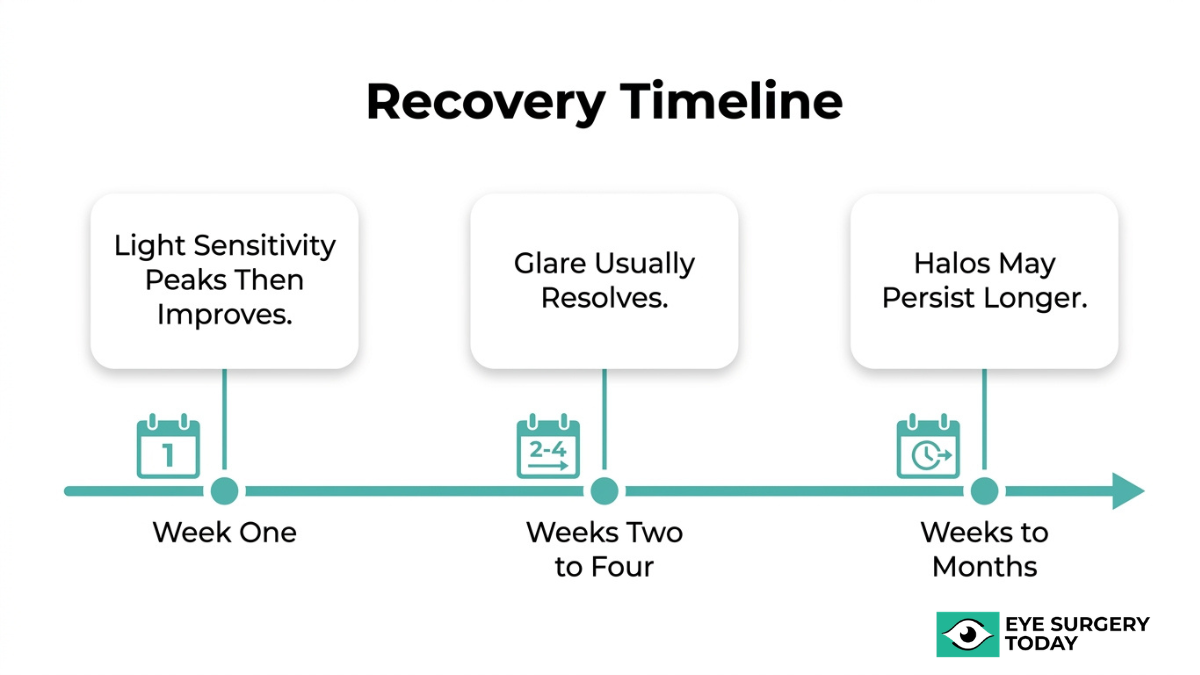
Most light sensitivity improves within the first week, while glare often resolves within two to four weeks. Halos and starbursts may take longer, particularly with multifocal IOL designs, as the brain undergoes neuroadaptation over weeks to months.
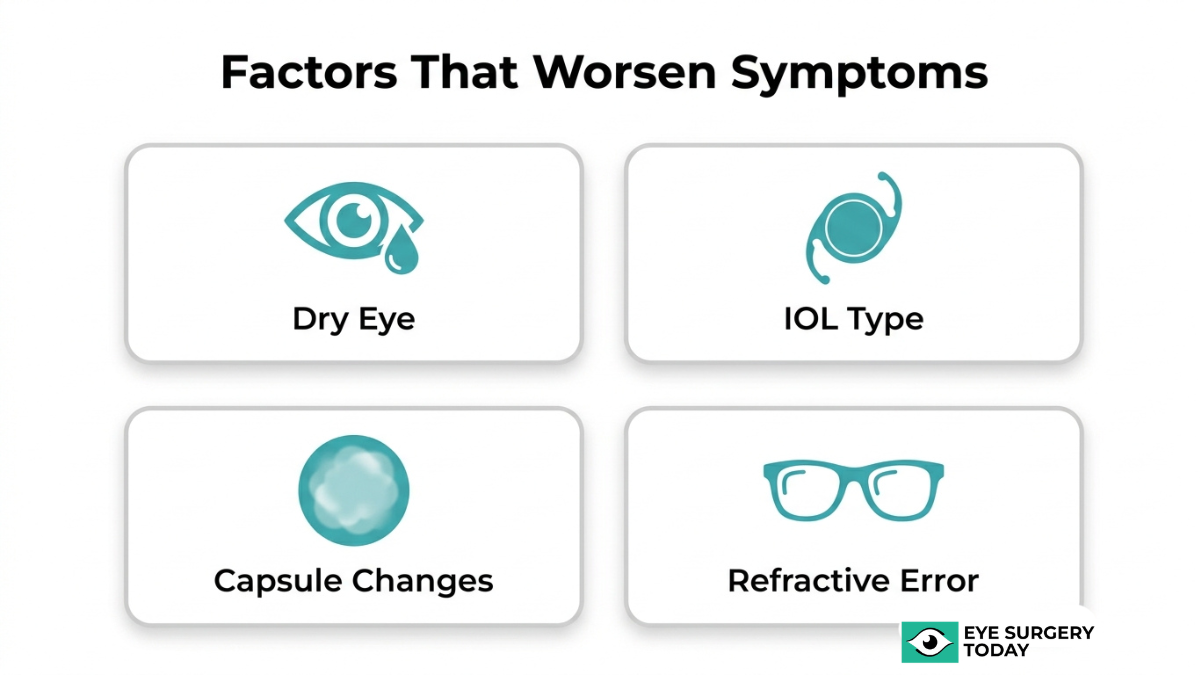
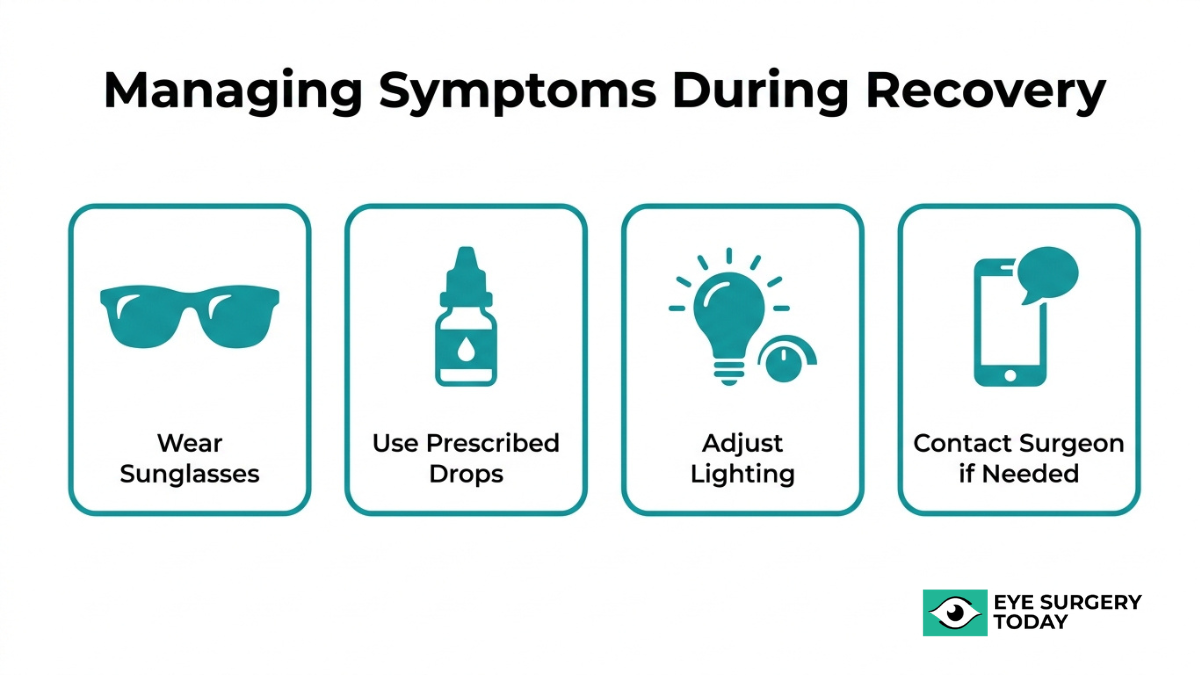
Dry eye, IOL type, posterior capsule opacification, and residual refractive error can each amplify or prolong visual disturbances. Protective sunglasses, prescribed anti-inflammatory and lubricating drops, and environmental lighting adjustments may help ease symptoms during healing.
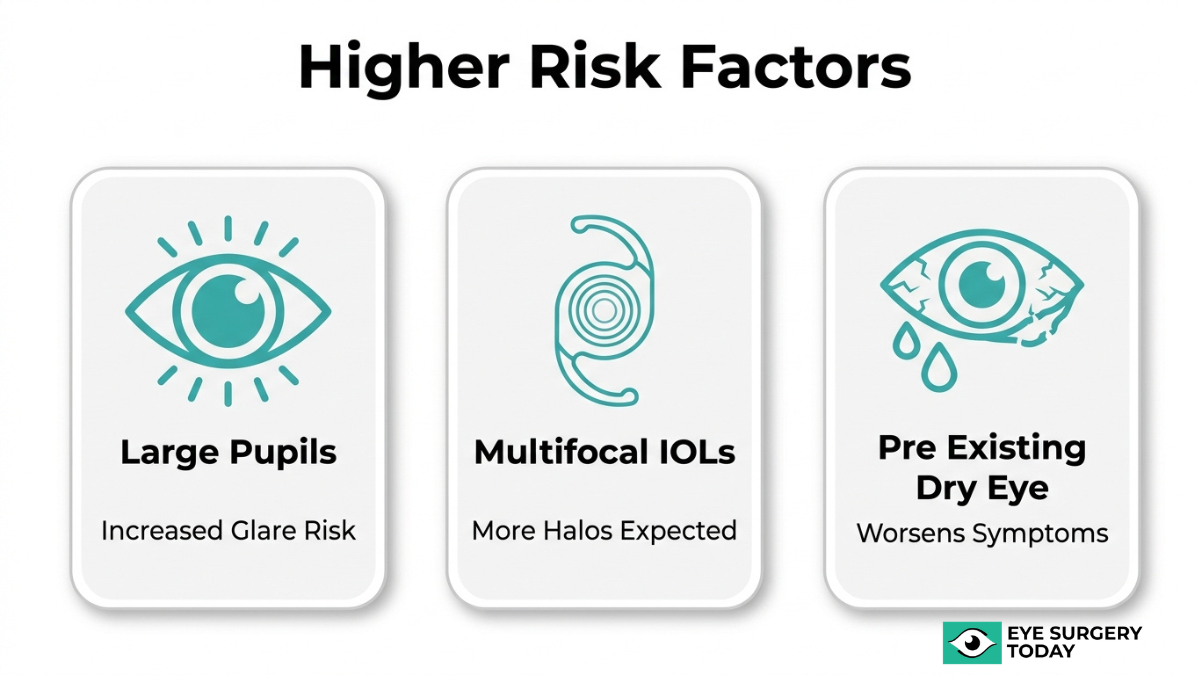
Patients with large pupils, multifocal lenses, or pre-existing dry eye may be more likely to experience pronounced glare and halos, making preoperative discussion of lens options and risk factors an important part of preparation.
Why Do Light Sensitivity and Glare Occur After Cataract Surgery?
Light sensitivity and glare occur after cataract surgery because the eye undergoes several simultaneous changes. The sections below cover how lens removal, the new intraocular lens, corneal swelling, and pupil dilation each contribute.
How Does Removing the Natural Lens Cause Light Sensitivity?
Removing the natural lens causes light sensitivity because the crystalline lens acted as a built-in filter throughout your life. Over decades, it gradually yellowed and absorbed shorter wavelengths of light, particularly blue and violet. Once that aged lens is removed during cataract surgery, the filtering effect disappears.
According to a study published by the National Institutes of Health, there is a large increase in short-wave light reaching the retina immediately following cataract surgery, mainly below 500 nm, due to the removal of the natural crystalline lens. This sudden flood of light can feel overwhelming, especially in bright or outdoor environments. Colors may also appear more vivid or even slightly blue-tinted as the retina adjusts to wavelengths it had not fully received in years.
The retina needs time to recalibrate to this increased light exposure. For most patients, this heightened sensitivity is a temporary but noticeable part of early recovery.
How Does the New Intraocular Lens Contribute to Glare?
The new intraocular lens contributes to glare because its synthetic material and precise optical edges interact with light differently than the natural crystalline lens did. While an IOL restores focusing ability, its rigid structure can reflect and scatter incoming light in ways the eye’s original lens did not.
The American Academy of Ophthalmology describes positive dysphotopsias as being caused by light reflecting off the edge of an artificial lens implant, where light from one side of the visual field is reflected onto the opposite edge of the lens. These unwanted reflections can produce streaks, arcs, or crescents of light, particularly noticeable under high-contrast lighting conditions such as oncoming headlights at night.
IOL design plays a significant role in how much glare a patient perceives. Factors such as edge geometry, optic diameter, and lens material all influence the degree of light scatter. This is one reason why the choice of IOL before surgery deserves careful consideration with your surgeon.
How Does Corneal Swelling After Surgery Increase Light Sensitivity?
Corneal swelling after surgery increases light sensitivity because the cornea, which is the eye’s outermost refracting surface, temporarily loses its optical clarity. During cataract surgery, the corneal endothelial cells that pump fluid out of the cornea can sustain minor stress. When these cells are disrupted, fluid accumulates in the corneal tissue, creating a condition called corneal edema.
A swollen cornea scatters incoming light rather than transmitting it cleanly to the retina. This scattering effect makes bright lights appear washed out or surrounded by a diffuse glow, intensifying both photophobia and perceived glare. Even mild edema that is not visible to the patient can degrade optical quality enough to cause discomfort.
In most uncomplicated cases, corneal edema resolves within the first few days to weeks as endothelial cells recover their pumping function. Anti-inflammatory eye drops prescribed after surgery help reduce this swelling and support a smoother visual recovery.
How Does Pupil Dilation During Surgery Lead to Temporary Glare?
Pupil dilation during surgery leads to temporary glare because the dilating drops used to widen the pupil for surgical access do not wear off immediately. A fully dilated pupil allows substantially more light to enter the eye than it normally would, overwhelming the retina’s ability to manage brightness comfortably.
Until the pupil regains its normal constriction ability, the iris cannot regulate incoming light effectively. Bright environments, reflective surfaces, and direct sunlight can all trigger pronounced glare and discomfort during this period. Some patients notice that one pupil remains slightly larger than the other for a short time after surgery, which further contributes to uneven light perception.
Pupil function typically returns to normal within hours to a few days, depending on the type and dosage of dilating agents used. Wearing quality sunglasses during this window is one of the simplest ways to reduce discomfort while the pupil recovers its natural responsiveness.
With these underlying mechanisms in mind, recognizing the specific types of visual disturbances helps distinguish normal recovery from symptoms that may need attention.
What Types of Visual Disturbances Are Common After Cataract Surgery?
The types of visual disturbances common after cataract surgery include light sensitivity, glare, halos, starbursts, blurry or hazy vision, and floaters. Each affects vision differently during recovery.
Light Sensitivity
Light sensitivity, also called photophobia, is one of the most frequently reported visual disturbances after cataract surgery. The natural crystalline lens filters a significant amount of incoming light, particularly shorter wavelengths. Once removed, the replacement intraocular lens allows more light to reach the retina, which can feel overwhelming in the early postoperative period. Bright environments, sunlight, and even indoor lighting may cause discomfort or a need to squint. For most patients, this heightened sensitivity gradually diminishes as the eye heals and adjusts to the new lens. Wearing UV-protective sunglasses outdoors during recovery can help manage discomfort in the meantime.
Glare
Glare is a visual disturbance characterized by excessive brightness or a washed-out quality in the visual field, often triggered by oncoming headlights or direct light sources. After cataract surgery, glare can result from light scattering at the edge of the intraocular lens or from mild corneal swelling during early healing. The type of IOL implanted may also influence glare severity; multifocal designs, in particular, can produce more noticeable glare than monofocal lenses. According to clinical reports in Cataract & Refractive Surgery Today, unwanted nighttime visual disturbances are inherent to multifocal lens designs and should not come as a surprise to patients receiving these IOLs. In most uncomplicated cases, glare tends to lessen as inflammation resolves and the eye neuroadapts.
Halos Around Lights
Halos around lights are rings of light that appear to encircle a light source, most noticeably at night or in low-light settings. After cataract surgery, halos can occur when light diffracts through the edge of the intraocular lens or through multiple focal zones in a multifocal IOL. Driving at night often makes halos more apparent, as streetlights and headlights become surrounded by soft, glowing circles. While halos can be disconcerting, they are considered a normal part of the neuroadaptation process. The brain typically adjusts to these optical phenomena over weeks to months, and many patients report a noticeable reduction over time.
Starbursts
Starbursts are radiating spikes or rays of light that extend outward from a bright point source, such as a car headlight or streetlamp. This visual disturbance can occur after cataract surgery due to light interacting with the edges or optic zones of the intraocular lens. Starbursts tend to be most noticeable in dim lighting conditions, making nighttime activities like driving temporarily more challenging. Similar to halos, starbursts are often part of the neuroadaptation period. They may diminish gradually as the visual system recalibrates to the optical properties of the new IOL.
Blurry or Hazy Vision
Blurry or hazy vision after cataract surgery can result from several factors, including residual corneal swelling, early inflammation, or posterior capsule opacification. PCO is a common complication after cataract surgery that is treated by Nd:YAG laser capsulotomy to restore visual clarity, according to a report published by ISPOR. In the immediate postoperative period, mild haziness is expected as the eye heals. However, if blurriness develops or worsens weeks to months after surgery, PCO may be the cause; a thin film of cells grows across the capsule behind the lens, scattering light. A quick in-office laser procedure can resolve this effectively. Persistent unexplained blurriness should always be discussed with the treating surgeon.
Floaters
Floaters are small, shadowy shapes that drift across the visual field, often appearing as specks, threads, or cobweb-like forms. After cataract surgery, patients may notice floaters more readily because the newly clear lens allows sharper perception of pre-existing vitreous opacities. In some cases, the surgery itself can accelerate changes in the vitreous gel, making floaters more prominent. A small number of new floaters is generally considered normal during recovery. However, a sudden increase in floaters, especially when accompanied by flashes of light or a shadow across the visual field, may indicate a retinal issue that requires prompt evaluation.
Understanding each type of visual disturbance can help set realistic recovery expectations.
How Long Do Light Sensitivity and Glare Typically Last After Cataract Surgery?
Light sensitivity and glare typically last a few days to several weeks after cataract surgery, depending on the type of disturbance. The following subsections cover first-week sensitivity, glare resolution timelines, halo and starburst persistence, and when to seek help.
How Long Does Light Sensitivity Last in the First Week?
Light sensitivity in the first week after cataract surgery is common and usually most intense during the first two to three days. The eye is adjusting to a sudden increase in light transmission now that the clouded natural lens has been removed. Corneal swelling from the procedure and lingering pupil dilation can amplify this sensitivity in the early postoperative period.
Most patients notice a gradual improvement by days four through seven as inflammation subsides and the cornea begins to heal. Wearing sunglasses outdoors and reducing harsh indoor lighting can ease discomfort during this phase. According to Dr. Gregory W. Bligard and Dr. Linda M. Tsai in the American Academy of Ophthalmology, warning patients about dysphotopsia symptoms before surgery and reinforcing this at the first postoperative visit can go a long way to reassure patients. Setting realistic expectations before the procedure often reduces anxiety when early sensitivity occurs.
When Does Glare Usually Resolve After Uncomplicated Surgery?
Glare usually resolves within two to four weeks after uncomplicated cataract surgery. During the first week, mild to moderate glare is expected as the eye heals from surgical inflammation and adapts to the new intraocular lens. By the second and third weeks, most patients experience a noticeable reduction as corneal edema clears and the eye’s optical surfaces stabilize.
Complete resolution often aligns with the broader visual stabilization period, which may take two to three weeks for most patients. Those with monofocal IOLs tend to see glare fade faster than patients with multifocal designs. If glare persists beyond six weeks without gradual improvement, a follow-up evaluation is worth scheduling. For the majority of uncomplicated cases, however, steady weekly improvement is the expected pattern.
How Long Can Halos and Starbursts Persist After Surgery?
Halos and starbursts can persist for several weeks to several months after cataract surgery, with the timeline depending heavily on IOL type and individual neuroadaptation. These visual phenomena are most noticeable at night and in low-light conditions during the early recovery period.
With monofocal IOLs, halos and starbursts typically diminish within four to six weeks. Multifocal IOL recipients, however, often experience these disturbances for longer because the lens design splits light into multiple focal points. Neuroadaptation, the brain’s process of learning to filter out unwanted light patterns, may take up to a year for complete resolution in some cases. Most patients report meaningful improvement by the three-month mark even with premium lenses. Patience during this adaptation period is essential, as the brain’s visual processing continues to refine well beyond the initial surgical healing window.
When Should Lingering Visual Disturbances Raise Concern?
Lingering visual disturbances should raise concern when they worsen rather than improve after six to eight weeks, interfere with daily activities, or appear suddenly after a period of stable vision. A gradual trajectory of improvement is normal; a reversal of that trajectory is not.
Conditions that can cause returning or worsening symptoms include posterior capsule opacification, residual refractive error, and dry eye disease. According to a meta-analysis published in Ophthalmology and Therapy, 37.4% of patients without preexisting dry eye disease developed the condition after cataract surgery, which can significantly degrade visual quality and mimic or amplify glare symptoms. Sudden onset of new floaters, flashing lights, or a shadow across the visual field warrants immediate evaluation, as these may indicate retinal complications unrelated to typical postoperative recovery.
Understanding recovery timelines helps patients distinguish expected healing from symptoms that may need clinical attention.
What Can Make Light Sensitivity or Glare Worse After Cataract Surgery?
Several factors can make light sensitivity or glare worse after cataract surgery, including dry eye, lens type, capsule changes, and uncorrected vision.
Can Dry Eye After Surgery Worsen Glare and Light Sensitivity?
Yes, dry eye after surgery can worsen glare and light sensitivity. An unstable tear film creates irregular refractive surfaces on the cornea, scattering incoming light instead of focusing it cleanly onto the retina. This scattering effect amplifies both glare and photophobia, particularly in bright environments or when facing oncoming headlights.
Because cataract surgery can either trigger new dry eye or aggravate a pre-existing condition, many patients notice worsening visual disturbances that stem from the ocular surface rather than the intraocular lens itself. Treating the tear film with preservative-free artificial tears, anti-inflammatory drops, or punctal plugs often reduces these symptoms significantly. Patients who address dry eye early in recovery tend to experience faster visual comfort, making it one of the most actionable factors to manage.
Does the Type of Intraocular Lens Affect Glare Severity?
Yes, the type of intraocular lens affects glare severity. Multifocal IOLs split light into multiple focal points, which can produce noticeable halos and glare, especially at night. According to a study published in PubMed comparing three multifocal IOL designs, 65% to 79% of patients reported halos and 43% to 64% reported glare six months after implantation.
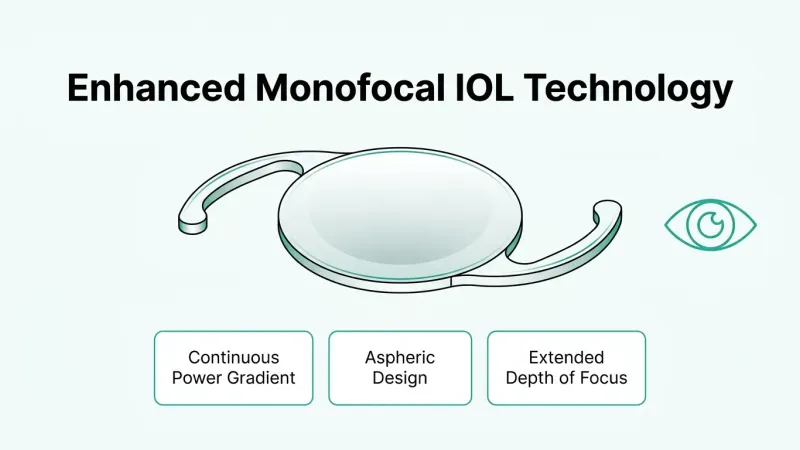
Monofocal IOLs generally produce fewer photic disturbances because they direct light to a single focal point. Extended depth-of-focus (EDOF) lenses fall between the two; they elongate the focal range rather than creating discrete split points, which tends to reduce bothersome symptoms compared to traditional multifocals. Choosing the right lens design before surgery remains one of the most effective ways to manage post-operative glare expectations.
Can Posterior Capsule Opacification Cause Returning Glare?
Yes, posterior capsule opacification (PCO) can cause returning glare. PCO develops when residual lens epithelial cells proliferate across the posterior capsule behind the IOL, creating a hazy film that scatters light. Patients often describe symptoms similar to the original cataract, including increased glare, halos, and blurred vision.
According to PubMed Central, the incidence of Nd:YAG laser capsulotomy was significantly lower with hydrophobic IOLs at 8.68% compared to hydrophilic IOLs. When PCO does occur, a quick Nd:YAG laser capsulotomy restores clarity by opening the clouded capsule. Because PCO sometimes takes months or years to develop, patients who experience new or worsening glare long after an initially successful recovery should consider this as a likely cause worth discussing with their surgeon.
Does Residual Refractive Error Contribute to Visual Disturbances?
Yes, residual refractive error contributes to visual disturbances after cataract surgery. When the post-operative refraction does not match the targeted outcome, uncorrected myopia, hyperopia, or astigmatism can scatter light across the retina, intensifying glare, halos, and overall visual dissatisfaction.
According to the American Academy of Ophthalmology, management of post-cataract visual disturbances includes correcting residual refractive error, treating dry eye disease, and potentially exchanging acrylic IOLs for silicone or copolymer lenses. In many cases, glasses, contact lenses, or a secondary refractive procedure can resolve the mismatch. Identifying residual refractive error early is important because it is one of the most straightforward causes to correct, yet it is sometimes overlooked when patients assume their symptoms are simply part of normal recovery.
With these aggravating factors in mind, targeted management strategies can help reduce symptoms during recovery.
How Can You Manage Light Sensitivity and Glare During Recovery?
You can manage light sensitivity and glare during recovery through protective eyewear, prescribed eye drops, environmental adjustments, and timely communication with your surgeon.
Do Sunglasses Help With Light Sensitivity After Cataract Surgery?
Yes, sunglasses help with light sensitivity after cataract surgery by reducing the amount of light reaching the healing eye. Wraparound styles with UV protection offer the most effective coverage, shielding against both direct and peripheral light. Polarized lenses can further cut reflected glare from surfaces like water, pavement, and screens.
Higher-order aberrations in the post-surgical eye can intensify the degree of photophobia experienced, making quality eyewear particularly valuable during the first several weeks. According to a study published on PubMed, negative dysphotopsia occurred in 9% of cases in a cohort of north Indian patients undergoing uncomplicated cataract surgery, with more than 80% being transient. Because most light sensitivity resolves on its own, consistent sunglasses use during this window serves as one of the simplest and most effective comfort measures available.
Can Prescribed Eye Drops Reduce Glare and Sensitivity?
Yes, prescribed eye drops can reduce glare and sensitivity by addressing the underlying inflammation and dryness that amplify these symptoms. Anti-inflammatory drops, typically corticosteroids or NSAIDs, help control post-surgical swelling that scatters incoming light. Lubricating drops target tear film instability, which is a significant contributor to visual disturbances during recovery.
Dry eye management deserves particular attention here; a meta-analysis in Ophthalmology and Therapy found that 37.4% of patients without preexisting dry eye disease developed the condition after cataract surgery. Maintaining the prescribed drop schedule, even when symptoms begin improving, supports consistent healing and may prevent glare from worsening due to surface irregularities.
Does Adjusting Screen Brightness and Indoor Lighting Help?
Yes, adjusting screen brightness and indoor lighting helps reduce discomfort from light sensitivity during cataract surgery recovery. Dimming overhead lights and using indirect, warm-toned lamps minimizes harsh light exposure indoors. On digital devices, lowering brightness settings and enabling blue light filters can ease strain on the healing eye.
For most patients, it may take 2 to 3 weeks for vision to stabilize after cataract surgery, so environmental modifications during this period offer meaningful relief. Avoiding sudden transitions between dark and brightly lit spaces also reduces glare episodes. These adjustments work best alongside prescribed drops and sunglasses rather than as standalone strategies.
When Should You Contact Your Surgeon About Persistent Symptoms?
You should contact your surgeon about persistent symptoms if light sensitivity, glare, or halos worsen rather than gradually improve, or if they remain unchanged beyond four to six weeks. Sudden onset of new visual disturbances, flashing lights, a significant increase in floaters, or any decrease in vision warrants immediate contact regardless of the recovery timeline.
While some residual symptoms during neuroadaptation can be normal, symptoms that interfere with daily activities or driving may indicate issues such as residual refractive error, dry eye disease, or early posterior capsule opacification. Early evaluation allows your surgeon to identify treatable causes before they progress, which often leads to faster resolution.
With these management strategies in place, understanding potential risks helps guide expectations if symptoms persist.
What Are the Possible Risks if Glare or Halos Do Not Resolve?
The possible risks if glare or halos do not resolve, potentially resulting in vision worse after surgery, include intraocular lens misalignment, posterior capsule opacification, and uncorrected refractive error. The sections below cover lens positioning problems, capsule clouding, and available treatments.
Could Persistent Glare Indicate a Problem With Lens Positioning?
Yes, persistent glare can indicate a problem with lens positioning. When an intraocular lens shifts, tilts, or decenters inside the capsular bag, light refracts unevenly across the optic edge, producing glare that does not fade with normal neuroadaptation. Even subtle displacement of one to two millimeters may redirect incoming light onto the peripheral retina, creating persistent positive dysphotopsia.
According to the American Academy of Ophthalmology, positive dysphotopsias are caused by light reflecting off the edge of an artificial lens implant, where light from one side of the visual field is reflected onto the opposite edge of the lens.
Several factors can contribute to lens displacement after surgery:
- Capsular bag contraction that gradually shifts the IOL off-center.
- Zonular weakness, particularly in patients with pseudoexfoliation syndrome.
- Incomplete adhesion between the lens haptics and the capsular bag.
If glare persists beyond the expected recovery window, an ophthalmologist may evaluate lens position using slit-lamp examination or anterior segment imaging. Catching displacement early gives the surgeon more options before scar tissue makes repositioning more complex.
Can Chronic Halos Signal Posterior Capsule Opacification?
Yes, chronic halos can signal posterior capsule opacification. PCO occurs when residual epithelial cells migrate and proliferate across the posterior capsule behind the intraocular lens, scattering light before it reaches the retina. This scattering effect produces halos around lights, progressive haze, and reduced contrast sensitivity that often mimic the original cataract symptoms.
According to an ISPOR report, posterior capsule opacification is a common complication after cataract surgery that is treated by Nd:YAG laser capsulotomy to restore visual clarity.
Because PCO develops gradually over months or years, patients sometimes attribute worsening halos to aging rather than a treatable condition. Any return of visual disturbances that had previously improved warrants a prompt dilated examination. Left unaddressed, significant opacification can interfere with daily tasks like night driving, where halo intensity is most disruptive.
What Treatments Are Available for Ongoing Visual Disturbances?
The treatments available for ongoing visual disturbances after cataract surgery depend on the underlying cause. Identifying the specific source of persistent glare, halos, or haze determines which intervention may help.
Common treatment options include:
- Nd:YAG laser capsulotomy for posterior capsule opacification, a quick in-office procedure that creates an opening in the clouded capsule to restore clear light transmission.
- IOL repositioning or exchange when lens displacement or an incompatible lens design causes ongoing dysphotopsia. Exchanging acrylic IOLs for silicone or copolymer alternatives may reduce edge-related glare.
- Residual refractive error correction through glasses, contact lenses, or laser enhancement to sharpen focus and minimize scatter.
- Dry eye treatment with preservative-free artificial tears, punctal plugs, or anti-inflammatory drops, since tear film instability magnifies glare symptoms.
According to the American Academy of Ophthalmology, management of post-cataract visual disturbances includes managing residual refractive error, treating dry eye disease, and potentially exchanging acrylic IOLs for silicone or copolymer IOLs.
Most persistent visual disturbances have a correctable cause, which makes early evaluation essential. Understanding who may be at higher risk for these symptoms can help set realistic expectations before surgery.
Who Is More Likely to Experience Glare and Light Sensitivity After Cataract Surgery?
Patients with large pupils, multifocal intraocular lenses, or pre-existing dry eye are more likely to experience glare and light sensitivity after cataract surgery. The following sections cover each risk factor.
Are Patients With Large Pupils at Higher Risk for Glare?
Patients with large pupils are at higher risk for glare after cataract surgery, particularly when combined with multifocal intraocular lenses. Large pupil diameter is a known drawback that increases halo size in patients with multifocal IOLs, according to a study published in the Journal of Refractive Surgery. When the pupil dilates beyond the optical zones of the lens, light passes through transitional edges, producing more pronounced visual disturbances at night.
This risk becomes especially relevant during low-light conditions, where the pupil naturally expands. In a study of patients with bilateral trifocal PanOptix implantation published by the National Center for Biotechnology Information, 33.6% experienced glare, 43.9% experienced halos, and 30.4% experienced starbursts. Preoperative pupil measurements can help surgeons identify candidates who may benefit from a different lens design to minimize these effects.
Does Having Multifocal Lenses Increase the Chance of Halos?
Having multifocal lenses does increase the chance of halos after cataract surgery. Multifocal IOLs split incoming light into multiple focal points for near, intermediate, and distance vision, and this light-splitting design inherently produces concentric rings around light sources. Patients with multifocal IOLs have a significantly higher incidence of halos compared to those with monofocal IOLs.
Extended depth-of-focus (EDOF) IOLs may offer a middle ground. Because EDOF lens design elongates the focus rather than creating multiple distinct focal points, these lenses typically exhibit a lower incidence of bothersome halos and glare compared to multifocal lenses. For patients who prioritize reduced nighttime disturbances while still gaining some range of vision, discussing EDOF options with a surgeon before surgery can be a practical step.
Are Patients With Pre-Existing Dry Eye More Susceptible?
Patients with pre-existing dry eye are more susceptible to glare and light sensitivity after cataract surgery. An unstable tear film scatters light irregularly across the corneal surface, amplifying visual disturbances that might otherwise be minimal. Because cataract surgery can further disrupt tear production through corneal nerve exposure and postoperative inflammation, patients who already have compromised tear quality often experience a compounding effect.
Addressing dry eye before and after surgery, through preservative-free artificial tears, anti-inflammatory drops, or punctal plugs, may help reduce the severity of these symptoms. Proactive management of the ocular surface is one of the most overlooked yet impactful steps in achieving comfortable visual outcomes after lens replacement.
Understanding individual risk factors helps set realistic expectations before surgery and guides postoperative care.
How Can Surgeon-Reviewed Resources Help You Prepare for Recovery After Cataract Surgery?
Surgeon-reviewed resources can help you prepare for recovery after cataract surgery by setting accurate expectations for visual side effects and timelines. The sections below cover how Eye Surgery Today supports IOL education and the key takeaways from this guide.
Can Eye Surgery Today Help You Understand IOL Options and Expected Visual Side Effects?
Yes, Eye Surgery Today can help you understand IOL options and expected visual side effects through surgeon-reviewed educational guides. The platform translates complex lens comparisons into clear, accessible language so patients can weigh trade-offs before surgery.
Eye Surgery Today covers critical topics that influence post-surgical visual quality:
- Differences between monofocal, multifocal, and extended depth-of-focus IOL designs.
- How each lens type may affect the likelihood of halos, glare, and starbursts.
- Recovery timelines and what to expect during neuroadaptation.
- Risk factors, such as dry eye or pupil size, that can shape visual outcomes.
Understanding these variables before the procedure helps patients have more productive conversations with their surgeon. This includes discussing the likelihood of possible glasses use after surgery to address any residual refractive errors. When expectations align with reality, concerns about temporary side effects like light sensitivity become far less stressful. Eye Surgery Today’s resources aim to close the cataract knowledge gap so patients feel confident at every stage, from lens selection through full recovery.
What Are the Key Takeaways About Light Sensitivity, Glare, and Other Common Issues After Cataract Surgery?
The key takeaways about light sensitivity, glare, and other common issues after cataract surgery center on three points: these symptoms are usually temporary, their severity depends on multiple factors, and most cases resolve with time or targeted management.
Patients commonly ask if halos and glare after cataract surgery are normal or if they indicate something preventable and fixable. In most cases, these visual disturbances reflect the eye’s natural adjustment to a new artificial lens rather than a complication. According to the American Academy of Ophthalmology, it may take two to three weeks for vision to stabilize after cataract surgery.
Key points to remember:
- Light sensitivity results from increased short-wave light reaching the retina after lens removal.
- IOL type influences glare severity; multifocal designs carry higher rates of halos than monofocal lenses.
- Dry eye can worsen visual disturbances and may develop even without a prior history.
- Posterior capsule opacification is treatable with a quick laser procedure if symptoms return months later.
- Persistent or worsening symptoms warrant prompt evaluation by your surgeon.
Preparation is the most undervalued part of cataract surgery recovery. Patients who understand what to expect, and why, tend to navigate the healing process with far greater confidence.