The vivid vision effect after cataract surgery is a perceptual shift caused by removing a yellowed, light-blocking natural lens and replacing it with a clear intraocular lens (IOL) that restores full-spectrum light transmission to the retina. This guide covers the optical mechanics behind post-surgical vividness, how cataracts gradually alter perception without awareness, what patients experience during early recovery and neuroadaptation, potential concerns including dysphotopsia, how IOL type influences color and clarity, and practical management during the adjustment period.
A cataractous lens progressively filters short-wavelength light over years, suppressing blues and greens while the brain continuously recalibrates its baseline. Once a clear IOL replaces that filter, previously blocked wavelengths arrive unimpeded, and scenes appear dramatically brighter and more color-rich than patients remember.
In the first days after surgery, most patients report brighter colors, a cooler blue tone to white light, and sharper edges. Color discrimination may return almost immediately, but full color appearance can take weeks to stabilize as the central nervous system adapts to accurate, unfiltered input.
Normal post-surgical vividness differs from dysphotopsia, which involves specific optical disturbances like halos, glare, or peripheral shadows caused by light interacting with the IOL edge or diffractive design. Multifocal and trifocal IOLs may produce higher rates of these artifacts compared to monofocal lenses.
Patients with dense or brunescent cataracts and those who have both eyes treated tend to experience the most dramatic perceptual shift, since greater pre-surgical light blockage creates a larger contrast with restored clarity. Protective eyewear and the brain’s natural recalibration process can help manage initial brightness during recovery.
What Causes the Vivid Vision Effect After Cataract Surgery?
The vivid vision effect after cataract surgery is caused by the removal of a yellowed, light-blocking natural lens and its replacement with a clear intraocular lens (IOL), which allows significantly more light and color information to reach the retina. The following sections explain how lens clouding dulls perception, what the IOL replacement restores, and how increased light transmission reshapes what you see.
How Does a Cloudy Natural Lens Dull Color Perception?
A cloudy natural lens dulls color perception by absorbing and scattering light before it reaches the retina, progressively filtering out wavelengths that carry color information. As the lens yellows and becomes denser, it acts like a tinted filter that gradually deepens without the person noticing. Blues and greens are particularly suppressed, since shorter wavelengths are more vulnerable to absorption by the discolored lens proteins. Because this change happens over years, the brain recalibrates to accept the dimmer, warmer input as normal, making the cumulative loss nearly invisible to the patient until the lens is removed.
What Happens When the Yellowed Lens Is Replaced With a Clear IOL?
When the yellowed lens is replaced with a clear IOL, light transmission to the retina is restored across the full visible spectrum. According to research published in the Medical Journal of the Islamic Republic of Iran, nuclear sclerotic cataracts cause a significant decrease in blue and green color vision compared to eyes fitted with intraocular lenses. Once the IOL is in place, those previously blocked wavelengths arrive unfiltered, and colors that had faded, particularly blues and greens, suddenly appear vivid and distinct. The brain, still calibrated to the old lens, registers this shift as a dramatic improvement in color richness.
How Does Increased Light Transmission Change What You See?
Increased light transmission changes what you see by delivering a broader, brighter signal to the retina than the cataractous lens permitted. A clear IOL does not tint, scatter, or diffuse incoming light the way a clouded lens does, so contrast sharpens, whites appear whiter, and the entire visual scene gains luminosity. Research published in BMC Ophthalmology identified that the postoperative benefits of phacoemulsification are most significant in color bands corresponding to the spectrum from 470 nm to 580 nm, the range covering blue, cyan, and green. This surge in light input is the immediate physical driver of the vivid, almost heightened quality of vision patients report after surgery.
How Does Cataract Development Gradually Alter Color and Brightness?
Cataract development alters color and brightness so gradually that most people lose significant visual quality before noticing anything is wrong. The sections below explain how lens yellowing progresses silently and why that slow pace makes the loss nearly invisible until surgery restores what was missing.
How Does the Lens Yellow Over Time Without You Noticing?
The lens yellows over time through a slow accumulation of pigmented proteins within its nuclear core, a process linked to nuclear sclerotic cataract formation. Because this change unfolds across years or even decades, the visual system continuously recalibrates, making each incremental shift feel normal. According to research published in the Medical Journal of the Islamic Republic of Iran, nuclear sclerotic cataracts cause a significant decrease in blue and green color vision compared to eyes fitted with intraocular lenses. Blue wavelengths are filtered most aggressively, so patients tend to perceive whites as cream and greens as yellow without consciously registering a problem. The gradual nature of lens yellowing is clinically significant: it means patients rarely present complaining of color distortion, even when the distortion is already measurable on testing.
Why Do Most Patients Not Realize How Much Vision They Lost?
Most patients do not realize how much vision they lost because the brain adapts continuously to the degrading signal from the yellowed lens, resetting its baseline of “normal” with each passing month. There is no sharp before-and-after moment to trigger awareness. The full extent of the loss only becomes apparent postoperatively, when suddenly restored clarity and color create an unmistakable contrast. This is why post-surgical vividness often surprises patients: the vivid colors were always there, but years of slow filtering had made them invisible.
What Do Patients Typically Experience in the First Days After Surgery?
In the first days after cataract surgery, patients typically experience brighter colors, a bluer tone to white light, and noticeably sharper edges. The sections below explain the distinct mechanisms behind each of these perceptual shifts.
Why Do Colors Appear Brighter Immediately After Surgery?
Colors appear brighter immediately after surgery because the clouded, yellowed natural lens no longer filters incoming light. With a clear intraocular lens in place, more of the visible spectrum reaches the retina, making familiar scenes look unexpectedly vivid.
According to a study published in Visual Neuroscience (PMC), color discrimination returned to normal almost immediately after surgery, but color appearance took weeks to fully stabilize, suggesting the site of adaptation is in the central nervous system rather than the retina. This is an important distinction: brightness returns quickly, but the brain’s calibration to the new visual input is a slower, ongoing process.
Why Does White Light Seem Bluer After Lens Replacement?
White light seems bluer after lens replacement because the aged natural lens accumulates yellow pigment that filters short-wavelength blue light over many years. Once that lens is removed and replaced with a clear IOL, blue wavelengths pass through unimpeded, making white surfaces appear cooler or distinctly blue-tinted compared to what the patient was accustomed to seeing.
This shift is typically most noticeable in the first days post-surgery and tends to diminish gradually as the brain adapts to the restored light transmission.
Why Do Edges and Details Appear Sharper Than Before?
Edges and details appear sharper than before because a cataract scatters light as it passes through the lens, creating optical blur that softens contrast at boundaries. Replacing the opaque lens with a clear IOL restores direct light transmission, allowing the retina to receive a well-focused image with minimal scatter.
Patients often describe the effect as similar to cleaning a foggy window, where the underlying scene was always there but previously obscured. The sharpness improvement is generally immediate, even while other perceptual qualities like color tone continue adjusting over subsequent weeks.
How Long Does the Intensely Vivid Perception Last?
The intensely vivid perception after cataract surgery typically begins fading within days to weeks as the brain recalibrates. The following sections cover how neuroadaptation reduces the initial intensity and when color perception fully stabilizes.
Does the Vivid Effect Fade as the Brain Adapts?
Yes, the vivid effect does fade as the brain adapts, though the timeline varies by individual. The visual system undergoes a process called neuroadaptation, during which the central nervous system recalibrates to the new input from the clear intraocular lens. According to a study published in PMC (Visual Neuroscience), color discrimination returned to normal almost immediately after surgery, but color appearance took weeks to stabilize, confirming that adaptation occurs in the central nervous system rather than the retina. For most patients, the initial intensity of brightness and contrast softens gradually as the brain builds a new perceptual baseline. This adjustment is a normal, expected part of recovery and is not a sign that vision quality is declining.
When Does Color Perception Stabilize After Surgery?
Color perception stabilizes after surgery over a period of several weeks, with most patients reaching a stable new normal within four to six weeks postoperatively. The stabilization process is driven by central nervous system adaptation rather than changes at the eye itself. Full functional and neurological integration can take longer: a study published in The Lancet (eBioMedicine) found that significant improvements in visual and cognitive-related brain areas were observed at three months, with grey matter volumes reaching levels comparable to healthy controls by six months. Patients should expect color perception to feel settled well before those neurological milestones, but understanding that deeper brain-level adaptation continues can help set realistic recovery expectations.
Is the Vivid Vision After Cataract Surgery Ever a Concern?
Vivid vision after cataract surgery is usually a normal, welcome response to improved light transmission. In some cases, however, certain visual symptoms may signal a complication that warrants prompt attention. The following sections cover extreme light sensitivity and when to contact your surgeon.
Can Extreme Light Sensitivity Indicate a Complication?
Extreme light sensitivity can indicate a complication after cataract surgery, though it is important to distinguish it from the common, temporary brightness adjustment most patients experience. Mild sensitivity to light is expected as the eye adapts to a clear IOL, but severe or worsening photophobia may suggest inflammation, elevated intraocular pressure, or a poorly positioned lens. According to a study published in Graefe’s Archive for Clinical and Experimental Ophthalmology, patients with senile cataracts showed statistically significant lower discomfort thresholds than pseudophakic subjects (3.39 vs. 3.81 log10[lux] for continuous warm lighting), suggesting the eye’s tolerance changes considerably after surgery. Sensitivity that intensifies beyond the first few days, or is accompanied by pain and redness, should not be attributed to normal adaptation alone.
When Should You Contact Your Surgeon About Visual Changes?
You should contact your surgeon about visual changes whenever symptoms are severe, sudden, or worsening rather than gradually improving. The visual changes that warrant prompt contact include:
- Sudden loss of vision or a significant drop in clarity
- Severe eye pain or persistent redness
- Flashes of light or a new onset of floaters
- Light sensitivity that worsens after the first few days
- Double vision or distorted images that do not resolve
Most post-surgical vividness and brightness settle as the brain and eye adapt, so any symptom that moves in the wrong direction deserves professional evaluation without delay.
What Is the Difference Between Normal Vividness and Dysphotopsia?
The difference between normal vividness and dysphotopsia is that normal vividness is a straightforward improvement in brightness and color clarity after the clouded lens is removed, while dysphotopsia involves specific optical disturbances caused by light interacting with the intraocular lens. The following H3 sections cover the two main types: positive dysphotopsia (glare and halos) and negative dysphotopsia (shadows and arcs).
What Are Positive Dysphotopsias Like Glare and Halos?
Positive dysphotopsias are unwanted light phenomena such as halos, glare, and starbursts that appear around light sources after cataract surgery. Unlike the general brightness improvement most patients experience, these optical artifacts arise from how the IOL diffracts or reflects incoming light. According to a study published in Eye (Nature), diffractive trifocal IOLs are associated with higher rates of positive dysphotopsia, including halos and glare, compared to monofocal IOLs. Patients with multifocal lens designs are therefore more likely to report these symptoms, particularly in low-light or nighttime conditions. For most patients, positive dysphotopsias diminish as neuroadaptation occurs over the first several months.
What Are Negative Dysphotopsias Like Shadows or Arcs?
Negative dysphotopsias are dark visual disturbances, typically perceived as crescent-shaped shadows, arcs, or dark areas in the peripheral visual field after cataract surgery. Rather than adding light, these phenomena result from areas where light fails to reach the retina due to the IOL’s optical edge design. Negative dysphotopsia is considered distinct from the vivid brightness improvement that defines a normal recovery and tends to be more frustrating for patients because it represents a perceived loss of visual field. In most cases, symptoms resolve on their own as the brain adapts to the new optical environment, though persistent cases may require further clinical evaluation.
Does the Type of Intraocular Lens Affect How Vivid Things Appear?
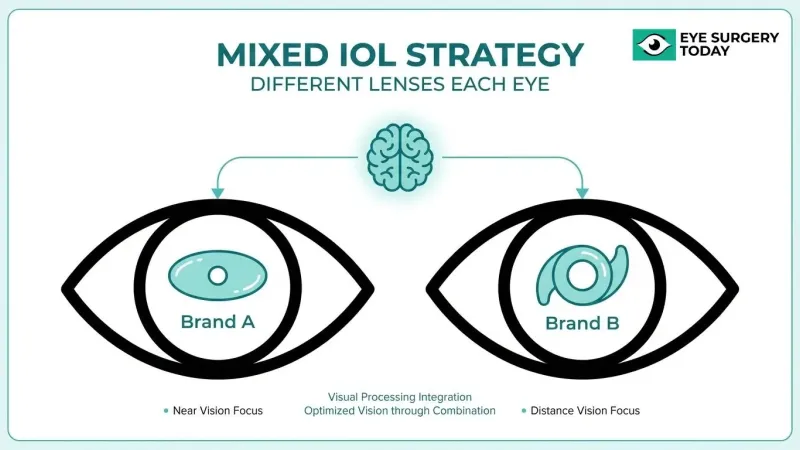
Yes, the type of intraocular lens does affect how vivid things appear after cataract surgery. The three main IOL categories, including monofocal, blue-light-filtering, and multifocal lenses, each influence color perception, brightness, and clarity in distinct ways.
How Does a Standard Monofocal IOL Affect Color and Brightness?
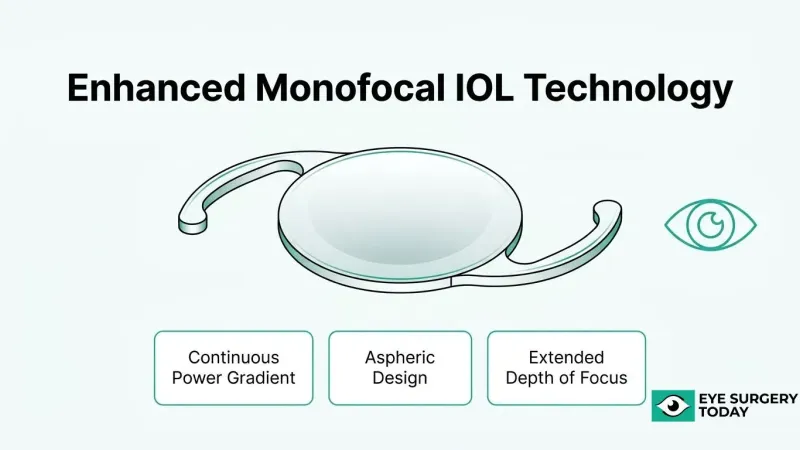
A standard monofocal IOL affects color and brightness by replacing the yellowed natural lens with a clear optical element, allowing a broader spectrum of light to reach the retina. Research published in BMC Ophthalmology found that postoperative improvements are most significant in color bands corresponding to the 470 nm to 580 nm spectrum, which covers blue through yellow wavelengths. Because monofocal IOLs use no additional filtering, they transmit light across this range without modification, producing the vivid brightness most patients describe in early recovery. This makes monofocal IOLs a reliable baseline for understanding the vividness effect, as their transparency is essentially unaltered.
How Does a Blue-Light-Filtering IOL Change Color Perception?
A blue-light-filtering IOL changes color perception by selectively reducing short-wavelength blue light transmission, similar to the filtering role the natural young lens once played. Without this filter, a clear IOL may make whites appear cooler or bluer, a common early complaint. Blue-light-filtering lenses moderate this shift, producing warmer, more familiar color tones for many patients. For those transitioning from a dense, brunescent cataract, the perceptual difference may still be noticeable, though the blue cast tends to be less pronounced compared with standard clear IOLs.
How Does a Multifocal or Extended Depth IOL Influence Clarity?
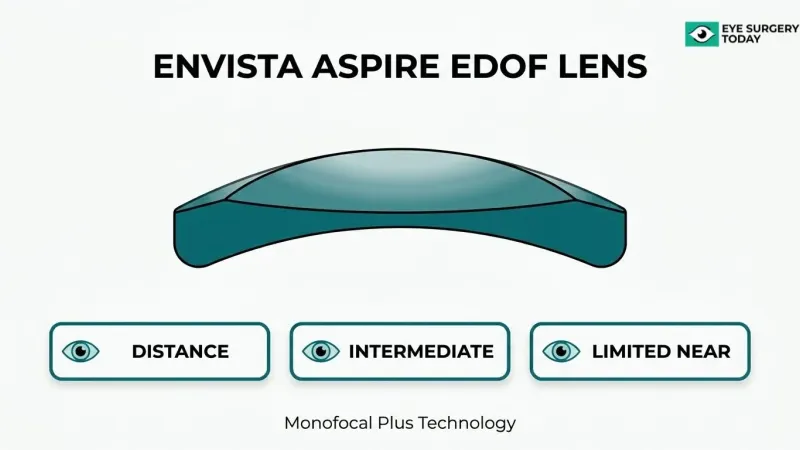
A multifocal or extended depth of focus (EDOF) IOL influences clarity by distributing incoming light across multiple focal zones to support vision at different distances. According to a study published in Eye (Nature), diffractive trifocal IOLs are associated with higher rates of halos and glare compared to monofocal IOLs, which can overlay the vividness effect with optical artifacts, particularly in low-light conditions. While these lenses expand functional range, the trade-off is that perceived sharpness and contrast may feel less crisp than with a monofocal design. Patients selecting multifocal or EDOF options should discuss these perceptual nuances with their surgical team before implantation.
Can You Manage Overly Vivid or Bright Vision During Recovery?
Yes, you can manage overly vivid or bright vision during cataract surgery recovery using several practical strategies. The sections below cover protective eyewear options and the brain’s natural recalibration process.
Do Sunglasses or Tinted Lenses Help Reduce Brightness?
Yes, sunglasses and tinted lenses can help reduce brightness during cataract surgery recovery. Wearing UV-blocking sunglasses outdoors limits the amount of light reaching the newly unobstructed eye, easing discomfort while the visual system adjusts. Wraparound frames offer the most coverage, blocking light from the sides as well as the front. Indoors, lightly tinted lenses may also reduce glare from screens or overhead lighting. Polarized lenses are particularly useful in reflective environments such as near water or on wet roads. These are practical, low-risk tools that many surgeons recommend in the weeks immediately following surgery, and they can make a meaningful difference in day-to-day comfort during recovery.
Does Your Brain Naturally Recalibrate to the New Clarity?
Yes, your brain does naturally recalibrate to the new clarity after cataract surgery. According to a study published in PMC (Visual Neuroscience), color discrimination returns to normal almost immediately after surgery, but color appearance can take weeks to stabilize, suggesting the adaptation occurs in the central nervous system rather than the retina. This means that even without any active intervention, the brain progressively adjusts its interpretation of incoming light and color signals. Most patients find that the initially overwhelming brightness and vividness settle into a comfortable new baseline within several weeks. Understanding this timeline can genuinely reduce anxiety, since what feels startling at first is simply the visual cortex recalibrating to accurate, unfiltered information.
Who May Experience More Dramatic Vividness After Surgery?
Patients most likely to notice dramatic vividness after cataract surgery include those with dense or brunescent cataracts and those who have both eyes treated. The sections below explain why each group tends to perceive a stronger perceptual shift.
Why Do Patients With Dense or Brunescent Cataracts Notice More Change?
Patients with dense or brunescent cataracts notice more change because their lenses block a far greater proportion of incoming light before surgery, making the contrast with post-surgical clarity especially striking. The visual system adapts over years to progressively dimmer, more distorted input, so restoring full light transmission produces a more dramatic perceptual jump than removing a mild cataract would. According to a study published in Graefe’s Archive for Clinical and Experimental Ophthalmology, patients with senile cataracts had significantly lower discomfort thresholds than pseudophakic subjects (3.39 vs. 3.81 log10[lux] for continuous warm lighting), reflecting how profoundly dense cataracts alter light processing. This gap explains why patients who delayed surgery or developed advanced lens opacity tend to describe the post-operative experience as the most visually transformative of their lives.
Why Might Patients With Both Eyes Treated See a Bigger Difference?
Patients with both eyes treated may see a bigger difference because binocular vision integrates input from both eyes, amplifying contrast sensitivity, depth perception, and color consistency beyond what one corrected eye alone can produce. When only one eye is treated, the brain still receives competing input from the uncorrected eye, which can suppress or dampen the full vividness effect. With bilateral correction, the visual system receives uniformly enhanced signals, allowing complete neuroadaptation without cross-eye interference. This cumulative integration makes the overall brightness and color experience noticeably more intense for bilateral patients compared to those who undergo unilateral surgery.
How Can Surgeon-Reviewed Resources Help You Prepare for Post-Surgical Vision Changes?
Surgeon-reviewed resources help you prepare for post-surgical vision changes by explaining the optical, neurological, and perceptual shifts that follow cataract surgery in clear, evidence-based language. The sections below cover what Eye Surgery Today offers and the key takeaways from this article.
Can Eye Surgery Today Help You Understand What to Expect After Cataract Surgery?
Yes, Eye Surgery Today can help you understand what to expect after cataract surgery by translating surgeon-level clinical knowledge into accessible, patient-focused guidance. Post-surgical experiences vary widely: most patients report brighter colors rather than different hues, though some notice color shifts. According to the American Academy of Ophthalmology, as many as 49% of patients experience some degree of dysphotopsia early after surgery. Ocular discomfort symptoms, including itchiness, burning, and tearing, affect 38 to 52% of patients postoperatively, and some may benefit from tear substitutes. Eye Surgery Today covers each of these experiences so patients can distinguish normal recovery from signs requiring attention.
What Are the Key Takeaways About Why Everything Seems So Vivid After Cataract Surgery?
The key takeaways about why everything seems so vivid after cataract surgery are rooted in how a yellowed, clouded lens was filtering light before removal. Replacing it with a clear intraocular lens restores light transmission across the full visible spectrum, producing noticeably brighter colors, sharper edges, and enhanced contrast. The brain then neuroadapts over days to weeks, gradually recalibrating to the new visual input. IOL choice, cataract density, and individual neurological response all influence how dramatic or prolonged that vividness feels.