Cataract surgery is a procedure that removes the eye’s clouded natural lens and replaces it with an artificial intraocular lens (IOL) to restore visual clarity. It is one of the most commonly performed surgeries worldwide, with millions of procedures completed each year.
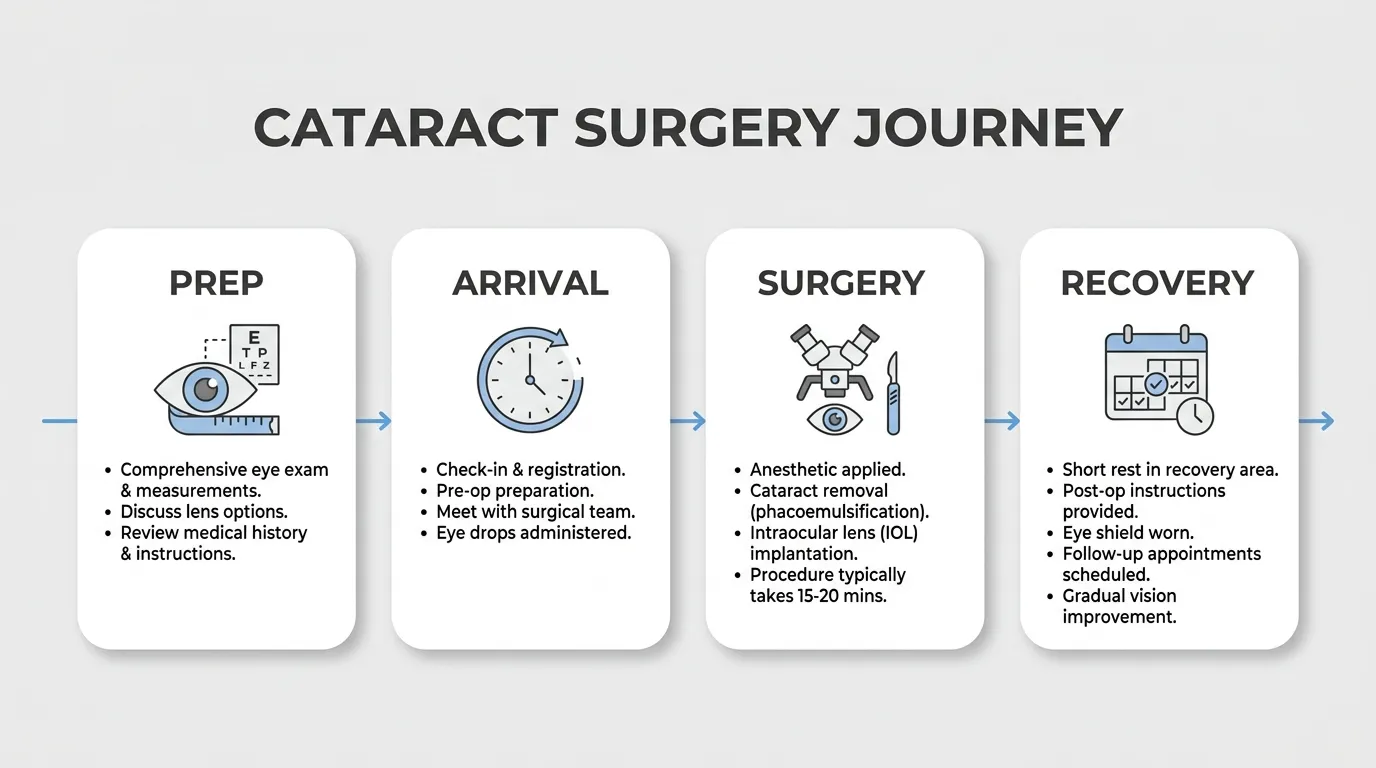
This guide covers preoperative preparation, the arrival and anesthesia process, the surgical procedure itself, advanced technology options, potential risks, candidacy, and postoperative recovery.
Preoperative preparation involves specialized eye measurements, including optical biometry for lens power calculations and macular OCT to detect conditions that could limit visual recovery. Patients also adjust medications and follow specific dietary guidelines in the days leading up to surgery.
The arrival process includes check-in verification, pupil-dilating drops, and anesthesia administration. Topical numbing drops are the most widely preferred method, and most patients remain awake throughout the procedure while experiencing minimal discomfort.
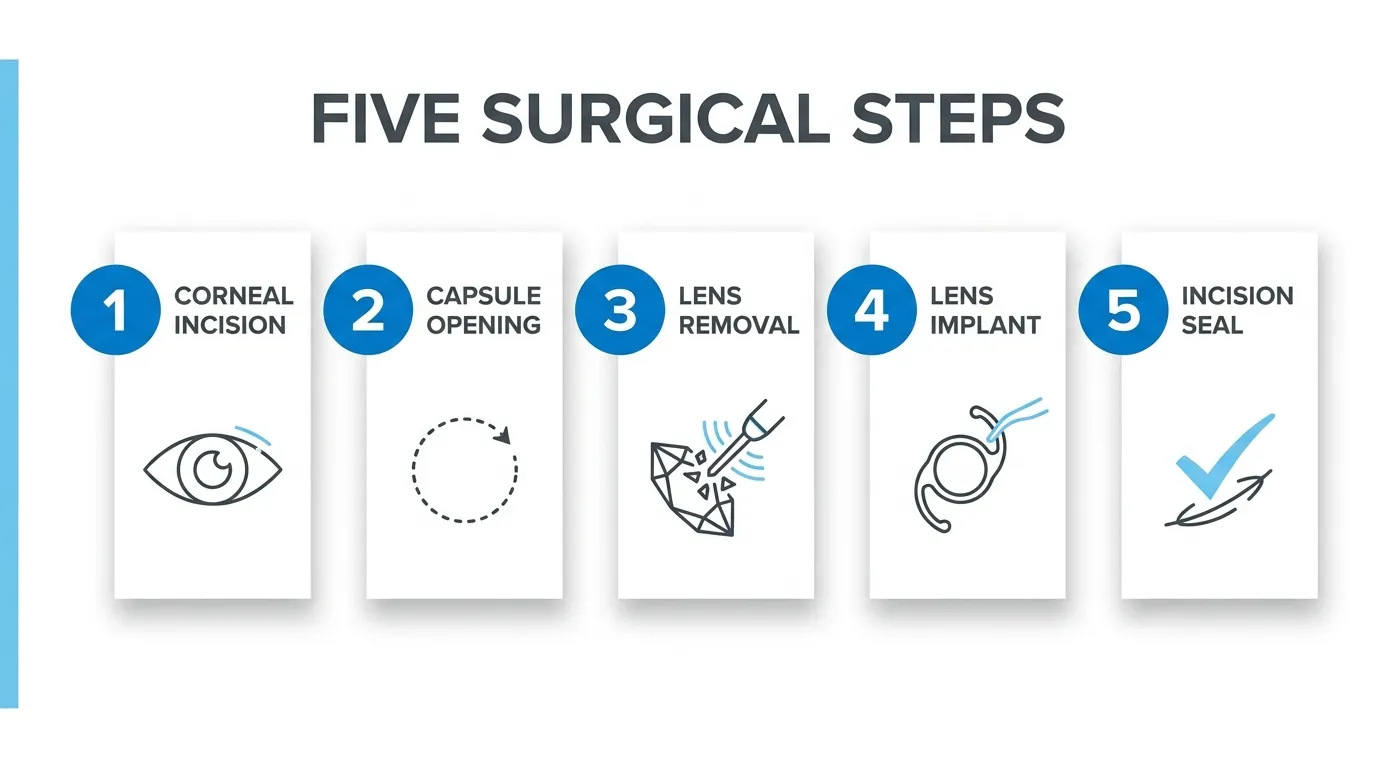
The surgical procedure follows a precise sequence: a small corneal incision of 2 to 3 mm, capsulorhexis to open the lens capsule, phacoemulsification to fragment and remove the cloudy lens, IOL implantation, and self-sealing wound closure. The entire process typically takes 15 to 30 minutes.
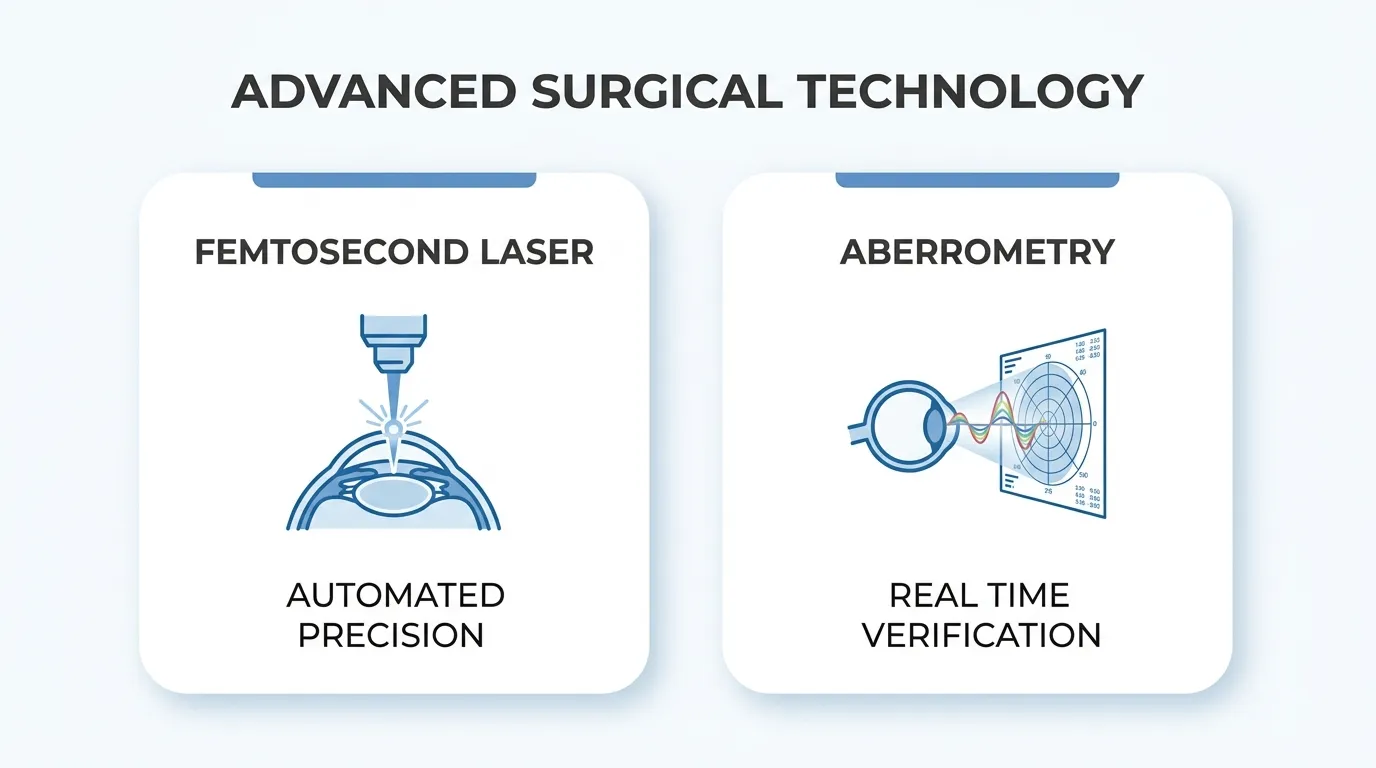
Surgeons may incorporate femtosecond laser assistance or intraoperative aberrometry to refine precision for select patients, particularly those with dense cataracts or prior refractive surgery.
Complication rates remain low; endophthalmitis occurs in roughly 0.01% to 0.22% of cases depending on antibiotic protocols, and posterior capsule rupture is reported at approximately 1.3%.
Recovery involves prescribed antibiotic, NSAID, and steroid eye drops, along with activity restrictions and follow-up visits scheduled within the first day, the following week, and one month after surgery.
How Should You Prepare Before Cataract Surgery Day?
You should prepare before cataract surgery day by completing preoperative eye measurements, adjusting medications, and following specific dietary guidelines.
What Preoperative Eye Measurements and Tests Are Needed?
The preoperative eye measurements and tests needed for cataract surgery include optical biometry, ocular surface screening, and macular imaging. Optical biometry, which uses partial coherence interferometry or swept-source optical coherence tomography, is the current gold standard for measuring axial length and calculating intraocular lens power. Your surgeon may also order macular OCT to detect preexisting conditions that could limit visual recovery.
Beyond these targeted assessments, ocular surface screening can identify dry eye or inflammation that might affect surgical outcomes. According to the American Academy of Ophthalmology, routine preoperative laboratory testing such as CBC, EKG, and electrolytes does not improve outcomes or reduce complications for cataract surgery patients. This means most people can skip general medical bloodwork unless their physician identifies a specific concern. Focused eye-specific testing, rather than blanket lab panels, gives the surgical team the data it actually needs.
What Medications Should You Stop or Start Before Surgery?
The medications you should stop or start before cataract surgery depend on your current prescriptions and your surgeon’s specific protocol. Most ophthalmologists ask patients to begin antibiotic and anti-inflammatory eye drops one to three days before the procedure to reduce infection risk and control inflammation. Blood thinners, such as warfarin or aspirin, require a case-by-case discussion; your eye surgeon and primary care physician should coordinate whether to pause or continue them.
- Stop alpha-blocker medications like tamsulosin well in advance, as they can cause intraoperative floppy iris syndrome.
- Start prescribed antibiotic drops, typically a fluoroquinolone, on the schedule your surgeon provides.
- Continue most blood pressure and diabetes medications unless specifically instructed otherwise.
Always bring a complete medication list to your preoperative appointment so the surgical team can tailor instructions to your health profile.
What Should You Eat or Drink the Day Before Surgery?
You should eat a light, normal meal the evening before cataract surgery and then follow your surgeon’s fasting instructions. Because most cataract procedures use topical or local anesthesia rather than general anesthesia, fasting requirements are often less restrictive. However, many surgical centers still ask patients to avoid food and drinks for at least six to eight hours before the scheduled procedure time, particularly if sedation will be administered.
- Drink water freely the evening before, but stop intake at the time your surgical team specifies.
- Avoid alcohol for at least 24 hours before surgery, as it can affect blood pressure and hydration.
- Take approved morning medications with a small sip of water on surgery day.
Following these dietary guidelines helps reduce the risk of nausea during sedation and keeps your arrival process smooth. With preparation complete, the next step is understanding what happens when you arrive at the surgical center.
What Happens When You First Arrive for Cataract Surgery?
When you first arrive for cataract surgery, you check in, receive dilating and numbing eye drops, and have anesthesia administered before the procedure begins.
How Does the Check-In and Preoperative Area Process Work?
The check-in and preoperative area process works by confirming your identity, verifying the surgical eye, and reviewing your medical history. A nurse or surgical coordinator checks you in, places an identification bracelet on your wrist, and confirms which eye is scheduled for the procedure. The correct eye is typically marked to prevent any errors.
Once checked in, you change into a surgical gown and move to the preoperative holding area. Staff verify your medication list, review any allergies, and confirm that you followed fasting instructions. Your vital signs, including blood pressure and heart rate, are recorded. The surgeon or a team member may visit briefly to answer last-minute questions and confirm the intraocular lens selection. This entire process generally takes 30 to 60 minutes, and having a driver present is required since you cannot drive yourself home afterward.
What Eye Drops Are Given Before the Procedure Begins?
The eye drops given before the procedure begins typically include mydriatic drops to dilate the pupil and topical anesthetic drops to numb the eye’s surface. Mydriatic agents, such as phenylephrine and tropicamide, widen the pupil so the surgeon can access the lens. Full dilation usually takes 20 to 40 minutes and may require multiple rounds of drops.
Antibiotic drops, often a fluoroquinolone like moxifloxacin, are also applied to reduce infection risk. Some surgical centers add a nonsteroidal anti-inflammatory (NSAID) drop to help maintain pupil dilation and control inflammation during the procedure. These preoperative drops form a critical safety layer; skipping or rushing them can compromise both surgical access and outcomes. Patients sometimes notice mild stinging when the drops are instilled, but this sensation fades quickly.
How Is Anesthesia Administered for Cataract Surgery?
Anesthesia for cataract surgery is administered primarily through topical eye drops, with sedation options available for patient comfort. According to a study published by PMC at the National Institutes of Health, topical anesthesia with lidocaine 2% is the most preferred method, providing sufficient pain control for most patients. During cataract surgery under topical anesthesia, approximately 88.9% of patients require only drops, while 11.1% may experience discomfort significant enough to need supplemental anesthetic.
There are three main anesthesia approaches used in cataract surgery:
- Topical anesthesia uses numbing drops applied directly to the eye’s surface, allowing the quickest recovery.
- Regional anesthesia (peribulbar or retrobulbar block) involves an injection of anesthetic around the eye, providing deeper numbing and temporary immobilization.
- Intravenous sedation is often combined with topical anesthesia to help patients relax without general anesthesia.
Patients should know that seeing lights, colors, or flashes during the procedure is normal and not a sign of a problem. Most patients retain light perception throughout surgery under regional anesthesia, and pre-counseling about these visual sensations can significantly reduce anxiety.
With anesthesia in place and the eye fully prepared, the surgeon is ready to begin the procedure itself.
What Are the Steps of the Cataract Surgery Procedure Itself?
The steps of the cataract surgery procedure itself follow a precise sequence: incision creation, capsulorhexis, phacoemulsification, lens implantation, and incision sealing.
How Does the Surgeon Create the Initial Incision?
The surgeon creates the initial incision by making a small, self-sealing cut in the cornea, typically 2 to 3 mm wide. This clear corneal incision is placed at either a superior or temporal position on the eye, depending on the surgeon’s technique and the patient’s astigmatism profile.
A viscoelastic substance is then injected through this opening to maintain the shape of the anterior chamber and protect the delicate corneal endothelium. A smaller side-port incision may also be created to allow instrument access from a second angle. In clinical practice, the precision of this initial step sets the tone for every phase that follows; even slight variations in wound architecture can influence postoperative healing and refractive outcomes.
How Is the Anterior Capsule Opened During Capsulorhexis?
The anterior capsule is opened during capsulorhexis through a technique called continuous curvilinear capsulorhexis (CCC). According to the American Academy of Ophthalmology, CCC is a critical step that involves creating a circular opening in the anterior lens capsule to allow access to the cataractous material.
The surgeon uses a cystotome needle or forceps to initiate a small tear in the capsule, then guides it in a controlled, circular path. The resulting opening, typically 5 to 5.5 mm in diameter, must be centered and smooth-edged. A well-executed capsulorhexis provides stable support for the intraocular lens and reduces the risk of capsular tears during subsequent steps. This is arguably the most skill-dependent moment in the entire procedure, since an irregular or incomplete rhexis can complicate every step that follows.
How Does Phacoemulsification Break Up the Cloudy Lens?
Phacoemulsification breaks up the cloudy lens by using ultrasonic energy delivered through a specialized probe inserted into the eye. According to StatPearls (NCBI Bookshelf), the phacoemulsification probe vibrates at approximately 27,000 to 60,000 Hz, fragmenting the lens material through cavitation and mechanical impact.
After hydrodissection separates the lens from its capsular attachments, the surgeon sculpts and segments the hardened nucleus into smaller pieces. The same probe simultaneously aspirates the emulsified fragments, along with softer cortical material, through its irrigation and aspiration system. Compared to earlier techniques, this approach requires only a small incision and delivers remarkably efficient lens removal. Modern phacoemulsification represents a dramatic evolution from early methods; the earliest recorded cataract treatment was couching, where a needle simply displaced the cloudy lens into the vitreous cavity.
How Is the Intraocular Lens Implanted Into the Eye?
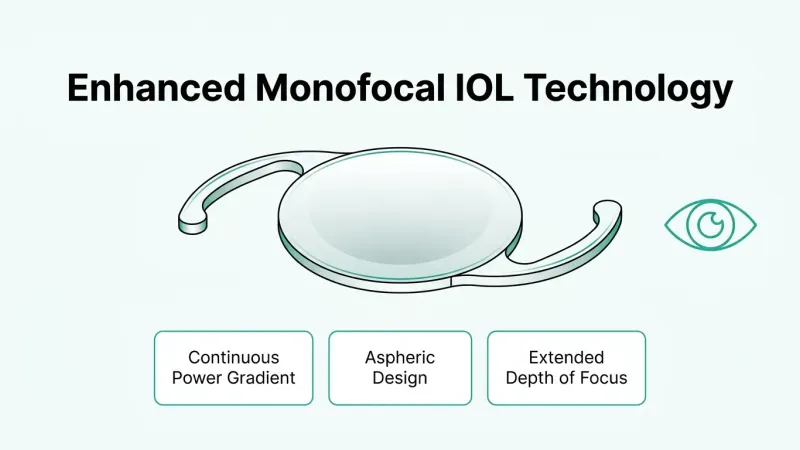
The intraocular lens (IOL) is implanted into the eye by folding it into an injector cartridge and inserting it through the existing corneal incision. Once inside the capsular bag, the IOL unfolds and its haptics, the small arms extending from the optic, anchor it securely in position.
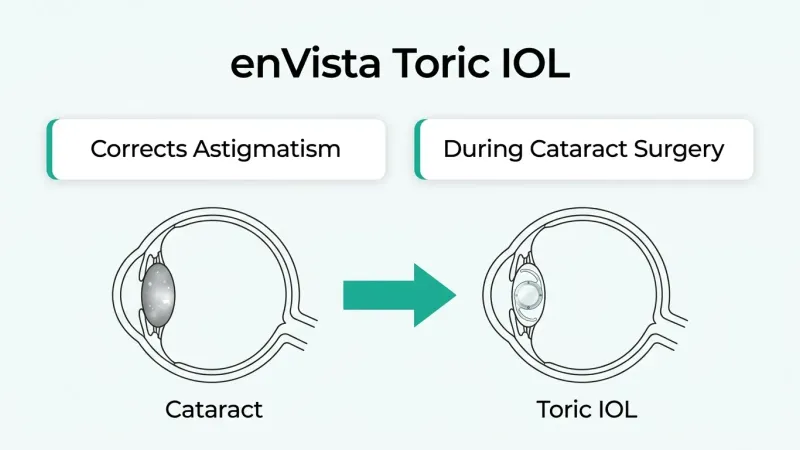
The surgeon centers the lens within the capsulorhexis opening, ensuring the optic sits symmetrically over the visual axis. For toric IOLs designed to correct astigmatism, precise rotational alignment is essential. The remaining viscoelastic material is then carefully removed from behind and in front of the lens to prevent postoperative pressure spikes. Proper lens positioning at this stage directly influences long-term visual clarity and refractive accuracy.
How Is the Incision Sealed at the End of Surgery?
The incision is sealed at the end of surgery by hydrating the corneal wound with a balanced salt solution. The surgeon uses a fine cannula to inject fluid into the stroma surrounding the incision, which causes the tissue layers to swell and press together, creating a watertight closure.
Because the original incision is constructed with a self-sealing valve architecture, sutures are rarely needed. The surgeon confirms wound integrity by checking that no fluid leaks when gentle pressure is applied to the eye. This sutureless approach contributes to faster healing and reduced postoperative astigmatism. With the wound secured, the procedure is complete, and the patient moves to a brief monitoring period before discharge.
How Long Does Each Step of Cataract Surgery Take?
Each step of cataract surgery takes anywhere from a few seconds to several minutes, with the entire procedure typically lasting 15 to 30 minutes. The time depends on the surgical technique, lens density, and individual patient factors. Although brief, each phase requires precise execution, and understanding the timeline can help patients feel more prepared.
| Step | Estimated Duration |
| Anesthesia (topical drops or injection) | 1–5 minutes |
| Corneal incision | 15–30 seconds |
| Capsulorhexis (anterior capsule opening) | 30–60 seconds |
| Hydrodissection (lens loosening) | 15–30 seconds |
| Phacoemulsification (lens emulsification) | 3–10 minutes |
| Cortex removal (irrigation/aspiration) | 2–4 minutes |
| Intraocular lens implantation | 1–2 minutes |
| Incision sealing and final checks | 1–2 minutes |
Phacoemulsification is typically the longest intraoperative step because the surgeon must carefully fragment and aspirate all lens material. Denser cataracts require more ultrasound energy and time, while softer lenses break apart quickly. In practice, most experienced surgeons complete routine cases closer to the 15-minute mark; complex cases with dense nuclei or weak zonules may extend beyond 20 minutes. Patients should know that a longer procedure does not necessarily indicate a complication. With the surgical timeline in perspective, what patients actually experience during those minutes is equally worth understanding.
What Does the Patient See and Feel During the Procedure?
During cataract surgery, most patients see bright lights, colors, and abstract shapes while feeling little to no pain. Pre-surgical counseling about these visual experiences can reduce anxiety significantly.
Most patients remain awake throughout the procedure because topical or local anesthesia numbs the eye without causing unconsciousness. Although the eye is open and positioned under a surgical microscope, the combination of anesthetic drops and mild sedation keeps discomfort minimal. Still, the sensory experience can feel unfamiliar, and knowing what to expect helps patients stay calm.
According to a study published in the European Journal of Anaesthesiology, 80% to 100% of patients retain at least some light perception in the operated eye, and many experience a variety of other visual sensations during cataract surgery under regional anesthesia. Commonly reported experiences include:
- Bright white or blue light from the operating microscope
- Flashes of color, particularly red, orange, or blue hues
- Moving shapes or kaleidoscope-like patterns
- A gradual brightening as the cloudy lens is removed
- Brief shadowy movements from surgical instruments
These visual phenomena are normal and do not indicate a problem. In some cases, patients may find the sudden bright light startling if they were not counseled beforehand, which is why preoperative discussions about expected sensations are so valuable.
Regarding pain, the experience is generally mild. Topical anesthesia with lidocaine 2% appears to be the most preferred method, providing sufficient pain control for the majority of patients. Most individuals describe a sensation of light pressure or mild awareness of touch rather than sharp pain. When sedation is combined with topical drops, anxiety and discomfort decrease further, allowing the surgeon to work efficiently during phacoemulsification.
For most patients, the entire sensory experience lasts only 15 to 20 minutes. The brief duration, combined with effective numbing, makes the procedure far less intimidating than many people anticipate. Patients who understand these sensations in advance tend to feel more relaxed and cooperative, which can contribute to smoother surgical outcomes. Understanding what technology the surgeon may use adds another layer of preparation.
What Technology May the Surgeon Use During Surgery?
The surgeon may use advanced technologies such as femtosecond lasers and intraoperative aberrometry to enhance precision during cataract surgery. These tools can improve specific steps of the procedure.
How Is Femtosecond Laser-Assisted Cataract Surgery Different?
Femtosecond laser-assisted cataract surgery (FLACS) is different because it uses a precise laser to automate key steps that the surgeon traditionally performs by hand. The femtosecond laser creates the corneal incision, performs the capsulorhexis, and softens the cataractous lens before phacoemulsification begins. This level of automation can produce more consistent, circular capsular openings and reduce the ultrasound energy needed to break up the lens.
According to a study published in PubMed (2024), FLACS achieves better visual outcomes in the early postoperative period and long-term follow-up compared to conventional phacoemulsification. For patients with dense cataracts or compromised corneal endothelium, the reduced ultrasound energy that FLACS allows may offer a meaningful clinical advantage over standard techniques.
What Role Does Intraoperative Aberrometry Play?
Intraoperative aberrometry plays a real-time verification role during cataract surgery, measuring the eye’s refractive state while the patient is on the operating table. This technology, often called ORA (optic refractive analysis), allows the surgeon to confirm or adjust intraocular lens power before closing the incision.
According to research presented at the 2019 ASCRS annual meeting, intraoperative aberrometry prevented hyperopic surprise in 27% of cases where it recommended a higher powered lens than preoperative biometry had calculated. The technology also detects astigmatism levels that preoperative keratometry may underestimate, with studies showing mean measurements of 0.86 D intraoperatively versus 0.79 D preoperatively. This capability is particularly valuable for patients with a history of refractive surgery, where standard preoperative IOL power calculations tend to be less reliable.
For complex eyes, intraoperative aberrometry serves as an essential safety net that can mean the difference between a second procedure and getting the refractive target right the first time.
What Are the Possible Risks and Complications During Surgery?
The possible risks and complications during cataract surgery include posterior capsule rupture, intraocular lens dislocation, infection, and bleeding. Each complication is rare, but understanding them helps patients prepare.
What Is Posterior Capsule Rupture During Cataract Surgery?
Posterior capsule rupture is a tear in the thin membrane that holds the natural lens in place, occurring when the capsule breaks during phacoemulsification. According to a study published in PubMed, posterior capsule rupture occurred in 351 eyes, giving an overall rate of 1.3% during phacoemulsification.
Several factors can increase risk:
- Dense or mature cataracts with potential zonular instability
- A history of posterior capsular rupture in the first eye, which significantly raises the likelihood of rupture in the fellow eye during subsequent surgery
- Weak zonular fibers that make lens manipulation more difficult
When recognized promptly, surgeons can manage this complication by performing an anterior vitrectomy and adjusting the lens implantation strategy. In experienced hands, visual outcomes often remain favorable even when capsule rupture occurs.
What Happens If the Intraocular Lens Dislocates?
Intraocular lens dislocation happens when the implanted IOL shifts from its intended position inside the capsular bag. This can occur during surgery if the capsular support is compromised, or it may develop weeks to years afterward as the capsule weakens.
Symptoms may include:
- Blurred or double vision
- Visible edge of the lens in the pupil
- Increased glare or halos around lights
A mildly displaced lens can sometimes be repositioned through a minimally invasive procedure. Severely dislocated lenses typically require surgical exchange or suture fixation. Your ophthalmologist may recommend monitoring minor shifts before pursuing intervention, since not every displacement requires immediate correction.
How Common Is Infection After Cataract Surgery?
Infection after cataract surgery is rare. The most serious form, endophthalmitis, occurs at rates ranging from 0.01% to 0.22% depending on whether intracameral antibiotics are used, according to a 2025 review published in PMC.
Preventive measures that reduce infection risk include:
- Povidone-iodine antisepsis applied before incision
- Intracameral antibiotic injection at the end of surgery
- Sterile surgical technique throughout the procedure
Postoperative follow-up visits, typically scheduled a day or two after surgery, the following week, and again after one month, allow early detection of any signs of infection. Prompt treatment with intravitreal antibiotics can preserve vision in most cases. Given the millions of cataract procedures performed annually worldwide, the infection rate reflects how effectively modern protocols protect patients.
What Is the Risk of Bleeding During the Procedure?
The risk of bleeding during cataract surgery is very low. Modern phacoemulsification uses incisions of only 2 to 3 millimeters, which minimizes disruption to blood vessels. Most minor bleeding resolves on its own without affecting the surgical outcome.
Factors that may slightly elevate bleeding risk include:
- Use of blood-thinning medications such as warfarin or aspirin
- Pre-existing conditions like uncontrolled hypertension or bleeding disorders
- Complicated surgical cases requiring larger incisions
Significant intraocular hemorrhage, such as suprachoroidal hemorrhage, is exceedingly rare in routine cataract surgery. Surgeons typically review each patient’s medication list and medical history beforehand to minimize this risk. For patients on anticoagulants, your ophthalmologist may coordinate with your prescribing physician to determine whether adjustments are needed before surgery.
With a clear understanding of intraoperative risks, knowing who qualifies for standard cataract surgery becomes the next step.
Who Is a Good Candidate for Standard Cataract Surgery?
A good candidate for standard cataract surgery is generally any adult whose cataracts cause enough visual impairment to interfere with daily activities. Candidacy depends on several factors, including cataract severity, overall eye health, and the patient’s functional needs.
Most people who develop visually significant cataracts can safely undergo phacoemulsification. The procedure is well tolerated across a broad age range, from younger adults with early-onset cataracts to patients in their 80s and 90s. Key factors that ophthalmologists evaluate when determining candidacy include:
- Functional vision loss: Difficulty driving, reading, or performing routine tasks due to lens clouding.
- Stable overall eye health: Absence of uncontrolled glaucoma, active eye infections, or severe untreated retinal disease that would limit visual recovery.
- Realistic expectations: Understanding that cataract surgery replaces the cloudy natural lens with an intraocular lens (IOL) and may not correct all pre-existing conditions.
- Manageable systemic health: While most medical conditions do not disqualify a patient, uncontrolled diabetes or blood-thinning medications may require coordination with the primary care physician before surgery.
Certain ocular conditions can make standard phacoemulsification more complex without necessarily ruling it out. Patients with pseudoexfoliation syndrome, small pupils, or prior eye trauma may still be candidates, though their surgeon might plan additional precautions. According to a report by the American Academy of Ophthalmology, preoperative macular OCT is recommended prior to cataract surgery to identify preexisting macular pathology that may limit visual recovery; this screening helps set appropriate outcome expectations.
In clinical practice, candidacy is rarely a binary yes-or-no decision. The real question is whether the benefit of improved vision outweighs the small procedural risk for each individual patient. For most people with symptomatic cataracts, the answer favors surgery. Once candidacy is confirmed, the focus shifts to what happens in the moments right after the procedure is complete.
What Happens Immediately After the Procedure Is Complete?
Immediately after cataract surgery is complete, patients are moved to a recovery room for a brief observation period. The subsections below cover the instructions given during recovery and when you can expect to go home.
What Instructions Are Given in the Recovery Room?
The instructions given in the recovery room focus on protecting the treated eye and recognizing warning signs. A nurse or surgical team member typically reviews these key points before discharge:
- A protective eye shield is placed over the operated eye to prevent accidental rubbing or pressure.
- Prescribed antibiotic and anti-inflammatory eye drops are explained, including dosage timing and proper instillation technique.
- Patients are advised not to touch, rub, or press on the eye.
- Activities to avoid in the first 24 hours include bending over, heavy lifting, and getting water directly in the eye.
- Warning signs requiring immediate contact with the surgeon include sudden vision loss, increasing pain, or unusual discharge.
Most patients notice mild blurriness or a slight grittiness right away, which is normal. These sensations typically improve within hours as the pupil-dilating drops wear off and the eye begins to settle. Having a responsible adult available to drive home is essential, since vision in the treated eye remains temporarily impaired.
When Can You Go Home After Cataract Surgery?
You can go home after cataract surgery within 30 to 60 minutes of the procedure ending, once the surgical team confirms your eye is stable. Because modern phacoemulsification uses a small, self-sealing incision, prolonged hospital stays are unnecessary. According to a 1967 NIH-published account, American ophthalmologist Charles Kelman revolutionized cataract surgery by introducing phacoemulsification as a way to remove the lens through a small incision; this technique is the reason same-day discharge became standard.
Before leaving, the care team verifies that post-surgical instructions are understood and a follow-up appointment is confirmed. Someone else must drive the patient home, as sedation effects and temporary visual changes make operating a vehicle unsafe. For most individuals, the entire outpatient visit, from arrival to departure, lasts only a few hours.
With discharge instructions in hand, the focus shifts to following your prescribed eye drop regimen and attending early follow-up visits.
What Should You Expect During Early Postoperative Recovery?
Early postoperative recovery after cataract surgery involves prescribed eye drops, activity restrictions, and scheduled follow-up visits. Each element plays a specific role in protecting the eye during healing.
What Eye Drops Are Prescribed After Surgery?
Eye drops prescribed after cataract surgery typically include an antibiotic, a nonsteroidal anti-inflammatory drug (NSAID), and a corticosteroid. A standard postoperative drop regimen uses the antibiotic for approximately one week, while the NSAID and steroid, such as prednisolone, continue for several weeks to control inflammation and prevent infection.
According to a study published in Clinical Ophthalmology (Taylor & Francis), the use of a combination drop for postoperative cataract surgery care can be as effective as multiple individual drops while improving patient compliance. For patients managing three or four separate bottles, combination formulations simplify the process considerably and may reduce dosing errors. Your ophthalmologist will provide a specific schedule tailored to your healing needs.
What Activities Should You Avoid in the First Week?
Activities you should avoid in the first week after cataract surgery include:
- Rubbing or pressing on the operated eye.
- Heavy lifting or strenuous exercise that increases eye pressure.
- Swimming, hot tubs, or submerging the face in water.
- Wearing eye makeup or applying products near the eye.
- Exposing the eye to dust, wind, or dirty environments.
These restrictions protect the healing incision from contamination and physical stress. Most surgeons recommend wearing a protective eye shield while sleeping during the first week. Although the corneal incision is self-sealing, it remains vulnerable to disruption in the early days. Following these precautions closely reduces the risk of complications such as infection or increased intraocular pressure.
When Is the First Follow-Up Appointment Scheduled?
The first follow-up appointment is typically scheduled one to two days after cataract surgery. According to the Mayo Clinic, patients are usually seen by their eye doctor a day or two after surgery, then the following week, and again after one month to monitor healing.
During the initial visit, the surgeon checks:
- Visual acuity and early refractive changes.
- Intraocular pressure levels.
- Signs of inflammation or infection.
- Incision integrity and intraocular lens position.
Missing early follow-up appointments can delay detection of treatable complications. Consistent monitoring across all three visits gives the surgical team a complete picture of recovery progress and helps ensure the best possible visual outcome.
How Can Eye Surgery Today Help You Understand Cataract Surgery?
Eye Surgery Today can help you understand cataract surgery by providing surgeon-led educational guides that cover every phase of the procedure, from preoperative testing to postoperative recovery.
Can the Eye Surgery Today Cataract Surgery Guide Prepare You?
Yes, the Eye Surgery Today cataract surgery guide can prepare you by breaking down each stage of the procedure into clear, accessible explanations written by practicing ophthalmologists. The guide covers preoperative diagnostics, surgical techniques, lens implantation, and recovery protocols, giving patients the context they need to approach surgery with confidence.
According to the World Health Organization, global coverage of cataract surgery has increased by about 15% over the past two decades, even as ageing populations continue to drive rising cataract prevalence. With more people undergoing this procedure than ever before, having a reliable educational resource becomes increasingly valuable. Eye Surgery Today translates the clinical detail behind each surgical step into language that empowers informed decision-making, without relying on jargon or oversimplified explanations.
What Are the Key Takeaways About Each Step of Cataract Surgery?
The key takeaways about each step of cataract surgery are:
- Preoperative preparation involves specialized eye measurements, such as optical biometry for lens power calculations, and ocular surface screening to ensure optimal surgical conditions.
- Arrival and anesthesia typically rely on topical numbing drops, keeping patients comfortable while allowing the surgeon full access to the eye.
- The surgical procedure follows a precise sequence: corneal incision, capsulorhexis, phacoemulsification of the cloudy lens, intraocular lens implantation, and self-sealing wound closure.
- Advanced technology options, such as femtosecond laser assistance and intraoperative aberrometry, can refine precision for select patients.
- Complication rates remain very low, with endophthalmitis occurring in approximately 0.08% of cases based on a study of nearly two million procedures.
- Postoperative recovery involves prescribed eye drops, activity restrictions, and scheduled follow-up visits to monitor healing.
Understanding each step removes uncertainty and helps patients engage more actively in their own care. Eye Surgery Today was built to provide exactly this kind of structured, evidence-based clarity for anyone preparing for cataract surgery.