A vision inventory is a structured self-assessment that captures how your eyesight affects daily life, safety, independence, and emotional well-being. Unlike a clinical eye exam, it is a patient-led reflection designed to surface functional vision problems worth bringing to a professional appointment.
This guide covers the connection between vision and quality of life, how to build and use a vision inventory, daily activities and symptoms worth evaluating, the emotional impact of vision changes, and how surgeon-reviewed education can support informed next steps.
Visual impairment is associated with significantly higher rates of depression and social isolation in adults aged 50 and older. Understanding this link reframes declining vision as a clinical concern with real psychological consequences, not simply an inconvenience.
A vision inventory evaluates specific moments where eyesight is tested most: night driving, reading and screen use, recognizing faces across a room, navigating outdoor hobbies, and seeing in dim environments like restaurants. Each activity reveals different aspects of visual function that may be changing gradually.
Symptoms such as blurry or cloudy vision, increased glare and halos, frequent prescription changes, faded color perception, and double vision can each signal a progressive eye condition. Recognizing these patterns early may help guide timely clinical evaluation.
Vision changes can quietly erode confidence, limit independence, and lead to activity withdrawal. Assessing frustration, isolation, and lost hobbies alongside physical symptoms gives a fuller picture of how vision is shaping your daily experience.
Honest self-reflection before an eye appointment, paired with reliable surgical education, helps you move from recognizing a problem to pursuing a solution. Knowing when intervention may be warranted and which lens options exist can support more confident, informed vision decisions.
Why Does Taking Stock of Your Vision Matter for Your Overall Quality of Life?
Taking stock of your vision matters for your overall quality of life because visual impairment affects far more than your ability to see clearly. It shapes your independence, emotional wellbeing, and social engagement. The sections below explore how vision loss is linked to depression and isolation, and how validated tools help measure that impact.
How Visual Impairment Affects Mental Health and Social Connection
Visual impairment is significantly associated with depression and social isolation in adults aged 50 and older. According to a study published in BMJ Open Ophthalmology, adults with visual impairment had a 90% higher prevalence of depression compared to those without it, and showed measurably greater social isolation scores. These findings underscore that declining vision is not a cosmetic inconvenience; it is a clinical condition with real psychological consequences.
How Validated Tools Measure Vision’s Impact on Daily Life
The NEI VFQ-25 (National Eye Institute Visual Functioning Questionnaire-25) is a reliable and valid measure of how visual function affects patient quality of life across 12 subscales, including near and distance activities, according to the American Journal of Ophthalmology. This kind of structured self-assessment transforms a subjective feeling of “not seeing as well” into measurable data a clinician can act on. For most patients, naming the problem precisely is the first step toward addressing it.
What Is a Vision Inventory?
A vision inventory is a structured self-assessment that captures how your eyesight affects daily life, safety, independence, and emotional well-being. The following sections explain how it differs from a clinical eye exam and which life areas it should cover.
How Does a Vision Inventory Differ from a Routine Eye Exam?
A vision inventory differs from a routine eye exam in both purpose and format. A routine eye exam is a clinical procedure performed by an eye care professional to diagnose conditions such as astigmatism, farsightedness, cataracts, or glaucoma. A vision inventory, by contrast, is a patient-led reflection on how well your current vision supports your daily activities, relationships, and lifestyle goals.
Routine eye exams measure what your eyes can do under controlled conditions. A vision inventory asks what your eyes allow you to do in real life. According to Snead Eye Group, comprehensive eye exams provide a thorough evaluation of the visual system, whereas routine vision screenings offer a more basic check-up that cannot replace a detailed clinical evaluation. A vision inventory sits outside both categories: it is not a screening but a functional self-audit designed to surface problems worth bringing to a clinical appointment.
What Areas of Your Life Should a Vision Inventory Evaluate?
The areas of your life a vision inventory should evaluate include daily tasks, safety, social participation, emotional health, and access to care. Vision affects far more than reading clarity, so the inventory should be broad by design.
Key areas to assess include:
- Daily functioning: Reading, screen use, cooking, and personal care.
- Safety: Driving at night, navigating stairs, and recognizing hazards outdoors.
- Social participation: Recognizing faces, reading expressions, and joining group activities.
- Emotional well-being: Feelings of frustration, withdrawal, or loss of confidence tied to vision changes.
- Access and equity: Research from the American Academy of Ophthalmology notes that barriers to specialist care vary widely by age, geography, and other demographic factors, meaning some individuals may be compensating longer than necessary without realizing care is available to them.
What Daily Activities Should You Assess in Your Vision Inventory?
A vision inventory covers the specific moments in daily life where your eyesight is tested most. The H3s below examine driving at night, reading and screens, recognizing faces, outdoor hobbies, and dim indoor environments.
How Well Can You See While Driving at Night?
Night driving is one of the most revealing tests in any vision inventory. According to a study published in the British Journal of Ophthalmology, 79% of patients reported visual difficulties while driving in darkness before surgery, and 50% reported difficulties even in daylight. If you regularly hesitate to drive after dark, avoid highways, or find oncoming headlights overwhelming, these are meaningful signals worth documenting. Most drivers who addressed underlying vision conditions maintained excellent results for up to 20 years post-surgery, which underscores how much this single activity can reflect the broader trajectory of your visual health.
How Comfortable Is Your Vision When Reading or Using Screens?
Reading and screen use are reliable indicators of near-vision quality. Assess whether you hold books or devices farther away than before, increase font sizes regularly, lose your place on a page, or experience eye fatigue after short reading sessions. Struggling to read standard print or a phone screen without glasses, or with your current prescription, suggests a meaningful shift in functional near vision worth raising with an eye care professional.
How Clearly Can You See Faces and Expressions Across a Room?
Distance vision quality shows clearly when recognizing faces across a room. Ask yourself whether you can identify a friend at the far end of a restaurant, read a speaker’s facial expressions during a meeting, or follow a conversation from across a dinner table. Difficulty here points to reduced intermediate or distance visual acuity, which affects social engagement and can quietly diminish confidence in group settings over time.
How Easily Can You Navigate Outdoor Activities and Hobbies?
Outdoor activities and hobbies reveal how vision performs under variable real-world conditions. Consider whether you struggle to track a golf ball in flight, read trail signage while hiking, follow a moving subject through a camera viewfinder, or distinguish depth on uneven terrain. These tasks require sharp contrast sensitivity, good peripheral awareness, and reliable distance acuity. Noticing that you have scaled back or abandoned outdoor pursuits is a significant finding in any personal vision assessment.
How Well Can You See in Low-Light Environments Like Restaurants?
Low-light environments like restaurants test contrast sensitivity and adaptation, two of the earliest visual functions to decline with conditions such as cataracts. Assess whether reading a menu without the phone torch feels difficult, whether faces appear unclear in candlelit settings, or whether you feel uncertain navigating between tables. These experiences, though easy to dismiss as minor inconveniences, often reflect measurable changes in visual function that a structured inventory is designed to surface.
What Vision Symptoms Should You Pay Attention To?
The vision symptoms to pay attention to include blurry or cloudy vision, increased glare and halos around lights, frequent prescription changes, faded color perception, and double vision. Each of these can signal a progressive eye condition that benefits from early clinical evaluation.
Are You Experiencing Blurry or Cloudy Vision?
Blurry or cloudy vision is one of the most common early indicators of cataracts. It typically develops gradually, often affecting one eye before the other, which makes it easy to dismiss as normal aging or simple refractive changes. Many people notice it first when reading fine print or recognizing faces at a distance. Because the progression is slow, it is worth paying close attention to whether cloudiness is worsening over weeks or months rather than remaining stable.
Do You Notice Increased Glare or Halos Around Lights?
Increased glare and halos around lights are early cataract symptoms that can meaningfully raise traffic risks. According to a study published in JAMA Ophthalmology, early cataract symptoms associated with elevated traffic risk include decreased visual acuity, loss of contrast sensitivity, poor night vision, and increased glare from oncoming headlights. These symptoms are particularly hazardous during nighttime driving, where incoming headlights intensify the effect. It is worth noting that halos and glare are also associated with certain intraocular lens designs, so discussing these symptoms with a surgeon helps distinguish their underlying cause.
Have You Needed Frequent Changes to Your Glasses Prescription?
Frequent changes to your glasses prescription can signal a shifting refractive error caused by lens changes inside the eye. As cataracts develop, the lens may alter its shape or density, temporarily improving near vision in some patients before overall clarity declines. If your prescription has changed more than once in a 12-month period, that pattern itself is clinically meaningful and warrants a more thorough medical eye evaluation rather than simply updating lenses.
Are You Struggling with Faded or Yellowed Color Perception?
Faded or yellowed color perception is a symptom linked to nuclear cataracts, where the lens gradually takes on a brownish or yellowish tint. Colors that once appeared vivid may look washed out, and distinguishing between similar shades, such as navy blue and black, can become difficult. This change often goes unnoticed precisely because it occurs so slowly. A useful self-check is comparing how the same scene looks when viewed separately through each eye.
Do You Experience Double Vision in One or Both Eyes?
Double vision in one eye, known as monocular diplopia, can be caused by irregular changes in the lens that scatter light entering the eye. Double vision involving both eyes simultaneously may indicate a separate neurological or muscular issue requiring urgent evaluation. According to ScienceDirect, global vision loss prevalence increased markedly between 1990 and 2019, driven by population aging and epidemiological shifts, underscoring that symptoms like double vision are becoming more common and should not be deferred. Any new or worsening double vision warrants prompt professional assessment to rule out serious underlying causes.
How Do You Evaluate the Emotional and Lifestyle Impact of Vision Changes?
Evaluating the emotional and lifestyle impact of vision changes means examining how declining sight affects your independence, activities, and mental well-being. The following questions help you assess three key dimensions: independence and confidence, activity participation, and emotional health.
Has Vision Loss Affected Your Independence or Confidence?
Vision loss has affected independence or confidence when everyday tasks, such as driving, reading menus, or recognizing faces, require extra effort or outside help. This shift is more common than many people realize. According to a study published in BMJ Open Ophthalmology, adults aged 50 and older with visual impairment had a 90% higher prevalence of depression compared to those without visual impairment (adjusted prevalence ratio 1.90). Reduced confidence in completing basic tasks often signals that vision is no longer meeting functional needs, which is a meaningful threshold for discussing care options with an eye care professional.
Have You Stopped Doing Activities You Once Enjoyed Because of Your Vision?
Stopped activities are a concrete sign that vision changes are limiting your quality of life. Common examples include giving up hobbies such as sewing, cycling, or photography, withdrawing from social gatherings, or reducing time spent reading or watching films. When vision forces you to abandon things that bring meaning or joy, the functional impact extends well beyond eyesight. This pattern of activity withdrawal is one of the clearest indicators that a vision evaluation is overdue.
Is Poor Vision Contributing to Feelings of Frustration or Isolation?
Poor vision can contribute to feelings of frustration or isolation in ways that are often gradual and easy to dismiss. Research published in BMJ Open Ophthalmology found that visual impairment is significantly associated with social isolation, with affected individuals scoring 0.25 points higher on social isolation measures compared to those without visual impairment. Frustration often builds when vision problems go unaddressed for extended periods, and social withdrawal follows as activities become harder to navigate. Recognizing these emotional patterns as vision-related, rather than personal, is an important step toward seeking support.
What Questions Should You Ask Yourself Before Visiting an Eye Doctor?
The questions to ask yourself before visiting an eye doctor center on three core areas: how long you have been compensating for declining vision, whether your current correction still works, and what visual outcomes matter most to your life. Honest answers to each help you walk into the appointment prepared.
How Long Have You Been Compensating for Declining Vision?
How long you have been compensating for declining vision is a critical signal your eye doctor needs. Compensation behaviors, such as tilting your head to read, increasing screen brightness, or avoiding nighttime driving, indicate that your visual system is no longer functioning adequately. The longer these habits persist, the greater the functional gap between your current vision and what treatment may restore. Tracking the timeline honestly, whether weeks or years, gives your doctor meaningful context for evaluating the severity of your condition.
Are Your Current Glasses or Contacts Still Meeting Your Needs?
Your current glasses or contacts are still meeting your needs if you can comfortably perform daily tasks without workarounds or frequent prescription changes. Frequent prescription updates, halos, glare, or persistent eyestrain despite correction suggest the underlying condition may have progressed beyond what corrective lenses can adequately address. According to the American Academy of Ophthalmology, cataract surgery is indicated when visual function no longer meets the patient’s needs and surgery provides a reasonable likelihood of quality-of-life improvement.
What Visual Outcomes Matter Most for Your Lifestyle Goals?
The visual outcomes that matter most for your lifestyle goals depend on which activities are central to your daily life, such as driving, reading, working on screens, or participating in sports. Identifying these priorities before your appointment helps your eye doctor recommend the most appropriate treatment pathway and lens options. In clinical practice, aligning expected outcomes with personal lifestyle demands is one of the most underestimated steps in surgical planning, yet it directly shapes long-term satisfaction with results.
When Should Your Vision Inventory Prompt You to Seek Professional Care?
Your vision inventory should prompt you to seek professional care when daily activities become consistently difficult, symptoms interfere with safety, or your current correction no longer meets your needs. The following triggers signal that a clinical evaluation is warranted.
- Driving is becoming unsafe. Night vision difficulties, glare from headlights, and reduced contrast sensitivity are early cataract symptoms linked to increased traffic risk, according to a population-based study published in JAMA Ophthalmology.
- Reading or screen use requires constant compensation. Frequent posture adjustments, extra lighting, or enlarged text suggest functional decline beyond what glasses alone can address.
- You have stopped activities you previously enjoyed. Avoiding hobbies, social outings, or independent tasks because of vision changes is a meaningful quality-of-life signal.
- Glasses or contact prescriptions keep changing. Accelerating prescription shifts may indicate a progressing lens condition rather than a simple refractive change.
- Emotional impact is growing. Frustration, withdrawal from social interaction, or reduced confidence tied directly to vision changes warrants professional assessment.
- Symptoms are new or worsening rapidly. Sudden blurring, double vision, or significant glare changes require urgent evaluation, not a scheduled wait.
According to the American Academy of Ophthalmology, cataract surgery is indicated when visual function no longer meets a patient’s needs and surgery offers a reasonable likelihood of quality-of-life improvement. Your completed inventory gives a clinician the functional context needed to make that determination accurately.
How Can Surgeon-Reviewed Eye Surgery Education Support Your Vision Decisions?
Surgeon-reviewed eye surgery education supports your vision decisions by translating clinical evidence into clear, actionable knowledge. The H3s below cover how understanding cataract surgery indications and advanced IOL options helps you act on your vision inventory findings.
Can Learning About Cataract Surgery and Advanced Lenses Help You Act on Your Vision Inventory?
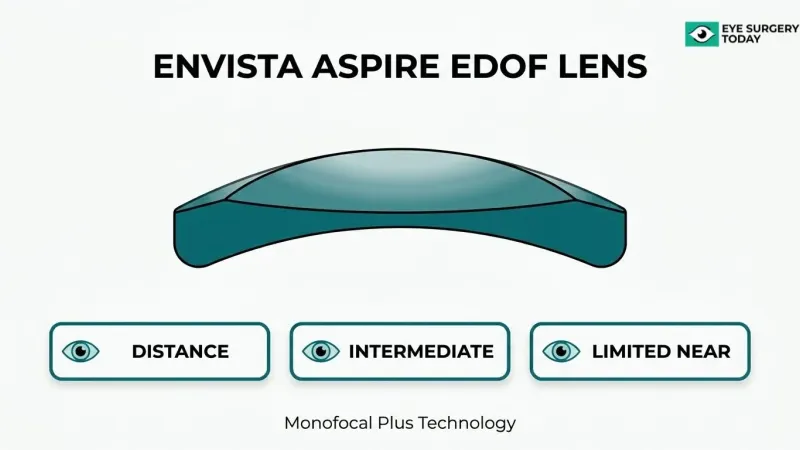
Yes, learning about cataract surgery and advanced lenses can help you act on your vision inventory by clarifying when intervention is clinically warranted. According to the American Academy of Ophthalmology, cataract surgery is indicated when visual function no longer meets a patient’s needs and surgery provides a reasonable likelihood of quality-of-life improvement. Additional indications include phacomorphic glaucoma, lens-induced uveitis, and posterior segment pathology management. Understanding these criteria helps you recognize whether your inventory findings reflect a surgically addressable condition. A population-based study published in JAMA Ophthalmology found that cataract surgery was associated with a 9% reduction in serious traffic crashes among 559,546 patients, with crash rates falling from 2.36 to 2.14 per 1,000 patient-years. Knowing this kind of outcome data empowers you to move from recognizing a vision problem to pursuing a solution with confidence.
What Are the Key Takeaways About Conducting a Vision Inventory to Take Stock of Your Life and Vision?
The key takeaways about conducting a vision inventory are that honest self-assessment reveals how vision changes affect daily life, and that advanced lens options can meaningfully reduce dependence on glasses after surgery. A Journal of Clinical Medicine study found that spectacle dependence for near vision was significantly lower in patients receiving PureSee™ EDOF IOLs (36%) compared to enhanced monofocal IOLs (80%). Understanding these options before your consultation allows you to arrive with informed preferences rather than relying entirely on in-office guidance. Eye Surgery Today provides surgeon-reviewed education designed to bridge exactly this knowledge gap, giving you the clarity needed to make confident vision decisions.