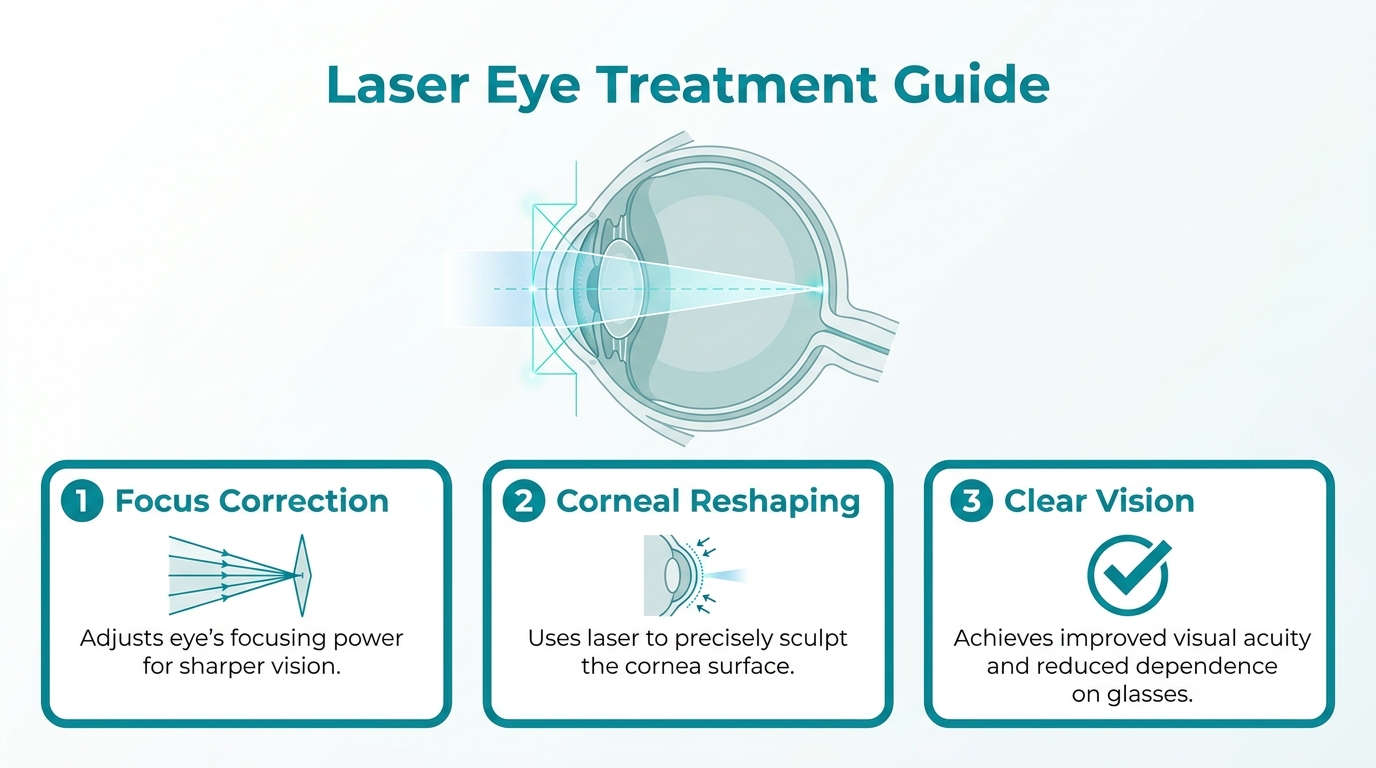
Laser eye treatment is a category of refractive surgical procedures that reshape the cornea so light focuses correctly on the retina, reducing or eliminating the need for glasses or contact lenses. Procedures such as LASIK, PRK, and SMILE each use a different technique to modify corneal tissue, though all share the goal of improving unaided visual acuity.
This guide covers the types of laser eye procedures and how they work, treatable vision conditions, candidacy and disqualifying factors, potential benefits alongside risks and side effects, and the full patient journey from preparation through recovery and cost.
LASIK, PRK, SMILE, LASEK, Contoura Vision, and Wavefront-Guided LASIK each access and reshape the cornea differently; understanding their distinct mechanisms helps clarify which approach may suit a specific diagnosis and corneal anatomy.
Laser correction can address myopia, hyperopia, astigmatism, and presbyopia. Myopia is the most commonly treated condition, while presbyopia management through monovision represents a compromise rather than a complete restoration of near focus.
Eligibility depends on prescription stability, corneal thickness, overall eye health, and age. Conditions such as keratoconus, uncontrolled autoimmune disorders, or insufficient stromal tissue may shift the recommendation toward an alternative procedure or rule out surgery entirely.
Reported satisfaction following laser correction is high, and long-term cost comparisons may favor surgery over years of contact lens expenses. However, side effects such as postoperative dry eye are common, and rare complications like corneal ectasia, while infrequent, require careful preoperative screening to minimize risk.
Recovery timelines range from roughly 24 hours for meaningful improvement after LASIK to several weeks for PRK, and per-eye costs typically fall between $1,500 and $5,000 depending on the procedure, technology, and surgeon experience.
What Is Laser Eye Surgery?
Laser eye surgery is a category of refractive surgical procedures that reshape the cornea to correct how light focuses on the retina. According to the American Academy of Ophthalmology, refractive surgeries correct errors such as myopia, hyperopia, astigmatism, and presbyopia to reduce or eliminate the need for corrective lenses. Several procedure types exist, including LASIK, PRK, and SMILE, each using a different technique to modify corneal tissue. While the specific approach varies, all laser eye treatments share a common goal: improving unaided visual acuity so patients can see clearly without glasses or contacts. For many candidates, these procedures offer a long-term alternative to daily corrective lenses, though results depend on individual eye anatomy and prescription stability. Understanding what laser eye surgery involves at a foundational level helps patients evaluate whether vision correction may be right for them.
What Vision Problems Can Laser Eye Treatments Help Correct?
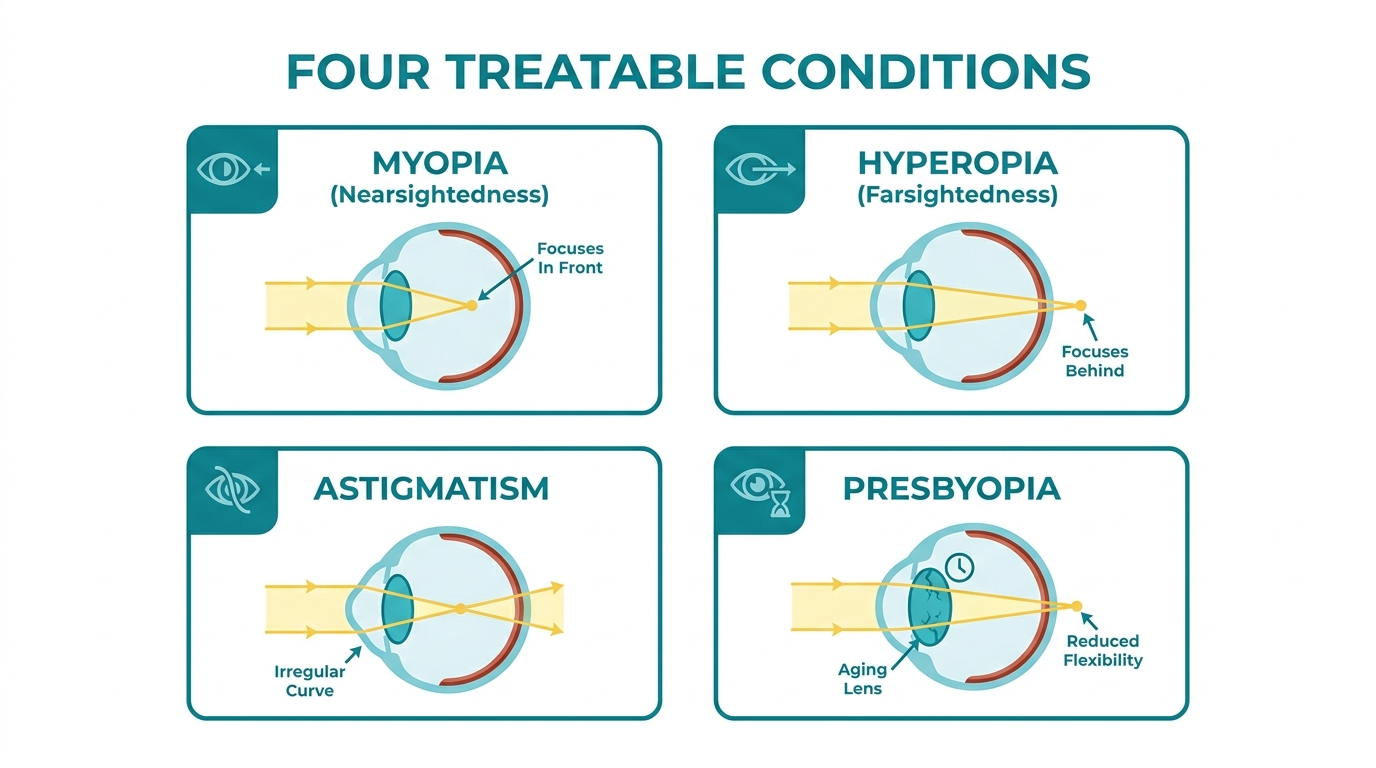
Laser eye treatments can help correct myopia, hyperopia, astigmatism, and presbyopia. Each condition affects how light focuses on the retina, and the sections below explain how laser procedures address them.
Myopia (Nearsightedness)
Myopia is a refractive error where distant objects appear blurry because light focuses in front of the retina instead of directly on it. Laser eye treatments correct myopia by flattening the central cornea, allowing light rays to reach the retina properly.
According to a study published by the National Institutes of Health, myopia represents the greatest burden of refractive errors, affecting more than 90% of eyes in certain clinical populations. This prevalence makes it the most commonly treated condition in laser refractive surgery. Procedures such as LASIK, PRK, and SMILE can all reshape the cornea to reduce or eliminate myopic dependence on glasses or contact lenses.
For patients with moderate to high myopia, the specific procedure recommended often depends on corneal thickness and prescription strength. In refractive outcomes, myopia correction consistently delivers some of the most predictable visual results across all laser platforms.
Hyperopia (Farsightedness)
Hyperopia is a refractive error where close objects appear blurry because light focuses behind the retina rather than on it. Laser eye treatments correct hyperopia by steepening the central cornea, redirecting light to converge accurately on the retinal surface.
High hyperopia is clinically defined as 3.00 diopters or more, according to the American Academy of Ophthalmology. LASIK is the most commonly used laser procedure for hyperopic correction, though the treatable range is narrower than for myopia. Candidates typically need a stable prescription and sufficient corneal tissue to achieve reliable results.
Hyperopic corrections can be slightly less predictable than myopic corrections because steepening the cornea involves a different tissue removal pattern. This makes thorough preoperative evaluation especially important for farsighted patients considering laser vision correction.
Astigmatism
Astigmatism is a refractive error caused by an irregularly shaped cornea or lens, which creates multiple focal points and results in blurred or distorted vision at all distances. Laser eye treatments correct astigmatism by reshaping the cornea into a more uniform curvature.
Most modern laser platforms treat astigmatism simultaneously with myopia or hyperopia during the same procedure. SMILE is currently FDA-approved for astigmatism correction ranging from -0.75 to -3.00 diopters, according to Collaborative Refractive Surgery Today. LASIK and PRK can also address astigmatism effectively, with topography-guided options offering particularly precise correction for irregular corneal surfaces.
Astigmatism often coexists with other refractive errors, so correcting it alongside myopia or hyperopia in a single session is standard practice. Patients with higher degrees of astigmatism should discuss which procedure offers the most predictable outcomes for their specific corneal anatomy.
Presbyopia
Presbyopia is an age-related condition where the eye’s natural lens gradually loses flexibility, making it difficult to focus on near objects. Laser eye treatments can help manage presbyopia, though the approach differs from correcting other refractive errors.
The most common laser strategy for presbyopia is monovision correction, where one eye is optimized for distance and the other for near vision. LASIK and PRK can both achieve this outcome. Some patients adapt well to monovision, while others find the difference between eyes uncomfortable, so a trial with contact lenses before surgery is often recommended.
Presbyopia correction represents a compromise rather than a complete fix, because laser procedures reshape the cornea but cannot restore the lens’s lost elasticity. For patients over 40 who want reduced dependence on reading glasses, discussing realistic expectations with an ophthalmologist helps determine whether monovision or another approach may be suitable.
With a clear understanding of treatable conditions, the next step is exploring which laser procedure best fits each diagnosis.
What Are the Types of Laser Eye Surgery?
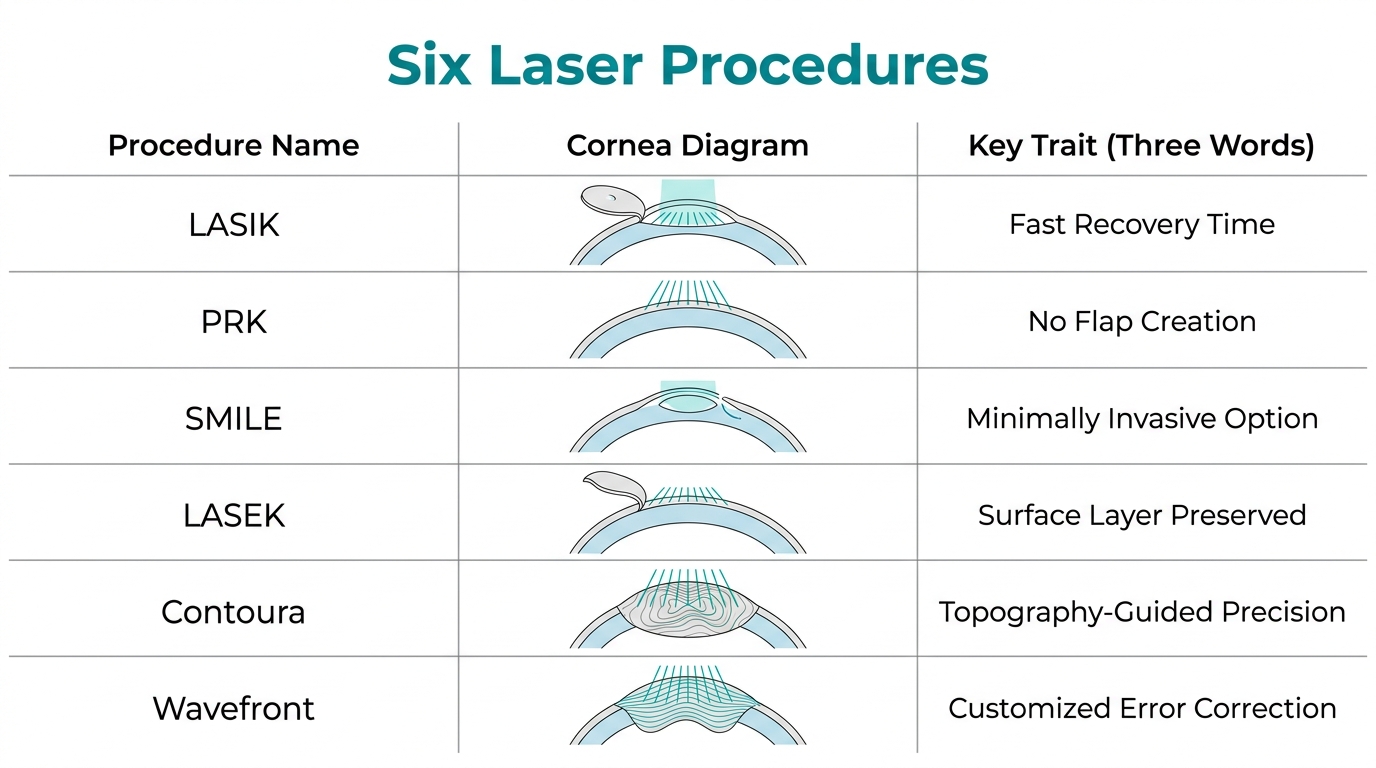
The types of laser eye surgery include LASIK, PRK, SMILE, LASEK, Contoura Vision, and Wavefront-Guided LASIK. Each procedure reshapes the cornea differently to correct refractive errors.
LASIK
LASIK is the most widely performed laser eye surgery. An ophthalmologist creates a thin corneal flap, then uses an excimer laser to reshape the underlying corneal tissue so light focuses more accurately on the retina. The flap is repositioned after reshaping, which promotes rapid healing. Most patients notice significant visual improvement within 24 hours. LASIK can correct myopia, hyperopia, and astigmatism across a broad prescription range. Because the outer corneal surface heals quickly over the repositioned flap, discomfort is typically minimal compared to surface-based procedures. For patients seeking fast visual recovery with well-established long-term outcomes, LASIK remains the benchmark against which newer procedures are often measured.
PRK (Photorefractive Keratectomy)
PRK (Photorefractive Keratectomy) is a surface ablation procedure that corrects vision without creating a corneal flap. The surgeon removes the cornea’s outer epithelial layer entirely, then applies an excimer laser directly to the exposed stromal bed. Because no flap is created, PRK may be a preferred option for patients with thinner corneas or those in high-impact professions, such as military personnel or contact sport athletes, where a flap could be vulnerable to displacement. Recovery takes longer than LASIK since the epithelium must regenerate over several days. Although initial discomfort can be more noticeable, the final visual outcomes are comparable. PRK is often the safest surface-based alternative when corneal thickness limits flap creation.
SMILE (Small Incision Lenticule Extraction)
SMILE (Small Incision Lenticule Extraction) is a flapless refractive procedure. According to the National Center for Biotechnology Information (StatPearls), SMILE uses a femtosecond laser to create a thin, disc-shaped lenticule within the intact cornea, which the surgeon then removes through a small incision to reshape the cornea. This approach preserves more of the cornea’s anterior structural integrity because no flap is involved. SMILE is currently used to treat myopia and astigmatism. The smaller incision may reduce the risk of postoperative dry eye compared to flap-based techniques. For patients who value corneal biomechanical stability, SMILE represents one of the most practical flapless options available today.
LASEK (Laser Epithelial Keratomileusis)
LASEK (Laser Epithelial Keratomileusis) is a surface ablation technique that combines elements of both LASIK and PRK. The surgeon loosens the epithelial layer with a diluted alcohol solution, gently moves it aside as a thin sheet, then reshapes the cornea with an excimer laser. After ablation, the epithelial sheet is repositioned over the treated area. This preservation of the epithelium may offer slightly faster healing than PRK, where the layer is removed entirely. LASEK can be a suitable option for patients with thinner corneas who are not ideal LASIK candidates. Visual recovery, while faster than PRK in some cases, still takes longer than LASIK.
Contoura Vision (Topography-Guided LASIK)
Contoura Vision (Topography-Guided LASIK) is an advanced form of LASIK that maps the cornea’s unique surface irregularities. A topographic imaging system captures thousands of data points across the corneal surface, generating a personalized ablation profile. The excimer laser then corrects not only the standard refractive error but also microscopic imperfections specific to that individual cornea. This level of customization can produce sharper visual quality than conventional LASIK for some patients. Contoura Vision is particularly well suited for individuals with subtle corneal irregularities contributing to higher-order aberrations, such as glare or reduced contrast sensitivity.
Wavefront-Guided LASIK
Wavefront-Guided LASIK is a customized LASIK procedure that uses wavefront aberrometry to create a three-dimensional map of how light travels through the entire optical system of the eye. A wavefront sensor measures both lower-order aberrations (myopia, hyperopia, astigmatism) and higher-order aberrations (coma, trefoil, spherical aberration) that standard prescriptions do not address. The resulting treatment profile is unique to each eye. By correcting these finer optical distortions, Wavefront-Guided LASIK may help improve contrast sensitivity and reduce nighttime visual symptoms such as halos. This approach is often recommended when a patient’s wavefront analysis reveals significant higher-order aberrations beyond what conventional LASIK would treat.
With a clear understanding of each procedure type, the next consideration is how these techniques work at the corneal level.
How Does Each Type of Laser Eye Surgery Work?
Each type of laser eye surgery works by reshaping corneal tissue to correct how light focuses on the retina. The key differences involve how the surgeon accesses the cornea.
How Does LASIK Reshape the Cornea?
LASIK reshapes the cornea by using an excimer laser to remove a precise amount of corneal tissue after creating a thin protective flap. According to the U.S. Food and Drug Administration, a precise and controlled beam of light from the excimer laser removes a tiny amount of corneal tissue so that light focuses more accurately on the retina.
The procedure follows a two-step process:
- A femtosecond laser or microkeratome creates a thin hinged flap on the corneal surface.
- The excimer laser ablates the underlying stromal tissue to the exact shape needed for the patient’s prescription.
- The surgeon repositions the flap, which adheres naturally without stitches.
To maintain corneal structural integrity, surgeons preserve a minimum residual stromal bed thickness of 250 micrometers. This safeguard helps prevent corneal ectasia, a rare but serious complication estimated to occur in approximately 0.055% of cases. The flap-based approach is what enables LASIK’s characteristically rapid visual recovery, though it also means the procedure requires sufficient corneal thickness from the start.
How Does PRK Differ From LASIK in Technique?
PRK differs from LASIK in technique by removing the outer corneal layer (epithelium) entirely rather than creating a flap. As noted by UCLA Health, this surface-level approach makes PRK a preferred option for patients with thinner corneas or high-impact lifestyles where a flap could be vulnerable to displacement.
Instead of cutting beneath a preserved flap, the surgeon gently removes the epithelium to expose the stromal layer directly. The same excimer laser used in LASIK then reshapes the exposed tissue. Because no flap is created, PRK eliminates flap-related complications entirely. The trade-off is a longer initial recovery period, since the epithelium must regenerate naturally over several days. For patients who cannot safely undergo LASIK due to corneal thickness limitations, PRK delivers comparable long-term visual outcomes through this alternative access method.
How Does SMILE Correct Vision Through a Small Incision?
SMILE corrects vision through a small incision by using a femtosecond laser to create a disc-shaped piece of tissue (lenticule) within the intact cornea, which the surgeon then extracts through a tiny tunnel incision. According to Dr. Ryan Vida, OD, FAAO, writing for Eyes On Eyecare, this approach leaves the strongest superficial layers of the cornea intact.
The key distinction is what SMILE does not do: it creates no flap and requires no excimer laser. The entire procedure relies on a single femtosecond laser to both shape and separate the lenticule. Because the incision measures only 2 to 4 millimeters, corneal biomechanical strength may be better preserved compared to LASIK’s larger flap. This flapless design can also reduce the risk of post-operative dry eye symptoms. For patients seeking a minimally invasive correction, SMILE represents one of the most structurally conservative approaches available today.
With an understanding of how each procedure reshapes the cornea, the next consideration is whether you may be a good candidate.
Who May Be a Good Candidate for Laser Eye Surgery?
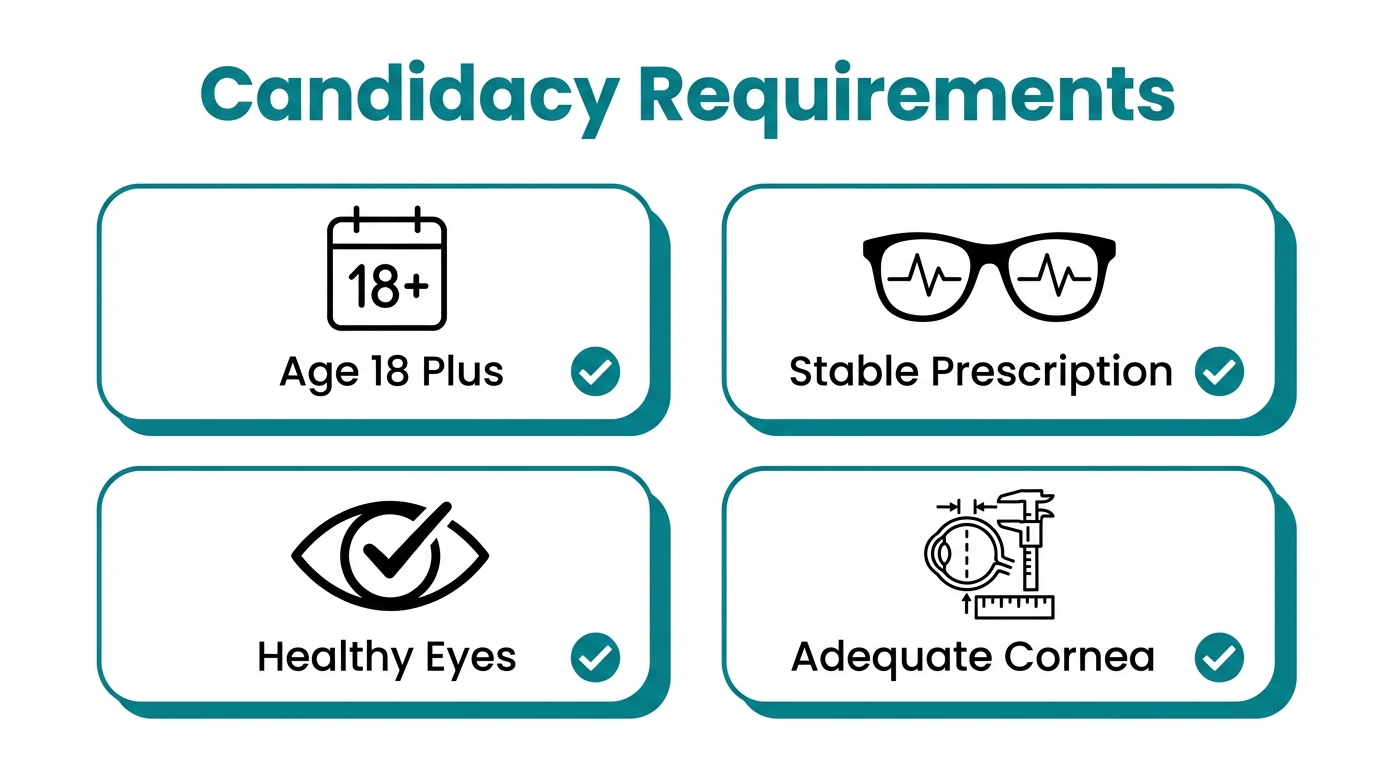
A good candidate for laser eye surgery typically meets specific criteria related to age, prescription, eye health, and corneal thickness. The following subsections cover each eligibility factor.
What Age Requirements Apply to Laser Eye Surgery?
The age requirements for laser eye surgery generally start at 18 years old, though many ophthalmologists prefer candidates to be at least 21. This preference exists because refractive errors, particularly myopia, can continue shifting through the late teens and early twenties. A stable prescription for at least one year is typically required before a surgeon will proceed.
According to the American Academy of Ophthalmology’s summary recommendations for keratorefractive laser surgery, surgeons should maintain meticulous records of preoperative refraction to confirm prescription stability before approving a patient for the procedure. There is no strict upper age limit, although candidates over 40 may need additional evaluation for presbyopia or early cataract formation, which could affect the choice of procedure. For younger patients whose prescriptions are still fluctuating, waiting until vision stabilizes can help ensure more predictable, lasting results.
What Prescription Range Is Suitable for Laser Treatment?
The prescription range suitable for laser treatment depends on the specific procedure. LASIK can generally correct myopia up to approximately -12.00 diopters, hyperopia up to +6.00 diopters, and astigmatism up to 6.00 diopters, though exact limits vary by surgeon and laser platform. SMILE is currently FDA-approved for myopia ranging from -1.00 to -10.00 diopters and astigmatism from -0.75 to -3.00 diopters. PRK may treat a similar range to LASIK, and it is sometimes preferred for patients with milder prescriptions or thinner corneas.
In January 2024, the FDA approved the VisuMax 800 with SMILE pro software, expanding treatment options for nearsighted patients. Patients with prescriptions outside these ranges may still have options, but higher corrections generally carry greater risk of regression or visual side effects. A thorough preoperative evaluation determines whether a specific prescription falls within the safe, treatable range for a given procedure.
Which Eye Health Conditions May Disqualify a Candidate?
Some eye health conditions that may disqualify a candidate include keratoconus, severe dry eye disease, uncontrolled glaucoma, active eye infections, and corneal scarring. Each of these conditions can compromise healing, reduce surgical precision, or increase the risk of complications after laser correction.
Autoimmune disorders with ocular involvement, such as Sjögren’s syndrome or rheumatoid arthritis, may also affect eligibility. According to a review published by the National Institutes of Health, patients with uncontrolled systemic diseases or ocular involvement of autoimmune disorders are generally considered poor candidates for laser refractive surgery due to increased risks of poor healing and complications. Cataracts and retinal conditions like macular degeneration typically require alternative treatments rather than corneal reshaping. In clinical practice, the preoperative screening process is often the most important step in achieving safe outcomes, because identifying these conditions early prevents avoidable complications.
How Does Corneal Thickness Affect Eligibility?
Corneal thickness affects eligibility because laser eye surgery removes corneal tissue to reshape the eye, and insufficient tissue remaining after the procedure can lead to structural weakening. The average human cornea measures approximately 540 to 550 micrometers. For LASIK specifically, the American Academy of Ophthalmology recommends maintaining a minimum residual stromal bed thickness of 250 micrometers to preserve corneal integrity and prevent ectasia, a progressive bulging condition.
Patients with naturally thinner corneas may not qualify for LASIK but can often be good candidates for PRK, which does not require creating a corneal flap and therefore preserves more tissue. SMILE also conserves corneal biomechanical strength by leaving the anterior stroma intact. Corneal thickness is measured during the preoperative exam using pachymetry, and this single measurement can be the deciding factor between procedure types.
Understanding candidacy criteria is the first step; knowing who may not qualify helps clarify the full picture.
Who May Not Be a Good Candidate for Laser Eye Surgery?
Certain health conditions, eye characteristics, and life circumstances may make someone a poor candidate for laser eye surgery. The factors below outline the most common reasons an ophthalmologist may advise against proceeding.
Individuals with the following characteristics may not qualify:
- Unstable prescriptions. A refractive error that has shifted within the past 12 months can indicate the eye is still changing, which may compromise surgical outcomes.
- Thin corneas. Procedures like LASIK require sufficient corneal tissue. If the cornea cannot maintain a minimum residual stromal bed thickness of 250 micrometers after reshaping, the risk of corneal ectasia increases significantly.
- Autoimmune or uncontrolled systemic diseases. According to a review published by the National Institutes of Health, patients with uncontrolled systemic diseases or ocular involvement of autoimmune disorders are generally considered poor candidates due to increased risks of poor healing and complications.
- Chronic dry eye syndrome. Because laser procedures can temporarily worsen dryness, pre-existing moderate to severe dry eye may lead to prolonged postoperative discomfort and slower recovery.
- Pregnancy or nursing. Hormonal fluctuations during pregnancy and breastfeeding can temporarily alter corneal shape and refraction, making accurate surgical planning unreliable.
- Very high refractive errors. Each procedure has a treatable diopter range. Prescriptions exceeding those limits may not be safely correctable with current laser technology.
- Age under 18. Most regulatory guidelines require patients to be at least 18 years old, since younger eyes are still developing and prescriptions have not yet stabilized.
For those who fall into one or more of these categories, alternatives such as PRK for thinner corneas or implantable lenses for extreme prescriptions may still be worth discussing with a qualified surgeon. Candidacy is never a simple yes or no; a thorough preoperative evaluation remains the most reliable way to determine whether laser correction is appropriate.
Understanding candidacy limitations sets the stage for evaluating laser eye surgery’s potential benefits.
What Are the Potential Benefits of Laser Eye Treatments?
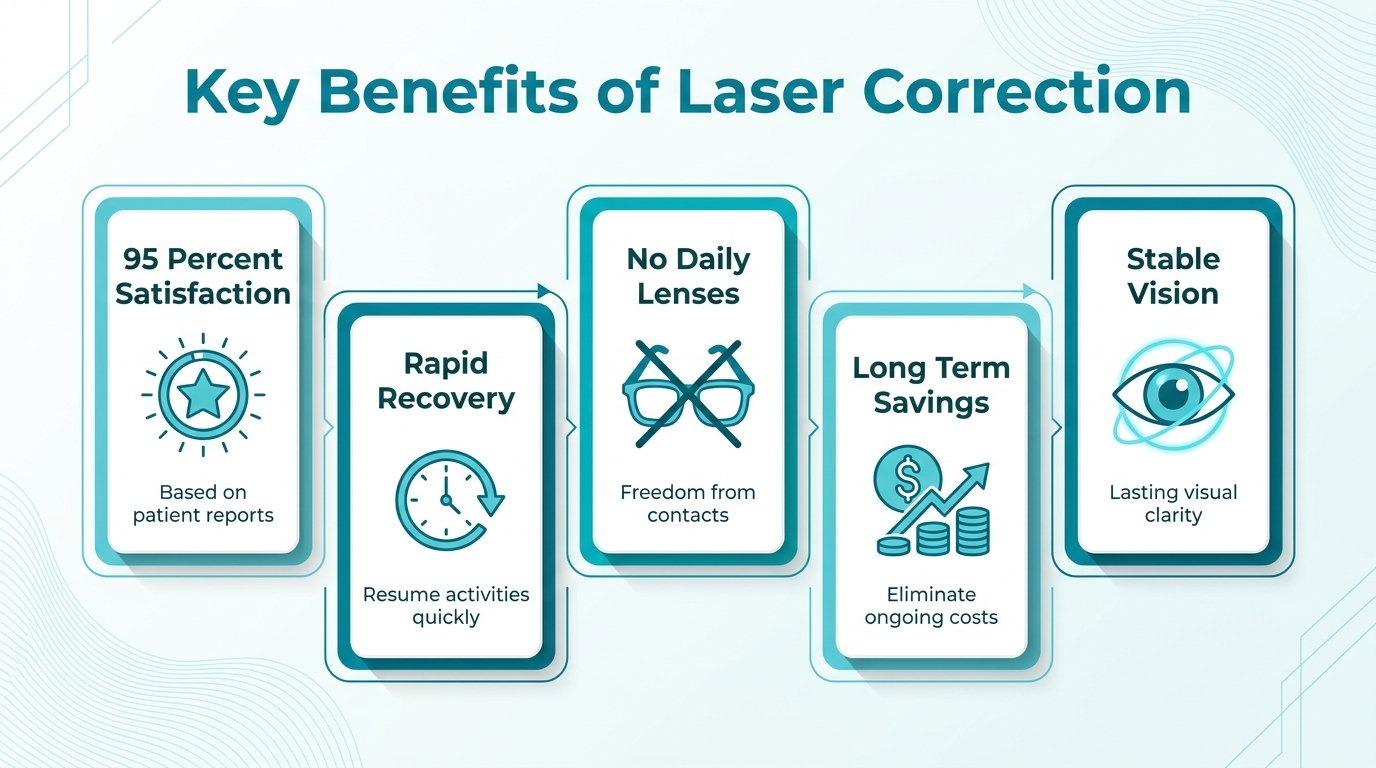
The potential benefits of laser eye treatments include improved visual acuity, reduced dependence on corrective lenses, high patient satisfaction, rapid recovery, and long-term cost savings compared to glasses or contacts.
Laser eye treatments can correct refractive errors such as myopia, hyperopia, astigmatism, and presbyopia, often reducing or eliminating the need for glasses or contact lenses. According to a meta-analysis published in the Journal of Ophthalmology, 95.4% of patients reported satisfaction with their visual acuity after LASIK. Most patients experience significant visual improvement within 24 hours, and results tend to remain stable for years. Beyond clinical outcomes, the convenience of life without daily lens care or prescription updates appeals to many candidates. Long-term data also suggests meaningful financial advantages; the amortized annual cost of refractive surgery can drop to approximately $19.10 over time, compared to $198.30 to $378.10 per year for contact lenses. For individuals with active lifestyles or occupations where glasses and contacts pose practical limitations, laser correction may offer a lasting, convenient alternative. These benefits, while well documented, depend on individual factors like prescription stability and overall eye health that a qualified ophthalmologist can evaluate during a comprehensive consultation.
With these advantages in mind, understanding the possible risks and side effects helps form a complete picture before making a decision.
What Are the Possible Risks and Side Effects of Laser Eye Surgery?
The possible risks and side effects of laser eye surgery range from common temporary symptoms to rare serious complications. The following subsections cover short-term side effects, serious risks, and enhancement procedure frequency.
What Are the Common Short-Term Side Effects After Surgery?
The common short-term side effects after surgery include dry eyes, halos, glare, light sensitivity, and mild discomfort. Dry eye is by far the most frequently reported issue. According to a study published by the National Institutes of Health, postoperative dry eye symptoms are reported in 20% to more than 50% of patients following LASIK surgery, making it the most prevalent side effect.
Halos and glare around lights, particularly at night, are also common during the initial weeks of healing. These visual disturbances typically diminish as the cornea stabilizes. Minor fluctuations in visual clarity may persist for several weeks before vision fully settles. Most short-term side effects resolve within one to three months, though patients with pre-existing dry eye conditions may experience prolonged symptoms. Thorough preoperative screening helps identify patients at higher risk for these issues.
What Are the Rare but Serious Complications to Be Aware Of?
The rare but serious complications to be aware of include corneal ectasia, infection, chronic dry eye, and significant undercorrection or overcorrection. Corneal ectasia, a progressive thinning and bulging of the cornea, is among the most concerning. Patients with uncontrolled systemic diseases or autoimmune disorders involving the eyes face increased risks of poor healing and complications, which is why careful candidacy screening is essential.
Although infection after laser eye surgery is extremely uncommon with proper postoperative care, it can threaten vision if left untreated. Persistent visual aberrations, such as double vision or irregular astigmatism, may also occur in rare cases. In clinical practice, most serious complications are preventable through rigorous preoperative evaluation, including corneal thickness measurements and stable refraction records. Choosing an experienced surgeon who follows established clinical guidelines significantly reduces these risks.
How Often Do Patients Need Enhancement Procedures?
Enhancement procedures are needed by a small percentage of patients after laser eye surgery. These touch-up procedures correct residual refractive error when the initial surgery does not fully achieve the target correction. Since refractive surgeries aim to reduce or eliminate the need for corrective lenses, some eyes may require fine-tuning to reach optimal results.
The likelihood of needing an enhancement depends on several factors:
- Severity of the original prescription
- Patient age at the time of surgery
- Natural age-related vision changes over time
- The specific procedure performed
Most enhancements are performed within the first year, though some patients may need one years later as natural lens changes occur. For many patients, a single enhancement resolves any remaining visual concerns. Discussing enhancement policies and associated costs with your ophthalmologist before the initial procedure helps set realistic expectations.
Understanding these risks prepares patients to weigh them against the benefits during a consultation.
How Should You Prepare for Laser Eye Surgery?
You should prepare for laser eye surgery by following your surgeon’s preoperative instructions, which typically cover contact lens discontinuation, medication adjustments, and scheduling a comprehensive eye exam.
Your ophthalmologist may recommend stopping soft contact lens wear at least one to two weeks before your preoperative evaluation. Rigid gas-permeable lenses often require a longer discontinuation period, sometimes three weeks or more, because contacts can temporarily alter corneal shape and affect the accuracy of surgical measurements.
A thorough preoperative exam generally includes:
- Corneal topography to map the surface curvature of the eye.
- Pachymetry to measure corneal thickness.
- Pupil dilation to assess overall eye health.
- Refraction testing to confirm your current prescription is stable.
According to the American Academy of Ophthalmology, surgeons should maintain a meticulous record of preoperative keratometry and refraction to ensure stable vision before proceeding with surgery. Prescription stability, typically defined as minimal change over 12 months, is one of the most critical factors your surgeon will verify before clearing you for the procedure.
On the day of surgery, patients are usually advised to avoid wearing makeup, lotions, or perfume, as these products can introduce particles near the eye. Arranging a ride home is essential since vision may be temporarily blurry immediately after the procedure.
For those taking certain medications, particularly immunosuppressants or drugs that affect healing, discussing these with your surgeon well in advance can help avoid complications. Proper preparation sets the foundation for a smoother procedure and more predictable recovery.
What Happens During a Laser Eye Surgery Procedure?
A laser eye surgery procedure typically involves numbing the eye, creating access to the corneal tissue, and using a laser to reshape the cornea so light focuses correctly on the retina. The specific steps vary by procedure type.
During LASIK, the surgeon first applies numbing eye drops to eliminate discomfort. A femtosecond laser or microkeratome then creates a thin corneal flap, which is gently lifted to expose the underlying stroma. According to the U.S. Food and Drug Administration, a precise and controlled beam of light from an excimer laser is used to remove a tiny amount of corneal tissue to reshape the cornea so that light focuses more accurately on the retina. The flap is then repositioned, where it naturally adheres without stitches.
PRK follows a different approach. Instead of creating a flap, the surgeon removes the outer epithelial layer entirely before applying the excimer laser directly to the corneal surface. A bandage contact lens is placed over the eye afterward to protect the area while the epithelium regenerates.
SMILE uses a single femtosecond laser to create a small disc-shaped lenticule within the intact cornea. The surgeon then extracts this lenticule through a tiny incision, typically 2 to 4 millimeters, reshaping the cornea without a flap. Because the outer corneal layers remain largely undisturbed, this approach may preserve more structural stability.
Regardless of procedure type, the entire process for one eye usually takes under 15 minutes, with the laser itself active for only seconds to a few minutes. Most patients notice improved vision within hours, though full stabilization occurs gradually. For those weighing their options, understanding each procedure’s distinct steps can help set realistic expectations before surgery day.
With the procedure complete, recovery protocols become the next important consideration.
What Does Recovery Look Like After Laser Eye Surgery?
Recovery after laser eye surgery varies by procedure type. The sections below cover what to expect in the first 24 hours, followed by specific timelines for LASIK, PRK, and SMILE recovery.
What Can You Expect in the First 24 Hours After Surgery?
You can expect mild discomfort, light sensitivity, and blurry or hazy vision in the first 24 hours after surgery. Most patients experience a burning or watery sensation that typically subsides within a few hours. Resting with eyes closed is generally recommended during this initial period.
Your ophthalmologist may prescribe antibiotic and anti-inflammatory eye drops to reduce infection risk and support healing. Protective eye shields are often provided to prevent accidental rubbing during sleep. Driving is not advised until your doctor confirms adequate visual acuity at a follow-up visit, which usually occurs the next day.
While some patients notice improved clarity within hours, others may need a few days before meaningful visual improvement becomes apparent. The speed of initial recovery depends largely on which procedure was performed.
What Is the Typical Recovery Timeline for LASIK?
The typical recovery timeline for LASIK is among the fastest of all laser eye procedures. According to the FDA, clinical recovery after LASIK is typically rapid, with most patients achieving significant visual improvement within 24 hours and reaching full stabilization within three to six months.
A general week-by-week progression includes:
- Days 1 to 3: Mild discomfort, light sensitivity, and fluctuating vision that improves steadily.
- Week 1: Most patients can return to work and resume daily activities, though dry eye symptoms may persist.
- Weeks 2 to 4: Vision continues sharpening as the corneal flap heals; eye drops remain part of the routine.
- Months 1 to 6: Residual dryness and minor visual fluctuations gradually resolve as the eyes reach full stabilization.
This rapid functional recovery is one reason LASIK remains the most commonly chosen refractive procedure.
What Is the Typical Recovery Timeline for PRK?
The typical recovery timeline for PRK is longer than LASIK because PRK removes the corneal epithelium, which must regenerate naturally. This regrowth process generally takes three to five days, during which a bandage contact lens protects the healing surface.
- Days 1 to 5: Moderate discomfort, tearing, and significant light sensitivity are common while the epithelium regenerates.
- Week 1 to 2: The bandage lens is removed once the surface heals; vision remains blurry but gradually improves.
- Weeks 3 to 8: Functional vision returns for most daily activities, though clarity continues to develop.
- Months 2 to 6: Full visual stabilization occurs as the deeper corneal tissue completes its remodeling process.
Despite the slower initial recovery, PRK can achieve visual outcomes comparable to LASIK. For patients with thinner corneas or active lifestyles where flap-related risks are a concern, the extended healing period is often a worthwhile trade-off.
What Is the Typical Recovery Timeline for SMILE?
The typical recovery timeline for SMILE falls between LASIK and PRK. Because SMILE uses a small incision rather than a corneal flap, the outer corneal surface remains largely intact, which supports structural stability during healing.
- Days 1 to 3: Mild blurriness and light sensitivity are common; discomfort is generally less than PRK.
- Week 1: Most patients notice meaningful visual improvement and can return to normal activities.
- Weeks 2 to 4: Vision progressively sharpens as the corneal tissue adjusts to its new shape.
- Months 1 to 3: Full visual stabilization typically occurs, though some patients may notice subtle improvements continuing beyond this point.
The flapless design of SMILE may also contribute to fewer dry eye symptoms during recovery compared to LASIK, making it an appealing option for patients who prioritize both corneal integrity and a relatively quick return to daily life. With recovery expectations established, understanding the costs associated with each procedure helps complete the decision-making picture.
How Much Does Laser Eye Surgery Typically Cost?
Laser eye surgery typically costs between $1,500 and $5,000 or more per eye, depending on the procedure type, technology, and surgeon experience. The following subsections break down costs for LASIK, PRK, and SMILE, plus insurance considerations.
How Much Does LASIK Typically Cost?
LASIK typically costs between $1,500 and $5,000 per eye in the United States. According to Lasik.com, this range depends on the technology used and the surgeon’s experience. Several factors influence where a patient falls within that range:
- Technology tier: All-laser (bladeless) LASIK and wavefront-guided platforms cost more than standard microkeratome-assisted procedures.
- Surgeon expertise: Highly experienced refractive surgeons with advanced fellowship training often charge higher fees.
- Geographic location: Practices in major metropolitan areas tend to price toward the upper end of the range.
- Included services: Some quoted prices bundle preoperative evaluations, postoperative visits, and enhancement policies, while others charge separately.
Patients should request an itemized breakdown before committing. The lowest advertised price may exclude essential follow-up care, making the true cost higher than expected.
How Much Does PRK Typically Cost?
PRK typically costs between $1,500 and $3,000 per eye. Because PRK does not require a corneal flap, the procedure avoids femtosecond laser fees associated with bladeless LASIK, which can keep costs slightly lower in some practices.
However, PRK’s longer recovery timeline may introduce indirect costs that patients often overlook:
- Extended time away from work: Visual stabilization can take one to three weeks, compared to one to two days for LASIK.
- Additional postoperative medications: Longer healing requires more prescription eye drops, including anti-inflammatory and antibiotic formulations.
- Bandage contact lenses: These are placed on the eye after surgery and may carry a separate charge.
Despite a similar or slightly lower sticker price compared to LASIK, PRK’s total out-of-pocket expense can be comparable once indirect costs are factored in. For patients with thinner corneas who are not eligible for LASIK, PRK remains a clinically valuable alternative worth the investment.
How Much Does SMILE Typically Cost?
SMILE typically costs between $2,000 and $5,000 per eye. As a newer, flapless refractive procedure, SMILE often sits at the higher end of laser vision correction pricing due to the specialized femtosecond laser platform it requires.
Key factors that influence SMILE pricing include:
- Equipment costs: SMILE uses the Zeiss VisuMax laser system, and fewer practices own this platform compared to excimer lasers used in LASIK and PRK.
- Surgeon training: Fewer refractive surgeons are certified in SMILE, which can limit competition and keep prices elevated.
- Limited treatment scope: SMILE currently treats myopia and astigmatism within specific diopter ranges, so not all patients qualify, and specialized candidacy screening adds to practice overhead.
As adoption grows, particularly following the FDA’s January 2024 approval of the VisuMax 800 with SMILE pro software, broader availability may gradually bring costs down. For now, patients should weigh SMILE’s flapless benefits against its premium pricing.
Does Insurance Cover Laser Eye Surgery?
Insurance does not typically cover laser eye surgery because most health insurance plans classify it as an elective procedure rather than a medically necessary one. This means patients generally pay the full cost out of pocket.
There are, however, several financial tools and exceptions that can reduce the burden:
- FSA and HSA accounts: The IRS considers laser eye surgery a qualified medical expense, making it eligible for reimbursement through Flexible Spending Accounts and Health Savings Accounts, according to FSA Store.
- Vision discount plans: Some vision insurance plans offer negotiated discounts with participating refractive surgery centers, reducing per-eye costs by 15% to 50%.
- Financing plans: Many practices offer interest-free or low-interest monthly payment options through third-party medical financing companies.
- Employer benefits: Certain employers include vision correction surgery allowances as part of their benefits packages.
Patients should verify their specific plan details and explore all available options before scheduling surgery. With cost and coverage understood, the next step is comparing laser eye surgery to alternatives like contact lenses and glasses.
How Does Laser Eye Surgery Compare to Contact Lenses and Glasses?
Laser eye surgery compares favorably to contact lenses and glasses in long-term cost, convenience, and visual freedom. The differences become clearest when examining cumulative expenses and daily lifestyle impact.
Over time, the upfront investment in laser vision correction can be substantially lower than the recurring costs of glasses prescriptions and contact lens supplies. According to long-term data published by the National Institutes of Health, annual direct costs for contact lenses range from $198.30 to $378.10, while the amortized annual cost of refractive surgery drops to approximately $19.10. Contact lens users who undergo laser correction typically reach a financial break-even point within 5 to 7 years compared to ongoing lens and solution expenses.
Beyond cost, the practical differences shape daily life in meaningful ways:
- Glasses require regular replacement due to prescription changes, frame wear, and lens scratching.
- Contact lenses carry ongoing risks, such as corneal infections, dry eye aggravation, and discomfort in dusty or dry environments.
- Laser eye surgery may eliminate dependence on corrective eyewear entirely, reducing maintenance routines and activity limitations.
- Contacts demand daily cleaning and storage discipline, while surgery requires only a short postoperative recovery period.
For active individuals or those tired of managing corrective eyewear, laser vision correction often represents the most practical long-term solution. The initial cost feels significant, but the cumulative savings and convenience gains tend to compound year after year. Understanding your specific options is the next step toward choosing the right approach.
How Do You Choose the Right Laser Eye Procedure for You?
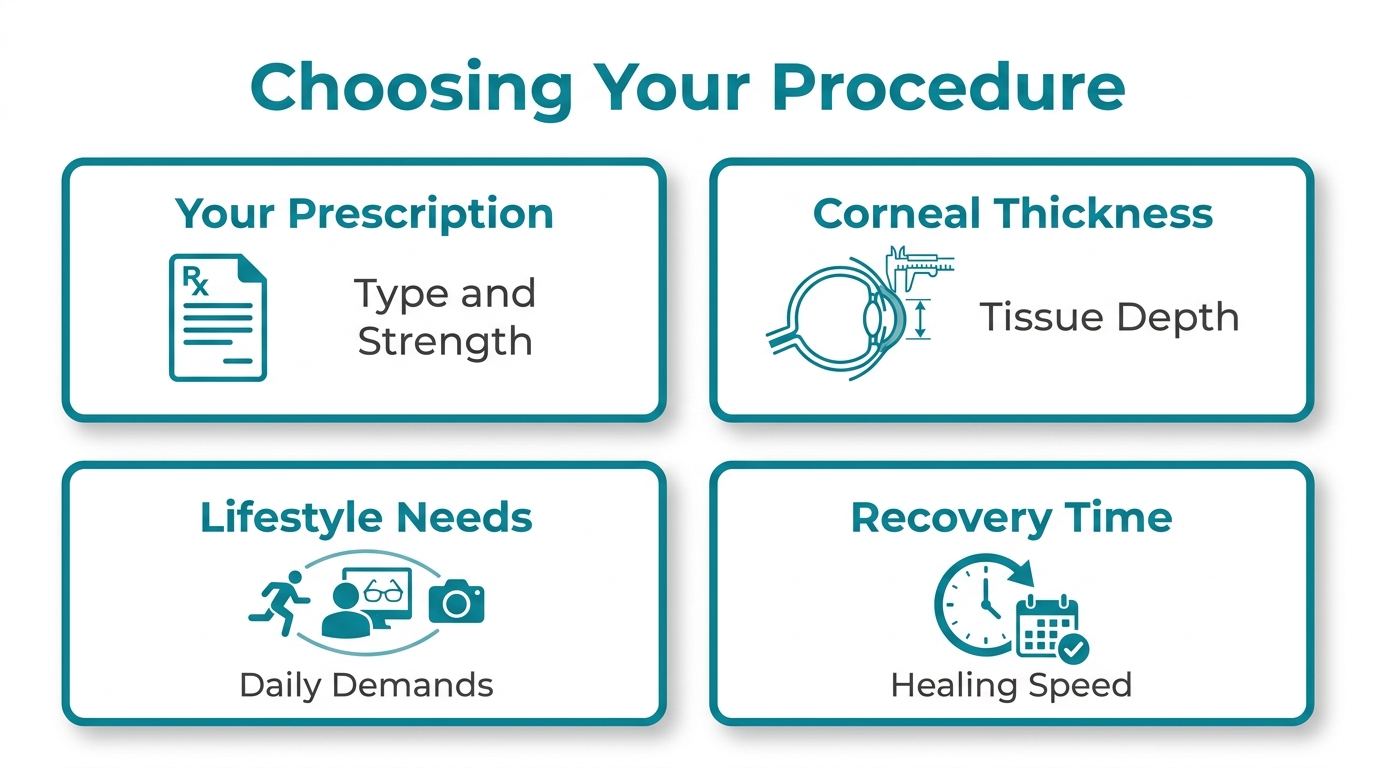
You choose the right laser eye procedure by evaluating your prescription, corneal thickness, lifestyle, and long-term vision goals with a qualified ophthalmologist. The factors below can help guide that decision.
Your refractive error type and severity narrow the field first. LASIK treats myopia, hyperopia, and astigmatism across a broad diopter range, while SMILE is currently FDA-approved for myopia from -1.00 to -10.00 diopters and astigmatism from -0.75 to -3.00 diopters, according to guidelines reviewed in Collaborative Refractive Surgery Today. PRK may be preferred for patients with thinner corneas or those in high-impact professions where a corneal flap could pose risks.
Corneal thickness and eye health play equally important roles. A minimum residual stromal bed of 250 micrometers is generally recommended for LASIK to maintain structural integrity, so patients whose corneas fall below safe thresholds may be better suited to PRK or SMILE. Uncontrolled autoimmune conditions or unstable prescriptions can also shift the recommendation.
Lifestyle factors matter more than many patients realize. Contact-sport athletes and military personnel often benefit from flapless procedures like SMILE or PRK. Patients who prioritize rapid visual recovery, on the other hand, may lean toward LASIK, where significant improvement typically occurs within 24 hours.
Cost, recovery tolerance, and long-term expectations should round out the conversation. No single procedure is universally superior; the best choice balances clinical eligibility with personal priorities. A thorough preoperative evaluation, including keratometry and refraction records, gives your surgeon the data needed to recommend the safest, most effective option for your eyes.
Understanding your options is the first step toward making a confident, informed choice about vision correction.
How Can Surgeon-Reviewed Resources Help You Decide on Laser Eye Treatment?
Surgeon-reviewed resources can help you decide on laser eye treatment by providing clinically accurate, unbiased information supported by practicing ophthalmologists. The sections below cover how Eye Surgery Today supports your research and the key takeaways from this guide.
Can Eye Surgery Today Help You Understand Your Laser Eye Options?
Yes, Eye Surgery Today can help you understand your laser eye options. As a physician-led education platform founded by nationally recognized key opinion leaders in ophthalmology, Eye Surgery Today translates complex surgical information into clear, accessible guidance for patients.
The platform provides surgeon-reviewed resources covering procedures such as LASIK, PRK, and SMILE, including candidacy criteria, recovery expectations, and cost considerations. With new technologies continually expanding the treatment landscape, having access to expert-curated content matters more than ever. The American Refractive Surgery Council noted that the FDA approved the VisuMax 800 with SMILE pro software in January 2024, further broadening options for nearsighted patients.
Eye Surgery Today focuses on empowering patients to make confident, informed decisions rather than offering diagnostic advice. Every article reflects evidence-based insights reviewed by practicing surgeons, giving readers a level of clinical insight that general health websites rarely provide.
What Are the Key Takeaways About Laser Eye Treatments?
The key takeaways about laser eye treatments are that multiple effective procedures exist, each suited to different vision conditions and patient profiles. The most actionable insights from this guide include:
- LASIK, PRK, and SMILE each correct refractive errors through distinct techniques, and the right choice depends on corneal thickness, prescription range, and lifestyle.
- Candidacy requires stable vision, adequate corneal structure, and the absence of disqualifying health conditions.
- Recovery timelines vary by procedure, with LASIK offering the fastest visual improvement and PRK requiring a longer healing period.
- Costs typically range from $1,500 to $5,000 per eye, though FSA and HSA accounts can offset expenses.
- Satisfaction rates remain high across procedures, yet understanding potential side effects like dry eye or halos is essential before committing.
For patients weighing these decisions, consulting surgeon-reviewed resources and scheduling a comprehensive eye exam remain the most reliable next steps. Eye Surgery Today provides the clinical depth needed to approach that conversation with confidence.