What Are EDOF Lenses and Who Should Choose Them for Cataract Surgery?
An extended depth of focus (EDOF) lens is a type of intraocular lens implanted during cataract surgery that creates a continuously elongated focal point along the visual axis, providing clear vision across distance and intermediate ranges rather than splitting light into discrete near and far peaks.
This guide covers how EDOF optics work, the vision range they deliver, ideal candidate profiles, comparisons to monofocal, multifocal, and trifocal alternatives, available lens brands, potential risks, surgery and recovery expectations, cost considerations, and how to prepare for your surgeon consultation.
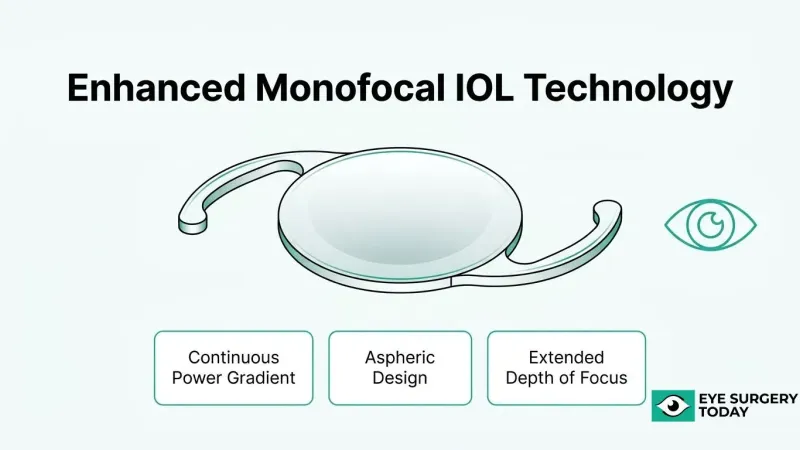
EDOF lenses use optical mechanisms such as diffractive echelette designs and refractive curvature modifications to stretch focus into a smooth continuum, which may reduce halos and glare compared to traditional multifocal IOLs. Non-diffractive platforms in particular show notably lower rates of visual disturbances than diffractive designs.
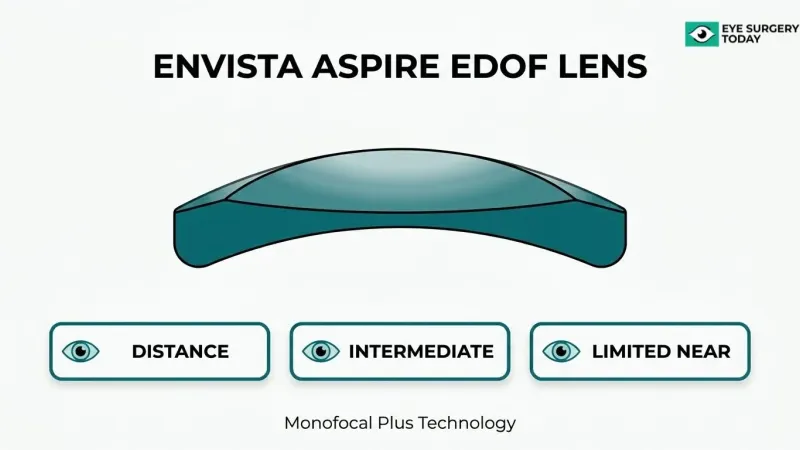
Distance and intermediate performance with EDOF lenses is strong; clinical data shows comparable distance acuity to enhanced monofocal IOLs, with superior intermediate results for computer use and dashboard viewing. Near vision, however, remains the trade-off, as most patients will still need reading glasses for fine print.
Lifestyle and occupation play a significant role in candidacy. Drivers, frequent screen users, and professionals who depend on spatial awareness at mid-range distances tend to benefit most, while patients with macular degeneration, significant glaucoma, or ocular surface disease are generally steered toward monofocal options instead.
Bilateral EDOF implantation may achieve complete spectacle independence in roughly 53% to 63% of patients, and out-of-pocket costs typically range from $1,500 to $3,000 per eye above the standard Medicare-covered procedure. Matching the right lens brand to individual anatomy and visual priorities remains essential for a satisfying outcome.
What Is an Extended Depth of Focus Lens?
An extended depth of focus (EDOF) lens is a type of intraocular lens (IOL) implanted during cataract surgery that creates a continuously elongated focal point along the visual axis, rather than the distinct near, intermediate, and distance peaks produced by multifocal IOLs. This elongated focal zone allows patients to see clearly across a continuous range of distances, particularly at distance and intermediate, with reduced optical disruptions compared to traditional premium lenses.
According to a meta-analysis published in Cureus reviewing five studies across 672 eyes, EDOF and enhanced monofocal IOLs showed no significant clinical difference in uncorrected and corrected distance visual acuity, suggesting EDOF lenses deliver reliable distance performance while extending functional vision into the intermediate range.
EDOF lenses achieve this through several optical mechanisms, including diffractive echelette designs, refractive curvature modifications, and controlled spherical or chromatic aberration. The result is a smoother, more natural visual experience than the abrupt focal shifts associated with bifocal or trifocal designs. For patients who prioritize reduced glare and halos over complete spectacle independence at all distances, this trade-off is often well worth considering.
How Does an EDOF Lens Work Differently Than Other IOLs?
An EDOF lens works differently than other IOLs by stretching the focal point into a continuous elongated zone along the visual axis, rather than creating two or three distinct focal peaks. This section covers the optical mechanisms that separate EDOF from monofocal, multifocal, and trifocal IOLs, the technologies behind leading designs, and which conditions may disqualify a patient from receiving any premium IOL.
What Optical Mechanism Makes EDOF Lenses Unique?
The optical mechanism that makes EDOF lenses unique is the continuous elongation of the focal zone, which contrasts with the biphasic or triphasic focal peaks produced by multifocal IOLs. Rather than splitting light into two or three discrete focal points, EDOF designs spread focus across a range, reducing the abrupt transitions that contribute to halos and glare. Manufacturers achieve this through several approaches, including diffractive echelette optics, refractive curvature changes, controlled spherical or chromatic aberration, and pinhole effects. Because no light energy is diverted to an unused focal point, EDOF lenses generally preserve contrast sensitivity more consistently than traditional multifocal designs.
How Do EDOF Lenses Compare to Enhanced Monofocal IOLs?
EDOF lenses and enhanced monofocal IOLs produce comparable distance and corrected distance visual acuity in clinical practice. A meta-analysis of 5 studies covering 672 eyes, published in Cureus, found no significant clinical difference in uncorrected distance visual acuity (UDVA) or corrected distance visual acuity (CDVA) between the two lens categories. Where EDOF lenses genuinely separate themselves is intermediate vision, particularly for computer use and dashboard distances, where enhanced monofocals typically fall short. For patients whose primary goal is maximizing distance sharpness with minimal spectacle dependence at arm’s length, the visual acuity gap between these two options is narrower than many assume.
How Do Different EDOF Technologies Affect Glare and Halos?
Different EDOF technologies produce meaningfully different rates of glare and halos, making technology selection clinically significant. A head-to-head study of 69 patients, reviewed by Eye News examining JCRS data, found that moderate or severe starbursts were reported by 34% of Symfony patients compared to only 8.8% of Vivity patients. The Vivity lens uses Alcon’s non-diffractive X-WAVE technology, which stretches and shifts wavefronts without splitting light, largely accounting for its lower dysphotopsia profile. For patients with high occupational or lifestyle sensitivity to nighttime visual disturbances, non-diffractive EDOF platforms may represent a more appropriate choice.
Which Eye Conditions May Disqualify a Patient from an EDOF Lens?
The eye conditions that may disqualify a patient from an EDOF lens include macular degeneration, ocular surface disease, diabetic retinopathy, and significant glaucoma. According to a clinical review published in the AAO’s journal Ophthalmology, these conditions are established contraindications for premium IOLs as a category, not just EDOF designs. Each condition can compromise the retinal or corneal baseline needed for premium optics to deliver their intended benefit. Patients with any of these diagnoses typically achieve more predictable outcomes with a standard monofocal IOL, and managing the underlying condition before surgery often matters more than the lens choice itself.
What Range of Vision Can an EDOF Lens Provide?
EDOF lenses cover distance and intermediate vision well, with more limited near vision performance. The sections below break down how each visual zone performs after EDOF implantation.
How Well Do EDOF Lenses Correct Distance Vision?
EDOF lenses correct distance vision effectively, performing comparably to enhanced monofocal IOLs at far ranges. According to a meta-analysis published in Cureus reviewing 5 studies and 672 eyes, no significant clinical difference in uncorrected and corrected distance visual acuity was found between EDOF and enhanced monofocal IOLs. For patients whose primary concern is sharp distance vision, such as for driving or recognizing faces across a room, EDOF lenses reliably deliver strong outcomes at that focal range.
How Well Do EDOF Lenses Correct Intermediate Vision?
EDOF lenses correct intermediate vision better than trifocal IOLs, making them well suited for tasks at arm’s length, such as computer work, dashboard reading, and cooking. Clinical Ophthalmology data confirms that EDOF and hybrid EDOF lenses provide superior uncorrected intermediate visual acuity compared to trifocal IOLs. The European Society of Cataract and Refractive Surgeons (ESCRS) has assigned a GRADE+ recommendation for EDF IOLs in patients who prioritize intermediate acuity with lower dysphotopsia risk than multifocal options. For patients who spend significant time at a screen or workbench, this intermediate strength is arguably the most practical advantage EDOF lenses offer.
How Well Do EDOF Lenses Correct Near Vision?
EDOF lenses correct near vision only partially, and most patients will need reading glasses for fine print tasks such as medication labels or small text. Trifocal IOLs consistently outperform EDOF lenses in uncorrected near visual acuity, making near-heavy readers a stronger candidate for trifocal designs instead. Patients with realistic expectations about occasional near-vision spectacle use tend to report higher satisfaction after EDOF implantation than those expecting full independence at all distances.
With a clear picture of the visual range EDOF lenses can realistically provide, the next consideration is which patients are most likely to benefit from that profile.
Who Is a Good Candidate for an EDOF Lens?
Good candidates for an EDOF lens share a common profile: they want meaningful freedom from glasses for distance and intermediate tasks while tolerating occasional readers for fine print. The sub-sections below cover lifestyle fit, occupational demands, astigmatism considerations, and disqualifying eye conditions.
Who May Benefit Most from an EDOF Lens Based on Lifestyle?
People who may benefit most from an EDOF lens based on lifestyle are those who prioritize clear distance and intermediate vision over near tasks, such as drivers, frequent travelers, and active outdoor enthusiasts. These individuals typically spend more time on computers, dashboards, and open environments than on sustained close reading.
EDOF lenses suit patients who want reduced glasses dependence without the higher dysphotopsia risk associated with trifocal designs. As Dr. Dagny Zhu, MD, noted in Ophthalmology Management: “That lens [Clareon Vivity] works great for patients who really value their nighttime driving, distance, and they’re okay with using readers once in a while for fine print.” This trade-off makes EDOF a strong lifestyle match for those who rarely read small print without good lighting.
Who May Benefit Most from an EDOF Lens Based on Occupation?
People who may benefit most from an EDOF lens based on occupation are professionals who depend on sharp intermediate and distance vision throughout the workday, such as surgeons, architects, teachers, and pilots. These occupations involve extended screen use, spatial awareness, and frequent distance viewing, all zones where EDOF optics excel.
Patients in professions requiring reliable nighttime driving or low-light performance also tend to benefit, as EDOF lenses produce fewer and less severe dysphotopsias than diffractive multifocals. Workers who occasionally reference printed documents may still need reading glasses, but this is generally acceptable in professional settings where near tasks are brief.
Who May Benefit from an EDOF Lens with Pre-Existing Astigmatism?
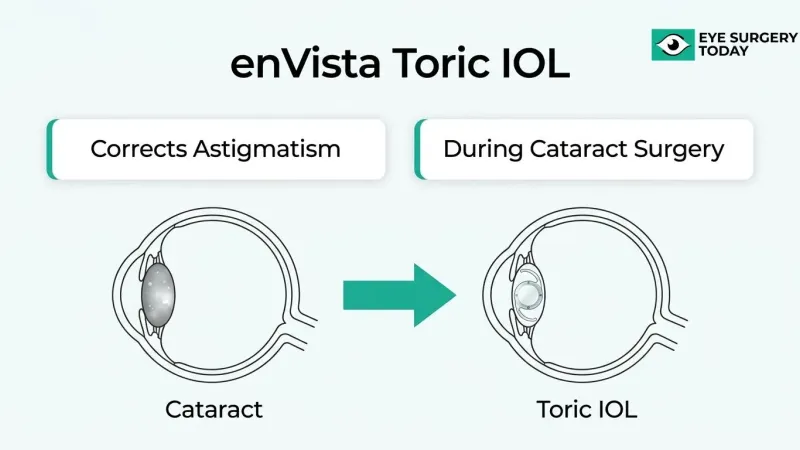
Patients with pre-existing astigmatism may still benefit from an EDOF lens when a toric variant is selected, which corrects corneal astigmatism while extending the depth of focus. Toric EDOF options from major manufacturers address this combination, making the technology accessible to a broader patient population.
For patients who also prioritize minimal visual disturbances, newer refractive EDOF platforms are particularly relevant. According to Johnson and Johnson Investor Relations, the TECNIS PureSee, a fully refractive, non-diffractive EDOF lens FDA approved in March 2026, reported 97% of patients experiencing no very bothersome visual disturbances. The out-of-pocket cost for EDOF lenses ranges from $3,500 to $6,500 per eye, with the lens upgrade portion typically $1,500 to $3,000 per eye, so patients with astigmatism should factor in whether a toric premium option fits their budget.
Who Should Avoid an EDOF Lens Due to Existing Eye Conditions?
Patients who should avoid an EDOF lens due to existing eye conditions include those with macular degeneration, diabetic retinopathy, significant glaucoma, and ocular surface disease. According to the American Academy of Ophthalmology, these conditions are recognized contraindications for premium IOLs, including EDOF designs, because they compromise the retinal or corneal quality needed for the optical system to function as intended.
The European Society of Cataract and Refractive Surgeons (ESCRS) recommends EDOF IOLs specifically for patients desiring good intermediate acuity with less dysphotopsia than multifocal IOLs, implying a baseline of healthy ocular anatomy as a prerequisite. Patients with irregular corneas or unstable ocular surface conditions are typically steered toward monofocal or enhanced monofocal lenses until the underlying condition is managed.
Understanding candidacy is the essential first step; how EDOF lenses compare to monofocal alternatives is the natural next question.
How Do EDOF Lenses Compare to Monofocal Lenses?
EDOF lenses compare to monofocal lenses by offering a broader functional range of vision, particularly at intermediate distances, while monofocal lenses correct vision at only one fixed focal point. The sections below cover differences in visual range, spectacle dependence, and cost.
Visual Range and Spectacle Independence
EDOF lenses provide continuous vision across distance and intermediate ranges, whereas monofocal lenses correct a single focal point, typically distance, leaving patients dependent on reading glasses for near and intermediate tasks.
A meta-analysis of 5 studies involving 672 eyes found no significant clinical difference in uncorrected distance visual acuity (UDVA) or corrected distance visual acuity (CDVA) between EDOF and enhanced monofocal IOLs, published in Cureus. Where EDOF lenses meaningfully separate themselves is intermediate vision: computer screens, dashboards, and kitchen counters are all distances where monofocal lenses fall short.
Bilateral EDOF implantation achieves complete spectacle independence in approximately 53% to 63.4% of patients, compared to the near-total glasses dependence expected after standard monofocal implantation for patients who also want functional near or intermediate vision.
Cost Difference Between EDOF and Monofocal Lenses
EDOF lenses cost significantly more out-of-pocket than monofocal lenses. Standard monofocal implantation falls under Medicare’s basic cataract surgery benefit, subject to the 2026 Part B deductible of $283 plus 20% coinsurance. EDOF lenses require an additional out-of-pocket upgrade fee, as Medicare does not cover premium lens technology.
The lens upgrade portion for EDOF typically adds $1,500 to $3,000 per eye beyond the standard covered procedure. For patients who spend significant time at a computer or value reduced glasses dependence, that incremental cost may represent strong practical value.
How Do EDOF Lenses Compare to Multifocal Lenses?
EDOF lenses compare to multifocal lenses primarily in how each lens distributes focal power across the visual field. According to Nature, EDOF lenses create a continuously elongated focal point along the visual axis, whereas multifocal IOLs produce biphasic or triphasic focal peaks at discrete near and distance zones. This fundamental optical difference shapes the real-world visual experience each lens delivers.
Multifocal IOLs divide incoming light between two or three fixed focal points, which can improve near vision but also increases the risk of dysphotopsias such as halos and glare. EDOF lenses, by contrast, stretch the focal range into a smooth continuum, generally reducing those visual disturbances while providing stronger intermediate vision. The trade-off is that near vision with EDOF tends to be less sharp than with a true multifocal design, meaning some patients may still rely on reading glasses for fine print. For patients who prioritize intermediate clarity and nighttime visual comfort over full spectacle independence at near, EDOF technology is often the more appropriate choice.
How Do EDOF Lenses Compare to Trifocal Lenses?
EDOF and trifocal lenses differ most in their trade-off between spectacle independence and visual side effects. According to a review published on PubMed Central, trifocal IOLs achieve greater than 90% complete spectacle independence, but at the cost of higher dysphotopsia rates compared to EDOF lenses. EDOF lenses produce fewer halos and glare, making them the stronger choice for patients who prioritize visual quality and driving comfort over total freedom from reading glasses. For patients willing to use readers occasionally in exchange for cleaner night vision, EDOF lenses offer a meaningfully better optical experience.
What Are the Most Common EDOF Lens Options Available?
The most common EDOF lens options available include the AcrySof IQ Vivity, TECNIS Symfony, TECNIS PureSee, and Lentis Comfort. Each uses a distinct optical mechanism, which shapes both visual outcomes and side effect profiles for different patient needs.
AcrySof IQ Vivity
The AcrySof IQ Vivity is a non-diffractive EDOF lens developed by Alcon, FDA approved in February 2020. It uses proprietary “X-WAVE” technology, which stretches and shifts light rather than splitting it, producing a continuous focal range without diffractive rings. Because it avoids diffraction entirely, it tends to produce fewer halos and starbursts than diffractive designs. According to a head-to-head study reviewed by Eye News, moderate or severe starbursts were reported by only 8.8% of Vivity patients, compared to 34% of Symfony patients. For patients who prioritize night driving and comfortable distance vision with occasional near-task glasses, Vivity is often one of the most practical EDOF choices available today.
TECNIS Symfony
The TECNIS Symfony is a diffractive EDOF lens manufactured by Johnson and Johnson Vision. It uses an echelette diffractive pattern combined with chromatic aberration correction to extend the focal range, targeting strong intermediate and functional distance vision.
TECNIS PureSee
The TECNIS PureSee is a fully refractive, non-diffractive EDOF lens from Johnson and Johnson, FDA approved in March 2026. According to Johnson and Johnson Investor Relations, 97% of patients in clinical trials reported no very bothersome visual disturbances, making it one of the lowest-dysphotopsia EDOF options currently available.
Lentis Comfort
The Lentis Comfort is a rotational asymmetric EDOF lens designed to extend depth of focus through a sector-shaped near addition zone rather than rings or diffractive optics. This asymmetric approach may help reduce photic phenomena while providing functional intermediate vision, though it is more commonly used in European markets than in the United States.
What Are the Potential Benefits of Choosing an EDOF Lens?
The potential benefits of choosing an EDOF lens include strong intermediate vision, reduced dependence on glasses for many daily tasks, and fewer visual disturbances compared to multifocal IOLs. For patients who prioritize screen use, driving, and mid-range activities, these advantages make EDOF lenses a compelling option worth discussing with a surgeon.
The sections below examine the specific benefits across vision quality, lifestyle functionality, and visual comfort.
Improved Intermediate Vision for Screen and Computer Use
EDOF lenses may help patients see clearly at intermediate distances, such as computer screens, dashboards, and kitchen counters, without relying on glasses. According to a review published in Clinical Ophthalmology, EDOF and hybrid EDOF lenses provide better uncorrected intermediate visual acuity than trifocal IOLs, making them particularly well-suited for patients whose daily routines center on mid-range tasks. This intermediate strength is the defining clinical advantage of EDOF technology over other premium lens categories.
Reduced Halos and Glare Compared to Multifocal Lenses
EDOF lenses are associated with fewer dysphotopsia symptoms, such as halos, glare, and starbursts, than traditional multifocal IOLs. The European Society of Cataract and Refractive Surgeons (ESCRS) recommends EDOF lenses for patients desiring good intermediate acuity with less dysphotopsia than multifocal IOLs (GRADE +). For patients who drive at night or work in variable lighting, this reduced visual disturbance profile may significantly improve quality of life after cataract surgery.
Reduced Glasses Dependence for Everyday Tasks
EDOF lenses can meaningfully reduce reliance on glasses for many common activities. Bilateral EDOF implantation achieves complete spectacle independence in approximately 53% to 63.4% of patients, according to a 2025 review published in Frontiers in Medicine. While this rate is lower than trifocal lenses, many additional patients achieve partial independence, needing glasses only for small print or extended close-up reading. For patients with realistic expectations, this level of freedom is often highly satisfying.
What Are the Possible Risks and Side Effects of EDOF Lenses?
The possible risks and side effects of EDOF lenses include visual disturbances, reduced contrast sensitivity, and incomplete spectacle independence. The H3 sections below cover the likelihood of halos and glare, contrast sensitivity changes, and the realistic odds of still needing glasses after surgery.
How Likely Are Halos and Glare with EDOF Lenses?
Halos and glare are among the most commonly reported side effects with EDOF lenses, though their severity varies by lens design. Non-diffractive EDOF lenses, such as the Alcon Vivity, tend to produce fewer dysphotopsia complaints than diffractive designs. In a head-to-head comparison, “moderate” or “severe” starbursts were reported by 34% of TECNIS Symfony patients versus 8.8% of Vivity patients, according to a review published in Eye News. Patients who prioritize nighttime driving or low-light activities should discuss dysphotopsia risk carefully with their surgeon before selecting a lens model.
Can EDOF Lenses Cause Reduced Contrast Sensitivity?
Reduced contrast sensitivity is a recognized potential side effect of EDOF lenses, particularly with diffractive designs. The elongated focal point that gives EDOF lenses their range of vision can distribute light energy across a broader focal zone, which may reduce the sharpness of contrast under certain lighting conditions. This effect is generally milder with EDOF lenses than with trifocal IOLs, making EDOF a preferable option for patients who are particularly sensitive to contrast loss, though individual outcomes will vary.
What Is the Risk of Needing Glasses After EDOF Implantation?
The risk of needing glasses after EDOF implantation is meaningful: bilateral EDOF implantation achieves complete spectacle independence in approximately 53% to 63.4% of patients, according to a 2025 review published in Frontiers in Medicine. This means roughly one in three to one in two EDOF patients may still require glasses for some tasks, most commonly near reading. Patients who prioritize full reading independence should weigh this carefully, as trifocal IOLs offer higher spectacle independence rates, though with a greater dysphotopsia trade-off.
What Should You Expect During EDOF Lens Surgery and Recovery?
EDOF lens surgery follows the same outpatient cataract procedure used for standard IOL implantation, with recovery progressing over several weeks. The sections below cover what happens on surgery day, the typical healing timeline, and the most common long-term complication to monitor.
What Happens on the Day of EDOF Lens Surgery?
EDOF lens surgery is an outpatient procedure performed under local anesthesia, typically completed in 15 to 30 minutes per eye. The surgeon removes the clouded natural lens through a small incision and implants the EDOF IOL in its place. Most patients go home the same day and are advised to arrange a driver, as vision remains blurred immediately after the procedure.
What Does the Recovery Timeline Look Like After EDOF Lens Surgery?
The recovery timeline after EDOF lens surgery spans several weeks, with most patients noticing meaningful vision improvement within the first few days. Initial blurriness, mild light sensitivity, and watery eyes are common during the first week. Intermediate and distance vision typically stabilize within four to six weeks, though the brain requires additional time to neuroadapt to the EDOF lens optics, particularly in low-light conditions.
What Is Posterior Capsule Opacification and How Is It Treated?
Posterior Capsule Opacification (PCO) is the most common long-term complication following EDOF lens implantation. It occurs when residual lens epithelial cells migrate across the posterior capsule, causing progressive blurring that can mimic the original cataract. According to the International Journal of Surgery, PCO requires treatment with Nd:YAG laser capsulotomy, a quick in-office procedure that restores clarity without affecting the implanted IOL.
Understanding the recovery process and long-term follow-up needs helps patients set realistic expectations before surgery.
How Much Do EDOF Lenses Typically Cost?
EDOF lens costs vary depending on insurance coverage, the specific lens chosen, and the surgical facility. The sections below cover the out-of-pocket upgrade fee, what Medicare covers, and how to evaluate the overall value of EDOF lenses.
What Is the Typical Out-of-Pocket Cost for EDOF Lenses?
The typical out-of-pocket cost for EDOF lenses ranges from $3,500 to $6,500 per eye, with the lens upgrade portion alone typically adding $1,500 to $3,000 per eye above the base procedure cost. This range reflects differences in lens brand, surgeon fees, and geographic location. For patients comparing options, this cost sits above standard monofocal lenses but is generally comparable to trifocal IOL pricing. Given the functional benefits at intermediate and distance ranges, many patients find the upgrade worthwhile, particularly those with active lifestyles who want reduced dependence on glasses.
Does Medicare Cover EDOF Lenses?
Medicare does not cover the premium EDOF lens upgrade. The 2026 Medicare deductible is $283, plus 20% coinsurance for the standard cataract procedure, which includes a basic monofocal IOL. Patients who choose an EDOF lens pay the difference as an out-of-pocket upgrade fee. Medicare considers premium IOLs a patient preference, not a medical necessity, so this cost falls entirely outside standard coverage. Supplemental insurance plans may offset some procedural costs, but the lens upgrade itself is rarely reimbursed.
Is the Cost of an EDOF Lens Worth It?
Whether the cost of an EDOF lens is worth it depends on the patient’s visual priorities and lifestyle demands. Patients who spend significant time driving, working at a computer, or engaging in outdoor activities often report strong satisfaction with EDOF outcomes at distance and intermediate ranges. The trade-off is that reading glasses may still be needed for fine print, and spectacle independence rates with EDOF implants reach approximately 53% to 63.4%, according to research published in Frontiers in Medicine. For patients who prioritize visual quality and reduced dysphotopsia over complete near independence, EDOF lenses offer a compelling value proposition.
What Questions Should You Ask Your Surgeon About EDOF Lenses?
The questions you should ask your surgeon about EDOF lenses cover candidacy, expected vision outcomes, lens options, side effect risks, and cost. The H3s below outline the most important topics to raise before committing to a lens choice.
Am I a Good Candidate for an EDOF Lens Given My Eye Health?
“Am I a good candidate for an EDOF lens?” is the single most important question to ask your surgeon before proceeding. Certain pre-existing conditions, such as macular degeneration, diabetic retinopathy, significant glaucoma, and ocular surface disease, are recognized contraindications for premium IOLs including EDOF lenses, according to the American Academy of Ophthalmology. Your surgeon will evaluate corneal regularity, retinal health, and prior refractive surgery to determine whether an EDOF lens is appropriate for your specific anatomy.
What Level of Near, Intermediate, and Distance Vision Should I Realistically Expect?
The level of vision you should realistically expect varies by focal zone. EDOF lenses are designed to perform best at distance and intermediate ranges, such as driving and computer use, while near tasks like fine print may still require reading glasses for many patients. Bilateral EDOF implantation achieves complete spectacle independence in approximately 53% to 63.4% of patients, according to a 2025 review published in Frontiers in Medicine. Ask your surgeon which specific vision tasks matter most to you and how your chosen lens is likely to perform for each.
Which EDOF Lens Brand Would You Recommend for My Needs and Why?
The EDOF lens brand your surgeon recommends will depend on your lifestyle priorities, corneal profile, and tolerance for visual disturbances. Available options include the AcrySof IQ Vivity (Alcon), which uses non-diffractive X-WAVE technology, and the TECNIS PureSee (Johnson & Johnson), a fully refractive EDOF lens FDA-approved in March 2026. Dr. Dagny Zhu, MD, notes that the Clareon Vivity “works great for patients who really value their nighttime driving, distance, and they’re okay with using readers once in a while for fine print.” Ask your surgeon to explain why a specific lens suits your particular anatomy and goals.
How Likely Am I to Experience Halos, Glare, or Other Visual Disturbances?
Your likelihood of experiencing halos, glare, or other visual disturbances is meaningfully influenced by the specific EDOF lens chosen. In a head-to-head comparison, moderate or severe starbursts were reported by 34% of TECNIS Symfony patients versus 8.8% of AcrySof Vivity patients, based on a study of 69 patients reviewed in Eye News. Ask your surgeon which lens in their experience carries the lowest dysphotopsia risk for your pupil size and lighting conditions.
What Will an EDOF Lens Cost Me Out of Pocket?
The out-of-pocket cost of an EDOF lens typically ranges from $3,500 to $6,500 per eye, with the lens upgrade portion accounting for approximately $1,500 to $3,000 per eye beyond what Medicare covers. Medicare’s 2026 standard deductible is $283 plus 20% coinsurance for the surgical procedure itself, but EDOF lenses require a separate out-of-pocket upgrade fee. Ask your surgeon’s billing coordinator for an itemized cost estimate, including any fees for premium measurements or enhancements, so there are no surprises after surgery.
How Can You Make a Confident Decision About EDOF Cataract Lenses?
Making a confident decision about EDOF cataract lenses requires reliable, surgeon-reviewed information and a clear summary of who these lenses serve best. The sections below cover how educational platforms help and what the core takeaways are.
Can a Surgeon-Reviewed Educational Platform Help You Understand Your EDOF Lens Options?
Yes, a surgeon-reviewed educational platform can help you understand your EDOF lens options by translating complex clinical comparisons into clear, accessible language. Eye Surgery Today is a physician-led education platform founded by internationally recognized ophthalmology key opinion leaders, built specifically to close the cataract knowledge gap. Rather than relying on fragmented information from general health websites, patients gain access to content reviewed against current clinical evidence, covering EDOF mechanisms, brand comparisons, candidacy criteria, cost, and recovery. Understanding the difference between a lens like the AcrySof IQ Vivity and the TECNIS PureSee, or knowing that contraindications such as macular degeneration and significant glaucoma disqualify certain patients, requires the kind of nuanced, surgeon-reviewed context that Eye Surgery Today provides.
What Are the Key Takeaways About EDOF Lenses and Who Should Choose Them?
The key takeaways about EDOF lenses are that they offer a practical middle ground for patients who prioritize intermediate and distance vision with fewer visual disturbances than multifocal IOLs. The most actionable conclusions from this article are:
- EDOF lenses extend the focal range continuously, making them well suited for computer users, drivers, and active individuals who can accept occasional readers for fine print.
- Spectacle independence is partial: bilateral implantation achieves complete freedom from glasses in approximately 53% to 63.4% of patients, according to a 2025 review published in Frontiers in Medicine.
- Patients with macular degeneration, significant glaucoma, or ocular surface disease are generally not good candidates for any premium IOL, including EDOF.
- Dysphotopsia risk varies by lens design, so discussing specific brand options with your surgeon is essential before choosing.
- Cost planning matters: out-of-pocket expenses typically range from $3,500 to $6,500 per eye, as Medicare covers only the standard procedure component.
Reviewing surgeon-vetted resources before your consultation gives you the vocabulary and criteria needed to ask the right questions and evaluate your options confidently.