Lens innovation in eye surgery refers to advances in intraocular lens (IOL) design, materials, and surgical planning that may improve visual outcomes for cataract and refractive surgery patients. The field has accelerated rapidly, with 2026 bringing new FDA-approved designs, AI-powered selection tools, and post-surgical adjustability options that were not available even a few years ago.
This guide covers emerging IOL technologies, multifocal lens design improvements, post-implantation adjustability, AI-driven surgical planning, materials science advances, potential risks, candidacy considerations, recovery expectations, and how these innovations compare to prior generations.
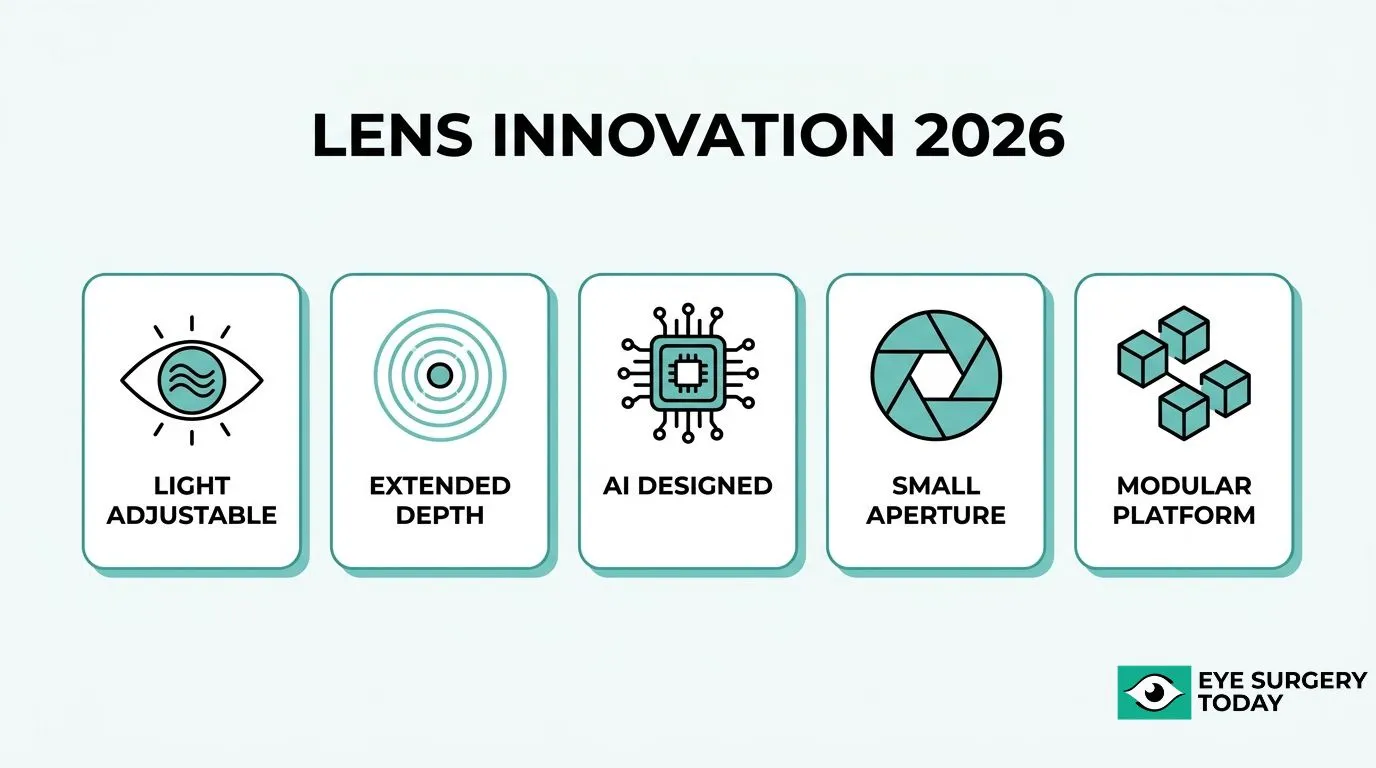
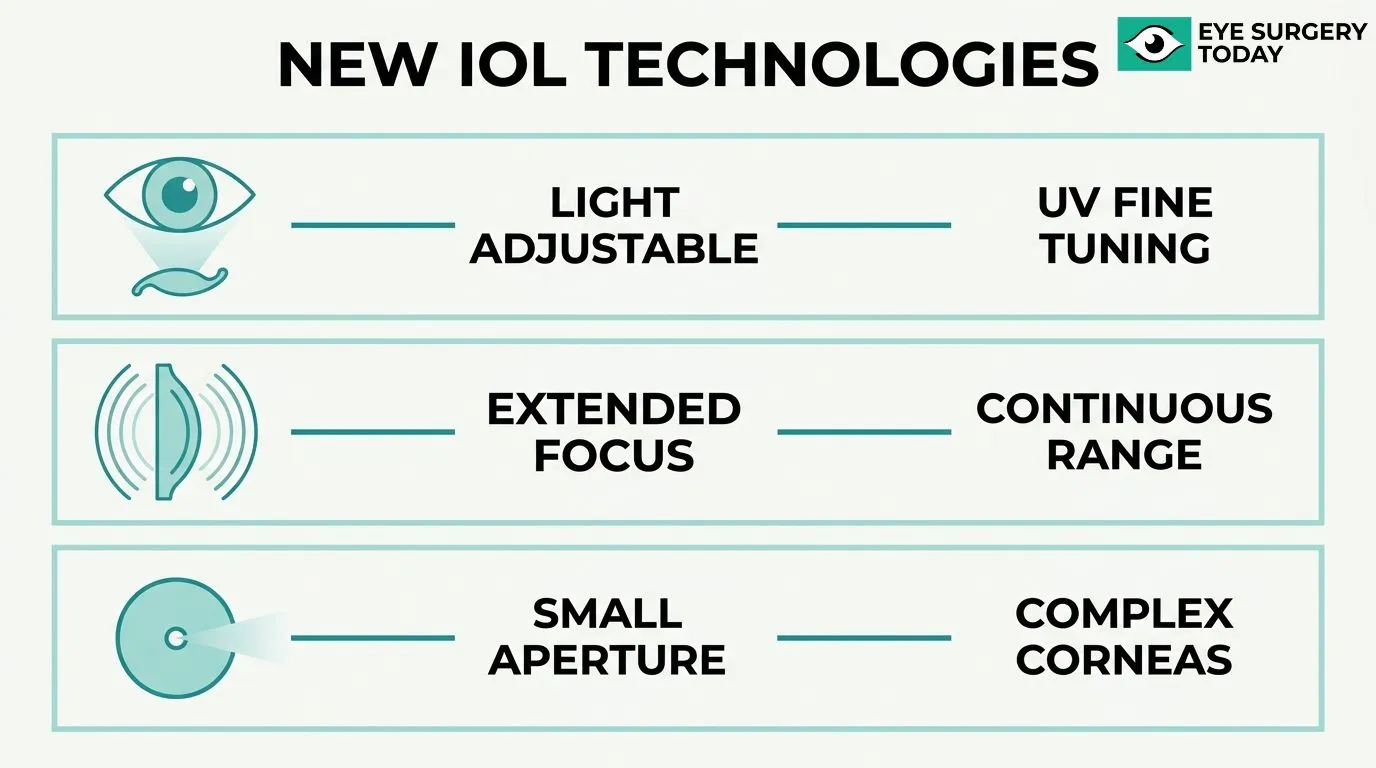
New IOL categories now include light-adjustable lenses that can be fine-tuned with UV treatments after implantation, small-aperture designs for complex corneas, and modular shape-changing platforms that demonstrated stable vision through 36 months of follow-up.
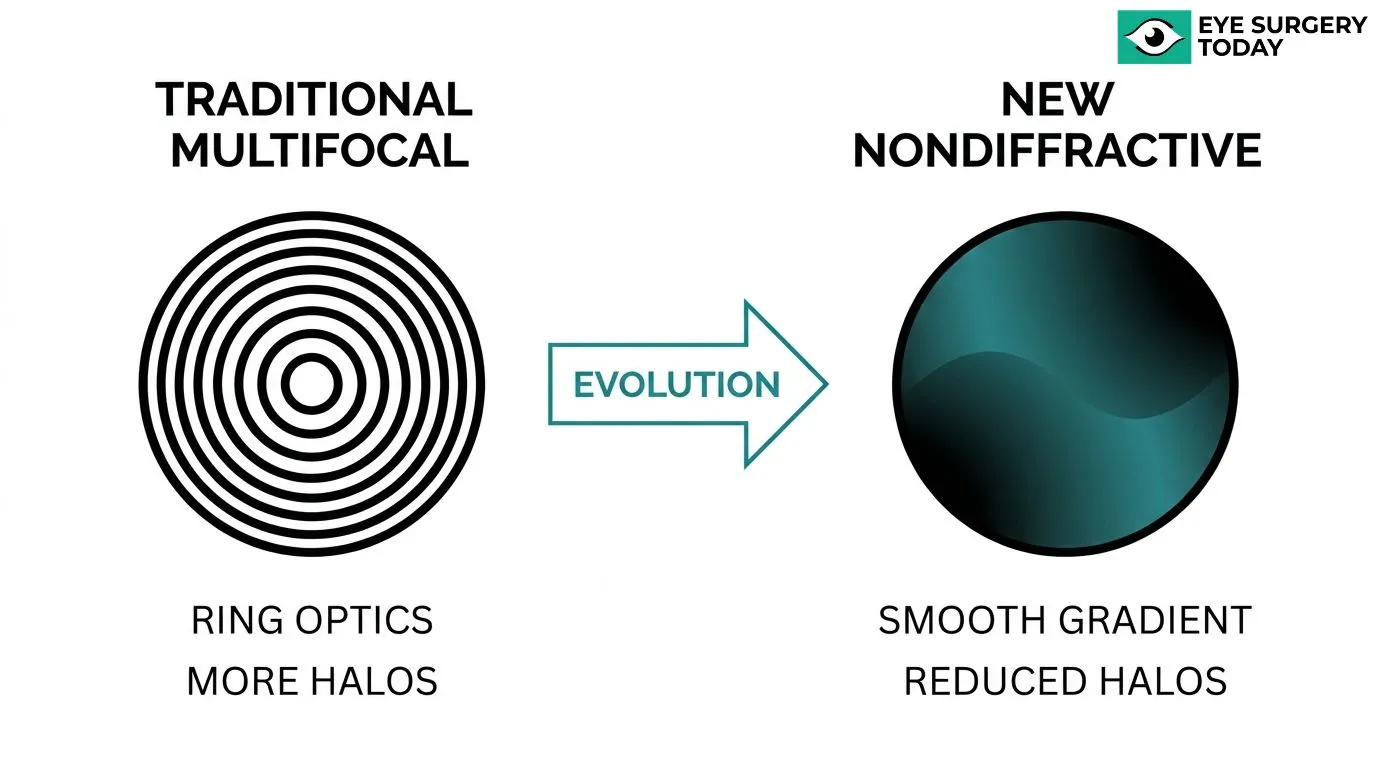
Multifocal designs have shifted toward nondiffractive optics and wavefront shaping, which may reduce halos and glare while maintaining functional near vision; the FDA approval of the TECNIS PureSee IOL in March 2026 reflects this trend.
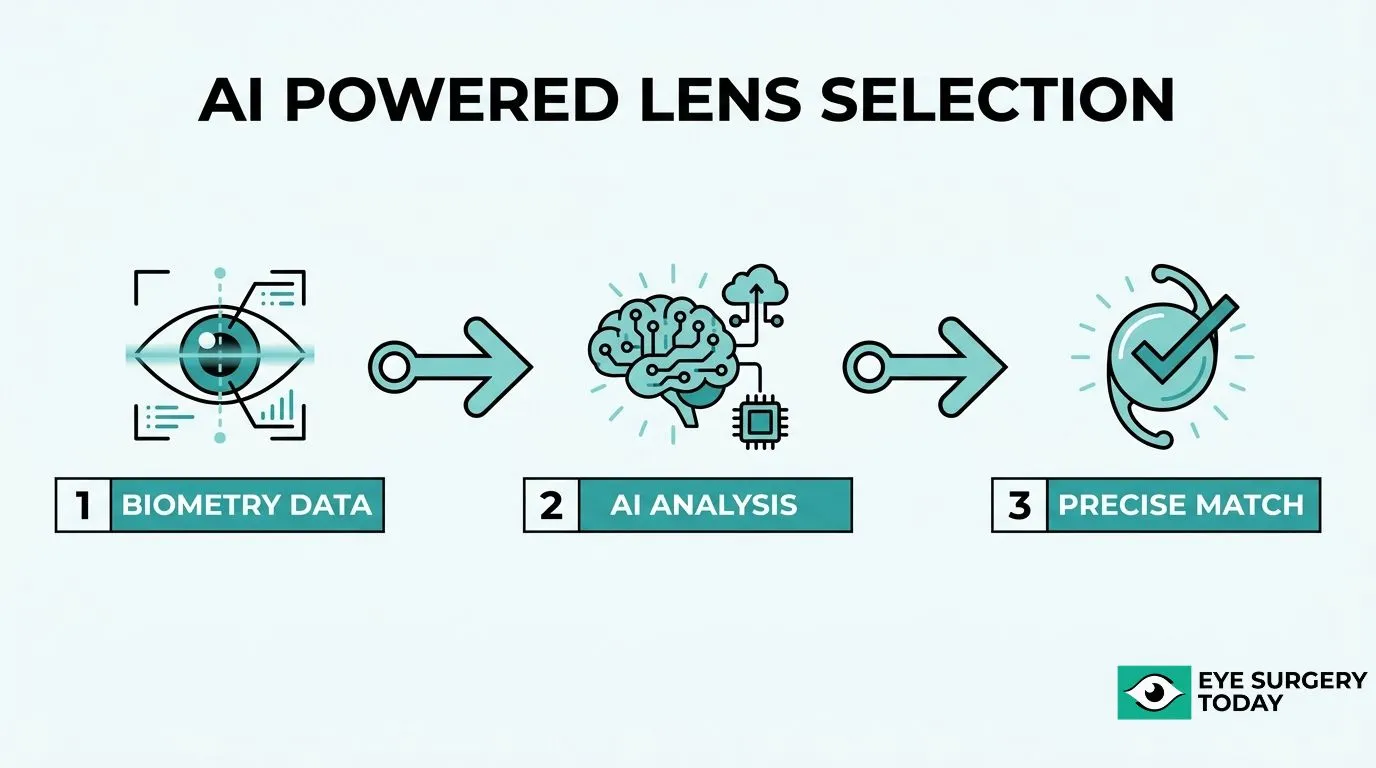
AI-assisted biometry and digital twin modeling are changing how surgeons select lens power, moving from population-averaged formulas toward individualized outcome prediction that accounts for each patient’s unique anatomy.
Materials advances, including glistening-free hydrophobic acrylics and zwitterionic anti-PCO coatings, may address long-term complications like capsular opacification and optical degradation that have historically required secondary intervention.
Candidacy and recovery vary significantly by lens type and corneal health, making thorough pre-surgical diagnostics and expert guidance essential for patients navigating these expanding options.
What New IOL Technologies Have Emerged for 2026?
The newer IOL technologies that are available in 2026 include light-adjustable lenses, extended depth of focus designs, small-aperture IOLs, and modular platforms. While some of these are not brand-new in 2026, they represent modern, newer-generation advances in the broader history of intraocular lens technology. Each sub-section below covers how these innovations work and what clinical evidence supports them.
Light-Adjustable Lenses
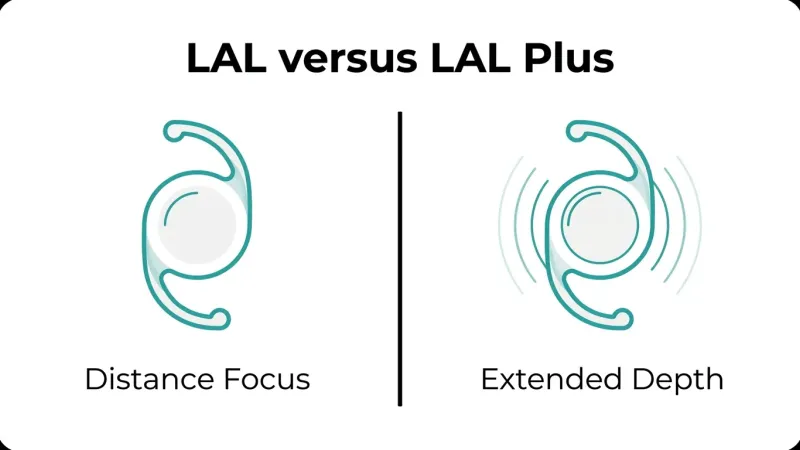
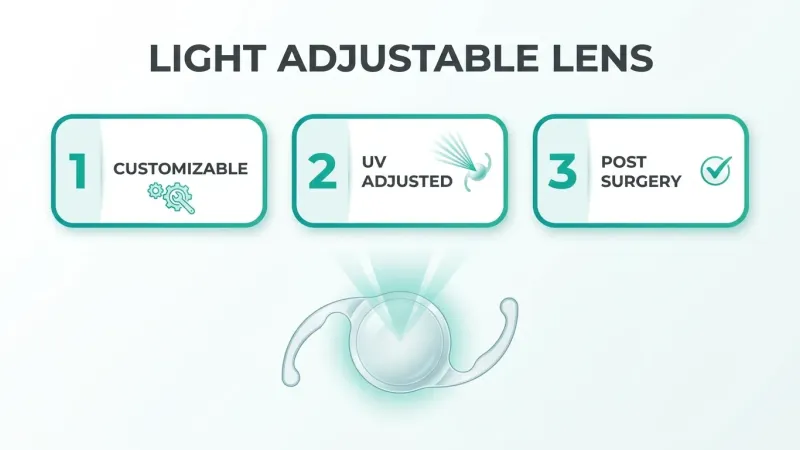
Light-adjustable lenses (LALs) are intraocular lenses that surgeons can fine-tune after implantation using ultraviolet light treatments. This post-surgical adjustability allows clinicians to modify refraction, create multifocality, or alter asphericity once the eye has healed. According to a prospective multicenter clinical registry published in the Journal of Cataract and Refractive Surgery, 91.1% of LAL eyes and 93.5% of LAL+ eyes achieved a manifest refraction spherical equivalent within 0.50 diopter of target. For patients prioritizing refractive precision, LAL technology may represent one of the most clinically meaningful advances available today.
Extended Depth of Focus Lenses
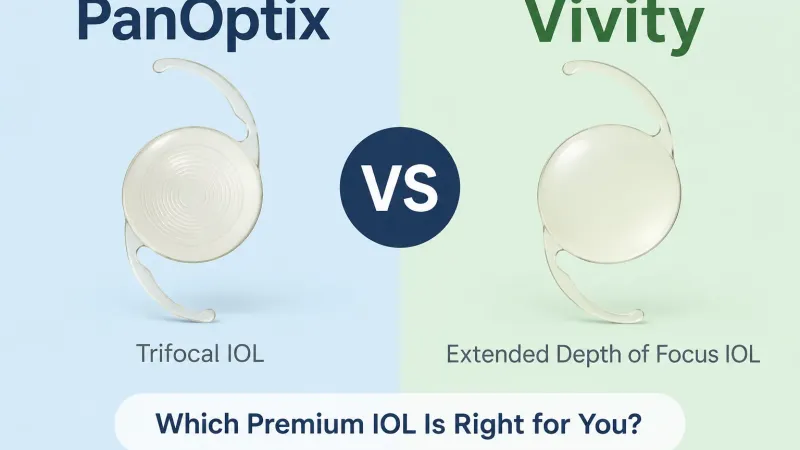
Extended depth of focus (EDOF) lenses are IOLs designed to provide a continuous, elongated focal range rather than distinct near and far focal points. The LAL+ upgrade incorporates a small, continuous increase in central lens power to extend depth of focus and offer a broader range of vision, according to UT Southwestern Medical Center. This design philosophy reduces the abrupt focal zones associated with traditional multifocal lenses, which may lower the incidence of photic disturbances for some patients.
AI-Designed Freeform Lenses
AI-designed freeform lenses are IOLs whose optical surfaces are computationally optimized to match an individual patient’s unique corneal aberration profile. Unlike conventional lens manufacturing, freeform design uses wavefront data to generate personalized surface geometries, aiming to minimize residual higher-order aberrations after implantation. This represents a shift from population-averaged lens optics toward truly individualized refractive correction.
Small-Aperture IOLs
Small-aperture IOLs, such as the IC-8 Apthera, use a central pinhole mechanism to extend depth of focus and improve image quality across a range of distances. Dr. Robert Ang, as reported by the European Society of Cataract and Refractive Surgeons, notes that implanting small-aperture IOLs can reduce the impact of ocular aberrations on visual quality in eyes with complex corneas. In a study of post-refractive surgery patients, the IC-8 Apthera achieved a mean monocular uncorrected distance visual acuity of 20/22 at one year. This makes it a particularly strong option for patients whose prior corneal surgeries have complicated standard premium lens selection.
Modular and Exchangeable IOL Platforms
Modular and exchangeable IOL platforms are lens systems designed so that the refractive component can be replaced or adjusted after primary implantation without removing the entire lens. The OmniVu Lens System, a shape-changing design, demonstrated durable binocular uncorrected distance, intermediate, and near visual acuities of 20/17, 20/18, and 20/26, respectively, at 36 months, according to Ophthalmology Times. The ability to exchange the optical element without full lens explantation may reduce surgical risk over a patient’s lifetime, making these platforms especially promising for younger presbyopia patients.
How Do New Multifocal Lens Designs Differ From Earlier Models?
New multifocal lens designs differ from earlier models by reducing optical side effects, extending functional vision range, and incorporating shape-changing or nondiffractive optics. The sections below cover nondiffractive halos reduction, wavefront-based near vision, and hybrid refractive-diffractive balance.
Advances in lens materials are also contributing to these improvements. According to research published in Nature Communications, sulfur-rich polymers made from widely available elemental sulfur are promising candidates for lens optics due to their high refractive index and mid-wave transparency.
How Do Nondiffractive Multifocal Lenses Reduce Halos?
Nondiffractive multifocal lenses reduce halos by distributing light through smooth refractive gradients rather than the concentric diffractive rings used in earlier designs. Traditional diffractive optics split incoming light into discrete focal points, a process that can scatter energy and generate visible halo artifacts at night.
The FDA approved the TECNIS PureSee IOL in March 2026, according to Johnson & Johnson, introducing a nondiffractive premium lens specifically designed to reduce photic disturbances such as halos and glare. For patients who previously avoided premium lenses due to nighttime vision concerns, this category of lens represents a meaningful step forward.
How Does Wavefront Shaping Improve Near Vision Quality?
Wavefront shaping improves near vision quality by customizing the optical profile of the lens to correct higher-order aberrations that degrade image clarity at close distances. Rather than applying a uniform optical power, wavefront-optimized designs tailor the curvature of the lens to the individual eye’s aberration map.
According to a report by EyeWire News on the OmniVu Lens System, stable refractive outcomes alongside excellent distance, intermediate, and near vision were maintained through 36 months post-implantation, confirming the long-term durability of a shape-changing mechanism that supports near vision across a sustained follow-up period.
How Do Hybrid Refractive-Diffractive Lenses Balance Range?
Hybrid refractive-diffractive lenses balance range by combining two complementary optical mechanisms: refractive zones optimize distance and intermediate vision with minimal light loss, while diffractive zones extend focal reach to near distances. Earlier single-technology designs had to sacrifice performance at one distance to optimize another.
By apportioning light across both mechanisms, hybrid lenses can deliver functional vision across three distances without concentrating all diffractive energy in a single zone, which is one reason contemporary hybrid designs generally produce fewer pronounced halos compared to older all-diffractive trifocals. For patients with active lifestyles requiring broad visual range, hybrid designs continue to be a strong clinical consideration.
What Are the Potential Benefits of Adjustable Lenses After Surgery?
The potential benefits of adjustable lenses after surgery include the ability to fine-tune refractive outcomes after the lens is already implanted. The following sections cover how UV-based adjustment works, which patients may benefit most, and what clinical trials have reported.
How Does Post-Implantation UV Adjustment Work?
Post-implantation UV adjustment works by using controlled ultraviolet light treatments to reshape the lens after it has been placed in the eye. Once a light-adjustable lens (LAL) is implanted, a clinical device delivers targeted UV exposures to specific zones of the lens material, altering its curvature and refractive power. This process allows the surgeon to correct residual refractive error, modify asphericity, or create multifocality based on how the patient’s vision stabilizes after surgery. Because adjustments happen after healing, the final prescription can be customized to the patient’s actual, post-surgical visual state rather than relying entirely on pre-operative measurements.
Who May Benefit Most From Light-Adjustable Technology?
Patients who may benefit most from light-adjustable technology are those with higher demands for precise refractive outcomes or unpredictable healing responses. This includes individuals with prior corneal refractive surgery, irregular corneal topography, or asymmetric astigmatism, where standard biometric formulas carry greater uncertainty. Patients with high occupational or lifestyle requirements for spectacle independence are also strong candidates, since post-implantation fine-tuning can address small but meaningful residual errors that standard IOLs cannot correct after placement.
What Outcomes Have Clinical Trials Reported for 2026?
The outcomes clinical trials have reported for 2026 confirm that light-adjustable IOLs offer meaningful post-surgical precision. According to a clinical outcomes study published via PubMed Central, refractive lens exchange using a light-adjustable intraocular lens allows for post-surgical fine-tuning through creating multifocality or modifying asphericity. Separately, FDA Post-Approval Studies for the IC-8 Apthera IOL were updated in late 2025, with clinical trial monitoring continuing through 2026 to assess long-term safety in the U.S. population. Together, these data points reflect a growing evidence base supporting adjustable lens platforms as both precise and durable options for appropriate candidates.
How Are AI and Digital Planning Changing Lens Selection?
AI and digital planning are changing lens selection by improving the precision of IOL power calculations and enabling virtual simulation of surgical outcomes. The subsections below cover AI-assisted biometry and digital twin modeling.
How Does AI-Assisted Biometry Improve Lens Power Accuracy?
AI-assisted biometry improves lens power accuracy by applying machine learning algorithms to refine effective lens position (ELP) estimation, one of the most consequential variables in IOL power calculation. Traditional geometric formulas rely on population-average assumptions, which can underperform in eyes with atypical axial lengths or corneal curvatures.
According to research published by the Association for Research in Vision and Ophthalmology (ARVO), a dedicated algorithm for ELP estimation based on AI-powered IOL power calculation was developed specifically to improve refractive predictability in Chinese eyes, a population with distinct biometric characteristics that challenged earlier formulas. Separately, a 2026 comparative study identified Pearl-DGS, Hill-RBF 3.0, Kane, and Hoffer QST as the most accurate AI-based IOL power calculation formulas currently available.
For surgeons managing complex cases, AI-driven biometry represents a meaningful shift: it reduces the residual refractive error that leads to post-operative glasses dependence, which remains the most common patient complaint after premium IOL implantation.
How Do Digital Twins Help Predict Visual Outcomes?
Digital twins help predict visual outcomes by creating dynamic, patient-specific virtual models of the eye that simulate how a chosen IOL will perform before surgery is performed. According to research published in IEEE Xplore, digital twin technology integrates multimodal data, including retinal images and 3D surface scans, to build living virtual models capable of forecasting surgical results.
This approach moves lens selection from population-based probability toward individualized outcome modeling. Rather than estimating how a lens typically performs, clinicians can simulate how it may perform in that specific patient’s anatomy.
For patients considering premium lenses, digital twin planning may help set realistic expectations and reduce the uncertainty that often makes lens choice difficult.
What Materials Advances May Improve Long-Term Lens Performance?
Materials advances that may improve long-term lens performance include glistening-free hydrophobic acrylics, biocompatible anti-PCO coatings, and high-refractive-index polymers. The sections below cover how each innovation addresses durability, cellular overgrowth, and lens thickness.
How Do New Hydrophobic Acrylic Formulations Reduce Glistenings?
New hydrophobic acrylic formulations reduce glistenings by incorporating HEMA (hydroxyethyl methacrylate) into the polymer matrix, which stabilizes water interaction within the lens material. Glistenings are micro-vacuoles that form inside hydrophobic acrylic lenses when aqueous humor infiltrates the optic, scattering light and degrading visual quality over time. According to ResearchGate, glistening-free hydrophobic acrylic materials containing HEMA have shown significant improvements in visual acuity and long-term material stability over one year. This approach represents a meaningful step forward, as glistening formation has historically been one of the most common long-term complaints with hydrophobic acrylic IOLs.
What Progress Has Been Made in Biocompatible Anti-PCO Coatings?
Biocompatible anti-PCO coatings have advanced significantly, with surface modification techniques now capable of preventing posterior capsular opacification at the nanoscale. Posterior capsular opacification occurs when residual lens epithelial cells migrate and proliferate across the capsule after cataract surgery, clouding vision. A 2026 study published in Biomaterials Science found that zwitterionic poly(carboxybetaine) coatings create a nanoscale hydrophilic barrier that inhibits cell adhesion, effectively preventing PCO. This is a particularly promising development, as PCO remains the most common long-term complication after cataract surgery and currently requires laser intervention to treat.
How Are High-Refractive-Index Polymers Enabling Thinner Lenses?
High-refractive-index polymers enable thinner lenses by bending light more efficiently per unit of material thickness, reducing the amount of polymer needed to achieve the required optical power. Thinner IOLs offer practical surgical benefits, including easier insertion through smaller incisions and reduced risk of incision-related complications. According to Nature Communications, sulfur-rich polymers derived from widely available elemental sulfur are promising candidates for lens optics due to their high refractive index and mid-wave transparency. These materials could support next-generation ultra-thin IOL designs while maintaining optical clarity over time.
What Are the Possible Risks or Complications With New IOLs?
The possible risks and complications with new IOLs include dysphotopsia from multifocal optics, procedural considerations with modular lens exchanges, and long-term capsular fibrosis around the implant. Each of these risk categories is addressed in the sub-sections below.
What Dysphotopsia Risks Remain With Advanced Multifocal Lenses?
Dysphotopsia risks with advanced multifocal lenses include halos, glare, starbursts, and contrast sensitivity loss, particularly in low-light conditions. These photic phenomena occur because multifocal optics split incoming light across multiple focal points, and the visual cortex does not always suppress unwanted image artifacts. Patients with larger mesopic pupils may be more susceptible, as a wider pupil exposes more diffractive rings to ambient light. Neuroadaptation typically reduces these symptoms over weeks to months, though a subset of patients may find them persistent. Careful preoperative screening and realistic expectation-setting are, in practice, as important as the lens technology itself.
What Are the Potential Issues With Modular Lens Exchanges?
The potential issues with modular lens exchanges include the surgical complexity of accessing the capsular bag a second time, risks of zonular stress, and the possibility of residual refractive error if exchange timing is suboptimal. Capsular fibrosis between the primary and secondary implantation can complicate the procedure if the exchange is delayed. According to Healio, patients overall report high satisfaction with the IC-8 small-aperture IOL for its ability to provide functional unaided vision, suggesting that well-selected modular and advanced designs can still deliver strong outcomes despite procedural considerations.
How Do New Lens Surfaces Affect Long-Term Capsular Fibrosis?
New lens surfaces may reduce long-term capsular fibrosis by inhibiting the lens epithelial cell adhesion that drives posterior capsular opacification (PCO). Research published in Biomaterials Science found that surface modification with zwitterionic poly(carboxybetaine) coatings creates a nanoscale hydrophilic barrier that effectively prevents PCO by inhibiting cell adhesion. This represents a meaningful advance over conventional hydrophobic acrylic surfaces, which rely primarily on lens geometry rather than active surface chemistry to resist PCO. As coating technologies mature, long-term capsular fibrosis may become significantly less common across next-generation IOL platforms.
Who May Be a Good Candidate for Next-Generation Lens Implants?
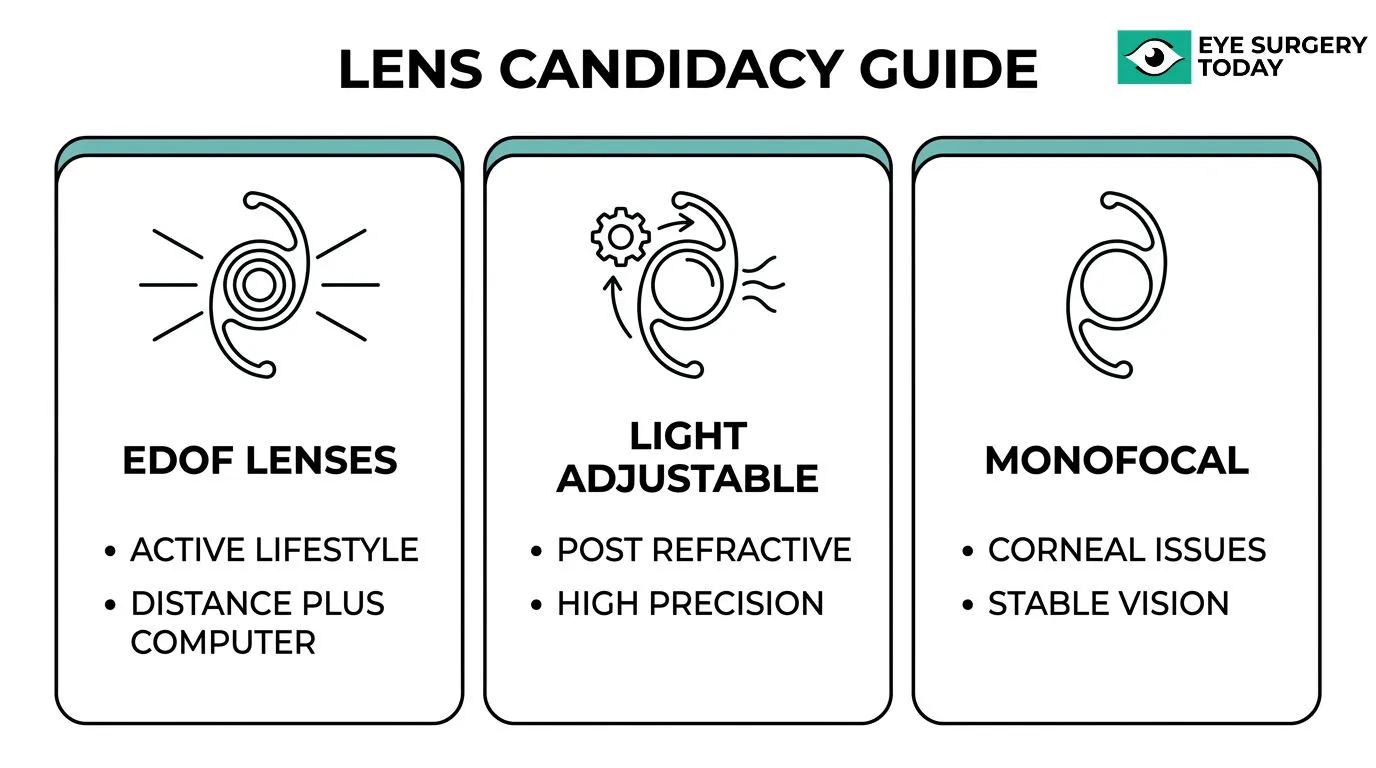
Candidacy for next-generation lens implants depends on lifestyle priorities, corneal health, and refractive goals. The following sections explore who may benefit from extended depth of focus lenses, light-adjustable lenses, and standard monofocal options.
Who May Benefit From Extended Depth of Focus Lenses?
Patients who may benefit from extended depth of focus (EDOF) lenses are those who prioritize a continuous, seamless range of vision across distance and intermediate zones, such as active adults who drive frequently, work at computer screens, or engage in outdoor activities. Unlike traditional multifocal designs that split light into discrete focal points, EDOF lenses use a single elongated focal zone, which may reduce the likelihood of halos or glare for visually demanding lifestyles.
Ideal candidates typically have healthy corneas without significant irregular astigmatism, realistic expectations about near vision, and a willingness to use reading glasses for fine print tasks. In clinical practice, EDOF lenses are often considered a strong match for patients who want reduced spectacle dependence at distance and intermediate ranges without fully committing to a premium multifocal design.
Who May Be Better Suited for a Light-Adjustable Lens?
Patients who may be better suited for a light-adjustable lens (LAL) are those who have previously undergone refractive surgery, such as LASIK or PRK, where altered corneal geometry can make precise IOL power prediction more challenging. According to UT Southwestern Medical Center, the LAL+ incorporates a small, continuous increase in central lens power to extend the depth of focus, offering a greater range of vision that can be fine-tuned after implantation using UV light treatments.
This post-surgical adjustability may also benefit patients with high refractive expectations, those with unusual ocular anatomy, or individuals who value the ability to trial and refine their visual outcome before the lens power is permanently locked in.
Who Should Consider a Monofocal Lens Despite New Options?
Patients who should consider a monofocal lens despite new options are those with significant corneal pathology, dry eye disease, or irregular astigmatism that may reduce their ability to tolerate premium multifocal optics. ASCRS 2026 clinical guidelines emphasize that premium IOL selection for patients with corneal pathology requires advanced corneal diagnostics to manage expectations and ensure refractive success, which means some patients may simply not meet the baseline corneal health criteria for advanced lens platforms.
Monofocal lenses remain a reliable, low-risk choice for patients who are comfortable using glasses after surgery, those undergoing cataract removal under budget constraints, and older patients whose primary goal is safe, stable distance or near vision rather than spectacle independence. For this group, prioritizing optical clarity and surgical predictability over feature-rich designs is often the more appropriate clinical path.
What Should Patients Expect During Recovery With Advanced IOLs?
Recovery with advanced IOLs varies by lens type, but most patients can expect a structured adjustment period focused on achieving precise refractive targets. The sections below cover what the recovery timeline involves and how clinical guidelines shape realistic expectations.
How Long Does Visual Recovery Take With Premium IOLs?
Visual recovery with premium IOLs typically unfolds over several weeks, with final outcomes often assessed at three to six months post-implantation. For light-adjustable lenses, recovery includes a post-surgical UV light treatment phase used to fine-tune refraction before the prescription is locked in. According to a prospective multicenter clinical registry published in the Journal of Cataract and Refractive Surgery, 91.1% of LAL eyes and 93.5% of LAL+ eyes achieved a manifest refraction spherical equivalent within 0.50 diopter of target, reflecting how precisely this staged process can perform. Patients should anticipate some visual fluctuation during the adjustment phase, which is normal and expected before final treatment is completed.
What Role Do Pre-Surgical Diagnostics Play in Setting Expectations?
Pre-surgical diagnostics play a critical role in determining realistic recovery outcomes for premium IOL patients. ASCRS 2026 clinical guidelines emphasize that premium IOL selection for patients with corneal pathology requires advanced corneal diagnostics to manage expectations and ensure refractive success. Without thorough pre-operative evaluation, patients with underlying corneal irregularities may experience unexplained visual dissatisfaction even after technically sound surgery. In practice, the quality of the diagnostic workup often matters as much as the lens itself in shaping how smooth and predictable the recovery will be.
How Does Lens Innovation in 2026 Compare to Five Years Ago?
Lens innovation in 2026 compares to five years ago through advances across materials science, surgical planning, and post-implant adjustability that were largely unavailable or experimental in 2021. The pace of change spans AI-powered biometry, next-generation IOL coatings, and regulatory approvals for entirely new lens categories.
Five years ago, standard monofocal and early-generation multifocal IOLs dominated cataract surgery. Today, the landscape includes light-adjustable lenses with extended depth of focus, small-aperture optics for complex corneas, modular shape-changing platforms, and AI formulas such as Pearl-DGS, Hill-RBF 3.0, Kane, and Hoffer QST that have replaced older regression-based calculations, according to a 2026 comparative study published on PubMed.
Material science has advanced similarly. Zwitterionic poly(carboxybetaine) coatings now create nanoscale hydrophilic barriers on IOL surfaces to inhibit cell adhesion and prevent posterior capsular opacification, a complication that required laser retreatment far more frequently with earlier lens materials. Sulfur-rich polymers have also emerged as high-refractive-index candidates, promising thinner optics that were not feasible in 2021.
Perhaps the most meaningful shift is the move from fixed, one-time implantation toward adjustability and personalization. Post-surgical UV-based lens tuning and digital twin modeling now allow outcomes to be predicted and refined in ways that simply were not possible five years ago. This trajectory suggests that the gap between surgical intent and achieved refraction will continue to narrow as these technologies mature.
How Should You Evaluate New Lens Options With Expert Guidance?
Evaluating new lens options requires combining current clinical evidence with personalized guidance. The sections below cover how Eye Surgery Today supports that process and what the most important 2026 lens advances mean for patients.
Can Eye Surgery Today Help You Understand Your Lens Choices?
Yes, Eye Surgery Today can help you understand your lens choices through surgeon-reviewed educational content designed to translate complex IOL advances into clear, actionable information. The platform covers premium lens categories, including light-adjustable, small-aperture, and nondiffractive IOLs, so patients can arrive at consultations better prepared to ask the right questions. Understanding the differences between lens platforms before meeting with a surgeon may help patients set realistic expectations and engage more meaningfully in shared decision-making.
What Are the Key Takeaways About Lens Innovation in 2026?
The key takeaways about lens innovation in 2026 center on three themes: greater customization, reduced visual disturbances, and more precise surgical planning. Patients now have access to lenses that can be fine-tuned after implantation, designs that minimize halos and glare, and AI-assisted tools that improve refractive accuracy. According to Johnson & Johnson, the FDA approved the TECNIS PureSee IOL in March 2026, a nondiffractive premium lens specifically designed to reduce photic disturbances such as halos and glare. The breadth of available options makes expert guidance more valuable than ever, as no single lens suits every patient.