Laser systems in eye surgery are specialized optical devices that deliver precise wavelengths of light to cut, reshape, or treat ocular tissues for vision correction, cataract removal, and glaucoma management. This guide covers the major laser platform types and their mechanisms, femtosecond laser applications in cataract surgery, excimer laser use across refractive procedures, the newest 2026 technologies, laser versus manual surgical comparisons, candidacy and risk considerations, and how to choose the right platform.
Six primary laser systems serve distinct surgical roles: femtosecond lasers cut tissue with ultrashort infrared pulses, excimer lasers ablate corneal stroma at 193 nm, Nd:YAG lasers disrupt tissue through optical breakdown, argon lasers coagulate retinal vessels, SLT systems lower intraocular pressure selectively, and micropulse diode lasers treat retinal conditions without visible burns.
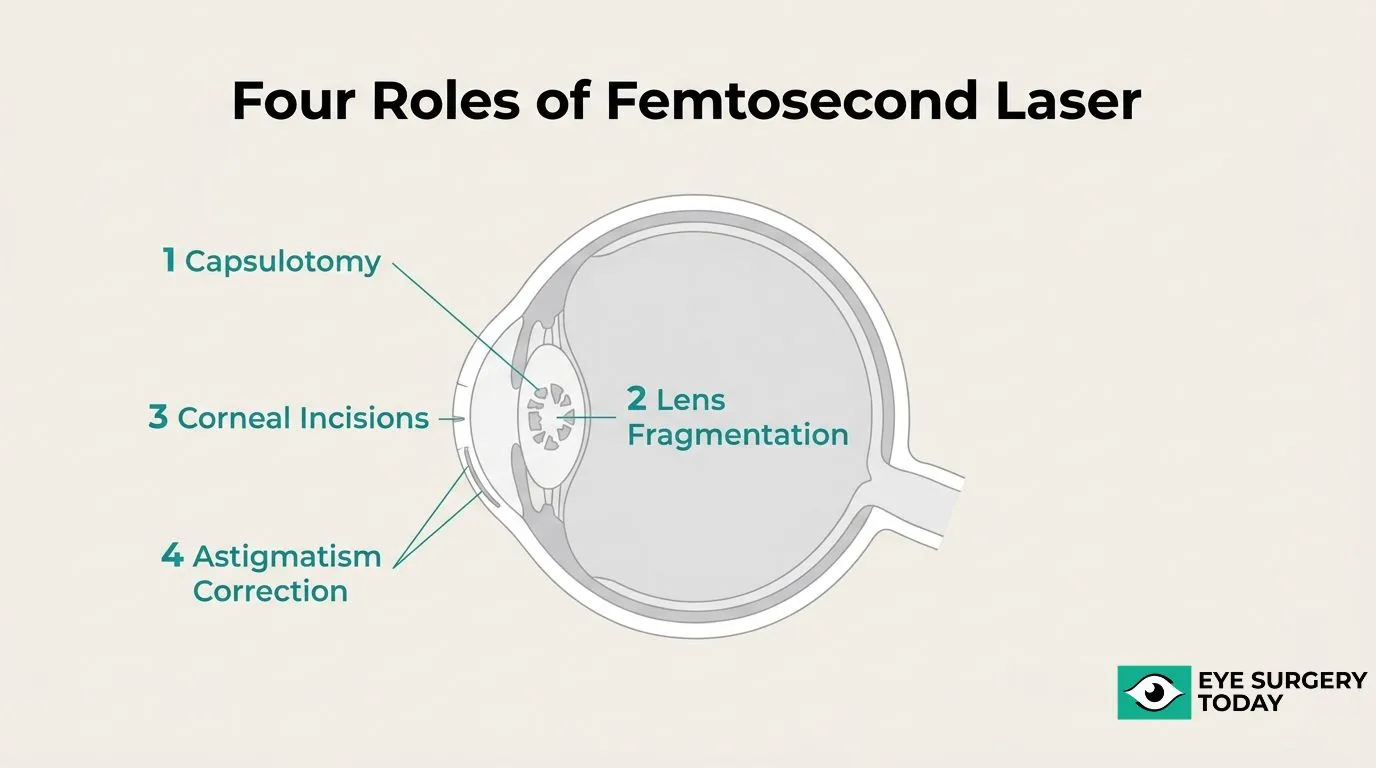
In cataract surgery, femtosecond lasers create precise capsulotomies, pre-fragment the lens to reduce phacoemulsification energy, construct self-sealing corneal incisions, and place arcuate cuts to correct astigmatism; all guided increasingly by real-time OCT imaging.
Excimer lasers remain the primary reshaping tool in LASIK and PRK, while SMILE Pro eliminates the excimer step entirely through femtosecond lenticule extraction. Clinical evidence indicates these three procedures achieve comparable refractive outcomes for myopic correction.
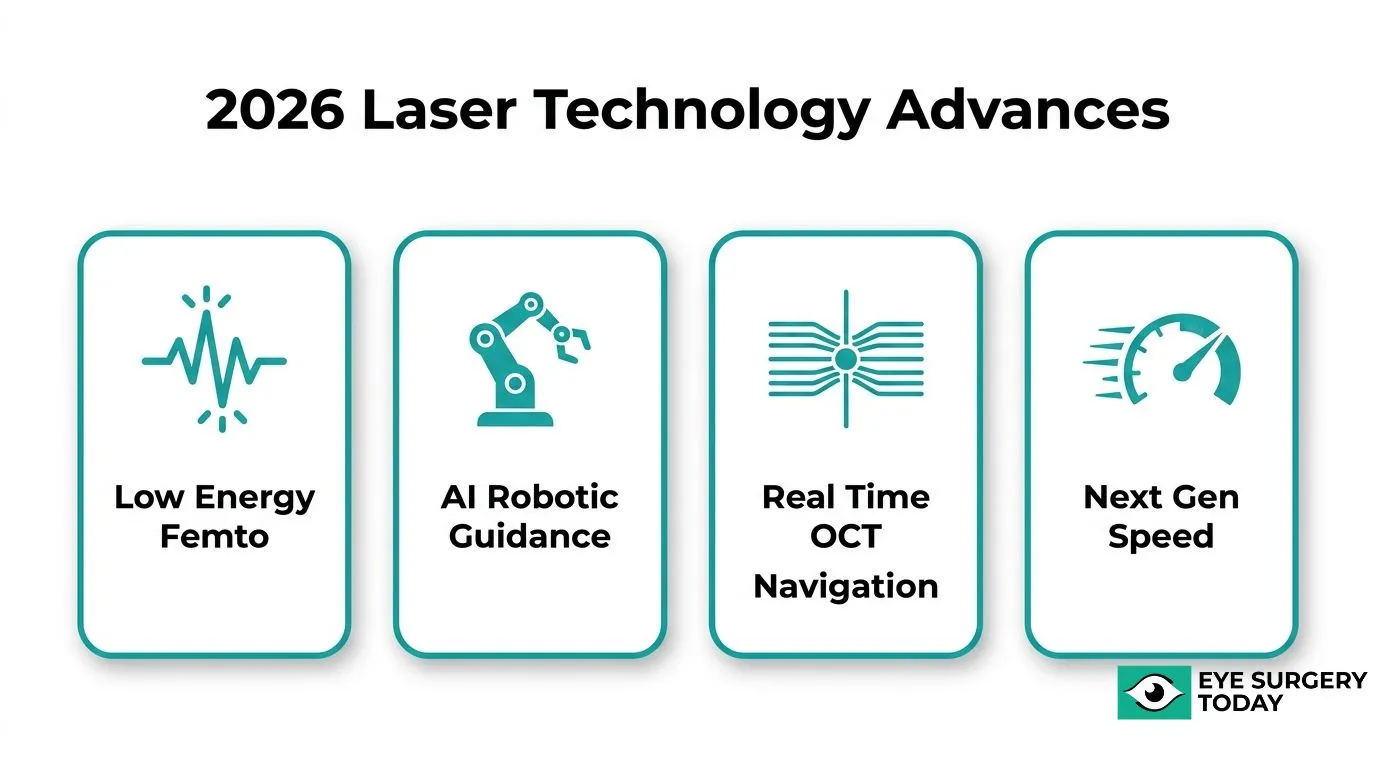
The 2026 technology landscape includes low-energy femtosecond platforms operating at 2 MHz repetition rates, AI-guided robotic delivery systems like the ALLY by LENSAR, real-time OCT-integrated navigation, and faster excimer platforms with refined eye-tracking algorithms.
Laser-assisted and manual approaches demonstrate equivalent safety profiles, with laser techniques offering measurable precision advantages in capsulotomy centration and astigmatism management. Candidacy depends on factors including age, corneal thickness, prescription stability, and ocular surface health, while potential risks such as dry eyes, glare, and halos remain important considerations for informed consent.
What Types of Laser Systems Are Used in Eye Surgery?
The types of laser systems used in eye surgery include femtosecond lasers, excimer lasers, Nd:YAG lasers, argon lasers, selective laser trabeculoplasty (SLT) systems, and micropulse diode lasers. Each system targets different ocular tissues and serves distinct surgical purposes.
Femtosecond Lasers
Femtosecond lasers are ultrashort-pulse infrared lasers that cut corneal and lens tissue with high precision by delivering pulses measured in quadrillionths of a second. They are used in LASIK flap creation, corneal incisions, and lens fragmentation during cataract surgery. The VisuMax 800 femtosecond laser features a 2 MHz pulse repetition rate, enabling lenticule creation for SMILE Pro in under 10 seconds.
Excimer Lasers
Excimer lasers are 193 nm argon fluoride gas lasers that reshape the cornea by ablating precise amounts of stromal tissue to correct refractive errors such as myopia, hyperopia, and astigmatism. They are the primary energy source in LASIK and PRK procedures. The WaveLight EX500, for example, is used by more than 6,000 surgeons across over 80 countries, making it the most widely installed excimer platform worldwide.
Nd:YAG Lasers
The Nd:YAG laser is a solid-state laser operating at 1064 nm that disrupts ocular tissue through optical breakdown, producing ionization and plasma formation via short, high-power pulses. Its most common ophthalmic application is posterior capsulotomy, where it opens opacified lens capsule tissue after cataract surgery without incision. According to the American Academy of Ophthalmology, the Nd:YAG posterior capsulotomy introduced a closed-eye technique for safe and effective treatment of posterior capsule opacification.
Argon Lasers
Argon lasers are thermal lasers that deliver blue-green wavelength light (488–514 nm) to coagulate retinal tissue. They are primarily used to treat diabetic retinopathy, retinal tears, and macular lesions by creating controlled photocoagulation burns that seal leaking or damaged vessels. Their thermal mechanism distinguishes them from the photodisruptive and photoablative action of Nd:YAG and excimer systems.
Selective Laser Trabeculoplasty Systems
Selective laser trabeculoplasty (SLT) systems use a frequency-doubled Nd:YAG laser to lower intraocular pressure in glaucoma patients. According to the American Academy of Ophthalmology, SLT delivers a 400-micron spot size with a 3-nanosecond pulse duration, generating cavitation bubbles in the aqueous humor near the trabecular meshwork to stimulate outflow without damaging surrounding tissue. This selective targeting makes SLT repeatable in a way that older argon laser trabeculoplasty is not.
Micropulse Diode Lasers
Micropulse diode lasers are subthreshold thermal lasers that deliver energy in short, repetitive pulses separated by rest intervals, allowing retinal pigment epithelium cells to cool between exposures. This on-off delivery pattern treats conditions such as diabetic macular edema and central serous retinopathy without creating the visible burns associated with conventional continuous-wave laser therapy, reducing the risk of scarring and collateral damage to surrounding photoreceptors.
How Do Femtosecond Lasers Work in Cataract Surgery?
Femtosecond lasers work in cataract surgery by delivering ultrashort pulses of near-infrared light to precisely cut ocular tissue without heat damage. The following sections cover capsulotomy, lens fragmentation, corneal incisions, and astigmatism correction.
What Role Does the Femtosecond Laser Play in Capsulotomy?
The femtosecond laser plays the role of creating a precise, circular opening in the anterior lens capsule, a step called capsulotomy. Traditional manual capsulotomy depends entirely on surgeon technique, making uniformity difficult to guarantee. Femtosecond laser-assisted capsulotomy produces a consistently sized, centered opening that supports accurate intraocular lens placement.
The ESCRS 2024 guidelines confirm that both conventional and femtosecond laser-assisted cataract surgeries are comparably safe and effective, also recommending intracameral antibiotics for endophthalmitis prevention. Capsulotomy precision is arguably where femtosecond technology adds its most measurable clinical value, since even small deviations in the capsule opening can shift the final refractive outcome.
How Does Femtosecond Laser-Assisted Lens Fragmentation Work?
Femtosecond laser-assisted lens fragmentation works by using focused laser pulses to pre-soften and segment the cataractous lens before phacoemulsification begins. The laser divides the lens into smaller, more manageable fragments using a programmed grid or cross-cut pattern. This pre-fragmentation reduces the ultrasound energy a surgeon needs during phacoemulsification, which may help minimize stress on surrounding ocular structures.
What Corneal Incision Precision Can Femtosecond Lasers Achieve?
Femtosecond lasers can achieve highly reproducible, three-dimensional corneal incisions with programmable depth, length, and architecture. Unlike a manual blade, the laser constructs self-sealing incision geometry with consistent angular profiles, reducing the risk of wound leakage. This level of architectural control supports better anterior chamber stability throughout the procedure.
How Do Femtosecond Lasers Correct Astigmatism During Surgery?
Femtosecond lasers correct astigmatism during cataract surgery by creating arcuate corneal incisions, called limbal relaxing incisions, at precise locations along the corneal periphery. These incisions flatten the steeper corneal meridian, redistributing curvature to reduce astigmatic refractive error.
Real-time intraoperative OCT has advanced to function as a guidance platform, giving surgeons immediate visual feedback on incision depth and placement. This imaging integration strengthens incision accuracy beyond what preoperative planning alone can achieve, making astigmatism management more reliably targeted during surgery than it has been in any previous era of cataract technique.
How Do Excimer Lasers Work in Refractive Eye Surgery?
Excimer lasers work by delivering precise ultraviolet pulses to remove corneal tissue and reshape the eye’s focusing surface. The H3s below cover how this process applies across LASIK, PRK, and SMILE Pro procedures.
How Does an Excimer Laser Reshape the Cornea in LASIK?
An excimer laser reshapes the cornea in LASIK by ablating microscopic layers of stromal tissue using a 193 nm ultraviolet beam, altering curvature to correct refractive error. The process is guided by a patient-specific treatment map, allowing the laser to flatten the cornea for myopia correction or steepen it for hyperopia.
According to Alcon Global, the WaveLight EX500 is a 193 nm argon fluoride excimer laser and the most installed excimer system worldwide, used by more than 6,000 surgeons across 80 countries. Its prevalence reflects how widely this ablation-based approach has been validated in clinical practice.
A 2024 comparative review published by OASK Publishers found that SMILE, LASIK, and PRK achieve efficacy indices exceeding 0.94 for myopic correction, confirming that excimer-based LASIK delivers outcomes comparable to newer flapless techniques.
How Is the Excimer Laser Used in PRK Procedures?
The excimer laser is used in PRK procedures to ablate corneal tissue directly from the stromal surface, after the epithelium is removed manually or chemically rather than via a flap. This makes PRK particularly suitable for patients with thinner corneas or those whose lifestyle or occupation increases flap-related risk.
Because no flap is created, the entire corneal reshaping step depends on the excimer laser alone. Recovery is slower than LASIK, as the epithelium must regenerate over the treated surface, but long-term refractive outcomes are comparable.
What Is the Role of Excimer Lasers in SMILE Pro Surgery?
The role of excimer lasers in SMILE Pro surgery is limited: SMILE Pro relies primarily on a femtosecond laser to create and extract a lenticule, removing the excimer laser from the corneal reshaping step entirely. This flapless, excimer-free approach is a key structural difference between SMILE Pro and both LASIK and PRK.
Where LASIK and PRK use the excimer laser as the primary tissue-removal tool, SMILE Pro achieves refractive correction through lenticule extraction alone. For surgeons evaluating platform selection, this distinction matters: excimer-based procedures remain the standard for hyperopia and mixed astigmatism corrections where SMILE Pro’s current indications are more limited.
With excimer laser mechanics established across LASIK, PRK, and their contrast with SMILE Pro, the next focus turns to the newest laser platforms reshaping surgical possibilities in 2026.
What Are the Newest Laser Technologies Available in 2026?
The newest laser technologies available in 2026 span four key areas: low-energy femtosecond advances, AI-guided robotic delivery, real-time OCT-integrated navigation, and next-generation excimer speed improvements.
What Advances Has Low-Energy Femtosecond Technology Introduced?
Low-energy femtosecond technology has introduced faster pulse delivery, reduced thermal dispersion, and improved tissue precision compared to earlier femtosecond platforms. These advances allow surgeons to create more consistent corneal incisions and capsulotomies while minimizing collateral energy exposure to surrounding tissue. The VisuMax 800, for example, operates at a 2 MHz pulse repetition rate, completing lenticule creation for SMILE Pro in under 10 seconds. Lower energy per pulse also reduces anterior segment inflammation, which may support faster visual recovery for suitable patients.
How Does AI-Guided Laser Delivery Improve Surgical Precision?
AI-guided laser delivery improves surgical precision by continuously analyzing real-time surgical data and dynamically adjusting laser targeting throughout the procedure. According to LENSAR, the ALLY Robotic Cataract Laser System integrates advanced robotic technologies to perform the entire sterile portion of cataract surgery within a single room, streamlining workflow and reducing repositioning variables that can introduce error. By automating critical steps such as docking alignment and incision placement, AI-guided systems reduce the dependence on manual calibration, which is one of the most meaningful precision gains modern platforms have introduced.
What Is Real-Time OCT-Integrated Laser Navigation?
Real-time OCT-integrated laser navigation is an intraoperative guidance approach that uses live optical coherence tomography imaging to provide surgeons with immediate visual feedback during laser delivery. Rather than relying solely on preoperative maps, the system continuously updates the surgical field view, allowing adjustments as tissue responds in real time. According to PatSnap’s 2026 patent landscape analysis, real-time OCT has advanced to serve as a full intraoperative guidance platform in current ophthalmic surgical systems. This capability may reduce targeting errors in capsulotomy and corneal procedures where tissue position can shift mid-procedure.
How Have Next-Generation Excimer Platforms Improved Speed?
Next-generation excimer platforms have improved speed through higher repetition rates, optimized beam profiles, and refined eye-tracking algorithms that reduce treatment time without sacrificing ablation accuracy. Faster ablation cycles minimize patient discomfort, reduce the window for eye movement artifacts, and decrease desiccation risk to the corneal surface during treatment. Shorter total exposure time is a particularly valuable improvement for patients with difficulty maintaining fixation. These speed gains reflect a broader engineering trend across refractive platforms toward delivering equivalent or superior outcomes in significantly less chair time.
How Does Laser-Assisted Surgery Compare to Manual Surgery?
Laser-assisted surgery and manual surgery differ across three key dimensions: precision, complication rates, and visual outcomes. The sections below examine each dimension using current clinical evidence.
How Does Precision Differ Between Laser and Manual Techniques?
Laser-assisted techniques offer measurably greater precision than manual techniques in several steps of eye surgery. In cataract surgery, femtosecond lasers create capsulotomies and corneal incisions with computer-guided accuracy that is difficult to replicate freehand. Manual phacoemulsification relies on blade-based incisions and manual capsulorhexis, where outcomes depend more directly on individual surgeon skill and experience. For procedures requiring consistent geometric accuracy, such as capsulotomy centration or arcuate incisions for astigmatism correction, laser guidance reduces human variability. This precision advantage is most clinically meaningful in complex cases or when refractive accuracy is a priority.
How Do Complication Rates Compare Between Laser and Manual?
Complication rates between laser-assisted and manual cataract surgery are broadly comparable. According to Ophthalmology Advisor, femtosecond laser-assisted cataract surgery (FLACS) demonstrates equivalent safety to conventional phacoemulsification, with neither approach showing a clear superiority in overall complication risk. Both techniques carry procedural risks such as posterior capsule rupture and corneal edema, though their mechanisms and frequencies may differ. The ESCRS 2024 guidelines similarly conclude that both approaches are comparably safe when performed by qualified surgeons. For most patients, complication risk is low with either method.
How Do Visual Outcomes Differ Between Laser and Manual?
Visual outcomes between laser and manual surgery are largely equivalent for most patients, with some advantage for laser approaches in specific cases. The same Ophthalmology Advisor report notes that some studies indicate FLACS may produce better early visual outcomes and improved refractive accuracy compared to conventional phacoemulsification, particularly in patients where capsulotomy precision or astigmatism management is a factor. For standard cataract cases without complex refractive goals, manual phacoemulsification by an experienced surgeon achieves outcomes that are clinically similar. The choice between techniques should account for patient-specific factors, lens selection, and surgeon expertise rather than assuming one approach universally outperforms the other.
Who May Be a Good Candidate for Laser-Assisted Eye Surgery?
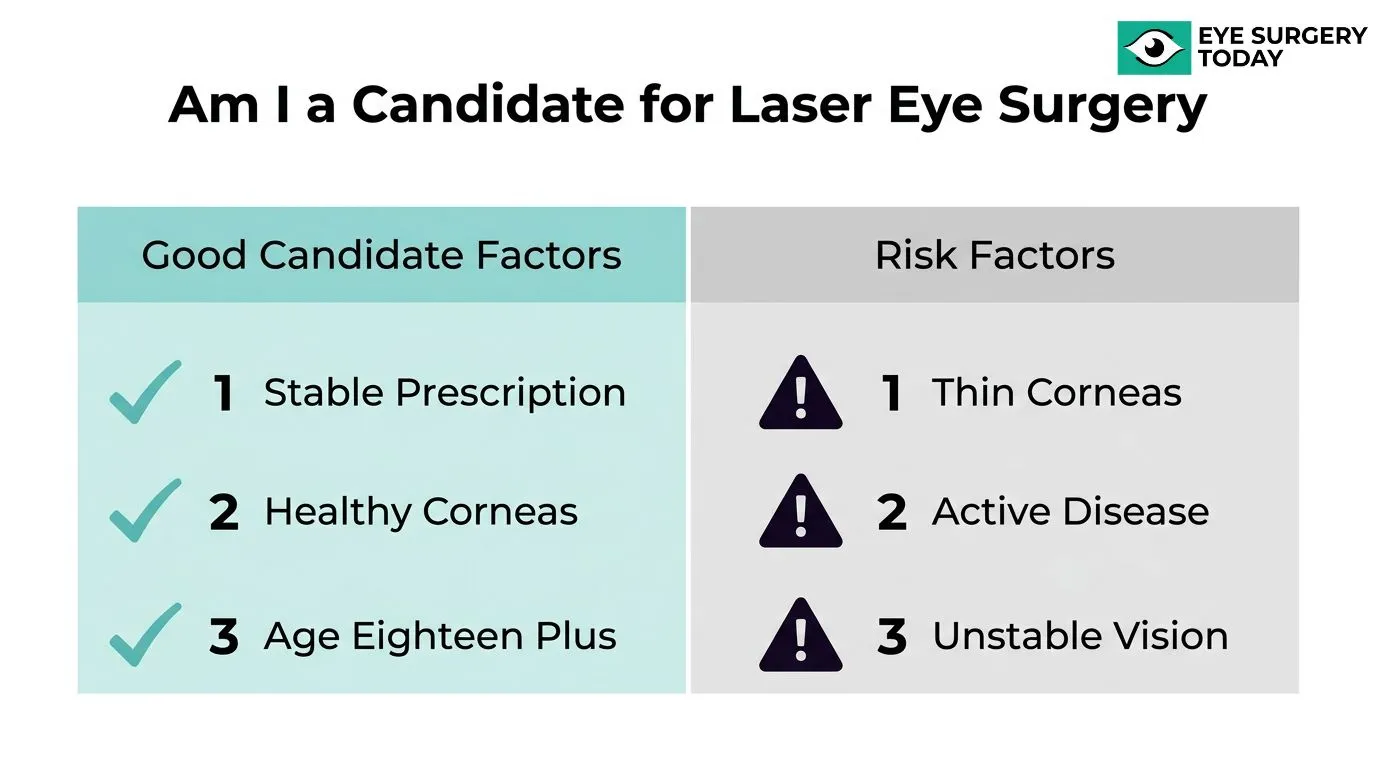
Good candidacy for laser-assisted eye surgery depends on several factors, including the eye conditions being treated, overall ocular health, and age. The following sections cover qualifying conditions, disqualifying factors, and how age influences eligibility.
What Eye Conditions May Qualify for Laser Treatment?
The eye conditions that may qualify for laser treatment include myopia, hyperopia, and astigmatism within measurable limits. According to UCLA Health, laser refractive surgery eligibility typically includes patients with myopia up to -12.0 D and astigmatism up to 6.0 D, provided they have adequate corneal thickness and a healthy ocular surface. Cataracts and elevated intraocular pressure from glaucoma may also be addressed with laser-based systems, such as femtosecond and SLT platforms respectively. Patients with stable prescriptions and no active ocular disease are generally the strongest candidates.
What Factors Could Make Someone Ineligible for Laser Surgery?
The factors that could make someone ineligible for laser surgery include thin corneas, unstable refractive error, active autoimmune conditions, and significant dry eye disease. Keratoconus and other corneal ectatic disorders typically disqualify patients from standard corneal refractive procedures. Research from Ophthalmology Advisor indicates that femtosecond laser-assisted cataract surgery demonstrates equivalent safety to conventional techniques, though both approaches still require careful pre-operative screening to identify contraindications. Pregnancy and uncontrolled systemic conditions may also defer candidacy.
How Does Age Affect Candidacy for Laser Eye Procedures?
Age affects candidacy for laser eye procedures primarily through two thresholds: minimum age requirements and presbyopia-related limitations. Most surgeons recommend patients be at least 18 years old, with a stable prescription for at least one to two years before undergoing refractive laser surgery. In older adults, typically those over 40, natural lens changes such as presbyopia may limit the functional benefit of corneal-only corrections. For patients developing cataracts, laser-assisted lens replacement becomes more relevant than corneal refractive surgery as the primary treatment pathway.
What Are the Potential Risks of Laser Eye Surgery Systems?
The potential risks of laser eye surgery systems include dry eyes, glare, halos, and, in rare cases, loss of vision. The sections below cover complications specific to femtosecond lasers, known side effects of excimer procedures, and how often adverse events occur with modern platforms.
What Are the Possible Complications of Femtosecond Lasers?
The possible complications of femtosecond lasers include suction loss during the procedure, incomplete flap or lenticule creation, and transient light sensitivity syndrome (TLSS). Suction loss is among the more operationally significant risks, as it can interrupt laser delivery and require the procedure to be rescheduled. TLSS, though uncommon, may cause temporary photophobia in the weeks following SMILE surgery. Careful preoperative screening and surgeon experience remain the most reliable factors in reducing these complications.
What Are the Known Side Effects of Excimer Laser Procedures?
The known side effects of excimer laser procedures include dry eye symptoms, night vision disturbances such as glare and halos, and regression of the refractive correction over time. According to the Cohen Eye Institute, these side effects are standard topics during LASIK consultations and are considered critical components of patient informed consent. Dry eye is the most commonly reported side effect, particularly in the weeks immediately after surgery, while halos and glare tend to diminish as the cornea heals.
How Common Are Adverse Events With Modern Laser Platforms?
Adverse events with modern laser platforms are uncommon, though not absent. The Nd:YAG laser, a solid-state system with a wavelength of 1064 nm, achieves tissue disruption through optical breakdown, ionization, and plasma formation, according to the American Academy of Ophthalmology. This mechanism, while precise, carries a low but real risk of elevated intraocular pressure or retinal damage when applied at incorrect energy levels. Across modern platforms broadly, serious vision-threatening complications remain rare when procedures are performed by experienced surgeons using calibrated systems. Understanding these risks gives patients the foundation they need to have informed conversations with their surgical team.
What Should Patients Expect During a Laser Eye Procedure?
Patients can generally expect a structured sequence of pre-operative assessments, a brief in-suite procedure, and a supervised recovery period. The subsections below cover preparation steps, the procedure itself, and what the immediate post-operative period involves.
What Happens Before a Laser Eye Procedure?
Before a laser eye procedure, patients typically undergo a comprehensive pre-operative evaluation to confirm candidacy and establish a personalized treatment plan. This assessment includes corneal topography, ocular surface testing, and a review of refractive error measurements. According to UCLA Health, eligible patients generally have myopia up to -12.0 D and astigmatism up to 6.0 D, with adequate corneal thickness confirmed before surgery is scheduled. Contact lens wearers are usually asked to discontinue use for a set period prior to mapping, since lenses can temporarily alter corneal shape and affect measurement accuracy.
What Occurs During the Laser Treatment Itself?
During the laser treatment, numbing eye drops are applied so patients feel minimal discomfort throughout the procedure. A lid speculum holds the eye open, and a fixation light helps the patient maintain gaze while the laser system delivers its programmed correction. Most ablation or lenticule extraction steps take only seconds; for example, the VisuMax 800 femtosecond laser completes lenticule creation for SMILE Pro in under 10 seconds. The entire in-suite time, including preparation and laser application, is typically 15 to 30 minutes per eye.
What Should Patients Expect After Laser Eye Surgery?
After laser eye surgery, patients may experience temporary blurred vision, mild light sensitivity, and a gritty eye sensation for the first 24 to 72 hours. Potential side effects discussed during consultations include dry eyes, glare, and halos, and, in rare instances, changes in vision, which the Cohen Eye Institute notes are critical considerations for informed consent. Patients are generally advised to rest, avoid rubbing their eyes, and attend a follow-up appointment within the first 24 to 48 hours. Clear vision typically begins to stabilize within a few days, though full visual refinement may take several weeks.
How Should Patients Choose the Right Laser Technology?
Choosing the right laser technology requires asking targeted questions during your consultation and understanding how each platform’s specific capabilities map to your individual eye profile. The following H3s cover the key questions to raise with your surgeon and how platform differences can shape your visual outcome.
What Questions Should You Ask Your Surgeon About Laser Type?
The questions you should ask your surgeon about laser type include which specific platform will be used, why it is recommended for your prescription, and what the known risks are for that procedure. According to the Cohen Eye Institute, potential risks discussed during LASIK consultations include dry eyes, glare, halos, and, in rare cases, loss of vision. Patients should also ask whether their corneal thickness and ocular surface health make them suitable candidates, and whether any alternative laser procedures, such as PRK or SMILE, may be more appropriate for their eye anatomy.
- Which laser platform is available at this facility?
- Is this the most current generation of that system?
- What are the procedure-specific risks for my prescription?
- Will wavefront-guided or topography-guided ablation be used?
- What happens if my results are not within the target range?
How Does the Specific Laser Platform Affect Your Outcome?
The specific laser platform affects your outcome through differences in ablation speed, pulse frequency, tracking accuracy, and the range of corrections each system can deliver. Not all platforms perform equally across the full spectrum of prescriptions; some excimer systems are optimized for high myopia correction, while femtosecond platforms vary in the precision of their corneal incisions and lenticule creation speeds. Surgeons with deep familiarity with a particular system often achieve more consistent results than those who use multiple platforms interchangeably. Evaluating both the technology and the surgeon’s procedural volume on that specific system is one of the most practical steps a patient can take before committing to surgery.
How Can Surgeon-Reviewed Guidance Help You Understand Laser Eye Surgery?
Surgeon-reviewed guidance helps patients understand laser eye surgery by translating complex clinical evidence into clear, actionable information. Eye Surgery Today’s resources and key takeaways from this guide are covered in the sections below.
Can Eye Surgery Today’s Expert Resources Help You Evaluate Laser Options?
Yes, Eye Surgery Today’s expert resources can help you evaluate laser options by presenting surgeon-reviewed, evidence-based information free from commercial bias. Navigating decisions about LASIK, SMILE Pro, femtosecond cataract surgery, and other laser procedures requires more than a brochure from a clinic.
According to experts at ESCRS 2025, evidence-based strategies and shared decision-making in cataract and refractive surgery are essential for establishing new global standards. Eye Surgery Today applies this same principle: every resource is reviewed against current clinical evidence so patients can approach consultations prepared, ask the right questions, and assess their options with confidence rather than uncertainty.
What Are the Key Takeaways About Laser Systems in Eye Surgery?
The key takeaways about laser systems in eye surgery are that technology choice, candidacy, and clinical evidence all shape outcomes. Understanding these factors helps patients have more productive conversations with their surgeons.
The most important conclusions from this guide include:
- Different laser systems, such as excimer, femtosecond, and Nd:YAG, serve distinct surgical purposes and are not interchangeable.
- SMILE, LASIK, and PRK achieve comparable refractive results, making candidacy and surgeon experience key differentiators.
- Modern platforms increasingly integrate AI guidance and real-time OCT for greater precision.
- Informed consent requires understanding risks such as dry eyes, glare, and halos before committing to any procedure.
- Candidacy depends on age, corneal thickness, refractive error range, and ocular surface health.
Eye Surgery Today’s surgeon-reviewed resources exist precisely to close the gap between clinical complexity and patient understanding.