Eye surgery insurance coverage is determined by whether a procedure is classified as medically necessary or elective, with costs varying significantly based on procedure type, plan structure, and facility setting.
This guide covers which eye surgeries insurance typically does and does not pay for, what procedures cost with and without coverage, how Medicare and Medicaid handle eye surgery benefits, how private plan types differ in their approach, what determines medical necessity, where hidden costs arise, and how to reduce out-of-pocket expenses.
Medically necessary procedures, including cataract removal, glaucoma surgery, retinal detachment repair, corneal transplants, strabismus correction, and pterygium excision, are generally covered by both Medicare and private insurance when documented functional impairment cannot be corrected by non-surgical means. Elective refractive procedures like LASIK and PRK are almost universally excluded because corrective lenses can address the same vision issues.
Without insurance, costs range from $1,500 to $5,000 per eye for LASIK, $3,000 to $5,000 for cataract surgery, and $5,000 to $11,000 for glaucoma procedures. With coverage, patients still face deductibles, coinsurance, and surprise charges from facility fees, anesthesia providers, and post-operative medications.
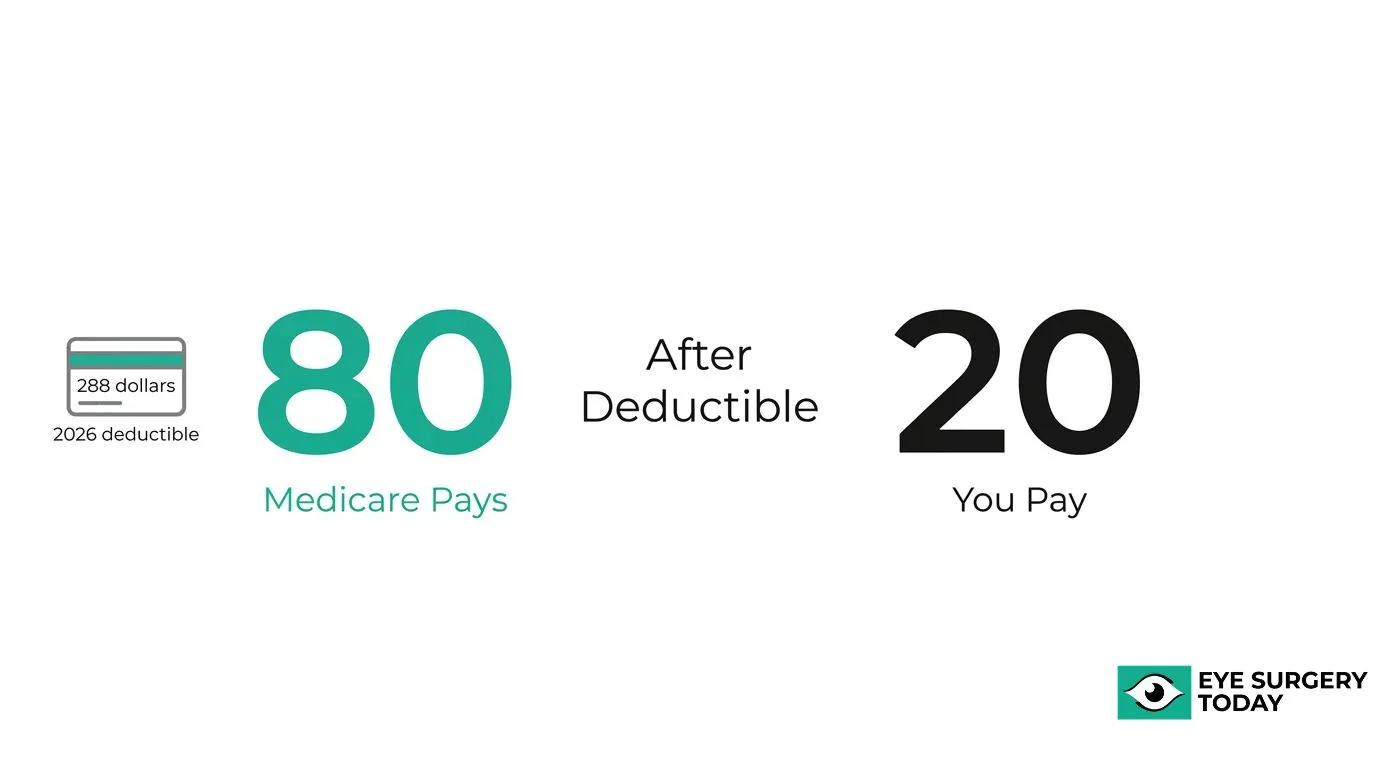
Medicare Part B covers qualifying surgeries at 80% of approved amounts after an annual deductible, while Medicaid coverage varies by state. Private plan differences between PPO, HMO, and high-deductible structures affect both access and cost-sharing obligations.
Practical cost-reduction strategies, including HSA and FSA contributions, provider financing programs, and insurance denial appeals (which succeed 30% to 78% of the time at independent review), can meaningfully lower what patients ultimately pay.
What Types of Eye Surgery Does Insurance Typically Cover?
Insurance typically covers eye surgeries classified as medically necessary, such as cataract removal, glaucoma procedures, retinal repair, corneal transplants, strabismus correction, and pterygium excision. The H3 sections below detail coverage criteria for each procedure.
Does Insurance Cover Cataract Surgery?
Yes, insurance does cover cataract surgery when it meets medical necessity criteria. Coverage applies when visual impairment is not correctable by glasses or other non-surgical measures and when the condition meaningfully limits daily function.
Under Medicare Part B, beneficiaries typically pay 20% of the Medicare-approved amount after meeting their annual deductible, according to Medicare.gov. Pre-operative testing, such as corneal topography for irregular astigmatism evaluation and intraocular lens power determination, may also be covered when medically justified. According to a study published in the Journal of Cataract & Refractive Surgery, 1.49% of eyes developed a complication at six months post-surgery, with severe adverse complications occurring in only 0.10% of cases, reflecting the procedure’s strong safety profile.
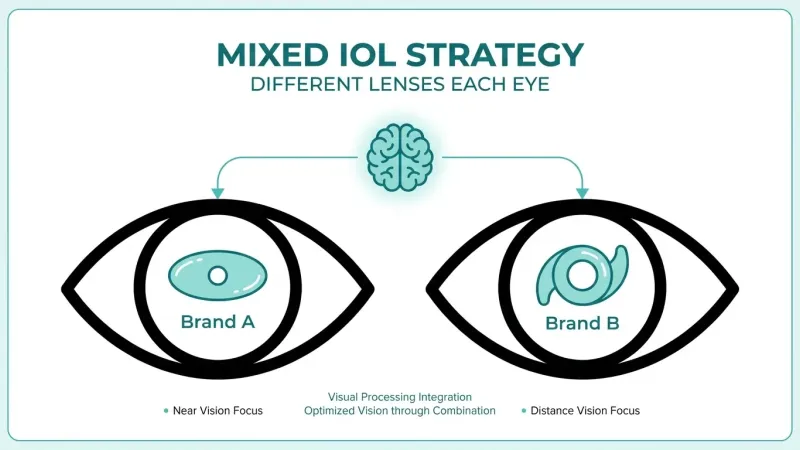
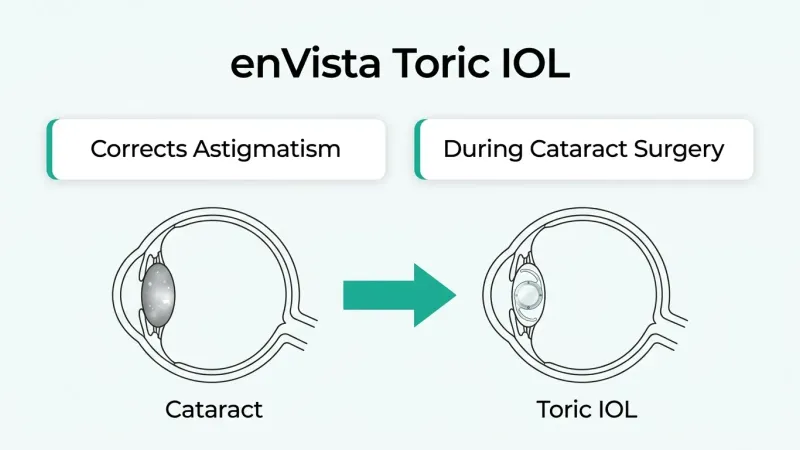
Private insurers follow similar medical necessity standards, though specific cost-sharing amounts vary by plan. Premium lens upgrades, such as multifocal or toric IOLs, are generally not covered and require out-of-pocket payment.
Does Insurance Cover Glaucoma Surgery?
Yes, insurance does cover glaucoma surgery when it is performed to manage medically uncontrolled intraocular pressure. Both Medicare and private insurers classify glaucoma procedures as medically necessary when conservative treatments such as eye drops or laser therapy have proven insufficient.
Aqueous drainage devices are covered when FDA-approved and used within their approved indications. Minimally invasive glaucoma surgeries (MIGS) may also qualify for coverage, though insurer policies vary widely on specific device approvals.
Does Insurance Cover Retinal Detachment Surgery?
Yes, insurance does cover retinal detachment surgery because it is considered a medical emergency that directly threatens vision. Most health insurance plans, including Medicare and Medicaid, cover surgical repair using techniques such as scleral buckling, vitrectomy, or pneumatic retinopexy.
Coverage applies broadly regardless of the surgical technique used, as anatomic success rates remain high across approaches. Prior authorization may be required by some private plans for non-emergency cases.
Does Insurance Cover Corneal Transplant Surgery?
Yes, insurance does cover corneal transplant surgery when it is performed to restore vision lost due to corneal disease, scarring, or conditions such as keratoconus or Fuchs’ dystrophy. Medicare Part B and most private health plans classify corneal transplantation as medically necessary when vision cannot be adequately corrected by other means.
Coverage typically includes the surgical procedure and hospitalization costs, though post-operative immunosuppressive medications may involve separate cost-sharing depending on the plan.
Does Insurance Cover Strabismus Surgery?
Yes, insurance does cover strabismus surgery in most cases, particularly when the misalignment causes functional impairment such as double vision or amblyopia. Because strabismus surgery restores binocular function rather than improving cosmetic appearance, insurers generally classify it as medically necessary.
Coverage applies to both children and adults, though some plans may require documented evidence of non-surgical treatment attempts before approving surgical intervention.
Does Insurance Cover Pterygium Surgery?
Yes, insurance does cover pterygium surgery when the growth impairs vision, causes significant discomfort, or threatens the cornea. Removal is classified as medically necessary under these conditions and is covered by Medicare and most private health plans.
When a pterygium is small and asymptomatic, insurers may deny coverage on the basis that removal is elective. Patients should obtain clinical documentation of functional impairment to support prior authorization requests.
What Types of Eye Surgery Does Insurance Typically Not Cover?
Insurance typically does not cover eye surgeries classified as elective, meaning procedures performed to improve convenience or appearance rather than to treat a medically necessary condition. The following sections cover why LASIK, PRK, and cosmetic eyelid procedures fall outside standard insurance coverage.
Why Is LASIK Usually Not Covered by Insurance?
LASIK is usually not covered by insurance because it is classified as an elective procedure rather than a medically necessary one. According to the American Academy of Ophthalmology, refractive surgery such as LASIK may be considered when a patient wishes to be less dependent on eyeglasses or contact lenses, but this desire does not meet insurers’ medical necessity criteria. Because corrective lenses can address the same refractive error, insurers view LASIK as a lifestyle choice rather than a required treatment. This classification places the full cost on the patient, which may partly explain why, according to Business Research Insights, around 41% of potential patients avoid LASIK due to high costs and perceived post-surgery complication risks.
Why Is PRK Usually Not Covered by Insurance?
PRK is usually not covered by insurance for the same fundamental reason as LASIK: it corrects refractive errors that can be managed with glasses or contact lenses, making it elective by insurer standards. The American Academy of Ophthalmology classifies refractive surgery broadly as a procedure sought for reducing dependence on corrective lenses, not for treating a medical condition. Although PRK is sometimes preferred over LASIK for patients with thinner corneas, this clinical distinction does not change its elective classification in the eyes of most insurance plans.
Why Are Cosmetic Eyelid Procedures Usually Not Covered?
Cosmetic eyelid procedures are usually not covered by insurance because they are performed primarily to alter appearance rather than restore function. Blepharoplasty, for example, is considered cosmetic when the goal is aesthetic improvement of drooping or puffy eyelids. Coverage may apply in limited cases where ptosis or excess skin demonstrably obstructs the visual field and impairs functional vision, but insurers require documented clinical evidence to approve such claims. Without that functional impairment documentation, the procedure remains elective and the full cost falls to the patient.
How Much Does Eye Surgery Cost Without Insurance?
Eye surgery costs without insurance vary significantly by procedure type. The sections below cover out-of-pocket costs for cataract, LASIK, glaucoma, and retinal surgery.
How Much Does Cataract Surgery Cost Without Insurance?
Cataract surgery cost without insurance typically ranges from $3,000 to $5,000 per eye for standard procedures, with premium intraocular lens upgrades pushing totals higher. Because cataract surgery is medically necessary for most patients, insurance or Medicare usually offsets a significant portion, making the full uninsured cost relatively uncommon. However, patients who are uninsured or underinsured face the full bill out of pocket.
For those concerned about affordability, many eye surgery providers offer 0% interest financing for up to 24 months through services like CareCredit. Cost anxiety is a genuine barrier: according to Business Research Insights, around 41% of potential patients avoid elective eye procedures due to high costs and perceived complication risks.
How Much Does LASIK Cost Without Insurance?
LASIK cost without insurance ranges from $1,500 to $5,000 per eye in 2026, according to data from Market Scope via lasik.com. The wide range reflects differences in technology, such as bladeless versus traditional LASIK, as well as surgeon experience and geographic location. Because LASIK is classified as elective, virtually no standard health insurance plan covers it, meaning patients always pay out of pocket.
How Much Does Glaucoma Surgery Cost Without Insurance?
Glaucoma surgery cost without insurance averages $5,000 to $11,000 per eye for incisional procedures, according to the Glaucoma Research Foundation. Less invasive options, such as minimally invasive glaucoma surgery (MIGS), may carry lower costs, while complex drainage device implantation falls at the higher end of this range. Since most glaucoma surgeries qualify as medically necessary, uninsured patients represent a small but financially exposed group.
How Much Does Retinal Surgery Cost Without Insurance?
Retinal surgery cost without insurance varies by procedure, with vitrectomy and retinal detachment repair typically ranging from $5,000 to $10,000 or more per eye. Costs depend on surgical complexity, facility type, and whether general or local anesthesia is used. Retinal conditions often require urgent intervention, which can limit a patient’s ability to compare prices or arrange financing in advance, making it one of the more financially challenging uninsured eye surgery scenarios.
How Much Does Eye Surgery Cost With Insurance?
Out-of-pocket eye surgery costs with insurance vary by procedure type, plan structure, and facility setting. The sections below cover typical patient expenses for cataract, glaucoma, and retinal surgery after insurance applies.
What Are Typical Out-of-Pocket Costs for Cataract Surgery?
Typical out-of-pocket costs for cataract surgery include your annual deductible, a 20% coinsurance on Medicare-approved amounts, and any applicable copays. Beyond surgeon and facility fees, patients should be aware that facility fees, historically associated with inpatient hospital stays, are increasingly being charged for outpatient ophthalmic procedures and can significantly raise total out-of-pocket expenses, according to NBC News. Premium intraocular lens upgrades, such as multifocal or toric IOLs, are also not covered by standard insurance and represent a common additional out-of-pocket expense.
What Are Typical Out-of-Pocket Costs for Glaucoma Surgery?
Typical out-of-pocket costs for glaucoma surgery depend on your deductible, coinsurance rate, and whether the procedure is performed in a hospital outpatient department or an ambulatory surgical center. Incisional glaucoma surgery can average $5,000 to $11,000 per eye without coverage, according to the Glaucoma Research Foundation, so even with insurance, patients with high-deductible plans may face substantial cost-sharing before coverage activates.
What Are Typical Out-of-Pocket Costs for Retinal Surgery?
Typical out-of-pocket costs for retinal surgery are shaped by your plan’s deductible, out-of-pocket maximum, and the surgical setting. Retinal procedures, including vitrectomy and scleral buckling, are generally covered as medically necessary, but patients are still responsible for deductible and coinsurance obligations. Reviewing your explanation of benefits before surgery is one of the most practical steps you can take to avoid unexpected billing.
Does Medicare Cover Eye Surgery?
Medicare covers eye surgery in 2026 when the procedure is deemed medically necessary. The sections below detail which surgeries qualify under Part B, what cost-sharing applies, and how premium lens upgrades are handled.
What Eye Surgeries Does Medicare Part B Cover?
The eye surgeries Medicare Part B covers include cataract removal, glaucoma procedures, retinal repair, and corneal transplants, provided each meets medical necessity criteria.
According to the Centers for Medicare and Medicaid Services, cataract surgery qualifies when visual impairment is not correctable by glasses and functional vision no longer meets the patient’s needs. Glaucoma aqueous drainage devices are covered when FDA-approved and used within their approved indications. Retinal detachment repair and corneal transplants similarly qualify under the medically necessary standard. The 2026 Part B annual deductible is expected to reach approximately $288, per U.S. News and World Report.
Notably, a proposed 11% reduction in Medicare reimbursement for cataract surgery in 2026 may affect which ophthalmology practices continue accepting Medicare assignment.
What Are Medicare Copays and Deductibles for Eye Surgery?
Medicare copays and deductibles for eye surgery follow the standard Part B cost-sharing structure. After meeting the $288 annual deductible, beneficiaries typically pay 20% of the Medicare-approved amount for covered surgical services, including the surgeon fee and related physician services, according to Medicare.gov.
Facility fees for outpatient surgical centers are billed separately and also subject to the 20% coinsurance. Beneficiaries without a Medigap supplement policy carry the full 20% exposure with no out-of-pocket cap.
Does Medicare Cover Premium Intraocular Lens Upgrades?
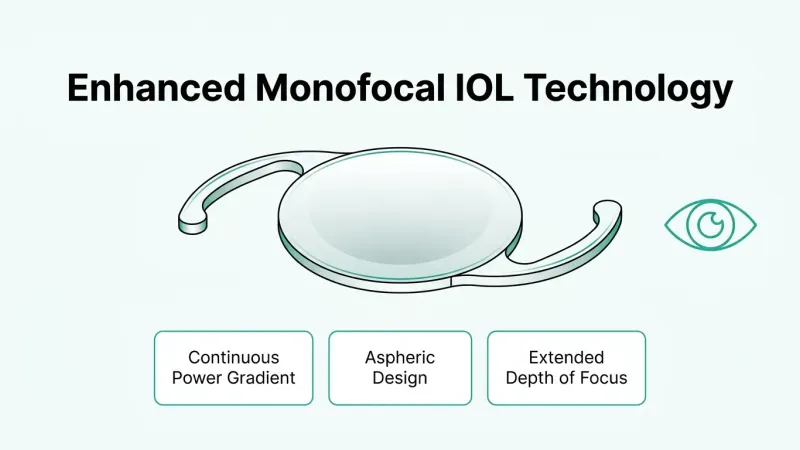
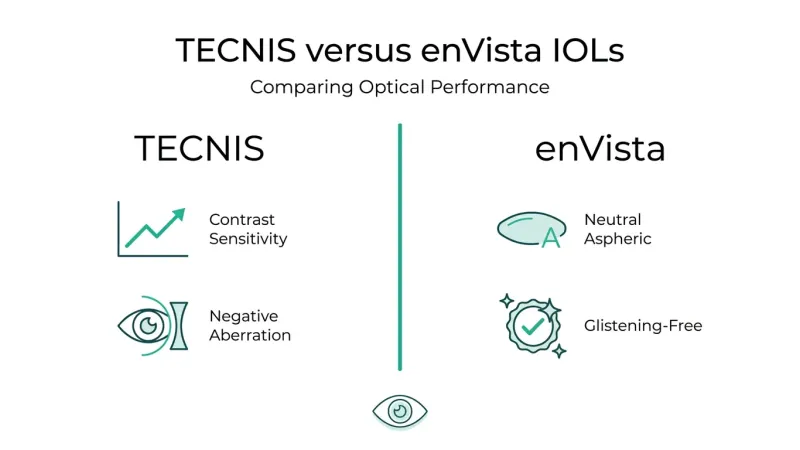
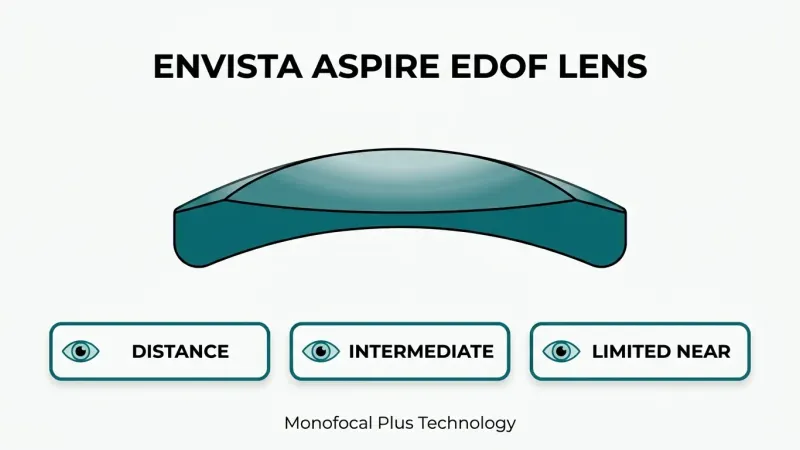
Medicare does not cover premium intraocular lens upgrades, such as multifocal or extended depth-of-focus IOLs. Standard coverage applies only to a basic monofocal lens. If a patient selects a premium IOL, Medicare pays its standard allowance for the covered portion of the procedure, and the patient pays the difference for the lens upgrade out of pocket. This makes lens selection one of the most significant cost decisions for Medicare beneficiaries undergoing cataract surgery.
Does Medicaid Cover Eye Surgery?
Medicaid coverage for eye surgery in 2026 varies by state, as federal law sets minimum requirements but allows each state to expand benefits. Medically necessary procedures generally qualify; elective surgeries typically do not.
Medicaid is a joint federal-state program, so covered eye surgeries differ significantly depending on where a patient lives. Most states cover procedures classified as medically necessary, such as cataract surgery, glaucoma surgery, and retinal detachment repair, when a physician documents that vision impairment cannot be corrected through non-surgical means. Cosmetic eyelid procedures and refractive surgeries like LASIK are almost universally excluded under Medicaid, as they are classified as elective rather than medically necessary.
For adults, coverage levels vary the most. Some states offer comprehensive adult vision and surgical benefits; others limit coverage to emergency or urgent care only. Children enrolled in Medicaid receive stronger protections through the Early and Periodic Screening, Diagnostic, and Treatment (EPSDT) mandate, which requires states to cover all medically necessary treatments, including eye surgery, regardless of whether the state’s adult plan includes it.
Prior authorization is typically required before any elective or semi-elective eye procedure under Medicaid. Patients should request written documentation from their ophthalmologist confirming medical necessity and submit it proactively to avoid claim denial.
In practice, Medicaid beneficiaries who need medically necessary eye surgery should contact their state Medicaid office directly to confirm current covered services, as benefit structures can change annually.
How Do Private Insurance Plans Differ in Eye Surgery Coverage?
Private insurance plans differ in eye surgery coverage based on plan type, network restrictions, referral requirements, and cost-sharing structures. The sections below cover how PPO, HMO, and high-deductible health plans each handle eye surgery benefits.
How Do PPO Plans Handle Eye Surgery Coverage?
PPO plans handle eye surgery coverage by allowing members to visit any licensed ophthalmologist or surgeon without a referral, whether in-network or out-of-network. In-network procedures typically cost less due to pre-negotiated rates, while out-of-network care is covered at a reduced reimbursement rate, leaving the patient responsible for a larger share. For medically necessary procedures such as cataract or glaucoma surgery, PPO plans generally apply standard deductibles and coinsurance after the claim is processed. This flexibility makes PPO plans a practical option for patients who want direct access to subspecialty eye surgeons without navigating a gatekeeper system.
How Do HMO Plans Handle Eye Surgery Coverage?
HMO plans handle eye surgery coverage by requiring members to obtain a referral from a primary care physician before seeing an ophthalmologist or proceeding with surgery. Coverage is typically limited to in-network providers, and care received outside the network is usually not reimbursed except in documented emergencies. Medically necessary eye surgeries, such as retinal repair or cataract removal, are covered when performed by an in-network surgeon following the referral pathway. Patients with HMO plans should confirm that their surgeon participates in the plan’s network before scheduling any procedure to avoid unexpected out-of-pocket costs.
How Do High-Deductible Health Plans Affect Eye Surgery Costs?
High-deductible health plans (HDHPs) affect eye surgery costs by requiring patients to pay all expenses out-of-pocket until the annual deductible is met, which can be substantial for surgical care. Once the deductible is satisfied, the plan’s standard coinsurance applies to covered procedures. A key benefit of HDHPs is eligibility for a Health Savings Account. According to the Internal Revenue Service, the 2026 HSA contribution limit for individual coverage is $4,400, which can be used tax-free toward qualifying eye surgery expenses, including medically necessary procedures. For patients planning surgery, maximizing HSA contributions before the procedure date can meaningfully reduce net out-of-pocket costs.
What Determines Whether Eye Surgery Is Medically Necessary?
Medical necessity for eye surgery is determined by whether the condition impairs visual function and cannot be corrected by non-surgical means. The H3 sections below cover the specific criteria insurers apply to cataract surgery and the documentation required for prior authorization.
What Criteria Do Insurers Use for Cataract Surgery Approval?
The criteria insurers use for cataract surgery approval center on functional visual impairment that glasses or contact lenses cannot adequately correct. According to the Centers for Medicare and Medicaid Services, cataract surgery is considered medically reasonable and necessary when visual function no longer meets the patient’s needs based on visual acuity and potential for functional benefit, and when the impairment is not correctable by non-surgical measures.
For complex cases, additional criteria apply. The American Academy of Ophthalmology notes that complex cataract surgery is medically necessary when a miotic pupil will not dilate sufficiently, requiring a mechanical iris expansion device such as a Malyugin ring to adequately visualize the lens.
By contrast, refractive procedures such as LASIK or PRK are generally classified as elective because they address a preference for reduced dependence on corrective lenses rather than a functional impairment. Understanding this distinction early can prevent claim denials before they occur.
What Documentation Do You Need for Prior Authorization?
The documentation needed for prior authorization typically includes records that directly substantiate medical necessity. Insurers generally require the following:
- Best-corrected visual acuity measurements demonstrating functional impairment.
- Clinical notes confirming that glasses or other non-surgical options have been tried or are insufficient.
- Operative complexity details, such as documentation of a miotic pupil or other anatomical findings, when billing for complex cataract surgery.
- Evidence that the proposed device or implant meets FDA-approved indications, particularly for procedures such as glaucoma aqueous drainage device implantation, where CMS requires FDA approval alignment for coverage.
Thorough, specific documentation is the single most important factor in securing authorization. Vague or incomplete records are the leading reason prior authorization requests are delayed or denied.
What Are the Hidden Costs of Eye Surgery Insurance May Not Cover?
The hidden costs of eye surgery insurance may not cover include facility fees, anesthesia charges, and post-operative medications or follow-up visits. Each of these expenses can add hundreds of dollars to your final bill even when the surgical procedure itself is covered.
What Facility Fees Should You Expect Beyond the Surgeon Fee?
Facility fees are separate charges billed by the hospital or surgical center where your procedure takes place, and they are distinct from the surgeon’s professional fee. According to NBC News, facility fees have traditionally been associated with inpatient hospital stays but are becoming increasingly common for outpatient ophthalmic procedures, where they can significantly raise out-of-pocket costs.
These fees cover operating room use, equipment, nursing staff, and sterile supplies. A procedure billed at a hospital-based outpatient department often carries a higher facility fee than the same procedure performed at an independent ambulatory surgical center. Patients are frequently surprised by facility fees because they arrive as a separate bill weeks after surgery.
Reviewing your Explanation of Benefits and asking the facility for an itemized estimate before your procedure date is one of the most practical steps you can take to avoid unexpected charges.
What Anesthesia Costs May Apply to Eye Surgery?
Anesthesia costs for eye surgery may apply as a separate line item billed by an independent anesthesiologist or certified registered nurse anesthetist, not the surgeon. Most cataract and other outpatient eye surgeries use topical or local anesthesia, but monitored anesthesia care (MAC) or sedation services can trigger additional anesthesia provider fees.
These costs depend on the duration of the procedure, the type of anesthesia used, and whether the anesthesia provider is in-network with your insurance plan. Out-of-network anesthesia billing is a frequent source of surprise charges, even when the surgeon and facility are both in-network. Confirming the anesthesia provider’s network status before surgery can prevent a significant billing gap.
What Are the Costs of Post-Operative Medications and Visits?
Post-operative medication costs for eye surgery typically include prescription antibiotic eye drops, anti-inflammatory eye drops, and sometimes steroid drops, all of which are usually required for several weeks following surgery. Insurance coverage for these medications varies widely by plan; some formularies exclude specific branded drops, leaving patients to pay full retail price.
Follow-up visits are another frequently overlooked expense. Standard post-operative care after cataract or retinal surgery generally involves visits at one day, one week, and one month. If these are billed under a facility fee structure rather than a standard office visit copay, costs can be higher than expected. Budgeting for both prescription fills and post-operative appointments before surgery helps prevent cost surprises during recovery.
How Can You Reduce Your Out-of-Pocket Eye Surgery Costs?
There are several practical ways to reduce out-of-pocket eye surgery costs, including tax-advantaged savings accounts, provider financing programs, and appealing insurance denials. The sections below cover each strategy in detail.
Can You Use an HSA or FSA for Eye Surgery Expenses?
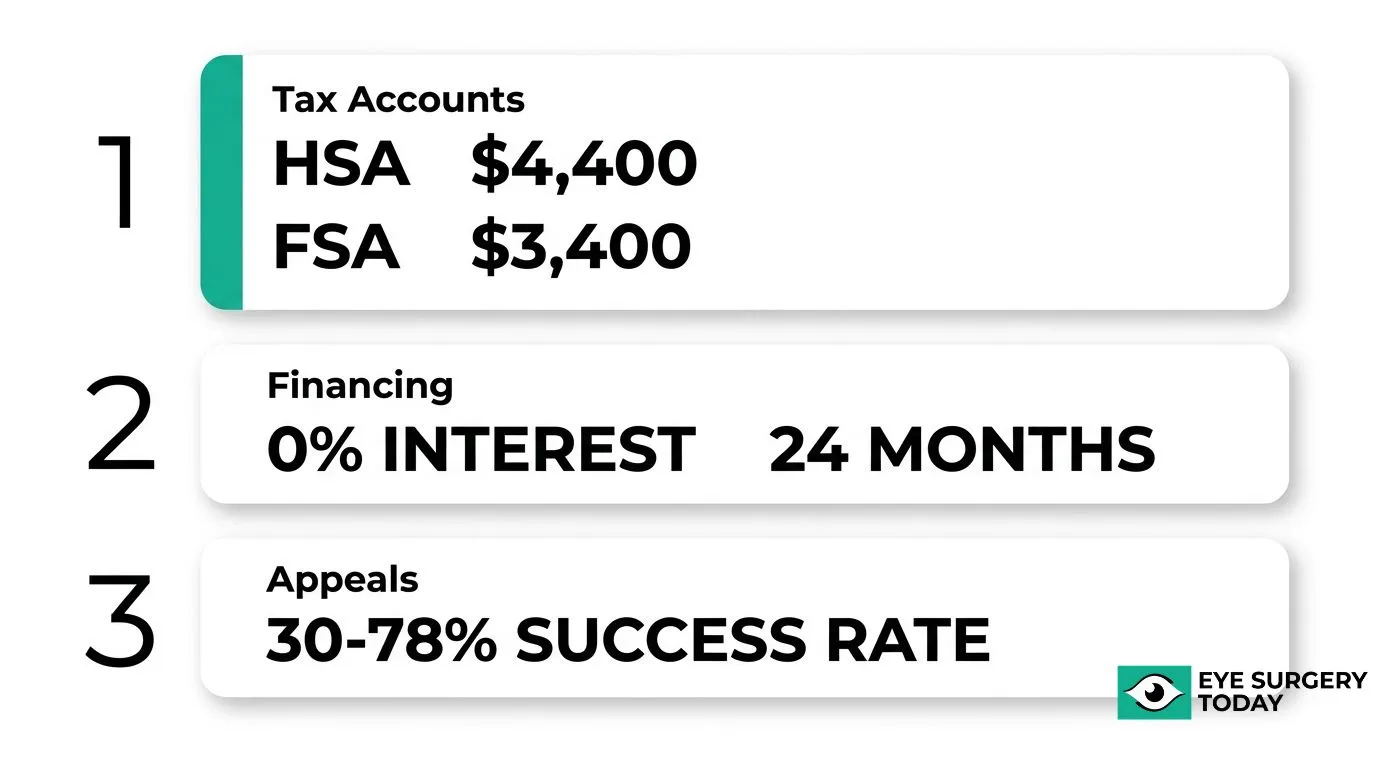
Yes, you can use an HSA or FSA for eye surgery expenses, including both medically necessary and many elective procedures such as LASIK. In 2026, the IRS set the HSA contribution limit for individual self-only coverage at $4,400, while FSA contribution limits increased to $3,400. Because these accounts use pre-tax dollars, they effectively reduce the real cost of surgery based on your marginal tax rate. For patients planning an elective procedure, maximizing contributions before the surgery date is one of the most straightforward ways to lower net costs.
Do Surgeons Offer Payment Plans or Financing Options?
Yes, surgeons and eye surgery centers commonly offer payment plans and financing options to help patients manage procedure costs. Many providers offer 0% interest financing for up to 24 months through services like CareCredit. This option is particularly relevant for elective procedures such as LASIK, which insurance typically does not cover. Patients should ask about financing eligibility during the initial consultation and compare terms carefully, since deferred-interest arrangements can carry significant charges if the balance is not paid in full before the promotional period ends.
Can You Appeal an Insurance Denial for Eye Surgery?
Yes, you can appeal an insurance denial for eye surgery, and doing so is often worthwhile. According to Vision Monday, persistence in appealing denied health insurance claims resulted in overturned decisions between 30% and 78% of the time in recent independent reviews. The appeal process typically involves submitting a letter of medical necessity from your surgeon, supporting clinical documentation, and a formal written appeal to the insurer. If the internal appeal fails, most states allow patients to request an independent external review. Given the reversal rates, filing an appeal is one of the highest-impact steps a patient can take after an initial denial.
What Risks Come With Choosing a Surgeon Based Only on Cost?
The risks of choosing a surgeon based only on cost include higher exposure to surgical complications, inadequate follow-up care, and outcomes that may require costly corrective procedures. Understanding the clinical stakes helps patients weigh price against safety more accurately.
What Do Complication Rates Reveal About Surgical Quality?
Complication rates reveal that even in high-quality academic settings, adverse outcomes do occur. According to a study published in the Journal of Cataract & Refractive Surgery, 1.49% of eyes developed a complication at 6 months post-cataract surgery, with 0.10% experiencing a severe adverse complication, in a study conducted at academic medical centers. These figures represent best-case benchmarks, achieved by experienced surgeons operating under rigorous protocols.
When cost is the sole selection criterion, patients may unknowingly accept care from less experienced providers or facilities with fewer quality controls, where complication rates may be higher than these benchmarks. A lower upfront price can lead to significantly greater long-term costs if revision surgery, extended medication use, or vision rehabilitation becomes necessary.
How Does Surgeon Experience Affect Eye Surgery Outcomes?
Surgeon experience directly affects eye surgery outcomes through technical proficiency, complication recognition, and intraoperative decision-making. Higher-volume surgeons who perform procedures routinely tend to manage unexpected anatomical challenges more effectively, such as a pupil that will not dilate sufficiently or irregular astigmatism requiring precise lens power calculation.
Patients prioritizing cost over credentials may select surgeons with limited case volumes, reduced access to advanced technology, or inadequate pre-operative evaluation protocols. These gaps in care quality are difficult to detect from a price quote alone, making independent credential verification and outcome transparency essential before any surgical commitment.
How Can You Make an Informed Decision About Eye Surgery Costs?
Making an informed decision about eye surgery costs requires understanding which procedures insurance covers, what out-of-pocket expenses to anticipate, and what financing tools are available. The sections below outline how Eye Surgery Today supports that process and summarize the article’s most actionable takeaways.
Can Eye Surgery Today Help You Understand Your Lens Options?
Yes, Eye Surgery Today can help you understand your lens options through surgeon-reviewed educational resources designed to translate complex clinical information into clear, accessible guidance. For patients navigating cataract surgery decisions, understanding the difference between a standard monofocal lens (typically covered by insurance) and a premium intraocular lens (typically an out-of-pocket upgrade) is one of the most consequential choices they will face. Eye Surgery Today’s educational articles, decision-making guides, and video content are built specifically to close that knowledge gap, empowering patients to ask the right questions before entering a surgeon’s office.
What Are the Key Takeaways About Eye Surgery Insurance and Costs?
The key takeaways about eye surgery insurance and costs are that coverage depends primarily on medical necessity, procedure type, and your specific plan’s rules. The most practical conclusions from this article are:
- Medically necessary procedures such as cataract surgery, glaucoma surgery, retinal surgery, and corneal transplants are generally covered by Medicare and private insurance, while elective refractive procedures like LASIK and PRK are typically not.
- Medicare Part B covers the base cost of cataract surgery, with patients responsible for a 20% coinsurance after meeting the annual deductible.
- Premium IOL upgrades, facility fees, anesthesia, and post-operative medications often represent significant hidden costs that insurance may not cover.
- HSAs (up to $4,400 in 2026) and FSAs (up to $3,400 in 2026) can offset out-of-pocket costs for both covered and elective procedures, per IRS guidelines.
- Appealing a denied claim is worth pursuing: according to Vision Monday, independent reviews overturned insurance denials between 30% and 78% of the time.
- Zero-interest financing plans through services like CareCredit, offered by many providers for up to 24 months, are a viable path for managing elective procedure costs.
Understanding these principles puts you in a stronger position to evaluate your options, prepare financially, and advocate for coverage when it is warranted.