The second eye feeling different after cataract surgery is a common, well-documented experience rooted in how the brain processes mismatched visual input, how each eye heals independently, and how patient psychology shifts between procedures. It is not typically a sign that something has gone wrong.
This guide covers the clinical causes behind asymmetric recovery, the visual and physical differences patients commonly notice, complication awareness and when to contact your surgeon, recovery timelines for both eyes, and the role that surgical timing and patient psychology play in shaping the experience.
Several biological factors drive the difference, including variations in cataract density between eyes, the type of intraocular lens implanted, and how the visual cortex adapts to reconciling two distinct image streams after staged surgery.
Patients frequently notice that colors, sharpness, and light sensitivity feel uneven between eyes. Physically, the second eye may feel drier, scratchier, or more pressured simply because it is at an earlier healing stage while the first eye has already settled.
While risks like inflammation, swelling, and infection apply to both procedures, they can present differently in the second eye depending on individual healing patterns and surgical energy used. Knowing which symptoms are normal asymmetry and which require urgent attention is essential for protecting your outcome.
Most patients reach functional visual balance within 4 to 12 weeks after the second surgery, though factors like persistent dry eye, residual inflammation, or mismatched lens types may extend that window. Heightened awareness from having already experienced one surgery can also amplify the perception of minor sensory differences, making preparation and realistic expectations valuable tools for a calmer recovery.
What Causes the Second Eye to Feel Different After Cataract Surgery?
The second eye feels different after cataract surgery because of several converging factors, including how the brain processes binocular input, how prior healing shapes expectations, cataract density differences, and the type of intraocular lens implanted. The following sections examine each cause in detail.
Why Does the Brain Perceive Each Eye Differently After Surgery?
The brain perceives each eye differently after surgery because it must reconcile two separate streams of visual input that may no longer match. Before surgery, both eyes shared similarly degraded vision. Afterward, one eye receives crisp new imagery while the other still processes through a cataract or a recently healed lens, creating a conflict the visual cortex must resolve. According to MDPI Optics, excessive interocular difference can disrupt binocular fusion, resulting in rivalry, discomfort, or binocular inhibition when the cortex struggles to merge mismatched signals. This neurological adjustment period is a normal part of staged bilateral cataract surgery, not a sign that something has gone wrong.
How Does the First Eye’s Healing Influence Second Eye Expectations?
The first eye’s healing raises the bar for what the second eye is expected to deliver. Patients who experienced a smooth recovery and clear vision in the first eye often enter the second surgery with heightened expectations, making minor sensory differences feel more pronounced. According to the American Academy of Ophthalmology, patients generally report less anxiety before their second cataract surgery but hold higher expected visual outcomes than before the first, which can amplify the perception of small sensory differences. This psychological priming means the second eye is evaluated against a live internal benchmark rather than the pre-surgical baseline.
Can Differences in Cataract Density Affect How Each Eye Recovers?
Yes, differences in cataract density can affect how each eye recovers, because denser cataracts require more surgical energy to remove. According to a study published in the MDPI Journal of Clinical Medicine, cataract severity and lens hardness are critical pre-operative planning factors, as cumulative dissipated energy during phacoemulsification is significantly higher for advanced nuclear sclerosis grades compared to milder ones. Greater energy use means more intraocular disruption, a longer inflammatory response, and a slower visual recovery curve. If one eye had a denser cataract than the other, the post-operative experience between the two eyes will naturally differ in both timeline and intensity.
Does the Type of Intraocular Lens Implanted Change the Experience?
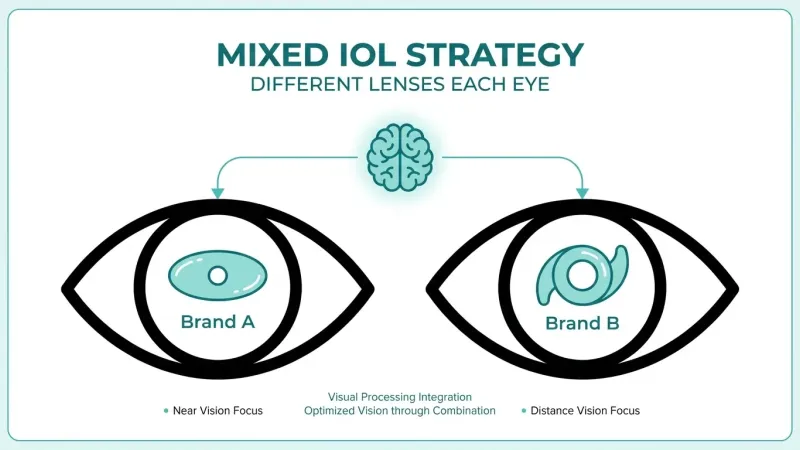
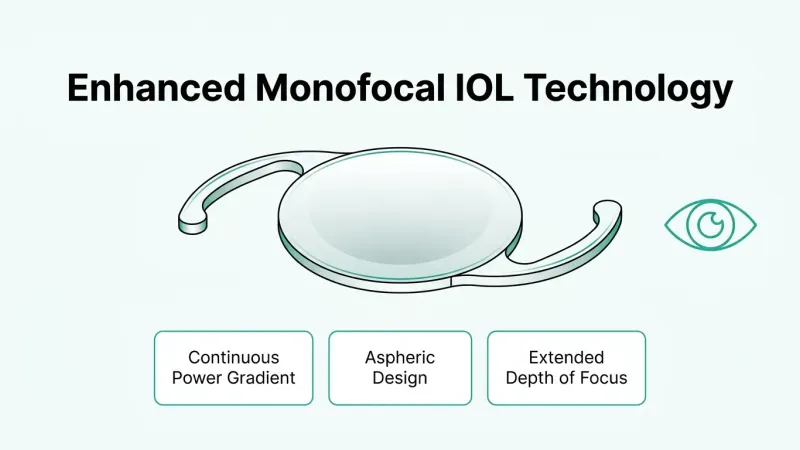
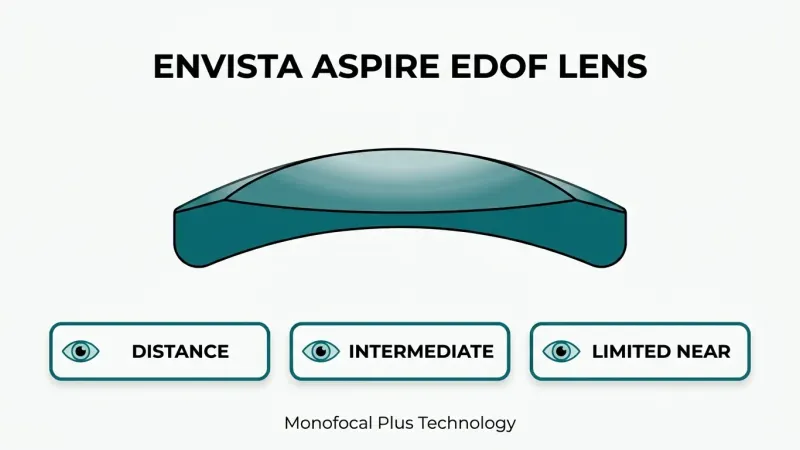
Yes, the type of intraocular lens implanted can significantly change the post-operative experience. Different IOL designs split incoming light differently, and when each eye holds a different lens type, the brain must adapt to reconciling those distinct images. The American Academy of Ophthalmology describes neuroadaptation as the process by which the brain’s visual cortex develops new neurocircuitry to process information from multifocal IOLs, overriding the natural “one eye, one image” construct of binocular vision. Monofocal lenses create fewer adaptation demands than trifocal or extended depth-of-focus designs. When lens types differ between eyes, the neuroadaptation load increases, making the second eye’s recovery feel meaningfully different from the first.
What Visual Differences Are Common Between the First and Second Eye?
Visual differences between the first and second eye after cataract surgery are common and can involve color perception, sharpness, and light sensitivity. Because patients enter the second surgery with higher expectations, even minor sensory gaps between eyes tend to feel more pronounced.
Why Might Colors Look Different Between the Operated Eyes?
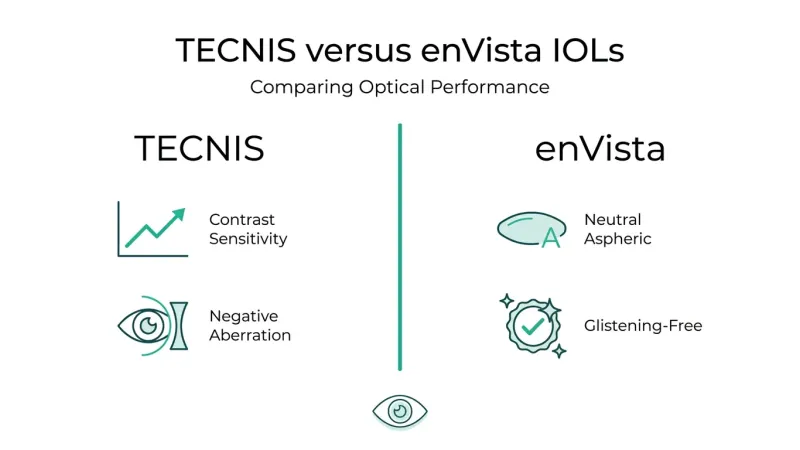
Colors may look different between operated eyes when the two eyes receive different intraocular lens types. According to a study published in the Journal of Ophthalmic and Vision Research, blue-light-filtering (BLF) IOLs negatively affect contrast acuity and blue/yellow foveal threshold compared with UV-filtering IOLs, meaning that implanting different lens types in each eye can create noticeable color perception asymmetry. This is one reason surgeons typically plan bilateral implantation with matched lens families when possible.
Why Does One Eye Feel Sharper or Blurrier Than the Other?
One eye may feel sharper or blurrier than the other because each eye heals at its own pace and carries its own pre-operative characteristics. Differences in cataract density, surgical energy used during phacoemulsification, and the residual refractive target for each eye all influence how quickly usable vision stabilizes. The brain also takes time to integrate two slightly different images into one coherent picture, which can make the less-healed eye feel persistently soft or out of focus even when no clinical abnormality exists.
Can Light Sensitivity Differ Between the First and Second Eye?
Yes, light sensitivity can differ between the first and second eye, and heightened awareness largely explains why the second eye often seems more sensitive. A Duke Health study of 274 patients found that 63.3% remembered more intra-operative events from their second eye surgery compared to only 8.4% for their first, suggesting that greater conscious attention during and after the procedure amplifies the perception of symptoms like glare and photophobia. Shortening the interval between surgeries has also been associated with improved mental health outcomes in a large-scale study of over 580,000 patients, which may reflect reduced anxiety-driven symptom amplification.
Why Does the Second Eye Sometimes Feel Worse Initially?
The second eye sometimes feels worse initially because the first eye has already adapted, making any imperfection in the second eye easier to notice by comparison. Patients carry higher visual expectations into the second procedure, and even typical post-operative fluctuations can feel disproportionately significant against the benchmark set by the recovering first eye. Residual inflammation, early dry eye, and the natural variation in healing trajectory all contribute to this asymmetry, which typically resolves as both eyes stabilize and binocular vision integrates fully.
What Physical Sensations May Differ in the Second Eye After Surgery?
Physical sensations after cataract surgery can vary between eyes due to differences in healing stage, inflammation levels, and tear film stability. The H3s below cover why the second eye may feel more irritated or dry, whether pressure or discomfort can differ, and why scratchiness is common during second-eye healing.
Why Might the Second Eye Feel More Irritated or Dry?
The second eye may feel more irritated or dry because it is at an earlier healing stage while the first eye is already further along recovery. Cataract surgery disrupts corneal nerves and the ocular surface, temporarily reducing tear production and sensation. Because both eyes are rarely operated on the same day, the second eye enters recovery while the patient is already sensitized to subtle discomfort from comparing it to the more settled first eye. This heightened awareness can make normal post-surgical dryness feel more pronounced, even when the underlying physiology is similar.
Can Pressure or Discomfort Vary Between Eyes After Surgery?
Yes, pressure or discomfort can vary between eyes after surgery, and dry eye is a common contributing factor. According to a study published in the Journal of Ophthalmic and Vision Research, 64.3% of eyes experience mild dry eye after cataract surgery, with significant differences in tear break-up time observed at one week, one month, and three months postoperatively compared to baseline. Residual inflammation, varying intraocular pressure fluctuations, and differences in how each eye’s ocular surface responds to surgical trauma can all produce a noticeably different pressure or aching sensation between eyes.
Why Does the Second Eye Sometimes Feel Scratchier During Healing?
The second eye sometimes feels scratchier during healing because corneal surface disruption and suture-related micro-irritation are acute in the early postoperative period. The surgical incision, even when small, disturbs the epithelial surface and temporarily impairs the blink reflex’s ability to distribute tears evenly. With the first eye already smoothing out, patients are more alert to these textures in the second eye. Lubricating eye drops can help reduce this scratchiness while the corneal surface re-stabilizes.
Does the Second Eye Surgery Carry Different Risks or Complications?
The second eye surgery carries largely similar risks to the first, but certain complications, including inflammation, swelling, and infection, can present differently depending on healing history and individual response. The following sections cover how inflammation, infection risk, and swelling may each vary in the second eye.
Can Inflammation Be Greater in the Second Eye?
Inflammation can be greater in the second eye in some cases, though this depends largely on the individual’s inflammatory response and surgical factors. Anterior chamber flare, which indicates blood-aqueous barrier breakdown, correlates with the risk of developing cystoid macular edema (CME) one month after cataract surgery, according to research published in Clinical Ophthalmology. Patients with a pronounced inflammatory response in the first eye may be more closely monitored before the second procedure. In practice, this pattern suggests that surgeons managing second-eye cases should assess first-eye healing before proceeding.
Is Infection Risk Higher or Lower for the Second Eye Procedure?
Infection risk for the second eye procedure is not inherently higher or lower than for the first. Each surgery is an independent, sterile procedure, and standard precautions, including antiseptic preparation and prophylactic antibiotics, apply equally to both eyes. Sudden vision loss or severe pain after either surgery may indicate endophthalmitis, a serious infection requiring rapid evaluation by an eye specialist.
Why Might Swelling Differ Between the Two Eyes?
Swelling may differ between the two eyes because cataract density and surgical energy delivery vary from eye to eye. Harder, more advanced cataracts require higher cumulative dissipated energy (CDE) during phacoemulsification, which can increase post-operative tissue irritation and swelling compared to softer lenses. Additionally, a majority of eyes (64.3%) experience mild dry eye after surgery, with measurable tear break-up time differences persisting at one week, one month, and three months post-operatively, according to a study published in the Journal of Ophthalmic and Vision Research. These combined factors make asymmetric swelling between the two eyes a common and expected finding.
How Long Does It Take for Both Eyes to Feel the Same?
The time it takes for both eyes to feel the same varies by patient, but most reach functional balance within 4 to 12 weeks after the second surgery. The sections below cover the visual imbalance window, full adjustment timelines, and factors that can extend recovery.
How Long Does Visual Imbalance Last Between Surgeries?
Visual imbalance between surgeries typically lasts from the moment the first eye is operated on until the second eye has had time to stabilize, a window that can span several weeks. During this interim period, the two eyes are at different stages of healing, which means contrast, sharpness, and color perception may not match. Surgeons commonly delay the second procedure by one to four weeks, allowing the first eye to heal and its refractive outcome to inform IOL power selection for the second eye.
When Should Both Eyes Feel Fully Adjusted After the Second Surgery?
Both eyes should feel fully adjusted within 4 to 12 weeks after the second surgery for most patients. According to a study published in Ophthalmic and Physiological Optics, while refractive stabilization can occur within one week for some patients, only 4.3% reach full stability that early, with the majority requiring 4 to 12 weeks for functional vision recovery. The brain also needs time to reconcile input from two newly implanted lenses, particularly with multifocal or trifocal IOLs, where neuroadaptation extends the adjustment timeline.
What Delays Equal Vision Between the Two Eyes?
Several factors can delay equal vision between the two eyes, including persistent dry eye, residual inflammation, IOL type mismatch, and anisometropia. Dry eye affects healing surface quality in both eyes at different rates. Inflammation, specifically elevated anterior chamber flare, may increase the risk of cystoid macular edema, which can impair one eye’s recovery longer than the other’s. If different IOL types are implanted in each eye, such as a blue-light-filtering lens in one and a UV-filtering lens in the other, contrast and color balance may remain asymmetric beyond the standard recovery window.
When Should You Contact Your Surgeon About Second Eye Symptoms?
Knowing when symptoms signal a complication versus normal healing can protect your vision after second eye cataract surgery. The H3s below cover urgent red flags and how to distinguish normal asymmetry from a true complication.
What Symptoms After Second Eye Surgery Require Urgent Attention?
The symptoms after second eye surgery that require urgent attention include sudden vision loss, severe eye pain, and the appearance of dark shadows or floaters. These may indicate serious complications such as endophthalmitis or internal bleeding, both of which require rapid evaluation by an eye specialist.
According to Refocus Eye Doctors, sudden vision loss, severe pain, or dark shadows after cataract surgery are red flag symptoms that may indicate internal bleeding or endophthalmitis.
Other symptoms warranting same-day contact with your surgeon include:
- Significant worsening of vision after an initial period of improvement
- Increasing redness not explained by normal post-operative inflammation
- Pronounced light flashes or a sudden increase in new floaters
- Discharge that suggests possible infection
Any of these symptoms should never be dismissed as routine healing variation. Acting promptly on red flags is the single most important step a patient can take to protect their surgical outcome.
How Do You Distinguish Normal Asymmetry From a Complication?
Normal asymmetry between the two eyes is expected in the weeks following second eye cataract surgery, while a complication typically involves rapid deterioration, pain, or vision loss rather than gradual, stable differences. Research indicates that most patients take 4 to 12 weeks to reach full visual stabilization, meaning mild interocular differences in sharpness, brightness, or color during this window are generally not cause for alarm.
Normal asymmetry typically includes:
- Mild differences in brightness or color tone between the two eyes
- Slightly unequal sharpness that improves progressively week over week
- Temporary fluctuations in focus, particularly in the first month
A complication, by contrast, involves symptoms that are sudden, worsening, or painful rather than stable and improving. If the second eye feels markedly worse than the first eye did at the same recovery stage, or if symptoms intensify rather than resolve, contacting your surgeon is the appropriate course of action.
Why Does the Timing Between First and Second Eye Surgery Matter?
The timing between first and second eye surgery matters because it directly shapes patient perception, psychological readiness, and the accuracy of surgical planning for the second procedure. Surgeons commonly delay the second operation by one to four weeks, allowing the first eye to heal and its refractive outcome to inform the IOL power calculation for the second eye.
Beyond clinical logistics, awareness also plays a role. According to a Duke Health study of 274 patients, 63.3% remembered more intra-operative events from their second eye surgery compared to only 8.4% for their first, often causing patients to incorrectly perceive the second procedure as longer or more complicated. This heightened recall is not a sign of a worse experience; it reflects greater alertness, not greater risk.
From a mental health standpoint, a shorter interval between surgeries may be beneficial. A large-scale cohort study found that reducing the time between first and second eye cataract operations had a positive impact on mental health outcomes across more than 580,000 patients.
Understanding this timing removes unnecessary worry and helps patients approach the second surgery with realistic, well-grounded expectations.
Can Anxiety or Heightened Awareness Affect How the Second Eye Feels?
Yes, anxiety and heightened awareness can affect how the second eye feels after cataract surgery. Because patients have already experienced the first surgery, they enter the second procedure with sharper expectations and closer self-monitoring, which amplifies the perception of sensations that might otherwise go unnoticed.
According to the American Academy of Ophthalmology, patients generally report less anxiety going into their second cataract surgery but maintain higher expected visual outcomes than before the first surgery, which can amplify the perception of minor sensory differences. This psychological dynamic creates a feedback loop: the closer a patient scrutinizes their recovery, the more acutely they register discomfort, blur, or asymmetry between the two eyes.
Heightened awareness is not a flaw in recovery; it is a predictable response to lived experience. Patients who understand this cognitive pattern tend to interpret second-eye symptoms more accurately rather than catastrophizing normal variation. Framing sensory differences as expected rather than alarming is one of the most practical steps toward a calmer, clearer recovery.
How Can You Prepare for a Different Experience With the Second Eye?
You can prepare for a different experience with the second eye by setting realistic expectations, communicating openly with your surgeon, and understanding the biological reasons why the two surgeries feel distinct. Surgeons commonly delay the second procedure by one to four weeks, using the first eye’s refractive outcome to refine IOL power calculations for the second.
Key preparation strategies include:
- Expect heightened awareness. According to the American Academy of Ophthalmology, patients entering second eye surgery carry higher visual expectations than before their first, which can amplify the perception of even minor sensory differences.
- Understand psychological recall differences. A study of 274 patients found that 63.3% remembered more intraoperative events from their second surgery compared to only 8.4% for their first, often leading to an incorrect perception that the second surgery was longer or more difficult.
- Ask about IOL matching. If different lens types are implanted in each eye, color and contrast perception may vary between eyes. Discussing IOL selection before the second surgery reduces the risk of unexpected asymmetry.
- Plan for a potentially different recovery pace. Cataract density, prior inflammation, and dry eye responses can all differ between eyes, meaning healing timelines may not mirror each other.
- Prepare mentally, not just physically. Knowing in advance that the second eye will not necessarily feel identical to the first removes a significant source of post-operative confusion and distress.
How Should You Approach Second Eye Recovery With Trusted Guidance?
Approaching second eye recovery well requires setting realistic expectations and knowing where to turn for reliable, surgeon-reviewed information. The sections below cover how an educational platform can support you and what the key takeaways are from this topic.
Can a Surgeon-Reviewed Educational Platform Help You Understand What to Expect?
Yes, a surgeon-reviewed educational platform can help you understand what to expect from second eye recovery by translating complex clinical realities into clear, accessible guidance. According to a study published in Wiley’s Ophthalmic and Physiological Optics, only 4.3% of patients achieve full refractive stabilization within one week, with most requiring 4 to 12 weeks for functional vision recovery. Without that context, patients may misinterpret normal delayed stabilization as a complication. Eye Surgery Today provides surgeon-reviewed content designed to bridge exactly this knowledge gap, helping patients recognize the difference between expected variation and genuine red flags before, during, and after both procedures.
What Are the Key Takeaways About Why the Second Eye Feels Different After Cataract Surgery?
The key takeaways about why the second eye feels different after cataract surgery involve several intersecting clinical factors. Anisometropia, found in 7.56% of cataractous patients in a population study, can create significant binocular imbalance if aniseikonia exceeds 5%. Separately, anterior chamber flare values correlate with the risk of developing cystoid macular edema one month post-surgery, according to research published via ResearchGate in the Journal of Cataract and Refractive Surgery. Together, these factors explain why the second eye’s recovery trajectory often diverges from the first. Understanding them removes unnecessary anxiety and supports better-informed conversations with your surgical team.