Halos and glare after cataract surgery are unwanted visual phenomena caused by the way light interacts with an implanted intraocular lens (IOL). Most patients experience some degree of these symptoms in the early postoperative period, though persistent cases affect only a small percentage at one year.
This guide covers the optical mechanisms behind post-surgical light disturbances, how different IOL types compare in photic side effect profiles, expected recovery timelines and neuroadaptation, risk factors for persistent symptoms, and available treatment options.
Light disturbances arise from several specific sources, including internal reflections off the IOL edge, posterior capsule opacification, corneal edema, and pupil dilation in low-light conditions. Each mechanism produces a distinct type of visual artifact, from defined rings to diffuse brightness to radiating rays.
IOL selection is the single largest factor influencing halo and glare burden. Trifocal lenses may generate the most photic phenomena due to their multiple diffractive zones, while EDOF lenses typically produce fewer symptoms through an elongated focal point design. Monofocal lenses carry the lowest risk overall but require glasses for certain tasks.
For the majority of patients, neuroadaptation progressively reduces perceived halos over 6 to 12 months as the visual cortex adjusts to competing focal points. Factors such as large pupil size, pre-existing dry eye, residual astigmatism, and angle kappa may extend this timeline or increase symptom persistence.
When symptoms do not resolve, interventions ranging from miotic eye drops and YAG laser capsulotomy to IOL exchange can provide meaningful relief for most affected patients.
What Are Halos and Glare After Cataract Surgery?
Halos and glare after cataract surgery are unwanted visual phenomena caused by the way light interacts with an implanted intraocular lens (IOL). The sections below define how each disturbance appears, how they differ from one another, and how starbursts compare to both.
How Do Halos Appear in Your Vision After Surgery?
Halos appear in your vision after surgery as luminous rings that seem to encircle light sources, such as streetlights or oncoming headlights, particularly in low-light conditions. They fall under the clinical category of positive dysphotopsia, meaning they are bright rather than dark artifacts. According to a systematic review published by the University Medical Centre Ljubljana, up to 67% of patients experience positive dysphotopsia immediately after surgery, though symptoms persist in only approximately 2.2% of cases at one year postoperatively. This sharp decline suggests that for the vast majority of patients, halos are a short-term adjustment rather than a permanent outcome.
How Does Glare Differ From Halos Post-Operatively?
Glare differs from halos in that it presents as a broad wash of excess brightness rather than a defined ring shape. Clinically, glare is the sensation produced when luminance within the visual field is sufficiently greater than the luminance to which the eyes are adapted, often caused by the high refractive index and reflectance of the IOL itself. While halos form a structured circular pattern around a light source, glare is more diffuse and typically worsens in bright environments such as oncoming traffic or sunlit rooms.
What Do Starbursts Look Like Compared to Halos?
Starbursts look like rays of light radiating outward from a central source, resembling a starburst or sunburst pattern, whereas halos form a complete ring encircling that same source. Both are classified as positive dysphotopsia, which encompasses bright artifacts such as arcs, streaks, starbursts, rings, and halos occurring centrally or mid-peripherally, according to EyeWiki. A key distinction in severity comes from lens choice: a study published in Scientific Reports found that trifocal IOLs are 32% more likely to generate halos compared to hybrid multifocal-EDOF lenses, despite delivering superior near visual acuity. This trade-off is one of the most clinically relevant factors patients and surgeons must weigh together.
Why Do Halos and Glare Occur After Cataract Surgery?
Halos and glare occur after cataract surgery due to several optical and anatomical factors, including IOL edge design, posterior capsule changes, corneal swelling, and pupil behavior in low light. The following sections explain each mechanism in detail.
How Does the IOL Edge Create Light Disturbances?
The IOL edge creates light disturbances by acting as an internal reflective surface within the eye. A sharp, truncated IOL optic edge design increases the probability of internal reflections that project as a thin, ring-like image onto the midperipheral retina, causing positive dysphotopsia, according to a study published in the Journal of Cataract and Refractive Surgery. While this edge geometry is effective at preventing posterior capsule opacification, it introduces a structural trade-off. For patients with premium lenses, this optical side effect is a predictable consequence of modern IOL engineering rather than a surgical error.
How Does Posterior Capsule Opacity Cause Glare?
Posterior capsule opacification (PCO) causes glare by scattering incoming light before it reaches the retina. The accumulation of vacuoles and differentiated lens epithelial cells, known as Wedl cells, on the posterior capsule reduces contrast sensitivity and increases light scatter. Monofocal IOLs remain the gold standard for minimizing photic phenomena, as they lack the diffractive rings or refractive zones found in premium lenses that cause light splitting and associated glare. PCO-related glare is clinically distinct from IOL-related dysphotopsia and is treatable with Nd:YAG laser capsulotomy.
How Does Residual Corneal Edema Contribute to Halos?
Residual corneal edema contributes to halos by disrupting the regular arrangement of corneal stromal collagen fibers, which causes forward light scatter. During the early postoperative period, surgical trauma can cause temporary fluid retention within the corneal stroma. This swelling alters the cornea’s transparency, producing diffuse halos around light sources. As the corneal endothelium pumps out excess fluid over days to weeks, transparency is restored and halo perception typically diminishes. Edema-related halos are almost always transient and resolve without intervention as the cornea heals.
How Does Pupil Size Affect Halos and Glare at Night?
Pupil size affects halos and glare at night because larger pupils in scotopic conditions allow more peripheral light rays to strike the IOL edge or pass through the diffractive rings of multifocal lenses, intensifying halos and glare, according to research published in the Journal of Refractive Surgery. This explains why night-time driving is disproportionately affected compared to daytime conditions. Miotic drops, such as brimonidine or low-dose pilocarpine, may alleviate night-time glare by reducing pupil diameter and blocking peripheral light rays from reaching the IOL edge, making them a practical short-term management option for symptomatic patients.
Are Halos and Glare Normal After Cataract Surgery?
Halos and glare after cataract surgery are normal in the early recovery period, with the majority of cases resolving within weeks to months. The following sections cover what is expected in the first few weeks, which symptoms warrant concern, and how often halos persist beyond three months.
Are Halos Normal in the First Few Weeks After Surgery?
Yes, halos are normal in the first few weeks after surgery. The eye is still adjusting to its new intraocular lens, and the surrounding tissues remain mildly inflamed, both of which scatter light and produce ring-like artifacts around bright sources. This phase is part of standard post-operative healing and is expected across all IOL types, including monofocal lenses.
According to a systematic review published by the University Medical Centre Ljubljana, up to 67% of patients experience positive dysphotopsia immediately after surgery. The sheer prevalence of early halos means experiencing them is far more common than not, and patients should not interpret them as a sign of surgical error during this window.
When Do Post-Surgical Halos Become a Concern?
Post-surgical halos become a concern when they persist beyond three months without improvement, worsen over time, or significantly impair daily activities such as night driving. Symptoms that follow this pattern may indicate a specific underlying cause rather than routine healing.
The conditions most likely to cause persistent or worsening halos include:
- Posterior capsule opacification (PCO): Progressive clouding that develops weeks to months post-operatively and intensifies light scatter.
- Residual refractive error: Uncorrected astigmatism of even 0.50 to 0.75 diopters can substantially amplify perceived halos, particularly with premium IOLs.
- IOL decentration: Displacement of the lens from the visual axis disrupts how light passes through diffractive or refractive zones.
- Dry eye disease: Tear film instability increases corneal aberrations, creating irregular light scatter.
Any sudden increase in halos or glare, especially combined with pain or reduced central vision, warrants prompt surgical review.
How Common Are Persistent Halos Beyond Three Months?
Persistent halos beyond three months are uncommon. While early dysphotopsia affects the majority of patients, the proportion experiencing ongoing symptoms at one year is markedly lower.
A systematic review cited by PMC (Cureus) found that negative dysphotopsia affected 15% to 26% of patients in the first postoperative week, but persistent symptoms at one year ranged from only 0.13% to 3.2%. For positive dysphotopsia, the same evidence base showed symptoms persisting in approximately 2.2% of patients at one year. These figures confirm that neuroadaptation and tissue healing resolve the vast majority of early photic complaints within three to twelve months.
Patients who receive multifocal or trifocal IOLs may experience a longer adaptation window compared to those with monofocal lenses, given the added complexity of multiple focal points for the visual cortex to process.
Which IOL Types Are More Likely to Cause Halos and Glare?
Not all intraocular lenses carry the same risk of halos and glare. The IOL types most likely to cause these symptoms are multifocal and trifocal lenses, followed by EDOF lenses, with monofocal lenses presenting the lowest risk overall.
Multifocal IOLs
Multifocal IOLs are among the lens types most associated with halos and glare after cataract surgery. These lenses use concentric diffractive rings to split incoming light into multiple focal points, simultaneously creating focused and defocused images on the retina. The defocused image is the direct source of the characteristic halo ring patients report around lights, particularly at night.
The first FDA-approved multifocal lens entered use in 1997, and the technology has evolved considerably since. Functional MRI research published via SpringerLink shows that neuroadaptation to multifocal IOLs involves measurable changes in visual cortex activity, as the brain learns to suppress defocused images over time. For most patients, this adaptation reduces perceived halos significantly within several months, though the underlying optical trade-off remains.
Extended Depth of Focus IOLs
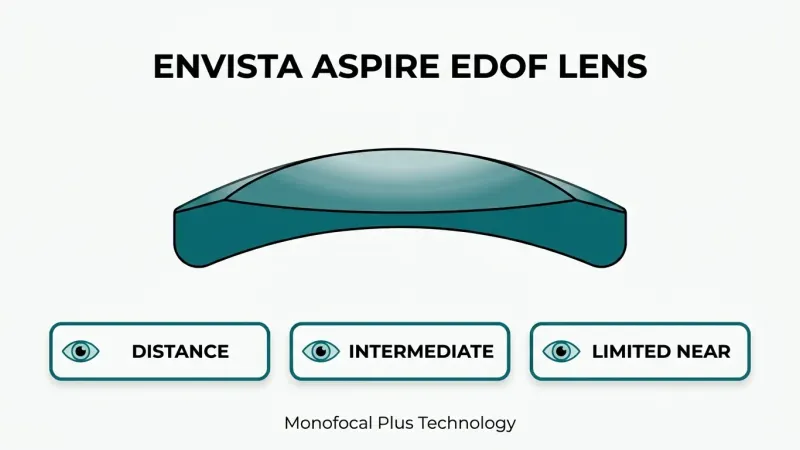
Extended depth of focus (EDOF) IOLs produce a lower incidence of starbursts and halos compared to trifocal IOLs. Rather than splitting light into discrete near, intermediate, and distance focal points, EDOF lenses create a single elongated focal point, which reduces the intensity of light-splitting artifacts. According to a comparative analysis published in Eye (Nature), this single-continuum focal design is responsible for the improved photic phenomenon profile relative to trifocals.
Trifocal IOLs
Trifocal IOLs carry the highest halo and glare burden among current premium lens options. A study published in Scientific Reports (Nature) found that trifocal IOLs are 32% more likely to generate halos compared to hybrid multifocal-EDOF lenses, despite delivering superior near visual acuity. The three discrete focal zones require greater light redistribution, increasing the proportion of defocused light reaching the retina. For patients who prioritize complete spectacle independence, this trade-off is often considered acceptable, but it warrants explicit discussion before surgery.
Monofocal IOLs
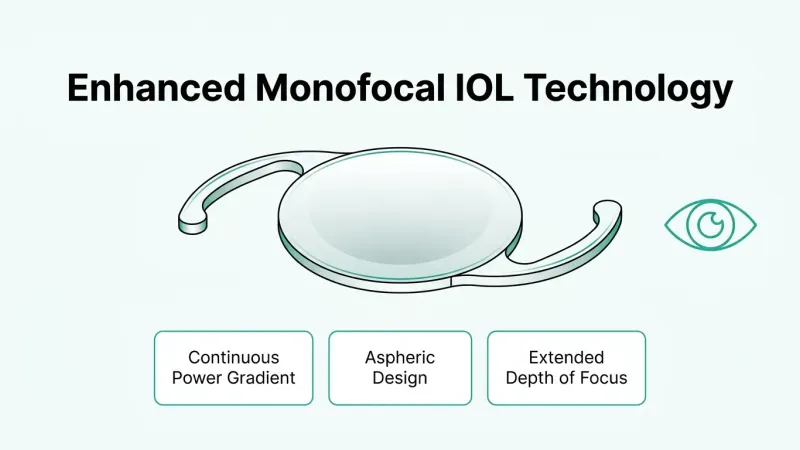
Monofocal IOLs remain the gold standard for minimizing photic phenomena after cataract surgery. Because they focus light at a single fixed distance and contain no diffractive rings or refractive zones, they do not split light in ways that generate halos or starbursts. The trade-off is dependence on glasses for near or distance tasks, depending on the chosen focal target. For patients who are highly sensitive to visual disturbances, particularly those who drive frequently at night, monofocal lenses offer the most predictable and least disruptive photic profile available.
Understanding how each lens type ranks for photic risk helps patients weigh visual freedom against symptom tolerance before committing to a lens choice.
How Long Do Halos and Glare Typically Last After Surgery?
How long halos and glare last depends primarily on the IOL type implanted and individual neuroadaptation. The sections below cover duration timelines for multifocal IOLs, monofocal IOLs, and the cortical adaptation process that reduces symptoms over time.
How Long Do Halos Last With Multifocal IOLs?
Halos with multifocal IOLs typically persist for 3 to 12 months, with most patients experiencing a meaningful reduction as neural adaptation progresses. Duration, however, is closely tied to refractive accuracy after surgery. Residual astigmatism of even 0.50 to 0.75 diopters significantly increases halo perception in multifocal IOL patients compared to those achieving emmetropic outcomes, according to Review of Ophthalmology’s 2026 IOL Preferences Survey. While most patients adapt well, Graefe’s Archive for Clinical and Experimental Ophthalmology reports that 5 to 10% may still describe halos as “bothersome” despite high overall satisfaction and spectacle independence. Uncorrected residual astigmatism is, in practice, one of the most controllable factors extending halo duration, making precise biometry and postoperative refraction critically important.
How Long Do Halos Last With Monofocal IOLs?
Halos with monofocal IOLs typically resolve faster than with premium lenses, often within 4 to 6 weeks as the eye heals and adapts. Because monofocal lenses lack diffractive rings or refractive zones, they generate fewer optical disturbances at the source, giving the visual system less to suppress. Residual halos in this group are more commonly tied to transient causes such as corneal edema or mild refractive error, both of which tend to stabilize during early recovery.
How Does Neural Adaptation Reduce Halos Over Time?
Neural adaptation reduces halos over time through a cortical process called neuroadaptation, in which the brain’s visual processing circuitry adjusts to competing focal points from the IOL. According to the American Academy of Ophthalmology, neuroadaptation typically requires 6 to 12 months for full adjustment. Functional MRI studies published via SpringerLink have shown that this process involves measurable changes in visual cortex activity, as the brain learns to suppress defocused images and prioritize the sharpest focal point. As Dr. William F. Maloney, quoted in AAO EyeNet Magazine, explains: “The brain has incredible power to adapt.” Setting realistic timelines before surgery, particularly for patients choosing multifocal lenses, remains one of the most underutilized tools for improving long-term satisfaction.
Who Is More Likely to Experience Persistent Halos and Glare?
Persistent halos and glare after cataract surgery are not equally distributed among patients. Specific anatomical and ocular health factors, including pupil size, angle kappa, dry eye disease, and residual astigmatism, can meaningfully elevate individual risk.
Are Patients With Large Pupils at Higher Risk?
Patients with large pupils are at higher risk for persistent halos and glare after cataract surgery. In scotopic (low-light) conditions, a dilated pupil allows more peripheral light rays to strike the IOL edge or pass through the diffractive rings of multifocal lenses, intensifying photic phenomena. Starbursts may also worsen due to backscatter from the IOL material and microsaccades, particularly with higher refractive-index lenses, according to a study published in Life (MDPI).
A larger angle kappa, the angular difference between the visual and pupillary axes, compounds this risk further. According to the Journal of Cataract and Refractive Surgery, a significant angle kappa can cause light to bypass the center of diffractive zones, substantially increasing photic phenomena with diffractive IOLs. Surgeons generally assess angle kappa preoperatively to identify patients who may be poor candidates for diffractive premium lenses.
Does Pre-Existing Dry Eye Worsen Post-Surgical Glare?
Pre-existing dry eye disease can worsen post-surgical glare by increasing corneal higher-order aberrations and destabilizing the tear film, which leads to irregular light scattering. An unstable tear film essentially introduces a constantly shifting refractive surface in front of the eye, amplifying any photic phenomena already generated by the IOL. Patients with moderate to severe dry eye are therefore considered higher-risk candidates for premium multifocal and trifocal implants. Treating dry eye aggressively before surgery, and continuing management postoperatively, is a clinically sound strategy for reducing this risk.
Are Patients With High Astigmatism More Susceptible?
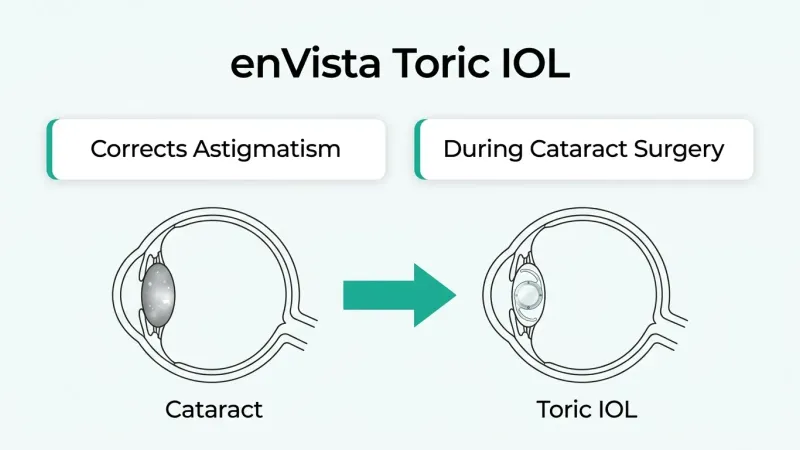
Patients with high astigmatism are more susceptible to halos and glare after cataract surgery. According to Review of Ophthalmology, residual astigmatism of even 0.50 to 0.75 diopters significantly increases the perception of halos and glare in patients with multifocal IOLs compared to those who achieve emmetropic outcomes. Uncorrected astigmatism distorts the focused image that a premium lens is designed to deliver, effectively nullifying the optical advantages of the implant. This underscores why precise toric lens selection or limbal relaxing incisions are essential components of surgical planning, particularly for patients receiving diffractive premium IOLs.
What Can Be Done to Reduce Halos and Glare After Surgery?
Several treatment options exist for reducing halos and glare after cataract surgery, ranging from prescription eye drops to surgical lens exchange. The sections below cover drops, YAG laser treatment, IOL exchange, and night driving glasses.
Can Prescription Eye Drops Help Minimize Glare?
Yes, prescription eye drops can help minimize glare in some patients. Miotic drops, such as brimonidine or low-dose pilocarpine, reduce pupil diameter, which blocks peripheral light rays from striking the IOL edge. This mechanism directly targets the pupil-size-dependent source of nighttime glare and halos. Your ophthalmologist may recommend this approach as a first-line, non-surgical option for managing positive dysphotopsia before considering more invasive interventions.
Does a YAG Laser Capsulotomy Resolve Glare From PCO?
Yes, a YAG laser capsulotomy can resolve glare caused by posterior capsule opacification (PCO). According to a study published in Ophthalmology and Therapy (Dove Press), Nd:YAG laser capsulotomy reduced the presence of glare from 74% pre-procedure to 41% post-procedure in symptomatic trifocal IOL patients. The procedure clears the clouded posterior capsule, restoring light transmission and contrast sensitivity. For patients whose glare originates specifically from PCO rather than the IOL design itself, this is generally the most targeted and effective intervention available.
Can an IOL Exchange Eliminate Persistent Halos?
IOL exchange can eliminate persistent halos in many patients when other treatments have failed. Replacing the original lens with one of a different material or edge design carries a reported success rate of approximately 85.7% for managing persistent positive dysphotopsia, according to EyeWorld. This option is typically reserved for cases where symptoms significantly impair quality of life and conservative measures have provided insufficient relief. Selecting an IOL with a different optical profile, such as switching from a trifocal to a monofocal, can substantially reduce photic phenomena.
Do Anti-Glare Night Driving Glasses Help?
Anti-glare night driving glasses can help reduce perceived glare for some patients, though clinical evidence for their effectiveness in post-cataract dysphotopsia specifically remains limited. Yellow-tinted or anti-reflective coated lenses may reduce the intensity of oncoming headlight scatter during nighttime driving. Notably, there is a recognized content gap regarding how lifestyle demands, such as professional night driving or heavy computer use, affect the perceived severity of dysphotopsia, making individualized discussion with your surgeon particularly important.
When Should You Contact Your Surgeon About Halos or Glare?
Some degree of halos and glare after cataract surgery is expected, but certain symptoms signal that medical review is necessary. The following situations warrant a prompt call to your surgeon.
Symptoms That Require Urgent Attention
Symptoms that require urgent attention include sudden vision loss, a sharp increase in glare intensity, new floaters combined with flashing lights, or halos that appear unexpectedly after a period of clear vision. These may indicate serious complications such as posterior capsule rupture, elevated intraocular pressure, or retinal issues unrelated to normal neuroadaptation. Do not wait for a scheduled follow-up if any of these develop.
Halos or Glare That Worsen After the First Month
Halos or glare that worsen after the first postoperative month are a clinical red flag. Normal post-surgical dysphotopsia typically plateaus and then gradually improves. A pattern of worsening symptoms after the initial healing period may indicate posterior capsule opacification (PCO), an IOL positional shift, or unresolved residual astigmatism, all of which are treatable when caught early.
When Symptoms Significantly Disrupt Daily Life
You should contact your surgeon when halos or glare significantly disrupt daily activities such as night driving, reading, or working at a screen. While some functional impact is common in the first few weeks, persistent interference beyond three months is not a trade-off you are required to accept. Treatment options exist, including miotic drops, Nd:YAG laser capsulotomy, and in select cases, IOL exchange. Raising these concerns early gives your surgeon the opportunity to intervene before symptoms become entrenched.
How Should You Weigh Halos and Glare When Choosing an IOL?
Weighing halos and glare when choosing an IOL requires balancing your visual lifestyle priorities against each lens type’s known photic side effect profile. The H3s below address where to find reliable guidance and the core takeaways to carry into that conversation.
Can Expert-Reviewed IOL Guides Help You Understand the Trade-Offs?
Yes, expert-reviewed IOL guides can help you understand the trade-offs by presenting the photic side effect profiles of each lens category alongside their visual benefits in plain language. Monofocal IOLs carry the lowest halo and glare risk, while trifocal and multifocal lenses offer spectacle independence at the cost of a higher likelihood of photic phenomena. EDOF lenses occupy a middle ground, with a generally lower halo burden than trifocals. Surgeon-reviewed resources, like those available at Eye Surgery Today, translate this clinical complexity into accessible decision-making frameworks so patients can weigh trade-offs confidently before surgery.
What Are the Key Takeaways About Halos and Glare After Cataract Surgery?
The key takeaways about halos and glare after cataract surgery are that these phenomena are common, often temporary, and strongly influenced by IOL type. The most important conclusions to carry into any IOL discussion include:
- Halos and glare are most intense immediately after surgery and typically diminish as neuroadaptation progresses over 6 to 12 months.
- IOL choice is the single largest determinant of photic symptom burden, with monofocal lenses posing the lowest risk and trifocal lenses the highest.
- Pre-existing conditions such as dry eye, high astigmatism, and a large angle kappa meaningfully increase the risk of persistent symptoms with premium lenses.
- The Visual Function-7 (VF-7) questionnaire, a validated patient-reported outcome tool, can help measure how much glare actually affects daily activities like night driving and reading, according to research published in Eye (Nature Portfolio).
- When symptoms persist, treatments such as Nd:YAG laser capsulotomy, miotic drops, and IOL exchange offer meaningful relief for most patients.
Setting realistic expectations before surgery, guided by surgeon-reviewed education, remains the most effective strategy for long-term satisfaction with any IOL choice.