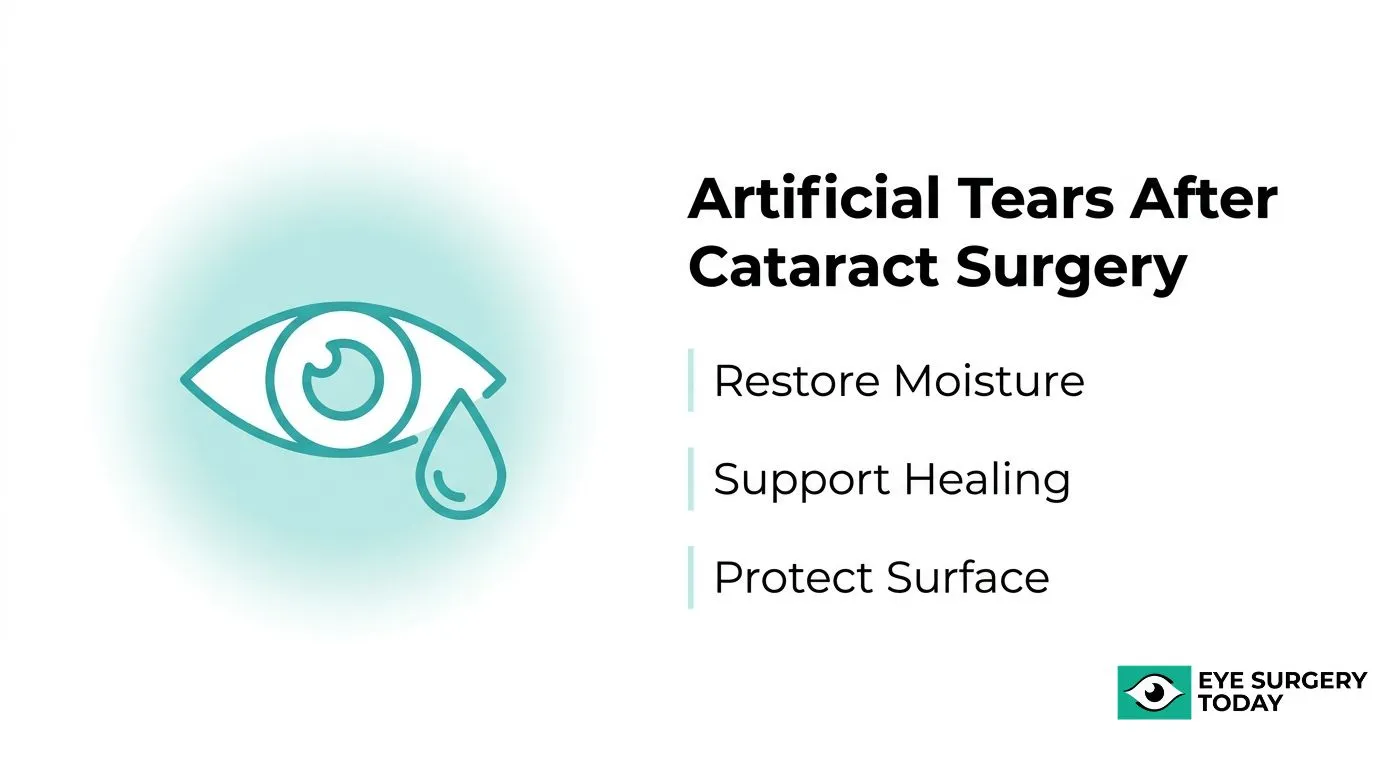
Artificial tears after cataract surgery are lubricating eye drops or gels that supplement the tear film when surgical incisions disrupt corneal nerves and reduce natural tear production. They are a core component of postoperative care for the healing ocular surface.
This guide covers why artificial tears matter after surgery, the types of formulations available, which preservative-free drops and gels perform best, proper usage and dosing protocols, risk factors for severe dryness, and when to seek further clinical guidance.
Cataract surgery severs corneal nerve fibers that drive the tear production feedback loop, and a significant percentage of patients without preexisting dry eye disease may develop new dryness following the procedure. Artificial tears help stabilize the tear film during this vulnerable window and support epithelial recovery.
Several formulation categories exist for post-surgical use, including preservative-free aqueous drops, lipid-based emulsions, viscous gels, and overnight ointments. Each targets a different layer of the tear film or severity level of dryness.
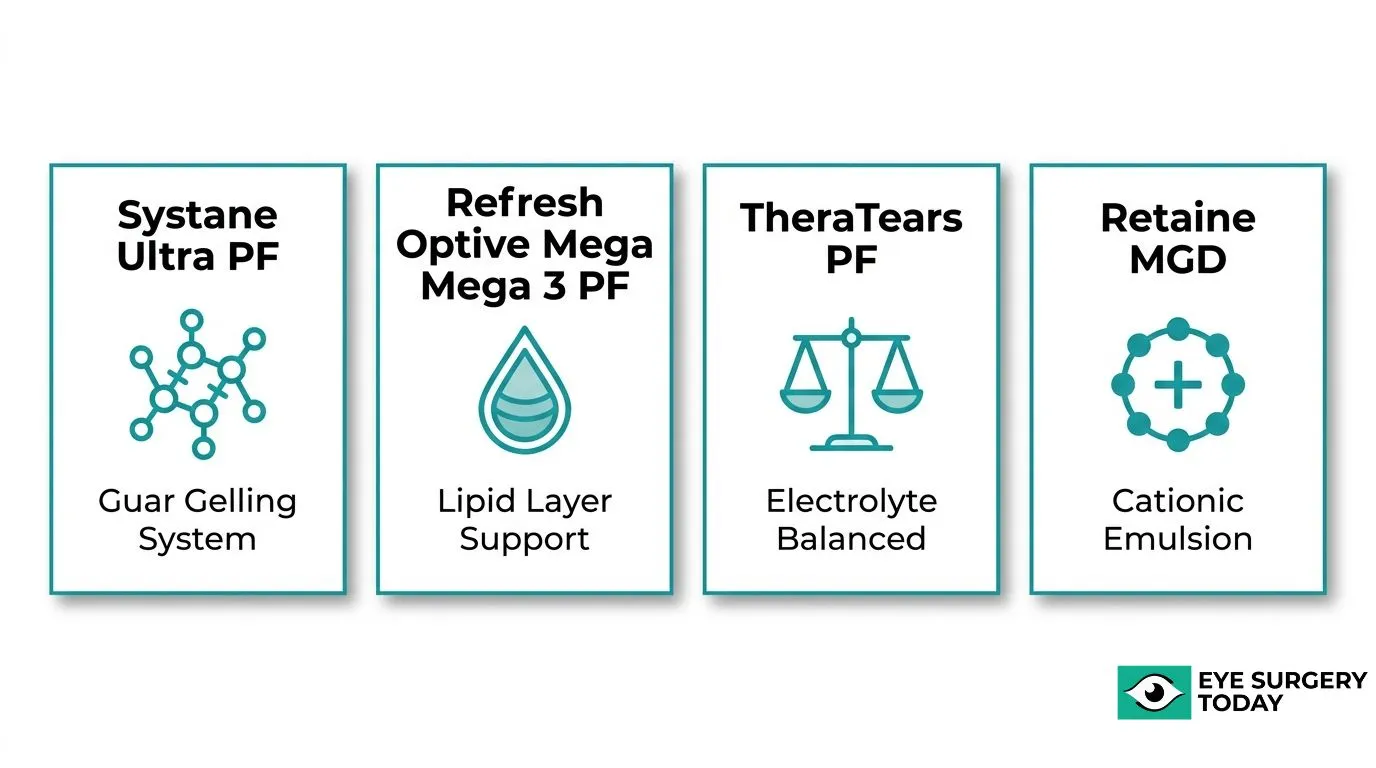
Preservative-free options such as Systane Ultra PF, Refresh Optive Mega-3, TheraTears PF, and Retaine MGD each use distinct mechanisms; some reinforce the mucin layer through gelling agents, while others supplement the lipid layer to slow evaporation. Gel formulations like Systane Gel Drops and Refresh Celluvisc offer extended residence time for more severe symptoms.
Preservatives such as benzalkonium chloride can induce corneal cell toxicity on a healing surface, which is why preservative-free formulations are strongly preferred during early recovery. Proper instillation technique and consistent adherence to the prescribed schedule are equally important, since nonadherence rates after cataract surgery are notably high.
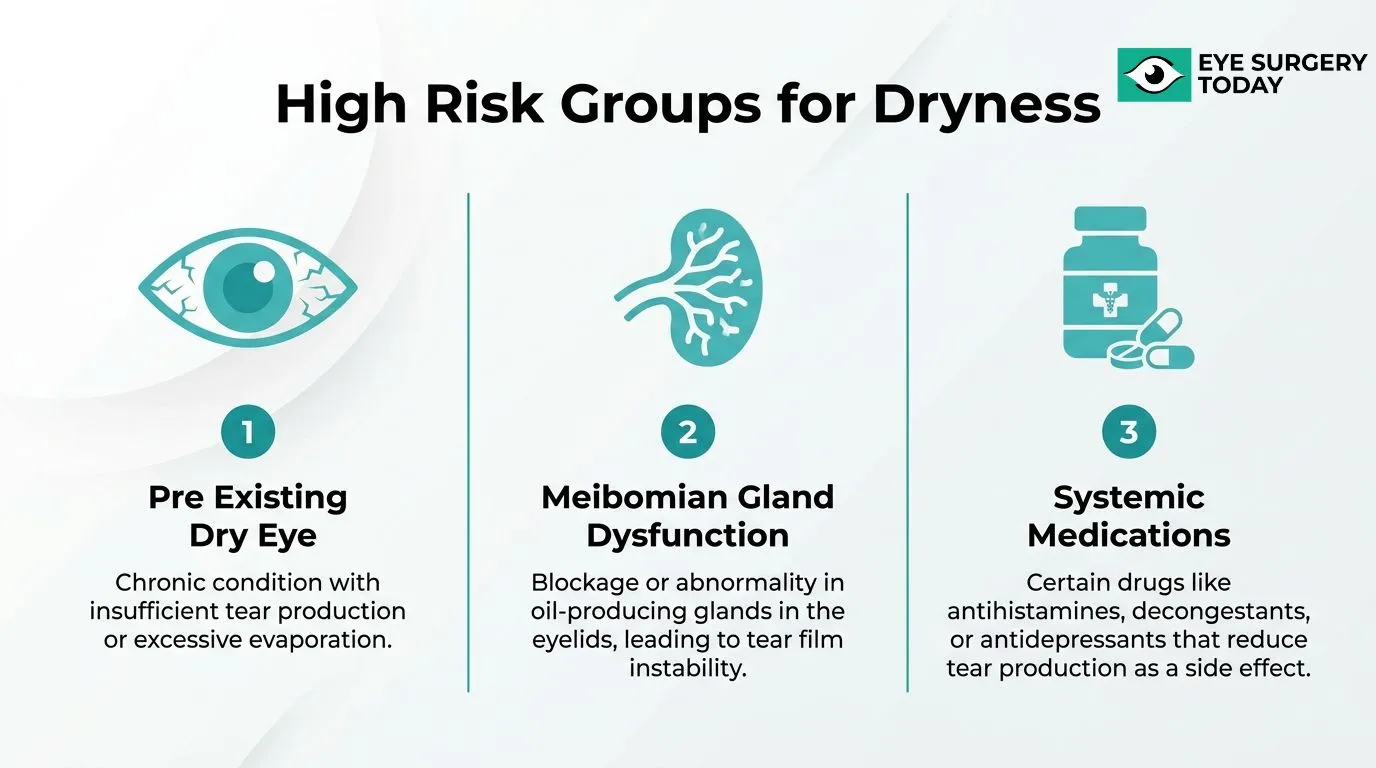
Patients with preexisting dry eye disease, meibomian gland dysfunction, or those taking certain systemic medications face elevated risk and may need tailored approaches beyond standard drops.
Why Are Artificial Tears Important After Cataract Surgery?
Artificial tears are important after cataract surgery because the procedure disrupts corneal nerves and the ocular surface, reducing natural tear production during the healing period. The sections below explain how surgery causes dryness, how long it typically lasts, and what risks arise when artificial tears are skipped.
How Does Cataract Surgery Cause Dry Eye?
Cataract surgery causes dry eye by severing corneal nerves during the incision process, which disrupts the feedback loop responsible for triggering tear production. During clear corneal phacoemulsification, the surgical incisions cut a significant portion of these sensory nerve fibers. Without intact nerve signaling, the lacrimal gland receives fewer stimulation signals, so tear secretion decreases. This neurogenic disruption is the primary mechanism behind post-surgical dry eye, and it explains why even patients with healthy eyes beforehand may experience dryness after an otherwise successful procedure.
How Long Does Dryness Typically Last After Cataract Surgery?
Dryness typically lasts several weeks after cataract surgery, though the timeline varies by patient. According to a study published in PLOS ONE, the incidence of dry eye after phacoemulsification was 9.8%, with symptoms appearing as early as seven days post-surgery and peaking at one week. NHS guidelines for post-cataract care advise patients to use prescribed eye drops for four weeks after the operation to support healing and prevent infection. For patients with more persistent or severe symptoms, longer-lasting gel-based options such as Systane Gel Drops or Refresh Celluvisc may be recommended for additional comfort.
What Happens If You Do Not Use Artificial Tears After Surgery?
Skipping artificial tears after surgery can prolong discomfort, slow corneal healing, and destabilize the tear film during a critical recovery window. Standard postoperative care for phacoemulsification typically includes artificial tears applied four times daily for up to 90 days, alongside prescribed steroids and antibiotics. Without this lubrication, the ocular surface remains exposed to friction, evaporation, and inflammation. Clinical research published in the Journal of Clinical Medicine demonstrates that certain artificial tear formulations containing L-carnitine and erythritol actively reduce tear osmolarity, providing measurable symptomatic relief rather than simply masking discomfort.
Consistent use of artificial tears is one of the most controllable factors in a smooth cataract recovery, making adherence genuinely important rather than optional.
What Types of Artificial Tears Are Available After Cataract Surgery?
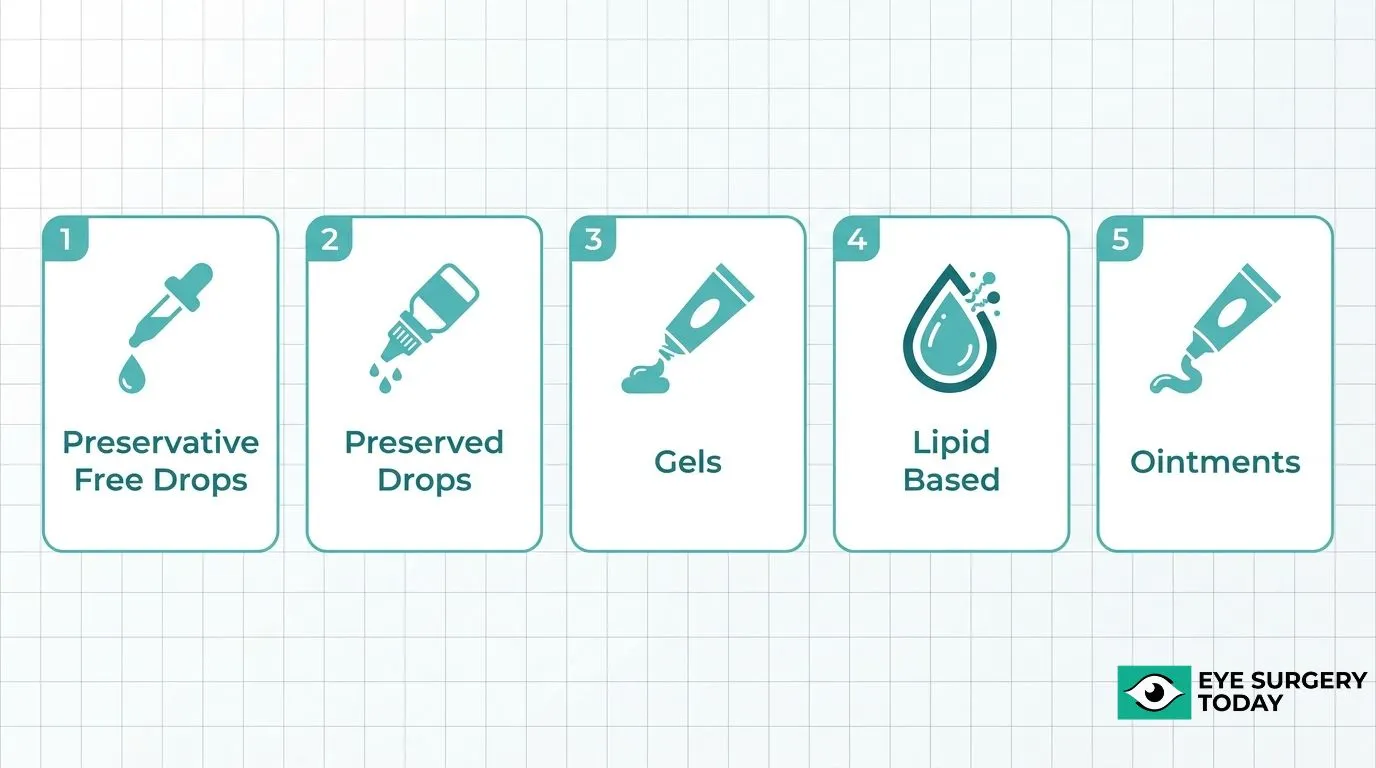
The types of artificial tears available after cataract surgery include preservative-free drops, preserved drops, lubricating gels, lipid-based formulas, and overnight ointments. Each format serves a different level of dryness severity and time of day.
Preservative-Free Artificial Tear Drops
Preservative-free artificial tear drops are single-dose vials that contain no chemical preservatives, making them the most commonly recommended option for post-cataract recovery. Because the corneal surface is healing after surgery, eliminating preservative exposure reduces the risk of additional irritation to already-sensitive tissue. A Cochrane review noted that visual disturbance from transient blurring affected 22.6% of participants using over-the-counter artificial tear drops for dry eye syndrome, reinforcing the importance of selecting well-tolerated formulations. For most patients recovering from cataract surgery, preservative-free drops are the preferred first-line choice.
Preserved Artificial Tear Drops
Preserved artificial tear drops contain antimicrobial agents, such as benzalkonium chloride, to extend shelf life in multi-dose bottles. While convenient and cost-effective, they may be less suitable for frequent daily use during the early healing period. They can be appropriate for patients with mild, infrequent dryness who apply drops fewer than four times per day.
Lubricating Eye Gels
Lubricating eye gels are thicker, viscous formulations that provide longer-lasting surface coverage than standard drops. Their higher viscosity means they coat the ocular surface more persistently, which benefits patients with moderate to severe dryness. Because gels can temporarily blur vision after application, many patients prefer to use them before rest periods rather than during active hours.
Lipid-Based Artificial Tears
Lipid-based artificial tears are emulsion formulas designed to supplement the oily outer layer of the tear film, which helps slow evaporation. They are particularly useful for patients whose dryness stems from meibomian gland dysfunction, a common contributor to post-surgical evaporative dry eye. These drops tend to feel slightly heavier upon instillation compared to aqueous-only formulas.
Overnight Ointments
Overnight ointments are petrolatum-based formulations that deliver prolonged lubrication during sleep when blinking stops and the ocular surface is most vulnerable to drying. Their thick consistency makes them unsuitable for daytime use, as they cause significant blurring. Applied at bedtime, they form a protective layer that supports surface healing overnight.
Which Preservative-Free Drops Work Best After Cataract Surgery?
The preservative-free drops that work best after cataract surgery include Systane Ultra PF, Refresh Optive Mega-3 PF, TheraTears PF, and Retaine MGD. Each uses a distinct lubricating mechanism suited to different post-surgical dry eye presentations.
How Does Systane Ultra Preservative-Free Perform Post-Surgery?
Systane Ultra Preservative-Free performs post-surgery by combining polyethylene glycol and propylene glycol with a hydroxypropyl guar (HP-guar) gelling agent that cross-links on the ocular surface to form a protective matrix. According to a decade of clinical evidence compiled by Alcon Science, Systane Ultra is more effective at reducing both signs and symptoms of dry eye compared to Refresh Tears. The HP-guar system mimics the mucin layer of the natural tear film, which is particularly relevant after cataract surgery when corneal nerve disruption compromises baseline tear secretion. For post-surgical patients needing consistent, measurable relief throughout the day, Systane Ultra PF is one of the most clinically supported options available over the counter.
How Does Refresh Optive Mega-3 Preservative-Free Perform Post-Surgery?
Refresh Optive Mega-3 Preservative-Free performs post-surgery by supplementing the lipid layer of the tear film using flaxseed oil-derived omega-3 fatty acids alongside carboxymethylcellulose and glycerin. This lipid-layer targeting is especially valuable after cataract surgery, since evaporative dry eye driven by meibomian gland dysfunction is common in the postoperative period. In a randomized, double-masked study of 19 patients published in Clinical Ophthalmology, Refresh Optive MEGA-3 produced a statistically significant mean increase in tear lipid layer thickness of 8.8 nm at 15 minutes post-instillation. That measurable lipid layer improvement can help reduce tear evaporation and stabilize vision between doses.
How Does TheraTears Preservative-Free Perform Post-Surgery?
TheraTears Preservative-Free performs post-surgery by delivering a hypotonic, electrolyte-balanced solution designed to restore the natural osmolarity of the tear film. Post-cataract dry eye frequently involves elevated tear osmolarity, making a hypotonic formulation a logical choice for restoring ocular surface homeostasis. TheraTears PF contains sodium carboxymethylcellulose as its primary lubricant and is formulated without preservatives in single-use vials, reducing the risk of corneal irritation during healing. Its electrolyte profile is modeled on the natural human tear, which may support faster surface recovery in patients with disrupted corneal innervation.
How Does Retaine MGD Preservative-Free Perform Post-Surgery?
Retaine MGD Preservative-Free performs post-surgery by using a cationic oil-in-water emulsion that delivers mineral oil and castor oil to the tear film’s lipid layer through electrostatic attraction to the negatively charged ocular surface. This positive-charge delivery mechanism allows Retaine MGD to bind efficiently without preservatives, making it well suited for the sensitive post-surgical cornea. A single-center, open-label study published on PubMed demonstrated that Retaine ophthalmic emulsion provides enhanced comfort and improves quality of life in dry eye subjects over approximately two weeks. Its lipid-replenishing action makes it particularly useful for patients whose meibomian gland function is compromised before or after surgery.
Which Lubricating Gels Work Best After Cataract Surgery?
The lubricating gels that work best after cataract surgery are thicker, longer-lasting formulas such as Systane Gel Drops, GenTeal Tears Severe Gel, and Refresh Celluvisc. The following sections compare how each performs for post-surgical dry eye relief.
How Does Systane Gel Drops Perform After Cataract Surgery?
Systane Gel Drops performs well after cataract surgery by delivering extended lubrication through a hydroxypropyl guar gelling system that forms a protective matrix on the ocular surface. This gel-forming mechanism helps compensate for disrupted tear production following surgery. According to Alcon Science, a decade of evidence supports Systane’s polyethylene glycol and propylene glycol formulation as more effective at reducing both signs and symptoms of dry eye compared to Refresh Tears. For patients managing a multi-drop regimen, gel drops offer a practical advantage: fewer applications may be needed compared to lighter aqueous drops, which matters given that nonadherence rates after cataract surgery are reported at approximately 30% across multiple studies, according to Ophthalmology Times.
How Does GenTeal Tears Severe Gel Perform After Cataract Surgery?
GenTeal Tears Severe Gel performs effectively after cataract surgery for patients experiencing moderate to severe dryness. Its active ingredient, hydroxypropyl methylcellulose 0.3%, creates a viscous, longer-contact-time layer across the corneal surface. This extended retention makes it particularly suitable for patients whose symptoms are not adequately managed by standard aqueous drops alone. The thicker consistency does cause temporary blurring upon instillation, so many patients prefer using it at bedtime rather than during daytime activities.
How Does Refresh Celluvisc Perform After Cataract Surgery?
Refresh Celluvisc performs well after cataract surgery due to its high-viscosity carboxymethylcellulose 1% formula, which provides sustained moisture retention on a healing corneal surface. It is available in single-use, preservative-free vials, making it a safe choice during the early postoperative period when the corneal epithelium is most vulnerable. Because the formula is thicker than standard drops, it is best applied before sleep or during periods of rest to minimize temporary visual blur. For patients with severe post-surgical dryness, gel-based options like Celluvisc are generally recommended to provide additional comfort.
Why Should You Avoid Preserved Drops After Cataract Surgery?
Preserved drops should generally be avoided after cataract surgery because the chemical preservatives they contain can damage the cornea during its most vulnerable healing phase. The sections below cover how preservatives cause that harm and the narrow circumstances when a preserved drop may still be appropriate.
How Can Preservatives Irritate a Healing Cornea?
Preservatives can irritate a healing cornea by triggering direct toxic and inflammatory responses in the corneal tissue. Benzalkonium chloride (BAK), the most common preservative in ophthalmic formulations, induces corneal epithelial cell apoptosis and drives proinflammatory responses that can worsen dry eye disease, according to research published in Toxicology in Vitro. The cornea after cataract surgery is already compromised by incision-related nerve disruption, making it significantly more susceptible to chemical stress. Using preserved drops repeatedly on this disrupted surface prolongs inflammation and slows epithelial recovery. Preservative-free formulations remove this risk entirely, which is why most post-surgical protocols strongly favor them.
When Might a Preserved Drop Still Be Acceptable?
A preserved drop may still be acceptable when the cornea has recovered sufficient clarity and endothelial integrity. According to Macquarie University research, BAK exerts a toxic effect on the corneal endothelium, and its elimination from postoperative drops is specifically recommended when the cornea is not as clear as expected after surgery. This guidance implies that once corneal clarity is confirmed and healing is progressing normally, the risk profile of a preserved drop diminishes. In practical terms, preserved drops are most defensible for patients with good postoperative corneal transparency who require a specific medicated formulation available only in a preserved form. Preservative-free options should always remain the default, with preserved formulations reserved for cases where no suitable alternative exists.
How Should You Use Artificial Tears After Cataract Surgery?
Using artificial tears correctly after cataract surgery matters as much as choosing the right product. The following sections cover first-week dosing frequency, the weeks two through four taper, sterile instillation technique, and when to switch from a drop to a gel.
How Often Should You Apply Drops in the First Week?
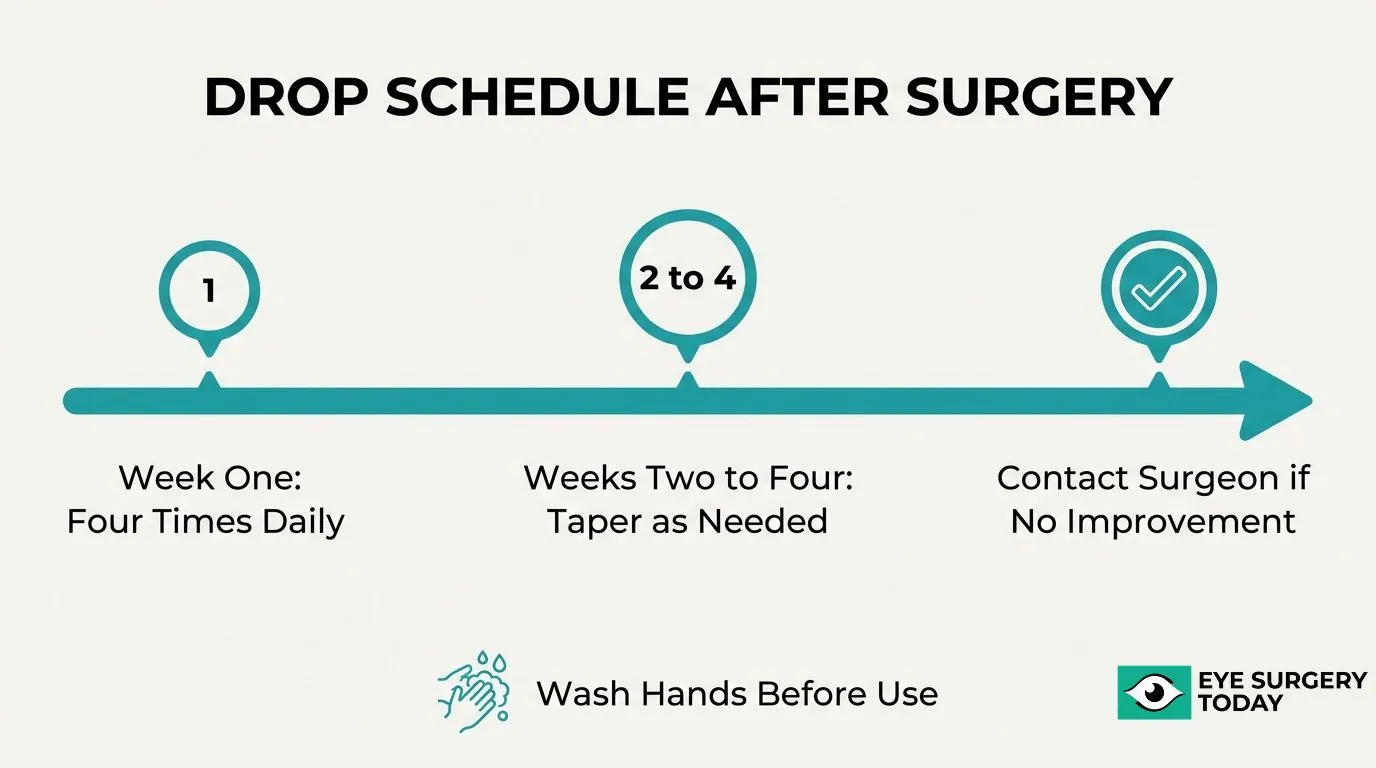
Drops should be applied frequently in the first week, typically four times daily, mirroring the dosing schedule used for other postoperative medications. The ocular surface is most vulnerable during this period, as corneal nerve disruption from surgery has not yet begun to resolve. Consistent, evenly spaced applications throughout the day help maintain a stable tear film and reduce the friction and discomfort that accompany early-stage dryness.
How Often Should You Apply Drops in Weeks Two Through Four?
Drops in weeks two through four are typically tapered as acute surface inflammation settles, though frequency should be guided by symptom persistence. This phase is where vision fluctuations often mislead patients. According to Dr. Christopher Starr of the American Academy of Ophthalmology, “Cataract patients who experience intermittent blurriness or other fluctuations in their vision throughout the day often assume this is related to their cataract, when in fact the culprit is often untreated ocular surface disease.” Continuing drops at least two to three times daily through week four remains a reasonable approach for most patients.
How Do You Properly Instill Drops Without Contamination?
Proper instillation requires washing hands thoroughly before handling any drop container. Tilt the head back, gently pull the lower lid down to form a small pocket, and aim the drop into that pocket rather than directly onto the cornea. Avoid letting the bottle tip touch the eye, eyelid, or lashes, as contact is the primary pathway for microbial contamination. After instilling, close the eye gently for 60 seconds and apply light pressure to the inner corner to reduce systemic drainage.
When Should You Use a Gel Instead of a Drop?
A gel should be used instead of a drop when standard drops fail to provide lasting relief, particularly in cases of severe or persistent dryness. Gel formulations such as Systane Gel Drops or Refresh Celluvisc have a thicker viscosity that extends residence time on the ocular surface, making them better suited for nighttime use or for patients with more significant surface compromise. Because gels can cause temporary blurring, applying them at bedtime minimizes disruption to daytime vision.
How Do Artificial Tears Differ From Prescribed Post-Surgical Drops?
Artificial tears and prescribed post-surgical drops serve distinct purposes after cataract surgery. Artificial tears replace or supplement the eye’s natural moisture, while prescription drops actively manage inflammation, infection risk, and intraocular pressure during the healing window.
The key differences between artificial tears and prescribed post-surgical drops are:
- Purpose: Artificial tears lubricate and relieve dryness; prescription drops treat specific post-surgical conditions such as inflammation and infection.
- Active ingredients: Artificial tears contain lubricants such as carboxymethylcellulose, hyaluronic acid, or polyethylene glycol; prescription drops contain pharmaceuticals such as corticosteroids, antibiotics, or NSAIDs.
- Duration of use: Artificial tears may be used indefinitely as needed; prescribed drops are typically used for a defined postoperative period.
- Regulatory status: Artificial tears are available over the counter; prescription drops require a surgeon’s authorization and are tailored to each patient’s protocol.
- Effect on healing: Prescription drops directly support tissue recovery and infection prevention; artificial tears support ocular surface comfort without pharmacological intervention.
According to CRST Global, standard postoperative treatment after phacoemulsification commonly includes topical steroids and antibiotics four times daily, NSAIDs twice daily, and artificial tears four times daily for up to 90 days. Artificial tears complement this regimen but cannot replace the pharmacological roles of prescribed medications. Patients should use both categories as directed and never substitute one for the other without consulting their surgeon.
Who Is Most at Risk for Severe Dryness After Cataract Surgery?
Certain patients face a significantly higher risk of severe post-surgical dryness. The sections below cover three primary risk categories: pre-existing dry eye disease, meibomian gland dysfunction, and systemic medications.
How Does Pre-Existing Dry Eye Disease Affect Recovery?
Pre-existing dry eye disease affects recovery by compounding the corneal nerve disruption caused by surgery, leading to more severe and prolonged symptoms. According to the Journal of Cataract and Refractive Surgery, preexisting untreated dry eye disease is a known risk factor for postsurgical dry eye symptoms and can introduce data errors during IOL focusing power measurements, resulting in residual refractive errors after surgery. This means the consequences extend beyond discomfort: uncorrected dry eye disease before surgery may directly compromise visual outcomes. Patients with a known dry eye history should discuss optimizing the ocular surface before their procedure date.
How Does Meibomian Gland Dysfunction Affect Recovery?
Meibomian gland dysfunction affects recovery by destabilizing the lipid layer of the tear film, accelerating tear evaporation after surgery. When meibomian glands fail to secrete adequate oil, the aqueous layer evaporates faster than normal, intensifying the dryness that surgery itself already produces through corneal nerve disruption. This combination of gland dysfunction and surgically reduced nerve signaling is particularly difficult to manage with basic artificial tears alone. Lipid-based drops or warm compress therapy may be necessary for this patient group to achieve adequate relief.
How Do Certain Medications Increase Post-Surgical Dryness?
Certain medications increase post-surgical dryness by reducing tear production, altering secretory gland function, or disrupting nerve-mediated reflex tearing. According to the American Academy of Ophthalmology, risk factors for dry eye include the use of systemic medications such as antihistamines, antidepressants, and diuretics, in addition to older age, female sex, and postmenopausal estrogen therapy. Patients taking these medications should inform their surgical team before the procedure, as adjusting or supplementing the postoperative drop regimen may help offset the added dryness risk.
What Are the Possible Side Effects of Artificial Tears?
The possible side effects of artificial tears include temporary blurred vision, eye irritation, and, in rare cases, increased risk of microbial contamination. The following sections cover blurring after application and the risks of overuse after surgery.
Can Artificial Tears Cause Blurred Vision After Application?
Yes, artificial tears can cause blurred vision after application, though this effect is typically transient. According to a Cochrane review, visual disturbance due to transient blurring was reported among 22.6% of participants using over-the-counter artificial tear drops for dry eye syndrome. Thicker formulations, such as gels and viscous drops, are more likely to blur vision temporarily because their higher viscosity coats the ocular surface longer than standard drops. Applying drops just before sleep, or choosing lower-viscosity formulations for daytime use, can help minimize this effect.
Can You Overuse Artificial Tears After Surgery?
Yes, you can overuse artificial tears after surgery, and doing so carries real risks. Preservative-free artificial tears are generally safer for frequent use, but multi-dose products without preservatives may carry higher risks of microbial contamination, as noted in research published in Scientific Reports. Preserved drops used too frequently can introduce cumulative preservative exposure to a healing cornea. Your surgeon may recommend specific dosing limits based on the formulation prescribed, so following their guidance is important rather than increasing frequency independently.
When Should You Contact Your Surgeon About Persistent Dryness?
You should contact your surgeon about persistent dryness when symptoms do not improve with consistent artificial tear use, worsen over time, or are accompanied by warning signs that suggest a complication beyond routine post-surgical dry eye.
Contact your surgeon promptly if you experience any of the following:
- Dryness or discomfort that is not improving after four to six weeks of regular artificial tear use
- Sudden worsening of symptoms after an initial period of improvement
- Significant pain, redness, or photosensitivity that develops after surgery
- Vision that continues to fluctuate or blur even when drops are used consistently
- Eye discharge, crusting, or other signs that may indicate infection
- Dryness severe enough to interfere with daily activities such as reading, driving, or screen use
According to Dr. Eric Donnenfeld, “If a patient is not getting the desired improvement with tears, we need to move on to more advanced therapy.” This guidance reflects a broader clinical reality: artificial tears manage symptoms but do not address underlying causes such as meibomian gland dysfunction, neurotrophic changes, or unresolved inflammation. Waiting too long to escalate care can delay recovery and affect visual outcomes.
When in doubt, contacting your surgeon is always the right decision. Early intervention typically leads to faster resolution and better long-term comfort.
How Can Surgeon-Reviewed Guidance Help You Choose the Right Drops?
Surgeon-reviewed guidance helps you choose the right drops by translating clinical evidence into clear, actionable recommendations tailored to post-cataract recovery. The sections below cover how Eye Surgery Today supports your preparation and the core takeaways from this topic.
Can Eye Surgery Today Help You Prepare for Cataract Surgery Recovery?
Yes, Eye Surgery Today can help you prepare for cataract surgery recovery by providing surgeon-reviewed education grounded in clinical research. A systematic review and meta-analysis of 36 studies found that 37.4% of patients without preexisting dry eye disease developed dry eye following cataract surgery, published in Ophthalmology and Therapy. Corneal nerve disruption from surgical incisions, BAK exposure from perioperative medications, and poor drop adherence all compound recovery challenges. Notably, the average noncompliance rate for eyedrop treatment in cataract patients is approximately 30%, according to Touch Ophthalmology. Eye Surgery Today addresses these barriers directly: surgeon-reviewed articles explain which drop formulations to prioritize, why preservative-free options matter, and how to build a consistent instillation routine before your surgery date arrives.
What Are the Key Takeaways About Artificial Tears After Cataract Surgery?
The key takeaways about artificial tears after cataract surgery center on formulation choice, consistency, and clinical oversight. Preservative-free drops are strongly preferred to protect the healing corneal surface. A meta-analysis of randomized controlled trials published in Medicine (Baltimore) demonstrated that topical diquafosol sodium ophthalmic solution has superior efficacy compared to conventional artificial tears in managing post-cataract dry eye. Beyond product selection, adherence matters as much as the drop itself. Patients who struggle to maintain their regimen risk prolonged discomfort and slower visual recovery. The most important steps are:
- Choose preservative-free formulations as your first-line option after surgery.
- Match drop viscosity to symptom severity: standard drops for mild dryness, gels for moderate to severe.
- Follow your surgeon’s prescribed schedule and do not self-discontinue early.
- Report persistent dryness or blurred vision to your surgeon rather than increasing drop frequency without guidance.
Eye Surgery Today’s surgeon-reviewed resources help you enter recovery informed, confident, and equipped to protect your surgical outcome.