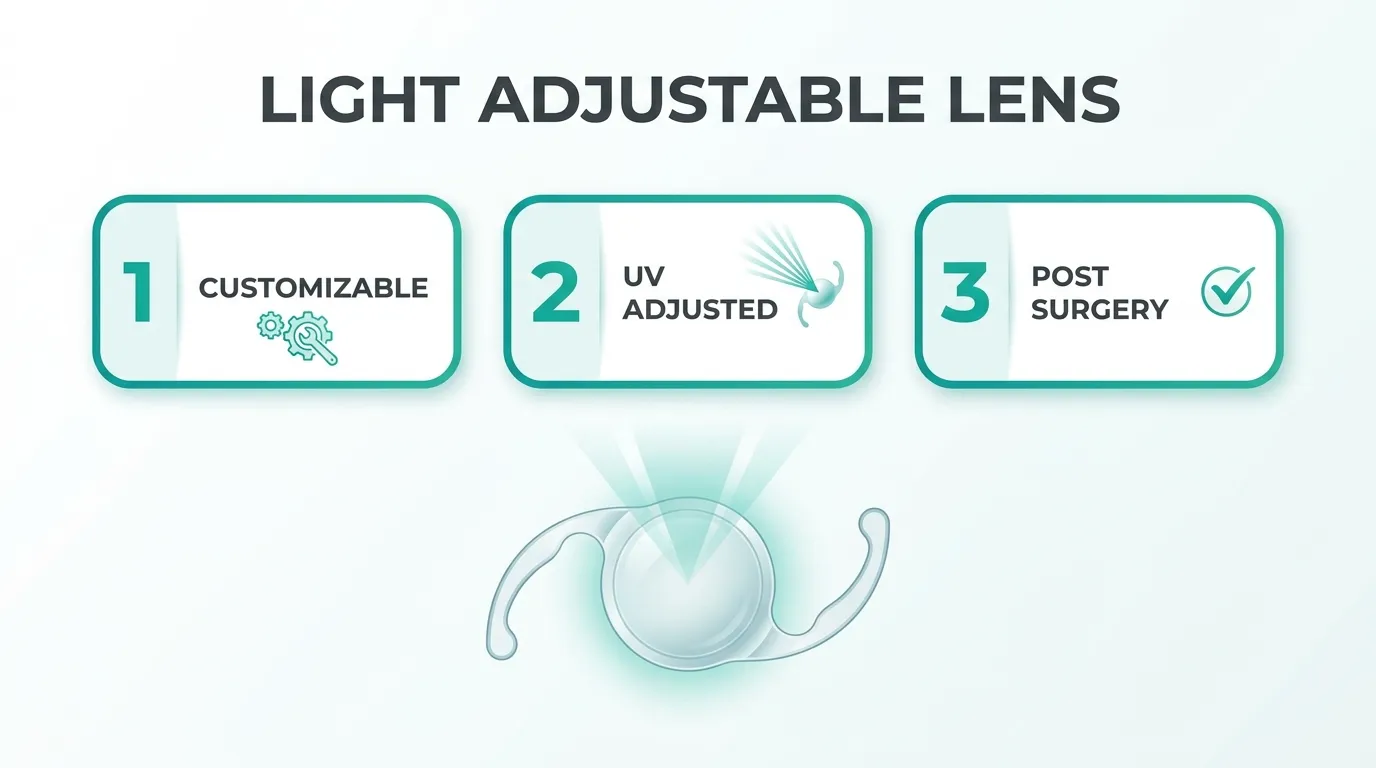
The Light Adjustable Lens is a photosensitive silicone intraocular lens (IOL) that can be adjusted after cataract surgery using calibrated UV light treatments, allowing surgeons to fine-tune prescription power once the eye has fully healed.
This guide covers how the lens works compared to standard IOLs, its potential benefits and limitations, candidacy factors, the full treatment process from evaluation through recovery, risks and complications, comparisons with other lens types, cost considerations, and how to prepare for a surgeon consultation.
The Light Adjustable Lens differs from monofocal, multifocal, and toric IOLs primarily through post-implantation adjustability; rather than locking in a fixed prescription at surgery, the lens can be reshaped through UV light delivery sessions to target a patient’s actual post-healing refraction.
Among the potential benefits, improved refractive accuracy may be particularly valuable for patients with prior LASIK, PRK, or radial keratotomy, where altered corneal profiles make standard IOL power calculations less predictable. The lens also allows patients to preview different correction options under real-world conditions before the prescription is permanently set.
Limitations include mandatory UV-protective eyewear during the entire pre-lock-in period, a higher number of follow-up visits than standard IOLs require, and an out-of-pocket premium that insurance typically does not cover. Missed or delayed adjustment appointments can compromise the final visual outcome.
Candidacy depends on ocular health, systemic conditions, lifestyle factors, and the ability to commit to multiple post-operative sessions over several weeks. Patients with advanced macular degeneration, uncontrolled glaucoma, or significant scheduling barriers may be better served by a conventional lens.
How Does the Light Adjustable Lens Work and What Makes It Different from Standard IOLs?
The Light Adjustable Lens works differently from every other IOL on the market because its prescription can be modified after it has already been implanted. The sections below explain how it changes vision post-surgery, how UV light drives the adjustment, and how it compares to monofocal, multifocal, and toric lenses.
How does the Light Adjustable Lens change vision after cataract surgery?
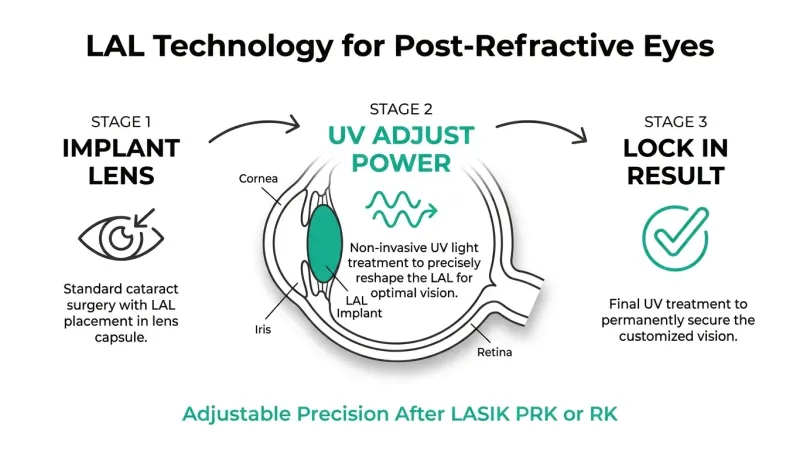
The Light Adjustable Lens changes vision after cataract surgery by allowing surgeons to fine-tune the lens’s optical power once the eye has fully healed. Standard IOLs lock in a fixed prescription at the time of implantation, so any residual refractive error requires glasses or additional procedures to correct. The Light Adjustable Lens, developed by RxSight, is made of a photosensitive silicone material that responds to specific wavelengths of UV light, enabling targeted changes to lens curvature and power. This post-surgical adjustability is what sets it apart from every other IOL on the market.
How is the Light Adjustable Lens adjusted with ultraviolet (UV) light?
The Light Adjustable Lens is adjusted with UV light through a calibrated device called the Light Delivery Device, or LDD. During each treatment session, a low-intensity UV beam is applied to specific zones of the lens. The UV light triggers a photochemical reaction within the silicone matrix, causing targeted portions of the lens to swell or contract, which reshapes the lens curvature and changes its refractive power. Patients typically undergo two to three adjustment sessions followed by one or two lock-in treatments, which polymerize the remaining photosensitive material to permanently stabilize the final prescription. Until lock-in is complete, patients must wear UV-protective glasses outdoors to prevent unintended exposure from sunlight.
How is the Light Adjustable Lens different from monofocal, multifocal, and toric IOLs?
The Light Adjustable Lens differs from monofocal, multifocal, and toric IOLs primarily in its post-implantation adjustability. There are three main IOL categories it is commonly compared against, each with fixed optical characteristics:
- Monofocal lenses correct vision at one focal distance and cannot be changed after implantation; any residual error requires glasses.
- Multifocal and extended depth-of-focus (EDOF) lenses use concentric optical zones to provide a range of focal distances, but their design is set permanently during manufacturing.
- Toric lenses are engineered to correct astigmatism at a fixed axis and power, with no capacity for post-surgical refinement.
The Light Adjustable Lens can be configured to behave like a monofocal or even address mild astigmatism after surgery, based on how adjustments are applied. This flexibility makes it particularly valuable when pre-surgical measurements carry uncertainty, such as in eyes with prior refractive surgery.
What Are the Potential Benefits of Choosing a Light Adjustable Lens?
The potential benefits of choosing a Light Adjustable Lens include improved refractive accuracy, reduced glasses dependence, better outcomes for eyes with prior refractive surgery, and customizable vision tuned to personal lifestyle needs. The following sections cover each of these advantages in detail.
How can the Light Adjustable Lens improve the accuracy of vision correction after surgery?
The Light Adjustable Lens can improve the accuracy of vision correction by allowing surgeons to modify the lens power after implantation, once the eye has fully healed and stabilized. Standard IOLs are fixed at the time of surgery, meaning any residual refractive error from healing cannot be corrected without a separate procedure.
According to a 2020 study published in the Journal of Cataract and Refractive Surgery, approximately Clinical data show that roughly 90% – 92% of Light Adjustable Lens patients achieved within 0.50 diopters of their target refraction, compared with roughly 67%-70% of patients receiving standard monofocal lenses. That gap is clinically meaningful. For patients who prioritize the sharpest possible unaided distance vision, the post-healing adjustment window offers a precision advantage that no fixed lens can replicate.
How may the Light Adjustable Lens reduce dependence on glasses or contact lenses?
The Light Adjustable Lens may reduce dependence on glasses or contact lenses by enabling precise targeting of the patient’s preferred focal point after the eye has healed, rather than relying solely on pre-surgical measurements. Because residual refractive error is a primary reason patients still need glasses after cataract surgery, correcting that error through UV light treatments can meaningfully lower the need for optical aids.
Clinical data supporting this benefit was published in Ophthalmology (2019), which reported that a significantly higher proportion of Light Adjustable Lens patients achieved spectacle independence for distance vision compared with controls receiving a standard monofocal IOL. For many patients, reducing or eliminating the need for distance glasses is the single most important outcome measure, making this a compelling advantage of the technology.
How can the Light Adjustable Lens benefit people with prior LASIK, PRK, or RK?
The Light Adjustable Lens can benefit people with prior LASIK, PRK, or RK because corneal refractive surgery alters corneal curvature in ways that reduce the predictive accuracy of standard IOL power calculations. Eyes with prior laser vision correction carry a higher risk of missing the refractive target with a conventional fixed lens.
The post-operative adjustment capability of the Light Adjustable Lens directly addresses this limitation. If the initial lens power produces a suboptimal result due to the unpredictable corneal healing common in previously operated eyes, the surgeon can compensate through UV light treatments rather than resorting to a lens exchange or a secondary laser enhancement. For this patient population in particular, the ability to fine-tune after healing is not a luxury but a practical clinical safeguard.
How does the Light Adjustable Lens allow fine-tuning for personal lifestyle and visual preferences?
The Light Adjustable Lens allows fine-tuning for personal lifestyle and visual preferences by letting patients preview different vision options during trial adjustments before the lens power is permanently locked in. This preview period is a distinguishing feature: patients can experience a proposed correction under real-world conditions and provide feedback before committing to a final outcome.
A surgeon can prioritize distance clarity for a patient who drives frequently or participates in outdoor sports, while optimizing intermediate vision for someone whose daily work centers on computer use. This degree of individualization is not available with standard fixed lenses, where the power decision is made entirely before surgery. In practice, this collaborative adjustment process tends to increase patient satisfaction by aligning the optical outcome with how each person actually uses their vision day to day.
What Are the Possible Downsides or Limitations of the Light Adjustable Lens?
The Light Adjustable Lens has notable limitations, including increased follow-up requirements, UV restrictions, higher cost, and potential visual disturbances. The sections below examine each drawback in detail.
How can the Light Adjustable Lens require more follow-up visits than standard lenses?
The Light Adjustable Lens can require more follow-up visits than standard lenses because the adjustment and lock-in process involves multiple separate clinic appointments after surgery. Patients typically need two to four UV light delivery treatments, plus at least one or two lock-in sessions, before the prescription is finalized. Standard monofocal IOLs require only routine postoperative checkups by comparison. Each adjustment session must be spaced appropriately to allow the lens material to stabilize, extending the active treatment period to several weeks. For patients with demanding work schedules or limited transportation access, this commitment can be a genuine logistical challenge.
How might UV light sensitivity and protective glasses be a drawback?
UV light sensitivity is a drawback because the Light Adjustable Lens reacts to ultraviolet light, meaning any uncontrolled UV exposure before lock-in can alter the lens prescription unintentionally. Patients must wear UV-blocking protective glasses continuously during all waking hours from the time of implantation until the final lock-in treatment is complete. This restriction applies indoors and outdoors, including exposure near windows. Forgetting or inconsistently wearing the glasses can compromise the planned vision correction. For many patients, weeks of mandatory protective eyewear is an inconvenient and easily underestimated part of the LAL process.
How can the Light Adjustable Lens affect cost compared with other IOL options?
The Light Adjustable Lens can affect cost by adding a significant out-of-pocket premium over standard cataract surgery. Because it is classified as a premium IOL technology, Medicare and most private insurers cover only the medically necessary portion of the procedure, leaving patients responsible for the lens upgrade fee. This premium can reach several thousand dollars per eye when the lens cost, UV light delivery system treatments, and additional follow-up appointments are combined. For patients on fixed incomes or with limited health coverage, this cost difference may make the LAL inaccessible compared with a covered monofocal lens.
How might halos, glare, or visual disturbances occur with the Light Adjustable Lens?
Halos, glare, or visual disturbances may occur with the Light Adjustable Lens during the period between implantation and final lock-in, when the lens prescription is still being adjusted. Some patients also report dysphotopsia symptoms in the weeks following surgery as the eye adapts. While these disturbances are often temporary, they can be noticeable during nighttime driving or in low-contrast lighting conditions. In practice, patients should be counseled that some visual fluctuation during the adjustment phase is expected and does not necessarily indicate a permanent problem, but this interim period requires patience and clear pre-surgical communication.
How can delays or missed adjustment appointments impact final vision results?
Delays or missed adjustment appointments can impact final vision results because the LAL’s customization depends on completing the full sequence of UV treatments within the appropriate postoperative timeframe. Missing a scheduled session may require rescheduling that disrupts the treatment sequence, potentially leaving the lens in a suboptimal intermediate state longer than planned. If the lock-in is performed before sufficient adjustment has occurred, the patient may be left with a residual refractive error that requires glasses or additional intervention. Consistent attendance at every scheduled appointment is essential to achieving the vision outcome the LAL process is designed to deliver.
Who May Be a Good Candidate for a Light Adjustable Lens and Who May Not?
Candidacy for the Light Adjustable Lens depends on several intersecting factors, including prior eye surgery history, existing ocular conditions, lifestyle habits, systemic health, and the ability to commit to follow-up visits. The sections below examine each factor in detail.
How does previous eye surgery or laser vision correction affect Light Adjustable Lens candidacy?
Previous eye surgery or laser vision correction can actually strengthen Light Adjustable Lens candidacy in many cases. Eyes with prior LASIK, PRK, or radial keratotomy (RK) have altered corneal profiles that make standard IOL power calculations less reliable. The Light Adjustable Lens is particularly well suited for these patients because the post-implantation UV adjustment protocol allows surgeons to fine-tune the refractive outcome after healing, compensating for the unpredictability that altered corneas introduce.
However, patients with prior corneal surgeries that have left significant scarring or irregular tissue may present complications that limit adjustment accuracy. A thorough pre-operative evaluation is essential to determine whether the corneal surface can still support reliable measurements.
How do eye health conditions like macular degeneration or glaucoma influence eligibility?
Eye health conditions like macular degeneration or glaucoma can significantly influence Light Adjustable Lens eligibility. Active or advanced macular degeneration reduces the retina’s ability to process fine visual detail, meaning even a precisely adjusted lens may not produce the sharp vision the patient expects. In these cases, the premium investment in a Light Adjustable Lens may not yield a meaningful functional benefit.
Glaucoma introduces a different concern. Patients with poorly controlled intraocular pressure or significant optic nerve damage may have unpredictable visual recovery after cataract surgery, making post-operative adjustment targets harder to establish reliably. Patients with stable, well-managed glaucoma are generally evaluated case by case. Any condition affecting the corneal endothelium or causing irregular ocular anatomy may also reduce suitability.
How do lifestyle, work, and outdoor habits affect whether a Light Adjustable Lens is suitable?
Lifestyle, work, and outdoor habits affect Light Adjustable Lens suitability primarily through UV light exposure risk. Between implantation and the final lock-in treatment, patients must wear UV-protective glasses whenever outdoors or near UV light sources, including indoor lighting that emits UV radiation. Patients who work in high-UV environments, such as outdoor construction or agriculture, face a greater risk of unintended lens exposure if they cannot consistently maintain protective eyewear compliance.
Conversely, patients with strong lifestyle motivations for spectacle independence, such as athletes, outdoor enthusiasts, or professionals with demanding visual requirements, often represent ideal candidates. Their clear personal vision goals make the fine-tuning capability of the Light Adjustable Lens particularly valuable.
How do age, medications, or systemic health issues factor into Light Adjustable Lens candidacy?
Age, medications, and systemic health issues factor into Light Adjustable Lens candidacy primarily through their effects on ocular stability and healing. Systemic conditions such as uncontrolled diabetes can affect corneal healing and refractive stability, potentially reducing the accuracy of post-operative adjustments. Certain medications, including those that cause photosensitivity, may interact with the UV light adjustment process and warrant careful review before surgery.
Age itself is less of a disqualifying factor than ocular biology. Older patients with otherwise healthy eyes and stable systemic conditions can be excellent candidates. What matters most is the stability of the ocular environment at the time of adjustment, not chronological age alone.
How does a patient’s ability to attend multiple follow‑up visits affect suitability?
A patient’s ability to attend multiple follow-up visits is a foundational requirement for Light Adjustable Lens suitability. The adjustment protocol typically involves two to four UV light treatment sessions followed by one or two lock-in visits, all scheduled over several weeks post-surgery. Patients who cannot reliably attend these appointments due to transportation barriers, work schedules, travel commitments, or health limitations risk completing fewer adjustments than planned, potentially resulting in a suboptimal refractive outcome.
For patients with logistical or compliance challenges, a standard IOL that requires no post-operative adjustment may be a more practical choice. Candidacy should always weigh commitment capacity alongside clinical factors.
What Is the Process of Getting a Light Adjustable Lens from Evaluation Through Recovery?
The process of getting a Light Adjustable Lens spans several weeks, from an initial eye evaluation through multiple UV light adjustment sessions and a final lock-in treatment. The sections below cover the pre-operative evaluation, surgery day, post-operative light treatments, adjustment schedule, and recovery timeline.
What happens during the pre-operative evaluation for a Light Adjustable Lens?
The pre-operative evaluation for a Light Adjustable Lens includes a comprehensive eye examination to measure corneal shape, axial length, and pupil size, all of which inform the power calculations used to select the correct lens. Your surgeon will also review your medical history, current medications, and any prior refractive surgeries such as LASIK or PRK that could affect measurements. Biometric scans and topography maps are typically taken during this visit. Patients should expect the evaluation to take longer than a standard cataract consultation, because the surgeon needs precise baseline data to plan the post-operative adjustment targets.
What should patients expect on the day of cataract surgery with a Light Adjustable Lens?
Cataract surgery with a Light Adjustable Lens follows the same general steps as standard cataract surgery. The surgeon removes the clouded natural lens using phacoemulsification and implants the photosensitive Light Adjustable Lens into the capsular bag. The procedure typically takes 20 – 45 minutes15 to 30 minutes and is performed under local anesthesia with mild sedation. Because the lens material is sensitive to UV light, patients receive UV-blocking protective glasses immediately after surgery and are instructed to wear them whenever indoors or outdoors until after the final lock-in treatment.
When do Light Adjustable Lens UV light treatments usually start after surgery?
Light Adjustable Lens UV light treatments usually start approximately two to four weeks after cataract surgery, once the eye has stabilized and initial healing is complete. This waiting period allows post-operative inflammation to resolve and refraction to settle, so that the surgeon can take accurate measurements before programming the first adjustment. Starting treatments too early, before the eye has healed sufficiently, could produce inaccurate adjustment targets and compromise the final visual outcome.
How many Light Adjustable Lens adjustment sessions and lock-in treatments are typically needed?
The number of Light Adjustable Lens adjustment sessions is typically two to three UV light delivery treatments, followed by one or two lock-in treatments to permanently fix the final lens power. Each adjustment session uses the Light Delivery Device to reshape the lens and refine the refractive correction incrementally. According to the RxSight prescribing information, the total treatment process generally involves up to three adjustments and two lock-in treatments, though the exact number varies based on how a patient’s vision responds after each session. Most patients complete the full adjustment and lock-in sequence within four to six weeks of the initial surgery.
What should patients expect during the recovery period and vision stabilization with a Light Adjustable Lens?
The recovery period with a Light Adjustable Lens involves wearing UV-protective glasses continuously until after the final lock-in treatment, which may span several weeks. After lock-in, the lens power is permanently set and the photosensitive material is no longer reactive to UV light, at which point the glasses restriction is lifted. Vision stabilization typically continues for a few weeks following lock-in as the eye fully adjusts to the corrected prescription. Mild fluctuations in clarity are common during the adjustment phase and generally resolve once lock-in is complete. Attending every scheduled appointment is essential, as missed sessions can delay or limit the achievable correction.
What Are the Potential Risks, Side Effects, and Complications of the Light Adjustable Lens?
The Light Adjustable Lens carries risks common to all intraocular lens surgeries, plus a distinct set tied to its UV-sensitive photoreactive material. The sections below cover short-term side effects, long-term complications, UV exposure management, and how surgeons address unsatisfactory outcomes.
What Short-Term Side Effects May Occur After Light Adjustable Lens Implantation?
Short-term side effects after Light Adjustable Lens implantation may include blurry vision, light sensitivity, mild inflammation, and glare or halos around lights. These effects are common in the first days to weeks following cataract surgery and typically resolve as the eye heals. Because the lens has not yet been locked in, visual fluctuations during this window are expected and are not a cause for concern. Protective UV-blocking glasses are required immediately after implantation to prevent unintended light exposure from altering the lens material before adjustments are made.
What Are the Possible Long-Term Complications Specifically Linked to the Light Adjustable Lens?
Long-term complications specifically linked to the Light Adjustable Lens include persistent glare or halos, posterior capsule opacification, and lens power instability if lock-in treatments are incomplete. Posterior capsule opacification, sometimes called a secondary cataract, can develop months to years after any IOL surgery and is treated with a quick laser procedure. Incomplete lock-in is a risk particular to this lens: if all scheduled treatment sessions are not completed, the photoreactive silicone material may still react to ambient UV light, potentially shifting the corrected power over time. Surgeons generally consider proper completion of the full treatment protocol essential to achieving stable long-term results.
How Can UV Exposure Risks Be Managed After Light Adjustable Lens Surgery?
UV exposure risks after Light Adjustable Lens surgery can be managed by wearing prescribed UV-blocking protective glasses consistently throughout the entire pre-lock-in period. These glasses must be worn at all times outdoors and near windows, even on cloudy days, because incidental UV light can trigger unintended lens changes before the final lock-in treatment is complete. Indoor UV sources such as certain fluorescent bulbs and tanning beds also require caution. Once the lock-in treatments are finalized and the lens material is fully polymerized, the UV sensitivity is eliminated and protective eyewear requirements are lifted. Strict adherence to this protocol is the primary safeguard against unpredictable power shifts.
How Are Unsatisfactory Visual Outcomes with the Light Adjustable Lens Typically Handled?
Unsatisfactory visual outcomes with the Light Adjustable Lens are typically handled through additional light delivery adjustment sessions before the final lock-in is performed. Because the lens remains adjustable until lock-in, surgeons can modify the power target if early results do not meet the patient’s vision goals, which represents a meaningful clinical advantage over fixed IOLs. After lock-in, options for residual refractive error include glasses, contact lenses, or laser vision correction such as LASIK or PRK as an enhancement procedure. In rare cases involving lens dislocation or severe complications, surgical IOL exchange may be considered, though this carries its own risks and is not a first-line response.
How Does the Light Adjustable Lens Compare with Other Intraocular Lens Options?
The Light Adjustable Lens (LAL) compares favorably with standard monofocal, multifocal, EDOF, and toric IOLs in specific clinical scenarios, but each lens type carries distinct trade-offs. The H3 sections below break down these comparisons by lens category and patient need.
How does the Light Adjustable Lens compare with standard monofocal lenses for clarity and glasses use?
The Light Adjustable Lens compares with standard monofocal lenses by offering post-surgical fine-tuning that fixed monofocals cannot provide. Standard monofocal lenses deliver excellent clarity at one focal distance, but the power is locked in at implantation with no ability to correct residual refractive error afterward. The LAL addresses this limitation by allowing UV light treatments to adjust power after the eye has healed, targeting the actual post-operative refraction rather than pre-operative estimates.
Both lenses use a single focal zone, meaning neither provides an inherent range of focus for near, intermediate, and distance vision simultaneously. However, the LAL’s adjustability makes it more likely that a patient achieves their preferred focal target without needing glasses for that distance. For patients who prioritize crisp distance vision and want to minimize dependence on spectacles at their chosen focal point, the LAL offers a meaningful precision advantage over a standard monofocal.
How does the Light Adjustable Lens compare with multifocal or extended depth‑of‑focus lenses?
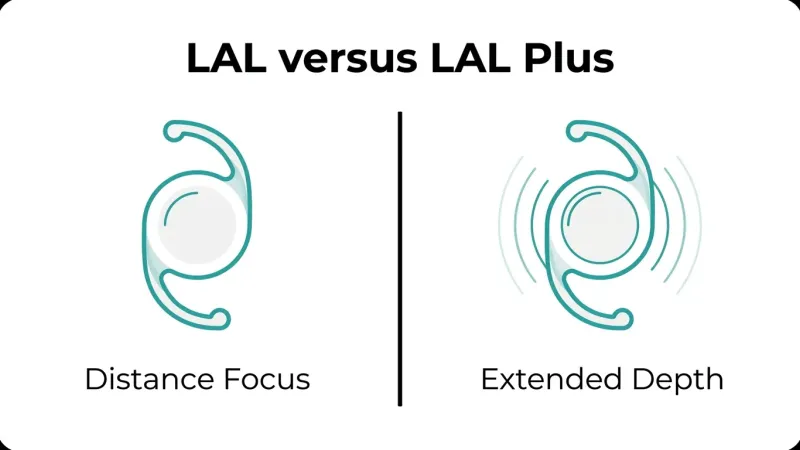
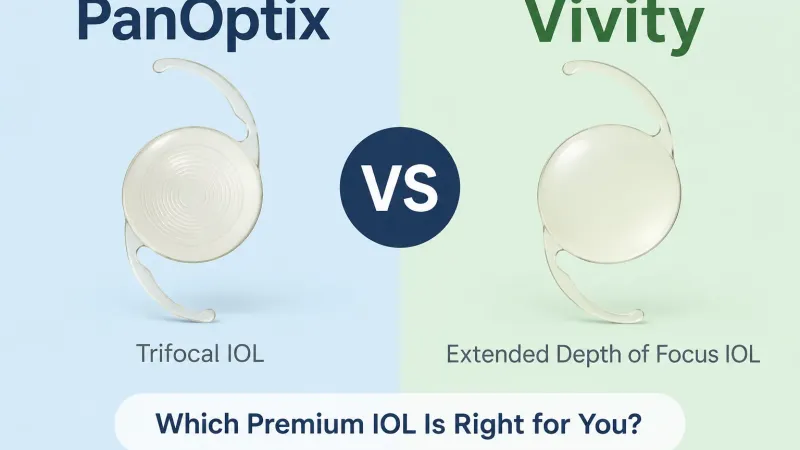
The Light Adjustable Lens compares with multifocal and extended depth-of-focus (EDOF) lenses by prioritizing optical clarity over range of focus. Multifocal and EDOF lenses split incoming light across multiple focal zones, which can reduce contrast sensitivity and increase the likelihood of halos or glare, particularly at night. The LAL functions as a single-focus lens, so it preserves contrast sensitivity better than most multifocal designs.
The key trade-off is functional range. Multifocal and EDOF lenses aim to reduce glasses dependence at multiple distances, while the LAL targets precision at a chosen focal point. Patients who need reliable near vision for reading without glasses may find multifocal or EDOF lenses more suitable. Conversely, patients who are highly sensitive to visual disturbances, work in low-light environments, or have occupations demanding exceptional contrast sensitivity are often better served by the LAL’s cleaner optical profile. From a clinical standpoint, the LAL is the stronger choice when predictability and quality of vision at a single distance matter more than spectacle independence across all ranges.
How does the Light Adjustable Lens compare with toric lenses for patients with astigmatism?
The Light Adjustable Lens compares with toric lenses by offering a post-surgical path to astigmatism correction rather than relying entirely on pre-operative measurements. Standard toric IOLs correct astigmatism at implantation by aligning the lens to the cornea’s axis; if the lens rotates post-operatively or if measurements were imprecise, residual astigmatism can remain. The LAL can address residual astigmatism through UV adjustment sessions after healing, reducing dependence on the accuracy of pre-surgical biometry alone.
For patients with moderate astigmatism and straightforward corneal anatomy, a standard toric lens remains a well-established and cost-effective option. The LAL becomes particularly compelling for patients with irregular or post-surgical corneas where standard toric calculations are less reliable. This makes the LAL a strong candidate for anyone who has had prior refractive surgery and also has astigmatism, since both correction variables can be dialed in after healing rather than estimated preoperatively.
When might a traditional IOL still be a better choice than a Light Adjustable Lens?
A traditional IOL may still be a better choice than a Light Adjustable Lens in several specific situations:
- Inability to wear UV-protective glasses consistently: Patients who cannot reliably wear the required protective eyewear between adjustment sessions risk uncontrolled UV exposure that could lock in an unintended prescription prematurely.
- Limited access to follow-up care: The LAL requires multiple post-operative UV treatment visits. Patients in rural areas or with significant transportation or scheduling barriers may not complete the full adjustment protocol.
- Severe photosensitivity conditions: Certain systemic medications or underlying health conditions increase UV sensitivity and may make the LAL protocol unsuitable.
- Budget constraints: Traditional IOLs, including standard monofocals and some toric options, typically carry lower out-of-pocket costs, making them more accessible for patients without supplemental vision insurance coverage.
- Desire for multifocal range: Patients whose primary goal is spectacle independence across near, intermediate, and distance vision may be better served by a multifocal or EDOF lens, since the LAL does not inherently provide extended focal range.
Understanding which lens is truly the best fit requires a thorough pre-operative consultation weighing the patient’s lifestyle, ocular health, and follow-up capacity alongside their visual goals.
How Much Does a Light Adjustable Lens Typically Cost and What Affects the Price?
Light Adjustable Lens surgery typically costs more than standard cataract surgery, with pricing influenced by surgeon experience, geographic location, insurance coverage, and available financing. The H3 sections below examine each of these cost factors in detail.
How do surgeon experience and clinic setting influence Light Adjustable Lens pricing?
Surgeon experience and clinic setting influence Light Adjustable Lens pricing by adding a premium tied to specialized skill and facility capabilities. Surgeons with extensive LAL experience and high case volumes often charge more, reflecting their training investment and demand. Academic medical centers and premium private practices typically carry higher facility fees than community surgery centers, partly because they maintain the dedicated UV light delivery equipment required for post-implant adjustments. Choosing a highly experienced LAL surgeon, rather than defaulting to the lowest-cost provider, is often worth the premium given how precision-dependent the adjustment process is.
How do geographic location and local market conditions affect Light Adjustable Lens cost?
Geographic location and local market conditions affect Light Adjustable Lens cost by creating regional price variation based on cost of living, competition, and market demand. Urban centers and major metropolitan areas generally charge more than rural or suburban practices, mirroring the broader pattern seen across elective surgical procedures. In markets where multiple clinics offer premium IOL options, competitive pricing may moderate costs. Patients in regions with limited LAL-trained surgeons may face less pricing flexibility, since fewer providers means reduced negotiating options.
How do insurance coverage and out-of-pocket expenses usually work for Light Adjustable Lenses?
Insurance coverage and out-of-pocket expenses for Light Adjustable Lenses follow a split-cost model. Medicare and most private insurers typically cover the basic cataract surgery and a standard monofocal IOL, but classify the Light Adjustable Lens as a premium upgrade. The additional cost of the LAL itself, along with the UV light adjustment sessions, is generally the patient’s financial responsibility. Out-of-pocket expenses for the premium upgrade can range considerably depending on the practice and location. Patients should request an itemized cost breakdown from their surgeon’s office before committing, since what insurance covers versus what does not can significantly affect total spending.
How do financing or payment plan options apply to Light Adjustable Lens surgery?
Financing and payment plan options apply to Light Adjustable Lens surgery by making the out-of-pocket premium more manageable through structured monthly payments. Many ophthalmology practices partner with medical financing companies, such as CareCredit or Alphaeon Credit, which offer promotional periods that may include deferred interest or low-interest installment plans. Some practices also offer in-house payment arrangements. Health savings accounts (HSAs) and flexible spending accounts (FSAs) can typically be used for LAL-related expenses, providing a tax-advantaged way to offset the cost. Exploring financing early in the decision process helps patients avoid delaying surgery for purely financial reasons.
What Questions Should Patients Ask Their Surgeon Before Choosing a Light Adjustable Lens?
Patients should ask their surgeon targeted questions covering vision goals, personal risk factors, surgeon experience, and the full cost and schedule commitment before choosing a Light Adjustable Lens. The H3 sections below address each of these four critical conversation areas.
How Can Patients Discuss Realistic Expectations and Vision Goals with Their Surgeon?
Patients can discuss realistic expectations by asking their surgeon specifically what range of vision correction is achievable for their eye measurements, prescription, and lifestyle needs. Key questions include:
- What distance or distances will my vision be optimized for after adjustment?
- Is full spectacle independence a realistic outcome for my prescription?
- What is the likelihood I will still need reading glasses for close tasks?
- How much improvement over standard IOL outcomes can I reasonably expect?
Surgeons who use the Light Adjustable Lens regularly can provide outcome data from their own patient population, which gives far more relevant context than general clinical statistics. Asking for this practice-specific information is one of the most underused tools patients have in the consultation.
How Should Patients Ask About Their Personal Risk Profile and Alternative IOL Options?
Patients should ask about their personal risk profile by requesting a direct comparison between the Light Adjustable Lens and every alternative IOL suitable for their eye health, including monofocal, toric, multifocal, and extended depth-of-focus lenses. Useful questions include:
- Do I have any conditions, such as dry eye, macular degeneration, or a history of refractive surgery, that could limit my adjustment outcomes?
- Are there IOL options that may be safer or more appropriate given my specific eye anatomy?
- What happens if adjustments do not achieve my target vision?
- What is the backup plan if my eyes do not respond as expected?
Understanding the full range of alternatives ensures the Light Adjustable Lens is chosen because it is the right fit, not simply because it is the most advanced technology available.
How Can Patients Evaluate Their Surgeon’s Experience with the Light Adjustable Lens?
Patients can evaluate their surgeon’s experience by asking directly how many Light Adjustable Lens procedures the surgeon has performed and what their personal outcomes data shows. Specific questions to ask include:
- How long have you been implanting and adjusting the Light Adjustable Lens?
- How many cases have you completed, and what percentage of your patients achieve their target refraction?
- Do you have a dedicated UV light delivery device in your clinic, or is adjustment outsourced?
- Are you certified and currently active in performing the adjustment treatments?
The Light Adjustable Lens requires proficiency in both surgical implantation and post-operative UV adjustment treatments, making experience with the full process, not just the surgery itself, essential to evaluate. A surgeon with a high adjustment volume is better positioned to recognize and correct suboptimal early responses before lock-in.
How Should Patients Clarify Follow-Up Schedules, Restrictions, and Total Cost Before Deciding?
Patients should clarify follow-up schedules, restrictions, and total cost by asking for a written breakdown of every appointment, compliance requirement, and fee before committing to surgery. Questions to cover include:
- How many post-operative visits will I need, and over what time period?
- How long must I wear UV-protective glasses, and in what situations?
- What happens to my results if I miss or delay an adjustment appointment?
- What is the all-inclusive cost, and does it cover additional adjustment sessions if needed?
The Light Adjustable Lens requires a greater time and compliance commitment than standard IOLs, so patients who understand the full schedule and UV restriction period upfront are far more likely to complete the process successfully and achieve their target outcome.
How Should You Approach the Light Adjustable Lens Decision with Surgeon‑Reviewed Guidance from Eye Surgery Today?
Approaching the Light Adjustable Lens decision requires balanced, clinically grounded information rather than marketing claims. Eye Surgery Today’s surgeon-reviewed education and key article takeaways help make that possible.
How can Eye Surgery Today’s surgeon‑reviewed education help you compare the Light Adjustable Lens with other cataract surgery options?
Eye Surgery Today’s surgeon-reviewed education can help you compare the Light Adjustable Lens with other cataract surgery options by presenting unbiased, clinically accurate breakdowns of each IOL type, including monofocal, multifocal, toric, and extended depth-of-focus lenses, without favoring any single product or procedure.
Every guide on Eye Surgery Today is surgeon-reviewed, which means the information reflects real-world clinical insight rather than simplified generalities. Patients can explore how the Light Adjustable Lens differs in post-surgical customization, candidacy requirements, cost structure, and follow-up burden compared to alternative lenses. This level of transparent comparison is often difficult to find in a single consultation. For patients weighing a premium IOL decision, accessing surgeon-reviewed education before that appointment can lead to sharper, more confident questions.
What are the key takeaways about the pros and cons of the Light Adjustable Lens we have covered?
The key takeaways about the pros and cons of the Light Adjustable Lens covered in this article are:
- Customization after surgery is the lens’s defining advantage, allowing UV light treatments to fine-tune prescription once healing stabilizes.
- Accuracy benefits are most significant for patients with prior LASIK, PRK, or RK, where standard IOL calculations carry higher uncertainty.
- Reduced glasses dependence is achievable but depends on individual healing, realistic expectations, and completing all adjustment sessions.
- UV protective eyewear is mandatory between treatments, requiring daily discipline for several weeks.
- Additional follow-up visits (typically three to five adjustment and lock-in sessions) add time and logistical demands beyond standard cataract recovery.
- Cost is higher than standard monofocal lenses, and insurance typically does not cover the premium portion.
- Not everyone qualifies: patients with certain retinal conditions, uncontrolled glaucoma, or inability to attend follow-up visits may not be suitable candidates.
- Missed or delayed adjustment appointments can limit the achievable outcome, making commitment to the treatment schedule essential.
Consulting a qualified ophthalmologist remains the necessary final step before any IOL decision.