A premium intraocular lens (IOL) is an artificial lens implanted during cataract surgery that is designed to provide functional vision at more than one distance, unlike a standard monofocal IOL that targets a single focal point.
This guide covers how each lens technology works, how they compare across key visual outcomes and side effects, who may be a strong candidate for each option, what to expect from the surgical process, and how to match your final choice to your lifestyle and budget.
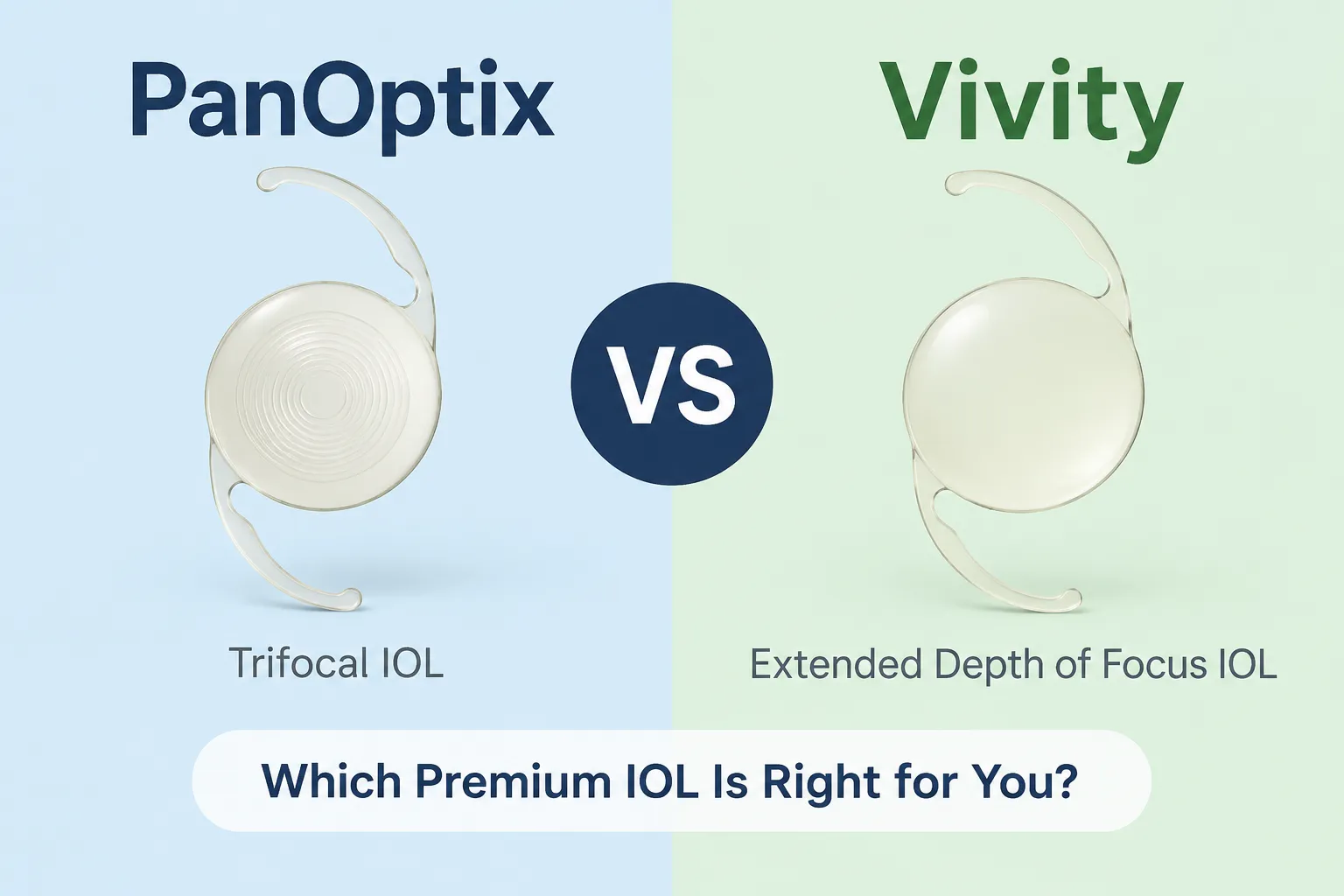
PanOptix is a diffractive trifocal IOL that splits light across three focal points for distance, intermediate, and near vision. Clinical evidence indicates it may offer the strongest near acuity among these options, and multicenter outcomes data show high rates of spectacle independence, though halos and glare are reported in a meaningful percentage of patients.
Vivity uses non-diffractive X-WAVE technology to stretch and shift the wavefront continuously, extending the depth of focus without diffractive rings. This design is associated with fewer visual disturbances and may deliver the most comfortable intermediate and distance vision, though near acuity is more limited and reading glasses are often still needed.
Candidacy for each lens depends on corneal health, pupil characteristics, coexisting eye conditions, and individual visual priorities. Medicare covers standard cataract surgery but does not cover the premium lens upgrade cost, so out-of-pocket expense is an important factor in every patient’s decision.
What Should You Know About Premium IOLs Before Comparing PanOptix and Vivity?
Premium IOLs are intraocular lenses designed to correct vision at more than one distance after cataract surgery, unlike standard lenses that target a single focal point. The sections below explain how premium IOLs differ from monofocal lenses, what vision problems they address, and why trade-offs like contrast and halos matter before evaluating any specific lens.
How Do Premium IOLs Differ From Standard Monofocal Lenses?
Premium IOLs differ from standard monofocal lenses in the number of focal distances they provide and the optical mechanisms used to achieve them. According to the American Academy of Ophthalmology, a monofocal IOL has one focusing distance, multifocal IOLs deliver distance and near focus through several rings or zones set at different powers, and extended depth-of-focus (EDOF) lenses use a single corrective zone that stretches to cover more than one distance.
The distinction matters clinically. A JAMA Ophthalmology network meta-analysis found no statistically significant differences between multifocal and monofocal IOLs for contrast sensitivity, glare, or halos in the included randomized evidence, suggesting that premium optics do not automatically worsen these outcomes compared to standard lenses.
Understanding this baseline helps patients approach PanOptix and Vivity as distinct technologies rather than a single “premium” category.
What Vision Problems Are Premium IOLs Designed To Help With?
Premium IOLs are designed to help with presbyopia, the age-related loss of near focusing ability that occurs when the eye’s natural lens stiffens. Standard cataract surgery replaces the clouded lens with a monofocal IOL, which restores distance clarity but typically still requires reading glasses. Premium IOLs aim to reduce or eliminate that dependence by providing functional vision across a broader range of distances, such as reading, computer work, and driving, within a single implant.
Patients with corneal astigmatism may also benefit from toric versions of premium IOLs, which correct cylindrical refractive error at the same time.
How Do Concepts Like Range of Vision, Contrast, and Halos Affect Daily Life?
Range of vision, contrast sensitivity, and halos affect daily life by determining how clearly and comfortably a patient sees across different distances and lighting conditions. A wider range of vision reduces the need to switch between glasses for reading, screens, and driving. Contrast sensitivity governs how well the eye distinguishes objects against similar backgrounds, which is especially relevant for activities like night driving or reading low-contrast text.
Halos and glare are dysphotopsias, unwanted light artifacts that some premium lens designs can introduce, particularly in low-light settings. These phenomena vary by lens technology and individual eye characteristics. Patients who drive frequently at night or work in dim environments should weigh dysphotopsia risk carefully when choosing between a trifocal, EDOF, or adjustable lens design.
How Does the AcrySof IQ PanOptix Trifocal IOL Work and What Vision Can It Provide?
The AcrySof IQ PanOptix trifocal IOL works by using a diffractive optical design to simultaneously direct incoming light to three distinct focal points: distance, intermediate, and near. The sections below cover how that design performs across visual ranges, which daily tasks it may support best, and situations where it may be less suitable.
How Is PanOptix Designed To Improve Distance, Intermediate, and Near Vision?
PanOptix is designed to improve distance, intermediate, and near vision through concentric diffractive rings that split and focus light at three focal distances within a single lens. This trifocal architecture targets tasks across a full visual range, from reading fine print to recognizing faces across a room.
Clinical evidence suggests the design performs particularly well at near. A systematic review and Bayesian network meta-analysis published in JAMA Ophthalmology, comprising 27 studies and 2,605 patients, found that trifocal and bifocal diffractive IOLs produced better uncorrected near acuity than monofocal IOLs, while uncorrected distance acuity was comparable between the two categories. A 2023 prospective cohort from Akdeniz University Faculty of Medicine followed 82 patients for six months and found that only 5 of 82 used distance spectacles and 8 of 82 used near spectacles postoperatively.
For patients prioritizing freedom from glasses across multiple distances, the trifocal design’s near-vision advantage over monofocal and EDOF options is clinically meaningful.
What Everyday Tasks Might PanOptix Help With the Most?
The everyday tasks PanOptix may help with the most include reading printed text, using a smartphone, working at a computer, and navigating distance environments such as driving or watching television. Because the diffractive trifocal design targets near, intermediate, and distance focal points, it is intended to reduce reliance on reading glasses or bifocals across a broad range of daily activities.
Patients who value spectacle independence across varied settings, rather than optimizing a single focal distance, tend to be the candidates for whom this lens’s design may provide the greatest practical benefit.
In What Situations Might PanOptix Be Less Ideal?
PanOptix may be less ideal in situations where a patient has significant corneal irregularities, higher-order aberrations, or coexisting eye conditions that may amplify the optical side effects associated with diffractive designs. According to Brian M. Shafer, MD, of Chester County Eye Care, in an AAO EyeNet expert discussion, “Patients with high corneal higher-order aberrations may not do well with these multifocal lenses and may experience increased photic phenomena or photopsia such as glare and halos.”
Additionally, a 2023 modified Delphi consensus published in the American Journal of Ophthalmology recommended that monofocal or non-diffractive IOLs be considered for patients with coexisting eye disorders, noting candidacy criteria such as scotopic pupil diameter below 6.0 mm and RMS corneal higher-order aberrations below 0.5 µm.
Patients who drive frequently at night or who work in low-light conditions may also find the diffractive design’s dysphotopsia profile less acceptable than a non-diffractive alternative.
How Does the AcrySof IQ Vivity Extended Vision IOL Work and What Vision Can It Provide?
The AcrySof IQ Vivity Extended Vision IOL works by using X-WAVE technology to stretch and shift the wavefront through a modified central 2.2-mm optic, extending depth of focus without diffractive rings. According to the FDA PMA record, models DFT015 and toric variants DFT315, DFT415, and DFT515 mitigate presbyopia by providing improved intermediate and near acuity while maintaining comparable distance acuity versus an aspheric monofocal IOL.
The following subsections cover how Vivity’s non-diffractive design differs from multifocal IOLs, what vision range patients can typically expect, and when Vivity may be preferred over a trifocal lens.
How Is Vivity’s Non-Diffractive Design Different From Multifocal IOLs?
Vivity’s non-diffractive design is different from multifocal IOLs because it does not use diffractive rings to split light into discrete focal points. Instead, the X-WAVE optic stretches and shifts wavefront energy continuously, extending the focal range without creating the sharp optical boundaries that characterize diffractive lenses.
This distinction carries real clinical implications for patient selection. A 2023 modified Delphi consensus published in the American Journal of Ophthalmology recommended that monofocal or non-diffractive IOLs should be considered for patients with coexisting eye disorders, reserving diffractive multifocals for eyes meeting strict criteria including RMS corneal higher-order aberrations below 0.5 µm. For patients who do not meet those criteria, Vivity’s non-diffractive approach may represent a more appropriate path to extended vision.
What Range of Vision Can Patients Typically Expect With Vivity?
The range of vision patients can typically expect with Vivity covers distance and intermediate distances well, with near vision that may still require reading glasses for some tasks. A 2022 prospective matched study published in the Journal of Ophthalmology found that complete spectacle independence was achieved by 40% of patients, while 60% required glasses for near vision always or often.
Distance outcomes with Vivity are generally strong. A 2022 retrospective case series published in Clinical Ophthalmology reported that among emmetropic-goal eyes treated in Minnesota, 35 of 36 eyes achieved 20/20 or better and 36 of 36 were within ±0.50 D spherical equivalent of plano.
Patients should approach near-vision expectations with realistic goals. Vivity performs most consistently at distance and intermediate, making it well suited for driving, computer work, and most daily activities, though reading fine print often still requires spectacles.
In What Situations Might Vivity Be Preferred Over a Trifocal IOL?
Vivity may be preferred over a trifocal IOL in situations where a patient has coexisting eye conditions, elevated corneal higher-order aberrations, or a strong preference for minimizing visual disturbances such as halos and glare at night. Because Vivity’s X-WAVE technology does not split light diffractively, it avoids the dysphotopsia profile associated with diffractive multifocals.
It is also a reasonable choice for patients whose visual priorities center on distance and intermediate clarity rather than spectacle-free near vision. For someone whose daily routine involves driving, screen use, and outdoor activity rather than sustained close reading, the trade-off of occasional reading glasses for a quieter visual experience may be worthwhile. Patients with conditions like dry age-related macular degeneration, glaucoma, or corneal pathology are candidates where ophthalmologists may favor non-diffractive options like Vivity over trifocal designs.
How Do PanOptix and Vivity Compare for Distance, Intermediate, and Near Vision?
PanOptix and Vivity each address distance, intermediate, and near vision differently, and no single peer-reviewed randomized trial has compared all three in the same population. The sections below examine near, intermediate, and distance performance based on available clinical evidence.
Which Lens Option May Offer the Strongest Near Vision for Reading?
The lens option that may offer the strongest near vision for reading is PanOptix. As a diffractive trifocal IOL, PanOptix distributes light across three focal points, including a dedicated near focus.
A 2024 retrospective, multicenter comparison of 178 eyes published in the Journal of Clinical Medicine found that PanOptix performed best at near among the groups studied, while Vivity mini-monovision produced better vision from far through intermediate. Trifocal IOLs may also provide better near vision and less near spectacle dependence than EDOF IOLs, according to a Cochrane review of five studies and 239 enrolled participants, though the certainty of evidence was rated low.
Which Lens Option May Offer the Most Comfortable Intermediate Vision for Computer Work?
The lens option that may offer the most comfortable intermediate vision for computer work is Vivity. Using Alcon’s non-diffractive X-WAVE technology, Vivity extends the depth of focus across a continuous range rather than splitting light into discrete focal points.
A 2022 prospective, non-interventional controlled multicenter trial at four U.S. private ophthalmology practices followed 64 Vivity eyes from 32 subjects for approximately three years and reported better mean binocular distance-corrected intermediate acuity than monofocal controls. The same 2024 Journal of Clinical Medicine comparison noted that Vivity mini-monovision produced better vision from far through intermediate at 60 cm than the other groups, and Vivity contrast sensitivity was higher than PanOptix at specified photopic and mesopic spatial frequencies.
For patients whose daily demands center on screen use and desk work, Vivity’s continuous focus profile may translate to a more natural, effort-free intermediate experience.
How Do PanOptix and Vivity Compare for Visual Disturbances Like Glare, Halos, and Starbursts?
PanOptix and Vivity compare differently for visual disturbances, with PanOptix carrying the highest reported rates and Vivity showing a more favorable dysphotopsia profile. The sections below cover each lens individually, drawing on available clinical evidence.
How Likely Are Halos and Glare With PanOptix in Nighttime Conditions?
Halos and glare with PanOptix in nighttime conditions are among the most consistently reported side effects of this diffractive trifocal lens. According to a 2025 random-effects meta-analysis published in Ophthalmology and Therapy, which pooled data from 11 studies across 580 bilateral PanOptix patients in 10 countries, glare was reported in 33.6% of patients, halos in 43.9%, and starbursts in 30.4%. Severe cases were uncommon: severe glare, halos, and starbursts were reported in 2.9%, 5.4%, and 3.4% of patients, respectively. Very bothersome rates were lower still, at 0.8%, 1.4%, and 2.6%.
These figures suggest that while photic phenomena are common with PanOptix, the majority of patients experience mild symptoms that do not significantly impair daily function. Patients who are highly sensitive to nighttime visual disturbances should weigh this profile carefully before selecting a diffractive lens.
How Likely Are Halos and Glare With Vivity in Nighttime Conditions?
Halos and glare with Vivity in nighttime conditions are generally reported at lower rates than with diffractive multifocal lenses, which aligns with its non-diffractive X-WAVE design. Unlike PanOptix, Vivity uses wavefront “stretch” and “shift” mechanisms rather than diffractive ring optics, and this optical architecture is associated with fewer photic phenomena in clinical practice. No large-scale meta-analysis equivalent to the PanOptix data above was identified specifically for Vivity, so direct numerical comparison is not possible from current evidence. However, commercial positioning of Vivity consistently cites fewer unwanted visual phenomena as a clinical differentiator, and this is supported by the lens’s non-diffractive mechanism.
For patients with high sensitivity to glare or those who drive frequently at night, Vivity may represent a more tolerable option than a trifocal lens design.
How Do PanOptix and Vivity Compare in Terms of Dependence on Glasses?
PanOptix and Vivity differ meaningfully in how often patients may still need glasses after surgery. PanOptix targets the broadest range of vision and Vivity prioritizes distance and intermediate tasks.
With PanOptix, When Might You Still Need Glasses After Surgery?
With PanOptix, you might still need glasses after surgery primarily for reading in low contrast or small-print situations. According to a 2022 prospective, open-label, multicenter outcomes analysis published in Clinical Ophthalmology, 83% of PanOptix patients reported complete spectacle independence for all visual activities, while 17% still needed glasses for reading. Overall patient satisfaction reached 97%. The trifocal diffractive design targets distance, intermediate, and near simultaneously, making full spectacle independence achievable for most patients, though near reading in challenging conditions remains the most common exception.
With Vivity, When Might You Still Need Glasses After Surgery?
With Vivity, you might still need glasses after surgery most often for sustained close-up tasks, particularly reading small print. Vivity’s X-WAVE technology stretches and shifts wavefront energy without diffractive optics, prioritizing smooth distance and intermediate vision over near acuity. In a 2022 prospective matched study published in the Journal of Ophthalmology, 60% of Vivity patients required glasses for near vision always or often. Patients whose daily activities center on screens and distance tasks are typically most satisfied, while dedicated readers may find near spectacles necessary.
Who May Be a Good Candidate for PanOptix or Vivity?
Candidacy for each premium IOL depends on eye health measurements, corneal characteristics, and daily vision priorities. The sections below outline the key factors for PanOptix and Vivity individually, then address how specific conditions shape the choice.
What General Eye Health and Lifestyle Factors Affect Candidacy for PanOptix?
General eye health and lifestyle factors that affect candidacy for PanOptix include corneal regularity, pupil size, higher-order aberrations, and a strong personal desire to minimize reading glasses. A 2023 modified Delphi consensus published in the American Journal of Ophthalmology recommended the following criteria for diffractive multifocal IOLs:
- Potential postoperative visual acuity greater than 0.5
- Keratometry between 40 and 45 D
- Photopic pupil greater than 2.8 mm
- Scotopic pupil less than 6.0 mm
- RMS corneal higher-order aberrations below 0.5 µm at a 6-mm pupil
Patients who read frequently, work at close range, or prioritize spectacle independence across all distances are typically the strongest candidates. Those with irregular corneas or elevated higher-order aberrations may face a higher risk of photic phenomena with a diffractive design.
What General Eye Health and Lifestyle Factors Affect Candidacy for Vivity?
General eye health and lifestyle factors that affect candidacy for Vivity include the presence of coexisting ocular conditions and a preference for strong distance and intermediate vision over maximum near acuity. The same 2023 ESASO consensus noted that monofocal or non-diffractive IOLs should be considered when coexisting eye disorders are present, making Vivity’s non-diffractive X-WAVE design a reasonable option for patients who do not fully meet diffractive criteria. Individuals who spend significant time driving, using computers, or engaging in outdoor activities often align well with Vivity’s visual profile. Patients who are highly sensitive to night-vision disturbances may also find Vivity’s design more tolerable than a diffractive trifocal.
How Do Conditions Like Astigmatism, Dry Eye, or Macular Disease Influence Lens Choice?
Conditions like astigmatism, dry eye, and macular disease influence lens choice by narrowing or redirecting the range of appropriate premium IOL options. The key influences are:
- Astigmatism: ESCRS recommendations state that toric IOL variants should be considered at corneal astigmatism of at least 1.0 D, with stronger evidence above 2.0 D. All three lenses offer toric models or adjustment capability for astigmatism.
- Dry eye: Significant preoperative dry eye can distort biometry measurements and worsen postoperative visual quality. Optimization before surgery is generally advised regardless of lens choice.
- Macular disease or other ocular pathology: The 2023 ESASO consensus recommended monofocal or non-diffractive IOLs for patients with coexisting eye disorders, suggesting Vivity may be more appropriate than a diffractive trifocal like PanOptix in these situations.
- Corneal higher-order aberrations: Elevated aberrations increase dysphotopsia risk with diffractive designs, making non-diffractive or adjustable options preferable.
Ultimately, IOL selection should be a shared decision between the patient and ophthalmologist, based on comprehensive preoperative testing.
What Are the Possible Risks, Side Effects, and Trade-Offs of PanOptix and Vivity?
The possible risks, side effects, and trade-offs of PanOptix and Vivity vary by lens design, but all three share the general surgical risks of cataract surgery. The sections below cover the key trade-offs for each lens and how shared decision-making can help reduce those risks.
What Potential Side Effects and Trade-Offs Are Associated With PanOptix?
The potential side effects associated with PanOptix include photic phenomena such as glare, halos, and starbursts, which result from its diffractive trifocal design. A 2025 random-effects meta-analysis in Ophthalmology and Therapy analyzing 580 bilateral PanOptix patients across 10 countries found pooled rates of 33.6% for glare, 43.9% for halos, and 30.4% for starbursts; however, severe rates were 2.9%, 5.4%, and 3.4%, respectively, and very bothersome rates were under 3% across all categories. Beyond these optical trade-offs, all cataract surgery carries intraoperative risk: a BMJ clinical review reports that posterior-capsule rupture may occur in 2–4% of operations and is associated with increased incidence of endophthalmitis, cystoid macular edema, and retinal detachment. Patients with high corneal higher-order aberrations may be at greater risk for photic phenomena with diffractive designs like PanOptix, making thorough preoperative screening essential.
What Potential Side Effects and Trade-Offs Are Associated With Vivity?
The potential side effects associated with Vivity are generally considered milder than those of diffractive trifocal lenses, largely because its non-diffractive X-WAVE technology avoids splitting light into multiple focal points. Rather than distributing light energy across discrete zones, Vivity stretches and shifts the wavefront continuously, which may reduce the severity of halos and glare compared to PanOptix. The primary trade-off is reduced near vision performance; a 2024 retrospective multicenter study in the Journal of Clinical Medicine found that PanOptix outperformed Vivity at near distances, meaning patients who prioritize reading without glasses may find Vivity insufficient. Some patients may also still require reading glasses for fine print. Vivity may be a more appropriate choice for individuals with coexisting ocular conditions, as the 2023 ESASO Delphi consensus recommends considering non-diffractive IOLs when coexisting eye disorders are present.
How Can You and Your Surgeon Work Together To Reduce Premium IOL Risks?
You and your surgeon can work together to reduce premium IOL risks through thorough preoperative evaluation, realistic expectation-setting, and careful lens selection based on your individual ocular anatomy and lifestyle priorities. Key collaborative steps include:
- Completing biometry and corneal topography to assess IOL power accuracy, astigmatism, and higher-order aberrations before selecting a lens.
- Disclosing all eye health history, including prior LASIK, glaucoma, dry age-related macular degeneration, or epiretinal membrane, which may influence which lens is appropriate.
- Discussing dysphotopsia risk openly, particularly for diffractive designs like PanOptix, so visual expectations are accurate before surgery.
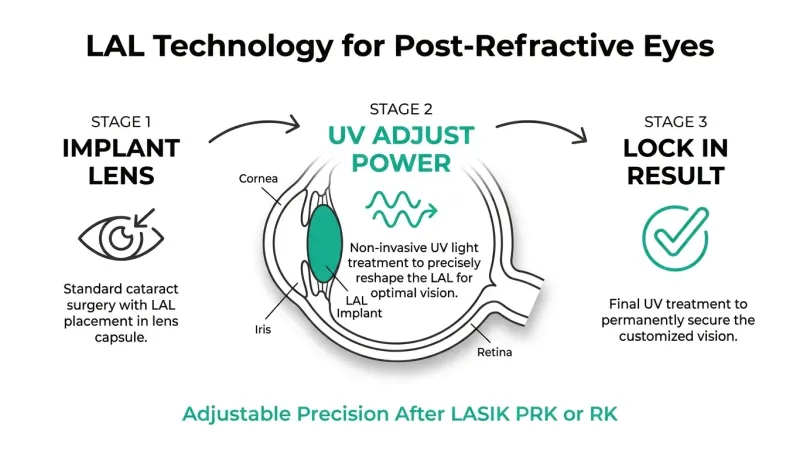
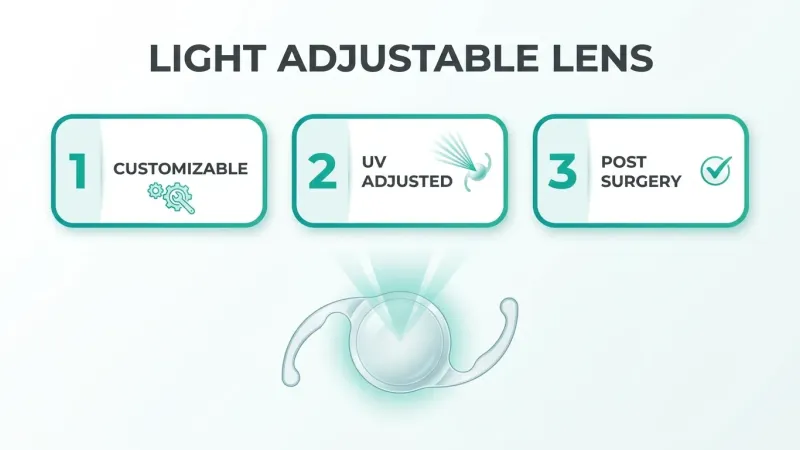
- Attending all scheduled follow-up appointments to monitor outcomes and, where applicable, complete adjustment or lock-in sessions.
Informed, two-way communication between patient and surgeon remains the most effective strategy for minimizing premium IOL complications and optimizing satisfaction with the outcome.
What Can You Expect Before, During, and After Cataract Surgery With a Premium IOL?
Cataract surgery with a premium IOL follows three phases: a preoperative consultation with precise eye measurements, a day-of procedure typically lasting under an hour, and a recovery period where vision gradually stabilizes.
How Should You Prepare for a Premium IOL Cataract Consultation and Measurements?
Preparation for a premium IOL cataract consultation involves a specialist examination and detailed eye measurements to determine the correct IOL power and type. According to NHS guidance, patients receive these measurements before surgery as a standard step in the surgical planning process.
Your surgeon will assess corneal topography, pupil size, and any existing astigmatism. These measurements directly inform which premium IOL, whether PanOptix or Vivity, suits your eye anatomy and visual goals. Arriving with a list of current medications and a clear picture of your lifestyle priorities (reading, driving, computer work) helps your surgeon match the lens to your needs. This consultation is also the right time to ask about realistic spectacle independence outcomes for each lens option.
What Happens on the Day of Cataract Surgery With a Premium IOL?
Cataract surgery with a premium IOL is typically performed under local anesthetic, takes 20 to 45 minutes, and allows patients to go home the same day, according to NHS guidance. The surgeon removes the clouded natural lens using phacoemulsification and implants the selected IOL into the capsular bag.
The Lancet notes that advances in small-incision cataract surgery, viscoelastics, and IOL development have made treatment very effective, with visual recovery rapid in most cases. IOL target selection, including toric correction for astigmatism, remains a shared patient-ophthalmologist decision per ESCRS recommendations.
What Is Recovery Like After Premium IOL Surgery and When Does Vision Stabilize?
Recovery after premium IOL surgery involves mild blurring, light sensitivity, and gradual visual improvement over days to weeks. Most patients return home the same day and resume light activities quickly, though full stabilization of vision may take several weeks as post-surgical adjustments are completed.
For PanOptix and Vivity patients, the brain typically adapts to the new optics within four to eight weeks, a process called neuroadaptation. Attend all scheduled follow-up appointments and follow your surgeon’s instructions on eye drop use, activity restrictions, and UV protection. Skipping follow-up visits is one of the most avoidable ways to compromise your outcome with any premium IOL.
How Should You Decide Between PanOptix and Vivity for Your Lifestyle, Hobbies, and Work?
Deciding between PanOptix and Vivity depends primarily on which visual tasks matter most to you and how your budget aligns with each option. The following sections break down lens fit by close-up priorities, intermediate needs, night driving demands, and cost considerations.
Which Lens May Fit Best if Reading and Close-Up Hobbies Are Your Top Priority?
The lens that may fit best if reading and close-up hobbies are your top priority is PanOptix. As a diffractive trifocal IOL, PanOptix is designed to target near, intermediate, and distance vision simultaneously. A 2024 retrospective multicenter comparison published in the Journal of Clinical Medicine found that PanOptix performed best at near distances compared to Vivity mini-monovision groups. A 2022 prospective outcomes analysis in Clinical Ophthalmology reported that 83% of PanOptix patients achieved complete spectacle independence across all visual activities. For patients whose daily lives center on reading, needlework, or detailed close-up work, PanOptix is often considered the strongest trifocal option currently available, though candidacy still depends on corneal health and pupil measurements.
Which Lens May Fit Best if Computer and Intermediate Vision Are Most Important?
The lens that may fit best if computer and intermediate vision are most important is Vivity. Using Alcon’s non-diffractive X-WAVE technology, Vivity extends depth of focus through wavefront stretching and shifting rather than diffractive ring zones. A 2024 retrospective multicenter study in the Journal of Clinical Medicine reported that Vivity mini-monovision produced better vision from far through intermediate at 60 cm than comparison groups. According to the FDA PMA record for the AcrySof IQ Vivity DFT015, the lens provides improved intermediate and near acuity while maintaining comparable distance acuity versus an aspheric monofocal IOL. For professionals who spend significant time at a screen, Vivity’s smooth intermediate range and generally lower dysphotopsia profile make it a clinically well-supported choice.
How Do Budget and Insurance Considerations Factor Into Your Lens Decision?
Budget and insurance considerations factor significantly into your lens decision because Medicare and most standard insurance plans do not cover the premium upgrade cost for PanOptix or Vivity. According to AAO billing guidance, Medicare pays only for the cost of a conventional monofocal IOL; patients are billed separately for any premium lens upgrade. AAO practice-management guidance also notes that while Medicare Part B does not cover premium lenses, some Medicare Advantage and commercial plans may provide partial coverage, making benefit verification before surgery essential. Independent standardized price data for these three lenses has not been verified in peer-reviewed literature, so out-of-pocket costs should be discussed directly with your surgical practice. Understanding your coverage gap early allows you to weigh each lens’s clinical advantages against your realistic financial commitment.
How Should You Approach Premium IOL Choices With Trusted, Surgeon-Reviewed Education From Eye Surgery Today?
Approaching premium IOL choices well means combining reliable clinical education with an informed conversation with your surgeon. Eye Surgery Today’s surgeon-reviewed guides and the key takeaways from this comparison give you a practical foundation for that conversation.
How Can Eye Surgery Today’s Cataract and IOL Guides Help You Prepare for a Surgeon Consultation?
Eye Surgery Today’s cataract and IOL guides can help you prepare for a surgeon consultation by translating peer-reviewed clinical evidence into clear, accessible language, so you arrive with the right questions rather than confusion. The platform is built on surgeon-reviewed content designed specifically for patients considering cataract surgery and premium IOL options such as PanOptix and Vivity.
Preparation topics worth reviewing before your consultation include:
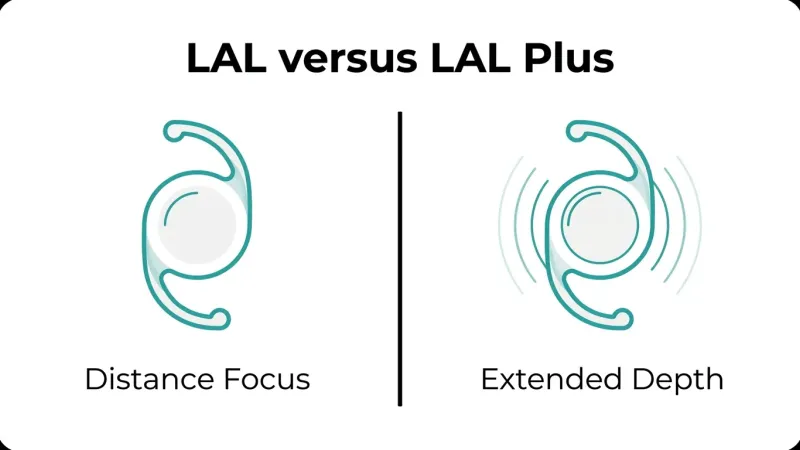
- How each lens type, diffractive trifocal, non-diffractive EDOF, and photoadjustable, handles different visual distances.
- What candidacy factors, such as corneal health, pupil size, and coexisting eye conditions, your surgeon will assess.
- How spectacle independence expectations differ across lens categories.
- What questions to ask about dysphotopsia risk, adjustment protocols, and cost coverage.
Well-prepared patients tend to have more productive consultations, and that preparation directly improves shared decision-making between you and your ophthalmologist.
What Are the Key Takeaways About PanOptix vs Vivity We Covered?
The key takeaways about PanOptix vs Vivity center on matching each lens’s clinical profile to your vision priorities, eye health, and lifestyle. No single lens is objectively best; the right choice depends on your individual anatomy and goals.
The most actionable conclusions from this comparison are:
- PanOptix is a diffractive trifocal IOL suited to patients who prioritize near and reading vision; a 2022 multicenter patient-reported outcomes study found 83% of PanOptix patients reported complete spectacle independence, though halos and glare are a genuine trade-off to discuss with your surgeon.
- Vivity uses non-diffractive X-WAVE technology to extend the depth of focus with a lower dysphotopsia profile, making it a stronger fit for patients who prioritize distance through intermediate vision or who have coexisting eye conditions.
- No peer-reviewed randomized trial has directly compared all three lenses in the same population, so cross-study statistics should inform discussion rather than replace it.
- IOL target selection is a shared patient-ophthalmologist decision, as recommended by the European Society of Cataract and Refractive Surgeons.
Use the education from Eye Surgery Today as a starting point, then bring these takeaways into a direct conversation with a qualified cataract surgeon who can evaluate your specific measurements and expectations.