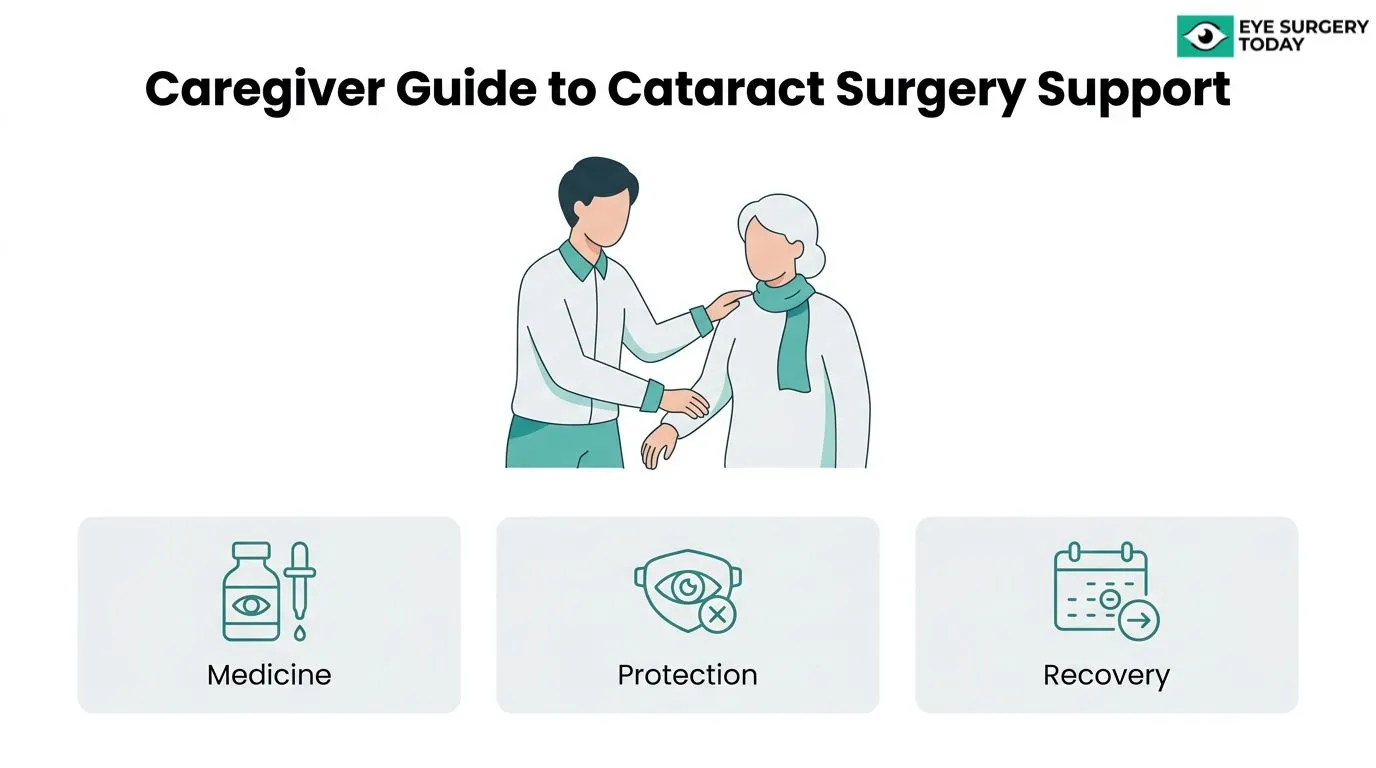
Preparing loved ones to help with cataract surgery involves equipping caregivers with practical knowledge about the procedure, their specific responsibilities before and after the operation, and the warning signs that require urgent action.
This guide covers why caregiver support is necessary, what loved ones should understand about the procedure itself, how to handle surgery day logistics and hands-on recovery tasks, which complications to watch for, how to communicate effectively with the surgical team, recovery timelines, and emotional support strategies.
Temporary physical limitations such as blurry vision, light sensitivity, and restrictions on bending or lifting can make independent recovery difficult, particularly in the first 48 hours. Many surgery centers require a responsible adult to be present at discharge, and research suggests nearly a third of outpatients cannot manage alone the day after an ambulatory procedure.
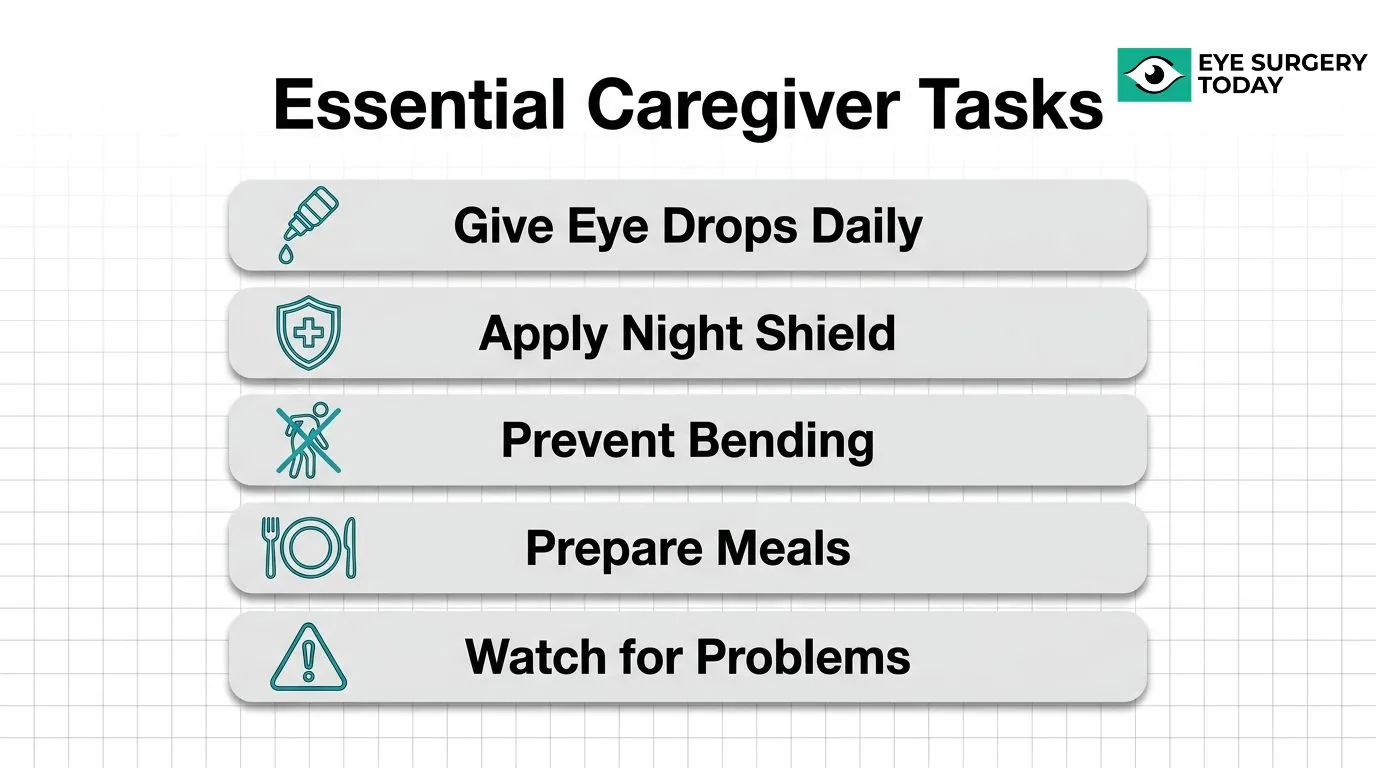
Caregiver tasks during recovery include administering prescribed eye drops for up to four weeks, ensuring proper use of a protective eye shield at night, managing meal preparation, and preventing activities that could increase intraocular pressure. Knowing how to perform these tasks correctly may reduce complication risk during the healing window.
Loved ones who can identify urgent warning signs, such as sudden vision loss, increasing pain, or new floaters and flashes, are better positioned to seek prompt medical attention when it matters most. Clear documentation of discharge instructions also plays a critical role, since most patients struggle to recall post-operative guidance given on the day of surgery.
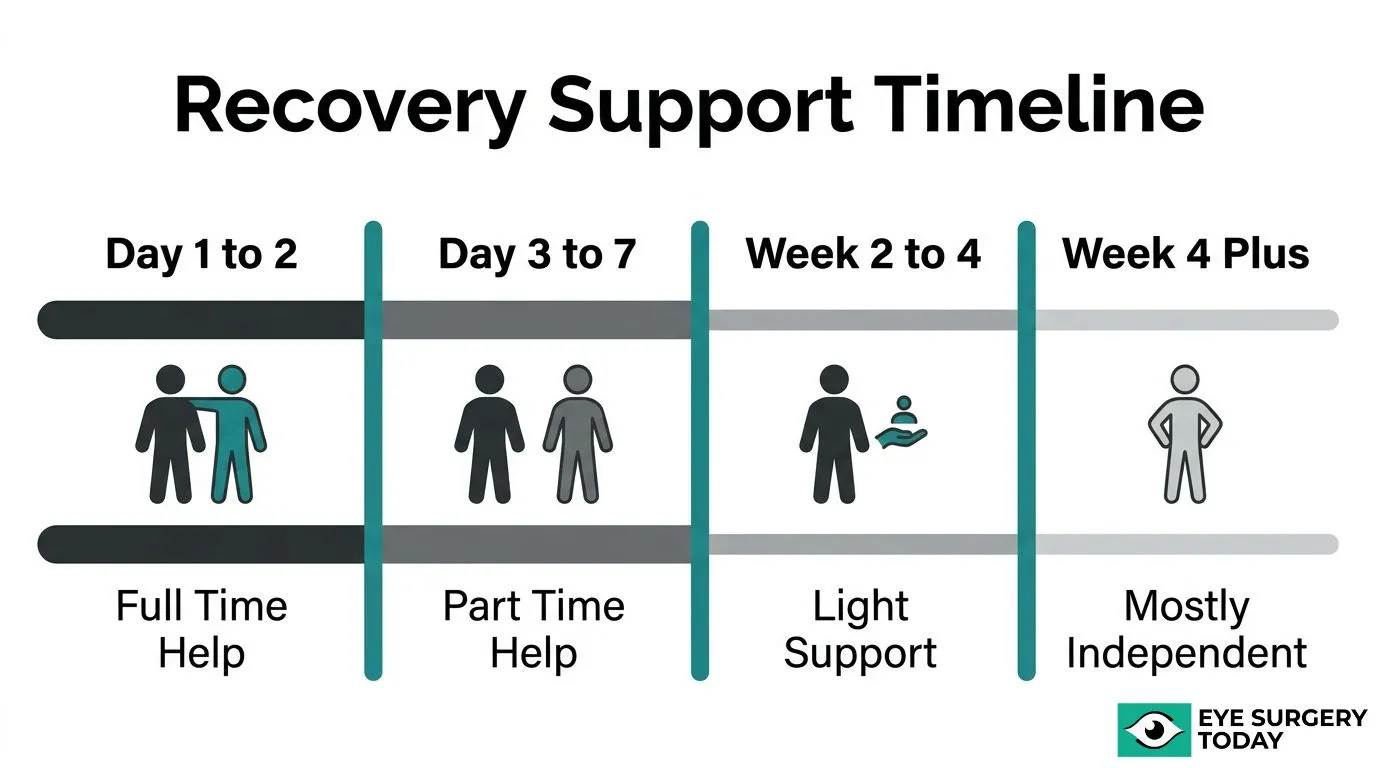
The most intensive support is typically needed in the first week, with needs gradually decreasing over four weeks per eye. When both eyes require surgery, caregivers should plan for an extended timeline of intermittent assistance.
Why Might You Need Help From Loved Ones After Cataract Surgery?
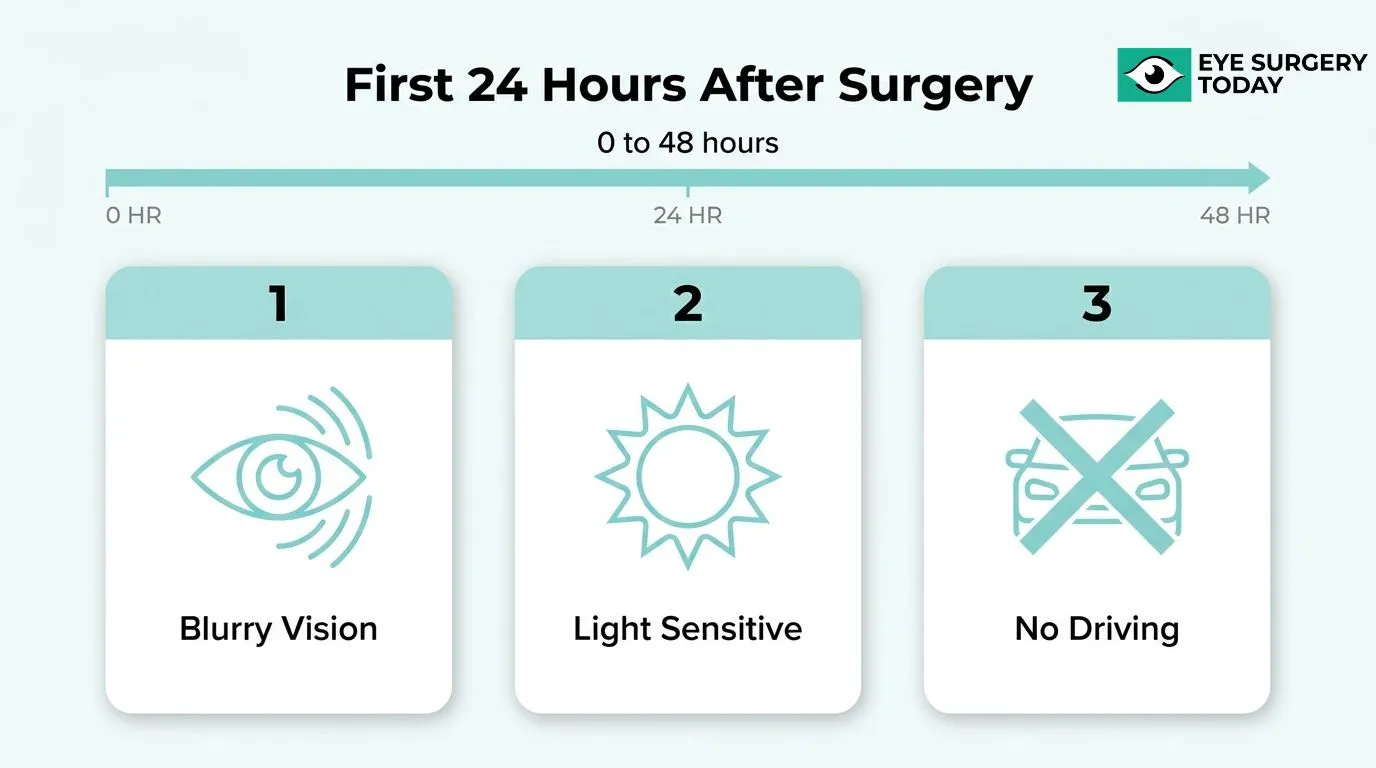
Most patients need help from loved ones after cataract surgery because temporary physical limitations, activity restrictions, and safety risks make independent recovery difficult, especially in the first 24 to 48 hours. The following sub-sections cover what to expect physically, which activities require caregiver assistance, and what risks arise without support.
What Physical Limitations Can You Expect in the First 24 Hours?
The physical limitations you can expect in the first 24 hours include blurry vision, light sensitivity, and reduced spatial awareness that impair your ability to move around, drive, or care for yourself safely. Vision is often unstable immediately after surgery, making tasks like reading, cooking, or navigating stairs genuinely hazardous without assistance. According to Pacific Eye Doctors, patients should avoid bending over for at least 48 hours after cataract surgery to maintain intraocular pressure and prevent complications. Driving is also off the table: most patients cannot drive until 24 to 48 hours post-procedure, and only after meeting their state’s visual acuity requirements and receiving surgeon approval. A caregiver is not optional during this window — it is a practical necessity.
What Activity Restrictions May Require Assistance During Recovery?
The activity restrictions that may require caregiver assistance during recovery include avoiding heavy lifting, bending at the waist, strenuous exercise, and water exposure. These limitations directly affect daily routines such as grocery shopping, housework, and personal hygiene. Moderate exercise such as jogging or tennis is generally not cleared until approximately one week post-surgery, and swimming is restricted for four weeks to reduce infection risk. During this period, a caregiver may need to handle meal preparation, assist with getting dressed, and ensure the patient does not accidentally strain or contaminate the healing eye.
What Are the Possible Risks if You Lack a Support Person?
The possible risks of lacking a support person after cataract surgery include unsafe discharge, medication errors, and complications going undetected. A study of 103 outpatients found that 31% reported they could not have managed without a caregiver the day after an ambulatory procedure, according to the Pennsylvania Patient Safety Authority. Medicare’s Conditions of Participation for ambulatory surgery centers require that all patients be discharged with a responsible adult present, underscoring how seriously medical institutions regard post-operative support. Without a caregiver, patients may miss prescribed eye drops, fail to rest appropriately, or have no one present to recognize early warning signs of complications.
What Should Loved Ones Know About Cataract Surgery Before the Procedure?
Loved ones should understand the core procedural details before surgery day, including what happens during the operation, how long it takes, and what type of anesthesia is used. This foundation helps caregivers feel confident and prepared.
What Happens During the Cataract Surgery Procedure?
Cataract surgery is a procedure in which the eye’s clouded natural lens is removed and replaced with a clear artificial intraocular lens (IOL). The surgeon makes a small incision in the eye, uses ultrasound energy to break up the cloudy lens through a technique called phacoemulsification, and then inserts the replacement IOL. According to Dr. Marzena Raszewska-Steglinska, a consultant ophthalmic surgeon with over 12 years of experience, “Cataract surgery is a straightforward procedure with a very high success rate.” Loved ones can take reassurance in that: while the eye is delicate, the technique is highly refined and widely performed.
How Long Does Cataract Surgery Typically Take?
Cataract surgery typically takes between 20 and 45 minutes to complete, according to the National Health Service. When both eyes require treatment, surgeons most commonly use a delayed sequential approach, with the second eye treated within approximately six weeks of the first, as noted in a Cochrane Database of Systematic Reviews analysis. Caregivers should plan to be available for the full appointment window, which includes pre-operative preparation and post-operative observation, not the surgical time alone.
What Type of Anesthesia Is Used During Cataract Surgery?
Cataract surgery uses local anesthesia, meaning the patient remains awake but the eye is numbed so no pain is felt during the procedure. Anesthetic eye drops or a small injection around the eye block sensation, and a mild sedative may be offered to help the patient relax. Loved ones should know the patient will be conscious throughout, so a calm, reassuring presence before the procedure can genuinely help reduce pre-operative anxiety.
How Should You Prepare a Caregiver for Surgery Day?
Preparing a caregiver for surgery day means covering three key areas: pre-surgery tasks, what to expect at the surgery center, and transportation responsibilities.
What Pre-Surgery Tasks Should a Caregiver Help With?
Pre-surgery tasks a caregiver should help with include confirming the appointment, managing medications, and preparing the home for recovery. Before the procedure, a caregiver can fill prescriptions, arrange a comfortable resting area, and ensure the patient fasts according to surgeon instructions. This practical support is more important than it may seem. According to a Pennsylvania Patient Safety Authority study of 103 outpatients, 31% stated they could not have managed without a caregiver the day after an ambulatory procedure. Additionally, the NHS advises that caregivers should plan to assist with eye drop administration for approximately four weeks post-surgery to support healing and prevent infection.
What Should a Caregiver Expect at the Surgery Center?
A caregiver should expect to check the patient in, remain on-site throughout the procedure, and be present for discharge. The surgery itself is brief, typically completed within 20 to 45 minutes, so waiting times are short. Caregivers should bring something to occupy themselves during the wait. Crucially, Medicare’s Conditions of Participation for ambulatory surgery centers require that all patients be discharged in the company of a responsible adult, except those exempted by the attending physician. Being absent at discharge is not an option in most cases.
How Should a Caregiver Handle Transportation on Surgery Day?
A caregiver should handle transportation on surgery day by driving the patient both to and from the surgery center, as patients cannot drive themselves after the procedure. Sedation and temporary blurred vision make self-transport unsafe and, in most centers, prohibited. The caregiver should confirm the pick-up time before surgery begins, keep the car ready, and assist the patient from the discharge area to the vehicle. Wearing a protective eye shield during transit also helps prevent accidental eye contact from seatbelts or clothing.
With transportation planned in advance, caregivers are well-positioned to shift focus toward hands-on recovery support once the patient is home.
What Specific Tasks Should Loved Ones Help With During Recovery?
Caregivers support recovery across several practical areas, including eye drop administration, protective shield use, physical activity restrictions, home preparation, and complication monitoring.
How Can a Caregiver Help With Prescribed Eye Drops?
A caregiver can help with prescribed eye drops by assisting the patient with administration for approximately four weeks following cataract surgery. According to the NHS, consistent use of prescribed drops during this period helps the eye heal and prevents infection. Pulling the lower eyelid gently down, tilting the patient’s head back slightly, and confirming the correct drop and dosing schedule each time are practical steps a caregiver can follow. Missing doses is a common and preventable risk, making caregiver involvement particularly valuable during the first two weeks when the eye is most vulnerable.
How Can a Caregiver Assist With Protective Eye Shield Use?
A caregiver can assist with protective eye shield use by ensuring the patient wears a plastic shield over the operated eye at night while it is healing. Guy’s and St Thomas’ NHS Foundation Trust advises this practice to prevent accidental rubbing or pressure during sleep. The caregiver’s role includes placing the shield correctly before bed, securing it gently with tape, and removing it in the morning without touching the eye directly.
How Can a Caregiver Help Prevent Bending and Lifting?
A caregiver can help prevent bending and lifting by taking over any household tasks that require stooping, reaching low, or carrying heavy objects. Patients should avoid bending over for at least 48 hours after surgery to maintain intraocular pressure and reduce complication risk, according to Pacific Eye Doctors. Practically, this means the caregiver should retrieve dropped items, handle laundry, and manage anything stored below counter height during the first two days of recovery.
How Can a Caregiver Help With Meal Preparation and Hygiene?
A caregiver can help with meal preparation and hygiene by setting up a dedicated recovery station stocked with medications, water, and easy-to-prepare meals before surgery day. This approach, recommended by Northwest Eye Clinic, reduces the patient’s need to move around unnecessarily and keeps essential items within arm’s reach. For hygiene, the caregiver should assist with hair washing and face cleaning to keep soap and water away from the operated eye.
How Can a Caregiver Monitor for Warning Signs of Complications?
A caregiver can monitor for warning signs of complications by learning the specific symptoms that require urgent medical contact. The NHS advises patients to contact their doctor immediately if they notice a dark curtain or shadow moving across their vision. Additional red flags include sudden floaters or flashes of light, which may indicate retinal detachment according to the Mayo Clinic, as well as rapidly worsening vision, severe eye pain, or significant redness, which are characteristic signs of endophthalmitis. A caregiver who recognizes these symptoms early and acts quickly can make a meaningful difference in outcomes.
What Warning Signs Should Loved Ones Watch For After Surgery?
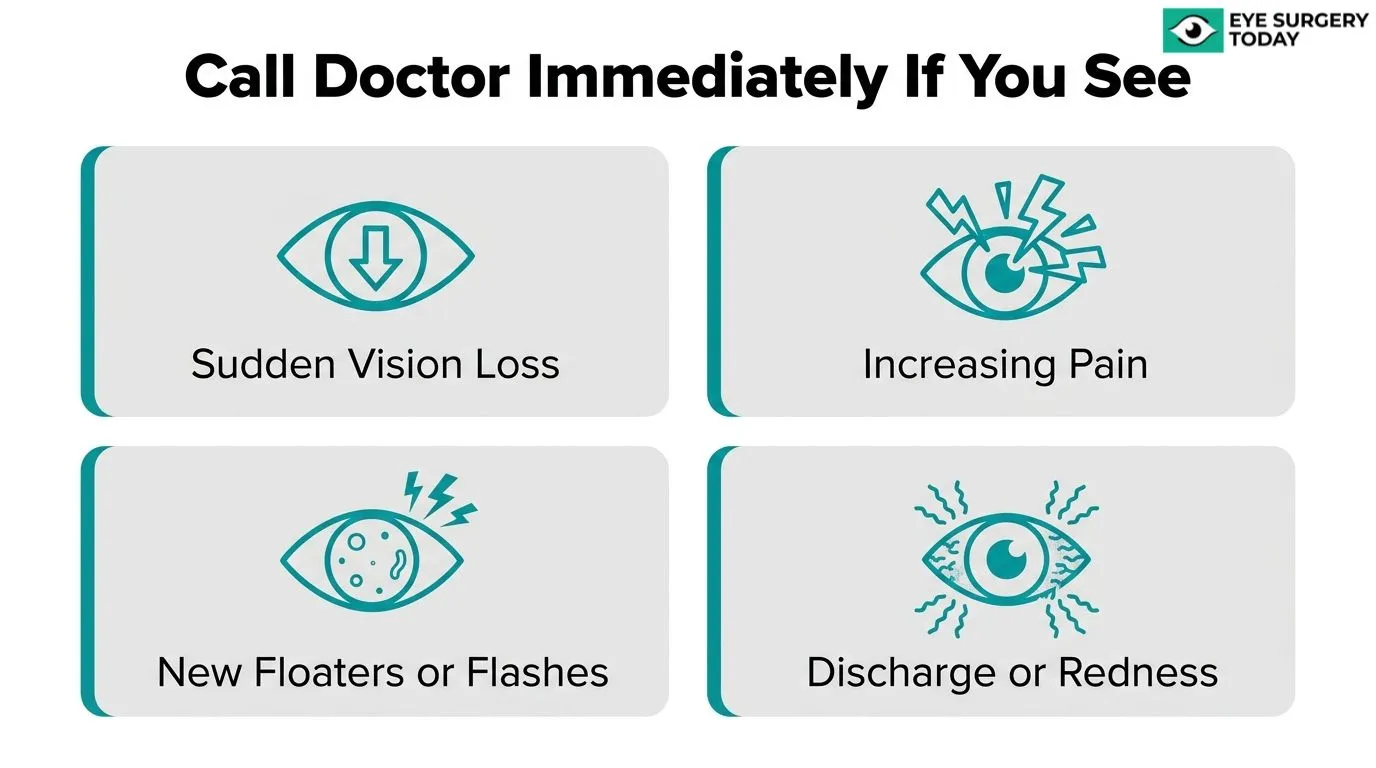
Loved ones should watch for sudden vision changes, increasing eye pain, new floaters or flashes of light, and unusual redness or discharge after cataract surgery. Each warning sign may indicate a different complication requiring prompt medical attention.
What Does Sudden Vision Loss After Cataract Surgery Indicate?
Sudden vision loss after cataract surgery may indicate a serious complication, such as retinal detachment or intraocular pressure elevation, requiring urgent evaluation. While some blurriness is normal in the first few hours, the eye is typically fully healed within 8 weeks, according to the Cleveland Clinic. A shadow or dark “curtain” moving across the visual field is particularly concerning and should prompt an immediate call to the surgeon. Loved ones are often better positioned than the patient to notice these changes early, especially while the patient is still adjusting to post-operative vision.
What Does Increasing Eye Pain After Cataract Surgery Suggest?
Increasing eye pain after cataract surgery may suggest endophthalmitis, a serious postoperative infection characterized by rapidly worsening vision, increasing eye pain, and significant redness, according to Northeast Retina Associates. Unlike mild discomfort, which is common in the first day or two, pain that intensifies over time is not a normal recovery symptom. Loved ones should treat escalating pain as an emergency signal and contact the surgical team without delay.
What Do Flashes or Floaters After Cataract Surgery Mean?
Flashes or floaters after cataract surgery may mean the retina is under stress or beginning to detach. According to the Mayo Clinic, the sudden appearance of dark floating shapes and flashes of light are symptoms of retinal detachment that require urgent medical attention. These symptoms can appear quickly and worsen rapidly, so caregivers should know in advance that this is never a “wait and see” situation.
What Does Redness or Discharge After Cataract Surgery Signal?
Redness or discharge after cataract surgery may signal an active infection or inflammatory response that requires prompt assessment. Some mild redness in the first 24 to 48 hours can be expected, but discharge that is thick, yellow, or increasing in volume is abnormal. Caregivers should photograph any visible discharge before contacting the surgeon, as this documentation helps the clinical team assess severity remotely.
With a clear understanding of these warning signs, caregivers can respond quickly when something is not right.
How Should You Communicate With Your Surgeon as a Caregiver?
Effective surgeon communication helps caregivers support recovery with confidence. The following sub-sections cover what to ask before discharge, how to document instructions, and when to call the surgical team.
What Questions Should a Caregiver Ask Before Discharge?
The questions a caregiver should ask before discharge fall into several practical categories, such as medication schedules, activity restrictions, eye shield use, and follow-up appointment timing. Surgeons and nursing staff expect caregivers to ask, so no question is too basic. Prioritize clarity on the drop regimen, since missed or mistimed doses are among the most common recovery oversights. Ask specifically which symptoms require an immediate call versus those that can wait for the scheduled follow-up visit.
How Should a Caregiver Document Post-Operative Instructions?
A caregiver should document post-operative instructions by writing them down verbatim during discharge rather than relying on memory alone. According to a 2007 report by the Association of periOperative Registered Nurses, approximately 94% of outpatients could not recall the instructions given by their physician on the day of an ambulatory procedure. Given this retention gap, caregivers should use a dedicated notebook or a notes app to record medication names, dosing schedules, restriction timelines, and the date and time of the follow-up appointment. A written record also makes it easier to communicate clearly when calling the surgeon’s office with questions.
When Should a Caregiver Call the Surgeon’s Office?
A caregiver should call the surgeon’s office immediately if the patient experiences any of the following symptoms:
- Sudden or rapidly worsening vision loss
- Increasing eye pain or significant redness
- Dark floating shapes, flashes of light, or a shadow moving across vision
- Discharge or unusual swelling around the eye
Routine questions about medications or minor discomfort can typically wait for the scheduled next-day follow-up. When in doubt, calling earlier rather than later is always the safer choice, as surgical teams expect and welcome caregiver check-ins during recovery.
How Long Will a Patient Need Help After Cataract Surgery?
Most patients need the most intensive caregiver support during the first 24 to 48 hours, with needs gradually decreasing over four weeks. The following sections cover first-week requirements, the one-to-four-week transition, and how bilateral surgery affects the overall timeline.
How Much Help Is Needed in the First Week After Surgery?
The most help is needed in the first week after surgery, particularly in the first 24 to 48 hours. Patients are typically scheduled for a follow-up appointment with their ophthalmologist the day after surgery, according to the American Academy of Ophthalmology, so a caregiver must be available to provide transportation. During this period, a caregiver should assist with eye drop administration, meals, hygiene, and navigating the home safely.
Most patients can resume driving within 24 to 48 hours, but only after meeting state visual acuity criteria and receiving surgeon approval, per Center for Sight. By around day seven, many patients can return to moderate activities independently. In practice, having a caregiver available full-time for the first two to three days, and part-time through day seven, represents the most practical approach for most households.
How Much Help Is Needed Between One and Four Weeks After Surgery?
Help between one and four weeks after surgery is reduced but still relevant for specific activities. Caregivers should continue assisting with prescribed eye drops for approximately four weeks, as advised by the NHS. Importantly, swimmers should wait four weeks before entering a pool or natural body of water to prevent infection, according to LA Eye and Laser, so caregivers may need to discourage or supervise this restriction.
By week two, most patients are largely independent for daily tasks. The weeks-one-to-four window is primarily about enforcing restrictions rather than providing hands-on physical assistance.
Does Recovery Timeline Change if Both Eyes Need Surgery?
Yes, the recovery timeline does change if both eyes need surgery, because the second eye is typically treated separately, extending the overall caregiver commitment. A Cochrane review found that in delayed sequential protocols, both eyes are typically treated within six weeks of each other. Additionally, according to the Cleveland Clinic, the eye is typically fully healed within eight weeks of surgery.
This means caregivers supporting patients through bilateral cataract surgery should plan for up to eight to ten weeks of intermittent assistance rather than a single four-week recovery window. Planning for this extended timeline from the outset prevents caregiver burnout and ensures the patient has consistent support through both procedures.
How Can Loved Ones Provide Emotional Support During Recovery?
Loved ones can provide emotional support during recovery by managing pre-surgery anxiety and helping patients cope with frustration when healing takes longer than expected. The sections below cover both of these caregiver roles.
How Can a Caregiver Help Manage Anxiety Before Surgery?
A caregiver can help manage anxiety before surgery by offering calm, factual reassurance rather than minimizing the patient’s concerns. Encouraging the patient to write down questions for their surgeon, sitting with them during pre-operative consultations, and reminding them of the procedure’s strong safety record can all reduce worry.
According to the American Academy of Ophthalmology Journal, cataract surgery is associated with a 25% reduced risk of long-term cognitive decline compared with those who have uncorrected cataracts, a finding that may reframe the surgery as a meaningful health investment rather than just a visual fix. Caregivers who understand this broader context are better positioned to offer grounded, confident reassurance.
How Can a Caregiver Help With Frustration During Recovery?
A caregiver can help with frustration during recovery by normalizing the healing process and setting realistic expectations from the start. Blurry vision, light sensitivity, and temporary activity limits can feel discouraging, and patients may need reminders that these are expected, short-term experiences.
Research published in the Cureus Journal of Medical Science suggests that improved vision following cataract surgery may reduce caregiver burden and improve quality of life for both patients and their family members. Framing temporary discomfort against this longer-term outcome can help both the patient and caregiver stay motivated through the recovery period.
How Can Surgeon-Reviewed Education Help You Prepare for Cataract Surgery?
Surgeon-reviewed education helps caregivers and patients prepare by offering clear, expert-verified information on IOL options, recovery expectations, and complication awareness. The sections below cover what Eye Surgery Today provides and the key takeaways from this guide.
Can Eye Surgery Today Help Caregivers Understand IOL Options and Recovery?
Yes, Eye Surgery Today can help caregivers understand IOL options and recovery through surgeon-reviewed educational resources designed for non-medical readers. The platform covers the key lens types caregivers should know before surgery day:
- Monofocal IOLs provide the best possible vision at one fixed distance, typically requiring glasses for other ranges.
- Multifocal IOLs have corrective zones built into the lens, allowing patients to see both near and far objects, according to the American Academy of Ophthalmology.
- Toric IOLs are specifically designed to correct astigmatism in patients undergoing cataract surgery.
Understanding these options helps caregivers support informed conversations between patients and their surgical teams, rather than leaving lens selection entirely to the day of consultation.
What Are the Key Takeaways About Preparing Loved Ones to Help With Cataract Surgery?
The key takeaways about preparing loved ones to help with cataract surgery center on practical readiness, clear communication, and knowing when to act urgently. A well-prepared caregiver covers all critical phases:
- Before surgery: Arrange transportation, prepare a recovery station, and review discharge instruction documentation responsibilities.
- Surgery day: Accompany the patient, take written notes during discharge, and confirm the follow-up appointment.
- First week: Assist with eye drops, monitor for warning signs, and enforce activity restrictions such as avoiding bending and lifting.
- Weeks two through four: Reduce hands-on assistance as vision stabilizes, while continuing eye drop support through the full healing period.
According to a 2020 to 2024 study of 91,883 phacoemulsification surgeries at Moorfields Eye Hospital, published in the Journal of Clinical and Translational Ophthalmology, even in complicated cases, 73% of patients achieved a good visual outcome. That statistic reflects how well-supported surgical care performs when the full perioperative team, including caregivers, functions effectively. For most patients, a prepared and attentive caregiver is one of the most controllable factors in a smooth recovery.