A missed refractive target in cataract surgery is a postoperative outcome where the eye’s residual prescription deviates meaningfully from the surgeon’s intended plan, typically by more than ±0.50 diopters of spherical equivalent error.
This guide covers the definition and prevalence of refractive surprises, their causes, symptom recognition and diagnostic follow-up, correction options, procedural risks, high-risk populations, and prevention strategies.
Refractive surprises are more common than many patients realize; large-scale data shows roughly 27% of eyes land outside the tightest accuracy window, making this a predictable rather than exceptional outcome.
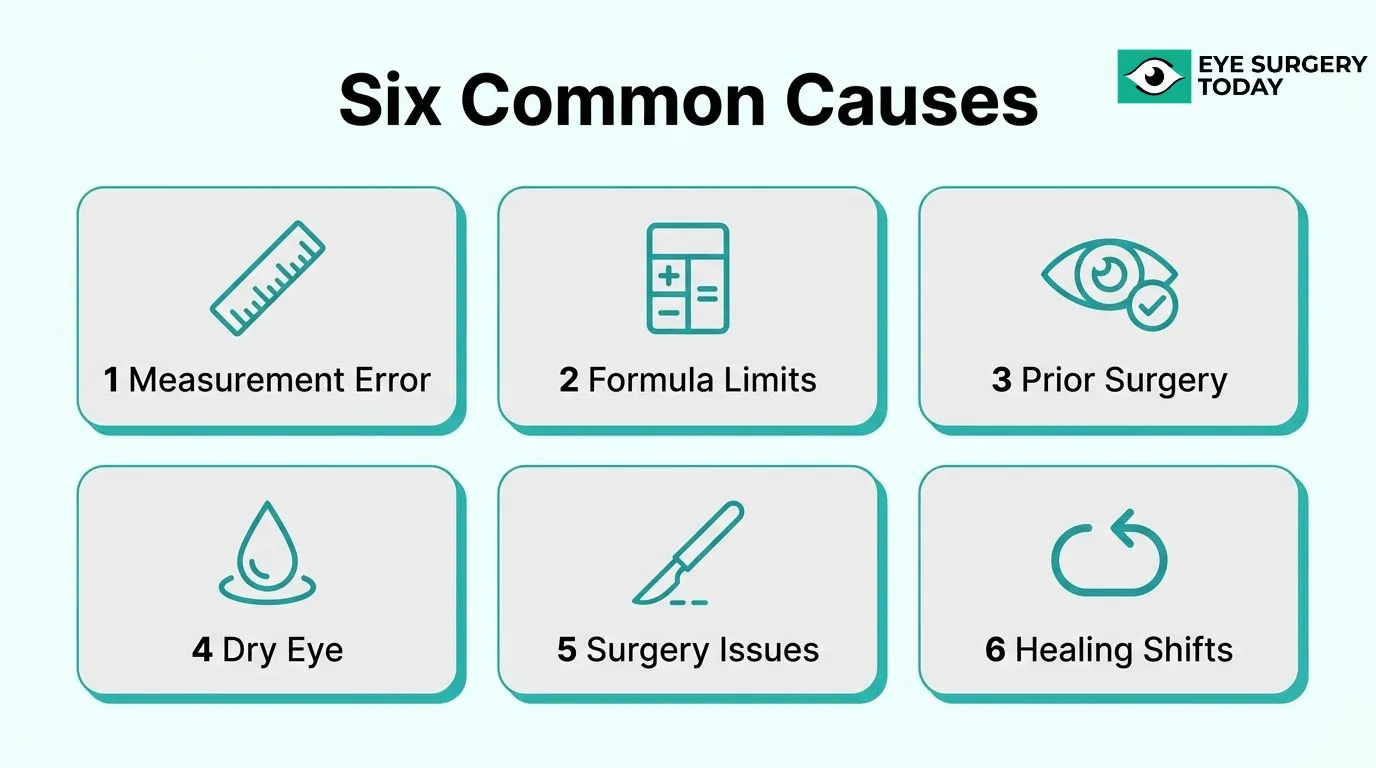
The causes range from axial length measurement errors and IOL formula limitations to pre-existing astigmatism, prior corneal refractive surgery, intraoperative complications, and postoperative healing shifts. Dry eye disease alone can alter biometry enough to move the result by half a diopter or more.
Symptoms such as blurred vision, glare, halos, and night-vision difficulty may signal a miss, though confirming the diagnosis requires manifest refraction and targeted testing to rule out other causes. Surgeons typically wait three to six months for refractive stability before recommending any intervention.
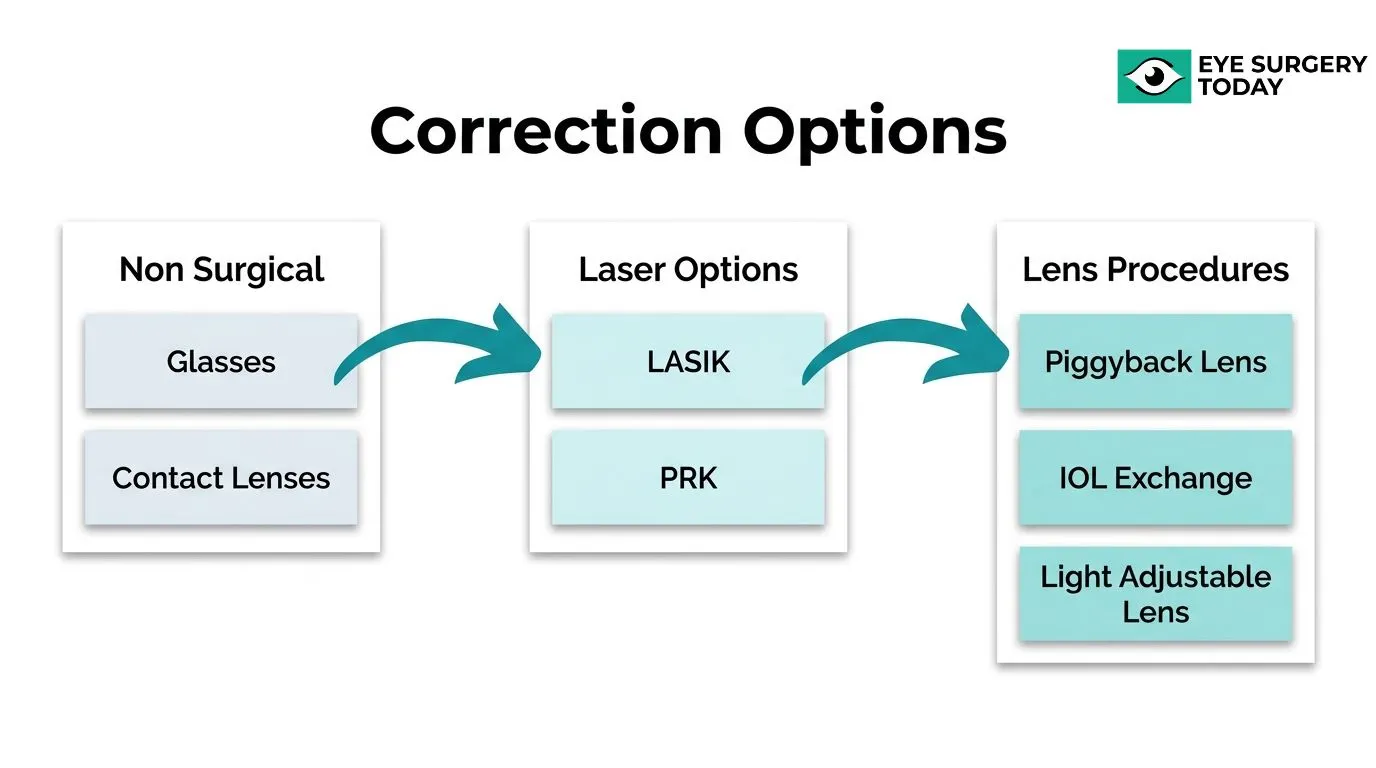
Correction pathways include spectacles, contact lenses, LASIK or PRK enhancement, piggyback IOL implantation, IOL exchange, and Light Adjustable Lenses, each carrying a distinct risk-benefit profile. Secondary procedures involve measurably higher complication rates than primary surgery, reinforcing the value of thorough preoperative planning and informed decision-making.
What Does It Mean to Miss the Target in Cataract Surgery?
Missing the refractive target in cataract surgery means the eye’s postoperative prescription differs meaningfully from what the surgeon planned. The sections below define the refractive target, explain how surgeons set it, and clarify when a deviation crosses from normal variance into a clinical concern.
What Is a Refractive Target in Cataract Surgery?
A refractive target in cataract surgery is the desired postoperative prescription, expressed in diopters (D), that the surgical team aims to achieve by selecting a specific intraocular lens (IOL) power. For most patients, that target is plano, meaning zero residual refractive error and minimal dependence on glasses for distance vision. Some patients are intentionally targeted at slight myopia to preserve near vision without corrective lenses.
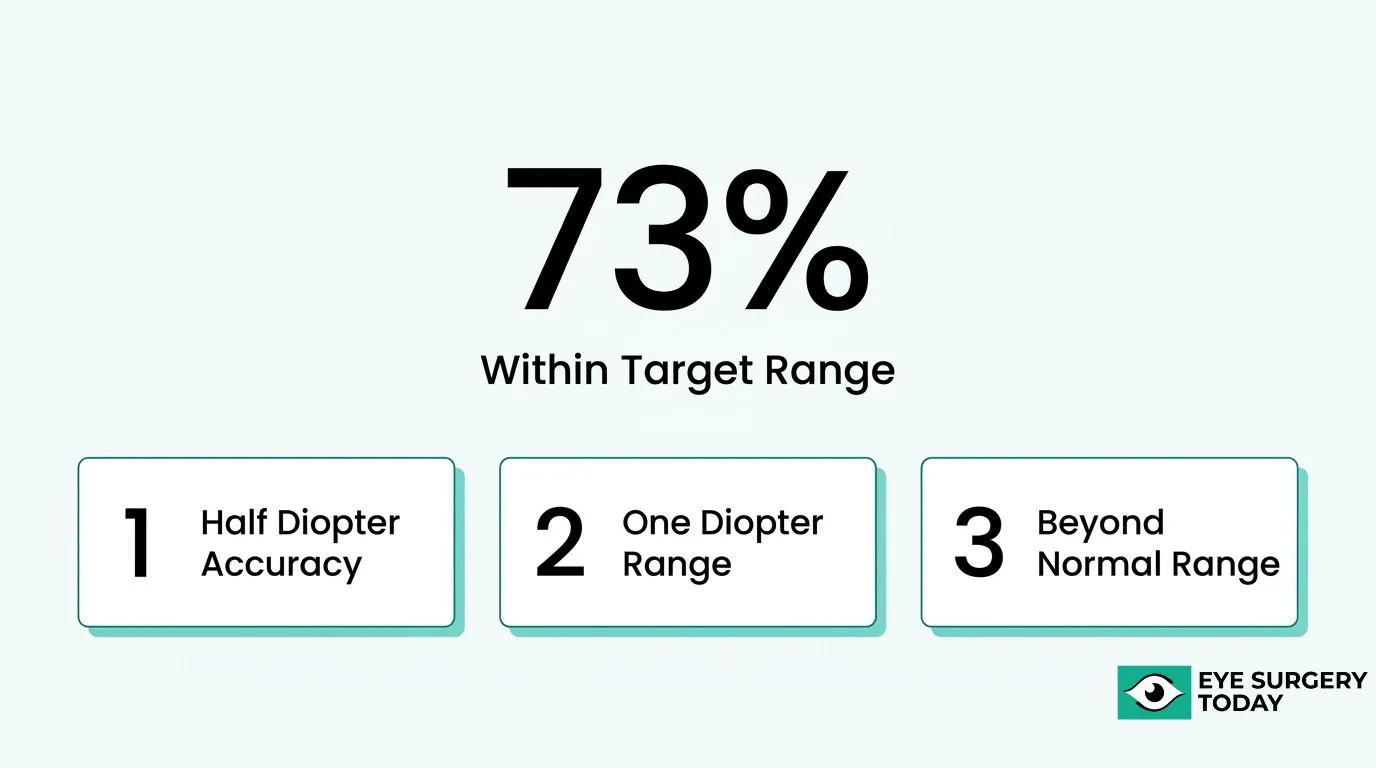
According to a EUREQUO analysis of 282,811 eyes published by the European Society of Cataract and Refractive Surgeons, 72.7% of patients achieved a postoperative spherical equivalent within ±0.50 D and 93.0% fell within ±1.00 D. These figures reflect the precision that modern cataract surgery can achieve, though they also confirm that a meaningful minority of patients land outside the tightest accuracy window.
How Is the Refractive Target Determined Before Surgery?
The refractive target is determined through a preoperative process called biometry, which measures the eye’s axial length, corneal curvature (keratometry), and anterior chamber depth. These measurements are entered into an IOL power calculation formula to predict which lens power will deliver the desired postoperative refraction. The surgeon and patient discuss target selection together, balancing lifestyle preferences, such as prioritizing distance or near vision, with the optical characteristics of the individual eye.
What Is Considered a Missed Target Versus a Normal Variance?
A missed refractive target is a postoperative outcome that deviates meaningfully from the planned prescription, typically defined as a residual spherical equivalent error greater than ±0.50 D or a refractive surprise that causes functional visual symptoms. Deviations within ±0.50 D are generally considered acceptable normal variance, as biometry and IOL calculation carry inherent measurement tolerances. When the gap between planned and achieved refraction causes blurred vision, difficulty with daily tasks, or significant anisometropia between the two eyes, it is classified as a clinically significant refractive surprise that warrants evaluation and possible correction.
How Common Are Refractive Surprises After Cataract Surgery?
Refractive surprises after cataract surgery occur more frequently than many patients expect. The sections below cover incidence rates, what the data shows about outcomes, and which outcomes fall outside typical variance.
How Often Do Refractive Surprises Occur After Cataract Surgery?
Refractive surprises after cataract surgery occur in a meaningful proportion of patients, even with modern biometry and IOL calculation techniques. According to a large EUREQUO analysis of 282,811 eyes, 72.7% of patients achieved a postoperative spherical equivalent within ±0.50 diopters, meaning roughly 27% landed outside that precision window. While most of those cases remain within ±1.00 D, a clinically significant number of patients experience outcomes that require correction. In practice, this means refractive surprises are not rare edge cases; they are a predictable, manageable part of cataract surgery outcomes that surgeons and patients should plan for together.
What Types of Refractive Errors Can Result From a Missed Target?
The types of refractive errors that can result from a missed cataract surgery target are residual myopia, hyperopia, astigmatism, and anisometropia. According to Dove Medical Press, a refractive surprise is defined as any unexpected postoperative outcome that deviates meaningfully from the intended refraction across these four categories. Each error type produces distinct visual symptoms and may require a different corrective approach, which is why accurate classification at follow-up matters as much as the initial diagnosis.
Are Refractive Surprises the Same as Surgical Complications?
Refractive surprises are not the same as surgical complications. A complication involves an adverse intraoperative or postoperative event, such as posterior capsule rupture or infection, while a refractive surprise refers specifically to a residual refractive error after an otherwise uneventful procedure. The distinction is clinically important: most refractive surprises stem from measurement or formula limitations rather than surgical error, and the correction pathway differs significantly. Understanding this difference helps patients approach the situation constructively rather than attributing the outcome to procedural failure.
What Are the Possible Causes of a Missed Refractive Target?
A missed refractive target can stem from several distinct sources, including measurement errors, calculation limitations, pre-existing eye conditions, prior surgeries, intraoperative complications, and postoperative healing changes. The following sections examine each cause in detail.
Can Inaccurate Preoperative Measurements Cause a Refractive Miss?
Yes, inaccurate preoperative measurements can cause a refractive miss, and they represent one of the most common contributing factors. According to Rayner Intraocular Lenses, approximately 17% of refractive surprises are attributed to axial length measurement errors, while 10% are due to inaccurate keratometry. Dry eye disease is a particularly underappreciated culprit: as Dr. Audrey Talley Rostov notes in Review of Ophthalmology, “Dry-eye disease can alter biometry and lead to refractive errors. If you don’t optimize the ocular surface preoperatively, you might end up off by a half diopter or even a full diopter.” Optimizing the ocular surface before biometry is one of the most impactful steps surgeons can take to protect measurement accuracy.
Can IOL Power Calculation Errors Lead to a Missed Target?
Yes, IOL power calculation errors can lead to a missed target. Selecting the wrong formula for a patient’s eye geometry, particularly in eyes outside the normal axial length range, can introduce meaningful prediction error. Older formulas based on simple linear regression performed poorly in eyes with extreme axial lengths, while modern AI-assisted formulas have substantially reduced this risk. Even with advanced formulas, subtle inputs such as effective lens position or anterior chamber depth can introduce small but clinically significant deviations from the intended postoperative refraction.
Can Pre-Existing Conditions Like Astigmatism Cause a Refractive Surprise?
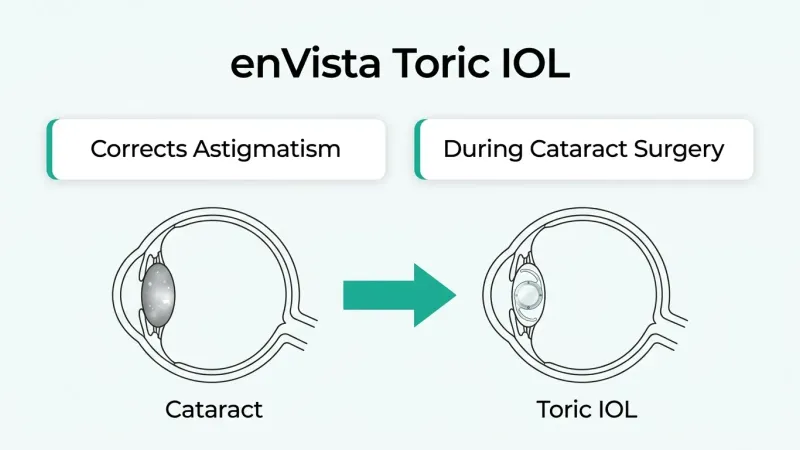
Yes, pre-existing conditions like astigmatism can cause a refractive surprise. Refractive surprise is an unexpected postoperative outcome deviating meaningfully from the targeted refraction, encompassing residual myopia, hyperopia, astigmatism, or anisometropia. Unrecognized or undercorrected corneal astigmatism is a direct contributor, particularly when a toric IOL is not selected or is misaligned. The precision of preoperative corneal mapping is therefore critical: according to the Community Eye Health Journal, an error in corneal power of just 1.0 D results in approximately 1.0 D of refractive surprise, while a 1 mm axial length error can shift IOL power by 2.5 to 3.0 D. Patients experiencing a refractive surprise may notice blurred vision, difficulty seeing at night, light sensitivity, or halos around lights.
Can Prior LASIK or Refractive Surgery Affect Target Accuracy?
Yes, prior LASIK or refractive surgery can affect target accuracy in cataract surgery. Previous corneal ablation alters corneal curvature in ways that standard keratometry may misinterpret, causing standard IOL formulas to miscalculate the power needed. Specialized formulas such as Barrett True-K have been developed specifically to improve IOL power prediction in post-refractive eyes. Patients with a history of corneal refractive surgery should inform their cataract surgeon before any biometry is performed, as this history directly changes which measurement tools and calculation formulas are appropriate.
Can Surgical Complications During the Procedure Cause a Miss?
Yes, surgical complications during the procedure can cause a missed refractive target. Posterior capsule rupture, vitreous loss, or an IOL that does not seat in the intended position (such as sulcus placement rather than bag placement) can all shift the effective lens position and alter the final refraction. Because IOL power calculations assume a predicted lens position, any deviation from that position introduces a refractive error that was not present in the preoperative plan. These intraoperative variables are among the harder causes to anticipate, reinforcing why surgical experience and technique remain important factors in refractive outcomes.
Can Postoperative Healing Changes Shift the Refractive Outcome?
Yes, postoperative healing changes can shift the refractive outcome after cataract surgery. Capsular bag contraction, wound healing at the corneal incision, and changes in corneal curvature during the recovery period can all induce small but measurable refractive shifts. These changes typically stabilize within four to eight weeks, which is why most surgeons defer definitive refraction assessment until the eye has fully healed. Attempting to correct a perceived refractive miss too early risks overcorrection, since the final refraction may not yet reflect the eye’s stable postoperative state.
What Symptoms May Indicate the Refractive Target Was Missed?
The symptoms that may indicate the refractive target was missed include blurred vision, difficulty seeing at night, sensitivity to light or glare, and seeing halos around lights. According to the National Institute for Health and Care Excellence (NICE), these are the primary warning signs of a refractive surprise following cataract surgery. Double vision and hazy vision can also occur, reflecting uncorrected residual refractive error rather than a new eye condition.
Blurred vision is the most common and immediately noticeable symptom, affecting both distance and near tasks depending on whether the eye is left myopic or hyperopic. Glare and halos are especially disruptive in low-light conditions, such as night driving, and often suggest residual higher-order aberrations or uncorrected astigmatism. Patients who notice that one eye seems noticeably different from the other may be experiencing anisometropia, a significant imbalance between the two eyes’ prescriptions.
Not every visual complaint after cataract surgery points to a missed refractive target. Dry eye, posterior capsule opacification, and residual inflammation can produce overlapping symptoms. For this reason, a postoperative manifest refraction is typically the first diagnostic step to confirm that symptoms are directly tied to residual refractive error rather than another cause. Recognizing these symptoms early and reporting them to your surgeon promptly gives the best opportunity for timely and effective correction.
What Happens at Follow-Up If a Refractive Miss Is Detected?
When a refractive miss is detected at follow-up, the process involves confirming the error through clinical testing, ruling out other causes, and determining the right timing for any corrective action. The H3s below cover when surprises are typically identified, which diagnostic tests are used, and how long patients should wait before pursuing a fix.
When Is a Refractive Surprise Typically Identified After Surgery?
A refractive surprise is typically identified at the first or second postoperative visit, usually between one and four weeks after cataract surgery. Most surgeons schedule an early check around day one, followed by a visit at one to two weeks and again at four to six weeks. By the four-to-six-week mark, corneal swelling has resolved and refraction has largely stabilized, making this window the most reliable point to confirm whether the eye has landed near its intended target. Surprises detected only at the final visit often reflect slow healing rather than measurement error, so timeline context matters when interpreting results.
What Tests Does the Surgeon Perform to Confirm a Missed Target?
The tests a surgeon performs to confirm a missed target include manifest refraction, keratometry, and a full slit-lamp examination. According to the American Academy of Ophthalmology, postoperative manifest refraction is typically the first step, directly linking visual symptoms such as blurred vision or glare to residual refractive error. If significant astigmatism is suspected, corneal topography may follow to differentiate lens-related error from corneal irregularity. In some cases, anterior segment OCT is used to check IOL position and tilt, both of which can shift the effective power of the implant. The combination of these tests helps the surgeon isolate the source of the miss before recommending any corrective pathway.
How Long Should You Wait Before Pursuing a Correction?
You should wait a minimum of three to six months after cataract surgery before pursuing any correction for a refractive miss. During this period, the capsular bag contracts around the IOL, the cornea fully heals, and refraction stabilizes. Intervening too early risks correcting a moving target, which can compound the original error rather than resolve it. For patients who had prior corneal refractive surgery, some surgeons extend the observation window further, since healing patterns in those eyes can be less predictable. Patience during this period is clinically important; most surgeons will monitor refraction across at least two visits to confirm stability before proceeding.
What Are the Options to Correct a Missed Refractive Target?
The options to correct a missed refractive target range from non-surgical approaches like glasses to surgical interventions such as laser enhancement, IOL exchange, piggyback lenses, and light-adjustable lenses. The right choice depends on the type and degree of residual error, corneal health, and the original IOL implanted.
Can Glasses or Contact Lenses Correct a Refractive Miss?
Yes, glasses and contact lenses can correct a refractive miss, and they are typically the first option considered after cataract surgery. Since Harold Ridley implanted the first IOL on November 29, 1949, the goal has been reducing spectacle dependence, but glasses remain a safe, reversible starting point when residual error is mild. For patients who are comfortable with some degree of spectacle correction, this approach carries no surgical risk and provides immediate, adjustable vision improvement. However, it does not address the underlying refractive error and may not satisfy patients who chose a premium IOL specifically to reduce dependence on glasses.
Can LASIK or PRK Enhancement Fix a Residual Refractive Error?
Yes, LASIK or PRK enhancement can fix a residual refractive error after cataract surgery when the corneal tissue is adequate and the refraction is stable. According to the National Eye Institute, blurry vision is the most common symptom of refractive error, along with double vision, hazy vision, and glare or halos, all of which laser enhancement may help reduce. LASIK offers faster recovery, while PRK may be preferred when the cornea is thinner or the flap risk is a concern. The American Academy of Ophthalmology recommends confirming refractive stability before proceeding with any enhancement procedure.
What Is an IOL Exchange and When Is It Considered?
An IOL exchange is a secondary surgical procedure in which the original implanted lens is removed and replaced with a new IOL of corrected power. It is generally considered when the residual refractive error is large, when a toric IOL has rotated significantly, or when the lens type itself is unsuitable for the patient. According to a study of 56 eyes published via NIH PMC, the most common complications following IOL exchange include cystoid macular edema (17.8%), hyphema (15.8%), and glaucoma (10.9%), making patient selection and timing critical factors. IOL exchange is more complex than a primary procedure and carries higher surgical risk, particularly when performed weeks or months after the original surgery.
Can a Piggyback Lens Be Placed to Adjust the Refractive Outcome?
Yes, a piggyback lens can be placed in the sulcus to adjust the refractive outcome without removing the original IOL. This approach is particularly useful when the residual error is spherical and moderate, and when removing the primary IOL carries significant risk. According to CRST Global, IOL exchange is generally preferred when cylinder errors exceed 2.00 D, suggesting piggyback lenses are better suited to spherical corrections or lower-cylinder cases. Patient-facing information about when to choose piggyback versus IOL exchange remains limited, making surgeon consultation essential before any secondary procedure.
Can Light Adjustable Lenses Help Prevent or Fix a Missed Target?
Light Adjustable Lenses (LALs) can help prevent a missed refractive target by allowing power adjustment after implantation using UV light treatments. According to a clinical report published via PMC, 91% of LAL cases achieved within ±0.25 D and 97% achieved within ±0.50 D of the final refractive target, performance that significantly exceeds standard IOL accuracy. LALs are implanted during the initial cataract procedure and adjusted non-invasively in the weeks following surgery, before the power is permanently locked in. This approach is one of the most compelling advances for patients who prioritize precision, as it essentially eliminates the need for secondary surgical correction in most cases.
What Are the Possible Risks of Corrective Procedures After a Miss?
The possible risks of corrective procedures after a missed refractive target include cystoid macular edema, hyphema, elevated intraocular pressure, and retinal detachment. Because these interventions involve operating on an eye that has already undergone cataract surgery, the risk profile is meaningfully different from primary surgery. The subsections below cover the specific complications tied to IOL exchange and the elevated retinal detachment risk associated with secondary lens procedures.
What Are the Risks Specific to IOL Exchange Surgery?
The risks specific to IOL exchange surgery include cystoid macular edema, hyphema, and glaucoma. According to a study published via NIH PMC examining 56 eyes undergoing IOL exchange, cystoid macular edema occurred in 17.8% of cases, hyphema in 15.8%, and glaucoma in 10.9%. IOL exchange is a more technically demanding procedure than primary cataract surgery because the capsular bag has already contracted around the original implant, increasing the likelihood of intraoperative trauma to surrounding ocular structures. For patients with high cylinder errors, this added complexity may still be unavoidable, as IOL exchange remains the preferred approach when compound refractive errors need to be addressed at the source.
Does a Secondary Lens Procedure Increase Retinal Detachment Risk?
Yes, a secondary lens procedure can increase retinal detachment risk compared to routine cataract surgery. The incidence of retinal detachment after refractive lens exchange is approximately double that observed after routine cataract surgery over a median four-year follow-up, according to a study indexed on PubMed. This elevated risk is particularly relevant for patients already predisposed to retinal complications, such as those with high myopia or anatomical vulnerabilities. Patients considering secondary procedures should discuss this risk explicitly with their surgeon, as the decision to intervene must weigh the functional burden of residual refractive error against the potential for a serious, vision-threatening complication.
Who Is More Likely to Experience a Refractive Surprise?
Certain patient populations carry a measurably higher risk of missing the refractive target after cataract surgery. The H3 sections below cover high myopia, prior corneal surgery, and dense or mature cataracts.
Are Patients With High Myopia at Greater Risk of a Missed Target?
Yes, patients with high myopia are at greater risk of a missed target, primarily because longer axial lengths fall outside the “normal” range where standard formulas perform best. According to data published in the European Journal of Ophthalmology, the Barrett Universal II formula achieves a mean absolute error of approximately 0.24 D to 0.26 D in eyes with axial lengths between 22.0 mm and 26.0 mm. Eyes significantly outside this range can see meaningfully larger prediction errors. Patients with high hyperopia or presbyopia present an additional diagnostic challenge, as near vision should be assessed in each eye before cycloplegia to accurately interpret any visual complaints. When cylinder errors are also present and high (greater than 2.00 D), IOL exchange is generally preferred over other adjustments to address the root cause and support long-term stability.
Are Patients With Prior Corneal Surgery at Greater Risk?
Yes, patients with prior corneal surgery are at greater risk of a missed refractive target. Procedures such as LASIK, PRK, and radial keratotomy permanently alter corneal curvature in ways that cause standard IOL formulas to misestimate effective lens power. Specialized formulas address this directly: a study published in Clinical Ophthalmology found that Barrett True-K improves IOL power prediction in post-refractive surgery eyes compared to several common alternatives. Patients with keratoconus face an even greater challenge; research published in Ophthalmology (Journal of the AAO) showed that the Kane keratoconus formula was significantly more accurate than all currently available standard formulas in this population. Surgeons working with these patients should prioritize condition-specific formula selection as a front-line risk reduction strategy.
Are Patients With Dense or Mature Cataracts at Greater Risk?
Yes, patients with dense or mature cataracts are at greater risk of a refractive surprise. A dense lens significantly reduces the accuracy of optical biometry, the primary measurement method used to calculate IOL power, because the cataract can block or scatter the light signals needed for precise axial length and keratometry readings. When biometry measurements are unreliable, any formula, regardless of its sophistication, is working with imprecise inputs. Surgeons managing mature cataracts often rely on immersion ultrasound biometry as an alternative, though even this approach carries higher measurement variability. Understanding which patient populations face elevated risk helps set realistic expectations before surgery and underscores the value of thorough preoperative evaluation.
How Can You Reduce the Risk of a Refractive Surprise Before Surgery?
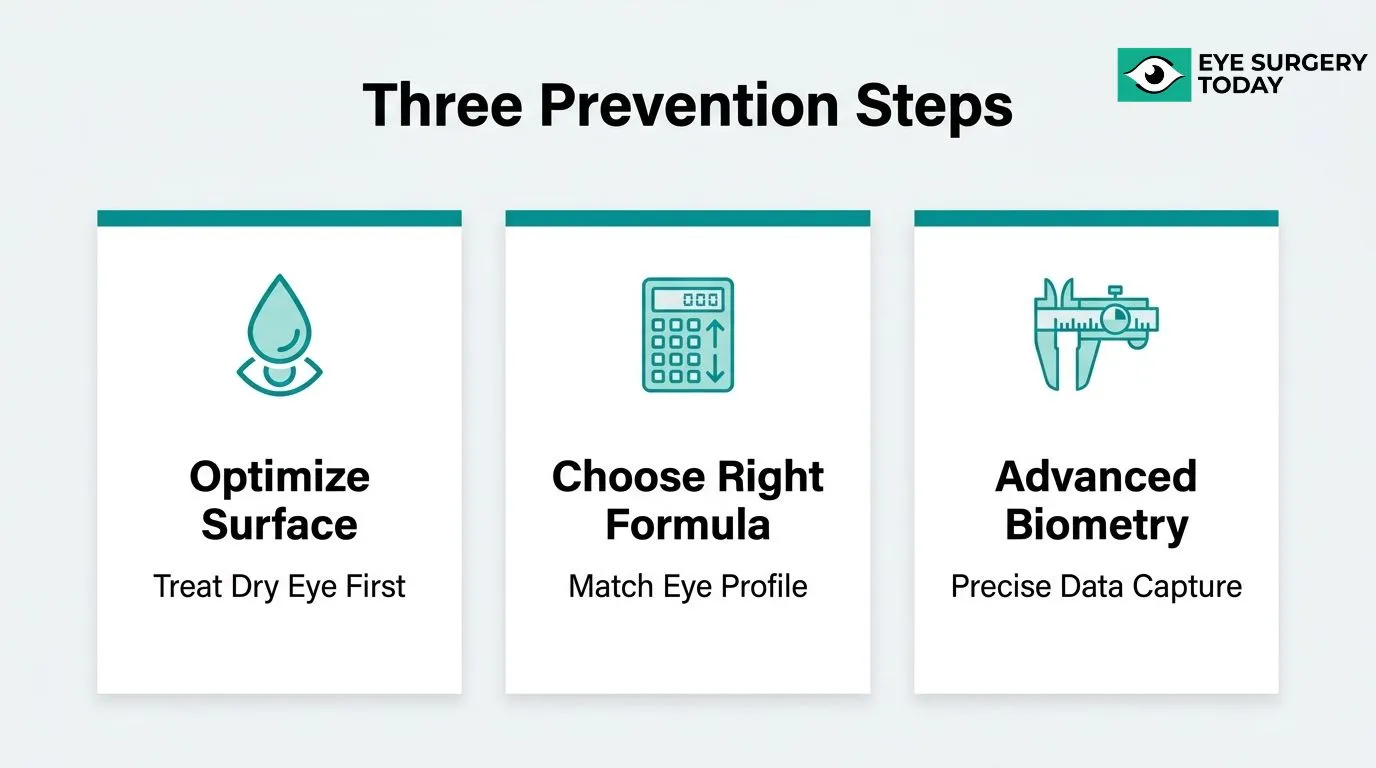
Reducing the risk of a refractive surprise before cataract surgery involves optimizing the ocular surface, selecting appropriate IOL calculation formulas, and using advanced biometric technology. The H3s below cover each of these strategies in detail.
Optimizing the Ocular Surface Before Biometry
Optimizing the ocular surface before biometry is one of the most impactful steps surgeons can take to improve refractive accuracy. Dry eye disease can distort corneal measurements, making the eye appear to have a different shape or curvature than it actually does. According to Dr. Audrey Talley Rostov, writing in Review of Ophthalmology, untreated dry eye can shift biometry results by half a diopter or even a full diopter, directly affecting IOL power selection. Treating dry eye with lubricating drops, anti-inflammatory therapy, or punctal plugs before taking measurements helps stabilize the tear film and improves data reliability. This step is often underestimated in preoperative planning, but it may be the single most modifiable risk factor available before the IOL is chosen.
Choosing the Right IOL Calculation Formula for Your Eye
Choosing the right IOL calculation formula for your eye depends primarily on axial length and corneal history. For eyes within the normal axial length range of 22.0 mm to 26.0 mm, the Barrett Universal II formula has demonstrated a mean absolute error of approximately 0.24 to 0.26 diopters, according to a study published in the European Journal of Ophthalmology. For eyes with prior corneal refractive surgery, specialized formulas like Barrett True-K have been shown to improve IOL power prediction compared to several common alternatives. For patients with keratoconus, the Kane keratoconus formula, which uses a modified corneal power calculation, has demonstrated significantly greater accuracy than currently available standard formulas, according to a study published in Ophthalmology, the journal of the American Academy of Ophthalmology.
Using Advanced Biometry to Improve Measurement Accuracy
Using advanced biometry improves measurement accuracy by reducing the margin of error in axial length and keratometry readings. Optical coherence biometry provides more precise axial length measurements than older ultrasound methods, which is critical given that a 1 mm error in axial length measurement can shift the IOL power by 2.5 to 3.0 diopters, according to the Community Eye Health Journal. Similarly, an error of 1.0 diopter in corneal power measurement results in approximately 1.0 diopter of refractive surprise. Modern optical biometers measure multiple parameters simultaneously, reducing compounding errors across variables. For surgeons, combining high-precision biometry with an appropriate formula for the patient’s specific eye profile represents the most reliable path to hitting the intended refractive target.
How Should You Approach Vision Correction Decisions with Surgeon-Reviewed Guidance?
Understanding your options after a refractive surprise requires reliable, clinically grounded information. The sections below explain how Eye Surgery Today supports that process and summarize the most actionable takeaways from this article.
Can Eye Surgery Today Help You Understand Your Options After a Refractive Surprise?
Yes, Eye Surgery Today can help you understand your options after a refractive surprise. The platform provides surgeon-reviewed educational content designed to translate complex ophthalmology concepts into clear, accessible guidance for patients navigating unexpected outcomes after cataract surgery. Whether you are evaluating glasses, a laser enhancement, a piggyback IOL, or an IOL exchange, understanding the clinical reasoning behind each option helps you ask better questions and make more confident decisions alongside your surgeon.
What Are the Key Takeaways About a Missed Cataract Surgery Target?
The key takeaways about a missed cataract surgery target are that refractive surprises are a recognized, manageable outcome with multiple correction pathways available. Several practical conclusions emerge from this article:
- A refractive miss can result from biometry errors, IOL calculation formula limitations, prior corneal surgery, or postoperative healing changes.
- Symptoms such as blurred vision, glare, and halos warrant prompt follow-up rather than prolonged waiting.
- Correction options range from non-invasive (spectacles, contacts) to surgical (laser enhancement, piggyback IOL, IOL exchange), each suited to different error types and magnitudes.
- High-risk patients, including those with prior LASIK or keratoconus, benefit most from specialized planning formulas.
- No secondary procedure is without risk, making informed pre-decision education essential.
Consulting a qualified surgeon and reviewing credible, surgeon-reviewed resources remains the most reliable path forward.