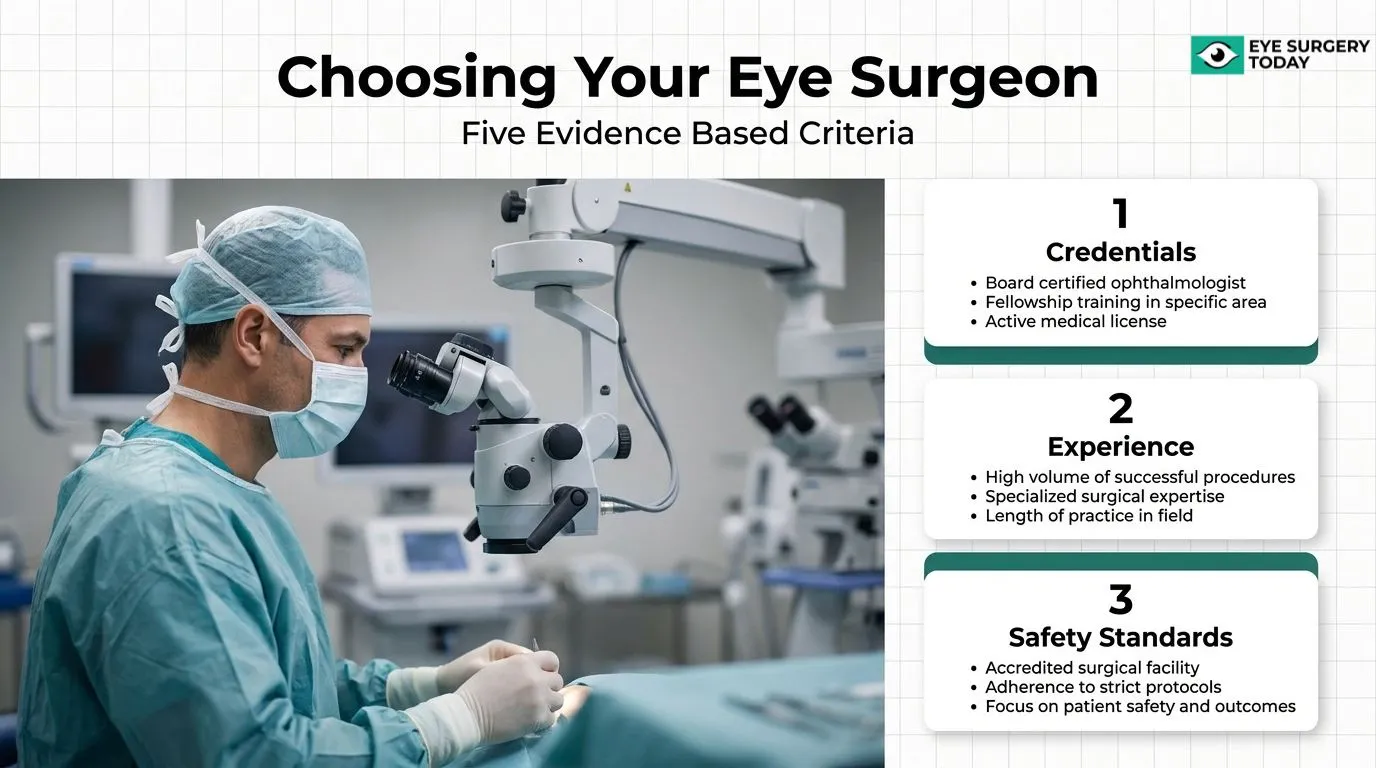
Choosing an eye surgeon is a decision that involves verifying clinical credentials, evaluating surgical experience, and confirming that both the surgeon and their facility meet independently validated safety standards.
This guide covers credentials and board certification, surgical volume and outcomes, subspecialty expertise for specific procedures, technology and equipment standards, reputation evaluation, consultation strategies, red flags to avoid, facility accreditation, and cost considerations.
Board certification through the American Board of Ophthalmology confirms that a surgeon has passed rigorous written and oral examinations, while fellowship training in areas like cornea, glaucoma, or retina signals focused expertise beyond general residency. Ophthalmologists are the only eye care professionals licensed to perform surgery in nearly all U.S. jurisdictions.
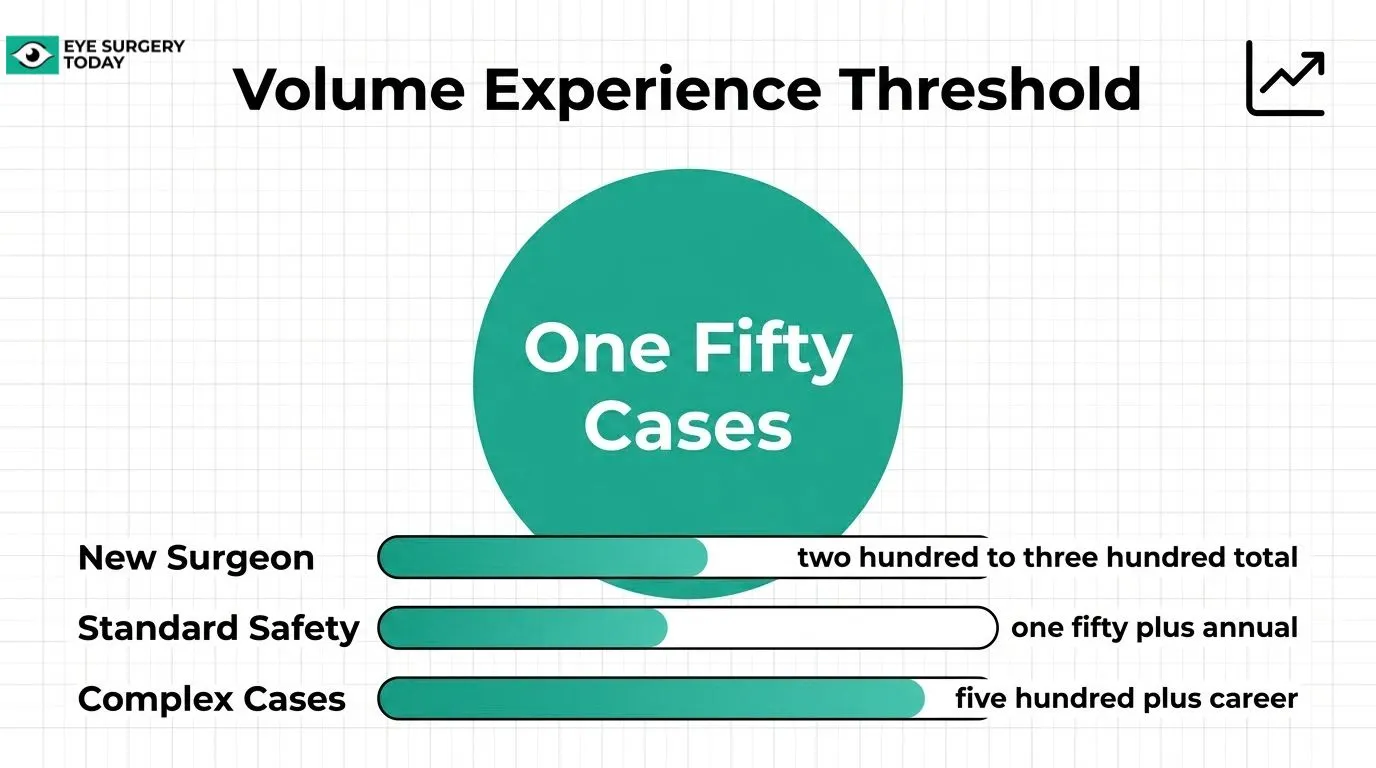
Surgical volume correlates with reduced complication rates. Research on over 112,000 cataract surgeries over a 15 year time period shows that most surgeons approached standard mean posterior capsule rupture (PCR) rates once they had done about 150 surgeries, with their rates improving as they gain experience. Patients can verify outcomes through state licensing databases, peer-reviewed benchmarks, and platforms with clinically validated rating methodologies.
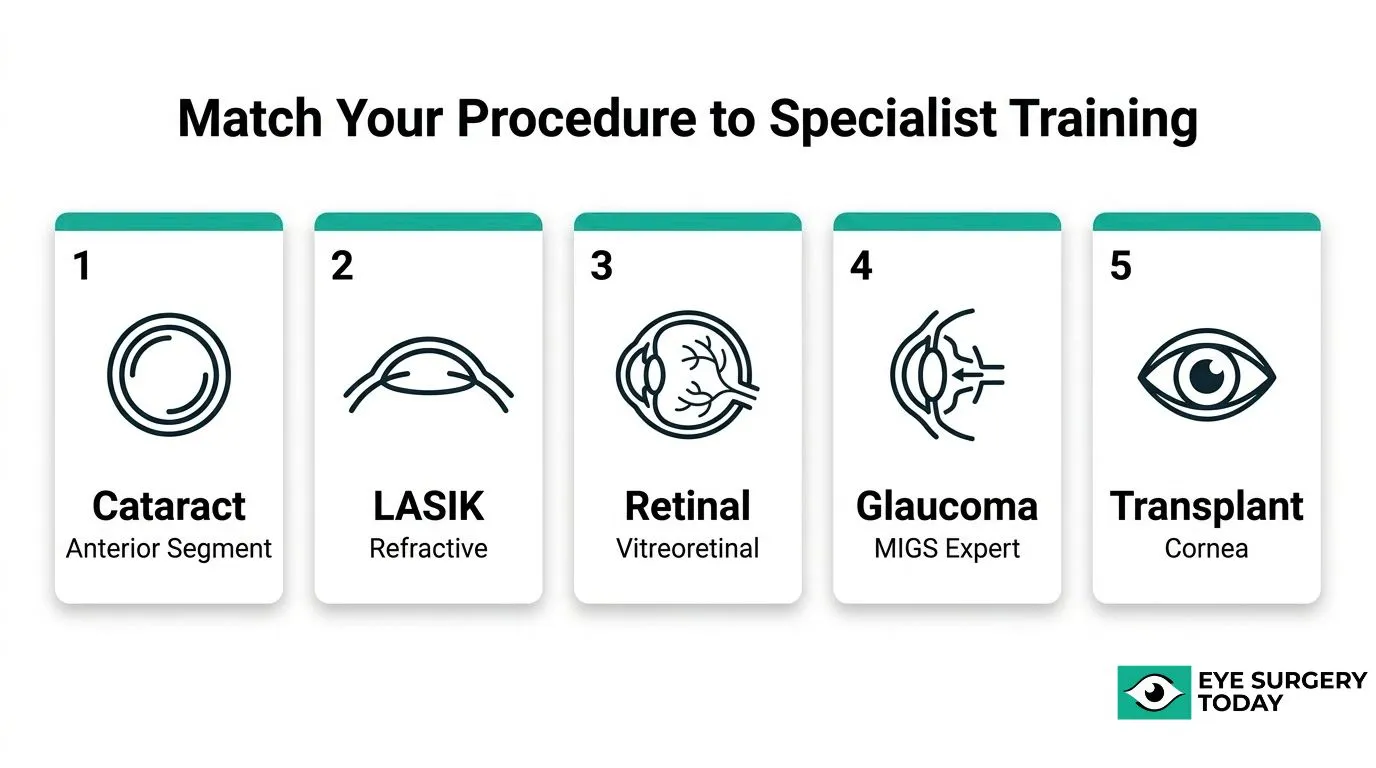
Subspecialty selection also matters: cataract, LASIK, retinal, glaucoma, and corneal transplant surgeons each require distinct training and technique. Knowledge of newer techniques also matters. A 2026 meta-analysis found that micro-invasive glaucoma surgery (MIGS) compared to more traditional trabeculectomy provides a less invasive solution, though with the tradeoff of potentially lowering intraocular pressure (IOP) less dramatically.
Modern surgical technology, including femtosecond lasers and intraoperative guidance systems, can enhance precision in complex cases, though long-term outcomes for routine procedures remain comparable to conventional techniques. Approximately 25% to 30% of cataract patients now choose premium intraocular lens (IOL) upgrades.
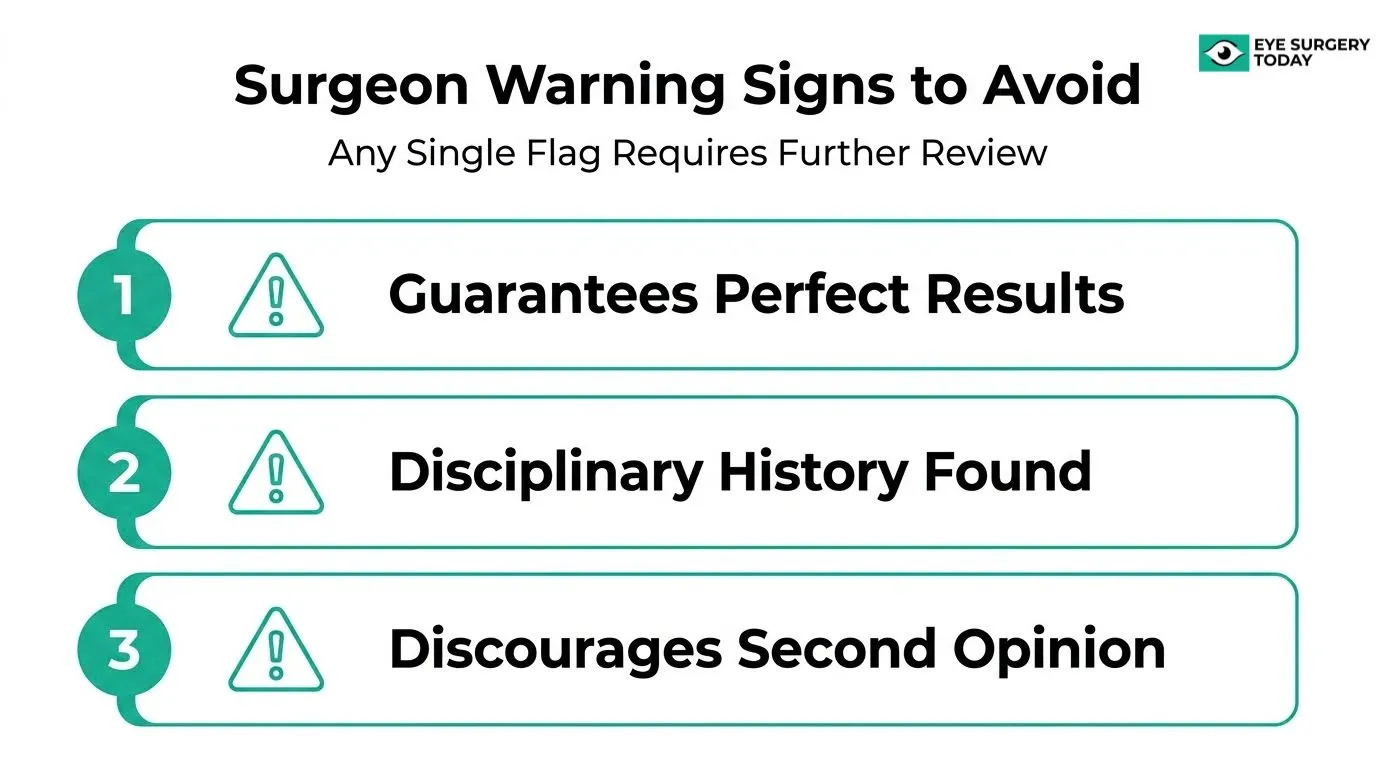
Red flags include outcome guarantees, disciplinary histories accessible through the FSMB’s DocInfo database, and discouragement of second opinions. Facility accreditation from The Joint Commission, AAAHC, or QUAD A confirms that your surgical center has met independent safety standards. Cost differences between surgeons often reflect geography and overhead rather than skill, making credentials and outcomes the more reliable quality signals.
What Credentials and Board Certifications Should an Eye Surgeon Have?
An eye surgeon’s credentials establish the baseline of clinical competence and patient safety. The following sections cover board certification requirements, the key difference between ophthalmologists and optometrists for surgical care, and the value of fellowship subspecialty training.
Is Board Certification in Ophthalmology Required to Perform Eye Surgery?
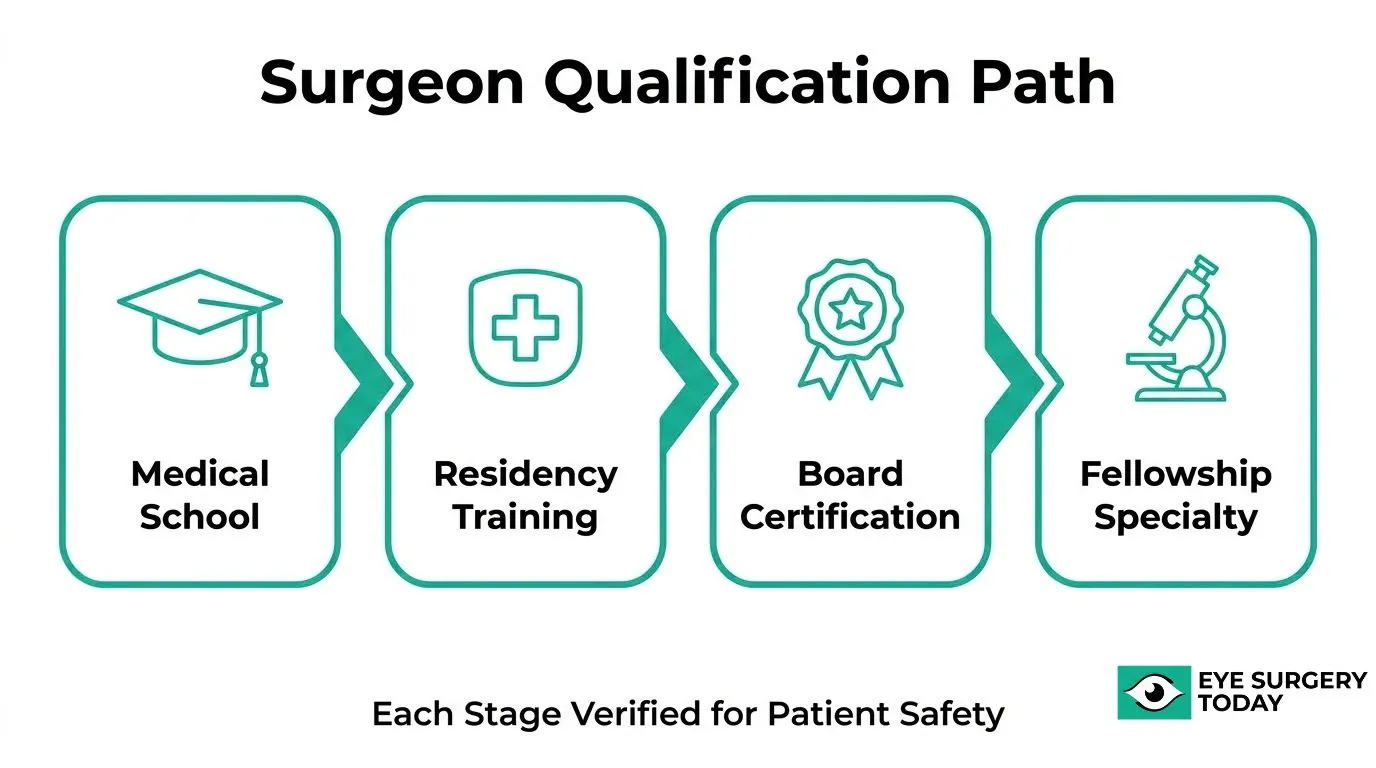
Board certification in ophthalmology is not legally required to perform eye surgery in every jurisdiction, but it is a strong indicator of verified competence. According to the American Board of Ophthalmology, certification is granted to physicians who complete accredited medical training and pass two rigorous examinations: the Written Qualifying Examination (WQE) and the Oral Examination. In international contexts, the Fellow of the European Board of Ophthalmology (FEBO) designation serves as an equivalent quality indicator. Board certification indicates that a surgeon has completed additional specialty training and passed standardized exams in their field, beyond the requirements for medical licensure.
What Is the Difference Between an Ophthalmologist and an Optometrist?
The difference between an ophthalmologist and an optometrist for surgery is scope of practice. Ophthalmologists are medical doctors who complete four years of medical school plus at least three years of surgical residency, qualifying them to perform eye surgery. Optometrists hold a Doctor of Optometry (OD) degree and are licensed primarily for vision care and medical management. As of 2021, optometrists can prescribe topical glaucoma medications in all U.S. states, according to Eyes On Eyecare, but surgical procedures remain outside their scope in nearly all jurisdictions.
Should Your Eye Surgeon Have Fellowship Training in a Subspecialty?
Fellowship training in a subspecialty is a strong differentiator for complex or condition-specific eye surgery. According to the American Academy of Ophthalmology, many ophthalmologists pursue one to two years of additional fellowship training after residency in subspecialties such as cornea, glaucoma, retina, or pediatric ophthalmology. For routine procedures, a general ophthalmologist may be fully qualified, but patients with complex conditions benefit from a surgeon whose entire practice is focused on that anatomy or disease. Fellowship-trained surgeons typically bring higher case volumes and more refined technique in their specialty area.
How Much Experience and Surgical Volume Should Your Eye Surgeon Have?
A surgeon’s experience and case volume can influence complication rates and patient outcomes. The sections below cover career procedure minimums, how annual volume relates to performance, and how to verify a surgeon’s track record.
How Many Procedures Should a Surgeon Have Performed in Their Career?
The number of procedures a surgeon should have performed in their career depends on the procedure type, but established thresholds exist for common surgeries like cataract removal. According to the article “Nine Questions to Help You Choose a Cataract Surgeon” published by University of Utah, new cataract surgeons have likely performed between 200–300 surgeries, which is more than enough to safely and efficiently perform routine cataract surgery. For complex or high-risk cases, however, seeking a surgeon with a substantially larger career volume is a reasonable and often advisable step.
Does a Higher Annual Surgical Volume Lead to Better Patient Outcomes?
Higher annual surgical volume may improve patient outcomes, particularly by reducing serious complication rates. A 15-year retrospective multicenter study of 112,689 cataract surgeries, published in the Journal of Cataract and Refractive Surgery, found that most surgeons approached the overall mean posterior capsule rupture (PCR) rate of 1.9% once they reached approximately 150 cases. Volume alone is not sufficient as a quality metric, though; a surgeon performing high numbers of straightforward cases may not be better prepared for your specific anatomy or condition than a lower-volume specialist.
How Can You Verify a Surgeon’s Complication and Success Rates?
Verifying a surgeon’s complication and success rates requires consulting multiple independent sources rather than relying solely on the surgeon’s own disclosure. Useful verification steps include:
- Ask directly: Request your surgeon’s personal complication rate for your specific procedure and compare it against published benchmarks.
- Check peer-reviewed data: The Journal of Cataract and Refractive Surgery publishes outcome benchmarks for procedures like cataract surgery, providing a reliable external standard.
- Review state licensing databases: State medical board websites often report disciplinary histories that may signal performance concerns.
- Use structured review platforms: Look for platforms with clinically validated methodologies when assessing patient-reported outcomes.
With volume and verification methods understood, evaluating subspecialty expertise is the next step toward a fully informed choice.
What Subspecialty Expertise Matters for Different Eye Procedures?
Subspecialty expertise matters because each eye procedure requires a distinct surgical skill set developed through focused fellowship training. The sections below cover what to look for in cataract, LASIK, retinal, glaucoma, and corneal transplant surgeons.
What Should You Look For in a Cataract Surgeon?
A cataract surgeon should have completed ophthalmology residency and, ideally, additional fellowship training in anterior segment or cataract surgery. Key attributes to evaluate include:
- Surgical volume: Confirmed experience with phacoemulsification, the standard removal technique.
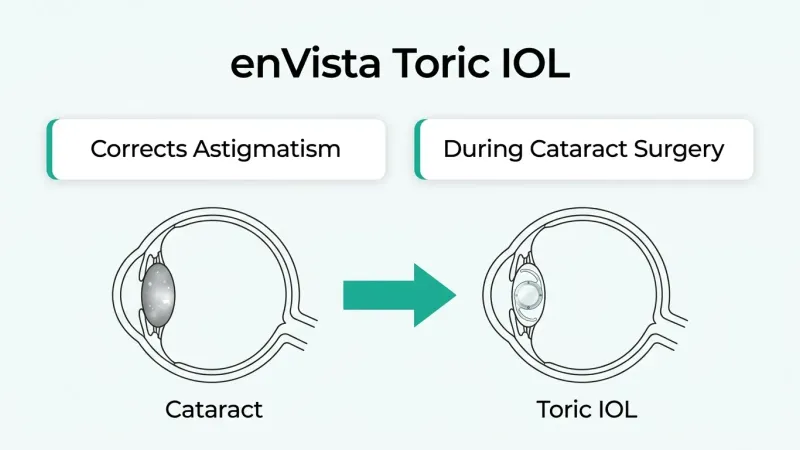
- IOL expertise: Familiarity with a full range of intraocular lens options, including premium multifocal and toric lenses.
- Complication transparency: Willingness to discuss personal posterior capsule rupture rates.
- Complex case experience: Comfort managing dense cataracts, small pupils, or prior refractive surgery.
According to University of Utah Health, new cataract surgeons have typically performed 200 to 300 surgeries, which is generally sufficient for routine cases. For complex cases, a surgeon with substantially higher volume and subspecialty fellowship training may be preferred.
What Should You Look For in a LASIK or Refractive Surgeon?
A LASIK or refractive surgeon should hold specific experience in corneal refractive procedures, including LASIK, PRK, and SMILE. Important criteria include:
- Excimer and femtosecond laser proficiency: Hands-on experience with the platforms used in their practice.
- Thorough candidacy screening: Use of corneal topography and pachymetry to rule out contraindications such as keratoconus.
- Retreatment policy: A clear, transparent policy for enhancement procedures if the initial outcome is suboptimal.
- Refractive fellowship: Optional but advantageous, indicating dedicated subspecialty focus beyond general ophthalmology residency.
What Should You Look For in a Retinal Surgeon?
Most retinal surgeons complete a two-year vitreoretinal fellowship after ophthalmology residency, although some accredited programs are shorter. This subspecialty covers both medical retina and surgical retina, so relevant criteria include:
- Fellowship-trained vitreoretinal specialist: Board-eligible or board-certified in ophthalmology with documented vitreoretinal training.
- Surgical volume in vitrectomy and detachment repair: High-complexity procedures where surgical experience strongly correlates with outcomes.
- Access to advanced imaging: Optical coherence tomography (OCT) and fluorescein angiography used for diagnosis and surgical planning.
- Emergency availability: Retinal detachments are urgent; confirm the practice can accommodate time-sensitive cases.
What Should You Look For in a Glaucoma Surgeon?
A glaucoma surgeon should have formal fellowship training in glaucoma management, covering both medical therapy and surgical intervention. Key qualifications include:
- Proficiency in MIGS procedures: A glaucoma surgeon should be well-versed in evolving surgical options, including minimally invasive glaucoma surgery (MIGS) techniques and newer device-based approaches
- Trabeculectomy and tube shunt experience: Essential for advanced or refractory glaucoma cases.
- Comprehensive diagnostic capabilities: Visual field testing, OCT nerve fiber layer analysis, and tonometry for ongoing monitoring.
- Long-term management orientation: Glaucoma is chronic; choose a surgeon who also manages medical therapy, not only surgical intervention.
What Should You Look For in a Corneal Transplant Surgeon?
A corneal transplant surgeon should have subspecialty fellowship training in cornea, external disease, and refractive surgery. Relevant evaluation criteria include:
- Experience with lamellar techniques: Modern corneal transplant surgery like DSAEK (Descemet stripping automated endothelial keratoplasty) and DMEK (Descemet membrane endothelial keratoplasty) replace only the damaged inner layer of the cornea instead of replacing the whole cornea.
- High graft volume: Corneal transplant outcomes are closely tied to surgical precision; ask specifically how many transplants the surgeon performs annually.
- Tissue bank relationships: Access to a reliable eye bank ensures consistent graft quality.
- Post-operative rejection management: Confirm the surgeon has a clear protocol for monitoring and treating graft rejection.
With subspecialty credentials confirmed, evaluating the technology and equipment a surgeon uses adds the next layer of confidence.
What Technology and Surgical Equipment Should a Modern Eye Surgeon Use?
A modern eye surgeon should use technology that supports precision, safety, and expanded patient options. The following sections examine femtosecond laser systems, intraoperative imaging and guidance tools, and premium intraocular lens access.
Does Femtosecond Laser-Assisted Surgery Indicate a Higher Standard of Care?
Femtosecond laser-assisted surgery does not automatically indicate a higher standard of care for routine cases. According to a 2026 perspective review published in the American Journal of Ophthalmology, femtosecond laser-assisted cataract surgery (FLACS) offers superior precision in anterior capsulotomy and lens fragmentation, yet long-term visual and refractive outcomes remain largely equivalent to conventional phacoemulsification in routine cases. For patients with complex anatomy or high refractive targets, however, the added precision of FLACS may carry practical value worth discussing with your surgeon.
Should You Ask About Intraoperative Imaging and Guidance Systems?
Yes, you should ask about intraoperative imaging and guidance systems during your consultation. Technologies such as intraoperative aberrometry, optical coherence tomography, and digital heads-up display platforms allow surgeons to make real-time measurements and adjustments during the procedure. Asking whether a surgical facility uses these systems helps you assess whether the team is equipped to optimize lens positioning and reduce residual refractive error.
How Important Is Access to Premium Intraocular Lens Options?
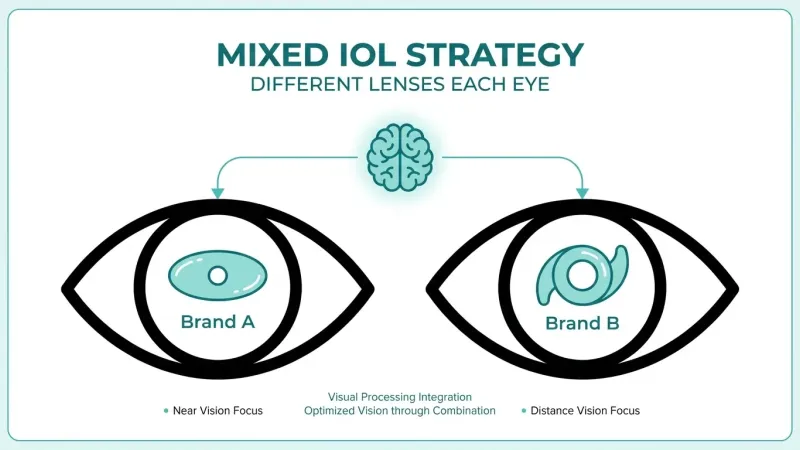
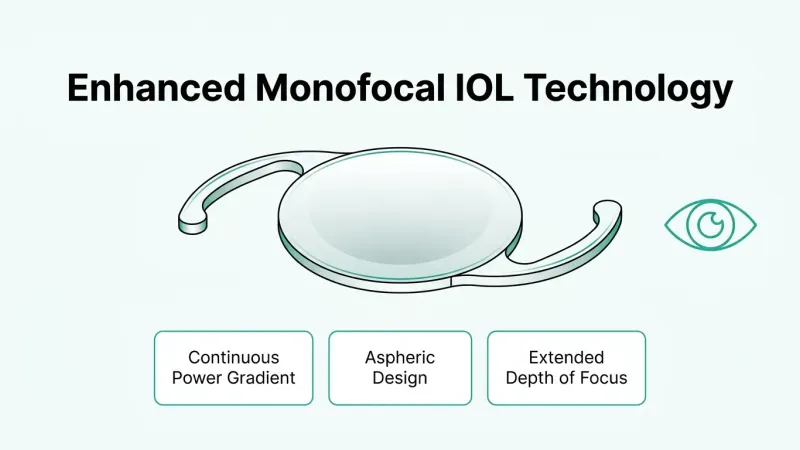
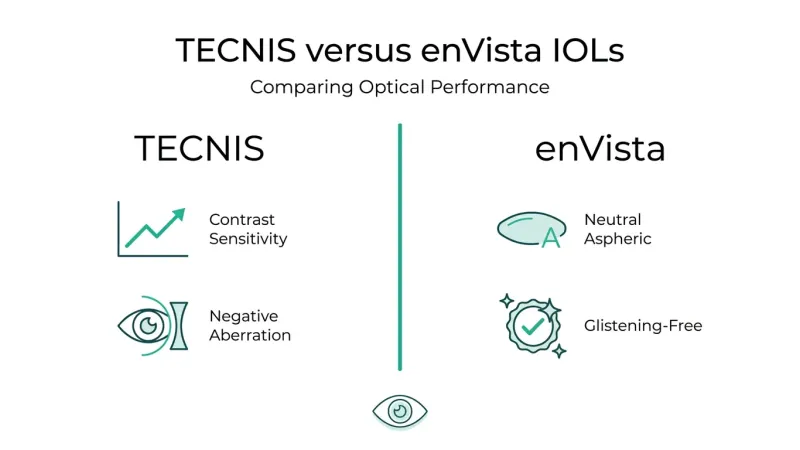
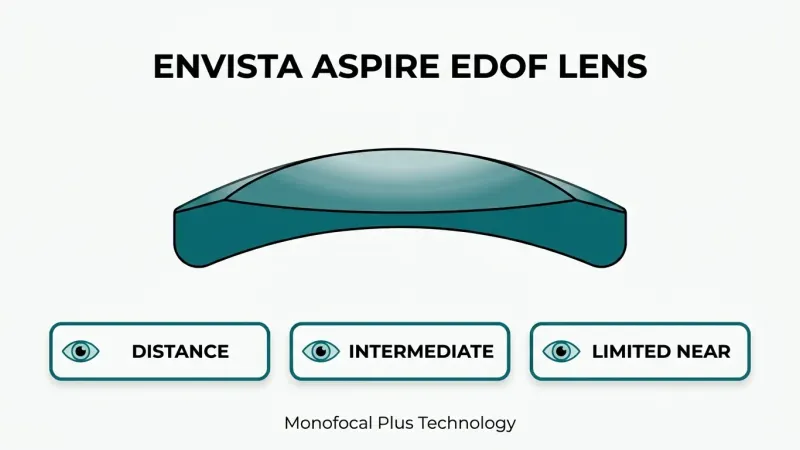
Access to premium intraocular lens options is important because it determines the range of vision correction outcomes available to you after surgery. Industry surveys from 2026 indicate that approximately 25% to 30% of cataract surgery patients now choose a premium IOL upgrade, reflecting growing demand for multifocal, extended depth-of-focus, and toric lens technologies. A surgeon who offers a broad selection of premium IOLs can tailor the recommendation to your lifestyle and visual goals rather than defaulting to a single standard option.
How Can You Evaluate an Eye Surgeon’s Reputation and Patient Reviews?
Evaluating an eye surgeon’s reputation involves three key areas: verified patient reviews, peer recognition and professional awards, and before-and-after outcome data. Each provides a different lens for assessing quality and trustworthiness.
Where Can You Find Verified Patient Reviews of Eye Surgeons?
Verified patient reviews of eye surgeons can be found on platforms such as Healthgrades, Google Reviews, and Zocdoc, as well as through the Federation of State Medical Boards’ DocInfo database. These sources offer different but complementary information. For disciplinary history and license verification, the FSMB’s DocInfo database provides access to core physician information, including licensure status and any formal actions taken.
Cross-referencing multiple platforms gives a more complete and reliable picture than relying on any single source.
What Do Peer Recognition and Professional Awards Tell You?
Peer recognition and professional awards tell you that a surgeon has earned the respect of other clinicians, not just patients. Fellowship membership in organizations such as the American Academy of Ophthalmology (AAO) signals active engagement with the specialty’s highest standards. Awards from recognized medical societies typically reflect a surgeon’s contribution to research, education, or outcomes improvement.
While awards alone should not drive your decision, they are meaningful corroborating signals, particularly when combined with strong patient reviews and verified credentials. A surgeon recognized by peers and patients alike offers the most complete evidence of consistent, high-quality care.
How Should You Interpret Before-and-After Outcome Data?
Before-and-after outcome data should be interpreted with attention to the type of metric, the patient population it reflects, and how it was collected. Visual acuity results, complication rates, and patient-reported satisfaction scores are the most meaningful data points to request.
Aggregate data is more reliable than individual case highlights. When a surgeon shares outcomes, look for statistics drawn from a broad patient base rather than selected showcase cases, which may not represent typical results. Patients should also ask whether data was independently verified or self-reported, as this affects its credibility.
What Questions Should You Ask During an Eye Surgeon Consultation?
The right consultation questions help you assess both the surgeon’s clinical judgment and their fit for your specific situation. The sections below cover your diagnosis and treatment plan, potential risks and complications, and how to read the surgeon’s communication style.
What Should You Ask About Your Specific Diagnosis and Treatment Plan?
The questions you should ask about your diagnosis and treatment plan include whether surgery is the only option, what the recommended procedure involves, and what outcomes are realistic for your condition. Ask the surgeon to explain your diagnosis in plain language, identify which procedure they recommend and why, and describe what success looks like in measurable terms such as expected visual acuity. It is also worth asking whether non-surgical alternatives exist and what happens if you delay treatment. Dr. Rachel Simpson, MD, a cataract specialist at the John A. Moran Eye Center, affirms in an article with a list of questions to ask during your consultation that patients benefit from asking surgeons direct questions about procedure selection and expected outcomes.
What Should You Ask About Potential Risks and Complications?
The questions you should ask about potential risks and complications include the procedure-specific complication rate, how the surgeon manages complications if they arise, and what your individual risk profile looks like. Ask for the surgeon’s personal complication rate for your specific procedure, not just national averages. Clarify what the recovery process involves, which symptoms require urgent follow-up, and whether a second surgeon or facility is involved at any point. Understanding your individual risk factors, such as prior eye surgery or systemic health conditions, helps you weigh the decision accurately.
How Should You Evaluate the Surgeon’s Communication Style?
You should evaluate the surgeon’s communication style by observing whether they answer questions directly, use understandable language, and welcome your concerns without dismissing them. A surgeon who rushes through the consultation, avoids specifics, or discourages additional questions is a meaningful warning sign. Pay attention to whether they explain trade-offs between treatment options or default to a single recommendation without context. Clear communication at the consultation stage reflects the same transparency you can expect throughout your care, making it one of the most practical and often underweighted factors in choosing an eye surgeon.
What Red Flags Should Disqualify an Eye Surgeon From Consideration?
Certain behaviors and records can signal that a surgeon is not the right choice. The sections below cover outcome guarantees, disciplinary history, and second-opinion policies.
Should You Be Concerned if a Surgeon Guarantees Perfect Results?
Yes, you should be concerned if a surgeon guarantees perfect results. No surgical procedure carries a 100% success rate, and any surgeon who promises guaranteed outcomes is misrepresenting the nature of eye surgery. Responsible surgeons discuss realistic expectations, known complication rates, and factors specific to your eye health. A guarantee framed as a marketing claim rather than a statistical likelihood is a sign that the surgeon may be prioritizing patient acquisition over honest informed consent.
What Does a History of Malpractice Claims or Disciplinary Actions Mean?
A history of malpractice claims or disciplinary actions means the surgeon has faced formal scrutiny over their clinical conduct or outcomes. Not every claim reflects incompetence, since frivolous suits exist, but a pattern of actions warrants serious caution. According to the Federation of State Medical Boards, the DocInfo national database provides public access to physician disciplinary actions, license history, and ABMS specialty certification, making verification straightforward before any consultation.
Is It a Warning Sign if a Surgeon Discourages a Second Opinion?
Yes, it is a warning sign if a surgeon discourages a second opinion. Confident, ethical surgeons welcome independent review because it reinforces trust and confirms the treatment plan. Discouraging a second opinion may indicate the surgeon is uncomfortable with scrutiny of their recommendations, their credentials, or their proposed approach. Seeking a second opinion before elective eye surgery is a widely accepted practice that a qualified surgeon should actively support.
How Do Facility Accreditation and Surgical Center Quality Affect Outcomes?
Facility accreditation and surgical center quality affect outcomes by ensuring that the environment where your surgery takes place meets independently verified safety and operational standards. The subsections below cover which accreditations an ambulatory surgery center should hold and what hospital privileges signal about a surgeon’s qualifications.
What Accreditations Should an Ambulatory Surgery Center Have?
The accreditations an ambulatory surgery center (ASC) should have come from at least one of three recognized independent bodies. According to OR Today’s 2026 accreditation report, the three main accrediting bodies for ASCs in the U.S. are The Joint Commission, the Accreditation Association for Ambulatory Health Care (AAAHC), and QUAD A (formerly AAAASF). Each organization evaluates facilities against rigorous safety and operational benchmarks. Accredited centers must also comply with National Patient Safety Goals, which include protocols for correct patient identification and safe medication use in surgical settings. Before scheduling any eye procedure, you may want to confirm that your surgical center holds active accreditation from one of these bodies.
Does Having Hospital Privileges Reflect a Surgeon’s Qualifications?
Hospital privileges do reflect a surgeon’s qualifications, because hospitals conduct independent credentialing reviews before granting a surgeon the right to operate within their facilities. This process typically evaluates training, board certification, malpractice history, and peer references. A surgeon who holds active privileges at an accredited hospital has cleared a formal vetting process beyond self-reported credentials. While many routine eye procedures are safely performed in freestanding ASCs, a surgeon’s ability to maintain hospital privileges serves as an additional external validation of their competency and professional standing.
How Should Cost and Insurance Coverage Factor Into Your Decision?
Cost and insurance coverage should factor into your decision by shaping which procedures and upgrades are financially realistic for your situation. The following sections address whether a higher fee signals better quality and what out-of-pocket costs to anticipate for premium options.
Does a Higher Surgical Fee Indicate a Better Eye Surgeon?
A higher surgical fee does not reliably indicate a better eye surgeon. Fee differences often reflect location, facility overhead, and marketing rather than clinical skill or outcomes. In 2026, LASIK costs range from around $1,500 to $5,000 per eye depending on provider, technology, and geography, according to LASIK.com. A surgeon charging $4,500 per eye is not necessarily more skilled than one charging $2,200. Price should be evaluated alongside credentials, surgical volume, and patient outcomes, not used as a standalone quality signal.
What Should You Understand About Out-of-Pocket Costs for Premium Options?
Out-of-pocket costs for premium options can be significant, as insurance typically covers only standard procedures. For Medicare beneficiaries in 2026, Medicare Part B covers cataract surgery after a $283 annual deductible, with patients responsible for 20% of the Medicare-approved amount for the procedure, according to The Big 65. Upgrades such as premium multifocal or toric IOLs fall outside this coverage, requiring out-of-pocket payment of the amount beyond what a standard IOL would cost. Understanding exactly what your plan covers before surgery helps you avoid unexpected costs when evaluating premium upgrades.
How Can Educational Resources Help You Choose Confidently?
Educational resources help you choose confidently by translating complex clinical information into clear, actionable guidance. The sections below cover how Eye Surgery Today’s content supports your decision and the key takeaways for choosing an eye surgeon in 2026.
Can Eye Surgery Today’s Content Guide Your Decision?
Yes, Eye Surgery Today’s content can guide your decision by presenting explanations of credentials, surgical volume benchmarks, technology standards, and red flags in plain language. Eye Surgery Today is a physician-led education platform built by nationally recognized ophthalmology key opinion leaders, designed to bridge the gap between clinical expertise and patient understanding. Rather than replacing a consultation, the platform equips patients with the right questions to ask and the criteria to evaluate answers. For patients navigating an unfamiliar specialty, having structured, unbiased information before stepping into a surgeon’s office is often what separates a confident decision from an anxious one.
What Are the Key Takeaways About Choosing an Eye Surgeon in 2026?
The key takeaways about choosing an eye surgeon in 2026 center on verifying credentials, evaluating experience, and confirming facility safety standards before committing to care. According to the Mayo Clinic, a trusted referral from an eye care professional or personal recommendation from friends and family remains a good starting point.
From there, the core checklist includes:
- Verify board certification with the American Board of Ophthalmology and confirm fellowship training in the relevant subspecialty.
- Assess surgical volume by asking how many procedures the surgeon performs annually and requesting complication rate data.
- Confirm facility accreditation through The Joint Commission, AAAHC, or QUAD A.
- Review reputation independently using verified platforms and the FSMB’s DocInfo database for license and disciplinary history.
- Understand your costs before surgery, including what insurance covers and what out-of-pocket expenses premium technology options may add.
Typically, a single factor in isolation will not disqualify or qualify a surgeon. The strongest decisions combine credential verification, outcome transparency, and a consultation where the surgeon communicates clearly and welcomes questions.